Why Blue Light Makes You Sick + Circadian Light Makes You Well (BON CHARGE)
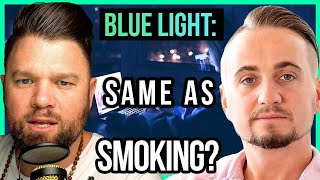
This is a podcast/video interview (Josh Trent with Andy Mant of Bon Charge) about how modern artificial lighting — especially LED/blue-rich "junk light" — disrupts circadian biology and harms sleep, metabolism, mood, and potentially long-term disease risk. Andy describes Bon Charge's evolution from blue‑blocking glasses to a broader circadian lighting product line (anti-flicker/red bulbs, daytime balanced bulbs, red‑light therapy panels, 100% blackout sleep masks, red night torches). The episode covers mechanism-level claims (melanopsin in skin and eyes, suprachiasmatic nucleus entrainment, cortisol/serotonin/melatonin dynamics), practical hygiene (morning sunlight exposure; block blue after sunset; replace lamps with red/flicker‑free bulbs; use red therapy devices; blackout masks), and societal/regulatory context (WHO classification mention, parallels to tobacco).
Chapters
The World Health Organization, for what it's worth, has classified artificial blue light as a 2C carcinogen.
When I was going through the research, my jaw dropped open.
So we're only really 25 years into this pandemic of blue light. Only really now starting to see some more of these longer term studies coming out which is showing the long term issues. It's like smoking, right when that initially came out, people were like, oh, it's healthy.
Your doctor smokes camels.
People just think it's digital screens that have blue light in. Well, actually your house lights full of blue light. If you open your fridge, what light is shining back at you? Blue light. You open it up and blast your eyes with blue light, which is disrupting your hormones every time you go into the fridge. The car headlights, street lamps, security lights all contain blue light. Blue light isn't a digital problem, it's an LED problem. If you've got lights around you that isn't the sun, that's classified junk light, which will be high in blue and will disrupt your circadian biology.
Do you think it's five years from now, ten years from now, that all the companies that make the LEDs and the, and the fluorescence and all these office buildings that are literally poisoning people, forgive them. They do not know. That's why we're here, bringing awareness. Do you think that scientists are going to come to Congress and say, hey, this light is actually making people sick? I am excited about this because there's a huge part of so many people's minds that honestly, Andy, they just have a blank spot when it comes to the way that lights that we're kind of surrounded by in this world are making us sick. And it's so crazy because 500 shows, Andy, we've had guests that are really intelligent like you on the show, and we've never done the deepest dive into light and chronobiology. So, man, thank you for being here. Welcome to the podcast.
Thank you so much for having me on. I'm super excited to take this deep dive with you and your amazing community.
Yes. And if you guys are watching on YouTube, we're both wearing white today. So, you know it's going to be a pure truth conversation. We did not call each other, I promise. Like, this was not like a planned thing. We're both wearing white. So thinking about this, Andy, this jumping off point, you got into this world of, I guess you could say biohacking, but it's way more than just biohacking. It's actually optimization. And this is what people knew from you in the past with blue blocks. You were out there in the marketplace for many years, man, and then you made, you made this jump from blue blocks to bon charge. And maybe we could just start the conversation there before we get into the science and the health benefits of the chronobiology and the lights. Why the jump? Why the change?
Yeah, great question. Well, we started, started down the rabbit hole back in 2017 with looking at light and how it impacts our biology, our circadian rhythms. And we, you know, we created some glasses that were made in Australia and improve thousands of people's sleep. Okay, we can come on more to that later on how all that works. But what we found was when we started going down this rabbit hole, we found that light impact impacted more than just sleep. It impacted recovery, impacted, well, being hormone levels. And we just discovered more and more ways to use light to help people in their wellness and health journeys. So the name blue blocks just didn't seem to fit anymore. It was more along the lines of, you know, utilizing light and, you know, full spectrum technology across, you know, the EMF spectrum to basically enhance people's lives and well being. So blocking blue, blue blocks, which is a play on words, kind of only worked for a little bit of our technology. So we wanted to continue that advancement into making these amazing devices to help improve people's lives. So we came up with the name bon charge, which is a play on words as well. So we took the first section, bon from a play on French words to mean good and charge, the English word can be a connotation of energy. So our brand is all about good energy and creating good energy in the body and your environment to optimize your well being. So that's why we made the change.
It makes sense to me because we are literally mini power plants, if you look at us, right, the mitochondria in the cell. And I'm sure you and I and all of us, we take supplements, we eat healthy food. It's just so crazy to me. This is why this show is so important today. We've literally I'm like 500 episodes. How have we not covered this? This is why I love podcasting, because there always something new, there's always something exciting to explore. And I think about like the foods that we eat and the water and the healthy relationships. No one tends to remember about the sun or about light and how it affects us. There's an entire wing in academic institutions that cover chronobiology and circadian rhythm. One of the things I think we really must start with in this light conversation because there's so many different parts of it. But maybe a good place to start would be this. Your own health journey when it came to sleep and the glasses. At some point, you decided we're going to produce a lot more products to help people actually give themselves a relief from blue light by giving them other tools besides the glasses. Because most people have seen the glasses for a long time. But with what you do, maybe a good place to start would be your own personal journey with the sleep. How many people struggle with sleep? And when did. When did the lights come on in your head? No pun intended. When did the lights come on in your head where you were like, okay, there's got to be something more than just the glasses. There's more to this light therapy and light therapeutics than the glasses.
Yeah, absolutely. I mean, you're right in saying, you know, so many people know about blue light blocking glasses now. It's just, I think the one thing they don't. Well, there's two things they don't really fully understand a lot of people as well is that all blue light glasses aren't created equal. The majority of what you'll buy won't block in line with the latest science. Um, and if they. If you don't, if your eyes see just a small fraction of the spectrum that disrupts your melatonin and hormones, you might as well not be wearing them. And the second is that people seem to think that as long as you're not on your phone, blue light's not an issue. Blue lights everywhere, right? So, you know, I'll give you some really crazy places where blue light is that people wouldn't have known. And then we can go on a little bit to talk about the other technologies and why we moved away from it. Based on that, it will segue in nicely. So you look at things like your house lights, right? Like people just think it's digital screens that have blue light in. Well, actually, your house lights full of blue light, like copious amounts and not much else. If you open your fridge, what light is shining back at you? Blue light. You know, your food is bathing under blue light, which isn't a natural thing. You open it up and blast your eyes with blue light, which is disrupting your hormones. Every time you go into the fridge, people will have appliances in their home. They'll have maybe cookers, maybe they'll have fridges as well with lights on. Those LEDs admit blue light. Your kettle will admit blue light. If you saw all your lighting out in your house and you have this amazing biohacked house. When it comes to light, what happens if you don't have blackout curtains and you shut out the outside world? Your car, the car headlights, street lamps, people's security lights all contain blue light. So people have got to understand that blue light isn't a digital problem, it's an LED problem. If you've got lights around you that's, that's in any environment you're in, that isn't the sun, that's classified junk light, which will be high in blue and will disrupt your circadian biology. Now this is where we started to think a little bit more about it because people, people typically come to us and raise questions that it's totally fine. You know, everyone's on different stages of their journey and that say questions like, you know, oh, Andy, I've. I basically have screen protector on my iPhone. I don't use it after dark. I don't need your product. And then I'd be like, well, actually, yeah, you do, because you probably need it even more because you're. You don't understand that blue lights everywhere else. And that then got me thinking, well, what can we do to improve not just people's sleep and, you know, eye strain, things like that, by wearing blue light glasses? How can we actually go one step further and completely clean up people's light hygiene? Now, there's a really interesting study that came out in 2018 that found out that melanopsin, okay, which is the blue light photoreceptor thought to only be present in the eyes, is actually present in people's skin. So with this study, it shows that blue light hitting your skin will impact your circadian rhythm, regardless of whether you're wearing blue light glasses or not. So you could be doing the best thing in the world by wearing a pair of red lens, blue light blocking glasses. But if you've got shining light all down on you from your house lights, you could be impacting the efficacy of that melatonin production and damaging your sleep. So what we decided to do was, we decided to make the next product, which was red light bulbs. So bulbs that you can just switch out in your home that only admit pure red light. It's a very restorative frequency of light. It doesn't disrupt your sleep, and it could be used after sunset. Then we, on the popularity of that, we released ones for the daytime which balanced out blue light, because blue light's fundamentally good during the day when it's balanced with other spectrums of light like red and orange and amber. So we created a daytime bulb that didn't have this horrendous spike in blue light that you see in, in regular light bulbs, but more of a, a full spectrum, whether that it would mimic almost a visible spectrum of sunlight to allow people not to have this horrible eye strain during the day. And then it just went even further. We found that, you know, people that were exposed to blue light during the day in isolation, didn't have any restorative light in yet in their lives, the red light. So the sun's very clever, right? It admits blue light, which keeps us alert during the day. That's fantastic. But it also contains a lot of red light, which then repairs the damage that blue light causes at a cellular level. Now what modern lighting has done, it stripped all the red light out, kept the blue light in, so it keeps us feeling alert and awake. But then we're getting all the damage unrepaired because there's no restorative red light coming into our lives. So we created red light therapy, which people could use after a long day in the office, they could use if they were exposed to blue light during the day. Night shift workers, particularly at risk, they could sit in front of these devices and get all the healing benefits of invisible near infrared light and then visible red spectrum light as well. Then we thought, you know, when people are sleeping, what, what can they do? Because there were studies that were coming out saying that even people with their eyes closed would be impacted by blue light whilst they sleep, and that would then downregulate melatonin production and we wouldn't get into, you know, phases of sleep properly, like the REM and the deep cycles, which can then increase apoptosis, apoptosis and autophagy, which is the growth, growth and repair system of our cells. So we decided to create this 100% blackout sleep mask because we found sleep masks on the, on the market were basically letting light in from the bottom, from the top, from the sides. They were putting pressure on people's eyes, which can lead to eye pressure, diseases later on in life, like glaucoma, things like that. So we just sort of revolutionized that as well to create this master 100% blackout. Great for travel as well. And there's just tons of other products we've gone into as well. I mean, I could sit here for a whole hour talking about.
This podcast is supported by your support and by the support of our sponsor, Organifi. My friend, Drew Canole, many years ago had a vision to make the best tasting green adaptogenic morning energy bursting drink with all the phytonutrients and actually have it taste great. And to date, it is the best green drink. Well, actually, it's the only green drink that I'll ever drink. I don't like any of the rest of them. They all kind of taste like grass that's been sitting in the sun. I really mean this. Like, this juice is the best tasting juice. You gotta try this. They give a 30 day money back. You most likely won't give it back because it's super tasty. It's gone through this huge, beautiful organic certification process and also a taste testing process. 99% of green juices out there are horrible. Most green drinks taste like grass clippings. But if you head to JoshTrent.com Organifi and use the code WellnessForce, Drew gave you 20% off. It is a grandfather deal. We baked in years ago. This best tasting green juice out there. Go to joshtrant.com organifi and get this green juice. Pick up the red, pick up the gold, pick up a whole bunch of products that are all organic, all tasty and all wholesome that'll actually be good for the cells way deep down in your body. You'll be ecstatic about what you see and how you feel. Joshtrend.com Organifi use the code Wellnessforce, you get 20% off. I mean, it's quite the journey. It's a big journey because it started from what I remember in our conversation and looking at your site. It started with you and your wife just wondering, how can we sleep better? How can we actually sleep better? And I think that's like all the great businesses in the world and all the great services in the world, the ones that are having integrity, they start with the founder or they with a small group, people that have a pain problem of their own, they're dealing with something on their own. And then once they go through all the arduous process of finding it, they just want to share it with people. And that's essentially Andy, what this podcast is, right? It's like me sharing my journey about all the different tools and strategies and things and relationships and ways of being that that we can really nourish ourselves with. And I think about this phrase that we've been hearing a lot where it's like morning sun, morning sun, morning sun. It's about 7 in the morning in Australia where you are 7 30ish, and you told me that you were out in the sun this Morning before we did our podcast, and I've heard Andrew Huberman talk about this. We've also had Brian Richards on the show from Sauna Space. And I've just been hearing this more and more and more. And this morning, actually, Carrie and I and Nova, my son, we went out and I made us stand facing the sun. It was like 8 in the morning, and for like a good three to five minutes, I just felt my body change. And I hadn't put the brain to muscle connection to it yet. This morning, sun in the eyes, and then this is directly upon waking and then blocking out that harmful blue light at night. This. This juxtaposition of the two light sources, this is so healing for us. This is so healthy for us. That first morning sun and then actually blocking the blue light that's in the sun. Talk about that a little bit. The way that we block it at night and the way that we actually could really get health benefits from looking at the sun first thing.
Yeah, that's a great question. It's a real broad one. But I think to start off with that, let's talk a little bit about our circadian rhythms. Right? So we've got this clock mechanism in our brain, okay. And it is a mechanism that evolved millions of years ago in pretty much everything on Earth, right? So the way it evolved was it needed the body internally, needed to get signals from the outside world to gauge time, okay. And to gauge how the environment is in order to respond internally, to optimize ourselves internally to be able to survive the outdoor environment at any given time. And you could have cues on the circadian rhythm like temperature, stress, and the most fundamental one seems to be light. So what this rhythm does is lights. Because it was millions of years ago that it evolved. It was cued and entrained by sunlight. So when the sun rose in the morning, this would send a message to animals and humans through the skin, through the eyes, that it was the beginning of the day. And what happens at that point is certain hormones and neurotransmitters are then released when we see that light in the morning. So dopamine gets released, which you just feel great. You feel amazing. It's making you feel really good and set up for that, that day ahead. You start to produce serotonin in the gut. Now, serotonin is super important for making us feel happy, but also super important later on in the evening because it mixes with tryptophan in the gut in the absence of blue and green light to then produce melatonin. So watching that sunrise in the morning is super important for you to sleep better later in the evening as well. And it also helps release something called cortisol. And people start panicking when they hear the word cortisol. They think, oh, I've got to keep that low at all times. That's not the, that's not the case. You want a massive spike of that in the morning and you gradually want that decreasing.
We would die without cortisol. Like, we, we would.
Yeah, yeah, absolutely. No, completely agree with you. We would. And you know, yeah, I'll come on to a little bit more about what light actually does to cortisol when we don't use it properly in a bit, but it's terrible. So that's what happens in the morning. Now, as our ancestors would have continued on through the day, the spectrum in sunlight changes and it continually sends message to this clock system to say, right, let's drop down cortisol a little bit more. Maybe we're like tweak dopamine, maybe serotonin, maybe other neurotransmitters, peptides, need to be up and down based on the time of the day. And that kept us healthy and in balance. Now, when the sun begins to set, about 20 minutes before it sets, you get this massive spike of blue light and that starts to signal to the brain that there should be a decrescendo effect starting, which then starts to lower cortisol, getting us ready for the evening. It's basically saying to the circadian rhythm, nighttime is approaching, it's time to relax now. It's time to chill out. It's time to get ready to release melatonin. Start to get ready to sleep now. When the sun had been set, campfires would have been put on which admit red, orange, yellow light, there wouldn't have been any high frequency blue light present in people's environment. People can then go, you know, the more astute people say, what about the sun and what about the moon and the stars? They're not high enough lux to be able to impact daily rhythms, only monthly rhythms. So it's nothing to worry about that.
And what is the lux? I'm sorry to interrupt you. What is the lux I've always wanted?
And because the moon is reflecting sunlight, it's not as high intensity as the sun. I mean, we can look at the moon for a start without any issues. It doesn't impact your daily rhythms, but it does impact monthly rhythms, which is a whole different topic.
Yes. Especially with women. Right. So I wanted to pull the E break there because you were on such a great train of explanation and educating people about all the biology that's going on. And I was actually looking at this earlier this week. The suprachiasmatic nucleus, the thing that sits right inside the deep center portion of the brain, the hypothalamus, is it actually has proteins. This is like the ultimate. For all y' all that love science, you're going to love this. That master clock actually releases different proteins that then signals our body, not just inside of itself. This is. This was so wild, Andy. I was researching that actually in every cell of our body, there is a. A fernt and efferent pathway of information that allows the body to wake up not just from the superchismatic nucleus, but in every cell of the human body. So then one has to say, if light is that important, if we have got a master clock in the center of our brain, one of the most important areas in our entire brain, how is it that we have ignored this for so long? What is the deal with that on a societal macro level?
I know, it's, it's. It's absolutely shocking. And you're right. I like to see the master clock as a conductor of an orchestra. And all of our little peripheral clocks in our cells are all the instruments playing in that. In that orchestra. And without that master clock conducting, they're all going to be out of whack. And if one instrument in that orchestra doesn't play well, you're going to be off. So this is why it's so important that light isn't just protected through the eyes and protecting the conductor, which obviously is important. But if you're not allowing your skin to have the correct circadian environment, then those instruments aren't going to play in harmony. So you can have start developing skin issues, aging, skin cancers, things like that, if you're under the wrong kind of light. So, yes, super. That's super important. But in answer to your question, the reason why we're not aware of this problem is because, number one, people aren't talking about it enough. There's copious amounts of studies out there. It's just people aren't translating those studies into everyday life. But unfortunately, it's one of those things that I think that people within these industries that are creating lighting are looking at the problem of lighting in more of an environmental way than they are with a biological way. So they're looking at it in terms of, well, how can we save energy, how can we save costs for people? And all of this is coming at a detriment to people's health because they're not actually looking at the most fundamental aspect of lighting, which is the components of, of light photons that are making up the spectrum of light. And we're also not seeing long, long, long term studies yet on both blue light issues and you know, even EMF issues, WI Fi, Bluetooth, things like that, where people need or companies seem to rely on science, you know, quote unquote, that because it's obviously ambiguous in some areas on what they should be doing with their products and because that it isn't regulated at all, or because there isn't a study that's impossible showing the impacts of blue light over a 50 year period, we're not seeing the diligence in their products and they're focusing on the wrong problem. The issue stems with blue light probably from the mid to late 90s. So we're only really 20 years, 25 years into this pandemic of, of blue light. So we're only really now starting to see some of the issues and some more of these longer term studies coming out which is showing the long, the long term issues. You know, it's like this thing with, you know, it's like smoking, right? Like when, when that initially came out, people like, oh, it's healthy, it's fine.
Whatever, and your doctor smokes Camels. I remember seeing those ads, I'm like, how is that possible? But light, light is going to be in that same thing someday. If you had to guess, do you think it's five years from now, ten years from now that all the companies that make the LEDs and the, and the fluorescence and all these office buildings that are literally poisoning people, they're, they, they forgive them, they do not know. Right. That's why we're here, bringing awareness. Do you think that that's going to come to like a congressional or more of like a macro conversation where scientists are going to come to Congress and say, hey, this light is actually making people sick, this light is actually hurting people?
Yeah, I think it's going to, unfortunately, I don't think it's going to be as soon as what you said, but it should be because the evidence is clearly there and becoming more and more mainstream. I think the issue we're going to see is that they're going to realize light is an issue. Okay. They're already starting to realize a little bit about it. There's been some articles come out where certain towns in the US and Europe have changed the color of lighting to help the animals like Streetlight lamps and things. So they're starting to get it. Yeah. What they're going to do is because light is 10 to 15 years ahead of electromagnetic radiation, we're going to see lighting, probably the color change, but it's going to be infused more with 5G, 6G, Wi Fi, Bluetooth, which is still going to be an issue. You know, you're going to. Yeah, the frequencies of light are going to be amazing. Light is still something on that electromagnetic spectrum. But I think they're going to then ignore the, the potential harmful effects of EMF radiation and start infusing that into their technology. And you can already see that with things like smart lighting, where, you know, I think Philips hue have got one out at the moment where, you know, you can change the color and the frequency of light. But it's all done via Wi fi and the studies are still in our infancy on WI Fi. But, you know, we can make a very educated guess that these EMFs are probably going to give the same outcome that blue light is doing, which is going to destroy us physiologically and biologically. So I think that's where it's going to go. And then eventually, hopefully they'll then realize that's an issue as well. And then we will go back to the old school ways.
Let's pull the E brake again, because you brought up something really powerful when you were talking about the Philips hue and the WI Fi. And a lot of people, they'll use these lights in their home and they'll think maybe because of the packaging or the promotion, that the light's healthy, but it's not. It's actually still flickering. We just can't see that flicker with our eyes. And this was in. When I was going through the research, I just, like, my, my jaw dropped open. I thought to myself, all these people are buying lights, but the lights are still flickering. So they're still getting that allostatic load on their nervous system. That's very slowly. They might not feel it, but it's very slowly shifting them to sympathetic and their nervous system. Talk about the flicker. Because this is something I had never really found out before. You and I connected.
Yeah, absolutely. Now what I encourage people to do is find an LED light source in their house, stick their iPhone, smartphone, whatever it is, camera on slo mo and start video recording and then play that video back to yourself. And you're going to start seeing what your brain is seeing, which is the flicker of the LED lights. And you probably feel really nauseous when you do it because it's horrible.
Yeah.
So that's a good little test, right? And you can see it when you start, like filming on your phone, on your iPhone or whatever it may be, you'll start seeing this pulsing light. Now, flickers. Flickers a problem, Right? So Flickr's been put into pretty much every LED light source. And the reason they, they that flicker is being created, it's a byproduct of the switch from a DC to an AC current. Okay. So back in the day, you know, in the 90s and before that, we all had incandescent bulbs everywhere. There really wasn't any real technology out there, smartphone stuff like that. And this stuff runs on a direct current and doesn't flicker as much. But what they did was they wanted to. And again, this environmental problem they wanted to solve, like global warming, whatever it may be, they wanted to look at, they wanted to decrease the amount of energy that lighting LEDs were using. So what they did is they switched it to an alternating current where the electricity pulses in to a, to a device very, very rapidly. Right. Like, not faster than what I'm doing here on camera for those watching, but like real fast, like, so the eye can't detect it visibly. Like, you're basically thinking everything's fine, but we're probably sat in a room that's flickering nine times out of ten. And then what that does is because it's pulsing, the light's basically switching on and off constantly, thousands of times a second, just being switched on and off. Now, why this is an issue is your brain pieces together images through light passing through your eyes in a constant format. So think of, think of natural light. Think of the sunlight. It's this, this one beam coming from the sun. It doesn't flicker.
It's truly incandescent. It's coming on a, on a general beam, and it's got multiple colors inside of it. It's not going on and off, it's literally on the whole time.
Yes, absolutely. That's spot on. And what happens is when it's going on and off, the brain's working harder to create that image for you. So it can develop things on a spectrum. Like, you can get real sore eyes from being under flickering light. At the end of the day, you might get headaches, you know, mild headaches. And then at the right, at the other end of the spectrum, you have photosensitive epilepsy, which is then can be triggered by this strobe effect that your brain is seeing, but your eyes aren't seeing visibly. So it's a super major issue. And that was one of the problems we looked to fix with our lighting. We basically didn't want to just change the color in our light bulbs and all of our lighting products. We wanted to remove the flicker component of those lighting products. So we reversed engineered the light bulb and it took us 18 months to do this. And we continually tested it. We even sent them to a guy in the US Called Brian Hoyer, who's a building biologist. He has flicker meters and all sorts. Getting him to test them first round, you know, they were no, no good. And we just continually, continually refined this product before it even went to market. And I was just on speaking at the EMF Global Summit a few days ago, and the host mentioned there that, you know, Brian's tested our bulbs and they, they don't flicker. They're, you know, the best on the market. So we managed to put in a, a chip. And I'm no expert on this because I have engineers that know the real geeky stuff, but there's a chip inside this light bulb that converts the AC current to a DC current almost as a, this interchanger. And then the light then comes out from there. So the flicker is, you know, you video record our light bulb in slow mo versus your regular light bulbs. It's just this constant stream of light. And it's so soothing, relaxing. You're not going to get any eye strain. And yeah, it's another thing that we like to try and do here at Bon Charge is take products that already exist, but just revolutionize them and optimize them from a circadian standpoint and also like a biological standpoint as well.
It's crazy too. I remember when we first connected, I was like, oh yeah, I bought some red bulbs at Home Depot and I put them in my house. And then you were like, you know, those flicker, right? And then when I, when I compared them to the, to the Bon Charge bulb, it was like, it actually felt different. Like on my skin. And it might have been placebo, but like, I also know, like once I know something, my reticular activating system looks for proof of what I know. And then I either prove what I know is true or I learn what I know is not true. When I put the bulbs in, I replaced the bulbs in the studio bedroom here, and it literally felt different. So I'm wondering, those photoreceptors on my skin, the photoreceptors in my eye, everything's tied into the suprachiasmatic nucleus as we talked about in the hypothalamus there's so much going on on a biological level that you don't have to be a scientist, but it's cool to talk about the science. Let's go to just like a, a sensory explanation of this. So just like, let's put the science hat on the side just for one second and, and maybe tie this into like our evolutionary way of being. When we were around the campfire, when we were in that red light that was actually providing our physiology with something that it really needed, that it had been adapted to need for literally hundreds of thousands of years. What exactly are we receiving with that kind of light?
Yeah, absolutely. You know, there's a few things there, like the warmth of it is fantastic as well. That's great in terms of a body temperature regulation standpoint, but in terms of the red side of things, there's a few factors at play here. You know, it's the, it's the certain wavelengths that are admitted from, from red light that seem to have this fundamental benefit on human health. But what it's, what it does is it, it starts to relax you, it starts to soothe you, it makes you, it really seems to lower cortisol levels. Okay. It starts to make you feel really relaxed and chilled before you want to go to bed, because that's what you want. You don't want any kind of activity going on in your brain to a real sort of high degree before you go into, into your sleep. You want to be tapping into that parasympathetic state which red light seems to, seems to do. But it, what it also does is when you look at dark periods, right? So after the sun has set, there's only red light present. This is the stage the body wants to go into to start repairing and restoring the damage during the day. Because, you know, UV light's fantastic for our health. But it's a double edged sword. It causes cellular damage if you have too much of it. If you are outside during the day, you get a load of blue light, but you're also getting some damage at a cellular level from that blue light. And that's just those two on a basic level. But what the dark side and the red light side does after sunset is it starts to put your body into repair mode rather than active mode. So it's super important for us to get into that mode and utilize those frequencies of light to start repairing damage that's happened during the day. So this is why red's so important to use and utilize because our body has responded to this from a From a campfire many thousands of years ago all the way up to the present day where we've stripped all that out of our lives and we're now devoid of red light. So what do we, what do we do now? After sunset, we, we basically come home, we look at our phones, we switch on the house lights, we watch tv. So our body just all the time thinks it's in active mode, daytime mode, so it can't feel relaxed, it can't feel, it can't stop the restoration process. So yeah, it's, it's, it's in a nutshell.
I remember and I don't know how much time you've spent. Purely 100 disconnected from technology. But everybody should do it. It's a technology fast. The Japanese doctors prescribe it to their patients. They call it Shinrin yoku, which is basically forest bathing, where you get away from all sources of artificial light 100%. I think everybody should do that to two past years in a row. I've done a vision quest, Andy, and in that vision quest, we're in the mountains. There's zero technology. We are for 10 days following the circadian rhythm of our bodies and the earth. And I'll tell you what, I have never felt so tired or so awake in my whole life because. And every night we had a campfire, right? I realized like, okay, when I come back home, like we're not only changing all the lights in our house to the anti flicker to the red, but I'm actually going to think about during the day, how can I amplify the things that nature is already providing me from a light perspective? Let's talk about that. Because nighttime, it's a no brainer we're going to go over before we get off this podcast, like all the things that we should be having in our home, like basically the starter kit of all the stuff that we should have in our home so we can like be healthy with our family and by the way, especially with our kids, for all the parents. Oh my God, I'm thinking about my son. I'm like, I don't want junk light pouring into his eyes. Like that's not what I'm into. So let's talk about the daytime man. So what are the ways that nature provides light sources to us during the day that we can either optimize with some of your tools or we can block maybe the harmful light sources during the day where we can receive the light that nature is trying to give us?
Yeah, absolutely. And I think it's, it's Important to say that, that the only natural light source during the day is sunlight, right? You know, you can have campfires and things like that during the day, but the sunlight will obviously trump that because it's the full spectrum side of light and what you need to be doing. Like a lot of us are now in indoors, right? We work inside, in a building during the day and we're not, we're not allowing our body to be exposed to this natural light. So we need to be outside as much as possible. You know, people confused why people still do this. But you know, people spoke right to in this day and age. So when you're in a building, what do they do? They have smoke breaks, right? So why can't you have a sun break? Why can't you go outside during mid morning, have a sun break, 10 minutes, 5 minutes, let the sun into your eyes and skin. Do it in the afternoon. Your lunch should be eaten outside. Don't go into a dimly lit canteen or a restaurant or somewhere like that. Get your, get your packed lunch, Go outside. Whether it's rain or shine. Just get natural light into your, in and around your environment, in your body, in through your eyes. Get the sunglasses off. Allow it, allow it naturally to come through the eyes. That's probably the most beneficial thing you can do. But you also want to be looking at the artificial sources you're surrounded by during the day. So you don't be blocking blue light during the day. It's one of the worst things you can do. It's basically the same as seeing blue light after sunset. But you probably want to bring it down a little bit, right? You want to be able to reduce the spike from your computer from the artificial lights. So that's why we have glasses for the daytime that filter blue light. It filters it down, it brings it down to a more acceptable level, balances it out with the other spectrums. And that can be done by wearing glasses when you're around artificial light. They're normally a clear color or more hardcore yellow color. And the yellow is, is great if you've got a real sensitivity to blue light. So you get migraines, you feel really nauseous under blue light during the day.
Also the yellow is great if you're going to microdose and you know, to each their own. If you're, whether you're microdosing some cannabis or some psilocybin or whatever your microdose is, there's something really beautiful. I don't know the neurology of how it's happening. But I'm talking about very. A true microdose is something where you don't necessarily even feel it. Right. But when you wear those glasses like you're talking about. And we'll link that right below wherever you guys are watching, so you can get the exact daytime glasses that Andy's talking about. Those glasses are really potent when you synergy stack them with other biohacks.
Yeah, absolutely, I agree. And it's the color therapy that's in it as well. You know, like the color yellow has been been proven in multiple studies and case studies to really sort of elevate mood, boost your mood, make you feel focused and happy. So, yeah, absolutely does love that. That's good. I love, love hearing that. So another, another issue during the day, right, is there's a lot of, like I was saying earlier, there's a lot of blue light in artificial light. Okay. But there's not a lot of red light. So you need to start balancing the light in your, in your environment. So wearing the glasses alone isn't going to be enough because that's going to filter blue down, but it's not bringing the other colors up. We need to get all different colors of light in our environment so we can mimic sunlight. So what we want to do is we want to be getting lamps, red light lamps next to your workstation shining into you. You can even use a salt lamp if you want. They're not pure red, they're pinky. But you can have those if that's what you got. Now get it around your workstation. The negative ions will help harmonize the environment as well. That's fantastic to do too. And those are the sort of the key things you can do during the day to kind of build up your light spectrums, build up this portfolio of light around you that is much, much healthier. Now, one thing I do want to say that causes a lot of confusion is people say to me, they say, oh, well, I sit next to a window, I get lots of, lots of natural light. It's not a great idea to be doing that. If the windows closed, what's that window going to be doing to sunlight? It's going to be filtering it. So you're going to be exposing yourself to junk light. Even though it's not from an artificial source, the spectrum is still going to change. Uvb, UV A is going to be manipulated. You're going to basically blocking uvb, letting UVA through. The frequencies and the colors of light are going to change. So sitting near a window, hypothetically, and Alexander Winches has said this as well, who's the leading figure on circadian biology and in the world he's based in Germany. That junk light by sitting next to a closed window is getting up there is equally as bad as looking at a laptop. So try and be away from the window as much as possible or get the window open. Wow.
Well, that makes sense because think about all the ways that the manufacturer tries to block the heat from coming in. It's typically a heat, especially on cars. I mean, sitting in a car you're not getting really any sunlight because most of the windows have filters inside of them. And, and I wonder maybe, maybe the juxtaposition that we're facing as a society is we're all in this kind of modernity based world where we have all these tools and all these responsibilities and even right now, you know, we're talking on a computer and granted we're doing our light hygiene throughout the day. And when I go home, like our lights are down on the house, we have the red bulbs. But there is this ultimate question of in our modern world, how exactly does this fake light make us sick?
Yeah, of course, that's, these are, these are like such good questions. I love, love that you're asking these. It makes us sick in multiple ways, right? So when we get circadian disruption, we don't sleep as well. Okay. And when we don't sleep, we start seeing major issues with our metabolic health. Okay. The way we, we process the food we're eating, cellular damage, we don't restore and we don't repair the cells. Now when you're not repairing something that's damaged in the body, left unchecked, that then turns into, you know, nasty diseases later on in life. And it's much like dieting. You know, this takes years to happen. It's a slow burn, just eroding away over time. Now it's the whole lack of sleep thing that really drives the metabolic dysfunction in people. But there are some other things that happen as well. So people start to feel very anxious and depressed. We're seeing a lot more of that now. When I talk about light, I, I'm not sort of a zealot in so much that I'm saying light is the only issue, eradicate that you're going to be fine. There's other things that lead to anxiety and depression. There's traumas in people's lives. There's, you know, the diet you're eating, technology you're using and absorbing things like that, the content, suffering and stuff like that. But light plays a fundamental role. Now it goes back to what I was saying earlier when I was talking about cortisol being increased in the morning when you watch the sunrise. That's fantastic. Now your, your eyes and your circadian rhythm, it can't tell the difference between natural and artificial light. So the light that's basically given out by digital devices, your house light, your fridge light, kind of is similar in terms of Kelvin, which is a measure of light to midday, to solar noon. Okay. Now this is the peak period of when cortisol then starts to decline during the day. So it's basically your cortisol level is going to still be high when your body sees that light. Now, when we see that light in the evenings, your cortisol levels should be dipping during the day. But what it's doing is it's remaining at a high level during the day. Now, when cortisol remains high for long periods of time, that then messes with the endocrine system. And we're going to start seeing high elevated levels of cortisol all the time, which then leads to this feelings of anxiety, depression, stress, you know, not being able to focus. And these things can start personifying themselves as, you know, just feeling a little bit anxious. And then five years later it's, oh God, you know, I'm feeling a bit bad all the time to 10 years, 20 years down the line, hue anxiety and things like that. So got to be very careful with, with, with that kind of thing. You could also look at the lack of certain frequencies of light. Okay, so there's this really interesting theory, and it's been tested in vitro in laboratory studies with skin cells. So you look at UV light exposure as the cause of skin cancer. So that's the mainstream belief right now. There's no arguing that UV light damages the cells in your body, but its vital function is creating vitamin D through synthesizing with cholesterol. Now what they tested in this study was that when blue light was removed from skin cells in the lab, it started to repair. It started to put together all the damage that the UV light was, was causing during the day in the cells. And when they shone blue light back on the cells, they stopped repairing that. None of that started to happen. The function didn't, didn't remain in the restorative phase. It went back to this active phase. So it wasn't allowing the blue light, wasn't allowing the skin to repair itself. And this is an interesting fact that, you know, so this whole. Is cholesterol the problem or is it actually the inflammation. We know it's the inflammation, not the cholesterol. The same is true of UV versus blue light. UV fundamentally is doing its job that nature intended. But because we're then going into periods after the sun is set of blue light, our body is like, oh yeah, we're fine. It's still during the day. UV is doing its business. We don't need to do any repair yet. So it's being left unchecked. All this UV damage being left unchecked because we're under the wrong source of light after dark. Whereas if we switch that round, remove the blue, start putting ourselves in front of red light therapy devices, start installing red light light bulbs into our fixtures and fittings. We would then start to allow our skin to repair, which would then decrease our chances of melanoma, skin cancers, aging related issues as well. So I guess there's a few sort of high level issues that it can cause. I mean, there's multiple things as well that, that it can do, but those I think are the main ones.
I love the point that you compared our junk light to junk food. That's so intelligent. Think about how many choices that it takes. I mean, I have firsthand experience in this. I used to be 280 pounds, so I was very unhealthy. I was raised on welfare, which is like government cheese and processed cereal. And so we didn't have the proper choices. And you know, bless my parents, right? They did the best they could. They literally did not know most people. This is why this podcast is so important and so powerful. Most people literally do not know anything about junk light. Maybe this is the first time that somebody watching or listening is even hearing about this concept. I want you guys to know, like, this is not woo. This is hard science. There's decades of research on this. You've developed an incredibly successful company that gives people this healing and optimization through actually modifications of light. Like this is real. And you touched on one thing that I want to unpack a little bit more. You talked about the way that this junk light can actually start messing with people on an anxiety and depression level. I was doing some research today and I have this quote from Frontiers in Behav Behavioral Neuroscience. And they talked about the biological clocks and rhythms compared with anger and aggression. And they said that estrogens from junk light promote aggressive responses to territory intruders when animals are housed in short photoperiod conditions like winter season, but diminish aggression under longer photoperiod conditions like summer. Now, one could say that if we have a longer photoperiod with the healthy light, then we could actually be less anxious and less depressed. I mean, this is science. This is also just, I think, some anecdotal understanding that we all have where the more we mimic nature naturally, we live in a biological world that like is. We're trying to force a square peg in a round hole. The more we can be in harmony with nature from a light perspective, man, the more healthy we're going to be, the more mentally sound we will be. Unpack that a little bit for us.
Yeah, absolutely. It makes complete sense, right, because how do you, how do you feel during different seasons? Right. How do you feel in the summer compared to the winter? Me personally, in the winter I feel down. I feel, you know, I'm doing all.
The biohacks in the winter. Yeah, I'm doing everything I can.
Yeah, yeah, absolutely. And it's twofold. Right. So in the summer you've got longer days, you're outside your body. You know what, what was I saying earlier about sunlight? It triggers dopamine and serotonin release. Okay. You're outside more, you're getting all this amazing feel good energy. People are probably more connected because people are outside. There's less going to be less aggression because people have got dopamine pumping through their brains constantly because it's so fantastic during the, during those summer periods. The light is triggering it, then you move it. Your blue light exposure is then a lot less because you're outside more during, during the daytime. But then you flip it over and you go into these winter months, okay. Where there's not only a lack of sunlight, we don't like the cold. We're so used to this temperature regulated environment. We don't go outside. We're like, oh yeah, the sun's shining today. But you know what? Bit cold, not up for it. So you stay inside. You're not allowing those cold Q temperatures to help uplift your, your spirit and your body. You know, cold therapy is a big thing. Why do we feel so good with that? Because it's triggering endorphin release, dopamine hits as well as sunlight. Yeah, but we're in this temperature regulated environment, but we're also indoors more. And what's indoors more artificial blue light. What does artificial blue light do? Keeps your cortisol levels high. Constantly. We're getting no, no red light because we're not outside in the, in the sunlight getting that restorative red light. So we're just in this constant state of like, you know, almost Like a cat ready to pounce all the time because we're so intensely wound with the amount of cortisol, which is being caused by this blue light in, in isolation to red. And that's why people, you know, this study that you've seen is showing that, you know, people that have got these succinct circadian rhythms that are exposed to more natural light are much calmer, much, you know, nicer to other people as to people that are in a dysregulated circadian environment, which ultimately would be more intensified during the winter months. And that's why people are typically glum, miserable and stressed during those, those months. There's a really interesting day in the uk, right? It's the second Tuesday in February. Every single year has the highest suicide rates in the uk. And it's when seasonal affective disorder is at its highest. It's when the days are at their coldest and it's when the sun is typically not been out for a long, extended period of time. Because I'm from the uk, even though I'm in Australia now, I know this firsthand because, you know, you go through two or three months of literally not seeing the sun, it's so grim. And after a few months of that, around about this second Tuesday of February, people's cortisol levels are so jacked and, you know, that hormonal system is so wrecked from that dysfunctional circadian rhythm that you're just seeing this elevated increase in, you know, what I just mentioned, seasonal affective disorder, which then could lead to this intensified elevated suicide rate.
Yeah. And honestly, it's worth noting too, that this is not just your anecdotes. I mean, when I was looking at PubMed and NIH, there is like study after study, there's. You could probably sit for a year and try to go through all the studies proving the theorem that we're talking about. It's not a theorem. It's actually hard science that when we go against the natural sleep wake cycle of that master clock, literally the wheels fall off the wagon. Like our entire system just starts to unravel. And one then in that point, Andy, a person might go to, you know, using drugs or getting pharmacological pills or trying to find like the answer to fix the malady that really could just be fixed if they opened up their house, change the lighting, let's get to it. Like, what's the kit? What's the starter kit? That if somebody wanted to begin designing their home, designing their workspace, like, give us the goods Here. What are like the three or four things that we should all be using on a daily basis?
Yeah, absolutely. And just quick point before I do that. I promise I'll be quick.
Just go for it. Yeah.
Just remembering something back from, from talking on the last show. I was on the EMF1 and we were. It's actually recently that the World Health Organization, for what it's worth, has classified artificial blue light as a 2C carcinogen, which basically means it's probably a carcinogen. Okay. And what that means is that means that in. And again, they're so behind the science, it's a joke. But what that means is that in animal studies it's showing a major relationship between artificial blue light circadian disruption and cancer. So that's what the World Health Organization have determined, which then will set the scene to push that where it probably will eventually go, which is in line with EMF radiation, which is up to that sort of class, to be Class 2A carcinogen, which is basically. Well, the studies have shown it in humans as well. So World Health Organization have obviously come out and mention that.
You know what gives me hope, like I just felt my heart to expand right here, like in the same way that tobacco and cigarettes got put to task. Now the food industry and the additives are getting put to task. I can't wait for the day that big tobacco, big food and junk lighting companies all have to stand before everyone and say, I'm sorry, yeah, sorry about that. We were being greedy. We just wanted to capitalize on the human system by actually poisoning that system to save labor and costs on goods. Really sorry about that. You know, that gives me hope that we're having this conversation that we can actually turn the tide in that way. But it starts with what we're about to talk about. What's the practical stuff that we can do right now that's like affordable, that's useful, that we can have in our homes and at our workstations and everything else?
Yeah, absolutely. At a minimum, people need to be blocking blue light right after sunset. It's an absolute minimum. If people are not wearing blue light blocking glasses after sunset after hearing this conversation, then there's going to be no helping them stop watching right now. Stage one, get them on two hours, two hours before bed. That's all you need. Take your couple of weeks, get used to them, get them on and you're going to be seeing instantly the, the change. Okay. Ensure they block between 400 and 550 nanometers. We, we safely have that. We've independently lab tested them. So get that checked.
Okay. Those are on the screen right now. The exact model. And I'll, I'll just. What is the model name of the glasses?
So they're that. We've actually got 30 different models, but.
The nighttime specific ones.
Blue light blocking glasses. That's what we call them. We just keep it nice and simple. Blue light blocking glasses. Glasses to sleep. They're the ones you need, the orange lenses. So yeah, I appreciate those being put up on the screen so people will know where to find those.
Yeah, and those are specific too because a lot of people, they get like the screen protectors. But like you said, their whole house could be bathing in daytime. Blue light at 9 o' clock at night. So the glasses would help mitigate the eyes. But then there's also the skin photoreceptor. So how do we deal with that?
Yeah, so what you want to do is start off with getting a few red light bulbs in your lamps. Okay, start off with lamps. It's much better. There's some theories that are saying that light angle has an impact in circadian biology and red light was only ever perceived after sunset from the ground up, not from above. So we've got to factor that in as well. And this is a new sort of area that.
Yeah, that's fascinating. That makes sense. I mean, why I have the lights here and they're at like shoulder level. But, but the lights on the ceiling, maybe that would, even if they were red, maybe it wouldn't be as healthy as the lights that were lower. The physical position of the light matters.
Yeah, absolutely. And there's been some work being done in Germany on it at the moment that I've been privy to, which is great. So we're hoping to see, see results that will come out of that, that will actually show that light angle has a major impact. So get them in some lamps and get those on in the evenings once that sun's gone down, get a few of those on. Make sure your glasses are on when you're cooking, watching TV as well. And then you've got your skin covered, you've got your eyes covered and you're going to be feeling absolutely fantastic. Another thing I would recommend, red light therapy device. Okay. Now a lot of people are a little bit put off by red light therapy devices because they cost thousands of dollars right to have. But we've created a really small panel that's only a couple of hundred dollars that people can start off with. And it's, it's just a small handheld mini red light therapy device. It's infused with pure higher radiance red and invisible near infrared light. And you can use it on your face, on your body, you can have it sat next to you, it stands on a stand just like shining on you. And that will mimic like campfire light, you know, the heat from the infrared, the red light frequencies, and these are the most bioactive frequencies in our body. So when they go in, they boost mitochondrial function, they boost autophagy, apoptosis, and they just start restoring any of the damage that might have happened during the day. When you're in an environment during the day that's outside of your control, like your office. So that's a fundamental part as well to use. And the final piece I would suggest would be 100% blackout sleep mask. Really interesting study came out that showed that people that have any kind of blue light shining through their closed eyes in their room or coming from an external, external source whilst they sleep not only saw a reduction in melatonin production, which is what you need as a potent antioxidant for apoptosis and autophagy to happen, but also to put you in the correct sleep cycles, it actually increased people's intolerance to carbohydrates during the next day. So basically what it did is it started to make you more insulin resistance and elevated blood glucose levels. So that's not good for you metabolically either. So get 100% blackout sleep mask on and you'll be, you'll be laughing. Now, one other final one I'll just put in there. Number five is either a blue light blocking torch, so a torch that only emits red light, a little portable red light lamp, or a motion sensor night light that only admits red light. We have all these on charge and what that's good for is if you have a partner or yourself that needs to get up during the night.
Yeah.
Don't have to switch on the light or fumble around for your blue light glasses. You just switch on your red light torch or motion sensor night light and you can go back to bed straight away. Always great. If you've got a baby as well and have to get up in the night to feed the baby.
Oh yeah.
In that environment. So they're the five key hacks. And all those hacks, red light aside, are under $100 just to put into your life. But that investment is going to save you thousands of dollars in the future from health care bills because you're going to have that correct circadian rhythm so well worth the investment. This early stage prevention is always better and also much cheaper than cause.
Andy, that was like the best summary I think I've ever heard. You just cut through people searching on the Google for like 10 hours to try to figure out the literally like rewind that everything's right below wherever you're watching or listening. It's all linked perfectly for you. And also, you hooked us up. Thank you for this. I know that it's not easy to run a company like, but you guys, Andy gave us the hookup. Just use code Josh15 over@joshtrent.com BonCharge that's B O N C H A R G E on all the circadian lighting products you can save as well as everything else over@joshtrend.com boncharge and the code is Josh15. I want to go back to what you said because a lot of people that are getting the light and the angles and I was thinking about this even in my own life, and my brother used to get headaches when he was on the computer. And I've seen a lot of people with this photophobia, which is this squinting or this sensitivity to light. And I don't mean like the movie stars. You know, the movie stars wear the glasses because they're like, oh, my, my eyes are sensitive to light. I'm like, nah, you're just in your ego. But. But there is a true thing with photophobia. Is. Is that something that you've ever struggled with, like extreme sensitivity to junk light? Have you felt that?
Yeah, I actually. I actually have. I used to be an acute migraine sufferer, and that's a big symptom of photophobia. I also have this condition. It's really odd and some people have it, but it's rare. And it's normally only for people that have blue eyes. When I go out of an artificially lit room or a dark room into sunlight, I'll sneeze. It triggers a reaction for me to sneeze. So random. And that's genetic.
I've seen that. Inside of 23andMe, there's actually a light sensitivity gene that gets epigenetically expressed based on whatever your haplogroup is or however they figure that out. That is wild. Some people, they look at the sun and they don't sneeze.
Yeah, I know. Literally just. I don't even need to look at it. I just step outside and just sneeze. Like only once.
What do you make of that? What's that all about? I wonder what that Is, Yeah, I.
Have no idea really. It's the sciences. Is. Yeah, I can't really help you with that one. I guess there's some sort of gene that's that the, you know, this is, this is where light's very interesting, right? It's all different frequencies of light turn on and turn off certain genes in your body. Okay. So the epigenetics of your DNA will be shaped by the light environment that you're in. And the way it would technically work. And again, I don't know the full science of it, but the way it would work is it's turning. There's a gene in there that's very sensitive to a, a certain frequency of light that's given out by the sun, that's probably not found in artificial light and that's then triggering some sort of reaction and response. And it's really interesting as well when you, you know, to segue just quickly on that. Alexander Wunsch, again, as the leading figure on all this, has been studying something called Mercury resonance theory, which is he believes that light can turn on and turn off at a very different frequency. So like light, I think he said 437nm, which is mid blue light switches on certain genes or activates certain metals within our body. And he has found that because mercury is present in fluorescent lights, the frequency of that light passing through the body actually activates mercury inside of people. If you've got high mercury levels or if you've got fillings from the old days, well, that actually activates, turns it on and could make it more toxic for people when you're under certain frequencies of light. So I believe that from his theories, the way it would work for the sunlight and the sneezing is that there's specific, very, very specific frequencies of light that can turn off and turn on certain processes or activate certain metals in the body. And that's probably what's happening on the sunlight side of things.
That's so fascinating. We've covered a lot of ground today and I do want to link one more resource because mental health is very close to my heart. Like, I've talked about this a lot on the show, but in my family, on both sides, parental and maternal, there's been a lot of issues with bipolar and anxiety and depression. And I think it's honestly Andy, just like a symptom of being in the world. You know, we are not in our ancestors world anymore. If we literally were just living by the campfire and hunting food and gathering, like maybe we would all be Healthier, but we're not there. Like, we're here. So we have to take a loving inventory of our lives and go, okay, what are the most practical, healthy things I can do to make my life the best it can be? How do I live my life well, which is at the core of this show. There's one last piece I want to mention here. It was a study from the nih. It's called the role of Chronobiology as Transdisciplinary Field of Research Applications in Treating Mood disorders. I'm not going to bore you guys with this, but definitely link the show notes right here. They actually prove that people that have been diagnosed with bipolar may have just been not in their proper circadian rhythm cycle. And that's what actually exacerbated their epigenetic proclivity to being bipolar in the first place. So, y', all, this is a big deal. Like, this is. This podcast isn't to scare anyone. It's more like, hey, let's, let's shine light, no pun intended. Let's bring awareness to the fact that we're being bathed in all day long. We're being bathed in this junk light, like in the same way that we care for our food and our environment and our air and, and mitigating emf. Like, let's have that same high level conversation about light as well. What did we miss? I mean, we, we talked about so much, man, this has been a super deep dive into light and to circadian rhythm. And, you know, maybe, maybe we could unpack just a little bit of the chronobiology and your understanding of that as we say goodbye.
Yeah, absolutely. And chronobiology is, is how, you know, our clock systems impact us from a physiological and biological standpoint. So it's how we regulate those timepieces within our body to create that harmonious environment, that whole orchestra playing that we. That we mentioned earlier. And you do that by managing your light hygiene. In line with how our circadian clock system has evolved, which is under natural sunlight and dark cycles. And you know, on the chronobiological standpoint as well, there's actually a new field of research that is segued off that called chrono nutrition, which is that our body actually, when succinct correctly with the sun light dark cycles actually has specific releases of neuropeptides, leptin, ghrelin, and various neuropeptides that optimize the digestion and macronutrient partitioning of food better at different times of the day. So we started to see studies that are showing that having a larger breakfast, a smaller lunch and really not eating much after sunset is probably the optimal way to regulate clock systems that are found in the gastrointestinal tract.
Interesting. I always sleep better too, when I have either an early dinner or a light dinner. Typically it's like an early dinner, like nothing past seven. Because if I eat food past seven, I'm like digesting. I don't sleep right. And people could back it up with their aura ring. That's fascinating. I wonder how you feel about this. I remember about a year ago we had Rob Wolf on the show and he was talking about, in his research, from a glucose demand and from a hunger perspective, the hunger hormone ghrelin. When you don't sleep properly, your brain and the glymphocytes can't clean itself. And so you actually, from like a biological level, crave 100 to 350 extra calories the next day because your ghrelin is elevated and your leptin signaling goes down. And that's just from sleeping. Would you think that circadian rhythm and junk light would be a part of that conversation? Like, in other words, when you have junk light, could it actually make you fatter?
Yeah, absolutely. And, you know, we've mentioned it sort of briefly that the studies that come out showing, you know, insulin resistance and blood glucose levels increase when you're exposed to blue light whilst you're sleeping. And that will then probably segue into what Rob was talking about with you, that, you know, you're messing up the leptin and ghrelin signaling pathways which can then lead to overeating the next day. But what you've also got to look at right, as well is, you know, let's look at it from sort of a non scientific standpoint. What happens when you, you know, wake up in the morning and you're feeling tired, you're feeling down, you know, you're not feeling great, you want to pick me up. And a lot of people don't turn to sunlight to do that. They then turn to junk food because they, you know, the body is craving it, the body's feeling tired, it wants calories, it seeks that stuff out. So from a subconscious level, it's going to increase your, your, you know, the amount of calories you, you eat. Because, yeah, you're not sleeping well and therefore you're just going to want, you know, I've had it before where you wake up in the morning, you're feeling shitty, just like, oh, I'm gonna go Get a toasted sandwich, hot chocolate, and I'm gonna have a pizza for dinner. And, you know, that's, you know, left unchecked is gonna cause a major issue. And it's worth noting as well. Rob actually wears our glasses. He has done for many years. I know a lot of people have spoken to him about blue light blocking glasses. And I sent him all the, all the studies and evidence on this stuff. And, you know, thankfully chose to wear ours because it had that, that scientific backing as well. So what he's saying is 100 correct. I agree with him. And, you know, a lot of people like to do intermittent fasting. You know, whether it's the calorie restriction, whether it's for, you know, putting the body into a more healing state during that time. But a lot of them do it the wrong way. They, they fast in the mornings and then start eating big meals before bed. And, you know, as I mentioned earlier, one of the most fundamental factors in sleeping well is the production of serotonin in the gut during the day. And then that sort of has a. And again, I won't go into the deep science of it, cause we're nearing the end of this conversation. But it mixes with tryptophan in the gut and then creates melatonin in the absence of blue and green light. So if you eat a lot of food before bed or eat, you know, really any food before bed, where's that food gonna go? It's gonna go into your gut. It's gonna start utilizing the energy to start processing the food and digesting your food rather than upregulating the, the process to produce melatonin through the serotonin and tryptophan pathways. So you're, you're, by eating a big meal in the evening, you could be wearing your blue light glasses, eat a big meal.
Yeah.
But you're not going to produce optimal amounts of melatonin because your gut's doing other things.
This is why I love what I do. And I could see another 5, 600 shows being just like this. Just the richness and the fun we've had and like, how many people are going to leave this conversation different, like, actually different than when they started. So I'm really happy with the path you chose. I think it was a path that kind of chose you. When I look at your story and you and your wife. So thank you for following the nudges from the universe and, and putting out this company and, and having the tenacity to like, scrap one idea, go to the other, like I've done that on this podcast. You know, we used to be wellness force. Now we're wellness and wisdom. And it's because I think we just have to give ourselves permission to admit when we have evolved, to admit when maybe what was working in the past isn't working anymore. And I think we could definitely apply that to junk light and taking an honest look in our houses, and I'm wearing in our bodies with glasses what's not working anymore, you know, And I think that's a process of emotional inventory that's just super important for us, no matter how old we are, no matter what stage of life we're in, man. So thank you so much for coming on the show. And as we say goodbye, give us this parting guidance. If you had a recipe, if you had a formula, or if you just had a life experience that you could share that defines wellness for you. How does Andy live his life?
Well?
How would you define wellness?
Yeah, I like to define it as taking fragments of information from various different streams and verticals of wellness and health, applying them and testing them on a daily basis to your own personal needs, and coming up with your own formula. I would hate to give someone a whole like, here's the recipe of what you know you need to do, and everyone needs to do it. Everyone's journey is very different. Take bits from everyone, build up your own formula, practice it, test it, and just become your most optimal self.
Bruce Lee said, take what resonates and leave the rest. Yeah, same with Goinka and my Vipassana training. Dude, I really appreciate you and thank you again for the discount, you guys. It's right here. Use the code Josh. 15. You get 15 off, which is amazing. And, you know, you can feel better. You can save some money at the same time. So, Andy, thank you, man. From my heart to yours, for really partnering with us. We're always looking for companies that we can trust. And, you know, when I meet you and we do this podcast, like, it makes me stoked to do what I do in the world. And I know everybody can feel that from us today. So thanks for being on the podcast now.
You're more than welcome. And one quick final point is I love what you just said there, you know, about us partnering. And you and I are so similar in so much that we don't just send product out and say, promote this. We want people trying it. And I think you've been trying that product for, you know, about nine months now, before we even came to a. A partnership, because you're a man of science and like to check it out. So that is. That resonates so much to to our brand as well. I love that and thank you for that.
Hey, you're so welcome, man. You guys, from my heart to yours, until Andy and I see you again, we're both wishing you love and wellness. We'll see you next week. Hey, thanks for watching this video. If you love this video, hit subscribe. That way you'll be automatically notified when new videos come out.
New episodes. Episodes.
And also share this video with a friend. If you loved it, they're gonna love it too. Check out some of the videos on this screen that are perfectly curated based on the video you just saw. Make sure you follow me and I'll see you in the next video.
More from Josh






Your child's future start before pregnancy... and even before conception! #podcast

MD Reveals: Your Healing Creates Your Child's Reality (The Souls Coming In Need Strong Bodies)



