Why SLEEP Beats FOOD For Fat Loss | Harpreet Rai of OURA 📽
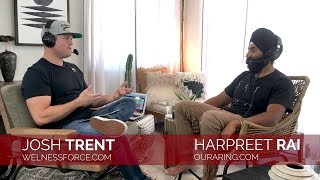
Interview (Jan 1, 2019) of Harpreet Rai (Oura/Aura Health CEO) by Josh Trent about sleep’s central role in health and fat loss, and how the Oura Ring/app helps users track sleep and change behavior. Key claims: poor sleep alters hormones (ghrelin/leptin), raises insulin/fasting glucose and hunger leading to weight gain; tracking sleep prompts behavior change (examples: removing late caffeine, treating sleep apnea, camping); deep sleep and circadian timing are emphasized (quality + quantity); Oura’s finger-based ring chosen for signal strength and comfort; sensors include PPG-derived pulse/HR/HRV, respiration rate, skin temperature; latency ~10–20 min (optimal ~15); wearables ≈70% accuracy vs. polysomnography but precision (night-to-night change) is valuable for behavior change. Several user- and study-based anecdotes and approximate statistics are given (see answers).
Questions this video answers
About 60 million Americans (stated in the interview).
71.6% (stated in the interview).
He gained ~40–45 pounds (from ~140 to ~180 lb) while routinely sleeping ~4 hours per night.
Typical good latency: ~10–20 minutes; optimal indicated around 15 minutes.
Approximately 250–500 extra calories per day when chronically sleep deprived (stated in the interview).
Chapters
Welcome to Wellness Force. This is Josh Trent. Today I have a very, very special guest on location, live and in person. My guest today is the CEO of Aura Health. After attending college in Michigan where he studied electrical engineering, he walked a different path, led him into the investment banking space where over the course of nine years, he frequently was sleeping only four hours a night. While working in this kind of high stress financial world, he rose to be the CEO of Aura in a personal path for better health and is here today to talk about why sleep beats food when it comes to fat loss, losing weight, letting go of old weight. Welcome to Wellness Forest Heartbeat Rye.
Thank you. Appreciate that, Josh.
Now, you told me that that might be your new bio.
That might be my new bio. I'm pretty bad.
Has anybody ever scripted a bio for a podcast for you like that?
No.
Okay.
That was pretty awesome.
I had so much fun just doing research on you. And this is. I've been really looking forward to this. I've been using Aura personally for, gosh, almost three years now.
Awesome.
And if people don't know what Aura is, just tell them really quickly, like, what is Aura? What's your foundation?
Aura. You know, our view is we want to improve human potential through better sleep. And so we make a device called the Oura Ring and we have an app that gives you insights about your sleep. Hopefully you can find things that help you improve your sleep over time so you can live a better life.
Yeah. And that's really what this podcast is all about. To live life well, this physical and emotional. It's interesting. Before we started recording, we're talking about spiritual maintenance. And you're like, I love talking about spirituality. And I think we look at really what this ring is. It's a mirror of mindfulness.
Yeah.
It's a way that people can actually keep tabs on how they're showing up in life, how they're sleeping. But I realized that we're talking about a 40 billion dollar industry. It's huge, this sleep industry. Everything from beds that sense how you sleep to sound sensors and everything else.
But over the pills. I mean, over the counter pills, you know, both prescription. Guess how many Americans take sleep pills, both prescription and non prescription.
Blow me away with this number.
Take a guess.
I'm going to say it's more than 5 billion.
No, no. How many million Americans?
How many million? I thought you were talking about money.
I was like, yeah, yeah. I don't actually don't know the dollar amount.
Okay. There's. There's 330 million Americans. Right. I'm going to say, I'm going to say 5 to 10 million Americans.
60.
Okay.
I was way off, dude. So was I. Right? It's crazy. 60 million Americans. That means one out of every five people, roughly. Right. Somewhere between five and a half people. One out of every five and a half. If you find a half person but are taking some type of sleep med, that to me is just like mind blowing.
Why do you think in the wake of pharmaceutical interests and all these other sensors and gadgets, that Aura is doing so well? What is it about Aura that's really shining so light?
Well, look, I do think it's a rising tide lifts all boats. So I think there's something with the market we should just talk about. Why are 60 million Americans taking these pills at night?
Yeah, let's answer the truth.
Yeah, I think that's partly it. You know, we're happy to be one of the companies that's trying to help people improve. You know, something probably a little bit, hopefully more sustainable. You'd argue a worse business model. A pill you keep taking every day, you know, or you keep using every day, but you only buy once. But I think, I think really underlying the market is I was talking about this with someone else, another company in the sleep space, and actually a venture capitalist. And we were like, what is going on here? And he basically was like, it's anxiety, it's depression, it's people's poor diet and it's just amplifying itself.
Yeah.
And his view was that social media, everything you have with smartphones, Netflix, is just amplified. All these bad sleep habits and people are more stressed during the day. People are more anxious. They're touching their phone 150 times a day. Right. That's like, you know, every seven minutes of your waking, if you're up for.
I feel that too. I feel the pull to the phone a lot.
Yeah. So, I mean, and you know, some of the studies done out there showed how that's basically like, like, it's like gambling. It's like more addictive than gamb in sex and drugs. Right. Is your phone. And so, you know, so if you just think about that, if you're constantly getting pinged every five minutes, every 10 minutes, you're just more anxious, harder to sleep. Right. If you're just being pulled in all these directions.
And living life well leaves really big clues sometimes. And I think about the recipe for really actually allowing ourself. That's the key word. It's allowing ourselves to live life well. It's not always about the doing.
Yeah.
And I feel like when it comes to people that might want to have the perfect exercise plan, the perfect supplementation route, whatever it is.
Sure.
If they're not tracking what they're doing.
Yeah.
Then. Then doing more won't matter. It's the tracking that's really important.
Totally.
And no matter who you are as a business owner, think of this metaphor. Everyone that has a business takes somewhat of an inventory. Well, the oura ring, really? What kind of an inventory does this help people take? I mean, sleep is really a big focus. That seems like the number one is sleep, the guiding light beyond just really the data sets and everything else.
I think the view with sleep is like, you start off your life with sleep, Right. You literally wake out of a, you know, unconscious state. So I think starting off there, like, how are you going to have, you know, how are you going to function the rest of the day? What kind of day are you going to have? What kind of mindset are you going to have? Like, we sort of all ask ourselves in the morning, like, when we wake up, like, oh, how do I feel?
Yeah.
Right. And so I think being that guiding light is important in the beginning. Like, and if you can establish a frame of reference, like, hey, today's an awesome day. Like, I'm going to, you know, go hit a PR today. I got. I actually did get, you know, first time in a while, some really good HRV last night and some good deep sleep. So, like, I want to get to the gym. I want to cancel a meeting or do something, you know, to get to the gym. But even, even vice versa, even more importantly, actually, if you didn't, hey, today was really. Last night was really bad. It was stressful. Right. Like, you're actually now on a little bit more guide of a foot. Okay. Yeah, I might, you know, I know when I don't sleep well, like, I get more snappy. I do, right? Most do.
It's different than hangry.
Yeah.
Lack of sleep is totally different than hangry.
Yeah. Hangry. I feel like me, hangry. I just don't want to talk to you. I just want to go eat and like, you know, be one with food. But I feel like lack of sleep or poor sleep, I'm just like, I'm just more snap. I'm snappy. Right. So for me, it's really important. I feel like when I know I have a bad night of sleep, more important that, okay, I'm going to watch out. You know, all my hormones are off. Right. My ghrelin is up, my Leptin is down, Right. I'm going to be eating crappier food. That's going to make me feel even worse. Right. I might be. Actually, I might make a bad judgment today. And more importantly, what am I going to do about it so I can get ready for tomorrow?
Yeah.
Get back on the right path.
The weight loss industry, they talk about sleep, but their focus is primarily diet and exercise, which is a totally different paradigm. But we look at the numbers, right? CDC reports just recently 71.6% of adults age 20 and over or overweight or obese.
Yeah, 76.
71.6%.
71.6.
Which to me makes me want to take 25 over the age of 20, which to me makes me want to take a deep breath and ask the question, how do we address this? How is Aura addressing that specifically?
Yeah, I mean, look, I think weight loss and sleep, I saw it myself. So I did start investment banking. I came in, you know, out of college. I came mainly because I had a bunch of student debt and I, you know, for the most part, grew up in New Jersey. So a ton of friends living in New York City. I'm like, oh, what do you do? What do you do? How do you get a job in New York City? Right?
Sure.
That's what you think about when you're 21 years old. You're like, how can I.
It makes me think of the pace. Picani commercial, New York City. Get a rope.
Yeah.
Like, what is that place?
So it's like, oh, how can I live there? Right? That's what you're focused on when you're on the other side of the tunnel in New Jersey.
But.
But, you know, so I was like, oh, investment banking, cool. I'll learn about that. You know, figure out how to get a job in that. And I gained a pound a week, roughly. A pound a week. And I came in weighing 140 pounds. I left weighing 180 pounds.
This is when you're sleeping four hours a night.
Four hours a night. And so I was like, man, you know, I was actually, back then, this was 2008, 2007. Like, had already started doing CrossFit type workouts. Like, was already eating pretty clean. I was still eating carbs and, you know, but mainly not processed, right? So just fruits, right? Vegetables for some carbs. And so I'm like, how the hell am I gaining a pound a week? Like, I wasn't eating more than 2,000 calories a day, right? And I'm like. And I'm like, 21 and I have like a, you know, but then I started reading bad sleep and lack of sleep. I'm like, oh, wait, actually, your fasting glucose levels rise. Your insulin response is like 50% lower.
Yeah.
Oh, wait, this hormone called ghrelin makes you hungry and you get way more hungry and then you don't feel as full. Leptin. Right. And so for me, I think sleep and weight loss, like, if you look at, I mean, even if you look at some of our data, we even see it internally, like people's BMIs versus how they sleep are directly correlated. Right. And so it's sort of the chicken and the egg sometimes. Was it poor sleep that caused people to be overweight? You know, I mean, forget it, right? Let's just like, you know, forget if it's chicken and egg, let's make an omelet and make something good out of this. Right. Like, either way it's a problem, right? So let's, you know, you address it from. Hit it from both sides, right. Start eating. Right. Start working out. Right. And also start getting good sleep. But I think our society has sort of always focused us on the active state. It's always focused us on, hey, plan your workout, plan your diet, make that active choice. But we sort of look at sleep as a passive thing. We just forget about it.
There's even memes out there, I'll sleep when I'm dead.
I'll sleep when I'm dead.
It's not very intelligent.
Yeah, right. And by the way, those people, I think a lot of them who've said that some of the famous people have unfortunately passed away or had, you know, issues like Alzheimer's earlier. Right. So I just think people have thought about the industry, the marketing industry has sort of thought about, oh, make food sexy. You can sell a diet, you're going to make a choice to eat today. But we all make a choice too, to sleep. We just don't think about it as much. And so when you actually look at all sort of the biological hormonal biochemistry effects of poor sleep, I think it actually outweighs a lot of the things from poor diet.
Do you actually believe that? And I'm curious, with this massive data set that you have, do you believe that men and women truly need eight hours? You know, there's Nick Little. Hill talks about cyclical shaping and all these things. What do you believe and what do you believe from not just yourself, but the data.
Yeah.
That shows is eight hours really it. Is it quantity or is it quality? It's both, you know.
Yeah. I think it's quantity and quality. Right. I think you need a little bit of both. So I definitely think you need a little bit of both. Like, if I had to guess what, what out trumps. What? Sure. Quality. Out trumps. Right. You know, out trumps quantity. Because you can sleep a long time if you get know zero deep sleep. Like you're going to be affected. And we see that in our data. Yeah, and we see that actually even there's even like, forget even our data. If you go look at. There's actually. We should actually definitely share this paper because it's one of the better ones we found, or Hannu, our chief scientist, found. And it was like a study from Stanford. They went through a bunch of sleep data and they even just showed actually one of the factors where people lack most is deep sleep. Like, you know, just you under the age of 60, they'll just be random subjects who just even in the lab, even over multiple nights, will just get zero deep sleep. And then everything we're discovering now about the science of sleep suggests that deep sleep is like one of the most pivotal, you know, one of the most pivotal stages of sleep. Even though it's a typical, typically the shortest.
What blocks deep sleep the most?
I don't know. Like, I wish I knew what blocks it the most. I think from what we see in the data, everything from timing. Right. Your body's a clock, so don't you want to start that clock at the same time? And, you know, we're often starting at different times, so all our hormonal systems get shifted and that definitely affects things up. So it's not like, oh, I'm going to start the clock one day and all of a sudden, you know, started, you know, two hours later the next day. But most people do that every weekend.
Well, there's, there's habits for success in business, there's habits for success in health. It's interesting, there's a quote here from Robert Stickgold. He's the director of the center for Sleep and Cognition at Harvard Medical School. And he says now more than ever is an imbalance between lifestyle and sun cycle that's become an epidemic.
Totally.
It seems as if we're now living in a worldwide test of the negative consequences of sleep deprivation. This point about starting our day at the exact same time for that circadian rhythm, which we talked about with petri on episode 160. How important is that?
Huge. I mean, I think just getting the right sunlight exposure in the morning or just getting some sun. Yeah, we mainly are Indoors, right? Like, just think about how we evolved. We were talking about camping earlier, before the show started, right?
How fun it is.
How fun it is, right? And from our data, when we even. We saw just like, small group, had a couple of friends camping, we all got some of the best sleep scores we've ever had. And we're like, all right, well, the earth is cooler. The, you know, sun goes down at, you know, call it. It was like six or seven o', clock, right? So none of us are, like, in front of TVs, right? It gets colder as we sleep, which we know helps, right? But then also, none of our cell phones really had reception, so it was like a combination of all those things that put us back into nature. And now, like, I forgot the gentleman's, you know, gentleman's name.
Robert Stickgold.
Robert Stickgold.
I haven't met him. I just pulled the quote in context.
So look, I think. I think he's putting probably got. We are living this experiment of, okay, now we're living indoors, right? How do most people live, right? You get up, you're sort of scrambling to work, right? You have your cup of coffee, maybe a Red Bull, right? Diet Coke, whatever you want to have. Jump in the car, still indoors, get inside, still indoors, and say, like, where's your exposure? Real light, Right? Where's your exposure just to air and environment?
Right? And where's your real exposure to the ways that we were designed to actually live?
Exactly.
Isn't that what we're talking about?
Right? So, I mean, I think as far as sleep and, like, the quality versus quantity. Just getting back to your original question, I think it's both, you know, I do think most people can get the right quality just by sticking to some basic principles. So, yes, timing and just trying to be, like, getting that exposure, you know, during. During the day at the right time. I mean, one thing about timing, that's super interesting, top three days in the US that people have more heart attacks, right? Daylight savings, both spring forward and fall back. I forget the exact numbers, but Matt, Matthew Walker talked about it on Joe Rogan's podcast. But I think the study, when we looked it up, is something like 20% more heart attacks that day. And the other day is Monday, right? And why Monday? People's like, you know, everything we know about cardiovascular disease and, you know, you know, and sleep. Like, people are getting less sleep typically or worse quality sleep on Mondays, right? Because you're, like, sleeping in on the weekends. And you try, you know, starting that clock again earlier, after starting it later. On Monday. And you know, and there's also that.
Feeling of like, oh my God, I'm going to a job that I possibly don't like. Which is causing stress response there as well. This purpose driven life versus, oh, I'm kind of a victim and I don't know what's going on. I think once people start tracking it actually helps them remove from this is happening to me. Or hey, I'm monitoring it. So it's happening for me, my life is happening for me. It's interesting. Somebody might start by just maybe committing to tracking their sleep for a week and then notice how that commitment bleeds into other areas of their life.
Oh, totally.
Have you seen that from case studies in aura?
Yeah. I mean, I think it's like you, once people start addressing their sleep, they start, you can start prioritizing everything else, right? So, hey, guess what? Oh, I'm starting to sleep properly. Probably get better. Deep sleep now.
I'm in a better mood.
I'm in a better mood, right? I treat people better.
I'm not a dick.
I'm not as angry all the time, right? Or snappy all the time. But even think about like another goal. If you're trying to lose weight and you're trying to get to the gym more often, like, okay, now your performance in gym increases. Well, why is that okay? Well, yeah, my testosterone, my growth hormone's probably being released more fully at night, so I'm actually recovering. Right. A lot of my muscle repair is happening. So you break muscle down in the gym. You don't get stronger in the gym. You actually get weaker. You get stronger after the gym, right. When you recover. And so I think just, people forget that principle when it comes to sleep, right? I did, I worked out as much as I could, you know, while working in finance. And like I, you know, herniated the desk, tore my labrum, my rotator cuff. Right. And tore my, my mcl. Right. All from probably, if I had to guess, sleeping five to six hours a night for years and still trying to get up at 5am and work out.
People forget you actually get stronger while you sleep.
Sleep.
These actin myosin fibers in the sarcomere, that's what creates lactic acid. And that's what actually gets to be healed at night when we're sleeping. But if you're not sleeping enough, I mean, gosh, I'm going back four hours a night.
Yeah.
How were you surviving? What did you actually do? What were the changes you made to get out of that rut? Were you Tracking anything.
This is way before Aura. This is way before Aura. Yeah, I was, I was using wearables back then. I was keeping a log. I mean part of it was, you know, investment banking is a lot like a fraternity, like in the sense that like hey, you're the, you're the first year, you're the freshman. Like we're going to load you up with as much work as you can.
So what kind of days are we talking about?
Oh, I mean routinely, probably once or twice a week, all nighters. So like, you know, you don't go home or you go home and you shower and you come back. Right. Like without sleeping. So there was definitely, I mean that was happening quite a bit. But yeah, roughly. I'd leave the office at 2 to 3 and you know, by the time you get home, unwind. It takes a while to fall asleep because you're sort of wound up.
Yep.
Right. Yeah, I'd probably go to bed by 3 to 4 and sleep till 8 and be up in the office by like 9:30.
Do you feel like looking back that was the reason why you got injured because you weren't being mindful about your sleep?
Definitely one of the leading reasons. Yeah. I mean I would say actually like my form is something like I. Even then I'd start to tape like in a gym, you know, with a clunky palm. Not even, not even the BlackBerry cameras. Right. So okay, yeah, I would tape it with that and like look at stuff just on, you know, YouTube. So I'd feel like form wise I was doing pretty well. I mean, look, I did get into CrossFit for a bit. So you know, sometimes doing, you know, cleans to failure isn't necessarily the safest thing either. Yes, yes, there's probably some learnings there. But no, I would say most of the injuries were probably from a lack of sleep.
You know what's fascinating to me is what's also sad to me is if people are sleeping less than six hours, the research has shown. I'll put this in our show notes today. Increase goes up 50% for injury if you have less than six hours of sleep. Have you seen this in the data sets where people maybe go for a long time and their sleep is low and then all of a sudden there's no record for a couple weeks. Do you ever wonder like, did my user get injured from not sleeping enough?
I haven't actually. That's a really good question. Yeah, I haven't thought through that one. I haven't noticed that. Or like someone on our data Team hasn't noticed it, but at the same time, we probably haven't looked at that. Sometimes we probably attribute it to, oh, I'm getting crappy sleep scores, I don't want to look at this device anymore.
But yeah, let's talk about that then. Because, you know, monitoring is something that Gretchen Rubin talks about. She says self monitoring strategy for behavior change. How does this ring loop into behavior change? You look at this continuum of behavior change, you know, whether it's an external locus of control, which kind of a victim, or it's an internal locus of control.
Sure.
How does this ring plug into a behavior change program?
I look, my, my view is there's definitely a certain amount of users out there in the world, right? Or in the U.S. is it 10% of the population or 20 or 50? I don't know. But if you just show them a log data of what's happening, they'll start to question the data. They'd be like, wait, so why did I get really good sleep? Like even myself last night slept awesome. I got like 2 hours and 25 minutes of deep sleep. My HRV was close to 90 and it hasn't been there for a few weeks, right. I was in Finland, you know, jet lagged a bit coming back, but what did I do? I'm like thinking back in my head, oh, I did a squat and deadlift, heavy leg workout two days ago, probably needed a day to recover. And now that I'm recovered, okay, my body is responding hypertrophy, right? Some form of super compensation, coming back a little bit stronger. So to me, in my head, that's what I think it is. Now is that true or not? It's probably a host of things that was probably the biggest stimulus I did that day. So probably my diet didn't change that tremendously over the last week. So for me it was like, okay, I saw this data, all of a sudden it's really good. I'm asking myself, how did that happen? And so now that I've associated something with that, positive or negative, right? Then I'll try to do more of it to vet it out, right? So I want to get to the gym today, right? That's like, that's my goal today, right? Outside of the meetings, outside of the work, even if it's going to be a little bit late workout, even if it's just something like yoga or the bike for 20 minutes, I'll try to get something in. So I think as far as behavior change, when people start to see something that pertains to Yourself, like data on yourself. It's personal. And then you just start to question the data. You'll see things that are aberrations from the norm. First you might do a holistic assessment. Oh, why am I not getting zero? Deep sleep is like the common thing we get from our users. Why am I getting 20 minutes of deep sleep? So when you start to learn, you start to be like, okay, why is this? You start reading. Oh. Or listening from our users or, you know, podcasts out there that sleep time is important. What time I eat relative to when I sleep, my blue light exposure at night, maybe that late workout. We just had a user actually in San Diego. I think his Instagram handles San Diego. Joey. Giving him a shout out right now.
Shout out to Joey.
Yeah. Awesome story. Probably one of the best stories we've heard in a while. He, you know, he actually has had sleep issues for a while. He works in construction. He got hurt at one point. So since then he's had like, you know, pretty, pretty big sleep issues. He actually found out and went and got an apnea test done. He has mild sleep apnea, like mild to moderate. And then he's been using a CPAP machine for a few months. He's had an aura ring, by the way. He's a Spartan racer. You know, he. He was at the world championship, you know, in Tahoe this year where, where we.
Right.
Yeah, we were hanging out and that's.
Where I met your dog for the first.
Yeah, you met Lola. And he finally found. He's like, I've been messing around with my sleep for the last six months. And here's what I finally found. I finally decided to cut out that four o' clock coffee. As soon as I started cutting out the four o' clock coffee, falling asleep quicker, started getting for the first time ever, like, you know, 50 minutes to an hour of deep sleep.
I love that you mentioned this so much because caffeine, sometimes really strong amounts of caffeine, half life can be 12 hours.
Sure. Yeah.
So somebody's having a coffee at 3 that's still in their system when they're in bed. Dan Pardi taught me all about this sleep cycle because he had background in pharma. And then, you know, he does so much work with you guys too. I think about how what people don't know can hurt them so much. And just literally, let's really focus in on the caffeine. When people are having caffeine past noon.
Yeah.
That can affect their sleep cycle so much. And I think, you know, I asked you what could affect deep the most? I feel like that could be a very.
Yeah, you know, it was funny now when, you know, we're down here and, you know, close to San Diego, and we were like, oh, you know, just going by the beach yesterday on Sunday, and I was like, I saw these Starbucks open at like 4 or 5 o' clock and people are packed.
I'm like, how are they doing?
Like, this should be illegal, right? It's like decaf only after like 3 o', clock, right. But at the same time, when I was doing investment banking, I used to go get my. I used to be at the Starbucks in a building right before it closed at 11 o'. Clock. Because I knew it was like, I need to get through the next four or five hours. I need a cup of coffee, right? So, but getting back to behavior change. And by the way, Dan party, same thing. He just shot me an Instagram message not too long ago. And he was like, I finally started being super consistent about the timing. I went to bed and he was like, oh, my God, my results are off the charts. And so, you know, San Diego Joey, Dan Party. I think once you just start to see, the data becomes personal. You start to just reflect and start to change things and you start to notice patterns, right? And look for. For San Diego Joey, like, he tried a bunch of different stuff over the last six months before he finally cut that four o' clock coffee out, Right. It's probably the most painful, hurtful thing to change for him.
Like, he's already taking away someone's coffee.
That's like.
That's like cursing in church.
Yeah.
And that could be really serious.
Yeah, no, totally. It's probably worse than cursing some people. But I think for, you know, once he saw the data, then he was like, damn. Yeah, now it's easy for me to stick to this. I think before, when you don't track and you don't see some of that data, how do you. How do you even know, right? Like, you sort of feel like, oh, I think I slept better. Maybe I did, maybe I didn't. Now I have something objective, right? That's telling me, okay, I slept better. So that. That's a huge change. Now you're like, otherwise we sort of. I like to say before we probably used to be able to feel these things. If you rewind 30 years ago, 40 years ago, pre Internet, right? Pre. Getting pinged 150 times a day, right? During the waking hours, right by our cell phones, we probably did used to think and feel a lot more but now we're so distracted. Like, I don't think we have time to feel like you don't have time to feel. I have six emails to answer by the time this podcast is done. Probably more. Right. So I don't have time to feel like, how did it go? Like, maybe in my subconscious I'll think about it, but I don't think about it as deeply as I used to before, when I'd probably be sitting at a bus stop waiting instead of even having an Uber on demand. So I think now that we're more distracted than ever, busier than ever, it's hard for us to feel. And so I think tracking actually even makes more sense now than it did before. And so these are just a couple user stories, and we've posted a bunch on our Instagram lately. A bunch of our users post and share some all the time. And so I think tracking just sort of holds you accountable. You start to look at the data and you just start to ask yourself simple questions. I do think we have to go. I don't know how big this user set is. We think it's millions of people that can look at their own data and sort of start to figure it out. I do think there needs to be more education. I do think there needs to be more community. I think the easiest way to do it is just tell user stories like San Diego Joey doing that at 4:00'. Clock. Now, every one of our aura users who has a cup of coffee, I want them to experiment. I hope they try.
I can almost guarantee that someone that's either watching this or hearing this on itunes, they're gonna experiment from this show. Just, you know what? I'm take out my coffee in the afternoon and I guarantee somebody's gonna write in and say, you know what? That improved my sleep drastically. Right. We look at the way that sleep is measured, though, and there's, you know, the deep sleep, there's the light sleep. We talked about the hammock with Petri a couple years ago. Why is it so important when you look at the data where that lowest resting heart rate is in the middle of the night?
Yeah.
Called it the sleep hammock.
Yeah. Can you talk about that a. Yeah, sure. I think one of the things we. We talked about on the blog post associated with that as well is that how when it's towards the end of the night, that sort of means that your body is still working. So if you have a late meal or if you have alcohol or if you're super stressed. Right. Or even if you work out late, you'll see that it takes a while for your resting heart rate to go down. So your body, if you think about it, it's just not relaxed. Yeah, right. It's still working, it's still preoccupied. It's either digesting the alcohol, that food, that stress. Right. That meal. Right. That late workout. So you know, when you're, if you, if you want to think about mindfulness and meditation and having the best meditation session, you can think about sleep. Sleep's like this eight hour meditation session where your brain shuts off, where you're not stimulated by email. Right. You sort of want to be in optimal conditions, right. You take out your yoga mat, you take out your meditation mat, you want to be in a dark, cool room. I mean, you should be doing the same thing when you're sleeping, right. So if you're having a bunch of coffee right before you meditate, right. Would you like. We wouldn't do that, Right. Or we wouldn't like pound a Peter Luger steak and then go try to meditate right after. Right. So it's the same thing when you sleep, I think, like you want to get your body set up for, you know, success. Right. And a condition set up for success. So looking at your resting heart rate is a good indicator of like, hey, was there something else going on where your body actually wasn't relaxed?
And if that resting heart is maybe, for example, at five in the morning and you get up at six.
Yeah.
Well, then there wasn't as much restoration. Literally. The quality of sleep can be judged by the position, position of that hammock. What are the other ways though, that you measure the sleep quality? There's some other factors.
Oh, I mean, sure, there's a ton. Yeah. I mean, movement, maybe we talk about.
The most important ones.
Yeah, I mean, look, I think staging is important and sort of when the staging happens, we've also seen, is pretty important. So, you know, in the, in the first half of your night you should sort of oscillate between light and deep sleep. Right. And then in the second half of the night, you should sort of oscillate more between light and REM sleep. So everything we know about staging sort of indicates that. And our brain's meant to go through those stages in a certain pattern. We know the brain cleanses itself of toxins during sleep as well. So I guess it's staging correctly helps our brain sort of clear some of those toxins the way they're meant to be cleared. But yeah, I think staging getting enough Stages of deep and REM are helpful into sort of leading into restorative and recovery.
There's a latency mirror. There's a percentage of latency on the app as well. What is that for?
Latency is how long it takes you to fall to bed. You shouldn't be falling asleep actually, really quickly. Some people are like, oh, I had two minute latency. And we're always like, actually, that means you're too tired, right?
Yeah, that means they're just straight up exhausted.
Yeah, they're straight up exhausted. Right. So typically, I think, you know, good latency, you know, and this is third party research out there, is sort of anywhere between 10 and 20 minutes. I think the optimal time has been indicated 15 minutes. So sometimes, you know, it'll take people an hour to fall asleep. They're restless. There's other things occupying their mind. They might have mild insomnia. Right. So I think they may be having too much coffee. It's hard.
I'm curious how you're integrating breath into aura. Because it's tattooed on my arm. We've talked about it on the show. Breath, to me is so important. How do you integrate breath into aura and the technology aspect?
Yeah, we do look at respiration rate all throughout the night. So we give people an average of the respiration rate as well. That's another indicator to look at. Metric you can look at to see, hey, was it breathing heavier or lower? We are introducing a meditation mode, so you'll be able to actually track hr. Hrv.
I'm getting excited now. Tell us about the meditation piece.
Yeah.
When is that coming out?
We've been doing the work internally. It's looking really good. We're trying to gather more data. That's something we always try to do before releasing a feature. And so far the data actually looks really good. I think some of the respiration stuff does look probably a little bit more challenging on people that have some type of condition. Um, so that's one thing we're trying to collect more data on. Um, you know, so if you're, if you have a shallow respiration because you're of a certain age, or if you have potential, you know, some type of hypertension may be harder for us to see that as accurately. But yeah, we're going to introduce a meditation mode. So you'll be able to even just go from, you know, people looking at, hey, if I know my baseline resting heart rate, typically at nights 55 when I do a session, you know, during the day, I'm a little bit more Elevated. Can I get back down to some state of recovery? And same thing with hrv. Can I get into sort of a, you know, sympathetic. Into a parasympathetic state.
Yep. And this will be included with the app when they buy the ring.
Correct.
Okay. So I'm very excited about this because right now I use Insight Timer.
Yeah.
Which I love.
I love.
It's a great app. But I think about, you know, how do we make things as simple as possible and not to do anything other than uplift the human to allow the human to do things with as little investment, as much reward as possible? And I think about just using a ring. Why do you think the form factor of a ring is more effective?
That's a really good question. So I think, you know, there was two guiding principles there when sort of, you know, we have. So we have three co founders. You know, Petri, who you've met before.
Was I saying his name right on the last show? How do you actually pronounce his name?
Petri.
Petri.
Okay.
I was close.
Yeah. Yeah. And by the way, I'm probably not 100% correct either.
We're doing our best.
We're doing our best. We're doing our best. Kari, he actually is sort of our mechanical engineer and designer of the ring. And then Marco Koskala, he's like our optical engineer genius. Does all the stuff I could never figure out in college. So I think what they saw, frankly, in a ring was two things from the science side. They saw that, actually your pulse signal from your finger is about 50 times to 100 times stronger than that on your wrist. And I think we sort of know this because hospital sensors.
The Mossimo is always there on the finger.
Exactly. Mossimo is always there on the finger. Why is that? That thing's plugged into a power source. It's plugged into the wall. And there's still something from your finger. Why is that? Well, those arteries on the inside of your wrist that have much higher blood flow than the veins on where your watch sits, those same arteries go into your hand. The skin is thinner. Here. Our skin's literally red. Even though I have darker skin than you here, our palms are roughly the same color. The skin is uniform. The blood is very close to the surface. The pulse signal is very strong. The result is the pulse is 50 to 100 times stronger than that of your wrist. If you're going to measure a signal, measure a signal there where it's stronger. So that was the first, I think, principle. The second principle was if you just Looked at what people would wear to bed, would they wear a chest strap? We found most people didn't like that. Most people didn't even like the idea of a.
Who wants to wear a chest strap to bed? I'm sorry, any companies that produce chest straps. But seriously, who's doing that?
I mean, for HRV testing, sometimes people were.
Okay. I guess there's some cases.
Yeah. Before you had devices like aura. Right. So. And so we tried people with a chest strap. We tried people wearing something on their ears, like earbuds. But if you sleep on your side, it can be annoying. And most people do sleep on their side. And we tried something on the head that can be annoying as well. Right. Most people don't. It's probably not the most attractive either in bed, but. And then. And then a wrist strap. Right. Even just a watch. Right.
Yeah.
700 million watches are sold each year. I think over 3 billion people wear watches. Right. But how many people wear those watches to bed? Most of them don't. Right. They're uncomfortable. They hurt your wrist. Same thing if you're trying to cuddle. You know, sleeping is an intimate moment. You know, so we stuck with sort of like what we like to call internally the oldest wearable out there. Yeah. You know, so the wedding ring. Right. But the idea of a ring. So we found both from a comfort standpoint and an accuracy standpoint. It was just the place to be.
Yeah. It makes the most sense too, for the modern world. Like, you know, people type a lot.
Yeah.
And I found that when I used to wear the Fitbit.
Yeah.
And it would scrape on the keyboard.
Keyboard. Yeah.
And plus I would get woken up from the LED where it's skin at night. I'd be like waking up in the middle of the night. So this is why I believe that not only is the aura going to continue to grow, but I'm even more excited now about this meditation piece because we talk so much. It's in the M21 guide for our audience. This a discounted aura, but also just this power of meditation. You know, where we drop in and we actually figure out, okay, for 10 minutes today what's going on, what's actually happening in my life? And I think some people are analytical minded and they might be like, well, how do I know this thing's actually accurate? How do I know this aura ring is accurate? I might meditate, but how do I actually do it? And it's interesting to prep for the show. I was thinking about the bulletproof labs. They're 80% accurate in sleep. This. This is how you design Aura. Yeah. This is actually the tracking element.
Sure. If you're going into a sleep lab.
If you're going into a sleep lab, yes.
Yeah.
The accuracy point, like, is. Is any sleep wearable actually 100% accurate? Is that even possible?
No, it's not possible. So, yeah, great for. Thank you for bringing that up. I do feel like people don't know this. So if you go to a sleep lab and you get. It's called polysomnography data, right? Brainwave data. And you go and show that to one sleep doctor, let's say, at Stanford, and you go show that to another sleep doctor at Berkeley, they will come back with 20 disagreeing on 20% of the data. And mainly because you're actually, you know, sleep staging is brain waves, right. And so they classify them in different states, like deep REM and awake. And so, you know, you will be between a certain frequency a lot of the night. And so they're like, hey, does this look more like rem? Does this look more like deep? I'm not entirely sure. Right. And so, yeah, about. If you. If you show the same sleep data to two different, you know, sleep techs or sleep scientists, right. Or sleep scorers, right. They will come back with disagreement on 20% of the values. So no wearable can be that close, right? No wearable can be better than call it 80% accurate. Right. But then, remember, there's also what we do at Aura and what all the other companies do is we. Because most people do not want to wear something on their brain when they go to bed. Right. Like everything you'd wear in a sleep lab. Right. And so we look at physiological signals that correlate with sleep. Right? So, and we try to draw out these models. All of us have slightly different models, probably, but if I had to guess, are probably more similar than dissimilar. Again, that's just me guessing. But, you know, what we look at then is, okay, how much is this core? What signals do we see in ram? Okay, so in ram, we know, like, you tend to be breathing a little bit heavier, right. You tend not to move as much. So, okay, how do we put that in an algorithm and then equate it back to the polysomnography results? Right? So I think sleep test, the sleep test, right. If you went and got a scored by a doctor, you'd be 80% sort of accurate, if you want to call it that way. I think if you looked at any wearable, you know, us included, you'd be close to 70% accurate. And I actually this is going to be sort of a little bit, maybe not as apparent to the user, but the accuracy part matters. But I think the more, you know, the part that actually matters more for tracking is precision. When you see a change night to night, did you see that change in your data? So if I'm San Diego Joey, I can say, hey, I got better deep sleep when I cut out that coffee. That's what's important to the user. So whether San Diego Joey really had five minutes of deep sleep when he was having the coffee every day or he had 15, who cares? Either way, it was sort of low. And then B, when he made the change, it was reflected in the data and then he figured out the right intervention or the right behavioral change. That's how we have focused Aura's algorithms around. So we've focused a lot on the device. We're not doing any data smoothing. We don't do any type of things to make you look like a typical 40 year old who's in really good shape like San Diego Joey. What instead we tried to do is actually show you the deviation night to night based on our data. So I think that's what's most useful to users. That's what's most useful in the context of tracking. That's where you're going to be able to see a change that you make in your lifestyle being reflected in the data.
I think about accuracy in someone that might say, well, how do I trust? How do I trust if something's accurate? There's, there's almost like a fear to start. And I feel like, you know, back in the day, another life when I was a trainer, if our scale was off three pounds, but we always use the same scale exactly, well then we at least have a measurable baseline to where we can move somebody forward to on a lifestyle change. And I feel like the same mindset when looking at, well, is the data really trustable? It's almost like a lack of trust within themselves.
Yeah, right.
Well, I don't trust myself to start somewhere because I can't possibly trust that device. Well, if you're using a device and you're tracking a process, you're going to see some type of change over time as long as you use the same device.
Same device.
Has this come up in any of your forums? I know your community is very active.
It's come up in some of our forums. I think in some of the Facebook forums it's come up. But really I think the idea of so it's precision, I think is the term most people, precision versus accuracy. So we've designed our algorithms to be extremely precise for the individual. There's other companies out there that will actually focus more on overall accuracy, but they'll lose night to night precision because what they'll say is actually, hey, Josh, you're in your mid-30s. You look pretty healthy, right? I don't know if you're in your mid-30s. I have no idea, but I'm 38. Okay, cool. So, you know, you're like me, you're in your mid-30s, right. You have a pretty good addressing heart rate. It looks like you have a pretty good bmi. Right. And then they'll actually try to curve fit you to that average cohort. Right. We have all this data. There's historic thousands of sleep studies done in labs. We know what the average 38 year old who sort of weighs this much and has a resting heart rate of this, what their sleep is. And so there's other companies who will try to make their algorithms that on the face that appear more accurate, but then what you end up losing is actually that night to night precision. So when you go and actually make that change, you know, you don't actually see it reflected in the data or reflected as much.
I'm curious about the skin temperature. Yeah, I got sick a month ago and I literally saw the increase on the graph and I could have, I didn't look too deeply into my data. I get these messages and it says, take it easy today. Be mindful. I love these messages. They're not too strong, they're not too little. It's like the Goldilocks message. It just comes through when I need it. Right. And I love that about the app. But when I look at the skin temperature, how does that factor into the algorithm? I've been really curious about this.
I mean, I think we look at it, a lot of this is data triangulation. So if your skin temperature was up, if I had a guess, most likely your respiration rate was up and your HRV was down and your resting heart rate was also up. So all those things sort of help.
Those are all the components of how your readiness score is factored, correct?
Yeah. So temperature is just one thing, but yeah, we have three different temperature sensors in here. We do look at that. And we've been actually trying to figure out, should we place more emphasis on this when we do see a change in temperature? Because you're likely coming down with being sick. So maybe we should actually have a stronger Message not be so golden.
Even a question like, are you getting sick?
Are you getting sick? Yeah, Right?
Are you feeling okay?
Yeah, like you're starting to get sick, so. But no temperature, I think temperature during sleep. You know, the things that we know about temperature. So when your body releases melatonin, right, Your core is actually trying to cool, right. So you just like sort of the night Earth, the, You know, the Earth cools at night, right? Sun goes down and the Earth actually continuously gets cooler. So we do know one thing, you know, melatonin release. So we do see that and people's data that actually, hey, you know, likely at a core trying to cool, they're trying to get ready for bed during sleep. You know, actually some stages, you change a little bit more. I think some of the research out there will show that actually in REM sleep, your body doesn't thermoregulate as well. You know, I do think some of the other. There's other companies out there, like Chilipad or I forget, the other cooling device for your bed. But, you know, they also have shown, I believe in some of their research and other research out there, that if you can keep people cooler, they tend to have prolonged deep sleep, you know, which I think is great. So. But yeah, it's just one of the many factors we look at. I do think it is interesting to do it on the finger, you know, if you think about it, when you get hot or cold, if you're cold, where do you get cold first? You get cold in your hands and.
Your toes and feet.
Yeah, hands, Toes and even.
It's also where we have the most heat loss.
Heat loss, yeah, exactly. So we tend to see that temperature change in your core reflected even more greatly in your fingers than if we were on the wrist. Another reason why we like. We like the fingers as well, I.
Think about weight loss, letting go of fat, letting go of weight, all these factors for sleep hygiene. We had Doc Parsley on the show, which I love. You know, it's actually Josh and I were filming this together here again, and we went to his house and he showed us his room. Super black.
Yeah.
Nothing was in there. No technology. And he was really excited about just having a space that had nothing in it except for, like darkness and sleep. That's actually what he talks about. And we've seen so many sleep experts talk about the light source in your room. Just, you know, we have these photoreceptors on our skin, we have photoreceptors on our eyes. Some of the things that can really you know, optimize fat loss. Not only waking up at the same time every day for the circadian rhythm, but also a bed temperature. And the research shows that 65 degrees for bed temperature is about the money spot.
Yeah.
Have you seen this from users that are reporting, hey, I made these changes and aura reflected the changes.
We definitely have seen that from users. I think we're actually trying to collect some more of that data. Chilipad, obviously, I think has a great device out there, so that's someone that we're trying to work with to collect more of that data. But yeah, we've definitely seen when you reduce your temperature, you tend to improve the quality of your sleep. We've seen it when people go camping. So you go camping outside, it's cooler than normal. The earth gets cooler throughout the night. We are actually doing some data collection on that with some people who are living outside still. So that's gonna be fun to do. So, yeah, I think temperature is a pretty important factor. If you think about. Just like, if you're sensing, what are your five senses? Right. Noise, sight, sound. Right. Feel, taste. Right. So how do those senses sort of change when you're sleeping? Right. It's okay. Temperature, how do you feel? Right. Light, what do you see? Right. Maybe if you're sleeping on something really uncomfortable, what do you touch? What else do you feel? So I think how do you. There's been all types of.
Yeah.
Research being done, sort of. If you can change some of these sensory inputs, can you change the quality of sleep?
A unique piece to talk about too is. And Parsley talked about this. It's sleep is creating a barrier between everything you have within your body and the outside world. It's a true barrier. So one barrier that is not really talked about a lot and I'm curious if it ever shows up in your data records, is emf. Yeah, you know, we have rooms like we're in a place right now. I'm sure there's EMF spraying everywhere here in Southern California.
Sure.
And with even 5G coming out, people are freaking out about 5G. How do you think EMF truly affects sleep?
Yeah, I think so. We've definitely seen it with people who are already immunocompromised that they tend to be more sensitive to emf. Right. So if your body's already somewhat broken down. Right. Maybe have some type of chronic disease. Right. Then you tend to be even more sensitive to the emf. So I think that we've seen, we've even heard some stories of users of ours when they finally put their. Unplug their laptop. Laptop. And shut it off. That they see that their sleep quality improves. I mean, that, to me, is, like, crazy. Wow. Yeah. So I think EMF is big. Light is big. You know, professional sports players, a lot of them now, when they travel in hotels, they'll bring, like, duct tape and, you know, plastic. Dark plastic trash bags.
Yeah.
Because they just want to literally get every single light source out. So I think, Dr. You know, parsley is right for focusing on being, you know, quiet. Right. Temperature and being dark. So emf, though, the more and more. I want to collect more and more data. We want to collect more as a company, I definitely think it's going to have a huge impact, especially as we start to see more and more of it with things like 5G. You know, I think Ben Greenfield, he's pretty, you know, enamored. Dr. Mercola is pretty enamored about, like, making sure that they have less EMF.
Dr. Mercola sleeps in a Faraday cage.
Yes.
Like, he has, like, nothing coming in. And Ben has a kill switch for his house.
Yeah.
I don't know if all of us can do that at this stage, but you're right. There is degrees of change.
Yeah. And, like, look, I. For. Again, I was, like, camping with probably five other Oura Ring users. Right. We were actually at a camp conference north of San Francisco, and everyone was sort of sleeping outside, and it was really cool to see that. And then we were like, oh, I wonder what it is? And I was like, it's got to be a combination of everything. Very low EMF out there. And then also, we're not using our cell phones because we had very low cell signal or zero cell signal. Right. And the temperature got cooler at night. Right. And also then, you know, light exposure. Right. No. No bright lights, no TVs, no electronics right before bed. So it's probably a combination of all those things that help improve our sleep. So, you know, I'd bet Ben and Mercola, it's probably all. It's not just that there's less emf, it's probably also that they're not on their cell phones. Probably, like, right before they go to bed.
Yeah.
Right. So it's probably a combination of all these things that help improve. And so you just got to see what you can and do in your environment. I think everyone trying to get kill switches in their house is probably hard, you know, trying to move to different locations for some that, you know, like, living outside of a city is probably pretty hard. So what are the small steps you can take to start seeing a change. Right. And so maybe the first ones are just getting rid of like some electronic devices or the bright lights in your. Or the TV sleeping with the TV on. That's one I actually want to collect more data on. Like, I'm convinced just from seeing other people's data when they fall asleep with the TV on. You just get so much disrupted sleep and actually ruins the quality of your sleep. I've seen that even. There was a professor, Dr. Ethan Weiss at UCSF, and he shot us a story on Twitter. And he was like, I fell asleep in front of the tv. My wife was gone. She's gone for a week with the kids. So he's like, I'm sort of a bachelor again. And by that he meant staying up late and watching Netflix and so on his couch and falling asleep. And so he was like, he didn't even fall asleep late, he just fell asleep at the same time. But he had the TV on, watching Netflix. And he did that two nights in a row. Fell asleep middle night, woke up, went to the bedroom, totally disrupted sleep, zero deep sleep. The next night he was like, still watch Netflix and not using blue light blocking glasses or anything yet. You know, we'll get him some, but shut it off and went to his bed. Much better quality sleep.
Wow.
So I think a lot of it is just getting back to your point. Like, can we all live as extreme as some of these people maybe one day. Right. But maybe small steps first. Yeah. Like shut off the tv. Yeah. Go to bed maybe then, oh, you're going to watch tv, you're going to watch Netflix before you go to bed. Put on the blue eye blocking glasses first. Right. So I think it's these incremental steps and you start to see the changes in your data and that sort of encourages you. Encourages you to take that next step. Yeah.
If you're like me, if you're, you know, an obliger personality type, where you do well with external frameworks for accountability, which I think the data shows from Gretchen's podcast. I think it was like 60% of people are like that. We do really well when we're changing our life by having external frameworks of accountability, these mirrors of mindfulness that shine on us. I'm curious though, like, is there something that you've come across in your research and your work that is kind of a secret to using sleep for fat loss and a hygienic perspective? Is there any one thing that people can do that people might not know about? That would really increase their quality of sleep.
Hmm. Any one thing, maybe the one that I think people don't know much about is stretching and relaxing before bed. So I think that's blue Light. You probably hear more about the sleep timing. You hear more about, you know, even what time you eat your meal, you know, relative to when you go to bed, you hear about. But I do think stretching because most of us are just desk bound all day, right. Like, you know Kelly Starrett's book, right. So, like, you know, I think we're just constantly in a state of tension and stress. Our bodies aren't meant to sit at a desk for that long. So I do feel like stretching actually helps a lot. And think about it, like, almost like yoga before, like an intense yoga class. You'll see all the, you know, yogis or yogis in training, what do they do before the yoga class? They're already loosening up, right? They're already getting warm, right. They're already starting to do some cat, cow, downward dog, right. Even some just child, you know, child's pose. Right. Just to start to loosen up. So think about the same thing for sleep. You're about to go into eight hour meditation hopefully, right. So how can you loosen up and prep before? So I think stretching is one Gwyneth Paltrow, she swears by it. She's like foam rolls every night before bed. So, you know, I definitely think it helps lower your respiratory rate, probably helps relax your heart rate. So it gets you sort of in this active mindset of relaxing.
That is a little secret key that I haven't heard about stretching before bed. I'm curious if Gwyneth has ever posted on Instagram with her Oura ring.
No, not that I know.
You gotta get her an Oura ring.
You gotta get her one. Yeah. Help her quantify how good her foam rolling is.
So, so many people are starting, you know, they're hearing this podcast on the first day of 2019. You know, it's like they're starting the new year. They're like, how do I actually do this? What do you actually think about people that do these New Year's resolutions? What in your experience and maybe with aura for these three, four years now, if people are tracking just one thing, like their sleep.
Yeah.
Is that going to make them, over the course of time, stick to that intention, stick to that promise to themselves in a lot more higher potential?
Huh. I mean, I, I do think there's something to be said about something that's a reminder and something that's Physical. So, like, why do we wear wedding rings? Right? You wear wedding rings because you're wedded to someone else, right? You want to remember that person all the time. Especially if you think about, like, you're about to do something bad, like grab another girl's hand or do something, you'd probably see your wedding ring. So, like, that. What would Jesus do? Moment. Right? So I do think there's some accountability with wearing a physical device that's symbolic of something.
Yes.
Right. So I think, you know, Fuel Band had it, I think Fitbit had it. I think were a little bit more subtle that can hopefully design into your life a little bit better and more comfortable to wear to sleep. So I think there's something about that. I do think that, you know, frankly, what you were talking about before, like, having some type of external measure is helpful in achieving a goal, right? If you don't measure something, how does it get mastered? Right. And, like, we have all these dashboards for, you know, our website, we have Google Analytics for our websites, right. We have, you know, different types of analytics for our social media feed. Right? Like, why not have some type of analytics for your body and your health, right? So I do think, is it the be all, end all? Is sleep the be all, end all? No. Right. I think there's so many things we need to do to be great humans, right. So we need to be more mindful, we need to eat better, we need to exercise more, we need to sleep better. Right. We probably just need to treat each other a lot better too. Right. And so I think, you know, it's a good. It sleeps a great place to start. I'd almost argue if you don't sleep properly, it's gonna be hard to do all those other things.
Yep.
I would argue that it's a really good foundation, but I think it's. It sets you up on the right track to succeed. So I think you. I'm someone who responds to external. You know, I've always wanted to, you know, maybe get better than a B in class. I didn't need to have the highest A, but, you know, I'd like to have good grades. And, you know, I think most of us are probably like that. And so when we have an external measure, I think it helps. And so I think Aura is one of the many, and we're glad to be part of one of the many. And we want to work with others. Right? So I think it's important that you start somewhere when you're looking to what should I do? 2019. I'm trying to lose £20. Right. How should I start? I think sleep will set your body up for success, to help you do all those things a little bit easier, frankly.
Yeah. And for the people that might be thinking, well, is sleep really going to help? Research shows that we have this mechanism in our body. It's leptin and ghrelin response. If research shows that you can actually consume 250 to 500 more calories in a day if you're chronically sleep deprived, I mean, the math is there. Whether you're spiritual or analytical, like, if you don't sleep, you are going to eat more food. It's a physiological response.
Totally.
Let's talk about this a little bit, because I know that this is a big piece for people that want to let go of weight.
Yeah.
You know this leptin, ghrelin response. Talk about that somewhat how that relates to aura.
I mean, I think that one's huge to me, right. Especially, like, I notice it when I travel. Like, why do I crave crappier food when I travel? When I travel, I get less sleep, right. I'm getting poor quality sleep. I'm getting less of it. I'm disrupted. Right. I'm switching time zones. But then like, yeah, you think about, okay, what's happening to my body? So, yeah, when I get six hours versus eight hours or four hours versus eight hours, Right. Your green levels, your hunger hormone shoots up by 50%. So I'm going to be more hungry and then when I eat, I'm going to feel less full. You know, my leptin. Right. So that's your satiety. Right. Hormone. So your body is probably signaling to itself, like, hey, we're in this sort of fear mode. We don't know why you've gotten four hours of sleep. We don't know what animal is like chasing after you. Right. That Facebook animal or that Netflix animal at night. Right. But that animal that's chasing you now, we need to get ready and preserve ourselves. So what are we going to do? When we see food, we're going to want it more. And when we eat it, we're going to keep it on. Right. We're not going to actually use it as quickly. So I think that's part of what happens. I think the insulin response is another really interesting thing. So I think everything from the science has shown that if you get six hours versus eight hours, your insulin response and your fasting glucose levels can rise by 20%, 20 to 30%, depending on the amount. And then also your insulin response will be 30% less effective. Now just think about what your body's just done. I'm hungrier. I crave sugar, more sugary food. Okay. I eat that sugary food. By the way, the glucose isn't cleared as quickly. Right. And then what's happening also, I mean it's like a perfect orchestra. Right. Then my leptin isn't going down, so I actually feel hungrier. Right. So it's like, okay, now your body has literally set itself up to eat more and hold onto that weight. Right. So I think sleep and weight loss is probably one of the most over, you know, overlooked things out there.
I just have this awareness as you were speaking about earlier, mindfulness and now we're talking about analytical. With the data, the body will hold on to as much energy as it can. If it doesn't feel safe to let it go totally. So analytically it's like, yeah, you are going to eat numerology, more calories if you're not treating your body how it was designed.
Yeah.
Have you ever specifically since you found founded Aura here.
I'm not one of the founders, but yeah.
Oh, since you run Aura, have you dealt with this personally where you're tracking your data and you're like, okay, I need to shift things massively right now?
All the time.
All the time. Still? Even still. Yeah, that's honest.
Definitely. I mean I travel a lot or you know, most of our team is based in Finland so I travel a lot. Right. From California to Finland. So that, that definitely is tough. Without a doubt. I mean any startup. I think one of the reasons so many entrepreneurs, right, like use and like our device is because they, they find themselves always trying to balance how hard they should push in the workplace, maybe not in the gym. Right. But they know they need to be productive. They know they need to be getting a thousand emails answered every day. Right. So how do you, how do you do all of that? Right. And so I think there's totally a combination too between sort of you know, even, even being self aware and looking at data but still practicing it. Right. So yeah, again, I think a lot of Type A personalities, we tend to push ourselves pretty hard in sort of every direction that we go, whether it's a gym, whether it's a diet, whether it's productivity, whether it's work. Right. And so setting up some external accountability factors helps keep us in check. Right.
So what's made the biggest difference for you in the knowing versus the doing? You know, you have the knowing with your data sets.
Yeah.
You have all the knowledge. Right. But in the middle is this bridge. Yeah, that's kind of who you are. Right? This self awareness.
That's a really good question. I think I have a coach, so by the way, like, I didn't used to have one and I would say having a coach, I actually have two, so. And both tend to be biohackers, which is also nice, but they've also been way more accomplished than I have both of them and sort of starting companies, running companies, but. But one of them put it to me in a really good way that, hey, when you get less sleep, you're doing a disservice to yourself. The next day you're being the worst person that you're not being the best person you can be to show up. And so in this case it was like, hey, I was talking, we just had a coaching session and I was like, man, I just came back from a flight from Finland. I've only been back for one night. I'm still completely exhausted. But there's this basketball player on the Golden State warriors that someone was like, hey, we're going to meet this guy. Why don't you come hang out? Like, he's super into analytics and tracking. And I was like, man, that sounds like a lot of fun. But they're going out to get drinks at nine o' clock at night. I'm normally in bed at nine o' clock because I'm up by five, right, so. And I just. He was absolutely right. I would have gone out. I would have also. I'm already going to be tired. I'm not going to be the best, you know, version of myself in front of him. Then I'm going to ruin my whole next day and not be the best version of myself for my whole team. Right? And so it was that visualization, that cue, I think was really important to me. Just like, like thinking of, you're making an active choice, not a passive choice. You're making an active choice not to be the best version you can be of yourself. So to me, that got me the other one. I actually really got me too from sort of the knowing and the doing was guilt. And I think like, maybe because of the culture that like I grew up in when I was doing investment banking or worked in right out of college and finance. And it was like you always had this guilt if you weren't in the office. Like, you know, everyone around you just like, you know, kept pushing, like work, work, work, work, work, right? And so like when I wanted to finally lose some of the 45 pounds that I put on in a first year of investment banking, right? It was like I felt guilty about leaving work. I felt guilty about going to work out, like, you know, to get a workout in. And so then I started to realize, like, well, none of these guys are going to look out for my health, right? Like, it's not their job too. Right. Their job is to get the most value out of me that they can. Right. And for me to produce work so that, you know, we do well as a company, but at the same time, like long term, you know, I need to look out for me. And I just realized like, I had this guilt but going to work out to, you know, skip, get out of the office 30 minutes early or, you know, you know, take a 30 minute longer lunch break. So I think this I realizing that like, what are most people's barriers typically? It's like time, right? Money and guilt. And a lot of times like we won't make time. And there's people with aura. Like, we definitely see this with our users. Like, you know, you have kids or you're running a company, right?
Or like you're a busy mom.
You're a busy mom, right? Like you, you feel like you should really go do this, take your kid to that practice, you know, you know, be the one who's like helping them do their homework at night. And you probably feel guilty even if you have the means to having a nanny, getting someone else to pick up the kids from daycare, right? You probably feel guilty about that. If I guess I'm not a parent, but I know for sure my mom did, she felt totally guilty anytime she, like, not just because the monetary cost, but, but she's like, I'm not being there for my kid. And I think, look, it's a balance. Everyone has to figure out how to like, you know, manage their own lives. But I do think there's this overwhelming fear of guilt that we place on ourselves sometimes for the expectations of others. And at the end of the day, like, look, you're only going to be so happy and your kid's only going to be happy if you're happy, even if they don't recognize it yet. Like, I certainly didn't recognize it as a kid that like, hey, I was only going to be happy if my mom was happy. You know, I do now a little bit more and I imagine when I have kids I'll have even more. But it's, I do think we pace a lot of people, put this barrier and sort of this thing up of guilt.
How did you transcend the guilt in regards to your health, huh? Just giving yourself the permission.
I mean, I think that was a really hard thing for me to do. A lot of it in the beginning was like, getting to a place in my career where I was confident enough that, like, hey, like, you know, there's a little bit of, like, knowledge and not mastery, but, like, I know what I'm doing. So, like, even if someone's going to tag me out for, you know, being 30 minutes, like, not in the office for 30 minutes, like, sort of like, you know, hey, come on, like, I've been here for some time, been working this place for a few years. Like, you know, I'm committed to it. So I think a lot of it was unfortunately, like, I needed to have a foundation. Yeah. I think. I think now I've just started to realize, coming back to that first one, like, well, if I don't do this, long term, I'm going to be unhappy long term, even medium term, I'm going to feel like crap. And so sort of realizing that, like, hey, yes, I feel guilty now, but I'll. I'll feel even guiltier in the whole. In the midterm. Yeah. If I don't do this. Right. And ultimately, I think, like, it's. It's a hard thing to do. Like, as an entrepreneur, you're. You're like, you know, you're really trying to push yourself to the limit and sometimes you forget that, like, hey, you're just as human as everyone else.
So many people listening can relate to this.
Yeah.
Thank you for being so honest too, because I think what you're talking about, this badge of honor that so many people, especially entrepreneurs, it's rampant in the entrepreneur space, without a doubt. Badge of honor of how busy I am.
Yeah.
But is that really giving us fulfillment?
That's the other thing you gotta ask yourself as an entrepreneur. Like, why are you doing this? Right? And if you're not happy, even if you're helping make a lot of other people happy, right. That's not gonna last that long. Right. My dad, like, always made fun of, like, unfortunately, like, someone in our family who's an artist, and he's like, well, if you don't pay the bills, you're not gonna be happy. Right? Because, like, you know, like, if you're gonna be an artist and, like, try to figure it out and not be able to pay your rent, like, you're gonna. You are gonna be unhappy. And, like, I think there's a balance there, right? Like, yes, you need to love your work. But there's some realities about work, you know, about like why you work too. Like you need to be able to survive, right? And so, you know, luckily, you know, my cousin, she was able to become an awesome artist and be able to like survive and thrive.
I'm glad she didn't listen to him.
I'm glad you didn't listen to my dad either.
I'm glad she didn't listen to him.
But you know, he was just more pointing it out from his point of view.
Well, parents, they're always trying to do the best and everyone, I believe this, everyone is doing the best they can, truly. So when we hear that, you know, don't do that, you might not make enough money or whatever, it creates kind of this scarcity mentality in whoever's listening, whoever's accepting it. And I think that really, you know, Aura is an amazing company, but it's also kind of a Trojan horse in a way because it's allowing people to wake up to what's really going on with their life.
Totally.
Do you ever see personal development being a part of Aura or conversations about personal development through the use of mindfulness wellness technology?
Yeah, we're starting to see a lot of interest actually from that, from, you know, the corporate wellness side specifically. I mean they'll like to pilot things and start things with sort of the, you know, management level of some of these, like larger corporations or mid level corporations. So I think we're starting to see at least interest there. Like I think I'm just. We haven't talked to Google about this, but the Googles of the world are starting to probably realize that like, hey, if you get less sleep and you show up to work less productive long term or even medium term over the course of like a month, that's probably not good for Google.
They want the most out of their employees.
They want the most other employees. Right? And they want their employees. What's the biggest cost of, you know, and it's hiring, it's hiring and retaining. Right. And so if you have people who are unhappy, you know, they're going to leave. If they're happy, they're going to stay. Right. So I think we're starting to see finally this corporate mindset of like move away from just hey, working 100 hours a week into like how do we make our people really happy and how do we make them really stay and how do we make them the most productive? So we are starting to see some interest there and I think it's, it's happening for the whole industry, not just us.
Yeah. And it's exciting too, to be able to talk to you about this on the show because people are thinking, wait a minute, this is the leader of a product. Like, what are you trying to sell? Well, actually, everything that we do is a decision based on energy of money. And the way that money flows is in and out, right?
Yeah.
So we look at the things we spend our money on right now.
Totally.
What could you take out of your life that would allow you to have more energy financially? Whether it's a cable subscription or buying crappy food or you know, doing something that, you know, isn't serving you, that you could let go of and then bring in the energy to do something like purchase an aura or. And then that would lead you to other like this, you know, kind of cumulative effects of better decisions.
Totally.
How do you see this unfolding for the wellness industry specifically?
Do you think that's huge?
Do you think that aura will be something that grows to the size of a Fitbit? Do you guys have that?
I hope that vision, yeah, without a doubt. I think, you know, Fitbit is. I don't know what they're going to ship this year. Probably 15 million units. Like, I haven't. I saw the latest quarterly release. But you know, I think like if you look at the wearable market, it's 110 million markets this year, 110 million units and growing about 10%. So, you know, if it been an Apple or at the top and then Xiaomi actually out of China is right there, all sort of north of 15 million units. You know, I think aura for sure there's, you know, we have hopes to be one of those four players. Right. Or the fourth player. Right. However you want to look at it between those, you know, between those guys. And I definitely think getting market share of 10 to 15% over time is doable. I think our focus on sleep is different. I think those other products all sort of focus on activity and steps first. Maybe the Apple Watch focuses more on notifications first. Right. Like how to tie into the Apple ecosystem. But I think when we start to see more and more science put out about sleep and frankly we do it every day. So one of the big things with working out, look, even I like to. I like to work out. Right. But I don't have the time to work out every day or I haven't prioritized enough or let go of some of the other guilt. Right. To do it enough every day. Right. And hopefully I will get back to Doing that because I have been there before and it feels great. But 15% of the US works out every day or works out every week. 99.9% of the US sleeps every night. So I think, like, as far as one thing that you're gonna focus on, you know, people are gonna do right, that can actually help make a huge improvement in their life. I think sleep's actually a better place to start. I think we gotta get past some of the marketing, you know, of just push yourself. Push yourself. You know, work out harder. Get 20,000 steps, not 10,000 steps. So I think there needs to be a little bit more education down there, right? I don't think people know. I don't think the average person knows the association with, you know, sort of sleep and weight gain. Right? Sleep and productivity sleep. And, you know, frankly, even just there was a really great study. We just saw Dr. Rebecca Robbins out of NYU shared it with our team. They were showing FMRI tests of someone who slept six hours versus eight hours of, like, when asked to actually solve a problem the next day. When you looked at the image, it was like less than half of the cells were firing from someone who slept eight hours. One day was trying to solve a problem versus someone who slept six hours a day. Like, if you just show that to any entrepreneur, you're like, here's your brain on drugs. Wait, no, this isn't drugs. This is six hours of sleep. And here's your brain on eight hours of sleep. And if you could do that, we.
Need a commercial like the egg in the pan, Remember that? Brain on drugs. We need a commercial like that for sleep.
So I think there needs to be a little bit more awareness on sleep. And look, it's starting to get out there. We were talking to someone who works at the New York Times the other day and they're like, no, no, people know about it. I was like, oh, really? People know about it. How many best times selling books are there, New York bestsellers are there on sleep? Zero. Right. How many bestsellers are there on food, diet and exercise? Right. Hundreds. Right? So, like, I still think the world is waking up to this. And luckily, you know, I think we're happy to be one of those companies that's helping that along with others. So I definitely think this industry, this wellness industry, what you spend your money on is growing. I mean, look at them, the dollars spent by corporations and insurance.
Yeah.
$13,000 now to insure the average American. $13,000, right. So that's 20. I think it's like close to 20% of our GDP as a country. Right. And it's growing the fastest. Right. So clearly. And despite all that, 70. What did you say? 71 point.
70. 1.6%.
1.6% of us are overweight. Over obese.
Overweight. I'm curious how much of that is obese.
Yeah, so. Oh, it's half that stat.
It's gotta be close.
Yeah, it's like basically like a third of the country is obese. A third is overweight. Yeah. Yeah. So it's, it's, yeah, it's pretty insane. So I think spend wise where we're gonna, you know, I think corporations are starting to put their money realizing that, hey, we need to invest more here so we get more productivity, so we get happier workers, so we reduce our costs in other places.
And we're seeing this with John Hancock and the reimbursement with insurance companies and Fitbits. I think it was Aetna or UnitedHealth partnerships.
I think UnitedHealth. If I, if I had to, if I don't know, the insurance side, like off top of my head. But I think Aetna is actually the biggest one. Sorry. UnitedHealth's the biggest. And then I think Aetna's, you know, falling pretty closely behind.
I'm really grateful to be alive in this time that this technology exists. I'm grateful that you forgot about the traditional path and went your own way in this unique journey. What do people not know about you that you haven't shared on a podcast? What's something about your own health that you're currently working on that most people don't know?
What most people don't know about me, I have long hair. Most people don't know that about.
I saw it, you guys, when we came in. He wasn't wearing the turban.
I wasn't wearing my turban. I'd just come out of the shower. So health wise about me? Let's see. So I've, yeah, I've, after college gained 45 pounds just by not sleeping. So I think some people know about me, not everyone. What else do people know about me? Not know about me, health wise. Probably a history of autoimmune diseases in the family. So my thyroid problems across, I would say other, yeah, other health issues like that run in the family. As far as me, I have alopecia errata. So actually on my beard, you can sort of see it on the underside. Like half my beard is like massively thinning versus the other side, autoimmune disease. I'm trying to think, what else do people know about me or not know about me? I don't know.
Well, thank you for sharing those because you know, we're all dealing with something, every human being. Nobody comes into this world. A perfect placement. Like, you know, this isn't Gattaca. We don't get to gene at it yet. Although maybe we will with like, you know, CRISPR coming out. Possibly might happen down the road. But I think what I've loved most about talking with you today is not only like the science, the academia, the case studies, how many people's lives are being transformed just by tracking something, specifically their sleep. How do you see wellness? You know, what is wellness to you now? Coming from your background, charging, not aligning and hustling, what's your definition of wellness now?
It's a hard thing. I think if I had to, we were talking about this today with the team. If I think about wellness, I sort of think about it like a four legged table or chair. And if I had to break it down analytically, like I, I'm a little analytical. So I think you have sleep on one of those legs. I think you have sort of consciousness or meditation on another. I think you have diet in one and you have exercise in another. I think when we think about those four elements, we think about wellness. I think it's sad frankly that like every company tries to just focus on one and say that theirs is the only answer. So you know, there's certain companies who are very keto focused, that keto is the answer. The diet is the answer to your whole life.
Just stop it.
Just like, yeah, now we have our little dog here is wandering around. I think there's other companies who focus on meditation, you know, headspace just focused on meditation. Now they're actually going to sleep a bit too. But like I think they just try to attack it from their angle and just unfortunately the consumer marketing is like, like meditate and your whole life will change. Right. Like I think reality is that like all these four things work better together. Right. So if you're working out and you, you know, eat properly, you're probably going to get better sleep. Right. And if you get better sleep and you're working out eating probably, you probably have the ability to focus and be a little bit more conscious and you know, if you were to meditate, probably get into a better meditation than the average person. Yeah. And so to me, I think the world of wellness is actually these things starting to work together more like working more as a collective. I think they all help improve each other. And frankly, I think you need all of them to like, really achieve your potential. I don't think it's any one leg. And I think it's a little unfortunate how the marketing side just pushes. Typically these companies just push, you know, one angle of it, ourselves included. Right. I was like, one of the things I was talking about, I was like, I think we need to work with other partners. I think we need to do more integrated stuff. Right. Like, I would love to do more stuff with a meditation company. Right. And that's part of the reason we're doing this meditation mode with Oak, because like, one thing we do know about, why do people most, most people meditate? It's actually because they have sleep issues. Right. And we do know that meditation actually helps improve the parasympathetic, helps actually improve sleep. Right. So I think we'll start to see more partnerships evolving in the wellness space as a whole, hopefully in these four areas and even more. But I'll turn the question to you. I mean, you get to talk to people all the time from different backgrounds, right? You have Paul Chek talking about water, right. Like, what do you think the wellness world is going to turn out to be? Or where do you see it going?
Well, thank you for asking me a question on the show. That's great. I think that we're in a massive state of a huge up leveling of consciousness and I think we're seeing the clues everywhere. But sometimes the clues are like hiding in plain sight and people don't see them because something that's considered a platitude. I think that right now most people are finding their voice, whether they're an entrepreneur, whether they're a mom or dad or just a parent or just an everyday person. And I think it's in the finding of our unique voice that we actually express what wellness is. And everybody's finding their own voice. And that voice is aligned with what they actually believe. What is the basement of truth that somebody believes and are they willing to speak that truth into existence? They're going to be more. Well, that's what wellness is going to turn out to be.
I love that.
And I think that's going to change the world.
And why do you. What do you think some of the blockers are like you were. We were talking about before? What do you think if you look at people's sort of the knowledge and then the actual actions, what do you think the missing gap is for a.
Lot of people, the inability to acknowledge fear, it's the acknowledgment of fear, I guess.
I guess guilt, yeah, sort of the same. You don't acknowledge the guilt, and we all go through fear.
Fear is part of life. But is it rational fear or irrational fear?
Yeah.
Which one is it? So I love that you asked me a question. I appreciate you. I appreciate your truth on this show. I love what you're doing. You know, Wellness Force is so stoked to support Aura and everything you guys represent.
No, likewise. Yeah, we're excited to frankly, like, be on the show talking to you. I think all of our team, like, obviously loves you and the work you do. And again, I think of this, like, the education piece that you bring to the table, and frankly, what's cool about the podcasting, you know, and the content and the education side is that you are bringing all four of these or five things of, you know, sort of wellness together. And I think people need all of them, and I think people need education and to learn about all of them. Right. I think one of the biggest missing links is sort of education. I do believe that if a lot of people had the knowledge. Right. And then they had the tools. Right. The data. Right. That they could marry the two together. I completely agree. There's a lot of people who can see the data and know the knowledge and still can't make the action. And, you know, even I myself struggle with that. Right. So. And that. That you just have to be willing to acknowledge the struggle and be willing to talk about it. I think you make a really good point, and once you start to acknowledge it, then you have a little bit less fear. You know, I think it's fine to be afraid. I think it's fine to have guilt.
Right, let's talk about it.
Let's talk about it. Yeah. So. But no, thank you for honestly doing everything you do. And it's, It's. It's great. I think. I think we're starting to see this consciousness side rise and you're seeing it in longer form content. Right. I think. I think the short form content you have, you know, people do it. We have all these messages on our. Our phones every day. So you got to compete for some mindshare. But I think the whole movement towards, to me, you know, uninterrupted ad podcasts is amazing. Right. The amount of knowledge and content that people are getting in a longer form, again, allows you to focus, allows you to be a little bit more conscious and actually think. Right. Rather than just get a marketing spin from a show.
Yeah. And it leads when we face the fear. And when we actually track what's going on, I think we're nine times out of 10 more likely to actually live a better life. When we're doing these things that are uncomfortable and we have the tools to support us through that discomfort, that's what this is all about. We appreciate your generosity too, because Aura is kind enough to to give a ring to our audience. We're doing a giveaway this year. So go to Wellness Force 252 episode. You're two episode 252. So go to go to Wellness Force 252. Make sure you understand how easy it is to get involved. You can also get a big discount.
Code $50 off.
$50 off with code WELLNESS Force. Thank you so much for your generosity.
Thanks for having appreciate you. Likewise. Thanks, Josh.
All right, guys, we'll talk to you soon. Until then, I'm wishing you love and wellness.
More from Josh






Your child's future start before pregnancy... and even before conception! #podcast

MD Reveals: Your Healing Creates Your Child's Reality (The Souls Coming In Need Strong Bodies)



