WHY THE BRAIN ALWAYS WINS | The Mental Toughness Illusion | Dr John Sullivan
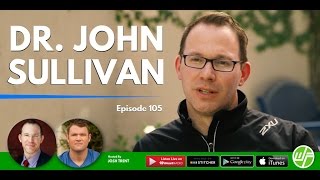
Podcast interview (Wellness Force Radio #105) with Dr. John Sullivan about brain health and performance. Sullivan argues the brain is the central governor of health and performance, emphasizes emotions and limbic-system-driven decision-making, and recommends foundational practices—sleep (including strategic napping), hydration, and nutrition—plus breath control, HRV biofeedback, meditation (Muse) for synaptic pruning, and light therapy to manage circadian rhythms. He critiques concepts like 'mental toughness' and 'grit' as poorly supported, highlights social connection for brain health, and offers travel tips (timed light exposure, increased hydration).
Chapters
Wellness Force Radio Feelings are essential, but they can't dictate our actions. We literally infect each other with our emotions. We came here for a special purpose.
Let the purpose unveil itself. Knowing without doing the same thing as not knowing. They're not just trackers. I'm gonna wear this and it's gonna help me do the right thing.
Wellness for radio episode 105 with author, sports scientist and clinical sports psychologist Dr. John Sullivan.
We have this kind of ethos in the United States that it's based upon this idea, this Hollywood falsehood of toughness. And that's not true. That's completely false. Mental toughness doesn't exist. Grit doesn't exist. They repackaged terms with very poor science. Everyone's ability to perform on any given day is based upon their health. These things are things everyone can do. Our brain is wired to survive. But if we do simple things, we can make it more resilient day to day. So emotions run the show and the limbic system connects to the gut. We have access to manage emotions. We have access to manage our daily kind of challenges and how we experience them and feel them. And then by emotions, we improve our decision making. And in fact, every listener, you and I, any important decision we've ever made in our life, it's been made on emotion. And the more important the decision, the more emotion is involved. That's why that emotion regulation is so key to decision making.
What's up, my friend? It's Josh Trent and welcome back to another episode. This is your weekly access to global experts in all things wellness, behavior change and new technologies. In this podcast, together we'll discover the connections between our emotions and healthy habits to live life well and enjoy the process. This podcast is brought to you by Perfect Supplements, a company who actually walks the talk with their values of pesticide free non GMO real food supplements that fuel us for the wellness journey, save money, support the show, get more wellness in the process, head over to perfectsupplements.com wellnessforce Enter code wellnessforce to save 10% off your entire order. So we know that a healthy brain is crucial for a happy and healthy life. But how much control of its functionality do we actually have? I mean, in this fast paced modern world with all the sensationalism and fake news, fake news out there, what are the gold nuggets and the most important handfuls of information when it comes to healthy brain practices we get to do? And how do these practices relate to our wellness in us having more energy and in letting Go of old weight. Well, if those are the kind of questions you think about, I know you're gonna love this episode because today we're talking to one of the most sought after sports scientist and clinical sports psychologist in the world who specializes in Brain Health, Dr. John Sullivan. You'll enjoy this podcast if you're hungry for knowledge about why we do what we do with the knowing that when we understand our body, we can better understand our emotions and habits. So this is a really fun story as to how Dr. Sullivan is coming on the show today. I was moderating a panel earlier this year at the fittech Summit at CES in Las Vegas and oh by the way, did you know I host another show called the Fitness Plus Technology Podcast. Search iTunes for that. And for all the fitness coaches and trainers listening, you'll dig that show because this is where we explore the intersection of fitness and technology and how the fitness industry is changing faster in the next five years than it has in the previous 50. While I interview companies like Fitbit, Under Armour and many other dynamic personalities. But okay, I digressed a little bit. Dr. John Sullivan, I met him with the Muse team in Las Vegas. They make this brain sensing headband which if you've been listening to the show for a while, you know is the only way that I meditate. And this sparked a conversation about brain health which led to an hour long chat in person and eventually I got to read his book which completely rocked my world called the Brain Always Wins. Now we've talked in the show about brain health and especially episode 96 with Daniel Schmachtenberger and Qualia. But what I love most about the book, the Brain Always WINS Is that Dr. Sullivan takes these massively complex pieces and distills them down into really easy to understand and engaging section by section type reading which gives me the experience of just clarity. It was one of the major reasons why I'm bringing him on the show. I know that in this ocean of information out there, cutting to the tangible and tactical things we can all do can be really challeng. So I'm excited for you to hear Dr. Sullivan's take on the things we can do each day for our healthy brain. Okay, let's get into the show because we're going to cover how to train your vagus nerve and down cycle your sympathetic nervous system so you can be less fight or flight and more rest and digest. We'll learn why a healthy and high performance brain hates perfection. Dr. Sullivan's gonna share a few controversial scientific viewpoints on how Mental toughness and grit doesn't exist and how those might be just repackaged terms based on poor science. He'll tell us the three things to live life well with a healthy brain, how our limbic system manages our thoughts and what we can do about it. Synaptic pruning using meditation technology, how to make your brain more resilient, and what the amygdala portion of our brain does to keep us alive, but how it can also work against us with incessant thoughts. If you travel for work, be sure to stick around to the end of the show where he talks about light therapy and harnessing our natural circadian rhythm to beat jet lag. I know you're gonna love this episode, this brain food. So let's drop in to this Incredible conversation with Dr. John Sul. Dr. John Sullivan is a sports scientist and clinical sports psychologist with over 20 years of both clinical and scholastic experience. For over 16 years, he's worked in the National Football League, coordinating clinical care and sports science. His experience also includes working with the NBA, Major League Soccer, the English Football Association, Premier Rugby League, Australian Football League, and National Olympic teams. He is an expert consultant for the military and law enforcement for welfare and performance needs with with his most recent book, the brain always wins, Dr. Sullivan is a global thought leader in the area of sports science and human performance. Dr. Sullivan, welcome to the show.
Thank you for having me. It's great to be here.
Thank you so much for coming on. We spent some time together at CES just a few months ago in Las Vegas. And so much of what we talk about on the show is around how do we show up powerfully in our lives? And I think I don't know anything more important in our lives than the brain. Now, before we get into the science, Dr. Sullivan, we know based on the multitude of studies out there how important the brain is. But can you share with us before we go into the book and the different parts of the brain, what fascinates you personally the most about the brain? And share with us just a few life events that got you to where you are now in your career.
You know, it starts with kind of where I'm at now is when I'm sitting with someone or I'm sitting with a group. I'm not working with a group. I'm working with individuals. So that fascination, that human variation, which starts with the BR about really assisting people to have better quality of life or better performance in certain situations, it's not cookie cutter. It's not the same pattern for everyone. But Uniquely, because we're wired to survive. Everyone has those strengths to bring to the table to whatever situation they derive. In the past. Probably what motivated me was I was an NCAA collegiate athlete and then a professional athlete post college. So it was trying to understand what were the multitude of factors that went into high performance. When I pull back earlier in my life, it was really those moments in high performance in sport trying to understand what can I control that'll allow me on competition day to perform my best. And now really what motivates me is the fascination of the most sophisticated known survival system in the world. The human brain.
Yes. And what sport were you playing in.
College Focused on cross country track and field. So I'm old now. There is no off season for any of our collegiate athletes, but I play the sport where there actually was the only sport that didn't have an off season with cross country, indoor track and outdoor track.
There's a quote you placed on your site. We're going to link in the show notes today@wellnessforce.com brainhealth and this is by Francis Crick. He was the British molecular biologist, neuroscientist. He was the co discoverer of the structure of the DNA molecule. And on your site you list there's no scientific study more vital to man than the study of his own brain. Our entire view of the universe depends on it. What does that quote mean to you? Why did you place that on your site?
To my co author and I, Chris Parker from Nottingham Trent University. Is that often when we look at let's go with your podcast and your listenership, they're thinking about their health, their welfare, their quality of life. Most of the time we're talking about things that are downstream from the brain. Heart health, maintaining lean muscle mass throughout our life because it's protective factors now our nutrition. But what we don't learn is every one of those in a multitude of other factors serve the brain. They are not in service in isolation. They are in service to our brain. And if we don't think about our brain as the vehicle for our personal performance, our quality of life, our ability to give to others and give to ourselves, we're really missing a critical point. And I think even that quote goes farther. Let's look at our economies or the world economy. It's based upon human innovation and human health. If you don't have people to move the economy and they can maintain their health, then they cannot maintain their clarity for ideas, creativity and innovation. So there isn't anywhere where the brain doesn't have A part and a solid stake in the process.
Yes, and the brain always wins. As you talk about in your book, you list with your co author that the brain is a governor and it's the central governor system. Can you expound just a little bit upon what you mean by the governor?
One of the things I would say certainly title of chapter one and I won't take credit for that one. Chris is great. One of the areas that he's expertise in is this thing we're passionate about. Scientists spend their life focusing on things that will help welfare of mankind, but aren't often distilling that information down for everyone to grasp it. And so when we're talking about the central governor, really talking about that, the brain is the central nervous system, meaning everything integrates with it, but it controls in a bidirectional way what happens with our quality of life and what may be happening, but we sometimes explain it away. And I'll give a quick example from sport and actually it showed up on a political conversation yesterday as I saw on tv. Muscle memory, it's another verbiage in which we are moving away from not fully understanding brain science. There is no such thing as muscle memory. There's no reflexive response. Even our human motion is controlled by the brain. But yet we use language that takes us away from what's central. Central to our life is our brain health. Without brain health we don't have health and then we don't have performance. Or if we talk about the peripheral nervous system, that's the things that the brain is controlling. It controls 11 other systems and periphery means arms, legs, outside. We need to start focusing on more. What is the majority governor of our health, which is the brain?
Half of all oxygen you state in your book is used by the brain. 20% of the body's blood supply used by the brain. Our brain as an adult is actually the cause of 30% of calories though. So 30% of what we eat actually fuels the brain. But it's also a really efficient piece that we hold, you know, the same amount of power that's in a 10 watt light bulb even when we're asleep. This is what the brain runs on. It's a very efficient system, but on a really high level. And then we'll dig in. Dr. Sullivan, why does the brain always win?
This is a really interesting thing because, you know, I certainly wouldn't want your listeners to not think we don't have free will because sometimes when we talk about these things it's like wait a minute, do we not have the ability to make these choices. We really do. There are two levels to the brain to kind of not go too deeply. But our brain is a predictive organ. So it predicts about a minute ahead of time in reading patterns and reading what is happening in our general life. It does that for safety. We're wired for survival. We're not even really wired for happiness. You and I have experienced that. All your listeners have. We can make happiness in our life and we can strive for it, but it's survival. So the brain predicts ahead of time those aspects, and it wins because it's constantly giving us information about where we are in our life, constantly giving us information about quality of our health. And so it is, like you described, very efficient, incredibly efficient. In fact, we still don't have computers that can compute. And these computers are quite large, like Watson from IBM, usually probably about 500,000 watts per hour. And it still isn't as efficient as the human brain. We are very efficient, but we're efficient in getting information, knowing if we listen what that means, and then providing that information for things we can do in our conscious life about rest and recovery, our nutrition, emotional and socialization. So it always wins because it is designed to survive.
And we're also wired for the tribe. This is something we've touched on in previous shows. The brain is this governor piece, but it's also large in comparison to the other limbs of our body. And you write in your book that it's large in order to socialize. Can you tell us about that, the socialization piece, and how that relates to the size of the brain?
We're part of the great ape family, but what differentiates our brain from other great apes like gorillas or orangutans or chimpanzees or bono, is that prefrontal cortex, that area right behind our forehead, and that area connected to our emotional areas of our brain is critical with our ability to make decisions. But also those emotional connections that we know that if we have quality friendships, it creates much more abundance of neural channels which keep the brain healthy and dynamic. We are not made to isolate. And in fact, that's why when NASA sends people to space, they have to really kind of put that into the plan. Otherwise what we'll have is gray matter starting to disintegrate or to not fire in the same pathways. So our socialization throughout our lifespan is critically important to maintaining emotional balance and then critical cognitive flexibility. It is that tribe, and if you look at the great apes in general, that is what made such an adaptive process. And you can actually see that through the evolution of, you know, chimpanzees and gorillas and bonobos.
This is fascinating. Do you feel like the brain size will continue to enlargen as our species, you know, progresses with our technological evolution? Or do you think we'll just use more of the already sized brain we have?
I think you're touching on two of the theories that are predominantly out there. We are seeing, you know, that evolution is still happening. Now, obviously it's hard to evaluate it right in front of our eyes. And that's the thing that confuses people sometimes. Why can't I go to a zoo and watch a gorilla evolve in front of my eyes? Because it takes million. So there is theories that we will certainly continue to grow in mass and the folds will become more sophisticated. And the folds really that teaches us a bit about the dynamics of how the brain is communicating and those neural bundles work. Then you're talking about the other piece that is happening. And we know this technology is changing how our brain wires and it's changing it sometimes for the good efficiency, growth, that plasticity that we have throughout our lifetime, that we have resiliency as long as we rest and we do some other things and it may disrupt some of that or it ends up being evolutionary pruned. We just don't need it. So time will tell. But yes, we can expect evolution to continue.
One of the things I was so fascinated with in person meeting you was when we met with the team for Interaxon. You had said it had been three years in your practice for athletes and high performers using this, what you called synaptic pruning through meditation. Through this focused attention through meditation. Can you expound upon that? Because I think a lot of people know about Muse. We've had Ariel on the show, the CEO, and we've talked about the Muse on multiple episodes. However, this is different. When we're looking at Muse for athletes and high performers, how does that contrast to the busy parent? Or is it the same thing that we're training in the brain?
I think sometimes when we think about high performers in sport or in other environments, we forget that every day we are performers. We really are innately. All of us are asked to get up in the morning and really kind of be our best in certain moments. So when I look at performance, performance is performance. Name me the scenario. And there's a fitting brain sequencing, I think, to the piece about the neural pruning. As a sports scientist and having worked in high level sport, but also work in sport that has collisions. We forget that all our ability to perform is based upon our health. We have this kind of ethos in the United States that it's based upon this idea, this Hollywood falsehood of toughness. And that's not true. That's completely false. Mental toughness doesn't exist. Grit doesn't exist. They repackaged terms with very poor science. Everyone's ability to perform on any given day is based upon their health. So as a scientist, I'm looking for things that will provide me a stabilization of health or advancing it, or a maintenance that also will increase that person's ability to perform. And that might be through managing emotions, managing attentional sequences, which leads to being able to decide well. And when we look at meditation, we talk about it in the book Chris Parker and I about it's wisdom of the village. This is thousands of years old, but now we've been able to apply science in real time. Looking at the brain and fundamentally what we're seeing is it not only helps with neural growth, but it advances our abilities to manage emotion. And then the attentional sequences which are at the heart of, of life performance or sport performance, if you can't attend, nothing else can follow a sequence that's high performance.
This piece around the Muse, specifically, it's something I've used for almost two and a half years now. And I gotta be honest, and I think people already know this. Meditation for me three years ago was really, really challenging. And I found over the course of time, by using the Muse and by going to a vipassana and by just really diving into that, it spanned out to the rest of my life. I mean, do you see this with athletes? Is there a specific time frame for people if they have a dedicated practice, where it starts to show up in their efficacy in other areas of their life besides just focused attention?
I think it does. I mean, one of the things we're talking about is certainly it provides what you touched on too, a little bit, their rest and recovery. Life is not about stress. That is a subjective term used by physiology and medicine. If you look at neuroanatomy, life is about trauma. It's either a big T or a small T. So it requires rest and recovery, which meditation provides. It provides that. It provides, yes, a cognitive training and an emotional training aspect. And there's key physiological markers about why these things happen. And we can get into that. But to the heart of your question, do I see this? And they see it helpful in their occupation as an athlete in sport and Then transferable skills into their everyday life. Yeah, their life affects their sport, the sport affects their life. Not everything you learn in one environment will transfer, but research is pretty clear. There's a lot of transferable skills. When you become an expert at something, if you can see it's helpful, we'll be able to transfer. And many of my athletes will talk about, I'm able to switch gears better when I go home because a sporting environment is very different than a home environment. They're going home to a wife and kids. They still have to be on, they still have to be performers. And are they able to shift their emotion, shift their attention and still stay, in a way, very, very comfortable, even though they may need some rest? They're coming home from work. So. Absolutely. From the literature looks at dedicated practice, you're looking at consistency up to three months earlier than that, we see probably by the two month mark, functional changes. Three months, we start to see structural changes in the brain where we actually see folds in areas of the brain grow and change. And that is tremendous. We also know human variation. Some people can gain it faster, some people will take more time. It's very individual. But to know that these things are possible. Absolutely agree with you. It's a fantastic practice. And then Muse adds a piece of technology to it in which makes it tangible and approachable. I'm doing it right and there is an impact and I think that's critical to meditation. I think that's been a barrier for more traditional practices. Am I doing it right and is it doing anything?
Yes. And you're bringing up a great point, because most people, whether you're ahead of a business or you're a parent in a family, you want to see the proof before you believe it. And I think with meditation, getting quantitative and qualitative data can guide either the A type or the more creative type towards that same path of just having proper rest, proper recovery. Now, I want to talk about the sections of brainwaves. We know that there are five major parts, one of them being delta, the other one is theta, alpha, which Dr. Hill from Peak Brain LA calls the holy grail being the alpha two, and then beta, which has three different phases, and gamma regarding consciousness. Can you just touch on those five sections for us so we understand them in a little bit more detail?
Depth. Yeah. What I would say about the brainwave, often people get very focused on, I have to be in a particular state when we know that that's a very linear way of thinking. So we measure things like, to your point, there when we were talking about muse, it's able to pull in a signal eeg, which is actually just looking at electrical brainwave. And it provides us linear information and it provides us information about different brain waves. Like you just said, really initiate different types of states in the brain. Measurement is critical because it gives us what gets measured, gets practiced, gets managed, gets done. And I think that's one of the powers of the MUSE device. But what we're seeing, because the brain isn't linear, that we have to look at it in much more of a spectral analysis. And what do I mean by that? None of us are linear beings. We are constantly oscillating. So it's not so much that someone's in an alpha state and they're just there. And the alpha, like you said, would more mimic people's peak performance experiences. When they're comfortable, they're calm, things seem to slow down and they can execute at a high level. For some people, they experience everything speeding up around them, but they feel more in control and they can almost predict ahead of time. We're limiting our thought if we're thinking that's the only thing going on. Really, the more we dive into the brain, what we're coming to understand is there's another layer to that that's happening at the same time. However, how you described it is pretty spot on when we're looking at from a linear standpoint, someone wanting to be at their best, what's most predominating in their brainwaves. And people experience that when they close their eyes, alpha waves go up automatically. That's why one of the things we're seeing when you look at napping and sleeping is that restorative slowing down allows us to get into some other recuperative processes. It's not to say the other types of brainwave aren't important. It is showing the dimensions of more than likely. One is a little higher at a certain point and one is a little lower. It's not linear. You can have someone in alpha state, but also having some theta involved because there's something else that the brain has to do or is noticing from that predictive value of information coming in.
Being in the zone is what everyone wants. I mean, we all want to be in the zone more often. So when we look at this Alpha 2, maybe it is flow state. But you said there's a mixture of other waves going on. I think this is what you spoke about in your 2Xu video video, where you talked about the drivers for brain health. There are three major things that we can all do, whether we're an athlete or just a busy professional or parent. And it's sleeping, hydrating and eating. And I want to talk specifically about napping because you just brought up napping. How does napping correlate with us being in flow and having restoration? Is there a proper way to nap for brain health?
There is, and I like that question and that transition in the sense that, you know, there are other states going on when we're at our best and they are functional, but can we control the drivers to be in a closer to a flow state or some augmented flow state where you're in it. But there are other activities going on to support you staying there. Napping is one of them. Napping and sleep are two different things. A nap is anything 10 minutes, but nothing more than an hour and a half. The 10 minutes is relatively new research from NASA. Although there was always an assumption, there was a restorative value there, but it goes to an hour and a half because anything over that will tend to disrupt sleep. At night, from the moment we wake up, we, we have something going on called chronobiology. The light through our eyes hitting our retina and communicating to the brain times and opens up systems, other systems that it manages. So we are very, very attuned to light. That's why disruption from high definition light from TVs, tablets and smartphones very much affects our hunger cycles and our sleep cycles. But from the moment we get up, we are timing a nap and there's a dip in the day. And that can be figured out from the time you wake up with a particular mathematical formula. But normally what we do in our society and five hour energy loves us to do this, their commercials is to caffeinate through that. But we are actually all universally wired to take naps. So the things we learned in kindergarten were very good habits. And those industries and some sport teams that have followed the literature are noticing, hey, if we get our employees to nap or we get athletes to nap, they are more resilient, their immune system is higher. So we see them less ill from an employment stand before less absenteeism. We see that they're more creative, we see that they have more energy. So napping we're universally wired for. And in fact, because the range is so short at 10 minutes to an hour and a half, we are more universally wired where if you look at sleep the range is 7 to 10, it's a broader range. We're actually neurologically wired to need a nap more.
One of the things that fascinates me so much about your work is that this is based on, you know, two decades plus, but also there are studies and many, many books written about sleep health and cognition. And so when we look at napping, is it really the sweet spot of a half an hour to aid us in our cognitive health, or is it like a different time zone where you said 10 minutes to an hour and a half? How do we figure out what's a good nap time for us?
Well, you just touched on with the half hour what that tends to be, and there is really good evidence with this, but that tends to be is people. People like that range because it's one sleep cycle, so you don't wake up groggy. What often confuses people about taking naps is their expectation. Their expectation is I'm going to be very alert, I'm going to feel energetic, I'm going to have positive kind of emotions. I'm going to feel good about it. But if you sleep at different ranges, you will wake up during a deep sleep cycle, so you'll wake up groggy. So the assumption is it didn't work where 30 minutes, you are more typical than not going to wake up right as you're coming up out of deep sleep. And so you're going to feel refreshed, you're going to feel more awake, you're going to snap to it, and you're going to be reinforced. While that was helpful, however, if you wake up at an hour and a half and you're groggy, it still works. The key factor is to get moving and wake yourself up. We're also 10 minutes, 20 minutes that will do the same. Often you're not going to wake up with that grogginess. It's what we call sleep latent. Some people don't like that feeling, so you just encourage them to kind of stay in that zone where that won't.
Happen for them during the sleep process. You write that our brains detoxify. Can you tell us about that?
That's a finding from the University of Rochester and that not too long ago, we're looking at 2005. And they discovered something incredibly novel. Up until that point, we did not know that the brain had a lymphatic system, meaning that at night it went through a. A process of actually moving toxins, unused neurotransmitters, proteins in the brain that we no longer needed, or proteins that were part of an inflammation process. And almost all human disorder, disease, lack of recovery, relates to inflammation. This was a tremendous Finding really reinforcing that sleep is so critical to all the other systems. But overall human health and we knew the importance, but this is vastly brought us to a whole new level of understanding of how important that seven to 10 hours is that the sleep function was about getting the brain healthy. For every other system to follow suit. I'll use a common example that you know, probably all your listeners have experienced or majority of them have or at least heard about it. Often people would think about a hangover from a night of drinking. They relate it to dehydration. Now that is a part of the process on often but it's often because you don't sleep that night. So deep sleep is not attained. You end up what we call knocking out. But what alcohol does is disrupt deep sleep. So your brain did not detoxify. So we feel the fatigue, lethargy. But also you missed a night of recovery and your brain healing.
And your brain wasn't able to essentially wash itself because there's some of these toxins that happen through just normal day stress. And would you say that for people that have have more stressful lives than possibly, you know, you're 20, you have all this hormonal freshness, you don't have a major career yet, you know, now flash forward to being 40, you're a mother of two, you have a 13 hour day. Does the brain during more stress load produce more of those toxins that need to be washed?
Yes, for sure. And there's individual difference with that. I would say Josh, so you could have someone, you gave me that scenario there and you could have two people with different responses. But the responses generally are when we experience, like you said, stress. There is going to be a natural cascade effect that's neurochemical that affects our gut, then it affects our brain, how it functions. Absolutely. The key factor is that with every dose of stress and we have to think of it like a dose effect with every dose of stress, we have to think about how can I get recovery? Because as human beings the more we get linear, what I mean by this is work, work, work, work, which is normally the pace most of us are used to. Then we get flat our hormones in our brain and our hormones in our body and secretion of stress related neurochemicals. They're getting released but they're not getting a period like you were saying of washing out. That's the one thing we all can expect. Stress challenge as I like to call it. But we have to plan for is the recovery. So it balances out. Then we get resilient and then we evolve, grow, adapt. And that's one thing that I don't think we've done very well in our culture. We're about work, work, work. Yeah, but we've kind of lost the idea about rest is where it all comes together.
It is no surprise if we're on point in taking care of our emotional health. It makes it so much easier to let go of old weight and have more energy throughout the day. But believe me when I say it's hard to treat other people well and think good thoughts if we're walking around Hangry One of the best ways to support our body's energy systems and help cure that satiety and satiation, AKA hangry, is to add in collagen to your waters, shakes and food foods. Over the past year I've been using powdered collagen from perfect supplements in my morning coffees, waters and post workout shakes to get some organic proteins I can feel good about eating. You know by now healthy cows eat grass and these sick cows from CAFOs eat corn. So beyond the healing powers of collagen for digestion and joint health, this 100% pasture raised organic hydrolyzed collagen has 20 grams of protein in two scoops which helps curb appetite and increase satiety and satiation from ethical harvesting. You can actually feel good about collagen from grass fed cows. Has five times as much of omega 3s and twice as much cla as found in grain fed beef. And best of all, you can sleep well at night knowing you're supporting the change we need for this broken food system. Get a box of single serve packets for on the Go grass fed collagen or purchase it as part of the WellnessForce discounted bundle by clicking over to perfectsupplements.com WellnessForce and be sure to enter code WellnessForce to save 10% off your already discounted package. I really enjoy where we're going with this because from a hormonal and neurotransmitter standpoint point, you know hydration is just as important as sleep. If we're consistently dehydrated, you write about that impact, that negative impact on our hormonal health and our neurotransmitters from not having enough water in our system. Why did you place that as one of the top three?
Great question. When we started looking at this and researching it and the book really started organically conversation in both of our areas of expertise and working, why we kind of put those in the order that they're in is because the scientific literature led us there of what are the best biggest levers for human health, which is the foundation of human performance. And like you've pointed out, these things are things everyone can do. Our brain is wired to survive. But if we do simple things, we can make it more resilient day to day. And if it was really hard to make our brain resilient, we wouldn't have survived as a species. But when we look at survival hydration, all of us probably have some reference to this. If you don't watch one of the discoveries Discovery Channel survival shows and you'll see that sleep we can go longer without food and water sleep. But somewhere along the line, hydration becomes pretty important because what it does is it slows the gut brain axis down. So our brain doesn't store very many neurotransmitters and it doesn't make any. Our brain and stomach are connected by one nerve called the vagus nerve. And hydration allows the gut to have balance with neurotransmitter availability of being produced. Nutrition does that too. But without hydration, we're not adding any ability for that. But the transfer goes through blood. So what happens when someone becomes dehydrated? Blood slows down. We all think about blood, heart, heart disease. Again, the heart serves the brain. That blood cannot flow with viscosity, then it's going to reduce how much oxygen and then obviously available neurotransmitters and vitamin minerals to the brain. Research shows when we look at high performance environment and we look at fighter pilots, their dehydration can reduce their skill level. Fine motor movement, coordination and decision making. Very significant level. And when you think about that type of work, that's dangerous.
Yes.
But we are also at times putting ourselves in dangerous situations by dehydration health. But even just motor vehicle accidents and looking at dehydration over caffeination and these.
Types of things, these are habitual things that we can all do. Eating, sleeping, hydration. I'm curious why movement wasn't stuck into there. Or is movement just an added piece to your top three for brain health.
Physical activity and notice I didn't say exercise because we were not evolutionary exercisers.
Cavemen did not go to the gym.
There were no gym memberships.
Exactly.
The world was our gym because every day we were wired to move about 7 to 12 miles a day. So physical activity is in there. There's no doubt I would agree with you. I think from looking at a standpoint of essential brain needed sleep, hydration and food Then it's physical activity. Because if you don't do those first three, guess what you don't have energy for? And your brain will give you signals not to do it because it would be threatening to the system. Because unless you stabilize the first three, physical activity becomes an overarching trauma and a repetitive trauma in which it can't keep up with. But once you stabilize those and going back to a conversation we were having about assessment, this is why sometimes physical activity or exercise, or orienting people to exercise fails because they are not sleeping, they don't hydrate and they don't eat. They're not replenishing brain health for it to be a strong foundation to handle even properly loaded stress, because they haven't assessed the foundation. But physical activity is critical. Exercise is medicine, it is neuroprotective, sport is not. But exercise is if it's dosed correctly. So it is certainly an important part of this.
There are so many ways that I could take this conversation because your brain is chalked full of incredible wisdom. But one thing that came up for me when I was watching that video that you were in from 2xu global, they happened to be here in Carlsbad in San Diego, was around this aspect of training for brain performance and training for brain health. How do we do both? Both? Is it through some general practices? What do you see? What's the corollary between the everyday athlete and the everyday busy working professional? Are there a few key habits that are common to both for brain health and brain performance?
That's a great question. Because, you know, different environments, there are different needs, you know, is there learning going on? Absolutely. I've seen that in my work with the elite military. Things that work with the elite military will work in sport, but there are plenty of things that that won't in the training process. So there are corollaries? Very much so. One of the things you'll see in sport, it has become part of the culture. The discussion we're having about sleep, about hydration, about nutrition and most of what we know in sports nutrition, those textbooks have to be rewritten because of our understanding of the gut brain axis. But I think the corollaries that go across is that if we don't take care of brain health, which are these everyday simple things, and you don't have to be perfect. Perfect. In fact, the brain hates perfection. It induces anxiety, it creates more neurological stress. And so we only need consistency. If we needed perfection, again, go back to simple evolution, we wouldn't have survived.
That was one of the most powerful things I've ever heard about the brain. It doesn't want perfection. No, the perfection actually creates anxiety and it works against the brain. You know, you brought up something when we were talking about the earlier three pillars and that was the vagus nerve. Can you tell us how we can train that vagus nerve and just go a little deeper into what the vagus does for us?
I think it ties into one of the things we were talking about with the Muse technology. There is other technology out there like Spire that really directly impacts this. So the vagus nerve is the longest nerve in the body. It's the tenth cranial nerve, as I mentioned. It connects the brain, the heart and the stomach. It also uniquely allows our functioning of our small muscles for nonverbal facial expressions, which is very, very critical. We actually communicate much faster, much more efficiently and much more through our face than we actually do verbally. And the vagus nerve can give hints about where one is in their central nervous system or brain health, actually. But the vagus nerve, lucky for us, the bridge to the brain is through the vagus nerve. And actually one of the key components to regulating vagus nerve rest and recovery, management of energy and overall health is breath rate control. Control, which is at the heart of why one of the large components of why meditation works through thousands of years and now scientific evaluation of it when you control your breathing. And we're the only mammals that can do this. So we're a member of a great ape family and a study was done because they were trying to understand humor on the brain. So does humor look the same in gorillas as it does in human beings or orangutans or chimpanzees or bonobos. And what they discovered was if you tickle great apes, they pass out. You and I have laughed so hard and we've almost passed it, but we catch our breath, they don't. We have the ability, and this is evolutionary and a really strong skill. So when you think about high performance environments, I'm training them in breath control, like military tactical breathing, or a field goal kicker, or a goalie and a penalty kick, or even the kicker themselves. But all of us have this control and that moves us into to a conservation of energy mode, even among high stress, or gives us a break after high stress. So that vagus nerve is the bridge to our brain, our heart and our gut. And we're not learning these simple skills. And where spire technology comes in and it gives you a bit of a signal if your breathing goes off, because that's a signal. Wait a minute, we're picking up stress? Do we need to? It gives us a choice point, it gives us some feedback. And then in meditative practice, you're taught to focus on slowing your breath down. So from the get go, that's one of the biggest mechanisms that allows us to really have control over brain health that we're never taught. And this should be being taught in school because I can tell you how many times I talk to college students and I don't know if you've experienced this, but I think all of us have. In our education, we go in for a test, we're fully prepared, we suddenly get anxious and we draw blanks.
I felt that many times like being on a stage where I've forgotten what I was going to say because I'm just nervous about being on a stage. Is that my Vegas turning on or turning off?
It's actually turning on. So we have two systems. We have the autonomic nervous system which connects into the central nervous system. And when our heart rate goes up, our respiration goes up, blood pressure goes up. That's a sympathetic tone, meaning energy is going up. Same thing as if you and I decide to go exercise, we're choosing it. So those same things are going to happen because it mobilizes energy, it's getting heart rate up. So vitamins and minerals to the brain, those are positive things. It can go up when we draw blanks and test. It could go up if we go into a class and we get a pop quiz. And then parasympathetic is the other branch. That's where the breathing really can give us control to shift. And parasympathetic is relaxation recovery. Someone deciding just to kind of sit on a couch and listen to music and close their eyes. They're shifting their energy, they're shifting it to a non threatening stimuli, they're shifting it to a restorative state. We don't learn that we have control over that.
This, this is so fascinating. And I'm noticing by the way, that as we're talking about the vagus and we're talking about calming, I'm breathing slower. During our conversation, I actually felt myself relax just by making that connection in my mind. And I think about the amygdala, you know, some scientists call the amygdala, which is completely separate from the vagus nerve. Tell us about that. Because this is what most scientists describe as one of the most ancient parts of our human brain. What does the amygdala do for us? How does that connect into the limbic system.
System, yeah, that's really an important one because I think one of the things there's a lot of myths about the brain. There's a lot of myths about the mind and the brain. And they're not two different things either. The mind is consciousness. That's what we think about. That's what you and I are thinking right now and listeners are thinking scientifically. We still don't know what that is. Our best understanding of that is the very fact that it gave us another survival mechanism of internal self talk. And it does have an effect on our health, but it's actually much less than we first assumed. And then this goes into the limbic system. So what we learn is that we think first, then feel. That goes back to Plato, thinking about these two things that we're constantly in fight about our emotions and our logical thought. It's actually we feel first, then think. And it doesn't work any other way than that because the limbic system was designed about our survival. Our emotions, we experience hundreds of them a day and they give us information about what is happening in the background. Our brain's secondary processing about predicting a minute ahead of time. Do we see something in our environment that's threatening, where we need to be ready for, or are we okay to conserve energy? So emotions run the show in sport and life and the limbic system connects to the gut. So if any of your listeners have ever experienced and noticed, when you cry, it comes up from your stomach and comes up. So the limbic system triggers emotions, which is about part of our survival, but they come up through the stomach. And then again you have that connection of brain, vagus nerve and stomach. But the limbic system is about information about our well being on a consistent basis. And then that influences thought. And so this is really critical. We have access to manage emotions, we have access to manage our daily kind of, of challenges and how we experience them and feel them. And then by emotions we improve our decision making. And in fact every listener, you and I, any important decision we've ever made in our life, it's been made on emotion. And the more important the decision, the more emotions involved. That's why that emotion regulation is so key to decision making.
This emotional training can be very similar to our physical training. Anyone can do emotional training through the use of technology or just through habitual practices. What do you see from a high level that really helps people in emotional training, in helping that limbic system work for them instead of being a slave to it.
It's A great question because I think that's the piece that's the heart of why we wrote the book the Brain Always Wins is we're all at a disadvantage. If I had not studied the brain sciences, I feel pretty comfortable in saying I wouldn't know very much. And I think that's the disadvantage. I don't hold it against anyone. But we're not teaching this in schools, these sort of connections, but they're very much there. And so when I think about high level sport, often we train our athletes very similar to academics, very similar to business industry, repetition, repetition, repetition of physical skills. But actually we know that that overlearning does not help the process in majority of the time. When we look at our statistics of overtraining, injury, burnout, which we can see in injury industry, we can see in academics that our training of emotion, since everything is emotional, all learning is emotional. Breathing, respiration control, which scientifically is called heart rate variability biofeedback. So that's a big term heart rate variability is that although your heart beats, my heart beats, there's a pulse and then there's another pulse, there's information in between those pulses that we can look at that tells us a out is our brain shifting into a stress mode or relaxation mode. And as we've talked about, we have control with that. Biofeedback allows the person to learn how to control their breath rate through simple technology of pulse recognition and respiration recognition. Some of the stuff is on our smartphones, some of it connects to our smartphones. And when I started this, it would probably sit on a desk, two desks. It would take that amount of computing, it would take full two desks, two full computers just to run those really that mathematics in the background of pulling those signals. Learning breath control. Spire is a great technology that allows one to do this. Mycom Beat, which is a free app, allows someone to really kind of train their heart rate variability biofeedback, but it really just goes to breath rate. But then that leads into to if you want to try meditation, once you learn, you know, breath control, meditation's easier.
Thank you so much for saying this because there is an app called HRV for training that I've been using first thing in the morning and it's been phenomenal. There's also heart math. We're going to link those in the show notes and for some of the things that Dr. Sullivan has mentioned, one of them being Spire. We interviewed one of the co founders for Spire in 2015. We'll link that in the show notes. But Dr. Sullivan, I want to get to know you on one more deeper level. This is the whole last part of our show. It's seven fast questions for seven real answers. Are you ready?
I'm ready.
What are some of the few practices from sports psychology that athletes put to use that we can also use in our everyday life?
That's a great question. I think there are a lot of things that we don't learn about the brain that actually shifted that every one of us has in our hand and we may not use them properly. So we know music moves the brain. It moves neurology. We've witnessed every day when people listen to music and we see them dancing and moving and singing. But if you took the headphones away or you took their phone away, they'd look at you like you lost every bit of sense you ever had. They wouldn't sing for you, they wouldn't dance, wouldn't do any of that. Is actually matching your music by beats per minute. So beats per minute. Every DJ is familiar with that. That's how they mix music. Beats per minute relates to influencing the vagus nerve, heart rate, brainwave and then gut brain access. If you want to be conscious, we got to be using music in a playlist that has 110 beats per minute or less. If you want to stoke up energy, you need to be listening to music 120 beats or higher and it needs to be in small doses. So music is a huge thing that often I see in sport and life that people overuse. I'll give an example from sport. Everyone thinking they need to be psyched up before a performance and yet they're listening to two hours of heavy beat music. Brain can't handle that. It can't produce that kind of energy. And in the end you end up being fatigued because you're burning energy. So using music within a real focused way can be a big changer in how it moves our brain energy. Restorative or exciting.
Thank you for that reminder. I think some of these things, when we hear you say them, we're like, oh, duh. But it's that reminder, it's that timely reminder that really helps people the most. My next question is around eating. You know, healthy brain, you wrote in the book is 60% fat. There's a lot of data coming around every week. It seems like that our microbiome affects cognition. But for athletes and everyday people, is there ever a time for ketosis with this higher fat protein type diet? Does that ever apply to long term a healthy brain and healthy cognition.
I love that question because, and I mentioned this earlier, there are many books that are going to have to be rewritten and they're currently rewriting medical books, but also nutrition because of our understanding of the gut biome and the human variation. But again, the piece that we're not doing is assessment. I think if I say this, people will go to the reaction you just had. Well, that makes sense. How could we look at human population and say everyone would benefit from any one type of diet? There's far too much human variation. This goes Back to Darwin, 1859. His research has just become more and more validated. You would have to do some assessment and that assessment would take blood test and then also they would look at fecal measurements matter. And that type of testing is really important when we're going to apply those kind of. I wouldn't call them extreme, but they are shifts that are very focused in the diet. So some people can. But many people who take part in any type of diet that are very focused may not have had any testing done to know what they will do. And we can imagine for some they can do harm, for some they can be very, very helpful. But that's where assessment really is really important as a driver.
An assessment being, you know, biomarkers, our gut microbiome from a company like you Biome or Wellness fx. We'll also put those in the show. Notes. Next question is around personal practice and technology. Do you feel like right now in your career, in your industry that there's one or two pieces of tech that are really exciting for you on the horizon when it comes to brain health?
That is a fantastic question because I think even all of our listeners, they have either either keep an eye out for what's out there, there, or they've even grown a little fatigued about how much is changing. I'm like you, I got very excited about it. At the same time, though, this is where I can understand and empathize with that technology fatigue. Much of what's coming out doesn't have any validation. They haven't done any validation on safety, they haven't done any validation on signal. So how many bits of information per second are we getting? And that could be very, very important depending on what we're evaluating or I would say on everything or evaluating and then what's the end state? Is the information actionable? Whether it be for the end user or for me as a sports scientist, this stuff is very important for me and I've written about it many times in peer reviewed journals. So this is critical. So what I would say is, what I get excited about is those in the industry that are noticing that unless they provide an ethical and thoughtful approach to producing technology where we can get biometrics where it's safe, it's accurate or precise, and the end state user can use that information, then I'm going to be interested in it. And there are those out there. But I think there's more of the noise and that's the frustrating part. I'm sure you've noticed that as well.
I had somebody email me the other day, hey, what do you think of this new wearable that has Himalayan salt crystals embedded in the watch band? And I thought that's not even worth talking about.
So you're right for sharing that. That makes me smile.
There's so much noise out there. A couple last questions here. When you're traveling, based on all your research and working with these incredibly high profile people, what are the things if there was two or three things that give the most bang for the buck in regards to health habits when we travel for our brain, you're touching on.
A travel does disrupt our natural patterns, especially if we have some really reasonable consistency with them, it can disrupt it. One of the things I would say is actually spending a little time before you travel. If you're going to go through time zones to know when you should be using light to stimulate the chronobiology of your brain to be on time or as close to on time as you can be for the place that your destination is. And that is simply done by looking up a light exchange online. You can look up, okay, time zone exchange and what you will see is when to turn on your phone. Because your phone emits a blue light, if you have a filter on it, it doesn't. If you're using some of the filters that are out there, you would have to turn them. But getting up at certain times while you're flying, hitting yourself with some blue light adjusts kind of gut, brain, axis, liver. And that's why when we have jet lag, it's because we're not getting regular natural light and it throws off our hunger cycles. So it's actually knowing time zone changes and when you should get light. When you're on a plane, first and foremost, the other thing is being at altitude. The plane is not pressurized to see the level. You're basically doing high altitude training. So we have to up our hydration. And I talk about that with teams who travel quite a bit. If you're not paying attention to hydration. That's another thing that adds to time zone fatigue is again, not working through the gut brain. Those are two simple things that most of us should be conscious of.
Have you ever used re timer? It's the light that gets us back into proper circadian rhythm. What was your experience with Retimer?
Retimer actually is one of the products that has some of the longest research on it now, some commitment competitors do at different price points, but when I've used that with athletes, that is tremendous. Or people that have to do a lot of travel, whether they work in government or work in business, that is very similar to using blue light off your phone or off tablets. It's a bit more concentrated and obviously it is very focused on dosing. So you're going to get a much more accurate dose. Once you plug that information into the app and then you're using the glasses, you know very well what's going to work best. Excellent product. Austin Australia.
Knowing that we only have so much cognitive bandwidth throughout the day, how do you manage personally your use of tech and social media? As a busy pro, I think that's.
A great question because none of us can really get fully away from. Unless you want to go off the grid. You know, this is just a fact of life and I like that frame that you use there. It's. These are tools, you know. Yes, we want manufacturers to produce tools that are not going to manipulate our brain health in a negative direction. But as tools come out often we don't design things brain first, ergonomically. We may think how it works well with the body, but we're not thinking about how it works well with the brain. So you have to be thoughtful first and foremost. So I actually do really keep track of my time on my devices. The other thing I do is, as you're probably familiar with, with some of the software that's out there, like Efflux, I use scientifically validated software that will change the light dynamics of my tablets, of my computers. So if I have to engage at a later hour or an off hour, it's not going to throw off my sleep. We have to think of these things as tools, not fear them. We made it through the Industrial revolution. Kids don't work third shift in a factory any longer. And we have to understand we're in a technology revolution and to your point, we have to be more thoughtful with it. I think the other piece for that, energy management, I'm a napper. It is incredibly important for me and my biorhythms I see a change with that. I may not be able to do it every day, but I have a rhythm every week that I use that as a way of conserving energy and resetting my brain energy and my health.
Last question. This has been such an incredible conversation. I've so enjoyed this. And when we look at wellness, how would you define wellness in your life? What is wellness to you?
I think wellness goes to many of the questions you offered up today, which was fun in an organic conversation, which I really, really enjoy, which was the heart of how we even got to the book, just conversation. And what can come out of that? For me, wellness is having an individualized, thoughtful and flexible approach to being able to be healthy and meet the demands, whether it be that day, whether it be that week, or whether it be quarterly goals I might have or long term goals. It's a process and that's why in the book we came up with it scientifically. It isn't a word. We just manufacture. It is that physical activity that rest, recovery, recovery, optimal nutrition, doing things that train my cognitive abilities, managing emotions and really connecting socially and putting those things together in something that's usable but individual because we're all have human variation.
Such a great answer and I would absolutely love to have you back on the show at some point to talk about just your whole chapter on socialization and communication, unpacking Maslow's hierarchy of needs. That would be an incredible episode in its own right. We just scratched the surface surface of the tip of the tip of the iceberg in the brain always wins. We're giving away a free copy of Dr. Sullivan's book at wellnessforce.com brainhealth Is there anything we missed, Dr. Sullivan, when we look at the brain and just something you'd like people to have as a key takeaway.
I think the key takeaway for me is start to lean in. That it's okay that we all start at a relative disadvantage of knowing something about the brain, but leaning in and learning that brain health. Health is important and in fact it's most important. And learning a little bit can take us a long way, all of us, but also a long way in changing the people around us. I see that with my work with concussion patients that when I'm working with young kids, a son or a daughter, that the parents are coming in going why are we learning this? So just encourage you to lean in and learn some pieces because even the small pieces about brain health add up to being quite a bit.
Such a joy to talk with you today. I want to leave our audience with a quote from your book. Excellence is grounded in the billions of neurons between our ears. Arguing this point also comes from the same neurons between our ears. Dr. John Sullivan, thanks so much for coming on the show.
Josh, thank you for the opportunity. It's been a great pleasure.
Hey my friend, thank you for hanging out and growing with me on today's show. Remember to hit subscribe and share this podcast with someone you can care about that gets to hear this message. And if today's guest sparks something in you, leave us a five star review on itunes for the podcast by just quickly tapping on your show artwork on your iPhone, hit the link in purple that says review this podcast. It helps the show reach more conscious people like yourself and attracts world class guests. So let them hear your voice. For all the downloads, videos, links, giveaways and free resources mentioned on the episode that support you to live life well, go to wellnessforce.com forward and while you're at my house on the web, join the free Wellness Force newsletter on that page because I want to send you four free guides around staying healthy with your training and your travel. And if you're ready to take inspired action, don't let this conversation stop here. Join a group of people who care about what you do over at the Wellness Force Community Facebook page. Just search Wellness Force Community on Facebook. This is where we talk about the things that really matter. We share our wins, inspirations and our struggles and so much more. Tap the show artwork on your iPhone, hit the purple link that says join the Facebook group and I will welcome you at the door. Okay, now you get to go out into your world and create impact for the people you care about and be a positive force of wellness in their lives. So until I see you again real soon next week, I'm wishing you love and wellness.
More from Josh






Your child's future start before pregnancy... and even before conception! #podcast

MD Reveals: Your Healing Creates Your Child's Reality (The Souls Coming In Need Strong Bodies)



