Women's Biohacking Expert: The #1 Health Mistake Women Make + How to Fix It
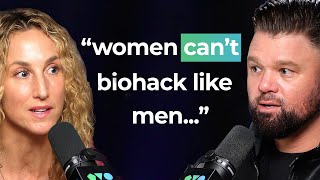
Kristin Weitzel and host Josh Trent discuss women-centered biohacking: breathwork, cold exposure, sauna/contrast, resistance training, and the psychological/therapeutic layers of healing. Kristin emphasizes baseline hormone testing (blood or DUTCH) when feeling well to establish a comparator over time, warns of dosing inaccuracies by some hormone specialists, and highlights vulnerability during perimenopause/menopause (noting a high suicide-rate window around ages 48–55 she associates with hormone dysregulation). They touch on AI as a scalable coaching/therapeutic adjunct, and Kristin urges women to lift heavier more often. She promotes Sherpa Breath & Cold programs, an annual 'In the Wild' retreat, instructor certification, and a podcast called 'Power'; closing calls-to-action include sherpabreathandcold.com.
Questions this video answers
Approximately ages 48–55.
In the Wild.
sherpabreathandcold.com
Power.
Chapters
The biggest mistake that women are making is they are focusing on fat loss. We talk about being an obese nation, but we are really super under muscled. And that's the first thing that women need to address. And then the other thing is Kristin Weitzel is a certified fitness trainer, breath work instructor and an active biohacking proponent with a focus on guiding women to optimal health.
I wonder where it came from that men and women were treated the same in regards to biohacking.
Our society was a specific way for a very long time. So we set up the workplace, we set up all the things sort of according to and what works well for men. And so the way that we work, the way that we cycle throughout the course of a month, our neurochemistry of our brain as females is so different. I work with a lot of perimenopausal and menopausal women. There are neurochemical changes that bring about like rage, sadness, anxiety that's not talked about on either side. Breath and cold together are the two most efficient modalities to utilize that create massive transformation and adherence to all these other programs. We need to slow down to tap into those moments a bit more so that we can start to say what is my response in my environment?
So how do we do that? Everyone's different, like their thumbprint. Yet in biohacking people treat men and women the same. So what are most women doing? That's actually a big mistake.
The biggest mistake that women are making is they are focusing on fat loss still. It's going on over and over again. People are coming to me and that's like the first question. They're, they're not concentrating on this thing, which is we are not. We talk about being an obese nation, but we are really super under muscled. And that's the first thing that women need to address, in my opinion, of all ages that they're not focusing on heavily enough. And then the other thing is downregulation, right? Family and career and friends and really being hard on themselves in the mirror. Negative self talk. Women stop it. We gotta stop it. It's just proliferating an issue generationally as well. So how do we stop the negative talk? How do we breathe into understanding our capacity as humans and what we can bring to the world as moms, sisters, daughters, coworkers, colleagues, friends, lovers and really lean into our ability to be the epic humans we were born in the world to be.
No doubt. I wonder where it came from that men and women were treated the same in regards to biohacking you know, like Dave Asprey, he's been on the show a couple of times. He's the godfather, the grandfather or the father of biohacking. And I'm like, that's cool. But men and women are totally different in ways that we get to really sacredly respect.
Yeah.
And I think that's lost right now in modernity, especially with gender dysphoria and the attack on family and how women are so hyper masculinized by many narratives that I don't attune to. But I wonder where that came from. Like in your world of cold therapy and working with high performance people and a lot of women, I mean mainly women that you work with.
Yes, mainly women I work with in one on one year long containers. I work very closely with them in health optimization across the landscape of their entire body and their family and their household and everything. But in the Sherpa breath and cold program, it's, it's still like 70% females coming to get certified and like learn how to facilitate these pieces. But I have plenty of men that are. Back in the day it was more women and then it was like boyfriends and husbands and athletes that were connected were like, I'm a guy, can I still come to your program or work with you? And so it just expanded because I think those two modalities, just to speak really plainly, like I've done a lot of biohacking for 15 plus years since like Dave coined the phrase. I was one of the first females in the biohacking space. And what I've noticed is that breath and cold together are the two most effective, efficient modalities to utilize that create massive transformation and adherence to all these other programs. And so for me that's like that. This is the reason I've leaned so hard into breathwork and cold exposure. And yeah, that's the thing that means sort of the way we change the game for people going forward. But to answer your question, I think in the beginning, just number one genetically and over history I think women have been a little bit averse, risk averse. And that's intentional. Probably they're moms or they're raising babies or they're, they're taking in the whole community and tribe and all of that. And also the space was just filled with like white dudes in the beginning, like just tech. Like whether it's because of the trickle down from Dave or whatever it was.
Like, or even Silicon Valley's interest in biohacking for optimization.
Totally. And then like Greenfield was like, you Know, red light therapy on his balls and a triathlete and like, you know, but, but, but, but beyond, beyond. Right. People are. It's not as approachable to women for sure, but even just the common man. So I think in the beginning it was really like a push on edginess and that women didn't respond to that as much. And then, you know, there are some other women that have been pretty prolific leading the way and opening that, that chasm so that we can all sort of be in it now. It's like, you know, Dave would say his audience has always been 80% female, but I'm not quite sure that's true.
Yeah, I don't know about that. But I will say a lot of men that get into biohacking, they heard it from maybe Tim Ferriss or some show that talked about how to optimize their life. But we are so different than women. Women have cycles. Women literally bleed up until a certain age and then they give birth, which are two things that men can never do ever. No matter what kind of narrative and bullshit's out there that remains a universal truth. And so women need respect for that. So what's the respect that women aren't getting from the media narrative when it comes to biohack right now?
I mean, I think that there's a little bit more floating around the world of like the hormonal cycle, the life cycle, the, you know, cycle that we have every month. This, like, beautiful opportunity for us to lean into it as a superpower. But there's still like this, this notion of non inclusion. And I'm so blessed to be able to sit here with you and have this conversation because quite often I think the circles of, of lots of males in the industry have sort of bred more circles of males in the industry talking to each other and leaning into things. And when I was like sitting with John Welburn, who's like a ex NFL guy and power athlete, has a podcast and was like, so many of this, so many of these biohackers are men talking to men and really expanding the category for everything that works for men. He was like, well, this is what we're doing here now. Like, let's unpack this. Like, where are we being held back? And I think, you know, the understanding of stress and the female physiology and how, you know, our whole 24 hour cycle in, in the workplace, in the world as we, as we live is designed. And this is like, no slight, like I always have to say this, which is, it's not about men. Versus women or physiological females versus males. It's like our society was a specific way for a very long time. So we set up the workplace, we set up all the things sort of according to and what works well for men. And so the way that we work, the way that we cycle throughout the course of a month, our neurochemistry of our brain as females is so different. And so I just feel like we're being underserved in the. In the ways that things are set up. And also those structures take a long time to change. Yeah, so it's. It's like, how do we hammer at that, you know, little by little and, and use our voices with, you know, if you go all the way back. The one thing I think about sometimes is that there was a lot of conversation hundreds of years ago about women, you know, being neurotic or being, you know, just having mental dysfunction, because hysteria was the thing, right. They were like, well, women are hysterical, right? And they were sort of put in that category because we were more emotional. And then there's this, like, notion over time of, well, what does that actually mean? And maybe we're emotional for various different reasons, and it's just a different emotion. Like, this is something that we. I think about a lot in the nervous system space, which is emotionality. There's this, like, societal norm and the societal abnormal that we can't emote. Anger, fear, rage.
When you say we, you mean women. Women allowed to.
Women. I think people in general, but I think women are more scandalized for it.
You know, for being upset in public.
Being upset in public, having heightened emotional states. And like, I work with a lot of perimenopausal and menopausal women. There are neurochemical changes that bring about, like, rage, sadness, anxiety, all these things. And it's not. Not that's not talked about either on either side. So whether it's like someone's in their monthly cycle and they're not educated enough as a. As a physiological female to understand what might serve them best during that day or that time of the month, or their partners aren't as. As well educated around it, or they're educated and then they're behaving openly, but there's a little bit of, like, secret shunning happening.
Yeah, it makes sense. As men, we are on a continuous learning curve. And so, you know, today it's a great time to talk about this because I think the convergence of masculine feminine has been happening for a long time. But I want to make that practical today because it can get pretty fucking woo. Like the masculine feminine conversation Divine goddess. And this is my channel that I'm getting from divine light Codes, brother. It's just a little out there for me. I want something more real. So it begs the question, if women for a long time have been labeled hysterical, then how is the biohacking tapestry weaving itself around a woman's emotionality as a training tool to be able to have a public spotlight of women having normal emotions just like men, but also using cold therapy and hot and neurology to be their friend so they don't have to just be completely unhinged. How do you think we blend those two worlds together?
I think we have to use some of the experts in the field that are, of course, I a lot to the table for women. And I like to like, fly the flag. And I think there are other, other experts in the field. Like, we see Rhonda Patrick's work, we see Stacy Sims, and we're all going to have the lens with which we work through. You know, like, Stacy Sims is always going to be. She's an amazing researcher and a coach, but she's going to always have a bit more of like, a per perspective on, like, what's best for the athlete. And a lot of that she's been on my show and like, we've talked about breath and cold specifically for women and time and temperature and how it's different for men. So I think we need to, like, look to some of the female leaders. There's plenty of times that I've had conversations with gentlemen and I'll say, hey, what are your favorite podcasts? And typically it's like the first five they name are other male podcasters. And it doesn't have to be about the podcast land, but who are you learning from? Or the people you surround yourself with is both in person and all the studying and research that you do. So I think researching and working with females in this space can really sort of shift the conversation. Now if we're looking in the biohacking landscape, more and more things are getting attenuated to the female cycle. You know, you put this wearable and aura finally did a thing a year and a half ago or something where you can add your cycle and sync things and. But there's still just not a lot of education, enough education happening. I think across the board, we're just all talking about it more. So that's helping. It's like, you know, the red tent. We're all getting together and having conversations.
I love that you said Red tent. You're speaking my woman's language. So shout out to Keri Michelle. That book is in our house, the Red Tent. Tell people about that. Because as men, we're on a continuous learning curve. To my point that I mentioned with women's cycles, it's not that women are hysterical. It's that human beings can all experience hysteria when they're ungrounded, when they're dysregulated, when they don't have the proper psychology or biology to care for themselves. The body is the most amazing thing. Like, what in this planet is more complicated, magical, incredible than. Than the human body? And so honoring the differences between men and women. I thought that Red Tent was really cool. I haven't read the book, but she's talked to me about it. Can you go into that? The Red Tent?
Yeah. I mean, just the short story is that it's. You know, in tribal culture, when women would have their period, they would get. They would gather together in a tent, specifically, and have conversations and just have some insular time and things like that. And I think it sort of bodes the bigger conversation or the bigger point, which is, I want to make that you sort of alluded to in a question a few minutes ago, which is forgetting the woo language, this, like, rise of sort of, like the alpha female, which I think it's. I would like to say it's cresting.
Right now, but I mean, like, hashtag boss bitch.
Yeah, like a bit of that. Like, taking that. That on. And I'm going to. I'm going to, like, specifically, I'm not going to, like. I'm going to call you in this beautiful thing that you did this morning, which is, like, to me, a very, very important piece of connectivity and also, like, the way that, you know, males and females are those energies in whatever shape you come in, but those energies work together, which is like, I'm driving here. It's a really, like, foggy, rainy day. There's all this stuff going on in the morning routine and driving and getting to find a place that I've never been before. And you're, like, holding space in what I would say a very, like, easeful, masculine way. But I could arrive here feeling like I was already exhaled and I wasn't frantic, and I didn't feel emotional because I felt like there's, like, a solid foundation that I'm rocking up to in this. In this experience of sitting with you. And it could have been the polar opposite of that, you know, or it could have been that there was just like radio silence and I don't hear anything from you. And it's my job as a human to get on my GPS and get here, which is also fine. But just that you took the extra steps because you're being in consideration and you're having some understanding of, hey, I'm in a. You probably do this with all guests, but it's going to land on, I think, me and other female guests with even more gravity because it helped me be like, oh, this is amazing. I can walk into the door and feel at ease. And the first thing I said to you is, thank you for taking care of my nervous system. And that is a. That's a physiological need that I have. And of course, we all want to feel safe and we all want to be taken care of, but specifically with women and male energy, there is a dynamic there. What. Whatever else is going on in the world, there's a dynamic there that needs to exist. And many of what I see with the people that I'm working in the, whether they're like, gay, straight or whatever, there's still a dynamic that needs to exist in sort of the energetic partnership. And we're losing touch with it, people all the time. So when I first started my, my health coaching business, it was called Warrior Woman Mode. And I finally got rid of that name a few years back within the, well, power landscape I work under.
Way better.
Yeah, it's like. And I. And it's was always the name of the podcast, but Warrior Woman Mode for me always felt like I can be soft or I can be strong or I can. But most of the world just took it as like a, like a boss bitch reference, like a warrior woman mode. And yeah, our friend John Wells used to make fun of me, you know, be like, just say the name of it and make fun of it a bit. And. And it was all good, right? It was all in jest, but. But in the long run, I realized it was just proliferating a bit of the issue. Number one, it wasn't inclusionary. Number two, it didn't feel like people got the point that I was trying to make that you can be a subtle, soft warrior as well as, you know, someone who's super strong and like, you know, back squatting at the gym or what have you. So that there's that coloring that's happening in society that I think we're working through. And we went too far for sure. And I can say that because we talked briefly earlier, I was in corporate America, just punching the clock, working hundreds of hours Just flying three weeks a month all around the United States and just grinding, grinding. As a director of operations back in the day, and it was not in my feminine nature. And I was like, innately at this, like, really at my core, I had a lot of anger, like, just in general, just, I think from like the push so hard and the drive that I had was beautiful. Right. There is always a super power element to it. And then you have the shadow side of it where I was just sort of angry because I think I was like, having to push so hard to keep up with my male counterparts to get promoted, you know, took a little more effort, it seemed, you know, And I come from, you know, this is like 15 years ago now. So things were going on in the world of the corporate landscape that wouldn't fly today. But that's, you know, I. I lived that experience of pushing so hard that I almost burnt myself out or just, you know, had other emotions to contend with that affected my relationships and my partnerships and all of that.
Was there a moment when you're in like a high rise in New York City where you look down at your desk or your computer and you just said, this, this isn't working.
There was a moment I wasn't in a high rise. I was at a meeting. I worked in the liquor industry. I think I talked. I told you I launched Red Bull.
In the US And I used drunk. Now you get people high on their.
Own stuff drunk or energetic if it was like with Red Bull. But now. But yeah, I was like, working for Moet Hennessy, which is like, you know, one of the. The big five beautiful spirits portfolio, all the things. But I was in this meeting, Ma. I was managing hundreds and hiring thousands of. Of sampling agents, we call them people out doing experiential work. And I was in this meeting with like, the top VPs, the head honchos of the west coast region. And I had had a phone call. This. And this is like, I'll make the story quick, but this is like fucked up. So I'm gonna say it, which is I had a phone call with a whole crew of people working for me that was a, like a, you know, a conference call. And someone on the Moet Hennessy team had called in, unbeknownst to me, to this call, to like eavesdrop on my call. This was like pre zoom, right? To like, take notes. And they were sort of building this interesting, like, case about how I was in leadership and how I was managing things. And I was like a director of operations at 26 years old. So I was like. Quite frankly, I was whip smart, and I, like, had my shit together. And I was super dedicated in the midst of all this. But I had this meeting in the west coast region, and, like, a woman. A woman got up and just in the two slides into my presentation and was like, hold on, hold on. And, like, interrupted my presentation, Got super accusatory, got really loud. One of her male VP partners stood up and was like, you know, you think we're all a bunch of monkeys? Like, it was a really crazy experience to be sitting in this space of professionalism in my suit with a big presentation that I was already nervous for and have this sort of catastrophic behavior. Super unprofessional. And a VP there who was essentially on my side, like the VP of the country, and really didn't do anything. And I do understand why, because I had to defend myself. And he knew that if he stood up for me, it would still be, like, you know, a bit too much of that defense. So I stood up for myself. And then afterwards, there was, like, a big meeting held about that kind of behavior. But that was for me, that moment. I left that meeting. And of course I left. I looked strong, and then I left and I walked out of the building, and I, like, cried because I was like. So I put my heart and soul into that job. I really wanted people to, like, thrive and. And enjoy the working. The work with me and all. You know, it's a brand game and all the things. And I dedicated so much of my life, like, almost to the fault of losing pieces of my life. My relationship, my this, my that. And that was a moment where I just. I had a few tears. This VP came out and said, listen, I'm gonna report all this to hr. Like, we're gonna have a, you know, send it up the flagpole. That was not appropriate. I hope you understand why I didn't rush to your defense. I really wanted you to be able to own the space and give, you know, you have a dol role and to be able to give back what they needed to hear. And so that's a choice. And at the end of that, I was just like, I'm done. Like, this is. Now I have to figure out how to unwind myself from all of this, because I don't want to. Who wants to be treated like that? It was, like, so wildly inappropriate.
It also feels like it was just out of alignment with your soul. Like, in other words, you did what you had to do based on what you thought was going to Be fun and enjoyable as a career path. And then you got to this. It was literally, it sounds like it was a I'm out of here moment. Like you decided in that moment you were done. You already knew.
Yeah, I mean, it took, I, I, I, I moved to another company. I unwound for about a year just to try to figure out what was next. And then the reality was I wasn't really, really figuring out what was next. I already knew, like, I was the person that at 5pm everyone would go to the cafe because you're in the booze industry or whatnot. Everything's free. Everyone goes to the little cafe in the office and starts drinking at 5, even if they're still working. And I would be walking out the door by like 6 o' clock to be like, go sneak in a strength training class or whatever. I was running juice cleanses for people. I was teaching yoga. I was doing that throughout the entire course of my history. Just, you know, in that, in that corporate environment, I was still collecting certifications. I started earlier. You were talking about, like where we all sort of landed in the biohacking space. I was like avidly following Mark Sisson, like when it was kind of weird to do paleo and you know, and then, then Mark is what got me to Dave, you know, in this interesting, you know, dance that we do in this world. But I was always, it's, I always say, like, when I left the industry, I thought everyone would be like, you're gonna go work in the health space. And people were like, oh my God, finally.
Yeah.
Like, they were like, we knew they knew. We knew they knew. Yeah.
You were doing juice cleanses and workouts and cold therapy.
Yeah. And like people were busting my horns about it being like, why, where are you going? Off to dance class. You know, I was like, okay, well.
That'S really, I love that you shared that because the, the conduit, you know, it's funny, like, everything's plugged in here. The lights and our studio and even people watching us or hearing us, they're plugged in. There's electrical power. If the conduit is dirty with like stress and tension, then the electricity can't find flow. So we can have like the best intentions, but sometimes the road to hell, personal hell, is paved with good intentions. So it sounds like, and tell me how you feel about this. It sounds like you had great intentions. You thought that this was like a brand building experience. You're in a position of power. You were, you were growing yourself as an individual. And then you got to this place where you realized the juice was not worth the squeeze. Do you feel like you made that decision because you've always been innately sensitive in your nervous system?
You mean the decision to go to court to work in a corporate job like that?
Yeah. And when I. No, I mean the decision to leave. And when I say sensitive, I just mean attuned, because we're all. We're all destroyed. Everybody's got the gas pedal down.
I don't.
I know very few people that aren't burnt out on a quarterly basis.
Yeah.
Very few.
Yeah.
So having a sensitive nervous system is actually a really unique quality.
Yeah.
So that's why I asked that question. Did you leave because you started to notice that your nervous system needed love, needed care, and it couldn't get it in that environment?
Yeah, I think that I was like, I always. And like, I will say, in all of the years I worked, I. I always thought, like, I would say that I would. I always thought first, like, what did. Because I guess I was younger and in a. In a leadership role with a lot of people who are slightly older than me. I would be like, what have. What mistake did I make that this went down this way? It was just sort of like I was trying to be humbling myself. And also sometimes I think there were moments when I needed to be like, no mistake. You actually are just like a human who's doing her job was like, not treated well, et cetera. And plenty of times fail faster. You know what I mean? Failure. Learn from it. Go clean up the mess and then, like, keep moving. And so that was all beautiful in that regard. But I. I think that I was. I went to performing arts high school, and I was like, super crafty and creative and kooky and a little bit of, like, made fun of, like, band camp and cheerleader, but listen to metal music. And then also was like, very, like, Broadway show tunes and all of that. So I had a really, like, it's kind of nerdy quirky as a kid, and there was a lot of creativity there that I could. I could use a bit in my corporate job. But I just think, yeah, the confines of the walls of that were a bit too. In the long run, I want to say I should have known better. You learn when you learn in the time that it takes. But definitely there was a part of me that said, I want to work with other human bodies in space. I want to have more creative ability in the work that I'm doing. I only the kind of running Joke in some of the last years of the job is that every so often the legal department would call me and he'd be like, yeah, we saw you're doing Rolo Roller Derby with this rum brand, and we just got to talk about. It's awesome. And also, like, nobody's going to drink beforehand. And you're really pushing the envelope here on this program. Like, we probably could do this one year, but not the rest, you know, not after that. So I was always trying to push what could be creative and interesting and, like, edgy and fun and sort of fitness, I guess, in some ways, right within to the programs that I was running. And then it just. It got to a place where there wasn't any more room to go there creatively. Or maybe it is from, like, what you would say, a point of sensitivity, that I just wanted to be able to be more tapped in.
I get that from you. And like I said, it's a quality. Because I'm a pretty sensitive dude. I would consider myself an HSP with boundaries, because an HSP without boundaries is like an anxious attachment mess, which I've done a lot of work on.
Yeah.
But I'm saying that because there are so many women that either write on Instagram or email or just comment, and they're all going through the same thing. It's like there's a reason why over half the audience is women, because women just intuitively care more about wellness. And it's not to say y' all men don't, because, like, I'm here, I'm a man. I care, too. But women just have this nurturing aspect to them that is genealogically different. It's just different. And so I wonder to take a deep dive into the biohacking conversation, that difference that I'm talking about, that difference that gets to be honored that right now isn't in the media narrative. How do you begin that conversation? With a woman who's in burnout or at the end of total burnout, like the Hans and Yel stress theory. They're totally in shock, and they're just completely gassed.
Yeah.
Where do you begin? With a woman who's just completely maxed out? There's got to be an order of operations to start to heal the nervous system from a mental and physical perspective and then bring in the tools.
Yeah.
What does that look like?
I do want to say that there are some cases that I'm work. I work with where I think that there's an important understanding that I will do a lot with these females. And also really having them aligned with some sort of therapy. And I don't want to, you know, talk therapy. I'm not here to slight therapy, but not talk therapy is really the, the gangbuster. Not talk therapy, not talk therapy. So maybe it's emdr, maybe it's psychedelic therapy. Just getting. There's a lot as human beings, but I think women specifically as well. I just continue to see people show up with a lot to unpack and a lot of serving communities before they serve themselves and that, you know, this is the age old adage of like fill your own cup first, put on your own Max mask before you put on your friends and families and kiddos. But women just aren't doing it. And I think that's why I really try to be firm but fair. And I, I'd say 50% of the clients I work with outside of like the Sherpa breath and cold, because I don't know if they're all working with therapists, but the people I work with long term, I make sure that they have some sort of. Yeah. Alignment with someone to be able to unpack some of the things going on. Because I'm not a clinical psychologist, emdr, you know, certified practitioner, I don't do that work. But I think I've seen, I know for myself personally and many clients, I've seen a lot of monumental change. And then if we're really going down to brass tacks, the reason that I do the work in breath and cold is because I was seeing such monumental change years ago and the females I was working with by putting these two modalities in. And when you can shift adherence, when you can shift the, the story that someone tells themselves every day in three minutes in an ice bath, like I get the gist what most people are going to say and people who are listening and women and all of this is like cool. It's all over Instagram and people are ice plunging and it looks cool and brown fat round adipose tissue and fix your metabolism and cool. It's. Yeah, so much of that is true. There's so much research and many different verticals of cold. And the reality is like what about mental health advocacy? What about changing the fucking story that we've been telling ourselves in the mirror or since the dawn of time, since we were born or since, look at, we all have constructs, but in order to peel away some of those constructs, we're going to have to do some work. And I think that there's this notion that it's just Going to be like talk therapy, for example. Like, we can just, like, as females, we're good at, like, rumination and talking things out and being connected. Sunday brunch, all of that. We're, like, great at that. But there's. There's a. There's a. A way to sort of, I think, jump that and move forward faster. And it isn't about rushing. It is just about, like, how do we take a deep internal dive on where we really want to be? And especially when I had, like, warrior woman mode as my business people all the time, be like, well, you're a feminist, right? And I was like, actually, no. Which is like, I just believe that there are specific ways that we can care for ourselves as females and interact with physiological males or, you know, our partners in a way that's like, okay, I'm grounded. And you're grounded in understanding that we have roles here. Right. However you want to define them. I know people are going to define them in all different ways in society today, but we have roles here that we can play for each other. And even if it's like switching sometimes where we're holding space for each other and where we're creating change, getting rid of that name and then moving into the breath and cold space, I more and more highlight those two modalities. And then I think for many women, it's, like, good idea to get a good person to do some practice with. That's clinical.
Yeah.
And again, like, you and I, we're living in Austin. Like, plant medicine is going to be on the table, you know, and maybe that's not on the table for everyone, but I think a bit of EMDR and a bit of understanding that the stories we've told ourselves have defined who we are in so many ways. And there are ways that we can change some of those stories. Right. These notions. You talked to me earlier, we're talking about this photo, the Burning man picture with the two kids inside the two adults that are facing away from each other.
Oh, yes. It's right here, y'. All. If you're watching on YouTube or Spotify, it's these. These shells of adults with children facing each other. And it shares everything we're discussing today with no words. Yeah, everyone's got this unique crux of problem. It's this universal human problem of, like, how do I connect my head and my heart? Well, you can't connect your head and your heart if your body is completely paralyzed with fear. And if you lived your life for decades with fear, good luck just trying to Go to an ayahuasca ceremony. I just had a guest on the show yesterday, two days ago, and he's an expert in neurology and really smart guy, Rick William. And he's sharing a lot of things that you're sharing with unique verbiage. And the thing that I'm getting from you and him, and this is why I love podcasting, because it's my therapy, is that it's somatic. It's less about the mind and it's more about the body. And when I say the body, I mean what Bruce Lipton describes as the unconscious is the body. The body is the unconscious mind. So if I'm carrying extra weight or if I'm having health issues, there's a spiritual psychosomatic issue that needs to be sussed out, that gets to be sussed out. And I. And I wonder how you feel about this. I would not recommend someone go from zero to plant medicine. There is definitely an on ramp in stages there. Yeah, I get that you have people work with a healer or a therapist of some kind, but what do you make of that? This people running to plant medicine and running to cold therapy and getting these things that they think will heal them from the outside.
Yeah.
But in my opinion, if you don't do the inner work first, you could possibly have a psychic break. You could possibly actually harm yourself with biohacking or plant medicine if you don't do that inner work first.
Yeah, I think the inner work is the most important piece and it's the scariest thing for people because none of us want to sit in stillness with ourselves. And we, none of us are. We're working to learn to love our shadows. And that's the fucking hardest thing to do, is to like, show up at the table with the shadow and have a meal and say, I love you too. I think that's like epically challenging to do and more and more of what we need to be doing. And I agree in the plant medicine front, I don't think you just like, run to the plant medicine ceremony and be like woohoo. And wherever you're doing it with whatever facilitator. And I think that people have to be very cautious about who they work with in that. In that space and get recommendations and make sure it's a good fit. And also I have, you know, even some friends of mine that are like going to ceremony once a month. And I'm like, I don't think that that is warranted.
I just, I mean, Kristen, if you need ceremony once a Month, you ain't living the ceremony. There's no integration possible in 30 days. Yeah, you need longer.
Yeah, of course, for sure. And so I think it, it is, you know, we're seeing a lot of, I've been working a little bit on developing some protocols for some, some of the first research that's being done with PTSD vets and because believe it or not, there's no like veterans with PTSD cold exposure exposure. How is it helping? And in order to get, I'm working with a company called Chill Shark and in order to get the vets the service that they need or cold tubs into these vas or into these places, you got to show them research. Right. You have to say, well, here's where it's working. It's why it's worth to buy a inflatable tub or whatever they're going to do, right? Ice cubes even. So the proof is in the pudding there. And so working in that landscape, it's like these people are showing up with massive trauma. And I've seen it, you know, now it's like probably over 4,000 people one on one, I've put into cold tubs. And so I, I, I, I worry less about the cold exposure piece. Yes, you still need to be doing the inner work, but I worry less about the cold exposure piece of like it jolting someone into some like, other dimension or having them, you know, downslide or something. Because if it's. And this is why I coach it too. And this is why I've trained almost 300 coaches to coach it. Because even though we can go with a bunch of friends and you like, woohoo and just make it, make it light and easy and playful and fun, there are ways to sit with someone over time so that they're getting a consistent plunge, not just a one off for Instagram, that they can actually like change their state of being. Because we have all of this activation of neurotransmitters and hormones and things that are happening that shift our state, you know, And I think, yeah, let's start with sunshine and sleep and cold and breath, you know, noticing that everything is changing even now. Will Reason would say to me, this trauma and somatics guy who I know and love, it's like everything is changing even now, but this moment is then followed by the next moment where something can change in your energetic body and your emotional state. So isn't that beautiful? Right? We can get stuck in an emotional state or we can understand that we can flow through it. But if we don't do the inner work and get the baseline stuff right. Like, this is biohacking. In the beginning was all, like, sexy toys and spend a lot of money. And now I think we're getting more into, like, you know, quantum biology and what light does to us and how we breathe and how we. How we chill, if you will, and even sauna. I just came in from a big sauna conference in New York, and it was so beautiful to see the evolution of people using these ancient practices to heal and feel better and also be in community people. Right? And that's so. It's like, so, wow.
You just. You just name like seven or eight things. Well, let's go one by one. So what I heard from you is the inner work is really important. So if we're going to climb a mountain, you know, being a Sherpa, which is part of your business, you don't just go climb a mountain if you haven't trained. You will never show up to Mount Everest if you haven't.
I'm sure somebody does, but their frozen bodies up there now.
So, like, we could apply that same wisdom of taking your time of doing the work that's needed to prepare, you know, to be resourceful. I think the resourcefulness is the part that I'm most interested in because I've had many bouts of burnout in my life, many. And anxiety and depression. And being a child of a bipolar mother has its own unique challenges as well. And then my dad being gone. Look, my story is just a mirror of everybody else's story, too. I'm not a special snowflake. Everybody has unique challenges that they signed up for. Well, if you put us under a microscope, we're going to have those cool hexagons and hedrons. But what I'm getting at and what I'd love for you to share is the resourcefulness that's required in order to become more resourceful. I think is really important because I definitely want to go into some of the tools, the practical tools of your work. But the inner game, I believe, is as or more important than the tools themselves. So can you go just a little bit more into the inner game about becoming more inner resourceful before you work on your capacity for stress, before you work on your capacity for thresholds.
What does that look like? Becoming more resourceful, like on the inside is really this. This piece of, you know, I want to call out that. The tool I use the most in this space right now is meditation. Because it's like, how do I spend the time as a very Type A extrovert. And how do I. And a lot of the people I'm working with, including coaches in the space, are all like, there's a lot of Type A out there.
Sure.
And. And it's beautiful.
And I have to be most times to lead anything. Not all the time.
Yeah. But people just like going for it and then. But with the effort that they put out into the world, like, how do we turn that back on ourselves? And I think I use a lot of meditation in that space. You use a lot of breath in that space. And this other piece, which is when I first started diving deeply, like eight years ago, into what breath does for us and how not just, you know, physiologically and with science, how it can change our state, but what is happening in our nervous system. And somatically, our breath is driving so much of the body, the nervous system, and those things are driving thoughts. And it's very strongly theorized. It's like, what comes first? Can I change? How can I change my future by breathing differently? Like, that would be the crazy statement that I would make. And then if you unpack it and we talk about how the way we breathe is the remote control to the nervous system. And the nervous system is having all of this chemistry firing in the body as we think different kinds of thoughts or as our. We breathe in a specific way, our thoughts rising up. There's very this chicken and egg conversation in science right now. Like, which comes first? Right. Is our breath and nervous system driving thoughts or the other way around? And so feeling into that, I think, requires us as human beings to say, okay, I know it feels like, Kristen, I'm breathing every day. You know, I'm already doing it. But the reality is it's about attenuating to your own nervous system and your surroundings and your environment and making yourself feel safe. Safe. And I'm just about to do a retreat in three and a half weeks, and one of my keynote speakers is this woman, Nicole Gibson. And she has developed this software that goes with hardware that is actually tracking your nervous system response to your environment and the stimulus in your environment, moment by moment, almost before you can understand how you feel. And it sort of learns you over time. It's like machine learning with your biofeedback that you're. It's learning you over, you know, the first week. And it starts to track your emotional state and plot your emotional state so that you can look at it and sort of say, where did I have these heightened moments? Like, it's before you are noticing because what happens in our nervous. Like, I just. This is an important thing to unpack for your audience. So I know it's science, but I want people to, like, listen.
Science is. Science and spirit are welcome at the table. One without the other.
Totally. So it's like two. But every 200 milliseconds, we have a reaction to something that's going on in our environment. Let's just call it a reaction. I don't want to call it a feeling or an emotion, because those are, you know, definitions that we'd have to get into. But we have a reaction to something that's going on in the body. And then let's say, like, probably 30, 30, 45 seconds ago, I had, like, a thought bubble up in my head. It's, like, really happened for me. And I was like, oh, why is that entering this space? Okay, let me let that pass through and come back and be fully focused with you and me here. But every 200 milliseconds, we're having a reaction to something. And some of that might be what just happened to me. And by the time I realize, oh, what, What. What just crossed my mind and what's happening here, that's just an aggregation of, like, 50 or more of those moments. So by the time we say, I feel happy, I feel sad, oh, I just had a confusing moment, or that's an aggregation of all of that. So if that's happening at such a rapid pace, then how do we bring ourselves into the awareness that we need to slow down to tap into those moments a bit more so that we can start to say, what is my response to my environment at all the time?
So how do we do that?
And we do that with breath work, and we do that with meditation. And I think that stillness is sort of a key to that. And not many people are good at that, including me. Like, I call myself out, I don't love to be still, but I. But I decided I'm going to be the person that creates stillness in her day every day. Because otherwise I don't get to be holy Christian, you know, Otherwise I don't get to. To learn and continue to grow on this, like, continuation of the journey of my life, on all the things that I had. Let's just say, like, I think a lot about when I was a kid, what I had, and less constructs, less inhibitions. And so how do I get back to that version of myself, you know? And that stuff has to come first. And then I have layered plant medicine into my life, intermittently over time and very. I never do more than one ceremony in a year, sometimes longer. My integration takes very, very long. I think it's really, you know, err. On the side of safety and caution. But I will say that my. The first very intentional ceremony that I did after I've had a meditation practice and I've taken good care of myself and I'm getting sleep and light and water and cold and all of that, that I had this massive understanding that most of my life I was. You know, this is how I described it the day after, because I made a recording, thankfully I could go back and listen to. I very clearly was like, oh, I'm holding this closet door. You know, like you're in a messy house, you have people over, you throw all the. In the closet. And the door. The closet is filled and filled and filled with all my. From my life, my judgment, my hatred, my thoughts, my family, my upbringing, my. Just my everything, right? My joys, my whatever it might be. But mostly the bad stuff. Mostly things I might be shaming myself for. And that that was all stuffed in this closet. And then in my. Sort of in my visions, in the notion of being in the ceremony, I had this understanding that I was like holding the door closed with all the stuff behind me, like living my life holding it closed, that no one would see it, like holding it, holding it, holding it. And in the ceremony I was like, okay, you gotta open the closet and see. You just gotta like, let it all out. It's so important. And I like, sort of in a vision or metaphorically just like opened the closet door and there was nothing in there. And for me it was this big piece of like I have created the mountain of. And stress and suffering that I'm trying to hide from people. And the reality is like I'm holding this door with all my might as opposed to living my life fully. And I just don't need to do that. There's nothing to hold back. There's nothing in the closet but these thoughts that I've put in there. It's no stuff.
So it literally was just empty.
It was just empty. It was just. Yeah, empty with like, you know, empty. And it felt so heavy, right? It's like sort of like you're wearing the backpack around in life and you're saying this is wrong and that's wrong. And it's like, just take the backpack off and put it down. And I think that we can learn how to do that whether it's plant medicine or not. That's just like the vision, the notion that came to me when I was in Ceremony, but really understanding that we can spend time with ourselves in these practices. And look, a lot of people don't love to meditate. And I get it. And this is why I think breath is the key to unlocking some of that. And if you look at the styles of breath work in the world, because at Sherpa Breath and Cold, we don't really focus on one style. It's not a method, it's a framework to understand. I say how to DJ both your own and other people's nervous system. So if we look at the different styles of breath work, there are ways that we can utilize, like get high on your own supply transformational breath work, and have a similar response to maybe what's happening in the plant medicine landscape. Right. And so how can we apply those tools when necessary and not every single day? Right. My daily breathwork practice isn't going for two hours of open mouth breathing and, you know, breaking through. But how can we apply those things when we need to process some stress?
Why wasn't there anything in the closet?
Why wasn't there anything?
Because we all go through things, right? I don't get from you an egotism. It's not like, oh, I'm free and I have nothing, you know, that I need to work on. That's not what I'm asking. But I think it's so fascinating to go back to your. All this pressure of holding the door closed. I've even heard the analogy of like, the masks that we wear. Our arm gets so tired of holding the mask up. Your arm got so tired of holding the door closed. And then we take the mask off. It's just us. You open the door, there's nothing there.
Yeah, but.
But it feels like it is. It feels like it's full. Like when we open the door, there's gonna be like hockey sticks falling.
In my mind, I was like, all this shit is just like, okay, get ready.
So. So please go back to that. When you say there was nothing there. Why?
Yeah, there was nothing there. Because it was like the, the effort and the might and the story and the notions and the things that I had told myself was all in the musculature and the strength of holding the door closed. Because I was so afraid to just let that go because it defined who I was. Like, it, it, like a little bit of angst and all of the talk and my belief system and like, I study still with Casper Vandermeulen for, for the last eight Years. He was sort of the first person who got me to understand that changing my breath would be. Change my thoughts and really understanding that I. How I shift my breath and my body and how I. How I move things through my system can change how I think about myself. And he said to me, I saw you walk in the first day, and I was like, oh, as I learned, your nervous system. It's like, Kristen shows up strong and she wants you to see that she shows up strong. And it was like a moment that I was like, oh, this is super true. And I think that the closet scenario is that piece. Like, I'm trying to stand strong and trying to navigate all the things. And the. The things. The stuff that's in the closet is just thought, is just story. It's just stuff that actually doesn't weigh anything. It isn't a big hockey stick, per se. But. So that was just about me. Or at least the message that I got was that it was about me understanding that I didn't have to be white knuckling and a lot in my corporate career. And the way that I reflect this on clients all the time where, like, I forced a lot of shit to happen for me. Amazing stuff, too. Like, amazing stuff, Josh, like promotions and travel and relationships, and I forced it. And you know what? It wasn't. It wasn't really for me. Right. It didn't work out in the long run, or I ended up leaving or not wanting to do those things, or the relationship fell apart and it wasn't made for me, and I was, like, just pushing on all of it. And I think that there's, like, a correlation there to understanding who I am as a human being that, you know, that came to fruition.
I love that you changed from warrior to power.
Yeah.
Because in 2022, I changed from wellness force.
Yeah.
To wellness and wisdom.
Yeah.
Because if you look at Hawkins work, power versus force, or really any ancient master or even contemporaries, they're all saying the same thing with different words. And that is, you cannot have power unless you have peace. Any. Anything that's taken by force eventually will come back around from the people that you took it from with interest. That's why leaders put their back to the wall when they're being forceful, because anybody that's taking from someone else, there's a natural reciprocity that comes. So some people open the door, and there's a lot in there. You open the door and you're like, ha. There's just thought.
There's just thought.
And how did you integrate that into your life. The power of thought, the power of breath from that moment. That's a. That seems like a life changing moment.
Yeah, it was a life changing moment. And it was like the moment that I decided was like a big part of it, actually. I was living in LA and I was living in Austin. It was the moment that I decided I need to go much more all in on the ancient practices like the breath and the cold. It's the moment I connected the dots to the experience that I had with Casper. That was a few years before. It's probably a piece of the impetus of. I met Ta and Cole Whitty, who are down here. I met Sean Wells. I had known him, but he was the one who was like, you gotta go to this. And he always says, we pulled over the gas station on the way to the space we were going to. I was like, you need to pull over. I need to get a bottle of water. I need to take a walk around the car. He's like, what's going on? I was like in so much resistance to go with fear, with other things. But that was. That all happened in Austin before I lived here. And then it was a year later and I was. I moved here. And so that. It was just. I think a lot of it was the calling into understanding who I was. And. And here's the other thing is like being a coach or a leader and then having a veneer that feels like nobody can see what really goes on in my life behind the door or whatever. The thoughts that I'm faced with the same challenges of vulnerability that other people are. And that is so important for anyone who's listening and for any, like men or women, but just people who are listening, who are like, still not putting themselves out there in that way because they're afraid of the reaction. I just would say, like, it's the. The most amazing and. And wild gift. And I hate to even call it a gift, but that's what it is. That I had in the last 14 years. 14 months of my life is like navigating really heightened states of anxiety.
Why do you hate to call it a gift?
It's so hard to. It's like, I love it's a gift, but also it's been. It's. It's been one of the biggest challenges of my life. To say, you wanna, you wanna. You wanna mess with the universe? Put on your website 18 months ago, two years ago. Your comfort zone is killing you. Have it on your computer desktop. Like, this is another, like, what we see becomes what is reality. And it's not that I wasn't willing to challenge myself. It was like the universe is like, oh, your comfort zone's killing you. You're going to coach that. I'm going to show you what your comfort zone, like, what anything in your comfort zone is like going to be thrown out the window.
Magnified.
Yeah, magnified. And just like we're going to, we're going to, we're going to, you know, the tower is going to come a crumbling so you can figure this out. And there's no way that I would ever have gifted that to myself. And also it's been one of the greatest gifts that I continue to live through because it's made me a much more compassionate coach. And I just. There's a story from that happened yesterday. And I will just tell you this brief story which is a really piece of, I think a beautiful example of why people and why coaches and why leaders need to be sharing that we are human as well. We all know we're human, but like we're not always showing it. And I think in the last couple of years I've started to speak about it more. You were at a dinner where I actually was like, hey, I want to take a minute of my intro time. And I spoke to Mark Groves about how I had had some challenges and his work had really helped me and I got choked up. And it's like, that is not something I would have ever done three or four years ago, ever. And yesterday I was having a, a sweet and emotional call with my mother just a little bit around like some sadness, emotionality, some stuff we're talking about family, whatever. And I was like crying in the back of an Uber, like having a teary eyed moment with my mom and she was like upset and we like, you know, we had a loving conversation and then got off the phone and I had mentioned to her on the call something about anxiety, like my anxiety was acting up or I was having some navigation I needed to do to do through it. And the Uber driver, when I hung up the phone said to me, miss, do you mind if I interject? I didn't mean to eavesdrop, but we're in this Uber and I really have something I want to say to you. And I was like noticeably upset. You know, I wasn't weeping but I was like teary eyed and I was like, of course, Please speak freely. I always ask people if I can speak freely and I usually do. Please speak freely. And he said to me, I just want to tell you that everything's going to be okay. And he said, I don't know if you're like a believer in Christ or I'm Christian. So I just want to. I believe that there's some kind of higher power that is giving us these big events in life that we have to go through so that we can grow. And I want to tell you that I was. Did two tours of duty and I have anxiety all the time now. And I really want to tell you it's going to be okay. And I take a warm shower at night after I'm done with hours and hours of Uber driving and I drink a tea and maybe that sounds silly, but it really helps me. And he said, I came home on my second tour of duty because my wife and daughter were killed and I had to bury them. And it just, it floored me. It made me even more teary. It made me understand like the human condition. It gave me like just a moment of respite with a person I didn't even know and had nothing in common with, I thought. And I was like, peter, his name's Peter. And I just, I had a moment with him and he dropped off my bag and I said, look, I know that I was teary eyed in the back, but I like coach breath and cold. I've worked with vets before. I just want to tell you, like, there's so much love coming for you and I so thankful that you share that. You took the moment to share that your anxiety and it's really hard. He's like, what? In the mornings and the evenings when I'm alone, It's the hardest time of my life right now. And if he hadn't shared that, there wouldn't have been connection. And if at the end of the thing I was like, I know I'm like wiping my tears away, but I want you to know I'm like moving into this building in a week. I do breath and cold. I've worked with vets. Like, I'd love, if it's not weird for you, I'll send you a breathwork track. I'll have you come to my building. I'd love to like run you through a free session, like, just to connect. Because that took guts for him to say to me because it's his personal experience. And also it took compassion for him to share that he felt like, I'm gonna be okay and here's all the reasons that you'll survive this and that he might have been like worried about me, you know, and that to Me is like, when we share, when we, like, breathe, when we talk, when we, like, open ourselves to the possibility that we can be, like, there's only one thing, and we are all it. Emily Fletcher would say, like, when we open ourselves to that possibility, like, I think it makes us be more whole, become more whole together, you know? Yeah.
Thank you so much for sharing that story. I think the timing of that is perfect for you sharing it right now. I mean, it's like, I can feel it in you, the. The gratefulness.
Yeah.
The gratitude for this man.
Yeah. Because what. Look what he went through. And then, of course, it's all relative. Our own problems. Our own problems. But, like, I can't even imagine.
Sure.
You know.
Yeah. Perspective is a really powerful teacher.
Yeah.
I think a lot of times when I've made my closet full of thought, God will bring me perspective.
Yeah.
And it happens when sometimes I don't want it. And then it happens sometimes, and I'm like, oh, thank you, God, so much. And when I say God, I don't mean a bearded dude in the sky. I mean the thing that created us. Right. I have mystery and humility for our creator. I've been praying so much this past week. It's been, like, multiple times a day. And just being grateful and just speaking, you know, Matthew 11:24. I pray as I believe. It is here, and it is coming, and so it shall be. If it is in your will. If it is in your will. And that's the humility piece that people get wrong about. Matthew 11:24. If it is in your will. Your will, God. This is what I'm grateful for, and this is the service that I'll do for it. Like, there's so much there in your story. I just. I mean, it got me choked up just. Just sitting here with you. I know we all can feel it. And it's this. It's this dial, this needle that goes between comfort and discomfort. It's on your website. Comfort kills. Yet no, comfort will also kill. Where's the Goldilocks? Where does that Goldilocks live?
Minimum effective dose, baby. Talk about this.
Talk about this.
Yeah. It's like, I, you know, so much love to Joe Rogan, but I liken it back to the story when Joe first got his ice bath and he went on social media and he's like, did a minute and 15 seconds and then was like, got out and was like, oh, my God. Oh. And then, you know, what happened behind the scenes? I'm sure we know. It's like, Jocko And Goggins and his MMA crew call him and say, do 30 minutes. What are you, a big puss? Come on. You know, whatever language they use or whatever. And they give him grief. And then a day goes by and then it's like after one day of pause, he gets in live on Instagram, which is just like a. So there's no cheating allowed. It's like 20, 20 and a half, 21 and a half minutes until he's like convulsing in shivers in the ice bath. And, you know, I know that he knows now more about breath and more about how to utilize these tools. This is going back a lot of years when we were all still learning and all the things, but I was like, yo, there's a moment of point of diminishing returns, dude. Like the minimum effective doses. Where are my edges? Where, you know, our Lord Huberman would call it the walls. Every wall we hit in breath or in cold or what have you. But it's like, where are those edges? And then how do we just go touch them or a little bit past them? How do we decide that for ourselves? And I think this is. We see, this is like the same with the gym. If I'm not squatting 400 pounds, like, I'm not going to go rack 400 pounds. Like, if I haven't even gone to 300, why would I go to 400? And so there's that notion. And I think minimum effective dose is like, when I start people off with either breath or meditation or even understanding turning inward, I'm not gonna give them something that feels overwhelming and insurmountable. Because as a good coach, I'm gonna ask the right questions, know what their where their tipping point is, and just take them, hopefully with some accountability to the edge and then say, what does that feel like to explore versus, you know, just throwing someone off the cliff? Which, you know, life is gonna do that enough for us, right? And this is the biggest notion too, about why I teach at least beginners or why I lead people through cold that are like early on in their cold, plunging career, if you will. Whether it's like wild swimming or whatever it is, I walk a little bit more slowly and I have them down regulate before they get in, which we don't, you know. Love Wim Hof. Amazing. None of us would be doing this in the same ways if it wasn't for him, you know, working all these years. And he's so well known for that, in that super ventilated, big inhale, exhale out of the mouth or in through the nose, out through the mouth, hyperventilative style. And I don't do that with people near the tub. Because I think the most important thing for people to know is life's gonna hand you the deal, right? Life's gonna hand you the. This poor gentleman that we just, you know, shared his story about losing his wife and his daughter. You don't know when that phone call is going to come. You don't know when the divorce papers are going to come. You don't know when some bad news is going to show up. You don't have time for 30 to 60 seconds to super ventilate your breath and prep yourself, right? Whim's method of breathing heavy is getting you in a sympathetic upcharge state so that when you hit the cold, it feels like you're already there. And that can help. And that does work. And that's why it's great in many ways. But we don't have time to do that when the shit's gonna hit the fan. And I want people to get in the ice bath, not to get good at ice baths, but to get good at life. So that's like, how do we downregulate ourselves? How do we just play within the spectrum of where our edge is? And how much further can we go? Just a little bit, so that we can stretch but not crush our souls? Or by the way, just, you know, deteriorate our cellular structure. Because I think there's some, you know, Rhonda Patrick talks a bit about, like, how there's the possibility of negative effects, of just like hammering yourself.
Let's talk about this. Because when you talk about Huberman's walls or the edges, really what I hear is allostatic load. So we can only handle so much stress at any given time, yet we can build our allostatic load from sleep, from sun, from nourishment, from learning how to regulate even nonviolent communication. I mean, if y' all are in relationship practice, non violent communication. I want to thank you because you were such a bright light in turning the light off in my bedroom. This is like the most amazing things on the screen right now. Y' all check out on Instagram. Kristen connected me with this company called ublockout, which is incredible. Like literally zero dark 30, like no light whatsoever. There's a bunch of media that we have on IG and our room had like 13 sunlight pouring in, things that would wake us up as soon as the sun came. And we were at a gathering for update and we Were just talking. You're like, you need to check out this company. You block out. You've been working with them for a while. And so I just want to thank you for that. It is literally going to change the game for the way that my family sleeps. We sleep in two king beds in the bedroom and this company was incredible. And you can't go to Amazon and buy some cheap shades and be like, it's total blackout. So first and foremost, thank you for that. Yeah, there's a discount on the screen right now and in the show notes, wherever you're watching or listening, y' all must check this out if you're going to do one thing from this podcast besides being cold and breathe. Build your allostatic load from healthy sleep. Yeah, let's go into that because this is like the meat of the conversation. We've talked a lot about the on ramp and the preparation and I just frickin love your story with the Uber. That just like, oh, that really touched me.
Yeah.
But now as we talk about building the capacity or building the allostatic load, it's so incredibly important to sleep. I would say, like, sleep is king. It has to be. It's way more important than exercise. It's way more important than, than almost anything. Do you agree? And how do you talk about the sleep hygiene and the blackness in the room?
I think the first thing I talk about is recovery, especially because I work with a decent chunk of athletes, whether it's professional or university level. So, like, they don't want to hear about, like, sleep more really. They want to hear, like, what the deal is with recovery and then with general population. Sleep is, I mean, it is king. Absolutely. If you're not sleeping, if anyone's out there has had rough time sleeping or has had, you know, sleep deprivation at a deep level, you know, you just don't feel function the same as all at all. So from a recovery and from a sleep perspective, it's ever so important. And I think the, the, the big thing is having people understand you're really only as fit as what you can recover from. Right. So it's like you are. If you are not getting enough rest, if you are like even like stretching too far past your allosthetic load or whatever it might be at the gym, you're just not. If you're not fully recovered, you're not gonna be able to get after it the next day and the next day and the next day. So how do you. That's as important, the recovery. There's so much maladaptive training happening in, like, the world of ath. So how do you recover and understand that it's okay to recover? And the biggest, easiest, lowest hanging fruit is cultivating a sleep sanctuary, right? Which. It's like, it's amazing the number of windows that you have in your bedroom, but it's like, how do you cultivate a sleep sanctuary?
It was impossible. It was. It was a sleep lighthouse. There was just light.
The sun comes up and you're like, here we go, another day. Yeah. Yeah. And so the understanding that, you know, from a circadian biology perspective, the darker the room, the better your body will recover. And also, you know, there's. There's studies that showcase glucose dysregulation and faster heart rate and things like that, because our body, specifically our eyes, but also our skin, is. Is. The photoreceptors are taking in at any given moment. And I even wrote. I wrote Huberman in the early days when he actually answered his DMs. I wrote him and said, you know, what's the story with blind people? Does it still work because the eyes are such a big part of this? And he was like, yeah, as long as you don't. If you have eyeballs, even the photoreceptors still work in your eyes. If you're blind, it's like, great, unless you don't have eyeballs. And then we know, you know, Jack Cruz's work and things like that. Like, just from a skin tissue perspective.
Yeah, there's photoreceptors on the skin as well.
Yeah, yeah. It's been, like, so. In so much discourse. But yes, we know this now. Like, there's. It shifts the state of the body, and it's like, yeah, glucose, heart rate, you know, production of melatonin, which is the thing that we're going to need for sleep. Right. Your best night of sleep starts in the morning. This is why we say morning sunlight is good. It's like, get sunlight, you know, and then you create serotonin, and serotonin is the precursor to melatonin. And then we can sleep well at night. So it's. It's all falls on the cycle. And then if your circadian rhythm is off, then recovery is. Is poor.
One thing that I love, that I want to geek out with you on, because I know this is your world. And if this is the first time y' all are hearing this, like, buckle up, because this is so good. We have this internal clock, the suprachiasmatic nucleus, and it has this feedback loop with the photoreceptors that basically tells our body it's time to sleep. But if there's light pouring in, you could try to sleep, you could hammer melatonin, you could wear the beat headphones and you could do all the stuff, but you ain't gonna sleep. And I know this because I use the ultra human ring and use aura or ultra human. We all track it in some way. What is the real truth about the dark room from a hormonal perspective? Like how is it damaging hormones and metabolism in a way that. Let's speak to women. What, what do most women not know about sleeping in a dark room and how important that is to their hormones?
Yeah, for sure. And I think it's more important. I can say it's more important to women than men. Not that it's not important to all human beings, but it's like you can look at the studies across many different parts of our hormonal structure in different times of our cycle, different times of our life cycle. Even when you start to talk about perimenopause and menopause, the back half of our cycle, you know, is during the women reproductive years, the last two weeks of the cycle leading up to our period, we breathe less well and we get, we need more sleep. We need like 45 minutes more sleep on average versus men typically. And that's because we want to be able to fully reset the brain and, you know, process and file everything we need to so that we can feel like we're good to go the next day. And if we're getting less than that, we can create hormonal dysregulation. And the reality is there's so many women already walking around with hormonal dysregulation. Doesn't matter how old you are because of environmental toxins and all the other things that, you know, endocrine disruptors and they're just that exist in the environment. If we're not good detoxers, if we have, you know, specific genes and whatnot, we're navigating that all the time. And again it's like, so how do we get a pitch black room so we can sleep well, that we can sleep a little bit longer, we can sleep more deeply. That's like ever so important, right? Is not having 52 wake ups in the middle of the night. I know it's hard with kids in the room probably to not have a lot of wake ups. It's also part of being a parent.
But how, but the kids will sleep better too.
Yeah. Oh, everyone sleeps better. Everyone Sleeps better for sure. We, we hear this. I say we just because I've supported you block out in a number of years now and watching like feedback come from moms and like mommy bloggers. And it's like finally they can get their kids in sleep through the night because the room is dark and the body, the circadian rhythm doesn't know it like knows it's night. Right? This comes from when we were in a cave. We wouldn't knows it's night. We had fire, which ironically or not doesn't affect, it doesn't work like a blue light of you staring at a computer screen for hours and hours on end and, or you know, light bulbs or what have you. And we had, you know, the sun went down and so it was dark. And that is what our body over thousands of years is used to saying. Okay, it's night. We're going to tell the body to go to sleep and like wake when the thing sun rises. And so this is just, it's ever so important in the way that our hormonal cascade hits. And, and some of the most important pieces of that are still, you know, cortisol gets vilified a lot because we, we need cortisol to wake up in the morning. And if you've ever met anyone or anyone listening has had a very low cortisol, it, it feels like you can't do anything. So. But we do want to navigate our hormones in a way that feels like the most effective for living and life and fertility and everything that's going on in our world.
When you got the you block out shades, what did you notice personally?
Just more deep sleep for sure. Like I just tracking on my aura ring 30 minutes plus of more deep sleep. And the other thing is, it's almost like it's so dark in the space that it's like the moments I would like cheat code it and be like, I just want to be on my phone to do this and that you're like, this is like bad biohacker behavior because like the, you can see nothing, right? And so if you're like scramble to get your phone and be like, oh, I'm going to just do this one text or this email or check this one thing or you know, scroll, doom scroll. It just was really obvious to me right away. So it gave me even more impetus to be like, leave the phone out of the bedroom only if I'm using any light. I use like a red light pad I use sometimes at night. But it's, it's, it's Just game changing. Right. I sleep more deeply. The morning wake up thing is like not an issue. And there's a bit of it that's like sound muffling, which I kind of like, you know, I'm in a. Not a very noisy neighborhood now, but I know as I get to this new building, we'll see. And it's a little bit of like, you know, it's not like it's going to be noise proof, but it's definitely like sound muffling. It helps manage temperature and all the things.
Yeah, you're going to get the shades there.
Yeah. Oh, for sure. Yeah.
Much different than just putting newspaper or doing like this peel and stick crap. I've tried that before, it doesn't work.
Yeah, you buy black shades and they hang all around the corners and like unless you're like. Yeah, unless you've like taped it up against the wall or something. Like even the, the nursery curtains that are, that are blackout, they're just really thick but it doesn't account for all the edges and all where the light comes in.
Yeah. I love that you talked about the cave or the sleep sanctuary because we. I'm a Taurus. I don't know how deep you go into astrology or.
I'm a Leo. I'm a pretty Leo.
Okay. You seem like a Leo.
Yeah.
But I'm a Taurus. And so I really love the earth and silk and fine things and I just enjoy being in my space. And so I never really had a sleep sanctuary. It wasn't a thing. I mean, I knew about like we have the eight sleep beds, so I knew about the temperature and I would turn off lights and put phones off and everything else, but the light quotient was missing and it's been missing for a long time. We just moved into our new place about six months ago. So I'm really excited to see on a continuous basis not just my data from my ring, but how I actually feel like feeling is the biggest report card. I know data is huge in your world and in the scientific community. Like data, data is good, it's a great thing. But how you actually feel when you wake up in a pitch black space is so much better. Like that's the point, isn't it? To feel better. So I remember my buddy Sean Stevenson, he wrote this book, Sleep Smarter and he had like an entire chapter on the dark room. And I'm like, if that's, if that's good enough for an entire chapter in a book, I'm going to pay attention to this.
Yeah.
What do you think people are missing when it comes to the weight gain aspect? You know, the leptin, ghrelin balance. We have more ghrelin where I think it was like 400 to 500 more calories a day that we eat if we have poor sleep. And then obviously the U blockout being a huge part of that. Can you paint that picture?
Yeah, for sure. I think. I mean, you know, there we can have some metabolism dysfunction as well and glucose spikes and things like that with more light in the room. Like, if you just look at the science, it's like marked notes that that stuff can come up for people when they have more light for sleeping. And that's not going to bode well. And then if we're not getting enough rest and we don't have that balance of leptin and ghrelin, which is like ever so important and driven so much by light and so delicate. Yeah. Then we, we, we're going to be hungrier. Right. These are the hormones that create, like, if we're hungry or we're not hungry or if we're feeling satiated. And so if we don't have that, then we eat more, then we're putting more caloric load in. And it's like, it could be fine if it's like, you know, some protein or something. But typically it's not that. It's like, I want fast energy, your body's pounding things that.
Maybe it's dark chocolate, y'. All.
Yeah, well, dark chocolate pretzels. Yeah, something.
Something crunchy, something carblicious when you have, when you. I notice it when I don't sleep well. Light being a huge piece of that. I notice that I'm driven to like, go to the pantry more often. It's just a real thing. It's like a human thing.
Yeah, yeah, for sure, for sure. And so that, there's just that, that, that I think it's a such a simple solution because like, you go, you order their custom fit to your windows. You know this because you have all those windows of different shapes and sizes, but they're custom fit to the window and they, they just. There's no light coming in, like zero. It's 100% blackout. And that's the point is like you can't see my hand in front of my face. And then I'm making sure that that's handled right. And it's not a whole rigmarole to have to do 15 things at night. And I also think it's important to set yourself up for good stuff, sleep by not having every light on in the house. And I'm like the friend that still goes to some of my friends houses are not like biohackers. And I'm like, it's 8pm and every light is on in the house. And I'm sort of walking around like turning off a switch or putting down the dimmer, being like, oh, I hope everybody's okay with this.
Go to their house and turn off all their lights. Oh, my God.
Happy birthday. Here's some red light bulbs.
Did you see recently, actually, with the new administration in the White House, they are now allowing the sale of incandescent bulbs, which I think is amazing.
Yeah.
I think the Biden administration was trying to make all bulbs LED in the name of science. And we know that LED crushes us, crushes our sleep, crushes everything.
Yeah.
Have you heard about this? Are you excited about this? The incandescent bulbs are going to be sold more everywhere.
Yeah, I'm excited about it. Especially like there was that monumental study like a year and a half ago that came out that just talked about how the negative effects of like LED and blue light and all of it are upon us. You know, like, we're just, just. It's so not good for us to be under them all day long. We weren't designed to be, of course, like in the daytime it's going to be more amenable because it's like sunlight and sending those signals. But that it's just they're wanting to ban them. Right. It's like. And so then if this administration is going to make those shifts, I think that's like, that's a positive something, a step in the positive direction. I think the other thing that we can all do is whether it's with this administration or not, I'm hoping that it's going to be more, you know, on the charge of things that are talked about is like, how do we get outside more, how do we work in nature more? Where are the places that we can congregate in community and work with more natural light? And, you know, my house at night, we turn everything off. I can. I'm like, oh, I can see all my brothers and sisters in the community. Because at nighttime you walk down the pathway and it's like, who's got just red light coming through their window? You know? And you're like, those are my people.
Right. Or is it Halloween at their house?
Like, what's going on or something? Yeah, yeah.
So one thing that's really fascinating to me is when, when we look at sleep. I've seen it play out with my lady and I hope she's okay with me sharing this. She doesn't get great sleep. You know, the kids are waking her up a lot. There's been nights, many nights where I just go sleep in a different room. The wake up, the temperature, the light. Is there anything else? As we address the sleep quotient, let's say, specifically for moms, and then just go to women, you said there's two weeks of the month where they actually need 45 minutes more sleep. I did not know that. That's.
Yeah, generally speaking, it's like, I think generally speaking, it's good for Women to get 45 minutes. Minutes more. And, and we see that in, in, yeah, some of the literature and the, the thing with, you know. So Patrick McEwen, who's a researcher and a coach in the breath space, who wrote the Oxygen Advantage, it's another, like, mentor of mine and, and really understanding from a lot of TMJ studies and, and diving as deeply as we can because there's still not enough women in the studies in general research. But seeing that there is because of the progesterone rise, which is in the back, back half of the cycle, that we are actually, as females, we have like up to 25% less ability to uptake oxygen, which means we're going to breathe more through the mouth. It means that if there's like a female that's training, you know, for, let's just say a marathon or something, and she's in a certain place of her cycle and another female's in another, that there's a slight advantage depending on where you are in your cycle. So you have to out train that. Right. And so understanding that we need more rest and the other understanding that I think is important is for people to know that we can utilize down regulation breathing styles to set ourselves up for a good sleep. And I understand the challenge that moms and dads even have, but that moms specifically have with like nursing the kids and making sure, like, you know, if they're being woken up quite often it's the mom. Not always. But how do we. How do we work breath into the family unit? You know, how do we work it into understanding emotion and how do we work it into doing a little breath work? Whether you're doing like prayers at night or tarot card reading or I don't care what you're doing, but like, how do you do a little breath work to be able to say, look, this is what we do to, to settle into the evening, whether it's in bed or just before near bedtime story hour. And I, I, I want that for moms and kids, kiddos and families, because I think then there's an understanding. Can you imagine if you and I, as kids had our parents talk to us about breath and nervous system and, and like, yeah, not being in, like, hyper vigilance or something.
There's a paradox there, because then maybe you wouldn't be doing what you're doing. Maybe I wouldn't be podcasting here. So there's a gift in it. Yeah, you said you had the gift. I actually, I hate the gift sometimes, too, because it gets really vulnerable. So I feel you on that. There's a book, and it's in the show notes today, it's called Belly Breathe, and actually read it to Nova. And Naya's coming online with reading now, so I'll read it to her. But I've got him where he puts his hand on his stomach and I say, belly breathe. You have big emotions, you have big feelings. Belly breathe. And there's like an elephant breathing in the book. So, like, we are becoming, we are becoming the, the parental intelligence that we didn't receive, which was a gift because it brought us here. So we're giving that gift to our children, and you're giving that gift to so many people when it comes. I want to go back because I feel like there's just like, this one last thing with sleep when it comes to the blackout aspect of the room, Whether it's families or moms or dads, just human beings. Right. What do people tend to get wrong about that blackout quote versus true blackout. And what is the real story to tell there?
Yeah, the real story is, like, there's bleed into the room under your door frames and all the places. Like, you know, if you're really doing real blackout and you have your door, your door is too far off the ground. You want to put something there that's going to. It's about 100% blackout. It's, it also just encourages everyone to go to sleep. Like, I don't have a television in my bedroom. I don't know if you do, because I think bedrooms are for. I think they're like a blanket over. Yeah, it's like, for me, a bedroom is about sleeping and is about sex.
Sex.
Right.
And like, that's, that's, that's a great way to say it. That's like sleeping sex, y'.
All. That's what it's about. So like, let's. Let's turn all the lights out. And if you want to put on, you know, your little salt lamp or something and have like a little time with your honey, that's great. But let's encourage the connection that happens either with our own bodies in recovery or with our partner. Or partners or whatever. Right. Ourselves. And let's. Let's turn all the lights out. And I just think that that's a bit of a miss. Right. It's like we. We're doddling around getting the rest that we need so we can be epic humans and we. And either create or work with or, you know, lead other epic, epic humans to vision the future for us. So, like, it's an important. It's an important piece. And just with the kiddos part. Twinkle, twinkle little star, this is the next breath work for you to practice them is a perfect four box breath. So if you sing Twinkle Twinkle Little Star, it's like Twinkle twinkle little Star. It's all like this perfect four, four rhythm. So it's like finding ways that we can incorporate this is. I hadn't heard about this book, so now I feel like I'm gonna go out and get it and talk about it. Yeah.
So good.
Um, and then share it with my. My nephew. Probably is. Is just about okay to do that. And then. And then really understanding the. The tools that we can use to gamify these things and make them fun and not have it be like formal sitting down. And you know, I have clients that do breath work and meditation. One of them whom is like, sits in. She's turned her closet, was a red light panel in there and goes to close the door. Like, mommy needs five minutes. And there's a rule that the kids can come in, but they have to sit and breathe and meditate with her. And that's like, I just think that's such a beautiful way to showcase boundaries but also showcase like, hey, you can do this with me if you're willing to sit and understand and normalize this.
So yeah, if you were to put it in order, I know I'm kind of putting this. Putting you against the wall here, but I figure you can answer this.
I can handle it.
If you had to force, rank, or stack the most important things for circadian rhythm, hormonal health, specifically for women, would sleep be number one? And then if it was, what would be the 2 and 3 and 4 and 5 after?
I mean, sleep has to be the number one, right?
Why. Why does it have to be number one compared to diet and movement and breath and everything else.
Because it's like, it's when we, it's where we pack our memories away. It's where we restructure our emotionality. It's. It's where we like baseline our hormones back to normal for the next day to get up and behave in the way that we want to behave and speak clearly and. Yeah, and, and emote and be happy. Like they look at the neurotransmitters and the shifts that happen in the body. If you're like getting less and less sleep or more deprivation. Like we, we want to feel whole and, and I just think, I can't say it's not. It's like recovery to me is everything. It's the top of the food chain. And it's like, definitely something I'm part in my clients. It's definitely something like I, I work a lot with Molly Eastman, just with clients who have really, really hectic sleep challenges that come up just to like work in tandem if those things happen, because she's such an expert in that way. And I also speak to it because when I talk about like breath and cold specifically, I feel and see colds creating better sleep for people. So they're in their room, they've created their sanctuary, they have their U block out there. Everything is dark. And then like setting up the nervous system with a real big hit of cold and then you get this parasympathetic rebound. Right. So cold to me is very correlated to sleep and to being in a parasympathetic state, which, by the way, we want to be not every moment of our day. Like, this notion of like, calm down, everyone just needs to be calm is sort of bs, right? Like, it's a bit of. I get a little frustrated by like a regulated nervous system is a calm all the time system. It's not.
It's also a very maladaptive system.
Yeah, totally, totally. So I think the sleep thing is, is big in the condition container. I, you know, I, I'm sure that many people would, you know, two and three. I, I gotta say, two is food. More protein than anyone thinks that they should be eating and less, less processed food. You know, a lot of people had a 36 year old woman come to me recently and say, I guess it's all downhill from here. And I was like, no. If you look at the research where it's not that our bodies are aging and then we don't do things as well, it's that we get a little bit lazier and we eat More poorly. Like that's generally speaking what happens. And so let's not do those things. Right. So food and, and light management or sleep management is really important. And then I get right into the modalities I work in. I think if you're not focusing on breath and you're not focusing on cold as the next pieces of the puzzle, then what are you doing? It doesn't need to be every day you get in a cold plunge. And specifically I'm more conservative on females, not cold plunging every day. Number one, because more of us are dysregulated in hormones, generally speaking. So we just, why take the chance it's going to make it worse? Are you going to over, you know, maladaptively do it? And number two, if you can get benefits from three to four times a week of plunging and getting yourself into cold, then great, just do that. Right. And we can support our sleep, we can support our emotionality. We know the cascade of chemistry that is being elicited by getting in and out of a cold plunge. We, we see what happens in people's bodies and although it can vary a little slightly, you know, we see it modulate many, many of those things, including cortisol. Right. There's this notion if I get in an ice bath, my cortisol will spike, but it actually is a modulator for cortisol. So that's, it's like beautiful to be able to weave those practices in. That's number four. Getting in cold or breathing. But it's like it's, it's. Trust me when I say if you're doing it not well biomechanically and like over mouth breathing. And this thing that we talked about with females, the female breathing thing too is like if we're over mouth breathing because we need more, because we're trying to get more oxygen in, then we're less connected to our pelvic floor and then we're feeling kind of like disconnected and not getting enough oxygenation in the system. And then maybe that's why we start to get even more severe PMS symptoms. Right. Is because we're just not staying connected. We're not focusing on the practice of how can we create better oxygenation in the system, especially during those, the back half of the cycle. So there's all this nuance that goes into it that people are like, okay, breathing. I mean, I, I will. The other anecdote is that I work, I go out and work with a choreographer, a duo in, in LA quite often, like six times a year. And we Work with all of these dancers, which are like 19 to 45 years old, many, many females. And we put performance breathing. It's like one of the things I do with performance athletics in the mix. We teach them how to breathe better when they're dancing so that they can show up and be more of their artist. And we put them in cold at the end of the weekend and the transformation that we see. And not just like, yeah, people are, like, landing more auditions, which is so interesting because you're like, well, they're already some of the most fit people on the planet. But the fact that they're learning how to breathe themselves better. And like I always say, breathe into better means they can, like, look in the mirror and be, like, less judgmental, see who they really are, take the confines of and the structure of the choreography and actually put their personality into it. Instead of being like, I'm just here to be like the robot that does the choreo. And. And they start to learn about themselves. They start to be able to get more in touch with their emotions. They go through the ice bath and they're like, holy, I can last in. In a. In a audition against someone else without having to hate on them. And then hate on me that I suck because I'm not doing it well enough. I can really be wholly more who I am.
Yeah. It's like the cold plunge stops the mental stories. There's no space for the mental stories because there's nothing to think about. You just must breathe. And if you start thinking and if you. If you stop breathing, you're screwed. I'm sure you see this with people that are really novice. They're getting into it and they're having some anxiety before they get into the ice or the cold plunge. But by the time they get in there, they're not thinking about anything. They just thought about for sure.
You can't be anywhere else.
All you're present to is just your breathing and your safety. And what I was going to say. I loved what you shared about that with artists because it works the same way in relationship. A mutual friend of ours, Mark Groves, he correlated his cold plunge practice to emotional regulation during an argument with your woman or your man. And I think that's so true. Like, what's the first thing that we do when we're triggered and when we're in an argument, we go like this. We hold our breath. We're not breathing.
Yeah, we're not breathing.
So sometimes truth and wisdom is so simple, yet it takes work for it to be Easy. So I have some of my best, like Instagram, I'll get out of the cold and I'll. I'll Instagram something from my heart. I'm not thinking about anything. It's like it just. The cold for me just washes away all the.
Yeah.
Do you feel that personally? Yeah, just washes it all away.
Yeah, it's like the great equalizer. It also like I. The thing that I have a very strong practice for me and I will walk clients through this sometimes, but when I get in the cold, it's like the time that I can. I will say something to myself out loud. Quite often it's not pre planned, just I get in and I'm like, oh, you're being really hard on yourself. Oh, you haven't celebrated any of your wins. Like, things like that will come out of my mouth to myself. I'm typically on my own, you know, but.
Yeah, yeah.
Or I'm just whispering it to myself, like, what's the lesson that I'm getting out of the cold today? Like where I'm totally tapped into my nervous system, my thought process, my feeling, my brain, my being. And then I can really, like see with some more clarity on where, you know, where I am in space, where I am in the day, where I'm in the moment in my life.
You know, I love these, that equalizer. Yeah, it makes me think of that movie with Denzel Washington. Kind of a violent movie. But like, you know, the, the equalization is like when we take hate or when we take compression or let's just say sympathetic charge in the nervous system, which sometimes is good. We don't always want to be at peace 100% of the time. That's not realistic. But to equalize something means that when we're out of order for too long, we're coming back to homeostasis. We're coming back to this middle. That's where all the joy and relaxation and love is. But the paradox is that we wouldn't know the middle. We wouldn't know the love and the relaxation if we didn't have the pain. You in the back of the Uber crying with your mom and the story from the driver, like none of that could have ever transpired. No pain through cold can ever teach us love or presence or peace unless we befriend the cold.
Yeah.
What's the biggest thing you've ever learned from the cold?
I think it's that, you know, I say this quite a bit, I think, on, on the show and stuff, but it's it's if we. The biggest thing I've learned from the cold is like, we show up in this world with every single gift we need to do all the things we need to do in the world. I know we're going to educate ourselves and be lifelong learners and grow and all that, but the ability, the capacity for greatness is in us. And sitting in the cold myself for these many years and watching people go through the cold who have had a lot of challenges in their life, dysfunction, medical issues, whatever it might be, like, I slowly get to have them step forward, sort of returning to that home of who they were as they came into this world, right? The big dreams, the ability to feel like I had, like Hollywood producers that are producing super high stress individuals, Billion dollar budgets on movies come out of the cold, plunge that go in pretty stoic and I'm almost even like nervous to coach them and like, want to make sure it feels good for them and then get out and then they're like singing Disney show tunes on the roof. And I'm like, I got to witness this person at like 11 years old right now. And it's like just to see that is like people feel that and then they can sort of shift into that space of like the deep knowing that they have that they can do big, amazing things, right? We hear you can do hard things, but we can do, we can step back into our greatness. I think from the cold.
I wouldn't expect any less depth of an answer from you because this is your world and you know, when we meet people that have chosen a certain lane that they just love, we can feel it. Like when you speak about it, I can like softens me because I'm like, wow, she loves it so much. This continuous love and dedication to not just cold, but also contrast therapy. We haven't about, even talked, talked about sauna or heat shock proteins or horis. I'd love to do that. Before we round out, think about how you found this through essentially your own pain and your own path and getting there. What do you think people are resisting that they don't know they're resisting? When it comes to contrast therapy, cold.
Therapy, there's a notion of like muscling through, right? We do this in life. We like white knuckle stuff. We. I think people are. People come up with a lot of excuses to not go in the cold. Now, I'm not saying that there aren't. There are medical conditions with which you don't want to go in cold water, right? And I, you know, Anything that's a major heart condition. And if you're not sure, talk to your doctor and all of that. But there are so many ways that we can utilize this tool of cold exposure to, you know, shift our state and be the people we were meant to be. And, you know, when it comes to, like, contrast therapy, she want to unpack that a little bit.
Yeah, but I really. Before we unpack, I really want to know what people are hiding writing from. Is it just that mammalian response? Is it just like the. The flinch, per se? Because I feel it too, right when I'm about to get in, I'm like, should I clean the gym real quick? You know, my attention will go if I'm gonna really.
If I. If I really say, like, of course I'm gonna speak my truth with you. But it's like, if I'm really speaking my truth. What people are hiding the most from when they get into cold are their biggest monsters and shadows. So they're not getting in there because there's some innate understanding that they. They're gonna have to face that. Because as you get into the cold, as it goes in the cold, it goes in life. Your give up is your give up. I say this with all the people who go through Sherpa breath and cold instructor trainings with me. You don't have to speak freely to a client if you see something that might be a blind spot, if you feel nervous or it feels unkind. But I stopped being the person that. I'm always kind in the way they present things. And I will say quite often to a client, sometimes in the tub, but especially someone newer when they get out, can I speak freely about something I saw in there? And I'm not like a soothsayer. And I'm not like, oh, you're, you know, your astrological chart is doing this. I'm not. It's not, you know, there's all great truth in some of those things, but I'm just seeing what their nervous system does and how they respond to stress. And I can even see it with couples that will plunge. Why they work together as a good couple because of the way that one's filming the other or how they're interacting or cheering each other on or being in silence or knowing what that partner needs. Like, so people not wanting to go in cold, if it's, if they're. If they are allowed to go in cold, I think that they don't even understand cerebrally, but the body is resistant to that. That stressor to that maybe that Thrill of the chill in some way. Because what it starts to do is it really starts to have you face your. And it just does. And I can see that happening over and over again. And yes, I know there's, there's a litany of benefits that can come from cold in other ways. But the biggest thing is like, how we are humaning and how we are holding on to parts of ourselves that we don't want to. Want to let go of, but it might serve us to let go of that. So there is an element. And like, like the S in sherpa stands for surrender because it's an acronym as well. And that to me is like the very first thing you have to be willing to do if you're going to go step in the cold. You know, surrender some of your constructs, surrender your notion, surrender your fear, surrender, you know, your understanding of either who you are or what's going to happen in there, because you don't necessarily know. And it's going to be different every time.
Or just surrender the continuous rumination or the monkey mind or the stories that, quote, make us feel alive, but they're actually pseudo aliveness. It's not real aliveness. I remember Kelly Brogan was on a podcast once and she was like, yeah, I was actually just addicted to stress. And I called that my life thriving in chaos.
Yeah, that hits me in a way that I feel like I've had that.
I was addicted to this roller coaster up and down. And I love that she could share that because I think we all go through either the awareness and acknowledgement of our stress or not. And I don't know about y', all, but, like, I don't want to live my life in constant stress. Like, I've gotten to unwind a lot of hyper vigilance from my childhood situation, and it's still within me. I'm still doing work at 44 on it. But one thing that's it's exact opposite of the cold is the hot or the heat shock proteins. And I, I love that because when I'm in the sauna, I know that the cold is coming afterwards. So I go as hard as I can in the sauna till I, I feel like it's time. And then when I go in the cold, I can actually feel all my organs shunting. I can feel the blood shunting to my organs and I can feel the detoxification happening almost like squeezing a sponge. It's just so beautiful. But you don't have to do contrast therapy to get benefits of Cold. But it's so much more fun.
It's so much more fun. And you know, when everybody's not doing well, what's that? Taking the break between so people. I see this all the time. And again, people can do whatever they want with their bodies and for fun and whatever, but if you're really trying to get cellular long term benefit, which by the way, if you're gonna be doing it, you might as well, you wanna take like three to five minutes between the sauna and the cold plunge. So that when you get outta the sauna, your body is doing the work to cool itself down. You're not using the device of the cold plunge or the wild swim. And when you get out of the cold plunge, especially because you were like, put yourself in there for three minutes or 40 degrees or whatever you did, you don't wanna run into the sauna right away, which we see a lot because people are like, I'm cold, let me just go warm up. But the shiver response is so important to send the signals to the body to like adapt and then get better at a cellular level. And then you want the body to be able to say, okay, I can handle this thermoregulation. Now I'm not saying people don't want to. You don't want to have somebody, you know, freezing to death. If you need to go in to get warm, get warm, right? It's like if you're on the top of a mountain and you have to like, you know, get yourself warm, then do the horse dance or get warm. But taking the space between in contrast and having yourself go through that sort of, to me like it's the final period at the end of the sentence of the cold plunge is getting the shiver. I mean, there's 1% of the population that genetically won't shiver, but for the most part people will shiver. And that's a great sign.
Let me ask you this. A lot of times when I do the sauna and then the cold plunge, my ears start to ring really loud. Do you know what that is?
I mean, it could be a number of things. It is, you know, could be correlated with like something going on in the nervous system, but also like all of that, your blood rushes to like the organs in the head and all of that. So could be playing, playing that piece. I always, I always get nervous when people talk about ear ringing just because I've been managing tinnitus for a little while since.
Oh, same, yeah. Ever since I was in my 20s, I've had this ring. I've actually become its friend.
Yeah.
So I. Because I knew I was like, that's just a Western black hole of medicine. You know, there's just no answer. There's no answer for it.
I mean, I've tried all the things that are biohackery.
Yeah. And same with Luke and a lot of other people I know that have this ringing. I have the ringing in my ear. And so I just. When I wake up and I hear it, I'm like, oh, I'm alive. And I learned that actually way before I got into wellness. I was a trainer at the time, and I was like, this is. I went through, like, a couple of weeks where I'm like, this is going to drive me fucking insane.
Yeah. Yeah.
I feel like I want to, like, dig it out of my ear. It was so intense. And then I just made friends with it, and it's been the greatest ever since.
Yeah.
Would I. Would I be okay if it was gone? Sure. Can I just be okay with it being there? Yeah. Because it's like, when I hear it, it just means that I'm alive.
Yeah.
And that's the correlation I've made.
Yeah. And I think you have to reframe it. It's a really good reframe. I sit when. Sometimes when I sit in meditation and I hear it, I imagine myself, like, walking into, like, my inner ear and my brain and just finding the volume knob and, like, turning it down. And I actually feel like it reduces the sound that I'm hearing. So it's like just, you know, having those things. It's. I think it sort of shows, too, that we can gain some control over that and really, like, reframe it for the best.
Well, maybe I'll experiment with a longer break in between cold and hot.
Yeah.
Or hot and cold.
I mean, no pressure. And also, no.
I want to know. Maybe I'm going because I think it's about three minutes.
Yeah.
I'm definitely like, I'm.
I usually tell people five because they always cheat, and they're like, it's three minutes. I'm going. And that's close enough.
Yeah. Like, I'll get really hot, then I'll drink some water, I'll center myself, and then I'll walk outside and go in there. But yeah, longer. Longer is. Is better. Now, the. The part that I love about the sauna is not just the detox box. It's also a place where I can be in stillness. Especially because you can't take your phone in there for too long. It heats up and it Says emergency. Yeah, you have to take the phone. So at some point you're gonna have to just be in the hot with nothing. Yeah, I don't like the people that have like the TVs and the movies and their sauna. It's like you're supposed to just be chilling.
Yeah, yeah.
What do you make of this chillin?
I don't like the whole like technology in the sauna and like I get it, there's a, there's a, a usefulness for indoor sort of like red light saunas, infrared saunas and, and all of that. But I much prefer it hotter, like 190 plus. I much prefer like a finished dry style sauna and I don't want plus. Yeah, well 170 plus is where he shot.
Okay.
That's where they activate and all the things and that's like the goodness is going to come and reduction in all cause mortality and all that happens with frequent sauna use. And so there's, there's so much good, there's almost better research on sauna versus cold because it's been, it's been around for so long. And the Finns have a study that was Scandinavians of the fins that was like 10, 17 years tracking people in sauna because that's like so part of their culture. They can do that. But the. I also went a year and a half ago and got certified as a beginner sauna master for like ALF gas, which means infusion in German, to do like rituals and towel waving and adding essential oils to like snowballs that you put on the rocks. And it just creates a whole like experience for people in the, in the sauna. The world of sauna is like really continuing to expand and I think we'll see it more and more in the US across spas and across places like othership that's in New York and in Toronto and Canada now. And just bringing these like artful ways to explore and experience the sauna in presence. Right. Doing breath, utilizing scent, you know, doing things that are just going to like transform you and sweating it out either with yourself or like in community. Which is really how these, these spaces were designed in the early days was like, how do we gather in these spaces and sweat together? And if you've been in a sauna for 15 minutes with someone at a really hot temp. When I worked at Deuce Gym in la, there was a sign that said all stories in the sauna have to have a beginning, middle and an end. Because it's like you get hot, you Start talking the truth and you start saying, okay, here's my story, but how do I get it in the last two minutes before I have to get out of the sauna? And so I think people really just speak plainly to each other in a, in a slightly different way. And then I think it's a super beautiful space to be in community, you know, while you're healing, while you're healing yourself.
I find it so fascinating and so paradoxical and ironic that really what you're doing is bringing people back to just a natural way of behavior that we've done for millennia. Yeah, but you're doing it in modernity. And modernity wants to have us look at screens and be on our phones and all of these different attention sucking holes that we go in. Do you have optimism about AI and the way that that's going to touch your space? You know, the self care, the, the neurology, the nervous system work? I have optimism for it. But I wonder like, have you played around with that world and how do you think AI might go into the healing space and what you do?
I think that there's a potentiality for some like protocol development for just meaning, like an AI nose, for someone who doesn't have a coach around to just say, what should I do? Or what's best for my physiology or based on all my, you know, your feeding and all your blood work and all your things. And then it can say great, well like either don't do sauna or this would be the, the best protocol for you according to the studies. Perhaps that will help. So I'm optimistic in many ways. I think it like anything, it'll be misused in some ways, you know, like, like anything we get in the world. So there's definitely moments of fear that I'm like, this is all moving too fast. But then I look at the work like Nick's doing, Nick Gibson with us in Truth software. And I think that will change the landscape if we can start to track if like there's a device that over time that we see where our biggest events are happening from environmental stimulus and we learn ourselves better, we learn where we can implement, you know, interruptive patterns to be able to stop the train from rolling in that direction, you know, or maybe where we need to give a gas a little bit more, where we're feeling depressed and we want to seek help and support. And I think that that's, you know, that's, that will be a little bit machine learning AI as well as biofeedback. So it's going to come.
I'm interested in the therapeutic part because there's some coaches and therapists that have like a mini AI for themselves. So they'll train the AI for, I don't know, weeks or months. And then people can pay for a service where, you know, because there's only one Kristen, like you can't. Your one on ones have to be a certain price. Your group experiences have to be a certain price. But if people want to practice at home with any kind of coach or modality, I think AI the beauty of it, at least that I see is that it's going to be able to have coaching and therapy at scale. Now obviously it can't ever replace the human because that's just special and that's why we're here, to be human. But I do, I'm optimistic that it can serve many different spaces in healing which I'm excited to see unfold. What do you think we missed in this conversation when it comes to women? Because we started the conversation with women in the red tent and you shared so much about the differentiation between women and men and there's a lot of biohacking podcasts and info for men and we touched on some of it. But what do we miss? You know, is there something important that you've been rattling on or that you've been studying or experiencing in your work that, that women really must know when it comes to self care and biohacking?
Yeah, I mean the thing that I, I have the biggest sort of launch pad just lately is I think really understanding our hormone profile. I still run into so many women that aren't lab testing or they're only blood testing once things go sideways and then you don't have any barometer to compare it against. Like the best way for you to pull labs and pull your hormones, whether you're using a Dutch test or blood work or whatever it might be, is to do it when you're feeling optimally well or you're feeling healthy right. Or right now. So you have a baseline to compare it to as you, as you age. And that gives us just a greater understanding of where we sit in space hormonally. And this speaks a lot to like the more and more challenges that happen in the world of fertility, of people getting pregnant and trying to, to do, you know, do the thing they want to do with family and stress and 19 other things are getting in the way and you want your hormones to be well aligned. I think it also I would speak to the fact that I've had Many, many people for clients and myself recommend hormone therapists or hormone doctors that are specialists and still, like, I'm surprised that the things that they actually either prescribe, say, or tell my female clients because it's. There's a level of. In your inaccuracy in the dosages. And I think that that really comes to fruition, like the hormone thing comes to fruition when we get women step into this era of perimenopause and menopause. Because it's a whole different. It's a whole different set of rules. It's a whole different set of, like, lack of societal understanding, emotionality, partnerships break up. And one of the biggest rates of suicide in females is during that window of, like, 48 to 55. And I'm. I have no doubt in my mind that that's correlated to people having high, high levels of hormone dysregulation as the body begins to shift into menopause and not understanding it not being well treated. I just mean by, like, practitioners and perhaps people, too, or their partner, but just that there is a low level of understanding there. And so I really encourage women to speak to other females. I do a. When I do my retreats that are women only, I have usually a dinner, and I say, if you're bleeding, find someone who isn't. And if you aren't, find someone who is and have a conversation about what's going on in your hormonal cycle, your period, or your menopausal years so that you can just have some frank conversation about it. Because women aren't talking to each other enough. And I think it's important, right, to really understand hormonal structure. And the second thing that I would say is, like, we're just not, like, lifting heavy. And I don't know when that's gonna. We're not lifting heavy often enough. I mean, many people you and I know are, but we're just a small percentage of the population of females that it's like, get to the gym. Get to the gym. Women are like, oh, I'm doing all the things you're saying. And then, needle's not moving fast enough. And the only thing I haven't been good at is actually resistance training. And I'm like, okay, well, I'm here to coach you. And you just told me the answer to the challenge, right? So we need to be lifting things. Just. It's mental, emotional, spiritual, can do attitude, right? Attitudinal, we can. It gives us so much ability, and it doesn't have be to Be like two hours in the gym with the heavy, heaviest weights possible.
Lift heavy things and bring back the red tent.
Yeah.
This has been great. I've really enjoyed this podcast. Thank you for being here.
Me too. Of course. Of course.
Tell people where they can go to the retreats and get involved in all the fun stuff that you have. Co ed and women.
Yeah, yeah, for sure. For sure. Well, you can find most of my work with Breath and Cold is at sherpa breath and cold.com and we're working with, like, collegiate university athletes or working. I work with pro athletes. I work with householders. I work with sort of lots of different people in that space and then run an instructor certification and a retreat that's called in the Wild every year where we do sauna breath and cold and just unpack Nervous system tone and have some prolific speakers. So it's really beautiful opportunity. We cut holes in the ice in the frozen lake and then we dip in it and it gets all crazy.
Yeah, well, some people just said nope, and then some people said, hell, yes.
Yeah, totally. Yeah. So. Sherpurbetthinkold.com and then, well, Power is my podcast that people want to, like, tap in. I, you know, do a lot of things around the female physiology there.
Great. Well, thank you for being here. This is so good. Y'. All. Make sure you go to the websites. We're both wishing you love wellness, but most importantly, and we talked about this so much today, peace and power. You can't have love and wellness unless you have peace. And true power comes from peace. So thank you for embodying that and being my guest today.
Yeah, my pleasure.
All right, guys, we'll see you soon.
It.
More from Josh






Your child's future start before pregnancy... and even before conception! #podcast

MD Reveals: Your Healing Creates Your Child's Reality (The Souls Coming In Need Strong Bodies)



