Would You Eat FAKE MEAT From Bill Gates? Vegan Lies, Omnivore Truth | Taylor Collins + Robby Sansom
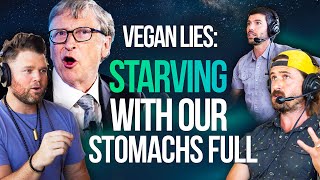
On-location podcast interview at Rome Ranch (Texas) where Josh Trent talks with Taylor Collins and Robby Sansom about regenerative ranching (Rome Ranch) and their company Force of Nature. They contrast humane, multi-species, pasture-based management with industrial CAFO and monocrop systems; discuss consumer choice, the true (externalized) cost of cheap food, Bill Gates’ farmland purchases, and claims that regenerative beef can sequester carbon (LCA cited). Personal stories (health recovery after abandoning veganism, first-person harvest experiences) and practical offerings (harvest events, farm tours, the Where Hope Grows podcast) anchor the conversation.
Chapters
What keeps you up at night?
As a culture, as a species, we're starving with our bellies full. We are seeing plummeting fertility rates, chronic diseases, obesity. Children are dying. That's why we should all be caring and all having this conversation that looks directly back at our food and the land on which everything is dependent upon.
What is one or two of the lies that people are sold that makes them buy the perceived cheap food?
Consumers are eating exactly what they're told, how they're told, where they're told. Not asking questions and just showing up to the register, voting and supporting a system that actually is continuing to ensure and perpetuate that they will get unhealthy food.
If my wife was still vegan today, she would either be dead or in a wheelchair. We changed our diet, right? We ditched this vegan diet and ate in an evolutionarily consistent manner and within days, years of symptoms went away. We're going to do our part, which is fix that broken food system. But we need help.
We're here on the ranch. Taylor and Robbie, thank you for being on the podcast. We're going to get out of here before it becomes the devil's breath. As far as heat, it's like almost 100 degrees right now. You guys tell us where we are. Taylor Collins, here at Rome Ranch. Where is it? What's Rome Ranch all about?
Yeah, man, well, happy to have you here. So thanks for coming out, thanks for making the trek. So Rome Ranch is a multi species regenerative ranch located in the Texas hill country. So we're about an hour and a half from Austin, hour from San Antonio, and we, we look into Mother Nature for her guidance and for her wisdom and grace to make management decisions on this land, using animals as our tools to restore and to heal it. So we've been out here for five years and when we bought it, it was highly degraded, industrially managed, very degraded piece of land. And we've been using these animals as our tools and as our co creators, our co collaborators to re kick this ecosystem back to a high function level.
One of the things I love, we came here for two events actually. One was a bison kill and one was a turkey kill. And it's the first time in my life that I've ever took the life of an animal which was wild.
Yeah.
And I, you know, a lot of people that are here with us, they get the chicken and the beef and everything wrapped in the cellophane and they really don't know where their food comes from, which, which leads us to Force of Nature. And we're going to dig into how you guys came together and the backstory, which I think is really important. But what exactly is force of nature? Why did you name it Force of Nature? This is something that you run, right?
Yeah, well. And with Katie and Taylor, who are co founders, and Force of Nature. And I would. I would. I would argue on that. That comment you just made, the first time that you. That you killed something. It's the first time you directly killed something, no doubt. Right. You've been. You've been indirectly participating. And, you know, that was the. That was the first opportunity for you to be there in that moment and have that level of connection and appreciation.
It's a different feeling when one actually takes the life with your own hands of a sentient being. Yeah, I had some sadness come up. I had a lot of emotions come up.
And that's one of the. I'm sure we'll get into it because it's such an incredible experience. But that's one of the things we always talk about is, you know, as a consumer, you're always behind the trigger, whether you realize it or not. And how you're playing that role really matters. But. Yeah, so the question was, what is force of nature? Or what is.
Yeah. And how did that name come to be? Because we used to be wellness Force, then we went through a death and rebirth. Now we're wellness wisdom. But I love the etymology of the word force. You know, like the force of nature. Like, you can't trust a tornado. You can't always trust the force of nature. It'll sometimes come and get you.
Yeah, well, we always say, mother Nature is not kind, but she is not cruel. You know, she just is. And I think like Taylor said about Rome Ranch, you know, taking the wisdom and the lessons from Mother Nature and applying it in the way that land is managed and food is raised and systems are supported. What we're doing with Force of Nature is try to work with the Rome ranches all over the country and potentially all over the world at some point to allow those great families and community members to do that important work and to improve our food system. And for us, that's what a force of nature is. At the time we started, the company, meat was under attack. And we just took that really personally because.
And it still is, in a way.
Oh, yeah. Well, I think a lot is coming to the surface. Right. There's light being shed on some truths that have been kept in the dark for too long. But I think there's an Awakening happening, no doubt. But we kind of started this off saying, hey, we're going to reclaim the legacy of meat. Animals aren't the problem, Mother Nature, ecosystems aren't the problem, and plant based systems aren't a solution just because there's absence of animals. In fact, we need harmony of plants and animals together and thriving ecosystems creating healthy food in a way that's in the way that food's been created for, you know, millions and billions of years. And that is, that's truly what we're trying to do, is be that force for good, be that force for change, be, allow the force of nature to realize its potential once again within our food systems.
There's an animal on the wall behind us. Most people, hunters, they put animals on their walls after they get taxidermied. And for people that have never taken the life of an animal. And I loved how you said you're actually behind the trigger at all times, whether you kill the animal yourself or you buy it in the store. When did you guys first, Taylor, when did you first take the life of an animal? Like, what did that feel like to you? What kind of an animal was it?
Yeah, it was a little bit later in my life, which is, it's great, you know, like if you obviously evolve as a young man and then into your adulthood. I just had this interest in harvesting an animal myself and I wanted to connect with it, I wanted to understand it better. And so it had to be on my own time and it had to be in my own way. And so that experience, it was really challenging for me to pull the trigger for the first time. And my nerves were really wound up because I wanted to make sure that animal had a peaceful transition into death. I think that's, that's the difference between the way that we hunt, the way that we harvest animals. You know, it's really easy to pull the trigger and shoot an animal. It's actually very challenging to end an animal's life without pain and suffering. And so that's a tremendous responsibility and something that we hold, you know, it keeps, it keeps us up at night. We do animal field harvest out here. And so it's something that is very sacred, very important. And that quality goes all the way through into the meat, into the end consumer. And so to, you know, harvest an animal the right way is to really honor it and celebrate its gift, its gift to the land, its innate spirit, and then also that energy that it provides you as the consumer.
I was listening to the podcast episode. You guys just launched a new podcast People that don't know. Drop the podcast real quick. We'll put it in the show notes.
Okay. Yeah. It's called Where Hope Grows. Where hope. And it's just stories from the land. It's inspiring lessons from Mother Nature, you know, firsthand accounts, things that, you know, when you are disconnected, like we're talking about from land and animals, it's. It's lessons that you may have forgotten, but there's these. This innate wisdom that's within all of us and our ability to connect to nature. And so that podcast really celebrates that connection and tells these really inspiring stories.
It's awesome. In the podcast, you actually use the audio from, I believe the kill I was at, I was having flashbacks, like me and Kyle and Luke sitting there with the bison that Tim Kennedy had just shot in the most humane way. I think he said when the bullet entered the bison, it was dead in like a second. I mean, like, right away, it gave me chills. I had forgotten about how much emotion I had felt at the event. Take people there right now to when you actually take a bison's life and how do you do it in the most humane way possible? And then also, how does that energy get absorbed by the meat itself compared to CAFOs?
Yeah, absolutely. I'll take the first part of that.
The.
I know Robbie can talk for sure. We're going to. We're going to come to Robbie.
Yeah. Okay. So, you know, the way that we really think about honoring an animal and celebrating its life, we kind of break it down into three steps. And so the first part is that that animal lives in the environment that it was biologically intended to, that it eats a species appropriate diet, and then it's allowed to create a net positive return on the land. And so that's step one. That's up to us. That's the responsibility of the land steward or the rancher. And then step two is how that animal dies is equally as important to how that animal lives. And so a lot of times consumers get focused on that animal needs to be in passion, it needs to be grass fed. It needs to have these claims that align with my spirit and my values. But no one really talks about that transition into death process. And so the most humane, beautiful way to end an animal's life is within its herd on the land that it knows its home with its favorite food in its mouth. And then like you said, in a split second, by the time that you hear the shot coming out of the gun, that animal sentience is lost. And then we allow once that Animal is down, we allow the entire herd to come up to it and to process its death. Now you, the bison harvest you came to was very special. That was like the first dominant breeding bull we ever harvested. And so that was a little bit different. What you got to experience because you got to see the herd dynamics. The, the, the hierarchy of the males in the herd get re established.
They came up and gored the, the fallen bison.
Absolutely. Now that was the first time that's ever happened. And that's just because that was a dominant breeding male. That was a competition for reproduction. And so in a, in a normal circumstance, we do a young male or a unfertile female, and every single animal goes up to that animal, sniffs it, nudges it, really, you know, I believe there's an energy release coming from the body of that animal. And the rest of the herd recognizes it and they're, they're drawn to it and they're making sense and processing that death. And within, you know, five, 10 minutes, we open up a gate and the herd moves through the gate. And so it's like they've processed it. They understand or they're trying to understand what happened to one of their herd mates. And then fresh pasture. Dinner bell's open. And so that's, that's really important. And then the third part about honoring an animal is just as a consumer. So this is, this is all of our responsibility. If you eat meat, it is celebrating its life. It's being grateful. It's every time you eat it, every time you purchase it, it's thanking that animal for its sacrifice. And then it's living your best life. So living with intention and purpose and pursuing your dreams. Because the spirit of that animal, that sacrifice of that animal, is to fuel your body so that you can do those things that make you feel alive. So if you are sitting around playing video games all day and being a deadbeat, that sucks. I believe you're dishonoring the animals that gave their lives for you. So pursue those things and that give you purpose and give you meaning.
That's profound. I think, about the CAFOs. Maybe we'll tee this to Robbie. Controlled Animal Feeding Operations. Cows that are standing in their own feces. We've explored this a little bit with the Kiss the Ground producer, Josh and also Zach Bush. But for people that don't know anything about CAFOs, and the difference of when we consume meat from force of nature versus conventional meat, like, expand on that a little bit for people that might not know.
Well, I mean, I think we'll talk directly about the experience of the animal. And I would say we could probably go in and further and dive into the experience of the farmer and the rancher and the community and, and then of course, the land systems and so on.
There's a lot to understand.
There's always all these stakeholders. Right. But I think, you know, you're, I think you're kind of more specifically asking about the animals themselves. And I think Taylor just painted a really beautiful picture about animals harmonizing with nature and the community, them as the stewards of these lands, and you all as community members, coming out, participating and being involved in that sense of connectedness and that spirituality that unites and weaves it all together in a CAFO or those confined operations. What you've, what you've done is you've turned nature and harmony into an industrial plant, a manufacturing facility. You've commodified life. Right? And that's commodification is, you know, putting price above all else at the expense of all else. And you treat, you know, living, sentient, spiritual beings as cogs in a machine. And you try to figure out how can we create a super hyper effect efficient model of food production by controlling all of these variables. So synthetic artificial light, synthetic, artificial contrived food systems, putting tens of thousands of animals into tiny, tiny confined spaces, whether it's thousands of head of beef or 50,000 chickens in a small barn. And all you're concerned with is what's the least amount that I can put in in order to generate the most amount that I can get out. And the suffering of those animals matters none. And so you have, you know, effectively replaced agriculture with agribusiness. Right. You took any sense of community out of the equation and just replaced it with numbers and profits.
There's a big piece of that too that I think relates to Earl Butts and what Nixon did and, and how did that work out the history of, of when agribusiness really kind of turned dark? It wasn't that way before the 60s, you know, in the 1900s, all the way up into the 50s, there was this regenerative. It was just normal people just regenerated their land. They used animals, they used to the crop rotation. When do you guys feel like that really took a turn for the dark?
You kind of touched on it. I mean, there was. The USDA literally took a position, you know, in the mid-1900s, basically, and they said point blank, get big or get out.
Yeah.
And you know, in 1900, I think 30% of the US was involved in food production or farmers. I mean, even go back to Jefferson. Right. I mean, we're a nation of farmers. Yeah. And today that's low single digits. Right. I mean, I think like 2, maybe 3% are in agriculture. We lose 5 to 10,000 farms a year. I always say that's not just some statistic on a page. That's people's legacies and their families and their generational wealth and their sense of purpose and self worth. And that get big or get out got a lot of people out. And our food system has not only been failing us as consumption consumers, but it's been failing those folks that are trying to do the hard and good work of feeding the population, oftentimes thanklessly.
John Mackey wrote this book, the founder of Whole Foods here in Austin, and it was called Conscious Capitalism. And in some of the values he put in there, it was about stakeholders, somebody that's actually part of the business. They're not just trying to get as little input and max output as they can. It's not just a transactional relationship. How did that change for you? Because people don't know this, but you founded Epic, I believe, with some co founders. I don't know if you were a part of that founding. I know you guys worked together at Epic for a long time, but you sold Epic to General Mills. And when you sold to General Mills, was there a compass that you had to make sure of morally when you made that sale to General Mills to make sure that they were going to use Epic provisions in the right way?
Yeah, absolutely. You know, just for some context on that, when we started Epic, we never grew that company. We never started that company to. To sell it. Right. Like a lot of these consumer packaged goods companies, like Year one, they have this business plan with this exit, and it's just bullshit. We didn't care about that. Epic, like force of nature, was a catalyst for creating change. And we believe in this capitalist model where the greatest way to incentivize land stewards to change their management practices is to have consumers go to the register and support that system. So through that, you know, closed loop financial loop, that we can actually drive a lot of positive change and make it worth farmers time and their energy to really honor them doing the right thing.
Yeah.
And so, you know, Epic, we grew that really authentically and it was just fun. And we felt like we were, you know, we had these legacy goals when we started, and we crushed those legacy goals. But these were goals. We, you know, sat down, spent a lot of time. We Were like, when we die, we want these to be on like the tombstone of every one of our employees. And it was, you know, like, convert a million acres of land into regenerative systems. Well, with force of nature, that number went to a billion. Now, like, we're really up in the bar. And we did that with Epic. And so, you know, in that short time span that we grew Epic, we had four different companies try to acquire the brand. One company tried to purchase it within the first three or four months. And it was a big international, multinational company corporation. And we just said, fuck off. This was a terrible fit. Along that journey, people kept trying to purchase it for the wrong reasons. Very apparent early on. And we shut those conversations down immediately. General Mills, that was the curveball. When they invited us to Minneapolis to meet with the executive team, you know, we, we kind of thought it was a joke. I actually brought a GoPro camera into that meeting and just kind of like secretly held it up because I was like, shit, I wanted to show this to my grandkids. This is gonna be a joke.
Were they all wearing suits and you guys were dressed like this or did you go in suits?
We were definitely chill.
But you were, you were wearing like the slip ons.
And they, we met some of the exec. Yeah, flip flops. And they were wearing three piece suits because they just had a board meeting.
I love it.
And, but it was, it was weird. You know, we showed up with no, expect. Well, we just kind of thought it would be a funny story. And instead we transitioned immediately to talking about mission, to impact, to legacy goals. Like, why did we start this company? What do we want to, you know, have it in history document, like, what is the purpose of this and how can we help accelerate it? And so it was these conversations that we'd never had with anyone. They didn't talk about EBITDA revenue margins, exits, you know, they didn't care about that. That wasn't what the conversation was about. And so, you know, even to some of our shareholders, investors, they didn't want us to sell the company. They said, no, we need to ride this out for another year, another two years, get it bigger, and then sell it for more. But it was really this idea that we found a partner that was willing to adhere to the mission, to the legacy, to the goal, and help us accelerate that. Because we always recognized, you know, what we could do in our lifetime if we could partner with someone strategically that could blow that up a thousand times bigger. Why the hell would we not? That's creating a Thousand times more positive impact on the planet.
I'm curious how you guys feel about this. The consumers are voting with every single cent that they spend. So whether it's General Mills, whether it's even Nestle or whether it's Force of nature, you're just trying to give the consumer what they actually want. And so if there's a different consciousness shift and so side of the consumer, then companies, they're not going to have to be big food. They're not going to be. Have to be labeled as like the enemy anymore. I don't think inherently that most people that work at these massive general mills and things like that are evil. I think that they probably turn to the profits and they have to report to their shareholders and whatnot. But what makes all that happen? It's the person buying the food. That's actually the shift that we're talking about today. How do you think that's actually going to turn? What do you guys feel is going to make that happen specifically with regenerative meat?
You know, I think you hit the nail on the head, right? The consumers hold all the cards. And I think for meat in particular, right. We kind of, we let off talking a little bit about the lack of transparency into food systems and the, the lack of the lies, the narrative around meat, the lies that we've been fed right around meat and how some of that's finally coming to the surface and being dispelled, right? And I think that specifically is one of the things that we're trying to do with Force of Nature is create that awareness, create the content, create those experiences like the one that you shared in and enjoyed and find ways to share that and get that message out so that there is that level of understanding within consumers, that level of appreciation and recognition that there's an alternative, there's a different path, there's a different way to. And a different type of food system to support one that addresses so many issues in food that we can really get into because there's dozens and dozens of these global crises that we can resolve and address by simply supporting a different system. So create awareness to that and then create an option. And so for me, it's about giving consumers choice. Let them understand the truth and then give them access to make a choice that's right for them. Because what's right for you or Taylor or me may be different, right? Or the other folks that are around or anybody listening, they may have, once they have access to the fully transparent food system and a better, deeper understanding of what is going on behind the curtains. They, they may, we may all choose different things, but that's our prerogative. We should have that choice. And what's been going on for far too long is that truth has been shielded and that choice has been disallowed. And we've just been operating as consumptive machines. Consumers are eating exactly what they're told, how they're told, where they're told, not asking questions and just showing up to the register, voting and being complicit in a system that is complicated, completely counter to their own values and intentions. Voting and supporting a system that actually is continuing to ensure and perpetuate that they will get unhealthy food that has toxins in it, that's poisoning the land, that's contributing to a myriad of challenges, that's causing families to lose their way and their farms and their livelihoods and ecosystems to decline and collapse and animals to suffer. And so like that's it, right? It's peeling back the curtains, creating that awareness and giving choice. And I think with that reality, consumers will choose differently. And then back to your point, no large company, however large, is going to create a product a consumer won't buy.
Yes, right.
And that's what we need to do, is we need to create an incentive for at scale large companies to create different offerings, offerings that align with the values of consumers. Consumers. And consumers have that opportunity right now to take a stand and to, you know, force that outcome.
It's happening now. Ten years ago, you would go into a grocery store, there'd be like barely any organic products at all. And even in the beginning of the Paleo conferences, you said you're at the first one where there was like eight booths. It was just coming online seven years ago, you know, this conversation about organic and regenerative farms or regenerative meat. It was not the conversation to be had. What do you think is shifting? I feel like this is the grassroots medium, Podcasting, video, sharing stories that people can actually feel with their heart is what's going to shift their buying decisions. That's really the needle that we're all trying to move here. How do you think that Rome Ranch, force of nature together is shifting that? What other. You have the podcast. We're doing this podcast. What are the ways that lights you guys on fire fire about telling the story so that people can have better empowered buying decisions?
Yeah, you know, I think since, you know, the industrial revolution, people have been disconnected from the sources of their food. And so. And that's an intentional disconnection. They've outsourced the killing of their food, they've outsourcing, outsourced the harvesting of their food. But I do believe that this is within our genetics and within our DNA to not only be connected to the land and the animals on which we depend, but also to each other as a community, because that's how humans have evolved for millennia. And so it's almost. It's within all of us, and it's about epigenetics. It's creating that environmental catalyst for something to switch within your body and for you to recognize and crave a reconnection with that greater entity to which we all belong. And so I think for us, it's peeling those. The layers of the onion, and in creating this, this, this calling, this reconnection to wild places, to landscapes, to animals, to land. And, you know, in the meat industry, that's like the last thing the incumbent industrialized players want to do. The guys that own 99% of the industry, they don't want you to ask any questions. They don't want you to see any of their animals, they don't want you to see any of the land, any of the food plots that their crops are growing on. And so we're saying, no, fuck that. This is the opposite. We want, want you to see it. And so it's. It's a little bit of a shock, but it's that shock and that opportunity for people to reconnect that's creating an awakening.
There's really healing power in the truth, like when we actually know what's happening, the honesty of how things are produced, then you can connect with the energy, because money's energy. You can connect with the energy that you're trading for the goods that you're receiving. And I, you know, we're all dads. This is the first time I've ever done a podcast with dads. Two dads of the same time.
Absolutely.
So all three of us are dads. And so I think about what I'm feeding my son. He's still actually just having milk right now. But how old are your kids?
I have a five year old and then a one year old.
Five and one. And you're six months?
Yep.
Okay. So when our kids are 10 and they're all playing out in the field together and they come in for snacks, I want to give them something that I feel connected to. I want to give them something that is conscious, that is real, that they can bite into. And the energy of whatever they're eating isn't tainted. It Isn't poisoned by its own stress hormones. I want to go back to this conversation before we talk about the greater landscape. And that is Bill Gates buying the most farmland in all of America. Right now, he's the largest private farmland owner, which is. Maybe you'll be able to go deep with us on that. But describe the shift that you guys feel as fathers compared to when you started Force of Nature and epic. Does it mean even more to you now what your kids eat and what you eat, or is it exactly the same?
You go first.
Okay, absolutely. It's more important. I mean, nothing has really changed with how I eat, but the way that I feed my children is the most important thing in my life. And then even bigger than that, you know, the connection to how much I love that child and how much I want to protect them and give to them really is a greater calling for me to create larger scale change on landscapes. I want them to have clean water. I want them to have clean air. I want them to be toxic. I want them to be able to have children. So, you know, it's like this whole idea and you're talking about the stress hormones of the animals we're eating being absorbed, but no one's talking about the fertility issues. You know, most of the domesticated livestock species we eat, they're modified genetically to where they can't breed. And so we are passing on that energy to our children and to ourselves. Plants, they can't reproduce. You know, all the genetically modified seeds that are protected with ip, you can't take a seed from a genetically modified corn and plant it. It will not grow into another corn.
You have to have the fertilizer that has technology in it for it to actually grow, which is so wild to me. We're turning farmlands and pastures into like electronic fields.
Yeah. And we're seeing a lot of the same issues in our own gut biome and in our own fertility and our own health. Everything's connected. We are from the land, we are from the soil. What's happening environmentally and ecologically is a direct reflection of what's happening to our species as humans. So as a father, I want to give my child an opportunity at a great life to live without pain, to live with biodiversity. And again, clean water, clean air, simple things. Things.
It might cost a little bit more too. Before you go. It might cost a little bit more. But if we can today do our part in telling the story, and you guys are going to continue to tell the story about what happens when people aren't conscious, when People don't know what's really happening with traditional meat that can emotionally shift people. And then, you know, the three or four bucks extra they might have to spend on meat or poultry, it really doesn't even matter anymore because they've attached their emotion to their decision.
I think we can tackle that. That cost part. I might. I might challenge you and say it doesn't actually cost more.
Here we go. Well, you have the finance background, so.
You know, pull out the spreadsheet, but on the, on, on, on, on, on, you know, children and, you know, my. I totally agree with everything Taylor said. And I think for me, part of it, too, is like, it's not just about the food. The food matters. Right. But it's about. It's. It's about living an evolutionarily consistent life, of course, eating the food that we're engineered to eat and that we evolved to eat, and in the settings and in the systems that we evolved to eat them and have them. Right. But I think that we've also gone and Taylor talked about it. You know, people have lost touch with, not just with our food, but lost touch with their environment. We are not city creatures.
Yeah.
We are not supposed to be indoors, in front of computer screens, on social media, all of these things. Right. You know, we are supposed to be. We are animals. We are part of nature. There is not the human world and the natural world. There is just planet Earth, the superorganism that we are a part of. And, you know, physically, spiritually, emotionally, we are deeply connected to and ingrained. And everything that we are is that and everything that is. That is us. And I want to make sure that, you know, my daughter and my children are able to. To live that. You said truth heals. Right? To live that truth. To live our authentic, intended life and not be required to be in some synthetic, artificial, you know, whatever iteration of the matrix that we're living in at the time. You know what I mean? In 10 years from now, when our kids are playing that example that you gave, I hope they're all sharing their microbiome together in some diverse ecosystem on. On some land somewhere.
Well, let's talk about the cost, because that's the main thing. Go ahead.
No, I was gonna say. Yeah, let's go back to that.
Let's talk about the cost, because, you know, most people, they try to buy the cheapest thing they can because maybe them in their lives, and this is a philosophical piece which maybe we can touch on, maybe not. Most people, I don't think, are mission driven. Or purpose driven. They're literally just trying to make it. They might make 3, 4 grand, 5 grand a month and they're trying to support their family. So literally every little expense they have, including food, is something that they're very scarcity minded about. So they try to buy the cheapest possible thing, but there's a perceived cost of food and then there's like the real cost of food. We might get something cheap up front, but on the back end there's a massive debt karmically and also societally to be paid. Let's talk about that a little bit.
It might take me a minute.
No, you start and I'll fill in.
The, you know, so. So first of all, we've talked about some of the issues within our food production system, right? So you got issues leading to major food security and food stability, meaning we may not be able to feed our population if we continue on the path that we're on. Right? We're killing off pollinators, we're poisoning our oceans, we're poisoning our own water supply. Our food itself is poisoned. Glyphosate is even showing up in breast milk now. Right. And rain, we're degrading. And in rain we're degrading our land systems to the point where they're becoming less fertile so they're less able to produce food. Then we're causing droughts and floods, losing that topsoil, which is, you know, about 5 inches of soil that covers the globe that all life on the planet relies on, which is how the earth.
Breathes through the humus.
Part of the carbon cycle, part of the nutrient cycle, part of the water cycle, all of it, right. We're acidifying the ocean. All of these things, right, Tie back to. There's about 30 billion acres on the earth, 11 billion acres of it are under some form of agriculture practice right now. Full third of the surface of the Earth, just taking our own backyard, the United States. It's like roughly a couple billion acres and about a billion. It's roughly 2 billion acres. And about 1 billion of those acres is under some sort of agriculture management. So the scale is almost unfathomable when it comes to how much land is being impacted in this way and the massive crises that we're exposing ourselves to and perpetuating as long as we continue that system. So there's a cost to that up to and including no longer being able to produce food to feed ourselves in the future. Then you get into what you had kind of made reference to a moment ago, about the cheap price of meat on the shelf, right? So you see a sticker and you think that's the cost. It's not the cost, that's the price. And it's cheap and commodified meat. Remember, price above all else at the expense of all else. The expense is not being truly reflected in that commodified price. And for, in fact we have a farm bill that is worth about $14 billion of taxpayer money that goes to promote and perpetuate these awful practices that are destroying environments and welfare and communities and so on and allowing, not really allowing, kind of forcing virtual sharecroppers now again, because the system is failing these farmers too. But they're producing food at a loss. But that system steps in and allows them to get just enough to maintain and perpetuate that for the few that don't fail every year and then that becomes feed and so on and so forth. Or that, that corn or soy or whatever that gets hyper processed to become some other sort of food or the corn that's in, you know, the 75, 3/4 of whatever's in the grocery store, all that kind of stuff, right? And so that system paid for by taxpayer dollars is able to help kind of create this false, artificially low shelf price of meat. Right? So it's cheap. And then of course you have the fact that that meat isn't actually in a lot of that commodity food and corn and crops and grains and things like that isn't actually good for you. In fact, it's even bad for you or toxic, right? And so then you have the health costs and the other externalities to yourself for, you know, it's the, it's the long term tax for, for eating cheap, hollow, hollow and hyper processed foods. And so, you know, there's a lot more to it to get to that really low shelf price. But even still, even if you were to wipe all that off the table and you were just to look at the numbers themselves, I would argue that regenerative protein is still less expensive and more valuable than alternatives.
How so?
And so, so let's look at some, some examples, right? I mean, what is some of the cheapest things that you find in a grocery store there at the aisle whenever you're at the checkout stand, right? It's all that candy.
Yeah. It's all that sugar and it's at the perfect height for like a 5 year old. Like they can just. Do you think it's designed that way?
Oh yeah, absolutely. You know what I mean? It's hyper palatable it's all the things it's doing nothing good for you. In fact, it's doing some pretty terrible things. But there it is. And nobody complains about the price of a Hershey's product bar at a buck fifty. You know, like, okay, that's cheap. Now that regenerative meat, that's real expensive. But that Hershey bar is cheap. Well, that Hershey bar and a price per ounce is $16 a pound. That regenerative protein that you were, that you were just referring to is less than that. In fact, not only is it less than that, it's quite about a third less than that. And you can actually feed yourself on it. And it has all of the micro and macronutrients that you need. Not only you, but it's got 100 grams of protein. You could make multiple meals out of it or you could feed a family with it. So for the price per pound of a Hershey bar, you could actually feed your entire family regenerative beef and a ground brick form and be better for it and be promoting and supporting a solutions based system. Similarly, we talk about food deserts and like you said, some people are just trying to get by. It's difficult to make their ends meet and they're in a food desert and maybe they get their nutrition from a convenience store. Well, you can go to 711 and you can get a Big Gulp and a package of Doritos and some disgusting rolling whatever the heck it is that's on that display case behind the counter.
It's like a mystery corn dog with tomatoes on the outside of it.
I mean.
Yeah, it looks so gnarly. Who buys that?
Sweating.
Sweating and that. And that meal right there is going to be 12, 13, 14.
Yeah.
More expensive than regenerative protein, Josh. More expensive. And it's going to poison you and it's going to last about 15 minutes before your body triggers and says, oh shit, we didn't actually just get any nourishment, so now we need to eat something else that's hyper processed and hyper palatable. Yeah.
But you know, the way I like to think about it is as a culture, as a species, we're starving with our bellies full. Right. And, and so that's kind of the way I look at industrial agriculture. And I think we need to break up some very complex issues that you brought up. And one is economic disparity and the other is a food distribution model. And those are two different things. And you can't put them together. Right. Because both of those together is pretty Much impossible to figure out. You know, what, what we're doing with force of nature at Rome Ranch is we're working on that broken food system. And we can fix that. We can work on that. I agree with you. I think, you know, everyone should have access to food. That's the quality that we produce in a way that they can afford it. But I can't fix that broken system of economics, a global economic system.
That's a more philosophical purpose based, you know, leader of a family type conversation.
Yeah, yeah, yeah, absolutely. And it's, it's, there's a lot of thing, things packed in there with wealth disparity, with accessibility to income and, and that's too big for a meat company to fix. We're going to do our, our part, which is fix that broken food system. But we need help fixing the larger economic system.
What's the biggest help you need? Shit.
I think there's some brilliant people all over the planet trying to figure that out.
What do you think? What do you feel?
You know, I'd say it's just the awakening. Yeah. I still think as a community, as a culture, we have to look at ourselves in the mirror. We, you know, it's, it's really how we choose to spend our money. Right. And I have plenty of friends that are, you know, low economic, maybe just average medium household income. And it's their conscious decision to invest that money into food that's nourishing. Right. And that's their lifestyle, that's their preference. And so I don't really believe that food that's good for you is elitist or classist or only for wealthy individuals. I think it comes down to each of us holding the responsibility of how we choose to spend our money. And when you recognize that I have plenty of friends that are, you know, make a lot of money millionaire friends that shop at Walmart. Right. They're like the cheapest people I dance I freaking know, right? And it's not like they're purchasing and supporting this system. On the flip side, I have tons of friends that don't have a lot of money, but this is how they choose to spend it.
Well, I know you're talking to the right people because we care. I mean, everyone that listens to the show, we actually care what we eat. Otherwise the show wouldn't exist. You know, we wouldn't have our other partners. And so I think about the way we turn the psychology of this. It's actually by talking about a little bit more of the dark of what's happening. You Know, I mentioned Bill Gates. He's now the, the largest private farmland owner in the United States. Why is he doing that? How does that play into the future? Fake meat conversation and then the true cost of food. I'll pass that to you, Robbie.
Yeah. You know, I think that it's, it's, it's like, like Taylor said too. Like we are, we have been conditioned. Like I said, we're, we are consumptive machines. We're doing, we're, we are doing exactly what they want us to do. And we have been.
When you say they, who do you mean by they?
Big food. So Big ag, Big food, Big oil, Big chemical, Big pharmaceutical. It's all tied into our food system. And you know, they support the left side party, they support the right side party. You know, all that flow of money, it's just saying, don't, don't mess up this machine. And you look at what's going on in the communication forums, the, you know, social media and the Internet and as we're trying to start to censor conversations, it's oh no, we can't keep everybody in the dark any longer. So how do we control what they're allowed to say and what they're allowed to promote and create an understanding? But I think going back to your. What is the biggest thing we need, we need, we need people, we need consumers to start to, to break out of that mold and become independent thinkers and to stop allowing themselves to perpetuate the myths and the lies that they've been fed and to wake up and look at it like we were, like I was explaining in that cost, you know, some of those examples like, yeah, a value meal at Chick Fil A is more expensive than buying regenerative protein and whole vegetables and making a meal as a family that you share in and, and enjoy that experience together.
What is one or two of the lies that you think are maybe the most biggest or the overarching lies that people are sold that makes them buy the perceived cheap food? Like where does that come from? Is it something that their grandpa passed to their dad, which passes to them? Is it just a generational conversation or is it more of like a media and an ad spend conversation?
I think the idea that healthy protein is too expensive, expensive or can't be scaled are two of those lies. I think the idea that we need to make these compromises in our values to and from to promote a chemical industrial agriculture model to feed a growing population.
Yeah, have you heard this one? How are we going to feed the world right Exactly. If it's not for silos of canola and non regenerative farming, how are we going to feed the world? It's like there's a different conversation. That's the truth.
The way to feed the world is with animals, first of all. And you know that kind of gets us back to your, to your question, right. Is Bill Gates plant based agenda, that narrative.
Yeah. Which is not conspiracy. I mean this is, we'll link in the show notes. It's. There is a bookload of proof that this is actually happening. When he and his wife divorced, that was when it was found out because their assets were divided and they had to be reported. That's when people found out that the Gates own the largest amount of private farmland in the entire United States.
Yeah. And so I think just, you know, just to paint a picture too, what does it take to create row crops in the modern industrial model? Right. It takes a tractor over billions of acres running four or five times a year, spraying herbicide, fungicide, pesticides, fertilizer. Right. Burning tons and tons of petroleum. You know, in our, in our, in our highly commodified animal agriculture industrial system. About 80% of the antibiotics used in the United States go into that system, you know, because it takes a lot of antibiotics to sustain life in environments that aren't compatible with life and so on. So when I talk about those big complexes, that is what, that's the money driving follow this flow of funds factor and influence behind that food system. So if we want to keep perpetuating that food system, you know, get some of the wealthiest people in the world and allow them to buy up land on the backs of failed families, you know, failed American farmers, because our system has failed them to create an incentive and an opportunity for somebody like Bill Gates to control the future of food, you know, the current. And food is going to be the currency of last resort when all shit hits the fan. Right. And then you also have Bill Gates with his vested interest and you know, other sort of plant based companies. Right. Which is again just more rinsing and repeating of the processed food movement. Right. Can we take, can we take things, hyper process them and transition their form from one thing into something entirely different and call it a solution. It's just perpetuating the status quo.
Bill Gates spent I think more money than any private individual on media buy. He actually has schools where he trains people to go into the media and to promote his agendas. And then I don't know if you guys saw this. Kim Kardashian is Like, I love this fake meat so much that I'm standing behind the company. People have to see the joker behind the curtain here. They're paying her millions of dollars to advertise this fake meat to her audience. I almost guarantee you that she doesn't actually eat it herself. That this is purely just about finance. But there's an even more darker, sinister agenda. And this might make people feel a little bit uncomfortable, but I'm gonna go for it. What's really happening is this is connected to the economic forum. It's connected to Klaus Schwab. It's connected to really population control. If you keep people stupid and sick and fat, well, then they're not going to be around too long and they won't perpetuate their species. What do you guys feel about that?
They'll consume a lot, though.
They'll definitely consume a lot. They'll feed the broken system and keep it running, but. But they're not providing healthy offspring for mother nature to help support a weak.
Population is easy to control. Absolutely. And we have a weak population because of the foods that we're eating and the land that we live on. I think it is interesting that that Bill Gates purchased all this land under shell companies. Right.
He was caught South Dakota recently. Like they're in arms about him buying this from a fake company.
Yeah. So, I mean, what is to be said about that? And if we sit back and I think that's the biggest lie right now that consumers are being fed. It's that meat is bad for the planet. The only way to feed a population is with plant based industrial agriculture. That's it. Like, if you could recognize that both of those are backwards and we could accept that as a community, as a country, as a nation, as a world, we'd be in a lot better place.
How do we accept that?
How do we do that shit? Reconnect. Yeah, reconnect with your land. Because only 1% of Americans have ever been to a farmer ranch that they purchase their food from. And so there's this disconnection. You know, like the worst image of animal industrial agriculture is the feedlot. And you've brought that up and it, it has a very visceral reaction. We're all against that. That. That should be illegal. People that do that should be locked up. That's atrocious. And we all are against that. But what gets a pass is the plant based industrial side. That's equally, if not more horrifying than that. Because that picture that Robbie was painting with the tractor, that's Tilling the field, all life is being lost from ground snakes, you know, well, there's no flying snakes, snakes, ground nesting birds, field mice, insects. The biology in the soil.
Sometimes baby deer as well.
Absolutely.
Because the, the moms, they put their deer in low covered grass where the grass is tall. So when they plow these fields for canola, wheat and soy and corn, a lot of these baby deers get killed. No one talks about that.
No one talks about that. I mean, when you're behind these tractors, you know, I see it in this community, but the day after field is tilled, there's vultures that converge on that field, eating all the dead organisms.
Even if it's a fake meat field where they're going to use all that corn and canola to put in the fake burger.
And then you're, and then you're creating a desert. There's no longer habitat for animals to exist.
Right.
In a monoculture that's not a habitat. There's no food resources, there's no shelter. And so you're thereby displacing animals. And so that's a bigger conversation and it's a reconnection. The worst example of plant based and animal based is just awful. But when you take the best example of animal based, the best example of plant based, animal based rises clearly above the top. It works with mother Nature. All ecosystems have animals as a critical component of it.
Yes. Something I was looking at was in regenerative agriculture, the claim is that there's lower or even net positive environmental and, or social impacts. Can you speak to that?
You know, you kind of brought up the question too about, you know, General Mills and, you know, reconciling the, our, the ethics of that. Right. Like one of the, one of the amazing things that came out of that is at the time we were able to take money from that large organization and fund a life cycle assessment. Life cycle assessment is a cradle to grave evaluation of the end to end carbon impact of a food system. And so we use this organization called Qantas Laboratories, the same exact organization that did a lifecycle assessment for impossible foods. We went out to a farm in Georgia and had this research done. And it showed that the carbon or carbon equivalent impact of a regenerative beef operation was actually positive, meaning it sequestered carbon out of the atmosphere and put it into the soil. And that corn, soy, impossible foods, beyond foods, industrial meat production, all were carbon negative meaning or carbon positive meaning they emitted more carbon into the atmosphere than they were able to produce in terms of food. That sounds really hard to get your head around.
Can you tell people why that's so bad for the ozone, for the planet?
Well, so to put it into much more simple terms, the beyond LCA and the impossible LCA said for every pound of sludge that they create and put into the form of a fake burger, they emit three and a half to four pounds of carbon equivalents into the atmosphere. But for a regenerative beef burger raised in a regenerative system, for every pound of beef produce, it sequesters three and a half pounds of carbon out of the atmosphere and puts it back into the soil where it belongs. And so the short, the short takeaway on that is for every beyond or impossible burger that is out there consumed by somebody, somebody else needs to eat a regenerative beef burger to offset the carbon footprint. Yeah.
And a third of the legacy carbon that's in the atmosphere was released from tilling fields. So the, you know, there's a large chunk of, due to agriculture. And you know, we think like, what are we going to do? We have a misbalance of carbon. You're carbon, I'm carbon, we're carbon based beings. Carbon is not the enemy. It's that we've broken the system, the cycle at which the carbon should be going through the soil. Healthy plants grab it, dump it into the soil through root exudates. And that feeds soil biology. And then that soil biology makes the plants healthier, grow stronger, more vital. And then the animals that eat that, whether it be you, you, me or a bison, the nutrients are passed forward. And so we've broken that system. So when we think about, well, what the hell are we going to do about it? Is the answer eating less meat or. Yeah, eating less meat. Eating fake meat? No. Right? Is the answer driving Prius or electric vehicles, Teslas? No, we still have a legacy load of carbon up in the atmosphere. What are we going to do about that? The quickest way to sequestering and drawing that down is through thriving biodiverse grasslands. They're superhighways that cycles carbon out of the atmosphere. And we get caught up with the carbon conversation. But really this whole idea of regenerative agriculture we're talking about, carbon in the soil makes rainfall infiltrate, so you're recharging aquifers. Your soil holds water longer, so you can grow in droughts or you can be resilient in flash floods. You have nutrient density of food that increases. You have the biodiversity of the above ground matter that increases. So you have like habitat for migratory birds and grass, ground Nesting things. And then you have this revitalization of these rural economies because you have like decentralized food systems again. You have small producers growing food for their communities. And so it's a beautiful system. So even though carbon's real sexy and it is an important topic, there's so much greater of a conversation, a more holistic way to think about agriculture and whether it can be net positive or.
Negative beyond just the, the, the detrimental effects to the planet. What broke my heart is when we were on the phone chatting Robbie, and you said that some of these farmers that are being pushed to the side by gates, and it's not just gates, there's a lot of private owners that are coming in and buying ranches and farmlands, that some of them are actually committing suicide and some of them are actually going through like deep emotional distress because they're losing their land. Can you expand that?
Yeah, it's, it's, it's not a coincidence that the name of the park podcast is where hope Grows. You know, and one of our values at Force of Nature is to create an abundance of hope because right now we have a hopeless system. The, the food production system that is, you know, the, the industrial model that's being championed by these large interests is a vicious, vicious system. And we're trying to replace that with a virtuous one. And, and yeah, I mean the average age of a farmer in the United States is over the age of 60. Most next generations aren't returning home. They're unable to. There's no point, there's not an incentive. Again, there's no hope for being able to maintain or keep the operation running or viable. And the rates of suicide in our farming communities exceed the rates of suicide from veterans returning from war. That is the plight of the American farmer. That is the reality of how broken our, our food system is. That is an important understanding, awareness and recognition for folks to have when they look at a cheap shelf price and fail to understand the true cost of that system.
And these farmers too, I mean they should be celebrated. They should. I mean, they are living next to God. They are co creating, they are one with nature. They are feeding communities. We couldn't exist without them. Yet the system that's in place is creating that lack of hope, that suicidal tendency. And it's just a cry for help and it's a, a larger cry that we all need to hear and support it.
I mean, it hurts. I'm an empath, so I always work on my boundaries. But when I hear a story like that it just, like, hits a lump in my throat. It makes my heart feel like sinking to the ground. But we don't have to go to a freaking ayahuasca ceremony to heal this. We can just buy different meat. I mean, it doesn't have to be complicated, Right? So if people are feeling the way I'm feeling, which is a bit of sadness, a bit of melancholy maybe, about how farming and ranching used to be, we can reclaim it. Like, reclaiming the legacy of meat. I mean, that's one of your tags for the company. So practically, people can go to forceofnaturemeats.com but what's the starting place? Yeah, we can buy different meat, but what's the conversation in homes across America that parents can start as to why they're going to tell their spouse why their food budget is increasing?
I think that's just so unique to the. To the individual context of the family. And we've been trying to figure out what is that one message that resonates with everyone?
Yes.
And, you know, it's like, people care about different things, but the one that I keep coming back to, that we should all care about, it's. It's our own health and our own wellness. And when we purchase foods that are in opposition to our own health, we're going to pay the ultimate sacrifice for that. And we're already seeing that, you know, like the newest generation of children. You know, we're millennials. No, we're. What the are we?
How old are you?
We're not millennials. I don't want to be.
I'm 42. I'm 1980, so I'm one foot. I'm 1980, so I'M, like, right there on the.
Yeah, we're 1980s. Okay, so we'll maybe. Okay, so whatever. So you got the millennials, and you had Zin Z. Now you have Generation Alpha, which is like.
Wait, hold on. Do you have a Twitch account?
No, I don't.
You might not be a millennial, though, if you don't have a Twitch account.
Well, it's just crazy to me that this next generation is Alpha. Right. That's like, leadership strongest. Like, think about the wolf pack. The Alpha is the badass. But this is, like, should be Generation Omega. And these generational shifts happen around food and nutrition and health and wellness and disease.
Right.
That's how they're defined in entertainment and social aspects in this generation. Let's just call them Gin Omega. You know, like, this is the ultimate cry for help where we are seeing plummeting fertility rates, chronic diseases, metabolic syndrome, obesity. Children are dying. They're going to have shorter lifespans than their parents. And so that's the ultimate cry. That's why we should all be caring and all having this conversation that looks directly back at our food and the land on which everything is dependent upon.
And you speak from personal experience. This is not some orator pie in the sky where you're saying, hey, we should eat regenerative meat because your sperm count is going down. Your wife had crazy knee issues. You were both vegan for years at one point, before you even founded EPIC and Force of Nature. Tell us about that. Because this is something where you actually had real life experience, experience with the detrimental effects of a vegan diet before you switched.
Yeah, I mean, I could sum it up by saying if, if my wife was still vegan today, she would either be dead or in a wheelchair. And so, I mean, just think about that. I mean, that's the impact that food has on your body. And so, yeah, at the age of 18 years old, she had exploratory knee surgery. She was told she needed a knee replacement, total knee replacement. She was told she needed to be on arthritis medicine for the rest of her life. Well, what did we do? We changed our diet. Right. We ditched this vegan diet and ate in an evolutionarily consistent manner, species appropriate, and within days, truly days, years of symptoms went away. And that's not a story that's unique to us. A lot of people share that same experience. Yeah, I think it's fascinating. I've never heard the opposite. I've never heard someone saying, you know, I was eating healthy, grass fed, had regenerative meats, and I felt like, and I was sick and I had all these inflammation issues. And then I went vegan and it went better. Never been recorded in human history. It's always this other story where we're eating plants typically doused in chemicals grown in soil that's not fertile, that makes us sick. And so, yeah, that's our experience. And then we never look back.
There was one point I think I read where you guys were like, well, we actually need to do raw juices now. We have to like, not just do veganism, but we got to go like the most hardcore veganism we possibly can. And then shit got worse.
Yeah, we were, you know, we had it backwards and, and we recognized that. And yeah, we thought we were not eating clean enough, so we just kept going vegetarian, vegan, raw food, vegan kept getting worse. And so I think that's Something to be said, you know, recognizing that we're all as human beings, we should evolve over our lives, we should learn, we should change our behaviors, and it's okay. A lot of people are very dogmatic. It's like a religion that they can't part with.
Yeah.
But I think some of the best decisions we have ever made in our lives were about pivoting and trying something different.
What do you think, Robbie, about, you know, the camps that get formed where it's like the paleo camp, the carnivore camp, the vegan camp. It's this divide and conquer mentality where people emotionally and energetically attached to the ways of eating as a group rather than their own health. What do you make of that?
You know, I think all of the kind of the clicks and that tribalism, I get where it comes from, an evolutionary standpoint. I get the human psychology aspect of it.
Yeah.
I think for us, you know, one of the cool things about what we get to do is we get to try to be a uniting force for all of that, even. Even on the vegan side of it. Right. You know, I think for basically however many decades in a row, the population has been about 2% vegan. It means as many people try veganism every year as drop out. Right. And so, you know, we always say every. You know, we don't. We don't really do a ton of. We dispel vegan myths and lies, but we don't attack vegan vegans because we consider every vegan a future former vegan waiting to happen. And we will be the meat of choice whenever they have their great awakening and look to start to heal themselves. And I think the same thing can be said for some of the other tribes. Right. Like, how can we be there and be available for different folks who have different reasons for where they are in their journey and for finding us and be that uniter at a time when I think that we need that. Right. At the end of the day, 98% of consumers or 98% of households have meat in them, and 95% of consumers eat meat. And so I think for us, it's about how can we be available to as many of those as possible and welcoming to as many of those as possible.
Do you think y' all will ever come out with like a turkey stick or a beef stick? You know, like beef on the go, turkey on the go.
Been there, done that.
Okay. What? Why? Why not? Because with Epic, you did it in small packages.
Yeah. You know, there's other portable kind of convenient food products that are easy to grab and go. And we've, we've done that. You know, we were part of that industry. And you know, you're really driving change an ounce at a time. You buy a meat stick and it's not even an ounce. Right. We want to drive large scale change. We want to sell pounds, we want to, you know, people to walk away with 16 ounces, at least devote for change. Okay. And so we can scale larger agricultural shifts at a global level whenever we can do that at higher volumes.
That makes sense. Okay, double question for both of you. What brings up the most fear in your nervous system when you look at the landscape of the world right now when it comes to food? In other words, what keeps you up at night?
You kind of mentioned some of the, some of the powers that be in some of these large international governing bodies. And I think I can see their reactionism to the shift in the human consciousness or the consumer consciousness and the awakening that's taking place. I can see them being the fear manifesting and their efforts of doubling down. And my concern or my anxiety would be that that works. And that certainly right now, as an example, where we're dealing, you know, with at an international level, inflation and all of these different factors and variables and talks about recession and what happens in those sorts of times, people contract, they spend less, they get, they get more scared. That level of uncertainty, you know, causes them to maybe retract back into their shell a little bit. And you know, my hope would be that folks adapt accordingly as, as is, as is right for, for them. But don't, don't compromise on your values. Right? Don't allow those conditions, how, how, why, ever or however caused or manifested to be a reason that you would move backwards in your own healing journey and compromise values that are going to be critical to you in the future that you want to see.
I really resonate with what you said. That's awesome. It's a big one. Like if I, if I cheat and I feed my family crap, or even myself, or if I'm not doing my cold therapy or my breath work, if I'm not loving myself, there is a cost that eventually I have to pay. And so whether it's inflation, recession or not, that's a big one. So thank you for mentioning that. What about for you?
It's similar, but it's a little different perspective. But I think what I fear the most is, you know, waking up in the morning and it's, it's when you look at yourself in the mirror, because that, that's where all the change begins, right? Humans are, I don't believe that we're inherently a destructive force or a destructive species. I think we are from the land. We should be a part of the land, part of the ecosystem, but we've been separated from that. We've disconnected ourselves. And so I think we have tremendous potential as a species to work harmoniously with Mother Nature and to celebrate the wisdom and the, the, the evolutionary behaviors of symbiotic relationships and mutualistic relationships. So I think we can get there. But I think the biggest challenge, what, what scares me the most is just the human mind being able to break out of our current routine, our current system, and being able to reconnect at a greater level with nature.
We talked about the, the yang, but what's the yin? So the solution is, yes, buying different meats and buying regenerative meat, but what else, as far as solutions get you guys really stoked, really excited about the solutions that we're seeing to some of the problems that we've painted on this podcast.
Man, I am excited right now. I think there's an exodus, a decentralization of cities.
It was like everything, education, food, all of it.
Yeah. So that's great, man. Shake up the system. I think people are drifting towards smaller communities. And then I also think that the, that the pandemic, I think that was a great thing. You know, like in nature, it's always the weak animals, the fat animals, the sick animals that get eaten by the predator. Right. And that's just how mother Nature has co evolved. And that's what's happening a little bit to our species. And it's okay. We're going to rise out of that with lessons that our health and our food and our landscapes are intimately connected to our own biological resilience. And so that should be a lesson and a celebration, a gift if we can listen to it.
That might be a controversial answer to some people. They're like, what do you mean, Taylor? It was good for us.
No, I'm sorry if people lost loved ones or had significant health issues. And I do feel for you, and I am sorry, but I do think, think that this is a lesson that we can learn from.
Yeah, I agree. Robbie, what do you feel?
Can you repeat the question?
Some solution that gets you excited about some of the really sinister, uncomfortable subjects we covered today, beyond what you guys are doing collectively, bringing together all the regenerative ranches to sell meat and poultry. And you do sell poultry, right? Poultry and, and different animals. What Else gets you into excited. Like, if something keeps you up at night, what makes you wake up in the morning with more zest?
Yeah. And I think, you know, we mentioned, as you just shared, you know, eating better protein and regenerative protein. But remember, it's like it isn't just about regenerative meats, regenerative plants and vegetables too. Right. I mean, it's plants and animals harmonizing and thriving ecosystems that should be the food systems that we support. So I want people to eat both and just make sure that they're coming from a regenerative system. And I think kind of in the vein of that renaissance that's happening as people are kind of breaking out of these artificial environments and reconnecting and rekindling their relationships with nature in the natural world. I think there's just a huge buzz of energy that I'm excited to continue to see build momentum. Right. I think again, we've talked about, you know, the whole reason for Force of Nature is to untap the potential of the consumer and to, and to create a supply chain that offers choice and create, you know, access to information that offers awareness and allow there to be a call to action. And, you know, I don't think I've ever been more inspired by what we're doing and the opportunity that it, that it presents to drive meaningful change. And yeah, I mean, I think I would, I would think I would leave it at that. Right. Like, I'm inspired by consumers and I'm excited about the idea that this great awakening is finally upon us and it's happening. You know, I can see it every day. I think something like 80% of consumers bought an organic item last year. And organic is not regenerative. Grass fed is not regenerative. Natural is not regenerative. Right. Regenerative is a level above all of those things and all encompassing. And yet consumers are starting to take a stand and demonstrate that they expect more, they want better, and they're willing to consume in a way that drives the positive change that they want to see. And there's more information and there's more businesses that are starting and founding on regenerative values and banks that are lending money and consolidating debt for farmers that are practicing in regenerative ways, and political interest groups that are coming to take a stand to combat the food system and farm bill right now. And you know, there's just coming at it from every single angle. There's something somebody or some group trying to be a part of the solution. And I think that is a groundswell that's going to be unstoppable.
Well, I definitely feel that groundswell just from being at the ranch twice now and. And getting to sit with you guys this morning. It's been amazing. Final question is around what we're all trying to achieve in this life, and that is, well, being. Everybody wants to live the best possible life they can. I want to live to 100. That would be great if I could see my great grandkids. If Nova wants to have kids, cool. But what do you guys feel is the recipe? In other words, what do you think it takes in your own individual lives to really live a life of wellness? How do you define wellness? I'll ask this to Taylor first. What does wellness mean to you?
It means a lot. I think it's holistic. It's not like a linear deal. I think it's having balance more than anything in my life. It's trying to lead with more gratitude. It's being grateful for the opportunities that I have for the people, people that I get to be in their companionship with. And it's. It's celebrating connecting with a greater ecosystem and. And feeling that love and that energy given to me by nature. And so, yeah, one. One of my favorite things to do is. Is get grounded, you know, and you have to do it in thriving living soil. But just feeling the earth's energy and the magnetic pulse from it, it's. It's healing and it's therapeutic, and it really helps me kind of level up mentally as I go about my day and fills my heart with that love that I love, that I can share with people.
And I feel that radiating from you. I felt it when you let us on the land and you pulled up a big hunk of soil and there was, like, dirt coming down your arm, and you were like, look at this clover. So I can. I can really feel that from you, and it's palpable. Robbie, how would you define wellness? Like, what does it mean to live your life?
Well, that's a big question. You know, I think Taylor gave a beautiful answer to it. I think for me, it's probably pretty simple. And I think we all have a tendency to want to overcomplicate things and maybe go too big. And I think there's a really beautiful concept that Taylor and I love, and it's take care of the small things, and the big things will take care of themselves. You know, right now, I'd say for me, I just want to be a good dad, you know, and there's so much. You could wrap so much and encompass so much in that. Right. And I think, you know, there's so many lessons that you want to, that you want to model and teach and explain, and I think one of those is, you know, living. Living a life worth living is hard work, and that's a good thing. And that, that's okay, you know, and it means that you embrace and accept trials and struggles and tribulations. It means that you don't sit around and celebrate being sedentary, but that you operate and move with purpose and that you pursue not mindless, busy activities, but you pursue meaningful work that fulfills you and you're not afraid to take those risks and to put yourself in difficult, uncomfortable situations and, you know, do things that are maybe bigger than yourself or seem hard or scary.
Yeah. And, you know, in order to build a legacy, there's going to be some sweat and there's going to be some sacrifice, and that's okay. Otherwise, everybody would build the most amazing legacy in the world and everybody would live the most beautiful wellness life ever. So I really appreciate you guys. And I have my son's birthday tomorrow, tomorrow, and he's one year old. And so we're gonna have some of your meat for snacks for people to make. And that makes me feel good because, you know, 30 of my friends can get together at the house and yeah, we can have some cake, which maybe isn't that healthy, but it's fun. And then we can have some healthy regenerative meat on the counter as well. So appreciate you guys very much. If you want to give your individual Instagrams or let people know about the events at Rome Ranch, I know you have some hunting and it's a big ranch, by the way. It's 600 acres. We, we kind of got lost coming in here this morning. But yeah, thank God for cell service. Tell people about the events. And then if you want to drop your individual Instagrams.
Yeah, absolutely. We, you know, big per part of this ranch and Force of Nature is to connect people. And so it's, we have a big community poll and so we have a hunting program where you can come out and learn how to harvest your own food with respect and compassion. All skill levels are welcome. We do that here. We also have community tours. We have, you know, farm to table meals in the pasture with the animals. We do, we teach animal butchery like the bison harvest or the turkey harvest. And so there's just tons of stuff to come out and learn about and connect with here at the Ranch.
And I came to one of the events. You guys, if. If you can make it out to Austin or if you live in Austin, absolutely. Attend one of these community events, because there's nothing more primal than seeing a bison butchered, like, right there in person. It'll. It'll change you. It'll change a part of you for sure.
Absolutely. That's.
Yeah. And then do you have an Instagram or are you too busy on the.
Land to be on IG at Rome Ranch is. Is what we'll use. And then of course, at Force of Nature also.
Yes. Okay. How about yourself? Do you go on social or are you too busy with the business?
I do, but. But I don't. I don't actually ever post anything. I don't even know what my. My handle would be. Something probably the best dad ever, but. But I would. But I would also add, too, you know, one more shameless plug for Where Hope grows. Of course.
Yeah.
The podcast that we just launched and that Taylor does a beautiful job of narrating. And, yeah, we have a blog. You know, again, we're trying to create information and create and create, you know, connect consumers to these food movements. So find us, and wherever it is that you, you know, go consume content, and hopefully we can. We can. We can share something that's meaningful and inspiring to you.
I think people can feel that. You guys check out more at the store page, so go to joshtrant.com store. That's where Force of Nature is, in the store. And until we see you again, we're all three of us wishing you love and wellness. We'll talk to you soon. Hey, thanks for watching the podcast. I appreciate you being here. If you haven't done so already, click the subscribe button and the little notification bell so you never miss any of this free weekly content delivered from my heart with care right to yours. If you love this video, you'll love any of the videos on this page. Just click the one you want to watch next.
More from Josh






Your child's future start before pregnancy... and even before conception! #podcast

MD Reveals: Your Healing Creates Your Child's Reality (The Souls Coming In Need Strong Bodies)



