Your Soul Is Sabotaging Your New Years Weight Loss (Here's Why)
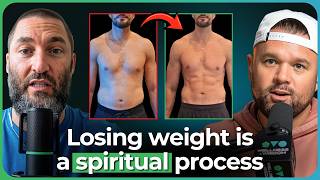
In this livestream, host Josh Trent interviews weight‑loss strategist David Zapposotti about his "Brain Flip" methodology. Zapposotti explains that the brain treats excess weight as a survival cue, linking heaviness with the feeling of being alive, so losing weight can feel like "dying" to the subconscious. He describes how the subconscious mind clings to struggle and heaviness because they are familiar safety signals, and why willpower, discipline, and restrictive diets fail—they fight the root programming instead of reprogramming it. The core of a Brain Flip is a rapid sensory‑based re‑encoding of the survival brain, creating peace, relaxation, and a new identity that no longer depends on cravings. Zapposotti also introduces "Mind Flips" that address the mental identity layer, emphasizing that true transformation comes from aligning subconscious drivers with conscious desires rather than forcing change. He critiques common weight‑loss tactics (GLP‑1 drugs, restrictive dieting) as temporary repression that triggers rebound weight gain, and he highlights the intergenerational transmission of food‑related trauma. The conversation also covers the program’s evolution from a high‑ticket offering to a free community, the importance of simplicity and meditation in developing the method, and practical advice for people stuck in the struggle of weight loss.
Chapters
To the brain, losing weight feels like dying to the extent that being heavy has become associated with living. On a daily basis, they're experiencing the physical sensations of heaviness when they're getting out of bed, when they're getting into the tub, when they're bending down to put their shoes on. At the exact same time, they're experiencing the physical sensations of being alive because they are alive. And when being heavy becomes equated with life, then being light becomes equated with death. And so that's why losing weight can feel like dying to the brain.
It's a deeply spiritual process, but it is inherently mental.
Most people who are dealing with food and body weight issues are addicted to struggle. The struggle is familiar, which makes it safe to the subconscious mind. The subconscious mind is very comfortable with them struggling to get to the goal, but not comfortable with them actualizing the goal because to actualize the goal would be an ending of the struggle. And who would I be if there was nothing to struggle against anymore? What would take its place?
Why do willpower and discipline almost always fail? Well, what is up everyone? Welcome to the Wellness and Wisdom Podcast. Today's a very special livestream. This is the first time we're livestreaming in, gosh, 5 years. I remember during lockdown I did this with Zach Bush. And like millions of people saw it. So, you know, speaking of lockdown, I think the mind, David, is a friend or foe. Many times most people try to lose weight by forcing the body to change. But what we're going to talk about today is what if the key to real transformation isn't just in the diet? It's not in the food. It's in the mind that created the weight in the first place. I'm introducing David Zapposotti. He's the founder of Brain Flip Weight Loss. How the subconscious and the conscious mind, when combined with sensory experience of food that lives in our body, can unlock long-term weight loss through identity transformation. Look guys, this is where neuroscience meets spiritual embodiment. We emotionally condition ourselves. We have these safety patterns, these sensory triggers that keep us stuck. But David has developed a very neuroscience-based way to flip neuroassociations for good. So if you've been struggling with weight loss, if you saw our our episode with Dan Go, you know that weight is a state of mind. Truly, it's a state of mind. David has been helping clients over 3 decades. 3 decades, man. You started way back in California and now you're in Costa Rica. I'm here in Texas. You say that losing weight can feel like dying to the brain. How so?
To the brain, losing weight feels like dying to the extent that being heavy has become associated with living. And what I mean by this is that think of Pavlov and his experiments with dogs for a moment. So he'd ring the bell, give the dogs food, they get linked together, right? Well, when a person is heavy, what that means is that on a daily basis, they're experiencing the physical sensations of heaviness when they're getting out of bed, when they're getting into the tub, when they're bending down to put their shoes on, when they're bending down to get into the car. Like, there are all these little activities they're experiencing the physical sensations of heaviness. But you know what else they're also experiencing at the exact same time? They're experiencing the physical sensations of being alive because they are alive, which means that over time, the physical sensations of being heavy get linked to the physical sensations of being alive. And when being heavy becomes equated with life, then being light becomes equated with death. And so that's why I feel weight— losing weight can feel like dying to the brain.
Yeah. So what happens in a brain flip? I've heard about the concept. We podcasted, I believe it was 7 years ago. You've been working on this for over a decade. It's been a long journey. What actually happens in the body the moment that a brain flip occurs? And what is a brain flip?
Yeah. Okay. So a brain flip, what I mean by a brain flip is that a brain flip is a reprogramming of the brain that brings our subconscious drivers into alignment with our conscious desires. Basically, what this means is that we have conscious desires, our goals, our aspirations, the things that we truly want deep down in our heart. But then we've also got our subconscious drivers, meaning the ways in which we are compelled to behave and operate based on our programming. In fact, there's a famous saying by Carl Jung that until you make the unconscious conscious, it will rule your life and you will call it fate. That's basically what we're dealing with here. When we, we're becoming conscious of the parts of ourselves that are beyond our desires so that we can bring them into alignment with our desires. That is what a brain flip is.
And so a brain flip is, it's a spiritual process. So I'm not going to cheat you guys. Like, this is real. It's a deeply spiritual process, but it is inherently mental. So when the brain flips, what actually happens inside the brain when, let's say, a craving disappears?
Peace. Relaxation. That's what happens. And the reason why is because the survival— the survival brain is no longer driving us toward a behavior that the mind perceives to be a threat. In fact, this is at the root of what inner conflict actually is. Inner conflict happens when the thinking mind knows that something is a problem, but the survival brain experiences that same exact thing as a solution. And when one part of us knows that something is a problem while another part experiences it as a solution, this leads to exhaustion, basically, because we are constantly at war within ourselves. And so this is why for my members that are going through the Brain Flip Weight Loss program, there is a sense of peace and relaxation when a Brain Flip occurs because the inner conflict is resolved and the war is over. Meaning that they no longer have to go through all the mental gymnastics of what can I eat? What can I eat? How am I going to handle that dinner party? How am I going to get through the holidays? Like, all of that stuff is gone. There's no more struggle. So what hap— that, that's basically what happens with a brain flip. It just gets rid of all of that interference and, and creates a sense of peace. It's no longer there.
Let's get right to it. So, so the survival brain, I've heard it described from a previous guest on the show, Dr. Kyra Bobinet, and she called it the lizard brain. But you describe this section of our psyche as the survival brain. So when it comes to survival and actually the portion of our brain that really makes us feel like we're in fear or fight or flight, why does the survival brain believe being overweight equals being safe?
It feels that being overweight equals being safe because, I mean, there's many different reasons for it, but what it all boils down to is that in one way or another, being overweight provides some kind of like a security or protection or benefit, as strange as that may sound. So let me, let me give you a quick example. I have a friend who was a martial arts instructor for decades, and he was always fit. He was in great shape, and he got in a car accident. This is a really extreme example, but it's going to bring home the point of what we're talking about. He got into a really bad car accident, broke like pretty much every rib in his body. And then he gained about 150 pounds in the next 3 months after that happened. That's a normal thing that happens. Like, another way that that happens is with sexual abuse, when someone is taken advantage of sexually. With a car accident, if the sensory brain, the survival brain, has never experienced something like that, it's got to adjust. So, when the ribs are broken, while gaining some fat will add cushioning in case that ever happens again. It's a protective mechanism. If someone's being taken advantage of sexually, I've had many women who were sexually taken advantage of and gained 100 pounds in 3 months. That's, that's more common than people realize. When that happens and the brain feels like it's a threat and it's because they're attractive, then it tries to do whatever it can, weight gain, in order to make them less attractive. Doesn't always have to happen just through intense, intense experiences. It can happen through being born into a family where a bunch of people are heavy. And then the brain's like, well, this can happen before they even are aware, like before they can even talk. The brain can register it needs to look like everyone else so that we're accepted. Because if we're accepted, we'll be part of the group. We won't get exiled or removed from the group. Some people—
that's so good.
Some people, it's like their parents put them on a diet when they were 9 years old. Like as an effort to get them to stop, to not gain weight, which actually caused them to gain weight because it teaches the brain, oh, there must be something wrong with me. So it becomes a self-fulfilling prophecy. They gain the weight so that there's something wrong with themselves.
So then to me, if I'm hearing you correctly, and we had somebody on IG ask a question right now. So if you're watching live or on a replay, please field your questions wherever you're watching. The thing that I'm getting from you is that there's these neuroassociations when it comes to if I'm overweight, AKA if I have more visceral fat, if I have more lipids, subcutaneous fat, if I have more fat on my body, then because of the evidence I've gathered unconsciously or consciously, then I will be, quote, safe. So it is this self-fulfilling prophecy that you describe, but it seems like a paradox because no one would want to give themselves extra visceral or extra subcutaneous fat consciously, but the unconscious programming is running the show. Did I hear you correctly?
Yeah, that— and that's That's a big sticking point for a lot of people because they give a lot of priority to their conscious desires. They're aware that they don't physically want the extra weight, but subconsciously, it's providing some kind of a benefit. And, until they get in touch with that aspect, it will rule their life and they'll call it fate. They'll say it's genetics or they'll say it's whatever it is that they think it is.
Yeah, so I love that you brought up Alan Watts. Um, I wish we had the ability to put the photo on the screen, but just imagine this, y'all. Carl Jung said that unless the roots touch hell, then the branches can't touch heaven. And I love Jung so much. I'm really a novice, David, when it comes to Jung's work. I mean, the psychotherapeutic models and the Jungian understanding of even what I'm wearing on my necklace right now, which is the Philosopher's Stone— it's this transitory period between lower self to higher self, or you could say, from base metals to gold. And this identity transformation— that, stick around, we're going to talk about identity transformation later on— it really is a war. It feels like at times it feels like an internal war. And we have this sensory experience in our body, and I did for a long time. As you know, man, you know my story. I used to be 280 pounds. I, I was eating like Kix cereal and cheddar cheese, and like, you know, my parents did the best they could, but they just didn't have the level of consciousness that all of us, and especially you, have. So let's transition into what's actually being felt, the felt sense of experience when it comes to food. How does the sensory experience of food shape our identity? How does that actually work?
So I don't think that the sensory experience of food itself shapes identity, directly shapes identity. It's the stories that the mind creates around those sensory experiences that shape identity. Um, the sensory experience itself is actually neutral. It's just a sensation and is devoid of all meaning. That is, until the mind inserts itself into the picture and creates some kind of meaning out of it. And it's the meaning that it creates that shapes identity. The sensation is more, the sensation is more simple. Than the mind makes it out to be.
How is it more simple? Because if it's literally just, you know, the nonjudgmental, compassionate witness where true compassion is just an empathetic witness watching whatever's going on, when we eat food like ice cream or fatty foods, when we eat these comfort foods, there's something going on in our felt experience that in a way inadvertently informs the identity that, oh, I'm a person that needs food. In order to feel safe. It feels like there's a feedback loop that's occurring there.
Oh, absolutely there is. I mean, it just depends on what the story is that they're telling themselves. If they're eating it and then they feel guilty, that shapes identity. If they're eating it and then they notice they get on the scale and they feel horrible, that shapes identity. Like, whatever it is, it's not the experience itself. It's the meaning that the mind attributes to that experience. That is what shapes the identity.
Okay, so for y'all that are just grokking this like I am, the real power of flipping the brain or a brain flip is, from what I can understand, David, a reassociation to stimuli, a reassociation to the experience of eating food. But what's the missing link when it comes to truly flipping the brain? You know, what is that really?
It's, it's moving to the opposite side of the polarity from the one that we're attached to. And so I'll give you an example, like with cravings for unhealthy foods. I define addiction in my program as a non-conscious pattern of one-sidedness. So the mind creates polarities, good, bad, right, wrong, beautiful, ugly, confusion, clarity, all these different polarities. We become attached to one side over another, and then the collection of all of our polarity attachments actually is what our identity is. It's the formation of our identity is based on these polarity attachments. Those are mental polarities, but there's also physical polarities. Every time I eat junk food, I enjoy it. It's pleasurable. That's a non-conscious pattern of wantitus. We're not thinking about it, but when we're watching TV, when we're standing at the kitchen counter, when we're hanging out with our friends, when we're checking out, scrolling on the phone, we're doing something enjoyable while we're eating the junk food. Junk food becomes linked to enjoyment. I have people face the reality of where they could end up while doing that behavior that could lead them to that reality. So I make it painful. I have them experience the other end of the polarity, and that rebalances the polarity, and then they become free.
If you've ever blown up your life for no logical reason, congratulations. Your biology works. You're not broken. You're just running an old pattern. After 10 years of podcasting and interviewing 800+ of the sharpest minds and deepest hearts on planet Earth, I built something simple to help you interrupt these patterns fast. I kept running personally into the same stuff, and audience members would write to me and say, Josh, I'm dealing with the same core 3 things, which are expressed through emotional epigenetics, that are our emotional patterns, our unconscious beliefs, and our environment. Environment. This Self-Liberation Blueprint is a free training where you get clear on how these 3 areas are blocking your life, and in 10 days you can move from being stuck and distorted on the inside to clear and on purpose on the outside. The Self-Liberation Blueprint is a 10-day jump start that's perfect for the human being that feels stuck but they just can't figure out why. Now, I built this with no smoke and mirrors. I know in our world there's a lot of smoke and mirrors when it comes to personal personal growth and spiritual development. I built this with 24 years of my own health, wellness, and personal development life experience, so I can save you money and save you time and start getting your results as quickly as possible. On your first day, you're gonna go right into a self-assessment where we know exactly where you are and exactly where you get to be. We're gonna take you through a dream vision process and specific breathwork to create your life vision that you desire in the future as if it's here right now. All of this is free because I'm here to give it to you as a mentor in the same way that my mentors gave it to me. It is purely just my gift to you. You also get free access to the Liberated Life Tribe, a community of people like you and I that are actually doing the inner work instead of just pretending that they're fine. By the time you're done, you're gonna know exactly where you are in your Wellness Pentagon, physically, emotionally, mentally, spiritually, and financially. And you're gonna have a map, a mindful action plan to move from clarity instead of distortion. This is not therapy for people that are broken. You're not broken. You're just bioenergetically burdened. And I'm here to tell you that removing these burdens is possible, and I believe you can do it. You don't need fixing. You just get to have a clear starting point and a plan that actually works with your biology. If you're ready to move forward with your life without forcing it, join me inside the Self-Liberation Blueprint by heading over to liberatedlife.com. Come join us.
When we rebalance the polarity, we then transcend it. It no longer is an issue.
I think of polarity as these opposing forces where in the center there's this homeostatic baseline of peace or calmness or centeredness. And from what I know, I know you went a lot deeper when you were working with people one-on-one back in San Diego a decade ago. Plus, we are either in a sense of homeostasis or we're out of it. But the unconscious programs and stories that really we gather evidence for, I know I have, and I still do at times. It's something I'm like tending to a garden, if you will. The unconscious collection of evidence that I'm not safe, in my opinion, propagates the external stimuli that's going to, quote, make me safe. And external stimuli could be pornography, shopping, overworking, but in your case, food. Many people across the planet have come to you because they literally have tried everything and nothing has worked. Yet in our previous episode 7 years ago, and especially in the work that you've compounded on since then, there has been case after case of people that have successfully gone through these brain flips. Is there one— I know you can't share, you know, identity out here publicly, but is there one person that really went through something so severe that it even challenged you as a coach, as a mentor, to know that this Brain Flip method would truly work? And then what was the result of that?
I can't honestly say that anyone who actually followed the process was really challenging. I mean, the biggest challenge that a person would have with, like, for example, the Cravings Flip is if they don't see real consequences, if they don't change, if they don't see any consequences, there isn't going to be enough motivational buy-in for them to even be in my program. To begin with. But, if they come in and they have real fears around where they could end up, they're going to be able to flip cravings because we use that pain against them. I actually discovered the brain flips through martial arts because what happened— I'm a lifelong martial artist. What happened years ago back in 2017, 2018 when I first discovered the brain flips is that I was using positive association. I was trying to help people to become free of junk food cravings by creating positive associations to healthy foods. But it took a long time and it was like an uphill battle. And the question I was asking myself is like, man, it's like all these people come to me, they're in a negative state of mind. They're kind of defeated. They don't feel like they can do it. They're in all this suffering and pain. And I'm trying to like strongarm them into like a positive state, like positive reinforcement. Is there a way I could just use their pain against them, like in a beneficial way? And that's actually not all the pain. The brain flips aren't all painful, but the first one is. Going back to what you talked about with the tree that touches the heaven when the roots touch hell, the way that I phrase that is that the more deeply we face the dark, the more clearly we can open to the light. So, it's the exact same thing. And so, my program is actually a symmetrically balanced program. We use pain, a person's pain that they're dealing with in the beginning to reconcile what's coming into the body with food so that they can open up to the excitement that will help them to let go of what's coming out of the body with weight loss at the end.
To me, it seems like, and I have a tendency to reductionize things, so bear with me, y'all, if you're watching on YouTube or if if you're watching live. The way that I understand things is I take in all this beautiful power and wisdom that my guest shares, like you just did, and I say it back to them in really a 10-year-old's understanding. So if I can just reflect to you from a 10-year-old, because I think children love stories, and the way that you talked about the light and the darkness and the relationship between light and darkness— gosh, any time in my life, and especially with food, especially with pornography, any dragon that I have been running from, I realize at some point that the dragon is actually me. And we don't have to go deep into mythology and understand the hero's journey from start to finish to really feel this. We all know, everybody watching, everybody listening, we all know that whatever dragon we know is in the cave that is breathing fire is a self-created dragon. Can you speak to this?
Yeah, I mean, it's Here's the thing. In my program, I have brain flips that work on the physical component of addiction, and I have mind flips that work on the mental component. This is gonna sound interesting, but the brain flips are really, really simple. Like, helping a person to become free of cravings is literally the easiest thing in my program. Flipping over eating is equally easy. Losing weight is a little bit more complex, but it's not that much more. It's more around the shifting of identity. That is where really people have the most challenges. And a big part of that, like, is the fact that whatever we're dealing with, as it becomes familiar, it becomes safe to the subconscious mind. That determines our whole outcome that we're getting. Does this make sense what I'm talking about here?
Totally. Yeah. And we're going to talk more about identity transformation in the last part of the show, but I, I really love that you're already going there because literally the mental, the sensory, everything is leading us up to actually facing the person that we truly are in the moment.
Yeah.
Versus how do we actually become or step into an identity transformation to become a person who's not ruled from cravings at all?
Slaying the dragon on a physical level is very, very simple. And it's more simple than the mind makes it out to be. The challenge, the real challenge, the real dragon that needs to be slayed is the addiction to believing our own mind. People come into my program with all different kinds of addictions, junk food addictions, overeating compulsions, addictions to being overweight, addictions to being heavy, addictions to struggling, all these different types of things. But the biggest addiction that everyone deals with, myself included, I mean everyone, is the addiction that we have to believe in our own mind. And it's so critical. That's why I have the mind flips there is because the closer that we are to a genuine transformation, the more full of shit the mind becomes. The mind is going to try in whatever ways it can to steer us into whatever we can do that will keep us exactly where we are, because exactly where we are is safe to the subconscious mind.
It's so good. So then why— so speaking of the mind, a lot of guests that I've had on, not in a couple years, but previously before I started to really learn the truth about willpower, why do willpower and discipline almost always fail?
Well, think about what willpower and discipline are actually used for. How do we apply them when it comes to food and body weight issues? It's usually one of two things, right? We're either using them to stop trying to do something that we want to do or to start doing something that we don't want to do, right? In other words, discipline and willpower are what we use to battle against our own urges and compulsions, which means that the more that the approach that we're using doesn't actually get to the root of the issue that we're dealing with, the more that discipline and willpower have to become a factor. Because an approach that actually gets to the root goes straight into the true nature of the compulsion and resolves it, which means that discipline isn't needed because you can't use discipline to fight against a compulsion when that compulsion no longer exists.
What do you think in the first place creates a compulsion? What's the roots of compulsion?
Well, if it's a physical compulsion, then it's based on physical programming. So I'll give you an example. Like if a person is— has an overeating addiction, right? Maybe when they were a kid, they were at the dinner table and they were full and they said, hey, I want to get down. And their dad said, no, you got to stay there and you got to eat all your food. You got to finish what's on your plate because there's starving kids in Africa. And we don't want to waste food, right? So then that kid is taught to eat more than what they actually want. And as they have to keep doing that, it becomes familiar, which makes it safe to the, to the subconscious mind. It becomes programmed into their sensory survival brain. And so then later on, there's many people and And it's kind of interesting because it even feels the same as when they were a little kid and their dad forced them to do it. A lot of people are like, I don't even want this food, but I can't stop eating it.
Oh my gosh. For whatever reason, you just time traveled me. I remember I was interviewing Rob Wolf. I don't know if we've talked about this before. And in his early coaching days, he had said that he was dealing with this high-powered executive and whatever this guy did, he literally could not stop eating ice cream. He would eat ice cream all the time. And when Rob really got down to the truth with him, he said, so what's this all about? And it seemed like in a way he was almost doing a brain flip like you do, but not with your neuroscience. Rob goes, so what does it really mean when you eat the ice cream? And he took him into his body and the man went back and he remembered that his parents were gone all the time and he had this sadness and his nanny would take care of him all day long. And the nanny would always give him a bowl of ice cream. So he created this hook in his brain that said, when I eat ice cream, I'm loved. When I eat ice cream, I'm safe. And it wasn't until they unpacked the root of this entire association with ice cream that he was finally freed. But it was so paradoxical. It was like, well, you can't just go for willpower and you can't just go for the behavior. You have to go down to actually the roots of the trees and where these neuroassociations live. And that is, I'm lovable, I'm safe, I'm cared for. There's a place for me at the table. Without that, the unconscious mind or the survival brain, like you share, essentially feels like this is the only way I can create safety for myself. Isn't that interesting?
Yeah. But here's the thing also about it is that, and I don't know what Rob— I know Rob, we both train in Brazilian jiu-jitsu. We've had conversations about that. He's a cool guy. I don't know exactly what his methodology is or what he did with that person, but what I've found is that we don't actually need to know, like, we don't actually need to go back into the past and figure out where the addiction originated because the root of the problem is not the same as the origin of the problem. The origin of the problem is in the past. It's whatever experiences we had when we were younger that shaped us and programmed our brain and led us to where we are today. But the root of the issue is always in the present moment. It's in how we're eating the ice cream now and the experience we're having while we're eating it. That can be changed at any time, and we don't need to know how it came about to begin with in order to be able to do that. But we live in a mind-dominant society, and a lot of people are very, very focused on trying to figure out why they are the way they are. And it doesn't work. Think of it this way. If you and I, if you were, if you walked into a room, right? And I'm on fire, like I'm literally on fire. I'm burning to death. Would you ask me, David, why are you on fire? Hey, what's the deeper reason for you being on fire right now? You wouldn't do that, right?
You would just probably not.
You would just do whatever you need to do to help me to, to become not on fire anymore, to put the fire out. And the reason that that seems ridiculous is because there's a really, really short gap between the cause and the effect. The moment I'm lit up, I'm pretty much burning pretty soon right after, right? But here's the thing, with food addictions, it's not that simple. Like the cause can lead to effects years later. The gap could be really wide, and the wider that the gap is, the more the mind can come in and be like, why is it this way? Why am I the way that I am? Why do I have this addiction? Why am I operating in these ways? And it can try to do all this figuring it out. It's still just as insane as trying to figure out the fire, but it doesn't seem as ridiculous because the gap between cause and effect is a lot broader.
That definitely slaps, to use that millennial term.
Wow.
So I think about how much of psychology has created thousands and thousands of curriculum and books that ask the question, why did it happen? Or tell me why in the past that something occurred. It's like burning mental energy, like you said, trying to put out a fire when the person's on fire, the craving, the compulsion, feels like a fire. Look at what happens with alcoholics, or even in my journey with pornography. It would feel in moments like if I didn't use the porn, that I was going to explode, that I was literally going to leave my body. And in many ways I did. That's what leaving the body actually is. So really, all roads lead us here. All roads lead us to— people are at war with wanting to have an identity, that they are a healthy, fit very body fat-wise healthy person, yet they don't know what they don't know because they've been searching for the why instead of just simply the what.
And one thing I just want to make sure is clear for everyone listening, I'm not against therapy. Like, I do feel that there are valuable reasons for looking at things in your past. There can be catharsis and healing that can come from that. But when it comes to the physical component of addiction, it doesn't work any more than trying to figure out why someone's on fire.
The big question for me then, it's the question that I'm understanding deeper and deeper for myself. What is identity transformation? What is the real substrate? What is the truth about identity transformation? And the best way we could frame this would be, why do 95% of people, probably even more, but the research shows 95% of people that lose weight, they regain the weight. Is this biology or is this belief?
It's both. But basically the reason people regain the extra weight is because they never got to the root of what created the extra weight to begin with. And Josh, this is something that, like, it's literally so difficult for people to grasp because they're so conditioned to believe that if they're losing weight, they're making progress. But what they don't see, what they don't see is that when the heaviness programming isn't being addressed, like what we were talking about earlier, that being heavy equals being alive is being safe. When that's not being addressed, then losing weight becomes a repression of that programming. They're literally stuffing down their own heaviness programming with the weight loss. Just like they're stuffing down the cravings or restricting the calories with food. And it even looks the same, like they have to use a lot of force. It's really difficult and it doesn't last. And the thing is, like, there ends up being a rebound effect in the same way, in the same way that when a person stuffs down their cravings and they come back even stronger, when a person represses their heaviness programming through losing weight that doesn't get to the root, they usually gain the weight back even stronger as well, which is why most people that yo-yo back up end up even heavier than they began with. It's the same thing.
So when the roots are flushed out, when we can get down to the roots and actually do the brain flip, this creates a new anchor. I mean, it's literally a new anchor. It's getting to the actual root that created, or that the source of the compulsion is connected to. So then if 95% of the people regain the weight, and you had said some people even gain more weight, there's this boomerang. It's almost like there's a boomerang that says, I'm going to throw out this boomerang of desperation. I wonder where Ozempic or tirzepatide, or even any kind of the semiglutides, these Band-Aids that come in that are like a top-down approach to weight loss. I don't know the research on it, but I know that many people that get the Ozempic face and they go through the semaglutide, they regain the weight because they're not actually hitting the brain flip at its core. Can you expand on that?
Anything that doesn't get to the root of the issue is going to need to use discipline and willpower and force, and it's going to have side effects. It's obvious to see the side effects in like the GLP-1s and the, weight loss medications, but it's anything we do. Do you know what the most common form of what creates more eating disorders than anything else? Restrictive dieting. Like when people restrict their calories, they're teaching their brain that there's a scarcity of food in their environment. And it try— you remember in 2020 when the pandemic first hit, everyone was freaking out. What's the first thing everyone did as soon as they found out? Everyone went to the store and they got as much stuff as they possibly could, right?
Yeah.
When we restrictive diet, we're internally doing the exact same thing that we did externally there. When we restrictive diet, we're sending alarm bells to the brain, "Oh, there's not enough food in our environment. Like, there's a reason we're starving." So, it tries to hold on to fat because If there's not enough food in our environment, we gotta think about it from a survival mechanism for a moment. If there's not enough food in our environment and we're in a survival species, what do we have to do? We have to migrate to another environment, right? Fat's a great source of energy for migration. Fat burns slowly over a long period of time, just as migration is a long activity over a, a slow activity over a long period of time. So, when people are restrictive dieting, they're literally setting themselves up. That's why people gain more and more weight. That's why you look at all the common approaches that are out there are using restrictive dieting, they're using white-knuckling away from your junk food cravings, all that stuff. And yet, we're in the biggest obesity epidemic that the world has ever seen. It's not an accident. It's because the approach doesn't get to the root. It doesn't actually resolve anything, it actually amplifies the issue.
So then let's go back to the survival brain. I, I love this. The, can the survival brain really be reprogrammed through the Brain Flip in 2 to 3 weeks? How, how does that actually work?
So yes, the survival brain can re be reprogrammed quickly. And the reason why is because its programming is based on sensory experience, which means that time doesn't play any kind of a factor in it. The perception of time occurs through cognition, through thinking, which means that it doesn't impact physical programming. So, it does impact our mental programming, our identity, but it doesn't alter physical programming. Think of like a computer that's been running on the same program for a million bazillion years. And then, one day, we go in and we change the coding on that programming, What happens? We have a new program, right? It doesn't go back to the old one because that's what it's used to. As far as the computer's concerned, the old program doesn't exist. The only thing that exists is what's running right now. The sensory brain can be programmed in that way because it doesn't matter how long the— many of the people that come into my program have had addictions for longer than I've been alive. I'm 50 years old. I had one woman who came in and she was drinking. She was drinking, and I'm not even— she was over 300 pounds. She was drinking like 8 to 12 cans of soda a day, every single day for over 30 years when she came to me. All right.
Holy—
now you hear that and you would think, oh, that's going to take a long time. 2 weeks is the average time it takes to flip cravings for unhealthy foods. And drinks is 2 to 3 weeks. It took 2 weeks. And then a couple months later, she's like, David, you know, I, I, I flipped it. And like, I'm just— it's so weird because it's like 3 months later, 2 months, I forget exactly, was like 2 or 3 months later. And she's like, it's not coming back. Like, why isn't it coming back? I'm like, well, because you reprogrammed it. Like, a computer is not going to just go back to its old programming, like, because that's what it's used to. The sensory brain is the exact same way. Like, once you change it, you change it. Now, the identity piece, I actually developed the Mind Flips in the beginning because what happened is I discovered the Brain Flips first, and the Cravings Flip was the first one. And my first question that I was asking myself is, how quickly can I get a person to flip cravings for unhealthy foods? And at first, the first person I had do it, it was like 3 and a half weeks. And I kept tinkering and refining, and I got it down to 4 to 5 days for like everyone. It was pretty fast. But then what ended up happening is that these people were becoming a little discombobulated, like a little discoherent because there was confusion in the brain because the physical addiction to the junk foods was gone, but the mental identity of being a food addict was still there. So, they still identified as addicted to the junk foods even though the physical drive wasn't there anymore. And then, at that point, I realized, okay, the better question isn't how fast can I get the brain flipped down, the better question is how optimal can I get it? What's the optimal timing? And I added in mind flips so that people could work on their identity while the brain flips were in play, while they were taking place.
So, I mean, this has been a 10-year journey for me to identify as a healthy, emotionally regulated, vital, loving man who can provide emotional containment for himself and his family. And it's been a really long process for me. And obviously today, if you're just tuning in on Instagram, if you're watching now live, we're talking about flipping the brain. Right? Flipping the brain to associate a brand new identity. There's so many schools of thought, David, that say it takes decades to change. What do you say to them? Can identity itself really be addicted to struggle? Is this possible that we've built an identity in life? And it's not to disrespect people. People have been through capital T trauma, lowercase t trauma. Traumas are inherently real, and trauma is just essentially energy in motion that's stuck. Emotion, energy in motion that's needing movement. Can our identity itself become addicted to struggle?
Yes. And actually, most people who are dealing with food and body weight issues are addicted to struggle, and most of them don't realize it. And the reason why is simply because the struggle is familiar, which makes it safe to the subconscious mind. And what this means, as strange as it may sound, is that the subconscious mind is very comfortable with them struggling to get to the goal, but not comfortable with them actualizing the goal. Because to actualize the goal would be an ending of the struggle. And who would I be if there was nothing to struggle against anymore? What would take its place?
So good.
What would take its place if there's no struggle? If the mind isn't clear on what would take the struggle's place, then nothing will take its place and the struggle will continue. This is why a lot of people, when they first come to me and realize the opportunity that they have, that, um, to like truly become free, that they find a true genuine solution that's lasting, like the results I get from my people are actually lasting results when they first discover this. They become scared. They've, they've been dying to end the struggle forever, but once they come face to face with a real solution that can end that struggle, it brings up a lot of fear and they, and they're really scared to like do it. It's very, very easy to join a program that will improve your life, but it's not so easy to join a program that will transform your life. Because transformation, like we talked about in the beginning, can feel like a death experience.
Yeah, it's, it's exactly what Jung talked about, that we are going to essentially pay for the sins of unprocessed or undealt with things. I think the actual quote from Jung is that children are tasked with the unmet needs of their parents. And this happens very unconsciously, where God loved them, right? Our parents literally do the best they can. This is not just an intellectual model that I'm sharing. I, I know that, especially over the past 10 years of learning this every day, I know that our parents truly do every single thing that they can with the level of consciousness they have to love us in the best way that they know. But what happens is, as Jung said, if these parents' needs aren't met, then the parents themselves develop coping strategies. And they pass on by modeling, by example, these coping strategies to their sons and daughters, who then unconsciously pass it on. It's what Jung and Alan Watts were switched on to. Alan Watts said, "It's all retch and no vomit." We just keep teaching our children to raise their children to raise their children. Everybody's retching, but nobody actually throws it up. The throw up or the cleansing or the purification of the brain flip is what I really feel strongly from you, the identity transformation of self. The actualization of a new person literally being reborn into this life experience. You had said that when they're going through the rebirth process, going through the brain flip, that they actually have fear come up. They, they have, um, fear of who will I be without this old identity of struggle? Who will I be without this old identity of financial insecurities and 300 pounds overweight? Who will I be if I don't have an identity of struggle? Because that struggle has kept me alive. And it's the foundation of how I show up in the world. What— when fear comes up for your clients, and when fear comes up for anybody going through an identity transformation process, what is the fear there to teach them?
A lot of times that fear is to help them to see the aspect of the struggle that they're not looking at. Like the— like we talked about in the very beginning, the part of it that's providing a benefit that, that serves some kind of a purpose. I have people that go through my process, and when they start losing weight, they mourn weight loss.
They mourn it.
They mourn it like they're really upset that it's because they realize a lot of times people don't realize it until it's going away. But, going away in a way that gets to the root, not like through white-knuckling it and calorie restriction, all that bullshit stuff, right? When they do it in a way that actually gets to the root, it's a whole different layer of like unraveling the onion. Some people, it's like, "Oh my God, I realize that I've been holding the weight on because decades ago, my husband said something about my weight and I realized that I subconsciously started holding on to it because it was a way of making him prove that he loved me unconditionally. Because if I lost the weight and I was attractive, well, does he really love me for who I am or is it just because my body's attractive, right? So, like, a lot of people don't see— that's not in their radar when they're, like, just trying to find the next diet that's going to help them to get to where they want to go. They have no idea that that kind of thing is there, but they see it when they start to lose it in a way that gets to the root.
Oh, okay. So then what I know to be true about emotional epigenetics that I've shared with you and my audience knows, but if you're just joining us for the first time, so emotional epigenetics is the understanding that science and spirit connects 7 generations back and the impact of our identity transformation goes 7 generations forward. And this transformation, in my experience, happens through emotional patterns, through unconscious beliefs, and through environmental expression. And so I think about in my own life when I would watch my dad go to work and I saw him struggle and I saw him in pain and I saw him going through health challenges, I inherently unconsciously took that burden on myself. And I thought, well, if my dad's struggling and he's making money, then that must be the way to be successful. Little did I know that I would actually act that out over the next 5 to 7 years. And it really wasn't until through working with you. So just so everyone knows, I worked with David as a client many years ago. I've worked with many mentors that have come into my life to shape this version of Josh, this new identity of identity transformation that is here for you. I'm saying this because it wasn't easy. It was so challenging at times, and I really doubted myself, but I didn't know what I didn't know. It was inherently the, the unconscious incompetence. You had said that people mourn it when they go through the weight loss process. It's a pattern. It's a pattern that I have found to be true in emotional epigenetics. But I'm curious for you, when it comes to your specific understanding of the brain flip, what is the one mental pattern that keeps people trapped in weight loss failure?
So I'm going to answer that, but I want to say one quick thing about what you just said. All right. Um, a lot of the people that come to me, they can tell in their gut on some level or another, this is a different way of phrasing what you just said. Pain moves through families until someone has the courage to face it. And the pain that they don't face is the pain that their children inherit from them. That's their inheritance. Something else that's interesting about that. A lot of people with food and body weight issues, they try to hide their struggles. But on a certain level, nothing is hidden. I can't tell you how many people have come to me like, oh my God, like, my kids have never seen me binge eat. And then the other day I walked in on my daughter and she was binge eating just like she was hiding it, just like I do. Like, I don't know how she even got that. She got it because it can't help when you are hiding something like that and you've got an addiction that isn't reconciled. It can't help but to infuse into your entire being. It's going to influence the way you interact with your kids, your spouse, your work. It's going to influence everything in some form or another. So, I just want to mention that, like, that passing down to generations, it is a powerful motivator for a lot of people because when they really get, like, how much that transference happens, that can be a big motivational buy-in for a lot of people for change.
What you brought forth, that the daughter was actually acting out the food cravings and the behaviors without ever seeing, right, or communicating to the parent. It was this unconscious transfer, almost like through redox system or through the etheric field. It's not explainable by, by science. Science can't really explain this association that our behaviors and addictions are going to run the show. So even what I'm getting from you, that it's in hiding, we're not, we're not even visibly showing the addiction. People aren't drinking in public, they're drinking in private, they're eating in private, yet those behaviors are passed on to the children. How could anyone argue with the fact that in the same way when people are born with type 1 diabetes and there's, there's transfer of physical epigenetics, emotional epigenetics, learned behaviors, these patterns that you're describing are part and parcel, one in the same. What I'm saying is the emotional and the physical gets passed down through the epigenome, whether we like it or not. I just think that's so powerful and so in the dark for so many people.
I mean, just think about like if a person's secretly binge eating, right? How are they going to influence their children in regards to food? Like, just think about what that would look like, right? It's going to be fear-based. They're going to be afraid of them having the same issues that they have. And so they're going to try to get them to not do things that they probably want to do, which is going to create repression in them. They're going to create the very conditions that they're trying to steer their kids away from. There was a saying, I love this, it was in the movie Kung Fu Panda. Kung Fu Panda, the Master Oogway, the turtle guy, right? He says, one often meets their destiny on the road that they take to avoid it. And like, that's what people are doing with their kids. Like they're actually leading their, like, that's what hap— people that repress and they binge eat and stuff, a lot of times they're the people that will put their kids on diets when they're 9 years old or 11 years old. And create these complex— and they might not even be aware that they're doing it. Like, just the influence of it can— like, that's why I say, on a certain level, like, they might not ever vocalize to their kid that they've got the food addictions. They might not ever vocalize that they binge eat. They might not ever let them see it. But they're going to interact from that place, whether they want to or not, because it's who they are. Currently programmed to be right now.
It's so good. The phrase that comes up for me is behavior is language.
Yeah.
So behavior, even not seen behavior, even behavior that's hidden, is still a language that the body speaks, that the body hears.
Yeah.
So then from a body perspective, that's super clear for me. Let's go back to the pattern, the one mental pattern that keeps people stuck in weight loss failure. What is that really?
There's a number of patterns that people can be in, like an addiction to struggle, an addiction to heaviness, all different kinds of things. What I find to be the biggest one that in terms of like mental identity that keeps people trapped in weight loss failure is the fact that they're focused on weight loss. It's a really subtle thing, but it has a massive impact. This is probably going to sound a bit strange, but my program is a weight loss program that doesn't in any way focus on weight loss. At all. It does help our members to lose the weight, but they don't lose it by focusing on losing it, because to focus on weight loss is actually to reinforce a heavy self-identity, because it's only a heavy person that focuses on becoming lighter. For a person who is already at their ideal body weight, focusing on weight loss doesn't exist for them. And so in my program, this is actually what we do in the mind flips. That's their purpose. We reprogram the person's identity where they become the person that they truly want to be once they've already lost all the extra weight, and they become that person before they've even started to lose the weight. And that way, once the brain flips start to take effect and the weight starts to come off, it feels like they're coming home. Because they've already been living as that person before they actually got there.
There's this concept between forcing the change. It's why in 2022 I changed the name of the podcast from Wellness Force to Wellness and Wisdom. Forcing didn't work for me. Like, my knuckles were so white, David, I couldn't even see the steering wheel.
Oh, interesting.
I was so— I was so forcing what I wanted to have flourish with the podcast. That it wasn't until I had information from inherently mushrooms, and it was a mushroom journey, that I had my own brain flip. And the brain flip was actually informed to me by my now wife. And I just said, I feel like I'm out of integrity. I feel like something's not working here. Like, I don't like the name Force. It just doesn't feel good. And she said, well, what are you really seeking? And I was like, wisdom. And she said, well, why don't you just put wisdom in it? It was such an effortless thing for her. Like, oh yeah, just rename it to wisdom.
Interesting.
And so that's, that's what created the, the ease and the flow that I operate in for the most part. I still have my moments, um, but there's this real difference that I want to ask you about. It's between forcing change and allowing transformation. It's a very overused term, but I wonder if you can really, from, from a personal experience and also from your clients, what is the real difference between forcing change and allowing transformation?
Allowing transformation only happens when we use an approach that gets to the root, that really addresses what's going on on a deep level and changes it in a lasting way, which means that, like, we are reprogramming our subconscious drivers to be in alignment with our conscious desires. Like we were talking about in the beginning, we're kind of like going full circle. We have to take every level of our being into account. Both what we are consciously aware of and that which resides below the level of our conscious awareness. When that happens, transformation happens naturally. Everything else that doesn't get to the root requires force, and everything else has side effects. Also, like we were talking about earlier, like with the GLP-1s and, you know, like the— I don't even like it when a person loses weight with conventional means of restricting and resisting and working themself to death. I don't even like calling that weight loss. I like to call that weight repression, 'cause they're not actually losing it. They're just repressing it down for a while, like they repress a craving down, and then it boomerangs back up. It propels back up. In the opposite direction. Anything that doesn't get to the root is gonna have side effects because there are always going to be consequences when we use approaches that require us to fight against ourselves.
That's the first time I've ever heard that in my whole life. Weight loss and weight repression. Can you expand on this? I, I had to interrupt you cuz it's so good. I really want us to get this. What is the core difference between weight loss and weight repression?
Weight loss in a way that really gets to the root, guess how it feels? Light. Have you ever thought about how ironic it is that all the conventional ways of becoming light feel really, really heavy? Isn't that like mind-boggling to think about that? People try to lose weight, they try to become lighter by restricting. That feels heavy. They try to do it by resisting cravings. That feels heavy. They try to work themselves to death. That feels heavy. Oh, I gotta go to the gym. It's such a pain in the ass. I don't want to do it, but I gotta do it. People do these things out of obligation, not out of inspiration. If the process isn't becoming easier over time, it's not getting to the root of the issue. And it's a repression. Like, repression is what creates that inner conflict.
The ground we've covered has been a first for me on many facets. I just love your work. I totally believe in what you're doing. Y'all go to joshtrent.com/brainflip. This is the very first time that David is doing this. He's actually just giving his program away, which is so amazing. So for the very first time, David is giving away his program, free access to the program, just by you going to joshtrent.com/brainflip. Can you share a little bit about this community and what they're going to go through? It's amazing that you're giving it away for free, by the way.
Yeah. Yeah. So basically my program, I consider us to have gone through two phases. The first phase was an implementation phase. So basically from 2018 up until this year, 2025, I was going through a refinement stage where I was working. The program was only a high-ticket program. People were paying $7,000 to $9,000 to be in it. And basically I was working with people in small groups. I didn't want to work with too many people. I wanted to, to work with a few and go really deep so that I could make refinements and see what worked and what didn't and really just streamline it, get the, the transformations as predictable as they could possibly be. This year in 2025, in the early part of it, I realized the, the transformations are so predictable that it's now time to move to the other phase, which is the growth phase. So now instead of the program being $7,000 to $9,000, it's literally free. Um, you might be wondering, how do I make money doing that? Right? Well, the people that are really ready to like truly transform on a deep level, they can do coaching with me. It's $99 a month. It's almost nothing. Two group coaching sessions a week, a lot of support for that if they want to upgrade to it. So they get access to the whole $7,000 program completely for free. And those that are called to go deeper by working with me directly are going to be able to do it through that coaching for $99 a month. And yeah, that's the way that works. So it's basically flipping the whole model, the financial model for the growth phase to make it as accessible as possible. Whereas in the first phase, I was trying to make it less accessible for the refinement stage.
And this is like, literally, I'm thinking about this if you're watching. So I'm wearing these red glasses and then I'm taking them off. Once you take off the glasses and you can actually see that somebody is giving you so much, you don't have to be in fear of what they want from you. And that's what I get from you is like there's this— and, you know, you wrote your book, which I love. Tell people the name of your book.
Immovable Heart, Unstoppable Mind.
And I remember when I read that title, I was just like, oh, this is so good. It was a download for you. I remember you wrote the whole book. You got the download sitting in the grass in San Diego, and the book came through in like a short period of time. And that book was so profound.
I wrote it in half a year.
Yeah, in half a year, which is like very fast for book writing. So what I'm saying is, and it's the same methodology that I've flipped myself on for The Life Method, it's all the same thing. It's like, we have to be able to give from the space of really truly wanting to give before we ever know that receiving is a part of it. Like, if I'm only giving this podcast because I want people to buy something or I want them to do something, then the podcast would never succeed because that's selfish giving. It's not really me giving because I truly inspire the change in people that I've inspired in myself. I know it's possible, right? And so what I'm saying is like, you are giving such an incredible value, joshtrent.com/brainflip, that people can go and start to have this transformation happen right now. It's just really amazing. I want to thank you for being my guest. We did cover so much ground. I love the ground we covered. Do you have any parting guidance for people that have been struggling for years or decades with the identity around struggle for weight loss?
You've just found your solution. That's my message. Like, so many people are just praying and they're looking and they're looking. Um, the solution is so much more simple. Like, If you come into my free community and you go through the program, what you're going to see, and this is a full-fledged program, this is not what I'm giving you is not Brain Flip weight loss light. It's the actual program, right? What you're going to see is like, oh my God, this stuff is so simple. I never would have imagined it could possibly be this simple. And it works. Like the, the mind likes to take the challenges that we have that feel complicated and complex, and it naturally assumes that the solution must also be complex. But the solution to complexity is not more complexity. The, the solution to complexity is simplicity. A lot of people ask me like, how in the world did you come up with this program? I came up with it through meditation. That's, I came up with it through becoming more unified and aligned within myself. It came through years of experience as well. I have 30 years of experience in weight loss. That's definitely a part of it. But, the meditation is the one big thing and the other one is sincerity of intention. I genuinely wanted to get to the truth of what really is the issue. Um, it took me a long time to, to get to that place. 20 years.
I feel that. I feel that. And, and it's interesting because I mentioned this before, there's this big struggle and then the struggle can earn us the wisdom of simplicity. And it seems like that's the case for you. It's definitely the case for me, but I'm here to tell y'all, you don't have to struggle as long. All it takes is one domino. You know, I think of the law of compounding returns, or if you've seen these clips of the videos on social where somebody hits one tiny little domino And like 10 dominoes later, it's the Empire State Building that falls over. So if you're feeling this, trust your intuition. If you have curiosity, there's really nothing to lose. JoshTrent.com/brainflip. David, I want to thank you for being my guest. Thank y'all on Instagram and everywhere for joining us. Um, I really appreciate you, man. Lots of love for you. You come into my life at interesting moments, moments of transformation. So it's no surprise that you're helping so many people transform. So thank you for being here, man.
Thank you, my brother. I appreciate it. You're a very good friend and have been for many years at this point.
Yes, I feel the same about you. All right, y'all, share this podcast. Share this podcast with somebody who has been struggling that now through this imparted wisdom does not have to struggle so much anymore. Share this podcast, head over to joshtrent.com/brainflip and join the free community. You know, 2026 is here, so there's no reason that you need to operate on 2025 software. You can literally upgrade your phone and your mind right now. So until David and I see you on another podcast, I'm wishing you love, wellness, but most importantly, peace and power. You cannot have power unless it comes from peace. We'll talk with y'all next week.
More from Josh






Your child's future start before pregnancy... and even before conception! #podcast

MD Reveals: Your Healing Creates Your Child's Reality (The Souls Coming In Need Strong Bodies)



