You're Not Playing the Victim (Your Heart Is Broken)
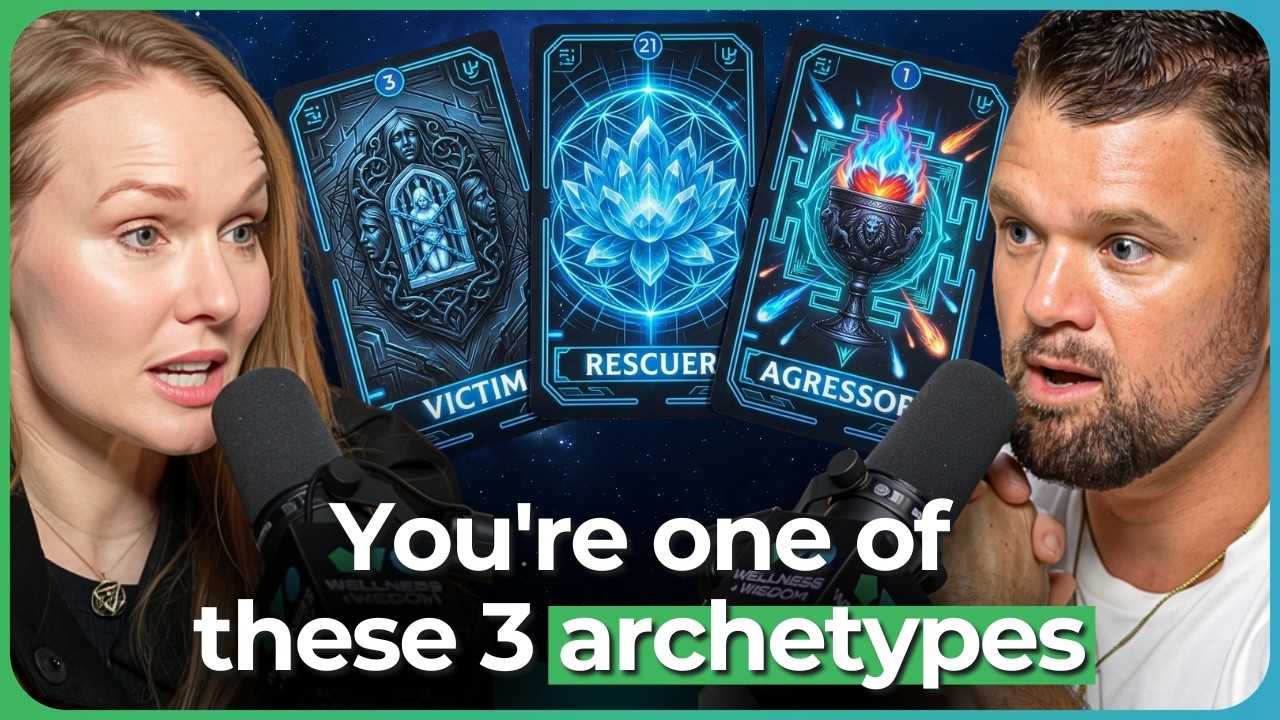
In this in‑depth interview, host Josh Trent and mindset coach Kylie Ryan explore Kylie’s Heart Alchemy framework, an evolution of the classic Drama Triangle that reframes the victim, rescuer, and aggressor as states of the heart—broken‑hearted, bleeding, and guarded. They discuss how each archetype reflects a pendulum of ownership, responsibility, and empathy, and how moving toward the midpoint creates freedom and "Christ consciousness," the highest expression of the triangle. Kylie shares personal stories—from childhood longing to escape Earth, to learning to surf emotional waves through breathwork, to grieving intense personal loss—illustrating how diving into emotional waves, using somatic breathing, and embracing the full spectrum of feelings leads to healing and joy. The conversation covers practical tools such as the wave analogy, wobble‑board metaphor, and tracking emotions as data, as well as spiritual concepts like the Merkaba, sacred geometry, and epigenetic inheritance of trauma and resilience. They examine how societal polarization fuels the drama pendulum, the importance of gratitude and playing the "game of life" with an open heart and strong spine, and the role of parenting in empowering children to trust themselves. Throughout, Kylie emphasizes embodied awareness, courage to feel, and the balance between performance and presence, offering a map for personal growth rather than a quick fix.
Chapters
The victim is actually just the brokenhearted, and I think one of the challenges with personal growth is that we're too quick to say don't play the victim. There's a difference between actually being a victim and playing the victim.
Kylie Ryan is a globally recognized mindset coach and emotional intelligence specialist with over 2 decades of experience.
The highest, highest frequency of the drama triangle is Christ consciousness, yet each of these archetypes are just qualities of a wounded heart. The rescuer is the bleeding heart, and the aggressor is when you've just guarded up your heart. This is actually the heart trying to heal itself. To the degree that you go, I'm not an aggressor, I'm never an aggressor, I'm only a good person, right? Your ego has constructed this story of yourself and you're not recognizing, because then you're wearing that aggressor in the shadow, that it means that some part of your unconscious mind is resonant with that scenario. And that scenario exists to help you become free. To the degree that we are unable to inhabit any corner of the triangle is the degree that we are not free.
What is the cost when a human being keeps forcing life instead of trusting life? Can you share the alchemization process, this heart alchemy diagram, and just break down— yeah, the beginning, and on a high level, so people can start to understand that this is more than just a model? Yeah, it's a model for the mind, but it gets people into their heart.
Like they say, the longest journey is from the head to the heart, you know. And so this model is a development of an incredible body of work that already exists. And so, you know, that's something that I absolutely must give credit to, is Dr. Stephen Karpman and Transactional Analysis, which is where the Drama Triangle comes from. His version is the victim, the rescuer, and the perpetrator. And so I learned that many years ago and was kind of just working with that triangle model in my NLP trainings, my coach trainings with my clients. And, and there was one time, maybe it was, I think it was about 10 years ago, I was in a training and I was like drawing it up on the whiteboard and I kind of usually drew it with the triangle, you know, that kind of base at the bottom like a pyramid. And I was like, oh, hang on, that's, that's not right. And I kind of got a download of like, no, I'm going to invert it so the victim is at the bottom and the rescuer and the, the aggressor. So I changed the name to the aggressor because I find that perpetrator people really struggle to relate to because they're like, I'm not a perpetrator, I'm not perpetrating anything. And everybody can relate to aggression, whereas I like— everybody has like, yeah, sometimes I lose my temper, sometimes I get snarky. You know, sometimes I'm a bit passive-aggressive in my like, like, you know. And so whereas everybody I, I find that I've come across has an easier time relating to aggression or the ways that they express aggression rather than the perpetrator. And so that's the way that— one of the ways that I swapped it out. But his body of work is incredible. And so as I was teaching this, I had this scenario where two of my students were actually in a bit of a drama triangle in the room, and they had been kind of working with each other. And one was a, you know, really, um, go-getter businesswoman, you know, kind of a little bit in force in her own life, but, you know, eager to learn and very ambitious and driven. And the other person in my, in my training was, you know, a stay-at-home mom who was kind of, you know, looking for self-empowerment and was kind of a little bit shy and very caring and very, you know, wanting to do right by her kids, but depleted and kind of coping in all ways that people cope. Yeah, they were kind of sparking off each other in different ways. And so I was teaching it, I'm like, oh, how can I teach this in a way that's going to really serve both of these people? And so that was the first unfolding of the model. And I've had these kind of key pivot points where I feel like the model has just kind of almost flowered open through my life over the last 10 years. And so as I was teaching it, I was like, oh, okay, so how do these— how do these archetypes relate to each other? So just as a little aside, an archetype is like— I like to describe an archetype as like a cookie cutter of power, you know. And so, so, you know, like a cookie cutter, the shape is the shape is the shape, and you, you know, you could have a blueberry cookie or a chocolate cookie or a shortbread cookie, and you put the cookie cutter on, it's the same shape. And so the shape is the archetype, that's the transpersonal or universal context of like a mother, a father, a firefighter, a doctor, a nurse. It's like, that's the shape of that dynamic. And then we have our personal context, our personal like experience and our stories and our feelings and our, you know, all of the things that are our personal experience of having a mother or not having a mother or, you know, all of those things. And so, as I was working with these archetypes and teaching it, I was thinking, "Okay, how can I teach this in a way that helps people to get outside of that cookie cutter and really see it from that kind of higher perspective. Because the usual advice is just notice when you're in the drama, right? You know, just notice it and then you're already starting to be out of it. And that's a good first step, but it doesn't take you all the way through to be like, well, what do I do instead? Yeah, you know, what do I do instead after I've noticed it? What do I do now? And, and so I brought in, as I was teaching it, I've, I have just been an absolute thirsty student for knowledge, and I have accumulated a giant folder of certifications in coaching and meta-coaching and neurosemantics and auric healing and, you know, epigenetic health coaching and all these different things. And so as I was teaching it, it's like, oh, there's specific traits that run in a pendulum. And so the pendulum from the victim to the rescuer is the traits of ownership and responsibility. And so the victim has too little ownership and responsibility, maybe because it's been taken from them, you know, like their agency has been taken away. Or in, you know, as I'm using it, it's in a personal growth context, right? So it's for people who are not in active trauma. Who are not in actively violent situation. This is for individuals who are in a, you know, safe situation and want to, you know, be more empowered in their lives. And so it's like, okay, so then the rescuer has too much ownership and responsibility. They're trying to do too much, take on all the burdens of the world. They're going to save the world. They're going to help everybody. They're going to, you know, save the— save the dolphins and save the planet and save the polar bears and save all the disenfranchised peoples and save all of their family and friends and you know, pay off all their debts and all of those things. It's like, okay, I've just got to take on so much responsibility for all the things. It's like, okay. And that, that's the rescuer, right? It's like taking so much ownership and having so much care for everybody else. But what happens then with the rescuer is that you end up becoming the victim of your own compassion and you don't care for yourself in that process. You're so busy caring for everybody else and trying to look after everybody else that you don't care for yourself. And so then the, the line between the rescuer and the aggressor is the line of empathy and care. And so the rescuer has too much empathy and care, and the aggressor has too little empathy and care. In the moment of aggression, you don't care about anybody else. You're just like, I need to express. Yeah, like, ah, you know, I don't care what you think. This is what I have to say. You know, it's like, oh, I don't— yeah, you know, I've been there.
I've been there.
I've been there too. You know, this has come out of many, many tears and many, many, you know, distortions and things where I've messed up as well.
Well, and I want to share with the audience, like, we all float between these.
We all cross between these.
Victim, rescuer. It's like a wobble board. I mentioned this in your training. It's like we're standing on a wobble board. It's like it's never going to balance itself. Like, we get to balance it.
That's the journey.
So that's the work. That's the whole part.
That's the journey. Yeah, that's the journey. So just to finish the triangle, so the line between the victim and the aggressor then is the line of confidence and assertiveness. And so the victim has too little and the aggressor has too much. And so that's the, like, that's the wobble board. And I was just like, after a few kind of recurring dramas in my life, I was like, what is the purpose of drama? Like, it seems like every single human being on the planet is suffering with some kind of drama, some kind of conflict, some kind of pain, some kind of suffering, some kind of injustice or unfairness or wound. I'm like, what is the purpose of this? You know, like, God, what is— what is this for? And so I've been really sitting in that question and, and how do we alchemize this and how do we turn this into something positive? And so then the next unfolding was realizing that each of these archetypes are just qualities of a wounded heart. And so that's where it started to open up even more, because when you have that kind of mental body awareness of like, okay, well, what is too much responsibility look like? What is too little responsibility look like? Okay, so what would the midpoint of that look like? And you can start to kind of triangulate your way into, okay, well, this is probably how I could behave that would get me a better outcome. But the body part was like, oh, when I realized, oh, the victim is actually just the brokenhearted. Yeah, they're wounded. And the rescuer is the bleeding heart that just wants to save the world, that doesn't want anybody to suffer, that wants to like, you know, help everybody. And the aggressor is when you've just guarded up your heart, you've like locked it up. You've been so wounded at whatever point in time you're like, 'Nothing's gonna get me. I'm gonna be tough. I'm gonna be stoic.' You know, this is like stoicism taken a bit too far. Like, 'I'm gonna guard up and I'm gonna be stoic and I'm gonna be strong and nothing's ever gonna hurt me and I'm always gonna be strong.' And just that again opened another layer of depth for me because I was like, 'Okay, now it's not just drama playing out. This is actually the heart trying to heal itself. And, and that's kind of where it's— where it kind of emerged into, from this kind of transactional analysis drama triangle, into this kind of version of development that I've been working on called Heart Alchemy. Because it's like, okay, now you're dealing with the qualities of your heart It allows you to go deeper into, okay, where am I wounded? Where am I bleeding? Where am I guarded? And you can start to kind of loosen it up a bit more.
For people that are longing for peace, that are in their own pain and suffering, what advice can you give them that this is not a golden ticket, that this is not something that's going to heal you, that it's actually just a map for you to heal yourself?
100%.
Can you expand on that?
Yeah, absolutely. What a great question. It's because that's it. It's like there, there is No magic bullet outside of yourself.
I mean, there is, but it's a blender. It makes good smoothies.
That's it. The Magic Bullet.
The Magic Bullet does exist, but only for smoothies.
For smoothies.
Not for hard alchemy.
Not for hard— yeah, it's like, it is— you can make some incredible smoothies with a Magic Bullet. But yes, this guy— oh, like the one thing that's going to be all the end of all things. This is all you need.
Run.
No, no, no. If someone's telling you that, they have got an agenda, my friend. You know, they're trying to sell you something. And, you know, I think the, the journey of this is it kind of comes back to the, the metacognition point, is like one of the, the highest forms of intelligence is the ability to think about your own thinking. And so one of the things that I learned in, in my neurosemantics training is this idea of metastating. And metastating is where you take, um, where you take in an emotion and you intentionally overlay it on the other emotion. So you might be feeling fear, for instance, and so in a force kind of situation, you would go, I don't want to be afraid, I'm gonna be tough, I'm gonna just pretend I'm not afraid and I'm gonna do it anyway, you know. And so you're kind of overlaying force and, you know, anger and like determination over fear, where it's like trying to squash it and repress it. Whereas when you overlay acceptance and acknowledgment onto any emotion, even if it's deeply uncomfortable, deeply uncomfortable, like shame or humiliation or jealousy or spite, you know, even if there's like some really snarky, nasty, uncomfortable, or twist-in-the-gut kind of emotion, if you can accept it and go, okay, I'm just feeling this way now and this is just a bunch of sensations in my body. And if I can breathe with this, it will pass and it will pass. You know, the emotions last about— science has told us emotions last about 90 seconds. The intention, like Jill Taylor. Yeah, right. The wave of, of the peak and the trough. It's like, if I can just be with this and accept it, then I can soften through it. And this is kind of where I think about heart alchemy is kind of like emotional yoga. It's like lean in, you know, in yoga where you sometimes you have to do— you do a pose because it's a part of this, you know, the asana sequence, and you're like, oh, this is so uncomfortable and my hamstrings are hurting and I'm sweating and I don't think You know, I'm not— I don't look cute, right?
Another, another up dog.
Another up dog. I'm dying here, you know. And it's all the asanas is to kind of loosen you up and to limber into the places where you're tight and your fascia is, you know, bunched up and tight and dry and whatever. And so I think of this like emotional yoga. So leaning into the places in your heart that are uncomfortable, that are painful, that are tight, that are all locked up.
This is so good. So in a pose in yoga, especially like, I think it's called, um, what's the yin yoga where you hold a pose for 3 minutes? Yeah. Have you ever done that?
I did. I did yin yoga all through my pregnancies. Listen, intense.
It's not yin like it's easy. No. Okay, it's yin like you actually must surrender into it, because if you don't, it will own you.
Yeah, it will.
It's like a 3-minute pose where you're like just resting on your side. The reason I'm sharing that, the reason I'm sharing that is because The, the wave that you mentioned.
Yeah.
Is really big. I want to go into that wave with you because this has been a continuous wave of learning for me of like how powerful breathing is when I'm feeling an emotion. It's what drove me, I think, in 2016 to meet Mark Divine. It's what made me have the Breathe program. It's, it's tattooed on my arm in Italian.
Like, glorious.
Oh my gosh. How important has your actualization of your own breathing mechanisms in your body and in your trainings when people are going through the wave? Because we tend to go like this, right?
Which is bracing.
When I'm in rescuer, aggressor, or victim, I'm typically holding my breath, right? So that's a clear sign that the wobble board's keeled over.
Yeah.
So how much has that informed you in your own body and in your own life of the dance?
Yeah.
But then also in your trainings and with your clients, like, how— give us the real truth on like how important is breathing —so important— and cueing and somatic experiencing of the breath. Because to me, it seems like nothing works unless the breath is happening. Yeah, breath is—
breath is life, right? It's like, you don't need to be held under— underwater very long before you start freaking out. Like, that's breathing. You're not thinking about your mortgage when you're under the—
under the water, right? Yeah.
Every other— every— you know, I mean, you mentioned Czech before, like the pyramid, right? It's like the breath is the— is the base, you know? That's That's the most important thing. Yeah. My husband is a surfer and we've been together now for 23 years and we met as musicians. And so to kind of— to come into your breath question, I was training breath before I even knew I was training breath because I grew up— my mom is a singer. And so I learned like deep diaphragmatic breathing when I was a young child because I did opera singing training. I'm a soprano. Not a very, you know, not a very well-practiced one now. I kind of left the soprano training behind. Is that the low or the high? That's the high. That's the high. Yeah. So, so there was a point where in my, my singing training where I started to sound, you know, like there's that opera kind of voice. It's like, it's like big vibrato and big kind of powerful, big powerful sound. Yeah. But I wanted to be a pop singer. And so I was like, oh, now I'm starting to sound like an opera singer no matter what I sing. And so I need to kind of shift it up a bit. And, and so when I think about it, though, the, the incredible gift that I had in learning diaphragmatic breathing as a child to sing, because if you don't breathe well, you can't sing, you can't hold the notes, you can't do what you need to do, you can't perform. And so I kind of learned at a very young age, at almost at an unconscious level, that breath is essential to being able to perform in life and to be able to do what you want to do. And then I was also like blessed to grow up, like I said, riding horses. And so my mom's a horse rider and a singer. And so I learned that, you know, being in a good— like when you ride a horse, you've got to have your back straight and you've got to be sitting and you've got to have your, you know, your arms and your elbows.
I can see you on the horse right now. I can see you on the horse.
I learned to ride dressage. And dressage is the, like, the prancy horse riding. Dressage is the prancy horse riding. And so you've got to, like, have a very strong spine and strong breath and, like, strong, you know, holding the horse and guiding it where to go, but also, you know, subtle. And so I had this, these two kind of pivotal moments growing up where it was just kind of through repetition, through writing, through singing, that I learned about the kind of strong spine and the breath and holding yourself with a strong posture, which of course gives us the— you know, your spine can work correctly and your cervical spinal fluid can do what it needs to do. And, you know, later I learned that that means that your chakras are more aligned when you're just in a good posture. And so those parts of the breath training were just kind of innate to me. And then I went and did— when I was in my study all the things, I went and studied. I did a breathwork certification with the incredible Dan Burleigh. I love Dan Burleigh.
He's such an embodied teacher when it comes to breathing. Incredible. Wow. He's got that cool hair too.
Oh yeah, he's got that incredible hair. He is such a good guy. And so I was introduced to Dan through one of my spiritual teachers, Yvonne Delaflor, who has been an incredible guide and gift in my life. And, and so I did the basic kind of practitioner breathwork training, which was a 3-day breathwork training. And, you know, he— Dan leading the group was incredible. And so he taught us kind of the kind of crash course in all the different breathing methods. And oh my gosh, Josh, at the end of the breath training, we had this partner exercise And I was partnered up with, um, with someone who has become a friend and colleague of mine, but I didn't know him at the time, a military, ex-military guy. And we were partnered up doing this partner breathing and, you know, supporting each other through a like 20-minute breathwork practice. And then at the end, we'd done this partner breathwork practice. And, you know, have you done the where it's like your hands start to feel enormous and you like start to feel yourself as like a huge being of energy?
Yeah, like also the tetany where your hands kind of shrink as well. Yeah. Mouth puckers.
Yeah, there's like energy, there's also some energy running. So I had this experience where I was like, my hands feel like they're this big, like they're just giant balls of energy. And, and this other guy was like, do your hands feel really intense right now? He was like, yes. I'm like, yeah, me too. He's like, do you want to just sit and hold hands? And I was like, yes, I do. So we just sat there kind of cross-legged and held hands, and it was like the wildest, like, Kundalini energy, like absolute release. And so I was like, holy moly, this breathwork is intense and so cool. So I, I kind of have done some of the training in that, of the breathwork, but it doesn't— you don't even need to do the training because you're already breathing. No, you know, you're already breathing. So it's just bringing mindfulness to the breathing that you're already doing.
I remember Dan, when I interviewed him— I haven't thought about this in a long time— he said when his, his son passed away and he got the call at the airport And he said, the first thing that I did was I just went straight to my heart and I just started breathing and I just started grieving. Yeah. Like, he just went right to it. Yeah. And I was thinking, that was, I think, 5 years ago I interviewed him in LA. But at the time I was like, how do you do that? Like, I want to, I want to have emotional mastery like that. Yeah. To be able to lose a son. Knock on wood, I'm not attracting that. Wow. Like the power of being able to be in truth about what's happening. Yeah. And to let the truth hit you. Yeah. And to not resist it. Yeah. That I think is part of your heart alchemy process. 100%. And the big— I think the big question mark for most people on Earth, I'm curious your take on this, is there's a fear of what might happen. Yeah. And it robs us from a moment of what's happening, of what is.
Yeah.
How does Heart Alchemy bring people to the present instead of in fear of the future?
Well, peace is— peace only exists in the present moment, right? Peace is here now.
It sure as fuck isn't happening when I'm worried about the future or I'm ruminating on the past. It is not happening. It's not there.
But yeah, you're even, even if you're imagining a positive future, you're still imagining it in the present moment.
But you're still not here.
But you're still not present, right? It's like peace exists in the present moment. Yeah. And so the Heart Alchemy process is just one way to bring us back to the present moment, to notice firstly, to notice where we're not in the present moment. Yeah. Which is, you know, you can't come back to present if you don't realize that you're not in present. You know?
Yeah, I 100% know, because then it— I think my question comes from my own in-the-past performance. Yeah. And even like, this to me is the first episode of a brand new podcast. Woo! Yeah! Because what else is there besides just you and I here anyways? That's it. That's all there is. So if I, in the past, I was worried, I was like, we've got to have the great sound bites. Yeah. Oh my God, they won't like it. And then y'all could feel that. Yeah. You could totally feel me worrying about you liking it. Yeah. The performer. So the performance aspect is like, what's the tell that someone's performing rather than present? Because a lot of times I became so good at it that like people couldn't tell. Yeah, you can feel, you know, you can feel. I can feel. You're a feeler and a locator. Okay. You have like a homing beacon. What's the tell that someone's performing in their life and that's pulling them out of the present?
I can feel it as a dissonance. It's like, oh, I can't. I kind of see it as a mask over someone, and I can feel the frequency of fear underneath. Frequency of fear. Yeah, yeah. Because you only ever perform when you're afraid that what you are is not enough, you know. And, and like, I spent years as a performer, and so I, I did, you know, I kind of had this weird double life in my early 20s where I would, um, where I would sing in the evenings, and then I would do— I was like starting my coaching practice by day, so I would do a couple of days of like coaching clients, and then I would sing at night. And so I used to sing in like, you know, the local High School Musical and, you know, different pop shows in supermarkets and things like that, and, and just random, you know, local stuff. And so I know that version of performance that is rehearsed, and it's, it's a performance, but people expect it.
Like, there's a stage, that's that, that's the thing.
Yeah. And you're playing a role, you're playing the role, and you're entertaining in that way, and that's beautiful, right? And then I shifted to So in my early 20s, I like— I'm 45 now. So in my early 20s, dance music was just kind of the thing, you know? And so I went to— I started going out to nightclubs and like it was the era of super clubs in Australia. So there was like Home Nightclub and, you know, a couple of these like really big nightclubs. I'm sure you probably had a whole bunch of crazy places where it sounds like this.
Exactly.
Yeah, exactly. And so there was that so loud.
You're like, I can't hear hear myself so loud.
And so this is when I was like really in my drama, you know, I was really in my pain. And I was, um, I was like heavily overweight. I was, um, 30 kilos, which is about 66 pounds overweight, um, from my, you know, healthy frame. And, and I had a lot of pain in my heart. And I didn't know any of this yet. I was kind of still on the seeking journey and And so, you know, the beat and the music and the intensity of the thing, it kind of drowned out, you know, all of the feelings that were inside and I could escape. Yeah, but I kind of fell in love with dance music in, in that, in that moment because it was a place that felt like freedom and where I could express myself and where it was a little bit like anything goes and you could dance and be, you know, you could be free and express.. And so I saw someone when I was, when I was in a nightclub singing on the stage, and I was like, I want to do that. And so I, I went through, you know, a series of processes and then, you know, auditions and different things. And I ended up becoming a nightclub singer with DJs. And so to the performance question, I learned that. So I, I became an improvisation nightclub singer. So I would just I would just channel and improvise to whatever the DJ was playing, often stuff that I had never heard before. And so to this kind of question of like the rehearsed performance versus being fully in the moment, I again had this like incredible training on releasing the masks and letting go of the performance and just feeling the music and tuning into the present moment because you can't improvise if you're thinking about something else or you're worried about the crowd or anything like that. And so I had this incredible training ground for using my voice to bring healing to a crowd and just kind of channeling. And also healing yourself. And healing myself because it was like I was up on the stage, I was being seen and I was healing and I was like living my truth in that moment and It was glorious.
Was that decision of your soul to find singing, you believe or know, connected to the voices when you were a child?
Oh, that's a good question. That's a good question. I've never thought about that, but I— yeah, absolutely, because it's like learning how to channel that energy, right? Because I know now, or like, I believe now— no, I know, I know, I know that the voices that I was hearing as a child were like all of the variations of higher frequency beings that were trying to be like, oh, here's a live one, here's someone who can hear us, you know, let's, let's like, oh yeah, everybody get in here, get in here. And so now when I'm singing, I get to like bring through a pure channel of like, what is the frequency that I want to bring through and bring that intention through and just surrender to my higher self that wants to come through in that moment. And I do the same thing when I'm teaching. You know, or in coaching or in a, you know, in a session with someone, it's like, okay, I drop away as much as possible of the ego and the construct and just like, what does this moment need right now?
You mentioned so much there. There's— that could be a whole podcast. But, but there was one part you said, I think it was a few minutes ago, you talked about insecurity and it's really like the insecurity of the aggressor. Is that true? Would you say that insecurity is primarily the feeder Yeah, the aggressor, or could it be a feeder of all?
It can be a feeder of all of them, right? It's like the different kinds of insecurity that show up in the— that show up in the different ways. But it's like the, the insecurity of the aggressor is like, I need to control the situation. Yeah. So that I'm not found out as not enough, right? Of some sort. Oh, there's a threat of some sort, or I need to be a certain way in order to be safe.
Yo, I can remember like episode number 10 or something. You guys can back. It was with this guy named JC Santana. And I remember I was sitting in— I was back when I— before I did video. Yeah, I was sitting there and I had all my notes and the guest corrected me. He was like, actually, no, it's this. And I remember muting. I muted it and I was like, what the fuck, Josh? I was screaming at myself because I was in such aggression. I was so in pride about like messing up that I had to mute the episode and scream off the microphone. I haven't even thought about that memory for so long. Wow. I look back on that version of Josh Trent. And there's been such a massive transformation. What a journey. And also, there's still, to quote Alan Watts, he wrote a book called The Wisdom of Insecurity, which I love. I would recommend that everyone— Amazing. Download the audio.
I listened to it. I haven't read it. I'll have to get it. The audio is so good. Alan Watts is incredible.
If there was one person I could sit next to you right now— Right? Well, Hawkins and Watts. Hawkins, Watts, and Ryan. Yeah. That would be a stellar podcast right there. I'm on it. So the reason I brought that up is because it seems like many of us struggle with insecurity. And even at 46, I still have residues of it that I can access. Of course. And so it feels so good just to share it. Yeah. Like whether it's in your workshop or on this podcast, Theo Vaughn just shared his major insecurities. Oh, did he? And there's been like hundreds of podcasts that have literally clipped him sharing, he was talking to God, he was praying to God. And I think the reason why people are resonating that is because, Oh, here's somebody that doesn't have all the answers. Here's somebody that's sitting in the question. Amen. And when I sit in the question, I can like feel in my body when I'm talking to you. When we sit in the question together, yeah, whatever wants to come through can actually speak. Yeah. But if I'm sitting here like I have all the answers, oh my God, what a trap. What a trap insecurity is. Can you expand this further? The trap of insecurity. Rather than the wisdom of insecurity. What is that?
Oh, well, I guess the trap of insecurity— I've never really thought about it like this, but the trap of insecurity is, is feeling like you're unsafe to just be who you are. Yes. And that you'll be, you know, that, that, that lack of safety is the, like, fear of being victimized or being bullied or being humiliated or being cast out from the tribe. And then find me out. They're going to find me out. They're going to find out that I'm not— I don't have all my shit together and I don't know all the answers. And I'm, you know, oh my God, newsflash, we don't. Nobody does. Everybody, everybody has— like, I've coached all sorts of different people, very successful, very wealthy, very famous people, and everybody's got insecurities. It's often the people that are the most successful, quote unquote, in the material world have some of the biggest insecurities driving that success.
They wouldn't be successful without the insecurity.
Well, that's, that's an interesting thing because for many, for many people, I feel like that insecurity is like the engine that drives this desire to build. And, and the aggressor is desire, right? The drive and desire comes from that aggression of like the ego, the solar plexus, like, I want to go and make my mark on the world. I want create, and I want to penetrate the world with my ideas and my thoughts and like create the thing. Yeah, but it's like a scaffold. It's like, how big can you build the scaffold of success that to hide that core of insecurity, you know? And, and that becomes a bottomless pit because there is no amount of money, there is no amount of fame, there is no amount of sex or drugs or rock and roll or whatever it is that is going to heal that. It is coming to that peace and stillness with yourself of like, hey, you're enough as you are. And it comes all the way down to like, I've been thinking about this, like I've gone so deep on this model of I think the reason why everybody struggles with drama is because as it at its core, like when you're born into the world, you're completely vulnerable. And every single human, no matter what wealth or station or culture or race or wherever, you know, strata of society you're born into, every single human comes into the world as a super vulnerable baby with a mother and a father. Whether they're present or not, they have existed for this baby to exist. Yeah, right. And so if you think mother, father, child, aggressor-rescuer-victim, like their shadow versions of how this dynamic can play out. Like, if, if you have any kind of wounding— and we all do, you know, and all of our parents, bless them, you know, are doing the best they can— and there has been increasingly more and more awareness around personal growth and healing. And like, we are so lucky to live now and to be able to raise our children with this knowledge. I just have so much compassion for, you know, the generations past that had so many struggles and so little awareness and so little support around this.
What you just said is a major unlock. Really? Yes, because it's, it's been echoed by many teachers— Teal Swan, yourself. Like, I love Teal. So she has this entire generational healing course, and that's great, that's great. But once we've done the generational healing, we're still actually in the triangle of life. So I think they work together well, is what I'm saying. The reason I'm bringing this up is because the major unlock for me was that whenever I hold any type of resentment or aggression or anger or fear or sadness, and I hold it against my mother, my father, my past, all I'm doing, like Alan Watts said, it's all wretch and no vomit. We raise our children to raise their children to raise their children the same way, and nobody ever throws up. So it's like the way in which we throw up and get clear on what's actually happening in the present moment, the major unlock is to love the past and to be able to be grateful that they went through what they went through without podcasts, without the internet, without, without the luxuries. We're so, we're so fucking spoiled. We're so spoiled. We're so fucking spoiled. It's like, my God, the fact that, that we can even do this is such a blessing. It's so incredible to just sit here and have this conversation with you. I know. And our ancestors didn't have it. So can we just like unlock the key of the jail cell that puts our healing in the hands of our mother and father and grandparents from the past? Yeah. Because then we take the power to change out of our hands and we put it in theirs, and they're dead, or they're not able to hold it, right? Yeah.
What comes up for you? Oh my goodness. Oh my goodness. It's I mean, that's, that's the key really. And that's the whole purpose of why I, you know, why this is kind of unfolded through me is that the— this work is not about changing the past. It's not about changing even society, right? It's like there— yes, of course, systemic change needs to happen. All of those things. There's a lot of inequality in the world and there's a lot of messed up systems that are maybe intentionally designed to keep us down, you know, whatever. Um, we don't even need to go into that because the purpose of it is like, I don't need for anything else outside of me to change to choose to be free when I go through this process of learning to love all that I am and all that I've been through and all of the struggles and all of the suffering and all of the pain and all of the heartbreak and when you can really like be with it and acknowledge it and, and breathe through it, you know, and be with it, you're not waiting for someone else to change in order to go and live your life. It's like, this is your life. You can't— like, maybe your dad's never going to say that thing that you wanted him to say, or your mom's never going to apologize, or your aunt, or whoever it is, or, you know, your abuser or whatever. You know, maybe it's not going to happen the way that you would like it to happen, but you can still— wherever you are, in whatever situation you are, you can still choose agency and to move forward. And I, I like— I want to like put a caveat on this because absolutely there are people that are in really messed up situations, and it's very easy for me to say sitting here as a white lady with all my privilege, you know, yes, it's just like, choose to be free, but the, you know, like, oh my God, you said that. Yeah, like, really, it's, it's not— this is not about spiritual bypassing. It's not about blaming victims. It's about a way that helps us to find agency no matter where we are in life, you know. And every time we have resentment for someone else or wishing that something outside of us could change so that we can then be free. We're just, like you say, we're handing the keys over to someone who's passed away or someone who is not going to change.
It's like you're giving away your own agency in that moment, sometimes for decades, sometimes for decades. Like, I've seen family members and friends talk about what happened 20 years ago, 30 years ago, and they're still— they're time traveled. Yeah, I mean, I actually time travel. I tried. You didn't let me. I tried to time travel in your workshop and you're like, nope, stay with the program. Stay with the present moment. Stay right here. Stay here. These time travels that we go on, I think it's, it's the opposite of flow. I wrote down the word flow. Yeah. You talk about force and flow in your work. Yeah, quite a bit. Yeah. And I'd love for you to paint a clear picture of what is the cost when a human being keeps forcing life instead of trusting life.
It's such a dynamic that I think, like, so much of the world puts us into that place where the ego runs the show. And I think there's so many ways that, you know, I have this kind of little simple diagram of, you know, a lot of people understand the dynamic of be plus do equals have. Yeah. And a lot of people kind of start from the I want to have the thing, so I got to do the— I got to do, I got to do, do, do, do. I got to do all the things. Yeah. And so, and so the force really comes from that, from that thinking that I need to control life and I need to make this happen and I need to, through my actions, go and like grit it out and force it to happen and push through and, you know, grind my teeth and wake up early and, you know, stay up late and grind, grind, grind. Yeah. And I mean, that's not wrong. It's just not the whole picture. You know, it's just like one little quadrant. There is definitely times where you might need to kind of get through some inertia and put some effort into something. But what I find is that the ideal scenarios that our hearts are really longing for can only really be achieved through the, the equilibrium of being and doing. And so raising your state and just kind of coming from this open-hearted place and then taking action from that, from trust, from love, from gratitude of like what you already have and what is, you know, what is on its way to you. When you move from force into flow, everything shifts. And I think so much of society just kind of keeps us trapped in that forcing state. And eventually you burn out, right? Eventually the cracks show. You can force with your, with your mind and your will and your ego.
To— I'm raising my hand for y'all listening on audio. Like, yes, been there, been there.
I've been there too, right? Of like, force, push, make it happen, do what it takes, you know. And there's so many mantras, there's so many mantras inside capitalist society that force us outside of our natural rhythm and put us into this scenario where, you know, it feels like it's life or death. And for many people, it is life or death, you know. It's like, you've got to pay the mortgage, you've got to feed the kids, and So, you know, I don't want to diminish that there are a lot of people in a situation where they might have to force themselves to do things that they don't want to do. Yeah, to survive. But it's really like, that's the survival, that's the survival programming. And so the way out of the survival programming is like, it's so counterintuitive because it doesn't mean necessarily that you stop doing what needs to be done, but it's like, can you take a pause and do that thing from just a slightly higher state? Just like before we just started, we took some deep breaths. Yeah, we got into a, like, a more peaceful, grateful, honoring state, honoring the divine, honoring God. And when we take action from that place, from receptivity, from generosity, from appreciation, the actions are just gonna yield so, like, exponentially better results than if we're forcing out of fear.
We already have gone into force a bit, but still, if you can please explain that. But then what is the real somatic difference? Like, what does it feel like in our body to be in flow, and what does it feel like in our body to be in force? And what's possible from flow that's not possible from force?
Oh my God, what's possible from flow? That's like joy, fulfillment, you know, surrender. Everything that you're seeking through force is only available to you through flow. Everything that you're trying to grip and grasp and control to create through force is only actually available through flow, through surrender.
And force was me going, you don't, you don't understand, Kylie, my— I was forcing you to hear my story as to why I felt or experienced life in the way that I did. So that was me being in force. Yeah. In the circle. Yeah, yeah, yeah, yeah.
And people do that. And that's, and that's one of the things is like we're so connected to and attached to our stories of, well, this is what happened and this is the reason and this is the— and that's the rationalization. And they're not. There's nothing wrong with that. It's just not going to help you get out of it.
So does flow come from neutral?
Oh, flow comes from presence. It comes from presence, being fully present in the moment and being in the highest possible state that you can be in, in any, in any moment. Like, you know, and that's going to fluctuate from moment to moment. Yeah. But the more you can— like, I like to think of it like like, you know, inner work, outer work, inner work, outer work, being, doing, being, doing. So like, take a breath, ah, just like appreciate this moment. And now we're in a state that allows us to take the next little part of this conversation. Yeah, with a little bit more flow. Yes, you know. And so I was like, oh, okay, we're already breathing all day long. Automatically, right? Our breath is already happening all the time. And so, you know, one of the most amazing things about breath is that it is an autonomic function that we can take mindful control over and awareness. You can't, you know, I mean, maybe some very, you know, very highly developed masters could take control of their heartbeat or their, you know, temperature or something. I'm sure the world— there's some crazy things that you can do, but that starts with breath, right?
Same with the Shaolin monks. They dry the wet shirts in the snow on their backs, which starts with breath.
Yeah, right. So they can do all these other, you know, cool crazy things, but it starts with breath. And so it's like, you can take mindful awareness, you can like be on autopilot with your breath all day long, shallow breathing, like panting like a dog, you know, or like this kind of shallow up upper registry breathing, or you can take a mindful breath and actually just just breathe right down into your diaphragm and like let that muscle kind of drop all the way down. So it kind of drops down into your pelvis and then release. And, and when you breathe through that, you're actually coming into presence in your body. And then you can, you can kind of drop away from some of the stories. It's like people have this kind of center of gravity all up here, and there's so much noise in their head when, when you can almost like imagine that, that the thoughts are just kind of dripping down and you let your center of gravity drop down into your belly. Mm-hmm. And it's like, hang on, in this moment, my body's safe. In this moment, my body's safe. And it like the next moment, something different might happen. But in this moment here, my body's safe. And it helps, I think, when we just take that mindful awareness. And there's so many ways into this, right? There's so many traditions that kind of point to the same thing. When we come into presence, then you've got the capacity to actually meet the moment without all of your stories and your ego and your thinking of how— about how it should be clouding what actually is. And so flow, I think, is meeting the moment as it is. And just letting yourself be in that moment and letting the moment unfold through you. You know, like the, the cute sayings that point to such deep truths, right? Life in force— life is happening to you and you've got to make it happen. Yeah. In flow, life is happening through you. It's happening through the breath. It's happening through your expression. It's happening through meeting the moment heart to heart. Yeah, it's like There's so many ways that we could talk about this.
And in the same way that your, your model is constantly moving, right? There is no fixed state in the model. No. Because a fixed state would be forced, right? So if I'm fixed on— Yeah. If I'm fixed on— this is interesting— if I'm fixed on time traveling to share with you why I feel the way that I feel, yeah, I'm actually not in flow and I'm not in the present moment. So it's not that my earlier question was— I was like, so is it neutral? Is flow neutral? I guess it can be, can be, but it also could be in any gear depending on the topography of life, whatever life is bringing you. Yeah. Is that resonant? Does that feel real?
Yeah, that feels real.
I mean, because, because it's so silly, like these platitudes. Yeah, good vibes only. No, I actually respond to that. I'm like, get the fuck out of here.
Yes, good vibes only. Sometimes anger is required. Sometimes shame is exactly what we need to feel when fucked up. Yeah, you know, and it's like, it's not that none of— you know, I know we both share a love of Hawkins, you know, map of consciousness and the levels of consciousness. And I think a lot of people misunderstand or overlay good/bad on that model. And like, because it is just by definition, like, the creation of the model is this two-dimensional hierarchy of, you know, from shame to enlightenment. Yeah. And so people go, oh, shame is bad, and guilt, and, you know, guilt, and, and all of those. I feel bad, but they might feel deeply uncomfortable. Yeah, but they're a part of the spectrum of life, you know. And it's like, imagine if you had a, you know, you had a, um, a piano, a piano, and you could only play the, the top half of the keys. You can't play so many songs when you're only playing up one half of the piano. Or, or, you know, you have a a paint set, but you're only going to use one color. Yeah, it's like we actually need all of the colors of the emotions to be able to live a full life. I think about that, like, classic question that there was this funny time, like, way early on in my relationship with my partner where, where we were on holidays and I was reading Conversations with God and he was reading The God Delusion by Dawkins at the same time. So I was reading the Neale Donald Walsch Conversations with God and he's reading The God Delusion. And so I've always had this like beautiful contrast in my relationship. But what I was thinking of was like this, this question that people ask of like, God, why? Like, why does God let bad things happen to— like, why does God let suffering happen in this way? And, you know, the— I think this probably comes from what I, what I learned in that book. But, but this kind of variation of it is like the whole colors in the spectrum of life gives us free will. It gives us choice. Like, being able to have this contrast gives us the ability to choose, you know. So it's like, it's— this isn't God that's creating suffering. God that's given us the incredible gift of free will choice and what we choose to do with that. Like, we can choose love, we can choose flow, or we can choose fear, or we can choose, you know, we can choose force. And so Every single emotion is a gift when you can accept it and acknowledge it and let it run through your body.
You know, I've had waves of wanting to believe there's no God because I had so much anger at God. I remember specific moments in my life, yeah, where I would like look up at the sky because I thought that's where God lived, you know. That's what I was taught in church. Yeah. God is a bearded man in the sky.
He's a big— he's a dude in the sky.
And, okay, and I would like be shouting obscenities at God, like, how can you let this happen? What's up with my mom? Yeah, what the hell is going on here? Yeah, yeah, yeah. And when I was in ceremony in 2019, and it's actually happened multiple times in multiple ceremonies, I got this like playful energy that came, this loving playful energy that came back, and it said, you don't get to But not like, not like, yeah, like fun.
And I think you don't get to know. It's a mystery.
It's a mystery. Because you mentioned your husband was reading the opposite book, right?
Right. It's fun.
So there's so many people that go to believing there's no God, but it's a fallacy, in my opinion, because they're still believing something. Yeah. So they're choosing to believe that there's no God in atheism. The way I see it, I'm only interested in a belief or in a line of life that's useful. Yeah. And by useful, I mean, is it more loving? Is it more honest? Is it more connective? Yeah. What fruit blossoms from a belief? Yeah. Is the most— is the most useful thing.
Absolutely. So who cares? Hold the light, right?
Like, who cares if the science is saying one thing and we have Hawkins and Dawkins and we have all these people with their ideas? I'm curious how you see this. Yeah. With the Heart Alchemy lens and just, you know, your lens. Yeah. To me, it seems like we're all searching for certainty. We all want to rest in the fact that when we die, we're going somewhere, and that somewhere is love. And I think the reason why people close their hearts in the aggressor is because life brings them so many bludgeoning challenges, you know, hits on the head, that they're like, Well, what's the point of this, God? Like you found earlier in the podcast, you found in your life, you're like, God, what is all this suffering? And I don't know any seeker that hasn't had multiple conversations with God, like, God, why? Why? What is this all about? So, so how do you see it from, from a meta lens, high up and even down below, this quest for certainty that we have, and the being in the uncertainty and still being okay?
Yeah. Yeah, it's, it's such a wild, it's such a wild ride. Life, it's such a wild ride. Yeah, it's such a wild ride. And I think there's that the quest for certainty is a quest for safety, you know, because you, because certainty gives you the illusion that you're going to be safe. Like, if I know, yeah, if I know that everything, that this is going to be a certain way, then I can trust that I'm going to be safe. And so it's like this very baseline. If you kind of go to Spiral Dynamics, like this beige level of, am I going to be secure? Is my body going to be safe? It's like deep existential level of, of fear, of like just, you know, wanting to preserve life, which is innate, you know, it's instinct. And so I think the mental aspect of that is I want to control things so that I can feel safe. I want to have a certain number of amount of money in the bank. I wanna have my mortgage paid off and my house and my car and my bunker and my whatever it is, you know, 10 months worth of food or my 3 months worth of cushion of savings or, you know, whatever the thing is. It's like, oh, I've gotta have this thing so that I can feel safe. And not to say that any of those things are bad, but none of those things can actually give you safety. Safety and the feeling of safety is an inside job. I believe the only way you can really feel safety is by your ability to trust that you have what it takes to meet the moment. And life is— life is in— like, life is in service of you, and you're in service of life, and life is moving through you. And any challenge that comes your way, you know, it's, it's there to, to support you, to serve you, to hone you, to shape you, to forge you. And that's not easy while you're going through it. That's hell hard, you know, that's awful. That's awful. While you're going through it, it's awful. And, oh, and so like, it's, you know, that life makes sense in retrospect, you know, it's so hard sometimes to go through these things without that knowledge. And, and so you have these moments of like, God, why is there so much suffering? Yeah, you know. Yeah, I used to as a kid because I kind of grew up watching The X-Files as well. Did you watch The X-Files?
I've never been into that stuff.
Oh yeah. Okay. My wife loves those. Yeah. So I was like really into The X-Files and so like, you know, kind of had this connection with otherworldly beings and aliens and stuff, you know, as a kid. And, and, and so I would like go and lay out in, you know, because I grew up on a farm and so I would go and lay out on the grass and I'd be like, please take me, like, take me away from this horrible suffering planet and back to wherever. You know, wherever I really came from, you know. And there's so many spiritual seekers that I think are on that trip of like, I just want to get the hell out of this planet. This is too much. And that's— I didn't have a bad childhood, you know, like I had a good— I grew up on a farm. My mum and dad loved me and I was, you know, I had food on my table, you know. Yeah. But I just, I could feel it so deeply. And so like feeling that suffering and trying to escape the suffering constantly. And what I realized eventually, after many, many years of, you know, working through it— I am sure I'll still continue to work through it— is that part of learning to be with, be with what is. And to kind of circle back to the, to the surfer idea, I didn't grow up by the ocean, and so I wasn't a very good swimmer. I could swim, but I wasn't a very good swimmer. And I wasn't confident in the waves. And my husband, growing up a surfer, he's very confident in the waves, you know, like that's his playground. And so I think about emotions like waves, like actual waves. And so if you— I don't know if— have you ever been like out in the ocean where there's like a really crazy set of waves coming in? I've almost drowned a few times too. One time he like pulled me— my, like, my husband like pulled me out of a rip and I was like, oh, he's like, there was absolute terror on your face. On your face. And so, but he taught me, like, when there's a big set of waves coming in, which obviously this is surfing 101, is that you dive under the wave, right? You don't try and like scramble to stay on top of it. You dive deep and you, you take your deep breath and you dive into it. And when you choose to dive into it, you accept it and you dive into it and you go under it the peace is there right on the bottom of the ocean floor as the wave just crashes over the top. And so, and then you can pop out the other side, take another deep breath, and maybe there's another wave, and then you dive again. And it's like there's a whole set and you gotta, and then dive in. And sometimes life feels like that. And I've kind of had this really intense kind of somatic realization of like, oh, the more that I can dive into the emotional wave of what I'm feeling and actually really be with it and let it roll through my body and let my body fully express it and bring it all the way through to completion, I will pop out the other side. And, and I kind of think about emotional waves like that is like when you really dive into it and you come out the other side, there is always some kind of gift that comes on the other side of that, whether it's a small realization or just the knowingness that you're going to be safe on the other side of it and you will come out the other side of it. Even if you're held under for a really long time, you're going to pop out. But the more you try and scramble and avoid— Oh yeah. —the feeling, the more you get washing machine and spun around and like the wave dumps you and you get all sand in your hair and you come up like, You know? Oh yeah. So I think of it like that. And so many of us, I think, repress emotions and go, I don't want to feel that. No, that's too uncomfortable to feel. No. Oh no, I didn't do that. I don't want to look at that. And I'm just going to put that in a box and shove it down and hope that it— and I did that for many years with a few things, you know, it's like, oh, I'm just going to put that in my box of things I don't want to look at. And it's almost like I think of it now, like Imagine if the postman's coming and he's knocking on your door and he's got a gift for you but it's like wrapped in this ugly brown paper and you— He's like knock knock knock knock knock knock knock knock knock! He's just gonna keep coming back trying to deliver that package to you and the package is the emotion. And whether it's shame, whether it's guilt, whether it's frustration, whether it's anger, whether it's fear, the more we can actually accept it and acknowledge it as a— this is a useful data point. Like, this is one of the ways that I've explained this to kind of more analytical people. Like, you know, you track all of these— this data. Like, you track all of your spreadsheets and you track your ROAS and you track your cost of acquisition and you track all of these things, all of your different things. Like, what if you tracked your emotional state? And just like took that as a useful data point as well. Like, this is your body giving you some data points. And, and so that's like, oh, okay, then they're kind of translating it into a way that they can understand.
You're meeting them where they are.
Meet them where they're at. Yeah, meet them where they're at. It's like, this is a data point. Your body is in a certain frequency. Let it roll through you.
This is why there's thousands— and actually, I'm sorry, millions. Yeah, millions of like self-help books, Amazon bookstores, all this. So much. It's because all these books are addressing people that'll resonate with the book based on where they are. Yeah. Like, I even think about Ryan Holiday's book, you know, Ego Is the Enemy. Yeah. Which I completely disagree with. I think that the ego is not the enemy.
Ego is not—
he's very deep into like stoicism and kind of more the like the hardening. And we see this in entrepreneurial circles too. We see a lot. Andy Frisella and David Goggins It's like, you know, harden up, don't be a pussy, get your feelings, fuck your feelings. But, but there is moments, Kylie, there is moments in my life where like it's actually really good for me to be aggressive. Oh yeah, someone is coming to try to take something from me. Oh yeah. And then there's moments where I don't want to feel it. I didn't want to feel it in your workshop, that's for damn sure.
I know where I actually am a victim in a moment, not in perpetuity No, but in a moment, in a moment.
And then there's moments where I actually do need to rescue someone. These are all very inherent things to being a human being. Yeah. You, you wrapped me in your diagram. You had this beautiful floor diagram. Yeah. And you wrapped me in it and you sang to me. It was so beautiful. And you shared with the class that the Christ consciousness is the culmination. It's actually the, the, the fruit that's blossomed. Yeah. From all 7 pieces. Yeah. Of your work. I'd love for you to share that because whether you're an atheist, whether you're a Christian, whatever you believe about life, there is a grand order that we're all doing our best to make sense of and to feel. Yeah. And I think you've done a really good job of these 7 points. The fact is that this is Christ consciousness and Christ consciousness is all of these things. It's because we wouldn't be able to live here on Earth and be a human unless we were having a human experience. Can you explain what Christ consciousness means to you and how these 7 points are the Christ consciousness?
Yeah, uh, it's— well, it's like they're, they're an entry point to, to the expression of it, like all the different pieces. It's like, I think, um, I used to wear— I have This one is the Merkaba. So it's—
can you share with people what the Merkaba is?
The Merkaba is a star tetrahedron. So I'm kind of a little bit obsessed with sacred geometry as well. Like, I know you— I know you're into your geometry too.
It's just a reminder.
It's just a reminder, you know, like they're fun. They're fun tools to remind me. I don't need any of them, but they're fun. And it's, and it's, it's a fun thing to be able to kind of have a little reminder there. Yeah. So the Christ consciousness piece, like, I think to your point of, yes, sometimes I do need to be aggressive and sometimes I do need to rescue someone and sometimes I am the victim. And I think one of the challenges with personal growth is that we're too quick to say, don't play the victim. We're too quick to say, oh, you're, you're just, you know, you're just whining now. You're just complaining. You're, you're being a victim. Like, get out of being the victim. And, and there is absolutely validity to that saying, but there is a time and a place, you know. There— without having fully experienced and grieved for whatever it was that was wounded in you in that moment, then you're just going to repress it and go, oh no, I'm not allowed to feel that way, or I'm no good if I feel that way, or I'm being insecure. I'm being, you know, all of the social conditioning, particularly for men, like don't be a sissy, don't like cry, like, you know, there's no crying in baseball, right? It's like the avoidance of emotions and the suppression of emotions causes us to kind of get all locked up about it. Yeah. And so one of the things that, that came through with the drama triangle for me was I was really leaning on the— because I find that in my work, I found that people tend to lean one way or another in the drama triangle. Like, some people really lean rescuer. Some people really lean into aggressor and, and avoid the rescuer. Some people really lean into victim and, you know, avoid the other pieces. And so it's like, that's the kind of conditioning and situation that you're in. And so I kind of really had this wounded healer pattern running for a long time, which is rescuer, victim, you know, help save the world, heal the world, and like, then, you know, do it at my own expense. And I was missing my aggressor. I'd like— I, I didn't know how to be in my own desire and drive. I didn't know how to be in my own forcefulness and set clear boundaries with people. And so I had a series of scenarios in life that really like smacked me in the face with that, of like, hey, if you don't set some boundaries here, you're gonna be in a bad situation. And so life just put me in this really uncomfortable business partnership where I really had to learn to set clear and direct boundaries. And I had learned, you know, I didn't want to— my dad had a big temper when I was a kid, Irish, you know, big temper, bless him. And, and so I learned that being aggressive or losing my temper was not a safe thing to do, and I didn't want to be like that. But in cutting off that aspect of myself, I limited my ability to choose. And so what really unfolded— because I know, um, I know you interviewed my friend. The reason that I'm even here is because of my beautiful friend Alex Charfen, who you interviewed already, and, um, and Alex's incredible work on masculine containment. And so this piece that I, I messaged Alex the other day, and I was like, Alex, oh my God, I realized that the highest, like, the highest, highest frequency of the drama triangle is Christ consciousness. It's like the victim— the, the ultimate gift of the victim is divine innocence and humility and vulnerability. You can't access innocence and humility and vulnerability without being willing to be the victim. And you can't access absolute self-sacrifice like Christ on the cross— self-sacrifice in like— what is a better example of self-sacrifice than, than Christ on the cross dying for our sins. You know, whether you're Christian or not, you can't deny that that's a pretty big self-sacrifice. Yeah, yeah. You know, and so that, that as the, the highest expression of the rescuer. And then the aggressor as that, like, that divine warrior of protection. And the, you know, whether it's turning the tables or you know, being able to stand up for what's right and protect, protect the innocent. That's the, that's the divine expression of the aggressor. And if we don't have, you know, I think there's been a lot, a lot of stuff through society of like the emasculation of men and like the inability to allow men to really stand in their protector and their warrior for love. Yeah. And, and so I really come back to meeting that moment in that Christ consciousness. Like, it can feel a bit kind of esoteric and spiritual, but if you really boil it down to something that— I like to make things practical and I like to make them usable and I like to make them as easy for someone to remember and implement. And so if you want to like think of like the shortcut, if you only remember one thing from this, is if you can meet life with an open heart and a strong spine, you're going to make the best possible choice in that moment. And you can't have an open heart and a strong spine without breathing evenly and smoothly. And so open heart, strong spine, like stand up for yourself, have some backbone, but also the open heart to meet people where they're at and to make space for other people's perspectives. There's so little space for people to just have differing perspectives these days.
So beautifully said. What direction do I want to go in there? So I wrote down two words here. One of them was fun in personal development. Yeah, because good Lord, y'all can relate to this. There's so many divisive— Insta— I actually deleted Instagram recently again. There's so many divisive people that are actually pushing on the wounds of men and women to sell things. Well, ladies, did you know that he should be treating you like this? Hey guys, did you know that she should want to have sex with you every day? It's like, oh my God, so crazy that I can see it for what it is. And I've been seeing it for what it is for a long time. Yeah. And I wrote down the other word here, which is compassion. And I had heard recently, I was reminded again of this beautiful phrase. I don't know if you've heard this before. And it is, compassion is the presence of an empathetic witness. Oh, and I think about that because compassion doesn't mean that I need to rescue someone. Compassion doesn't mean that I need to go save the personal development industry. But good Lord, I think we can all feel that it's too fucking serious, and we've gotten in our ego about it, and there's so much playfulness that's needed. Yeah. In your work, you, you mentioned— it's actually on the screen right now, um, I asked you a question during the workshop and I was like, hey, how do you know when's a good time to share? And you said, well, too little, too much, or balance. It's the Goldilocks zone. And I believe you even mentioned if you have a strong spine, if you're, if you're full of breath, yeah, and if your heart is open, then share in service to the union, or share in service to whatever you're sharing the business, the partnerships, whatever. But it's this seriousness that feels like aggression in the personal development industry. And also the seriousness feels like the rescuer. And then of course, none of this could exist without the victim, right? Because they're the ones, they're the ones being aggressed upon and saved. So what do you make of this? And can you, can you provide clarity for us to stop the pendulum, as you say? Yeah, because in this diagram, there is always a pendulum swinging, but to the degree that it's going all the way over to the aggressor or all the way over to the rescuer or the victim, Yeah. To me, it seems like it's just wanting us to go back to peace. Yeah. And get out of the ego. And it's just this almost like a pendulum that just keeps repeating forever, forever and forever. So how do we not stop the pendulum, but how do we get the pendulum to at least be in peace more times than not?
Yeah, yeah. I'll like reduce the swing of the pendulum, right?
Reduce the swing. It ain't gonna be from listening to these divisive conversations on IG.
If you think about polarization, which is what you're talking about, is like one side of— one perspective is like, he should always be like this, or she should always be like this, or right, if he's not doing this, he's a bad guy, or if she's not constantly doing this, then she's no good for you, whatever it is. And, and I mean, we don't even need to get into how polarized politics is here. It hooks into people's wounds, right?
It also— they're like, yeah, I feel met, I feel seen, but they're just feeding an empty hole.
It's feeding. Yeah, it's feeding the— it's feeding the pendulum. And so the more— it's like, to the degree that you are unable to see and accept the opposite side of your own perspective is the degree that you will be vulnerable to the pendulum, to being hooked. That's so good. Right? It's to that exact degree. To say that again, to the degree that you are unwilling or unable to see the other perspective is the degree that you are vulnerable to being hooked and being reactive and being sold to and becoming vulnerable to other people's ideologies. And when you're stuck in the triangle, and then you're stuck in the triangle, right? And so A big part of this work is really influenced by my work in The Spiral. I, I run a school for, you know, training practitioners on in this kind of non-dual perspective, which you experienced in the simple, like, the muscle testing of I'm okay with being an aggressor, I'm okay with not being an aggressor. And this is like the boiling it down to the very simplest somatic expression of being okay with both sides. Because similarly, to the degree that you're not willing to lean into any aspect of yourself, you don't have freedom of choice, right? If you're unable to be aggressive, for instance, like I was in— before kind of going through this work, I was unable to be aggressive and set direct boundaries with people, which I find like a lot of women are conditioned in that way— be people pleasing, be kind, be soft, be like indirect in how you say things. And so then I found that because I was rejecting that part of myself, I was attracting in the world people that held that polarity so that it could show me what I needed to learn and what I needed to embody. And so then as I expanded and like, oh, okay, and I recognized, oh, all the times that I thought I was being a really good person by rescuing, I was actually also unwittingly in the shadow aspect, I was also being an aggressor. It was like I was manipulating to be seen as a good person. Oh, or I was like stealing someone's ability to learn something through going through their own struggle. You know, and so when you start to say, oh, I thought I was being a good person by rescuing and helping all the time, but actually my, my hidden aggressor was just wanting to be seen as the good person or wanting to be seen as the nice person or wanting to be helpful because that's how I learned that I would create safety in my own childhood upbringing and what have you. And so it's like, to the degree that we are unable to inhabit any corner of the triangle is the degree that we are not free, you know, because free will choice comes from the ability to own both sides and accept both sides existing even if we don't choose them, right? Like, there's some really messed up things that are in this world that I would not choose to exist It's so— to the degree that we are not able to accept something existing in ourselves and the degree that we reject it, we're not free. You don't actually have free will in that moment.
I want to get clarity and provide it too, because I— what I hear you saying is being at peace with what is. Yeah. But not identifying with it as a label. Not identify, because I think that's easy for me many people to get confused is like, I don't get from you that you're saying, hey, if you resist being a victim, you have to just pour yourself into being a victim. It's not— resistance does not mean that you have to become the thing you're resisting. No, it just means acknowledgement of the thing. Yeah. And being at peace with the thing existing. Yes. Yeah, yeah.
It's like, okay, it's, it's right.
That's very freeing. It's very free.
That's very freeing, right? It's very freeing. It's like, okay, there are people that are currently victimized right now, all the time, in this moment. There are plenty. And God bless them, you know. I hope they become free. It's that part of— oh, it's, it's kind of so tricky to explain in the nuance of it because there's so many ways that people can misunderstand it and get triggered by it and all of these things. It's like I'm saying that to the degree that you go, I'm not an aggressor, I'm never an aggressor, I'm only a good person, right? I'm only a good person, I'm never— I'm, I'm never mean, I'm like I'm so tolerant, I'm so caring. It's like your ego has constructed this story of yourself and you're not recognizing because then you're wearing that aggressor in the shadow. So if anything, here's something that I often say in my, in my coaching is like anything that exists in your life that you wouldn't choose to exist consciously, anything that exists that in your life that you wouldn't consciously choose, some part of your unconscious is resonant with that existing. Yeah. It doesn't mean that you're choosing to be in this awful situation if you are, right? But it means that some part of your unconscious mind is resonant with that scenario, and that scenario exists to help you become free, right? To help you become free. And there is like— I'm already thinking of like all the different ways that people can misunderstand this.
F you, Kylie. Oh my God. What do you mean I attracted this abuser?
I like— this is not about victim blaming. Like, I really want to make that clear. It's not about victim blaming. Yeah, because it's, it's like if you have been victimized and you have been abused, the first part is just acknowledging that that happened and that is fucking awful and it shouldn't have happened. And being able to, you know, acknowledge that part that feels victimized. Right? And, and until you can fully acknowledge and grieve for that, which may take a chunk of time, yeah, you know, then it's like there's a difference between actually being a victim and playing the victim, right? And so I just want to like make that very clear, that like, sure, we're getting into really like sketchy territory in terms of, in terms of those pieces.
So this is real life. I mean, this is like the stuff that people grapple with.
It is real life. And it's like, if you need to grieve for the times that you were victimized, grieve. That's your work in this moment, is grieve and rage and be mad and let all— like, dive into that wave of emotion and let it roll through you. And don't repress it and try and say, oh no, you know, peace, love, and harmony. No, like, let the emotions move through your body and let them roll through your body. And there is an end to it eventually, you know, and sometimes, unfortunately, some people have a lot of suffering in a life, and that's really hard, and I'm not denying that. But it's like the degree that you repress that and say, oh, I shouldn't feel this way, is going to still be the degree that you're stuck in that. Because the more, you know, Carl Jung, you've got the big book there, what we repress, what we resist persists. So like, dive into those feelings and let them roll through and resolve and release. And then the spaciousness opens up within you for something new, for something new to emerge.
I was feeling when you were speaking about epigenetics, and I want to— I can't let you go without talking about that. Come on. Because from an epigenetic standpoint, I just get the sense that the Native Americans were switched on. Oh, so the seventh generation principle exists for a reason. That's been recorded Yeah. And it's not just metaphysical or spiritual. I think it's actually very practical and scientific because we look at all the studies that have been done on mice where, you know, the cherry blossom study— and I've talked about this before— with this epigenetic transfer of either trauma or trust. So what is your take on this as it relates to Heart Alchemy? Because a lot of times I even share with you in your workshop, and I think people can relate to this, like, God, I wake up and I feel this way and I don't why, and I've done all this work and I don't know why. Well, sometimes it's not yours. Like, like Mark Rowland says, it didn't start with you. Yeah, but it can end with you. How much of epigenetics and energy, let's say emotional epigenetics, has informed Heart Alchemy as a window or a guidepost into essentially peace and healing? Because that's the end result of this work.
Okay, so firstly, just shout out to Bruce Lipton, Dr. Bruce Lipton, like amen. Thank you for, thank you for such an incredible pioneering body of work. Yeah. And his book is incredible around, you know, just understanding the, the bathing of the cells of like what is the, the state and the emotion that you're in that bathes the cells to, you know, to turn on or off certain genes, which is like, you know, I think a lot of times people kind of throw around epigenetics and— and, you know, don't fully— like, for all of the audience, like, epigenetics means that you can turn on or off your genetic predisposition based on, you know, the food that you, that you consume, the thoughts that you have, the, the mindfulness states that you have, people you're around, people you're around, you know, the— whether you consume the news or social media or those— like, everything that is in your environment effects your state and affects your cells and affects how those cells express themselves and the genetics express themselves inside those cells. So emotional epigenetics, like when I think about the— I'm in a, I'm in a kind of quite an upbeat place now in terms of like my baseline. You know, I'm pretty sparky, right? Like my, my One of my, one of my, like, friends in high school, her mom used to call me Bouncy Kylie because I would just be like bouncing all the time, or like Smiley Kylie. But, you know, as this work was coming through, there was a period where I think I cried for 6 months. Like, I cried and cried. And like, there was this spot in the kitchen where I would go and like sit on the floor in the kitchen. That was my crying spot. And like, my kids would come and like bring me tissues and bless them. And, and I was like, Mom's just really sad right right now. And, you know, my, um, I had a good rational reason to be sad. Like, I had some really intense activations of grief in my actual life. Like, my best friend was dying from a brain tumor. My mom was also going through brain surgery for an aneurysm. And that, like, that was all— I was having business partnership issues. And, you know, I was going through that, that kind of existential crisis that, that people call midlife crisis, but is just like an awakening of like, at 42, I was like, oh my God, what is like what is it all about, and kind of questioning everything. And so I just had this grief come up, and the very, you know, understandable grief of, yes, my— I thought my mom was dying and my best friend was dying, and there was all these other issues that I was kind of facing. That was my grief. But when I started actually accessing the grief, to your point of epigenetics, I felt like I started accessing like my ancestral grief, and then like the grief of all women of all time, you know. And, and I just started— I was also, to be fair, um, I was also— I had a few like really quite intense medicine ceremonies at that time. I was working with bufo, and so there was— yeah, that'll help this, like, crack it all open. And so I, I just— I said to the kids like, I'm just grieving, my, my friend is dying, and I'm grieving, and I'm really sad, and there's nothing wrong. I love you. Like, it's gonna be okay. I'm just going through a grieving period. And so I really reflect on, um, on that period as an emptying out, you know. And, and from that epigenetic standpoint, yes, there was my personal grief that I was emptying out, but through the doorway of my personal grief, it dropped me into the frequency of grief. Yeah, you know, and like serious, like really deep, deep karmic grief. And, you know, for the astrological people, I had some— like, I've got Gene Key 47 a lot in my chart, and I like— I'm a projector and all these other things. So it's like there's a lot of karmic stuff in my profile and in all the various profiles. But it was like there was just so much ancestral grief that wanted to move through me. And so by opening the door, you know, like kind of the diving under the wave thing, I was like, whoa, this is, this is a really big set of grief waves I've got to go through. And it was the first time I kind of thought, oh, like, am I depressed? And then I was like, no, I'm not depressed. I'm, I'm just grieving. I'm really great, and I'm letting myself grieve. I'm not letting it move. I'm not, you know, squashing it. And so to the epigenetics piece, like, absolutely we carry the unhealed traumas of our ancestors. Yeah. But we also carry their strengths and their joy and their joy and their gifts. And I think it's, you know, the more that you're willing to lean into the uncomfortable— this is the kind of paradox, right? It's like the more you're willing to lean into the difficult part of actually feeling all of the uncomfortable emotions, you deepen your heart's capacity and you like clean out, you know, like clean out the heart and empty out all of that ancestral stuff and your personal stuff and your generational stuff of like, you know, all of these things. And then you've got this clean slate and there's so much capacity. And like, now I'm able to access this incredible joy and gratitude. Just like seeing a dewdrop, you know, slide down a grass, a blade of grass, or looking at a beautiful flower, or seeing my children's faces in the morning. It's like, oh, this wellspring of joy that comes because I faced my grief. Yeah. You know, and because I was willing to acknowledge the places where I needed to express my anger and acknowledge the places where, yeah, I was the villain in someone else's story. And, and acknowledging— in the more that you can acknowledge all of it, the more capacity you have for, for joy to flow through, right? It's like you've opened up that doorway and then you've got the space. And so I think that epigenetics aspect is like I always trip out on, on words and the etymology of words. And, you know, and I think about wound, like the wound of like being cut and then wound, like wound, like bound. And so I think, okay, so every time there was a wound that was unhealed, your epigenetics, your, your genes got wound with some trauma. That needs to get unwound at some point. Yeah. You know, and so this piece of like carrying the generations of all of those, all of that unwound stuff, all of those wounds gets to be unwound through our experience. And it takes so much courage to lean into that. And so that's the like, that's the tipping point that we, that we have is like the willingness to have the courage to feel. Right.
And everything good comes after courage. But courage can be, for some people, feeling like death. Because why would I have courage to forgive? Because of the story that I'm attached to. Why would I have courage to move forward? Because of the story that I'm attached to. So it's this question. I had a guest on blanking on her name, but she was so good. She was a sweet, wonderful, powerful woman. Yeah. And she was speaking to me about beliefs. And she's like, why is the wrong question for your children? Because children's neural processing is so different. Yeah, we speak to children as if they're adults, because we forget at times. I forget at times. Yeah. Hey, hey, buddy, like, why are you angry? Yeah, what, what? And I, and I had this click that I want to share with you because I was like, oh, Oh, it's the same for adults. When I go back and I go into epigenetics and I try to figure out why something happened, I'm on the wrong path. The path to peacefulness— and I got, I got this in your workshop too. Yeah, there was moments where I was like, wait, let me explain my time travel to you. It's not about why something happened, it's just admitting and being in the peace that it did. Oh, like, it happened. So now just let me grieve, let me be angry, let me be sad, let me move through all the things I get to move through. Yeah. So that I can come back to peace. Yeah. Because I know that's possible. And so to the degree that Josh Trent doesn't feel his feelings, it's actually like it's a big fucking cosmic joke. Do you ever trip out on this? Like, it's so simple. All the time.
It's so simple, but we make it so complicated. Yeah, yeah. This is just a game for the mind. This is a game for the mind to remember the stuff.
That our heart already knows. Yeah. And of course, it doesn't delineate from people that are in major suffering.
100%.
And like, I'm sure the game will twist and turn for both of us where we'll have suffering in the future. Somebody wrote on one of our videos this week, they were like, no, he's actually not true. They're talking about Steven Young. Yeah, he's, he's not describing what we all are capable of because in the world we know we're all capable of something like there'd be no suffering. And I'm like, uh-uh, hold on. Like, we wouldn't know the other side of suffering unless we had the suffering.
It's the contrast. We have to have it.
It's like part of the game. So I wouldn't be playing Monopoly and be angry at people who are winning because then I would lose the game pretty bad. Yeah. So can we— how do we treat life like a game is what I'm saying. Still honoring, still honoring the emotions, the sadness, the things that get to be grieved. Yeah. But what's your parting guidance on the game? Yeah, I watched this documentary recently and they were like, this guy Marty, Life is Short. It's such a good documentary. And one of his friends was like, he's just really good at playing the game of life. Yeah. And I'm like, that's it. That's what we're all working on here, is learning how to be really great at playing the game of life.
Really great.
What's your, what's your take on that?
Oh, well, I think playing the game of life the way that, the way that I've come to it, and, and there's been some amazing miraculous synchronicities and cool little manifestations that happen and, you know, so many little stories that I could tell you. But the best way to play the game of life that I've come across is to be as grateful as you possibly can be for everything that you already have, even if you don't have much, to be so grateful for what you do have. And I know there's many teachers that say the same thing in different ways, but it's like the more that, you know, John Demartini's cool little, you know, turns of phrase of like, "What you appreciate appreciates." You know? It's like the more that you can be in that state of appreciation for what is, the more that you count your blessings, the more you'll get to be, you know, the more you'll be blessed with. Yeah. And so that kind of playing the game of life is recognizing that, that life is moving through you and you are a co-creator of life. And that's what happens when we get out of the drama and we actually feel all of the feelings in all of the drama and we open our heart. Then we can start to recognize that we are a co-creator of our lives. And then you get to start to actively participate and you become, you know, like the— like my kids say, oh, the NPC character. It's like when, when you're in the drama, you're like an NPC character just being buffeted around like a pinball machine, running into walls, getting stuck, feeling like you're stuck and suffering. But once you own all of those corners, and recognize that, oh, I, I am sometimes an aggressor, I am sometimes a rescuer, I am sometimes a victim, and sometimes I am the villain in someone else's story. Sometimes I'm an absolute jerk to other people. I don't mean to be, but I'm like, I'm reacting, or I'm whatever it is. Acknowledging that that is allows us to recognize that we are a co-creator of our own existence, not the absolute creator. It's not like we're calling every— we're co-creating with every other being in the world, but we have power and we have agency to influence the way that the game plays for us. And so when you start to acknowledge, oh, I am a co-creator of my life, and what I think and how I feel influences what happens, then you start to get really kind of mindful about what you think and what you feel. You know, it's just like— I think about it like if every thought is broadcasting out into the universe, even if you never say it out loud, your dominant thoughts become your reality. You know, over time I have seen that play out over and over again. And your dominant frequency also attracts and magnetizes. Like, thoughts electric, feelings magnetic. You are an electromagnetic being. And so the more that you can be in the center of your own heart in presence, the more you actually become a magnet to what you truly want and what you love and what you appreciate and what you feel blessed by, you know. But it's like, that's how to play the game of life, is like, how is this— uh, there's, there's a line from Transurfing, which is one of my, one of my favorite books, by this Russian philosopher Vadim Zeland, and he talks—
have you ever come across I, I went into it, I interviewed somebody on it. Yeah. And it felt like I took some things from it, but I left the majority of it.
Okay, okay. So it's like take what, what's useful and let me leave the rest. Yeah, exactly. The part that I really take from it is anytime something that you think is bad or challenging has happened to you. Yeah. Is like, okay, how can I fully feel this, let it move through, and then go, okay, so what is, where's the benefit in this? How is this serving me? And that sometimes is a bit difficult to ask in the moment if it's a really big thing. But in smaller things, it's easier to start with the smaller things. It's like, oh, the train is late, or it's raining outside and I wanted to go and, you know, take my kids outside. It's easier to start small, like start small and practice there. It's like, okay, how is this turn— how is this going to turn to my advantage? How can I be blessed by this? How can I feel appreciative of this this thing that I thought was a bad thing, how can I appreciate it? How can I recognize that this is a blessing? And the more that you start with the small things and just kind of take it lightly— yeah, the more you practice the pattern so that then when the big things happen, you've trained yourself to become present, to feel your feelings, to look for the advantage, to feel appreciation even in the challenging times. Just like Dan then demonstrated with that incredible moment of grief. It's like he had trained that capacity in small moments for many years to be able to then have that to lean into in the moment when he really needed it. And I think— oh God, like this— I think this work, like bringing this work to the world, talking about victim, aggressor, rescuer, like this is a big thing for me because I know it's so challenging for for people to hear, and it's so triggering in so many ways. It's like, oh, I feel like I'm putting myself up to be burnt at the stake, you know, in many ways. But it's like, I feel a mission now because so much of our modern life is just trying to instill drama into us and trying to swing us into pendulums where we're polarized against each other and seeing each other as enemies. And the more that we have the capacity to actually get outside of that and see that it's just another human being with a beating heart and fears and insecurities as well. Largely, right? Largely most other human beings— there's some really like messed up people that are doing real bad things because they're hurting real bad too. But largely all of the people that we see as enemies are just another person with a different set of ideologies that if you grew up in situation, you would probably believe the same thing. And so I think the more that we can start to open our hearts to life and stop seeing people as enemies, the more that we can actually become free will agents to create a better future for our children, for the future, you know, for the world. And so this is one way of like, here's a way, you guys. Yeah, it's not the only way. It's not the ultimate way, but it's a way, and it's really helped me. So yeah, I'm just so blessed to be able to share it with you and, and with your audience. Same mountain, many paths. Same mountain, many paths. We're all dealing with the same struggles.
Every single person is in one of those 7 areas. Yeah. At any given moment of their life. I do think that a hallmark of intelligence and mastery is taking super complex things and boiling them down to templates and maps. And I think you've done that. Thank you. And that's rare in life because I always say, like, if you can explain something to a 10-year-old, yeah, then you're a master. If you can't, you've still got work to do.
There's work to do.
No shame. Now let's end on that because you mentioned children. Oh, bless. What is it that you wish for your children that was not yielded to you?
I am so, I am so blessed to have such beautiful children and an incredible husband who is an incredible father. And so I am just so proud of my kids. They are great humans. And I think one of the things that I was, that, that I was given from my, from my mother, an incredible gift, you know, she, she said, you know, you can do whatever you put your mind to. If you just put your mind to it and you work at it and you go after it, you can do whatever you put your mind to. And she was— she's— she is an incredible woman. And so what I— what I'm instilling in my kids, and I, I really like— I have lots of deep conversations with my kids, um, but I want to, to give them the tools to meet life as it is, to meet life as it is, and to be able to navigate life and to trust themselves and have courage and to be themselves and to show up, you know, in their fullness and not diminish themselves. And, and I believe that that's like, that's the way that we're parenting them. And, and, you know, that's what I wish for all children, you know, that they can trust themselves and feel like they matter and, you know, that they're good enough. You know, these, these deep kind of existential wonderings are like, am I good enough? Do I matter? Like, am I lovable? Like, yes, you're lovable, you matter. There's, you know, you have gifts to share with the world. And I think so, like, we miss out on so much because people through the insecurities don't bring their gifts to the world. And so that's, that's what I wish for my kids, that they can navigate the world as it is and bring through their gifts.
Such a wonderful gift you're giving to your children. It'd be so cool to have a mom like you growing Um, gosh, there's so much left unsaid. When we do our other podcast, yes, can we please talk about mind attacks and collective energy and the field? Oh my God, and quantum, because this is all very important. It's very important into one. So we'll do that in round 2. Speaking of gifts, thank you for this gift. It's on the screen right now, you guys. This is Kylie's free Drama Dissolver self-coaching game. Yeah, I love that it's a game. Yeah, you just head over to joshtrent.com/kylie, you get it for free. And then also you get $100 off her Heart Alchemy course, which I've gone through it. This is the one you sent me. Yes. Yes. Okay. It's so simple, yet so powerful. That's all I'll say. Yes. So if you guys are feeling what Kylee is sharing, that's at joshtrent.com/heartalchemy. You just use the code Josh and you get $100 off the Heart Alchemy course. So thank you for giving these gifts. It's my pleasure. Thank you for being a gift in my life.
Thank you for having me.
Seriously, people throw around that word. Yeah, like what a gift you are. Thank you. You're an incredible gift to the world, and the way that you speak and your acceptance and your, your ability to see people— thank you— is super rare. So I thank you for being you.
I'm honored. Thank you, Josh. You're so welcome. Same. Thank you for being a vehicle for me to share this message with a wider audience. Well, to me, this is just fun. So, so much.
You're so welcome. It's fun. We're just having fun together. Yeah, this is what needed in personal growth is the conversation we just had. Please share this conversation as it resonates. Yeah, because good Lord, the personal development industry has gotten drunk on some ego, y'all. It's got very serious.
It's got very serious.
Come on, release the grip. Yeah, like, we're— let's surf with the waves here. Let's play. Y'all head over to wellnessandwisdom.com, subscribe to this podcast. And again, like, this is not Kylee or myself telling you what you should think. Think or how you should feel. What I get from Heart Alchemy that I love so much is, just like in NLP— I learned that NLP is essentially a field guide for the mind. Yeah, this is a field guide for the heart.
Yes.
Oh, that's really what this is, because when we start feeling what's there anyways— I always say, like, whatever's being felt and not said is still being felt, so we may as well feel it. We may as well feel the shit.
It is, it It is.
So share this podcast. Until I see you again next week, I'm wishing you love, wellness, but most importantly, peace and power. I don't think power can come unless it comes from peace. 100%. We'll see you next week. Bye.
More from Josh






Your child's future start before pregnancy... and even before conception! #podcast

MD Reveals: Your Healing Creates Your Child's Reality (The Souls Coming In Need Strong Bodies)



