Achieve Optimal Mental Health, with Dr. Miles Nichols
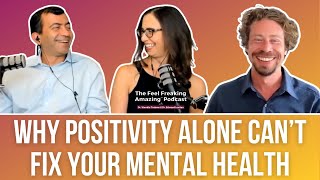
Podcast interview (Feel Freaking Amazing) with Dr. Miles Nichols discussing functional approaches to mental and brain health. Nichols describes his personal pathway (father's death → contemplative psychotherapy → functional medicine) and emphasizes broad drivers of anxiety/depression beyond neurotransmitters: rising prevalence (≈20% adults annually; anxiety ≈19%, depression ≈8–9%; higher lifetime prevalence in adolescents), strong gut–brain links (IBS patients show ~40% anxiety, ~25% depression in cited studies), environmental toxins (glyphosate, mold, metals), chronic infections (Lyme, Bartonella, Babesia), and neuroinflammation. He describes clinical testing he uses (tickborne/co-infection panels; neurologic autoantibody panels — Vibrant Wellness 48-antibody panel; Moleculara/Cunningham 5-antibody panel), and therapeutic modalities beyond diet/supplementation: treating infections/toxins, psychedelics (psilocybin, MDMA trials), breathwork (Wim Hof, Buteyko, box breathing, diaphragmatic breathing), cold exposure, meditation intensives, and brain-retraining. He reports clinical improvements in many patients after targeting toxins/infections and using integrative methods. For patient resources he directs listeners to medicinewithheart.com (clinic and blog).
Chapters
Foreign.
Welcome to another episode of the Feel Freaking Amazing podcast. Look who's here with us today at Levitan. And we're delighted to be introducing and interviewing Dr. Miles Nichols. He is a functional medicine doctor who specializes in Lyme mold guard, got thyroid autoimmune disease. He's authored two books and founded the Medicine with Heart Functional Medicine clinic in Colorado, as well as the Medicine with Heart Institute, which trains other providers and doctors in functional medicine. So, Miles, welcome. We're so happy to have you here today.
Thank you. It's an honor to be here.
Awesome. So you wanted to talk more about mental health issues, right?
And brain health as a whole. Mental health being one reflection or symptom that can be a sign of some other things happening in the body and, or the brain and maybe some other aspects that we can broaden the conversation beyond what I think most people think of as mental health into, into overall psychological well being and emotional spiritual well being with a lens on.
Okay.
If someone is struggling with depression, with anxiety, yes, we can go there too. And I'd like to not limit us to that kind of place to be able to also speak to how do people function, relationships in their lives, how do they feel in their heart? These kinds of things too. I'd be open to discussing.
How'd you get into that? Like, why is that your focus?
Well, I really, growing up, my father was a medical doctor, really focused on the medical side of things. Had gotten a master's in public health as well as being a doctor. Really wanted to look at how do people become healthier expressions of themselves. And he had started to dabble into that. It's not just about physical, that it's important for public health, that people are looking at mental health. He was speaking about this before. It was really a big idea. But when he, When I was 15, I was babysitting for a friend of my sister and I got a call, one of those really old style phones on the wall, the ones that remind me of my grandma, kind of cream colored, big, long curly wire and big fat phone. Pick it up and it's Claudia from my family's church. And she says, something's happened. You're going to have to go immediately. Someone's going to come take care of Sarah for you. And something's happened. Your father is in hospital. So I go home and, and start to slowly realize that something big had happened in my. I psychologically, I didn't know exactly what had happened. Claudia hadn't told me. I think other people thought that Claudia had told Me, because I started to hear things about that, you know, past tense, your father was this was that. And so I started to put it together that probably something bigger had happened. And I thought about asking, but I thought, this is kind of interesting to not know for sure, but to be suspecting. And I decided I was only 15 at the time, but I decided it was really an interesting enough experience that I'd ride it out until we got to the hospital, which was a couple hours away, so had to be there for a little while and my brother was flying in, and then I had to get a shuttle and go a couple hours. So it was some time of being in this space of the unknown, which I now call liminal space or a space of interesting dynamic, not knowing, kinds of uncertainty. And I found that to be really interesting. When I finally got to the hospital and walked into the room where my father's body was, I confirmed my suspicion. And, and, and interestingly, I had a. An experience in that moment that I had a hard time describing to others around me. I felt really connected somehow with my father's essence, something that was about him, that wasn't his body, even though his body was no longer connected with that essence. I had this sense of a connection with that essence. And for the next couple of days I had this owl that would come and I go outside and I'd feel some communication or some sense of his essence through the owl and then through my heart. And this. Something was occurring that was really different than the people around me were breaking down. And I was trying to decide, am I. Am I avoiding the grief process or am I having a different experience than other people? I remember one night I just decided I'm going to force myself to cry because that's what everyone else is doing, but not because I felt like that, like I needed that for myself. It was really interesting. And so that threw me into a whole, I don't know, a life crisis at 15. I guess I was just not sure what. What is this experience? What's happening to me? What happened to my father? Why are people around me behaving differently? And I couldn't, I couldn't understand. So I went on a journey for myself to start to understand what is grief? What is my experience of grief? What is medicine and what are what. Why did my father pass early with unexpectedly, suddenly top notch medical training, medical school at Stanford, a master's in public health from Harvard. How did this happen? Why is this happening? So I got, I had a lot of questions, a lot of unanswered questions and it put me on a journey. And that journey led me to meditation practice, to mindfulness practice, to Buddhist psychology and philosophy. I had started college in computer engineering because I was kind of good at that. But I really reevaluated quickly and decided I wanted to switch into psychology and spirituality and look at that interface. And so I found a program that was called Contemplative Psychotherapy with an emphasis on somatic psychotherapy where I could get a minor in yoga there and went to this very interesting college. I switched from big lecture halls full of 150 people studying physics and engineering to these 2030 person classrooms where everyone was sitting in a cushion and there were no desks in a circle and all the exams were oral and it was a very different experience. And even writing papers from an academic perspective, not using I, I actually got, got corrected and knocked and docked points like we really want your experience. We want you to talk about your experience. We don't want you to talk theoretically about other people's the papers and the research and what that has to say.
So.
Shifted my own psychology a lot and started to, to open me to that, that there's, there's more to health than just the physical side. And I actually really went deep into that. Even went through a year in a master's program before I switched gears and looked at functional medicine, Chinese medicine and some other forms of physical medicine. So really was focused on mindset. And so from that background then coming into functional medicine, working with patients who are struggling with mental health issues, neurologic issues, brain fog, chronic pain, fatigue. Chronic fatigue I would say is neurologic manifestation as well in many cases. And seeing how much that some people respond really well to just looking at the labs, diet, supplements, medications and maybe some sleep modification. But some people really need and do best with also looking at opening a dialogue around what are the consciousness corollaries here? How do we manage stress as it comes up and relationship. How do we relate to our emotional space? Should it be challenging in a struggle? All of that was really important.
So you've obviously treated a lot of patients and when you say brain imbalances I mean you talked briefly that you didn't want to just talk about anxiety or depression. And let's talk a little bit about anxiety depression because everybody, because just about all of us have that. So let, let's or we see that very. That's like the most common thing is anxiety depression are both they're a little bit on the spectrum depending on who you ask. So how does that, how do you view that? Where, where does that fall and how does that work with the brain and the mental health and what are the connections, things for us?
Yeah, yeah, yeah. And the big picture of that is, is that it's on the rise and the stats don't look great for, you know, if you, if you look at sort of the, some of the mental health statistical organizations that are trying to track metrics around this, the, it's really, you know, more than 1 in 5Americans in a given 12 month period is struggling with a level of a mental health concern that would be diagnosable. And when it comes to anxiety, it's about 19, a little over 19% of Americans with, you know, again, in a year period of diagnosable, you know, anxiety. And diagnosable means, it's not just minor, it's not just like kind of, you know, kind of anxious about the day to day. It means it's getting in the way of life. It means it's functionally a problem for the person to either have a quality of life that's not great or to really have disruption in their function in life. And depression's about 8, 9%. So it's a big issue.
Hold on, how much overlap is, Eric? Are we talking essentially 30% of the population at any given time or are we saying that there's a fair amount of overlap and so it's more like only 25% because some of the people with anxiety have depression too.
Like, yeah, there's overlap.
Like you're like casual, like, yeah, one out of every five. I'll make one out of every five, dude. Like we're talking a lot of people.
Well, and, and, well, the thing that, the thing that I'll highlight what you were saying is that it's, it's the diagnosable because I know a lot of people that are really, well, that are really anxious but may not be, quote unquote diagnosable but, or diagnosed like, or diagnosed, I guess. But it's still, it may not be getting in the way of their daily life severely, but it's getting in the way of life. It's getting in the way, absolutely.
Yeah.
And I think a lot of people have diagnosed a bull, but without the diagnosis too, so that's another matter. But certainly, I mean if we're going to look at a spectrum that's, that's beyond the classification that would put someone in the box, then we're dealing with a huge, huge, huge percentage of population and it's growing too in young adults. And adolescents, we see that if we look at a lifetime prevalence for adolescents today, that's more than. That's about half or so. We're really more like 1 and 2. If at some point in their life they would have been able to be classed or categorized in one of the mental health disorders. So that's significant too. And, and it is a grouping. So, you know, the overall for adults is about, you know, it's a little over 20%, but really is important to emphasize that that's diagnosable and some subgroups are a lot more so. For example, those who have been diagnosed with irritable bowel syndrome or IBS or have gut problems, let's say things like diarrhea, constipation, bloating, abdominal distension, these kinds of symptoms tend to get. As long as there's not inflammatory bowel disease or another diagnosis, they tend to get lumped into this irritable bowel syndrome diagnosis for these people. There have been studies that look at people diagnosed with IBS and they find that in that population, in that subpopulation, the percentages are much higher. So if we look at anxiety in that subpopulation, we're nearly double. We're really around 40% or so in that population. And when we look at depression, it's nearly triple. The general population, it's about 25%. About a quarter in that population are depressed. So the chicken and egg scenario, what comes first? Is it the IBS that's causing the mental health issue? Is it the mental health issue that's affecting the gut? We know stress can affect the gut, but we also know gut bacteria and the vagus nerve connection and endotoxemia from leaky gut or intestinal permeability all can cause neuroinflammation that might contribute to mental health development. So I think there are many mechanisms by which it would be explainable to understand why we're seeing double, triple the amounts of depression and anxiety in those who are struggling with gut diagnoses like ibs.
Crazy.
That is crazy.
Do we know what's driving the overall increased anxiety depression outside of ibs? Well, yeah, besides Covid and the pandemic.
Well, let's circle back to the history of the ideas of what causes depression, because we have to kind of go there if we're going to answer this question. And so if we're going to what causes depression? This goes all the way back to the 1960s. In the 60s, there was some research that was looking at some Brazilian populations that were deficient in an Immunoassacryptophan. And so they were seeing that the depression rates were a little higher in a community, that community's diet was a little more deficient in an amino acid called tryptophan than the surrounding communities that didn't have as much depression. And they thought, huh, I wonder, is depression connected with tryptophan? Because tryptophan we know is a precursor for serotonin in the brain. And the brain uses tryptophan as a building block to convert into serotonin. And serotonin is this neurotransmitter that at the time very little was known about, but that the thought or the, the as maybe, maybe that's contributing to depression. There are a few other studies that came along over the years and then a drug class a couple decades later was created, the selective serotonin reuptake inhibitors, SSRIs that basically take serotonin, that neurotransmitter, and they prevent it from being reuptake or taken out of circulation and keep it in circulation longer in the brain. And what that does is it makes the whatever amount of serotonin a person has available for longer. So it's almost like there's more. And what that does. The theory behind the drug company's idea around this was that, okay, that might affect depression. Because we had these studies on these tryptophan deficient populations in depression. So let's study depression. They got through all three phases, phase trials for the medication. They found that they were statistically significantly better than placebo at helping people with depression. Interestingly, an umbrella review just came out year ish ago. Within the past two years, an umbrella review of meta analyses and systematic reviews of all the tryptophan studies, the serotonin studies and depression studies came out and said, you know what, if we look big picture at all these studies, the conclusion of this was there is no connection between serotonin and depression. There's no connection between serotonin deficiency and depression. There is no good statistically significant connection between tryptophan depletion and depression. And this was kind of, it's kind of a landmark study that's been highly controversial and there's a lot of thoughts and opinions floating around. But to me it tells us, hmm, have we been looking in the wrong place? And when I see studies like the IBS study that show double, triple, you know, rates, I think, well, maybe, maybe if we look at gut, maybe if we look at also a couple other areas post infection encephalopathy is an area where there's research for chronic infections contributing to brain function or structure changes that may contribute to mental health issues. And there are toxins that we know that also can affect brain and neuroinflammation in the brain and systemic inflammation that may be impacting people's mental health to significant degrees. And things like mold and mold toxins are one in that category that if we start to. For me, when I started to open my eyes to this and look at research, and I kind of came to it because I was treating a lot of Lyme and mold and infections and gut issues, and people were saying, hey, I came for my gut issue, but my anxiety is completely gone after treatment. I thought, huh, that's strange. But now I don't think that's strange because I dove into the research and I see, oh, there are big connections here, actually, between. And there's probably a way better research link between gut issues, infections, toxins, and mental health onset than there is for neurotransmitter changes in the brain and things like depression. So that led me to think about, in terms of why are we experiencing so much more depression anxiety in the world today as compared to historically? Well, we have a big onset of a lot more gut issues due to things like overuse of antibiotics, things like cesarean section burs, things like the glyphosate sprays, and some of the other things.
You're now in trouble. Now you're in trouble.
My personal hot button. Glyphosate is my personal hot button word. But it's more all the toxins, too, right? Because, you know, we're developing thousands of toxins every year, and we're exposed to thousands more toxins every day, week, month than we were when I was born in 1970. Certainly, like, the. The level of exposure has increased. It's corrosive to the gut. The gut can't deal with it. And then when we know that 80% of our 70 to 90% of your serotonin is produced actually in your gut, not your brain, and your gut is a hot freaking mess, it's not surprising. It's like, oh, this makes sense, actually. And he said the magic word.
Yeah, the. I'll.
I'll.
I'll veer this conversation slightly away and then we'll bring it back. But I was listening to an interview with Paul Stemets, which, who is a mycologist and basically learned fungi, and he. He was talking about psilocybin. And there's apparently a receptor which I'm forgetting the name of that SSRIs hit just a little bit. But if you look at psilocybin or mushrooms, magic mushrooms or whatever you want to call them, they actually hit a thousand fold more. And that's why the studies are now interesting studies are now being shown that only a couple of doses of psilocybin 2, three doses will actually decrease anxiety depression significantly versus just a couple of doses versus a couple continuous SSRI. So there's some really cool studies out. That's not to take away from toxins and glyphosate or mold or anything else, but there's also, it's a complic. It's a complicated issue because the thing I think people forget a lot of times is we can say the gut or we can say the brain, but it's not separate. Everything affects everything else.
So Eva from Wally, your arms don't come apart, your head doesn't come off like you're connected.
Right. So if your brain's not working, it's a function, it's a sign of something else not working and the other way around. So I think that's what you're pointing to.
Yeah, absolutely. And that's, I mean, thanks for bringing that up because psychedelics are quite an interesting advent. And again, I, as I said sort of towards the beginning of the conversation here, you know, I don't find always for it to be effective for someone to just look at the lab testing for causes and address those with diet and supplementation and medications and some lifestyle intervention. Sometimes there really does need to be a significant perspective shift from something like psilocybin or in other cases, breath work and cold exposure and certain brain retraining practices that work on some of the traumatic backbone and limbic system dysregulation may have some significant impact. And then there are all these studies coming out on intergenerational trauma, how that's passing down, but that maybe there's some opportunity for rewriting stories and seeing that, that intergenerational trauma can transmute into intergenerational gifts. And that can start to create a new perspective in a person's life that can actually then translate into shifting the immune function, the nervous system function, the ability to maybe handle toxins and infections. And some of these gut biome changes, even some studies coming out about week long meditation intensive, significantly changing gut bacteria and gut biome. And so it starts to become very interesting very quickly. When you look at things like psychedelics, meditation intensives, brain retraining practices, we see breath practices being able to, to significantly calm an anxiety response very quickly, the right breath practice and panic attacks can be calmed very quickly. So there are some very interesting ways in which there can be modulation of the physiology that can sometimes have permanent shifts. In the case of psilocybin 1, 2 sessions, potentially having a shift that lasts over a year, maybe longer. That similar MDMA studies on ptsd treatment resistant PTSD showing very strong, strong impact.
The study just came out, it was like 71%. It's ridiculous.
71% what?
Positive effect of a shift. A significant impact in the scores of PTSD scores.
I mean, there's an improvement in PTSD.
Scores with what drug? I'm not sure.
What? No.
Mdma.
Mdma? Yeah.
But like, what drug do we ever see doing that? Like, if there were drugs that did that, everybody would be all over it. But because it's a natural compound, not so much.
You can't patent it, can you can't patent it.
No, but I'm sure people are working.
MDMA is not a natural compound, but I. It's not patentable because it's off. It's off.
Sort of.
It's past that.
So old.
Yeah, yeah. So it's hard to profit off of. So that's why the nonprofit Maps is a public beneficiary company that's basically donor funded to get this phase three trial. To get this through phase three trials, which is pretty incredible. It's one of the only instances in which a donor funded nonprofits pushed a drug through phase three successfully. And they're still. I mean, it's still wrapping phase three up right now. But. But the, the second result just came out a few days ago, actually. Confirmatory result in their phase three trial showing significant benefit and very good safety profile.
It's very inspiring, Miles. Like, it's. There's an. I was just saying in our staff meeting right before we met with you that we're really standing on the precipice of tremendous discovery and advancement in medicine in a way that's been unse the last hundred years. Like in the last 10 years, we've taken massive steps forward. So what you're talking about is just really transformational. So you. I want to change subjects a little bit. I mean, more on this that you talked about lab testing. When you're looking at people who don't get better from the standard kind of functional medicine, fix your gut sleep, stress, movement and thought patterns approach, what are you testing them for? What are your favorite tests to look at? What's going on?
Yeah, a lot of times it depends on where they've come in. I get a lot of people who have been to 3, 4, 5, 6 other providers and many of them have gone really, really deep into gut work and they haven't seen the benefit. They've maybe gotten a sibo diagnosis or they've looked at the stool or they've looked at food sensitivities and food allergies and they've done a lot with their diet and they've done a lot with supplement and they've done a lot with general blood sugar and metabolic function. But what they haven't done is they haven't gone deeply into testing for and treating infections and toxin issues. So that of course, if it hasn't been done, I'd really like to do tick borne and co infections panel to look for Lyme, Babesia, Bartonella or Lykia, anaplasma, rickettsia, these kinds of things. And then I really also like to do a, a neurologic antibodies panel that looks at, there's a panel looks at 48 different antibodies against the brain structures. So for example, dopamine receptor 1 might have antibodies against that dopamine receptor 1 or dopamine receptor 2 or tubulin or other structures in the brain that impact mood, that impact brain function. And so if I see antibodies like who's running that?
I don't think we have that test.
Let's see, they're Vibrant or Cyrex probably.
There's one called Moleculara that has the Cunningham panel and that's five antibodies, that one's quite good. And then there's the Vibrant Wellness which has many more, so the 48 autoantibodies. And it also looks at a few of the antibodies against some of the viral infections that are known to cross react with brain tissue are in that panel as well as. So it also looks at some viral antibodies together with neurologic antibodies. So Vibrant Wellness is the one that I typically run because it has so many more antibodies on it. But the Moleculara Cunningham panel is also quite good. So both of those.
But when you see these antibodies against the brain, where do you go from there? Is it saying, okay, the immune system is completely jacked up, so we now need to bring it down. And then you're looking for infections, toxins or what gut dysfunction, like where do you go from there?
And when it comes to brain antibodies, I'm looking for and theorizing about what the trigger or triggers are. And I say triggers because usually it's not. Everyone wants one flaming gun, you know, one smoking gun, one flaming you sort of cause, but it's usually multiple. But that being said, you know, it becomes an investigation of, okay, we have now a baseline level. Let's see if we can identify triggers and treat them, and then let's redo and see if they're dropping. And I've started to notice patterns of antibodies that seem to have probable cross reactivities, although I haven't. There's not a ton of research on these cross reactivities yet. But what I do notice, for example, is that a pattern of dopamine receptor 1, CAMK2 glycine receptor antibodies often seem to go together with Lyme or Bartonella. And I just. That's just a clinical observation that I've noticed. So there's no research that I know to say that for sure. But I do find that when I treat Lyme or Bartonella, that I do often see that pattern of antibodies going down and going the right direction, whereas certain other ones don't seem to. Some of the myelin, the demyelination antibodies don't seem to respond as well. And those seem. Maybe there are other triggers, but it just depends. So. So the way I use it, I use it like almost like a barometer or tracking how on the right track are we to recovering brain function? But it doesn't tell exactly what we need to treat in order to get there. It just tells us if we're on the right track as we retest it, if they're going in the right direction versus wrong direction.
I have a dumb question. I'm like, I'm like a nitty gritty human. I remember in biochem in med school, I was like, where are we in the body? Could we just orient for a moment? And the teachers are like, why do you need to know that? I'm like, because I don't understand what's going on here, what's happening. So dummy this down for me. Miles, when you do this brain testing, is 100% of that panel whom you're testing on, do they fall into the anxiety or depression category that hasn't responded to a traditional functional medicine approach, or is this just kind of all comers? And then you go back to your 20 to 25% of the population have difficult to treat anxiety or depression. Can you just back it up?
Yeah. So I'll. I'll do neurologic antibody testing on a variety of people, even who don't have those kinds of symptoms. Especially. I mean, oftentimes there. There may be a neurologic symptom that's Neuropathy, or it's chronic fatigue, or it's chronic pain pattern that isn't structurally explained, or it's significant brain fog, or it's headaches and, or migraines. There are many different manifestations, even things like seizures. And so different manifestations and different autoimmune conditions. Multiple sclerosis relates often to those demyelination antibodies. And so if there's, if there's any autoimmune pattern, regardless of, if someone has Hashimoto's, if someone has any diagnosed autoimmune disease, we know the stats for other antibodies go up significantly. So I will often do neurologic antibody testing on someone who has any antibody whatsoever or any neurologic symptom that's significant whatsoever and not just mental health symptoms. So I will test more than just people who have mental health symptoms.
Okay. And of the people who have mental health symptoms, when you look at your practice, what percentage of them start to improve? And I always say to people like, look, whatever symptom you're coming up with, that's your Achilles heel. That's what you're gonna, when you hit the skids and you go down and you stop taking care of yourself, that's what you're gonna develop. So keeping in mind that sure, you can flare again, but do you see a significant portion of people who start to have either improvement or resolution in their symptoms as you drill into this?
Absolutely. Absolutely. Yeah. Yeah. Some people just say that, you know, and a lot of people, it's it when I dig into it with people and really in the case history talk to people often there are a number of people who, they say, you know, I, I handled stress pretty well for, until, you know, this year. And there were some stressful things happening in this year, you know, 10 years ago that, that, you know, I just attributed it to, I was going through a divorce or I was having this or I was having that or something happened and I just attributed it to that. But like before that I handled stress pretty well. I wasn't anxious all the time. Sure, maybe I was an anxious personality, but it wasn't getting in my quality of life, my functioning. And in my day to day experience until 10 years ago it started. And so often, especially in cases like that where it's like there's a time in which it significantly shifted and amplified, even if that seems to be connected with trauma, sometimes there's really a significant connection with also infection, toxin, gut dysfunction. And sometimes the nervous system gets put chronically into another state that also utilizing Some of the mind body interventions, the breath work, the brain retraining, meditation, maybe psychedelics, that there can be this shift where people can notice and find significant differences, where they feel like they're back to before that. I'll call it an amplification of dysregulated nervous system function occurred. And people feel like, oh, wow, now my nervous system's more like what I'm used to, what I was used to in. In most of my life. Where, of course, yes, situations get bad and it's stressful and there's a little bit of difficulty sleeping or handling certain things, but for the most part, day to day, it isn't that big of a. An issue. And I find that a lot for people.
I had a patient yesterday who I've been seeing for years, and when she showed up in my practice, she was so sick and. And nothing worked for her, right? Like she had had chemical sensitivities and she had mold and she had anxiety and she wasn't sleeping, and she just was brittle and had histamine issues. It was just messy. And we've been doing a lot of toxins work. So Charlotte, I saw her in person yesterday, and I was like, good. Like, she looked good, she felt good. And she said to me, yeah, I didn't like doing the metals treatment at the time, but she did three courses and got rid of her medals. She said. But in retrospect, it was the linchpin that had her no longer be so sensitive to histamine and no longer have. I was like, how's your anxiety? She's like, it's. It's actually gone. I'm not anxious. I'm like, that's so cool. Just this. And. And it's not. It's the stuff that's invisible to life, right? Because nobody thinks they have metals, but you got it from your mama. And you live in this world and you eat fish and fillings and lead pipes, lead paint, lead gasoline. If you were born when I was, and it's just amazing and how profound the transformation is for people when you pull the right lever. Like, they get better. Yeah, it's pretty cool to watch.
Speaking of levers, what you mentioned a couple of times, breath work and cold exposure. What are the things that you recommend for people that they do outside? Is there a specific breath work that you recommend? Is there cold exposure, period of time? What's kind of. What's your recipe?
And just for the record, I'm not gonna ever grow in a cold plunge. Like, it doesn't call to Me, I'm sure in 10 years I'll be like, oh, I did a cold plunge. But now I'm like, let's go to sauna and be nice and warm.
Yeah, we'll dump you in when, when I get mine set up.
I know we gotta get a better, bigger plot of land so we can have like the self care area with that cold plunge.
Yeah, right? Yeah, I have cold plunge on my deck. And it's really nice to.
When you're in Colorado. So it's like cold out there, right? Not in the summer, but then in the winter it's winter more than summer.
So yeah, yeah, it's cold and still getting the cold plunge in the cold.
But that's the best time. I actually find having a cold plunge in summer is not as effective. Like cold and cold is really.
You can't get it cold. But in poor Ed. So we have used to have this terrible patio and it was awful, but who cares? It's awful. And he would go out in the winter and pour a bucket of cold water on himself. And then we redid the patio. And I was like, you're not allowed to pour cold water on the patio. It's gonna freeze and buckle the patio. You can't ruin the patio. So poor Ed's like, where am I gonna go? Like, because you're not gonna walk out. Like.
Well, I was, I was doing ice, ice water buckets outside before the cold plunge wave happens.
He really has been doing it for years.
But I do, at some point we'll get a cold, actual cold plunge. We'll see. We have to figure out the place.
Wire it up, corner of the yard.
Maybe I can, yeah, I can. I can talk breath work, cold exposure bit. And some of those other therapeutics that are effective for breath work. It's. There's two different camps, I'm going to say. And one camp is the kind of over breathing techniques where you're actually breathing more, deeper, sometimes faster than you normally would. And the other camp is an under a set of under breathing techniques where you're actually intentionally generating the feeling of being a little air hungry and taking in less air per minute. So the volume of air actually per minute through the lungs decreases. And we could probably spend hours talking about each of those. But what I'll do, just say as a general principle is that for the most part the average, especially chronically ill person and people struggling with mental health issues, the average is breathing a little too fast and too much air compared to what would optimally regulate the nervous system the brain function, the mood. That being said, there's some utility still to over breathing techniques for even people who are breathing a little too fast day to day. And the way I like to explain this is it's kind of like lifting weights is stressful to the muscles, but it makes the muscles grow. If you do it in the right dose, if you do it, you wouldn't want to lift heavy weights all day, every day. You'd never recover and your muscles would break down and it would be very problematic and you'd injure yourself. But if you lift the right amounts of, right amount of weight for the right amount of time to hormetic stress, it'll build your muscles back up and they'll be stronger than they were before having lifted those weights. I consider over breathing kind of like that of breathing, like the weightlifting of breathing. It is a stress on the body and for most people it's pushing them further into stress than they already are. But the right dose can be hormetic and can help regulate the nervous system function. It's important though that people know that that is a more of a sympathetic fight or flight kind of state that they're putting themselves into intentionally for a time, followed by relaxation. So when we look at a very effective and well researched breath practice like WIM HOF breathing, for example, WIM HOF breathing practice, which has been studied to reduce and almost eliminate the symptoms of endotoxemia when they inject dead E. Coli directly into the bloodstream. People, because E. Coli is a gram negative bacteria, it has lipopolysaccharide or LPS in its cell wall. You inject that into the bloodstream. It's just like a person who has leaky gut who's getting a flood of bacteria in the bloodstream and getting LPS elevations. And we even have lab tests to look at LPS antibodies and we'll look at LPS in the blood sometimes to measure leaky gut intestinal permeability. It's sort of like you're directly putting it in the vein. So no matter the gut status, you're just getting directly LPS in the vein. The WIM HOF breathing was shown to practically eliminate the symptoms that people experience. They get headaches, nauseous, feel weird, get a lot of pains, and they feel miserable for a few hours usually. But with this breathing, they didn't. And also the inflammatory elevations that occurred due to that endotoxemia were cut basically in half. In the endotoxin study for the breathing group, it was doing the breathing and so cut inflammation in half and reduce the symptom of endotoxemia. That sounds really, really good. For the perspective of a lot of people who are struggling with maybe gut issues, endotoxemia or chronic infections and the byproduct of the toxin from that, it might help a lot. For people. The challenge with that kind of breathing is that, is that it is hormetic stress. So someone who's really depleted, really weak or really anxious might push their anxiety further, might go into a panic. Because you look at panicky breathing, it's fasted, it's this kind of a fast breathing breathing actually. Yeah. And when half breathing, it's a little different than that. It's like fully in, natural out. So it's not the same, but it's, it's close enough that some people get triggered into anxiety.
Yeah. But I'm gonna actually. Tailor that a little bit because.
I.
Think the majority of people that start out with breath work aren't. You are only breathing from the top. And until you learn to move your belly and your belly muscles are able to move and you're able to move your diaphragm down, any kind of breathing is going to be tough. And you do want to go. My recomm. My general idea is to first teach people belly breathing and then you can do the over under. You can do a lot of things. But I do think when, if people are trying Wim Hof and they're just breathing into their chest, which is, I think the beginners what they do, that's when you get into trouble. So making sure breathing right into your belly is going to make, is going to make the huge difference.
Like a baby breathing.
Yeah. Diaphragmatic and abdominal breathing, it's very important and, and can definitely make a big difference. And sometimes where I'll start people is if, you know, depending on their natural breathing pattern, I'll do an assessment where I'll have people breathing normally while sitting. How long can you hold your breath on the exhale before you get the first definitive desire to breathe in or an involuntary diaphragmatic contraction? And that gives me an assessment for where they're starting from. And people are starting from a certain point where they maybe can 20, 25, 30 seconds. They're fine holding on an exhale without preparing for it, without taking big deep breaths, just normal sitting, inhale, exhale through the nose. For them, I think often starting right into full on. You know, Wim Hof practice is fantastic and they do really well for the people who they're really struggling with a 5 or 10 second definite desire for air. They're at a different place in terms of the chemoreceptors in the brain and their sensitivity to carbon dioxide is really low threshold for carbon dioxide and desire to breathe. And the lower the threshold, the more I see benefit to under breathing training to increase that threshold prior to beginning to do some of the over breathing techniques as well. And some people do great with one, some people do great with both, some people do great with some people. What them do is I'll say do five minutes of under breathing and then do the Wim Hof breathing and then go back and do five more minutes of under breathing. So you're sandwiching it in between and they do extremely well with that. There's tremendous research on Wim hof. There's tremendous research on some of the underbreathing techniques with nervous system regulation and, and anxiety and panic reduction and improvements in asthma and sleep and sleep apnea. And so it also depends on what are people coming in with as their picture as to how much of which would be beneficial. But I would say that just to give a couple throughout, a couple names. I think Wim Hof breathing technique is fantastic for a lot of people. Just understand the safety contraindications, et cetera. And then Buteyko breathing is really, really wonderful for people. A lot of people like box breathing as well and then diaphragmatic abdominal breathing. These are some of the big ones that I think are highly effective. I find people getting tremendous benefit from.
Well, where can people find you? Because you've got a lot of information I think people would really benefit to. It feels like you're just scratching the surface.
Yeah. And we'll put this all in the show notes by the way, so when you say it, we'll put it in so people can find you.
Great. Yeah, yeah. Best place is is my clinic is called Medicine with Heart and medicine with heart.com is the best place where there's a free blog that's available that has a lot of information that comes out. So we'll put out information about some of the topics that we've been talking about today. A variety of things related to, to mental health, things related to optimization, things related to infections, toxins, gut function, all that goes in there, autoimmunity. So there's lots of free information in the blog there. And if people want to get in touch with the clinic, find out more about what that's like to work in the clinic, they can book a call there with one of my staff members to discuss that. So medicinewithheart.com is the best repository in place for information and from there you can get into the blog and get into some of the other areas that we cover.
Awesome. Thank you for being here.
No, it's been very educational. Really cool.
Yeah, like a breath of fresh air.
Oh God, don't get her started. Don't get her started.
Are we going puns now?
Yeah, I can't resist. Okay, so back to being serious. Miles, thanks you. Thank you for being here and for the listeners, thanks for joining us for another episode of the Feel Freaking Amazing podcast. If you love it, give us a thumbs up and pass it forward so people can transform their health because you're meant to feel freaking amazing. So Miles, thanks for being here and we look forward to chatting with you again soon.
Appreciate it. Thank you so much and take care everyone.
More from Wendie




Support The Right Bacteria to Restore Your Gut Health, with Dr. Oscar Coetzee

Support The Right Bacteria to Restore Your Gut Health, with Dr. Oscar Coetzee@designsforhealth3090




Look and Feel Decades Younger by Removing Senescent Cells, with Dr. Jerry Mixon