Detox to Get Pregnant Naturally Even In Your 40s, with Dr. Ann Shippy @AnnShippyMD
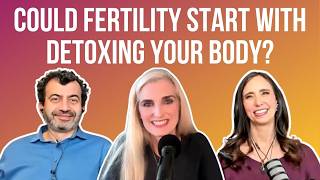
Dr. Ann Shippy explains how detoxification improves fertility, even in your 40s. Sperm quality changes measurably within three weeks of ditching ultra-processed foods. She recommends a three-month pre-conception window with targeted supplements, environmental cleanup, and testing to identify heavy metals, plastics, and other toxins blocking conception.
Chapters
Hello and welcome to the Feel Freaking Amazing podcast. I'm Wendie Trubow. My co-host is Ed Levitan, and we have one of my favorite people. I always say that, but really genuinely, this is one of my favorite people. This is Dr. Ann Shippy. She is a board-certified internal medicine physician, certified functional medicine practitioner, and she's a leading voice in the emerging preconception movement as well as an, an a total expert in toxicants, so she and I speak the same language. Her latest book, The Preconception Revolution, provides a roadmap for people to prepare their bodies for healthy pregnancies and optimize generational wellness, which we'll talk about. Through her Austin-based medical practice and online programs, Dr. Shippy has helped couples conceive healthy babies well into their 40s through this method. And welcome. We're so excited to have this conversation.
Oh, it's so great to see you. I wish I could beam myself over there with you. I know.
I know. We could figure this out. We'd have room for 3. So, so I think it's really cool that you're getting into fertility because to me, toxicants and your expertise in that lends itself perfectly into fertility. And as I— Ed made me start the recording, but as I was sharing with you that the people who do the work on toxicants are the ones who get pregnant really easily, and the ones who don't, it's harder. Yeah.
Like, in fact, I try to remember to tell my patients that aren't over 50 that once they start working with me, even if they've had problems with fertility in the past, and they're— they think they're done with their families to make sure that they've got their birth control figured out. Because once the body gets detoxified, the body— and, you know, built up the nutrients, lowering inflammation, helping the mitochondria, all these things that we're doing— the body's like, wait, I can pump out one more baby, right?
How'd you get into this? Because this is not really your background, right?
It's really like You know, both of my kids have had some run-ins with their health, and I've had run-ins with my health, right? And so this is really what I wish I had known before I got pregnant with my children. And it's what I've learned from my patients. Like, um, one of my patients actually planted this seed. I, I had— I was a year into my functional medicine practice. She'd heard about me. It was you know, like 19 years ago. And, um, she pursued me. She's like, I'm 42, got married late, I want to have a baby, and I have a feeling that there are some things that wouldn't be good for the baby. And, um, so I just started— I was still pretty new at functional medicine, right? So I was like, well, okay, let's— you've had some amalgam fillings, so let's check your mercury levels, let's do a DMPS challenge, and let's look at your microbiome. And we found a lot, actually. And, um, so about 9 months into After we did a tune-up, it took about 9 months because she— so imagine, 42, you have the presence to know rather than just like zooming into getting pregnant, to pause and get your body ready. Like, that, that was kind of remarkable thinking for that time. And she taught me so much because then she got pregnant like that, had a healthy baby, you know, very strong pregnancy, felt great postpartum. So then I was— then I had a number of patients who got pregnant not expecting saying that they would because they thought they were done, but their bodies got so fertile. And then another teacher was, um, 35-year-old who had failed IVF multiple times, could not find another IVF doctor to do another round. And she had heard about me, came to see me. We found some things that, you know, some undiagnosed autoimmunity and several other things, got her body into balance, and she got pregnant right away. So being told, oh, you need to adopt, to healthy baby. And then evidently she got super fertile because she was still nursing the first one and got pregnant with twins. Oh, wow. Uh-huh. Didn't learn her lesson, was nursing the twins and got pregnant with number 4. So she went from being like, I only have the choice to adopt, to 4 children, very young, I think under 6. So, um, is she still alive? And she's still like, oh my gosh, she's a beautiful family. That's been a number of years ago now. I think that was 15, 16 years ago that we— that she had number one. So kids are getting older. And, uh, so I've really felt excited about writing this information down for people because everybody else is getting scared into doing IVF. And so I started writing the book in 2016 and I hired a PhD biologist because you know, running a busy practice, I was like, I would need somebody to gather the research for me. So I talked to her every Friday morning and I'd say, go research this. And she'd research it, write it up, and we'd just crank through and got like 60% of the book written and then got an agent. An agent was like, oh no, no, no, you have to write the detox book first. And then we started really working on that book. And then she got— she decided she was going to quit being an agent and have a baby. So then I did a TED Talk, did an XPRIZE thing, and then COVID hit. And so that kind of took me out of any extra time to write books for 3 years. And so then in 2 years ago, I just really reconnected with my heart and what is it that I want to be focusing on. And, and it was kind of perfect timing because we— it's so clearly clear now we are in a children's health crisis and, and in a fertility crisis. And so my research and patient examples and all of this just lend solutions for things that turned out to be the perfect timing for now.
I mean, there really is a fertility crisis, and it shocks me that nobody's talking about it, right? Like, men's— for even men's fertility, that their sperm count is declining like something like 1% per year compared to other years.
Yes, it's 50% drop in the sperm count alone. There's other problems happening at the same time over 50 years. So on average, 1% a year, but it's accelerating. The last percentage was 2.6%.
So, um, but my guess is all the same things that for women are the same for men, apply for men in terms of fertility.
Yes, that was— and that was the exciting thing about this version of the book that just came out, is that's that so much of the research to prove what I believe has been done. Like, there's so much good information to to back up what we're practicing and what we're seeing helping our patients. It's very medically sound.
I mean, I would say off the top of my head, if you said to me, okay, what are the things that impact fertility? I would say, okay, plastics, plastics, and more plastics, plus— and the VOCs, the heavy metals, not so much mycotoxins, but some, but really the, the environmental bucket. You know, the gasoline. Is there anything I'm missing though? Like what else? What else is—
the organophosphates, the glyphosate. Glyphosate.
Oh, don't say that. Don't say that evil word in front of Wendy Trubow. Glyphosate.
It's like my hot button word.
Oh no. Like there's so much data showing that it has epigenetic impact. So like men with glyphosate in their bodies, exposure to it, it can even impact the health of the embryo. The health of the placenta, the fertility, you know, how well the pregnancy goes even. And then future generations—
pause right there— and men matter too. Men matter.
They matter as much or more than those— well, this is—
it's on the show.
It's— you have it— you have it documented. Men matter. They—
I mean, Men can leave the health legacy for their children. Like, it's critical that men start to understand that this is the most important thing that they can do, um, to really love their future child, is to take 3, 6, 12 months before conceiving to really tune up their body. Because of all the epigenetic research on how the genes are being influenced to dial up and dial down and affect not just the baby that's being conceived, but even future generations is really incredible and horrifying.
Like, none of this, none of this is a happy conversation. You know, people aren't like, oh, I'm so happy we had this conversation. They're like, I'm never going to sleep, eat, or do anything in the world again because it's so horrifying.
That's what my— well, we kind of are. It's already horrifying, right? When we look at the rates of autism, and the diabetes and the mental health, all the things that the can't— I mean, the cancer risk going up so much, all these things, like we're already horrified, but I wanna bring hope to this conversation because what I'm finding is men, when they realize that they're putting some effort in before getting pregnant, they, they wanna do it. Like they're highly motivated to take action, even if it, if it involves not drinking alcohol for, 3, 6, 12 months and making sure they get to the gym and work out and actually cook their food. You know, they're, they're like, oh, okay. Once they understand, they make the connections, they're on it.
Are there any toxins that are silently affecting fertility, or is it all the stuff we've talked about? I mean, I don't think it's that silent. I think it's glaring.
I think it's glaring. I think You know, I just feel like the medical field is almost lulled into sleep about it. Like, they're not realizing— it's this conversation that we have all the time about, in our world, about what the root causes of all the health conditions are, right? I think they just have blinders on and they they're looking for technology. Like, they— like, so many men and women just think, oh, if I can't get pregnant, I'll just do IVF. And they're not using fertility as a check engine light and choosing to do the work to get to the root causes, to get their bodies into balance. And, and it— when you start to look at every place that we're getting exposed, it can be overwhelming. But if you just take it a bite-sized piece at a time, I think most people can make a tremendous amount of progress in 3 months.
They really can, because you start with what are you running out of? What are you doing in your shopping list? What can you level up on today? Just right this minute, how do we level up in the moment? So where, where do you start with people? You know, if a woman comes in or I guess it's not really only women, it's if a couple comes in and they are, whether they're heterosexual, not heterosexual, where do you start the workup with them?
Yeah. The, um, I, and I really do love it when both partners show up to do the work. It really, it's, um, it just makes the whole process go smoothly when they're doing it together. And I think it actually deepens their relationship and their collaboration. It's great preparation for becoming parents where you are, you know, you're doing a lot a lot of collaboration, as you— as you two were doing. Um, I'd like to start with just laying some solid foundation with a really clean diet.
So what does that mean to you?
Yeah, the, um, it means what they cut out and what they add in, right? So there's a study that came out on sperm, actually after the book came out, so it didn't make it in there, all the 500 studies that did. It came out just few months too late, but it, it was so profound on the impact of the ultra-processed foods. So they took men, and for 3 weeks they fed them highly processed food in one group, and then the other group got unprocessed foods, just whole foods, hardly packaged. Dramatic difference in ultra-processed foods in just 3 weeks. But sperm take 74 to 86 days to make, right? So the fact— like, I thought if I had read the study design before they did it, I would have been like, wait, that's way too short. You need at least you know, 2 months to see a difference. Well, in 3 weeks they could see changes in hormone levels and the quality of the sperm dramatically reduced with the ultra-processed foods.
Increase the quality, improved, or the, uh, the quality decreased with the ultra-processed foods?
The quality, the quality.
I'm sorry, I was thinking.
And then they did a little washout period and then they switched groups, same same difference, like hormones are better, eating whole foods rather than the processed foods. Um, and like dramatic difference in sperm quality. So if we can at least get the diet right, like mostly organic, unprocessed, I think you can get a lot of inflammation down, get nutrients up and make a tremendous difference. So I really ask people to get started with the diet first. Pretty much everybody gets a detailed toxin test just because even when people think that they're doing everything right, like this couple that I just—
he—
I saw her, saw them both for the first time in November and she got all her stuff done quickly, but he had a lot going on and they were moving. And so I just did his lab results and he did a whole bunch, you know, batch together. And his toxin levels were kind of crazy because they We're eating all organic. They actually have a food, an organic food company, like they're already on it. Right. So we're expecting his to, I'm like, please check, but expecting it to all come back. Right. He had a very high MTBE, which is a gasoline additive, as you know. But the first test that he did was a, a NutrEval. So that MTBE was, it was right before they moved into this new house and it was It was great. The one that he did at the end of January, it was one of the highest I've ever seen. And so on this appointment, we're like, okay, where is this coming from? Where could it be? Like, it's such a dramatic difference. Well, it turned out their new house had a couple of the gas fireplaces, one in the bedroom and then one in the living area. And he works from home, so it's constantly getting exposed. And, you know, that's— and, but, and we had done this special sperm test, a sperm QT, so we could see, and that was more recent too, so we could see that something was also messing with its epigenetics and quality of the sperm a little bit. And, um, so it's so great that they checked, right? Because they're just thinking, oh, it's just a nice ambiance. But I've seen enough of this with the gas fireplaces that I'm like, I really, I need to write this up in a blog because I think especially in period of time, but really ever, that it's probably not a great idea to do— use those. Um, and definitely switch out the gas stove if, if you can. The thing we haven't figured out for him, and especially since they're doing mostly organic or all organic, he had a very— one of the organophosphates was high, really high.
Yeah, I mean, that could have been leftover also, who knows, from storage, fat, and whoever, wherever else.
That's very possible, especially since we had started him on some supplements with some liposomal glutathione and some binders and things to help. And it— well, our theory at this point is that it might have— he was using marijuana for a number of years fairly heavily, but, um, that industry is not well regulated from that point of view, right? But I think most men don't even think about, oh, I'm getting heavy metals, I'm getting pesticides from doing a little bit of THC.
Right. What's the test that you like for toxicant testing?
You know, the one that I've been using recently is Vibrant. I've gone back and forth a little bit with Vibrant and Mosaic, I guess is what they're called now. My favorite test was one that I had to send over to Germany. Did you ever use IGL in Germany? Oh my God, I've heard of it. The, the founder passed away and he didn't have any family, so I guess the government took over the lab. So sad.
Oops.
Oops. Yeah.
Can you share one of like your favorite transformation stories?
Um, yeah. Uh, I had a couple that had brought me their children. They had a 3-year-old with pretty severe neurodevelopmental delays, and a 1.5-year-old with a 1-year-old with PANS/PANDAS symptoms, so neuropsychiatric autoimmune. And we got them reversed. The little girl is now 6th grade and she is just, um, you would never know what she had gone through, um, at, you know, to the extent of, you know, somewhat precociously leading her class, very social, doing cheerleading, uh, things that her parents at the time couldn't have even imagined. And then the PANS/PANDAS resolved. But while we were getting the children better, the parents, uh, decided to become patients too. And, uh, they had gone through some infertility to get their children. So they weren't expecting to be, you know, fertile, but at 42, got pregnant with number 3. And this little girl is so healthy. Like, she has not had to deal with anything that her siblings have dealt with. She hardly even gets a cold. And so And that really taught me that even when, you know, maybe some genetics, epigenetics, environmental factors have contributed to illness in children, that it is very possible to go on to have very healthy children even in your early 40s. And then another story that's even a little bit more inspiring and more amazing in a way is it's changed my cutoff of when I think it's even a good idea to have children. I was kind of like in that 45, 46. My mom had my little sister when she was 44. And I had a woman come to see me and her partner. She was 46 and had met the love of her life, had two older children, and they wanted to have a baby together. So I was like, okay, we can try, let's get— but let's get some data. And we did. We found that she had some high toxicants and some nutritional deficiencies, some disruptions in her microbiome. We worked super hard for 3 months and she got pregnant at 47. Um, 3 or 4 months and she got pregnant at 47. She's about to turn 48 and she's 8 months pregnant and She's about to have another baby and she's had an amazing pregnancy. She's felt great. Her body was so tuned up. It's just been wonderful, easy pregnancy. And so I really think it's very possible to be very fertile into your mid to late 40s.
And you just brought up something interesting that sort of challenges the way I think, because I typically think of getting rid of the toxicants as more like a slog, not like a 3-month kind of thing, but especially for people who have really high mercury or lead or very high mycotoxins or a broad range of mycotoxins. I always say to them, you know, this is not like a 2-month one and done. How do you— how are you doing these so quickly?
Yeah, I also do some IVs in my office. I use the PK protocol, phosphatidylcholine and NAD+ for people that are in a big hurry or that have the resources to do that. I don't think you have to do that, but if you're in a hurry, that's an option to speed things along. And she definitely, like, she was, um, she didn't feel bad. So I think when people come in and they have a really high toxic load and they're not feeling right, it's a little different than somebody who feels okay but is just being cautious. And that was her situation. She just she knew my work and she wanted to see what I thought. Is it even safe to get pregnant? Can I get pregnant? Um, and honestly, I would have preferred that she came back and checked her levels, but they had one night and they were thinking, oh, you know, not the right time for the cycle. And, um, they weren't thinking they were going to get pregnant, but they did, just one night at 47. So, okay, I'm like, okay, this must mean you're You're super fertile, so it's got to be okay. And, and, um, and it has been so far. But yeah, for people that are, um, like if you know you have some family history of autoimmunity, Parkinson's, um, early dementia, you know, any of these family history things that kind of go along with— or even cancer, heart disease, uh, that go along with not detoxifying great, I really think it's a good idea to go much longer. 3 months is the minimum. But this whole conversation where women in their early 30s, late 20s are getting scared about their fertility because of what they're seeing around them and what the narrative is out there— start now. Like, rather than saving for egg retrieval, prioritize helping your detox pathways work because we all need it. Like the world that we're living in today, like nobody's immune, including myself, right? We like, we all are being so heavily exposed without our permission and we think the food packaging is okay. We think that the air quality is okay because the government isn't doing anything about it. Well, it's very clear especially with what we saw this week with glyphosate. I don't know when this is going to come out, but that our government is not really looking at our best interests. Although I did hear Kennedy came to Austin last night and he said that they are working on a plan for for scaling out glyphosate. I think they have all the right people on deck to come up with a plan. We'll see if it actually happens or not, but hopefully that's in the mix because especially in this conversation around fertility, we have to stop dumping glyphosate into our— I didn't realize that you used to lecture on the glyphosate. I somehow missed getting to hear one of your lectures. I'm sure that would have been amazing. Here's a story you'll find interesting. So I, I got to go to Tanzania 2 years ago, and one of the parts of the trip was to go to meet with the Hadzibi tribe. So hunter-gatherers, and then to go meet with the Maasai tribe. And there was about a 3 to 4 hour drive between the two tribes. And what we saw in between was field after field after field of Monsanto corn. So I get to the Maasai tribe and we had had one of the tribal leaders with us for a lot of the trip and he came over to say hello to me. There's hundreds of people between the tribe and our group and So we were talking and his brother came over and his brother is an MD. He had left the tribe for the years and gone and trained to get his MD and then had come back to help care for the tribe. And he, I was asking him, well, you know, what are you seeing with your tribe? And he was saying they're having so many maternal deaths. Because of the preeclampsia and other complications of pregnancy. They're seeing autism in children now. Like, these are tribes, right? So the link that I could make is with the, um, the glyphosate, but then also the plastic. Like, there was so much— they don't have trash retrieval systems in these places, and there was so much plastic bottles and trash plastic bags along the roadways. So between, I think, the glyphosate and the plastics, they're seeing more infertility, they're seeing more health problems. And it's, you know, it's just so sad because they really don't have medical care. Like, there's no hospital to nearby to take these women or newborns to that need medical care. It's almost impossible to get them the medical care they need.
Yeah, I'm going to take us a little bit—
yeah, you're hard to hear—
uh, a little bit slightly different area. And if we don't want to do it, then we can go away. But where do you find, like, trauma and infertility?
Oh, that's such a great question. This is so fascinating. Oh my gosh. Um, so it's— I think it's harder to study women on this, but I'm sure it's very similar. But with the men, they can study epigenetic changes in the sperm that get passed on to the child, or even in the— in animal studies. And so they can even, like, they've linked a trauma to a smell and then future generations reacting, you know, with a trauma, like, escape response when they have that smell. And it kind of makes sense, right? Like, we— it's kind of fascinating that humans even still exist on the planet. Like, it's so— from a survival standpoint, it's hard to survive, right? So it's almost like you can't get taught everything you need to know. A lot has to just be instincts. So I really do believe that it's helpful to, to do some neurofeedback, to do some psychological reset. And that's actually the first part of the book, is to do at least to do some intention setting, make sure that you're everything solid ground before you bring the baby in and that things are really in a good place with your partner. You're on the same page. You want this child for the reasons that really make sense for you and the baby. And I think there's a lot more research to do in this area around trauma. But certainly when our bodies are more stressed, that's a lot of the red light, like it's the check engine light coming on. When we're moving the tribe, it's not a good time to get pregnant and have a baby. So if there's not enough nutrients, like if we're in a famine, I mean, people still can get pregnant, but that doesn't mean you should. But it definitely lowers the probability of, of having an easy pregnancy and getting pregnant easily.
Yeah. Can you talk about the preconception window, Ann?
Yeah. To me, this is this window that's intentional. Before trying to conceive. So I've really, I've really oscillated on this. You know, the— it's not defined. This is me, me just kind of getting out there and starting to have the conversation. There's no determined definition for me. When you look at how long it takes for an egg to be created, how long it takes for a sperm to be created, it's a minimum of 3 months. You know, I see this with my patients where they're like, oh, but I'm ready now. Like, I don't want to wait at all. And so it's somewhat of a negotiation on how long the preconception period is. So with my patients, I can actually look at data and tell them when they're really ready. But for people that just want to do preparation, they give themselves a time period, at least do what I put in the book with the supplementation on the detox and getting the diet dialed in and reducing the toxins in the environment. But I think we should start thinking about it. Where I'm coming to now, especially with these conversations that most women are thinking they're going to have to do IVF, is let's start thinking about the preconception period actually in teenagers. Like, how can parents protect their child's fertility starting now?
Like, don't let them get— we just talked about teenagers being the bane of my existence.
That's not— that's a little bit overstated, but there are days that I'm like, I'm actually auctioning off a teenager and I might pay for someone to take the teenager depending on the day.
So I think that's a Great thought.
Well, but I mean, we're known as like the weird parents, you know. I'm always like, what are you doing drinking out of a plastic bottle? Get rid of the plastic bottle. You drink from glass or metal and test the metal for lead to make sure that you're not drinking lead. But we're the weird ones. Like, my daughter in third grade, I think, came home with a bright blue plastic bottle of something and she goes, Mama, can I have this? They gave it out. I was like, what is I said, tell me the ingredients. So I made her read the ingredients to me. She was like stumbling over the words because it wasn't English. It was like, you know, tetrahydrocardio— and I said to her, what is that? She goes, I don't know. I said, well, is it food? She goes, I don't think so. I said, so do you want to put it in your body? She's like, no. So we poured it down the drain. I mean, she was so sad because everyone else is drinking it, but we're the weird ones. And I just have to think like, how many people need to be as weird as us to improve fertility?
But you are protecting your children's fertility by making those choices on a day-to-day basis. So accolades to you. And I will say, um, you're planting the seeds. So I have two boys and I was the super weird mom, you know, super, super strict, weird, um, at times. And now that they're 24 and 28, uh, and, and it was a battle. A lot. Everything from like, is it safe to play video games, um, you know, World of whatever, Call of Duty, to, um, you know, what they ate and drank and what deodorant they used. Like, one of my kids wanted to use Old Spice deodorant for a while. I was like, not in my house. Um, but what's so fascinating now that they're 24 and 28, and my 28-year-old, when this what's coming out. He's like, and he's not anywhere close to ready to start his family. He's like, yeah, I better, I better start being even more careful to preserve my fertility. And they, they both, you know, shop organic, cook their own food most of the time, don't drink out of plastic. Like they've been, and sometimes they're even on me more than they're like, I can't believe you're eating that, or I can't believe you're, you're coloring your hair.
Everybody's got allowed to have one vice, right? Like, your whole life is clean, you're allowed to have that vice.
It's my hair.
Yeah, yeah. Laura Frontiero also dyes her hair. She's like, I dye my hair every 2 weeks. I've done my toxins panel regularly. I have no toxicants. That's my one vice. I'm like, okay, you know, you can have a vice.
I do extra glutathione those days, eat extra cruciferous vegetables, do some binder, do a detox bath. But I think you're highlighting something really important.
Important that it's not about being perfect. It's about dancing with what's going to work for you. You do the best you can with all of these things, and then around your excursion or your vice or whatever we want to call it, that you support your body. It's not just oblivious, like, oh, oh, you know it's not the best, but you're going to do the extra things to help yourself be healthy. I think it's a balance.
Well, it's also your body's resilient.
Yeah.
As long as you don't dump it with all the toxins and hormones and everything else, your body will, will clean itself. It is resilient, right?
Maybe don't dye your hair and drink alcohol and what, eat lots of processed food on that day.
Have some nice tuna, sushi tuna.
So let me, let me ask you this question. Speaking of ultra-processed food, we, we were in Whole Foods. I don't know why the two of us were in Whole Foods on the same day, but we we were, and we were walking along and he said to me, do you wanna make veggie burgers with the Beyond Meat? And I was like, I'd rather use ground beef because it feels really highly processed and I just don't wanna eat that. I'd rather eat meat. I just like meat. And he's not a huge meat eater. So I was like, do you want me to make you them? Like, and he is like, no, I don't really like the sound of them either. Where do you fall on the meat substitutes? Cuz they seem highly processed.
I'm not a fan. I, I think they have to still add chemicals in the processing and the packaging. I, I can't imagine that they're good for you. And I do think, I mean, it's very challenging, I think, to build a baby without eating some meat. I, um, I would happen to be a macrobiotic vegetarian for about 3 years before I got pregnant with my first. And I just started craving eggs. Like I could eat 3 eggs 3 times a day. And I think it was my body's way of saying, wait, you gotta get the, the protein stores. So for people that want to do vegetarian and get pregnant, I would highly recommend it doing a NutrEval and see where your protein markers are, see where your, um, and then substitute with the, the choline and other, uh, supplements and things that can be really helpful there.
Do you have a top 3 list for people who want to prepare their body for healthy pregnancy and they're like, I don't know where to start? Do you have sort of top 3 things for things they can take away and go, okay, do these top 3 things right away?
Yeah, top 3 things. Number 1 is the clean diet, laid that foundation. Number 2 is depending on what your budget is, start supplementing, really build up your nutrient stores with a a really good, um, we call it, uh, fertility fuel. So it's got a lot of the things in it that help with fertility and the nutrient stores. But do the detox, do the liposomal glutathione, the binders, the liver support. And number 3, clean up your environment as much as possible. And that would include filtering your water, having an air filter, a good HEPA air filter at night, and then start working on the things in your environment and that on your body through looking at Environmental Working Group or one of the apps that really help you to know, because that's another surprising place that people are getting toxins that they don't realize is what they're using on a daily basis on their skin and their hair. And then I think most of us really need something to work on stress, and we can't underestimate how that's impacting us. It's really all of us, not just people that want to get pregnant, but anybody that wants to have health and longevity. So I I really believe in having some type of meditation practice or neurofeedback. I love neurofeedback. So things like, um, the Muse or Sensei or little neurofeedback devices that you can meditate and train your brain at the same time, um, so that that stress response really gets balanced.
Okay, we're going to put everything in the show notes and we'll put it so people can see it. Where can people find more about you and get in touch with you and get the book? Yes.
So my website is Anne Shippy, MD. We have a lot of information on Instagram and some on LinkedIn. So we're getting good information out there all the time. Then I have a new initiative, probably giving people too many options, but my hope is that this really helps every baby to be born healthy, with good longevity to begin with. So we have this new initiative called everybabywell.com. So there's lots and lots of information, the book, and then we have a program that will give people access to getting some of these labs that I think can be really helpful without having to come to see me. So that'll be on the Every Baby Well site and it's already kind of getting a global— have one person in Canada, a person in Europe, and then a couple just reached out from Australia. So I don't know how this book is getting out there, but yeah, they're like, we just read the book and now we want to do the program. So, um, and it's been— I, I didn't know how I was gonna like the program effort because I just love meeting with my patients and doing the one-on-one or, you know, working with the couples. And it's actually been so interesting to see how the participants in the program really start to care about each other and, and encourage people, each other on, you know, whether it's, oh, with the, some of the dietary stuff is hard or, you know, finding the source of the toxins or the diff, the different things that come up there. It's like this really beautiful community that's already forming.
It's really great. And we'll put all of that in the show notes. And I, as someone who knows you and admires you deeply, I would highly recommend people get the book and read it and follow you. So thank you. Thank you for being on the podcast. We'll definitely put this, the word out. Out.
Thank you.
Oh, thanks so much. Let's help this next generation to get a better start than they're getting.
Yeah, yeah. Healthier than their parents.
Yes. Rather than the reverse. Yes.
Thank you. Thank you for being on the Feel Freaking Amazing podcast.
Thanks for having me.
Our pleasure.
More from Wendie




Support The Right Bacteria to Restore Your Gut Health, with Dr. Oscar Coetzee

Support The Right Bacteria to Restore Your Gut Health, with Dr. Oscar Coetzee@designsforhealth3090




Look and Feel Decades Younger by Removing Senescent Cells, with Dr. Jerry Mixon