Finally Clear Your Brain Fog With This Forgotten Superfood, with James Barry
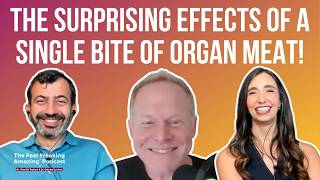
James Barry, founder of Pluck, explains why organ meats support brain health and how his freeze-dried organ powder seasoning makes them palatable. Organs contain vitamins A, D, K2, B12, and CoQ10, and users report clearer focus and better energy. He sources from grass-fed New Zealand cattle and addresses the myth that liver stores toxins.
Chapters
Foreign.
Hello and welcome to the Feel Freakin Amazing podcast. I'm Wendy Trubo and we have a star sighting celebrity appearance today with Ed Levitan. And today we have James Berry on our podcast. He is 20 plus years in the culinary field and he started as a private chef cooking for celebrities such as Tom Cruise, George Clooney, Barbra Streisand and many more. He is the CEO and founder of the organ based superfood seasoning called Pluck. It's the first of its kind and an amazingly easy and effortless way for people like you to get organ meat into your diet. So Jamie, welcome. We're so happy to have you here. And look at that.
Thank you for having me. Yay. Look at that.
Hold on a second. You forgot the most important thing.
Well, he's one of our personal friends.
Not personal friends. Amazing good friends. So let's start.
I credit you guys with like, like why we moved to Boston, you know, without knowing why, but like that it was because we needed to be with you.
Of course. I remember when you're wife and I
have to stress we moved here not knowing you. Right. So it's like this, this is more of a spiritual outcome of what I think was energetically moving us this way.
Yeah. So now that the name dropping is all aside, I didn't know you had a direct to Barbra Streisand. You know that I'm like a huge fan. But anyway, not to get diverted. How'd you get into this?
Yeah, that's the question. I, I did not grow up in a foodie environment. To this day, my mom's like, how did I get a chef or son? Because I grew up in a household where when the smoke detector went off, we knew dinner was ready.
My God. No, it really was.
It really, really was. Like, hamburgers were dubbed hockey pucks. That's how hard they like. I, I seriously had to work at learning to eat meat that was not so well done. Like I thought everything was. Always had a burnt, hard edge to it. And so only in my 20s they go, oh, wait, no, no, there can be a little pink. It's okay. And I had to unlearn that. But it was really, you know, it's fascinating. I was such a picky eater growing up. So picky. Like I did a culinary class in six or no, seventh and eighth grade. I loved it. And I learned how to cook things that I still wouldn't even taste. So I learned how to make like a tostada salad, you know, Mexican salad. And I didn't eat it because I was that picky, but I loved making it. And I went and cooked it for my family, and I had so much fun. And I think later on I was like, oh, cooking for me is a love language. It's not about necessarily me eating it. It's just about, oh, this is how I express to other people how I feel. And then that carried through. But I never saw it as a job. I thought it was gonna take away. You know, I would have to work nights. I didn't see myself wanting to do that. I saw myself at 12 years old as a family man. I don't know why. So I didn't see it as a career. I saw it as a hobby. And not until 911 did I then rethink, because 911 was like our, you know, our generation's Pearl Harbor. And I was like, you know, life is short, and I need to choose the path that has heart. And so I reevaluated my life. And I was like, what is it in my life that is out of integrity and what is in. And I was like, you know, when I was a kid, I loved to cook. Like, why am I not going towards that energy? And so I shifted. I found a school in New York that was well known for healthy cooking and also known for private chefing. You know, like, being a source for private chefing for people of high net value. And I. And I was like, this is it. I'm gonna go. And I did it. And it was amazing because I got those client those. Those names you dropped. I got those and more so quickly. It was a real period in my life where I didn't have to do much, but I got so much back. Like, I mean, I still worked hard. I'm a hard worker. But I. It was amazing because I had gone from the entertainment business where I was working 200%, but I was only getting back 30%. And then I switched to cooking, and I was giving 100, and I got back 200. It was insane. But I acquired all those. Those clients just through word of mouth.
And then. How'd you get into the organ meat world?
Why organ meat?
I know, speaking to the person that doesn't normally eat beef, I, you know, I learned about organ meats in culinary school. We studied a book from the West May Price Foundation. It's called the Nourishing Traditions. And they're capturing, you know, traditional foods. They're showing how to properly make them. They talk about soaking your nuts. If you're going to do that, soaking grains sprouting they talk. I know you're holding back laughter right now. I can see.
It's like the visual of that, Jamie, is just wrong. I'm sorry.
No, it's a sprouted grains. It's so much easier to digest. And they talked about organ meats and eating whole animal, and I was like, oh, yeah, this makes so much sense. I mean, this is ancestrally how we ate. This makes a lot of sense. Never in history would we ever slaughter a cow and only eat the ribeye. Like, that's just not gonna happen.
You're not.
You're not gonna slaughter a bird and only eat the breast meat. You know, I mean, this is the mentality we have now.
Right. But I want to go talk about that because it goes way, way deeper than that. Because on one hand, you're talking about waste, but I actually. Many cultures. So I started in traditional Chinese medicine, and each organ had its own specific healing properties.
Absolutely.
And then the other part of it is, if you look at, like, lions, I watched a lot of nature shows when I was young. You did chefing.
I didn't know they watch tv.
And if you look at lions, the first thing they do when they kill an animal is they go for the organ meats. The actual muscles are considered inferior.
Absolutely. Well, you know, it's fascinating. So there's this Dr. Bill Schindler. He's a archaeologist, and he talks about a lot how. Okay. If you look at ancestrally, you know, the development of the human body to Homo sapien, we start out as foragers, and to forage for the nutrition we needed, we now. We did not have the brain size we have now, so we had different nutritional needs back then, but we would forage. And it took. You were foraging all day. Right. Then we became scavengers. So that means we came to the kill after the predator killed it. To your point, the organs were gone and only the muscles. And we ate some of the meat, but nothing much changed. Our brains didn't increase, Not. We still were in that other body.
And.
And then we got a rudimentary tool. We became a predator, and we got three things we historically had not gotten. We got blood, we got organs, and we got fat. Because, to your point, those had all been eaten or taken from the predators. And what happens is now we also had fire around that time. But what happens is our brains start to get bigger because they're getting more nutrients. Our digestive tracts get smaller, which is very important because that means now some of those things we were eating when we Were forging. We can't actually digest as well, you know, so there's a lot of change that happens there. And so technically, we wouldn't even be able to have this conversation had we not eaten those organs. To your point. Like, they're. They're that nutrient dense. And why I got into these is really because I learned about it in culinary school, but I didn't incorporate it. I was more of like, well, I didn't grow up eating organs. So I was like, well, I don't know how I'm going to do that, but I get it. I get that they're nutrient dense. And it wasn't until I became a father that I was like, hold on. You know, this changes everything. Like, not. It's not just about me now. Like, I gotta figure out, how do I get these nutrient dense foods into my kids? And then how do I also get them into me? Because I wanna. I want them to thrive, but I wanna live long enough to watch them thrive. And so that's where I started going, okay, I gotta solve this. I need to get these into my diet. But I recognize there's three main hurdles. The taste. People think they're gross. Even whether they've tasted them or not, they think they're gross. I think that's really interest. We think that they have to be cooked differently. We don't know how to cook them. We're intimidated. So the culinary knowledge. And then the third one, despite the Internet, we still feel intimidated on where to source them and how to source them. And so that's what I set out to solve. And what you held up earlier was pluck. And that was my solution, which is, I recognize that there's already. We already have the modern technique of preservation with freeze drying.
So.
So we already are seeing, really, there's only two ways to get organ meats into our diet right now. We have them in capsules or we eat them in food. And I was like, but there's gotta be a middle ground. So I was like, what if I take that freeze dried powdered organ meats and I just combine it with the dried vegetables or herbs that you know. So I'm basically, I'm taking the concept of a pate, but I'm using a dry pate. So I was like, well, what if I add onion? Because that's what you would add to a pate. So why don't I just use granulated onion, Garlic, herbs, salt, all these things. And suddenly I had this seasoning that had the organ meats in. And I Was like, wait a second, this is actually good. So I solved the taste. Hey, I don't need to know how to cook. I just need to salt my. Anything. I can salt any popcorn, I can salt french fries, whatever I want. Pizza, chicken soup.
I have it in my chicken soup. And it's delectable.
Yeah, there you go. Literally anything you can just, if you can sulfate, you can pluck it. And then, then the sourcing, I was like, well, I'm going to just source it from the best place. And that's New Zealand. Now, New Zealand is an island, so they are able to. They have green grass year round, so they have 100% grass fed beef. A lot of it's pastured. They also are very. Because it's a major export for them. They are, they're very diligent about making sure it's clean and most importantly, accessible. Like, they have, you have access to parts of the animal there that we cannot get here. For example, brain, you cannot buy brain here. It's, it's, it's on a list of you cannot retail it over there. You can get it. And guess what? They've never ever had mad cows, Mad cow disease. So isn't that interesting? So, like, that means that the brain that you're sourcing from there is going to be clean and safe. So right there I was like, this is, this is it. And then, and then I started like serving it at parties and I was. And not telling people, and I was like, I got to test this, right? And everyone would finish the meal and they were like, oh my God, that was so good. What did you do? What did you do? And I was like, well, you just ate organ meats. And they're like, what? And they're like, I don't understand. And I was like, well, I'm developing this product and, and it's because I want to be able to give it to my kids and not deal with picky eating. And then I developed it and I got it out there. And then people were like, wait a second. It's good. And yeah, it's cool. And I'm noticing some health changes slowly because it's microdosing frequently cumulative effect, kind of thought. But what's interesting is it's actually making my food taste better. Like my, like, I'm getting results where people are like, I want seconds. And I'm getting more compliments on my food. People think I'm a better chef than I've ever been. And so it's been having these amazing results. Results that I Had no idea when I started doing it. Another one I want to quickly mention is the palate. So a lot of parents deal with picky eaters. Like, like I was a pick eater, as I mentioned, and I've come to realize like, yes, there's some chemical and physical reasons why someone might be picky, but one of the biggest reasons is emotional and where. And I know for me when I was a kid it was like I was trying to control. I, A lot of my life was out of control. So the thing that I could control is what went into my mouth. And so that picky eating was, was a, was basically my, my way of controlling what I could. Well, what I've also learned since then is that our palates are shaped by what we eat. And if you're an American, you're usually your palate is probably skewed towards salty and sweet because everything here is salty and sweet. Right. But we also have bitter, sour and umami. Those are the three. Umami is the 90 in the 90s, was discovered in Japan and that's more of like a savory taste. They think there's actually a fifth one that's, that's rancid because that has its own taste to it. But if we just focus on the
five, he's really good at that.
No, I can smell, I can taste those things. But we're not, we're not aiming for the rancid, we're aiming.
Your body's designed to recognize it. And that's what's key is so you have these five, five or six senses depending on how you look at it, that your body was biologically designed to use to discover a. Is this food going to kill me or nourish me? And then also it's going to inform. It's a communication pathway that's inform, informing you of like, does your body need what you're eating and when should it stop? Right. And what's fascinating is we're getting feedback that parents are giving pluck. That's the only thing they're changing. They're giving it to their picky kids and their kids are becoming more adventurous eaters. And I think it's because the umami is a unique taste and what it does is it brightens the other foretastes and I think it starts to expand the palate. And so no longer, you know, like now where the picky eater used to be more skewed towards sweet, they're now being a little bit more skewed towards savory.
We back up A step.
Jamie, hold on. I just want to. Is like Uma Bosch the same as umami tastes like.
I don't Uma Bosch. The boshi mean the omiboshi plum. Yeah.
I'm just trying to understand if that's like, related.
Yes, yes, it's absolutely. So umami is found in lots of foods. Like it's in tomatoes, it's in mushrooms. It's, it's, it's, it's just a flavor. It's like MSG is umami as well. It's, it's. So it's in a lot of things. But if you don't like. You know, most kids and most people in America are eating processed, ultra processed foods. And what are those? They're mostly salt and sugar because they use it not only for flavor but also for preserved preservative. And so if you're eating lots of packaged foods, I mean, usually salt's some of the times the first ingredient. And, and, and so you're naturally going to be more skewed, palate wise, that direction. So one of the ways you can kind of help to un. Recalibrate someone's palate is not only to remove certain foods, but also to introduce the flavors that they're not getting. So like I always tell people, like, okay, your kid is probably not getting sour. So what you could do is you could take kraut juice, you know, fermented vegetable, you could take the juice from that and, and mix it in to the ketchup that. Let's just say, because I'm assuming, like, if they're a picky eater, they're eating dino nuggets and ketchup. That's what pick eaters eat all the time. Right. So mix it into the ketchup just a little bit that, so you start stimulating that sour receptor, but not overwhelming it. Just stimulate it a little bit and you will start to see your kid's palate starts to open up.
Cool.
All right, go back.
Okay, so can we back up and talk about what are. It's sort of intuitive, like, oh, yeah, organ meat, it's good for you, but what is. How is it good for you in a way that chicken breast is not or steak is not? What are the key differences that organ meats bring to the table that regular meats don't?
Yeah, it's a great question, but it kind of goes back to what Ed said earlier, which is like, because really what we're talking about is why. So why does that lion eat the organs first? And if you think about the human body, the organs have a job to do, just like the muscle has a job to do. But those jobs are all very different. And so the nutrients you need to move that muscle is different than the nutrients you need to pump that heart. Even though they're both technically are muscles, as you both know, right? So it's like, for example, there's CoQ10 in heart, but there's not CoQ10 in your muscle. The, the, you know, the, your leg muscle. Right. And so each, each organ has the nutrients it needs to do its job. And so while they, most of them all have the B12, but liver, for example, is very high in iron. It's very high in vitamin A. So it's, it's going to have these, more. These vitamins that sometimes people are not getting from the food they eat. You know, whether it's from depleted soils or from. Because they're eating foods that are more devoid in nutrients. One thing we have to think about too is like, not only. This is one that people are only starting to clue in on. It's like, let's say we talk about broccoli. People are like, oh, broccoli's got all these great vitamins, right? But when the broccoli was picked, how long it took to get to your refrigerator and when you actually cook, it determines how, how much nutrients it has. Because nutrients are affected by time and temperature. And so for most of us, by the time we actually get these foods, and I'm using air quotes of like nutrient dense foods, they're no longer nutrient dense, but organ meats. It's, it's, it's kind of like what happens when they harvest the organ meat from the animal, they're, they're immediately freezing. It's because they have to, because otherwise it will go bad. Organ meat, organ meats, they, they actually go bad faster than muscle meat. And that's one of the reasons why back in the day when they centralized meat production and then they had the railroad system and it would take them, they would, they would railroad the meat to the coast. They actually stopped using organ meats. They didn't carry the organ meats because the carts, the, the train carts couldn't get cold enough to store the organ meats. So people started to lose favor with organ meats because if it's not at your butcher or it's not in your, in your vicinity for you to purchase, you stop thinking about it, you stop buying it. And as we know, money is how we vote. And so it's like if we don't buy it, then they don't supply it. And so organ meats have the protein, similar protein as the muscle meat. They're packed with vitamin A, they even have D, they have K2 as well. They have hormones, they strengthen bones, they fuel our vitality. And here's what's really key is you don't need a lot. Like, whereas you might eat, I don't know, six, seven ounces of a muscle meat, you could get a power punch of just use like one ounce of an organ and you're good. Like, most people don't need more than 2 ounces a day, if that. So a little goes a long way. I always think of it like if you were feeling sick and now you, the three of us might not do this, but most people that go to 711 and they'll go to the counter and they'll grab one of those emergency, you know, liquid things and they'll pop one of those or say if someone's trying to like energize, they go, they go pound on those monster, you know, energy drinks or something like that. So they look at that as like, this is a power packed, you know, device for me to like, get stimulated. And I'm like, well, that's what organ meats are for our human body. And so the issue then once again goes back to, okay, great, we can talk to our blue in the face about how nutrient dense they are and how easily absorbable those nutrients are. But then why aren't we eating them? Because still people avoid them.
I love liver. We actually had liver this week. And the biggest problem with liver is don't overcook it because it's like, sear it, sear it, be done. Don't beat the horse.
It's so true. Because it gets not only stronger, but also the texture gets chalky and disgusting. That is, I would offer that that is the number one reason why people, why organ meats have such a bad rap is because people historically have not had them prepared properly.
Yeah, I remember.
I think at this point historically maybe, but this point, majority 99 of people have never tasted.
No, they've never tasted it. But the reason they never taste but the reason they've never tasted is because their parents were forced to eat it and fed it and fed, like really overcooked, you know, liver and onions, basically.
My grandfather used to, when in Florida, where you could still get it, used to order liver and onions and it was beef liver and onions. And he would order that every time we went to this one particular restaurant. And I was always like, what is that? And then we bought a cow. Like, at this point, it's like almost five years ago, and it came with liver. And I'm like, well, we bought it, we might as well cook it. And it was delicious. And now we're eating chicken liver. But we can't get the beef liver without buying the cow. And the guy's like, I'm not doing that anymore. So.
Interesting.
Yeah, it's rare that you even got it. It doesn't usually. They don't even supply it. Well, there's lots of ways to ease the organs into your diet. And one thing that you just brought up, which I think is important, is a lot of people just immediately go like, oh, it should be beef organs. Like, no, no, no. Don't. Don't worry about the species when you're first easing into them. Because what we want is first you to get a taste for it and to just start to get it regular into your diet. So I always recommend chicken hearts first. Like, start with chicken hearts because they're so mild and they're kind of even sweet. So just start there. You can chop them up just like mushrooms, throw them in a sauce, no one will even know. And then you can graduate eventually to chicken livers or even the beef livers. But chicken will be milder, most, most foul, or poultry are going to be milder, the more stronger the organ it probably represents. Also how it's more nutrient dense because the flavor, that the flavor is the nutrients. Right. Like that metallic taste is because it's high in iron, things like that. Right. So you're tasting the nutrients when you taste it. But I would offer that when you go to graduate to beef liver, you keep it frozen. Because that's the other thing that's intimidating is when it's. When such a huge thing that this huge hunk of liver is defrosted, it's incredibly intimidating. Just keep it frozen, pull it out and just grate it. Just grate it right into your ground meats and just do a little bit, and then put it right back in the freezer. And then that way it doesn't go bad. And then you're just doing a little bit. Because that's the other thing that I always try to impart to people. Like, look, these animals have one liver, they have one heart, they have two little kidneys. You know, it's like, they don't. They don't. The muscle is mostly what that animal is, muscle and bone. So this idea that we should be eating liver every week that is a false idea. Because just like the example of there's no reality where we would kill an animal and only eat the rib eye, there's no reality where anyone would kill an animal and be able to eat liver every week because there's only one liver. It's like, hello, like. And there's 20 people in the tribe. You're all getting a little bit, but that's the beauty of it. You don't need much. But I would more emphasize that it's less about one organ. It's about, let's eat the whole animal. Because they all have those synergistic, like, supports, like, like benefits, really. So it's. And. And like, for example, liver is known for having lots of iron. I mentioned that earlier. Right. Heme iron. But, you know, spleen has five times more. But you know what I mean? So it's like, if you. If you focus on the whole animal, then not only are we to what we talked about earlier being more kind of planetary and life focused of valuing that animal, but you're also, I believe, gonna get a more holistic nutrition from that animal because nothing's gonna be over overdone. You know, you're gonna. You're gonna have a little bit of everything, which to me is more important.
So what. What does pluck have, actually?
Yeah, good question. So first of all, did you guys know. Do you know the name Pluck? Do you know what it did you know where it came from?
No, we just. We just pluck it. We don't know the origin.
So I wish I had come up with it, but my branding team came up with it. And it actually does mean animal organs. It's a 15th century term for the. The liver, the heart, and the lung of an animal. And so I was like. When I heard that, I was like, great. And I. And it was. And it was to your point, Ed, I was like. I asked my kids, I'm like, say, hey, mom, where's the pluck? Like, I was pretending someone's in the grocery store and like, where's the plug? And I heard it roll off everyone's tongue. I'm like, oh, that's gonna be fun, you know? And to this day, when I'm at, you know, events and someone buys for me, I. I love telling them, like, well, it was great plucking you, or you've been plucked, you know, whatever. Just plaint using the word in some fun way. But what pluck has right now is liver, heart, kidney, spleen, and pancreas. And each of those have their own important like supports, like properties. Pancreas, for example, has natural digestive enzymes. So if you have issues digesting your food, pluck will support that. So we're using mother nature to support our health. Instead of isolates and laboratory made things, we're using mother nature as intentional. And I hope to include in the future lung and maybe even collagen, which is usually coming from the skin, but comes from other parts of the animal as well. So I'm hoping that the idea is that I want to try to get as much of that animal into people's diets as easily as possible and ideally as deliciously as possible.
It always was weird to me. I mean, I've always loved liver. I grew up on chopped liver and chicken hearts. Like I ate it as a kid, but just not the beef liver until I was older. But anyway, it always seemed weird to me when I learned that the liver was the organ that filtered the body. It seemed weird to me that I was going to eat the thing that store that processed the toxins. And I still haven't gotten my brain around that. Even though I still eat it and I know it's super nutrient dense. I still have this thought like, but it, but does it have more toxins in it because it's filtering the toxins and processing them?
That is one of the concerns. Like the two I would say I hear the most with organs is yeah, is, is it storing the toxins? So am I just getting a power pack full of toxins? And then the other one is, am I getting too much vitamin A? Or you know, am I getting too much of these nutrients if it's so nutrient dense? And I'll address the first one which is, and I wish I had a really good comeback for like something that we do in our daily life that where it's the same mindset that you're talking about. But, but it, but people are applying it towards something that is every day. And I haven't come up with that yet. But if you think about it, that the liver is, its job is to detoxify the animal. If when we think of it storing the toxins, we're really thinking of it almost like a coffee filter or a sponge. And if that were true, as you both know, if the liver were a sponge or a coffee filter that couldn't be cleaned, we would all be dead right now because there's so many toxins in the world that there's no way we would be able to detoxify. And so I think that's the mindset people are getting trapped in. But if you think about it from this other perspective, let's flip the coin and think about it from the perspective of like, wait. The organ has the job to detoxify. That must mean it does its job very well because we're not dead. And because it does it so well, it must have nutrients in it that will support my own detoxification.
It's actually not a storage unit. I just realized this. The liver stores glycogen, A, D, E, K. But it's not a storage unit for toxins. That's what the fat. The fat is the fat storage depot. So when you're eating meat, you probably don't want to eat the fat because that's where all the toxins are. And the liver shouldn't have X amount of storage unit. So I just thought that through. Thanks for helping me think that through, Jamie.
Ding, ding, ding. That is right. And here's the thing. The liver's job.
You just saved our marriage. Thank you.
I mean, that's it.
Now we can go have liver. No, but the liver's job is to take those toxins and turn them water soluble so that they can leave your. In your poop, your pee and your sweat. And so if it's the. I would offer that it's more important that we focus on that we focus on are you properly eliminating your toxins? So are you pooping daily when you pee? Is your pee a certain color? Are you sweating? There's people out there that don't sweat. It's like that to me is bigger concern than eating organs. To me, the organs are just going to support you in detoxifying. And then the other piece that's really key is you said it gets stored in the fat. That is true. And so if you're overweight, you also. And this is kind of carries over what pluck is. Pluck to me is a micro dosing. So we're trying to do little amounts, but we're trying to do them daily and multiple times daily. I am a big fan of small amounts, but. But regularly. Right? I don't like extreme. I think extreme is not sustainable. And I think it's we while we live in a world that is so extreme, but it. I don't believe that human nature is meant to be extreme. I think it's meant to be very gradual and small amounts because it's more important to sustain things than it is to blow them out or to do something briefly but never do it again. And so what is very important Is that if someone is overweight, you have to assume that you have been storing toxins in your fat. And when you go to lose that weight, you better do it gradually because you could get very sick.
Yeah, those are some of the stories we've heard about people who go on crash diets and lose all the strength
we see every day.
Yeah, they're sick as hell and like they're slow down. Yeah, we don't want to.
That's part of the GLP issue and everything else. People are going too fast. But I want to go back, I want to add, to make sure that there's a big distinction that you had in terms of toxins. You're sourcing from New Zealand, which is a very, very clean country, it's organic, etc. So forth. I'm thinking about the Russian store selling beef hearts and chicken hearts and chicken livers from regular chickens. I wouldn't touch the stuff. Just.
Okay, yes, and, and that is not organic. No, no, that's true. But I, so I do have a different opinion about that. And, and here's what, like, I, I don't see it as so black or white. I really do see it as more gray. Like, I see it as like, look, if you can afford to get the 100 grass fed, if you can afford to buy that high quality meat, great, absolutely. That should be your first choice. But then the question is, but if you can't afford it, does that mean you don't eat it? And I would offer. And you know Rob Wolf, who wrote with his other author, he wrote the Sacred Cow book, they talk about this, that they, they pointed out that the nutritional difference between a conventional cow and a grass fed cow is not as extreme people think it is. And so I would offer that those conventional cows still don't live very long enough lives to be as toxic as we think they are. Like, I'm not saying I believe that they're being humanely treated. I don't, I don't believe they're being fed properly. I don't. But do I think that they are as toxic burdened as we think conventional and the way we've been sold conventional meat is. I don't think it is. I think that, that there are. If you think about it, where are. To your point, you said Russian stores. Right. But in America, most organs that people can source are found in Asian markets and Mexican markets and then Russian as well. And really what we're talking about is international markets. Right. There are, I mean, think about the billions amount of people that Eat those foods. They're not all sick. They're fine. You know, I mean, like, like they're doing well and they're probably not as stressed out about the granularities of their food and where they're getting it from as some of us more kind of 1 percenters are of like, I almost believe it's the stress over, like, is this food exactly, you know, does it fit? Is it organic? Is it this or is that, is it, does it have glyphosate? And it's like, almost like we're doing too much. It's like, I believe that we're spinning ourselves out and I don't believe you guys are, but I met, I, I'm sure we, we all know people like that. I know people that I'm like, they go to a restaurant and the questions they have to ask, the details that they go through are so I, I get stressed out watching them, you know,
ask some really cool YouTube restaurants. There's some really cool YouTubes about all that.
So, so tell me something, Jamie. Let me, I want to pivot. Tell me, what's the difference that organ meat makes? I mean, we've talked about that the lions eat it first and that it's ancestral. But, but does it, can you point to. Here are the things that you find when you really start to get those gears moving. What does it do?
So it's, I mean, if you think about it, every biological system in our body is fueled by the nutrients that you could find in organs. The nutrients that science has told us this is what you need to create life. So that they've established these are the nutrients in a prenatal, which you, you know very well from your background. It's all in organ meats. So I think when you think of it from that perspective, then, okay, so this is as mother nature intended. It's mother nature's multivitamin. There's synergistic vitamins already built into it. So there's no, it's not isolated. Like remember back in the day used to recommend iron and then they realize, oh wait, iron, not complemented with other nutrients, doesn't actually absorb. Right. So they're learning that you need to couple certain vitamins together. Well, the organates are already done that way. You know, like the fat soluble vitamins, it's got fat. It's like it's all, it's all there as intended. So what you find though, when people start incorporating organs is you. I hear more energy, I hear clear mind. Like they don't have the Foggy brain. Skin issues clear up. I've seen that. We've gotten feedback from customers that kids who. They have. Some kids who have Crohn's disease, they're eating the organ meats and it's the only thing that's actually helping them. Another father wrote to us saying that his daughter was born with a skin issue that they were using pharmaceuticals for. Wasn't working. They tried supplements. Wasn't working. And then they had heard maybe organ meats would help. And she was so young, they couldn't give her the capsule. So they'd use pluck. And they said her skin issues started to go away. So sleep improvements. I've. You know, as you guys know, like, sometimes people. You hear about this more and more. They have the, the. I forget the technical term, but the racing heart, you know.
Palpitations.
Yeah, the palpitations. And a lot of times people are given different drugs or told. Told to get, you know, the, the. That surgery where they get the scar tissue on their heart, all that stuff. Like, they're told to go that route, but sometimes it's just simply that they're low in B vitamins. So it's like, I've heard, like eating the organ meats actually supports them in not having that racy heart. So there's so many things that you just start to see get improved when you eat these incredibly nutrient dense foods. And the key word that I just said is it's a food. It's not. It's there. Like, even with pluck, all it is is freeze dried powdered organ meats and salt and organic spices and herbs. That's it. Like, we're not, we're not adding some magic potion. It's like we are just capturing what nature has already done so perfectly.
What's your. So you mentioned popcorn. I haven't put it on popcorn, but I think that's a great idea because we make our own popcorn.
So good.
And my cats love it. I put the unflavored one on their food and they became much less picky.
Like they really.
Yeah, yeah. They. They snarf down their food.
Oh, right, right. Oh, that's true.
Yeah, yeah.
And then I put it in my chicken soup. But then, like, obviously I'm a little bit limited.
I want to double click on that pet thing because it really does. If the cats eat it, then they're very much more, I think, closer to selective. A selective, but also closer to nature. It's like,
what is the issue? Like, cat food is supposed to have taurine in it right, is that. I don't know, maybe you guys aren't so Taurine, I think, and I hope I'm not murdering this, but taurine is found in heart. So isn't that interesting that they have to, like, that's the one thing you hear about the difference between dog food and cat food is cat food has to have taurine. And I was always like, well, it's taurine, you know. And then I recently learned, well, that's. That's what you find in heart. So, like, our cat, she wouldn't eat her food unless I put pure on there, pluck pure on there, you know, and so I just think that's interesting. Like, the dog is a little bit more like, oh, she'll eat anything. So it's harder to really tell.
She's a dog, right? Dogs eat anything.
Dogs eat anything. So for that dog, for my dog, it's harder to tell. Like, is this changing anything for her? But the cat, it was like crystal. It was like, no, she won't eat the food without it. So that says a lot. Lot. What I have heard, though, to your point about how it's removing the picky eating is I keep getting told from customers that are using pure for their animals that, you know, we have to assume that the pet industry is treating animals just like the food industry towards humans is treating us like they're putting sugar. They're putting in things, though, in that pet food that the pet normally would not eat in if. If they were in nature. Like, I was just at the store recently trying to find a good snack for our dog, and they all had sugar in them. And I'm like, why does a dog need sugar? They don't care what flavor it is. They just want to eat it like they don't need it. And so I thought that was interesting. But really you're starting to see the same human issues in pets that we're finding humans. So that tells you right there that I bet you it's connected to some of the food. Could be environmental, but I think it's connected to the food. But when you can get these little organ toppers, like that's how people use it, is they sprinkle pure right over that food that's not as nutrient or as found in nature that the pet would eat, the pet goes crazy for it and they eat it all. So I do think it's a really great solution for if you don't want to spend more money on those really raw, highly expensive pet foods that have the organs in it. This is a great kind of hack because you just put a pinch and they will eat all of their food, guaranteed.
Our cats went nuts one night and it was actually a happy accident where because they were, we left the bottle on the table. We had showed someone the bottle we left on the table and a half hour later the cats were fighting over the bottle. And then I was like, oh, maybe they like that. So then we put it on their food and that's how we figured it out.
We have heard that where people get their delivery and then their dogs tear open the bag before they. Or box or whatever. Before they can get to it because they can smell it through there.
Yeah. I mean, what's your favorite thing to put it on for you? For humans?
Popcorn is definitely popcorn or toast is. I love it just on that kind of stuff. But eggs, Eggs is another one. I mean I, I honestly for me, I put it on everything. Like anything like fish, chicken, beef, doesn't matter, salads, I even sprinkle it over my salad. And mostly because I do not want people thinking like this is a one time and done kind of thing. Like you won't, you don't get enough organ meats from one use of it. Like that's not the point. If you want, if you're looking for that, go take the capsules, you know what I mean? Like that's going to be more of a swallow 6. Take capsules and you're done. You know. But then the issue you're running into is like did you just get too much? Like because when we swallow things versus eating them, we are bypassing that neuro lingual response, that communication system I talked about earlier that our bodies were designed to utilize. When you bypass that now you don't know what your body needs and wants. And so I'm a big fan of like eat your food and eat it slow enough and mindfully enough so that your body will tell you when to stop and what it needs or doesn't need. So but with pluck, because the seasonings are not a hundred percent organ meat. The pure is 100%, but the other ones are not. You gotta use it regularly, you gotta use it minimum each day or ideally like two times, two to three times a day. And you will see changes. Like we hear people seeing lots of changes within that first few weeks or a month. Like one, one person, if you're incredibly sensitive. We had this one person reach out and said I tried it and I couldn't get to sleep that night. Like I had so much energy. I was like, really? Gosh, that's. That's crazy. How much did you use? You know?
Right. Okay, so where can people find out more about you? And we'll put all this in the show notes.
Cool. Yeah. So you can find us@eatpluck.com. you can also find Pluck on Amazon and then on Socials, we're at Chef Jamesbury and at eatpluck, and. And you guys sell at your clinic too. So if you're in the area in Boston, you should come by the Five Journeys clinic and get it there.
Awesome. All right. All right. Jamie or James? Barry.
No, you need to know this. I'm actually thinking of going back to Jamie, and it's because of you guys, because it's been such an affectionate kind of reminder of, like, oh, this is how I. Yeah. Really? You, Wendy. But Ed's starting to adopt it too. And so I was like, you know, I kind of like how it comes off their tongue. I'm like, I think I might go back to it.
James is so stuffy. You know, Jamie has some fun doing James. Like, I'm James.
Hello.
I'm Jamie.
James Earl Jones. So, okay, so anyway, we'll put that
at the beginning of the episode.
So.
Hello. Thank you, Jamie. Thank you for being on the podcast and for the listeners, thanks for listening. And really, like, this has been amazing. So we're so grateful that you came on the feel freaking amazing podcast. So thank you.
Thank you.
More from Wendie




Support The Right Bacteria to Restore Your Gut Health, with Dr. Oscar Coetzee

Support The Right Bacteria to Restore Your Gut Health, with Dr. Oscar Coetzee@designsforhealth3090




Look and Feel Decades Younger by Removing Senescent Cells, with Dr. Jerry Mixon