Find the Right Meditation for You, with Dr. Andrew Newberg
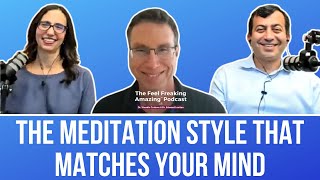
YouTube episode of the Five Journeys podcast (hosts Wendie Trubow and Edward Levitan) interviewing Dr. Andrew Newberg about optimal brain health and how different meditation, prayer, and mind–body practices affect the brain. Newberg frames optimal brain health within integrative medicine’s four dimensions (biological, social, psychological, spiritual), emphasizes individualized approaches (genetics, life history, preferences), and describes research findings (fMRI/brain-scan work, a small study with nuns doing centering prayer, surveys of intense spiritual/awakening experiences). Practical takeaways: any meditation can help if it resonates with the person, even brief practice produces physiological effects, and lifestyle elements (diet, exercise, sleep/brain detox) are foundational. References to his books (Brainweaver, How God Changes Your Brain, The Varieties of Spiritual Experience) and his website for further details.
Chapters
Foreign.
Hello, and welcome to another episode of the Five Journeys podcast live. Like you matter. I'm Dr. Wendy Trubo and my co host is Dr. Edward Levitan. And our guest today is Dr. Andrew Newberg. Andrew Newberg, MD, is the research director of the Marcus Institute of Integrative Health and a professor in the Department of Integrative Medicine and Nutritional Sciences at the Sidney Kimmel Medical College at Thomas Jefferson University. That's quite a mouthful, I have to say. He's the author of 10 books, and.
That'S not a few saying that.
I know. It's me. The author of 10 books, including the bestseller how God changes your brain and is regarded as one of the most influential neuroscientists working today. Welcome, Andrew. We're so psyched you're here.
Well, thank you. Thanks for having me on the program.
You're wicked smart. We're from Boston, so you can see you're wicked smart.
That sounds good.
How'd you decide to go into neuroscience instead of, like, primary care or surgery or, like, how'd you get where you got?
Well, you know, I guess in a lot of ways it started out when I was a child. I just. I had some very big questions about sort of how we experience reality. What's the nature of reality? You know, I saw people having different religious beliefs, different political beliefs, and I thought, well, aren't we all looking at the same world? Why don't we come to the same conclusions? And obviously we don't. And so I thought, well, let's start with the brain. That's the part that helps us to look at the world and take in all the information and try to make sense out of what the world is. As I went through my education, I was always very interested in studying the brain, but also came to certain conclusions as I got into college and medical school that while it's great to learn about the brain, there seems to be some more stuff when you start thinking about the mind and consciousness and how we experience the world. That neuroscience and science itself, as wonderful it is, has certain limitations. And so I got into thinking about philosophy and theology and all the different ways that we kind of explore those big questions. And fortunately, it all came together when I was in medical school and I had two wonderful mentors, one who was kind of the head of the imaging world and was very involved in bringing me into doing brain scans. And we did a lot of very traditional stuff, looking at brain scans of people with Alzheimer's disease and Parkinson's and depression and so forth. And then I Also connected with another physician who was a psychiatrist and an anthropologist by training who had been exploring how various religious and spiritual experiences and states and so forth and practices have an impact on us and how they. How they engage the brain in different kinds of ways. And so eventually I had that kind of proverbial light bulb go off where I said, hey, gee, you know, if we're doing. If we're studying the brain of people who have Alzheimer's and depression, why can't we study the brain of people who are. Who are meditating and praying and trying to understand that? And from there, this whole kind of a field that some refer to as neurotheology kind of grew from that. I explored other aspects of integrative health. So it was mind, body practices, meditation and prayer and so forth, but other ways in which we start to help the brain to function as best as possible. So that included things like the study of acupuncture, the study of diet and nutrition. So all the different ways, all the different elements that. That go into keeping a brain healthy. And so it really spanned this whole range from these very practical implications that we actually. We talk about in our most recent book called Brainweaver, and kind of the health implications to that, to the very. To the very esoteric and kind of philosophical, spiritual side of things that we talk about in books like how God changes your brain. And one of my other new books called the varieties of spiritual experience, and really trying to get at that nature of reality and how we. How we engage that as human beings.
It's very cool.
I have like 100,000 questions.
I think we should go back to the beginning.
That's it.
Only what's the beginning?
Well, we're going to talk about optimal brain health today, so I think we should talk about just first setting the stage of when you're looking at optimal brain health. How do you define that?
Well, I think for us, for optimal brain health, we're really talking about a couple of important things. One of them drives a little bit from what I was just saying, as an integrative medicine physician. Part of what we talk about in the world of integrative medicine is that we have to think about us as human beings along four major dimensions, four major elements, aspects, whatever you want to call it. Those four dimensions are our biological side, which is what traditional medicine typically deals with, and giving antibiotics or giving antidepressants, things that really affect the biology. But there's a social part of ourselves, how we engage other people in our world and how much other people influence Our ideas, our thoughts, our beliefs, and our health. And then there is the psychological side. So how do those two elements affect our mood, our stress levels? And of course that's all very relevant in the context of how we keep our brain healthy. And then there's the spiritual dimension, as we were already talking about a little bit, that how people try to derive meaning and purpose in their lives, try to connect to the universe, to something bigger. And whether that's specifically in a religious context or it could be in a secular context, being connected to nature, creativity, all these other aspects. But ultimately we want to think about those four dimensions as being in balance within ourselves and, and trying to optimize each one of those aspects of who we are that leads to optimum brain health. So that's one part, and then another part, which I also just kind of mentioned, is the idea of balance. And that is always very important. So many times people talk today about stress, for example, and stress has become this really negative word. Oh, people have too much stress, and certainly that often is the case. But stress isn't inherently bad. We need stress in order to grow and the brain needs stress in order to develop the neural connections that form between the different neurons that we have. So the whole key is ultimately developing balance. And that to me is really what optimum brain health is about, which is not just balancing those four different dimensions that we talked about, but really balancing the brain. And so that has to do with our diet and nutrition. It has to do with the levels of stress that we have to have enough that we can continue to develop. You want to read new books, explore new ideas, be creative, do all those are stressors that we have on the brain, but that they lead to growth. And on the other hand, if you have too much stress from work, from just your own musings and worryings about things, then too much stress can lead the brain down bad paths and can lead to imbalances and ultimately health related problems. So for us, an optimum brain health really has to do with optimizing those four dimensions of ourselves and finding the right balance that works for us. And perhaps the last part is that there isn't a one size fits all in terms of what optimum brain health means. Each person has to really take stock in terms of who they are, what their own strengths and weaknesses are. Just because somebody might be a more anxious person isn't inherently a bad thing. If they can use that anxiety in a positive direction to be better at their work, to be better at their job by making sure that they deal with the things that are worrying them. So you can convert things that are negative, aspects of yourself that are negative into something that's positive. And taking advantage of who you are and creating a program in your own life that optimizes your brain health, that is what it's ultimately about.
I think you've given like a three hour conversation in like three minutes.
So it's a lot easier said than done, though.
Well, yeah, I mean, I think we need to slow it down a little bit and break it up and. Because that's a lot of information and yes, way easier said than done.
So let's go back to the beginning. Let's start with, if we look at the biology of the brain, what are the major factors that are impacting the biology of one's brain? I mean, we obviously know that how you eat impacts how you function. So I would assume that you're going to say food is a critical factor for optimal function in the brain. But talk to me about what other factors go into that or talk to us. Not just me, talk to me.
Talk to her.
Only talk to me, baby.
I'll talk to whoever wants to hear now.
Yes.
I mean, obviously there are many different factors that go into the biology of who you are. It starts with our genetics. I mean, it starts with how we have developed. And that's why the idea of individualizing things is also important. Each person needs to think a little bit about who they are as a person. Are they someone who likes to be more creative? Do they like to be spoon fed information? Are they more anxious? Are they less anxious? So everybody has to kind of figure out how their biology is set up. And the genetics is what helped to develop that their life experiences. Did they grow up in a household that encouraged a lot of creativity, that restricted a lot of creativity, that was open and loving, that was more rigid and people got less enrichment in their lives. All of those things are factors that people need to think about and try to figure out where your strengths and weaknesses ultimately are. And that does have a lot to do with the biology of your brain. And then when you're talking about diet and nutrition, a very similar thing. You know, I could give somebody the greatest diet in the world and, you know, all the right proteins and the right fats and do, you know, I could tell you everything that you should eat every single day and it'd be the very healthiest diet in the world. If you don't like the food, if you don't want to eat that, it's irrelevant. You know, so. So I think that, again, you know, part of it is not just having a good diet. And certainly that is a relevant and very important issue. But each person has to figure out how to construct a dietary program that works best for them. You know, we know that based on the science that exists today, that the best way to keep your brain healthy and happy for as long as possible, until we have cures for diseases like Parkinson's and Alzheimer's, is to lead the best healthy lifestyle. So having a good diet, having a diet that's very high in proteins, low in saturated fats, I mean, I'm sure a lot of the same things that you've talked about lots of times on your program, those are all very, very relevant, very important. Individualizing it to each person is also relevant as well. And then ultimately, part of it in what I study in a lot of my brain scan research, is the balance of things. And so, you know, we notice, for example, when people have a brain injury like concussion, that sometimes areas of the brain become overactive, sometimes areas of the brain become underactive. And it's ultimately about trying to find the best ways of balancing the brain appropriately for each person. And again, there's not a one size fits all. Because if, for example, you find that you're having issues with concentration and people have, like, ADHD type of symptoms, that's usually more of a frontal lobe problem. And so you might want to think about ways of engaging the frontal lobe and taking care of the frontal lobe and balancing the frontal lobe. You may not have to worry about as much about your emotional balance, because maybe that's not as much of an issue for you.
Right? No, that makes sense. So I always say that. So we actually come from. Our company is called Five Journeys. So we have five levels of health. Your physical body, your chemistry, emotional, psychological, social, and spiritual, which is a lot of what you've already talked about, right? Which is kind of cool. So. I always say, you know, like, we talk about how important structure is, and I think. And we just were talking to another guest about how detox happens at night when you sleep in the brain, right? And then the connection there was how important structure was, because if you're going like this, you're. If you're going head forward and you're not detoxing as well as you can. So how is. How do you view the connection between yoga and the brain? And I talk about exercise. You need to exercise your body, but you also need to exercise your mind. And for me, that's meditation. So how do you kind of link and yoga has some parts of meditation in that it can be a meditative piece or it could be a hot, sweaty thing.
And you haven't actually mentioned exercise and its impact on optimal brain health either. That's so something that I noticed when you were talking.
Right. Well. And you're absolutely right. Yeah. So, I mean, exercise is certainly a critical piece to this as well. I mean, ultimately, and this is what is a challenge for people, I think in general, we try to talk about this in our book Brainweaver, which is what are the different things to take stock of all the parts of who you are. Exercise is another great example. In fact, we're actually just launching a research study to explore the direct impact of exercise, even in elderly individuals, on brain function. And how not only is that helpful, but how is that helpful? Obviously, we know that there are studies to show that it's beneficial, but where in the brain and how in the brain does it affect people? But again, we have the same issue, which is some people love to exercise and bike 35 miles a day, and other people to just tell them, you should go to the gym and go on the treadmill for 15 minutes. They can't even conceive of how to do that. So people have to think about that. People have to think, are you an exercise person? Are you somebody who doesn't like exercise? And then how do you kind of build in the things that you may need to do? So maybe you're not going to be the person who's going to do 40 minutes of aerobic exercise every day, but you can walk up the stairs to your office, you can walk to the place to have lunch instead of taking an Uber or something like that. So you can kind of build things in which are helpful, even though they are not necessarily kind of the classic things that people think about. But then when you know. So when it does come to trying to conceive of optimum brain health, you want to think about all those different dimensions, all those different aspects, and how you can optimize each one of them and how they interact with each other. So practices, as you mentioned, like yoga, that involve body position as well as meditation and breathing and so forth, those are wonderful programs because for people who like yoga, it can really be very valuable and very important for them. And can we know that meditation changes the brain? We know that over time, long term, meditators actually have differences in their brain compared to people who are non meditators. They have bigger brains. They have brains that are more intimately connected and so forth. And we've done studies of that and there's other studies that have shown these kinds of improvements in the brain that then correlate with improvements in memory and improvements in depression and anxiety. So meditation can be valuable in that context. But all those different approaches have the potential to be useful and beneficial. We did some studies on yoga as well which showed similar kinds of changes.
What's the magic number for meditation for people and how perfect do they need to be on meditation to get the benefit?
Yeah, well, again, this to me is a really important point too, because a lot of times when we have a patient who comes in and they'll say, well, I don't, you know, I looked into this program and they want me to meditate, you know, 45 minutes a day, I don't have time for that. And I said, you know, actually what the data show is that even a very brief meditation, meaning 30 seconds or a minute, actually has physiological effects. So if you're at work and you're about to go into a stressful meeting, spending 30 seconds or 60 seconds at your desk, just relaxing, taking a deep, taking several deep breaths, focusing on your breath, focusing on a mantra, whatever works for a person can be very effective. Now obviously, the longer you do it, the more pronounced the effects will be. And so it can have longer term effects over time. But the other piece, which is also important, and it goes back a little bit to my point about the individualized aspect of things. We've done several studies that have looked at, at how people do these practices. And I think another very, very important point for all the people listening, is that you have to do things that you feel good about, that you can fully engage. If you're just. If you go to a yoga class and you do your stretch and you do that and you sit there because they tell you to sit there and you breathe because they tell you to breathe, but you're not really into it, then you're probably not going to get all that much out of it. Whereas if you do the practice, if you do a practice that you really feel good about and you like and it's, you know, becomes a part of who you are and it's a part of the way you live your life, then that's the kind of practice that will really have an impact. And we see this, we were doing studies on different spiritual practices like prayer. And if you just say a prayer without it really, you know, without really focusing on or having a whole lot of meaning to you, it doesn't really change Your brain very much, if you're doing a prayer, because it really, you know, it resonates with you, it feels good. It's an important part of what you think, think and believe and so forth, then it's going to have all kinds of changes on the brain. And so that is an important part of all of this, which is that people have to do things that really work for them that they can fully buy into, engage as fully as possible.
Yeah, that was kind of. I think you answered my question, but I'm going to ask it anyways, which is, is there a better form of meditation? Because you have mindfulness, you have Buddhist, you insight in meditation, you have vipassana mantra, as you mentioned, is.
And then there's the people like headspace or heart math. I mean, there's so many options.
Is there? Obviously you have to. I. We get the point of you have to be into it, but outside of that, is there a better meditation or has science shown that there's a better meditation or.
But we don't talk about politics in the show. So you've literally asked the most political question, which is like, what's the best but all the meditative forms, like, we're the best, I'm sure.
Well, you know, this is a great. I love talking about this topic because you're absolutely right. I mean, and one of the things that has been, you know, has been of concern to me, and again, a little bit of why I got into these kinds of questions in the first place is, you know, feeling a little funny about the fact that, you know, some people feel like this meditation is the right meditation or that meditation is the right practice or whatever. You know, what, what the data has generally shown is that every kind of practice seems to have a benefit depending on who's doing it and in what kind of context. What I think is also important for people to realize, again, is, is that idea that it's something that has to kind of resonate with you, and if it doesn't resonate with you, you, then it probably isn't going to work very well. But what is also certainly lacking is the data to address the very question that you're asking. And it's something that I have really been lamenting in terms of the overall field of the study of meditation, which is if you have an infection, I know that if you have an ear infection, I'm going to give you a different antibiotic than if you have a skin infection or if you have a urinary tract infection, because there's different organisms and there's different antibiotics that work for those specific things. I don't have data that where there's a cross comparison where, you know, if you said I'm, you know, here's a 20 year old college student who's worried about their finals, mindfulness is the right practice for that person. And you're a 50 year old divorce, say, who's dealing with the stressors of life in that kind of context, Yoga is the best for you or something. So we don't have that data. We don't have a way to tell people what is the best way to do a particular meditation. And of course for the most part, the people who find a practice that works well for them, they do feel strongly that it's great and it's good and it's going to be the one that's going to work. So it's not a surprise that we wind up in these sort of camps of people feeling strongly about the practices that they have. But again, to me, what the data at the moment show is that all of the practices can work. Again, it's a matter of figuring out what works best for you as a person. In our book Brainweaver, part of what the advice that I typically give to people is to say, if they say I want to do something, I want to do some kind of meditation to improve my brain. Okay, well first of all, what are your goals? And that is important because some people may just want to de stress and other people may want spiritual experiences and other people. So there could be different kinds of things that people may want. So that's the first thing that you have to think about. And then you do have to do a little bit of homework. Look at different practices that help with stress, that help with different aspects of what you're looking for. And if you're really looking for something that provides a spiritual experience, then a very secularized practice may not be the best one for you. Then also think about other elements of those practices. Are you someone. I get patients who say I can't sit there for a half hour, I got to move. Sitting still is terrible for me. Well then a movement based practice, yoga, Tai chi, something like that might be better. If somebody else says, I hate moving around, I can sit still for hours, you know, then a practice that can do that might be beneficial. And then ultimately, and then I also recommend that people talk to the teachers that they may be going to who are going to guide them in that practice and make sure that the way they're talking and the way they're they're, they're communicating what the practice is about and how it's going to work. Feels right, feels good, you know, is consistent with your ideas and beliefs. And then ultimately, it's a little bit of trial and error. You know, you have to sit down, you have to try a practice, and you have to give it a fair, fair shot. You know, you got to do it and engage it pretty actively for, you know, at least several months and see how it's going. And if it really feels like this is not right for you, there's thousands of others. And if it is, if it does feel right, that's great, and you can continue. And sometimes people find that, you know, it's not just one. You know, they like to do mindfulness sometimes, but they like to do yoga another time, and they like to do a breathing practice a different time or something like that. So, you know, there can be. People don't have to, you know, they're not mutually exclusive either, so. So. And I think ultimately that's the best way to try to help people figure out what works best for them.
So is this the psychological or the spiritual or a little bit of both when you're referring to any type of meditation and mindfulness?
Right.
Well, I mean, ultimately, it really cuts across all those dimensions because, you know, many practices, first of all, can be done as a group, so there could be a social component, and people can feel good about that. And having the support of other people around can sometimes be very beneficial. Yet again, though, take stock in who you are. Do you like that? Do you like that? Are you extroverted? And being around other people doing the same practice makes you feel better. Are you introverted? And I just want to sit in my room and just do my practice, and that's a good way to do it, so that's important. It certainly can have a spiritual component, depending on the practice. And some are designed to be spiritual, obviously, and certainly prayer practices and various religious traditions have programs that really try to engage the spiritual part of it. Some practices are more secularized, and people don't want that, but it certainly can have a spiritual piece to it. And then we know for sure that these practices affect our psychology. They reduce anxiety and depression for the most part, and stress. Again, though, if you go into it and you're feeling after a week or two, you're like, I'm really stressed out about this meditation. It's making me crazy. Then it isn't the right. In general, it's probably not the right one. And then of course, ultimately this is my research over the years and published a couple hundred articles on different meditation practices and prayer practices. They affect the biology of our brain. And we know I have a very comprehensive model of the different areas of our brain, the concentration areas that are part of the beginning practices of meditation, where you have to concentrate on breath, on an image, for example, the emotional centers of the brain that might be turned on if it's a very emotionally stimulating practice, or quieted down if it's a more calming practice. Another area of our brain, the parietal lobe in the back of our brain, which is very involved in our sense of self and how our self connects to the world. This can be affected by very intense practices where we lose that sense of self and we have that sense of oneness or connectedness with the universe or with God. So it's a very complex network of structures. It's not just one little part of our brain that turns on when we meditate. It's a very active process and can really lead to very intense experiences for people. And that's why historically, meditation has been at the heart of so many different religious and spiritual traditions, both both Western and Eastern.
So tell me about nuns, because that's. What's the research on nuns? Because that's, that's kind of random. I know, but it was, it's interesting.
It is, but just.
Well, if you're talking about our research on nuns.
Yeah.
So we did a study with a small group of nuns a bunch of years ago where we had them do a kind of prayer called centering prayer, which is a Christian based prayer, but it is a meditative type of prayer where you folk, where they focus on a particular prayer itself or a phrase from the Bible. And it's not quite a mantra practice. You don't repeat the prayer over and over again, but you kind of contemplate it, you think about it, you think about its meaning, you think about the words and so forth. And the whole goal of it is to ultimately have a kind of experience where you feel more deeply connected to God at one with God, at one with the prayer. And so when we scan their brains, both at baseline and then during the practice, we saw changes that were consistent with a number of other practices that their frontal lobes became more active because typically your frontal lobes turn on when you are concentrating, when you're focusing on something. And their parietal lobes, as we were just talking about, actually quieted down as they felt that sense of connectedness and that sense of oneness with God in That particular context. Incidentally, your question also reconnects to your earlier question about, well, which practice? Well, they all engage the brain in slightly different ways. There's this network. The way I look at it is there's this whole network of different structures that can become involved, evolve, and that includes not just the structures themselves, but neurotransmitters as well, all the different chemicals in the brain. And then depending on what you're doing and how you're doing it and what you're experiencing, you turn on this network in different kinds of ways. So, again, there's not like a best way. It's just which way, you know, kind of works for you and helps you to feel and experience the things that you are striving to feel and experience.
So I don't know if this is part of your research, but my old meditation teacher, he's deceased.
Your old and dead teacher, he's really old.
He did research, or at least he published a couple papers on awakening and gamma waves. How that. That the synchrony of the brain. Is that part of your research, or is that really a different sector of the research world? I just, I'm not clear where. Where these things interlac.
Sure. Well, I haven't specifically done a lot of studies looking at the eeg, the electrical changes in the brain that have to do with the delta and theta waves and so forth. Most of my research has been with using different imaging techniques. But there's clearly a relationship between the findings that you get with EEG and findings that we get with our brain scans. So, you know, when we talk about areas like the frontal lobe or the parietal lobe being affected by these practices, while we see that on a functional MRI scan, you know, your, Your mentor and other people who are looking at the EEG part are finding those same. Are finding changes in those same basic areas, but they're looking at it in terms of the different waveforms and different wave patterns. So they're just different ways of looking at the, you know, how the brain is operating. In fact, nowadays with things like functional mri, we look at a variety of different physiological processes, and it does yield kind of the bigger philosophical questions about, you know, well, so how does our brain put all of this together into our thoughts and our experiences? This is the thing I always challenge my students with that, you know, if you. To get philosophical for a moment, you know, when you look at the brain, you have the EEG changes that you have all the electrical changes, and they're being caused by sodium and potassium rushing in and out of the cell membrane, across the cell membrane, you have the changes in blood flow that I measure on a mri. You have metabolic changes, you have dopamine changes and serotonin changes and releases across the synapse and so forth. So where in all of that is your thought? Where in all of that is the experience that you actually have? I think most of us would agree that a single molecule of dopamine isn't happiness. You know, a theta band amplification on meditation isn't happiness itself, but those are the things that are correlated with happiness, you know, so. But where is the happiness that actually, you know, that's the ultimate question.
Right, right.
And so that gets back into the sort of the neurotheology piece of where when we start to look at all of this, you know, how do we start to understand that? But, but also one other answer to your question. I published another book several years ago called How Enlightenment changes your Brain, which does deal with those kinds of awakening experiences. And actually, even our most recent book, which is the Varieties of Spiritual Experience, a lot of the data for that grew out of a survey that we did where we asked people about their most intense experiences, those awakening moments. Part of what we were trying to do is characterize them and characterize the elements that are part of them. Feelings of oneness and connectedness, feelings of intensity, feelings of clarity, and so forth. All of these are the elements of these experiences. But then we can start to tie those elements into what's going on in the brain itself. We can talk about unity as being related to the parietal lobe. We can talk about the intensity of the experience related to the emotional centers of the brain, like the limbic system. And so, again, we sort of tie all of that together between the biology, the experience, and then also the spiritual aspect of those experiences.
I have a political question that you're going to tell me. I can't ask, but I'm going to ask. If it goes bad, then we'll cut it out. Sounds good. So looking at experienced meditators, like in the, let's say, the Buddhist school that people have been meditating for 20, 30, the monks that are meditating 20, 30 years, if you look at their FMRI.
And you look at what might that be for our listeners?
Functional mri.
Oh, okay.
Thank you. And then you look at. And this is a political. I apologize, but I'm actually truly, truly curious nuns that have been practicing and meditating and are praying for 20 or 30 years, is there. Is there a significant difference? Is it Are they coming to the same place or are they really because their practices are different, they're activating different parts of the brain, etc.
That's not terribly political. I was, I was like really bracing myself, but that wasn't as bad as I thought it would be. Okay, all right, good job.
Well, I don't know if you have that, but I, I'm truly like, right.
This gets back to what's the better form?
It's not. Right. It's better, but because if you. It's different. But is there, is there a difference? Let's start there.
Well, I, I think there is. There are differences. And, and I, you know, I, I think your question is very well taken. And, and it is this sort of balance between kind of the universal characteristics of what all people are striving for. I mean, I would argue that we all have that, that spiritual drive. We all have that goal of trying to, you know, find the happy life, the life that is good and sustains us, the sense of meaning and purpose and so forth. So there are common elements in all of them. But how we go about that is different. And, and so my, and there have, I mean, the short answer is, is that no one has really done the direct comparison between those two different type, you know, the, you know, any groups, as far as I know, you know, we, we certainly have had people from different groups that have had those different character, you know, who we theoretically could start to compare. But even there it becomes very murky from a scientific perspective because, because of all the different things that are going on in their, in their different lives and their different traditions and how they do things. So my guess is that you're going to see differences, but it'll be very difficult to say whether those differences are ultimately better than or worse than one another. They're just, they're just differences.
Also, I'm not aware that people generally go for studying women, right? They're like looking for men.
Well, you know, actually that's a really good question and something that I have been very interested in looking at because, and we have tried to do that. You know, we want to look at the differences between men and women. And that certainly with regards to nuns is one particularly important related issue. But the nature of spirituality and the kinds of experiences that people have, what are the differences across many different factors, Males versus females, older people versus younger people, people who are deeply religious versus non religious individuals. So, you know, that, that's all, to me, that's all part of the future of what this whole field of neurotheology can help us to explore, which is, you know, how does each person kind of find the path that works for them? And again, my guess is. And again, this gets back to what we talk about in Brainweaver, is that there is not a one size fits all. Each person does have to kind of find the paths that resonate with them, the paths that make sense to them. And most likely what I have gotten from all of my research, I think, is a deep appreciation for every tradition and every perspective. Because for the nuns, for the Buddhists, for the Pentecostals, for the Muslims, for the Jews, I mean, everybody who we have ever come in to study, they genuinely feel very strongly, very passionately about what they do and what they believe and the value and the importance of what they practice. And so, from my perspective, we see changes in their brain, and there are certain similarities. If they all feel love, then they activate the areas of our brain that help us to feel love. If they all feel one or connected, then we see those changes being consistent. But then there are a lot of distinctions as well. And I think that that, to me, is one of the important pieces that comes out of all of this, which is that that there are in many ways, because we're all trying to sort of figure it out, and we all have our own individual brain looking at the universe. It isn't a surprise that we come to different conclusions, Whether they are meditation, the politics of meditation, or the politics of politics, or, you know, whatever it is that. That we all come to different conclusions. And what I hope comes out of all of this is that appreciation and perhaps the compassion, that we understand that people are going to have different perspectives than ourselves, and that that's actually kind of expected and probably okay, you know, that people come to those different perspectives.
So what I'm getting from this, I just want to make sure we're on the same page. Is one kind of the biggest message that I heard from you is everybody's different, and you get to do what feels right to you. And I would say within the boundaries of, you might not. You might not like to eat your broccoli, but to eat my broccoli. I wasn't talking to you, okay? I was talking to somebody.
Yeah, me too.
But one might not like to eat their broccoli, but maybe they'll eat their carrots or whatever else, but. But not necessarily. I'd say maybe the sugar may not be the best choice, per se, or they have a yoga practice or Pilates practice or a walking practice or Whatever it is, and looking at really all their different levels and their creativity and their meditation. It's. Whatever. It's important to have a practice versus what the practice is.
I think, as a general statement. Yes. You know, and let me pick up on a couple of important points, too. I mean, I do want to emphasize that while I agree completely with what you said about the individualization of things, as you're also alluding to, all of us need the vegetables. So whether it's broccoli, carrots, whatever. And in the context of these practices, ultimately we have a lot of similarities in our brains, too. I mean, we all have frontal lobes and temporal lobes and priorities, parietal lobes, and they all kind of operate in the, you know, same basic kind of ways. So, so many of these practices really utilize a lot of those same fundamental elements of concentration and focus and breathing and. And so forth, because they do work. And. And so, you know, a lot of the ritualistic elements of all of these traditions have a lot of commonality. The specifics will be different. And when we. When we do our. When we did our survey of spiritual experiences, we were able to find that there are about four or five core elements that are almost reproducible in everybody's experience. The sense of connectedness, for example, and oneness. But what you feel connected to, what that sense of oneness feels like and so forth, those are where the distinctions come into play. Somebody might feel connected to God, somebody to Jesus, somebody to Buddha, somebody to nature, somebody to their community. And exactly how they feel it is a little bit different. But they all have that feeling of connectedness and oneness, for example. So. So there are, you know, while we can look at. While we want to talk about how each person finds their own path there, there's a lot of commonality that occurs across those paths. And in that context, that. That to me, is what. What we're really seeing. So there's. There are universals, but there is a lot of distinctiveness within them. And that's again, part of why, I guess I hope that we come to the realization that while we all have our slightly different ways of thinking about things, there's a lot of commonality in who we are as human beings.
That's a great message.
I think that's perfect.
So where can people find you? Because I think this is amazing. It sounds like you have some amazing books and research out there, so love to have people connect and get this right information out there.
Sure. So my website is probably the best way. It's Andrew Newberg Any w be r g dot com and there you can find information about all of our latest books like Brainweaver and. And also a lot of the research studies and articles if people want to take a deeper dive into what we're finding and the nuns versus the Buddhists and so forth.
And our next conversation to have that answer, please, no politics.
No politics. I just need a few million dollars. If you've got a few million, I'll be more than happy to do that study. I would love. I mean, honestly, there are some wonderful studies that we really talked about, like comparing different practices among different people and so forth, and really trying to compare, you know, across groups and within groups and things like that. There's so much.
There's even, like, from a Buddhist point of view, there's how many different practices within.
Yeah, exactly.
So it's. It's not.
So that's. But that's for those. Just pick something. If you enjoy it, do more of it.
Exactly.
Start low, build up, enjoy yourself, have it bring you joy and. And go from there. Okay, this has been great.
Awesome.
Do you want to close the episode?
You're closing.
Okay.
You're always closing.
I'm always opening and closing, yes.
Correct.
It's a very long day, you know. All right, thanks for joining us for another episode of the Five Journeys podcast live like youe Matter. Our guest today is Dr. Andrew Newberg. Andrew, thank you for being here. This is a really great topic that I think people are going to want to dive into.
It's been a pleasure. Thank you.
Thank you. It's been a lot of fun.
More from Wendie




Support The Right Bacteria to Restore Your Gut Health, with Dr. Oscar Coetzee

Support The Right Bacteria to Restore Your Gut Health, with Dr. Oscar Coetzee@designsforhealth3090




Look and Feel Decades Younger by Removing Senescent Cells, with Dr. Jerry Mixon