Get Pregnant and Stay Pregnant, with Kela Smith
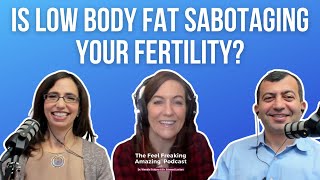
This is a YouTube podcast interview (May 2, 2022) of Coach Kela (Kayla) Smith by Wendie Trubow and Ed Levitan about fertility and her Hormone Puzzle approach. Kela recounts struggling with unexplained infertility in her 30s, choosing a holistic path rather than immediate IUI/IVF, and after ~8 months of targeted nutrition and lifestyle changes became pregnant twice (first near 38, second at 40). Key takeaways: she raised body fat from ~15% to ~20%, regularized cycles by tracking and cycle-optimizing food/lifestyle, and emphasizes whole-food prenatals, vitamin D, probiotics, and omega-3s. She created the Hormone Puzzle acronym (P: Proper whole nutrition; U: Understanding supplements; Z: Zapping stress / Zs = sleep; L: Love & encouragement; E: Exercise & environment) and delivers one-on-one coaching, self-study online programs, and uses at-home dried urine hormone testing (similar to DUTCH with additional markers). She reports ~70–80% success among clients (natural conception or supported procedures) and gives a brief four-phase cycle protocol (menstruation: warming foods, restorative movement; follicular: fresh/light foods, higher-intensity exercise; ovulation: antioxidant-rich foods, peak activity/social; luteal: detox-supportive, listen to energy). Contact: coachkayla.com, Instagram @kayla_healthcoach, Facebook Kayla Health Coach, and The Hormone Puzzle podcast.
Questions this video answers
About 70–80% (natural conception or conception supported by procedures).
About eight months of targeted changes; conceived twice (first ~38, second at 40).
She reported increasing body fat from about 15% to about 20%.
A whole-food prenatal or multivitamin (bioavailable), vitamin D (daily sun exposure ~30 minutes or supplement in northern climates), a probiotic, and fish oil (or algae-based DHA for vegetarians).
At-home dried urine hormone testing (similar to DUTCH but described as more in-depth, covering 24-hour hormone fluctuation and metabolism).
Chapters
Welcome to another episode of the Five Journeys podcast Live like youe Matter. We're so excited to have Coach Kayla here today. She is the CEO and program director of the Hormone Puzzle Society. That's a women's health hub for fertility, hormones, and pregnancy. Kayla works with women who are struggling with infertility and hormone balance and teaches them how to optimize their bodies hormones to get pregnant, stay pregnant, have a super healthy baby or a healthy super baby, and easy postpartum period, as well as eliminate symptoms of hormone imbalance. With over 20 years of experience, Coach Kayla focuses on a mind, body, spirit approach to fertility and optimized health. Welcome, kayla.
Thank you, Dr. Wendy.
Welcome. We're very excited to have you.
Yeah, I'm excited to be here.
So let's start this out for our listeners.
What.
What was your story? Because you started to work with fertility challenges at 40, right?
I did, yes. Yes. Yeah. So my husband and I got married a little bit later in life, and we thought, like most, you know, we've been taught you have sex, you get pregnant. We didn't think we were gonna have any issues. And we quickly learned that that was not the case. And so we tried for a little while and nothing happened. We went to our doctor, we did all the testing, and came back, you know, there's nothing wrong that we can find. We. So she was like, just keep trying. It'll happen. And at this time, I was 34 at the time, so.
Which isn't even that late.
Yeah, yeah, not really. But, you know, they say 35 is advanced maternal age, and they scare the crap out of you. Really old, right?
You're really old.
I'm like, oh, great. I feel like, oh. And then they call it a geriatric pregnancy. And I'm like, great. So I'm a grandma. This is awesome. So, so we went to her, she ran all the tests, told us we had unexplained infertility and to keep trying. So we did and tried for a couple more months. So, long story short, we went down this long road of the medical industry, and we're told finally, at this point, because I was 36 at the time, that natural wasn't going to work, and we needed to do IUI and if that didn't work, we would need to do ivf.
So can we back up a Step K Lash Award? Because I always say to my patients, if you're not pregnant after six months, come talk to me. And it sounds like you had almost two years of just having sex before anyone was willing to intervene.
Well, so we went a lot of. So three rounds of Clomid, some Letrozole. We did an hsg. We did a lot of stuff medically, but to lead to that, you need to do an iui. And they might have said that sooner, but I might have not heard it. I might have just been like, oh, this is going to work naturally. I don't want to hear IUI initially.
So what is an iui? I just want to make sure that we're all playing in the same.
Yep.
So inner uterine insemination, where they take your partner's sperm and put it with your egg inside of your uterus around ovulation so that it's more likely that that sperm will hit that egg. So you're kind of taking the trying game out of it. Yeah.
That's opposed to ivf, which is in.
Vitro fertilization, meaning they take the egg and sperm and put it in a pet, let it fertilize and grow an embryo, and then they put the embryo inside of you.
Awesome. I just want to make sure we're all in the same, all our audience.
Yep.
Yep.
All on the same page. So.
So you're 36 and you've done the Clomid, you've done the lecture. I mean, you've done everything. And now you're at the IUI point.
Yes. And that's when I said, wait. You said, there's nothing medically wrong with me. I don't understand just because my age is my only factor, why I need to do a medical procedure to do. Oops, my headphones were falling off. To do what my body should do naturally. And so I said, I know IUI will be there. I know IVF will be there. Nothing to take away from those procedures. I think they're wonderful. I'm glad we have them. But for me, personally, I did not want to do that yet. I was like, I'm healthy. I was a personal trainer. I was ate healthy. I was fit. I didn't feel 36. So I was like, I'm going to try to do this naturally and, you know, see what happens. And if it doesn't work, I'll go back to those procedures, you know, as I'm closer to 40.
And so did you give yourself a time, a time frame.
Like, I'm gonna try for X one year. Yep. In one year, if I'm not pregnant at 37, I'll go back. And so I. That's what I did. I dove into research. I took what I knew from personal Training and nutrition. And I tried to say, okay, I know I'm eating healthy, but I need to eat for fertility. So what does that mean? And granted, this was nine, ten years ago. This was before all the Instagrams, all the websites for fertility. This was nothing. I was literally like googling, what do I need to eat for fertil. There was none of that. And so I realized that I was eating too little, I was way too skinny. I was not eating enough fat, not eating enough protein, not eating enough in general. I was exercising way too hard. Like I said, I was really skinny and fit and low body fat. I thought I was healthy, but I wasn't. Not for fertility. And so that's what I did. I changed my diet around. I started eating more, eating more fat, eating those fertility friendly foods. I looked at my supplements, I looked at my stress and kind of really wanted to do everything I could to holistically get as fertile as possible.
There's so much to unpack in that.
Yes.
Like those few sentences right there, Kayla.
Yes.
So what did you find? I mean, so what does it mean? You were too skinny. By whose definition?
By so I had really low body fat. And so.
Which means what? Like, do we have. Do you have a number?
Yeah. So I was like, I can't remember. This is 10 years ago. I think around 15% or something like that. For women, you should be around at least 20 to 22%. Men, I think it's 24, 25.
I passed 15% when I was like 10 and never looked back.
I mean, I was like, no, no fat on these bones whatsoever.
Did you have regular periods and identify ovulation when you were that. When you had that low percent body fat?
So that's the other funny piece. I. So I had been on birth control for 15 years. When my husband and I got married, I came off of it. My cycles were irregular, but I was never my doctor. None of them ever said to me, how's your period look? Are you ovulating? Are you tracking your cycle? Do you know if you're having sex at the right time? Never said any of that to me. And I didn't know Now I know, but didn't know then.
So let's dive into that. I mean, we have a. We have a whole list of stuff to cover. But. But I have two questions. One can give the punchline or do you want to save that for later? Like, did you conceive on your own? Did you end up what ended up happening?
Yeah, I did. So it took us about eight Months of really targeted everything, nutrition, lifestyle, all of that. And we did. I was able to get pregnant not once, but twice. Had my Last one at 40, so I did it once. Had my first, like, almost 38, and then the second one was at 40. So, yep, we've gotten those little boys now are almost 9 and 6. So, yep, we had our last when.
I was 41, and she's turning 10.
I love it.
Okay, so let's go back to all that stuff that we're unpacking. You spent those eight months really looking at how do you eat more healthfully? What went into that?
Yeah, so I was researching, like, literally googling, what foods do I need to eat for fertility? And what came back was whole foods. Obviously, I was already eating pretty clean diet, but again, I wasn't eating enough fats. I grew up in the 80s where I thought fat was bad, and I thought Lean Cuisine was good.
It's actually. It's per decade, now that you mentioned it. It actually changes. Your body changes every decade as a human being. So. Yes.
It's not just the Lean Cuisine. It's the plastic that it came in. In the microwave. We heated nothing. Right, we'll talk more about that.
Is that like, Spam Spanish?
It was this meal that had all these chemicals in it, and it was in a plastic container. And then you stuck it in the.
Microwave to heat it, but it was frozen, so.
Right, it was frozen.
It was delicious. It just wasn't very filling. So then I needed to eat two, which totally defeats the purpose of Lean Cuisine.
Exactly. I know. It's so funny. My husband jokes because I. When I met him, I had severe stomach issues all the time. I was like, my stomach hurts. I'm in the bathroom. And he was like, because you eat Lean Cuisine, that's the only thing you eat. It's not real food. So, so craz.
Yeah.
So you figured out you needed to eat more fat. And when you say more fat, was there some like, oh, I wasn't eating any and I needed to eat more, or you were eating too little, and here was some magical threshold that you needed to pass. And by the way, before we go any further, can you hand me my water, please, because I'm wicked thirsty. Wicked's the best word that Boston ever created.
I love it. I love Boston.
Thank you.
Such a great accent.
I'm like, I don't hear my accent right.
I don't hear mine either. Great old south accent here. But to answer your question, the main consistency of my diet was Ling cuisine. I was Eating some vegetables, but really not a ton of fat. I didn't even know to focus on fat. Now I tell my clients, you should be eating avocados, nuts, and seeds, and fatty fish. I wasn't eating any of that stuff.
Sounds. Also, your. Your micronutrients might have been deplete if you were eating cuisine.
Right, Right.
No fresh fruits or vegetables or anything else that.
I think that's really valuable point to make. Wherever people are as a human, we're always thinking, I eat pretty well. And then you go to level up, and you go, well, I mean, she.
Was 15% body fat. She looked great. Awesome. You're done. You're healthy.
But everyone where they are thinks they're eating healthy. And then it's only when you really drill in, you go, well, maybe there's room for improvement.
Right.
So it sounds like there's that sort of mindset of, oh, oh, yeah.
That's so funny you say that, because when talking to clients, every person I talk to tells me they eat healthy. And I look at it, and I'm like, this is not healthy.
We need 10 Diet Cokes a day.
Well, what I say is, what's healthy for you?
Yes.
What's your definition?
Right, right.
So it's just a constant process of improvement. So wherever you are, there's room for improvement.
Exactly. Yes.
Okay, so you figured out your fat. Did you gain weight in that time, in those eight months?
Yeah, that was one of my goals, too, is I needed to gain a little bit of body fat, so I wasn't this, you know, skinny little thing. And so, yeah, I did. I didn't gain a ton of weight. I would say I probably went up to 20% body fat, but that's a big difference from 15 to 20. Yeah.
Well, also, if you started eating good fats, good nutrition, your body was probably deplete, literally, of nutrition and was starving.
Yes, exactly.
It might have looked good.
Right.
Can I ask you a question, Kayla? And feel free to say, no, I don't want to answer that.
Okay.
When you gained that from 15 to 20% body fat, did you notice any challenges around how you looked and your sort of body image and what you thought about how you should look? Did any of that come up as a should or. This doesn't feel right.
Yes. Yes. I'm sure if we dove in even deeper, we would have some. You know, I've got some issues with food and with, you know, what I think is fit and healthy and. And that goes back to my mother, and what she told me was Healthy, but.
And you're female. Yeah.
So for sure. And so that was like, a big thing. I was like, in the back of my head, I don't want to get fat. Like 20 body fat is fat. But, you know, But I knew I needed to do this for fertility, so I kind of pushed those thoughts away. So, yeah, there was definitely some body issue, Things that popped up.
And then what happened with your periods when your body fat went from 15 to 20%? What happened?
They got more regular, for sure. Yeah. And I really started paying attention to tracking them. That was the other thing I learned through research. I was like, I need to be tracking this. I need to see what's normal. I need to see if I'm ovulating. And so I was able to figure that out. So they got more regular, more, you know, more. I could tell I was ovulating through learning how to read my body and all of that.
I remember we got, as a present, right around our wedding, we got a book, which I was kind of offended by because I was like, wait, what? But then I read it, and it was one of the best resources I've ever read around how to really get present to your body. And it was taking charge of your fertility by Toni Wexler. And it was so great. And I remember being like, I didn't know the cervix moved lower and higher in the body. And so it's really. I think it's a great book because it's 12 bucks or something. It really walked it through.
I think they need to teach this in every elementary school. I mean, eighth grade, you need to be learning about your body. And they don't teach you any of that?
No, no. We're just starting. I actually. My son's in a school that doesn't do sex ed yet. They're just sort of figuring it out because it's a new school. And so I'm like, I'm a gynecologist. There's no way that my son is going to be poorly educated about how women's bodies work, how his body works. So I just bought all these books because I really don't know how boys go through puberty. I know how girls go through puberty.
In books. It's less complicated.
Right.
I might need that book because I've got two boys myself, so.
Right.
Well, I bought seven. Okay. I was like, I don't know what the best one is. And they all came highly recommended. So I bought them all. I'll get back to you on what's the Best one, Kayla.
So going back to.
But this is utility, right? Right.
So.
So when you. You had talked about supplements, and is there any particular supplements that are actually what women want to hone in on, or is it, like, is there a broad spectrum or is it very individualized?
So it really depends. So it definitely is individualized. You don't ever want to take a supplement just because you read about it on Facebook or hear about it on this podcast.
Come on.
No. We would argue vitamin D, but you live in the south and I live in the north.
Yes, still vitamin D. Still.
Yeah.
So vitamin D is one of the. And that was my next sentence is there is a few supplements that I recommend for pretty much everybody, but you definitely want to talk with your practitioner before you add or take away anything. So those supplements are one a really good whole food, prenatal or multivitamin if you're trying to get pregnant, prenatal if you're not, multivitamin, whole food. So it's bioavailable for your body, and it's not synthetic. So then your body actually sees it as food, knows what to do with it, and then detoxes what it doesn't need.
What's your favorite brand of bioavailable whole food?
So I, like. You would ask me that, you know, mommy moments.
You can get back to us.
Garden of Life by Nature's Valley. Yes. That's one of my favorite ones. And then I also have been playing a little bit, and I can't remember the brand because I just started doing this, but I've been playing a little bit with liver supplements as a multivitamin, which is really good. Yeah. Lots of vitamins and bioavailable and, you know, all those organ meats.
So did you eat your placenta?
I didn't. Because I didn't. Now I'm like, can I come back and kill my placenta? Can I get another one of my pregnant clients?
You thought it was gross. I had practiced traditional Chinese medicine, and in traditional Chinese medicine, they actually talk about using eating your placenta.
I was like, no way, no how. But I kind of regret it.
So they put it in a capsule. It's not like you're gonna munch down on it after it comes out.
I felt like a picture was like taking a spoon into the place. I was like, not happy. I was just proud that we did cord bread baking.
But I do think it's really interesting that thousands of years of traditional Chinese medicine that they did that, and now we're just now starting to understand why? So it's just a plou Lechange plus.
Lemon shows more things change.
Right, Right. So that's the first one. The whole food, prenatal and multi. Then I also recommend the vitamin D. Definitely get out into the sun 30 minutes with no sunscreen, at least every day. But then also, if you're in a northern climate, you want to supplement with some vitamin D. You know, a lot of times people with fertility issues are low in vitamin D and they don't realize it. So. Yeah, that's one. I recommend a good probiotic if you, even if you don't have any gut issues. I think everybody needs probiotic. I think it's just good, you know, a foundational health piece that you need. So good probiotic. And then I recommend fish oil if you're not eating fish a couple times a week. You definitely want to eat a good, high quality fish oil if you're not a vegetarian. And then cod, crude oil if you are a vegetarian. So it kind of, you know, that's made out of algae. Yeah, this, it's like an algae form of fish oil that gives you those essential fatty acids.
Yeah. Now I have another question and let.
Me just comment on. I mean, omega 3s are obviously really important in brain development for babies. So that's, that's really besides important for moms. If you're deficient in omega 3s, that's going to affect brain development in babies. So it's really important.
And it's anti inflammatory too. So if you have a state of inflammation, that's going to help bring it down. Did your husband have to eat the way you were eating or was he exempt? Just asking.
I think that's an inflammatory question. I'm going to give you some. I think you need some fish oil for the inflammation.
I take it every day.
Right, right. So I tried. My husband is six years younger than me, so he was a little bit more healthy than I was. But I tried to encourage him to eat healthy. And it's so funny because when I met him, he ate terribly and I was like this fitness person, personal trainer, all of this stuff. And I would always try to push like, you know, let me make some side of broccoli with that or whatever. Let's have fish tonight. And he pushed back for many years. Now we're 12 years into our marriage and now he eats just as healthy as I do. And then he'll say, let's have salads tonight. And I'm like, what? Who are you? So to answer your question, he did come on board as much as he, you know, as much as he could.
Yeah.
Kicking and screaming. But now he's fully on board with a healthy lifestyle. Yeah.
Got it.
Cool.
All right. Do you have a question? Because I have a question.
Go for it.
So you went through this whole process and you had a good outcome, which is amazing. And then you had young babies. And what's really amazing to me is you had the brain space to then put together a protocol for women to get pregnant. Which blows my mind because I don't think I had any brain space. Well, I don't think I have any brain space. I'm trying to remember when I got brain space.
Right.
To create.
Yup, yup. So I, you know, I was already working in health and wellness. I was a personal trainer and I knew I wanted to. Now that I had gone through all of this, I was super frustrated with my western medical doctors just because I felt like I was pushed on a lot of procedures. Like I said, the iui, the ivf. I wasn't taught about my body. I wasn't told nutrition could help me. So none of that. And I was just really frustrated. And I was like, I love this. Doing all this research. I'm like a kid in a candy store, like going, like, I could read about and learn about this stuff for hours. So I want to work in this. So I was like, so first I was going to go back to school and get a PhD and my husband was like, you're 40. You have a newborn and a 2 year old. You're not going back to get a PhD. I'm like, all right, well, what can I do? So again, Google, Google, Google found fertility certification course and said, okay, this is what I'm going to do. So I went and got quadruple certified because one certification wasn't enough. Quadruple certified, obviously. And health and wellness coaching with the specialty in fertility hormones and pregnancy. So then after I did that, started my practice about three years later, I wanted more education. So I went and got certified as a functional nutritionist. Board certified, I might add. And congratulations that I've got all these credentials. I said, now it's time to do my PhD. So now I'm going back for my PhD.
Seriously?
In natural. Yep. Natural and holistic medicine. Yeah. So when I turn 48 is what I'm giving myself. I'm about to turn 45, I will have a PhD in natural medicine.
Cool. Congratulations in advance. So are you ABD at this point?
What does that mean?
All but dissertation. Like, do you have to do A dissertation.
Oh, yes. Yep.
I know you wanted to do that.
Yeah. It didn't work out.
Yeah.
Well, I will say the school I'm going to is in Hawaii, so I get to walk in Hawaii. So.
Good. So.
Okay.
So, honey, I need to do a PhD in Hawaii.
In Hawaii.
Let's have a vacation. You know, I can see how you persuaded your husband to do that.
Yeah, right. We're going crazy.
Yeah, well, you might be, but that's not the matter. All right, so I. Well, what. What is. Actually, can you give kind of a quick. Like, what is the actual program that you have? Because I know it's. It's breaking down the word puzzle. So can you kind of give a summary of what that looks like?
Sure. So when I was doing all of this research and going back to school, there was pieces that I would work on every day to kind of optimize my own fertility. And then once I was able to get pregnant, I was like, I need to think of a really easy way to tell clients how to do this too, and for them to be able to remember it. So I love acronyms. So I created something called the hormone puzzle, and it's all the pieces that I used to put my hormones back together so I could get pregnant naturally. And it's what I teach with all my clients. So puzzle is an acronym. P Proper whole nutrition, U Understanding supplements. Z is zapping stress. Z or zs, which is sleep. L is love and encouragement. E is exercise and environment. So these are all the pieces that I took myself through and what I take my clients through to holistically heal so that their bodies work the way that it should and so they can get pregnant naturally. And since we've created the puzzle method, we've also kind of added into that the mind and spirit piece. So we work a lot with, like, mind, body connection meditation to bring in consciousness, helping to rewire the brain so that your physical body takes suit to what your mental body is telling it. So it's really a mind, body, spirit program. That's why we call it that.
Nice. I was actually going to talk, ask you. Love and encouragement. That's not the typical. So what. Can you elaborate on that?
So that one is two piece. It's love and encouragement with your partner. So it's really building that bond. And even before your parents, having that strong bond so that your marriage is solid, so that your relationship is solid. So we teach a lot with how to connect with your partners, how to have a baby without making it about having a baby, how to make oxytocin and as you're having sex and really connect and bond with each other. So it's. So it's that piece then it's also having community around you, having love and encouragement with your friends and family, surrounding yourself with positive people that are going to support you and lift you up and not, you know, not everybody's going to understand your journey. So building a community around you, that does. But then it's also love and encouragement for yourself and having that self love and really believing that you can get pregnant and stay pregnant and just having that solid love and affection for yourself.
Yeah, I think that's missed a lot because first of all, self talk, internal self talk is for most people is pretty terrible. And that then messes with the biochemistry and messes with the adrenals and then messes the hormones, et cetera, so forth. So even though it's mostly a soft thing that you're talking about as defined in the outer world, it's so important.
Oh yeah, for sure. It's so crazy too. One of my classes right now is neuroplasticity and it's actually rewiring your brain. And so the more you focus on the negative, the more those, those neurons are going to wire in the brain. And so that's, your physical body is going to respond to that and it can actually pause things like fertility, digestion, all of these pieces that you want your body to be working towards. So it's, it sounds woo woo, but it's, it's, it's based in science.
I mean, no, I mean, I think you and I may have talked about this before that when you're in a state of fight or flight, which is a state in which your adrenals are activated and thinking that a lion's gonna chew on you, you're actually not focusing on ovulation and reproduction. You're focusing on survival. And survival is a very different pathway than ovulation, reproduction, regeneration. So you do shut down the fertility pathway. When you're stressed, when you're having tons of negative self talk, when you're not sleeping. All those create that whole environment of your body's not well. Right, right.
Yeah, you said it.
Self perpetuates.
Yeah.
And always the question is where to start.
I was just gonna ask that.
Okay, ask it.
No, you can ask it. You just read my mind. We've been married a long time.
I was going to ask him together.
Feels like an attorney.
Obviously not that long.
No, it was only 19 years. But I mean, we're hitting 19 soon. Pretty cool.
Oh, that's amazing.
Oh boy.
Yeah, my parents are so funny. They've been married 40, 45 years. And when you ask my mom how long she's been married, she'll say two. And we're like, two? What are you talking about? Too long, too funny.
So. Well, I mean in terms of starting, how do you evaluate people? Where do you start? In terms of. In your puzzle, do you have and I don't know and I apologize, but do you have group programs? Are you mostly one on one? How do you see people? How do you talk to people?
For sure. So we start with a phone consultation and call it a discovery call because we really want to hear your story. We want to find out what you're struggling with. We want to tell you how we're different and we want to see if working with us is your next best step. So we start there with that discovery call and we have you fill out a pretty in depth intake form so we can kind of get a snapshot of what's going on and then we learn more on the call. So once we get on the call, we learn we want to work together. Then you would enroll in one of our programs. We have one on one coaching with either me, myself or with one of my trained hormone puzzle method coaches. We also have online programs that don't come with calls, they just come with videos and they're kind of a self study. So those are the three ways you really work with us. So then once you decide if you want to work with us, the first thing we start with is our at home dried urine hormone tests. And we, it's similar to Dutch, but the company we use is a little more in depth. So we have a couple more hormones that we test. They don't. So we start there to kind of see a baseline, like where are you at? Where are your hormones at? We do urine versus blood because we feel like we can see a 24 hour period how the hormones are fluctuating, how they're being metabolized and how they're being detox. So we do that along with a really in depth health questionnaire. We want to see, you know, physically what you're dealing with mentally. We want to see pasts, we want to see, you know, hereditary things. We want to see the whole picture of what you're dealing with. And so with those two pieces of data, we look at that and we customize a program for you. So we do, you know, a customized meal plan, lifestyle plans, really mind, body, spirit, so it's not just the physical, but the mental emotional as well. And so that's a, that's a little bit how. And then during the programs we work towards the hormone puzzle. Meth. We work with your hormones and anything targeted supplements and we go through the sleep and the stress and all of that. So it's a really comprehensive program.
It sounds very cool. Yes. Now, are you a data person, Kayla?
Yes, I am.
So do you track all of your patients to see what percent end up getting pregnant naturally versus end up opting for a more invasive approach? Do you have data on that?
A little bit. So the people that work with us, we have about a 70 to 80% success rate. Either getting pregnant naturally, it's really good. Or getting pregnant through a procedure. About half the people come to us are wanting to do it naturally, half are already going through ivf, IUI and want us to help support their bodies through that. So. So we have a really good success rate. Obviously, you know, there's some things that we can. If somebody comes in, they're 50 years old and have no fallopian tubes, they're not going to be able to get pregnant with us. But medical miracle, right?
Right.
But you'd be surprised. Sometimes we have people book call this and I'm like, I wish I could help you, but like, yeah, you're, you're 60 years old and you know, I can't. There's only so much I can do. But yeah, we have a really good success rate and a lot of happy clients. Yeah.
What, are there any one or two or three people that really stick out.
That you want to share? Yeah, definitely. So the lady that I worked with, she actually just sent us a follow up, you know, a follow up message. She just gave birth to her twin. So she started working. Yeah, we've had a run of twins lately. We've had like five people with twins lately, which is really cool. And these are natural. Five natural pregnancies with twins. Yeah, it's crazy, but she came in and she was already pretty healthy, but just needed some tweaks. But she hadn't had her period. She had pcos, hadn't had a period in three years since she, you know, she hadn't had a period. So we started working together. We really honed in on her cycle tracking and figuring out why she wasn't having a period, looked at her hormones, looked at her diet, kind of really got in there and figured out what was going on. So in about three to four weeks we had her period back. She had one more Cycle. And then she got her period. And then we worked together for three months. You know, we optimized, did everything. She was having a healthy cycle. But we finished working together and she wasn't pregnant. So we, you know what we tell all our clients, you want to keep working on it. This is a lifestyle. This isn't a diet or quick fix. This is what you're going to continue to do. And she did. She continued to do it. And so she text us about three months later saying that she was pregnant with twins. And she just sent me a message that she just gave birth with the two healthy babies. So, yeah, so that was a really fun one. We had another lady, no period for 10 years, and she came in, worked with us, and she ended up getting her period back. And then she got pregnant and she was 45. So, yeah, it was really amazing. And she was like.
And never been pregnant before?
No, never been pregnant before. She was, you know, and that's what she sent you a message saying, like, I've wanted this for so long. It's finally happens. But now what? I never thought this was gonna happen. What do I do now?
Now you gotta get the next course of raising a kid.
Right. Right. Well, we have a pregnancy program, so that's good. We work with clients as well during their pregnancy to help the and stay pregnant and have a healthy birth and postpartum and all that. But we don't have a parenting class yet. That'll be next.
That's next. We could do that as a PhD project. There we go.
She officially had premature ovarian failure at 35 and then got her periods back at 45. I mean, that's just amazing to talk about.
Crazy. It's crazy. Yeah.
So you referred to sort of optimizing your cycle, fixing your cycle. What does that mean? And how do you do it?
Yeah, so we do something called cycle optimizing with food. Some people might call it cycle syncing. We aren't allowed to use that term because it's copyrighted. So we call it cycle optimizing. But it's basically eating certain foods and doing certain activities during certain times of your cycle. So you're either giving your body the food that it needs or giving your body the food that it needs to make certain hormones or to detox certain hormones, or doing lifestyle pieces to do the same thing. And what that does is it creates homeostasis in your body. Everything is balanced. Everything starts to work the way that it should. Your hormones are humming. They're working the way that they should. And then your physical body takes suit. So we find people start to implement this, they get their periods back, they lose weight, not, you know, unintentional weight loss. They get clear skin and their energy goes up, their sleep improves. I mean, so many wonderful things when you work with your body and with your foods. And so, and there's a little bit more to that too. You know, we really. Another thing we work on is food sensitivities. So we really take out any foods that cause sensitivity or inflammation. So that's the other piece of optimizing that cycle. We do some targeted supplements. So we look at kind of what we think you need and what we see you need based on your data. So there's, it's not just the food piece, but that's one component of it.
That's great.
Can you sort of drill down into for the listeners the four phases of the cycle and then what foods and lifestyle actions fit with each? And I know we have a hard stop, so it doesn't have to be super drilled in, but just big picture, how does that work?
Sure. So four phases of the cycle. So I start with your menstruation phase. This is the phase you're actually bleeding. So this is day one through about day five of your cycle. We're talking 28 day cycle here. So we know some people there are less or more, but this is average. So that's your first day of your cycle. That's your menstruation phase. So this is when your hormones are pretty low. So this is when you really want to do things to support those hormones. This is when you'll have more warming foods. You'll know this from Chinese medicine. You want to eat warming foods. You want your uterus and your reproductive organs to be warm. You want the blood to be flowing. So that means actually temperature warm. So that means soups and stews and warm foods. But then also I like them to focus on just in general warming foods. So like ginger and cinnamon and things that are going to naturally warm up your internal body. Spicy foods even. So that's during your menstruation phase. During this phase too, while your hormones are low, you're really going to want to focus on more low, gentle restorative movements. You don't want to do anything, you know, super intense or super jarring. So think like yoga, stretching, walking, meditation and deep breathing, that type of thing move your body but not intense. And then this is also the time for self reflection. So you want to think, you know, meditation again or you maybe you stay home this week and really reflect within and do some journaling and some really, you know, gratitude journaling and focus within.
It's like restorative. Just like it's a restorative phase.
Yes. I love it. Yes. And so then as you move into your next phase, this is going to be your follicular phase. So this is when your hormones are starting to rise and get getting ready to peep for ovulation. This is when you can think of more of spring. So you want fruits and vegetables and light, fresh foods. Last week was warm foods. This week you can go more cold with salads and raw juices and raw fruits and vegetables. And so. And then this time for exercise, it's going to be more. Your hormones are higher. You can do more intense activity. I still wouldn't go all out, but if you want to do a spin class or if you want to do a, you know, a boot camp, that's okay. This is when you'll find that you're able to handle more of that social aspect. You're able to handle more of the lights and the music, and you're not so sensitive to those things, sights and sounds. So the follicular phase goes about day six through about day 13. And so, and like I said, this is the spring. Then as we move into ovulation, this is summer. This is when your hormones are at their peak. This is when you are the most charismatic, the most, you know, rosy. You want to be seen, you want to be heard. You want to find your partner. You want to go on a date with your husband. You are just at the top of your game. So this is when you want to really support those eggs as they start to come out or as that egg comes out of that follicle, you want to support that. You want to eat foods high in antioxidants. You want to help to protect from free radicals. You really want to eat those high, like think dark leafy greens, lots of free, dark, dark berries and dark like eat the color of the rainbow during ovulation. You also want to look at some probiotic foods to really optimize that gut health as you start to ovulate, as those hormones are at their peak, you really want to focus on that to make sure that gut is balanced and where it needs to be. So for exercise, this is when you can pull out all the stops, like do that hard class, run that marathon, do that kickboxing, that spin class. Really work with the energy, work with the hormones, like you're at your peak for social. This is when you want to be seen and heard. So and you are really eloquent, you can speak, you have the energy to do it. So ask for the raise, do a presentation, film a webinar, go on a date, ask somebody to marry you. Like this is when you can do that. And then as your hormones come back down. Oh and then the days for ovulation usually are around the 15 through 17 of that 28 day cycle. As you start to come into luteal phase, this is your next two weeks. This is going to be day about 16 through 28. Did I say that right? 15 through, I'm sorry, 17 through 20 or 18 through 28. So this is about 10 days luteal phase. So this is when hormones are starting to come back down. Luteal phase is broken into two weeks. So the first week, this is the week, two weeks before your period, right after ovulation, your hormones are still high but they're trying to come back down. So you really want to focus on detox friendly foods. So think onions, garlic, fennel, high fiber foods, natural detox friendly foods, detox teas. Even if you're not in a two week wait, so you want to try to detox the hormones back out of your body naturally do things to support your liver even you can do castor oil in the liver, the detox tea. Then for, for exercise these two weeks, the two weeks before your period, you can still do some high intensity things. This is where you really need to pay attention to your energy. Listen to your body. If you have the energy to do it, you can, you can, you know, continue to do the hard classes. But listen to your body as you go into that second week. Your it's the week before your period. This will tell you how well you've done the whole cycle. If you have a lot of symptoms, pms, cramping, bloating, fatigue, then you need to look at what happened throughout the month. Was your diet off? Was your stress off? Was something where you're not hydrated enough? Really look at that. But you should have minimal symptoms. It's not normal to have a painful period. So if you are, there's usually something going on that's your body's way of saying, hey, listen to me, something's wrong here, something I need some attention. So during this phase again, you'll still be doing detox friendly foods, maybe adding a little bit more carbs because as you are detoxing these hormones, your energy, you need some extra carbs. So you might notice that you're Craving more carbs. Obviously, I want you to eat healthy carbs. So think root vegetables, sweet potatoes, lots of leafy greens, Those types of things. And for exercise, this is when you can again, you'll start to notice your energy starts to dip a little bit. You might get tired. Really listen to that and honor that and go back into that slow restorative. You know, yoga, tai chi, dance, walking, that type of thing. Your right and left brain are really aligned right now, so it's a really good time for large tasks. So think if you have a project you need to complete or a paper to write, a dissertation to do something where you're like, I need to really focus and sit down and do it. This is the time to do it. And then you'll also notice your nesting around this time. So you'll want to things that you didn't notice that were dirty before, you'll notice now. You're like, my fridge needs to be cleaned out. My car's a mess. So this is the time to do that. When you really have that right and left brain alignment, then you can focus and then you can get some of these big projects done and get something cleaned. So those are the cycle phases. I know. That was fast. Lots of information. What questions do y' all have?
That's great. So unfortunately, it feels like our time is coming to an end.
I know it is. I know we could do this for a while.
Where can we find you? Where can people find you? How can they connect with you?
Sure. So I'm on coachkayla.com and Kayla is K E L A so coachkayla.com on there. I have three different freebies. So I have a fertility meal plan, a pregnancy meal plan, and a cycle optimizing quick start guide so you can get those freebies. You can scroll down halfway through on the page and click book a call. If you want to have a call with myself or my team, I'm also on Instagram, Instagram at Kaylah Underscore Health coach and Facebook Kayla health coach. So those are probably my two favorite playgrounds. So, yeah, if you're. If you think you want to learn more, if you want to talk to us, definitely book that call. Get one of those freebies. Oh, and then also I have a podcast, the hormone puzzle podcast.
Nice. Nice. Anything else?
Too sweet. I think this is great, Kayla. Thank you.
Thank you.
Thank you for listening to another episode of Live like you matter. Our guest today is Kayla Smith, who. And you can find her on coachkayla.com.
More from Wendie




Support The Right Bacteria to Restore Your Gut Health, with Dr. Oscar Coetzee

Support The Right Bacteria to Restore Your Gut Health, with Dr. Oscar Coetzee@designsforhealth3090




Look and Feel Decades Younger by Removing Senescent Cells, with Dr. Jerry Mixon