Heal Yourself Through Osteopathy, with Dr. Bill Foley
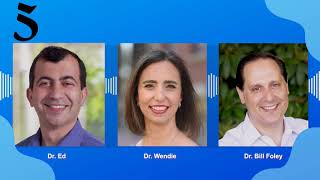
Dr. Bill Foley explains osteopathy as a whole-person approach that uses hands-on techniques like lymphatic drainage and autonomic balancing. He walks through a Lyme disease case where manual work helped a patient recover after other treatments stalled, and offers specific guidance for highly sensitive people.
Chapters
Bill, welcome.
Thank you. Thanks for having me.
I'm super excited that you're here because you've treated our family, you've treated a lot of our patients. And I'm excited because people don't know what osteopathy is when I tell them and when they come to, they get awesome results, of course. And I'm really excited for you to be here to really share what it is that you do, because it's not well known and it's so powerful.
Thank you. Well, we've been sharing patients for over a decade and so I really think what we do together is powerful.
Yeah, yeah, the combination works well. So what is osteopathy? Let's start there.
Good question. So osteopathy really in its true form is a philosophical approach to medicine. Osteopathic medicine is a way of thinking about medicine. It's not a degree, it's not a manipulative form of medicine, it's a way of thinking. And when my patient comes in the room, I'm thinking just like you are in a different way with functional. What is the root cause of this problem? Why is it, is it physical, is it emotional, is it mental, is it spiritual, is it viral, is it allergen, is it, you know, whatever it takes? Like what am I looking at with this person now? One difference is my primary diagnostic and treatment tool are my hands. I've been trained to sense things in the body. Some things that all doctors do, all palpate areas to see if there's tension or tightness or tissue texture changes, restriction in motion. But then it gets more subtle than that. Is there some place where it feels like the life force in the body, for lack of a better word, is not permeating those tissues? And so with that, everybody gets an osteopathic treatment. Everyone gets a hands on treatment to make an improvement in those areas. But when that's not enough, I'm a minimalist. I start really low and I start working high with my treatment process. So lifestyle modifications, maybe supplements in the form of nutrients or herbal medicine or homeopathic, at least in this parts that I'm comfortable with. Medications, injections and things that I don't do. Physical therapy, acupuncture, brain surgery, you know, I'm going to refer those people out, but it's really a very methodical way of looking at how I'm going to treat my patients. And so it's not just about pain, it's not just about their disease process. It's rather than a disease centric approach. It's really a health centric approach. It's how do I make somebody healthier? And as people get healthier, they're less sick.
Right. Well, I want to know because there's obviously been a lot of antagonism between the MDs and the DOs.
Not between us, of course.
Sure, sure. But maybe historically.
Historically.
And I think that it should be mentioned with that statement that just because you're a DO doctor of osteopathic medicine doesn't mean you're practicing osteopathically.
No. And I was going to mention that because what I say to my patients is 99%. And maybe I'm wrong, but I think 99% are basically, MDs have the same rights, do exactly the same thing. And then there's the 1% that actually.
Practice osteopathy, and I think that's probably a good number. I can't find statistics. And it always depends on who defines what osteopathy is, and that's hard. So in we have DOs who practice just like MDs. And as you mentioned, we have the same license, same board certifications and the same privileges.
Just for people that don't know, dos can be surgeons. They can do, literally obstetricians.
Right. Every specialty, it's the same thing.
And although in Boston, New England, maybe it's not as popular, it's much bigger in other regions of the country.
Absolutely. And even in this state, we have over 1000 DOS in Massachusetts. So it's not a small amount. Yes.
People just don't know.
Right. Well, when I did emergency room work, I mean, I didn't walk up to someone and say, hi, I'm a. Do you know if you're bleeding? I stop the bleeding. That's how you do your job. And for many years, as you know, I was a full scope osteopathic family physician who did primary care for adults and kids. And I delivered 50 babies a year. And I worked in the hospital and out and everyone got treated osteopathically. So it was nice, but not necessarily the doctor down the street knew that's what I was doing. It was really an in house kind of thing. I didn't take outside consults. So while I agree most dos don't practice anything osteopathically, which makes sense if you're a radiologist. I mean, what's the difference between an MD radiologist and a DO radiologist? The philosophy doesn't really come into play about treating the whole patient and working with the innate healing potential of the body. But there are a lot of DOs who practice mainly like MDs, but occasionally will give an osteopathic treatment which is a hands on treatment to help the body feel better.
But I also find that even if they are mainstream, they're much more open and their thought process is different.
Well, if you look at the ratio of how many MDs there are in this country and how many MDs practice functional medicine and how many DOs there are in this country and how many DOs practice functional medicine, the ratio of DOs doing it is huge. There's more MDs doing it because there's just more MDs. Or if you look at what doctors are doing, acupuncture and any kind of alternative medicine, osteopathic physicians are a high ratio of doing that sort of thing. But for people who practice true traditional osteopathy the old way like we do, which is really hard to find, I hate to give it a number, but I always tell people it's probably only a couple hundred people in this country that truly spend their life just learning how to be an expert in this field and help people. You either practice osteopathy or you do not.
It's like a little bit of contraception.
Now you can incorporate modern medicine, which I think is very important. But osteopathy is a way of thinking. And so if you think you have strep throat, so I'm going to give you penicillin, which I'm not against, but that's not why I give penicillin. Even though I give it. I'm thinking, how can this body heal itself? What can I do about it? What's the best thing for this patient at this time? What in whole is going on with this patient? And so they usually get an osteopathic treatment. I'll talk about, especially if it's an adult. Are you getting enough sleep? There's no reason for you to get strep throat at your age. You should be not getting strep throat. And here's your antibiotic because there are some dangers of having strep infection. So things like that, as opposed to an ear infection, where I haven't given an antibiotic in 10 years because I treat kids, they get better in less than two days. And so even according to the American Academy of Pediatrics, I'm doing the right thing. But yeah, that's part of the lost generation. But also I think the schools are pushing it and they're kind of pushing it now too. It's a little nerve wracking that osteopathy is something you Incorporate into your practice. I'm worried we're going to have another lost generation.
But there are residencies, I think, right? Two year residencies for just manual manipulation.
Yep. It's technically three residencies or two years after your internship. But again, I would say manual medicine is not osteopathy. There are lots of professionals who use their hands, just like acupuncturists have their own philosophical way of looking at the body. And there might even be more than one philosophy in acupuncture. But in osteopathy, it's really about your approach to your patient. Not just, I do manual medicine. So in true traditional osteopathy, I'm not another specialist in the allopathic world, just like you guys aren't. You know, you're not the. Well, you see your internist and then they refer you to a pulmonologist, cardiologist, your functional guy, your osteopath. That's not how we think. When someone comes in here, I'm thinking about all of them, just like you do. Just like a. I'm still a family doctor. I'm not a primary care doctor by the definition of insurance companies today. But when I see a patient, I think of them as my patient. I'm not going to refer you or, you know, back to someone else, say, it's not what I do. Right. Like, well, we don't help those things.
Can you give an example of a patient who came in sick, maybe with something that would not necessarily jump out at you, that through the osteopathic treatment you recognize and don't say, her hip was out. That's a private joke between me and Bill because I say, what's wrong with my kid? Cause we take our kids to Bill and he'll say, the hip is out. And I'm like, no way. They're 10. The hip is not out.
I know, it's my way of not answering questions.
Yeah, your hip was out.
Don't tell my secrets to everyone. So I actually have a good example of a patient that we share together. And this isn't one person I'm thinking of in particular, but it's certainly more than one. I think that something like Lyme disease is one of those things that most people think of. Well, they have Lyme, they have the symptoms. We'll treat with antibiotics. Antibiotics will take care of the problem, and that'll be it.
Yeah, rare, rare, rare.
And so in a lot of cases, as all your patients know, they need antibiotics. Sometimes they need herbal remedies and nutrition and all These other things that happen. But one of these patients that came to me who was getting all the right treatments for Lyme, but just was not kicking the problem. Lots of fatigue, lots of pain, the brain fog. When I did an osteopathic exam on her, all of her fluids of her body were like concrete. They weren't flowing, they weren't moving.
Can you say a little about that before you move on?
Sure. So, one, in order for your immune system to work, your lymphatics have to be draining and pumping correctly. And if that fluid gets thick and stagnant, your immune system's not working right. So you maintain high inflammatory levels, you maintain high levels of bacteria, and you can't heal. So there's fluid in that sense, the filter's clogged. Exactly. Exactly. And inflammation does that to us. Inflammation makes our fluid stickier, more proteinaceous, which means stickier. And if we can't clear out that fluid, our disease state maintains itself at a high level. The other part to the fluid is some of these things that we feel with our hands but maybe don't necessarily have a scientific explanation for it yet. And some of those fluids we call potency, and it was named potency because that's what it feels like. It feels like a very potent fluid that comes in, vitalizes tissues, and helps it heal and repair. And we'll see that not working. It's almost like the pilot light in their body is out. There's no spark that's trying to heal itself anymore. So once I was able to get that going in this patient, all of a sudden, quickly. More quickly than you would expect Lyme to get better. She's improving, and she's feeling like within four weeks, she's feeling like she's completely healed. And it's because she was already getting all that other treatment, was just missing that one part that needed to come in and do it. And it's not a miracle, but it has that miracle, like, feel because she was sick for two years, and then all of a sudden, boom, she was getting better.
Yeah. Specifically with Lyme, it's never one thing.
Right.
Or. I think there's, like, three types of people with Lyme disease. People that have Lyme and don't know it and don't care ever.
And no symptoms.
No symptoms. People that Lyme that. Two weeks of antibiotics, and they're done.
And that would be you.
That might be me, actually.
Was that six days of antibiotics.
Something like that.
Right, right.
And then there are people that come see us.
Exactly.
That have the chronic that it's never just Lyme. It's a complex issue. And it's never just antibiotics, never just herbs. It's never just infrared saunas, psychological work, et cetera, diet.
So many things. So many.
I'm going to change subjects a little bit because I'm dying to know. This is personal curiosity. Sure. So I have people, or I have a decent amount of people that I've identified that they say they're anxious or they are depressed or whatever else. And when we really get to know them, what it really is that they're super sensitive to the outside world. Everything affects them.
HSPs highly sensitive people, but there's a lot of them.
And then we label them as anxiety and we label them as depression and we label all sorts of labels. And when you really get down to it, they're just sensitive to the world. Do you have any guidance for those people?
Can you treat those people?
I do. I have guidance for them and I do treat them. So the first thing I always tell them, break it down. Here are the things that we can change in life and here are the things we can't. For the highly sensitive person, a lot of the things that I'm sure you would recommend, I make sure that they have a real meditation practice. They have to. They have to learn to calm their nerves because this is an HSP. There's actually books on this, so they call them HSPs. Highly Sensitive People. They have, I don't want to say a hyperactive nervous system, but in today's culture it's become hyperactive. So with the amount of sympathetically driven things we do. Sympathetic meaning fight or flight. Driving at 65 miles an hour on the highway, you are not in chilled, laid back, parasympathetic mode. You have to be sympathetic. Go, go, go, go. We have fluorescent lights, which makes our brain buzz.
Emfs.
I mean, exactly. We live in these congested areas of people. So we have this bioelectric energy firing back and forth, cars whizzing by us. But now we have electromagnetic radiation bombarding us at all times. And again, there may be people, most people who never notice it, but people who are sensitive are constantly sensing it.
Yeah, I think more people are sensitive than they know it.
I think we all are being affected by it. There are just some people who are, you know, they just. They're those rocks that don't know that they're being.
You know, I call them the bulls. You're either strong like a bull or you're strong like a mouse.
Right, right.
I'm strong like a mouse.
But so for these sensitive people, I do. I get them in meditation practices. I have them do magnesium soaks on a regular basis because magnesium calms the nervous system. I refer them to a place like five Journeys because they need to get tested for food sensitivities and mold problems, not because it necessarily get off the sugar too. Probably because it's not that it necessarily caused their problem, but it's taken away their ability to compensate for whatever else is bombarding them. Then osteopathically, I do treat them. There are very specific ways to balance the autonomic nervous system. And I always say we're all too sympathetic. There are a few people I've met that are kind of more parasympathetic than they should be. But most people, 99.9% of the people that I see, their nervous systems are go, go, go, go, go. Their limbic system, their emotional centers, their amygdala, which is our fear center. Right. Is going too, too, too fast. So we can do that outside stuff that they can do for themselves, but then they need somebody else to come in and do it. I also recommend acupuncture with it almost always. So we're coming to the same problem from opposite ends usually. And if we can treat their brain, treat their nervous system indirectly from bony contacts or directly through the potency, they feel great. And I have over the years, because you collect these patients, they're not the kind of person that comes in with a rotator cuff injury. I fix them in three visits and never see them again. These are the people that, you know, I treat them once a month. And I always tell them, because it's going to be a chronic type treatment process, it's not going to get better in two minutes. But once they stabilize and they feel good, and they do, they all eventually feel good. If they're taking care of themselves and getting treated, then we say, okay, if you feel good at four weeks, let's try eight weeks. If you feel good at eight weeks, let's try 12 weeks. Most of these kind of patients are treated every four to 12 weeks. I've never been able to go longer than 12, and no one needs to come more often than four because sometimes that revs up the system. If you're pushing it too hard.
No, I think it's awesome. So, leaving our listeners, what are three basic things that they can do for themselves right now that will make a difference in people's lives?
Sure. And I think it's about thought process. So one, don't think of yourself in parts. You're a whole. You're just one drop of water. Even mind, body, spirit, you're not three things. You're one. You think of yourself like that, you start to get healthier. The second thing is we have an infinite capacity for healing. Infinite capacity. People hate hearing that, but miracles do happen. But so we can skip miracles. Most of us don't need that. We have an infinite capacity to heal. Try to tap into that inner power inside of you, either through yourself or from someone else that can help you do it. And then finally, structure and function. So your anatomy and physiology are one thing. And if you don't want your physiology to be sick, don't let your anatomy be sick.
Brilliant and awesome. Thank you so much for coming in.
Thanks for having me. This was great.
More from Wendie




Support The Right Bacteria to Restore Your Gut Health, with Dr. Oscar Coetzee

Support The Right Bacteria to Restore Your Gut Health, with Dr. Oscar Coetzee@designsforhealth3090




Look and Feel Decades Younger by Removing Senescent Cells, with Dr. Jerry Mixon