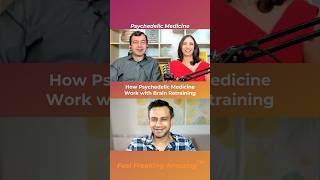
Wendie Trubow explains how psychedelics like MDMA and ketamine increase neuroplasticity, letting the brain form new connections. The risk: those connections stick whether the experience is healing or traumatic, which is why set and setting matter so much.
Chapters
Psychedelic medicine. Where does that fit into this? Because there's been a lot of studies with mdma. Ketamine has been producing great results. They all work on neuroplasticity. How does that combine with this work that you're doing?
We are very open. And so when it comes to psychedelics, our hypothesis is that somehow it increases neuroplasticity. So when we're anxious, when we're stressed, the brain is much more fixed, it's not so flexible. And so people are taking psychedelics as a way of opening up possibilities, creating a temporary state of increased neuroplasticity where more open, what opportunities are available. Now we know that's a double edged sword because the brain doesn't make a judgment as to what you choose to be open about. So if you suddenly open up your brain and expose it to a horror movie, you're going to have some pretty horrendous effects on that brain because it's suddenly been open and more open to having new neuronal connections. But actually, if you open it up to healing and to love and to camaraderie, those type of positive experiences can then have a lasting effect on the brain. So that's why I think with psychedelic research, we have to be very, very careful that people who already have a chronic disease are already highly anxious. How are they going to respond to something like this? Could it actually magnify these effects?