Lower Your Inflammation by Healing Your Inner Habits, with Dr. Amy Behimer
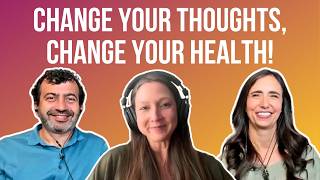
Dr. Amy Behimer, a pharmacist and health coach, explains how inner habits—your thoughts, emotions, and beliefs—fuel inflammation as much as outer habits like food and sleep. She introduces the ABC Habit Playbook and "Trust in the Tiny" principle, which uses small emotionally-positive actions to create lasting change, and recommends scheduling a "date with yourself" as an anchor for any health goal.
Chapters
Hello and welcome to The Feel Freaking Amazing Podcast! I'm Wendie Trubow, Ed Levitan's with me today, and our guest is Amy Beheimer, Dr. Amy Beheimer. She's a pharmacist and board-certified health and wellness coach, and she helps people with autoimmune disease build sustainable habits that restore energy and reduce inflammation. And her mess became her message because After being diagnosed with MS, she became committed to creating health that's better after a diagnosis than before. She has her own podcast called Autoimmune Health Secrets, and she also runs a coaching community. So Amy, welcome. We are so excited to have you here today and talk about this.
Ah, thank you for having me.
Our pleasure. So obviously your mess became your message, right? Like you— but why do you say that people get healthier after a diagnosis than before?
What's—
that sounds sort of counterintuitive.
Good. It is. And it really comes back to mindset, which is so crucial in life, but also in life with the disease. And so we tend to go towards the direction of our strongest thoughts and our strongest beliefs. And so for me, I was no exception. And almost every single person that I work with, they find me because we've been diagnosed with a disease. And so it takes the spotlight and it gets all the credit for everything going on. I was gonna say good and bad, but usually the things that feel like a struggle and a slight shift, you know, tiny bits at a time really can change the direction of our life and our health. And so again, if we allow room for the parts of us that are still healthy, even with the disease, they're there if we go looking. And if we allow the curiosity of what kind of health that we can create because of this autoimmune diagnosis that we may have, it really can stack on top of each other and build and build. And all of a sudden we're left with, um, filling in the blank with autoimmune blank. You know, everyone says autoimmune disease, but it's like, what if we could, uh, instead focus on the health that still exists and that we get to create?
Were there things after you got your diagnosis, and you can say, you know, I don't want to talk about that, but were there things for yourself that you found you really needed to dive into, work on, and get healed from that were in the emotional psychological trauma world that then impacted your illness?
Hands down. I mean, it was really recognized first as a looming fear. You know, it was my third autoimmune diagnosis. I was trained as a doctor of pharmacy, had been practicing at that point for almost 10 years. And so I knew a lot about the human body. I knew a lot about what went right and a lot about what goes wrong. And so again, I found it pretty easy, but I found it pretty easy to say, okay, well, I should eat like this, I should move like that. And on paper it looked like, wow, you're doing all the healthy lifestyle things, but I still felt not great. I still felt like, again, this looming fear of what was happening in the future. And so it was having to find a way to address the fear and really look at what was I believing that was not serving me. And for the most part, it was that my life was always going to be a little bit worse. I could still try to do the things I wanted and be as healthy as I could be, but it was going to be a little bit worse. And so with that belief behind it, you know, it's no wonder that my life continued to feel a little bit worse. And so it took the first, you know, recognition and being offered that, you know, that's a thought, you know, that's optional. You know, it's possible that life doesn't need to be worse. And I was like, wow, that kind of broke my brain open in terms of I'm just habitually thinking these things. And what if I applied the same habit change magic that I dove so heavily into, into my thinking and my feeling? How good could this get? And, you know, the research behind habits works for our inner work just as much as our outer work. So that's kind of my— what broke loose for me. I always said you can't nourish a shitty mindset. And my mindset was not there. It was, you know, yes, but yes, but. And so really dropping that and and being willing to explore those was key.
I think it's never too late to rewrite your story. You know, I don't think I've shared this publicly. I've shared it with just a few people. But when I was younger, when I was younger, I really loved singing. And I asked my parents for voice lessons and they said no. And I was like, okay, you know, I was like kind of docile about it, which is shocking in retrospect because I was a pain in the ass in every other way. But I just took it and I didn't push them. I know Ed's like keeping his mouth shut on this one. And I became a healer. I'm a physician. And I recently— this is going to sound a little weird, but I recently had a reading with a past lives guy. And I thought I was a new soul because I'm like kind of flighty and like just la la la. And he's like, oh no, you are not a new soul. You're a very, very old soul going back to like 5,000 years back. And every lifetime that he touched on I was a healer, and women weren't doctors. They, you know, people weren't doctors then. Women weren't doctors 5,000 years ago. But I was always a healer of some sort. And I was— so I had this thought like, huh, instead of being a little bit salty with my parents for crushing my dreams of singing, I decided to take on the thought process that unwittingly they were actually keeping me on track to continue my legacy of being a healer, because that's who I'm meant to be, truly. Like, that's who I am. That— and I love singing, but I can go do singing and be a healer, right? And so it's like never too late to kind of rewire it. So I about— and this happened like 2 months ago where I was like, okay, it's time to get unsalty about the voice lessons. Grateful for that.
Yes, I'm here for the weird. And there, you could never prove any of those true in a court of law. Why not choose the version that just gave me goosebumps when you said it? I mean, that's beautiful, and that's such a, um, powerful thing. But we have to be willing to do that first. So sometimes it takes, sometimes it takes, you know, acknowledging we're not letting anyone off the hook. Sometimes when it involves other people, people get worried about that, or But being willing to say, yes, I know that 100 out of 100 people would agree that they don't want MS and MS sucks. Like, I get that, and I'm the one who suffers when I believe that. And so, yeah, just first the willingness that you had and that we all need to do to accept something that feels like we shouldn't have to accept it.
You actually referred a few moments ago to inner, like, habits that were inside habits. What do you mean by that? Can you expand on that for the listeners?
Yeah, so when I decided to go back and study for myself functional medicine, I, um, it was the year that the Institute for Functional Medicine opened their coaching academy. And I originally was going to go become a practitioner. That's what you do. I had my PharmD, and I'm like, oh my gosh, what is this? One of those sliding door moments of, do I want to be an expert, or do I want to get in the work and walk it with people that, that the lifestyle things that we know help us feel and function better. I mean, we all have heard them a million times, but I was just fascinated why people had such a hard time following through on them. And so through that is where I really opened my eyes to, okay, how am I going to make this make sense for me? And so habits became this, like, juicy vehicle for all things, um, feeling and functioning better because there was so much research behind it. So I loved that they studied, well, when you try this method and when you do this and you know, there was a very practical approach to why these things work. And so the natural, I call them outer habits, are, you know, what are we eating? How are we moving? How are we sleeping? You know, the things that people can see or not see, those are all fine and good, but we can't ignore again the habitual thoughts and feelings that are making up to half of our day, right? It's just happening on autopilot. And so just the inner outer is a term that I started, you know, using with myself and then started using with my clients. And eventually it just grew into a life of its own. And I have a framework that I work with people on. And what are these controllable things? We have this diagnosis that we can't control. But if we again have it's making up to half of our day, you know, is what the research shows. If we can optimize in these areas, what could happen? How good do we feel? And so most of them are outer, but that mindset is one of those 6 key areas. And again, and that covers how we think and how we feel. And again, it's a bit habitual. And so once we recognize them as habits, we can get some distance from them and we can start to have some power over them.
Well, right, kids do what they learn. So I always say to my patients, like, what you say out loud is what your kids are going to say out loud. So if you don't want them saying it out loud, don't you say it out loud, especially as it regards for most women about their body and how they feel about their body and how they look in their body, all this obsession. I'm like, don't talk about it in those ways unless you want your kids to emulate it. So, you know, another habit, right? We learned it from our parents and we perpetuate it with our kids.
Yeah. And it's useful to, you know, today as an adult to look back at things that you think, ways you feel, things you do, and find where you picked up on that. I mean, we absorb and borrow and make other people's thoughts our own all the time. And most certainly when we're impressionable and we're young, those ones tend to stick. And so when we can look at them and really see that they are optional, then again, it can feel so amazing. And I had one client a couple of years ago now, but she was my first person who was pregnant. And we had so much fun experimenting with what are the things that you want your kids to never know any different about you? And so one of them was, she said, I want to be a person who eats vegetables with breakfast. I want that to be normal. And it's like, you're bringing your baby into this world. It could be completely normal. And so it's fun to think of that across generations, both before you, but also the ones coming after you, because our habits are the only medical intervention that have the potential to change future generations that you will never even meet, could be impacted by what you do today and what you make your new norm.
You matter. How do these habits influence inflammation? Do they?
And they sure do. You know, inflammation is, you know, the functional approach which you guys know and teach and live every single day. Inflammation in a very simple form, you know, is at a root a lot of a lot of the chronic diseases that are happening. And so the physical outer habits, you know, there's a lot of direct data in terms of What are we feeding ourselves? How are we moving? How are we resting in the inflammation that happens? But even how we think and how we feel has a fingerprint, has an energy and an emotional stamp that is happening that can clearly be tied to inflammation. And so whatever, you know, your why in terms of wanting to feel or function better, you can find a piece of data that will support that. And again, you can get into the data and argue the specifics of it. But whatever story that we are able to tell that allows us to show up and do the things that feel hard, then that's the one that we want to keep telling. And so for a lot of people, seeing and feeling that tie to inflammation is a powerful one.
So here's the challenge.
Brace yourself.
Oh, my gosh.
I'm ready.
Nothing bad.
Now, the challenge for me is people know they may want to eat less crackers or carbs or this or that. And like you said, there's a lot of emotion tied to that. How do you break that? And people— I'm going to say not that many people are really willing to look at— really do a deep dive. To understand and take the time to do the deep dive. Yeah, uh, except if they're retired or like if they're in the middle of parenthood and like in life and getting a house and all that stuff. How do you get people to slow down enough to actually like start thinking of creating habits? Because you have to be— you have to have time and energy and resources.
And brain space.
And brain space. Brain space.
Resource. Anything that I can do to take things that we know and make them tangible in real life is my aim. Because like you said, we're all living lives. And I do have a good bit of retired clients, and I love it. They do really dig into the time. But the people that are raising families and working, we need things that are tangible in real life. And so one of the ways around this, that I created is— it's called the ABC Habit Playbook, but essentially it's built on the idea that the information, the strategies that we've all heard a million times that are on the pages of Atomic Habits that we all have and have read but haven't yet implemented. It's having something tangible that you spend very little time learning about it, and then you get out in real life and you practice it and you put it into play and you get real life data on what worked and didn't work. And you have a place to come back to work through that. Because again, if we are just hypothesizing about things but not actually road testing it and putting it into play against, you know, whatever the opponent is, whether it's that dessert that your neighbor drops off or, you know, the temptation to skip your workout, the knowledge that you get from going to try something and the failing, which you may at first say, oh my God, I didn't do it, but there is gold in that failure that you will never learn in a book or in a podcast. And so the, the way it made sense for me, and so the way that I teach and talk about it, is we know every reason why a goal that you set for yourself to change how you eat or to change how you move or sleep— we know every reason why a goal can fail. And knowing what they are and then having the right strategy to get around it is everything. And the one that you mentioned with our emotional tie to things, there's a habit researcher, his name is BJ Fogg, and he wrote Tiny Habits, and a lot of people are familiar with him. He says if he could boil down his 20 years of research, he would say 3 words: emotions create habit. So part of that habit absolute is ensuring that on our journey to change the habit, we have to enjoy our time. We can't be counting down days to get through til this or that. And so, yeah, a lot of the strategies are looking how do we actually enjoy it on the process on our way to health? Because it's not a destination, and we do know that.
It's a journey, not a destination. Okay. Is there— if you— if I said to you, Amy, pick one foundational habit that ripples across emotional, physical, and relational health, is there one that you would say, okay, this is the one? Or is it too broad?
No, I can give you one. And it's— I get asked this. And so I think for a while I'm like, oh, it's not one size fits all. But finally I thought, what would I say? And I say that it is the habit of making a date with yourself. So there's so much that you can learn, whether it's mental, emotional, physical, if you learn how to show up on your calendar at a point during the day to really look at your habits, to look at your health. The cool thing about that is once you've established that you're a person that when you set a date with yourself, you show up and do it, you can insert whatever thing you're working on. So, it's tough for a lot of people just to carve out that time. Again, life is very busy. And so, it's looking at how do you treat that as important as a date with a friend or as a doctor's appointment or as going to work. So then all of a sudden, let's say food gets the spotlight and you're working on food. You could use that time, whether it's food prep, learning a little bit of what you need to know. Um, if it's exercise, you can move during that time. If it's meditation, you could use that time. So the first act that can be tough is first just establishing that you do what you say you're going to do. And the calendar is such a very real, tangible, um, exposure of a lot of our are things, baggage that will come up and a lot of the excuses. And so overcoming that first hurdle to, even if you take your date with yourself and do nothing, you know, there's lots of new studies about getting bored and how, how that can benefit our health. And so just protecting that time and taking a fierce responsibility that to start, I can control and show up for myself for this time is one that will ripple out. And you always will have that time for the rest of your life, whatever you're working on. Maybe not an answer you were thinking, but—
No, I wasn't expecting that, but I think it's a great place to start.
And it also reveals, you know, something that I mentioned, this playbook, one of the playbook, one of the plays from the playbook that is the most used is called Trust in the Tiny. And it's different than tiny habits or do something for 2 minutes because it pulls in the mindset piece. If we believed that doing a tinier version of whatever we want to be doing actually worked, we all would be doing it. But we have doubt that doing a 2-minute meditation is going to add up and change our health. We likely have doubt that, you know, eating 3 less bites of that sugar-laden cake that you'd rather not be eating in excess, we doubt that that little bit will make a difference. And so in the same way, let's say it starts with 5 minutes a day. If we are still skipping it, we can get really good at finding those thoughts that are not true. Are you telling yourself you don't have time or this won't matter? Again, we can learn so much about ourselves and our patterns just by trying to get us to commit to something that feels a little bit difficult or uncomfortable or different. Like I always say, different is really good. When you want different results, like lean into places that this feels different.
So then, so habits are amazing and we all need them. And then something happens. We get stressed out, we, we lose the loved one, we, whatever it is, lose our jobs. And then for most of us, we then revert back to our default. So is there a— is there anything we can do to either get back faster or not have to go back to the default?
Yeah, there are going to be some of those that we do have a default. It is well worn. And usually the more emotionally we're tied to a habit, the more likely something could throw us off and revert back because those neural pathways, they're still there. We can cover over them and they can get outgrown. If you think of like a ski, ski slope, you know, it will get filled in, but they are still there. So the first, you know, the first way to not get too down about having to start over is looking at you're not starting over and looking how that first time that you get knocked off of a habit that you were able to make and attain, that first time you get knocked off, oh, this is— it really is part of the plan. You know, it really is looking at it as not a setback, but a chance to learn something to keep going. And what worked the first time is likely to work again. So we can pull out the strategies that worked. We could start looking at those and recognize that to attain a new habit is a different skill than to maintain it. And so, again, just that expectation that once we make a change, that that's just the way it's going to be from now on, that's an expectation that may not be serving us. And so just zooming out, seeing it as part of the bigger picture, and really embracing what can I learn about this to still keep going. And so really having a mindset of I'm here to troubleshoot in that not let it take us off of our game that it happened in the first place.
I always say that to my patients, like, obviously you want to stay on the path, but if you fall, if you walk off the path, the goal is not to berate yourself for falling off the path. The goal is to recognize what kicked you off and to then design the structures to get back on track as soon as you can, rather than allowing whatever threw you off to be the thing to be like, well, like, February 1st, I ate something I didn't want to eat. Screw it. I'm just going to give up until next New Year's. Right? It's not about that. It's about minimizing the time that you're off the rails by understanding what kicked you off and setting in systems to get you back on track. So that, right? And don't be alone. Don't just be an island trying to do it.
Yeah. And it's not like Mario Brothers. You don't go back to the beginning. I mean, you are You may be slightly off, but you're still— that progress. Turn around and look at how far you are down the path and, and keep going. I mean, the, the illusion is that we have to be tough on ourselves because that's what's going to help us change. But, you know, you think about a boss. Do you want a boss that cheers you on, loves you, and, and cares about you in a compassionate way along the way? Or do you want to work for someone who's constantly criticizing you and pointing out how, how you got it wrong. And we are our own boss in this scenario. And so, um, really learning how to, you know, I think self-love is a huge piece of this. But there's two kinds. There's tough love and there's gentle love. And only you know at what point you need to give yourself a little of each. And if you're honest with yourself, you will know. I mean, there are times when Okay, yeah, we need to give ourselves a little tough love. But like you mentioned, there could be a death in the family, there could be very real symptoms or setbacks, and really pulling out those two kinds of tough love and gentle love can go a long way.
For the audience, I'm just— I always watch language, and I'm loving the language that you're using in terms of— first of all, you're very careful with your words, and thank you., and that makes a difference, and it's noticed. Uh, and for the audience, you want to look— listen to, like, how Amy speak in terms of this. It's not a good or bad, it's things that serve you, things that don't serve you. Really not creating a barrier in terms of bad person, good person, bad habit, good habits. Really about what are the things that can serve and how can maybe serve better.
Yeah, it's not a moral conversation.
It's not a moral conversation. It's not beating one up.
Well, and not only am I different than Wendie Trubow, than Ed, but I'm different than me 5 years from now. You know, like, I'm different from me 10 years ago. And so it's less about what are the things I need to do and more about what are the skills I need to hone. And the skill of how to feel good, how to make and break habits, how to be proud of yourself. My favorite emotion through all this is pride. I love feeling proud. And different people, you know, when we work together, it's like, what is that emotion you're going for? And that skill is what is going to carry us in those seasons, like you mentioned, where we may be grieving, we may be experiencing a divorce, a birth of a child, a loss, Instead, it's about how do we address it along the way. So I appreciate your kind words on that.
Absolutely. And like, is this— if somebody really wants to be like vibrant, or at least we always say 100, because we want to be able— is there anything that one should do to start now? Like, is there 1 or 5 or 10 habits that— not maybe, maybe not 10.
3. Let's keep it 1 to 3.
Okay, I'm gonna be, I'm gonna be quick with 6, if that's okay. Sure, let's do that. The framework that just now, it's been almost 15 years that I've been learning, um, creating, living, coaching on. None of these things are new, right? I mean, that's the beauty, is that different people package it up in different ways. The Institute for Functional Medicine has their lifestyle pieces, but the 6 that I have lived and coached and see year after year that if we find balance in these 6 areas, then life tends to feel pretty good. You say freaking amazing, freaking awesome. I'm like, you know, I just think feeling pretty good, you know, is, is good. And so I like to say, what are the habits that feel good? And again, what feels good for different people is different, but one is mindset. So really looking at looking at your thoughts, right? And mindset gets thrown around a lot. And so I worry it gets a little bit diluted and a little bit like people think, oh, it must be nice if we, you know, if you have a positive mindset. Again, it's a skill. So that would be one area to really look at. Do I have some limiting beliefs? You know, do I really think my life has to be driven by this disease? That was the hugest thing for me was getting that outsider perspective of, okay, what could I be doing with this? So one's mindset, 2 is related to food. So really looking at, you know, the quality of food that goes in. Does it need to be perfect? No, but your body will tell you what feels good. And, you know, we don't even need to worry about finding a diet. Every person I ask, like, do you know 2 or 3 things that if you actually followed through on them, you would feel pretty good? And they're like, yeah. It's like, well, let's worry about those, you know, the basics, getting water, ramping up real food, dialing down ultra-processed food. It can really start As simple as that. Number 3 is movement. So these bodies were made to move. With me and many of my clients, we may have diagnoses that get in the way of how we want to move, how well we move, but that doesn't mean that we're off the hook from moving. I mean, more than ever, we need to figure out how to move in ways that energize us. 4 is that rest and relaxation, you know, that sleep, that's getting a hold of chronic stress. That is a cause and an effect of disease. Number 5 is relationships, connection. Again, something that we know. And number 6 is good stresses. So, good in quotes, meaning that challenges we take on. If you ask people, you know, what are you working on for your health? If we don't have an answer right away, that could be the first place to start. Having a goal is something that is not many people do, and it's one of the first reasons that goals fail. We don't even— we haven't even set it. Things, you know, new questions come up when we set a goal. Let's say we even set a goal as basic as to feel better. If that's a goal that's worth setting, your brain will address it differently because it'll start saying, well, how could I feel better? And it could, you know, start to problem solve for that. So, um, those are like the 6, the 6 areas that I've found and live. And if, if I overfocus on one, neglect another one, you start to feel the imbalance. And so, um, so leaning in, and I created a quiz that helps identify which area to start in because overwhelm is the number one emotion that people come to me like that, that finally brings them to be like, I need something different. There's— this is conflicting and this is confusing and I could be doing all this. So the quiz was the answer to what if you only had to focus on one thing right now, knowing you'll get to the rest, like feel the instant shift in energy and maybe tin— maybe as a byproduct, inflammatory emotion, if you just had to focus on one thing. And so if you take the quiz, it's 3 minutes, it's about 7 questions. It uses what the research says about habit change to help give you your one area that is— could be your lowest hanging fruit or your biggest bang for your buck. And so Um, that's a great place to start and start to develop that skill.
That's great, Amy. Where can people find the quiz and where can people find out more about you? And we'll put everything in the show notes.
Oh, sure. It's, um, www.amybeheimercoaching.com/quiz. Um, and as you mentioned, I have a podcast, Autoimmune Health Secrets, and celebrating my 200th episode coming up. So congratulations. Thank you. There's a lot of backlog there. And yeah, I coach inside of the club, which is Club Habit Hub. And yeah, we take that balanced approach of learning this skill. How do we think, feel, and do better on purpose so that we can feel better and ultimately function the best we can, even if we may have a few diagnoses or two hanging out with us on the journey?
That's really great. Amy, thank you so much for joining us for this episode of the Feel Freaking Amazing podcast. Really, like, this was awesome.
Yeah, thank you so much.
I appreciate you, and it's been awesome.
Thank you.
Thank you too. Thank you.
More from Wendie




Support The Right Bacteria to Restore Your Gut Health, with Dr. Oscar Coetzee

Support The Right Bacteria to Restore Your Gut Health, with Dr. Oscar Coetzee@designsforhealth3090




Look and Feel Decades Younger by Removing Senescent Cells, with Dr. Jerry Mixon