Navigating Menopause: Symptoms, Stages, and Holistic Support, with Zora Benhamou @hackmyage
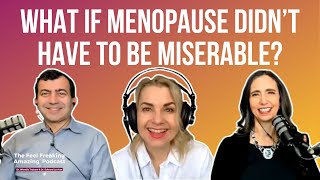
Gerontologist Zora Benhamou explains menopause stages, from perimenopause in the mid-40s to the official diagnosis at 12 consecutive months without a period. Beyond hot flashes and night sweats, she covers brain fog, phantom smells, and cardiovascular risk, then walks through strength training, sleep, stress management, and specific tests like bone density and cortisol to support yourself through it.
Questions this video answers
12 consecutive months without a period.
About 51 years.
Mid-40s (around 46).
Onset under age 40 is considered premature.
Hackmyage.com (social handles: Hack My Age).
Chapters
Foreign. Welcome to the Feel Freaking amazing podcast. I'm Dr. Wendy Trubo. This is Dr. Ed Levitan. He's with us today. And our guest today is Zora Benhamou. She is a gerontologist on a mission to disrupt the menopause stigma and age of stereotypes. She's the host of Hack My Age podcast and it focuses on biohacking for women going through the menopausal transition. So this is near and dear to my heart because I just went through the menopausal transition. And that's why we're going to write our next.
Me too. Me too.
He did, right? He lived through it. So first off, Zora, welcome. And second of all, this is near and dear to my heart because this is our next book that someday we'll publish, which is sweaty and bitchy, and it's all about navigating menopause easily.
Oh, I love it. Thank you so much for having me, first of all. And that is a great title. Can I please, like, write a forward to that?
Because I had that experience. I was like, I'm so sweaty and bitchy. That's right.
Right.
So tell me, how'd you get into this? Was it personal? Did your mess get become your message?
So menopause. I got into this because of my audience. I've always been in biohacking and, and. And so the biohacking world, well, always been about biohacking is still kind of a new thing anyways, bioim in health and wellness space moved on to biohacking and gerontology. And then my audience, I was when I had this podcast with more biohacking for older women, women over 50. And then my audience kept asking me about menopause and hormones, and they just wanted more and more information in. In that area. So I said, okay, I'm going to bring it to you. And so that's how we just sort of totally shifted into menopause. But a lot of things that we were applying to women, you know, biohacking their age or hack your age for women who are older, which are different than for the guys, then we can apply a lot of those things to the menopause experience. And so now our gu are will always have the focus on the woman going through this menopause transition.
I mean, think about it, right? Like in our practice, it's called five. Our practice is called Five journeys because it's about your physical, chemical, emotional, social, and psych and spiritual health. And all of those can throw off any one time of life that you're in. So that makes a lot of sense. Like, why wouldn't you want to have your menopause be. And after menopause, right? Because the cr. You always talk about the crone, which bugs the living daylights out of me. Because who wants to be a crone? Like, I don't want to be a crone.
Not anymore. But it used to be. People love being a crone. It was a term of honor.
Yeah.
To be a problem.
But wait, what's a crone? Maybe I'm in Europe for too long.
So I talk about. So in the. In the old days, 1980s. Well, no, but it's. In the old days, when women were eight with the seasons, if they didn't get eaten by a lion, they transitioned kindly with no hot flashes. Anything else? Because their adrenals were able to take over. Because unless you were eaten by a tiger, you didn't actually. Your adrenals weren't tapped. So you actually had some hormones when your ovaries stopped working.
I think we need to talk about that, how that works. But we can come back to that. What are we talking about here?
And they were. The term was more chronic. Chrome crone. That's what I said.
Chrome is. Chrome is Google. But what's a crone?
So it's a crone is mean a woman who's having a. An easy transition. Is that.
No, it was a term of wisdom. Like a person that. Like a wis. Person of wisdom that had gone through menopause.
Why don't I know this?
I think it's a shaman. Like, more in the shamanic.
Yeah. Yeah. We don't seem to.
So can we go back to.
So what is biohacking? Menopause. Let's go back.
Yeah, let's go.
What does that mean?
Oh, yeah, that's right.
Yeah.
So, yeah, I always assume my audience knows what biohacking is. And I just recorded a solo podcast explaining this all because in my world, it seems like every. Everybody knows what it is, but most people don't. They don't know what a gerontologist is, and they don't know what a biohacker is. So I've chosen the two professions just.
To make it hard. Right.
Yeah. So biohacking is really about. Well, think about the word bio for biology and hack for hacking your biology. Right. Taking a shortcut, a step, trying to find something. Something to be a bit more optimizing your. Your biology. And so when you talk about biohackers, we're talking about somebody who is trying to optimize their health. Quite simple. But the average person thinks about a biohacker, if they even heard of this, as somebody who just wears gadgets and does these crazy experiments. And it's not about that, at least in my world. Biohacking means really taking responsibility for your own health. And yeah, we love some gadgets to have some data, our rings or some, some Apple watches and try to gather data because what we are doing is little self experimentations. Because the difference between a biohacker and say a health enthusiast is that we just, we look at data, we try take a little experiment. We understand that n of 1 is the most important thing. N of 1, meaning there's only one person in this experiment. Right. So, so we would take say for example, I don't know, you're going to do some special diet, right? And other than just saying, looking at a scale, we may look at body composition, we may write down how we're feeling, we may look at our heart rate variability, we look at cholesterol, maybe we take some blood tests. We want to experiment with these things and try to find, trying to find what works for us because we understand bio individuality, meaning not one size fits all right? This is just not going to work. And I think you and your audience as well, you know, understanding that because we hear so much health information out there, the latest fad diet, the latest thing that people are doing and does that apply to us? I don't know. Right. We don't really know until you do this little self experimentation. So, so just to keep it simple, biohacking is really health optimization. Taking into consideration that you're doing just this own little self experiment. You're a little scientist trying to figure out what's going on in the body. And, and then you, you do have. Biohackers tend to seem access to a little bit different information. So we like things like red light therapy or cold, cold plunging. And for a lot of people this is kind of strange. They've done some of these things or heard of any of these things, but we can really utilize these things for, for menopause and experiment with ourselves in a safe way to, to have a better outcome to. It's not just, you know, getting a fan and wearing layers. This is the kind of advice you find when you Google on the Internet. What can I do for hot flashes? And it's just enough for us. So we like to bring in other tools and teach people how to be their own, I guess, researcher in their own experiment. Does that make sense?
What I really like what you're saying, which I really try to talk to as many people as I can about, in terms of patients or members of our practices, that you're really the CEO of your own body. And you have to. I can tell you, here's the best things that in general, but specifically for you, that may be right, that may not be right, but you have to be willing to experiment and you have to see, because there is no one thing that works for everybody and only.
And you know what works for you.
Or you don't, then you experiment. Right, right. But.
But, I mean, you know, you. You are the judge of what works for you as opposed to the doctor. Right. Like, don't let yourself be gaslighted.
Yeah, exactly. And so what you try to do is empower yourself with some of your own little experiments, and then you can bring the data to your doctor. You can ask as well, what's going on. If you take a blood test, what's going on with my cholesterol? I don't understand some of these numbers. And I want to know better about my hormones. And this is a way to help your doctor, help you, because. Right. Your doctors, you don't know everything about the patient when they come and walking.
In, and you're just, excuse me, I'm God, and I know everything. Thank you. Like, really, like, just. Just stop right there. I think we have to end this podcast.
Oh, well, you know, this happens a lot, and especially in Europe. In my experience, too. Doctors are like, I would come with my list of questions, and they're like, don't ask questions. Just do what I say. And I'm just shocked. And I go out the door. I said, all right, find someone else.
I think we should make a podcast called the God Complex and interview only arrogant doctors. That's like a parody. Would you like to come on the God. Oh, my God. We should totally interview the arrogant doctors and make it the God complex and not tell them that they're on a parody complex. Okay, I want to go back to menopause. Zora, I'm not sure if this is something you're going to talk about, but I really want to talk about this because this is like, the thing. So I know that you work with menopausal women, and I know they come in and they go, my hormones are off. And you're like, okay, well, let's find out. So most women, when they start the process of going into menopause, experience something, and it's often unpleasant, and that's when they come into me And Ed and say, hey, my hormones are off. And what I say to them is, your hormones may be off, but let's broaden that bucket. Because it's not just your female hormones that you're referring to, which is your estrogen. I'm referring to your progesterone and your aldosterone and your cortisone and your DHEA and pregnenolone. And they're like, what? So on my end, I'm always saying to people what Ed referenced at the very beginning of our conversation, which is that if your adrenals are suboptimally functioning when you go into menopause or start the menopausal transition, you're gonna suffer more. And the reason is that as your ovaries and your body make fewer hormones, your adrenals are supposed to pick up the slack. So your ovaries stop and your adrenals start to make testosterone, progesterone, and estradiol, estriol. Except if they're stressed, they're gonna go down the fight, flight or freeze pathway. And they're not going down the maintain my hormones pathway. Cause they're running from a lion. And so this is my favorite part of menopause talk, is let's get your adrenals handled and support your body. Because otherwise, it's very hard in today's world to have a transition that's without symptoms, largely because most of us are so stressed. So stress is the devil stress.
Well, I know we hate to demonize stuff because, you know, I was, I tell, I tell my audience. Let's, let's make stress your friend. It's not stress that's the problem. It's our perception of stress and how we react to it that is the real problem. So. Because stress is not going to go away. Right? And. But I am glad you brought up the stress component, because before I got into the menopause space, I always say, as a gerontologist, longevity starts in childhood. Because we know gerontology looks at the whole life course from birth to death. We don't just deal with older adults. And so we understand that adverse child experiences things that have been stressors in your life since you were children can affect the way you age and what diseases you get or how many and how your health outcomes later on in life. And so, and that has a lot to do with just like you said, your adrenal glands just being completely shot by the time you get to menopause, if you have not been able to manage it, because there are, you Know, my, my, my question was, especially for my professors when I was studying this, I thought, well, what do we do? Because some, some children are born with a disrupted HPA access, right? This is their, their cortisol and their other, other stress hormones production happens even at birth. And I thought, oh my gosh, what some, you know, for example, HOLOC and their children, they would study the offspring of Holocaust survivors, for example, and they find out these people are really stressed. Their adrenals are completely working very hard.
So intergenerational trauma. Yes, that's the epigenetic impact of, that's the epigenetic changes to your DNA that result in intergenerational trauma. That's like when people talk about trauma, that's, that's, that's what they're talking about.
You got it. You got an A plus. That's exactly what it's called, intergenerational trauma. And so my question was then what do we do about it, right? This poor baby, like, how are they going to get through life? And they said, well, actually if the child is born in a loving family, gets lots of care and is able to manage the stress, they'll be fine. So the idea is, when you think about menopause, when we cut, it's the same thing I always say now, menopause starts in childhood for the same reasons. This stress, stress on our body and not only the adrenals, but the whole function, every single cell in our body is right, is having, having to work a little harder when we are maybe born with not the right genetics, but also then have to deal with the, the childhood trauma. And not only childhood trauma all throughout life. I mean, you could be in midlife and, and have, be in a war, you know, right now, for example.
And this is hypothetically speaking, right? Yeah, yeah.
But even, actually, it's not even, it doesn't have to be war or, or, or abuse. It can be as simple as being bullied in school. That's a lot of stress. And so there's a lot of ways, again, it's the stress. Some children are able to handle it fine. Other kids are not. So it's again, our perception of stress and how we respond to it, I think is the real problem. So the point here is let's try to manage our stress as best as we can, not only for menopause and our adrenals, but also for. To live a longer, healthier, happier life.
Totally agree. So when, when women and men and, and women's partners are looking at women approaching menopause, Was that, was that like PC?
That was the dreadful conversation.
So when women are approaching it, are there set stages that, that you have characterized or that are identifiable that you go, okay, here's this, here's what you can expect. Here's this, you can expect this. Can you walk us through that if that's occurring?
Yes, so what women, I find I'm going to keep it simple because there are so many stages we could go through and I believe in the future we're going to have a lot more. Even post menopause, it's not going to be just postmenopause, but a lot of women in our 50s have no idea what perimenopause is. And there's so many myths and well, just, I think it's TLI too little information instead of too much information in life. But menopause, just to, to get the audience up to speed in case they don't know. Because I'm, I, I don't want to make any assumptions. Menopause is 12 consecutive months without your period. It's just a one day event. After that it's called postmenopause. And before that, the five years in general on average is called perimenopause. That's the time around menopause. But in fact it's really that time right before it. But because we may have some these still fluctuating hormones, even postmenopause, it kind of compasses that and before the perimenopause. So if we're saying 50, if the average age of menopause is 51, perimenopause would be around 46 or say mid-40s. And then before that would call pre menopause. And pre menopause starts from when you have your period around you know, age 12, 13. I think that's was in my generation. It seems like they're having it a bit earlier now up until perimenopause because a lot of people confuse that word perimenopause and premenopause and they just say pre menopause for when they really mean perimenopause. So I hope that clears a little bit for you. So the, it's normal to be in perimenopause in your mid-40s from the age of 40 to 45. That's, that's called early menopause. Right? It's, it's normal, it's happens, it's, I mean it's common, but it's just a little earlier than normal. And then before that it's under 40. It's it's premature, so it's a little bit more rare. But. But again, I. I meet a lot of women who hit menopause, literally that 12 consecutive days without a period, in their late 30s. So I. To me, it doesn't seem it's that unusual anymore.
So it's so funny. So 12. I just want to clarify. It's 12 consecutive months. You just mentioned days, but it's months.
Oh, did I say days?
You said days, but I think it was. You were just on a roll. But I think this is where we want to tie the toxins in, because things that mess up our bodies. Our bodies don't have a huge range of ways to respond. And we can respond by gaining weight, losing weight, losing brain function, losing fertility, or losing something around our female hormones either. With the frequency of our periods, having our periods, having too heavy periods, too painful, having fibroids, we don't have that many responses we can have. So when you start to see more and more women having amenorrhea, no periods before 40. Premature ovarian failure. That, to me, is a toxins issue. And we've seen women get their periods back and be like, whoa, I wasn't expecting that. Right. But as you get your body healthier, it gets back into balance. So plug for if you have premature ovarian failure, get tested for fragile X and get tested for toxins.
Yeah, I'm glad you mentioned that, because it isn't something. Getting tested for toxins isn't as common in many doctors. Yeah. And it is a great, great thing to bring up, because the first thing that people think are, oh, hormones, and then either replenish the hormones, let's get them back, or, you know, find a way. But in fact, the toxin component is really, really important.
Yeah. All right, so there's pre menopause from when you start menstruating. There's perimenopause around age 46 there. It can shift earlier and later. I have a patient who's 60 and still getting regular periods. Drives me nuts. I'm like, well, you're not gonna have osteoporosis. There's an upside. So. And then there's menopause. When you haven't had a period for 12 consecutive months, I always feel like there's that. I call it the last gasp, the last, last ovulation that happens like, 18 months after the last period. And it's like the don't you forget about me period. And it just happens, and then it never happens again. And it makes women nuts. Right. Because we gotta work it up and do an ultrasound, do biopsy, and blah, blah, blah. I'm like, oh, it's just your last gasp. You're fine. Don't worry about it.
And it can be different for every woman. I've had women who say, you know what? It's just gone. I don't know, silently left and never came back. And no fluctuations or. No, that's. It's one way. Or I've had some women saying that last period was so bad and so heavy and just blood clots everywhere. They were just a nasty last period. The thing that I would really like women to understand is that everyone has a different experience. Yes, we have things that happen in common, but we tend to have this stereotype of this horrible experience through perimenopause and menopause especially. So much social media out there making little jokes. And it's. It's funny, it's entertaining or. But it's horrifying for a lot of women who haven't gone through it yet. And they're scared and they are, you know, don't know what to do. And they're trying to reverse aging and trying not to get there, doing everything they can. And. And I really want women to understand it's. Yes, they're, you know, we. We have to acknowledge that happens. And some women have it really bad. And there are women who really don't have any symptom, no sign, and they sail right through it. Not that they didn't go through menopause. There's a lot of things that are happening under the hood, but they just didn't feel the symptoms, if at all as bad as some of their friends.
Yeah.
So what are some of the symptoms? And how do you move past them? How do you help?
Oh, what are some of the symptoms? The typical ones, everybody knows, the hot flashes and the night sweats. That's kind of the characteristic of menopause. And then the low libido, the fatigue, vaginal dryness, urinary issues. There's mood swings in the brain fog. Sleep is, you know, you get sleep disruptions early on, Even in your 30s, when your progesterone's starting to take the dive. Insulin resistance to people gaining that weight, joint pain, fatigue, thinning hair. The list goes on and on. Those are sort of the more common ones. And then there's the. The ones that people never heard about, like phantom smells. Right. When you smell something like smoke and no one else smells it, and you never think, oh, that's related to perimenopause and, and then there's. There's issues like the osteoporosis that, that we're more. More at risk of because of the loss of. Of estrogen and everything. All the hormones play a big role in not only osteoporosis, but also the cardiovascular disease. And these are the more serious issues that I think every single woman needs to pay attention to, whether or not you have a symptom. Right.
And don't forget brain health. I mean, you mentioned you touched on the bitch fix, but the. That's another good book title, by the way. The Bitch Fix. The Bitch Fix. All About Menopause. The Bitch Fix. All About Menopause.
You gotta write these titles now.
I was surprised when I was learning was reflux was associated.
Yeah, yeah.
And that most people don't think about that. But hormones affect hair loss.
Yeah, hair loss. But there's the thing is all these symptoms, I mean, we just did a podcast with und on the Hack My Age podcast, and a lot of the symptoms that we would think could be menopause, which could very well be. Could be heavy metal toxicity or mold or something else. And it's.
Right.
It's really. Can be. It can be really hard to figure out what it is sometimes. But when you deal with a woman who's around the perimenopause phase or around menopause, and you. You might want to suspect hormones have something to do with that. Right.
That's funny, because the way I. I'm thinking about it is all those person gets those symptoms in the Western mind, we, we want to put a label of one thing. Oh, it's perimenopause or it's toxins or whatever else. But human beings don't work that way. We know that there's an imbalance, and most of the time we can find two to five issues that contribute to that imbalance. And that the body's just telling you I'm out of balance. Help me, help me. That's what the body's telling me. And maybe it's hormones, maybe it's toxins, maybe it's this, maybe it's that. But it's probably not just one thing. It's very rare.
It's your blended soup. You can't identify any ingredients. It's all blended together.
Okay.
That's how I think of it. It's like a blended vegetable soup. You literally can't, you can't be like, oh, that's the pea and that's the spinach, and that's the carrying I don't know. It's all blended together, so. Yeah, it's all this big smush. Yeah. Yeah, you're right.
But like you said, also, you know, it's. It's. If you say thinning hair, the first thing I think about also is the thyroid. And so. But the thyroid has a lot to do with menopause. Right. It's just like you said, they're all blended. They're all connected together. So I also like to pull women out of this, go into the doctor, let's just look at my progesterone, estrogen and testosterone, and let's fix it.
And.
And I try to change my bloods. Could be more than that. You know, I think it's just so much more. A good doctor, in my opinion, would. Would look at a lot of things. Insulin or the toxicity or, or the, the, the just thyroid. There's so many other cholesterol. There's so many other things that you could look at, not just a Dutch test. Let's see what's happening, which is important. But I think there's. Like you, you mentioned it could be so many other things, and, And a really good doctor would. Would be able to put those pieces together. And I think it's hard to find. Do understand how to put everything together, and that's why you guys do what you do so brilliantly. But most doctors that I'm meeting are just. Yeah, it's very, very superficial when it comes to testing.
Yeah. The challenge is like, when we train providers, doctors, nurse practitioners, and there's two main things that you have to overcome. One is. We've talked about both. One is like, that they have to know everything and being okay with saying, I don't know because we don't know everything. And as soon as we start thinking we know something, we're in trouble. And then two is the mindset of there's one answer as opposed to there's probably three to five answers. Let's go looking. Let's go figure it out. So it's. And that's not how we're taught in medical school. We're taught to make one diagnosis and there's maybe one pill to fix that. One diagnosis or one referral or whatever else, and you're done. That's just not how it works.
No, but let's. Let's go. Let's give some women some practical tips, because I think there's a lot of things that people can do even if it's not. Even if we don't know whether we're Fixing your adrenals, your thyroid, your stress, your gut. We're going to fix all of it. Right, so what are some of the. We've talked about the top symptoms. What are some of the top things that women can do? You know, like the 80, 20 rule, right. What's the 80% of stuff they can do without a doctor and then the 20% of stuff they need to do with a provider. Let's, let's separate out. Let's do the 80% they can do on their own.
Yeah, I think I'm a big fan of the 80% because it's so much that we can do for free. And one of my favorite tips is exercise and moving movement, any kind of movement. It doesn't have to be in a gym, but I'm an athletic person, so I tend to be a bit more biased on that side. But all the research that I see, it's just, it's so wonderful what exercise can do, not only for menopause, but just for longevity to, to age really well. But regular exercise and, and I, I want to, you know, say, five times a week or move every day. It depends on how. You know, I'm not saying to kill yourself. I'm just saying there are times we need to increase our heart rate and, and there's times that we need to recover, and there's times that we need to get strength and flexibility, mobility, agility, all these things, and just really want the audience to start moving. And that's going to be different for everybody. If you've been sedentary, then, you know, just walking is going to be a really big step towards that direction. But if you've been running or been moving around for a while, then learning how to exercise appropriately is really important because what athletic women tend to do is overdo it. And we don't recover as fast as we used to. We like to push it hard and it's just not working. This sort of chronic cardio that, you know, a lot of women have been doing in this space because if you grew up in the 80s, you know, you've been running and, and on the bike and trying to do as much cardio as you can to burn the fat. And this is, you know, old news now. We hopefully most women are now understanding that we need to lift heavy and some strength training. And of course, the hiit, high intensity interval training is really good because it gets your heart rate up, but then it brings it right down. But really important is the recovery component, which is really hard for women who are athletic. To get into that mode. But it helps your insulin sensitivity when you exercise regularly. It manages the body fat and the hormones are better balanced. You get better sleep, fewer mood swings. All of this is so good for you. The transition will be a lot easier, not only through menopause, but transition into older age as well. Just being active and being independent. What does an older adult want? Independence. We don't want to be burdened on our family and, and live, you know, age in place age and home and are not have to go to a nursing home. You know, if you do then it really start. Start lifting heavy and start exercising or start walking, whatever that means to you. Just please move. That's my.
Everything's better than nothing. I always, I always think about that because I'm like, oh, I don't have time to do a full workout at the gym only equals to half a workout work. Right? It's better to do some than not to do any. That all or nothing mentality is where we get really nailed. So every. Anything is better than nothing. That's what I would say.
But I want to add to that because a lot of people I interview on the podcast who are in this, well, fitness space and menopause and they, they say, you know, walking in yoga is great, but it's not going to be good enough to protect you from osteoporosis. We need a little bit more impact. And that doesn't mean you have to go crazy, but just jumping on a box, you know, from the floor, you know, it's, it's. You don't have to, you know, beat your bed yourself up by running every day and wouldn't want you to do that, but giving a little bit of plyometrics is, Would be a really good thing. So I really want to remind women that we, for osteoporosis particularly, we want to be able to get a little bit of impact in there.
Yeah, absolutely. And I think people don't quite understand that bones are like muscles. If you don't put strain on them, they're going to disintegrate. So putting strain on bones is super important. Not too much, but a little bit. And women are also, I think from what, what I sense, it's Alzheimer's and osteoporosis are kind of the two big. One of the, the two biggest worries that a lot of my patients come to. And, and I can put them on hormones and I can get rid of the toxins. I can do this, that the other thing. And that's all amazing. It's appropriate. But if they don't exercise, that's like more than 50 of what they need. They're not doing the main thing. And then they want, they want all the biohacking foundational.
Right, right.
But it's. You gotta ex. You gotta move your body.
Foundations first.
Yeah.
Yep. All right. What else? So move your body's one. What else?
So the next one I would say is the big one is really big one is managing the stress. And that kind of goes with managing the stress. Not only the mental stress, but the physical stress and let's say toxic load especially. You know, the thing that you speak about is super important but because like I mentioned before, stress is not going away. We gotta manage it. So I'm a certified breath work instructor with the Oxygen Advantage. I'm so happy I did this. And I'm able to, to teach women how to breathe like functional breathing. This is the way we breathe all throughout the day while we're exercising, while we're sleeping. Right. Not just that one hour breath work class that you did in yoga. That's really nice and it's a great technique. But I really want women to learn how to breathe because it helps. It's like an immediate fix for a stress or when you're feeling overwhelmed or if you wake up in the middle of the night and you can't fall asleep again. I don't want our women to pick up the phone when and two in the morning and start scrolling and you know, trying to fall asleep. That way it's not going to work. And so I really encourage them to learn a breathing technique. There's so many out there. And then practice this while you're trying to fall asleep again. And it really, really works. And it will also alleviate some triggers for hot flashes. So some women say a stress stress can trigger their hot flashes. So again, breath work is great, but anything that will manage the stress. And in the biohacking world, we love gadgets like a new comp, for example. It's like this neuroacoustic software that you can listen to and it's supposed to get your brain into a meditative state. Because meditation is not easy for everybody. I could say that. And it's great. If you can do it, fabulous. If not, then it's nice to have these little tools or gadgets and things that can help us calm down and relax immediately. But the breath for me is like, wow, that's free. And we just have to learn how to do it it. And, and then when you able to breathe, you you're obviously getting better sleep, you're performing better with your exercising, you'll be able to go up a flight of stairs much easier. And so I really, I really am a big fan of, of the, the, the breath work. But that's for the elemental stress that does have obviously a physical impact. When you start breathing, learning how to breathe, your heart rate goes down and, and the blood pressure goes down and immune system is better, everything works. Function functions much better when you're able to, to manage the stress. But the toxic load as well, toxic stress. And everything that you preach as well in terms of figuring out if you have mold toxicity, heavy metal toxicity, the EMFs as well in the environment. But I also love to talk about toxic people and try to get those people under control in your life, and they're toxic load. If you feel obligated to be with these people or you bend over backwards for them, and that has, it takes a big impact mentally and physically on, on your life. So managing the stress is, is a real big one.
Anything about breath work you want to add? I know that she's talking your language. No, I think it be breath. When you said breath work, I was like, okay, I need, I need to breathe.
I mean, just like exercise, breathing will move the lymph node, move the lymph in your lymph, massage the internal organs, giving more oxygen. There's. It's. Yeah, I'm not sure how to put that in the. From a. There's exercise, there's meditation, there's breath work. Every. Everybody needs to. Not needs. But the recommendation is to really move, move, move that part of your body because exercise does not do that enough. Most of us breathe from the top up.
Yeah.
All right, so breathing, movement, what else. What else isn't that 80% people can do?
Yeah, there's. Well, when it comes to the typical hot flashes, let's say cassettes and, and night sweats, this is really something that women struggle with is. Is reducing some of the caffeine, alcohol, spicy foods, whatever it is that you think trigger your hot flash and doing a little bit of investigative work, writing things down, paying attention, you'll figure out what is it that's triggering. And oftentimes women don't realize that caffeine, especially if your adrenals have been overtaxed and you're already in a stressed state, trying to stay awake and getting dependent on coffee or caffeine, it's not something I recommend. So there's so many ways we can just kind of reduce it in our Lives. And I love using, say, mushroom like Chaga, adding some day. Four Sigmatic, I think, is one of those brands that people like out in the US and then making maybe a golden milk with a lot of spices and turmeric and cinnamon. And there's a lot of alternatives out there to having a nice warm drink in the morning. Obviously, tea. Herbal tea is there, but sometimes people are just bored with that and they want something else. And if you just Google it, you'll find a lot of alternatives to your morning coffee. And not that you have to take it away. One thing I really don't like to do with my clients when I'm working with them, when I find out that coffee, that ritual is so important. They love that. So I don't want to remove that joy because we need vitamin J. Right. That's important. But just if you're overdoing it, if you find you're dependent on it and you think that. That it's triggering your hot flashes, then you may want to just manage that a little bit too.
And the ritual without the coffee, you can change it up. Right? Sit out. Sit. Do your cross. I do the crossword puzzle every morning. So do the crossword puzzle. Read the paper. Whatever that ritual is, it can occur with a different drink. Like, I'm drinking chicken soup.
Are you sure?
People think I'm drinking coffee, but I'm drinking chicken soup?
Yes. Or bone broth.
That's what I'm drinking. It's bone broth. Bone broth with collagen and salt.
I mean, the other one I know I've. I've gone in and out of is mud water.
I don't know that one.
It's a blend of adaptogenic mushrooms and a little bit of caffeine from tea.
Okay, okay, okay. That's interesting. Is. Is that a brand or is that just what people call it? Oh, okay. Okay. Interesting. Yeah, we don't have that.
Mud. WTR.
Yeah.com or something. Y.
Interesting. Oh, have to go look that up.
Any other major things that. That fall in that 80% category that we want to make sure women know about?
I want to stress the importance of intimacy. I. I think investing in your relationships, in your partner, connecting with your partnership, you know, have. Having. Taking care of your vagina, if I can say that word, and having that good vaginal health, whether it's with estriol or lubricants or other things, or just having plenty of sex, that is really important. And we. We tend to. And I totally get it when you're in Menopause and you got low libido and your vagina is dry and it hurts to have sex. And yeah, it's the last thing on your mind, but we don't prioritize it enough. And I really don't like women to brush it aside and say, whatever, I don't need it. I think it's important to pay attention to it whether you're with a partner or without a partner. If you're with a partner, ask your partner if he or she is okay with that. Usually not, but if you're alone as well, you gotta figure out a way to self. Pleasure is very important, but to stimulate the vagina for. For those juices to come in and have a very healthy vagina. And you know more about this than I do in terms of what you recommend to your patients. But it is something I really want women to not ignore and put aside. I think life is so much more rich when you have that intimacy, whether it's with yourself or with another partner. And you'll probably be happier. And then all of this sort of cascades in a very positive way.
Here's the best thing that Amazon has provided women. Okay, Ed, you probably don't even think about this. Brace yourself. I know you can tell it's coming. So you can get dilators on Amazon now. And. And that's literally the best, best thing that we've ever been able to purchase because I can now say to people, just go on Amazon and buy dilators if your vagina has gotten too inelastic and you can't. It can't tolerate either fingers or penis or sex toys or whatever, yet you can get dilators and so that with a lubricant and maybe some vaginal estrogen that can actually transform the tissue. And so. But you do need to use it or lose it and retrain it to be more elastic. So I say to patients, get a dilator and then go just slightly bigger than what's comfortable, whatever that is. You know, start wherever you are and then just keep going until you get to the point where you feel like you're in the right place. And it's, you know, know, practice makes perfect so it doesn't happen overnight. Did you know that you can get dilators off Amazon now?
You know, I will leave that conversation to you.
Y.
Yes.
Go see Wendy. She wants to talk to you about something. Like, I mean, you see a lot of women and they tell you everything. Sometimes I'm like, oh my God, I can't believe they're talking to you, they tell you everything.
So are you making them feel comfortable?
That's really good. She's like approachable. So yeah, now you know dilators on.
Amazon on super important. And there's so many other things too. Just little, little toys, whatever. Red light. They got stuff with red lights in there and rejuvenation.
There's a red light wand now.
That's cool.
Up the hatch.
Lots of good stuff.
You mentioned the Dutch test earlier in our conversation. Are there other tests that. I mean, I love the information in the Dutch test. I despise the reporting. Like the way it comes out. I don't like the way it looks. It doesn't make sense. In my brain. I'm always like, what am I looking at?
Yeah.
But any other tests you recommend for women to do?
Yes, I think every single woman who is listening right now needs to do a bone density test. Unfortunately, I think in the US it's, it's the age 65 when you. Medicare pays for it or something. Way too late. Way too late.
We do it on a lot of people.
No, but Medicare, when, when what is, you know, insurance.
Usually people go on to Medicare at 65. So that's when they're eligible for Medicare. But long before that they should be having a bone density.
They should be. But I think a lot of women don't because. Well, either they don't know the doctors are not recommending it and by then it's really too late. So I really think it's very important to have a bone density test. First of all. Just saying as a baseline. As a baseline. As a baseline. And then from there, whether you, you need it every year, every couple of years, whatever. You know, that's, that's depending on the results, you may need it every six months. If you're having seen you're already quite, quite fragile. We want to make sure we also have. I would say thyroid is also a really good test to do. Just because I see so many women in perimenopause having, having thyroid issues and not really knowing it. But also you, you know more than anyone else and is, is, is getting not only your tsh. That's seems to me every doctor here as well in Europe is in the U.S. it's just TSH, thyroid stimulating hormone. And if it's fine, you're fine. And even if you feel bad, they just still send you home.
So really fine, it's no problem.
Yeah, everything's just, you're just an anxious woman.
It's all in your head actually.
Yeah.
Here's Some antidepressants and a sleeping pill. You'll be fine.
Time.
And, you know, it's. It's really a pity. So we want a full, full thyroid panel, the T3, the T4, the reverse T3, and. And then, of course, that comes out, then the anti TPOs, and just taking a full, deeper dive into thyroid, I think, is. Is a. Is really important insulin. Seeing your insulin levels, where that's at, you know, because that's generally women going through perimenopause and getting to menopause. They have a lot of insulin resistance. They don't know why they can't eat like they used to. Nothing'. And they haven't changed their diet, haven't changed exercise. Everything's the same, and they're gaining weight, and it's really stressful. So many women I speak to, they swear everything is the same. And it's frustrating because what I see is that they're exercising more and eating less. And that's the worst combination because it just doesn't do anything anymore at our age. And maybe it worked when you were in our 20s and 30s, but it's not working anymore, anymore. And so I really encourage women, first of all, take your insulin. Just see where it's at. We want to know it's in a good, healthy space, and if not, we can work on it. And then, of course, there's so many hacks and things that we can do to deal with the weight gain and the insulin resistance. So those are just a few tests, I think, that are really important cholesterol as well, because cardiovascular disease gets thrown right under the rug. Women are more worried about breast cancer than. Than. Than heart disease, but we're dying more of heart disease. And, And I think we really need to take. Take a full cholesterol panel. I. I like women to do the apo. Apob as well, not just, you know, HDL and LDL and total cholesterol. We take a little bit deeper dive, and there's so many other things that you can do. I don't know if you guys do the MPO, the. The oxidized LDLs.
No, we don't. Well, well, we do.
We're doing the cardio iq.
The cardio iq?
Yeah. Which is. Got the particle numbers and the small, medium, large, and the hdl and the apo, lipoprotein B and lipoprotein A and apoe. So it has all of the measures pulled out, as well as inflammation. So I love it. And then I would say cortisol A, cortisol test to see like what's going. But not blood. Because someone with a needle, their cortisol is going to go up anyway.
So. Yeah, yeah, yeah. I think it definitely cortisol. Those are, those are. We could go down a whole. You know, I love doing blood work and I do it when I'm in Asia because it's so inexpensive. Like, let's just do it all and see what happens. But yeah, no, those are, those are the important ones. I. I think a lot of women don't realize that just for aging is.
You forgot one big thing, though.
Which one? Vitamin D. Oh, vitamin D. Yeah. Of course you can't.
I was like, what are we talking about?
Yeah, yeah, yeah. So no, I mean, yeah, yeah.
The vitamin D is so important to making sure it's at least in the US it's optimally a 50 to 80 to. Really, when you're looking at menopause, making sure because that's for the woman, that it's much more important. That's where you're going to get more. It's more important than calcium. Calcium, because if you have a good level of vitamin D that's gonna help you absorb the calcium and you need much less calcium in your diet.
So.
Super.
What do you. Go ahead.
I was just gonna say I was talking to someone yesterday or some earlier this week about she's got osteoporosis, she's menopausal. And she said to me, yeah, I was having some reflux, so I took. I took Pepcid. And I was like, oh, let's not do that. And she was like, why? I said, because when. So your stomach acid's requ. Order to start the conversion for calcium, magnesium, folate, B12 and iron. It gets converted in your stomach acid and then the small intestine, large intestine, absorb it. Small intestine. And so if you're not starting the conversion process, you don't get the activated forms of them and then you can't absorb them. So don't take Pepcid, pantoprazole. All of the acid inhibiting substances is. Mess up your absorption. And so don't do that. If possible, do other stuff like massic gum, do other things.
But yeah, but once or twice it's not a big deal.
But ongoingly I don't think it's a problem. Once a. Once a quarter, who cares? But this was not once a quarter. This was like four or five times a week. I'm like, you want to tip the scales towards health.
Not away from health, anytime you're taking some kind of medicine four or five times a week for a condition that perhaps could be reversed, then it's time. But I'm glad you mentioned the vitamin D. And I think what biohackers would love to do is again, another great test is we test our vitamin D. We take a vitamin D capsule and we retest in several months to see if that vitamin is working. Because there's so many vitamins out there that don't actually have what they're on the label or you're just not absorbing it and for one reason or another. And then you know, oh, I got to up my down and then you up the dosage until you're happy with the ranges. But I want to ask you because Dr. Rosen, David Rosensweet, who did this menopause method program which I just went through, he talked to me about when he looked at my vitamin D levels. He says well we don't really know if your vitamin D levels are actually high. And I said what do you mean? He said you have to look at parathyroid hormone. And I didn't quite get the memo on why or how. But there is something in the functional medicine space because he's a functional medicine doctor and he said that yeah, looking at the parathyroid, those levels need to be optimized in order to see if you really are absorbing the vitamin D. Despite what the vitamin D says in the blood work.
There's all sorts of, I've heard of it. There's also looking at, normally we look at 25 hydroxy vitamin D and there's all sorts of things about looking at the 125 hydroxy vitamin D and we don't, right. We don't tend to get into that too much. We do look at things like NT peptide, which is how much calcium you're actually leaching both in the urine and the blood. But we don't look tend to look that, but we can't. We, we usually find 5,000 of good maintenance dose. But women that have vitamin D receptor SNP, small nucleotide polymorphism tend be able to need like 10,000 a day. So there's all sorts of like really deep, deep, deep dives you can get into. I think we go on one path, there's a lot of other paths we can go to but we tend to stick with that path.
I think we're, we're more at the 10,000 foot view. Like let's take, I mean we get.
Deeper but, but not in the written.
Like yeah, not every Path.
So, yeah, it's, it's, it's. That's why I said it's kind of like you need a good investigator to understand the whole blood work. Because even if you just go, oh, I'm in the ranges, whatever the labs show you, you guys are the experts, and tying it all together and saying, you know what, this is something to worry about, or this is not something to worry about. And this is why women going through menopause really need a good doctor. Because I think, like you mentioned earlier, they're just being gaslit and they're feeling bad and their blood work is showing. They're, they're just fine.
You've traveled, you are nomad, which is so cool. So you live all over the world and I know you're focusing on Europe right now, but it sounds like you've also lived in Asia. And so what you, what are women's experiences around the world of menopause? Is, is it, is it similar? Is it different? Like, what's the, is it, is there anything that you can pinpoint or they totally different?
Well, there's some women, women around the world go through menopause. It's not like, oh, in China, they're not doing it or something. They're just, we all go through it. The attitudes are different. I see they, when I, what I'm doing right now, the last year or so is I literally walk up to women in the middle of the street and say, hey, can I ask you five questions about menopause? I have no idea who they are and, and they tell me so. They tell me, you know, we make these into one minute reels and people love them and they're great, but, you know, we don't really know a whole lot about them in one minute or even the five or ten minutes that I do talk to them, but I do notice that sometimes in the tone of their voice and in their attitudes when I ask them about menopause, they're kind of like, what's the big deal? Like, why do you, you like, who cares? Why do you need to know or why, you know, it is just what it is. And they don't seem to, they do have, they do struggle. It's not like they don't, they don't say, oh, we don't get hot flashes or whatever, of course they do. But they're like, it'll pass and it's fine. Most of them I, that I've interviewed and in my research as well, if you look, you know, through research, they're most Women are not on hormone therapy. They just like anywhere else, they seem to be scared of it, scared that hormones will give you cancer or hormones are bad. They have a badge of honor saying, I've done this naturally, even though it was really hard and really tough. Or maybe they're still dealing with the symptoms. They don't have the information, just, they don't have any more information than we tend to have in North America. And so there's still a lot of work to be done. But I do do, I do feel that their, their attitudes are a little bit different. Like they just seem to be a little more chill. And you can tell though, because sometimes when the women I interview are age 16 over, they're much more relaxed. But of course they're more relaxed because they're done with it. And the ones that were in the middle when I entered, the 45 to 55 year olds, they're, they're like, yeah, you know, having hot flashes and night sweats and yeah, a little bit moody. And I just tell my kids to, you know, be patient with me or something like that. So they, they, they may laugh about it a little bit more than I find in the women in Europe and in North America that I'm interviewing. But they go through the same motions. They in general say, I think in India, for example, they would. The average age of menopause, I think is 48 or 49. It's much earlier than say, North America. So there are different countries that have go through the actual one day event on different, different ages on average. But we all go through it. It's just an attitude thing. And the research shows that if we have a positive attitude, if we have a supportive family and if you wear the pants in the family, that's also very protective and it may have an easier transition. So that's what I've been finding so far.
Interesting. All right. And I think the most important question is, as we draw to a close, where can women find you?
Hackmyage.com is the website and all my social media, Tik Tok, Instagram, Facebook, they're all hack my age. So if you can remember, Hack my age, then, then you're good.
All right then. And I know you would, I think, offered that the people who listen to the Feel Freaking Amazing program, if they participate in a menopause program with you, they can get 10% off by mentioning the Feel freaking amazing code. Is that accurate? It.
Yes. Feel freaking amazing, which is with a G. Freaking not freaking. Right amazing. For 10% off any of our menopause programs and, and if you have, you know, any questions about it, you just reach out to me and, and I'm happy to explain, but these programs are really great. It helps. Helps a lot of women get through this transition with ease, with grace and with strength. You know, I really want women to be strong through this period of time and be empowered with, with, with knowledge and, and how to go find a doctor and how to go find help and how, how to. You don't really. You can really. My motto is menopause is inevitable, but suffering is optional.
Nice. Really nice. All right then, Zora, thank you for joining us. Thank you for talking about menopause and shedding light on this and thanks for being here for another episode of the feel freaking amazing podcast. All the people listening. She has her own podcast hack my age. You can certainly go listen to that and have an amazing day. Thanks for being here, Zora.
Thank you so much for having me.
Sam.
More from Wendie




Support The Right Bacteria to Restore Your Gut Health, with Dr. Oscar Coetzee

Support The Right Bacteria to Restore Your Gut Health, with Dr. Oscar Coetzee@designsforhealth3090




Look and Feel Decades Younger by Removing Senescent Cells, with Dr. Jerry Mixon