Prevent Disease Using Biofeedback, with Dr. Torkil Færø
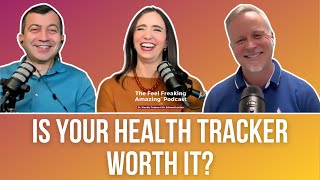
Podcast episode (Feel Freaking Amazing) featuring Dr. Torkil Færø discussing use of wearables and biofeedback to track and regulate the autonomic nervous system. Topics include heart rate variability (HRV) as a core biometric, how wearables (Garmin, Whoop, Oura, Samsung) reveal stressors (alcohol, late meals, certain foods, exercise timing, menstrual cycle), and practical tips for improving sleep, stress balance, and lifestyle.
Chapters
Foreign.
Hello and welcome to the Feel Freaking Amazing podcast. We took a little pause and now we're back. We have Dr. Torkel Ferro. Today he is a GP, which is a general practitioner physician, an emergency physician, documentary filmmaker, author of the Pulse Cure, the revolutionary new way to balance stress, optimize health and live longer. He's had over 26 years as a freelance doctor and learned that many of the causes of our diseases is most often found in the stressors our lifestyles place on our bodies. So using wearables, he's found a way to track and regulate his nervous system and physiology. So we're going to dive into that today because we know you have stress and we know that it takes a toll on you because we see you in our daily lives too. So we're going to dive in. So welcome. Torka, we're so happy you're here.
Thank you, both of you. Great to be here.
This is great.
Before we started recording, can you tell our listeners where you're coming from? Because I think it's super cool.
Yeah. I'm in Norway and right now I'm actually above the Arctic Circle, which is exotic even to me because I live in Oslo normally. And the way I've been working all through my doctoral career has been going out into the districts of Norway, which is a long, beautiful country, working 247 and then coming back again to where I live to go out in the world, do the photography, do the traveling and so on. So for me, being up here in the north, where it's, you know, dark all day, all day in the winter and light all day in the summer is an adventure for me too. So. And to see the different ways that diseases present themselves in different parts of the country is just. I love it.
You know, I'm curious, do you find that people's heart rate variability changes with longer days or shorter days? Is there a sync up with that?
Yeah, there would be a difference. So in the summer, you know, heart rate variability is also affected by sunshine. Sun exposure is very, very important.
You're diving in first. Let's. Let's go back up a little bit. What is heart rate variability and why do we care? Just start at the basics, be that way.
Heart rate variability is maybe the biometric we should care most about. It reflects the state of our autonomic nervous system and our physiology. The basic state of our physiology. We have the autonomic nervous system divided in two parts, the parasympathetic part and the sympathetic part, which I'm sure both you and Most of your listeners are familiar with. And the good thing is that the heart rate will reveal whether we are in the parasympathetic state or in the sympathetic state. When we are in the parasympathetic state, when we breathe in and the lungs filled with oxygen, the heart speeds up a little bit. And when we breathe out and there's less oxygen, it slows down a little bit, measured in milliseconds. If we are in the stressful state, for whatever reason, whether it's mental or physical or physiological, then the heart will beat at this steady pace like a metronome, like a clock, regardless of we are breathing in or out. And in this way, the wearables like the whoop band, the Garmin watches and oura rings, and all of this new technology can tell us whether we are in the stressful state or the restful state and if our overall balance is compatible with health. So for me, it's just like a revolution that we can take control of our stress balance with these physiological resources that provides us with kind of a dashboard like we have in the car, but to our own physiology and intensity.
So I want to make sure. I'm the dummy down type person, so I want to make sure it's super clear. So most of the time we think of our heartbeat as going boop, boop, boop, whatever, 50 beats per minute or 60 beats per minute or whatever it is for you, what you're saying is between those beats, sometimes it's variable, sometimes it's not exactly 60 beats per minute. It's one. If, if you're talking about one second per beat, it's one second plus one millisecond or one second plus two milliseconds. And what we want is the variability, not the. Not consistency, not consistency.
Yeah. We want to be able to reach the state where there is a variability so that we can relax and calm down into the parasympathetic mode. We also need to stress. We also need to push ourselves and do challenging things, both mentally and physically. But we need the balance to be sustainable with our physiology, because we have ancient physiology and we are made to be in the restful state most of the time. So when we have these wearables on hunter gatherers that still exist today, they would be in the restful state 10 to 12 hours a day, and then they would be in light movement or moderate stress, maybe three hours a day. So this is the speed we're kind of built for, that our immune system and our own physiology is constructed for and of Course, in our day, when we eat ultra processed food, drink alcohol, we have turned the circadian rhythm upside down. And all of the stressors that I know from listening to your podcast is stressing our physiology and without us knowing, because we don't really have a good sense of our inner state. All our good senses, our eyesight and hearing and taste and smell, and all of this touch has been directed towards outward threats throughout history. So it's only in the last decades that it's our inner state that threatens our health with inflammation and chronic low grade inflammation, and that then becomes visible through the heart rate, because the heart rate responds to the demands on our system.
Okay, there's a lot to unpack there.
Yeah.
So the first thing that I really want to highlight is for all the listeners, you don't see the impact of it in your daily life, but what you see the impact in is all the things that you're struggling with. Inflammation, autoimmune disease, obesity, poor brain function, poor sleep, poor sex drive, poor energy. Those are the ways that the poor heart rate variability or the lack of variability or the stress takes its impact. So that's one. So you could be listening and go, well, I don't have any of that, but unless you're in your best health ever, you have that. A B Parasympathetic is when you rest, you regulate, you restore, you detox. And if you are not detoxing, you're then holding on to everything. So this has direct impact on how you feel in your daily life, because you're not detoxing if you're in. In sympathetic action all the time of go, go, go, go, go. And then I think the third thing I would pull from that is go, go, go is not who we're meant to be. We are meant to actually be more rest and then occasional go, as opposed to always go and then rest two weeks a year. The balance is off.
Yeah, that sounds like a good explanation. Yeah.
All right.
And we are not, we don't have any alarm system for this. Just like in blood sugar, in inflammation, when you feel it, it has come a long way. So the heart rate will respond way before you can feel it. So it can make it possible to identify the energy thieves before you feel it yourself, when you can see it on the monitor. And of course, whoop and Garmin and Samsung and all these devices have implemented artificial intelligence into their systems. And combined with millions of users, they can tell us so much about the state of our bodies. And, and of course, so many people in the states and in Norway, people coming to my office here where I'm at work now, they have stressful lives and they are on the verge of burnout. Many people in a fatigue situation and you would not get into that situation without these devices warning you for a long time that you are over taxing yourself.
So let's talk about. Well, first of all, do you want. You showed a cool little show us your vendor example of. So can you identify and walk us through what those are? What are the.
Yeah, my left wrist I have a Garmin watch which are the best tools, I must say, best and also the cheapest and most accessible ones. If you want to micromanage your stress levels 24, 7 or to be able to see the stress levels 24, 7, you don't have to look at it all the time. That would be the Garmin watches with. And they get their algorithms from the Finnish company firstbeat, which is an experienced company in physiological measurements. And on the other wrist I have the Samsung watch which has recently been upping their game. It seems really good. And they also have a Samsung Galaxy ring that you can use in combination. I also have the Oura ring, which is probably the most experienced of the rings. And I have a Norwegian because there's so many gadgets now coming up. And there's a Norwegian ring also inspiring. That also seems to be good. So there are so many choices so that a person can choose whether they want to have like an Oura ring which is not so intrusive, gets you a morning report that your readiness for the day, you get a score for your sleep and you get your heart rate variability. And you can have the Garmin watch if you really want to find out. Okay. My main problem of stress is between one and three o' clock when I'm in a meeting with a certain colleague that I'm not particularly, you know, don't like very much. Problem is that your heart rate may go up for good or bad reasons. So when this colleague, you may be in love with him or her or be annoyed by the person you know, so your heart rate will rise anyhow. But you have to do that detective work because these devices, they have artificial intelligence, but they don't have the human intelligence. So you know what is going on inside your life. So you shouldn't make these devices, you know, take full control of your life. Of course not. But they will tell you something about what's going on that you are not equipped to know. And you have to combine your intelligence with the artificial intelligence and the algorithms and then take your decisions.
Right. I mean, I think we've also talked about hermetic stress at many different points. And so you can know, is this stress that's causing you to grow or is this stress that's just pounding away at your resilience? And people know, you know, if you slow down enough, you know, whether this is healthy stress or unhealthy stress.
So. Yeah.
Do you. And by the way, do you wear a wedding ring, too? Is that just a non. That's a device.
That is the Non device here.
Okay.
Yeah.
Okay. So.
And when did you want to show your device? While we're at it.
So. So I wear the Whoop. I used to wear the Fitbit, and I've been wearing the Whoop for, oh, four years, I think. And I love it. I mean, I use it. I mean, I know how I feel, but I'm also interested in understanding is how I feel matching up with what's on paper.
Yeah. I also use the Whoop band. So now I'm waiting for the number five, and I don't have space on my arms for that one. And I've used it for four years myself. And it's a brilliant choice. Also. And also what is good about it is that it doesn't have a screen. So if you don't want to be able to see your heart rate at any time, then it's a good choice.
Also, what about the Apple watch? And you don't wear it. Is that just because you don't have wrist space or.
I've been wearing it, but it doesn't seem to be as good as the other choices. So it's been more erratic, I think, in what I can see. Although if you really need to have an Apple Watch, then the app is called Athletic, the combination between athlete and analytic. I think it's the best one over those. But I think the ones I wear now, they have a different standard. So probably maybe in half a year, Apple will be having some improvements because it's so much happening here. And the good thing is that now there's money in preventative healthcare. They make money on giving us tools to keep us healthy and not just waiting until we get sick and then have pills and procedures and everything that, you know, of course, everything about. So I think I'm optimistic that this can help us to take charge of our own health and put our health, the control literally in our own hands so we can avoid getting sick. Because what I see in the doctor's office is that people who didn't have to get these diseases with a good lifestyle, which is the subject of my book, the Pulse Cure is not only that it's this technology, but also it's the best tips on how to live a good lifestyle. You know, when it comes to sleep and stress and movement and nutrition and alcohol and a host of other stuff. So because the people I see in my office here that I give pills, because here I do what is expected of me, I'm not going into the lives of these people and turning everything upside down. I pretty much listen and look and observe and get information. But I know that you didn't have to sit in this chair next to me here, if you follow the advice in the Pulse Cure.
So what? So I want to kind of do two. Two sides. So one is how do we best use this technology? We all know we shouldn't drink before bed or hopefully, you know, alcohol messes up sleep, but we can actually see it if we track it. Meditation. So first, how do we best use the technology? And then the next. The other side I want to talk about is I know a friend that has used the technology, I think to the roing and something else, but he was getting so stressed that he was.
Stressed about his.
Stressed that he was getting stressed, and they were showing something that he wasn't sleeping. And as soon as he took off the technology, he slept. So how do we walk that line?
Yeah, for some people, and I would say that percentage would be maybe 5, 10%. You know, like all good medicine, there's some side effects. And for some people, it may not be the right choice, and they may be too obsessed about it, but often that would be. They would be obsessed about other things and they would be worried about other things that is hard to take control of. So it would just be a. Symptoms of a modus operandi or how they work. So you would rather find a way to do this right, and then you could transfer the knowledge of that into the other areas of your life, is what I think. So you should really take it just as a. As a help, as an aid, just like you do in your car. You watch the dashboard. You know, the speed is okay. You know, you would not. The police officer will not take your license and give you a huge fine. And you know that, okay, there's so much gas left. I need to fill gas soon. And plan that. And you would see that if your oil lamp starts flashing or something is wrong, you will get the signal. And this is the same thing. And in my experience, 90% of people treat these devices Just like the dashboard in their car with the same attention. And you're not obsessed with it in your car. And there's no reason to be obsessed with this here in real life as well. But of course, many people will find that their stress level is way too high and they may be stressed by that, but it's just reality. You just get a reality check that if you continue with this lifestyle, you will be sick, or at least you increase your chances of getting sick for any of the modern day diseases. So you could hope for the best and put the watch away, but it will not solve the problem. It's like if you get a fever and you as a doctor would say, okay, just throw away the thermometer and everything is right. Of course it's not. So you have to know that you can tolerate this reality check and that you can do something about it. And of course, if you don't know what to do, then it's stressful. When I started out six years ago with an ECG based monitor, I was expecting as doctors, you know, we were taught in medical school that it's either rest and digest or fight, flight or freeze. And I was never in fight, flight and freeze. So I would expect when I started measuring my system to only see the parasympathetic mode. I'm never stressed in that way, but I could see that, wow, there's stress all over here. And I spent maybe two years all by myself because everybody thought I was weird, you know, watching my pulse in this way, detangling this and understanding, okay, what stresses me. And I could see that what stresses me is not the mental side. It's food, it's alcohol that I thought was relaxing me. It's a nicotine that I used to use. It's certain foodstuffs like chili or mustard or something that creates the stress in me. And you know, being on Instagram, I like 32,000 followers, so I get insight into so many other people's systems. And we're all individual. So it will show you how you react to certain things or don't react to certain things. While we as doctors, we're used to large studies where we get presented with an average that has no significance for an individual. So here you get individualized results that are actionable so that you can experiment and see, okay, well if I don't do this, then what happens? And for most people, you know, there's somebody will get too stressed by it. But most people will think of it as a gamification of their health. They think it's fun, interesting. They're, they're curious because this is like a discovery, you know, into your own system that most people find really interesting and amazing.
I mean, I will say for myself, I struggled. I have been tracking and disturbed by my oxygen sats for the last, what, nine months, maybe more. And I've been watching and trying to understand like what causes them to go lower, what causes them to go normal. And what I finally pinpointed tro this, this has taken me nine months of, of watching and, and correlating is that if I do cardio, and it doesn't have to be ridiculous, we're not talking like short of breath and dripping sweat. We're talking like a half hour walk at a 20 minute mile. So it's really not crazy. But if I do cardio four times a week, my oxygen stats are perfect. If I don't do cardio enough, I clearly see my oxygen start to drift down. And it took me months to figure it out, but it really did serve as a way of going, oh, I need. It's not optional, right? That walk is not optional. That walk is actually keeping my lungs and my heart healthy in a way that I didn't think about it. I just thought like, oh, you should exercise, right? Everyone should exercise. So it's been fascinating to untangle that and I untangled it about a month and a half ago and I'm really like, now it changes behavior because it distresses me to see my stats go low. Right? So now, now I'm like tracking every day.
Yeah, yeah. What you can measure, you can manage. So it makes it so much easier. And yeah, I found out so many interesting things about my own body that of course I was eating like chili for me is horrible. Just like drinking alcohol. And of course I've been eating chili all my life. And until I started tracking, I would never even start thinking about how I feel at 9 o' clock in the morning. That that would have anything to do with what I was eating, you know, 12 hours before. It would not even cross my mind to think about that. When once you start seeing that, wow, there's a difference in my stress levels throughout the night this day and it wasn't yesterday. Then you start, you know, considering and looking at your diet and other things. So you would, like most people of course would find out that alcohol is terrible. It's the worst thing you can do according to whoop, that's the worst stressor of all. And I as a doctor used to have two glasses of wine to wind down in the evening, you know, that's a word that I thought it was the best thing and it was the worst thing. So it kind of tells you how hard it is to find these things out. And also late meals, so I need to stop eating anything maybe three or four hours before I go to bed. So a lot of people find this out too. And also hard exercise. I used to take, you know, hundred push ups and then go to bed. Terrible choice, you know. And then when I could see the readings, okay, I'll, I'll do it at 6 o' clock instead of at 11 o'. Clock. And I used to think that if I'm really, really tired, I've been working really hard until I go to bed and then just crash in bed. That's a good night's sleep. But you really find out that that is not a good night's sleep. That you need to spend the last one or two hours of the evening to wind down slowly, dim the lights, do something easy like reading a book or whatever. Relaxes me. And that night will be more restful and there will be more recovery taking place on such a night.
Yeah.
Is there a difference between men and women and tracking in terms of the efficacy for them?
It would be a big difference because. And then I'm talking about the menstrual cycle because suddenly you get insight into the physiological strain of the menstrual cycle of the week before. Menstruation is not a mood or, you know, a feeling is a physiological load that you can see on your heart rate variability. And when I compare it to people having a strong or, you know, serious COVID infection, it's the same amount of the dip in heart rate variability in a COVID infection as in the week in women who have PMS symptoms. And it will last for a week.
Holy smoke balls. Okay, like that's pretty. I don't menstruate anymore, so that's like not in my brain plug for being postmenopausal because it kind of levels things out. But holy smokes. And Ed's glad about that too.
No comment.
No comment. And often, you know, the men can understand it because suddenly what was okay yesterday is not okay today. You know, suddenly the house is a mess. And it's looks the same way to me it was yesterday. So it wasn't that which have changed, you know, so it's. And when you, when you see that dip, you can understand why it's hard for the women because. Because it's a huge strain on the system. And I'VE seen also graphs from women with PMDD, the more serious kind of PMS, and they could last for almost 14 days with this huge dip in heart rate variability.
So interesting though, because I truthfully have never thought of it that way. That the one. It's not just a mood issue, it's a physiological strain. That's a very, very different way of looking at PMS than just, I'm not just a bitch.
There is actually genuinely something going on.
But. But it's a physiological strain that most. I mean, again, if I haven't thought of it yet, that's, I'm pretty far. I'm a doctor and whatever else. And I never thought of that there was a physiological strain the week before that then affects mood versus anything else than just having a mood issue. So that, that's fascinating.
Probably starts when the egg does not get fertilized. I actually think it probably starts. You know, the egg lives for 12 hours, so it probably starts. You see it halfway through the cycle, but you really see it the week before when the progesterone plummets, that it's physiological. I mean, okay, now we have to do this with our patients.
Yeah.
And the problem, you know, is probably the progesterone that is low, that creates this anxiety, that creates the stress. Because what you tend to do when you have this physiological strain is to go for some comfort foods, you know, snacks, you know, chocolate, which will further deteriorate your stress levels, or alcohol or whatever can comfort you and it will just get worse. But once you see this, this downturn in the heart rate variability, then you can start rather to eat lighter meals, have salad, do a yoga, work out instead of an intense workout, sleep a little bit longer, be kinder to yourself and, you know, put off some. If there's some, you know, like you're having a lecture or you're having some appointments, you put them off until another week. And when you do that, the interesting thing is that then you can see this curve flatten out and you lose the PMS symptoms. Because many of the PMS symptoms comes from too much cortisol, which will have a feedback mechanism on the sex hormones and disturb them. And this is physiological, this is by nature, because if there was a stressful time, you know, a hundred thousand years ago, you were not supposed to have babies. You're not supposed to want to have babies because that would, you would need to wait until everything calmed down. And it used to calm down. You know, our bodies are made for, to deal with acute stress for a short burst of time and then everything is calm and then you can recover. And now we're in a low grade stress mode all the time. And that is what is making particularly women prone to stress related diseases. Because of course the ones who get into a fatigue situation, that's mostly women that will get into this burnout situation, men also, but it tends to be like migraines, autoimmune diseases, fatigue syndromes tends to affect women, at least in my experience, more than men.
Trickle. I think we, I mean this first of all is a revolution. But the bigger issue is that often by the time people present to us, I mean we do functional medicine in our practice, so we do get into it with people, but by the time they show up to us, they have the problem. We are almost never. Very few people show up in our office saying, I want to make sure I stay healthy my whole life. I feel amazing and I want to continue. What they say is, I feel awful. How can you get me back at least to functional? And our response is we'd like to get you slightly past functional, but since you're not functioning, let's start with a very low bar. So the challenge is that we already have an epidemic of massive dysfunction. So you're saying this can help.
And this society, I mean if you go down that path, Western society, it's a go, go, go. It's not sit with your cycles, do what's right for your cycle. It's not all the time.
Power through. Yeah, just power through.
You know, could you imagine saying to a forum, I'm sorry, can you redo your 34th annual conference? Because that's going to hit during my PMS time and I really shouldn't be outward FAC and presenting at that time like that really wouldn't fly well.
But yeah, but then you just, you might have a stress, but then, you know, you have to have the week before, you have to have even more relaxation to compensate for an upcoming stressor.
Yes.
So you can always, if you, if you give yourself time to look through it, you can always find a way to compensate.
Well, what's the mechanism for that though? Because most of us are so outwardly focused that even that conversation is foreign.
Right. So it's, it's that, it's that time to breathe, it's a time to meditate, it's that time to reflect, journal whatever it is for people.
Interesting.
I mean, women have the menstrual cycles men have. Men don't necessarily have menstrual cycles except if they're married.
And I'M wondering where you're headed with this.
No, but for men also, there are cycles. They're just not as predictable. So it's. Men aren't supposed to go, go, go all the time either, is what I'm saying.
Yeah. Nobody of us are made for that. So we think of ourselves as machines, you know, maybe because we are surrounded by machines that never needs to be turned off and we think we are the same way. And many people feel guilty if they relax and don't do anything for some time, you know, and probably particularly, you know, people with families that will not take the time to wind down. There's work, there's all these activities that's caring for the children and there's no time to wind down and we're not just made for that, so we cannot relate at all.
Yeah, we have four kids, they're now old enough to. If they get hungry, they can do something about it, you know, But. But yeah, I mean, it's brutal for women in particular, I think when we look at the trajectory of. It used to be that women had one job, it was to take care of the house. There were no after school activities. You went outside, you played in the yard with your neighbors and you would make a casserole for dinner and that's what you ate and that's it. And everyone was in bed by eight and you're done. But now you don't even get home till 9 o' clock from all the activities and everybody needs to eat. So that the life is much different. And women are working, working outside the home more. So they have two jobs that are both full time.
Yeah. And in addition to that, you know, whenever there's a short space in time, you fill it up with watching your phone or checking your mail or do you have any likes on Instagram and you get stressed by all the attention because so many people are making money from you watching your screen. So we're on all the time and, and we don't think that there's a price for that, but it is. So it's super important. And the whole reason for the success of this book, because it's been just a huge success in Norway, I think that the numbers I was trying to translate into American numbers, it would be, have sold two and a half million copies compared to Norwegian population. So it has really switched everything around so that anyone interested in their own health, they would know that you can use these devices to track your autonomic nervous system and your physiology.
I mean, we've covered a lot. So Let me recap. So alcohol's bad for you. I call it the devil. Alcohol is the devil bad for you.
Don't forget the sugar.
Sugar's the other devil. Eating late is not helpful for rest and restoration.
And one thing I will say is if you do eat late or in general, walking or doing mild exercise helps really reduce that. If you do have to eat late. Going for a walk, 10 minute walk.
Are you talking about like short easy walk? Yeah, that's right.
We haven't talked about how to sleep better, although we think we've kind of end run it by talking about the alcohol, the stress, the exercise. But can you talk about what are concrete steps people can take to sleep better? Because everybody.
A very concrete step is because now as I work here in the north or Norway, there's suddenly different surroundings. And I can see that the bedroom that I'm sleeping in has white walls, which means that if it's just a tiny piece of light coming through, the whole room lights up. And in my room at home, me and my wife is totally dark. It's dark. Wallpaper is dark. You know, everything is dark inside. So that, because that is really important that your bedroom is as dark as possible because any light will disturb the melatonin. That can help you both fall asleep, but also regulates, you know, a lot of processes while you are asleep. So get your room as dark as possible, preferably so that you can see a hand in front of you in, in the night.
Hold on, I think we need to pause there. Torko, we need to pause there because you remember we got into this when I got the room darkening shades. I was like, we gotta pull it all the way down. And Ed's like, but I like to see the light in the morning. I'm like, not at five in the morning. Nobody should be.
I like five in the morning.
He likes five. I think five is a sleeping time and he thinks five is a get up time. So he used to leave the shade open by like this much. And, and it was bright in our.
But guess who won?
Yeah, of course. Yeah. You need to sleep. Yeah.
Did you know, did you know you were doing therapy, by the way? Yeah.
So I found out that I, you know, that that's a very concrete thing and you need to have your room cool. I'm not sure about Fahrenheit, but you need to have your room quite cool so that a warm blanket is not necessarily the best thing for your recovery. It may be comfortable, but you would be able to see on your wash or your ring that the colder or at a certain sweet spot in the, in the temperature is better for your recovery. Which is probably something to say with the way we evolutionary come from, you know, from Africa, it would still be cold at night in the altitudes.
Is there a difference between what men and women need in terms of temperature?
It seems so. I know that eight sleep is very popular in the States where you can regulate your temperature and you can find different temperature probably for it would probably be individual also. So there would probably be some differences between men and women, but I don't think it's that big. So in celsius it's between 15 and 18. I think that would be around 60 degrees Fahrenheit. I think there's somewhere around that plus or minus quite much cooler than most people have or that I used to have before I could see this on my watch. And then as I said, you need to wind down the last hour or two in the evening. You need to dim down the lights, maybe have some blue blocking glasses in the summer or if it's too much light inside and do some activities that you can see on your watch or that you know will calm you down. So which would be for me is reading. For other people it could be watching tv. So it isn't necessarily so that watching TV is bad for you. For some it's good, for some others it's not. So you'll find out what helps you to find your sleep. And you should have seven to eight hours of restorative sleep during the night. So not only sleep, but it's restorative and you would be able to see in the night. Maybe you have sleep apnea, for example. So many people have that and they don't know it. And you would be able to see that this stresses your body. The stress would be high even in the night. So yeah. And of course, avoid late night meals. Three or four hours before you go to bed, stop eating.
These are all pretty achievable steps. You're not saying go climb Mount Everest. You're saying eat earlier, don't do a hard workout before bed, avoid alcohol, move gently, do things that are restorative. And it sounds like prioritize restorative, which is the hardest part.
Yeah, and you should also maybe the most important thing is to have sleep consistency so that you go to bed and wake up at more or less the same time every night. And the difference could be quite huge when it comes to sleep. Because me as a doctor, I've been earlier, I used to work a lot of nighttime Evening shifts, morning shifts, you know, to twist and the day around the whole time. And of course I knew it was terrible and I knew it was very uncomfortable working, you know, 5 o', clock, 5am but that it was carcinogenic, that you could get really sick from doing that. You know, we didn't know as Doctors, I think 15 years ago and now we know. According to Matthew Walker, you know, the guru on sleep who wrote the why do we Sleep Book. In that book he refers to research that shows that if you sleep less than 6 hours compared to more than 7 hours, you double your risk for cancer. So it's a huge effect getting enough sleep. And when you have enough sleep, you wake up in the morning feeling refreshed. And it's easier to do better choices throughout the day. If you wake up and you're already behind, you know, you don't feel refreshed, you're, you're tired already that I used to be. Then you have the chocolate, then you skip the exercise. Then you take the easy choice because you don't, you cannot muster the energy to do the good choice. So it all starts with sleep. So the pulse cure, I call it an expedition in the post cure because changing your life is hard, you know, even with these tools. So you have to brace yourself to some real effort. And you start with sleep and you have the different stages of the expedition and then you go on to movement and stress regulation and to nutrition. It's for the hardest thing, for at least for me and many people to learn how to take good choices. And of course staying away from ultra processed food and particularly the food that is addictive, the ones that you find, you know, at the end of the supermarket, you know, when you're tired after making all the choices, that's the food that you really don't want. And when you can see the result on your wearables, it's so much easier to take the good choice when you know what you will expect to see the day after. So when you were, you know, lying in the sofa watching Netflix and having some snacks, you would think that you're relaxing, but your heart rate will respond to the stress of the food that you're eating for so many people.
So you had mentioned you like the Garmin the best. But if people are, is it appreciably different that Garmin is so much. I mean, Garmin's really big and it's too big for my watch.
No, it doesn't. It can be small even because they have lots of, they have a very Female oriented catalog. So they would have really, really feminine small watches too. Yeah. And the big ones for the guys. So they have that.
Does it ultimately matter if people are. Is it better to track than not track or is it. If you're going to track, you should track with Garmin. Best in class or don't bother. Like where does it, where does the line fall?
Garmin is the only watch where you can see the graph very, very easily throughout the day. When you are in the parasympathetic mode, you can see a blue graph. And when you're in the sympathetic mode, you can see an orange graph that will be more intense as it goes, like from a 0 to 100 in the stress level. And Garmin also have this very easy body battery system that you can see your energy estimate throughout the day. And nobody else has that. The other will have an energy score for the morning, but they will not follow it throughout the day. So it has a much easier way to show you the stress level. And my mother at 82, she has full control of this. And my daughter and son have had it since they were like 13 or 14. So it's really easy to find. And it's the only system where you can find that. Okay. The stress started half an hour after the meal. If you go to whoop, you know, it's like the whoop band and the oura ring and many of the others. Although they have some rudimentary stress levels in the daytime, they're not good enough. It's like going shopping and you only see the total. You don't see the different items. While with the Garmin, it's like you get insight into the individual items that can stress you or de stress you. Throughout the day. You can see people show me curves where they have a huge stress and then they go read and then go straight into blue in the parasympathetic mode. And you can kind of pinpoint where the stress happens. So it makes it so much more actionable, I must say. And it's also cheaper. You're probably in the US get watches that are great at $250, while the Woot band would probably be a bit more expensive. So you have a larger range of possibilities with Garmin, which is also an American brand.
Got it. Okay. So we get better deals. Okay. I mean, this has been fascinating. I love my woo. I mean I use it all the time. He always thinks I'm nuts. But I think this whole thing is fascinating. So I think people are going to want to find you. Where can they and we'll put all of this in the show notes. So where can people find out more about you?
Yeah, I'm on Instagram. Dr. Torco. Dr. Torco and my book the Post Cure is on Amazon on everywhere. It's also an audible, an audiobook and an ebook so it's easy if people want to listen to a book rather than read it. So and also have a website called thepulsecure.com and there you can see I have a lecture there a video lecture where I show how to use the Garmin watches and you can see the pulse cure is like a one hour lecture or so that explains you everything.
Okay. Awesome.
Awesome. It's been fascinating.
I mean it's amazing. So thank you. Thank you for being here and for the listeners. Thanks for joining us for another episode of the Feel Freaking Amazing podcast. We hope this was valuable for you and that it makes a difference for you in managing your health. So thank you.
Thank you for having me.
More from Wendie




Support The Right Bacteria to Restore Your Gut Health, with Dr. Oscar Coetzee

Support The Right Bacteria to Restore Your Gut Health, with Dr. Oscar Coetzee@designsforhealth3090




Look and Feel Decades Younger by Removing Senescent Cells, with Dr. Jerry Mixon