Toxins and Autoimmunity, with Dr. Aly Cohen
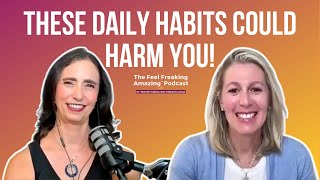
A podcast interview (Feel Freaking Amazing) between Wendie Trubow and Dr. Aly (Aly) Cohen exploring how environmental chemicals contribute to rising immune disorders and autoimmune disease. Dr. Cohen — a rheumatologist turned environmental-health advocate and author of the consumer book Detoxify — describes her personal catalyst (her dog’s autoimmune hepatitis), reviews epidemiologic trends (rising autoimmune and immune-related conditions, including food allergies and dermatitis), and frames chemical harms using the term she popularizes, "immune disrupting chemicals" (IDCs). She discusses example chemicals and mechanisms (BPA, phthalates, heavy metals, PFAS; effects on cytokines, molecular mimicry, microbiome, endocrine/metabolic systems), cites prevalence estimates (7–14% of US population with some autoimmune disease; ~1% worldwide rheumatoid prevalence), and critiques slow regulatory response (Safe Drinking Water Act 1974 limited to ~91 chemicals; PFAS remediation proposals were limited to six compounds and later stalled). Practical advice emphasizes low-effort, high-impact changes: prioritize food quality (frozen USDA organic), reduce ultra-processed foods and harmful product use, install point-of-use water filtration (reverse osmosis recommended), follow her "four A's" framework (Assess, Avoid/Swap, Add, Allow), use an anti-chemical dietary pyramid, and favor action over routine broad testing (unless clinically indicated). The tone is pragmatic and empowering, focused on individual agency while recognizing systemic regulatory gaps.
Questions this video answers
"Immune disrupting chemicals" (IDCs)
7–14% of the US population
Approximately 1% of the world's population
1974; it covered 91 chemicals (as described in the interview)
About 15,000 PFAS compounds mentioned
Chapters
Hello and welcome to the Feel Freaking Amazing podcast. I'm Wendy Trubo. Obviously, Ed's not with us today because it's just me. And today we have an awesome guest whose subject is near and dear to my heart, which is toxins. Her name is Dr. Ailey Cohen. She is an environmental health expert and board certified physician who practices rheumatology and integrative medicine in Princeton, New Jersey. Her new book Detoxify, which came out recently, connects the dots between everyday chemicals and the epidemic rise in immune disorders and autoimmune disease and what we can do about it because it's not all doom and gloom. Ailee, welcome. I'm so excited to have this conversation with you today.
Thank you for having me, I appreciate it. And hello to your community.
My pleasure. All right, so I guess the first thing I always want to know is how did you get into this? Because you were, I'm assuming, a classically trained medical doctor. And then I remember in med school saying, why is this happening? And it was like, we don't ask that question. So how did you get into it?
Well, I didn't get into the why is this happening? Question until way after my training and residency and internal medicine and then rheumatology fellowship. And I basically was a young mom living in central New Jersey. My kids were very little and I had a golden retriever was my first child, my starter child, and he was about four and a half years of age and he got really sick. And that actually began my process of looking into any chemicals because what he was diagnosed with was called autoimmune hepatitis, where his immune system was really attacking him, his liver. And when, when he was, he was diagnosed formally, he had a, you know, a liver the size of a golf ball. And I was so heartbroken as a mom, I mean, I'm a huge animal lover that I started trying to figure out, well, what happened? How did this happen? Did I, was it his drinking water quality? Was it his dog food? Was it this red plastic toy that he sucked on? Was it flea and t pick collar stuff? Air pollution, pesticides? We lived around all of that. And the more I was trying to uncover what triggered his immune system against himself, the more a world opened up in regard to how environment affects human health. And the data, the peer reviewed journals, the textbooks were so full of this information. Even 15 years ago when this occurred, I had no idea why I hadn't learned this in med school or even internship or even fellowship as an immune disease specialist, rheumatologist. It was so Mind blowing that it took about five years at least just to try to undercover, you know, I tried to figure this all out on my own. I would read medical journals and look for, you know, try to reach out to the first authors or second published authors for these magazine, you know, journals. And essentially it began a journey. So here I am, three books later, two are Oxford, one is now my consumer book. Trying to get this really out there to the public. But this is my jam. And it's unfortunate, but this is how my sick dog got me into this work.
You know, when we were doing the research for our book, one of the studies that I fell on and was like, you have to be kidding me, was published in 1989. And it was a Massachusetts study, which automatically caught my attention because I'm in Massachusetts. And it looked at that one in every six deaths could be attributed to either air or water quality. And this is from 1989. This is not 20 years old, this is almost 40 years old. Like we've known this for a long time.
Look, things are not getting better, they're getting worse. The epidemiology, you know, I tell patients, you know, listen, and I tell the community, I wouldn't be doing this if I wasn't a rheumatologist. For 22 years now, I mean, I've watched the landscape of my own practices that I've been in and the current one I'm in now, and, you know, I've been seeing an increase, a rise in autoimmune disease cases and also immune, not just autoimmune, but immune disease cases like food allergies and dermatitis and all of these inflammatory conditions that are not necessarily directed at self like autoimmune diseases. But what I've been seeing is mirrored by what the epidemiologic papers are showing, what the NHANES data is showing. We now have 7 to 14% estimated percent of the US population that has some type of autoimmune disease. And there's, there's 80 classically written about in the Western medicine journals. But technically we have a rise of these cases. And what's happening is that we're seeing them now in younger patients with no particular family history. So these are de novo cases. You know, 1% of the world's population is rheumatoid. That is not because we're getting better as doctors diagnosing, in my opinion, it's because we have 15 minutes with our doctors. How could you possibly learn the vast majority of information? It's really because this is a collision between what we're walking through, eating, drinking, putting on our skin, using as feminine care, and really how this affects the human body at the cellular and tissue level. I mean, that's what I'm trying to explain. Right.
And you see this. I mean, what's crazy is you're a rheumatologist, so you see the autoimmune and immune component, and then when you talk to the oncologists, they're seeing the cancer component. Right. So it's not just autoimmune and immune dysfunction. It's cancer earlier, younger, more aggressive, and a lot of it tracks back to these environmental toxins. So talk to me about, when you talk about immune disrupting chemicals, what are you referring to? Which ones are you particularly focused on?
Yeah, immune disrupting chemicals, or IDCs, was basically, I coined it because I've been studying and researching and writing about EDCs, endocrine disrupting chemicals, which are unbelievably robust in the literature, in terms of the papers internationally, in terms of the endocrine with their statement paper and the, you know, reproductive and ob GYN societies, all of these pediatric, American College of Pediatrics, every society now recognizes endocrine disrupting chemicals as a term for how many of these chemicals affect human hormones and the endocrine system in one way or another at very low doses, you know, over time, in general. And how they work differently from just dose makes the poison in terms of, you know, classical toxicology. I threw in this concept of immune disrupting chemicals. I coined that because I said to my colleagues who actually are really deep in the. In the weeds of EDCs. I said, why aren't we framing this around how they work from an immune system component? And that really came up. That's how I kind of derive it. So the immune disrupting chemicals, I'll give you an example, Bisphenol A or bpa. Okay, so many of your audience members maybe not have heard of BPA as being a problem. It was taken out of baby bottles that were plastic in 2012 because it was so well known as an endocrine disrupting chemical. It could not only affect the estrogen receptors in upregulating, downregulating, but it has direct effects on the gut microbiome. It has effects on thyroid. It has effects on insulin, really resistance so much in the peripheral tissues, but also increases in the amounts of insulin that's produced. So it has metabolic effects. But BPA has effects on pretty much any hormone system in the body, but more, some, more than Others BPA was also recognized as having immune system effects and that's what I call out in the book. But it's also all over the place in the literature. So it can affect cytokine production. It can create what's called molecular mimicry. Where our bodies see BPA from what we ingest in a variety of ways. Maybe canned foods has BPA on the interior lining and some other ways, mostly ingestion and essentially causes a, a response where it doesn't recognize human tissue from bpa. So that's called molecular mimicry. It's basically mimicking human tissue to self antigen. So the idea is that there's lots of mechanisms, different chemicals work in different ways. We're starting to see classes being studied like phthalates are being studied for their effects. The bisphenols are being studied, the heav metals are being studied. We know this and we're just. I'm applying this to where do we see these things in day to day everyday life? Let's look at that in the book and let's see where we're getting exposed so that we can kind of reduce those exposures and reduce our risk for developing health conditions, you know, connected to these chemicals.
So in your clinical practice, what are you noticing? Do you. So I guess I should back up. Do you test for the environmental toxicants in your clinical practice?
So interestingly enough, I used to, I used to be very avid about doing this, but I realized that in New Jersey, for instance, it's an out of pocket expense. A lot of practices that do, you know, kind of holistic, wellness, functional, integrative will do a lot of out of network testing because they can or they want to. I can do them too. But what I've realized is we're all contaminated. We're all contaminated with a lot of different things. So what I'd rather people do and what I write about and post about on the Smart Human, which is my platform, is give people solutions to spend that money in a different way. So in other words, why don't we consider big ticket items that are going to change our health in bigger ways than just testing where in any minute, day to day you're going to have a different level depending on where you're exposed, what you eat, what you breathe, think about. Yeah, sorry.
So you would, so let's back up. So you would say basically you don't need to test. You know you're contaminated.
And if you want to test, I have tests for ICD10 codes where people can use their insurance. So I have a list of all the companies that are reputable in terms of chemical testing like you're asking, which I do in certain cases and I talk about some of the cases in the book. Then I have also the ICD10 numbers which are what doctors use to justify ordering a test where you can hand it to your doctor and say I'd like my heavy metals run on cadmium, arsenic, lead and mercury. Here's the code, here's the test, let's do that. I have a couple cancer codes in there. I want people to be really advocate for themselves in a world where I think it's so variable in the medical system. I'm not saying it's a bad thing. I just think doctors, western doctors like myself, yourself, we've been trained to follow a certain path and I want people to have the ability to ask the right questions and come inform to whoever their, their healthcare practitioners. Practitioner is.
Yeah, that's great. So, okay, so when you're talking about the big picket, big ticket items that people will focus on, what are those things that you recommend people focus on?
Yeah, I think about high yield items like number one, why, why bring a bunch of products into your home where it's going to get into your home, you know, get onto surfaces, maybe hand to mouth behavior with pets and kids. So things like, you know, why do we need so many house cleaners? Just thinking about big ticket items, you know, why do we need a S counter, a sink cleaner, oven cleaner, carpet cleaner, window cleaner, you know, so I wanted people to know that those things we can cut back. It's part of my, what I call the four A's of environmental health navigation. It's in the book. It's how my 21 day plan is broken down. It's very simple but you want to assess first thing and see where these things might be coming in. There's even a 50 question survey which I think every doctor should at least take a look at and pull from what they know those questions. And the second thing of the forays is avoid or swap. So avoiding by reduction of products we may not even need in the first place or not want because we've been marketed to. We can also swap, we can swap to products we do like, like a cleaner, lip balm or a body spray or you know, a self tanner. I use the other day was a level one on EWG because my legs are so white. We just came out of winter. So there's lots of choices that we have and we can either reduce or swap the third a By the way, out of the four A's is add what we adding into our bodies to make it thrive. We can get into that. And then the last A, since we're on it is allow, which is life. It's my hair coloring, it's my lacrosse game I have to go to in a couple hours to see my kids on really toxic turf. It's allow, it's travel, it's birthday cake. And you need that piece in order to do some of the harder change outs, I think.
Right. You know, because perfection only exists like on the whole on the Hollywood movie screen. So you're not expected to be perfect, you're expected to be in the game and dance with the exposures you get. For example, like we travel a lot and I travel with a topical glutathione spray. So whenever I'm on the plane I'm like, oh, let me, you know, get, get detoxing while I'm on the plane rather than wait for later and let it build up. So that's a great, you know, allow is such a great approach because you're not going to be perfect and perfection is not real. In fact it makes you stressed and then you shut your down your detox anyway. Okay, do you recommend people do water filtration and air filtration in their homes?
Yeah. So first assess and part of that big assessment is what are the big ticket items as we were talking about? So certainly food by volume is one of the biggest contributors to a lot of chemicals, variety of chemicals, food additives, colors, preservatives, packaging. Food packaging has an effect. So by thinking about less processed or less ultra processed foods in general is a much, much better way to look at food. And also thinking about USDA organic frozen, USDA organic foods happen to be even remarkably not just cleaned or cleaner from a USDA organic certified perspective. Less pesticides, less genetically modified or no genetically modified ingredients, preservatives and all that. But it also happens to be really chock full of nutritional value. So frozen organics are like to me the new fresh. Growing up when I needed fresh or was told fresh is the best, turns out in supermarkets now fresh has traveled a long time. So unless you're really growing your own food or you have wonderful farmers markets like we have here in New Jersey that have organic sellers or you wash your stuff in a variety white vinegar, I've do it yourself recipes on how to wash produce. But technically in modern day times our nutritional value is a lot lower than we would expect. Soil, quality, transit. And so that's why I really say from food, think about frozen USDA organics. And then from another perspective, water. Water is one of the most, in my opinion, most unrecognized contributor to human health conditions that people don't think about. And water filters run the gamut on pricing, but they're really inexpensive now, even for reverse osmosis, which I recommend most. And I even talk about that in a whole chapter on the book about how water matters so much. Where, how we can carry it cleaner, how we can clean it better, why it matters. And those are two huge volumes into the body.
My husband thought I was nuts when I was like, we're filtering the house. I went through a massive health challenge of my own and ultimately learned that I had heavy metals, mycotoxins, and not as much environmental toxins, mostly heavy metals and mycotoxins. And I was like, that's it. We're not getting exposed to any. So we put in a whole house water filter. And at first he was like, okay, honey, whatever you want. You haven't met my husband. He's a really nice guy, he's really easygoing, but he really was like, do we need to do this? And I was like, we need to do this. So he put in the whole house water filter. And then he goes, we should put a filter on the bathroom sink, because we drink from the bathroom sink and I don't think it's filtered enough. I was like, who are you and what have you done with my easygoing husband? So we filter at the kitchen. Kitchen, we filter it. The bathroom where we're drinking it, and then we filter the whole house. And we originally thought like, oh, it's not a big deal, you know, we live in a town with great municipal water. But guess what? These filters are disgusting when we change them.
There's so much, you know, upstream from that is, you know, if people understand, as I explain in the book, what our water system regulations are, which are really outdated, they're from the 1970s. In fact, 1974 was the safe Drinking Water act that was passed and really only covers 91 chemicals at that time. And now fast forward 50 odd years later, we have had thousands of chemicals added into our environment, including that end up in lakes and streams and waters and sewage that end up in our drinking water because it cycles back to municipal tap. And yet we haven't changed the infrastructure to manage those additional chemicals. So that's the disconnect between our regulation for water and what we're actually seeing now, mind you, also water at these Wastewater treatment plants, which service 85% of the US population, they actually add things like fluoride and chlorine and detergents in order to process that water and then send it out. Then it travels through, you know, PVC piping or lead piping or any breaks in the piping. Ours is 30 miles away. And I actually did an interview with all them. They're doing all their jobs. Right. It's just that when water leaves a wastewater treatment plant, it's actually quite dirty, even from what we add to it, let alone what else is added to it. So we have an opportunity to clean water when it hits our home at the point of use. And so I really do push for people to, at the very least just get one in your kitchen to cook with, to drink with, to fill up with. Because, you know, you can also get filters on shower heads and that kind of thing. But those are expensive purchases. I want people to start thinking just mostly drinking and cooking to start with.
Well, also, when you think about everything's better than nothing. So if you're doing nothing, you're getting nothing. But if you're doing something, anything you're doing is better than not doing anything. So if you can do it, all right, like, countertop is better than straight tap. And then, you know, filtered. You're like, you're partial to reverse osmosis. I'm just partial to. I'm not, actually, but that's, to me, not a fighting point. It's like, whatever, get something on your filters. So, okay. And, you know, it's funny because I think at one point I was doing research for a talk, and I think the last time the EPA banned something was in 1989, I think.
Well, we almost got six perfluoroalkyl out last fall. That was going to be the really big change, actually, because there's over 15,000 forever chemicals. People have heard about these in the news that are from Teflon and nonstick chemicals and stain guard. And, you know, these were, you know, I guess they were the focus of Dark Waters, if you saw that movie with Mark Ruffalo. So there are 15,000. They've made it into our water systems from military sites and from manufacturing. So there were six that were going to be removed from. You know, we're going to be remediated, meaning if they hit a certain level, you would have a maximum concentration level. They would be caught at these 160,000 wastewater treatment plants and they would be removed. Right. So six is number one. Six is a drop in the Bucket out of the pathetic.
Honestly. Pathetic.
Pathetic. Number two, we didn't have the infrastructure yet. So how are you going to change out 160,000 wastewater treatment plants to manage those six? That would take a few years. So even if they put that into, into regulation, it doesn't mean it has to start for actionable changes for several years. And by the way, it's been taken off the table anyway, you know, from an EPA perspective. And you know, so my message has always been do not wait for regulation. Do not wait for whatever red dye number three. That's great, I applaud it all, but I would never wait for the amount of chemicals, we're talking over a hundred thousand now that pretty much make their way into our lives from all of our stuff we love, you know, water, food, cosmetics, personal care, cleaning, industrial. Don't wait for all of these regulations. You, it won't take, you know, during our course of our lifetime, they won't make a difference if you wait for one at a time. Even what we need to do is for ourselves. That was always my educational work for high schools and college. It's my book, so it's really saying and how I post. Even for the smart human, it's here's the nugget that you need to do the why and here's the what to do and let's do it for ourselves. Let's have agency over our body and empower ourselves instead of waiting for anyone else to make those changes, in my opinion.
Yeah, it's funny, Ailey, because the thing that you're kind of underscoring, and I really believe that people make behavior change, either there's someone who wants to wait for a problem to exist and then they'll respond, or they want to make change because they know it's the right thing to do for themselves. But the vast majority of people need to wait for a problem. And so now here I want to bring it back full circle because as a rheumatologist, you see these problems. And so I would even say the next layer is don't just do it because the regulations aren't going to change, but do it because so many of us have an autoimmune or an immune dysfunction or some type of chronic illness that, you know, when you kind of dump in metabolic associated fatty liver disease and obesity and insulin resistance and all the metabolic dysfunction on top of all the rheumatological dysfunctions. We're Talking about like 85% of the population, like everyone's got something. So if you're waiting for a problem. If you aren't in the best health of your life, the problem is now, basically there's nothing to wait for.
Yeah, absolutely. And listen, you know, when I talk to my patients and when I talk to anyone, I always say listen, you know, it's very hard to do anything when it doesn't affect you immediately. Right. I, you know, we're not into delayed gratification. It's just not how society is kind of, kind of working. Right. Even with myself, you know, no one wants to, you know, kind of do anything. But what I argue and what my, my points are is that this stuff is so low energy change, low effort change. These are just making different choices, knowing what you need to know. This is low cost in terms of water filters or how to choose, you know, organic foods or wash your foods and produce without, you know, having organic available or how do you swap cosmetics and personal care products. I just spoke to 600 kids at my kids high school and taught them really quickly how to look up their stuff and boom, they're off and running. So the idea when it's risk benefit, you know, basically the benefit is huge for very little risk and effort. And so even if you're one of those people who feels really good or feels really healthy, it pays to get this stuff on board anyway so that you can stave off harm and healthful health issues down the line. Especially if you're going to get pregnant one day or you're considering conceiving. I think that's a good time to start to think about this stuff. I never blame moms. I never blame. I mean, as I write in the book, I was rolling up to McDonald's every morning for their deluxe breakfast on hot plastic. I mean, this is what I ate every day when I was pregnant. So I want people to really think this is not about regret or shame or judgment. It's really about a journey that everyone takes to do little bits of change over time. I think starting with things like habits. If you're going to have tea or coffee in the morning, maybe consider that water, maybe filter that water. Maybe you're thinking about whether it's in a styrofoam cup or it's a cup that you go to Starbucks, maybe bring your own stainless steel. These little changes over time actually really do add up. You can measure them in the blood, you can measure them in the urine, you can measure them in breast milk. But why do that? Put your money into the doing instead of the testing? For the most part, yeah.
100%. So you talk about this anti chemical dietary pyramid. Can you talk a little more about that?
Yeah, you know, I'm a product of Dr. Andrew Weil and all of his training and I work with him. In fact, two books were in his series for Oxford and he has the anti inflammatory pyramid or the anti inflammatory diet which is in a pyramid. And it's wonderful. It's based on the Mediterranean diet similar to say the Blue Zones, you know. And then Mark Hyman has the Pegan diet. And there's been a couple pyramids that I have seen over the years of my training and I thought I would take the best of what I thought those had to offer and really add in the environmental health piece. So the bottom has the detoxification premises of what people should be thinking, I think very simplistically then moving into food packaging and then moving into water and then moving into food. Because I think if you just take food and you don't think about the quality of your food, if you don't think about the food packaging that contributes so much of some of these chemicals and you don't think about the detox picture, you're missing the full picture. So that's kind of what I, you know, I put together, took months and it really, it's in the book and people can certainly, you know, print it out and put it on their fridge. And it's just really a bigger picture of sort of the anti inflammatory diet with this environmental compete component piece. And I think it's, it's very useful and very simple. Yeah.
And it's interesting because we're always saying to people, look, you know, people come to us and they're like, I want to do detox, I want to be evaluated, I want to get rid of it. I'm like, that's cool. But like, are you pooping, are you sleeping? Are you managing your stress?
Very simple stuff.
Toxic. So I call those the foundations of your health that you literally can't step over the foundations of your health. You have to sleep, you have to eat food that serves your body, you have to move your body and sweat, you need to manage your stress. You have to have relationships that work for you to have a purpose in life, that those are the foundations of your life and then you can get onto. Because if you don't have a purpose, why bother? Right? So it's so interesting like you know, it's all in a pyramid creation. That makes a lot of sense.
Yeah, no, absolutely. And in fact you're describing a lot of the ad out of my four A's, you know, assess, avoid, or swap an ad. The AD is all the things that have made humans thrive for millions of years. It's the sweating. It's the using our muscles. It's getting great sleep to affect the glymphatic system, which is the fluid around our brain and our spinal cord that actually collects chemicals during the day that we now know great science washes out while we sleep. So sleep should not just be for, you know, waking up and cognition and memory, we love that. But there's a. There's a clean cycle when it comes to sleeping. It's adding in the right nutrition that offsets some of the epigenetic changes from environmental chemicals. As the science shows, it's adding in cruciferous vegetables and foods that churn up your liver functions to break down many of these chemicals into safer byproducts products. So there's lots to add.
More from Wendie




Support The Right Bacteria to Restore Your Gut Health, with Dr. Oscar Coetzee

Support The Right Bacteria to Restore Your Gut Health, with Dr. Oscar Coetzee@designsforhealth3090




Look and Feel Decades Younger by Removing Senescent Cells, with Dr. Jerry Mixon