AI vs. Authenticity and Why Trust Is the New Currency in Media & Music | The FYM Show
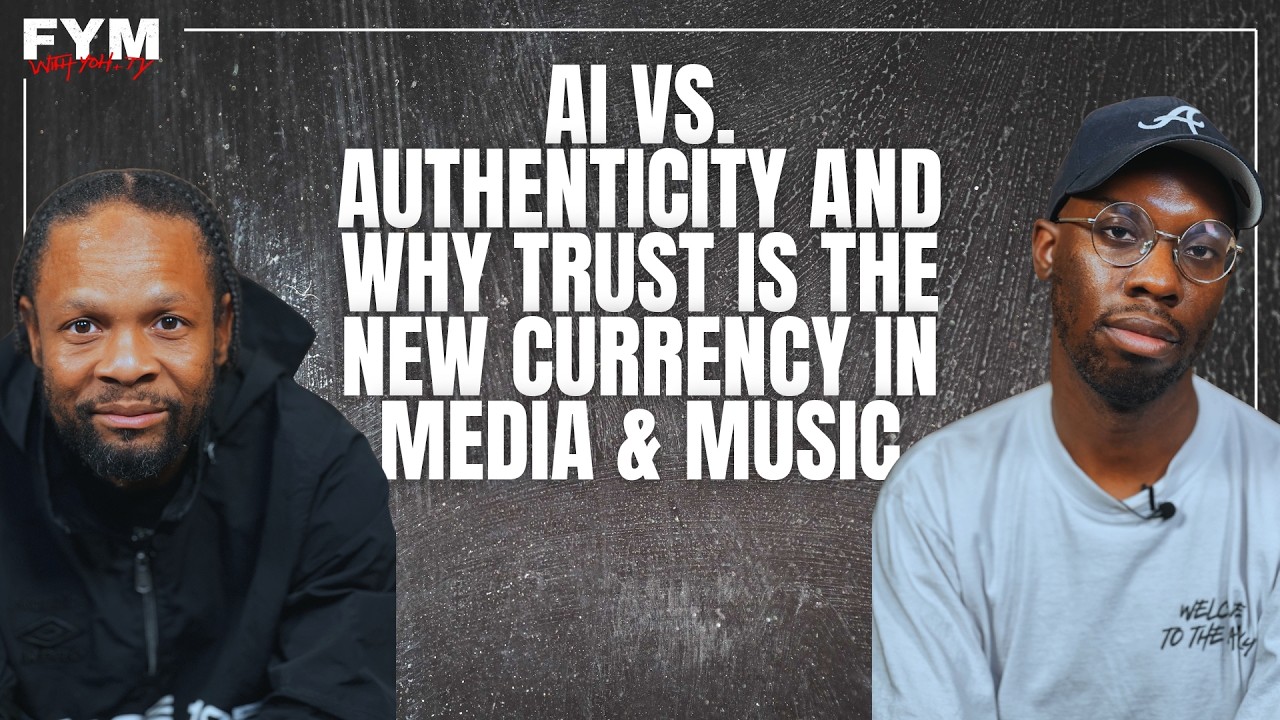
Yo and Worldwide Ty discuss how AI is flooding media with content while eroding trust, making authenticity the most valuable asset for creators. They examine AI-generated music videos, the legal questions around training AI on existing recordings, and why verified, human-made work now commands premium value in a saturated market.
Chapters
And we're back with another episode of the FIM Show with Ty and Yo. That's my man Ty. I'm Yo, and we are about to have a very interesting conversation about media, about AI, and about acquisition. Ty, can you please explain to the people the conversation we were just having? Um, and we had to start recording because Ty was about to get ready and just go off, and I couldn't, I couldn't miss a second. So please set us up and get into what you were about to say.
No, you asked the question. You said, why is it me?
Ask a question. Yeah, yeah. Why is media so important right now?
And my response is COVID.
Now you got, you gotta elaborate on that.
Yeah, so during COVID the global pandemic, everything shut down except for entertainment, music. People still was making films and people was playing basketball. Basketball became more valuable when COVID was over. Music became more valuable when COVID was over. Media became more valuable, valuable when COVID was over because it showed that those pieces, those asset classes were pandemic-proof. You know, they, they actually can earn at a, um, high clip without having to have the same level of workers that construction or live events or all of the other aspects of things that's, that's super valuable, you know what I'm saying? So when you start thinking about The entertainment attached me, and plus people were down and, and sad and trying to find joy, trying to find community. And so that's why I think today, you know, 5 years later— we're really 6 years later, but we came up out of COVID realistically like the summer of 2022 when everybody's back outside for real, for real. Self Atlanta— Atlanta was outside during 2020 summer. Active, you know what I'm saying? But that's why in 2026, you see so much value, so much like traditional institutional venture capital money being poured into content, into entertainment. You see some of the highest valuations of sports teams, especially on the basketball side. And you know, you see all these new leagues. You know, I think now that's being, being hot, this new volleyball league, you know, that's, that's, that's, that's raising money and that is caught on. Obviously everybody know about paddle ball and then pickleball, you know what I'm saying? Like, yeah, it's like paddle and pickle, you know. And golf has exploded as another, um, sport that people are like really, really getting into. So COVID The aftermath of COVID is that media assets became more valuable. That included music, publishing rights, TV and film content. And then basketball specifically was able to be played and be televised. And they did it with football as well because they just didn't have no crowd, but they just televised it, which that falls on the media. Right? It does.
It does.
So they took away the live experience, but they still could shoot and capture the content. Now, when you transition, now we're in 2026, and we talk about what is AI going to do to uplift the experience, um, and the value of media, um, and, and things of that nature. And so what AI is doing is one, It's creating it so that media can get created faster. You know, it's creating it so that media has this level of intrinsic value because of the ability to— abilities for it to make money while you sleep. But then people don't trust the internet anymore. And what I mean by they don't trust the internet anymore is they don't trust what they see on the internet. So now media becomes more valuable because people want to go outside. And when you are going outside and that media captured those experiences, the people that was there know that it was real. And now that content has a higher value online, right? Because with AI, you can create a whole fake festival lineup. But people gonna be like, where did that festival happen? I never know. You can't— nobody can vouch, say they was actually there. But with AI, people don't trust what they see online, so now they want to go out in real life, touch real people, spend real money, have real community, create the power and impact third spaces. And now that becomes more valuable when it's captured and it's displayed online because now it's authenticated It's authenticated content.
To Ty's point, one of the biggest pieces of content I've seen related to Atlanta is restaurant content. People saying these are the top 10 new restaurants in Atlanta, this is the top 10 places for happy hour, this is the top 10, top 10, top 10, top 10. I didn't even heard of some of these restaurants. Stuff be closing so fast, but the content itself has such high engagements because people will come to Atlanta and want to know where do I go to eat. They go check on TikTok. It's the first place they go. They check on Instagram, you know. They don't check the Google Maps. They don't check the, you know, whatever way we used to find food back in the day. They go in to find whoever is having all the posts explaining where to go in person. Yeah, I thought that content was kind of weird when I started exploding, right? Like, I understood Authentication. That's a great word. Do you think— now, are those channels lucrative in terms of like, I'm gonna build me a YouTube channel about where to go? Is it you're building it to sell it, or do you try to eventually build it to transition into other forms of content?
I think you build it to transition to other form of content. That type of thing is hard to sell because The person that is the star of it is the person that's curating these experiences, right? So they can transfer to do a lot of the, a lot of the different things. Um, I just thought about a film as, um, as we're writing, as we're talking about this, that deals with what we're talking about, right? I'll fly with you about it. But it's this thought process, right, where when you start thinking about, uh, TikTok and like The way, like, people be like YouTube University, right? Like, yeah, TikTok is like how people are— how, like, people authenticating certain things. Because my cousin that go on there, whenever we talk about a new golf course, he's like, what's the name of it? He'll put it up on TikTok and see where people— people are playing at the golf course, they're showing the videos and their experiences and things of that nature. They're clipping it, showing their short-form experience of that, of that platform.
And it's driving people to go golf there.
Yep, yep.
I mean, that, that's so interesting, Ty. I mean, have you been able to think about, oh, I want to do something, I'll go to TikTok? Have you had that experience?
No, that ain't really hit me yet. They ain't really hit me yet. Um, I still look up hotels and resorts on YouTube. I mean, I mean, on, on Instagram. Oh, let me look at this. Let me see if this hotel— I'll look on the Instagram. I haven't, I haven't used the TikTok to find the things yet, you know what I'm saying?
Got you, got you. But to your point about discovery, I do think I've seen more and more people go the TikTok route. But for me, I've seen so much AI stuff on TikTok that I don't know what to trust personally. Like, I feel like when I'm online— again, we talked about this before, when LeBron announced that he wasn't going back to the Lakers, I thought it was AI. I didn't believe it. I just didn't trust it. It just seemed too— they had just signed— they had just signed Bronny's contract, right? Bronny had just got his 2-year. And then it was like, I see these posts floating around, they're saying that LeBron's not going back to the Lakers. I said, that's AI. I don't believe it until it was on ESPN. I was like, so that's— to me, like, when it comes to sports news, if I see it online and I don't see it on ESPN and that's fake to me. It's not real until it's on ESPN. But that's an old way of thinking, like, that's almost archaic now. And I felt that way during COVID where it was that small period of time when the NBA players weren't playing, where they stopped playing because of George Floyd. And my mom was like, what are they gonna do? What are they gonna play on ESPN? They was playing movies there. I remember they were just running movies on ESPN.
I'm just like, yo, y'all playing Cody Carter?
And that was their content though. That was their— that was all they had. If these hoopers decided they're not hooping no more, we gotta go. But it's like, they— all the ball players still got their Instagrams, they still got a way of reaching their audience. But they said, if we don't play, ain't no basketball, right? I thought— I thought I was gonna see a revolution, Ty. I was like, they never gonna play again. I thought— I thought it was over with. Nah, they went back to play. So in my mind though, it changed the media relationship with ESPN though, because it's like, if they stopped playing ball ESPN does not have the same value that it does, but LeBron is still LeBron. Steph Curry's still Steph Curry. But ESPN needs y'all to play to be a valuable media company. But to your point, now you got all these channels on YouTube about hoop that, you know what I'm saying, you see what Cam'ron and Mase has done. That is not traditional media. That is new media. Oh, you know, that's a, that's a, that's a, you know what I'm saying. So It's interesting watching how these channels are now almost as valuable as the commercial television shows and networks that we used to watch growing up. Yeah, but, but don't think TV— TV does not have the AI problem.
TV doesn't have the AI problem? What you mean?
You can't put fake news on TV like that. You're not going to be able to—
right, right, right, right, right, right, right.
To my experience, you're not going to be able to get an AI video promoting something false on television, on CNN. No, it's not happening. Not yet.
They got to vet. They vetting it out too much.
It's super vetted. So that, to me— now, do you think that keeps network television in an interesting limbo space where it's like, we are— we can't be the most trusted space for news if you're, if you're afraid of AI?
Um, I don't know. I don't know, I think you make a great point. I think you make a great point about— I haven't seen something that I felt like was fake on television, right? In terms of like, you know, you— we use LinkedIn and TikTok and YouTube as a form of learning about current events and news, but now it's— I'm telling you, man, we back in 1999. We're back in 1990. Where if you didn't see it in real life, you don't believe it. Everything is word of mouth. You're hearing it from another human, not seeing it online. That, that's— that is about to go away because of how unauthentic things are now. I'll be looking at stuff, I'm like, hold on, I think that's real. And I don't want to live my life like that. I never have.
Yeah. I feel you. Listen, I didn't see my mom get got. I see my pops get got. Like, you were— I watching like older people pass on information that's not true, right? So yeah, that's, that's where y'all get that from. But it's like when you see stuff, you believe it so fast now, and as you share it so fast now, that it becomes almost like the new truth until someone's like, that's not real, you know? So I feel you, man. I'm surprised at how fast AI has improved. I'm being honest, Ty. It has improved so quickly. Crazy.
All you know, yeah, with the babies be dancing and stuff. Yeah, crazy.
Yeah. Um, but what— how does art get value though in the age of AI? Like, how do we value art today? Is it more valuable? Dang. Okay, Ty, you know that song? I gotta look up this song real, real, real, real fast, real fast. It's, um, it's a hot record right now that is called— dang, what is the name of that record? I just seen it too, um, because I think the music video— oh yeah, it's called Rubbers. Have you heard Rubbers? You ever heard it?
Is it got— don't the artist got some weird names?
Yeah, Phoenix Flexin' person.
I heard that the other day and I was with— I didn't even get through it all.
Now listen, he's from LA if I'm, if I'm correct, right? But he's rapping in a British accent. Yeah, he's, yeah, he's saying that like this ain't AI, right? But the music video is all AI, right? Like you watch the music video, is the AI down? It looks good, but it's like, I think the comments on YouTube is like, this is the first number one video made in ChatGPT. Like, it's deadass. You look at that video and you're like, it's, it's clipped in scenes that feel like, y'all, y'all, this is all prompted. Which makes you question, is the song AI? The artist said it's not. Now people have put it in those little AI like reporters, like, okay. I kind of look at AI content like the Diamond Tester content, right? When people pull out the Diamond Tester and be like, is it real or fake, right? I've seen it. I've seen the crazy one where this kid went to his teachers and was like, let's test your wedding rings, bruh. Teachers calling their husbands talking about my diamond's fake, my diamond's fake. I've been— I've been wearing this ring 10 years, we've been married 20 years, these kids in my face talking about it's fake. Like, it's crazy, right? It was some of the craziest content I've ever seen because the teachers are embarrassed.
They're—
oh, put it closer, try that diamond. Oh no. And they looking at you crazy because it's like, hey, Miss Hey, Miss Taylor. Hey, Miss Taylor.
Your husband— you might want to go by your maiden name, you know what I'm saying?
Then they got, they got the little cutaways with the teacher calling their husbands like, we gonna talk when I get home. It's crazy. So I kind of feel that way about AI, is where the artist is going to be like, nah, it's real. But we don't got the diamond testers that's all the way able to authenticate, is that song AI or not? And I mean, does it really matter? I mean, the song hard, man. Like, it's already—
it's on like top 20 and top 25 on Apple Music charts.
It's going crazy right now. It's going crazy right now. But the question is, is it AI? Is what I see when I look online, and it's like no one really knows.
Yeah, and they don't care. Fans don't care.
But they had the artist go out and perform the song, and they said it didn't sound like the record. He didn't sound like the record.
So they've been saying that, like, Braxton didn't sound like his record when he was performing. Like, so I'm saying, like, R&B artists sound like your record, and I sound like your record's been a thing since Auto-Tune. What are they talking about?
100%. I'm just saying, at what point do you have to be authentic in your recording, man?
Listen, man, AI, new Auto-Tune, okay?
That's what it's called.
Now, now when you hear Auto-Tune, you should feel real safe. You should feel like, hey, there's somebody that's trying. Now you hear everything with— now you don't even hear Auto-Tune no more.
Not really, not really. These about to be super clear though.
If they smart, they'll put that AI through that Auto-Tune. They smart. But like, add a little human touch to that thing, man, because right now But I can't even tell you the last time I heard some, some Auto-Tune. But Auto-Tune, Auto-Tune stock might be going low.
Is it? I don't know. That's so interesting. I'm gonna give you one more story. I had a homie at the barbershop getting his haircut. He heard a song, it was a blues song. He was like, yo, this song had this singer, he's singing the blues. He said, I felt touched. I was like, man, I really felt what he was saying. So I go into the shop because I tried to Shazam it. Shazam didn't know what the record was, so I'm thinking some old school, maybe like obscure record. I go ask these folks like, hey man, what, what song playing? They was like, oh, give them the YouTube page. They gave the man the YouTube paper. It's all AI songs, everything AI songs. And the thing is, it wasn't just one song. This channel has a— the song link goes for an hour and 45 minutes. They filled it with multiple records, so you don't even know what you hearing because you can't Shazam it. So you're going through all these AI songs trying to find that one And he's like, he was wondering if he really felt something real because the song was singing some lyrics that where he was at that day, he felt it, and he found out it wasn't real. He's like, damn, it was my feelings real.
So let me give you— let me give— let me, let me give something to you that, that's, that's going to be very, very heartbreaking, right?
Okay.
Um, Let's Get Married. By Jagged Edge.
Yes sir, classic.
How many of them niggas was married when they was singing that song? How many of them? How many of them actually don't know, right? How many of them was faithful to their wife or their significant other when they were singing that song? The point I'm making is there's a lot of artists that sing songs they ain't living. But people still feel it as if they live it.
Absolutely.
That's why AI gonna keep being successful. It's a bunch of songs that people can feel that the artist ain't living because the artist ain't real.
That's how you funny as hell. I— so, so my, my first real music heartbreak was Kanye West's Family Business. That's not about his family. If you go back and listen to that song, he was in the studio asking people for stories about their families to put on the record. Deadass. When I found that out, bro, I was hurt because I thought it's such a personal song. I was like, you telling me that's not his family? No, not his family. He was literally asking people, tell me about your auntie, tell me about your uncle.
Artists are not always singing their truth. Yeah, they're not rapping their truth.
Yeah, yeah, you know what I'm saying?
Like, that's just the reality of it. Like, like, like, you know, I feel like, I feel like, I feel like Bruno Mars rap is true. I mean, he's saying it's true. I feel like Bruno Mars— I feel like Bruno Mars, when he said, he said, when he be saying the 'World,' I feel like that's his truth. Like, he really lived that life. As a singer. But majority of artists, when they singing about love and, and, and Usher had a song called Moving Mountains. But listen, but let me tell you something, boy, but Usher probably has some of the finest bad side pieces, but at that point in his life.
But that's why, that's why, that's why, that's why Papers hit though.
Table's the truth, man. Listen, that's why Confessions was hit. That's why Let It Burn hit.
But you know, the— to me, the, the confusing part about Confessions was Jermaine Dupri wrote the song.
Yes, Jermaine Dupri wrote the song, but Usher had— he, he had done had some confessions. It just wasn't here. It just so happened Jermaine Dupri wrote it. He like, oh, I got some confessions, but I ain't gonna sell mine.
But I know where it come from. I know where it come from.
But I'm talking about the boys that's writing love songs that is not in love, that ain't faithful to a girl, that is writing these songs and singing them, and they is not—
they—
it ain't happening.
They ain't living. They ain't living it. They ain't living it.
That's why AI's been successful making songs. Yeah, don't let me give me an AI hit. Like, I ain't gonna put it out. Be the first manager with a whole AI hit.
But the thing is, sometimes when I know I can hear it, I think about the song differently, right? You hear a song, he's like, oh, this is AI. I almost like remove the personal from it. But if I don't know, it's like I'm vulnerable to it. And if I get caught up in the AI song, it's like, dang.
So let me ask you a question. Yeah, if you, if you, if you look up next year and this is artists that pretty much everybody know that it's AI artist, but they can't really put their finger on it because the marketing that fire, and they going up like going crazy, everybody's talking about the song. And then you find out like the person behind the AI song is like me, or like something like of a manager. Like, would you feel— would you be like, dang, man, that kind of took it away from how far the song is? Or would you be like, or would you be impressed? You're like, dang, it's kind of impressive.
Dang, that's crazy. Because you would know how to work a record though, right? Like, you as a manager would know if you got a hit.
Yeah, 1000%.
It would make it, it would confirm for me that you know what you're doing. I was like, yeah, you really good, you really good.
If I can get my hands on an AI artist, if I knew how to have the patience and the time to really sit down and storytell that, boy, you think I won't do it?
Now, okay, answer me this though. Is it a form of creativity for you to find the right proper way to get this idea across, right? Like, because you can't— you can't puppet master artists, right? You can only work with what they give you.
Yeah, I'm a roadie, they get 1,000%.
But if you're like, I can control this thing and make it how I envision it, should you be credited as the artist?
Yeah. If, only if the platform that you are using to create the music has the proper licenses in place to pay people, if the AI is being trained off other people's art.
Ah, now go into that a little bit more.
Meaning that if I'm creating something off of the back of other artists, that tool that I'm using to create is paying the people that they use to train that technology to do what it do, right?
Okay, okay.
I think that— I think that— that— but, but it's different though if I'm singing in it. I can't sing, but the AI clone my voice and make it so that I can sing. And now I'm typing my own lyrics, you know what I'm saying? I work with a producer and I'm like, yo, a musician, I need you to play this for me. And I take that what they play and I, and I run it through the AI, then that's different. But if I'm just pulling straight from prompts, now I think that it should be a certain level of like, um, understanding and payment to, to the people that they're training the, the, the, the AI on, for sure.
So you still want it to be fair to where you're pulling from, the source material?
Absolutely.
Even if it's a new idea based on this technology?
Absolutely.
I ain't mad. I ain't mad at that. Now, but what kind of splits we talking? Because it's a— because like, you know, with a sampling, you get a chance to decide the splits if you own the masters of that record, right? But like, how does this work where it's a little bit more vague? Because we're not quite talking about publishing, we're talking about—
oh, we're talking about artists, we talking about all of that. You know me, I'm gonna break bread though, you know what I'm saying?
I get me a hit, I know you are breaking bread.
They gonna love to come work with me. It ain't gonna be no artist gonna be complaining about if I get that AI hit. I'm like, yeah man, I use your song, man. Um, matter of fact, I might go pre-clear it. I'm like, listen, these are 3 songs I use. Let's go out and go and going to clear them, give them a blanket statement like, hey, this is what we're going to do and this is how we're going to pay you. I'm letting you know right now, I'm taking your song, I'm training my AI how to do it, these are the parameters I'm using, and then boom boom boom, we got a deal. Cool. I get a blanket, I get a blanket deal with them on my knee. Only thing I need is about 10, 10 artists. I just cut a deal with 10 artists.
Yeah, yeah, yeah.
I kind of like it.
I kind of like the idea that you as an artist can create something that someone else can use to build their tool, right?
Yes, 1000%.
Because to me, that is like the evolution of sampling.
Yes, basically.
To sample, to sample a record— I wouldn't have my record without sampling the record. I remember when we, when we were doing a Volume 2 and we were talking to Brent about you being very much against sampling, right? And I asked him, did it make it harder to make songs? He was like, well, when you sample, it's already easier because there's a base, right? Right. I'm just building on this base. When I don't have that base, I gotta, you know, it's not harder, but you gotta do a little differently. Same thing with these AI artists. If you know what the base is, you can probably get the idea closer to what you want, but that artist should be compensated if you use their you know, you use that, use their talent. I'm not against it. I just feel current day, most people don't have that integrity. I want to make my super AI bot and I want to make all the money and I don't want to hear from nobody. I feel that way. But you know, it's, it's the Wild Wild West right now, man. I don't know how the legal is going to work out with AI. That's my main thing that I'm interested in. Who's gonna be the first person to get sued? And how that lawsuit— how that lawsuit gonna affect what happens in the future? Because that's what happened with sampling, right, bro? They were sampling everything. There was no laws in place for sampling. So if you listen to a lot of early hip-hop albums, the samples on those tapes weren't cleared. But when that first album got— when the first lawsuit hit, yeah, all right, we clean records, we clearing everything, because I ain't trying to end up, you know what I'm saying? You know what I'm saying? The sample costs, boy, they coming for their check now. But you know, the AI, it's gonna be interesting time. I, I do, yeah, I do like the idea that you gotta be authentic though. It still has to be authenticated somewhere.
I mean, it's that they got this, uh, they got this thing called, um, I guess they, they call, uh, not lobbyists, but, um But it's the Atlantic magazine. They're called, um, I can't remember what they call it, but they're basically showing all of the songs that Suno is using of independent artists to train their AI. I think it was like 262 Brent Faiyaz records, like, oh shit, 262 usages of training AI around Brent Faiyaz records. Bro. It's kind of crazy that, that when you start looking at those— yeah, it's like a few artists, like 81 songs from one artist, like, because it trains it in different ways. So it's usually one song in multiple ways on training. So I think, you know, that's gonna be what really drowns Suno. I don't think they're going to be able to— the deal that they're going to have to cut to keep their doors open between independents, majors, they're gonna basically be owned by the independents and the majors in order to keep their door open. Because I don't think the federal government is going to be like, oh, that's fair usage.
Oh, it's going to get complicated. That's the thing with fair use, it's about transformation, right? Like, if you can prove you transformed the material enough you got the right judge, you might escape, right? But I think it's hard when you say you train something. You train something on my voice is different than you took my voice and transformed it to make a song, right? Like I said, that first lawsuit is going to tell us a lot about the future of companies like Sunoo and the future of a lot of these AI artists and these AI creators. But it's, it's the now right now. So I remember a couple years ago it felt like AI was still being manufactured to go public. It is very much in the public eye right now. And I mean, I don't know, man. I don't know what the future holds, right? Right.
Crazy.
It's very, very crazy. Um, is there anything else you want to add to artists right now that's very anti-AI? They just treat it like it is the— let me see how I want to phrase this— is it going to make them a fossil, right? Like, we, you know, the dinosaurs were here before us. Are the artists that don't use AI, will they be the dinosaurs of the industry moving forward?
Yeah, unless you're just that exceptional. You gotta have a high-level talent to matter in the future, or high-level marketing.
It's a high-level something. It's got to be— it's got to be exceptional somewhere. Um, and even this crazy thing about how fast AI works, like, here you talk about like 200 songs got used. They got used in seconds. It wasn't like they had to take years and years and years of this process. It's so fast, they're like, well, they could do another 200 before we blink. So you can— you competing against that. That's, that's the world we live in. But that's another episode of the FYM Show with Ty and Yo. Uh, please, you know, we've been talking about AI on the show for a while. Give us your impressions of current day AI usage. Are you using it for your businesses? Are you against the uses for AI? Please let us know how you feel, and we will check y'all next time.
Peace.







