F*** You Moments w/ Yoh & Ty: Legacy, Long-Term Vision, & Authenticity
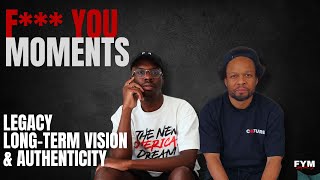
Yoh and Worldwide Ty discuss their decade plan to build in-person businesses in sports, music, and media as a counter to digital overload. They reflect on D'Angelo's legacy and why classic hip-hop still dominates live performance, critique streaming fraud, and touch on the Sauce Gardner trade and NFL contracts.
Chapters
Like, what are you gonna. And we're back with another episode of FY with Ty. That's my partner Ty. How y' all doing? How you doing, Ty?
I mean, you know, man, I'm out on the west coast, man. You know, I've been on, I'm on the west coast for a whole week. How, how you know, you know, it's, the weather's good, you know what I'm saying? I'm trying to get as be as productive as possible. You know, when you wake up early on the East Coast.
Yes.
It's kind of like not early on the west coast, you know, you work outside, Ty. Yeah. You know, you got, you getting up 7 o' clock in the morning on the east coast. That's, that's 4 o' clock in the morning here. And that ain't happening up at 4 o' clock in the morning, baby. Then the life that ain't my ministry.
I hear you. I hear you, Ty. We were supposed to do a live stream two weeks ago, but you had a leadership retreat. Not leadership. You had a company retreat, right?
At a company executive retreat? Yes.
Okay, how was that?
Well, you know, I think it's important that when you're, when you're trying to build a business, obviously the success rates are not gradually large for most businesses. So when you're trying to build one. And myself, I pride myself on being an operator and knowing how to build a business, you know, hire staff, knowing how to delegate things of that nature. So every year, end of October, early November, we have these seven day retreats where all of our executives get together and we kind of plan for 2026. But we're not just planning for 2026. We have a, a decade plan and we're realigning the decade plan every year while simultaneously planning what are the important things for 2026.
So you guys started a decade plan in 2020?
Pretty much. We started a decade plan in 2022 and we just, the business started in 2020. So we just really just retroactively put it together. Like, okay, from 2020 to 2030 is our DEC living in and how we're going to build. And man, five years into this decade, we had a midpoint. Boy, this decade been a decade with bitcoin, the blockchain technology, the presidency. You know how sports have transformed nil with high school athletes? I mean, that's basically prohibition, you know what I'm saying? I mean, these have, these, these, these, these are, these, these athletes been slaves for, for years. You know what I'm saying decades. Right. On how they. On how they make the NCAA make all the money. But these players and these families are not seeing the benefit. But that has changed. That has changed. All of these great things have happened in five years. We're going to close out the fifth year of this decade. We in the midpoint.
Yes, sir. Based on kind of looking at where you guys started in 2022 and your plans, I guess your forecast. Did you end up where you expected to be by 2025 or like how. Where did you guys imagine the company being at in 2025 and where do you feel you are now going into 2026?
Well, I think that we are from a trajectory perspective. We're still in business, right? So that's a clap to that, right?
Yes, sir.
I think that one of the biggest things is we are the way our goals are set up. Our goals can really escalate as time goes because of how the music business works. So we're not at our goals today that we have projected out holistically. We have hit. We. We have hit like those layer goals that are building up. But the overall trajectory of the goals we haven't hit yet. But the great thing about it is we got another five years to hit those goals. Right. We're not, we're not grading ourselves annually. We're grading ourselves about a decade. That's why it's a decade plan and annually give you a checkup. So we got 10 checkups within our decade, our decade plan. So for me it doesn't alarm me if we haven't hit our numbers or we haven't hit our goals because our goals, a decade goal, not an annual goal. So we're hitting certain goals and then we're not hitting on certain goals from an annual perspective, but we're still working towards our strategies for our 14 year plan.
Does it feel good to meet with everybody during this time in October and kind of get that re energized energy about like let's really get into it for the start of next year.
It does. This year was really, really great. Really, really healthy. Had some really great insight that we got from our team. What that I got from the team. And it does feel like a recharge and get everybody recentered knowing exactly what we're going to focus on. Where the. Where the money at? You know what I'm saying? Gotta find out where the money at. Especially when you're working. We're building a company with culture that's like really the intersection between sport on music, sports and Media. Right. That tech part of it is the underlining, infrastructure, foundational thing. So we're going to be building tech for the music, tech for the sports, tech for the media. So it's a really, really great feeling to have because, you know, it's fun. That's a problem that I've had to solve where family and friends and even our team kind of forgetting that we at work, you know, and not treating the job like work and not from a malicious perspective, because it's fun, right? So you want to be like, oh, this is fun. I'm at work. Like, oh, put that, put that Hennessy down. You at work. You know what I'm saying?
Yeah.
And it's, it's that realization of it because it's not a, it's not a regular job that, you know, people are not used to being in or used to seeing. So I found really great pride in that, in, like, trying to build something that's sustainable and that's going to last forever so that, you know, people can partake, participate, because AI deep fakes. And I'm gonna keep saying it, it's gonna make people go outside. So all the businesses that I'm building and I'm investing into, they outside businesses go outside for sports, go outside to see concerts, go outside to see movies and, and, and see podcast live. That doesn't mean that you're not going to see things digitally. But I'm, I'm investing into the outside world.
I feel that. When I was in Oakland, I saw a lot of flyers promoting a society for a phoneless society, a society for phoneless society. And it was pretty much saying that your phones are turning you into a cyborg and that if you are always on your phone, that you. This is a virtual world. This is not the real world. So if you only stay on your phone, right, even when you're outside, you're not necessarily participating in the real world. So they're encouraging that, like, if you are able to feel safe when you're out, leave your phone in your car or leave your phone in your pocket, even leave your phone at home, so that way you're more present in the real world. So hearing what you're saying reminded me that there's already people looking to find a way to disconnect so that we can be more present. And I believe, like, I was thinking about how you talked about the golf course inside, like the virtual golf course simulators. Yes, sir. As it's getting colder, I'm like, man, people are really going to want to Golf still and how great of an idea that business is. So I really, I really feel you tie on finding ways of interconnecting tech, but also thinking about people being amongst people 1000%.
It's a real thing. It's a real thing. And I think the reason why it's become. It's going to become more and more and more and more and more of a driving factor is because people are not going to know what's real. They're going to want human touch. You know what I'm saying? And when you want human touch, we humans, we. We thrive off community. We thrive off spiritual connections. We thrive off of likeliness. We thrive off of learning each other's stories. And when we know that it's authentic, we know that it's real, we show up. We show up. We go to a juice bar. You walk in that juice bar and they're like, yo, what's up? You want the green machine again? You're like, yeah, yeah, yeah, I want the green machine. Yo, our WI fi changed, you know, I know you got the spot back there. We just did some redecoration now to see some more comfort. You're like, that's what's up. Go on and sit down. We're gonna take you, we're gonna bring your green machine over there. You, you gonna keep coming back?
Absolutely. Absolutely.
Everybody want to feel like a star, baby. Everybody wants to feel like a star when they walk in. You know what I'm saying?
Everybody who doesn't, who does it. You can't not walk in somewhere, right? No matter if you order everything on Amazon, eventually you got to go to Kroger, eventually go to Walmart. You're going to go somewhere, so pick and choose where you go and feel welcome. But speaking of, like, human touch, recently, d' Angelo passed away. And that was like a huge kind of heartbreak to the music business and to music listeners, music fans, to the world at large. But he has such a human touch to his albums that I feel like it really made us realize what we missed or what we're missing out on now that he's no longer here. What did you. Where were you when you got the news?
The thought process of d' Angelo thing was interesting because I've been so head down into like tech and writing and just trying to learn as much as I can. I haven't really been right. When I got on the Internet, you know, I seen a bunch of people posting about d' Angelo Mango. I thought he came out with an album. I thought he went Viral on a live performance or something. It wasn't until, like, the second day that I came up for air that I realized that DeAndre had passed away. I'm like, wait a minute. This ain't celebratory. He got an album out. He went viral. He don't pass away this crazy. And that's like. That's the other part of not being connected to the Internet of the world. You know, you move these different things. You know what I'm saying?
Tom? Sorry, that's. That's kind of funny.
It's like, yeah, it's kind of control.
But to your point, somebody text me d'. Angelo. They just text me d', Angelo, right? I didn't know what it meant. I didn't think none of it. Then someone text me d' Angelo in all caps. And I was like, this is not good. Like, this is. This has to be bad. So that's when I googled it, and I found out that he passed away. But you're saying you were under the impression that we were, like, celebrating d', Angelo, that this was, like, a good reason?
Yeah.
Well, I think it's still, you know, we still celebrate him, but what does his. What does his music mean to you? Like, when did you discover him? What was the kind of, like, relationship with his music that you had?
You know, d' Angelo from a music perspective? For me, it was just, like, the music. I didn't know much about the artist until I, like, started working in music. So, like, when you just living life. And that's why fans have such a unique perspective on a person's career, because they can listen to your art through movies, through hearing it at a bookstore, and celebrate it without even really realizing that I don't really know much about this artist. You know, I started learning more about d' Angelo when I was starting to build out what was the trajectory that I was trying to take? Brent. So I started going down, like, well, this has already been done before. I don't have to remake the wheel. Let me go and research Maxwell, d', Angelo, Usher. Like, I started just researching their trajectory. I said, I'm just follow that same trail. I'm gonna put a little twist to it. Put a little extra here. And that's when I really got more dived into, like, d'. Angelo really got more dived into d'. Angelo. More dived into Marvin Gaye Maxwell. Because I started to look at their trajectory and study it from. From a historical perspective and. And, like, success, a successful case study versus, like, listening to the music. As a fan, you know, anything that.
You learned during that kind of study period that stuck with you long term.
Pertaining to d' Angelo or.
Well, just like historically, like R B, those artists that you were studying, is there anything that you're like, they don't win.
You want to be a successful R B male, you bet on women. Don't spend no money on me. That's what I learned. Don't spend no money on me. You promoting your marketing, you promoting your music. You're a male R B artist. Spend all your money on women. Spend all your efforts on women. You know, you shouldn't even. You shouldn't even care about the opinion that a man has on your music. You know what I'm saying? Like, that's. That's what I learned.
It seemed like that would be obvious, but hearing you say it's like, wow, that's actually a great point.
Yeah. No, don't make sense.
Yeah, I mean, I think about R B now and it feels like it has kind of moved in a direction where I feel like men are kind of more marketed toward a bit, you know?
Well, you know, I just think people just trying to get. I just think people trying to get sales, you know what I'm saying? Like, you know, I mean, I think people just trying to get sales and they're trying to, like, really, really gauge things in a real way, you know?
Well, I was thinking about this a bit watching the verses recently. The cash money, no limit verses. You get a chance to check that out at all.
I seen some clips of it, man, but I ain't see. I mean, been dying, see the beer. But this is a research beer. I can tell research be.
Well, I only brought it up because I felt like the verses reminded me how those classic songs can live way longer than when they were made if you're able to, like, find the right platform for them. And because people were in the crowd was going crazy for these records, man. Like, going crazy. And I just, like, I can't remember the last time I heard about it, about it on the radio, the scene P on stage rapping like, he looked good. Like, the energy. Like, I was like, man, Matt Pugh's a star. Like, you could tell. Like, this is a star, right?
Right.
2025 and 2005, 1995, he was a star. And I just thought that. I wonder, especially with d' Angelo passing, what are our legends going to look like in the next 20 years, 30 years, 40 years? And what are the platforms that will exist for them to continue performing music? That's like a little older, but still has so much relevance.
Right.
I mean, I was just wondering if you. If you think about stuff like that.
I think that. Well, first of all, let's start here. Cash Money, no Limit. That was my introducing. This is my introduction to rock music at, like, seventh grade. Well, little Kiki, a lot of the Texas. Excuse the Texas stuff. But in terms of, like, fan, like, you know, you had a CD book. Just had a thick, thick CD books. You just flip it all. Whole Cash Money catalog. Whole no Limit catalog. So no matter who it was, we bought it. Cash Money. We bought every single Cash Money. I mean, every single no Limit album. It started with no Limit, then we fold into no limited Cash money. But every single no Limit album he put into the stores, we bought it.
Yeah.
No matter who it was. Rain and Abel Fiend. Mystical Mia X Masterpiece. See Murder. No matter who it was, we bought it. No matter. So seeing. Hearing about the verses is. Was very interesting. I would be very curious to see what the. The average age was for the crowd.
What was complex con, which leans younger, right? Like, that's kind of like a new platform where people go for sneakers and tech and music. But it leans what I would consider, like 18 to 25. But they had obviously, like, the OGs up there, so.
Right.
I mean, the oh geez look like oh, geez tie. All right. This ain't like the old and sexy. I mean, some of the guys looked a little heavy, but the energy was high, like I thought. I thought also Mia X was killing it, bro. Like, I. I was like, man, I need a new album because her. Her energy, her stage presence was nuts. Snoop came out, had incredible stage presence and energy. Like, again, the records was cutting through. They was cutting through. I would love a tour. You know what I'm saying? Come on. Like, it's still here.
It'll be still here, bro.
He tried the ice cream, man, and that went so hard. Like, that'd be crazy. There's just certain moments where you're like, man, these songs, they are old because I know when the time was, when they were made, when they were released. But on that stage, they felt new again. And also, bro, no Limit was in all, like, army fatigue. Like, you could tell peace. Brandon from 25 years ago still translates on the stage today.
You gotta put the no Limit uniform on, baby.
The chain, the no Limit chain on Snoop's neck, man. Took me back. I. I said, man, we need rap chains brought back again. You know, I. I feel like we missing that. That kind of vibe. Ty, what is the culture chain? If you had a chain for culture, what would the design be?
I'm more of a watch man. It's cultural watch man.
Okay.
Chains too flashy, man. In my opinion, man. Get a culture watch, man. That's what we're gonna be.
We're gonna be.
We're gonna be giving out culture watches, man.
That's okay. That's hard.
I can't lie.
That's hard. You for show in the future. Giving out watches is hard. I'm not gonna lie. That's. That's a tough.
You remember when Jay had that. When Jay. When Jay. Jay Z had a. He had some type of event. He used Rolex watches or some type of watches, but it invites.
Yeah, I like that. T. That's hard. I wanted to ask you. I don't have too much knowledge on this, but the NFL trade deadline was yesterday, and I was at the barbershop, and it was like a big conversation amongst the guys just about the kind of choices. And I wanted to ask you because obviously when you talk about, like, a few moments, were there any trades that you would consider? Like, oh, wow, that was. That was unexpected. Or that was a big money play. Or that was like, that would change the trajectory of a team's future?
Gardner.
Yeah, yeah.
The cornerback, man. They traded Sauce Gardner to the Colts and the coats already winning. You. You seen it. You've been seeing the news about the Colts owner that be on the sideline with the headphones on. And her whole logic is, if I'm gonna pay millions and millions of dollars for general managers and. And. And. And. And. And. And head coaches that I want to believe that they know what they're talking about. And like, she's like. She's on the field like.
Yeah.
Taking notes and all those different things. And, man, how long she been with the Colts? I think for like, three years, if I'm not mistaken. Well, it's not that I don't think. I think she's been that active for I think a couple. From my understanding, her family had an ownership stake in the coast for a while. I may be wrong, but there is definitely some. Your money that. That. That. That she. She spawns from.
She spawns from some you money.
Yeah.
She got the attitude like, she ain't. She ain't going for no BS Being going for it.
She like, I'm gonna pay you all this money. I wanted to hear what you're saying throughout the game. I want to know. And I think she said it on one of the Interviews, she was like, if you're an owner, start going down on the sideline to get involved because you got to pay millions and millions of dollars of these for these people to know if they like, know what they're talking about. It seemed to be working. Coach getting some post, got a great season start so far midway even with.
The, with the trade with the corner. He wasn't, I guess in conversation to be traded, if I'm correct, right?
Like that was something, you know, what ends up happening in the trade aspect. You know, you do have the thing where the players are like requesting trades and things of that nature. A lot of the times the players don't know when anybody get traded because a deal is a deal. Like when they say, we'll, we'll give you fourth round draft pick for 2026 and we'll give you a six round draft pick for 2026 for him. You like, I don't know who the fourth and sixth round person is going to be, but I got two for one player and, and I'm going to be able to get them on the, on a rookie contract and they might come in and be impactful and I know exactly what the value is that I'm giving up. And you know what the value is? You getting something like, man, them two picks might be a bus. They might not be valuable in this player that I see his stats right now because Sauce Gardner is a real player, right. And he's still young in his career.
He's like 25, right?
Yeah, I think it's like his fourth year maybe. I think he's just, I think he's going, I think this is his fourth year from that mistake. So he got another contract. He gonna, you know what I'm saying? Renew.
No, I just, I just think it's, it's really interesting when you think about like the capital of the NFL, right? Like just how much money these players are worth, but also how a first round draft pick, a number, a person you can't even imagine yet, right. Still has so much value. Well, you'll trade somebody that you can see play for someone you can't.
Right?
Like the unseen aspect of it just kind of blows my mind.
No, no, no. It's crazy. It's crazy. It's crazy. The guarantees of it, you know, the average first round guarantee, I think as of 2024, it's like 19 million guaranteed contracts for football for first round. That's the average guarantee, guaranteed money for, for, for, for them to be in the NFL no matter what happens. They get hurt, injured, they don't play as well. Guaranteed, that's not.
That's not bad. But I guess guaranteed it's not bad. 19 million is not bad to play football at all. When you, when you were thinking about your career in football, did you imagine when you would be drafted? Like, where in the top 10, top 20, top 5?
I didn't care. But I never imagined the draft. I just imagine being on the team, you know what I'm saying? I never even imagined the draft.
I mean, I think.
I think that's. That's cool.
I mean, you just knew you were gonna play. Like that's such a locked in. I know I'm gonna be on the field. It doesn't matter what team I'm on or how I get there. Like I'm gonna play.
Opportunity.
Yes, sir, the opportunity.
That's how I was looking at it.
I feel that. I feel that I had one more thing I wanted to ask you about. It kind of changed, but there was a point in time about two weeks ago where people were having a discussion about hip hop not being on the Billboard charts for the first time, I want to say since 1990. It changed because Megan, her song that she dropped, end up charting. I don't know what position it was, but her song charted. So it kind of obviously changes that conversation. But.
Right. Did you.
Did you see that talk at all, or are you familiar with that?
I think that. I think I'll just crack down these screaming forms, man. Hit rappers, hit the rappers hard. You know what I'm saying? If you ask me, all these fake screens got the rapper down bad. Yeah. I mean, that's what I believe, man. You know, there's a lot of fake streams out here, man. And the.
The data.
The data tracker scream farmers, you know what I'm saying? It is what it is. That, I mean, has.
Has rap leaned a little too hard into faking it until you make it in that regard? Because, I mean, the thing about fake streams is, I mean, there are a number that obviously people read into, but if you can turn fake streams into a real career, then obviously it's an investment, right? It's like a marketing investment, Right? But what happens when. When. When those streams work against you?
So this is the thing I want to make sure I say very clearly so nobody is confused, right? Every single artist have benefited from advertising that has drove in people to stream your music, right? Because it's the same thing on YouTube. If you got a YouTube video, you can pay for ads that'll put your Video in front of people, right? Same thing with Spotify. You can pay for ads that will put you in front of people that will like help increase your screaming, right? That's not what I'm talking about. I'm talking about the fraudulent form screens that people just use to just type up numbers to basically try to rigged the system. Right. And the truth of the matter is a lot of that is really, really, really, really heavily known bars in hip hop side, you know what I'm saying? Yeah, it is what it is. There ain't no, ain't no way to like sugar coated and all those different aspects of it. Because in the music space it's just a lot of people that try to take the shortcuts, you know what I'm saying? And if you're doing marketing for a project, most of the artists don't even know that this is happening so that we clear, you know what I'm saying? They don't, they don't know fully, you know, because they're not the one running the machine that's promoting, promoting and marketing them, you know what I'm saying? Right, right. There's a budget you have to create for every single aspect of the music business that you do. It's like that didn't if I was producing cheese, right? If I had a cheese farm, right? I'm building, I'm get growing the stuff, I'm producing it. There's just costs that come along with that every business, right? And those are the things we're talking about. We're talking about if I'm making fake cheese, I'm putting plastic in the cheese, stepping on the cheese, making sure that the cheese can last longer. So now I'm using plastic and all type of now it's not healthy, it's not fair, it's not something that now you got kids that, you know, thinking they want to be in the cheese business and they can do the same thing. You're doing bad practices to just make a dollar. And I think that is what we're seeing, you know what I'm saying? We're seeing all of the, the last four, five, six years of bad practices. It's starting to show and it's going to keep showing because you best believe Spotify don't want to give nobody no extra money. So they're going to use this AI to go out and, and go out through the web and see what, what, what, what, what seems like they're real screams and what seems like they're not real screams because they're not trying to be spending on wasting money.
Yeah, no. I remember reading about how people were creating like fake Spotify accounts for fake artists, but Spotify would have to pay them real money, so they were doing crackdowns on those type of accounts.
Yeah. You know, how many accounts do we had to take down of people? Like changing the name? But it's full blown brick songs slowed down.
No.
Wow. Really? Yeah, bro. So it's a whole business to fight against that mess, man. You got a whole team called Content ID on YouTube that you do it with. You gotta stay active on that. Across Spotify, Apple Music, you got people that got these weird names and they got millions of screens. You press play and it's like cloudy, slow down.
That's crazy.
Like, yo, what's going on?
And they're. And they're monetizing these like fake songs.
Oh, that's 1000% demonetizes all the way songs. Really? The dono. It just got them slowed down. Different. Different version of it. You know what I'm saying?
Well, I guess what was fake, it was like these accounts that are hosting the song.
The accounts are fake, the artists are fake. These are not real artists. They're just names. And then they got the artists that you. Your favorite artist. It's like that with Summer, Walker, Bryson, Tiller. It's not just Brent. They got people probably building whole businesses around that stuff.
That's like a whole like hustle, man.
Listen, bro. Crazy. That is crazy.
That is nice. That is crazy. No fe money, man. That's so.
Nah, it's not too much though. It just ain't gonna last long. It's like drug money. You better get in, get out, get out of somewhere where you. Where it's legal. You know what I'm saying? You can't keep faking it till you're making it that way. You know what I mean?
I hear you.
I hear you.
Are we hitting the 30 minute mark, Ty? Is there anything else on your mind, man?
Listen, man. Today. Today's FU Live is sponsored by Pay Uncle Sam as less money as you can. Tax season extension has ended at October 15th. I hope everybody filed their taxes and made sure that you had your deductibles in line and your LLCs and your corporations in line so that you can pay this least amount of taxes as possible. Because as you can tell, they still taxing you. But they have shut down the government.
Yep.
So they still taking eight. They still taking a. They. They cut on your check, but they don't shut down the government. Government been shut down for, I think, 42 days at this point. You had a whole agency walk out of work from a TSA perspective, all of those different things. So, you know, I feel like, you know, you gotta make sure all those different things in place.
Straight like that. Straight like that. How has traveling been easy for you? I know with everything going on with the TSA stuff, it's been kind of. I had a hard time traveling, getting back to Atlanta.
Oh, I was on mute. Traveling. Definitely not been that hard for me. But I definitely, definitely, definitely know and see it. But I, you know, I'll be in and out, so I won't be in the airport too long.
I hear that.
All right.
All right. Well, guys, thank you again for joining us for another FU moment with Tanya.
Yes, indeed.
Join us again in a few weeks. We'll be seeing you guys. We got a new episode of Fe Money Dropping next week. And tune in, guys. We got a really good one coming for you. Peace.







