Founder Lessons + The Economics of Streaming Music
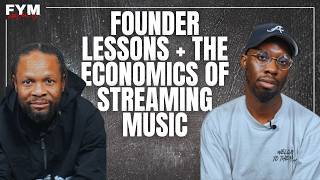
In this FYM Show episode, host Speaker A and guest Worldwide Ty discuss a blend of wellness‑focused entrepreneurship and the modern music business. The conversation opens with a fable from the book The Five Temptations of CEOs, highlighting the first temptation—prioritizing personal gain over company progress. Ty reflects on his own journey leaving a corporate role at Delta to become a full‑time founder, emphasizing low‑overhead living, the importance of being able to run payroll, and the steep learning curve around taxes and operations. The dialogue then shifts to the economics of streaming music. Ty argues that streaming has not devalued music; instead, it has operationalized data, turning catalogs into highly valued, investable assets. He explains how private‑equity and venture capital now fund catalog acquisitions at high multiples, citing examples like T‑Pain, The Dream, and L.A. Reid. The conversation also covers the distinction between publishing and master rights, the rise of platforms that let artists monetize catalogs, and practical advice for emerging musicians on which streaming services to prioritize (YouTube, Apple Music, Spotify). Throughout, the tone remains conversational, reflective, and optimistic, with a focus on mindful spending, disciplined growth, and leveraging data‑driven insights to build sustainable music businesses.
Chapters
And we're back with another episode of FIM with Ty Young. That's my dog. Yeah, yo, and FIM is an ignorant conversation about wellness. All right, at the very heart of these conversations, we want everyone to be well. We want you to have a business that runs well. We want you to have success that feels well. Everything that FYM stands for is about wellness.
Yes.
And Ty, you know, one thing that people kind of encourage about wellness is walking. All right, the doctor gonna tell you get your steps in. And, uh, something I've always done when I'm out in Oakland just walk, right? This beautiful place, and they have plenty of terrain, walking terrain out here. And what's something I love about Oakland is they have all of these like little— you can like pick up books because they have like all these like little outlets where you can like, oh, pick up a book. And I was out walking and I seen one and I opened it up and the first thing I see is this blue cover and the COVID says The Five Temptations of CEO. I just had to grab it. I just knew I was— I'm talking to Ty this week, and I just felt like it was very divine. And as I'm getting into the book, Ty, what's interesting is the book is a fable, right? This is not based on real people. It's based on a fable of, uh, of the CEO who's riding a train home, right? He's taking the BART. And, uh, the BART— if you're from Oakland, you know what the BART is. He on the BART he runs into a janitor, and he's actually having a pretty rough day. He starts this conversation with the janitor, and the janitor turns out that his father used to own a railroad company, right? He's telling the CEO— now the CEO is the CEO that got promoted to the position. He did not start the company. He was promoted to CEO. So the, uh, the janitor's telling him, he was like, hey, my dad would always say, like, being a CEO and running a business is not complicated. Unless your business is failing. That is the only thing that makes being a CEO complicated. If your business is failing, you're like, ah. So, so obviously he kind of sees that this guy's having some turmoil at work, right?
Right.
He asked him— and so I'm gonna ask you the same question— but the janitor asked the man, what was the best day of your career? And the man says, when I got promoted to CEO. And the guy was like, well, what was the second best day? And he said, when I end up with six figures as my salary, he said, that's your first problem, first temptation, right? Your first temptation is that you're already pitting your personal gains over the progress of the company.
Oh, right.
Yo, Ty, this like 12 pages in, you know what I'm saying? I said, oh my God. And I know, and I did want to ask you that, Ty, just about, you know, obviously temptations of a CEO and things that CEOs should be aware of. But do you find that first temptation to be pretty accurate, right? Like if someone's putting their personal gains of their career over the company, that's like a red flag for running a business.
I mean, it's very, very telling. Let's just say that, you know what I'm saying? It's like you have to make sure, I mean, first of all, The first, the best, I think the first best thing that happened to him, he said getting the promotion, right? Um, me, I ran from the title of CEO for a very long time, very, very long.
Why'd you do that?
Uh, I felt like, hey man, a lot of work, a lot of pressure. But I would say like if I was to answer those two questions that they gave, I would say my The first one would be, um, leaving Delta and knowing that I potentially might not have to go back and work a job ever again in my life. Right? Obviously, they don't have nothing with being a CEO necessarily. Right?
Right.
So the business, I could have had a good investment. I didn't have to be a CEO to have that type of Um, experience. Then the second best thing I would say is, um, if you ask me that today, is being able to have the insight, the ability to make pay— to make payroll.
Really? Yeah. Why is that?
I mean, you can't grow no business if you can't make payroll. No, I mean, if you trying to do all the jobs yourself, I mean, you can build a business, but you can't scale it. So I think the number 2 best thing for me is being able to realize like, oh man, we can make payroll.
And you felt like being able to do that, you could have longevity with your company?
Absolutely. I felt like a CEO. I like, oh, we can make payroll.
That's, that's when you, that's when you felt like a CEO and you was like, yeah, okay, I can. Now let's, let's go back to the first one, like being able to leave Delta. Do you think that leaving Delta and being able to focus solely on your own business, that you were gonna have to put in even more hours, even more time, have to sacrifice even more of yourself for your business than when you just had a job.
Yeah, absolutely. Absolutely. Because now you— there is no, there is no quote unquote distractions, right? You know what I'm saying? Um, May 31st, 2018. That was my last official day at Delta. And, you know, I haven't, I haven't had an employer since. I mean, outside of the Lord Jesus Christ, but you know, that was there before. But like, I haven't had nobody to actually report to from a job perspective except for my clients, you know, and that is a mutually respectful— well, most of the time it's mutually respectful. But, but yeah, so I didn't, I didn't have to have those different things. And so for me, that was very liberating because I could be able to take what I had and figure out how to grow it, you know what I'm saying?
Absolutely. Now, I want to ask you, leaving Delta and going into what I would consider 2018, the music business hadn't even had the pandemic happen yet, right? Which was a big shift in itself. But were you concerned that music can change so fast, and that the value of music might be different in a couple of years? Because you said you were kind of confident that maybe you'll never have to have another job again. Were you confident because of your skill set? Were you confident because you believed that the business that you were going into—
I was confident because I felt like stars had started to align, and that was the confidence. I'm like, oh, a lot of these things are starting to align. And so if I don't put all my focus into this right now, I'ma miss— I'ma miss something, you know what I'm saying? So I just felt like this can be successful and I might not have to go get another job nowhere in the never another day of my life because I started to see that the stars was aligning. And these wasn't— it wasn't that this was the first time that it started. By the time I made this decision, the stars had been aligning and aligning and aligning. I'm like, all right, we might have to— we might have to eject up out of this Delta thing. Might have to start paying for our flights. Because it's starting to be a little bit, it's starting to be a little bit more time consuming and things of that nature.
But you could afford the change, right? You could afford to not pay for the flights. You could afford to commit all your time to your business.
Yeah. Yeah. No, I always lived a very like low-lift lifestyle financially. You know, at that time, um, I think my car note was probably $350, $400. My rent at that time was like $1,000. Um, I had told all of my student loan people I was desperately— I need— I'm broke, I don't got no money. And so they gave me, you know, they delayed my payment so I didn't have to deal with my student loans. Um, and I just was eat— I would eat and hustle, you know what I'm saying? But I had a very, uh, I had a very, very low footprint when it comes to financial. So I didn't take— I didn't leave with like a super, super— I didn't leave and go and like, oh, this is successful, let me get the Benz, let me get the, the this, let me get the big condo. And I'm not judging nobody that do that, but I was just more so like, man, if I'm gonna make this jump, I want to give myself the best opportunity to be successful. And that was controlling my overhead, as we talk about in the play, in the culture playbook.
Yeah, but were you ever tempted? Did you ever feel a temptation that things were going so good that like, oh, I can give myself a little— I get me a little something-something, I could do a little something for myself?
Um, I mean, you, you would always do these things and feel the temptation. Um, I tried to live in reality. I used to— my team used to pick on me because I would, I would go and I would be in New York and I'll stay at like the Residence Inn, you know what I'm saying? Or I'll be at the like whatever the 3-star joint is that was like $170 a night, but it had that good Wi-Fi under the Marriott joint. That's where I was staying at. Or if I'm at the Airbnb, I'm gonna get the smallest Airbnb. And this was consistent from 2000, really like 2016 all the way up until like probably— I still, I just stayed in the Residence Inn, you know what I mean, about a month ago, you know what I mean, like for real, for real. So, so for me, um, that just, that's what made me remember about the Residence Inn. I need, I need to book some flights or some hotels. But yeah, say the least.
But I guess we, you, we were just so committed though. It sounds to me like you were very committed to seeing it through before getting yourself so comfortable with like, all right, let me— because I think sometimes spending can be addictive. Yeah, you spend that, you buy that, you swipe that card that first time and it don't decline, and then you get a 5-star room and you start getting comfortable to the kind of bed.
That'll do it to you every time.
It's hard.
I was just, I was just mindful of that, man. I was just mindful of You know what I'm saying? Like super mindful of it. Cause I, and I ain't like I learned it from nowhere either. It was like, I was just being mindful of it. Like, I was like, man, we can't, I can't mess this up.
But you, but did you feel like it was complicated? Did it feel complicated or did it feel like I kind of know what I'm doing? As long as I keep everything.
It just felt like a bunch of unknown. It's just like, it wasn't complicated. It's just like a whole bunch of unknown. You're like, what, what is it? What is this? Payroll taxes. What are payroll taxes? It just felt like a bunch of unknown.
Mm-hmm. You were learning as you went along.
Yep.
Now, before we got on though, Ty, you did mention wanting to talk about the value of music, and I do want to hear from your perspective how you value music or—
Right, right, right.
How, how you would want to have that conversation because it is a part of your business.
Right. So I have probably since 2018 have witnessed and saw creative people, older music industry individuals, really chastise the streaming companies by saying that the streaming companies have devalued the business. Of music, have the value of music. And, you know, I want to just go on record, just my own personal opinion, to just paint more color around why that is a misleading comment. What is true is that a CD, an album, does not cost $19.99 today. That's what's true. A digital download still costs 99 cents or $1.99 if you decide to go and download a digital download. So the transition from being able to get a CD for $20 and what a royalty could look like potentially if you own that business, but when you was getting that $20, you was making a a dollar, if that, off of every $20, or you was making 15 cents or 18 cents off of every dollar that was made. So technically, in a, in an old record label business, you still wasn't making account— that you wasn't making a lot of money even though it was more value. So, and okay, during that time frame when you getting paid that $20, that $20 You can ship off 100 units, 100,000 units somewhere and hide them and say they got lost in freight, or they got— you can hide them from the talent, right? And when that— when it's time for that album to get bought 3 years later, it's not available. You can't find it. You can't find it in record stores. You can't find it. So anytime it's time to re-up it, you got to ship it out. So what is true is that music does not cost the same to consume it on a project-by-project basis. Nobody's paying— on average, people are not paying $20 to buy an album. They might go buy a vinyl, whatever the case might be, right? So that's true. What's not true is that just because it's not $20 to get your pretty much average CD as it was in 1995. It's also not true that because streaming has put a different price point on it that it has devalued the music. And so we get into this concept of like false information that is manipulative. And what I mean by that is Spotify, Apple Music, Amazon, Pandora, Sirius Radio, SoundCloud, Deezer, and all the other streaming platforms, YouTube Music. What they have done for the music business is operationalize the data. So what that means is they have said music is so valuable that we don't have to own nothing. We can be technology and we can take music IP and we can go raise hundreds and millions and billions of dollars. We can create a music-only company that don't own no music. All we have is a license and technology and we can have a share price of $400. I don't know what Spotify share price is at this ticket them all, right? What that did for the value of music, it is skyrocketed the music. Vinyl sales is high as they've ever been. Tangible goods like a CD is high as it's ever been. Music is consumed at a, at a, at a, at a clip that is unhealthy for the youth. Right? And venture capitalists now have data to say, I want to buy that. I want to give you a loan against that. I understand that business. Today, music business data from a financial perspective has just as much data as it is to buy a piece of property, to invest into a studio, You can say, oh, this catalog from 2017 to 2026, which is 9 years, have been consistently earning a certain amount of money, right? Right. From the publishing and from the master side of it. So now billions— when I say billions, multiple billions, hundreds of billions of dollars are being flooded into the market to acquire music catalogs. So if that is happening today and it wasn't happening in 1995— mind you, the dot-com boom happened in '99. Yep, private equity funding was flooding into the internet and trying to buy up dot-com businesses. So it's not like the money hasn't been here. So now, 2026, post billions of dollars being infused into the music business, buying catalogs from the Biebers of the world, T-Pains of the world, the Bob Dylans of the world. This is venture capital money. So this, this facade that, oh, boo-hoo, oh, screaming, it's devaluing music. It's not true. If you look at the data, musicians are making more money than they've ever made in the history of musicians. Two, the value of music in the private equity acquisition catalog, the asset class of music rights, has skyrocketed. You're getting 10 multiple, x, uh, 12 multiples. It's on records that I think L.A. Reid sold his his catalog for 21X.
Yeah.
So when you start talking about the value of music and you hear people be like, well, you know, they only pay 0.333%, it's just like, yeah, I get it, I understand. But when you start looking at how much of Facebook that Mark Zimmerman, um, Zuckerberg. Zuckerberg really owns? Then you start getting a context of how much your catalog really is worth when you have a piece of that market share where investors are like beating down the door trying to get— you think I'm not about to raise me a fund? I'm about to raise me a fund, man. Go buy me some music catalogs because I got the expertise. So I'm gonna raise me a fund, man. That music, man.
So do you think that the flaw is that artists believe that what they make off Spotify should be a certain price? Like, I should get paid from Spotify specifically as if that's what I work for?
I think they should get paid more. I'm not saying that artists should not get paid more. What I'm saying is that you— it's hard to say that the music business has been devalued when an artist like T-Pain, who was in the old music business, just exited out of the new bit— new music business and made 30, 30+ million. With a songwriter like The Dream, who was in the old music business, can go and sell his catalog for, you know, 40, 30, 40 million. It's— you just gotta— you gotta— you can't It's the data that shows that the value of the music has increased, which allows them to sell that catalog for that much. Yes, not only did it increase— so this is the thing, right? When I say it increased, that doesn't mean that Spotify paying you more money. What it means is that the value of the business has been shown and it's starting to be packaged through platforms like Spotify, Apple Music, Pandora. It's It's being packaged so that now an investor can look at it and be like, I want to buy that. I can predict that. That has a forecast. I can actually measure that against the market. I want to buy that. That's what the value is.
And that was not possible pre-streaming. No.
If it was possible, it wouldn't be so reckless. Right now you can't even get insurance if you're doing a hip-hop concert. That's how bad hip-hop was and how Black music was viewed. Now Future, Future exit. Bieber don't, uh, Usher exited out of the Bieber, out of the Bieber business. Yeah, uh, Bieber exited out of the Bieber business. Yeah, you know what I'm saying? Like, there's been multiple artists. They just seen what The Weeknd did with his catalog. You don't— you like, come on. But the thing about it, what people fail to realize is that Hov know this. Hov knew. Jay-Z knew. That's why Jay-Z never sold his business. He leveraged his, his celebrity, his capital, his control of his catalog to launch Roc Nation because of his deal with Live Nation. Yeah, so he used it. To leverage title. I'm gonna bring my catalog over here. Yeah, he just did it in a different way. Yeah, because it wasn't the resources that are there to sell. But then you start realizing, like, wait a minute, all of these men, there's hundreds, hundreds and hundreds and hundreds of millions have been paid to individual artists to sell their catalog, both masters and publishing side of the business. This thing ain't devalued. This thing is gold rush. This thing is passive sustainable income that you can predict. So when I hire somebody like as a manager, I'm talking to, uh, we, we work with Bash for the World now. I come into the business, I say, hey man, you know, I'm gonna add value immediately. This company want to pay you this amount for this amount of songs. I'm gonna get them to pay you the same amount for less amount of songs. I didn't make you no money technically. I just got your deal requirements lowered for the same amount of money. Technically, that made you money.
Technically, yeah, because you had to do less work.
Because if they wanted to pay you X— if they want to pay you X amount of dollars for 50 songs and I got them to get down to 25 songs for the same amount of money, that's just— that's just— that's just changed the whole trajectory of how much they're paying per song.
Absolutely, because now you have increased the value of the 25.
Yes, that's what— that's what the technology business did for music catalog. It came in and said, you guys don't know how to operationalize your catalog. So we're gonna make it accessible globally.
Yeah.
And all you gotta do is let us have a license to it and we're gonna pay you this percentage every time somebody streams it.
Mm-hmm.
And what we got back was a portal, a data portal. We got distributors popping up everywhere. And we got firsthand data of how to— as firsthand as we can get it, right? Of how to actually value our catalog. Don't you know, right now I can go to a bank, which I've done, and they say, hey, we want a loan against your catalog, but you got to go to this company to get it valued. So I go to this company and they go through all of the data for the last 36 months and they value what my catalog is based on the annual earnings. And the great thing about music, the great thing about music catalog is that it don't need no CEO. That's why the value is so high. That means that when they buy it, they don't need employees, they don't need a building, they don't need the same thing when they buying a restaurant.
Absolutely, that's a great point.
Hey y'all, listen man, the ones that don't know saying this dumb stuff. But the ones that know, man, they trying to run up their catalog so they can sell another catalog.
Well, see, I think that's the thing, Todd. Like, how many people are thinking about running up a catalog versus I'm releasing songs that I want to be profitable, right? I put out my one album, I want my one album to make the money that I think I deserves, versus making 10 albums and selling the package of 10 versus seeing value of the one or the few.
Hey man, listen, all I know is this. Yeah, yeah, yeah, all that sound good, man. You better, you better get into the catalog business because that's what Spotify's in. That's where all of the music companies are in. They're in the catalog. That's how you build up the value of your catalog. You put out songs over and over and over again that you create out of thin air. Using the setup you got at your house. And the value to create music dropped. So think about this. In 1995, it was a lot of money to create albums. It was a lot of money to market albums. It was a lot of money to produce the CDs. Now in 2026, there's— it's a lower cost to produce the music. There's a lower cost to actually market the music. Marketing can be expensive. Marketing is the most expensive thing, but it's a low cost to create it, a low cost to, um, um, to, uh, to, to distribute it. And it's a— but it's a higher— it still can be a high cost to market it. All of that stuff comes in and adds value to why it's, it's, it's, uh, it made the business more valuable, man. But yeah, I get off my, my, um—
no, no, no, no, no, I, I, I think it's such an interesting point because I do see the streaming services, they get a lot of rocks thrown at them. For— and I always think it's about the percentage that a stream is worth. That is what I think I see so many people hold on to, and how that number is how we— how they view music's value. Like, if you give me a penny on a penny on a penny on a penny, that's devaluing music versus looking at the whole— the way you just described the, the amount you can get for a catalog now.
Yeah, the indirect and direct impact of the business. Yeah, the indirect value, the direct value of the business. I'm biased because I built businesses outside of the major label systems. Yeah, so I'm going to be the first one to say, oh yeah, Spotify needs to pay us some more money. I want to always want Spotify to pay us some more money. So I'm not here saying that Spotify is paying us fairly. That's not what I'm saying. What I'm saying is that Don't just talk about the lack of what Spotify is paying you and then use that to manipulate that is that Spotify solely has devalued money when there's more venture capital money ever in the music business from ever before. There's a lot of Black artists, white artists, Spanish artists getting rich by exiting out of their music business, which was very hard to do 15 years ago.
Do you know how they did it back in the day? Like, like selling the catalog back then, like how they were able to even value a catalog? What was it based off of?
The artists never owned them.
Oh, oh wow, good point.
They owned them, but they can't, you know, they never owned them and they didn't see value in owning them because they didn't know the value of it.
Okay, okay, okay. So the master in publishing became even more valuable during the era.
Publishing was way valuable then, you know what I'm saying? Because of publishing is valuable today. Like, I ain't gonna— yeah, I'm some publishers. I'm gonna buy me some publishing too. I'm going shopping, baby. Going shopping. 2027, time shopping. We're gonna be open. I don't know what the name of that, that fund gonna be called yet, but I'm gonna raise that money. We're gonna go shopping, man.
I remember a couple years ago, was it Sound Royalty? Sound Royalty is the name of the company where you can buy like catalogs or buy into artist catalogs.
Uh, well, it's like, it's like SoundExchange, I think. SoundExchange. Not SoundExchange, it's SoundExchange.
SoundExchange, yes.
Royalty Exchange, you can buy stuff from them, but SoundExchange give you, um, you can make music, that's, they pay, they're a PRO for the master side. And then Sound Royalty give you loan against your, against your—
Well, the one way you can kind of buy artist catalog or buy into an artist catalog Years, years, years ago, one of the homies was like, hey yo, you should just raise some money up and start buying these songs. Because they were selling songs, they were selling actual songs on the website. And I didn't really get it, I didn't even get it. He probably sent this to me like 2017, 2018, and I was kind of like, this sounds cool. Because they was kind of saying like, oh, you could own your favorite song. That was like how they were pitching it, right? But I didn't get it. But 2026, it makes so much sense to me why you might want to own a piece of a record that you love, because it could be valuable when it gets sold, right? So I mean, I, I, I hear you. Now, when it comes to building a music business and then selling the business, uh, because I, we mentioned this before the call, highest to lowest The latest Spike Lee Denzel movie, uh, Denzel's playing a music CEO who's considering selling his company at the time. Um, he's kind of going through the motions of like getting the money together, uh, for this company. And I always wondered, like, in that seat, is there a moment where you consider like, okay, I've made— I built this business enough as a CEO, right? To sell the whole company versus just selling the catalog. Is that how the CEO will end up getting their, their version of selling the catalog? It was selling the whole business.
Yeah, yeah, the CEO, when you build a business, you know, a lot of people exit out of their business because that's just how you get to wealth at a quicker rate, building a business and selling it. Because that's, you know, unless you're building it for different reasons, to kind of like put it into the family side of things and build your family name in that type of sector. But yeah, that's the CEO journey, man. You, you build it and you sell it, you know.
But I guess it's still with music, it almost feels like something that people just be in forever, like they just stay in it, and because it seems so personalized.
Yeah, you can make music for all your entire life. Like, you could be 70, 80 years old still putting out songs. You don't have to go out on the road, but you can still— it's not like a strenuous thing on your body, I would assume. I don't, I don't make music like that, but at 70 years old, see people still putting out albums and touring and doing all those different things, you know what I'm saying? So that's why it feels like they're lifers. You know what I'm saying? Like, they just like—
yeah, but is it that also for an entrepreneur? Would you want to start a business at 70?
Absolutely not. Well, I'm done at 55. Might be done at 48.
Well, yeah, you know, well, I guess I'm just trying to see if it's the same type of life for— it's not.
Now, because music, a lot of times people feel good about it. Like, I'll be writing I'll be writing until I'm like 70, 80, you know what I'm saying?
Okay, okay.
I'm gonna be writing for a long time, but I'm not gonna start no other business at 70.
He's like, no, not a chance, not a chance.
I'm in right now in my life. Nah, I'm starting another business at 70, I'm supporting my grandkids or something like, hey, I sit on the board, you know, help y'all, you know, I'll take one meeting a quarter or something like that. Don't be calling me too much, I'm gonna go golfing.
Yeah, I'm gonna say you look tired just talking about starting a business at 70. Ah, that's funny. Oh, what's up? That's all I have for you today, man. I think, um, that was a really great rundown about the value of music. I really did appreciate that breakdown because I do think I never seen the streaming services come out and speak out about it, you know, like on the same side.
They would never do that. Obviously politics, they would never do that.
Yeah, absolutely. But that's why I said they get a lot of the rocks thrown. Like, they get a lot of the— anytime someone's talking about the value of music this current era, I think the streaming services get the worst of it. Yeah, but that was a very positive spin on where we are right now, and I think that's a good, a good conversation to have.
Yeah, shout out Spotify, shout out Apple Music. I always tell my clients, Apple Music pay the bills. We don't want to hear this. We don't do no Apple Music, Spotify bashing. You go show up, support your partners, man.
So, so is it not like Coke and Pepsi? You don't see it like that?
Oh no, no, no, not at all. I am a vendor, you know what I'm saying? I collect the papers. We like Amazon, Spotify, Apple Music. We like Sirius Radio. We like SoundCloud, you know what I'm saying? Deezer. You know what I mean? The record stores. We like, we, we, we, we vendors, we 1099 contractors, baby. So we, we, we like all of the vendors that want to use our IP to exploit, to want to exploit our IP, baby.
Yeah. All right. Last, last question. Is there a service that you recommend artists kind of starting off? Is there a place where you feel like, okay, you're building a business, this streaming service we found is premier for just pushing out a new product, man?
Uh, YouTube, Apple Music, Spotify. Amazon, Amazon is right there as well, but I would say YouTube, Apple Music, Spotify.
That's your big three?
That's the big three. All right, get there. Somebody gonna get made, baby.
Somebody. Yeah, yeah, I hear that. I hear that. Well, y'all, that was another episode of the FYM Show. With Ty and yo. Hope you got something from it. Please tell us about your artist journeys in the comments.
Please do.
Ty's conversation in terms of music catalogs and streaming services, and also tell us if you're a CEO, some of the temptations that you're fighting right now trying to build your business. And we'll see y'all next time.
Peace.







