Funding The Gap: Why Supporting Women Is A Gamechanger
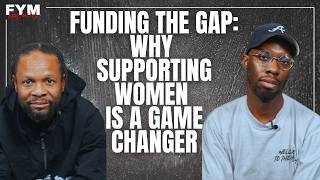
Yo and Worldwide Ty discuss the Empower You grant, a $10,000 annual award for underserved U.S. women entrepreneurs. Venture capital goes roughly 98% to white men, 2-3% to women, and less than 0.5% to Black women. They prioritize businesses that can spawn other ventures, like hair-salon marketplaces and cybersecurity education.
Chapters
And we're back with another episode of FYM with Ty and Yo. That's my man Ty, I'm Yo, and we are, you know, the FYM Show. It's a show about wellness It's a show about getting to that money. And, you know, for people that are interested in our brand new book, The Culture Playbook Volume 2, you are able to preorder that right now. We also have bundles on the website where you can get the package of Volume 1 and Volume 2 together. We also have the option to get autographed copies by me and Ty. So plenty of options. But Ty, please tell the people why they should go ahead and get The Culture Playbook Volume 2.
Um, man, The Culture Playbook Volume 2 is so incredible for me. It's because as, as a Black entrepreneur, or just like a young business owner in general, um, getting to read a book while somebody is building something in real time, it's like less intimidating, you know. It's not like you're reading a book from Oprah or from, you know, Tyler Perry or, or somebody— Jay-Z or Beyoncé— somebody just did something so incredible, and now they're telling their backstory. So I think it's something powerful to kind of like bring the community along for the journey. And so Volume 2, March 24th, man.
Yes sir, yes sir. We're in March now, so that's also celebration of International Women's Month. And Ty, you guys have a grant specifically for women that you do every March. Can you give us a little background about that?
Yeah, so we do— this is year 6. Um, we recently rebranded it. We rebranded the grant last year to Empower You, as we're trying to just like create more activations, opportunity for you, for Empower You. Um, but what's really dope about the grant is that every March, honoring women, um, through this lower lift grant where all you have to do is just submit for a 1-minute video, tell your name, what your business is about, and we pick anywhere between 5 to 10 grant winners, um, that will, that would be awarded with a $10,000 grant. Um, so, um, since we rebranded it and we're, and we're doing more mentorship and more activations in the United States, uh, we only accept grant submissions from U.S. business owners, women business owners, and this grant is specifically for underserved women, Black and brown women that we are just trying to uplift and trying to help educate and identify businesses that are unique in different sectors. It's interesting because I ran across a pretty interesting business and I must say, If it wasn't a business out of, uh, out of Africa, I probably would be moving it to the next stage.
Really?
Yes, it was a business of this, this, this woman. Uh, I can't remember what part of Africa she's from, but she has a business where she beat up men. Yeah, she beat up men. She, she basically has a business where, uh, she gets a phone call when a man is like abusive to his, uh, significant other, or he's just a terrible person, and, and, and then she, she, she beats him up. She, she has a goal of to beat up 1,000 men by 2027.
And that's the business?
That's the business. Now, she did not submit for the grant. I came across it through one of our our, uh, trusted internet, uh, uh, um, I guess you would say, uh, discoverer. A&R is one of our internet. And I was like, wow, this is a very, very unique business. And, and she was very, very, very, very serious about her business. She beat up men for, for, for a living. And, um, for a living, trust me, she can beat up men. Yeah, yeah, she got a whole system, bro.
She got a whole system.
Yeah, she said she got a crew of people. She made phone calls and like, don't be no bad husband, no abusive husband, no, no.
Yeah, she's getting to the FB money.
She's getting to it. Yeah, it's incredible.
Now in particular, why did you want to prioritize the American business owners for the grant?
Um, well, the data is— shows you that about 97, close to 98% of all the venture funding, um, that it really takes to scale a business in a real way, um, goes to white men. Um, there's about 2 to 3% that go to women. And then this is like a disrespectful point 3, 8% that goes to Black women. And so when you read those stats, we can't compete on the venture side. So what we can do is start grassroots, start grassroots, build up the confidence of women that are starting businesses so that they don't have to do a lot of lift. They can come in, really present their, their case, rather it's a deck and a video or a website. And we're just starting from a grassroots perspective to help build women's confidence that they can actually get funding for their business.
Now, across the 6 years of doing this, what has kind of stuck out to you to be a business that's pretty consistent? Like, frequently you're seeing that women are really interested in— like, are you seeing a lot of tech, um, pitches? Are you seeing a lot of music-related pitches? Like, what are women interested in? What are they trying to get grants for?
Hair, a lot of stylists and salons and wig making. And trust me, that is a very lucrative business, um, but we just—
we won't try—
we're trying to empower, right? And so there is so many lucrative businesses in the Black community, but we're, we're, we're hoping to aim to help build like Infrastructure as well. So we do look at, um, those businesses. Let's say it is a hair business and they have an infrastructure they're trying to build that makes it easiest for Black women to start hair businesses, and they have the infrastructure, they have the systems in place, they, you know, it's a marketplace that can help you vet out your hair. Like, those are the type of things that are, that are really attractive because it helps create more opportunities for women to actually get into their business, right? So we really try to find systems— women that are trying to build systems and ecosystems, um, that can actually drive a community, um, and not so much these isolated, you know, um, soap-making businesses and things of that nature. So really just trying to on a grassroots level, we are still want to invest into infrastructural bills.
Got you, got you. I mean, I really like the idea of the woman who wants to beat up men, right? Like, she just has a concept. That's an incredible concept. But I like what you're saying in terms of having a business that is able to produce other businesses, right? Because now you're able to sort of spread the wealth in a way. And I think that's really incredible to, to find women that see the vision, um, for something bigger than just, uh, one entity but multiple entities.
I mean, think about it, it's a compounding factor, right? If you're only getting— let's just think about women in general. If women in general are only getting 2 to 3% of trillions of dollars that's invested every year into like startup businesses, but we're investing into the grassroots because the systems that we invest into can produce the the next entrepreneur. So that's the way that we're going to have to attack the lack of investing of— for Black and brown women in startup businesses, is that we're investing on a grassroots level into systems that's going to produce multiple business owners.
Mm-hmm. Now, do you have any past winners that have kind of gone through the grant system that you think are a really good example of your mission?
Um, I think that we are— we're still trying to find that sweet spot. We're still trying to find that space. We have invested in two women that's doing cybersecurity, that's doing, you know, that's teaching kids about, about space and, and, you know, aerospace. Um, we, we are— we've invested into businesses that are community-driven. We've invested into businesses, you know, that are sports driven. Um, we've even invested into, uh, dating apps, right? But the, but the, the thing that we are still like just trying to keep this mission going is to strike gold with a business that can turn into a Facebook, that can turn into a Google, right? But they need that early, that early foundation of, of, of, of development and funding to be able to hit those markers. And we won't know In 6 years, it took Google longer to build in 6 years, right? So our overall thesis is if we can be the first dollar in on a grant perspective for the business that started 2 years ago, and then in 15, 20 years, they can remember that EmpowerU grant was the grant that gave them the, the seed money to kind of buy their first, first machine.
For the first year, right? At what point were your business in the position where you could start investing in other businesses? Through a grant?
Um, uh, COVID. Yeah, after the, after the summer of— after the, um, summer 2020 of COVID we started being in a different position. And when we started in 2021, it was a, it was a marketing strategy for a song we was putting out. Was like, hey, we're gonna put out this song called Show You Off, which was the previous name of the grant that I was heading up. And then when we started to realize like, man, this can be bigger, so we rebranded and started Empower You as well. The Show You Off grant is still going, you know. Brent and his nonprofit is still doing the Show You Off grant. We rebranded and, um, started to facilitate Empower You, and that was just another opportunity for more women to get grants, you know. So it's just like the things that we're investing into, we want to duplicate it. So we start off with Show You Off Grant, grew that, that still has wings and legs to this day. Now we— last year we, we launched Empower You to be more socially impactful, socially active And so we're growing that, and then next year we're going to do— think we're going to do things even bigger next year pertaining to, um, local founders in different cities and things of that nature. So, um, after 2020 was our real runway to be able to have the capital to reinvest into Black women.
Man, that's incredible. Do you think Do you think that what you're building with the Empower You grant is something that you would like to see other businesses also apply into their, um, into their systems?
I think so. I think that, um, Black businesses that are successful should create some level of grant system, even if it's only one grant a year. But I think every business should do one grant per year because I think that will help us solve the problem that we're dealing with. Um, the problem that we see is that we don't get enough funding to start up businesses and or to scale. So if, if all successful Black businesses take out an initiative to do one grant a year to another business that's Black, we can help solve our own problems. You know, year over year, we won't solve them in one year. Probably take a 20, 30, 40 year span, but that's all of the successful businesses that's putting serious thought into one grand a year to help like us not have to depend on these other sources. So that's what I would say to other business owners and, and, and things of that nature. I think there's an obligation that we have because if you are a successful business owner, you have really achieved something that's unique. And I think that we should literally honor that and realize that that's, that's enough information that we should go out and we should start spreading, man.
Yes, absolutely. I really like how you're framing this as this is how we can kind of support each other through our success, right? Like, this is what spreading the wealth really sounds like. Um, through the empowerment of— like, I don't want to just give you money, right? Like, I want to empower you. It's completely different, right? Giving somebody something, being like, here's a fish, go fish, is different than you taking them out on the boat and showing them how to hook a fish and showing them how to hook a bait, you know what I'm saying? Like, the process of fishing will help me fish longer than you just giving me a fish, right?
I think that if we are honest with ourselves, we all want some level of empowerment in our lives, personally, professionally. And so one of the— I think one of the best things that you can do for a human is to help them be empowered so they can go out and fish and learn how to fish on their own, you know. And, and that's just the real thing. And so I, I I want to be an example of that. I don't just— I just talk about it. I want our businesses, our companies, trying to implore our partners to do the same thing, you know, year over year.
Let's talk about something people don't talk about enough in the music business, how important your feet are. When you're running around venues, conferences, airports, whatever it is, you are walking a lot. And I'm talking miles and miles in a day sometimes. And if you're trying to look sharp while doing it, Dress shoes, boots, loafers, all that. You put on your best pair for a big meeting, a panel, maybe even a wedding or industry event. They look incredible, but by lunchtime, your arches are screaming at you and your heels are throbbing. Now you go to the store looking for insoles, and what do they give you? These big foam bricks that take up half the shoe. Suddenly, your expensive shoe feels two sizes too small. And your toes are smashed up against the front. And if you've got a good pair of leather shoes, the last thing that you want to do is rip out the original lining. That's why we like Sole Insoles at FYM. Instead of a giant insole, they created what they call a shoe bubble. It's a slim medical-grade gel insert that sits right under your arch. It gives you the support you need without it stuffing the whole shoe. So your toes keep the same room they've always had. No crowding, no weird bulky feeling. They're clear and low profile, so nobody sees them. It doesn't matter if you're wearing a sleek dress shoe, boots, or even sneakers. The silhouette of the shoe stays exactly the same. Plus, they're washable and reusable, so you can move them from your work shoes to your weekend sneakers in just seconds. If the grip ever fades, Don't worry, all you gotta do is just rinse them and they're back to full stick. If you're someone who's constantly on the move like we are, do your feet a favor. Head over to soulinsoul.com, S-O-U-L-I-N-S-O-L-E.com, and use the code FYM to get 10% off, and then come back to thank us.
Absolutely. Now, I know, I know your mom's a huge figure in your life. But is there another woman that comes to mind that empowered you really earlier in your life that has helped you be the Ty Bazin that you are today?
Um, man, uh, it wasn't just one, man. It's been a collective of women. I had a, I had a young lady named— it wasn't young, she was actually older than me— named Claribel that was, um, executive at BMG. That was super, super supportive of me early, uh, when it came to the business. Then we had, um, Ashley Calhoun, who, you know, just off hearing Brent's music gave us a pub deal, or was ready to give us a pub deal before she even met him. Um, then we have the women, uh, Alana and Christian at Stem, um, that was very supportive on us on the business side. Um, I mean, even women that I've dated when I was, you know, that, that basically told me, hey, I don't— I, I have no interest on marrying a man that don't have no college degree, you know what I'm saying? Yeah, even that, that type of push. And then just the overall support from family and friends that, that are women, you know, that will get out and helped me with, uh, some of the businesses that, you know, that, that were— that we're building. Um, but just from a mentorship and an open of doors perspective, um, that the, the Clarabelles of the world and like the Ashley Calhoun and, you know, and Milana and Kristen, like, just being present to be helpful in those different ways. And, um, you know, it was from a trying to get your business to grow was really, really important. And, um, also, um, Tatiana over at Sound Royalty, who she's been our account manager no matter since 2017, of making sure like we're getting the right funding and the right type of things of that nature, you know. And it, you know, we've— I mean, I've had really great, um, PR individuals that's been super helpful, like Latonya, who she retired, and then Gabrielle and Ashley Blackwood, um, just so many different women in different pockets of this journey that was just like, you know what, let me figure— let me figure this out, let me figure out how I can help you. I mean, uh, Arena, uh, Arena I'm probably messing up Arena's name, uh, um, at City National Bank, who gives us, you know, uh, help us with sponsorship to go out and teach financial wellness to women through our Mirrors Wellness Club, um, retreats. I mean, there's just been so many women that, like, I'm, I'm literally not going to be able to name all of them just off top of my head, you know what I'm saying?
Yeah, yeah.
Some of, some, some of the women are older than me and some of the women was younger than me. Uh, some of them are creatives, some of them still work with me to this day, some of them was executives. I mean, I still remember Rhonda, who was my general manager at Target, that allowed me to do in-store signings, you know what I'm saying? I like when I was working at Target, and she would say, as long as it don't cost me no money, I'm down. And I was like, bet, you know. So it's just been so many women along the way, uh, from a— from that type of journey for myself, you know, where I would have to sit down and think and write to try to capture all of the names, you know, from, from so many different layers and so many different levels, you know.
I feel you, I feel you. So it's just such a great reminder that businesses are built by many hands.
Yep.
It's just never just one person or just even a handful of people. It's, it's a lot of hands that require, um, to build a business. One that even an unsuccessful business probably still has countless people supporting it. Um, so to be successful, I can't imagine the, the number.
I'll even give you a, I'll give you a, a recent example that, you know, and I'm in the process of building a sports business, right? And I'm, I'm, I show up every day trying to reduce any level of pride or ego that I personally have. But, um, there was a mother, um, her name is, uh, Bunshell, and she, and she, her son is, uh, you know, going to operate in, in, in, in with the, the, the blessings of the Lord that he's gonna get drafted by NFL team. But like, she fought for me to be his agent, you know what I'm saying? She fought. She was like, I believe in this, I prayed about it, he gonna care about you and he's not gonna treat you like these other agents are gonna treat you. And there was like 2 or 3 agencies that, you know, I end up beating out for the player, you know, because the mother fought for me for so long that I was able to identify where I was being like targeted in terms of like, oh, you're not experienced enough, that I was able to partner with one of my OG agents to kind of close the deal out. But like, that was just something that was recently that happened in January, like end of December, early January. Where, you know, a Black mother was like, no, you need to be signed with Ty. He's gonna take care of you. And, and so even with me building these newer businesses, um, there's still this loud support that I, that I get from women. Um, even when truthfully, you know, signing new players for me is a— it has intrinsic value Like, I feel good because I can help these players through a sport that changed my life and kept me out of trouble. But if I don't sign them, my life don't get worse, you know what I'm saying? So, so, you know, their life is gonna get better because they're, they're going, they're having an opportunity to be in front of millions and millions of players, people playing and getting paid a lot of money to play a game that they love. So even with me not, uh, it not changing my life in a negative way if I don't sign a player, when I do get the opportunity to sign one, man, I really try to like take it super serious and be present and talk with the family. But you know, the, the mothers usually be the ones that's like fighting for me or like saying, hey, I know y'all talking about this experience stuff, but this young man is smart and bright and he's doing everything the right way, and this is who— this is who I want my son to be represented by, you know what I'm saying? So even to this day, I'm still getting that support, um, from, from Black women, to say the least.
How much time do you tend to have with families before really talking about drafting or being an agent, a part of an NFL career?
I mean, it just all depends. Like, you know, we just signed a kid on the NIL side that going to University of Alabama. I had— I went and had a quick face-to-face meeting with his mom because she was like, my son's supposed to go to Miami to go work out and hang out with you, but I ain't met you in person yet, so we need to meet in person before he go anywhere, right? And so, you know, so it's like you know, he still has 2 years of eligibility before, you know, before, um, he can go— well, before he can decide if you want to go to the draft or not, if you want to leave early or whatever the case might be. But we've started— we're starting early with him. Like, we don't know when he's going to enter the draft, right? And he still got 2 years of eligibility left.
Got you.
So this can be a 2-year thing or Take one player where I started talking to him and when he was a junior in high school, and then 6 months into speaking with him and, and his godfather, then I got introduced to the mother. And then, so me and the mother been building a relationship for, for 2 years, you know what I'm saying? So it just all really depends. Some of the times I might have already known the mother because of you know, their son— I watched their son or their daughter grow up, and now they're like, hey, can you give me some advice on this? Like, how does this work, right? And so getting to that age where your peers got kids that's like 17, 18 years old who just so happen to be good at a sport, right, which is interesting. But that's, that's where I'm at right now in life. So it just varies, you know. I, I did the, the mother that I was telling you about that was fine for me I met them early October last year.
Oh, wow.
Okay, so that wasn't even a very long relationship. Um, I just was very present, very consistent. Um, and, and it kind of like landed really well with her and his sister and, and, you know, just the people around him. So yeah.
I did want to ask, when you first started working with Brent, did you also like meet his folks and sort of kind of get vetted with his parental guardians, or were you guys just— or was it a little different in music where you're sort of kind of just meeting people online and seeing if you mesh?
Music is a bit different, but with Brent, I flew to Charlotte When I met him at a Boston, uh, I think it was the Boston Kitchen, Boston Market. We met at a Boston Market. Then after we met, after we met, um, we— I can't remember if I had a rental car, but we went back to his house. His mother wasn't there, but I met his dad for the first time. And his dad was the first time his dad told me, hey man, make it fun for him. The moment it's not fun for him anymore, he ain't gonna want to do it. That's, that's, that's some of the first things— advice his dad gave me.
Wow.
And he wasn't lying.
Keen— a keen observation about your kid.
2014. So, man, make it fun for him, man, because if it ain't fun for him, eventually he ain't gonna want to do it. Never lied.
That's a, that's a gem right there. I feel like that's— but yeah, that's, that's transferable advice. Yeah, make it fun.
Um, with, you know, New York, LA, I knew her father before I met, you know, before I met her, you know what I'm saying? Yeah, right. Um, it just all depends, you know, with the music, with the music side of things. There's certain clients that I have that I haven't really met their parents. Um, their parents might know about me, but I haven't really met them in a formal in a formal way. I try to, I'm open to it because I believe in family businesses, I believe in family education. So there is a— there are components of it. Sometimes it's faster, but sports always going to meet the parent unless the parent is just not there because, God willing, they passed away or whatever the case might be. But you're, you're talking to some parents with the sports side of things.
And the stakes are a little different, right? Because you gotta go through like an educational process, and then once the conversations about being drafted start, you know, you want to have somebody that has your best interest at heart.
1,000%.
Music is so different. Uh, all right, well, Ty, is there anything else you want to touch on? We've been kind of going about 30 minutes now.
Um, oh man, I think that, you know, I want to be thankful for everyone that's going to grab Volume 2. We're currently working on volume 3.
Yes, sir.
Um, we're trying to have more in-person sessions. Traffic, the counselor flights, you know, all the stuff that's going on in the world, but we still want to make sure that we get together and give some information and have an ignorant conversation about wellness and keep the process going for FYM. We're in season 4. I'm currently in Nashville. Yo is in Atlanta. And, you know, and we want to just encourage everyone to ask questions about the book and, you know, let us know if you want us to come to your city to do a live talk. You know, these are the things that we're arranging as well. So that's pretty much it, man. You know, March 24th, volume 2 is on the way. And we live in action when it comes to season 4 on FYM.
And that's it, guys. Leave us a comment about a woman that has empowered you in your life or empowered your business. And, um, you know, tune in for our next episode.
Again, shout out to my mom.
Shout out to the mamas, you know. And we'll see y'all next time. Peace. Peace.







