S3 E303: Breaking Barriers in Music: A Nonprofit Approach | FYM
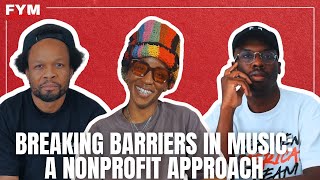
Worldwide Ty and Yo talk with Sierra about Over Everything, a nonprofit artist-empowerment label founded in 2019 that offers free programming and transparent STEM splits. They discuss how nonprofit structures enable community investment, Culture Cares' grant programs for Black and Brown ownership, and why management is a long-game relationship.
Questions this video answers
2019.
They are a 501(c)(3) nonprofit.
They were able to provide mental health services to many of their artists for almost a year.
Culture Cares.
$50,000 grants for down payments.
Chapters
I always say money isn't real. Humans is the currency. That's what it is. And so when we end off like this show, we're talking about profit, non profits. When you do the work, the community work that non profits drives you to do, you're doing the work because the humans are the currency. As simple as that.
Yeah. That's the value, you know? Yeah.
And we're back with another episode of FYM with Ty and yo, my man Ty over there. I'm yo and we have a special guest with us today. Please introduce yourself.
Hi, Sierra. Shawn, how are you?
Where are we at, Sierra?
Where are we at? We're in New York, right?
We're in New York.
Yeah. Yeah.
Huh. That's where you based out of?
Yes, I'm based out of New York. Living in Brooklyn right now.
How long you been living in Brooklyn?
Very recent. Yeah, I moved from LA upstate and then I just moved in with a homie I've known for a long, long time. Like a week ago actually. Okay. So yeah, now I'm in Brooklyn.
Tell us a little bit about yourself.
Oh, this question.
Loaded questions.
You know, what do I say? From the Bay. I'm from San Francisco originally. Have kind of bounced around coast to coast. I am a singer, songwriter, co run a label. I also do facilitation and program design and support. And yeah, that's me. I guess I'm a Virgo. My birthday's coming up.
Yay, Virgo energy.
Tell us a little bit about the label.
It's called Over Everything. I co run it with my boy Mars. Mars today Mark. We started it in 2019. We were both from the Bay. We're both from San Francisco actually ended up meeting in la. We're working on music together. And then he had this idea for this kind of label and artist empowerment organization. He brought me in and we incubated it at this thing in Oakland called Zulabs. Kind of was a space for a week where they put us up and they had different music industry professionals come and we just used that as an incubator to really get everything started. And so we are not a traditional label. We don't take money from anyone. We work with people on artistic direction, production, songwriting. We basically connect you to distribution managers. We want to just get artists to the next level. And so, like, if we work with you on the music, right, we'll figure those splits out and all that. But other than that, we don't take any profit. So the over everything is music over everything. So we really just want to Establish music education, music empowerment. And that's kind of the ethos. It's really about community. We do in real life events where we've had managers and different other music professionals come and just talk, talk to people on panels. That's all free. We have digital offerings that are coming soon that are free. Just music education. All our shows are free. We started doing a garden series. And so like established artists, independent artists can come and shoot in this beautiful garden. And so that's like promotion for us, but it's also promotion for them. And so that's free. And so we really are just, you know, about the community, about empowering artists, about doing this with integrity and love and care. Because we know that the larger industry, you know, it's not like that most of the time.
Yeah. Now, did you know about Ty before today?
I didn't know about Ty before.
When did you. When did you find out about Ty?
A few years ago, I think. You know, I knew about Brent and then I started researching kind of the unconventional kind of way that his career was going. Found out about Ty, knew about kind of the ethos of fuck you, money, and just like really appreciated the kind of outsider perspective that Ty brought in. The way that the deals that you were making and the difference and the care that you seem to have for artists and for the music and trying to do it differently. And so, yeah, it's been a few years, I think, since I'm not about Ty.
Unconventional is a great word for Ty. Absolutely.
I think so.
From what I know, it's interesting about the. I think that is very empowering to have a. I call it a community label. Like, you got a community garden where people can go and pick and. But you just got to take care of it.
Yes.
Right.
Yep. One of the things that is disheartening about working with artists is that you never know if they're going to take care of the garden.
Right.
And what I mean by that is the concept of a garden is that it's something that grows from the earth that can feed a community, feed, you know, individuals, families. And the only thing you have to do as a community is make sure that you care for it so that it can go out and it can do the same thing for people that came before you. Right. And I think that this episode is so important because I don't think artists understand that in order for black art to grow, when you have platforms like Urall's platform or managers that are, you know, like me or similar to me, you have to take care of those individuals in order for the music business to grow. If a manager spends five, six, seven, eight years building into your career and then you wake up one day and they haven't done anything wrong and you decide that, oh, I don't want to, I don't want you to work with me anymore.
Right.
That is your prerogative. But one thing about community commitments is that you have to do what is right for the overall community and the right for the garden.
Right.
So for the community garden, you can't take oranges for five to six years and then decide that, you know what, I don't really want to plant or I don't want to replant oranges anymore, Right. I'm just going to go and I'm going to go to this other fancy garden where, you know, now this garden is easy to go over here because you're strong and healthy and now when you're needed the most, you go and you want to give it to another garden. Right. I think that it's important that non profit labels, which is something that's very not normal. Right. I think that for me it just feels like it's a community garden.
Right.
It's not obviously gardens or stationary, but you can have gardens in every community. But I say community gardens because there's a lot of communities that got gardens.
Right.
And having using that concept to like uplift artists, educate artists, what that does.
Is.
Protects them from making bad decisions very early on in their career.
Yes.
Because usually when decisions are made that a terrible decision and that.
Yeah, that's kind of how we think of it. It's like we're a conduit, you know, and so like we've worked with like Destin, you know, a little before he blew up Fable still. And speaking of like, you know, artists kind of coming back, like he, you know, Mars in particular helped him and his management helps him get, you know, like established stuff with selection and establish other things. And he's, you know, going off and you know, on his trajectory. But he'll still come back, right, and do a garden session. Our artists will still. I think Mars in particular is a very good cultivator where like that's how I met a whole bunch of musicians and producers who I still work with and mixers and I've sent mixers to folks and da da da. And like that's how we do it. We just kind of try to keep it in the community, right. Keep it in the family. Whether somebody goes off and does something bigger or not. Like we're not trying to keep you. Like that's kind of our whole point, you know, like we. That's not what we do. Right. We're not trying to keep people or keep you under contract. But we do still want that kind of community, that back and forth. Right. And that's been really cool to just have since 2019, where we still are in contact with a lot of our. And a lot of producers and musicians and mixers and masters that we've been working with, you know, for the last five, six years.
Right.
Tell me, how did you decide to be a nonprofit?
I think both of us, you know, being from the bay and both of us kind of came up in that space and we thought, I think that also music kind of needed to go back to kind of a patron model as well. It's like a lot of independent artists are not going to get advances and should you even take that advance? We talked to a lot of people, you know, about that where it's just like, you know, like maybe you should actually wait on that because they might give you this, but you don't even really know your sound yet or you really want to get more leverage so you can really like, you know, be like a tie you write in a Brit and like really go in there with. With some clout, you know, and some leverage. And we were like, music is not going to. This is not going to make hella money anyway. Right. So like why are we going to start off this independent label where we know what our. We want to empower artists. You know, we want to kind of have you at this level of your career, not think about. Have to think about that, right? Really think about the art. Really think about what you want your career to look like. Really get to make those mistakes or not make those mistakes because we're getting you so early. And it just really made sense and we, you know, think thought it was cool thing. We're still like we are real nonprofit. Like you can donate to us. We got some donations a couple of years ago. We were able to give like a lot of our artists mental health services for almost a year.
Amazing.
And so like, you know, like give us money if you want, but to the community labels. But we really thought that was just really the way to go. You know, instead of trying to nickel and dime and figure, figure that kind of stuff out. We just really literally want to be an empowerment organization and really be a community based and conduit to that. And it's like, yeah, like you were talking about earlier, like if you're a big company. Are you somebody who wants to invest in something cool? It's a tax write off. We are a 501C3, you know, and so it's like you can just resource us and we can resource other people and not have to worry about that kind of side of the business.
That's incredible.
You know, that's so important because companies can, you know, donate into y' all business as a nonprofit, tax write off that service in the community. But they can also double back and use your all's community for opportunities if they're looking for a song, if they're looking for something for their, for their commercials or they're looking for a playlist playlist for their company, you know, event or whatever the case might be. And so it's a really great model. One of the things that I'm learning that I think every manager and every label owner should learn is that build your brand that will attract artists that will want to come because of your brand. Because every artist is, at some point is you're going to rarely get an artist that want to stay with the same label for their entire career.
Right.
So you got to almost know going into it, they're like, hey, we're stop 1, 2, 3.
Exactly.
That's what we, that's what we are. We'll stop 1, 2, 3 and 4. And we have these different resources of all those different elements and then you collect that data for the different artists that come through. And you know, that's similar to like what we're utilizing and doing as we're building and managing Soul Action and Jo K. And we're like, hey, for years, you know, you all, you know, because I'm pretty blunt when it comes to business development. And I'm like, you know, and I'm talking, I'm like this, you, you don't have a record business. You have a DJ business. You don't, you have, you have, you don't got a catalog of music to have a record business. I mean, we're here to build your record business. A record business is original records. Yeah. You know what I'm saying? Not flips and mashups. That's a DJ business.
Yeah.
Which you all do really well. You have a touring business, but for 13 plus years people have identified you as a music company, but you don't release no fucking music. You release music, but not selection music. Right. And so we're gonna change that and now we're gonna build up your music brand so that it can match up with your DJ brand. So when you're touring, you can play your music and other people's music. Now, when artists come to the table, like, oh, my God, I want to work with Soul Action now, you have infrastructure to really lift them up and stay on it, stay longer on their journey. Right. You might not be on their journey for long, but if you can get a good solid years, like a good five to six years with an artist that's making money, you should be trying to figure out how to set yourself up to find the next artist that needs your assistance.
Right.
It sucks that it's like that today when artists like Bob Dylan got the same manager, James Brown had the same manager, like, but today, it's no different than, like, workforce. Right. Delta is, like, one of the few companies where you. I met a woman at Delta the other day. She worked at. She'd been at Delta for 37 years.
That's a career job.
That is a career job.
And that's just not reality for some of us right now.
Yeah.
And sometimes people want to stay in these jobs, mess with them, you know.
And they dirty the reality of this. And I learned this when I was speaking with the VP of Insights at ebay. He said, kids, this generation, they want to have multiple hustles.
Right.
So it's hard to.
Sometimes, I think sometimes they don't want to. They feel like they have to, though, too.
Well, yeah, well, the. The. The have to part does say that. But when you look at the data, kids don't want to work a regular one job.
Yeah.
That's just for whatever reason, rather it's not fun or it's not.
Like, I think the culture of work is. A lot of it sucks. And so, like, I think, you know, I don't know how old you are old you are. But, like, I think, like, our. I'm a millennial, and I think our generation, I think, was one of the first generations who was like, actually, this is not right. And I know you stayed for 35 years, but you weren't happy for 35 years.
Right, right, right.
And so. And you took that out on me or you took that on yourself. And so it's like, how do we kind of change the culture, too? And, like, they are even more than us are. Like, you know this. You know, and so I think there's a. There's a balance of, like, the quality of the work and the work ethic we're still trying to find. I think that that balance.
And to your point, the generation, looking at how another generation was unhappy it's the same thing happens with, happening with artists. Artists don't want to stay with managers forever. Just like younger, younger people don't want to stay, have one job ever. They are curious to bounce around. And the, the dangerous thing, dangerous thing about it is you, you can leave one loyal person to go to a disloyal person, just like you can, you can have multiple jobs and one of them don't stress you out, but the other two do. But the other two might pay you more money, right? So you gotta always do that thing.
So I think too, it's a little different. I think like the manager conversation too is a little different than the work conversation because I think as a young person do hella shit, right? I'm a proponent of that. I did a lot of shit. I circle back around, I had, you know, you get your degree in this and you're like, I didn't do this. And then you kind of circle back around and you're like, oh, okay. Actually this kind of actually worked out, right? The advice I always give young people is like, what kind of life do you want? What kind of person you want to be? What kind of life do you want? What you want it to look like, what you want to give? Because I want this job. You might not get that job, right? But I think to your point about the management, I think is very important because people, relationships, right, unlike jobs, are way more tenuous and should be handled with way more care, you know. And I think the jumping around from people to people, whether it's management or friends, musical collaborators or whatever, I think, yeah, like expand your, you know, your reach or whatever. But I think that, I think people really need to settle in on themselves a little bit when it comes to people.
Oh yeah, yeah, 1,000%. And that's why I say it's dangerous.
Because it's very dangerous.
People are not thinking about. People are taking anything that deals with work and they're treating it all the same. Management is not your friend, you know what I'm saying? Management is like, even if you're, even if you go from making $0 to $500,000 to $10 million a year, right? The management part of that is to be able to say, how do we help you keep solving problems that don't have problems, how can we forecast what you're going to be doing in the future that what you're not going to be doing in the future, right? And when you jump around to different management, you don't have a planning time frame to sit with somebody and say, okay, what are we going to be doing for the next five years?
Right?
Because.
And you need that in music.
It's a long game. You need that.
That's the long game.
That's the longest game you got.
It's the longest game.
Any talent management driven thing, you need that in sport. You need it in sports more. Because you can only playing for so long.
Right?
So if like, so sports, they're more hyper focused on it. Musicians know that they can do this forever.
That's why it's the longest game. Right.
So that's why you.
Right, exactly. Established timeline. Exactly.
My voice might be.
Yeah.
Function. Exactly.
Yep.
I want.
That's a good question. I think I've always tried to be very fair, even when I was doing stuff by myself. But I think when you do stuff by yourself, it's harder to establish those splits and negotiate that kind of side of stuff. And I think Mars, especially with somebody, even when we were just working on music before, the label was very about, like, integrity in that process and transparency in that process. Because sometimes you're not trying to do stuff on purpose, you know, you just might not know. And so from the beginning, it was like, okay, this is who worked on it. This is who worked on it. This is your split. Is this fine? Can you stand behind this later? Dah, dah dah. We're going to get this person to do this. Da, da da. And so that part, establishing that part immediately, you know, finding different folks immediately and getting that kind of side of the business settled. I think that's one of the biggest things, because especially if you're doing stuff with care and integrity, like, people will stand behind something, right? People, you know, you're an independent artist. Like, people are not gonna be like, you know, some people will, but most people are not like, where's my money? Immediately, you know, but it's like you have to talk about that. You have to have those conversations and not just try to like, skirt or be like, I saw you got, you know, in advance, you know, 20,000. Not. It's not a lot. But, you know, you didn't say nothing. We didn't discuss, you know, like, we didn't say nothing about these split, you know. And so, like. And I wasn't doing that, but it was just like really making sure, you know, that I did that. And artists were very much like, let's just establish this at the beginning so you don't have to worry about. They don't have to worry about it. Nobody gonna come out the Woodwork, you.
Know, like, you know, because people will.
Come out the woodwork, you know, something will blow up, and it'd be like, oh, remember, you know, or.
Right.
And so really, like, I think that's one of the biggest lessons, just really getting all that together as soon as possible.
It sounds very healthy.
We try to be very healthy over here.
Yes.
Mind, body, spirit, music. Yes. We try to be healthy, for sure.
It's important to be healthy in music. I mean, that's one of the things that I always preach, and I still preach it. When you are a new artist, the number one hindrance is working with producers that don't understand you're a new artist. That means that they gotta be willing to just let you fly, let you put music out, figure out whatever that business is, like, if it's gonna be on stem. We used STEM very, very early on, and it was very transparent. Still very transparent.
Still very transparent. Easy.
And it's like it's black and white. I promise you, right now, I need.
Everybody else to adopt that system.
Let me tell you. I have a company that we invested to that is basically like stem for contracts. It's called Charter. And basically, you basically don't need no lawyer. You go in, you like, hey, I did this. This is what I did. And you put that email in and you send it to them, right? They open up it, they got a profile, they say, okay, I accept this. I accept that. I don't know if we talked about this decline that. Then it'll go back. And then you do this back and forth, right? So STEM is so normal to people, is that I sent both of them out at the same time so that I can have a producer agreement on file. And then I got my digital, you know, agreement on stem.
That's amazing.
They already finished this contract, but all of them accepted their STEM splits. Literally everybody accepted a stem split. And I'm just like, hey, bro, I need y' all to finish the contract part of it, so I gotta go and hound them about it. But it's so black and white on the contract side. It's just like stem accept. But they didn't do that. You know what I'm saying? But I say that to say that the more we can build businesses that are transparent. I just don't believe that lawyers need to be involved so early in the artist's career. I think the environment need to be safe proof.
Yes.
Right.
It's like the child gonna run around instead of trying to make the child sit down, make the room childproof.
Childproof. Yeah. Yeah.
So that's the model that I like to think about when you're dealing with new art. Make the contract so fair that it's short term. They can get out of it. It's transparent, they're going to get paid. They're going to make all those things so simple that when it gets complicated, okay, you might need a lawyer, but you can't afford that stuff.
Exactly.
It's crazy.
Now, before I got here, you guys were having a conversation about profit.
Yeah.
And non profit.
Yeah.
You want to explain that a little bit?
So it's this concept that. And it happens in the, it happens in the world, but definitely in commerce societies or capitalist society, should I say? Well, the deal maker is the, is the king or the queen.
Right.
But when you look at the nonprofit sector, it's a trillion dollar sector. So much money is donated, right. So no different than another sector, that's a trillion dollar sector. Right. So when I'm looking at it, I'm like, man, there is a profit in being a nonprofit, right? You building a brand value, you building up the communities, you're building up humans because you're donating to causes, you're trying to solve problems. There is a profit in solving a problem.
Yes, sir.
Right. You might have to give away all the money every year, but you can employ people, they can have a healthy lifestyle that can make their living their eight hours a day, they're 10 hours a day servicing people, finding solutions, finding problems, solving problems. It's more fulfilling, you know, than the rat race of trying to close the deal. So the concept, the conversation we was having was when you are saving the company money or you're making a company money, they both have the same value. So nonprofit organizations and profit organizations, they both have the same value. Holistically, one is saving the community from problems.
Right.
To help solve these problems, whatever. They are predatorial things against artists or predatorial acts on the environment, or predatorial acts on the body. Like all of these different things that these nonprofit organizations have. And then you got the for profit, right. That are sometimes feeding the drug, like the sugar drug or the gun drug or whatever it is that's making money. Right. So it was this thing about when we think about nonprofit, we should change how we view it because people be like, you know, oh, we just talked about a bunch of investors that they go out and they donate money, they invest into companies for a profit. But they know that business, the business write off for investing into a business is going to be a tax deduction.
Right.
Investing into a nonprofit is a tax deduction, right? So in actuality, it's the same energy of investment.
Right?
Right. You invest to a nonprofit, you get the same result.
Right.
Only difference is that that nonprofit does not turn a monetary value for you, it turns a, a servant to value or brand value. Because now your company is affiliated with a nonprofit that has a integral brand in the communities, right. Which makes it so that now when you start talking about what your nonprofit strategy is and you bring up this nonprofit who has integrity in the community zone, they take the money and they do what they say they were going to do. Now you level up your business, you may not make money off of it, but you save money. So you made money.
Right.
And so it's this thought process on how the black community, the brown community, need to change how they see nonprofits that are set up properly. We just set up properly. We just set up our non profit called Culture Cares, you know, and it focuses on investing into kids and women right across entertainment, you know, that's media, sports, music. And you know, the goal for, you know, Culture Care is one of the, one of the first things that we're working on is that there's programming in California, LA specifically that we're working on where you can get households, black and brown. Black and Hispanic Communities can get $50,000 grants for down pop down payment on their homes. They're first time home buyers, right. And they just gotta have like a 630 credit score and like make I think between a hundred and $125,000 a year. And then that 50,000 City National bank will, will put it towards their deposit and you can either put more money on it to make your deposit bigger so you can get a better house, whatever the case might be. But that's going to be one of the first things that we do from, from our partnerships because it directly deals with empowering people, black and brown, to be able to have ownership.
Right?
And so ownership is a really big thing because we're investing into black women, we're investing to black kids, we invest into just people of color, women of color, so that they can have ownership either over their life, over there, you know, in business to help, you know, build generational wealth. So I just think that we as a black and brown community need to really understand how nonprofits are driving profit for the community. You know, and that was the conversation that we was having before you, before.
You jumped in, what was your introduction to like nonprofits? Do you remember, like the first company that you heard about it was like, oh, this is a nonprofit. What was that?
Yeah, I mean, growing up in the Bay, like, we were kind of talking at ty about, like, that's kind of. I think some of it is still kind of there, but, like, the culture, a lot of the culture of the Bay and what I grew up in is very activist focused, very community focused. So one of my first jobs was through the summer youth employment program and, you know, nonprofit through the. Through the government, through the city. And I worked at the library. Before that I worked in a health center. And then I ended up working at this place called wimac, and it was a youth empowerment organization. I started working there at 15 and basically worked there until really I went to college, came back and worked there again. And they really, like, really shifted me. I was already, like, my mom was already very big reader, big about empowerment, but they really established kind of my political education and my political groundwork. And because we really were like, in there, like, advocating for things across issues. I was in a juvenile justice committee. Like, we were trying to get the juvenile justice center shut down and like, have a system set up where they ended up using. Where they were, like, to score youth to make sure that they didn't stay in juvenile or didn't even get there. They didn't have to. I was in schools doing facilitation on different stuff on, like, political education. We did a thing called youth vote that happened in the city where we would go to different high schools. And I did it in my high school where high school students would get to vote on the issues, and then we would take those issues to the board of supervisors so they could see what youth actually wanted. And sometimes they actually did look and kind of took that into consideration. So that was my introduction. And that's kind of like, I've never. Besides music and I've done some other things, like, I've. That's kind of been my career trajectory in working just in service. And, you know, people who work for nonprofits, you know, we know all of them, like you said, have to be well established. All of them aren't. I've have some, you know, work trauma from those, you know, because especially I think sometimes it hurts even more because, you know, if you go into a corporate environment, you kind of know what you're getting, you know, you kind of know that culture, you know, and so when you go in nonprofits, you're hoping that, you know, we're starting to solve these problems and help people, that you're going to treat your employees the Same way. And it's not always the case and, but overall, you know, some of the best people I've met, it shaped me so much and it's just kind of the trajectory of my life and my career to serve and to be in community and to help community in any way that I can.
Incredible.
That's dope. You know, we was talking about, I've been talking about this a lot about the internal operations of a business and they helped in the grow of it. The growth of it. So it's interesting to hear that non profits also have toxic workplaces.
Oh yeah. I mean we're in a capital. You mentioned capitalism. We won't get into it, but totally capitalist, you know, but it has a certain, you know, there could be even. The thing is there could be a nicer capitalism.
Right.
That even that we have, you know, like America in particular has a terrible, terrible version of it. And so it's permeates everything, you know, like those, those businesses are giving them money to nonprofits and sometimes those businesses are, you know, not establishing what happens. But you know, you write in grants and they want to see certain things and so that can flip stuff. People get. Money corrupts, you know. So sometimes you be you the ed of this organization and you're like just kind of about your money and you forget why you got into it in the first place, you know. So like, you know, in a capital society, whatever is going to get. It's going to permeate, you know, dep. If you're not literally fighting against it and like letting it. And some people get into nonprofits for the same reason they get into other stuff, you know, they want to be in power in some way, you know, and so that, you know, that happens. But yeah, overall it's been pretty good. But yeah, this, if we're here, you know, so it's going to permeate. Permeates the, you know, music business for everything, you know.
Right.
So yeah.
But it sounds like you came in very young. Yes. And you existed in this space for a long time. So you've seen it develop, you've had your viewpoint on it. You have heartbroken based on things you've seen. You've been re. Inspired by things you've seen. What, like what would you tell somebody that doesn't really know what they want to do, but they're inspired by non profit work?
I would say research, you know, research what you want to do or research the organization. You know, I think research, research, research. I think, you know, it really is sometimes people Will literally, like, especially if the place is really bad, like, this is corporate, this is not profit. This is whatever. Like, look for a glass door, you know, look for. Talk to different people who maybe, you know, have been in that space, even if it's not that particular organization, and just really get the lay of the land. I think research is really important and you know, like I said, make sure that if this is an entry level job, you might not be making hella money, but they should be paying you, you know, check that average salary, you know, don't let people kind of nickel and dime you and pay you less than you're worth. Because in nonprofit work, you're going to.
Work, you know, you're going to get.
That working, you know, you're gonna work a lot, you know, and so even if it's not, you know, the top, like what is the, what is a salary? What is some money that is going to make sure that you can live, you know, and live well enough and that you're not going. When you have those days when you're exhausted, that you still feel okay, right, with doing what you're doing. I say especially jobs, I say don't be afraid to leave, you know, because I think, you know, this mark, this job market is very crazy right now. So, you know, that's less easy than I think it has been in the past. But you know, these jobs, because sometimes they know that now too. Like people will treat you like shit, you know, and I don't think anybody deserves to be treated like shit. And they will. And so really establish like what your, your baseline is, what your fuck it is, you know, what you need to, to, to be, to be healthy and happy and thrive. Because you might not stay at this job, but you still want to give to this job and you want to get from this job, right? You want this to be on your journey and you want to bring that into the next job, bring that into the next organization. So I think that's, that's what I would say. Just really and think about what you like, you know, like you might. This might not be like what you do forever, but what do you like to do? You know, what do you want to give? Community? What do you, what do you, what is your day, what you want your day to look like? I don't like to be in office, you know, so there's nonprofits that, you know, always an officer, nonprofits where you're kind of all over the place. And so I've been lucky, you know, even as a kid, like we had an office, but I would get to go to different schools. I was a case manager. And so we had office, but I was driving all around everywhere. And so, like, I know that that's something that I need, you know, like when it was like remote work, I'm like, yes, I keep that because I don't like to be there. So, you know, give me a hybrid. Give me this, you know, like, really feel like what you want your day to look like, what you need your environment to look like. And that's kind of, I think, the.
Advice I would give now when you hear. Now we on YouTube, so we can't really use the F word anymore.
I think. I think.
Fuck you, money. When you hear the phrase, the term, what do you think about when you hear fake money?
For me, he just said he was a capitalist, but for me.
We outlawed to a certain degree.
But for me, I think it is. It's not about, like, maybe not making money, but it is about certain things are more important than money, right? There's other.
There's a lot of things more important than a lot of money.
Yes. I got a list.
I got a list.
Most things are more important than money. We have to use it, you know, But I think money is a resource. You know, just like anything else, money is currency, right? And I think there's a lot of different resources and a lot of different types of currency. And so it's not just about being solely money focused. I think to Ty's point, it's like, what's valuable, right? And establishing what's valuable and going from there.
Yeah, it's research. It's resources focused. For me, like, I use this example of I want to take and do this thing for women. You know, we do this every year, and I'm like, what if every year there's a person that owns a property that says you can bring whoever you want to bring here every year. And this. How many people it holds, all the food is taken care of. Boom, boom, boom. I didn't have to spend no money, but I still got my desired result through somebody else resources. They didn't spend any money because they already owned the property. So they lending. They're sponsoring this, right? So for me, a lot of it. And it dives into, like, relationship relational development and relationships like, hey, which resources can we utilize? Right? It can be time. It can be, you know, ownership that you have. It can be group community things. It can be just a community tool that everybody can use. It could be your. Your. You stay in a condo and you have an office there that. Like a business center.
Yep.
Like that can be an office that, hey, you can bring people. It's a resource. So I think that in the capitalistic society, people get it confused and they forget that the actual driving factor of capitalism is resources. That is what, like even before money was a thing, it's the esports. It's the exploitation of resources. So if a person comes from a place where their biggest resource is plumbing skills.
Right.
Mean that my granddad was a plumber. His great granddaddy was a plumber. My great great granddaddy was a plumber. My great great grandmama owned a plumbing company. Their resource, what they're going to be exploiting is plumbing skills.
Right.
They don't really have the money, but they have the skill sets to go out and lend to a company. Right. So they can go into a, a pub plumbing company and become a partner because they know how to do work.
Right.
They don't got no money, but they have this resource, very specific resource. And I think that's where the capitalistic thing gets, gets like taken about. And now you, you because you. Because that approach is not about greed.
Exactly.
Right.
That's when capitalism becomes what it is. Where everybody has a negative output on it is when people do have a negative output, it's because it's the greed.
Right.
It's not the. When you see. And it's a backlash for a company that we was actually working with during COVID called Paradigm. Soon as Covid happened, they just start firing people. Yep. That's greed. Because all the other agencies. All the other agencies, they just side and wait. Yeah. What was going to happen? That means that the people at the top had to take pay cuts so that other people can keep their jobs.
They still was making money. That's the thing. Like y' all make money, you know, like all these companies made so much more money in the pandemic and fired all these people during the pandemic. You know.
How long it was going to last.
So you just asked out these. All these people.
Yep. And that's when it becomes. I don't subscribe to greed. It don't matter if it's a democrat or it don't matter if it's a communist or the dictatorship. I don't subscribe to greed. You know what I'm saying? I do like the pros and I just deal with the cons of capitalism. Right. Because as a. When you come from black and brown communities, I could just look at Africa. I can look at Caribbean. I can look at South America. When you come from capitalistic societies, you can sell anything. And in this country, you can trick people to buy anything. And what you do with that resource after the fact is how you can build your family up. So if you say, you know what, we're gonna be the best people in this country that's going to sell lollipops.
Yeah.
They're homemade. We make them out of our. And we're gonna lollipop it. And there are lollipop. And in the United States of America, you will have lollipop food trucks. But that's where we live at.
Yeah.
You know, bro, there is not even enough Internet service in Africa to be a lot.
Right, Right.
It makes it. That's the pro of it. But then the con is the greed. That's when it becomes like the back end stuff. The race, the racial oppression.
Yeah. And I think too, like, I think, you know, to keep going with the lollipop, I think we need to buy less lollipops.
You know, that is another thing. You know, like, that's another part of.
Green is so good at consumerism.
That is another part of green.
Right?
Yeah.
Like we need to.
The portion. So that's so with greed. Right. I've told clients before, right. First of all, I've quit on clients because I feel like they did something that did not feel they did business in ways that I didn't feel like I wanted to partake in it. So I'm like, I'm gonna bow out.
Right.
But I've also told clients that, like, hey, you know, we don't have to take this much money. Like, because the more you take.
Yeah.
What you want for this, there's always another side of it.
Right?
Yeah. When you travel in different countries, you realize I was in. When I was in Turks recently, they brought out some rice and beans. It was like that and I was like. But then as I was eating, I was like, this is fine. Like, but it's just being from here, it's such big portions, proportion, size. You were like, it is definitely like the over consuming that we do here in this country across everything is wild and it's a part of greed. It's not. It's like, it's a distraction. Definitely a distraction.
Yeah.
Yeah.
I wanted to ask. Well, one I wanted to highlight. We have a book called the Culture Playbook. And Ty was the very first person I've ever heard in my life and maybe the only person I ever heard in my life say money wasn't real.
I said, yeah, all the time.
That money ain't real. Money real. We made it up, you know? Yeah. I had some green paper in my hand the other day, and I was paying for something. I was like, why is this valuable exactly?
It's thin.
I can set it on fire, but because it got that 10 on it, it's worth $10 if I got a hundred on it. If it's blue, then I can pay up to a hundred dollars worth of something. But I. I'll never forget when Todd told me the money wasn't real, at first I didn't get it. I was like, money, real.
Pay his rent.
Money real. Fine.
Ty, you trying not to pay me. Ty, what are we doing?
But then as I started to really think about it, and Ty had to stick with, like, if bricks was the currency, we were all bricks. If you got a brick home, you.
Up, you up, you up.
And I was like, dang, he right.
And we just decided to change what the value is, then we all would have to accept something.
Yes.
Because we all accepted this green paper is valuable. That's crazy.
That's insane, bro. It's very crazy.
It's nuts. So a resource, though. And I thought about this because I had an Uber driver who. He said he had a. He moved from Canada. He started. He owned a gas station. He owned the gas station for two years. He said business was not good. So he end up closing the gas station, but somebody hired him to manage their gas station after that. He managed their gas station for 20 years.
Oh, wow.
And at that point, I was like, the two years you spent owning a gas station that didn't work out prepares you for the 20 years to manage, because that two years of experience is invaluable. I cannot tell you how valuable that is, because I don't know what you saw. You know what I'm saying?
He did.
He did.
You did it. You.
You did it.
Well, Yep.
Since you were able to do it for 20 years. And I was very impressed by that because I was like, you know, some people might look at failure and be like, I need to change my industry. I need to go do something completely different versus sometimes you need to pivot, you know, 100%. And sometimes the pivot's not a harsh pivot, you know what I'm saying? It might be from, like, ownership to management. You know what I'm saying? Like, that's a pivot. But he obviously knew something that allowed him to manage for 20 years. That's resourceful, in my opinion. And I can't put a dollar amount on it. From my perspective, obviously he got paid to do the job, but after 20 years I. Man, that's valuable. You can probably give me a lot of advice about running a gas station that I can't get on Google, you.
Know what I'm saying?
So I started to really think about how money isn't real, but resourcefulness, that shit real. Realtail.
No. As we, as we get ready to close out, I want to speak on the power in this, the thing about the money isn't real thing. Because, because like I met yo 2017 but I knew money wasn't real from an exercise that I did in 2009, you know what I'm saying? So I was broke saying money ain't real.
Oh yeah, right.
And so, so for me, you know, it, it put things in perspective on like how I want to live my life. Yes. And, and, and I feel I always say money isn't real. Humans is the currency. That's what it is. And so when we end off like this show, we're talking about profit, non profits. When you do the work, the community work that non profits drives you to do, you're doing the work because the humans are the currency. As simple as that.
Yeah. That's the value, you know.
Yeah, yeah. So thank you. This is great.
Thank you so much, man. It was incredible.
Conversation, servicing conversation.
This is FYM with Tyo. Amazing guest. Are you guys now you guys sign artists?
Yeah. So if you, you know, very baby steps. But yeah, we, we work with artists. If you're interested, you can give the socials over. Over everything. Under everything. So over everything on Twitter, Instagram. We always are on Instagram. Over everything.org come to our website. Check out our garden series on YouTube. We just put one out. We're about to put it a few out probably until the end of the year. So yeah, check us out. Like I said, we are a real nonprofit. You can donate, you can tap in musically as well.
Is it a website?
Yeah, over everything.org is the website.
There you go, there you go.
Please check out over everything.org please check out FYM comment, subscribe and we'll see you guys next time. Peace.







