S3 E306: The Transformative Power of Tech and Black Art | FYM
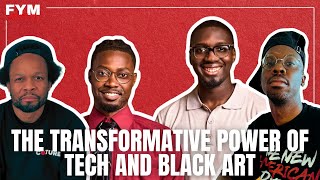
Mamdu Benjayi and Derek Goshe built Timbuktu, a marketplace that uses AI and blockchain to authenticate Black artwork, pay artists royalties on resale, and track collector portfolios. They pivoted from an earlier startup called Relink in 2022 and went through Bank of America's Breakthrough Lab and Venture for America.
Questions this video answers
They worked on the idea in 2018 and officially formed a business entity in 2019.
2022.
They were in the second cohort of Bank of America's Breakthrough Lab accelerator.
They met through Venture for America.
TIMBUCKTOO dot com (spoken as the site to check out).
Chapters
So for example, think of all of the like I remember like when we was going to like school in undergrad, like the big thing was, oh, you need to have social media, have a web presence. And there was so many small businesses like mom and pop shops that just didn't do it. They had like no digital footprint whatsoever. And for years they'd be like, I don't got time for that. That's young people stuff. But then when stuff like the pandemic happened, right, like those businesses who didn't have that digital real estate didn't have that online presence. What are ones who a lot of times unfortunately fell to the wayside? Yeah. But those mom and pop shops that did have like some kind of presence online, they thrived. And many times even like 2x or 3x their presence beforehand. Right.
And we're back with another episode of you Money with Ty and yo, my man Ty. What's happening?
I'm yo.
We got some special guests today. So let me let my guys introduce themselves to the people.
Hey, I'm Mamdu Benjayi, one of the co founders of Timbuktu.
Derek Goshe, the other co founder, Timbuktu.
How y' all o Ty man. So just like introduction. So we have a mentor by the name of David Mahado and we came down to Atlanta for a couple of reasons and he was like, oh, you guys were in Atlanta? I need to connect you to my guy Ty. And Ty, he was so gracious enough through this introduction to just open up the door to come in and say, fuck you, money. So we're here. You both have been really gracious so far. Just great energy and we're really excited for this conversation. Likewise.
Dope. Can you break down to the audience? Because we going to get into a bunch of different things, but I want them to understand what Timbuktu is, what it means to you all and the overall journey or the goals or even the milestones that you hope to achieve through your ventures.
Yeah, absolutely. So I can kick us off like essentially, Timbuktu is a trusted digital marketplace that allows for both artists and collectors to really build wealth with their art collection. And you know, we do this in a couple of ways with our DCA technology that leverages both AI and SMART contracts to first, establish, improve the authenticity of the artwork, second, grant royalties to artists on the resale value, and third, allow for the collectors to really track the value of their art collection over the long term.
Yeah, I mean a lot of times, you know, you walk into anybody's home. There's art that's on that wall. Right. But how many people know the value of that artwork?
Right.
How many people know what to do with the artwork that is valuable that's sitting on that wall? Right. So really, our mission is, you know, to help people understand that value, but also give them tools and ways to, you know, really use that and, of course, financially in other ways that, you know, probably even we haven't even thought of yet. So, yeah, you know, I think getting to your question about what it means to us, I think that kind of goes back to our origin story a little bit. You know, we didn't come together for this specifically. We actually came together on a mission to, like, connect the African diaspora, you know what I'm saying? Real, like, far out there. Just, like, we want to do this thing. I think through that, we realized that one of the most powerful things that we have as people is our culture and figuring out a way to use technology to empower and really just elevate what we've already done. And I think that's. That's led us to this, and that's why it means so much to us, is, you know, this is a way for us to protect and preserve our culture, but then also elevate and amplify. Right, right, right.
So walk us through. Before we dive into this conversation, walk us through your background, because it's always interesting with entrepreneurs. That's. That's, you know, that's boot scrapping a business. Then when you get actually investors.
Yeah.
And, you know, the investors, they're really believing in not only the idea and. But they're believing in you.
Right.
And then, so they're diving into your background. They're trying to figure out your personality. Like, are you suitable to even be able to run this business? So walk us through your background, because one of the things that's important that we always want to, like, touch on with leveraging is our skill set as humans.
Right.
Very multifaceted. Right. You can go to school for this, but then launch a business for this, and it doesn't have to connect with one another. So I love for you all to dive into, like, your background on what you thought you was gonna be doing when you went through school. And then, like, now, obviously, we know you're here, but it would be great.
For the audience to know that.
For sure. For sure.
Yeah. I mean, you know, it's funny you say that, because when I went to college, I was like, man, I want to be politician. Like, wow, that was. That was on my mind. So, you know, graduated from, from Notre Dame, you know, went there. It's not a traditional art school. Right, right. You know what I'm saying? But went there. That's, you know, they have a big business school, especially undergrad number one for, for years. And so really me getting into business was just kind of the chatter in my head like, oh, you want to do that? You should get in the business. You do business, you know, yada, yada yada. So decided to do that still, you know, didn't really think art. And you know, funny enough, it's just, it wasn't, I think, for a lot of people. Right. School is not cut and dry. It's not four years and I'm done. Right, right, right. So I ended up, you know, getting a situation where I actually got kicked out of school. And in that time, you know, started doing actually some entertainment, music management, kind of went down that route, got back into school, by the grace of God, finished. And you know, it's kind of how I ended up in the startup world, just getting that experience. I was like, I want to do my own thing.
Right, right, right.
And so, you know, after got into program where actually me and him met called Venture for America. And so that program was focused on entrepreneurship and really giving you a community of people who also want to be entrepreneurs and start businesses. So, you know, a lot of people that, that we have in our network are also people who are trying to build businesses, people we could lean on for game and things like that. And so from there still, you know, kind of just. It's not a straight path. Right, right. Did that for a while.
How many students were in the program with you guys?
Oh, man, like in our class specifically, like 180 to 200.
Say about 280 people.
That's our class.
Yeah, man.
I spent a month in the D in Detroit.
Yeah.
You know what I'm saying? Just learning about the startup game. Cause it's different than just running a small business. You know what I'm saying? You a whole different world when you talk about startups.
Yep.
So that was dope. Worked at a startup for a minute back out in Cleveland, and then actually ended up somehow some way getting the local government. I worked in insurance for a minute and then most recently did like federal government contracting, doing it technology. So it hasn't been a straight path. You know, all of. In between that time, we also been working on our business.
Yep.
But yeah, that's, that's, you know, a little bit on my side. My background Right, right.
And you're from New Orleans?
From New Orleans, yeah. From New Orleans, yeah. Yeah, Born. Born and raised. You know, New Orleans 504.
Yeah.
You know, we.
My clients on the NFL side play for the Buccaneers.
He from New Orleans.
Okay, okay.
All right, all right. Yeah, we, man, we, you know, we get out and do big things, for sure.
So.
Yeah.
What about you? So not from New Orleans, but yeah, I'm from. I'm from Maryland, Prince George's county, M.D. and PG. Yeah, PG in the house. You know, we out here and like, with my background, so I'm first generation American, right? My father originally being from Senegal, my mom being from Burkina Faso. However, I grew up with my stepdad, who's African American. And so growing up in, like, that household of, like, both sides of the diaspora was, like, very enlightening for me. Right? And one, my mom, she's like, a lot of inspiration for me because, like, you know, grew up in Burkina, you know, low income country, grew up in poverty, didn't have the opportunity to even get her high school education because, you know, in a lot of these countries back there, education isn't like, free, like, how it is here. Like, you have to pay a tuition. And so despite all that, she came to this country not knowing any English and became a business owner.
Right.
So Mimi's African Hair braiding out in Temple Hills, Maryland. You know, if you're out there, definitely, definitely get your hair, your hair done. But yes, so I've seen her personal journey of working for someone else, working in, like, the basement in our house, like, braiding people's hair to, like, opening up her own salon, to, like, having two stores, to, like, downsize into one. Like, that entire entrepreneurial journey. And more importantly than her being able to, like, create a business is the fact that she was able to create, like, an impact for so many women from across West Africa. So what it is, they're from Nigeria, Guinea, Burkina, Mali, Senegal, Gambia. Like, they all were able to, like, use her establishment as, like, a launch pad to transition and over to the US and so that was. That entire experience, like, really left a huge impact to me in terms of, like, what I wanted to do, right? So I always had this idea of yo, Like, I never really had an idea of, like, I want to work for this company. It was more so of, like, I want to be able to, like, be a part of a solution to ensure that other people within the diaspora, specific, like, black people from all over, have the ability to, like, grow into their own businesses, because that's where the true transformation occurs when you have like a business that you own. Right, right. And so going to, having that mindset, I went to college, you know, got my bachelor's in business administration with a focus in it because I knew like technology is like really important. And right afterwards I did my master's of international development in the University of Pittsburgh because of this idea of like, you know, impacting the diaspora in like a global economic standpoint. Right. And so after grad school I had like all these experiences where you know, I've done like internships in like the private sector, sit on like boards and non of a non profit. I'm still working on that board too to this day. And you know, working in like governmental internships. And I was like, man, like I've seen all three sectors, businesses, where is that? Because you can just, you can just move fast. It's like this ability to be self sufficient and whatnot. So learn about the same program that Derek talked about. And that's where we met and we just have so many commonalities around. How can we ensure that our culture and our community can protect our intellectual property when it comes to those cultural assets that we create? And we have a technology solution that makes this scalable. Right. And so that led to this whole journey. At first it was called like Relink. We were trying to be like this whole B2B E commerce platform like Alibaba for Africa ain't never worked in like supply chain or whatever before. And we was like, shoot, we're going to do it.
We're going to take over ship this shit.
Fuck your money.
And Relink was first?
Yeah, Re Link was first. Okay.
What year did you guys start reading?
So we worked on the idea in 2018 where we met, but we officially formed a business entity for that in 2019. Gotcha. Yeah. And so it was, it was cool. We definitely learned a lot. But like going back to what we was even saying off camera, like just the failures is what like really teach you more than anything else. Right? Yeah. And you know, we got to a point where it was like 2022. So we started in 2019, it's 2022. Didn't really get enough traction to justify keeping it going. So we knew we had to make some sort of pivot. And Derek, he was instrumental because he got into art collecting. And I'll let you tell that part of the story because that's like your portion. Oh man.
Yeah. You know, it's funny, the way that I got into art collecting is actually by way of my wife. And you know women, they always got that eye, man, and they just, they see something. And she was like, I gotta have this. I was like, I don't know who I can buy.
Now. Did you think he was expensive or did you think it was just different?
I was just like, you know what I'm saying? For what? You know what I'm saying? Like. But no, when she, she was like, like, you know, hand, like the ucsr, like, I. I think I'm gonna buy it. Like, I see it kind of joking, like, for what? But it's the artist, Patrick Henry. He'll actually be down here this weekend with us, man, seeing his pieces. I was like, you might be right, you know what I'm saying? Like, this might be something that should be invested in. And it really wasn't that expensive. We paid probably about 450 for it. And so, you know, through that, that conversation, I was just talking to him and really recently, like, he was saying we hadn't had a lot of luck with our business. So I had recently started just looking at blockchain as a solution, more so on the supply chain side. Cause I was trying to figure out what our business, what we could do with it, right? But of course, you know, you start hearing about, like the nft, you start hearing about all these different things. So I asked him, I was like, you know, you're doing art. Have you ever thought about nft? He told me, he was like, hey, man, I. I do this. You know what I'm saying?
This is what I do.
I'm not good with no.
He.
So he's originally from Jamaica. He came here, he's been there 20, 25 years doing this art thing. He like, man, I make art. You know what I'm saying? Like, I don't know nothing about no computers. Still to this day, we try to email him. It's like pulling teeth.
That's all that.
And so he was like, you know, this is what I do. And I think in that moment, it kind of clicked, right? Like, you got this art world, of course NFTs are hot. You got this technology that is really, you know, it's just technology that's helping artists make more money, right? But 97% of a $68 billion market is physical products, right? It's physical art, right? There's opportunity there, right? And I think that's really where Timbuktu was born out of that conversation of, hey, there's a way we can really impact, you know what I'm saying? This, this person that I'm a fan of. You know what I'm saying?
What year was this?
This is 2022.
2022. So it's been two years since that experience?
Yep.
Yeah.
And how, how was the journey from.
That point to here? Man, it was like night and day in terms of like the, the amount of traction and progress from relink to Timbuktu. So like from 2022 to, to this moment, right. Like, you know, we got into like really like understanding the fine art space and you know, was able to make so many relationships with like different galleries and whatnot. But one thing that was like very impactful for us and just like a tippet for like entrepreneurs who are like in the startup space was we got into our first accelerator. So this was actually with bank of America, right? We was in the second cohort of their breakthrough lab accelerator which focuses on like, you know, fintech and different tech enabled startups founded by like founders of color, right? And, and it's like the program has grown dramatic drastically like since then. But it was funny because we was actually at a conference, you know, shout out to like black women, talk tech. You know, we snuck in, we put on some wigs and whatnot. But China is canceled already. I'm a huge jokes. So like we, you know, we was, you know, Derek and I, we was just speaking with like the bank of America team. It was like, well, we're trying to do this innovative thing with like tech. You know, banks aren't necessarily known for being like fast paced and innovative, but like the team was like very impressed with like what we was trying to accomplish and like our use case and whatnot. And what was actually really dope was we met with a person of their first cohort by the name of Leslie Lewis. And if you don't know, she's the daughter of Reginald Lewis. So that book, why Should White Guys have All the Fun, like he was the first black business billionaire, like had owned like a billion dollar type company just through like mergers acquisitions. So just see just that moment and.
Like you had just recently read that book.
Yeah, yeah, I had just. But I was like, oh, word, is that your dad? And then she was like, yeah.
And crazy how this type of stuff happened.
That's crazy.
Super crazy. And you know, just, it was just like a very surreal moment. And Daniel was like, you know what, let's just apply and see what happens. And we got in and during that six months, it really helped accelerate your stock trajectory. Because one of the biggest benefits for a lot of these accelerators yeah, you learn stuff. Like you have classes. You have people who come in and say you need to learn how to market, you need to do your operations right. These different experts who are like very valuable. But what's really most beneficial is just like the network, the introductions, being able to get into rooms that you could never have been afforded prior to. And so did that for six months. And we got to a point where we had like mvp, like a minimum viable product. I like to call it a good enough product to put it out.
Good enough now.
Good enough, exactly.
And like from there like we like just so much momentum because after that we got into like two more accelerators. Like one with like Venture for America, which like was. Which actually came at like the perfect time because one thing I didn't mention in terms was like my professional experience, like after school I was like working on relink. I was working for a company for around like five years and like operations capacity and they was doing like, you know, data for like insurance companies and whatnot. But last year I was actually laid off, right? And it came at like literally the worst time because I remember like that May of last year I had to evict. I had to start the eviction process for my tenants because I had a duplex and they just trashed my place and was not paying rent. And it is not like down south when you could just kick folks out like real quick. It took like three months, right? So like after that was done. So I'm losing income there. And then I got laid off unexpectedly. And like. So for like the whole year, it's not until a couple of months ago I didn't even have to salary, right? But I was still like working on Timbuktu, you know, full time doordashing, you know, just little, just hustling, right? But despite all of those challenges, like still like kept still really believed in what we was doing because there was traction that was happening. So yeah, you know, got into Venture for America, did another program called Generator. It was cool that all those programs because of like the introductions. But we was like, yo, we're not doing no more programs unless there's some money. Because they weren't giving us money. Where's that fu money? So, but what was amazing was like Philly Tech Week happened, right? And then one of our good friends, her name is McCall, she was in the bank of America cohort with us and she has a dope company called Wealth More. That's like, you know, it's another platform that like help us like build wealth and whatnot. But she was. She was in this program called TXO Talent Opportunity under a 16Z or Andrea St. Horowitz, which is a tier one, like venture capital firm. Right. You know, like we were talking about big three. Like they're big three. For real.
For real. Another. Another book, Full circle. When graduated. My. My girlfriend at the time, now wife. The first book she bought me was the Hard Things about the Hard Things.
My.
You know what I'm saying, Ben Hardwick, like, it was. I was just like, whoa.
It's.
How this even.
Yeah.
So you know that, that. Those books, man, I don't know if it's little manifestation tool or something or I don't know.
Listen, duh.
It's.
Failures are the footstools for success. It ain't no other way you're going to even get around it. You're not even going to be able to maintain success.
Yeah.
If you don't have those type of experiences. I would tell people from a management perspective, I probably managed 20 artists between songwriters, producers and artists before I actually met Brent.
Wow.
You know what I'm saying? So like, you, You. But you learned so much. And obviously not only do you learn much, you start to see things differently.
Yeah.
Every time you fail, when you look around the next time you're seeing things different. Every program it took programs like, you know what? I need some money now, right?
Yeah.
Take three of them.
Before you even realize you still took.
Away what you could get from it. But eventually you start to realize, like, wait a minute. We gotta find something that's gonna actually. Cause I gotta afford to go to these programs.
Right.
Cause I gotta be able to get something from it so that we can grow the business.
Yes.
It's great meeting people, which is 50% of it.
Right?
Meeting people is 50% of it. And then the other 50% is who is going to invest during a time frame where the economy is shaky. So people are really tight. So if somebody give you money to invest to your business, not only they believe in you, they really think that you have something.
Exactly.
You know what I'm saying?
Exactly. And. Oh, no, go ahead.
I was just, you know, gonna say it's just not a overnight thing. Just like you said, it was not a failure. I mean, 20, 23, man. We. We did everything under the sun. We.
We had, you know, 12 activations or events all across the country, no money.
We doing this out of pocket boost dressing. We in his car, driving to Cleveland, get there, nobody show up to the event. You know what? I'm saying, drive 12 hours back to Philly the next day. You know what I'm saying? We did all type of things, you know, Dear Basel, we was supposed to partner with somebody with. It was trying to figure it out. It was like, man, we not doing this no more. Shout out to my own dude. He was like, I'm about to get on the phone, start calling people. Figured out a menu situation. This is like October last year. He was like, I can't guess we're going to do it. We had like six, seven artists we was going to bring down. Like, half of them was like, I'm not coming, or wasn't responding. Some of them didn't tell us, like, the week of, like, I'm not coming no more. We had an artist that was in another event. So like, we. It was just all type of stuff that just like.
Right.
It wasn't, you know, cut and dry. Just like, oh, you know, we seeing success or even right now, like, us being, you know, where we are right now isn't just somehow we ended up here. Right, Right. You said it was a. A lot of. A lot of failures.
Yeah.
And work.
Yeah.
That's what, that's what people don't understand. Through failure, you have to actually work to fail. You know what I'm saying? Like, you can fail by not doing nothing, but there's a certain level of how you feel something when you work really, really hard and then you fail. One of the things that I want, I want to. I'm curious on you all talking about is what is the opportunity with AI, specifically when it comes to the black community, the African community, what is the wealth opportunity from. Because you all believe in it, because you're building a business around it. So if you are saying best practices or things, you should really be thinking about when it comes to AI and the technology around Blockchain, what are you telling your mom, your brother, your sister? Like, people that you actually have been to school with that are just like, man, I don't know about that technology thing, man, what are you saying to them when it pertains to building wealth?
The first thing I say to everybody, because it's quite funny, whenever new ways of technology and innovations come out, it's two responses from people. Either, like, extreme excitement and maybe even like an overestimation of the impact at the. At that appropriate stage, or it's straight up fear. Like, man, this is something to, like, avoid. It's evil. Blah, blah, blah. Like, essentially, technology is simply just a tool. Right. And the reality is, with all of this innovation, technology, like it's going to come. Like there's no if, ands or buts about it, right? Like it's already here. AI is already here. I mean it's been here technically for decades, but we didn't really know. But like you have two choices. Either learn how to like incorporate it within your daily life and like find ways to like help improve whatever it is that you're doing, or just not do it at all and suffer the consequences of being left behind. So for example, think of all of the, like I remember like when we was going to like school in undergrad, like the big thing was, oh, you need to have social media, have a web presence. And there was so many small businesses like mom and pop shops that just didn't do it. They had like no digital footprint whatsoever. And for years they'd be like, I don't got time for that. That's young people stuff. But then when stuff like the pandemic happened, right, like those businesses who didn't have that digital real estate didn't have that online presence. What are ones who a lot of times unfortunately fell to the wayside?
Yeah.
But those mom and pop shops that did have like some kind of presence online, they thrive. And many times even like 2x or 3x their presence beforehand. Right. So all that to say like in terms of like the wealth opportunity. You know, we're at a point right now, a critical juncture where many industries, a lot of them which have been like very anti creative, very old on old processes, old way of doing things, are being radically changed because of this introduction of technology. And if you are somebody who has the foresight and just the time it takes just to like learn the technology. I'm not saying become like an engineer or a tech wizard because then I ask you, how does the Internet work? You're not going to say it's an interconnected network of software. No. You're going to be like, listen, I, I connect to that WI Fi, that WI Fi, Google and I make some money.
You make a great point.
Yeah.
And I, I would say to add to that because, you know, I think that's a great point that you made as well. And I think another piece of it you said something about, or that's a young person game. Yeah, a lot of times it is. A lot of times young people are looking for ways to apply it and learn and solve. Yeah. So don't be afraid to ask your little cousin or actually your son or daughter or you know, maybe, you know, a kid you see around the way, it's in high school, college, hey, you know, I've seen this thing. Do you want to work with me? You know, I give you the internship, but you know, whatever you could do for them and give them that opportunity, you know, and you said on the wealth building front, they might find ways where you can, you know, make more money, save on, on something, you know what I'm saying? And they might teach you something.
And there's a real gem of what you just said too. Like, I believe there's a lot of opportunity, especially within the black community, for that intergenerational dialogue. Because a lot of times, you know, you know how it is. Like whether you're from Africa, you're from here, the Caribbean. A lot of times we have like a very strict type culture where like young people are told to be seen but not heard, right? Yeah. And so you taking the time just to like say, like, hey, can you teach me this thing? Like, that young person may probably won't be annoyed. They'll probably be very excited just to like, have the opportunity to showcase their knowledge, their skill set and to teach you something instead of always being told to sit back, be quiet and listen.
So even just, yeah, even just the opportunity at times is impactful. I remember I was back home for the summer. I was working at a cigar shop, but I was cool with the owner. He was like, hey man, like, I heard about this app thing. I know you're in it. You want to like build me an app or something? I didn't know how to code or do nothing. I was like, nah, I'm cool. But it got me thinking, like, what.
If I then, Right, right, right.
Yeah, how could I make him an app?
Right.
I didn't even jump on that opportunity. But I think it, it also motivated and shaped me to like, all right, this is maybe something I should Explore as a 19 year old kid just trying to make a little money for the summer.
One of the things that I tell people about AI is like, similar to your thought process. I'm like, don't think about trying to learn AI because if you think too deeply about it, you go into the abyss. You're like, well, how did the world, how do they probe so fast? Like, you just don't try to learn that. Think about it like the bottle caps for the Coca Cola or for the Pepsi. Is there a business that you can build around AI? Is there a bottle cap that you can own and control in a market? And so for me, I'm looking at AI as a way to build businesses faster.
Yeah, right.
I'm like, okay, if I can use AI, I can build this business faster. It'll give me more value on my business. I don't have to hire as many people, Right? Yes, it's taking jobs away from people, but it's giving me more of a opportunity to build a legacy for a family that can go out and build and do other things.
Right.
So it's taking away jobs today, but if we use it to build wealth, it builds longevity in the future. Right. And so I'm constantly thinking about the tide that the RIM spoke or the little. Whatever the. I can't think of the thing that you use to put air in your tire. That little. That little part. I'm thinking about that part.
It's such a tiny piece, too.
It's a tiny piece. It's almost like the cords that you charge your phone up with. Like, instead of trying to start a phone company, let me see if I can start a charger company.
I get some charger.
And so we're thinking about the thought process. I just recently invested into this company called Delphi, where it's digital clones.
Right.
And their. Their thought process is if you are an influencer, if you're a speaker, if you're anybody of any level of influence, it's hard to maintain and respond to everybody.
Yeah.
So build a digital clone. Train it to be you as a representative online and let people talk to that. And it's gonna give you the same exact answer that you're gonna give because you pretty much trained it. And I'm like, this shit is fire.
Yeah, we need that.
You ain't very fast talking to my mentor, and I'm telling them, I sent him the video I sent you in V, where they got. Now they got the digital clone where the guy was on the news, the founder, he was on the news talking, and they had his digital clone, and they had the news lady, and the digital clone is asking the questions. So my. My coat, my mentor. I was telling y' all about Troy because I sent him when I first seen. He was like, yo, this is crazy. I like, I'm getting my digital clone made right now. He was like, you gotta show me this same thing. Like, he's probably, like, 15 years older than me or 12 years older than me. He's like, man, you gotta kind of show me this. I'm like, yeah, I haven't even really checked on my digital clone, because you gotta upload the footage, Right. V helped me with the footage. Then it takes six to seven hours. So I'm going go check the microwave, see if I didn't get, you know what I'm saying? S that thing on crazy part is.
Ty was so excited, but if you looked at the comments and YouTube people, like the world is ending. Like everyone looks at this video like it's predicting a evil future and not something where people going to be more productive or because the clone would just like them. You couldn't tell the separation between the people. But I want to ask you guys, if there was no AI, if technology did not evolve, how would your business exist?
Would it exist?
Yeah.
Yeah, I think it would.
You think?
I think it would, yeah. I mean, at the end of the day, businesses are born out of problems. Right. And finding solutions. That's all we did. You know what I'm saying? This wasn't, you know, we. We had some ideas of what we wanted to do, but we landed on a solution and we're still building the solution based off the problems that's in the market.
Yeah.
You know, you go talk to artists, I mean, we're doing fine art, but you could talk to artists from many different, you know what I'm saying, Industry sectors, they're facing similar problems. Right. You know, when you talk about royalties, when you talk about, about just dealing with the, the current establishment of the way things are built, you know, when you talk about people who even digest or buy and you know what I'm saying that use that art and are part of that art and culture, you know, they don't fully understand it, you know what I'm saying? And there's so many different ways that it can be used that I think that even if there wasn't an AI, if there wasn't a blockchain, that there's still this space, you know, there's this, this little nook and cranny where you can kind of get in and say, hey, I can help you get to that next level. I can help you solve this problem.
Yeah, the problem is there regardless.
Right.
The overall problem is artists will create an ip, sell it for X amount of dollars, and then over the span of 20 years, it will be resold and the value will keep increasing. And the artists don't really get. Get nothing from that value increase. Right.
But you know who else doesn't either? People that have participated in that art culture. Right. You know, and I think that's another piece of it is when you talk about collecting art, right. And we talk about just being a part of that art and culture, that appreciates, you know, and it's just because you were there, it's because other people were there, it's because of the, the whole community at hand.
You're right.
That's gonna drive the value, right?
Exactly, exactly. And I think, you know, when we talk about some of the new technology, we can definitely focus on the artist, but I think also the solution for the community.
Yeah.
You know, and just getting everybody involved so there's another piece of it, as you were talking comes to mind.
I think it's important to demonstrate that although Timbuktu is artist focus at the moment, there is a solution for community.
Right.
So when you think about like a lot of the foundations that are artists donated to the foundation right now, you know, art can be where it's at and you can donate the actual revenue, the contract to the foundation. So now the foundation don't have to figure out how to monetize the art. They are already gonna be able to monetize it because they have a built in stake in the growth of that overall art piece. So now you get into how this company can be a solution to help build wealth within the community. Because now you can, you can leave IP in a certain place and as it becomes popular, because the community is buying it, the community is saying, these 10 pieces, the community has bought it. And the people that own it create this, this hype around it and this value around it because they're the curators and they're like, this is next. And next thing you know, the next person is buying it because Swiss Beat said, I got this. This was going to be a HOV said or Barack Obama or whoever, these different art collectors are in the community and they're driving the value and everybody can participate. And that's where our community, our community really miss. I think the reason why AI is so important and Blockchain is so important is because it gives everybody the opportunity to participate.
Absolutely.
And a windfall without having to be super knowledgeable or having to be, you know, coming from a family of startups or all of the different things it can give the everyday person the thing. It's a quick story. I was in, My cousin came down to Miami, right. And I wasn't there, but I flew in a few days later and we was going to go golf on Sunday and we was sitting down, we was talking about stocks and I was like talking about things and he was like, yeah, man, that Nvidia. And I was like, Nvidia? How you know about Nvidia? Older than me. He Was like, I was on Instagram and is it called a Trapper?
Wall Street Trapper.
Wall Street Trapper said something about, said something about Nvidia a year ago.
Yeah.
He said, so I just bought a bunch of the stock. I said, muff, I wish you would have got me. Right. You let me know. And I was so impressed with that. He knew about Navigia.
Yeah.
Because I use Every. I use AI every day for the last past 18 months at. To this point.
Yeah.
Yeah.
And the fact of the matter that I know about Navidea, that he did, showed me how impactful sharing information is.
Absolutely.
It showed me how impactful being on social media is because he ain't. He don't have a lot of followers on social media. I think he probably bought a class, was trying to learn something and I was just like, I just couldn't get.
Out the fact that.
Why you didn't tell me, telling other people about this. You should have called me.
Right, right.
But it just speaks towards. He was like, the only thing I would have changed differently is I would have invested straight through the stock market. He invested through his 401k.
Gotcha. Yeah.
So he's just like, regardless, I would have been able to pull some of that windfall off. But he's in such a great position. He's like. Because, I mean, it just means I can retire faster, right? Definitely. It doesn't mean I can retire faster because that stock is going to be the blue chip AI stock. It is going to be the Microsoft. It is going to be the Apple. It is what it is.
Right.
And the fact that he was in so early is like, if that stock go. I think he said he bought the stock for like 2550, something like that. And if that stock goes to $2,000, $3,000 over the next two, three years.
Yeah.
He's literally, he's written his retirement to be early just based off of being.
On social media, man. Just on Instagram. And you brought up a great point, like just that need for the sharing of information, that education. Because, you know, unfortunately, like within our community, a lot of times this information that other communities have been privy to when it comes to things of like wealth building, we're just getting used to it like the very first time. Like, it's only within like recent years when I feel like I've been seeing more black folk just talking more and more about like real estate stocks, what have you. And that's where we see the opportunity in coming in and helping to continue in the elevation of Our culture with just like that knowledge on why it's important to collect art because there's so many reasons. Right. It's not just that pieces like these that we have here in the show isn't so. Right.
What's another artist?
So the, the artist's name is Akasa. Okay. He's from. You know, I'm really partial to him because he's originally from Senegal, like, and. Yeah. And he's based on a Harlem, and he's been one of the artists that's been an amazing partner on the Timbuktu platform. So during this time over here in Atlanta for Invest Fest, we're just like bringing some of his pieces, his smaller pieces as like our collection starter series so people can like, get into art collecting. But nonetheless, like, art collecting is so important because one is not just because it's esthetically pleasing, like, oh, this is beautiful and all that. Right. One, it helps to capture culture. Right. It helps to preserve and document our stories and to like, really give a different form of education to the generation that's after us. Yeah. Another reason is art is essentially like real estate. Right. Like the ways in which we know that how homes can appreciate in value. And you can maybe flip a home because you bought it for like 100k and then appreciate it to 250 and you can get some of that profit or you can use it as collateral to receive financing. You can do the exact same thing with fine art. Like, art is actually classified as an intuitive asset. So alternative to like your real estate or to your Nvidia stocks and what have you. And so it's very crucial for us as a culture, as a community, to make this the next wave of investments to get into. Yeah. Because what's funny is oftentimes we'll buy.
The watches, we'll buy the jewelry, we'll.
Buy the shoes and the cars, and we think that's attainable and affordable. But for whatever reason, we think buying original pieces of fine art is so out there. Like, you have to be like a multimillionaire and all that. No. You can get your first piece of original art for under $100. Right, right. That one piece may not make you rich, but if you continue to like, elevate and go along this art collecting journey, before you know it, you can have a portfolio of artwork that's like, not only beautiful and it speaks to you and it speaks to the culture, but it's worth something as well. It can help you build wealth. So that's what we're trying to do. We're trying to create really a movement in which we elevate the culture into understanding that collecting art is attainable and it's something that we have to do.
Yeah.
You know, it's crazy. My mentor told me he bought an art piece for ten grand and he said, now it's bad at a quarter. A quarter of a million dollars.
Yeah.
And I was just like, what? Like, I, I. Yeah, the thing about it, like, I've had such an interesting life where these different technology things. That's why I don't let no technology shit slip by me at this point in my life.
Yeah. I feel that.
I remember being in la, we worked with an artist named Pablo Dillon. His grandfather's Bob Dylan. I co managed him with a white gentleman named Chad. Chad is the type of person that you love, Chad, but you don't really want to take financial advice. Chad came to me, he said, ty, this is like 2017. He said, Ty, give me $10,000, $10,000 to $30,000 and I'm gonna put it in, I'm gonna put it in bitcoin. He gonna make a lot of money. I was like, get out of my face. 2017, give him 10,000. And he said the exact same thing to Irv. Irv told him the same thing I did, but the thing that Irv did, a little different. Irv said, why would I give you the money? I'm just gonna do it myself. So Irv went and put $10,000 into Bitcoin, Ethereum and Litecoin.
Oh, man.
In 2017, that blew up over the next like year and a half. And I was in this, I was like, Irv, what? He was like, yeah, bro, like I'm up and I'm just so like.
Chad was right.
But that's the danger between when you are someone where people might not look at you as like a financial expert or investment expert. Yeah. And I was just like, this is crazy. So anything to do with AI Blockchain. I'm so invested into everything. Forward thinking, if it's forward thinking, I'm trying to put some fucking money into it. Because I've seen the future, I've seen the past through the future. So now we're talking about when he purchased Bitcoin in 2017, it was a thousand dollars. You see what I'm saying? He took that $10,000 and he bought 10 bitcoins today, multi million. That it doesn't even. You, the, the, the, the ROI on that is nuts.
Crazy, right?
Yeah.
And he had done that he.
And. And it was on a whim.
Give me $10,000 shout out to Chad, man.
Coinbase. Coinbase was active then because you could buy through Coinbase.
It made it easier to. To buy. Yeah.
And I was just like. And I had the money. It wasn't like I didn't have the money. I didn't have like a lot of money. But I could have made a random $10,000 investment to just be able to be in the game.
Right.
And then let that be sit in a cold safe or cold, you know, wallet, wallet or something like that.
Yeah.
But like that changed my mind because I was so focused on the music business and that.
Yeah.
And I had, I was putting so much into that IP and it was so many moving pieces going on at that time. I'm like, man, I ain't got time.
To be a gimme, you know, money.
I can some money up, you know.
This case too.
What you're, what you're talking about is like, it is a must that we protect the music ip, the, the publishing ip, the art ip, because we do it the best.
Absolutely.
We do it the best. We do, we do the best at manipulating the less to add, to have value for it to be more in the future. And if we don't do that, you know, you ain't gonna get no money.
Yeah, yeah.
But I really, really, I know this was a last minute, you know, conversation. I know you all are in town. Me and yo are super appreciative coming in town. I know y' all already here for Invest Festival. Troy and Rashad, they're doing an incredible, incredible thing here.
Absolutely.
We're super grateful for those type of opportunities because people have started businesses at Invest Fest and a year later they have like something to show for. So I think you all going to have an amazing experience at Invest Fest. Thank you for coming to kick it in.
Can I get one question?
One more?
First time, people just want to get into startups. We'll get you your advice.
Feed to them.
If people don't like, they have no real knowledge, but they watch this episode and they're inspired, what would be some advice you would give some people?
Yeah, I'll let you start with it. Oh, man. One piece of advice because I got a whole list of things.
Just a piece.
Okay, okay. As cliche as it may sound, because everybody says it, it's very, very true. Like, you gotta make sure your mindset is absolutely on point because no matter.
How well you got shit set up.
Or what have you, you're Going to go through your trials and tribulation. So for me, like, you know, and you remember this as well, like when we were starting in like 2018, 2019, I was like, yo, man, I got to get into like, real estate. I'm gonna like, get in a duplex and house hack. That way, like, as I'm working my job and I'm getting my savings up, I'll always have like a stream of income coming in. And then what did I say happened at the beginning of the episode? Yeah, I got. Went through an eviction, place got tore up and I got laid off.
Yeah, right.
But then, and that was my springboard into like being full time, right. And just going through those financial difficulties. But like, for me, like, my mindset was really on point just because of like my faith. So like, you know, I'm Muslim, so like, I pray five times a day, like every day. And I always had this mindset. And I know, like, everything happens for a reason. And you have to go through your. Your struggle. Struggle, error. Because if not your story won't be inspirational to the next one behind you. Right? So your mindset has to be on point two. Like, you definitely have to have like, good counsel with like, mentors, advisors, what have you. Friends, friends as well, people who actually been through this and can like give you plenty of game, some and some tangible ways in which you can like meet these people. It's like just networking. Like find what are like small business or startup networking events in your local area and just connect with people, learn from them. Like, people love to tell, like tell their stories, right? So if you give them an opportunity to tell them about themselves and just like learn and you're like somebody who, who demonstrates that you have a lot of value to bring and you have that potential. Before you know it, like one simple copy conversation can go to. You're under that person's wing now, right? So like, that's another thing. Definitely find there's so many free resources. Like we, you know, we was fortunate enough to get into like business accelerators, but like, there's like programs like SCORE under the Small Business Administration, which is completely free. I mean, we taxes pay for it, so it can't be that free. But like, they literally have an entire network of just like business experts who can like, give you different insights in terms of like marketing, sales, operations, what have you. But that's that. And finally, because I know I'm rambling, just make sure that the content that you're consuming is elevating you in terms of the type of founder that you want to be, right. So if you have like a skill set, like you're great at like relationships and like talking to people. Like listen to those sales podcasts, you know, stay out the shade room as much. Shout out to the shade room. Right. But you know, make sure that you're like once a day, even if it's for like 30 minutes, you're listening to podcasts like you money because of the title, the types of gems that you get. Like, there's been so many times when I watch podcasts and it's like people in like totally different industries, but I got ideas from that that like directly benefited our business. So if you're just like very cognizant of the type of content that gets you're consuming on a daily basis, all of those things are going to like help elevate you in terms of being a startup founder.
100 I should went first because I don't know how. I'm a follower. But I, I'll keep it. I keep it simple. Start with the why.
Yep.
Find the problem and trust the journey. 1,000. You know, I think that's just a testament to what we've kind of gone through. As we started with our why we wanted to do this thing, we went through a list of problems. We listen when we landed relink our first business, that wasn't even our first idea, you know what I'm saying? So we, you know, find a problem that you want to get into and then trust the journey. You know what I'm saying? It's never going to be straightforward. Don't fall too in love with like what you built. Somebody might say and be like, I don't need that. Like what I need that for. I mean even still to this day, we're still constantly iterating, you know, but we're trusting the journey and I think it's been something beautiful just because not only the business but also the people we get to meet. You know what I'm saying? It's just, it's been a beautiful journey. So yeah, you know, start with the why, find the problem and trust your journey. Yeah.
Solid advice.
Solid advice.
And that is another episode of fuck you Money with Tanyo. Thank you guys for tuning in. Thank you guys for joining us.
Appreciate you guys.
Go check out Tim book 2. Get you some art. Start your collection.
T I M B U C K T O O dot com.
There you go.
Check us out.
Break.







