S3 E321: The Colture Playbook and Mastering The Music Business
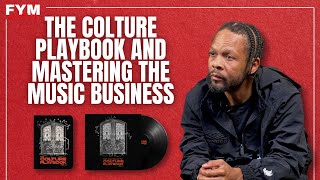
Worldwide Ty discusses the Culture Playbook, a guide to building music businesses outside traditional labels. The book covers discipline, cultural capital, a $30k/year support model for early artists, retaining masters and royalty rights, and unconventional funding sources like Sign Royalty and American Express. Volume 2 will expand on later-stage strategies.
Chapters
If you own a house, you're not going to let nobody lease your house, rent your house out forever. You're not going to put a 20 or 20 year lease together for somebody to rent your house out. So why would you do it? On the music side.
This is yo, my man Ty and we're doing a special episode of FYM dedicated to the Culture Playbook. Ty, can you please tell the people what is the Culture Playbook?
The Culture Playbook is a four volume, I guess you would say it's a four volume guide to how we built our business outside of the traditional way of doing things.
Now the opening chapter is discipline. Why do you begin with discipline?
I've had a few people tell me, man, you're so disciplined, man. Like how, like I could never be that disciplined. And I believe that our, what we want out of our lives is on the other side of discipline. Like whatever you want to do in your life is on the other side of discipline. So that's why discipline is always the lead for these type of things. And plus working in music, it's a very undisciplined industry to say the least.
Right now when you talk about working in music and discipline, how does that affect your business? The, the lack of discipline in music.
It affect business because it's a lot of money wasted, time wasted and the lack of ideas being executed. And the. I think time waste is the biggest thing because then people don't take you as serious, right? So when you're in music and you get rewarded for bad behaviors like being on being laid or being rude to people just because you're an artist, it's hard for you to transition into other mediums. Like it's hard for you to get into acting because in acting you being late over and over and over again, you're gonna get kicked, you're gonna get kicked off the, off the, off the project. That's why you can see so many executives that leave music and go start a tech business or get, or go into TV and film or go do other things because they technically they don't need, they don't need to. They have them skill sets that's transferable and people are going to respect them in other industries because of what they was. Their, their transferable traits of being on time and not letting working alongside a celebrity blind them from the thought process of how to conduct yourself.
Okay, now a subheading in the first chapter is what happens to another is temporary. Yeah. Why is that important?
Since we are reading the book, I think that we Get. I think that we get tricked a lot in the black community with these sayings. Fake it till you make it. You know, 100% of. 100% of nothing equals zero. And all of these different things, right versus having 10% of something as a value. And it's not that either one of them are right or wrong. It's all about your perspective and what your actual journey is and what your goals are. So if you believe in this new technology that you are the first one to come up with or the first one to use it in a unique way, you want to fight for that. Because if that happens to turn the corner and you have 100% ownership or you have majority ownership of it, that changed the trajectory of your entire bloodline with that being successful. You know what I'm saying? That's not to say that 10% won't change the trajectory of your entire bloodline depending on how big the company is, but you won't have the same amount of influence and power within that, that 10% of that valuable IP or whatever it is, you know.
Chapter two, Money Angry. Now, a subsection here is cultural capital, right? Please explain cultural capital. You might not know what that is.
Well, the simpler way to put cultural capital within entertainment business is you can go get a loan without showing your credit report. You know what I'm saying? You can go and people will give you money without asking for your bank statement, asking for your tax returns, asking for your Social Security, asking for what your credit score is. That's cultural capital in the entertainment. Specifically in the music business, you can go sit down with somebody, they believe in what you're talking about, and they advance you money to be in business with you because of your cultural capital.
Now, within culture, you guys have a $30,000 year mentality. What is that?
Studying the growth of an artist. And, you know, just regular jobs that artists will have that are like 19, 20, 21 years old, they don't have any kids. I thought the process was if you put them on a $30,000 a year, you know, salary to just do music, then they will be able to focus on music, still be able to make their. Their, Their. Their ends meet, right? And it trains them to kind of have a certain level of discipline when it comes to money, right? Because, you know, if you're working at a Trader Joe's, you got to go work, you know, 30 hours a week, and you're making $10 an hour. You know, that's $300 a week before taxes, $1,200 a month before taxes, you know, you might be walking away with, I don't know, less than 12 grand a year. So when you start thinking about $30,000 and you can kind of put that out over two years, that you can make that amount of money and still focus on music full time, I think that it is a scalable way to not end up losing your shirt. If you're trying to get into the music business, yes.
Within that chapter doesn't have the subheading about manage your overhead. I feel like that's a conversation that doesn't have. Does it come up often in music? Why do you feel like managing your overhead is important?
So managing your overhead is important for two reasons. One, the manager will make bad decisions if they got a high overhead because they're going to be trying to make money. The artist would do things that are not tasteful to the art. Cause they're trying to make money. If they got a high overhead, they're not managing. And plus, it's just not good. It's just not smart. If you're building a business, right? If your goal is to build a business, you don't want to. You don't want to drown yourself by things that you can control, you know, you can control where you stay at, how much money you spend on a car, how much money you spend, you know, buying drugs, alcohol. You know what I'm saying? You can control that stuff. And so controlling your overhead is a part of being disciplined. You know what I'm saying? As we already said, everything you want in life is on the other side of being on the other side of discipline. So controlling your overhead has been so instrumental for me that I know that it's real, you know? You know, I know that it's real. And if you buy into the concept of it, it'll set you up in a way that's pretty. Pretty impactful.
Now the next chapter, chapter three, is every album's a house.
Yeah.
Explain that concept.
So, you know, once again, we sold the American dream, right? And then you get a house, and you know, the house, you finance it and all those different things. And you own the house and, you know, you pay the bank off, whatever. But then all of the neighborhoods have these houses that look similar, right? So you're thinking about subdivision. They got 30 houses. All those houses are either been bought or rented out or whatever from the developer, whoever built it out. They made their money and they got. And they got away. The thought process of a. Every album is a house because the albums are financial. They're foundational building points for your, for your career as a business owner, right? So if you, in music, you know, you're basically building up your portfolio of albums, right? If you are a real estate owner, you build up your portfolio of houses, right? I reference them to be the same. Because if you own a house, you're not going to let nobody lease your house, rent your house out forever. You're not going to put a 20 or 20 year lease together for somebody to rent your house out. So why would you do it on the music side, right? And that is something that is important to think about and you have to actually have your conversations and be like, okay, if I'm going to lease this house out for 10, 20 years, how is it helping me build the house? Right? And so I compare them together because it's like if you go to a record label and they give you a bunch of money and they own your house or they own your album, but then you pay all the money back and more, but they still own the album. That would never happen with a house in the bank, right? The bank is the house is the bank is the label. So it's like this thing to make people wake up to be like, if you owned a house, you wouldn't let nobody, you wouldn't pay the house off and then you'll still own it by the person that helped you, financed it. You know, you wouldn't do that. So why would you do that with your IP on the music side?
Absolutely. So you go into digital innovation next. Why do you think digital innovation in this current era is really important for independent artists?
It is a digital innovation is so important today for artists because in 2008, 2009, when I was doing music, trying to put out music and stuff independently, it was hard. It was not a scalable thing. You had to go and deal with the record labels, you had to go and deal with those things. It wasn't something that you, that you could, you know, play those kind of games with, right? So my thought process of it was, okay, I was able to start scaling the business because the technology had caught up, right. So STEM wasn't available in 2011 like it was in 2015. 16. Right. So what that meant was I can use the technology to get the music to everybody globally and I can use the technology to make sure Everybody's paid directly. 2011, Spotify wasn't around, Apple Music wasn't around. That technology growing helps you grow your business if you're really aligned on how impactful it is. We're just helping you build infrastructure faster.
Now when you say equity integrity, what do you mean.
When I say equity integrity? No, I just mean that when you are buying, when you're building something with a community, you want to make sure that you are, you're being fair with the equity of that thing. And the equity of it can be the equity in the money that it makes, right? The artist can say, okay, I own this, which I'm fine with you owning the master, I'm fine with you owning the whatever, but I want to own the royalty that come from it, right? In perpetuity. So that means that you own the creation in the ip. So I can't go out and duplicate it and redistribute it. I can't do none of that. But if that IP makes a million dollars a year and I have 10% ownership in that, right, I want to be able to say, man, there's somebody that. This hundred thousand dollars that I make off of this ip, this is a, this is an asset that I have. The royalty is an asset that is derived from the ip and I want to be able to go and sell it if, if, if down the road somebody offered me 10x on it and I can take that million dollars and I can put it into something that can grow faster. So I believe in, you know, equity integrity from a communication, I mean from a community perspective, that if somebody works on something, be integral to know that the value they added to that can is helping you grow your overall business.
From there you go into power of the license. Why is it important to educate artists on their license and how that it has.
Once again, we go back to the house theory, right? You wouldn't get nobody, you wouldn't let nobody rent your house out for 20 years at one on one contract, right? You might, it might has been a rental property that you've owned for 20 years and it has had 20 different tenants, right? Or it's had the same tenant. They just keep renewing it every year. The power of the license is another way to wake up the business owner. Because when the traditional system, like the major label system started to realize that artists wanted to own their music, they're like, okay, you can own the music, no problem. We'll just get a license on it. And then that license started to become something where they would have a license on the music for 20 years, right? See the chefs, the lifespan of like the revenue for a project is probably, you know, five years. If you, if, if you are lucky and blessed that it will grow year over year for five years. But when you have a license and somebody else own it, they control it. So it's basically like they owned it for 20 years now they can't go and sell it necessarily, but they can set a license, right. If they put it in a contract, they can't sell the ip, but they can sell the license. And so it was another way for me to just communicate, hey, own your masters and control your license. Right? Because then that's the real independence.
You go into unconventional money next. How does unconventional money play into independence for you?
Unconventional money is basically getting money to fund your music business that don't really come from a music business like a record label or a publishing business or it's not attached to those terms, right. So we utilize a company called Sign Royalty, we utilize American Express, we utilize capital one, we utilize PayPal, right. To kind of like get funding to go out and spend the money to do radio, to do marketing. Right. And being that we was doing all the marketing in house, I knew what I could get at cost without extra fluff of agency charges and all that different type of stuff, right. And so that unconventional way about doing things, we was building up a iPad and leveraging it, taking loans out against it. Right. And it's not really that unconventional in the regular business world. It's really how the wealthy avoid paying taxes where they have their investment, their IP that they own that's generating money. And instead of taking money from that thing, they'll go and they'll pull a loan out against it. The only thing that's different in the music business is that the companies that was giving us advances there wasn't, they can't be titled a bank. So technically it wasn't a loan, it just was a future advances. And we couldn't use it as like how they use tax write offs. Like you don't get taxed against the loan. It wasn't really necessarily a traditional loan, it's a loan in the sense of the concept. But it really just was advancing us money that we was going to make anyway and we still had to pay taxes on it, but we just used it for operation costs. So we was able to still write off a good amount of that money. But the unconventional loans or the unconventional funding aspect of it was the American expresses to sound royalties. There's companies that starting to, it's more companies starting to blow up now and pop up now that does those same theories, but we have been operating with that since like the end of 2016. No, no, early mid-2017 with unconventional funding.
But why do you think unconventional funding is so significant when you're independent?
Because it keeps your license free, right? When you do unconventional funding, it's just all about paying the money back, right? So if I do a loan and it's a five year loan for advance, and they charging me, let's say they charge me 25% on the money that they loan me, right? And it's over a five year period instead of just paying 5% interest annually, right. When I'm, when I'm out of that loan, that I can pay that loan back in a year if the money is like really, really growing, if the catalog is growing. So I pay that back in a year now, boom, I'm free and clear. I still got my. I'm not paying no money on the distribution side. I'm paying maybe 5% on the distribution side, right? Versus if I had took the loan from the traditional way, it might be a 50, 50 for the same amount of money, or it might be a 70, 30 for the same amount of money for 10 years, 20 years, right. So I don't even realize how much money I saved by doing it. If I sit down and do the math, I'm pretty sure I can come up with it. But going about it in an unconventional way protects your license. And so even today, when we are looking at our catalog, people are like, oh, who, who licensed the music? I'm like, we're self licensed. Nobody license our music. So we can move it to any distributor we want to move it to, as long as we don't owe that distributor any money against our advanced money. But we're not in no licensed agreement with nobody.
Okay. You talk about payday loans in chapter seven, right? One may reference payday. So in a book about music.
About these, right. I think business development starts in the community. It's happening in the Jewish community. It happens in the Spanish community, the Asian community. And so payday loans is detrimental to the black community because it's our first real interaction with how business is done in the inner city. And it's an unhealthy relationship. You know, you, you tell somebody, hey, I'll give you a loan until you get paid, then the interest on the loan, like 35, 35, 40%. And then what's deeper in that? There are states where payday loans are not even allowed, you know, they're, they're banned, right. So when you grow up in an inner city and you interact with that from a, from a financial trauma perspective, you find yourself being Open to other bad deals unconsciously. Right. And quick deals. Once again, when you go to the label, you don't have to show your credit score, you don't have to show your tax returns, your bank statements. None of that. It's like a really quick handshake deal. We can get it done. And it doesn't alarm people like they should be because they've already been traumatically experienced through payday loans, you know, car title loans, all these different things that are just predatorial for a community of people that, you know, are trying to make ends meet. So the payday loan is just a. You know how they say some you can kind of like spot where people are going to be when they grow up. Payday loans is just a indication of that. The people that took advantage of payday loans the most. And you compare those people to who's all getting taken advantage of in the music business. I'm pretty sure it's relative.
Absolutely. You kind of mentioned this earlier, but chapter eight is about don't quality or car title, which I love the title of the chapter. But how.
Your car lose value when you drive it off of the. Off of the.
The.
The lot. But it doesn't lose you. You actually as a person grow value because it gets you from point A to B. So there might be an opportunity in point A and it might be an opportunity in point B. That car helps you get to either place. Right. To and from when it's like, don't pun your car title. It's this thought process of you should not position yourself to lose the vehicle that can get you to those opportunities. Right. Transfer that into the music business. You should not pun your ip, your album. You shouldn't, you know, you shouldn't put up, you know, and you know, you pawn it to hope that one day you can come back and buy it back. And it never works like that. So your music catalog is your vehicle to get you into other opportunities within the music business for the manager, for the artist, for the producer. Everybody's involved that that catalog of music is a vehicle. So don't pun your car title is very, very symbolic way of being like, don't have better guardianship over your vehicles that can get you to the opportunities.
You go into. Black on black cry after that. Yeah. Why did you want to highlight, I guess, like the inner conflict of managers and poaching artists. Right.
It's. It's harmful. You know what I'm saying? It's harmful. It is a thought process that is, you know, it's not Good. And the truth of the matter is, when you work so hard to get an artist to a point where they get notoriety for their skill set and the work you've put behind it, no black person should want to. Should want to participate in you losing that. You know what I'm saying? They shouldn't want to. I'm not white. I'm not Asian. You know, my experience have been a black experience, right? And so I've watched black men cohorts artists, female artists, and push out the female manager over my 15 years in this business. I've watched it. I've watched, you know, black label ex push out young artists because they feel like they wasn't skilled enough, you know, for the artists that they had, they were starting to grow, but they were skilled enough to bring them to you. I watched it happen with women versus women, black men versus black man, woman versus man, Black man. And it's a very sickening and a sad thing from that perspective. And it happens. It happens, and it really. It really destroys a person's confidence in their actual life, you know what I'm saying? The thought process of it is if nobody's trying to steal it from you, it ain't hot enough is a real thing. But I think that we can be accountable within our communities of those different things. I've experienced it with a financial wealth advisor who purposely lied to Brent to coerce him on to think that I stole something or did something wrong. And then when you start looking at all of the facts and when the artist wakes up, they look at all of the facts and they see it like, yo, you lied. You know what I'm saying? And this is a black person who I introduced Brent to that was a wealth manager in that aspect of it, you know what I'm saying? And so it's a real thing. That is music industry is the first thing that most people that are coming from broken homes find that they can have a level of success in. Rather they were selling drugs, they trying to clean, they trying to clean, they trying to change their life, or they just got out of prison and they trying to make sure they stay on the right track. The openness of the music business and just entertainment, or you podcast, whatever it gets, changed your life. So the type of people that you will screw over in the music business is not the same type of people that you might screw over in the food business, right? So it becomes a thing where it can get really dangerous and violent from that perspective. I don't promote that, but that's just when people come from certain walks of lives, that's kind of like how they know to solve a problem, right? And that's when you start feeling more like a crime from a violence perspective versus the crime of just like pitting two black people against one another because you want something that another man or woman has. It's just unfair, unjust, and it's like really not good karma.
The next chapter you get into the workhorse horse versus the show horse. Yeah, tell me about that concept, please.
Man. The music business is full of a bunch of people that are show horses. You know, they show up and claim other people's work. Right. Versus being a worker. You know, I've only thing I know is to be a worker. I, I'm so confident in my work. I'm not worried about you. Like, if you don't want to pay me, that's because you're just not a good person. Because my work is going to show that I did the work right. My, my, my homework, I'm going to turn my homework in. You're going to say, oh, he did his homework right? But if you see my homework and you see I already got all, I got all the questions right, and you just still decide not to give me an A, that really got nothing to do with me, you know what I'm saying? Cause I'm a worker, so I'm gonna find more work to kind of keep working. The black on black crime theory is the show horses. The ones that's doing it, that are the show horses are the ones coming in, trying to take what somebody built and manipulate and all of those different type of things, you know what I'm saying? And so for me, it's very important to be a workhorse. What ends up happening is the show horse is gonna take credit for your work while you down working. But at some point when you raise your head after all the work has been done, you can't fake that. You can fake, you know, the show, act like you're doing the work, but you can never fake actually doing the work.
Absolutely. You go into now the nigga has begun. What did you mean by that chapter?
Well, I mean the just the thought process of now, like the artists and the managers have figured out, like, I can do this without a label, right? I can use your money at a cheaper rate than it used to cost 10, 15 years ago. And now you don't have no choice but to do it because you're trying to stay grip, you're trying to keep gripping your place in the marketplace. As a record label, as a business. So now the managers and the artists, when they're smart and they understand how to move it around, they end up finding themselves in a very strong place.
And the final chapter is fuck you, money. What do you mean when you say fuck you, money is the new American dream?
Once again, I always talk about American dream. Not for us, right? Fuck you, money is, you know, about leveraging your equity, you know, leveraging, you know, your. Your time removing yourself from things that don't serve you, right, building within your community. So fuck you, money being a new American dream, it is the way that we should look at the world as a community, that now we're not trying to just work, work, work and just retire, right? We're trying to pull together our resources so that we can, if we want to work for the rest of our lives, at least we could be able to work with the positioning that the moment I don't want to do this anymore, I can remove myself from it, right? That way I can stay active. I can stay passionate about the things I'm working on. But the moment I'm like, nah, I don't like how he talked to me. He done that too many times. I've addressed it. It's uncomfortable. Now I have the resources through the community that I've came from that I can remove myself from. You know what I'm saying? So fuck you, the new American. The dream is nothing but a community. It's no different than ncaa, you know what I'm saying? Or the SEC or the Democrats or the Republicans. It's a community. It's a body of people that have the same thought process and the same tribal approach to their protection of themselves, holistically.
You have a management checklist also included in the book. What is in the checklist and why do you think artists should have that? And then preparing the full releases?
Well, the checklist is really to kind of like safeguard yourself for not having the information, right? So everything from. Okay, you're going to release this song. Do you got the lyrics? Do you got the isrcs? You know, is the publishing register with your pro? Do you have a pro? Do you have a sound exchange? You know, do you have thought about neighboring rights? What are the, you know, the copyright. The lyrics. Are your lyrics gonna be on Spotify, Apple Music? Have you registered those? You know, have you even registered your song with the copyright organization at the U.S. you know, the U.S. office on the government level? Okay, you're going on tour. You know, who's the tour manager? Do you have a budget? What's the routing? You know, are you gonna purchase merch, how much your merch cost? Right? Oh, you gonna be promoting your stuff online? Do you have all your social media set up? Right? Do you have all your profile pictures? It's like this ongoing list of things that you just gotta have checked off every time that you are starting to put out music or starting to put out merchandise, or starting to go on the road, or starting to think about brand deals, or starting to think about working with a record label, all of the different things.
Tell me, why are you so open about giving away information?
I felt like, you know, we're always a reflection of the things that we always wanted that we didn't get right. So I felt like when I was coming up, nobody wanted to just really be open with me. You know, I'm the type of person like, if I come to your house, I want to ask you how much the house costs. Not because I'm nosy, it's because like, I like it and I might want to try to do something like this for myself one day. And if you have the information, I just feel like I should be able to ask for it in a respectful way. And I've heard people say, you don't supposed to ask nobody how much they pay for their house. And I'm just like, why? You know, you don't supposed to ask somebody how old they are. And I'm just like, but why? Like if a person, I look at a person and I see that I like how they design their lives and I want to know how old they are. Because maybe if I, if they're older than me and I'm looking at, they got a 10 year difference on me, I'm like, oh, maybe by the time I get to that age, my life can be designed how their life is being designed. And so, you know, the overall thinking of it all is trying to make sure that I am thinking about it in the right way. And yeah, it is just the information. I shouldn't die with it. You know what I'm saying? I done spend all this time, go through all of this hardship, learn all of these things, right? And most books about things are not really coming from people that did it right. It's usually coming from researchers that did an incredible job studying it, teachers that have taught it, but they didn't really, you know, because you can be an incredible teacher on something that you never experienced it, right? And then some stuff is not meant to. You can't experience math, you know, what I'm saying, you just study it and you're able to teach it and understand it at a high, very high levels. So I thought it was a very unique way to approach, you know, talking about how this worked and turning into something that people can really understand and not find themselves being like this is just so over cumbersome and, and, and they can learn through the stories.
And lastly, what can people expect out of Culture Playbook Volume 2? Woo.
Culture Playbook, Volume 2. More information. It keeps you on the. It, it, it brings you to the second part of the journey. It really is a more refined thinking for me at that time and it's the continuation of it. So if you're stuck at this part of volume one, you're like, man, what did they do to get past this level? Then volume two is going to speak towards that. It's volume one right here, baby. Volume two. I don't know if you're gonna have the same cover for volume two, but we'll see how we go.
And that's another episode of FYO with Ty.







