Growth Tactics for Founders with Yuriy Timen

In this episode of Never Too Early, host Lauren Ibsen interviews growth veteran Yuriy Timen (former Global Head of Marketing & Growth at Grammarly, now a growth advisor). The conversation is structured around the five most common founder questions. Timen first explains how founders should discover their growth engine by assessing organic levers—product‑led virality and SEO—before considering paid channels, emphasizing product‑channel fit. He then outlines a hypothesis‑driven framework (ICE/RICE) for prioritizing growth ideas, stressing the need for clear hypotheses and minimum viable tests with defined statistical thresholds and KPI alignment. Timen discusses balancing aggressive growth with profitability, drawing on Grammarly’s bootstrapped DNA and advising founders to align with their board’s expectations. He illustrates how channel suitability varies by product type, using Canva, Airtable, and Poised as examples of where virality, SEO, or performance marketing succeed or fail. Finally, he explains when a fractional or advisory growth leader makes sense versus a full‑time hire, focusing on talent caliber, role definition, and channel validation. Throughout, Timen offers practical checklists, metrics, and real‑world anecdotes to help early‑stage founders build sustainable growth engines.
Chapters
Welcome to Never Too Early, a YouTube series focused on unconventional talent insights for founders. I'm Lauren Ibsen, Talent Partner at Decibel. In each episode, we'll cover the top 5 commonly asked questions that we get from founders building their organizations for the very first time. It's never too early to learn from the best. I'm super excited to introduce my guest today, Yuriy Timen. Yuriy was the Global Head of Marketing and Growth at Grammarly and is now a full-time growth advisor, having worked with more than 30 tech companies in the past 4 years. Including Canva, Airtable, Whimsical, Otter.ai, Oyster, Flow Health, and many, many more. He's also been an incredibly helpful growth advisor and friend to the Decibel portfolio. So I'm very excited to welcome my guest Yuriy to the show. All right. Thank you for being on the show.
Of course. Thanks for having me.
My pleasure. So I'm super excited to have you here and talk about all things growth. I just gave an overview of your incredibly impressive professional background, but it would be super helpful if you could give the listeners something fun about you.
Okay, so here's one that no one saw coming. I was a competitive ballroom dancer growing up, to the point where I represented the United States at the Youth World Championships held in Moscow, Russia.
Oh my God.
That's, yeah, let's go with that.
That's incredibly fun. That's a really good one. Yeah, I don't know if you can beat that with anything
else. Just putting it out there. Okay.
Okay, so let's talk about growth and the 5 most commonly asked questions that I get from founders that are scaling their organizations for the very first time. We'll start with the first question that I get, which is, How do I find my growth engine as a founder?
What I like to tell founders is start by figuring out which way the current is flowing or the currents, maybe every current representing a growth hypothesis or a growth channel, and try to swim with the current as opposed to against the current. So, you know, I think every founder should first start with understanding the potential that they have for growing organically, right? Like you can turn to paid down the line, but you have to already be generating revenue. You have to understand your LTVs. You have to understand your payback periods if you want to do paid effectively. Right? And there's nothing wrong with paid. I actually come from a paid background, a performance marketing background and foundation, but always start with organic. And really there are 2, I would say, or let's call it 3, but really 2 kind of direct response organic growth levers that you can pull. One of them is around product-led growth. Like, can you generate enough word of mouth, enough kind of viral loops, sharing behavior, or what's traditionally called product-led growth. And the other one is SEO. And I think that there is almost like a checklist type of exercise that you can do with figuring out if your product is a good fit for either product virality and/or for SEO. Maybe I won't go into those checklists in this session. But I think you absolutely gotta start there because if your product has inherent network effects or it's inherently viral, I don't know, think Spotify, for instance, right? Or Riverside even, you know, to bring it closer to home where, okay, you have a podcast, I'm a guest. If I ever wanna start my own podcast, right? Like there is a viral loop right there. So it should be easy for me at the end of this call Sorry, at the end of this recording, it should be easy for me to be like, oh, this is how I create my own account and become a podcast host myself. So if your product lends itself naturally to virality, lean into it, lean into it heavily, right? Because that is a rare advantage, right? I've worked with a lot of products that have tried to manufacture virality That's very difficult to do if your product is not inherently viral. Like for instance, Grammarly in the early days, like it wasn't an inherently viral product. It's like editing your writing was largely a solo pursuit. It wasn't a collaborative activity. So there wasn't an easy way to kind of, you know, build in share loops. And then SEO, like you can also run through a checklist and be like, hey, Like the stuff that I'm building, the needs that I'm meeting, what are the keyword universes around those needs? What are people searching for? Is there high volume, high volume, high intent, low competition? Are there intersections of those 3 where I can really make a mark in building my SEO engine, SEO program? I always start with assessing that when it comes to growth engine. Because those are things that are paid. It's almost like, this is a hot take alert, but like paid is like almost anyone can force their way into it, right? Like regardless, like yeah, you have to have like decent LTVs, but SEO compatibility, product-led growth, viral loop compatibility, that's oftentimes inherent to what you're building. So start there. by seeing if there is a, you know, a strong product-channel fit.
Cool. Awesome. As a founder, how do I vet growth opportunities, new channels, new lanes of optimization?
The first principle that I think applies universally is you got to take a hypothesis-driven approach. So you're going to have ideas around different growth bets that you want to take. First of all, find a way to systematically prioritize and force rank those. It's going to be part science, part art, because you're going to have to make assumptions like common frameworks like the ICE framework or the RICE framework, right? Standing for reach, impact, certainty or confidence, and effort. Do something like that, it's less important that you score every idea accurately because you won't. You won't score with precision, but it's important that you build the muscle of just not jumping on the newest idea or the idea that maybe the most charismatic person pitched. Right? Like, that's not how ideas should rise above other ideas that you want to test, right? So yeah, you have a great idea and you pitched it very eloquently. Okay, it goes in the backlog, it gets scored, right? And then the things that rise to the top and everything in that backlog needs to have a strong hypothesis tied to it. So everybody who's putting ideas in your backlog they should be held to that standard where an idea is not an idea until you describe the underlying hypothesis on why you think it should work. Okay. So that's a universal principle using the hypothesis-driven approach. After that, I think with a lot of growth levers or tactics where founders struggle is defining what is the minimum viable test that I need to run to know if this channel or tactic is working or not. And that test needs to be defined. When I say minimal viable test, it needs to be defined not just in terms of the budget that you need to put against a given tactic or idea, but also it needs to have like a little bit of a statistical or data science approach to it where you say, okay, like how much traffic or how many leads do I need to generate To be able to measure, you know, down funnel performance and be able to say definitively, does this channel work or does it not work for me? It's important to have your success metrics well-defined. So the channel that you're pursuing or the tactic that you're pursuing, you have to be knowledgeable about what type of maybe KPI you need to be focused on. Like for instance, if you're focusing on driving purchases or software subscriptions, you should probably be prioritizing more bottom funnel or demand capture channels, right? So think like SEM or maybe some like really highly relevant display. If you care about generating just more traffic or driving up awareness, then you should be looking at channels and tactics that are more conducive to that goal. Right. So that may be more like upper funnel demand generation channels like YouTube or influencers and the like.
Cool. How do you personally advise founders to balance growth and trying new channels and figuring out how to optimize what they've got? And then
Great question. So I have my biases like anyone, right? And they are largely informed by where I grew up, where I came of age, which is Grammarly. And Grammarly, as you very well know, given our longstanding relationship there, Grammarly was bootstrapped for the first 7 years of its existence. Which meant that Grammarly was profitable. That's the only way you can bootstrap a business, right? For that long. And that became part of Grammarly's DNA, being able to balance growth with bottom line and profitability. It was not a choice. It was a necessity when you're bootstrapped, right? And even after Grammarly went on to raise one funding round after another, That quality of its DNA has never gone away, right? Like it was already built in. So that's my bias. My bias is a company, a company should always be trying to get to default alive as quickly as possible, right? To break even as quickly as possible and then invest in growth commensurately with its kind of like margins and its profitability. That's my bias, but I recognize that's not always the case because sometimes, especially in nascent markets, you have to move quickly. And that means, you know, if you're focusing on profitability, you're not gonna be able to win market share and you may lose to competition. So the first thing that I do with founders when helping them strike that balance is I ask, 'cause most of them are gonna be venture-backed companies. So I always say, look, I'm like, look, what is your understanding? What is your consensus with your board On how you should be approaching balancing growth, because like whatever advice I give you, I want it to be complementary to your social contract with your board on how you should be balancing the two. And if the answer is we don't have one, or it's unclear, or they are stumbling their way through kind of describing how their how they how their board is advising them on balancing the two. And then I say, okay, I'm like, you have some work to do.
Yeah.
Right. Like, go to your board, like, align there first.
Yeah. Cool. What are, what are some growth tactics that you have found that have maybe worked for one early-stage company, but not another? So maybe they've raised the same amount of funding, but they're, you know, they come from different— they're in different sectors or different primary focuses. Talk to me a little bit about how you kind of work through some of that.
Well, I'll go back to an earlier question that you asked, which is how do I figure out my kind of growth engine or growth levers? So I talked about kind of product virality and building viral loops. I talked about SEO. Well, there's some products that are going to lend themselves more naturally to to those channels and not others? Like, I don't know, let's run through a few of them, a few of the companies that I've worked with, right? So for instance, Airtable or Canva, right? Both former clients of mine obviously lend themselves extremely well to actually both a POG motion and an SEO motion. So on the POG front, They both, you know, they're both collaborative tools, right? In the case of Canva, there is a creator of designs, there is a reviewer of designs, there is an approver of designs, right? So collaborative. And so that's an opportunity to invite, create different user tiers, permissions, et cetera, right? Airtable, similarly, there are creators of bases, reviewers of bases, commenters, Et cetera. So again, an opportunity to build in all those viral loops. On the SEO front, Canva, you know, people search for all type of long-tail design or graphic searches, right? Like, I don't know, like same-sex wedding invitation Hawaii theme, you know what I mean? And like that is like, and Canva will be there with their long-tail programmatic SEO page, right? So SEO worked really well. You contrast that with an emerging category or like a category creator. I don't know. Let me think of someone. Okay, I got one. There's a company I worked with called Poised, which was basically like a Grammarly for audio and video communication, right? So it's kind of like imagine like we're talking here and I have a little A little overlay that's giving me real-time feedback like, hey, Yuriy, you're talking too much. Let Lauren talk.
Oh, that would stress me out.
Yeah. I mean, there are some, you know, the UI was tricky, right? The UX was tricky.
I feel like it would tell me to like lower the octave of my laugh.
It probably would. But no, no, no, I didn't mean it like— no, I love your laugh. I just mean like they did.
Actually ending the episode now. I'm just kidding.
Yeah, yeah, yeah. They did get pretty sophisticated with tone, intonation, nonverbal cues. But anyways, that was a complete category creator. And so there wasn't as obvious of an opportunity to lean on SEO because it's like, what are people searching for? Are people searching for a you know, a real-time Zoom communication coach? No, right? So that's an example of a product that didn't lend itself to the same channel.
Right.
On the performance marketing front, it's pretty easy for me to come in. I can like in 15 minutes, if they have all their data, in 15 minutes, I can help them figure out if they should go heavy into performance marketing or not. I ask like, 5 questions. Like what's the conversion rate from website visit to like, you know, sign up? What's the conversion rate from sign up to purchase? What is your average order value on your purchase? What is your projected LTV? What is your split between your monthly subscribers and annual subscribers? Like I have like a little checklist that I go through and based on the answers, I can be like, yeah, you know what? You can find a lot of success in the following performance marketing channels. go after them. Or it's like, hey, you know, you're not up to par on the following metrics. Bring the conversion rate up to here, get your average order value up to here, then you should be testing performance marketing. So there'll be some companies, some founders I work with where they already have the right sort of ingredients, the right inputs. And I'll say, hey, you should absolutely be leaning into paid. And there'll be others where I'll say, no, you got work to do.
Talk to me a little bit about where you feel like it makes more sense to have someone like yourself come in in a fractional or advisory capacity?
Yeah.
As opposed to having someone come in a full-time role?
Yeah. So I would say some of the biggest reasons you may want to bring on fractional as opposed to hiring someone full-time. Okay. Number one, this is focusing on me. You want access to a certain caliber of talent. That you don't think you either can recruit full-time right now or have the surrounding resources to actually make use of them. Like I'll oftentimes come in doing half a day a week with a Series A company where they wouldn't know what to do with 100% of me. Because of how much leverage I would be trying to create and they wouldn't have the eng resources, the design resources, the anything resources, right? So that's one rationale for hiring fractional. You want access to a certain caliber of talent and you just don't think that you need or can make use of the full-time equivalent. Of that caliber of talent. Okay? Number 2, you think you need somebody in a certain role, but you're not confident what is the exact profile of the person you need to hire and you need help figuring out that profile. You bring on someone fractional like me, not only am I helping you stand up a function or take the function to the next level, I'm helping you calibrate on who you need to hire in my place as your full-time hire. And sometimes it might case, I actually will help you make that hire, right? So it's sort of this idea of like, I don't know exactly who I need in this role. So if I'm a founder who've never hired a head of growth, how do I know, you know, what to look for, right? And okay, 3, you don't know if this competency or channel is gonna work for your product. Mm-hmm. Like, let's take like affiliate marketing for instance, right? I think it could work. How do I test that channel effectively? Well, I have 3 options to test that channel effectively. Number one, get someone on my team already today who probably doesn't know the channel, but maybe they're tangentially related and be like, hey, you know, so-and-so, like take a stab at this channel.
Yeah.
Could work. But usually if you're dealing with that kind of situation, Chances are the person you're asking is already wearing like 100 hats and you're trying to throw on 101st hat on them, right? It may not work. Second option, go and hire full-time. Be like, okay, I think affiliates could work. We're hiring an affiliate marketing manager. You have to take the channel 0 to 1. Okay, high risk, right?
Yeah.
You're going to spend a lot of time looking for this person and you haven't even validated the channel. This is where fractional comes in. Why not hire someone who knows the affiliate channel well, who could spend a day, 2 days a week? You know, you're not committing to long-term employment.
Yeah.
You don't have the same level of, I don't know, responsibility or accountability before this person. Yeah. And see if they can take this channel 0 to 1, prove it out, and strengthen your conviction that it is indeed a long-term channel that you wanna, you know, Hire full-time for.
Yeah, super helpful. I think all of this is going to be incredibly beneficial to our founders, so I can't thank you enough for joining and being on the show.
I love talking to founders, helping founders. You know, for every one founder I work with, you know, there's probably 10 that I'm just friends with and helping out, you know, helping out on a kind of casual pro bono basis. So, you know, I invite, you know, the founders that are listening to this to reach out to me.
Yeah,
I will do my best to respond to everyone and, you know, hopefully, you know, maybe even spend some time with some of the folks and help them kind of unlock, you know, new horizons in their businesses.
Amazing. Well, thank you so much. Thank you for joining and thank you all Thank you all for listening to Never Too Early. More to come soon. Thank you.
More from Yuriy


An experimental culture is the best moat you can have | Yuriy Timen (Grammarly, Canva, Airtable)
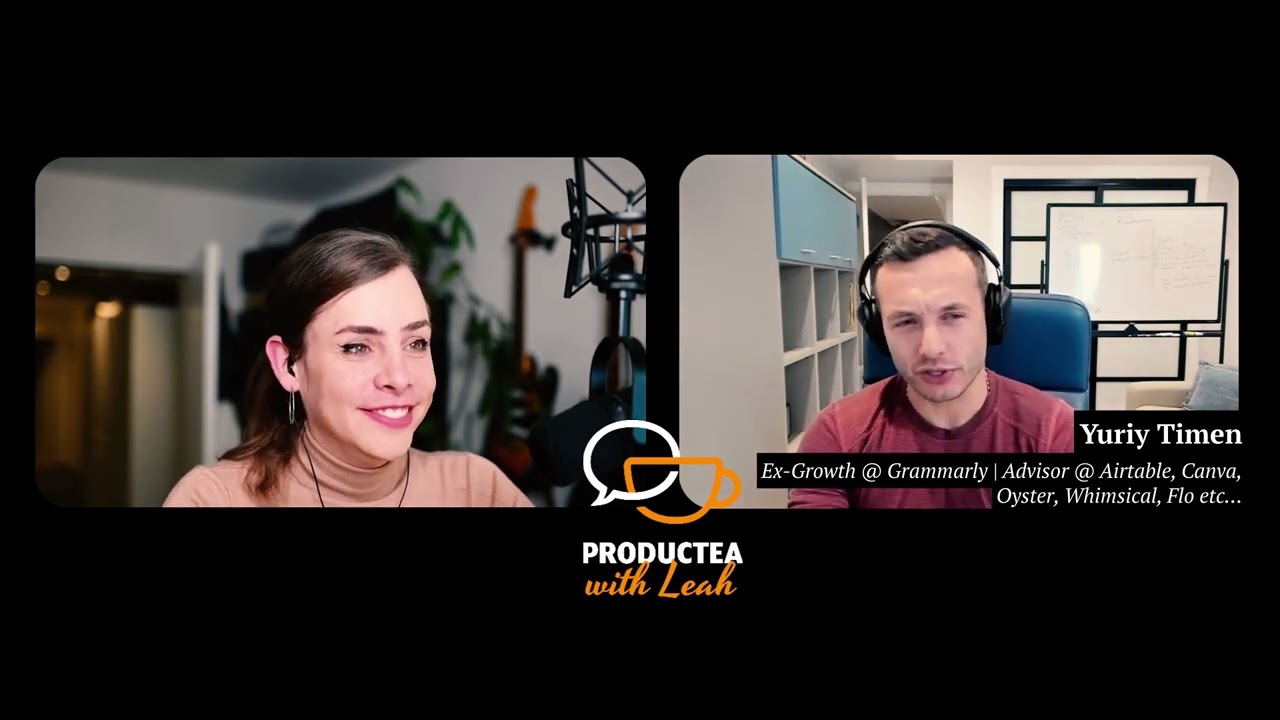
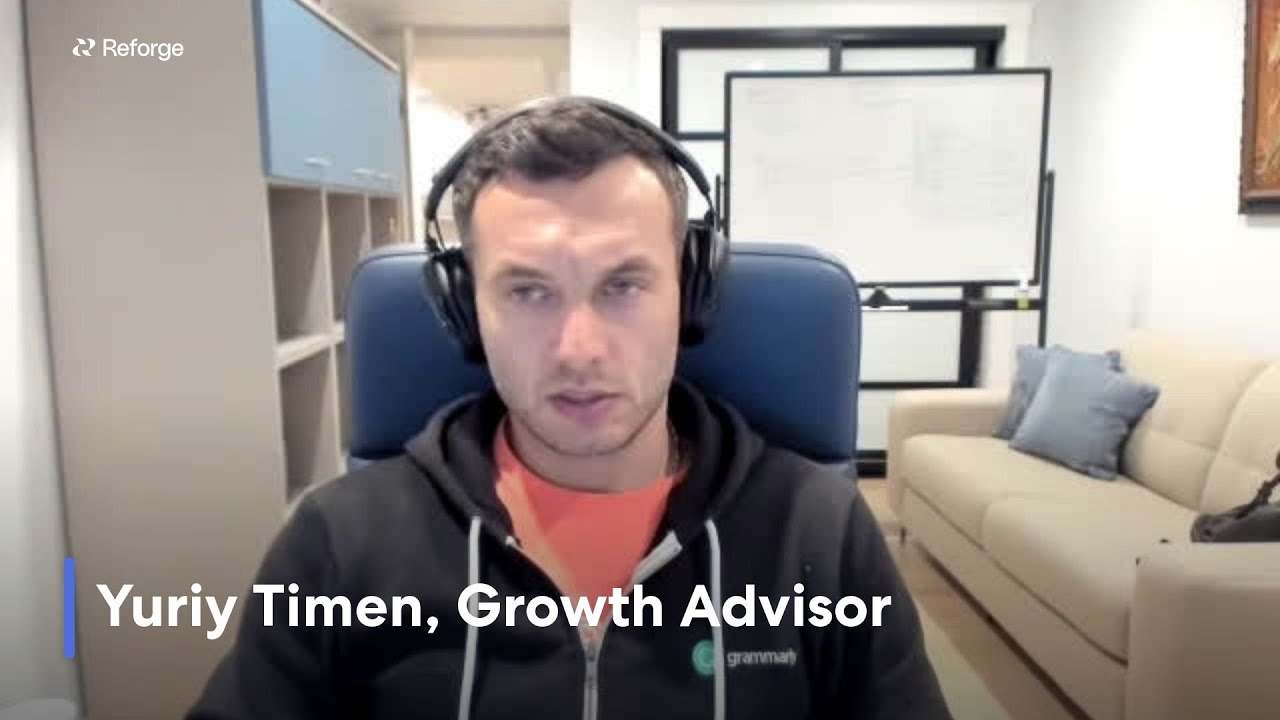

How to grow a subscription business | Yuriy Timen (Grammarly, Canva, Airtable)