How Grammarly’s Evolution from B2C to B2B Propelled It to a $13B Valuation
In this Subversive podcast episode, former Grammarly global head of marketing and growth Yuriy Timen recounts the company’s journey from a niche, student‑only web app to a universal writing assistant for knowledge workers and enterprises. He explains the original product positioning— a credit‑card‑gated 7‑day trial aimed at students—and the heavy reliance on demand‑capture channels such as SEM and SEO. Timen describes the SEO strategy as a set of concentric circles: high‑intent transactional queries, informational mid‑tail content produced editorially, and long‑tail programmatic portals (Grammarly Answers) that were later abandoned due to low conversion. Observing that roughly half of the text processed by Grammarly was non‑academic, the team pivoted to prosumers, building a Chrome extension to meet writers where they worked (email, Docs, PM tools) and shifting to a freemium, extension‑first funnel. An A/B test that sacrificed short‑term revenue for massive top‑of‑funnel growth validated the new model. Marketing moved from pure demand capture to demand generation, leveraging YouTube video storytelling to educate knowledge workers who were not actively searching for a grammar checker. In 2018 Grammarly launched Grammarly Business, initially offering only bulk licensing and basic admin controls. Early expectations of an instant B2B boom proved wrong; the team learned to craft vertical‑specific proof points (e.g., CSAT for customer‑success teams, win‑rate for sales) and to build deeper integrations. Timen notes that Grammarly’s growth has been driven more by word‑of‑mouth and the iconic “spinning G” than true network effects, though recent experiments (shared wiki, template libraries) aim to create product‑level loops. Looking ahead, he warns that core NLP models will become commoditized, predicting a future where applications stitch together multiple LLMs and focus on AI‑first value loops— a strategy reinforced by Grammarly’s acquisition of Coda. The conversation closes with Timen’s reflections on bootstrapped culture, the importance of decisive pivots, and his post‑Grammarly advisory work with founders.
Chapters
When we looked at the type of content that users were running through our grammar checking engine, we saw that about 50% of it was of non-academic nature. That's all despite the fact that the whole website and product is marketing screaming at the top of its lungs, we are for students and students only. If we wanted to help knowledge workers everywhere they write, and a lot of their writing happened inside of email clients and GDocs and project management tools, etc., we had to find a way to be wherever it is that they were writing and seamlessly integrate in their native workflows. We zeroed in on this idea of building a browser extension. As we were prototyping, the experience was so novel, so revolutionary that we're like, it would be a crime to paywall that experience.
Welcome to Subversive, a podcast dedicated to sharing stories from the best consumer subscription apps in the world. We'll bring you lessons for how to grow your consumer subscription business, including insights and inflection points that led to exponential growth from leaders at category-defining companies and innovative startups. Let's get into the show. My guest today is Yuriy Timen, who joined Grammarly in 2012 as the company's first marketing hire and left in 2020 as global head of marketing and growth. In this episode, I talked to Yuriy about Grammarly's evolution from a consumer web app focused on students to a prosumer tool targeting knowledge workers, And ultimately into an enterprise SaaS platform with the launch of Grammarly Business in 2018. Along the way, we discuss how Grammarly's product, business model, and marketing strategy needed to evolve in order to capture the demand and meet the needs of each of these 3 customer segments. All right. Thank you, Yuriy Timen, for coming on the Subversive Podcast. Yuriy, we've known each other for a couple of years now. You've been kind enough to join my course a couple of times as a guest speaker, but excited to talk to you today in podcast form. about the story of Grammarly, which is a company that you spent, gosh, almost a decade at all the way back to 2012. But before we jump straight in, let's just get a little bit more background on you and what brought you to Grammarly early in the company's history.
Yeah, thanks for having me, Phil, and congrats on launching the pod. It's a, it's a big deal. And I've seen— I know you've already had quite a few growth and go-to-market rock stars on as guests. So yeah, happy to see Happy to see you hitting your stride. So I'm what I would call an accidental growth/marketing practitioner. I, you know, come from the world of finance where I spent a couple of years cutting my teeth in investment banking and private equity. Then the market, you know, took a big fat, you know what, in '08. I was like, oh, I'm not really passionate about this. What else is out there? So I did a very hard pivot into all things Internet, digital, tech. Why? Honestly, this is going to sound funny, but I was just happy not to have to wear a suit to work.
Me too. Me too.
So, and then, yeah, I cut my teeth agency side doing performance marketing because it was fairly quant. And as a former kind of finance junkie, it was a nice little bridge and then kind of went in-house and I felt like, you know, getting closer to what I'm meant to be doing, I suppose. And then the Grammarly opportunity came by. Honestly, I was this close to not taking it because I was at a point in my career where I started doing a little bit of consulting specifically around like SEM and just paid marketing. I was working on a startup with a buddy of mine that I was like, oh, maybe I'm ready to leave the 9-to-5 world. Well, little did I know that It was more like a 7 to 7 world, but, or a 7 to 9 even world. But, you know, and I thought that maybe I'll do some consulting, work on a startup with a buddy of mine. And then the Grammarly opportunity just came out of nowhere. And initially I brought them on as a client, which then gave kind of birth to this idea of always try before you buy. Yeah, worked with them for 3 months on a consulting project and something just clicked and I just felt like, wow, I've never been, I've never been around people this inspiring, this intellectually rigorous and agile, this humble. I'm like, something feels like I have to latch onto this and give it a go. I'd be lying if I said that I believed in the vision or the product. Honestly, it was basically like a glorified spell checker at the time. They know that this is the case. Like, I speak openly about it. But yeah, at the time it was really the people. I'm like, I don't care what they're building. I don't care what kind of trinkets they're producing. Like, I want to work with these people. And then of course, like, we realized that Grammarly is much more or has the potential to be much more than a glorified spell checker. And, you know, in a way, the rest is history.
You joined in 2012. You're the first marketing hire. A couple of missteps aside early on, you get the marketing team rolling and you are focused on what was then a web app for students. So talk to me a little bit about What was the initial Grammarly product and value prop for these student users? And how are you as the first marketing hire going about acquiring these students?
If you go to archive.org, right, and you look at Grammarly, you know, in 2012, you look at the website, if I'm not mistaken, the headline would have been the world's most accurate grammar checker. Okay. With like a logo with like a, like a, like a It was like a microscope, but instead of the thing you look into, it was like a big old pencil. And then the subcopy was like, the best grammar checker for students, get better grades, et cetera. So we were very clear about our ICP, right? Yeah. And that was students and students only. And it was a web-based app, so it was naturally targeting students for high-stakes writing. Right? So term papers, dissertations, essays more broadly. And it was again, a web-based paid application with a credit card gated free trial, a 7-day credit card gated free trial, auto-charge on day 8. I think we also, at the time, we also had a Microsoft Office add-in, but again, and it was fairly popular. But again, it was for students because that's who was using Microsoft Word largely. I mean, professionals were as well, but we— that was a bit of a blind spot at the time. How were we selling? It was a ton of demand capture because there was already a lot of kind of transactional search query volume for things like grammar checker, plagiarism checker, essay checker, online proofreader, check my paper, check my essay, check my You know, et cetera. So all of those keywords we were going after and we were good at converting them and we had pretty high price points and pretty decent LTVs so we can continue to feed our performance marketing engine. We were doing a little bit of display, a little bit of affiliate, but I would say it was like probably 80% SEM, SEM, SEO, because we were basically competitive on the same queries. in SEM and SEO, which would kind of those transactional product queries.
So you come in and it sounds like you already had the SEM and to some extent the SEO flywheel running, which makes sense because you have this very clearly defined use case for students. They're typing in very targeted queries in Google and other search engines to find a product like Grammarly. But then you use the playbook that you developed working at an agency and you expand across display and some other ad channels. I imagine you used a number of the typical metrics for evaluating these channels and doubling down on the ones that were working best. I also know that one of the things you did was try to expand a little bit more beyond paid advertising into organic channels using programmatic and editorial SEO to try to lower blended CAC. What were some of the early programmatic efforts in SEO in order to capture some of these longer tail search queries?
As in, as in a lot of different growth subdisciplines, the framework of using kind of concentric circles can come in handy. SEO is no different. So, you know, the very inner circle are your high-intent transactional queries, right? Like I just mentioned, grammar check, plagiarism check, essay check. The next concentric circle, which has a lot more volume as you go out, it's usually inversely correlated, right? Higher volume, lower intent.
Yep.
When we went out to the next concentric circle, you had a lot of informational queries like, how do you write a resignation letter, job offer template, or a cover letter template, right? Where you knew that people were likely either at the moment performing a writing task or thinking about a writing task that they will need to perform soon. But Grammarly was only helpful, and the product was only helpful in the revision and editing phase. So those queries that I just alluded to, they did not signal that these people already had a written output to edit, right? They may have or they may not. And so that's when we put them in the next concentric circle. And for that, we didn't do programmatic. We just had an editorial strategy. Where we actually like wrote stuff. We had in-house writers and we had like a roster of freelance writers and we were putting out those articles. Then when you go to the next concentric circle, you have these like really long tail queries that are also writing related, but they, you know, if it was like fewer than 500 searches a month or something like that, I don't remember the exact number. We wouldn't handle them through our editorial strategy. Instead, we handled them through our— we had like a portal. We got rid of it later because the conversion rates were abysmal, but we had a portal we called Grammarly Answers, and it was basically like a forum, right? A moderated forum. And we use that to handle a lot of our long-tail queries. A lot of traffic, very low, very few conversions. And eventually we learned the tough lesson. Typically, especially with long tail programmatic, long tail, low intent programmatic, the conversion rates drop at a much steeper rate than the traffic, than your traffic volume grows by, if that makes sense.
So it's the juice isn't worth the squeeze at some point.
Yeah. Yeah. So eventually we phased out Grammarly Answers because it was just too expensive to maintain and Very little yield.
Yeah. So what I heard there, and this resonates from my experience at Quizlet, is when you look at the power curve of keywords and SEO queries targeting those keywords, you've got the head terms where you've got a huge amount of volume and varying levels of intent, but those are also very, very competitive. And oftentimes you're going up against larger incumbents to go after those keywords. And then as you move into the midtail and the long tail, it becomes easier and easier and easier to capture that demand because there's less competition. But at some point you go beyond the point where marginal benefit exceeds marginal cost and it's not worth it. And if you have a user-generated content model like Quizlet, then that's a very efficient way of capturing those super long-tail queries. But in Grammarly, in Grammarly's case, it sounded like you have a lot of success in the mid-tail with those editorial articles. And then there were some programmatic efforts to capture some of the longer tail. So at some point though, you start to realize that you're getting as many or more queries around things like I want to write my resume or a cover letter or resignation letter, like prosumer use cases, not student use cases. And so as you've explained it to me, there was some back of the envelope math that was done. And pretty quickly you realized that the market opportunity around knowledge workers might be much larger and more lucrative than the market for students. And so around 2015, there's this pivot. You're continuing to serve your student users, but you're expanding into the prosumer market. What did that look like? And what about Grammarly's brand, product, and acquisition strategy needed to change in order to go after this prosumer target?
You know, the pull from the market was even stronger than just search queries or the activity we saw in search queries. It was literally, you know, when we looked at the type of content that users were running through our grammar checking engine, we saw that about 50% of it was of non-academic nature. That's all despite the fact that the whole website and product is marketing screaming at the top of its lungs that we are for students and students only.
Yep.
Yeah. And that was a very loud signal that we had to be even, even, even someone as bewildered as us at the time, you know, still, still got the, got the message. Today, I recall things As sort of like us doing this kind of like having this concerted effort across multiple fronts to take advantage of the knowledge worker opportunity. It probably wasn't as smooth in reality, but it never is. Our minds do that to us. So the way I like to remember it, okay, the way I like to remember it is that we quickly realized that if we're to go after knowledge workers, There were a few structural things about the product that we really needed to question, if not append altogether. Number one, knowledge workers write a lot online. And at that time we had statistics that showed how much of their writing time they were spending in the browser. as opposed to in, in, you know, other interfaces. So in light of that, we knew that if we kept the product simply as a web app, we were going to create way too much friction and we were going to limit ourselves only to knowledge workers that had a very high intent.
Yep.
So if we wanted to help knowledge workers everywhere they write and a lot of their writing happened inside of email clients and GDocs and project management tools, etc., We had to find a way to be wherever it is that they were writing and seamlessly integrate in their kind of native workflows. And the last thing was the business model. And we thought to ourselves, when someone has high-stakes writing, they're willing to jump through a paywall because this damn project is so darn important to them, right? They're willing to pay for it. But if we're trying to garner more kind of mass market adoption, we're going to be dealing with knowledge workers that do a lot of casual writing and maybe they want to write more efficiently and with greater accuracy, but they're not quite sold on purchasing a paid product right off the bat. And the last thing is that when we started actually seeing how we can bring a ubiquitously present product to life and we zeroed in on this idea of building a browser extension. As we were prototyping, the experience was so novel, so revolutionary that we're like, it would be a crime to paywall that experience.
Yep.
And to try to describe that experience to people or even use videos or animated GIFs, it just wouldn't do it justice. They simply had to experience it themselves. So that all converged onto this, into this effort of where we said, okay, we're gonna build the Chrome browser extension.
Yep.
We're gonna also build a funnel that is extension first, as opposed to, you know, create an account and pay us. We're gonna start with add an extension, then create an account, then open some kind of writing window, you know, Gmail or wherever. And watch the Grammarly integration come to life. So we had to build honestly like a first of its kind, that kind of funnel, like the extension, like there were very few extensions at the time and most extensions didn't even have websites. They just lived in the Chrome Web Store to be discovered, right?
Or not discovered.
Or not discovered. Yeah, in most cases. And so we were definitely in uncharted waters. And then so, you know, we also To try to figure out, okay, well, at this— at that point we were like a $30 million a year business. So there was a lot of revenue at stake. Going freemium when you're at that scale is no trivial task. We had a lot of conversations around what should be the feature split. What do we give away for free? What do we paywall? Can go more into depth on that if you'd like, but for now I'll keep it high level. And then as we go with— as we moved forward with this funnel, where it was, you know, leading with a free product, we actually ended up doing something pretty wild. We basically like A/B tested our legacy flow, which is web app, pay right away.
Yep.
Credit card gated. A/B tested it with extension first, leading with the free product, paying is optional. And we actually had some parameters for the experiment where we were willing to bear, you know, I think up to like a 10% immediate revenue dip.
Yep.
I forgot where we came in, but there was a revenue dip, but we just saw our top of funnel exploding.
Explode. Yeah.
And we were like, listen, if we can even— it was some nominal percent of those users we needed to convert over time.
Yep.
To more than exceed to more than cover that, that gap. And so that gave us a lot of confidence and we moved forward. And then there is a whole other— I'll pause here, but then there is a whole other piece about how do we have to evolve our advertising, our positioning and messaging to go after knowledge workers. But let me pause here, see if you have any questions.
Yeah, no, that was great. So let's briefly recap what you covered on the product and positioning front because there was a lot of great stuff in there. And then I think we can move on to how the marketing strategy needed to change. But the key components I heard there were Number one, the core value promise of the product changed. Before you talked about for students, it was get better grades. That was literally the best messaging Quizlet ever had was get better grades. That's what students care about. Now it becomes get better outcomes in your career. Yeah. That was number one. Number 2 was you needed to, to pull from Geoffrey Moore's book Crossing the Chasm. You needed to build the whole product solution for these prosumers, which meant you needed to meet them where they were. Unlike students who have relatively simple study workflows. These prosumers, they were in Chrome, they were in Microsoft Documents, they were in Gmail, they were using all sorts of productivity tools. And so you did multiple things to meet them where they were. It sounds like you built the Chrome web extension. That was priority number one, but you also built plugins with Microsoft Office suite of tools. And then you didn't talk about this. We can get into it if you're interested, but you launched a keyboard on mobile. Yeah. Which not only provided yet another product touchpoint, but also provided an additional acquisition channel. And then the third thing was you needed to change the business model because with students you had this free 7-day trial, but then you have to pay to play. Now with prosumers, you pivoted towards a freemium business model to give them more of an opportunity to experience your product before paying. And so those are 3 massive changes, but it sounds like you were able to stitch them together. Obviously it looked cleaner in hindsight than I'm sure it was at the time during the fog of war, but like it all comes together. You run this A/B test, you take this leap of faith. Trusting you can close the gap on the short-term revenue loss. And it sounds like that's what happened. But now let's talk about how the marketing needed to change. And specifically, you've talked about YouTube as being this really powerful channel for acquiring prosumers. So how did you all stumble onto YouTube and what did those early marketing efforts on YouTube look like?
In the pre-knowledge worker world, we were largely operating in the demand capture paradigm. So we were, we were basically Really going after users who had a well-defined need. And not just that, they knew what solution they were looking for to solve that need, right? Maybe they didn't know the brand, but they knew that they were looking for an online grammar checker. They weren't looking— they weren't still deciding between an automated online solution and a human proofreader, right? They've already traveled that journey on their own, and we were just trying to capture that existing demand. With knowledge workers, naturally there were very few searches because, you know, with knowledge workers, one thing that we encountered, one, I guess, headwind that we encountered is knowledge workers thought of grammar check— grammar checking or writing more accurately as something that they left behind in their school days, right? And that in the real world, In the professional world, no one cared how you wrote. People had better things to do, right? That was an educational barrier that we had to overcome because our data said otherwise, right? Our data said that, you know, not only is better writing leads to more effective communication, which actually allows you to get to decisions faster, to minimize misunderstanding and actually work more effectively as a team, but also more personally, It was a reflection. People did judge others based on how they communicate in written form, right? And so, yeah, you may not be getting graded explicitly at work, but you are being graded implicitly.
In the court of public opinion.
In the court of public opinion. Exactly. So in general, we knew that we had to move from demand capture to demand gen. And when you move from demand capture to demand generation, you start dealing in these mid-funnel channels like Meta display and upper funnel channels like, you know, YouTube, podcast, YouTube podcast TV, you have to practice the craft of storytelling. Those are different mediums, right? A creative of like the world's most accurate grammar checker, that's not what's going to resonate there because these are these people, you're not going after audiences that are necessarily in the market for your product. So you gotta take 'em on a journey of, here's a pain that you may have, or if not a pain, here's an opportunity that you may not have realized, A, and prove it, right? So show some supporting evidence, some social proof or whatever, all the way to, hey, there is a way to solve it, all the way to, and by the way, we're best positioned to solve it. So when you're talking about taking the user On that kind of entire sort of educational journey, a rather condensed journey, you need the right medium for that. You need real estate, you need attention span, and you need the right medium, right? Yeah. And that's where video storytelling became a natural avenue for us to pursue. Not to mention that we thought that our product, with the way the extension integration worked, Our product just lended itself, the new browser session lended itself so naturally, so seamlessly to visual storytelling, right? That we thought that we can benefit tremendously. And then it became a question of like, well, where do you tell your story in video form, right? And like YouTube was the answer. Meta wasn't doing much video then. It was still mostly static ads. And even then people weren't really— And the other thing about YouTube, by the way, I'm jumping around a little bit, was that unlike Meta, on YouTube, you're more likely to catch knowledge workers while they're at work or they're in their kind of professional state of mind.
Right, right.
All right. Because YouTube is less of a social network and more of an entertainment/educational platform. We were betting on the educational piece, right? Where knowledge workers may be there listening to a podcast, right? Or, you know, listening to some kind of tutorial on how to do something in Google Ads or whatnot. And so we're more likely to get them when they're in the right, in the right headspace as opposed to trying to wind down after work.
And I think this is such a great lesson on product channel fit. We spend so much time as a, as a group of growth practitioners talking about product market fit, but with product channel fit, if you're off by even a couple of degrees, the effectiveness of the channel goes way down. And so what you said, if I heard you correctly, was, okay, with students, it was demand capture. It was very, very clear what they were going to use Grammarly for. And so a channel like SEM or SEO is really powerful because they're stating their intent through their query and you're just capturing it. But as you move to prosumers, you first had to convince them that they even had a problem.
Yeah.
And I remember when I started my first job at Bain, one of the things we were told on day one was the number one predictor of success as a management consultant was verbal SAT score, which is sort of the opposite of what you would expect. You would expect maybe math SAT score, but the ability to communicate is really important in a professional setting. And so you find, YouTube as this medium to long-form video channel, right? Longer form than Meta.
Yeah.
Video as a medium. And it's the perfect way to explain the value of Grammarly to this audience of knowledge workers who needed to be convinced why they needed the product in the first place. And you adapt your model to freemium so that they have time to figure it out. So this then brings us to the second key inflection point, which is around 2018. You've now been selling into individual prosumers for several years. But you take one step further down the B2B path with the launch of Grammarly Business, and you start selling into enterprises to entire teams of professionals. And so I'm sure that was a very big and daunting step. What motivated the initial decision to move into enterprise SaaS?
Yeah, I mean, look, similar to the move from students to knowledge workers, a lot of it was pull from the market. And I would argue that we were probably late on both of those transitions. probably should have gone after knowledge workers earlier, probably should have gone after B2B earlier, or maybe when going after knowledge workers, already do it through kind of a B2B lens, build in collaboration tools, build in some of these sort of like team-based features right off the bat. But again, hindsight, right, is 20/20. I mean, again, there was a lot of market pull. We had Our subscribers, professionals writing to us more and more frequently saying, "Hey, how do I buy this for my team?" We literally we literally did not offer a way to buy to even buy like multiple seats. Also, like requests like, "Hey, I'm switching jobs. How do I can I move this to a different email address? Can I change the email on my account?" So there was a there was a lot of this inbound, and we even had cold inbound where. I don't know, managers, department heads would write to us saying, hey, I want to buy this for my team, but I couldn't find any guidance on the website, right? So eventually we're like, okay, we got to do this. And I think what we did at the time, not I think, I know what we did, and it was probably a bit shortsighted, is we said there's all this inbound demand. Let's just give people the ability to do what they're asking for and nothing more. And so the first version of Grammarly Business was basically the ability to purchase multiple licenses.
Yep.
Very basic admin controls, you know, add seats, remove seats, some really basic gimmicky reporting for the admin, right? Here's who's using the tool, the extent to which they're using, here's who's idle, et cetera. Took that to market and just expected an absolute explosion in business. Explosion in business. We thought that the people who were vocal about wanting bulk licensing, we thought that it was the tip of the iceberg. Yeah. And that, you know, just open the floodgates. We were wrong. And we learned that the success that we had Resonate in terms of we figured out our positioning and what resonated with knowledge workers, right? Namely speaking to the real-world outcomes like they cared about, you know, peer recognition, you know, more likely to get a promotion. They cared about all that stuff. It spoke to their ego. And we had some proof points for that as well. Not easy to develop, but we have some, right? Yep. We thought that it was just— it would just seamlessly translate to B2B. But guess what? When you're a manager making a decision, those value props that are very, you know, individual team member specific, they didn't really resonate. And when we tried like converting them to team-focused ones where we would just say like, okay, if it's like minimize misunderstandings or something like that, we would just say minimize misunderstandings on your team, right? Uh-huh. Like, and that was not landing because the managers, it was too, it was hard for them to come up with budget for that. Right? It was sort of like, it wasn't like a measurable, tangible thing. We had early success with teams that really cared about accuracy though, sales teams and customer success teams. That was easy. And so we basically had to develop proof points. We realized that the horizontal approach was not working and we had to go after specific verticals. So I remember marketing, sales, customer success, that they were the first 3 that we tackled. And we went into each one and we said, hey, what do they care about? What are they being gold on? What are they being bonused on? Right. And how do we build proof points that Grammarly actually meaningfully moves the needle on that? So in the case of customer success, it was the CSAT scores, right? Yeah. In the case of sales, it was your win rate. And that was not like a quick— that was not a quick ship to build those proof points, right? Because you have to bring on pilot customers, you have to like, you know, work with them to design a study. We couldn't do it on our own. We needed that participation. So eventually got to a pretty good place and the B2B business at Grammarly is growing much faster than single licenses, but it wasn't as much of a walk in the park as we thought it would be.
Yeah, I think B2B is one of those things similar to international expansion that is just so easy to underestimate. And I think part of it is it's viewed as this monolithic thing. It's like, well, we have this prosumer product, individual prosumers are already buying it, so how hard can it be to just go sell to enterprises and teams? And the fact is it's not monolithic because you're not selling to an enterprise, you're selling to a constellation of different teams across different functions. Mm-hmm. who have different buyers, different budget considerations, different proof points they need to see, different features they need built into the product experience. And that just takes a lot of work. But on the other hand, there's so much LTV at stake, like the average contract values of these enterprises is so large that the effort is justified as long as you're solving a real problem. Um, so you move into B2B, you launch Grammarly Business in 2018. Uh, it's been a huge source of propulsion to Grammarly getting to its most recent valuation of $13 billion. One thing you did mention there was that you had people switching companies or switching roles within companies, asking about Grammarly for Business or asking about adding incremental seats to their plan on Grammarly Business. And this is one of the things I've talked to other people about on the podcast is this network effect that exists within prosumer. If you're selling into teams of multiple individuals, how did those network effects both within teams and then across companies when people left and cross-pollinated your product? Contribute to the growth story?
I actually think that Grammarly is not— it's not a good poster child for network effects, but it's a good poster child for word of mouth.
Yeah,
right. Network effects, if we define it as like, you know, the more people are using the product, the more valuable it is for every user on the platform. And this could be, you know, broadly or within your network. I actually think that Grammarly still has a lot of work to do on actually building those type of features and loops that would drive true network effects. There've been attempts at it with things like a shared wiki, right? Where Grammarly plugs into your company wiki and now when you're writing, you know, you, it kind of like knows all the company lingo and if you don't know a term, you hover on it. And it tells you what it is from the company wiki, right? So things like that, users being able to contribute templates to the shared template library, and then everyone has access to the same writing templates or whatever and other things. But those are more recent innovations. But I think what you're referring to is Grammarly did have incredibly strong word of mouth. I want to tip my hat to our product and product and design teams because Grammarly basically built this kind of like really iconic artifact, the spinning G. The spinning G, the green spinning G in the bottom right corner became like an Easter egg because people were, you know, people were like, you're screen sharing in a meeting. Oh, you're a Grammarly user. I see the Grammarly G because it's in every writing field. So it's like marketing itself in a way, right? Or people go, hey, what is that? Right? So it's like that is like impossible to measure, but we knew it was a super powerful, super robust thing. People became so addicted to the G, sometimes they would switch a machine or like they would update their browser and maybe like the Grammarly extension didn't carry over. If the G was missing, it was like devastating to them, right? It allowed Grammarly to spread via word of mouth inside of organizations. Right? Because if you're with a colleague and one is a Grammarly user and they're typing and you see that really like magical interaction, the underlines, the hover, etc., you ask your colleague, wait, what is that? Oh, that's Grammarly. Haven't you seen? So it's the fact that it was so ubiquitous.
Yep.
I think led to a lot of word of mouth that we probably never really got around to measuring.
Yeah. Well, and I think one of the insights there is just because most word of mouth happens offline and it's difficult to measure, that doesn't mean it's not important. And the point is well taken that, you know, you're not a Figma, you're not a Slack. It's not like a product that naturally lends itself to collaboration where more and more and more users are going to join just by virtue of the interactions taking place in the product itself. But you can still generate a lot of word of mouth, especially if you're clever about introducing viral assets like the spinning G that become a talking point within companies.
Right.
So last question here, how do you think that AI is going to impact the world of productivity software? And how do you think that Grammarly's position in the market lends itself to succeed or not succeed on the basis of this seismic shift we're seeing? Like, I know, for example, that Grammarly recently acquired Coda, and that's an example of an investment into a broader collaboration tool, presumably positioning themselves to take advantage of some of this AI tailwind. Uh, but how do you see Grammarly responding to this shift?
I'm gonna have to be a little bit careful here between what I think and what I know. So I think we always knew at Grammarly that on the Maslow's hierarchy of, call it communication and eventually productivity, more and more things would get commoditized starting from the lowest needs, right?
Yep.
So when we were doing grammar checking and we were positioning ourselves as the world's most accurate grammar checker, we built a lot of our models from scratch.
Yep.
Most of them trained our own models. Like there was a whole, we had like a huge NLP team, computational linguist team that was benchmarking and constantly, you know, training, retraining the models, et cetera, right? We knew that that's gonna get commoditized. And we really gotta move into like, go above basic revision. So then we got into things like tone. This is before any of these LLMs. So we're like, Grammarly had tone editing and other things that we called higher level of feedback, right? That was a lot more subjective. We also knew that that's gonna get commoditized eventually. Not because we saw, you know, it was pre-ChatGPT, pre-OpenAI, but we knew that was gonna happen. And so then I remember we had a vision deck 10 years ago that showed how we were going to play a role in how we're going to move away from revision into composition. We were going to be able to compose things from scratch, right? I probably have that vision deck somewhere, right? And so we knew that that was going to be the case. Now, there is a difference between knowing and then seeing it happening. Of course, I do think that Grammarly could have responded a bit faster because I think it should have been on its radar. Like LLMs, when they were just, you know, when OpenAI just started as a research lab, Grammarly should have been paying very close attention, right? And I feel like Grammarly waited until it became like a fully commercialized product to be like, oh shit, something is changing in our market.
Yeah.
Okay. Okay. So there's been some scrambling. There's been some scrambling. What I think is happening, the way I think Grammarly is responding is I think, first of all, we're seeing that the power of the models is really not a thing anymore. Every couple of weeks or every week or so, they are outperforming each other. Right. And there is enough competition at the model layer And the cost is going down and the cost of compute is going to go down. So we know that everyone is going to have access to the same models virtually for free. So then there is a question of like, where is the value going to accrue? We'll let the big boys and girls and whoever battle it out for whose model is the best. But I think the future is No application is going to be built on a single model. It just doesn't make sense. It makes sense for it, you know, for you to plug into multiple models and either, you know, and figure out the best use cases for the different models or how to like, you know, create a better output by potentially referencing or querying multiple models, etc. So it's not, you know, so I think Grammarly, certain advantages that Grammarly holds, Number one, it's still, I think, the best product today that sits across everything you do or everywhere you write, everywhere you work. It sits across everywhere you work.
Yep.
That relationship that Grammarly has built with its users can be cultivated for more things than just effective communication because Grammarly crossed, I feel like, a very important threshold with its 30 or 40 million plus DAUs. And that is people trust Grammarly to be on their system. People trust Grammarly to be in all of their applications. Right. You think of Coda, you know, Coda basically built this kind of beloved, especially amongst product managers and product builders, a beloved workspace essentially. Yeah. But everything that happens on Coda happens inside of Coda. So I'll probably pause here, but you can just imagine everything that Coda has done around docs and apps and Coda Brain, which is the ability to tap into your entire knowledge base and reference it. You can imagine that married with Grammarly's kind of superhighway that it created. Right. And what are the other kind of like AI-first value loops that the combined entity can deliver to, to knowledge workers and teams?
Yeah, I love that. And to me, the 2 throughlines in everything you just said are, number one, ultimately, as a new technology matures, the value tends to accrue to the companies that do the best job in the application layer because they own the end customer. And in Grammarly's case, even though some of the underlying technology around NLP and machine learning to get to the right grammar recommendation are being commoditized, you have all of these different touchpoints with the user and you've built up trust with customers over the course of a decade plus. And that goes a long way. And then the second thing is with mobile, the last major wave of consumer technology, network effects were one of the key moats. Yeah. That crowned the winners in any given category. The company with the strongest network effects ultimately won. And with AI now, I think there's this data network effect that is forming where if you can create the tightest feedback loop of more users using your product, generating more data that drives more accurate algorithmic outputs, that then drives a better product experience and more usage, then that becomes this virtuous flywheel. And so I can see how even Grammarly on its own, has this data network effect in more users generating more queries, generating more grammatical recommendations, generating more users. But now with the addition of Coda, you just expand your surface area and your ability to apply those advantages. And it's a powerful combination. I know we're running short on time. Let's get to our lightning round and then we'll wrap things up. So I'm going to ask a series of a few rapid-fire questions. You can give me short responses, less than a minute. First one is just, what was the best part about working at Grammarly and what's one thing you You would change? You were there for almost a decade, and so I imagine you have some good stories.
It's the people, hands down. Lifelong friends. They've been to my wedding. We've witnessed each other's children being born, and I consider them friends, like lifelong friends. So that's by far the best thing. What would I change? I wish that we would have led from a position of trying to win as opposed to trying not to lose more. And it's one of these things that can be endemic to a bootstrap company. And we were bootstrapped for the first 7 years of our existence.
Yeah.
Is you get into the scarcity mindset of like, oh my God, we built this thing. How do we continue to maintain and nurture it and don't lose it? And I think that can lead to blind spots and sometimes missing the boat or being late to the boat and then having to catch up in a dinghy or something.
Yeah, that's such great advice and much easier said than done when you're in the fog of war at a company and every day feels like a struggle to survive. Um, but definitely something tech companies should always strive to do, stay on offense.
Yeah.
Um, besides Grammarly, what's your favorite consumer or prosumer subscription app and why? What's one that you use regularly and you just love?
Oh my gosh. Okay. So Asana, I, I, I live my life out of Asana. Got onto it at Grammarly, use it for all of my advising work, and use it for managing personal projects. I run my investments out of Asana. I run—I'm looking at my Asana right now. I run—I run everything out of Asana. Oh, I'm—I'm—I'm a—I'm a huge kind of personal finance junkie. I love—I love Monarch Money.
Uh huh. I'm a big user of Monarch myself.
Yep. One of my former clients doing extremely well. Shout out to Val and the team. But yeah, because I was—I was like a. a huge Mint user. In fact, fun fact, when I got the offer from Grammarly, I had a competing offer from a tiny little company called PageOnce. You probably never heard of them. They ended up then being acquired by Mint.
Huh.
And really they underpinned what we know Mint to be. And then Mint got acquired by Intuit. So I've been in that space, I've been thinking about that space and being really like, you know, nerding out on it for a long time. So Monarch Money is like, you know, my go-to.
Got it. Yeah. Val lives right here in Denver and I'm a huge fan of Monarch. They're a great company. What is the biggest mistake that you see growth teams make when they pivot their strategy? And if you want, you can specifically talk about this advice that consumer companies get all the time of like, hey, you should expand into B2B or you should pivot to B2B. More often than not, it fails. And so any thoughts on mistakes to avoid when you're going through a pivot?
I would say the only thing I have to share, given that this is lightning round, is if it's a pivot, treat it like a pivot and don't try to have your cake and eat it too. Like a pivot should mean that you are turning away from an existing direction into a new direction. And if you're not doing that, then it's not a pivot. So you have to be very honest with yourself.
Got it.
But for me, a pivot means that the current course was not working. And so It's got to be, it's got to be like that. That's a pivot.
Yep.
If it's like this, that's not a pivot.
Yeah, that's a marginal correction.
Marginal correction. So either you were wrong to say that you needed a pivot and what you needed was just a marginal correction, or you actually did need a pivot, but you're coming up short in your response.
Yeah. And I think what I heard there was if you really do need a pivot, burn the boats. There's no half measures and you got to go all in because the survival of the company is often at stake.
Yep.
Okay. 2 more here. So since leaving Grammarly, you've helped more than 40 companies and counting as an advisor. What do you love about being an advisor and what do you miss about focusing on one company?
2 things that I love about, about advising. Number one is just the, the quantity and quality of exposure that I have to founders. Founders as an archetype is just the most fascinating group of people that I love being around. So just having that constant influx of founder energy in my life, right, is super dope. The other thing that I really like are these very quick and short feedback loops where you can have like a short call with a founder. I don't know, I can do it on a treadmill, I can do it on the bike. And, you know, something that is second nature to you can have a profound impact on how they think about the future of their business. And that, and then when you hear back that it made a big difference, that's just super gratifying. What do I miss about operating? The relationships.
Yeah.
You know, I love my clients, but there is something, you know, something about being, I don't know, brothers or sisters in arms.
Yeah.
In the trenches. In the trenches, going through the same fears, insecurities, wins, Periods of uncertainty.
Yeah, all of that resonates. Having gone through the same transition myself, goes back to the people, right? Um, and there are great things about being an advisor when it comes to people, the founder relationships. It's like, man, that positivity is infectious, but then, you know, missing the deeper relationships that you get from working at a company for many years.
Mm-hmm.
So last one, how do you think the consumer and prosumer subscription ecosystem will change over the next 1 to 2 years? You talked about it specifically in the context of Grammarly, but more broadly, And there's a lot being written about and spoken about right now about how AI is impacting the app ecosystem. How do you think it will change?
This is not an exercise that I enjoy doing. I don't think I'm particularly good at projecting the future, but I think what we're going to see is we're going to see— I mean, we're already seeing an AI-first take on everything, an AI-native take on everything. every vertical, every product category, etc. And right now everything's exciting. Like you just take like, you know, project management. It's like, take the project management space.
Yep.
It's, you know, it's cluttered. Monday.com, Trello, Asana, you know, Airtable, whatever. Right. Pretty cluttered space. But I'm sure there's going to be like a dozen startups Getting funded right now that are going to be saying AI first or AI native project management, right? Now, do we know what that actually means? We're going to go through a period, I think, of abundance and probably excess, right? Because there's going to be AI first everything, but we're not going to know for a while where does AI first actually make a difference and where was it just a— marketing ploy, right? But I think in some industries, in some verticals, in some spaces, it's going to make a huge difference because the incumbents are going to have a harder time to really fully take advantage of AI. And so if someone is going to be reimagining the whole workflow or the entire job to be done, through an AI-first lens, they may be able to build certain net new experiences, right? Because like right now, what is our experience with AI at a consumer layer? It's typically through a chat interface still, right?
Yep.
You prompt, you get something back. So there's this whole concept of prompt engineering, right? But we're not seeing that many use cases I mean, they're starting to emerge where it's more of a push versus a pull.
Yeah,
right.
It's more opinionated.
Exactly. Yeah.
Well, I think it's a fair bet. I mean, every technology cycle you tend to see this curve where there's the hype and a lot of companies get funded, and then there's the valley of death and despair where a lot of them die off and then the winners emerge. And to bring things back full circle, whether you're an investor or an employee trying to choose your next job, I would say bet on the people in periods of uncertainty like this. It's really hard to predict from a technological standpoint what's going to win, but what you can do is bet on great people. Um, well, thanks. Thanks, Yuriy, as always for being so generous with your time. This was a great discussion. Any final words or anything you want to say before we part ways here?
No, thank you for having me on. This was fun. Um, I'm glad we got to talk about Grammarly and not only Grammarly. Thank you all for, for tuning in.
Well, thanks for joining, Yuriy. It was my pleasure.
More from Yuriy




An experimental culture is the best moat you can have | Yuriy Timen (Grammarly, Canva, Airtable)
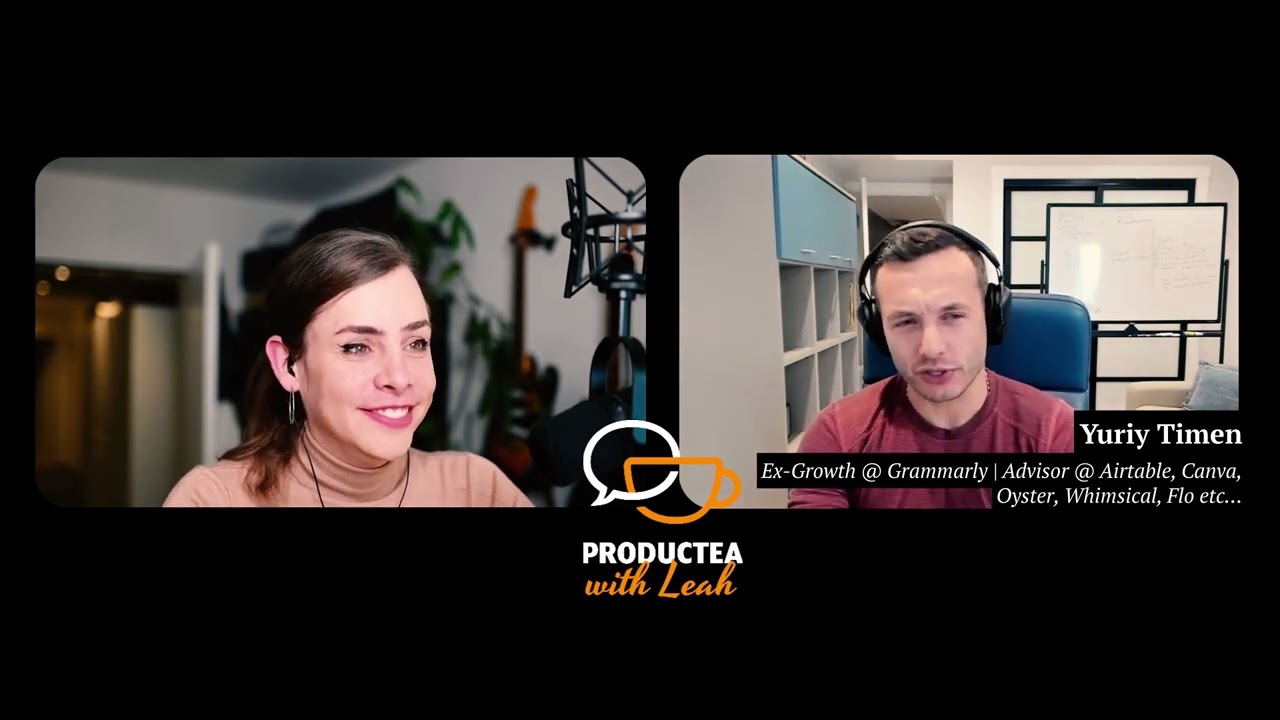
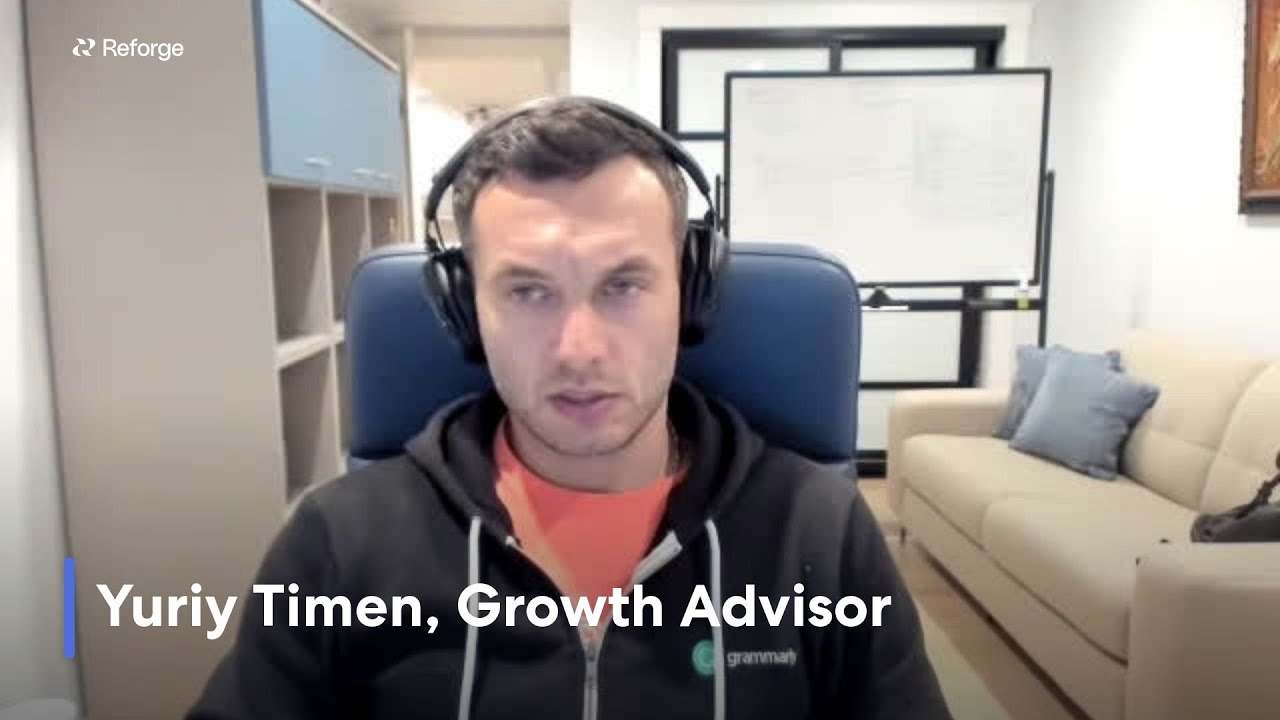

How to grow a subscription business | Yuriy Timen (Grammarly, Canva, Airtable)