He Built a $30M AI App in High School (Cal AI Founder)
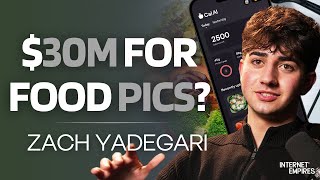
Zach Yadegari built Cal AI, an AI photo calorie scanner, from $30K in month one to a $30M annual run-rate. The 18-year-old founder started coding at 7, previously sold a gaming site to 5 million users, and grew Cal AI through TikTok, influencer deals, and word-of-mouth before shifting to subscriptions.
Chapters
I started coding when I was 7 years old. I was addicted to video games and I wanted to learn how to make my own. I was instantly hooked after I did my first coding camp when I was 7. After that, building in my freshman year, the gaming website, which I grew to 5 million users. And then I sold that for $100K when I was 16. And then Call AI, which has over 8 million downloads and is going to make over $30 million in the next 12 months. I even prioritized it over school for the first time, unlike anything else. My AP tests were coming up, uh, like a few weeks after we launched. I completely did not study for them at all. I got a 1 out of 5 on every single one of those. First month after launching, we made $30,000 in sales. The second, we made $150,000, and it kept growing month after month, a few hundred thousand extra dollars until today. 14 months later, we are on track to finish this month doing over $3 million in revenue just from this month.
Why build Cal AI? And maybe you can just give a quick explainer for the few who don't know what it is.
Sure. So I was a super skinny kid growing up my entire life, and I decided one day I was going to get big. I was going to put on a lot of muscle, start working out. If I'm being honest, this was mainly to impress girls. And a year into my journey, I was doing a lot of working out, but I wasn't seeing a lot of results. And I learned that 90% of everything really just comes from diet. So I started looking into the best apps to track my diet, to track my calories. Mm-hmm. I used the most popular one at the time. Mm-hmm. And 3 days in, I completely gave up. Mm-hmm. I realized it was super annoying, tedious, unsustainable for my lifestyle. To manually type in every single thing I ate, weigh it on a scale. So I knew there had to be a solution, but at the time I wasn't sure exactly what. Fast forward a couple of years and all of these new AI technologies started releasing, and it was a clear intersection of how we could finally make this idea to a reality along with my co-founders.
Nice. And, and can you just explain like the differentiator between you and these other apps that are out there? There's a lot of calorie counter apps. Some of them are super outdated and I've used a few of them for like a really long time, like a decade. So maybe you could just explain like how you guys are different and like why. Yeah, it just kind of baffles me that somebody so young would want to build a calorie counting app.
So Cal AI is an app where you could track your calories just by taking a picture of your food. We have all the other features that other apps have. You can still type in everything into a database. You can still weigh it on a scale, get precision tracking, you can scan barcodes, but the fact that you could take a picture makes it much easier for people who like to eat at restaurants and aren't gonna bring their food scale when they go out to eat. Also, what a lot of people love about Kale AI is how simple our design is. We specifically designed the app to be super beginner friendly. The other apps, they're notoriously convoluted. They have all of these features to track every aspect of your health. And for people hardcore, that's good. But for 99% of users, they don't want all of those extra features. And so it actually distracts from their goal and makes it a lot more difficult and intimidating to get started. Yeah.
Yeah. I went through like a, a slight phase when I was like going super hard in the gym and like, kind of like aspiring to do like a bodybuilding competition and just see like how low I can get my body fat and like be super yoked. And it was a pain, dude, like carrying the scale around and, and constantly, I mean, you, you get it 'cause you're literally built an app around it, but it's just a pain in the butt to, to have to do all that. So being able to just take a picture of it and your search functionality is really nice. The UI, the user experience, user interface is like fantastic. I love the simplicity of it. So yeah, I'm, I'm enjoying it and I've been telling people to check it out and to use it, which is, And, you know, I think we're at a point right now where, especially in America, a lot of people are unhealthy and they don't realize the amount of calories that they're consuming on a daily basis. Like, for example, I, I have this thing where I tell everybody, like, most of you guys are probably consuming 20% of your daily caloric intake just by your Starbucks order.
Yeah.
You know, people are opening like frappuccinos, 16-ounce frappuccinos. It's like 300, 400 calories, 350 calories. So an app like yours is like fantastic because it literally tells them, all right, here's your limit for the day. If your goal is, You know, to cut by 10 pounds by this date, you gotta like, you know, the, uh, like cut down every week by X amount of calories. Yeah. So being able to map it down and kind of guide them is like really, really nice. You know, people need that handholding.
I mean, I'm like surprising myself as I use the app more. I'm a big sushi eater, as many people are. I love it. Favorite food. And I used to always get an appetizer, you know, vegetables. They seem healthy. I would get edamame. But after scanning it with Cal AI, I actually realized each individual piece of edamame has a crazy amount of calories. I think it's like 15 or 20 calories.
Damn.
For a single piece.
And they have like 15, 20 of them.
Yeah. It's crazy. I never, I used to just eat those as not a thing. I'm like, you know, it's just a low calorie appetizer, but no, it's not.
Nice. Yeah. So for the people that are watching this, they, they can obviously see that you're young, but people that are like tuning in via Spotify or pod— or like Apple Podcasts, uh, can you just give like a quick, you know, overview of your background? Uh, you know, are you still in high school? Um, and you're living with your parents, like just kind of paint the picture of like, you know, your, your personality and what you do.
Sure. So present day, I'm 18, living with my parents, my childhood bedroom.
Nice.
I just graduated high school 4 weeks ago and congrats. I'm set to go to University of Miami starting in the fall, starting August actually. To go all the way back, I started coding when I was 7 years old. I was addicted to video games and I wanted to learn how to make my own, so I binge-watched YouTube videos all day for a few years just learning how to code. Eventually that turned into me building an unblocked gaming website that let students play games in school bypassing the internet blocking protocols.
I really quickly, is there, is there somebody that like, uh, that like planted the seed in your head in terms of like coding is kind of cool or like, yeah, you're that young, you're not obviously thinking about a career, you're just kind of like, you know, addicted to, you know, playing video games or finding an obsession. But was there somebody that you kind of like looked up to and said like, wow, that's kind of cool that they built this thing? You know?
Well, it was just video games for me. I was addicted to Minecraft and Roblox and I wanted to, I I had all these ideas of ways to make it 10% better, to make it just a more fun experience. And so I wanted to learn how to do that myself. I definitely underestimated how difficult it would be and how long of a journey it would take, but I started, started learning and I was instantly hooked after I did my first coding camp when I was 7. And then, yeah, after that, building in my freshman year, the gaming website. Which I grew to 5 million users, and then I sold that for $100K when I was 16. Following that, I got into the consumer app space, built a few small projects. The first one was called Grind Clock. It was a motivational alarm clock app where you would be waken up by a motivational speaker like David Goggins or someone else yelling at you, get outta bed, it's time to grind, time to get to work. That app did good, but I learned a lot through that. Like learning through failures, few apps. And then Cal AI is the app that really took off. Wouldn't have been possible without the team.
Yeah, I was taking a look at your background and I saw that you did, uh, what was it, Totally Science, Speed Soccer, and like a bunch of different, uh, different like apps that seem to have grown a ton. What, like, what's your philosophy? Like, I say there's a lot of people that say like if you do something really good once, maybe it's luck. If you do it twice, and 3 times and 4 times, then it's definitely a skill or something that you see that others don't see. And growing apps is like no joke. Like I did a startup before working at Andreessen Horowitz and it's extremely difficult to grow and get people to, you know, retention is obviously really hard. So what's your philosophy around growth? Is it like product-led growth? Is it, you know, working with influencers? Is it having like viral features that are super shareable or a mixture of everything?
So my two most viral products have been Totally Science, the gaming website, which I grew to 5 million users, and then Call AI, which has over 8 million downloads and is going to make over $30 million in the next 12 months. They were different. I think the common thread is utilizing short-form content.
Yep.
Growing up on all of these social media platforms, TikTok, Instagram, I know what goes viral. And so both of these platforms were designed with virality in mind. Totally Science a little more accidentally, but it was, both products are the kind of thing that you put it on TikTok and it's going to get a lot of views because it's super eye-catching and it's something that, one, it solves a problem people actually want. And then secondly, it is something that it, it has a visual hook. Both have a visual hook. So Cal AI in videos, you could show, take a picture of food, get the calories. It's very easy to understand. Totally Science, it's a little bit different, but the way I made TikToks was recording my screen in class, showing myself playing games and asking the community, what game should I play next? And they would flood the comments causing the videos to get millions of views because TikTok would see all the engagement. Yeah. So tapping into what people really want.
Nice. Yeah, we'll dig all into like the growth of Call AI, which I'm super interested in. But like, so Totally Science, how, how old were you when you, when you built that? Were you like 13, 14, 15?
13.
13. That's fascinating. And were you using your personal account to try to grow it? Were you leveraging like other friends and having like an army of TikTok clippers or creators? Because I think what you're saying makes sense to everybody that's probably listening who's built an app. Like, yes, build it so that it like looks appealing and it has like this viral, you know, appeal to it so that whenever somebody sees it, it's like thumb stopping. Yes, there's like people that can do that, but like the growth aspect, like maybe like 5% of people can actually execute. So like tactically, like what exactly did you do to kind of make that blow up? Was it just like a TikTok a day, 10 TikToks a day? You know, having friends do it, hiring people to make videos until one hit.
It was different for both Totally Science and Cal AI. For Totally Science specifically, it was just me making TikToks on an account. Most of the videos were just me literally recording my computer in class. I would not even show my face. I would put text on the screen saying, I built this website that lets you play games unblocked in school. Comment what game you want to add next. People flooding the comments. That's what really made it go viral. But then that's what made the video go viral. And from the video going viral, like out of 1 million views, you could assume maybe 1% convert and go on the website, go check it out.
Still pretty good.
Yeah. And then, I mean, in, before I sold the website, we had totaled only 7 million views across social media. So then you do the math, if we got 7 million views, 1% convert, That means like 7,000 downloads or 7,000 website visitors. That's definitely not viral. It's not, it's not how you get 5 million. So the other mechanism was the aspect of it being such a viral platform in terms of K-factor. K-factor is a measurement of people sharing it to their friends. If every one user shares the website and gets one other person at least to go on it, you'll have a K-factor greater than 1, which means crazy growth. You'll see exponential growth. And within schools, one person would start using the website and then it would spread like wildfire. Everyone would see, oh, this kid's playing a game in class instead of taking notes. Hey, what website are you on? They get on the website too, and then it just spreads super, super quickly. So we did a lot. To optimize for how shareable it would be for Totally Science. For example, we made sure to write the name of the domain at the top of the website on every page pretty big so that if it's not your friend in class, but you want to know what they're using, you could just look over their shoulder and it's going to tell you what the website is.
And so if somebody takes a screenshot, it's hard to like, you know, crop it out or like, you know, hide it, you know, so everybody see has to see it when they share.
I mean, it wasn't, it wasn't sharing through screenshots. It wasn't sharing through social media. It was purely people seeing other people playing in school.
How did you monetize that app? Or did you have like in-game credits? Do you have people buy?
So it was monetized purely through Google AdSense. We'd put banners and video ads before watching. And that's something I learned, a lesson I took away that made me change my approach with monetizing games is that ads make no money. You barely make anything if you put ads. You could have 100 million users, and if you're only monetizing through ads, you are 1% of your monetization potential. So with Call AI and all apps going forward, the primary lever has been subscriptions. We don't even put ads in the app. Like, you have to pay to use it. And we're going to experiment with freemium, but even with our freemium, we don't plan to have ads in it. I just think it. It does worse to the user experience than it's worth for what it pays you.
Yeah. We'll dig into, to Call AI right now. This last question that I have around Totally Science, because it's pretty fascinating building something so viral, so young. What, what was it like when you, you said you sold the site? What was it like after you sold it? Like, what'd you do with the money? Obviously you're so young and you're living with your parents, so like, did you get to just spend it on whatever you wanted or did you kind of roll it into your next startup?
After I sold the site, I really didn't do much with it. The most I did, I probably even have it here. Yeah, I got this watch maybe a month after the sale and it's a $300 watch. Nothing crazy at all. So I had around $100K sitting in my bank account and just left it there, eventually reinvesting it into building apps. I put pretty much all of it into Call AI once we got started.
Dude, what does your parents say when they see that $100,000 check just hit? They're like, oh wow, maybe we should double down on our kid and like let, you know, let him just, maybe he's not crazy, like staying up all night. Or like, did your, what were your parents even thinking at the time when you're building this first app and second app and, and all this stuff?
The craziest reaction I got was when I started making money from ads. I, there was just one point where I told my mom, yeah, I, I mean, I've been making money for a few months. I now have $30,000 in my bank account from ads. She was like, what? Where did the money come from? I thought it was like illegal or something. And then the money just kept coming in. Every time I would give an update, they would just be super shocked that the bank account balance kept going up. And so by the time I sold, they were a little bit desensitized, but it was also a moment where it kind of all hit them at once. Like, wow, our son, you know, he sold a, he sold a tech company. Wow. Yeah. Yeah.
And like, how involved were they like early on when you're like 13, 14, 15 and you're doing this stuff? Are they helping you with like legal or like building out? I mean, obviously you're the technical person, so you get everything, but are they like almost advisors to make sure you don't screw up or get scammed or anything like that?
My parents are both lawyers and so my mom in particular has helped a lot with, yeah, just reviewing contracts and that kind of stuff, especially early on before I really knew what I was doing. She helped me a lot.
That's awesome. Cool. So Cal AI, when did you guys start working on it? How many people like were on the team when you initially launched? Um, and then I want you to like kind of quickly talk about the growth journey and then I'll dig into there.
So Call AI was initially started with myself, Blake Anderson, and Henry Langmack. Blake had previously built two apps, Umax and RizGBT, both getting millions of downloads. He knew the viral playbook to blow up with influencer marketing for apps specifically. Henry and I had met at a coding camp when we were 10 years old and stayed in touch. We kept building, we built a few small projects together in between. So we all went in on this idea, Blake serving more as an investor/co-founder advisor role where he was giving us the playbook he used and some capital early on. And then Henry and I, we built the app, we were doing all the marketing for the first few months. Before we made our first, before we brought our first person on, and that was Jake Castillo, who actually is now, we brought him on as a co-founder. So there's 4 of us at this point. He was in more of the corporate world previous to this, prior to this, he was doing consulting. So joining the company, it was, he, he had done a little bit of startup work before this, But it was a very unique team. We had 2 kids in high school, 1 guy that had built a few viral apps and had just graduated college, and then 1 guy that had just left the adult. Yeah, we were the Avengers all coming together, and we started just going all in on this idea, marketing, putting— like I said, I put all of the Totally Science money in marketing it. And I will say, and at the time you're still in school, right?
Like you're, uh, going to class every day and coming home at 3 PM.
I'm like running out of classes to take calls with influencers, coming late, missing classes, coming in halfway through the period when it's being done, getting yelled at by teachers. But I knew that we literally, I actually had a call with someone who was an app builder a month before starting Call AI. I told him about the idea, I told him the team, and he really planted this idea in my head that this is the perfect team. This is, there's no better circumstance where two, two guys that are, I mean, I guess it's, it's a little bit of a weird, I don't know if it's the perfect circumstance, we're in school and everything, but the fact that we had the team that we had as kids in high school and Blake, someone who had successfully grown other apps in the past, we should not fail. Like we had all the resources is what matters. We had the cash, we had the knowledge, and we had the time. So if we failed, if we fucked up, that's completely on us. We're just, it wasn't like, that would be completely our fault. We would've just done something completely wrong. We would've worked not hard enough. And that really lit a fire under me. I was like, there's not going to be a more perfect circumstance. We have to go, we have to make this work. We had a few side projects going on. We completely dropped all of those and decided Callie has the sole focus. I even prioritized it over school for the first time, unlike anything else. My AP tests were coming up, uh, like a few weeks after we launched. I completely did not study for them at all. I got a 1 out of 5 on every single one of those for like AP Physics and all of these advanced classes, thinking at the time, there's no way I'm gonna go to college. We're gonna make this work. I have such strong belief and conviction that we're gonna make it work and Things went pretty well. All of the pieces came together. Momentum started taking off. The first month after launching, we made $30,000 in sales. The second, we made $150,000 and it kept growing month after month, a few hundred thousand extra dollars until today, 14 months later, we are on track to finish this month doing over $3 million in revenue just from this month.
Incredible. Uh, why does your app work? And when I say work, I mean, why does your app, you know, bring in revenue, have people that use it, um, have the retention there and, and many other apps don't work? My sister was telling me about an app that she uses and she showed it to me and I was like, this is ugly. Don't use this. Use Kali AI. I showed it to her and she's like, oh wow, I like this. So I think visually is like, is one aspect, but why else does yours work and others fail?
I, I really believe in having strong UX and UI. So UX is user experience, UI is user interface. Those are the two key things that matter when building a product. The only things that matter. And Steve Jobs was extremely particular, particular about this as well. Every product he launched. He wanted to make sure there's this analogy or this story that he used to always say that his dad would teach him how to build cabinets and explain the importance of making the cabinet look as pretty on the inside, just as the outside was. And so Steve Jobs used this principle with every product he built with Apple. I try to keep the same principles in mind, which is the general rule of thumb. I, is that I try to make. Designs so intuitive, so easy, so simple that you don't need a tutorial to get started. You could just download and then you easily understand. That is, I think, the best test for having good user experience. And by the way, to break it down, 'cause those terms are a little complicated, user experience generally refers to where the buttons are placed on the screen, what the text reads, how you display all the elements. And then UI is usually coloring, maybe formatting, making everything look pretty after the fact. And so when we started building Call AI, we took a ground-up approach. As a previous user, I knew that all of the other apps were super complicated. And so we, we, we didn't take any inspiration. I mean, like, of course we took some inspiration of the core features, but we tried to start a completely blank slate. And just think, okay, what's the first feature we want? The scan feature. Take a picture, you get your results. That's what we launched with, a single button that you could click to open the camera view and then take a picture. That was it. We didn't have a food database. We didn't have a way to manually input what you were eating. And through this, the app proved product-market fit. This was our MVP. It was super simple. No one needed a tutorial. And as we started adding new features, we've kept in mind, okay, we want to maintain the simplicity while building on top of this. We don't want it to be the everything shop for mediocre products.
We want— yeah, you just keep adding buttons and buttons and buttons. Next thing you know, it's just like overwhelming to look at.
Exactly. And a lot of credit to our OG designer, Rishaka, on our team. She's an absolute killer. And has helped us a lot.
So you said $3 million this past month, like, are you spending the money? Like how much of it is it going to growth? And then yeah, we could dig into the growth playbook.
So out of the $3 million, about $1 million will be profit. And then $1 million, $1.2, $1.2 to $1.4 will be spent on marketing. And then an extra $100K or $200K on employees. and then there's also the Apple cut is primarily the breakdown of expenses.
What's the cut? Like 30%, I think it is.
30%.
Wow. The Apple tax. And there's kind of no way around it, right? Because you're building an app, a consumer app.
There are now the ability to add a web checkout and it's pretty ambiguous, the rules behind this, but There's a lot, a lot of apps are now introducing this because of—
like X, right? Like if you get, if you do the X, like X or Twitter, like Pro, you can, uh, yeah, I guess you can go on the web version.
Well, yeah, but now they actually let you show the web paywall within the app, which they didn't before. So now it's a lot less friction for the user to actually pay on the web through the app.
Yeah, cuz, uh, if you Like if you did a web checkout version, then you can kind of just keep 100% of the profit, but then you risk getting in trouble with Apple and getting your, your app, uh, I guess demonetized or removed entirely, right?
Well, they legally have to let you now to some extent because of the Epic Games court case, but it is, it's unclear the exact rules. They haven't made too many public statements about it.
Gotcha. So you said you spent about, I think, 1 point something on marketing/growth. How does that like pie cut up? Is it mostly paid marketing, influencers? I know you do referrals, like you pay users $10 or something like that if they bring new people onto the app. And what's like the main growth flywheel for you all?
It is primarily influencers. That's how we've grown super, super quickly. Is that we've basically stormed the fitness niche on TikTok and Instagram where anyone who's an active viewer of any of those influencers have seen Calii. We're basically everywhere there. And so recently we've realized that we have somewhat of a saturation in that niche and we're starting to expand more broadly to a lot of influencers that you wouldn't think necessarily would work for a calorie tracker, but we're such a broad product that a lot of people would like to use that it's actually working really well for us. Additionally, paid ads, performance ads, traditional media like Facebook, TikTok is something we've started to scale into pretty heavily recently, and that's been very good. We're taking the content from our influencers as the ad creative for smart, the ads, which, yeah, first of all, we have like thousands of videos to use, but then it's, I mean, yeah, it's all coming together really nicely.
It's awesome. So I asked that question kind of stupidly because I have seen your app before I even knew what it was and before I knew who you were. I always see it in the freaking like comments, like, or the caption, like all these influencers that I follow and I'm like, wow, this guy's yoked or whatever. And then I look at the caption and it's like, you know, check out Call AI. And I'm like, what the hell is this app? I'm seeing this everywhere. Until like finally I started, you know, I saw you on Twitter and downloaded your app and started using it. Now we're here. But yeah, you did a really good job on the influencer front. On the other part that I was going to say is I feel like self-developing people would probably be like another really nice category for you. People like the, the Tim Ferriss likes, you know, the experimenters, the growth hackers, people who just want to like, you know, optimize self-optimization, like those type of people because they have like a loyal following of of, of, uh, people that trust them a ton since they're kind of like guinea pigs.
Totally.
Um, but can we just kind of, you know, get into the weeds of the influencer strategy? Because I think that's fascinating. Um, you don't have to give exact numbers of like, you know, this influencer with this amount of following gets this amount of money if you don't want to, but like, what does a deal normally look like? Um, and how do you ensure that if you spend $10 or $100 or $1,000 on an influencer, you get You're highly likely to get X amount of return back, so you're not like, you know, in a hole.
Without giving away too much sauce, the—
yeah, you don't have to share everything. It's okay.
The high-level framework that we use is that one, there's no general, there's no general amount that we'll pay influencers. It definitely depends on so many factors, the size of their account, how many views they're getting. Actually disregard followers. Followers don't even matter. All that matters is views and then their comments and their engagement, which you can measure in the comments. Taking both of these together and looking at them, we have figured out in, based on different niches, different influencers, essentially what we will generate in revenue per 1,000 views. And then as long as we can pay them. Less than that in terms of the CPM we pay them, it's profitable. And this is very difficult to do because no influencer is going to accept a pay-per-view deal. You can't say, all right, since $5 per 1,000 views is what I'll make, I'm going to pay you $4 per 1,000 views and you make the post for me and then whatever it does, I'll pay you. No, they want to be paid upfront. They want to be paid upfront. They want to have an agreed price beforehand. So the best thing to do is look at their existing content, see what they average. We don't typically work with people that have all these crazy spikes where it's like a million views, 5,000 views, 5,000 views, 2 million views, 5,000 views.
That's how they could be boosted too, or like, you know, they, they hack it.
That's how you really ensure that you're probably not going to have a profitable return. So we look for people that have pretty consistent views, and that also shows they have A good engaging audience. They're coming back every day, watching the same videos. And then we will take the average and calculate what we'll need to pay them as a CPM, or calculate what we need to pay them taking into those views account so that we get the CPM that is profitable. And this works. This only works if you ensure— this is super important— that when they actually integrate your product. It is not straying from their typical content style. If you have them going from like, okay, day in the life, follow me on my journey, follow me doing this, this, this, and then—
and then it's like a product demo. It's like, yeah.
And then it just, the video you have them make is, hey guys, check out this product. I really like it. I used every— the video's gonna get zero views or like 10% of the potential that they usually get. And so you'll want them to you'll want to basically take one of the videos that have already done well for them and be like, okay, make this exact same video, but in this segment, show our product. That's how you'll get the best results.
Interesting. And like, do you, like in these deals, do you try to own the content so you can rerun it as ads down the line? Does it kind of like vary for influencers? Some of them want to, you know, only have it in the caption or in the segment, but you, they own the content. I think that's really smart, by the way. Like if you are able to own the content at the end of the day and pay them for posting on their account and you having the video, because then you have this library of ads that you could run down the line, especially as the company becomes more and more profitable, then you get to a point where you don't really need to rely on influencers. You can know an exact cost per download that you'll get to. But do you, do you Usually find that influencers and creators are, are down to let you like own the content outright?
Yes, they usually are.
That's awesome. And how are you managing all these people? Like, do you, did you grow your team? Do you work with an agency? I'd imagine it's kind of difficult because like as a creator myself, I'll have a ton of friends that are way, way bigger audiences and it's difficult to get them on the phone or to get them to reply to stuff. Like how are you managing it?
Yeah, definitely cannot do any of this. Without my team. We have built up a team of about 15 full-time employees at this point. And then on top of that, we have a big team of virtual assistants. So altogether, it's mainly the virtual assistants doing the initial outreach and the groundwork. And then a few of the closers on our team will get on the calls with influencers, strike a deal, and then manage them in an ongoing relationship.
I've had a few, uh, I think we've had like 15 or 16 guests on the show. Maybe like 4 or 5 of them have been like super, super creator focused. The last guy that was on, Justin Moore, he's like the go-to person when it comes to sponsorships for creators. Like he's done like $5 million in sponsorships. But you're interesting because you're on the other side, so you're actually doing the deals with influencers. Do you have any advice for other founders who are trying to like start up an influencer or creator program and trying to figure out how to allocate budget, or just anything that you, you kind of like learned through failure, um, that you kind of wish you would've known?
Definitely have learned a lot through failure. What specifically are you interested in? Are you saying people that are starting with a limited budget or something else?
Let's say like you're, you're a bootstrap founder, you're a founder that raised a little bit of capital. So capital is top of mind. You don't want to spend a ton, but you need to grow your app and you think the influencer creator, you know, creators are the way to do it. Especially if it's a consumer app, like what's the best way to, you know, make use of that money or just any advice in general as they're getting started to building out this program?
I only think you need $5,000 to validate if your idea will work with influencers. With $5,000, you will be able to run, if you strike the right deals, then you should be able to run 10 to 20 very solid promos, very solid videos, some with big creators, some with small creators, some in the middle. And you'll be able to get a sense to which ones are profitable for you. You'll be able to take those learnings and then double down seeing that, okay, this guy worked really well. We're gonna keep putting the money in. And it's the kind of thing where every app, every product, it will be a little bit different for. There's no prescription for this. There's nothing I can say like, okay, only work with this type of creator. No.
Yeah.
For every app, for every product, it will be different. You have to identify where your core niche spends their time on social media and pay those creators to talk about you. Then you also have to keep in mind, do those creators really have pull on their audience? If that creator says go buy this thing, how strong will will the audience actually listen to that? Maybe it's a lot, maybe it's nothing. So these are all factors you'll have to measure and test through just putting some fuel in and seeing what you get out.
Yeah, I, those are all great pieces of advice. I also like that you said it, you know, when working with creators, you don't want to pay them like $5 per download or whatever because as a creator, like people have countless, like dozens of opportunities in their inbox. So somebody's saying, yo, I'll give you like $3 to $4 or $5 per download and you could potentially make up to $5,000. It's like, yeah, but there's this other person that's going to give you $5,000 guaranteed for 12 posts over the course of 3 months. So I'm just going to go that route instead. So I think that's also like a really smart way to do it because I think, yeah, I think a lot of companies screw up by like trying to reach out to influencers and doing that route and then they kind of have to play the volume game because they have to reach out to like 10 times more influencers. Hoping that some of them reply.
Definitely. I will clarify that it's usually pay-per-view, so it would be $5 per 1,000 views is usually what you would, what usually what people do offer. Per download is harder because that brings us to the next trickiest thing about influencers is attribution. Yeah. There's no great way to do this right now because you can't have a link on the screen when the influencer shows your product that they could just click on. In a TikTok or Instagram Reel. That doesn't work. You could have a link in description, but most people won't go to the description. You could have a promo code, but through our testing, only about 1 in 10 people will use the creator's promo code.
So then also the promo code like adds another layer of like friction, right? When people are onboarded, like you want to make it as frictionless as possible.
Not necessarily. I think there's a balance between friction. It is true. You generally want to make the onboarding as frictionless as possible. But if it's as simple as a screen that says enter a promo code or skip, the users that would leave the app because they don't want to click the skip button, that little millisecond extra, they likely weren't going to convert anyway at the paywall. So friction is something to keep in mind, certainly, but you always have to keep in mind that balance of adding a little bit of extra friction does actually increase the intent of people that will convert by the end. We've lengthened our onboarding a lot over the last year, adding a lot of friction because we've added a lot of questions that theoretically don't really matter. But what these are doing is building trust with the user and they're also investing more time so that by the time they get to the paywall, they are willing to pay.
Yeah, they're committed. I noticed that when I was going through the onboarding process, I was like, wow, it's smooth, but it is link a little lengthy. And by the time I got to you and I was like, shit, like I did all that already. Like you have all my information and I'm kind of like, spend it. I didn't, it wasn't that long, maybe like a minute or two, a few minutes at most. But I did notice in my personal user behavior, I was like kind of observing myself like, oh, interesting how I'm more likely to pay now that I've done that versus if I just onboarded for free and then tested it out and maybe stopped using it, I would probably have not came back, you know?
Yeah. I will say though, or I do want to add or finish off the point of attribution for the viewers that are interested. The only way you really can do this is just by measuring spikes early on before you have a lot of noise. And let's say you're already running paid ads and you want to start influencers. Doing this in a country where you don't have that many downloads is the best way. Just basically seeing where the spikes are coming from and then trying to assess how many downloads specifically from the creator to assess how much revenue to also attribute to that creator specifically. Yeah.
And being being really smart about it and not working with 2 or 3 creators at the same time, like working with one at a time so you can attribute to one person versus like, well, all 3 of them were making videos and they all launched 'em at the same time, so we don't really know exactly which, which one it was.
Yeah, definitely space out the videos.
Yeah. The next question that I have is around retention. So like now that a user has come on, how do you ensure that you keep them as long as possible? Do you think it's just inherently because people start seeing results or they start tracking their stuff or they have the streak? And they don't wanna lose it, or, you know, like what's the main, um, like pull for retention? You think it's probably a lot of things if I'm being honest, but you know the app better than I do.
The CEO of Flow says this. Flow is a period tracking app that makes $200 million a year. Retention, it mainly comes from the category your app is in. And to give an example of this, A calorie tracking app notoriously has low retention. Same with a fitness app. And that's because it requires a lot of dedication and consistency from the actual user. I mean, the user is physically restraining themself from doing something they want to do. So everything in their body is telling them, do not retain, do not retain, do not retain. They have to make the mental decision every single day to keep using the app, which is— it's hard for the user, and that's why it's hard to do things that will increase it. I'd say that from the starting point of retention in a space, there's— there is wiggle room. You can go up, you can increase retention by gamifying it. So we've added streaks, we're coming out with badges soon, writing all of these things just Even making it easy by scanning these things make it a lot less friction and therefore a lot easier to do and makes it easier for the user so that they retain more. Early on we had a lot worse retention because, well, our app was gamified a lot less, so it was probably below the average, but now we're above it in terms of retention. So there's not that much you can do, and that's why we don't prioritize retention. We prioritize building the best product out of anyone else, and generally the best KPI for that, the best key performance indicator of that is retention. However, it's not really, it's not that simple because price and all of these other factors are taken into account. So our metric is just, are people complaining about the app? Are people switching from other apps to our app? When people do download our app, is this the last calorie tracking app they'll use for the rest of their life? That would be our success metric.
Yeah. Maybe this is on your product roadmap, so you don't have to say yes or no if you don't want to, but have you thought about like adding a social element? Like you think about like Strava or these other, these other apps. Like I was talking, again, I was talking to my sister about this the other day and I was like, you know, the, the person, like I worked in tech and I worked on products, so I started like interviewing her and I was asking her like, Why do you use this app? You know, what do you wish it had? If you used a different app, what, like, what would you wanna see from it? She's like, I love this app that I have. I forgot what it was. It's a calorie counting app. And then she's like, the only thing I wish is like, I wish I could see what my friends are eating. They're like, share my stuff so that I could cheer them on from afar because my friend lives in Denver and I'm in California and just keep each other, keep each other accountable. She's like, that's the only thing because right now I'm having to screenshot it and send it to group chat. And I asked her, I was like, you think, and my sister's really fit too, but I was like, well, you think if you were just starting off in your fitness career, like that would, your fitness journey, that would help you with like staying consistent? And she's like, yeah, of course. Like being able to see your friends and call you out when you're slacking off. So do you think, would that overcomplicate your app? Because then it becomes like a FitCalorie fitness social app. Almost.
It's funny you say that. This is pretty much exactly a feature that we are going to release in the next month or two.
Smart. That's very smart.
Um, we're obviously gonna test it. We are either going to roll it out exclusively in one country or exclusively to a small percentage of users, power users or something in the world. Yeah. So we'll, we'll see how it goes, but that is That is definitely something top of mind right now.
Yeah. And I haven't explored the app entirely, honestly. So I, I know it because I use it for tracking, but do you also have like fasting or like other things? Because like, I feel like, you know, there's good and bad to being like the single app for everything. Like the good is that, you know, you can dominate other niches and kind of suck up that market share. Like I think Zero is the app that I usually use for fasting. I don't know if you guys have a fasting feature too, but I got the pro version. But that's just a very simple thing where you could just like, you know, allow people to track how long they're eating or how, when they can eat. But do you feel like adding these other niches would complex the app too much and you just want to stick to calories? Or like what's the future version of the app that you eventually want to get to? Is it like the, the everything health app that also like integrates the social element. That's a lot of, a lot in one question, but it's a very good question.
And that is something that I spend a lot of time thinking about. There's this other app, I won't mention the name, but they've essentially put all of the features from Whoop, Garmin, Apple Watch, all these health metrics into a calorie tracking app. They track sleep, they track everything. This isn't MyFitnessPal. MyFitnessPal does something similar. This app is more modernized, and part of me thinks that doing this will be better for our power users, the users that every day are logging on to the app and tracking their food. But then they also want to see how tracking their food correlates to their sleep quality, and that correlates to their heart rate, their stress levels, all of this. But then I go and I think about the general population, average person, 90th percentile, or the people within it, the 90% of people, they only want the calorie tracking. That's why they download. And I don't want to add all of these complex features that intimidate them. So I think that there is some extent of expansion that we will head toward. But at our core, we want to be the go-to weight loss solution. We want to have all of the right tools for weight loss, but we don't necessarily want to be the app to also to solve all of your health problems.
Yeah, exactly. Sleep, muscle, all that stuff.
And my thinking may change on this. I'm not set in stone, but that is generally where my head has been at recently. Although I'm still unraveling these ideas and thinking of if there is a way that we could build out some version of the app where it keeps its simplicity, but then has these extra features for users. Maybe there's a way that we can make the home screen customizable where I was just gonna say that.
Yeah, like a widget, almost like your iPhone home screen where you can like drop things in and like have that little tab there, like a little button there.
Exactly. So it starts off basic calorie tracker, then you could customize it and add in sleep tracking add-in. Everything else.
Yeah. I mean, if, if the current goal is like weight loss, be the go-to weight loss tool, you know, aside from calorie tracking, fasting is probably one of the best things because I think a lot of Americans and people around the world have an issue with eating because there's so many hours in the day and everything we eat is so calorie dense. So just like restricting the amount of hours in the day by nature of doing that and pairing that with measuring your calories, equals, you know, weight loss. So just, I'll just drop that seed in there for you.
Like I would be happy to be a power user, you know, fasting that is a, is more in line with weight loss. So I agree that is something that maybe we will add in a soon an update in the coming months.
Nice. Well, if you test it out with power users, I'm down to, to test it out.
Awesome.
Sick, dude. Well, I know I have maybe 10 more minutes with you. I just wanted to run through a few more questions of growth and then Um, open it up to you to see if there's anything else. But if you had to like build out the pie of growth and put percentages on it, like, and when I say growth, I mean like, you know, growth for the app and, uh, just virality in general. Like how would you put the pies? Is it like, or pieces of pies? Is it like influencers, paid, referrals? I know you have a nice referrals program too. Is it like 50% influencers and like, you know, some organic? Um, or like how would you divvy it up?
I would say it's 90% influencers. The rest breaks down mainly, so actually I will have to take a step back. You can't say it's 80%, it's, we have about 20 to 30% of our growth comes from word of mouth, people sharing it to their friends.
Yeah. And then, and you can say rough numbers. I know you probably don't have 'em top of head, but just like roughly X amount. Yeah.
So it's like, and then over 50%, 50 to 60%. Is going to be through influencers.
Yeah.
And then the rest is going to be paid ads, referrals, referrals probably being the smallest. Wow. That's interesting. Random people like browsing.
I would've, I would've thought referrals have been higher cuz when I posted it for the first time on my story, I got 6 people to reply saying, dude, you should have told me, I would've give you my referral code so I can make $10. So I was like, wow.
Maybe that's, That's inaccurate because now that I'm thinking about it, referrals would be grouped into people that have joined because of their friend. So through a mix of referrals and just word of mouth, that accounts for 20 to 30%, I actually would say.
Yeah, there's a, I feel like that there's some opportunity there for you because people are already using the app. Like I was thinking about like what Gold's Gym, like they, they had this promo plan where they have the promo going where I think if you invite 6 people or, you know, 8 people and they set up accounts, then you get a free account for the year. And like there's a lot of people online that are talking about this. And even like when I saw the promo, I was like, wow, I could easily get 6 people to sign up and then I don't have to pay for my gym membership for a year. That's fantastic. But if you think about it from the company's perspective, that's like 6 times $40 times 12 months. That's like way more than then it's worth my little $40 a month membership because, you know, people stay on memberships for years. So there might be an opportunity there for you. Like my growth hack comes on of just like, how do you double down on referrals and like incentivize people to just invite their friends or gamify it even more and give them a badge if you invite 10 friends or whatever, you know? So just an idea there.
Yeah, it's a good idea.
All right, so I think I asked a shit ton of questions about like, about your growth and and all that. What about you? Like, what are future plans for you? What are you like outside of, you know, building startups? Do you have any interesting hobbies? And you also said you're going to college, which is kind of surprising.
So I really just enjoy building companies. That's my main thing. That's what I spend most of my time doing, thinking about on a day-to-day basis. But outside of this, I am a normal kid. I, You know, spent last night with my high school friends. We just hung out at one of their houses, watched a movie, you know, spoke about random kid stuff. I am going to U Miami in the fall, and that's gonna be really interesting to see how it plays out. I will say it has been increasingly more difficult to make friends and relate to people that aren't doing something entrepreneurial. Yeah. So it could be the case that I just can't make many friends and I realize, okay, you know, I'm gonna live, or I'm just gonna have to keep building up my network of entrepreneurs that are also friends, and that's gonna be my social life moving forward. I don't know. Something else interesting actually, and I haven't really spoke about this publicly yet. I don't, I can't say that much, but starting in August, myself or me, a few other app founders who I'm not gonna say yet, 'cause we're gonna have a big launch coming. We're going to get a house in Miami and we are going to make a ton of content. We are going to be revealing so many of these app growth secrets. We are going to show people how you could do it yourself and have a lot of fun doing it. Throw a bunch of parties, have people out to the house. It's going to be a really interesting time. Like, you'll see all over your Twitter feed. So we'll see. We'll see how it plays out. I'm really excited for that. It's going to be a ton of fun. I'm going to be balancing dual lives, doing this house and then also going to Miami. So we're getting it right next to the college. Are you—
I mean, you're already probably committed to going to school, but like, are you 110% like set that that's what you want to do and you're going to do? I personally can see you like thriving in like San Francisco, maybe even New York. Um, yeah, I mean, New York, your parents probably want, yeah, your parents probably want you to go to college, which is like the smart thing to do. But also you, you have like a lot of momentum and success in your hands right now.
So, um, yeah, you know, I, I don't honestly see myself lasting in college more than like a semester. We'll see what happens. I'm going in open-minded and try it out. You know, we'll see what happens. But San Francisco specifically, it's a cool spot. I was there 2 weeks ago. Hung out with a bunch of my founder friends that are also young, hung out with the Clueless guys. So super cool meeting all these new startups. Always something interesting going on in San Francisco. The only problem is there are zero girls there or zero attractive ladies. So I don't know if I want to live there.
That's hilarious. I mean, there are, you just gotta, uh, you just gotta look.
Diamonds in the rough. But, you know, or you could just go to Miami and New York and they're everywhere.
Or LA. I'm in LA.
Yeah, LA is good too.
It's not really like, it's not really super texting, but it is like a good like influencer fit and everybody's Everybody's super fit. Everybody's super attractive.
So yeah, I was just there a few weeks ago for an influencer party. One of the influencers we signed for Calii that's like 17 is when she moved there for the summer, we sponsored a house and then she threw this thing with a ton of influencers my age. And it was a really, it felt like a fever dream because I mean, I was the only non-influencer. I was the only entrepreneur there. As I was walking around, everyone was just making TikToks. They were just dancing during a party. And people were collabing with each other. Some of the influencers were really pissed at the other influencers because they would ask to make a video together and the influ— the other influencer would say no because they had way more followers than the other person. So it was this super interesting social dynamic and it, it felt like middle school friend groups, but on steroids at a party, like middle school cliques on steroids.
Yeah. The, the, the LA ego thing is, it's real and it's really annoying and you see it everywhere you go, whether you're going to a nightclub or dinner or just like brunch or just anywhere in the city, like especially like on the West Coast or the West Side, like Santa Monica area, Venice. It does get old and kind of annoying, but LA has a lot to offer and I always, you know, root for LA.
Yeah.
Where do you see, I think like looking out more than a year is kind of difficult because you're so young and the app has a lot of momentum, but like where do you see yourself, the team, the app in 12 months from now? So like summer of next year, but where would you like to be?
Yeah, I wanted to be the biggest calorie tracking app on the App Store, and I think we could get there. I see the team being maybe not double in size, but 50% larger by then.
Yeah.
Filling in for some key roles, bringing in a lot of new killers. That's where a lot of my focus has been recently is just bringing on the best people to the team. And, you know, hopefully doing, I think the goal by the next 12 months is to be at a $100 million run rate. That's the goal.
That's awesome.
That's what we should do.
I have to ask this question too, 'cause you're so young, like on the topic of hiring, how do you identify talent? Do you look for just like hungry young people? Do you have an advisor that's like, you know, been in recruiting for a long time that helps you? Yeah, 'cause recruiting is like, aside from raising capital and getting users, recruiting is usually the most difficult thing for founders.
It's tough. Initially, most of the hires came from X, people DMing me when I post. And then recently to hire—
how do you filter that though? Like I get DMs all the time, people looking for jobs and stuff. Do you like have them do a test or just kind of like vibe check them?
Yeah, we'll interview them. I'll hop on a call. I usually get a good sense of if someone would be a good fit just through literally hearing like one sentence come out of their mouth, like a 2-minute phone call. And outside of that, like this, I, I like the notion of hiring on vibes, which is this thing I heard from another really successful founder. And outside of this, we've recently worked with a headhunter that's found us some really good, really good killers.
Nice. Cool, man. Last, last question I'll have for you is for people out there, so just to kind of frame this, there's a lot of people that listen to this that are, you know, indie hackers or kind of builders like your type, but there's also like a lot of creators and people who have audience and distribution built in, but are non-technical. But now that AI is like allowing people to build really cool things, what advice would you give to that type of person that's more of like the creator type that has the audience, maybe not the product knowledge, maybe not the technical knowledge, but they have a loyal following within a niche? Any general advice or tactical advice that you'd give them?
Very, very good question. Very, very, very good question. The easy thing to do as a creator is to do sponsorship deals, is to have brands pay you to promote their product. The smarter play is to work with someone else that has experience or on your own, build out your own product. And this is something that We have actually spoken to a few influencers about doing so. If you're an influencer looking to do this, you could reach out to me, Zach@viraldevelopment.co. But it is a far smarter thing to build out your own product and then actually make videos about that because then you, then you, first of all, the marketing cost is zero and you are taking home all of the revenue. If a brand is paying you to promote their product, I would be upset because that means that the brand is making more than you off.
Get all the upside, whatever you're doing.
And I, that's something I would be upset about. I would always want to be the one winning at the end of the day. And it's a win-win situation, but you could be doing better for yourself. So you should, yeah, you should be.
People who are listening to this podcast right now are probably like, Ish always brings this up, but I have to, to share with you. So my thesis and the reason why I kind of like left my full-time job and do this and build like this little media company and distribution is because, you know, I believe that in a world where anybody can build anything, think thanks to AI, that brand and distribution is going to be the ultimate moat. So people who have audiences, who have trust, who have engagement like that is like what is highly commoditized now and worth a ton. Yes, building great products is also really important, but it's becoming easier and easier as time goes on. So, you know, I wrote this piece called Distribution is a Moat, and in it, one of the recommendations I gave people is like, if you're a creator type and you know how to gain attention, like, yeah, brand deals is one of the dumbest things you can do. Like try to figure out a way to build your own product and, uh, and or partner with somebody and own a piece of, a piece of the product that you can just kind of keep funneling people over time. So that's fantastic advice because it's also stuff that I, something that I give all the time.
Yeah, certainly agree.
Dosek. Well, any final words or anything else you wanna share?
If you guys want to stay up to date with everything I'm working on and follow me, feel free to follow my Twitter, Zach_Yadegari. I'm also posting on YouTube and Instagram now, so check those out.
You're a creator yourself too, so you, you do it all. You code, you're a founder, you're hiring people, you're finishing school, and you're a creator. So that's fantastic to to see, man.
Well, yeah, well, actually, a big goal over the next— first of all, I appreciate you saying that, but a big goal over the next year of mine will be to become an actual, like, mainstream creator. So we'll see how that plays out.
Let me know if there's— I mean, you know content very well and virality, but if there's anything I can do to help, let me know. I'm always down to help out.
Thank you, really appreciate you.
Cool, Zach. Thanks for coming on, man. Appreciate it.
Thank you for having me.
More from Zach


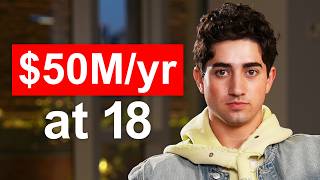
Zach is 18 & made $50m from an app. Here's the brutal breakdown of how he did it (and you can too)