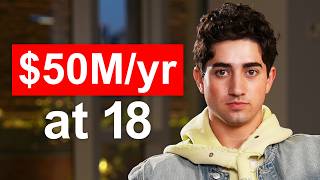
How To Make $1.1M a Month With AI Apps (No Paid Ads) | Zach Yadegari

Zach Yadegari, 17, built Kala AI, a calorie-tracking app that makes $1.1 million monthly. He grew it with micro-influencer TikToks, DM outreach from virtual assistants, and A/B testing that boosted onboarding conversion 10 percent. The app stayed premium-only, no freemium tier.
Chapters
You're 17 years old and you're the founder of Kala AI. How much are you guys bringing in right now per month?
We are making $1.1 million every month.
That's crazy. If I wanted to go and get my first 1,000 users or downloads, where am I going?
In order to get to the first 1,000, what it really took was— you'll see if you look at any of our creators, they don't mention the name Kala AI anywhere. We specifically put the name Kala AI on the homepage big at the top. People will see Cal AI and they'll know to go download it.
There's MyFitnessPal, obviously, that everyone knows about. I think you recently passed them on the charts, or you were like just right next to them.
Keep going above and below them day after day. Maybe we will be able to beat MyFitnessPal in a year. I'm 17. I'm living with my parents. I've had to fire someone who has kids. Having to do that, it's something where early on I had a lot of imposter syndrome. Everyone's hanging out with their friends, spending the last memorable moments. While they were all hanging out, I was in San Francisco working on the company. And I think it's a sacrifice that needs to be made.
All right, Zach, welcome to the podcast.
Thanks for having me on.
We've been talking about doing this for a while. Uh, you're 17 years old and you're the founder of Calii. How much are you guys bringing in right now per month?
We are making $1.1 million every month.
That's crazy. And what do you guys do? Like, what does the app do?
The app is an AI calorie tracking app where you simply take a picture of whatever you're eating and then it will figure out the protein, carbs, calories, and fat of your meal.
Awesome. And you know, we put, I posted a tweet yesterday saying that we're having you on the podcast and I asked everyone what they want to learn about building consumer apps. And so we have a long list of questions to go through. I feel like the best outcome from this episode is someone is able to go take their own idea and run the same playbook that you guys ran on Cal AI as it relates to influencer marketing and organic TikToks and stuff like that.
Yeah, let's do it. That's awesome. And to clarify, it's revenue, not all profit.
Of course.
A lot of people get confused.
Of course, of course. Um, but okay, let's honestly, let's just start from the top. Let's say I'm building an app. Uh, let's say I'm building Cal AI. If I wanted to go and get my first 1,000, you know, users or downloads, where am I going?
So that depends greatly on budget. For Cal AI, I started making TikToks myself and that helped us get to the first 100 users. But in order to get to the first 1,000, what it really took was experimenting with a few influencers in the health and fitness niche. For Calii, it was pretty obvious which influencers to go after— the bodybuilders, anyone about dieting. With other apps, it may be more difficult to figure out the niche. So we actually had the first influencers post on their stories, not an actual full reel. And that allowed us to more quickly iterate between different influencers and niches because story posts are one, cheaper, and two, usually tap into the core audience and you can include a link straight to the app.
Interesting. 'Cause people right now, you know, when they, when they try to copy the playbook, they just go and find a bunch of influencers with hashtags and they try to, you know, hire all of them. But you guys were testing them through stories.
Yeah. Yeah.
And were you using UTM parameters to track, you know, who was converting or were you just posting them on different days? Seeing the graph?
So with App Store Connect, we were able to send custom links to each creator in order to track it. We couldn't track which creators necessarily converted the best unless we put them on separate days. So that is what we did as well. In the beginning, it's hard to have multiple— it's hard to get a response, first of all. So we took whoever we could, and those were usually on separate days.
Got it. I remember with you, Max, you know, Blake was one of your partners when it came to building this app and he used Samzia, right? Because he could then use Sam's DM inbox to get into the inboxes of other influencers. You guys didn't have a Samzia, right? You didn't have any influencers on the team. So how did you go and lock in the first influencer partnerships?
So it's slow at first. When you don't have social proof on your own account that you're sending DMs to, you get much fewer responses. So emails work pretty good early on, but then over time, as we sent more and more DMs from the brand account, one, we started gaining followers because influencers would tag us. So that was good. And secondly, people who have heard about the brand, seeing it on other creators' pages, they would see us and think, oh, that's pretty cool. They're actually reaching out to me. They'll want to work with us.
I see. Okay, cool. So then you get your first, you know, 1,000 users from posting on stories. And how did you define the first, like TikTok rollout?
There's a lot of experimentation. To be honest, the first TikTok we ever rolled out, the first real video, it completely flopped. The video was horrible. It barely converted at all. And that was completely on us. It's not that the views were worthless. Some creators, their views are worthless. They won't convert whatsoever. But it's that we were pretty terrible at approving videos very early on, figuring out what's acceptable. And what will drive an audience to see the app and then go download. So it took a few iterations deciding on product placement, figuring out the aha moment in the app and what people want to see. But now we have a pretty robust system in place where we know exactly what key points we want to highlight in every video.
So what are some of the key points you're highlighting for Kala AI?
For Kala AI, the main thing is the food scanning. That's the aha moment. People see that and you'll see if you look at any of our creators, they don't mention the name Cal AI anywhere. They simply go about their normal content. Maybe it's, here's a day in my life. Part of their life is eating food as every human being does. So they scan it and don't mention the app. They're just like, okay, I scan my calories throughout my day. We specifically put the name Cal AI on the homepage big at the top. So when they use the app, people will see Cal AI in text and they'll know to go download it.
That's interesting, right? Because a lot of people underestimate right now how important having a visual hook is in their consumer apps. So they'll go and build stuff where the entire thing is text-based and that kind of works for like Riz GPT, but there's nothing interesting enough to where it doesn't actually stick out if someone makes a video about it. So an influencer can make a video and it's so not obvious that it's so kind of like non-obvious that. There is a product that is doing something that people should go download, that it just looks like a kind of like a blatant show. 'Cause they're like, yeah, and you could use this app that obviously paid me to go use this and no one wants to go and use it. Whereas you guys have an app that even if I wasn't paid to go, you know, make content for you, it would be very blatantly obvious or it would be, it would be very like high converting if someone were to go and use the app or, or see me using it on my own, like TikTok, for example. Completely.
Yes.
Okay, now you guys had your first like TikTok rollout, you had certain points that you wanted to hit. What went into the first month of scaling that up?
It's always slowest the first month. It was bulk DMs, bulk emails, all day grinding, keyboard warrior. So eventually we were able to maybe after the first month get 10 influencers on retainer. Where they would post 4 times a month for us. And month after month, we built up how many influencers we had on retainer. So I was no longer sending DMs. We brought on virtual assistants, and these virtual assistants started DMing for us, which greatly improved— well, it freed up my time, and we were able to have a bunch of virtual assistants on different accounts sending out DMs 24/7 This still happens today. And I mean, right now as we speak, there's probably like 10 DMs that were just sent. So we're constantly bringing in new influencers through that.
How many, how many assistants did you guys have? Because aren't there spam limits on how many DMs you can send out from a certain account?
Yes, there are spam limits. It's about 50 on Instagram per hour. And if you exceed it, then they'll block you for a few hours before you could get back on. So we are careful about that. We don't exceed the limit. We have multiple accounts so that we can exceed the 50, and the virtual assistants will switch between TikTok and Instagram.
What is the strategy? Like, what are you telling them to do? Because you're not just giving them logins to your account and saying, go find people, right? Like, you're giving them a very specific set of parameters.
Sure. Yes, we give them the whole script. The most important thing about the whole system is getting the influencer to actually open the message and enticing them to respond. And so what we have every message include on the DM side is paid promo question mark. This lets the creator know— this basically, it optimizes for the preview of the message in the DMs. So as they're scrolling through, they'll see a message from their fan, I'm your biggest fan. They'll see another one, I'm your second biggest fan, and then they'll see paid promo. So they'll click on that, probably wanting to get paid as creators do. And the rest of our message talks very concisely about what the app is. And just a simple, hey, if you're interested, let us know. We'll send over some more details. I think a lot of people will send over an essay of exactly why their app is great for an audience. Exactly why and how much they're going to pay.
ChatGPTified.
Exactly. You have to be, one, you have to seem authentic, like you're a real person. If they get any sense that that's ChatGPT, if they get any sense you're a bot, they are not going to reply. But secondly, you have to be respectful of their time. They're not going to read out a full entire essay.
Interesting. Okay, so you gave them the script and how are you telling them like who to reach out to? Are you doing that yourself or is there parameters around like how many followers an influencer can have and what industry and what hashtags or whatever?
When we get started, we— every app I create, when I'm trying to tap into a niche and either one, reach out to creators or two, even understand the psychology of users in that niche better. I start a new account on TikTok or Instagram, fresh account, and I'll go through the For You page only liking and interacting with videos in that niche. That will make the entire page get filled with that niche. So every video you scroll through, it should match what niche you're in. At that point, you can have virtual assistants scroll through and send a DM to everyone they see. We give them a few parameters, but generally once you get the For You page optimized, it's pretty foolproof.
Gotcha. And I know you're using your founder's arm recently, but like where did you find your first assistants?
So the first one that actually was not handled by myself, Blake, one of my co-founders with Call AI, he had a virtual assistant just personally helping him out. And so we transitioned her, Madina. She's a killer. Onto Kali.
Oh, that was also, that was also from Rayan actually, from Fundus.
Oh, okay.
That's so funny. I think I helped him. I helped him vet that.
Yeah, they're pretty great.
Uh, okay, cool. So then now you have your first assistants, you have your influencers, you have your ICP, you're able to go and, and, and, uh, reach out to all of them kind of with mass. What does like the tracking look like? Cause if you're putting out, so you're spending, I remember you guys were spending a lot of money, like, uh, this is when Blake and I would come into the Founders Inc office at like 7 AM and he would be on the phone with you, like sitting behind me and I'd hear you guys talking about like the first rollouts of the app. You guys were spending a lot of money very quickly. And, you know, I know Blake's very like particular about making sure that like there's good ROI on everything. Like he's not the type to just like blow money on things for no reason. Uh, so what did your initial like tracking look like?
So very early on, as soon as the first posts went up, I would be checking App Store Connect's 24-hour feed constantly and checking, okay, a post was at 3 PM and at 4 PM there was a massive spike. And then I would decipher, was it from that post or was there a post in between? I would get to the bottom of which posts were leading to the growth and then specific— and then I would break down who was the influencer that posted, what niche are they in? What gender? What kind of video was it? And all of these, all of these variables would be used for building up this mental model, which moving forward— now we can't see when a video spikes. We have 30 videos going out a day. So using the mental model that we built out very early on has led and driven the remainder of the growth and attribution.
Got it. That's very interesting. How about product tweaks? Like what were you doing to be able to optimize the product flows early on?
Cal.ai was an app that I partially built to help myself. That was one of the biggest things. I had tried other calorie tracking apps and they wouldn't work for me. So I knew exactly from a consumer standpoint what I wanted out of the app. And we are still new. We are 8 months old. So there is definitely a lot we could do, a lot more A/B testing to figure out what features have the highest retention. But given that we are still very early on, there are a lot of what I would call obvious features, which I know from my own standing as a consumer and from emails what people want. Before we get into the really deep figuring out, okay, what's the big unlock here that will boost retention.
That makes sense. And then shifting gears here, even like when you first started, because it's only been 8 months, what did you think running a successful company would be like versus like, you know, what surprised you about what it's actually like?
First of all, the biggest one is how quickly things will start moving once you build momentum. We would create these semi-built roadmaps on when we thought we would hire a developer, when we thought we would expand to paid ads, when we thought we would hit a certain revenue target. But everything came a lot faster. I remember there was one specific person, Jake Castillo, who's one of our co-founders. He actually came onto the team a little bit after we started the app, and I was managing all of the influencers myself very early on, and my hands were starting to begin to fill up. However, I still had some bandwidth, so I reached out to him and asked if he would want to come on to basically start working with the influencers and take them off of my hand. And I told him, it's probably gonna be a month, maybe 2 months before we need this. I don't think we are going to— I don't think my hands are gonna fill up that quickly. But then a week later I called him and we brought him on the team. We had way too many influencers coming in. I couldn't handle them. And that's happened with everything— development, designing, and virtual assistants, even sending DMs. We've had to scale that. It's crazy how fast things move. And so being prepared for rapid change and being able to adapt are probably two core things. That I think every founder should keep in mind.
Or like, what does that look like when you're trying to deal with all of that ramping up and you're also still in high school? Because you didn't drop out, right?
So when the app started ramping up, luckily it was towards the end of my junior year. So summer came, I actually flew to San Francisco with Henry, which is where we met, and I was there all of July. So that helped growth massively. Just locking in for the whole month of July. But now I'm in high school and the company is bigger than it ever was, so it is difficult. I had a test today, I have a test tomorrow. I try to make some time to study for them, but I prioritize the company.
That makes sense. What's been the coolest moment so far in running the company?
There was one particular moment that stuck out, one big thing that it blew my mind. So a few weeks ago at my school, the alumni came who are now in college. They were seniors last year, and they were here to tell us, the seniors this year, about their experiences at college. So it was cool. They gave a nice talk. People were saying like, yeah, college, so exciting. After, someone came up to me And he showed me his phone. He was like, yo, bro, thank you for making Call AI. I actually use it. I like it. It's like, oh, cool. That's awesome, man. Thought he might have just seen, saw something online, maybe an influencer and knew it was me. Then he showed me his phone. And this guy had a streak of 70, 70 days straight. He used Call AI and was logging his food. That was the biggest streak I had ever seen in any user that I had met in person. Plus, this was a guy that I actually knew from my school. and I wasn't that close friends with him, but the fact that he was using it and 70 days straight, that blew my mind.
Yeah, it's always different when you like see people using your own product out in the wild and it's, you know, it's not like a paid promo or it's not like someone in some other country, but they're like actually just standing in front of you and they, they use it.
Right. I mean, I had met many people that would scan their food, thought it was cool scanning experience, but having tracked meals for 70 days straight. It's crazy to me.
And then on the complete opposite side, what's been one of the worst moments of trying to have— or what's one of the worst moments of having built it up over 8 months?
There have been no massive pitfalls yet. Of course, like every company, we have had dips and stumbles along the way, but nothing devastating. One of the bigger ones maybe was that we found an A/B test that let— that showed free trials were actually a lot better than not showing free trials. And so switching to free trials messed up how we were optimizing our meta search ads. We had to restart to zero for those campaigns, but I'd call that a small stumble. It's not a massive setback. So the biggest thing, the biggest negative that may have came out of this company is the fact of how much time I'm spending on it. While it's my senior year of high school, everyone's hanging out with their friends, spending the last memorable moments, especially over the summer. While they were all hanging out, I was in San Francisco working on the company, and I think it's a sacrifice that needs to be made.
Yeah, I mean, you have extraordinary results right now, and you don't get that by doing average things, right? I think it's part of the game. Everyone goes through it at some point or another. I agree, and it's nice that you have like guys your age and even a little bit older, like you have Blake and you have Henry, you have people that are working on it with you. So it's not like you're doing it solo and trying to, you know, figure things out by yourself.
Yeah. Yeah. It's a great team.
You know, when I was trying to build, I was trying to build a consumer app when I was, I think, 16 or 17. It was the first app I ever really tried to build. And for a while I worked on it alone for 6 months. I brought in a co-founder and then 2 months later we ended up, you know, stopping. We stopped working on a company together. And I kept working on it alone. And, you know, when I look back at like why it didn't work out, it was a lot of just like average being a 16-year-old, you know, trying to build a company. You guys seem to, you know, be like very tight and very solid as like a co-founder pairing. Has there been anything that you've had to navigate since you're both so young and also both trying to balance multiple things?
The scheduling is always the toughest thing. Right now we are both prioritizing the company. And in the past, last year, before we had massive success, we knew that if we stuck to the path, inevitably, if we took enough shots on goal, we would find success. There have been times where, like a month, for example, where we would work so hard on the app and then the next month we would completely have to stop because of something in school. We weren't making any revenue. To show that this actually can work out and it's worth taking a dip in our grades. So that was something, it was risky. I mean, it was possible we would not have gotten to this point if we gave up. It would've been the easy thing to say the school load is getting too much, especially last year when Cal AI, when we started to market it, that's when finals started happening. That's when all of the AP tests were. So it would have been a really easy excuse to say, hey, let's just, you know, wait a few months until everything's over and then start on this. But we had to push through. And I'll say it's going to get very interesting next year, what happens between Henry and I, because we're both seniors and we both are unsure about college or no college. We may take gap years, we may not. We're going to find out about schools over the next few months and that should help inform our decision.
That makes sense. And you know, speaking of timing, when you guys announced, when you guys launched Calii, there was already, you know, big apps on the App Store in like the fitness space. Like there's MyFitnessPal, obviously, that everyone knows about. But somehow with like a very simple feature set of take picture, upload picture, see calorie, you guys were able to still take up their market share. And I think you recently passed them on the app, on the, on the charts, or you were like just right next to them.
Kind of on the charts going above and below them day after day. So we'll see if we could stick above them.
So then what is it about like the market timing that made your app work? Because like even with Blake, you know, we had talked about this before. If he had launched UMAX 3 years ago, assuming the technology existed, it wouldn't have done as well because he kind of rode the wave of looksmaxing as a whole.
I agree with that about looksmaxing and about UMAX. For Cal AI, I think this is something humans have wanted for a while. A better calorie tracking solution. However, the technology simply didn't exist. I believe that if we waited 3 years to launch, someone else would have done it and we would not have been able to capitalize on the opportunity. However, I think if we were able to launch a year earlier, it could have done just as well. The only difference may have been how we marketed the app.
What do you mean by that?
Instead of using influencers. A year ago, influencers would still have worked. It probably still would have worked. Ever since TikTok and influencers have been around, I know that influencer marketing has been done in different ways in the past, and now the methods that we market are pretty novel. But if we use the same tactics a few years ago, it should have still worked. We may not have had the insight to tackle it because fewer brands were actually using influencers at that time. So that may have changed the trajectory of where we market. Maybe we would've focused on paid ads.
I mean, right now there's the one thing that's very different now with how the algorithms work is there's a ton of importance and like trust given to micro niche influencers and micro niche like meme pages, right? So you'll see creators with 20 to 40 to 100,000 followers where, you know, on TikTok that's basically nothing. You can accidentally make a viral video and end up with 30,000 followers. I ended up with a clothing brand with 30,000 followers overnight cuz I did an, like, I did a random trend in like 2019 and we still sold out. A few years ago, most people were not buying from like niche micro influencers, whereas now that's like the perfect size of a creator to work with cuz you still have their out, like you still have their ability to go viral and you're almost not paying for their followers. You're paying for their ability to go make viral videos at scale cuz if they've gotten to that 30,000 follower mark, That shows that they know how to be consistent. They have a relatively niche down audience. They understand how to make a hook and light the video well, and you know, have a story and keep the audience's attention. And I've, I've even started to notice recently, like the whole UGC thing is starting to become a huge, um, like marketing opportunity for a lot of, uh, companies now. They're hiring creators that have 20 to 30,000 followers who, because they're only at that follower count, they haven't been able to monetize. They're not able to make $10K a month off of brand deals or other things. So they're still hungry, but they have the proven skill of being able to go viral. So these companies are now putting them on retainers of $3,000 to $5,000 a month and saying, hey, your only job is to start your own account. So if the, if the creator's name is like Stacy, it's like, let's just say she's working for Apex, right? It's like Apex Stacy would be her TikTok name. And her only job is to make 3 to 4 videos a day. Some of them don't even have to have her face in it, literally just pumping the product. And those are starting to do really well. For like the faceless content. Like that's starting to do really well for a lot of consumer apps now. Um, have you guys started to experiment with that?
We have actually started to experiment. We are still very early, about 3 weeks into having UGC creators run their own branded Cal AI accounts. So far, no crazy viral videos. However, I think we need to figure out— we're still figuring out the content strategy. That will work. And once we crack it, I think it could be a solid lever.
What does paid look like for you right now then? You mentioned Meta ads.
Yes. So what we've been doing is taking all of the influencer videos that they create, which we get about 400 new creatives every month, and we'll test them as paid ads. So right now we actually had to reset from zero for our paid marketing because of the free trial problem I mentioned earlier. And we are starting to scale that back up, optimizing for free trials now instead of paid subscriptions. It accounts for a very small amount of our revenue.
Oh, it accounts for a small amount. Why is that?
Influencer marketing has really been our primary lever this whole time. Even before this whole problem happened with paid ads, we had only been running it with meaningful numbers for a month, maybe 2 months. So our focus has really been on our alpha.
Interesting. And when you're even doing these ads, are you doing them internally or have you hired out an agency for it?
The paid ad, the creatives?
The creatives, like the paid ads on Meta.
For the media buying, we are using an agency right now.
Gotcha. That makes sense.
Right.
Cause it's like, I think a lot of founders try to do everything themselves, which is great in the beginning cause it helps you build context on your audience and your user base and, you know, different marketing channels, especially if it's your first time building a company. But at the point you guys are at, you know, I think it would be a waste of time to try to click around in an ads campaign dashboard.
But I do want to say, I think that there are only 3 main levers to most consumer businesses. It's the onboarding flow and then optimizing the paywall. So optimizing your conversion rate, optimizing the actual app once you're inside, and then optimizing the funnel to get users in. And if those 3 levers, they make up most of the business, and all of them are extremely important. Without one of them, you won't be able to succeed. And so with that in mind, I don't believe you should outsource any of those levers. If we weren't running influencer campaigns, we would be controlling our paid ads. In fact, because now we are starting to focus more on paid ads, I am starting to learn myself so that I could be more involved. I don't think that outsourcing a lever is smart for longevity or growing a business at all. If you were able to outsource massive success, everyone would do it. It would be normalized. Exactly. To find alpha, you need to find it yourself. That makes sense.
And then, you know, let's touch on those 3 levers then. If you're trying to build an onboarding flow, what goes into building a good one outside of just copying someone else's? Cause that's what everyone's doing right now.
Of course. Yeah, everyone is. So there are many core parts of the onboarding. It really depends on your app though. For us, we ask a bunch of information about their body height, weight, what their desired weight is. And so I think A/B testing a lot of different theories is the best thing to do. We recently ran an A/B test. And simply adding animations in between screens, which maybe almost doubled the entire length of the onboarding flow, that boosted the conversion rate at the end by 10%. So that's just the user investing more time, so they want to try the app so they don't waste the time they invested. That's a simple trick that most people do. I think something a lot of people don't do is take the answers a user inputted on the onboarding and then feed that back to them when it's actually time to pay. Maybe you ask them, why are you trying to lose weight? They say something, you say, okay, hit your goal of losing weight because you want to do this. Get started today. Another thing is reinforcing why they want your product. You could ask them a bunch of yes or no questions. Do you want this to— are you trying to stay healthier? Yes. Do you want to lose weight? Yes. Are you trying to cut down on fat? Yes. And the priming of clicking yes, yes, yes, yes.
They get to the paywall and they're like, yes.
Exactly.
Yeah.
There are a bunch of these psychological things, but I've never A/B— I haven't A/B tested as much as I should. Interesting.
And then what about the paywall? Do you guys say simple is better? Do you include pictures? How many pricing options? Annual, monthly?
So from my experience, I have always seen that offering multiple prices converts higher and has a higher amount of revenue per user who sees it. We have A/B tested very extensively. An important thing to note here is determining what to optimize for whether it's revenue or users. Recently, we ran an A/B test that showed us if we priced at $70 a year as opposed to $30 a year, which is what we priced at, we would make an additional 10% in revenue.
Even though your— however, it goes down, we would lose 30% of our user base.
And we decided that having that 30% is better right now because they'll share it through word of mouth and ultimately the revenue will probably end up being higher than 10%. And the app will grow a lot faster.
You know, even on that point, you guys don't have a free plan, right? There's a free trial, but there is no way to use the app for free. And I've noticed that as a common theme across all of the apps that people reference when they talk about viral, you know, money printing, kind of like consumer apps. Have you tried a free component?
We have not tried a freemium plan. We like the idea that we are the premium calorie tracking app. The people that use us, they want a better experience than the free crappy versions.
That makes sense. What about hiring? How big is the team now versus when you guys first started?
The team is 12 people working on Cal AI, and when we started, it was 4 of us.
And of that 12, what is the breakdown? Do you include assistants in that?
Yes. So it's about 4 virtual assistants, 4 developers, 1 designer, and then the internal team of CTO, CEO, COO. And CMO.
Got it. And what were your learnings about hiring, especially— I'm assuming most people are older than you, right, because you're 17 on the team?
Yeah, that's true.
So what were some of your learnings there?
This is the biggest learning that I've had with leadership overall. I'd say two things. One came from a book, Beyond Entrepreneurship, I believe it was called. Yeah, yeah. And in it, it described being a leader as not getting people to do work, but inspiring them to want to do work. I thought that was very powerful. But from my own experience, the greatest thing that I learned is that while developers are typing away all day writing code, while the virtual assistants are sending messages in the DMs all day, no one's picking their head up and thinking, why are we doing this? What's the greater mission here? Why should I even care? And so it's my job to constantly tell the team and remind them that we're doing this because we're helping people's lives, we're helping them combat all kinds of health issues. And so every stroke on the keyboard, that's meaningful. And this kind of messaging inspires the team to want to work harder, want to work faster. Put care and time and effort into everything they do, which is very important.
That's a good point. I suppose like I do, I have even recently I've been thinking about this with some of the episodes we filmed where it's like I'm talking to these guys who are founders and they're like, yeah, you know, we have, they come in at 9:00 AM standup and they leave at 8:30. And I'm like, how do you get to that point? How do you build a company that people actually want to work at? And it's always some version of, you know, you yourself have to be the hardest working person on the team if you're the founder. And people have to know why they're doing it. How does that translate to remote though? Like I can, I can easily understand, okay, you have everyone in a $500,000 office, they're going to love being there. Right. And like the, the, even like we converted our, our garage into an office recently and our productivity probably went up like 10x because now we're all in the same space together. But how do you still do that while the team is so remote?
That's where this is even more important to really convey the message on them. And maybe you need to repeat it more than you would if you were in person. In person on the wall, you could have a board of values, board of like why we're doing this, but remote you can't. Half of their day, they just shut the laptop. They don't think about the business, the company whatsoever after that. So you want to really hit hard the messaging of why we are doing this, why we're here, and why it matters.
That makes sense. I remember when we were first having our, when we had dinner that one night in summer, we were talking about management styles, right? And like, you know, most people don't realize this, but I think Blake's one of the best managers I know. And I've seen a lot of people kind of like talk to their team, spend time with their team, et cetera, 'cause he's just not scared of having hard conversations, like in any sense. And he's polite about it and whatnot, but he's very like down to the point. So people know if they're doing well and they know if they're not doing well. How about, you know, for you, 'cause obviously I know there are some things where there was a lot that you learned from Blake in that conversation that we had about management. How do you take those hard conversations when sometimes the people that you're having to have them with are like 8 to 10 years older than you?
I've had to fire someone who has kids, and that's crazy. It's crazy. I'm 17. I'm living with my parents and having to do that. It's something where early on I had a lot of imposter syndrome. I didn't feel like it made sense that it was going on. But I know that in order to be the leader I want to be, I need to get through this. And it's a muscle. I need to work on it. I'll get better over time with more repetitions, having hard conversations. So I try to dive headfirst, even if I'm not fully prepared, even if I'm uncomfortable. I'll hop on the call, turn my camera on, and maybe it's clear that I'm nervous having the conversations, but I believe I'm getting better about the, that kind of stuff.
That's awesome. So I'm gonna ask you the question I ask everyone, you know, as, as we wrap up this podcast, which is we're gonna do this podcast again probably in like 4 or 5 months. But generally the question is, if you were to have this podcast again in a year, what is the one thing that you would've want to accomplish to consider the past year a success?
In a year from now, the main goal right now is to become the number one and go-to calorie tracking app on the App Store. So a year from now, however close I can get to that step, maybe it's 5 million a month in revenue instead of 1, maybe it's 10, maybe we will be able to beat MyFitnessPal in a year. What I don't want to have happened in a year from now is to lose momentum, to either sell the company too early, to have slowed things just because I get complacent. I want to make sure that we're only moving up, moving faster, and working harder.
Awesome, dude. Well, I'll see you back then. Thanks for coming on the podcast.
Thanks for having me. This was really fun.
More from Zach
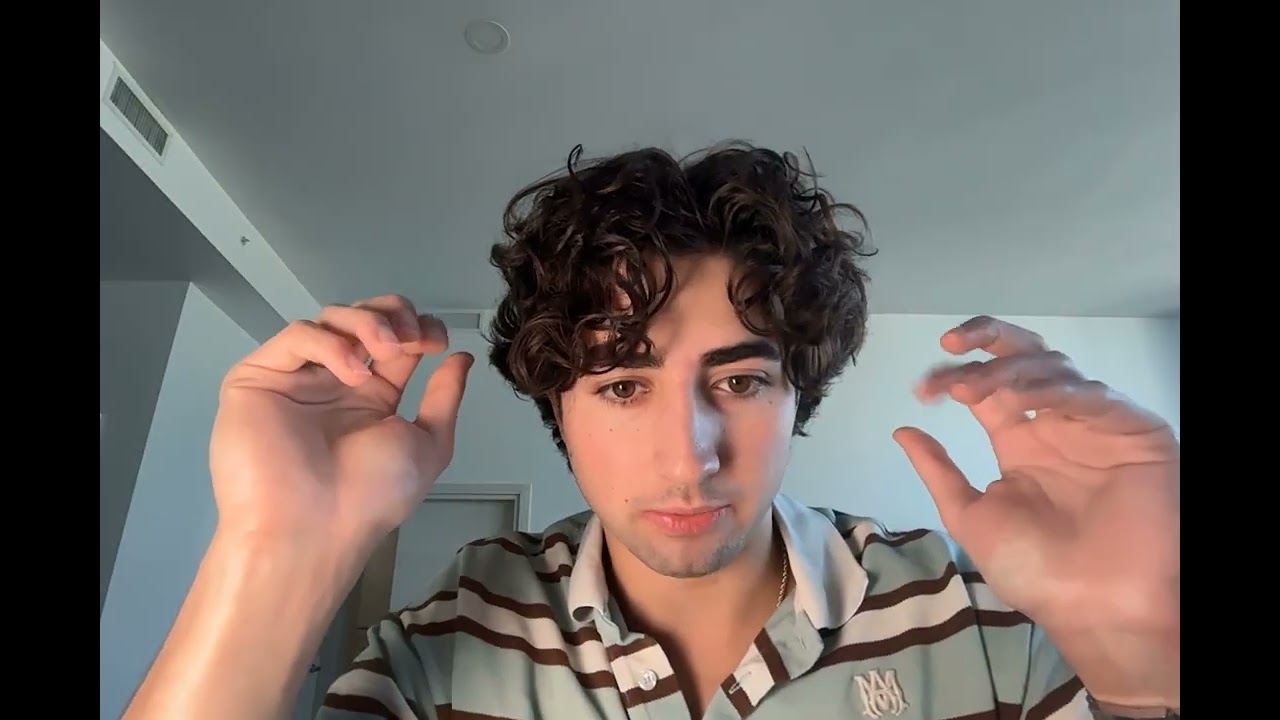


Zach is 18 & made $50m from an app. Here's the brutal breakdown of how he did it (and you can too)