Cold Call Objection Tactic Every SDR Needs for Gatekeepers
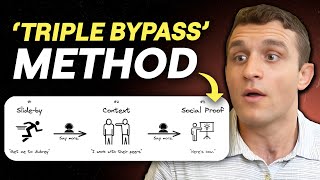
Nick Sigelski teaches a three-step script to get past gatekeepers: ask to be transferred with no pitch, give a brief non-product reason and ask a question, then reference existing relationships or recent contact. Gatekeepers block 39% of cold calls, so if all three fail, try mobile numbers, off-hours, or email instead.
Chapters
Most salespeople have been lied to about how to actually get past gatekeepers. If you are still trying to befriend gatekeepers or sell the value of your product to them, you're just begging to get shut down. And so in this video, I'm going to teach you how you should be acting so that they assume you should get put through to their boss. And then I'm going to teach you an exact three step script what to say that should get you past even the toughest ones. Frankly, there are still some unpassable gatekeepers and I'll teach you what to do if you can't get past a really, really tough one. So let's dive into this thing. So in order to understand how to actually get past the gatekeeper, you've got to understand that they actually have two jobs. Job number one is the one that we experience as salespeople all the time, which is to close the gate on strangers. Their job is to not let salespeople and strangers through. Job number two, however, is the opposite of that, which is to open the gate and put through important people who do belong. And so the strategy I'm going to talk through is you're going to act in a way and you're going to say things that, that make it seem like you're in category number two to the point that they don't question you and they just put you through. One big caveat on all of this is you should never lie to the gatekeeper. Lying in sales might work in the short term. In the long term, it is 100% going to bite you in the ass. And so the three rules of the gatekeeper are never lie to them, never try to pitch them, and also don't try to befriend them. Your job is to make them do their job, which is to open the gate and get you to where you're looking to go. And so you have to make them think that you are someone uber important, who they should not be getting in the way of. The analogy that I'll frequently use when I'm teaching this to salespeople is I live pretty close to downtown LA and there's a ton of massive high rise buildings down there. If the owner of one of those massive high rise buildings went to go visit one of his properties, he would not walk in and timidly approach the front desk with his ID card. He would just walk right into the elevator. But if he did get stopped by the doorman, he wouldn't stammer and sweat and start Explaining his entire life story and the full itinerary for his visit. He would literally just say, I'm the owner of the building. And if the doorman still pressed him, fine, he would show his id. But that's only when he gets pushed. He's not proactively showing up. And like explaining his full life story. You have to give the exact same energy when you're trying to get past a gatekeeper. You have to act like, like you own the place. The owner of the building would never try to sell the value of his visit or waste excess time befriending the doorman. He's important and he's on a mission and he is not to be interrupted. And that is the demeanor that you need to channel when you're trying to get past the gatekeeper. Don't get me wrong, the words matter and we're going to talk about those in a second. But if your energy is wrong here, you are going to get shut down. Literally everything that you say and the way that you sound should make them think, damn, I better get out of this person's way or else my boss is going to be pissed. And so with that energy channeled inside of you, let's actually talk about the words that you're going to say and the three part script that should be matching that demeanor. So remember, the building owner is not explaining his life story or the full plan for his visit. He is sharing the minimum information needed to get where he's trying to go. And so we're going to take this same approach with this script here. The more information that you share with a gatekeeper, the more you draw attention to the fact that you don't really belong. And so the approach that we're going to use is called the triple bypass method, where you're going to dose information to the gatekeeper bit by bit and only when they press you. And so you're going to get three tries. In the triple bypass method, I'll go through them high level and then we'll break each one down and I'll actually give some voiceovers of them. So the first try is called the slide by. When they answer, you're literally just going to ask to be put through and give nothing else. If that try doesn't work, you'll move on on to the context. So if they stop you, you're going to share context for why you're calling, nothing about your product or company. If that one doesn't work, instead of leaning on a pitch again, you're going to lean on the social proof to explain what you do as opposed to a product pitch. So with that said, you've got three tries. Let's actually break each one down in depth. So the first try that you get in the triple bypass method is called the slide by. All you're going to do is when the gatekeeper answers the phone, you're just going to ask to be put through. Your cold email reply rates literally triple if you pair them a cold call. Right now you can get 34% off our 30 minutes to presidents Club outbound bundle which includes our cold calling course, Cold calls to Presidents Club which will teach you exactly what to do, what to say and how to sound for every single step of a cold call. It also includes our cold email course which will teach you how to write personalized one to one feeling cold emails in minutes, not hours and how to make world class offers to your buyer to solicit responses instead of just asking for and so if you go to 30mpc.com courses, go check out our outbound bundle and you will find yourself booking meeting after meeting after meeting and on your way to President's club. So gatekeeper answers and they go, hello, Mike Jones office. You're just going to say, hey, could you get me over to Mike, it's Nick. Hey, could you get me over to Emma? It's Nick. Hey, could you connect me with Dave? It's Nick. What I'm doing here is I'm not saying my last name, not saying his last name because if I actually know somebody, if I'm important, I don't need to say, hey, could you connect me with Mike Jones? It's Nick Sagelski. Mike and I know each other. At least that's the vibe I'm trying to give off. I'm also not mentioning my company name. If I say, hey, this is Nick Sigelski with 30 minutes to President's Club, could you please connect me with Mike Jones? That just screams and smells salesperson and it's gonna get you shut down. So when you use the slide by, you'll get through a decent amount. But if they push back and they say something like, well what's this regarding? That means that your first try, the slide by has failed and you have to move now to try two, which is the context. So when you get pushback after the slide by, the biggest mistake salespeop make is they'll start to reveal their company name or their product name or they might even start to try to sell the value of why they called. All of those are mistakes because at this point, the gatekeeper is on high alert for anything that smells like you don't belong. And so instead of sharing that information, what you're going to do is you're actually going to lean on the context of what prompted you to call in the first place. So if I'm selling to law firms, I might say something like, it's about the press release for the new office that just opened in Rochester. Could you let him know it's Nick? Or if I'm selling to marketers, I might say something like, yeah, it's about the interview he just did on cnbc. Is Dave not in today? Or for a health benefits company that I work with that sells to multiple different franchisees, they'll say something like, I work with a couple other visiting Angels franchises. Would you give him a heads up? It's Nick Sagelski calling. And so you'll notice two things in my demeanor here. One, I'm trying to come across a little bit gruff and a little bit rushed. I basically want them thinking, ah, let me get out of this person's way. They know where they're going. And what I'm also doing is, you'll notice all of those examples I gave ended with a question. A general rule in sales is that the person asking the questions is the person in control of the conversation. And when you're talking to a gatekeeper, you want to be in control, not them. So finish with a question every single time. Would you give her a heads up? It's Nick Sigelski calling. Would you let him know it's Nick? Is he not in today? Those are statements you can use at the end of your answers to their questions. Now, the toughest gatekeepers are still going to push you for more, even if you nailed those first two tries of the slide by in the context. And at this point point, they're usually going to say something like, I'm going to need to see if he's available. What company are you with? And so at this point, like, you kind of have to reveal what you actually do. But instead of just telling them your company name or trying to pitch them at this point, instead you're going to lean on social proof as your last ditch effort. So I'll give you a couple examples here. So if I'm selling billing software to law firms, I might say something like, we work with a few other Buffalo firms on their client insurer billing. It's banana billing. I actually sent him a note the other day. Would you mind giving the heads up? It's Nick, for the health insurance example I gave earlier, we might say something like we work with a few other home cares in PA on their ACA compliance and benefits. It's vital. I actually emailed him the other day. Would you give him a heads up? It's Nick calling. Obviously these two examples assume that you sent that prospect a note the other day. But what I'm trying to do is lean on the fact that we work with people like them and briefly tease what we help those people with and then again put the pressure on them to be like, hey, could you give them a heads up? It's Nick. Obviously these ones assume that you have sent them a note at some point the other day. That could have been three weeks ago, that could have been a month ago, that could have been yesterday. But I don't advocate for lying to the gatekeeper at all. And so if you still get shut down here at this point, it is okay to toss in the towel and just ask to leave a voicemail for your prospect. The unfortunate reality of gatekeepers is that a lot of them you're just never going to get past GONG data shows that a gatekeeper reduces the success of a cold call by 39%. Now, if you've gotten shut down by a gatekeeper one or two times, I don't recommend continuing to call that line and trying to get blood from a stone. You are frankly better off at this point if you've gotten shut down a couple times, avoiding that gatekeeper entirely. There's a couple different strategies that I would recommend to get around the gatekeeper as opposed to trying to go through them. The first is call mobile numbers. The gatekeeper is not going to answer their iPhone for them, so see if you can find another number for them. Number two would be call during off hours. The CIO that you're calling probably works longer hours than their gatekeeper and so I would recommend trying calling earlier in the morning during the lunch hour or even after five o' clock sometimes. And then the last one would be try a different channel because frankly the phone isn't right for every prospect if you keep getting shut down. Try email, try LinkedIn, try direct mail, try getting a referral, try visiting their office. I used to do drop ins all the time when I sold to law firms. So if the phone isn't working, don't keep trying to get blood from a stone. You've got to respect the law of diminishing returns. So give this a shot on your next round of cold calls and watch how many more gatekeepers open that gate for you and wave you through. And if you want more cold calling, best practices. We actually put together an entire 30 minutes to presidents Club course. Cold calls to President's Club. That breaks down step by step. What to do, what to say and how to sound in every single scenario that you could cover on a cold call. What to say when you get hit with. Not interested. How to open your cold calls. How to pitch in a way that gets your buyer to sit up and say, you know what I would like to learn more. What types of voicemails you should leave, et cetera, et cetera, et cetera. So there's a link in the description. Give that one a look. And thanks for watching my video. See you next time. Sam.
More from Armand



Outbound Prospecting Masterclass: Everything You Need to Book Meetings in 2026