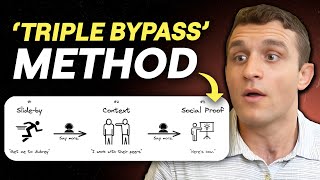
Armand Farrokh breaks down three steps for handling cold call objections: agree with the objection to ease tension, ask a trap question that exposes gaps in their current solution, then offer a test-drive of your tool instead of a full pitch. The goal is setting a meeting, not closing on the call.
Chapters
What most people do when they are handling objections is they try to handle the objection, they try to fight the objection. And if you've ever had someone try to change your mind, the number one thing that I can do to not change your mind is I can tell you that you're wrong. Okay? And that's what most sellers do when they hear an objection. If someone says like, I'm not interested, they start like pitching harder and they're like, well, like, here's why I believe the solution that we bring is more valuable than what you're using today. Or if someone is like citing a competitor, you'll say like, oh, well, that competitor's not good for reasons like this, this and this. And other customers saw the value because of this, this and this. And the customer starts kicking away because, like, usually when someone gives an objection, it's because they've made a decision to do things a certain way and that way was not your way. And so when you fight that objection, you're fighting the way that they do things, okay? And so that's why the first step of handling any objection is to pattern break and you're actually going to agree with the objection. So let's pretend that someone gives us a competitor as an objection, okay? And so for the sake of covey, let's assume that they're using some other resume screening bot, right? Of which there are many. So I'm going to say something like this. I should have assumed you had something in place because honestly, like, screening thousand resumes would be a huge pain. And I'm not going to lie. Like, usually when you have a bot in place like it, it doesn't even make sense to switch off of it. So they're like, this person not going to sell me. That's what happens when you agree with the objection is like, you release pressure. Step number two is you need to incentivize conversation. I don't have enough information to handle this objection yet. And I need to start to get them talking. When people start talking, they tend to feel comfortable. The job of a good therapist is to get their person talking. If the therapist is doing all the talking, then the person will start to clam up, be like, ah, don't give me advice, don't solve my problem for me. Like, part of the reason therapy works is like, they get you to talk yourself into the right solution, right? And so we're going to do some like sales therapy here and we're going to do something really slick. So here's the secret with competitors, I need to ask them a trap question. And I need to know, like at least one trap question per competitor. What that means is I need to think of what is one thing that my competition can't do that I can do. And then I'm just going to add ask them how they do that thing so that they come to the answer on their own terms. So in the case of Covey, a lot of times someone's existing recruiting software will have like an AI bot attached to it, but it's like, pretty crappy. It's like glorified filters, right? And there are certain things that you can't look for. Like, you can't look for like, someone who got multiple promotions in a short period of time, like Trajectory or worked for like certain blue chip type of companies. And, and so I'm just gonna like ask that in a trap question. So I'm gonna say like, hey, Jane, just so no one from my team calls you again. I noticed that your team is like hiring a bunch of like, software engineers. And I have to assume that in the bot you're able to do things like point out the human level nuance of things like quick promotions over a certain number of years, or worked for like blue chip tech companies in this industry or like worked for both big companies and small companies so they've seen scale in startups. Like, are you able to like, get that level of nuance? Just because I want to make sure that this is like actually a dead deal. So notice I'm doing a lot of incentivizing here. And what I mean by that is I'm constantly throwing in little things like, hey, just so my team doesn't call you again, or just so I like, actually make sure that this one's like a complete waste of time. Could you like, really tell me like, why this thing doesn't work? But then I'm like layering in little traps and I'm like, hey, like my, my guess is you can probably see if someone's gotten four promotions in the last seven years. And like, that's something that I know the other competition can't do. I'm like, laying these traps so that they'll usually give you an answer that's like, it doesn't do all of that, but it sort of gets the job done for the most part. And that's my opportunity to do step three, which is like selling the test drive. Okay, so here's the thing is like, you're like, right at the finish line, you've, you sort of like poked this Hole of doubt in the competitor. And a lot of times this is when like, sellers will come in with like the pressure pitch and they'll be like, well, our product like, has the ability to like do all these advanced filters and show you these types of candidates and these types of candidates and immediately the prospects, like, ah, sales pitch again. And like, you lose the deal. Right? And so you never want to sell the product. You want to sell the test drive. Okay, so you don't want to like sell people. Here, here's this like, nice shirt that I want you to buy right now. Here's this like Tesla that I want you to buy right now. You want to be like, hey, like, I know you got a car already. Like, do you want to give this thing a ride? Like, just so you know it's out there. And nine times out of 10, like, people want to take the test drive. Like, Tesla has sold a ton of cars to people who like never thought they were going to get a Tesla. And then they took the test drive and they're like, oh, like that's, that's a car. Right? And so you're going to do that with your product. And so if I was selling the test drive at Cubby with Jane, I'm going to say something like this. I'm like, jane, honestly I've noticed you're hiring some really awesome engineers. And my guess is you have a pretty refined candidate profile. My guess is you're probably not going to switch off of your existing tool. But are you open to us running this on one of your roles? Because we can filter for a lot of that human level nuance that you're talking about. And if nothing else, you'll know what's out there and you can see what it looks like. And nine times out of ten they'll be like, yeah, I'll take a look. And then like, once they're in the car, then you can be like, so like, maybe we could talk about financing. Maybe we could buy out your current car. Maybe we can like buy out your lease. Like, you can do all that stuff and quote, unquote, sell the value of your solution when you aren't doing a cold call on a complete stranger. But like, a common mistake that people will make is like, they'll try to like turn these cold calls into sales pitches. And like, the phone is a meeting setting device. Like get them on an actual call where you can like sit down. You're not catching them in between meetings. You're not going to get like interrupted by them, like being like, shoot, I got to jump to my next one. And then you can actually walk them through a proper sales process. It.