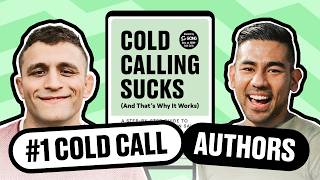
Cold Calling Masterclass: 52 Minutes of Proven Cold Calling Tips (For B2B Sales)

Armand Farrokh and Nick Sigelski break down a cold-calling playbook that moves reps into the top 25%. Top performers book 18 meetings per 800 dials versus two for average reps. They cover non-canned openers, dangerously specific value propositions, the Mr. Miyagi objection method, and a 60-minute dial blitz designed to hit 40 quality calls per hour.
Chapters
Good morning, everybody, and welcome to this playbook episode of 30 Minutes the President's Club. My name is Armand Farouk and I'm here with my co host, and now co author, and always coon, Nick Sigelski. Folks, we have officially finished our book on cold calling called Cold Calling sucks. And that's why it works. And so this is a special 60 minute cold calling playbook that will teach you everything you need to do on the phones and and everything you need to do off the phones to be a top 25% dialer. Nick, why should people listen?
Cold calling sucks, but it is the number one way to fill your pipeline. And unfortunately, it's always going to be hard. But we are going to show you some stuff in this playbook to make it a little bit less hard and way more effective. So what are we covering today?
All right, so this is going to cover four different things. Number one, we're going to answer the question of is cold calling even worth it anymore? Number two, if we decide that it's worth it, then we'll talk about the first 60 seconds. So how to open a call and then how to deliver a value proposition or what we call a problem proposition. Then from there, you start to get some objections. So in step three, we'll cover all of the objections you'll get, plus the things that actually prevent you from having conversations, like gatekeepers or what happens when you get stonewalled with a voicemail. And then last thing we'll cover is everything you do off the phones in what we call how to be a machine, AKA how to increase your connect rates, your set rates, your show rates, and make as many dials in as little time as possible.
All right, let's get into this thing. But folks, if you like what we cover today, we did write a book on this, and there's a ton of detail that we're not going to be able to get into in this playbook. And so if you want to get access to the 30 MPC book on cold calling, cold calling sucks. And that's why it works. Go to 30mpc.com book and you can find it there.
So let's first answer the question of is cold calling even worth it nowadays? So the way that we answer this question is in three steps. So number one, we need to figure out how many dials does it even take for a rep to book a meeting. That's number one. Number two, are there other benefits to cold calling? Even if you don't connect with a prospect, for example, does it boost Your email reply rate. And then number three, is that even worth the time you would spend cold calling, or are you better off using that time in other dimensions of selling? So let's start with the average rep.
Oh, so, Armand, we're talking about your numbers. Wonderful.
Correct? Yeah, we cut Nick's numbers, the below average rep. So this is starting with the average.
All right, so what we did was we partnered with Gong to analyze data from 300 million cold calls to look at different percentile accomplishment on cold calls for different sellers. And what we saw for the 50th percentile, the average rep, is that when they make 800 dials, which is about an hour of cold calling every day for a month, that they will connect with about five and a half percent of those prospects. So they actually get 43 people on the phone for the 800 calls that they make. Of those 43 conversations, they book meetings with just two prospects. That's 4.6% of a meeting booked rate. And what that means is if you're making an hour of calls a day at Vermont, every single business day of the month, you book a measly two meetings. And so if you're an average rep, it's not really worth it.
Yeah. So so far, cold calling seems to suck for the average rep. But let's talk about the top quartile rep. So I'm going to read the data off for the top quartile rep. On 800 dials. 13.3% of them will connect for 106 conversations. And the reason they're having more conversations is because a good rep never dials a bad number, never twice. So the moment they dial a bad number, they mark it as red so that they never make a mistake again. On those 106 conversations, they will book meetings with 16.7% of those conversations leading to 18 meetings. So two meetings versus 18 meetings, nine times the difference just from the meetings that you're booking on the phones.
But wait, there's even more.
The.
The GONG data showed that when you make a cold call and leave a voicemail, it more than doubles your cold email reply rate from 1.81 to 3.44. So you get all of those meetings that you just described when you're a little bit better than average, plus the extra meetings from responses to your cold emails.
So, yeah, it sucks to be average at cold calling. But what you'll find, folks, is I know the top quartile sounds scary. It's like, oh, shoot, how am I going to get in the top 25% of reps. What you'll find is if you don't use the same garbage, canned openers, if you don't describe your solution as a single source of truth or all in one platform, it's not that hard to be better than average. So that starts with the way that you open a cold call, right?
The bar is set really, really low. You have to actually put yourself into the prospect's shoes for a second. When they answer the phone and they hear an unfamiliar voice, you on the other end of the line, the first thing that they are looking for is, is this person, one of these run of the mill telemarketers who's just blindly dialing through the phone book, selling sketchy business loans and used car warranties. And in order for you to be successful on your call, you have to immediately find a way to break the telemarketer stigma. Until you are not one of those other guys. You've got to set yourself apart. And that starts with not using the these two band openers that every crummy cold caller uses.
So the first band cold call opener is, how's your day going? Nick? How's your day going? Vanessa? How's your day going? Alex? How's your day going, everyone? How's your day going? Guess what? You and I both know that you do not care how your prospect's day is going and they know it too. So the moment you say, hey, Nick, it's Armand from Northwestern Mutual, how's your day going? You'll hear an exasperated sigh that sounds like, fine, how can I help you? And that is code word for I know you're a telemarketer. What are you trying to sell me?
The other opener that you should never use is, did I catch you at a bad time, folks? You're making a cold call. You are choosing to go out of your way to interrupt somebody to try to start a conversation with them, which is part of your job, but have a little bit of EQ for a second. Of course it's a bad time, it is a cold call. And so what you're usually going to hear is like, no, but how can I help you? Or they're going to say, yeah, it is a bad time, and then never answer your calls again. The other reason this one is really, really bad is it totally lowers your status in the eyes of the prospect, as if they would be generous enough to spare a moment of their time for you, this inferior telemarketer. So throw both of those in the trash.
So the key to a Good cold call opener is not asking, how's your day going? Or did I catch you at a bad time? Or frankly, using any other templatized cold call opener. And the reason for that is all of those openers are fundamentally canned. And if someone else has used that cold call opener before, your prospect is going to automatically categorize you as a telemarketer just like them. So the only thing that cannot be canned is, is if you lead with something about them, you lead with context. So there are two openers that we're going to give you. The first is called the Herd the Name Tossed around opener. And the second is called the tailored permission opener. And both of these openers start with something about them. So let's start with the Herd the Name tossed around opener. My goal on a cold call is for them to forget that it's a cold call. So what I'm going to do is I'm going to lead with how I know or how I work with other people like them. I might drop a mutual investor. I might drop the fact that I work with other people in their office. I might drop the fact that I work with other chief people officers in the Chicago area. So here's what that might sound like. If I'm cold calling Nick, I'll say, hey, Nick, we work with a few other partners in the Skadden LA office. It's Armand from Northwestern. Have you heard her name tossed around? So there are three steps as part of that opener. You want to lead with context. In this case, I work with a few other partners in the office. And then you want to introduce yourself, and then you want to ask if they've heard your name tossed around. To be clear, it does not matter if they've heard your name tossed around before. It's about acting and sounding like they should have heard your name tossed around. So if they say no, what I'll usually say is, oh, well, I guess I'm not as popular as I thought. Well, look, the reason for my call is. And then I'll just drop into a brief, brief, brief problem proposition, which is what we'll go through in a second. But if they say yes, guess what? I don't even have to pitch at that point. All I'm going to say is, oh, well, normally we'd be working with someone like you, I guess, what did you hear? And that will naturally bring us into a conversation around if they had an objection or. Or if they're just open to learning more at that point, usually from there, they probably still have no idea what you do. So you'll still drop into your problem proposition. Now, the tone with this thing is really, really important. You want to avoid being overly chipper. A lot of people will say, nick, we work with a few other partners in the SCADNA office. It's Armand from Northwestern. Have you heard her name tossed around? I sound like a telemarketer. I want to puke in my mouth when I say it that way. It's horrible. Horrible. And so you want to sound like you're calling a referral, as if you're assuming that they've heard your name tossed around. Think, hey, Jane, Nick told me to give you a ring. He let you know I'd be calling. Right? That's the tone. Almost like you have your feet up on the desk. That's your first opener. It's the heard the name tossed around opener. You lead with context. You introduce yourself and you ask, they've heard your name tossed around.
So I use a different opener called the tailored permission opener. And what this opener does is just like your opener, Armand, is I lead with context. But then I own the fact that I'm making a cold call. I'm really, really transparent that this is a cold call. But then I actually use that brutal honesty as a way to get permission from the prospect to pitch. And so what that might sound like is they answer the phone and I go, emma, I just finished reading your press release about the new office opening. And I'm going to be honest, this is a cold call, but it is a well researched one. And I'm wondering if I can get 30 seconds to share why that press release had prompted me to call you. And then you can totally hang up if it doesn't make sense to speak from there. So the key here is you have to lead with a piece of context that you're able to connect to whatever you sell in your pitch. You can't just say, oh, I just finished reading that you went to LSU and then randomly transitioned to a pitch on billing software that won't work. And so examples, when I sold billing software to law firms, the context that I would reference would be stuff like, hey, I just finished reading about the big case win, which would mean they'd be collecting money, which we could help with. Or I just saw you open a new office, which usually would have tax implications we could help with. Or I would say, you know, hey, I just was reading up on the new litigation practice you launched that would add billing complexity for the law firm. So write down the top five Things that you'll frequently look for as your go tos for the first piece of this opener. And then this actually makes your pitch that much stronger because now you can relate your opener to the pitch that you'll give later in the call. And there's actually some connection there.
So, Nick, what happens if they say no? You can't have permission to tell me what you do.
Yeah, there's gonna be people that say no, Armand. And they're not saying no to your product or what you're selling. They're. They're saying no to your cold call. They are objecting to your interruption. And so you might say something like, shoot, this one's totally my bad. Hey, just so nobody from my team bugs you again, is it just that I caught you at a horrible time or is it that you already know what we do and this just isn't interesting to you at all? And so both of these openers are gonna help you get to the part of the call where now it's time where you actually have to tell them what you do, Armand.
Yes, and this is when everyone begins to sound like a Billy Mays commercial, where it seems like every single salesperson in the world has copy pasted the language directly from their product marketing team to describe their solution as an all in one platform, a single source of truth, a single pane of glass, or the leading provider of lead management software. And the problem, folks, is none of these things mean anything to your prospects. There are three issues with the traditional quote unquote value proposition. Number one is they oftentimes include these vague telemarketer buzzwords that don't actually mean anything to a prospect. Number two, your solution has no context without a problem. In other words, they don't really care if you have this amazing nonstick titanium plated cookware. If they don't realize that, oh, that actually helps me avoid getting the egg stuck on all of my traditional cookware. And then, number three, for whatever reason, I don't know why, people just tend to act on problems and pain more than they do on benefits. For example, I have a bottle of multivitamins on my counter. I take it most days. I forget every once in a while if I have a headache, I never forget to take my Advil. So people act on pain over benefits.
Well, Armand, I'm shocked you're not taking more Advil because you have to work with me on a daily basis. What's also really interesting is Gong pulled some data comparing buzzword language to problem based language and buzzword Language stuff like single source of truth, leading provider of X, Single pane of glass had a 5 1/2% success rate on cold calls. But problem based language was three times as effective. It had a 16% success rate. So if you're not sold on problems, you've got a problem. Let's talk about how we make a problem proposition.
So there are three steps to describing your problem proposition on a cold call. Step number one is, is you want to describe a problem that is so triggering that it literally gets your prospect to sit up in their chair and be like, okay, that's pretty annoying. Step number two is if you spend 80% of your time talking about the triggering problem. Correct. You only need one sentence to explain the solution. So step two is a one sentence solution framed in terms of we do X to solve the problem. And then step number three is a low friction or an interest based call to action. You're not going to ask for a meeting, you're not going to ask for a 30 minute session with a specialist on your team. You're going to ask for are you open to taking a look or are you opposed to learning more when I'm not cold calling you out of the blue, you want to validate that they're even interested in learning more before you ask for something even heavier, which would be a meeting. So what does that sound like?
Right. So let's make this real. So I used to sell billing software to law firms. Really, really exciting. I know. And one of the problems that these law firms deal with is they would often send their bills to insurance companies which have really, really specialized requirements. And there was often a lot of back and forth between the firm and the insurance company in getting the bill paid. So what I might say, Armand goes, go ahead, give me your pitch. I'd say great, thanks. Look, Armand, the reason that I called you is Most of the CFOs of the insurance defense firms that I talked to think it's pretty ridiculous that they have to deal with so many deductions, rejections and appeals on the bills that they send their insurance carrier clients after they win a big case. And we work with about 300 different law firms in the US helping them cut down on appeals by alerting their attorneys to violations on the billing guidelines right when they're doing their time. And look, I know I got you totally out of the blue here. I guess I'm wondering if you might be open to taking a look when I'm, when I'm not totally calling you out of the blue.
So, folks, a lot of times I'll talk to sellers, and where they screw this up is they think they're being specific about the problem, but they're not. So when I sold compensation software, I would hear reps say things like, people really hate running merit cycles or running your merit cycle takes a lot of time. Or in the case of Nick's billing software, you might say something like, it takes a lot of time to enter your time as an attorney. Those aren't specific enough. You want what I call hairy lollipop specificity. And so if I describe this, if I just say people don't like it when you drop your lollipop on the floor, it sounds sort of crappy. But if I explain this to you, imagine you're licking a lollipop and you're walking across your shag rug, and you drop the lollipop on the floor and it gets rolled up in the dirt and the dust of the shag rug, and then you lift it up to the light. What do you see? You see a bunch of glistening hair hanging off your lollipop. That's the level of visual that you need. When you describe the problem, you want to include things like the scenery. Where were they when they experienced the problem? The specific annoyances, what were they doing? What were the tasks? What were the clicks? What were the spreadsheets? What was the lollipop? You want to make this as dangerously specific as possible so they are literally triggered and they sit up when they hear the problem.
Right. You call it dangerously specific because you're actually better off being a little too specific and maybe even overshooting their specific problem. Because even if they didn't deal with a deduction, rejection, and appeal on the case, if they dealt with one, or they dealt with a similar problem with the build of the carrier, it shows them that you know what problems people like them are dealing with. Again, to your point of being a peer, now they're actually going to entertain a conversation with you rather than you being too generic. So it's okay to be dangerously specific. That's better than the inverse.
So the unfortunate reality is, well, every once in a while someone will be like, sure, I'm open to learning more. Usually they are not open to learning more. And they'll give you an objection like, I'm not interested, or call me in six months, or I'm already using another provider. What's the issue with the way that most sales reps handle objections?
So most salespeople actually misunderstand what's going on when they hear those early objections on a cold call, when your prospect says, I'm not interested, it's not that they're not interested in your product. They're not sitting there seriously considering the pitch that you just gave them. They're saying, I'm not interested in your cold call, even if they don't directly come out and say that. And so you need to understand that when you make a cold call, you're interrupting somebody, and that puts them in this fight or flight state where they're just trying to get off the phone with you. Their objection has nothing to do with what you sell. It's to the interruption.
And so the mistake that most sellers make is they try to handle the objection instead of handling the reaction. And that's why the way that we handle objections is what's called the Mr. Miyagi method, which is when Mr. Miyagi from karate Kid gets a punch thrown at him, he doesn't counter with a punch immediately or even try to block the punch. What he does is he waxes the punch off and then he waxes it on. Essentially, he's redirecting the momentum of the objection or the punch and then gliding it in another direction so he can then counter. And so there are three steps to doing this in practice with objections. Step number one is you want to agree with the objection to disarm the reaction. It's almost like you're pulling out the chair from underneath your prospect where they're trying to kick, and you're not going to kick back, and they're surprised that you're agreeing with them. Step number two is you want to incentivize conversation. You want to get them talking, which puts them in a more comfortable state. And then once I've gotten them talking, Step number three is you want to sell the test drive, not the car. AKA you want to sell the meeting, not the product. You want to answer the question, what would you get out of meeting with us even if you didn't buy? So let's break that down step by step. Step number one was to agree with the objection. So, for example, if someone says something like, I've got no budget, I want to remove all pressure and almost surprise them with the fact that I'm going to agree with them and not pitch. So if they say, no budget, I'm going to say, totally get it, man. Look, nowadays it's honestly harder to keep a tool, let alone it is to buy something new. Or if they say, I'm not interested, I'm going to say, I Totally get it. Look, honestly, I should have assumed that you'd be all set, otherwise you probably would have reached out to me. Or if someone says, call me in six months, I should have said, I guess if you were totally ready, you probably would have reached out to us now. So this one's on me. When you do that first agree statement, they're like, wait, this guy's going to pitch? And that sets you up to ask a question that gets them talking because they're more comfortable. That's step two. So step two is, now that I've disarmed the reaction, I can now incentivize conversation. I got to get them talking for a couple different reasons. So, number one is when people start talking longer, for whatever reason, they just get more comfortable. Data shows that the longer the cold call goes, the more likely they are to book a meeting. And that's not only because you've handled more objections, but it's also because you've just had a longer time to demonstrate that you're not a complete rando. That's reason number one. But reason number two is I might not actually have enough information to handle this objection. If someone says, I'm not interested, I don't really know why they aren't interested, or I don't know if that was just a reaction or anything about them, I actually need to get them to share a little bit more so that I can effectively handle the objection. The problem is most prospects are not willing to share information about their business decisions with a complete stranger. So, for example, if Nick said, I'm on a competitor or I'm using another vendor, and I just say, great, who are you using? There's no reason for him to share that with me. And he's going to get sort of defensive. So I need to provide an incentive. And so the incentive that I'm going to provide for Nick is just so no one from my team cold calls you again, because both you and I know they don't want to get cold call again. So using no budget as an example, again, I might say after I agree with the objection, hey, just so no one cold calls you again, or just so no one from my team calls you again, could you give me a sense? Is that because budget for this cycle is totally out, or is it that any sort of spending whatsoever puts you through the entire wringer if you want to buy something? So what I want to do is, the pro tip here is you want to split the objection or use multiple choice to provide options to make it easy for them to share more. If I say, what fruit do you like? Well, now you're going through the Rolodex of every single type of fruit in the world. But if I say, hey, of fruits, do you like fruits like berries or do you like fruits like mango that are a little bit more citrusy? I make it easier for you to decide if you like berry or citrus fruits. I'm bringing you one step closer to the answer to make it that much easier for you to respond once they share a little bit more. Now I can move to step three, which is to sell the test drive. So at point this, this point, I've gotten them talking, I've learned a little bit more about the objection. And now what I need to do is I need to answer the question based on what you've told me, why should you take this meeting anyways? Even if you never buy this product, how can I make you a little bit smarter or a little bit better off after you meet with me, even if you do not purchase my product? For example, if someone says, I have no budget, and they told me, look, budget's completely out for this cycle, the way I'm going to sell the test drive is I'm going to say, nick, look, honestly, you're probably not going to buy this thing right now, and I totally respect that. But every once in a while, usually the people who get Budget if it gets released again are the ones who know what's like 1, 2, and 3 on their wishlist. So are you open to taking a look? Not for now, but just so you know, it's out there. And the reason that Nick is now better off after that meeting is if budget does come up now, Nick can say, well, I've looked at Acmeco, or I've looked at Pave, or I've looked at Ping. I've already looked at the top three things I want. And here we go. So now Nick can take it as a true test drive. And then once they're in the car, once I get them on the meeting, then I can convince them, these are all the reasons you should buy this today. And then these are all the different ways that we can produce a business case to find budget. But I'm not going to be able to do that stuff on a cold call.
So to recap, you're removing the sales pressure by agreeing with their objection, then you're incentivizing them to share a little bit more. When their foot's already out the door, you're actually getting them to bring it back in because they don't want to get called again, and they're going to share why. And then what you're doing is you're using that detail they shared not to sell them on. Oh, buy this thing. Right now, you're saying, hey, take a test drive. And then when they're in the car for the test drive, you have a dedicated flight focused conversation, and that's when you can sell as to why they might want to buy now, but you're not even going to get there if you don't get them to agree to the test drive first. All right, so let's actually role play this. I'll be the prospect who's got no money. Let's see how you overcome my objection.
Oh, Nick. With no money, no surprise.
All right.
Ring, ring.
Look, I'm sorry, man. We just don't have any budget.
Totally get it, man. Look, honestly, nowadays it's harder to keep a tool, let alone it is to buy something new. So I guess just so no one cold calls you again, would you mind giving me a sense? Is it because budget for this cycle is completely out, or is it anything you try to buy, you literally have to go through the wringer to get it approved?
It's a bit of both, to be frank. Things are pretty tight right now.
Yeah, I totally get that. Look, you're probably not going to buy this thing, but in my experience, you've probably seen this, too. Every once in a while when budget does get freed up, the people who get it are usually the ones who know what's 1, 2, and 3 on their list. So I guess would you be open to taking a look, knowing you're not going to buy this now, just so you know, it's out there. So agree, incentivize, sell the test drive. Those are the three steps of the Miyagi method, folks. The hardest part of this is the middle part of the Miyagi method, the incentivizing conversation. So I can't just ask Nick any question about no budget. I need to be able to split the no budget objection into is it this cycle, or is it getting anything approved or for not interested? I might say, hey, is it just because this isn't a problem you're focused on, or you just hate getting cold calls? In order to do that, I need to buy myself some time. So try to templatize your agree and test drive statement at the beginning when you're just getting used to this. So the way I would templatize my agree statement is I might use A mini stock for phrase that sounds like I totally get that or I should have assumed you'd be all set. That is an agree that is not as specific as I want it to be, but it at least generally tells the prospect that I'm removing the pressure. And then you can get more specific with the agree. The way you can templatize the test drive is you can say, hey, my guess is you're not going to buy this thing, but are you open to taking a look? Not for now, but for later. Again, it's not as specific as I would want it to be. Where I would normally say, hey, the people who get budget are the ones who yada yada, yada, yada. Right. But it's at least enough to say, hey, I'm going to remove the pressure of the sale. Are you open to taking a look? Once you get good at asking the incentive question, then you can start to personalize the agree and the test drive portion.
Yeah, one of the ways that I know you got really, really good at this, Arman, was when you would commute to work, you would literally just repeat that agreement, rephrase, and then the selling the test rephrase over and over and over. And when you practice that way in like three or four days, you get this stuff down and it makes the pressure on you when you're trying to overcome an objection so much lower. So recommendation here is on your commute, practice those talk tracks.
Alrighty, folks. So sometimes you won't even get an objection. You won't even be able to deliver your opener or your problem prop. You know why? Because before you reach your prospect, you get hit with a gatekeeper. So if you're not familiar with gatekeepers, they're essentially the executive assistant that picks up the phone and prevents you from getting to your prospect. There are three common mistakes that people make when they're trying to bypass a gatekeeper. And the reason that they're mistakes is gatekeepers are not trained to listen to pitches. Gatekeepers are trained to detect and reject pitches, so it doesn't even matter how good your pitch is. And so you want to treat them completely differently from a prospect. And so for that reason, the first mistake is people try to pitch the gatekeeper and or they try to convince them that this is valuable enough that it'd be worth the prospect's time. But again, they don't care. They're only listening for does the pitch exist? Not is the pitch good? That brings us to mistake number two, which is people will try to befriend the. The gatekeeper. As if the gatekeeper doesn't know what you're doing. They know you're schmoozing because they've gotten 300 other cold calls in the last two weeks and they know you're trying to schmooze them. And then mistake number three is frankly an unethical one, which is people try to lie to the gatekeeper. And while that might get you through sometimes, almost always that will backfire in your face when you find out that the executive assistant is the one who needs to schedule that meeting with your prospect. And. And they found out that you said that you knew them, and next thing you know you're trying to sell them insurance.
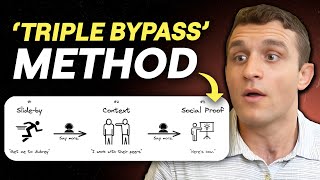
And so instead, the approach we'll take with gatekeepers is called the triple bypass approach, where we're going to dose information to the gatekeeper bit by bit and only when asked. You're going to get three tries in sequence to get past the gatekeeper. The first one is called the slide by. When they answer the phone, you're going to ask to be put through to your prospect, nothing else. And that might sound like Armand answers the phone and he goes, hey, this is Aubrey Graham's office. I'm going to say, hey, could you get me through to Aubry? It's Nick. I'm going to keep it very short, ask where I'm going to go, and I'm not going to give extraneous detail that might signal I'm a salesperson. Some of the time that'll work. But a lot of times the gatekeeper is going to push for more and they'll say something like, what's this regarding? When I get to this piece, what I don't want to do is start sharing information about my product. Instead, I'm actually going to take a similar approach, like you did with the Heard the name tossed around opener, or I do with the tailored permission opener. And I want to lean on the context for the call. And so I might say something like, yeah, I've worked with a few other Scadden partners in the LA office. Would you mind letting him know it's Nick Sigelski? I want to keep the focus of the conversation on me getting to my destination, which is why I end that statement with a question. Would you mind letting him know it's Nick Sigelski? The person who asks the question questions in a conversation is the person in control. You should be asking them questions, not the other way around. Now, if that doesn't work, you're going to get asked For a little bit more detail, they might say something like, look, I really got to get some more information like what's this regarding? Or what company are you with here? You're going to have to show them a little more. And this is where you're going to lean really, really hard on social proof. Again, to your point earlier, I don't want to get into a pitch, I don't want to try to schmooze them. And so I'll say something like, yeah, we actually help a couple other partners in the office with their tax planning. It's Northwestern Mutual. I actually sent him a note the other day. Would you mind giving him a heads up? It's Nick again. Focus of the conversation is on getting through, not them peppering me with questions.
So that marks the end of the gatekeeper triple bypass. And up until now, every single situation we've discussed assumes someone actually picks up the phone. If someone doesn't pick up the phone, that usually means you're left with a voicemail. So let's talk about this.
So yeah, few topics sparked more debate on a sales floor, Armand than the subject of voicemails. There's a lot of salespeople that never leave voicemails and they make a pretty strong case for why they don't. The first is prospects don't call back. I've gotten maybe two callbacks in my entire career. The second is that voicemails actually take a lot of time that you could otherwise spend dialing. And that's true. The time that you would save skipping voicemails and putting that into more calls is like 25%. You can make a lot more calls when you skip leaving a voicemail. And then three, and this is one that the data also showed was true is that when you leave a voicemail, it actually hurts your future connect rate because your prospect knows that the number you were calling from was a sales call and they know to avoid your calls in the future. But that doesn't matter and we're still going to recommend that every salespeople leave voicemails because of a couple key reasons.
The main reason you want to leave a voicemail is because your voicemail will do double your email reply rate. It goes from 2.73% reply rate to 5.87% reply rate. In addition to that, you also get to an answer faster. And you also can keep your connect rate high by rotating your phone numbers as you dial so that your voicemails don't hurt your future cold calls. But there are still some valid points to some of the concerns around leaving voicemails. So we're going to leave what's called a double tap voicemail. So only two voicemails. Because we don't want to spend a million hours doing this, we're going to leave two short voicemails. In those voicemails, we're going to lead with context, but not pitch in the voicemail because that will get it immediately deleted and then we want to direct them back to the email. First voicemail is only going to be 15 seconds long and it's going to be context only. Similar to Heard the name tossed around opener. I'm going to reference the way that I know them and and nothing else. So here's what that sounds like. Hey Nick, we work with a few skadden partners in the LA office. No need to call me back. I'm literally about to hit send on an email just so we don't play phone tag. Mind replying and letting me know if it's even moderately interesting? It'll come from armanorthwestern. Cheers. That first voicemail, it references the way that I know Nick and the way that I work with other people like him, but then nothing else. But if that didn't work, the second voicemail is going to be context plus some social proof. And this one is going to be about 3/30 seconds long. So it sounds like this. Hey Nick, we work with a few other Scadden partners in the LA office on their tax planning, amongst other things. I'm sure you got that totally taken care of, but I'm about to press send on an email just to give you a sense of how we're working with them. Just so we don't play phone tag. Would you mind replying and letting me know if that's even moderately interesting? Again, it'll come from Armand at Northwestern Mutual. Cheers. It's very similar to our approach with gatekeepers the first time you want to give them as little information as possible to draw out the reply. But if context only didn't work, I'm then going to explain how I work with their other peers to get a couple more replies. But again, the entire pitch is reserved for the email.
Awesome. So, folks, now you have everything that you need to succeed on the phones. From the moment that you pick up the phone. Ring, ring, ring. Whatever happens on the other side, whether your prospect answers, whether it's a gatekeeper, or whether you hit a voicemail, you know what to say and you know how you should sound. However, I remember a story that you told me, Armand you were a VP of sales for a long time, and you coached over a hundred reps over that time. And one of the things that you observed was it was never the rep who made the most calls that actually booked the most meetings and did the best from a quota perspective. And that was because the work that they were doing off the phones, which took time and meant that they could make fewer dials, impacted the work on the phones. So what we're gonna talk about now is all the things that you can do off the phones to impact your success when you do make the calls.
If you make the same exact number of dials, the way you can determine how many meetings you keep from those dials are through what are called your golden three conversion metrics. The golden three conversion metrics for cold calling are as follows. Number one, your connect rate, if you make 100 cold calls, how many people actually pick up the phone. Number two, your set rate, if you have 100 people pick up the phone and how many of those conversations turn into meetings. And then number three, if you book 100 meetings, how many of those meetings or those prospects actually end up showing up? And you can tweak each of these metrics to make it so that you can book more meetings without making more cold calls.
So let's start with connect rates. There are four ways that you can boost your connect rate when you make a call. The first is you should call the number that has the highest likelihood of being answered, which is usually mobile and direct lines. When you call mobile and direct lines, they have a higher pickup rate. And they also allow you to skip the gatekeeper since it goes right to your prospect, which should allow you to also make more calls in that blitz. Rule number two is to mark your tracks when you are cold calling. Marking your tracks is simply as you dial through a new list of numbers for the first time. You should be taking notes about those numbers so that the next time you call those numbers, you're more efficient in working through them. And so what that might look like is first, if you're hitting phone trees, you should document the inputs that you need to hit 135276 pound to actually get to your prospect, so that the next time you call, you can just punch it in right away and not have to listen to the entire phone tree. Automated voice. Another thing you might do is mark your numbers as red, yellow, green, based upon whether or not it's the right number and your confidence in that red. Numbers are obviously bad numbers. You hit busy tone right away or it's the wrong person, mark them as red so you never waste time calling them again. Yellow numbers are numbers you're not totally sure about where maybe you called it, it rang twice and went to voicemail. If that happens to you more than once so the second time you call it does the exact same thing. Mark it as red, it's probably a bad number, and move on. And then numbers where you know it's the right person, where you call and they've answered before, or you hear their voicemail and they can confirm it's the right person, mark those as green because those are the numbers you should be calling. And now when you call through that list, you're going to be way more efficient when you're dialing through and then keep notes on all other things. If there's a gatekeeper on the other side, if it's an office line, give yourself information about the numbers you're calling so that you are more efficient when you call through numbers after the first dial. Rule number three is abide by the law of diminishing returns with your cold calling. Some examples of that five dials over four weeks. If you've called somebody five times over a month, period, give up on them for now and move on to somebody else. Another example would be avoid impassable gatekeepers. If you keep hitting a gatekeeper, it's probably not worth your time fighting them. If they haven't let you through, move on to other prospects or call that person on their direct dial or during off hours when the gatekeeper's not in. And the last one would be with voicemails. Leave two. If you've left two and it hasn't worked, don't keep leaving voicemails. It clearly isn't working. And then rule number four is you want to avoid yourself as getting spam tagged. You are spam tagged. If you call a prospect and on their end they see the spam scam likely on their phone, they're not going to answer those calls. And if they do, their guard is going to be way up and your chances of success are going to go down. And so there's a couple of things you can do to keep yourself from getting put on the naughty list. First is you should never be repeatedly calling bad numbers to the point earlier. Mark the bad numbers so you don't call them again and again. That will flag to the carrier that you're doing weird dialing practices. Second, if you keep calling from the same number over a really extended period of time, or if you have big spikes in Your dial volume, you will get your number tagged as spam. And so what you should do is rotate the number that you call with. Most sales, engagement platforms or VoIP providers allow you to purchase different numbers to call from. But you want to be careful because oftentimes they recycle those numbers and you might end up getting a number that that's already tagged. And so the first time you call from a new number, and frankly, every now and then, you should probably check this anyways, test that number and call a friend and see if it shows up as spam scam likely. So to recap, the four ways that you can boost your connect rate are prioritize mobile and direct lines, mark your tracks, abide by the law of diminishing returns, and avoid getting tagged as spam scam likely.
So once you've maximized the number of conversations that you can get off of your dials, you now want to maximize the number of meetings you set from those conversations. That brings us to our set rate. So, Nick, if I told you that you had to book more meetings, but you were not allowed to make more cold calls, there would only be two things you could do. Number one, you would either get really good on the phones, or number two, you would cherry pick your dials and cold call all of the prospects who are gonna be easiest to book a meeting with or most likely to buy. We already covered all the different ways you can get good on a cold call. So let's talk about how you can prioritize your prospects. So what you wanna do is you wanna prioritize your A and your B tier prospects over your C tier and your disqualified tier prospects. So I'm gonna make twice as many cold calls to all of my A and B tier prospects because I want to cold call them more because they're more likely to book a meeting. The way I prioritize, these prospects are as your A tier prospects are going to be the ones who want to buy now. So, for example, when I was at Pave, I would prioritize calling all of the prospects who I knew had an upcoming compensation cycle, or all of the prospects who I knew were hiring a compensation person right now because that meant that they were feeling the pain of compensation. My B tier prospects had a problem. Not necessarily right now, but but I knew they had a problem. So for example, if a company was around series C or D, or if a company was growing by more than 10% year over year, I knew generally they were feeling growing pains and they probably started to see their first Batch of employees leaving and they were probably trying to educate their employees on equity compensation, but I don't know if they're experiencing that problem right this second or if they need to solve it right now. And then your C tier prospects are the ones who are really just anyone else you can sell to. So your C tier prospects for me would be anyone who is over 100 employees that was a venture backed tech company, and then anyone else gets cut from the list. And so the way you actually build this list is you build it in reverse order. You start with a list of 200 and then you cut all of the disqualified junk and get to a list of 100. And then you segment your list where usually 50% of your list are C tier accounts, 25% of your lists around B tier accounts and, and then 25% of your list are A tier accounts. And then the last thing you do is as you make your cold calls, there are a couple of intent signals that you want to look out for that would lead you to believe that a prospect is really raising their hand right now or is really in a buying window. So for example, if someone opens your email four times, call them right now. If someone replies to your email with an objection, call them right now. If someone visits your pricing page, which you can see through your marketing automation platform, call them right now. If someone raises a round of funding and you didn't catch that in your research because it just happened yesterday, call them right now. So keep an eye out for those intent notifications and you can usually set up automatic notifications for most of those things. That's how you optimize your set rate to call the prospects who are most likely to buy. Now that you've booked as many meetings as possible off of those connects, you want to optimize your show rates. So folks, we looked at data to determine whether or not you should send confirmation emails and if so, how many you should actually send. And the data was actually pretty inconclusive. It was pretty much the same if you did or did not send a confirmation email. That said, we recommend sending a confirmation email because we believe sending a good confirmation email is better than sending no confirmation email, because the average confirmation email, frankly, isn't so great. So here's how you send a good one. When you send a confirmation email, you're going to send one confirmation the day before the meeting. And that confirmation email should contain some goodwill deposit. Essentially what I want to do is I want to tell the prospect that I'm preparing for this call. I want to include some of the research that I've done on this prospect ahead of time so that they feel bad if they cancel the meeting because I took the time to prepare for it. So for example, I might send Nick a confirmation email that says, hey Nick, I'm really looking forward to that call that we have tomorrow. Hey, I saw your product launch at the hydraulic potato peeler. Really looking forward to chatting soon. Just by including that one bit of research that I put in there, it's going to increase the chances that they actually agree to the meeting. From there, that's usually the only confirmation email that you will set. If you set a meeting more than one week out, send two confirmation emails. You'll send one confirmation email the week before the meeting and that's when you'll basically use that same research template. And then you'll send another confirmation email the day before where you just bubble it up. And you don't have to include research in that one. You can just say, hey, putting the zoom at your fingertips for tomorrow. If someone actually no shows you on the meeting, My rule is 246246. At the 2 minute mark, send them an email and say, hey, just putting the zoom at your fingertips. At the 4 minute mark, call them and then at the 6 minute mark, call them again. This is the only time when it's okay to double dial them and get them to jump on from there. If they actually no show you never delete the invite. What you're going to do is you're going to just move that invite usually three or four days further and you're going to suggest backup times in your email and you'll say, hey, Nick, we prepared a lot for this one. It would be great if we get back on the books. I've moved our invite to Thursday or Friday this week and suggested a couple of backup times. We would you mind letting me know if any of these ones work? That's how you maximize the number of people that actually show up.
All right, so now that we've talked about how to maximize your dial conversion, let's talk about how we maximize our dial volume, which is the number of calls that we're able to make good calls, mind you, in any given period of time. If we can make more good calls in less time, we should book more meetings. And so there's a couple ways that you can maximize your dial volume. And so the first rule to maximize your dial volume I think is the most important, which is you should be making your cold calls first thing in the morning. It should be the first thing that you do. And the reason for this is when you tackle your hardest, most difficult task first and have that be the first thing you clear off, it kicks off this virtuous cycle for your day where everything else seems way easier. The inverse of that is also true, which is if you put off the hardest thing, it's not going to get easier at 10am or at 11 or at 2. It's only going to look more and more challenging. And that anxiety about cold calling is going to weigh on you all day. Plus you're going to have things that blow up your day and get in the way of you making your calls. And so instead of trying to time your dials or do it when you've had some time for your brain to warm up, build the habit of getting it done first thing in the morning. And the gong data we looked at also showed that answer rates are highest in the morning. So now you really have no excuse. So get it off your plate. Make your calls as the first thing you do every day.
That said, it's much easier said than done because in sales you have a million other distractions and customer calls and admin tasks that are coming your way. So here's how you structure your calendar to make sure that you get your prospecting done every day. So you're going to divide your day into green, yellow and red hours. Your green hours are where you want to hit your prospecting goal before noon. So from 8am to 12pm, you're prioritizing prospecting as much as possible. At a minimum, that includes two time blocks. You wanna have a time block for cold calling first thing in the morning and then you wanna have an hour for emailing later in the morning. That brings us to our yellow hours. So from 12 to 3 is where you wanna be taking most of your customer calls. So your live customer meetings. As you're booking these meetings, try to schedule them in the early afternoon while you still have energy. But you've already gotten your prospecting goal out of the way. And then from three to six you have your red hours. This includes everything else that happens to be required to do the job of selling but aren't actually the revenue generating activities. Things like one on ones with your manager, things like account research and preparing your list. All the things that don't have to be done during the working business hours or the daylight hours where you can actually take meetings with prospects that should be pushed at the end of the day. So there are a few extra things that you want to do practically to make sure that this sticks. First of all, to make sure that things don't pry into your green and yellow hours, you want to contain the things that are most likely to distract you during those hours. That usually means your inbox. So you want to time block your inbox at the hours of 8, 30, 12 and 3. So create three inbox time blocks throughout the day. And when you're not in those inbox time blocks completely close your inbox and close your internal slack. You can wait the extra two hours to reply to the prospect or reply to an internal slack. I promise you by having a window every three hours, you will force yourself to time block and stay focused on the task at hand. That's number one. Number two, you want to batch a couple activities at the end of the day. So usually I'll write all of my emails back to back at 3pm during the Red hours and then I'll do all of my customer prep at the end of the day as well. Right after that. That usually is about 30 minutes of work between recap and then call prep. And then I'll batch all of my account research and my list building at the end of the day from 3:30 or 4 to 6pm so that the morning when I wake up, I have a full list of dials ready to rock.
All right, now that you have that dial block on your calendar in the morning, let's talk about how to make it extremely efficient. You should be able to make 40 cold calls in an hour without sacrificing quality. And there are 45 rules to be able to hit that. Rule number one, go into your dial blitz with 60 call tasks locked and loaded. That means you found the contact information, you've done your research and your list is prepped. You are not bouncing back and forth between research and calling. You are just calling because you did all of that prep work before your dial blitz. Rule number two, when you have a dial blitz, set it for a full 60 minutes. Never set a 3030 minute dial blitz. The reason for this is your first five or six dials are always gonna be your worst dials because it takes some time to shake the rust off and you're gonna pay that same setup cost whether you set a 30 minute blitz or a 60 minute blitz. So you're better off setting a longer blitz and getting it all done in one fell swoop. Rule number three is set a 40 dial goal. If you don't set an activity goal. If you just set a time goal, you will find reasons to procrastinate and not make as many calls. So you have to have a number goal. Rule number four Close everything else. When you're cold calling, that means you're not looking at email, you're not looking at Slack, you're not checking Instagram. The only thing you are doing is pulling up your call research and calling. Pulling up your call research and calling. Don't let distractions get in your way. Rule number five is do not linger between dials. If you book a meeting, send the calendar invite and make the next dial. If you connect with the prospect and they hang up on you, you can't wallow in self pity. Pick up the phone and move right on to the next. The phone should always be ringing or connected with a prospect during your dial blocks.
And folks, we have officially finished your 60 minute cold calling playbook. You know how to open a cold call. You know how to deliver the problem you solve. You know how to handle objections, bypass gatekeepers, leave voicemails, maximize your call conversion and get as many calls as possible in one hour. So there are only two things left for you to do. Number one is it's time to pick up the phone. And then number two if you like what you saw here, if you want step by step breakdowns, if you want over 25 talk tracks written out so you can follow the scripts, follow the steps. If you want to see the data behind every single step in the Cold call, the book on Cold Calling, Cold Calling Sucks and that's why It Works is officially available for pre order today. You can go to 30mpc.com book and at that link you can also preview the introduction and chapter one for free. We will see you inside of the book. Thanks for listening.
More from Armand

Outbound Prospecting Masterclass: Everything You Need to Book Meetings in 2026