The Best Way To Open a Cold Call
Armand Farrokh ranks four cold-call openers using data from 300 million calls. The worst performers, "Did I catch you at a bad time?" (2.15%) and "How's your day going?" (7.6%), fail because they beg for time or sound generic. The best opener, the tailored permission opener, hits 11.18% by leading with prospect-specific context, admitting it's a cold call, and asking permission to continue.
Chapters
If you're wondering what to say when you open a cold call, you're in luck.
But, folks, not all cold call openers are created the same. So we're going to go through four cold call openers ranked from worst to best. And for each of those cold call openers, we're going to go through three things. Number one, we partnered with Gong to analyze over 300 million cold calls to tell you what is the percent chance that each of these openers will be successful. Number two, we'll explain why they are or are not successful. And then number three, for each of the good openers will explain how to do those best in practice in a 3, 2, 1. Let's roll.
All right, so we'll start with the first opener, which is, did I catch you at a bad time? This one was the worst opener out of all the ones we looked at. It had a 2.15 success rate, which isn't very good. And there's a couple reasons for it. When you call somebody and say, hey, Armand, did I catch you at a bad time? Of course it's a bad time. You're making a cold call. You are choosing to interrupt somebody's day. And if they say yes, already, they're thinking, this person's a telemarketer. They're inferior to me because they had to beg for my time. And if they say no, they're gonna hang up and they're gonna look for your number when you call in the future and know that they shouldn't answer because you're a salesperson.
So if Did I catch you out of bedtime Was the worst opener, then the second worst opener is, how's your day going? How's your day going on? A cold call has a 7.6% success rate, which is still pretty bad. And the reason for that is, is you and I both know that you don't care how a prospect's day is going. And they know, too. The moment you ask, hey, Nick, how's your day going? They're going to answer the phone. They're going to say, fine, how can I help you? And that is code word for, I know this is a sales call. What are you trying to sell me? Instead of starting a call with false pleasantries, what you'll find is that the next two cold call openers begin the good cold call openers. And the reason that they are far better is because they don't have a canned opener like, how's your day going?
Or.
Or, did I catch you at a bad time? They actually lead with something that cannot be canned at all. They lead with context about them. And so your cold call opener should actually change for every single prospect that you call. And that starts with the tailored permission opener.
All right, so the tailored permission opener had an 11.18 success rate, which is more than five times. Did I catch you at a bad time? The way that that might sound is Armand answers the phone and I'm cold calling him. And I'm going to say I Armand, I just finished reading your press release about the new office opening. And I'm going to be honest, this is a cold call, but it is a well researched one. And I'm wondering if I can get 30 seconds to share why that press release had prompted me to call you, and then you can totally hang up if it doesn't make sense to speak from there. There's three steps to this. One, lead with context, own that it's a cold call, be extremely transparent about what's going on, and then get their permission to pitch the context piece here. I said, hey, I just finished reading the press release about your new office opening. What you want to do is look for a piece of context that is at least somewhat related or could be related to your pitch. And so I sold billing software to law firms for a very, very long time. And so I would look for things like if they had just won a big case, hey, Armand, I just finished reading about the big case win because I could relate that to they'd have to collect money and the software would help with that. Or, hey, I just finished reading about the new office opening, which would mean there would be tax implications we could help with. Or hey, I just was reading up on the new litigation group that you all opened. Okay. They're adding a new practice group at the law firm that usually adds billing complexity. So what I would recommend you do is look for your top five things that you could typically repeatedly find about your prospects that you can open the first part of that opener with. That way you don't have to reinvent the wheel every single time. And now when I get to my pitch, I'm going to be able to connect new office opening, case, win, whatever to the pitch, and it will be much stronger. And so if you do this right, most people will say yes, but there's still going to be some that reject you. And it's important to recognize that when somebody rejects your opener here, it has nothing to do with what you're selling. It's an objection to the cold call. It's an Objection to your interruption. And so if they say no to your tailored permission opener, you'll respond with something like, shoot, that's totally my bad. Hey, just so nobody from my team calls you again, is it just that I caught you at a horrible time or you is it that you already know what we do and this just isn't a priority right now? And so I've incentivized them to share just a little bit more and stay on the call by saying, hey, just so nobody bugs you again, can you give me a little bit more? And so your follow up in response to what they say is going to be something like, hey, Armand, I appreciate you being upfront. To be honest, I don't love having to make these calls and my guess is you don't love getting them either. But I promise I did some research for this one and this isn't just a random out of the blue call, I guess. Could I get 30 seconds to share what I'd found and why I called you? And then you can totally hang up on me if it's not relevant from there.
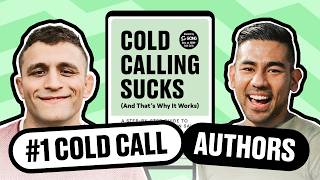
And the last Cold Call opener is King of Cold Call Mountain, which is the Heard the name Tossed Around Cold Call Opener. The Heard the name Tossed Around Cold Call opener has an 11.24% success rate. The reason that it works is you're going to open the cold call not with your name, not with your company. The way you know their peers, the way that you are connected to them through, through their network. It sounds like this. I might say, hey Nick, we work with a few other Andreessen portfolio companies. It's Arman from Pave. Have you heard her name tossed around? In that case, what I was doing is I told them that I was working with other companies that shared the same investor as them. And so even if they haven't heard my name tossed around, they're gonna sit up for a second and they're gonna be like, oh well, I'm not gonna be a total jerk to someone who works with other companies that share the same investor. And folks, there are a ton of other variations that you can use to lead with context here. So I use an example where they shared the same investor. But another example is when I was selling insurance. I would say, hey Nick, we work with a few other partners in the Scaddin LA office. It's Armand from Northwestern. Have you heard her name tossed around or other examples that I used when I was selling software at Carta included? Hey Charlie, we work with a few other CFOs in the Chicago area, it's Armand from Carta. Have you heard her name tossed around? So you can do this by geo, you can do this by Persona, you can do this by investor, you can do this by a competing customer in the same industry. Find one common thread and lead with that upfront to break it down. There were three steps as part of that. You lead with that context first, and then step two is you introduce yourself and then you ask if they've heard your name tossed around. Now, to be clear, it doesn't matter if they've heard your name tossed around. In fact, most of the time, when, when I've given that opener 10 times, 8 out of 10 times, they have no idea who I am. I used this opener when I was a 20 year old selling life insurance and no one knew who I was. And I used this when I was at Pave as the ninth employee calling people. And I promise you, no one had heard our name tossed around. It's about acting like they should have heard your name tossed around. So if they say, no, I haven't heard your name tossed around, all I'm gonna say is, oh, I guess I'm not as popular as I thought I was. Well, look, I work with a few other Andreessen portfolio companies and typically when I'm helping folks like them. And then you're going to drop into a brief pitch, which we'll cover in another video. If they say, yes, I have heard your name tossed around. I don't have to pitch. All I'm going to say is like, oh, well, look, normally we'd be working with someone like you by now, I guess. What did you hear? And that will tell me whether or not they were already on the fence willing to meet with me if they had an initial objection or if they were just like, I think I've heard your name tossed around, but I don't actually know what you do at which point you'll go into a pitch anyway. All righty, folks, those were your four openers. Two bad ones, two good ones. Like what you saw here. There are some other videos on this channel that describe how you describe the problem that you solve. Go check those out. And part of this content comes from our upcoming book on cold calling called Cold Calling Sucks. And that's why it works. If you want to pre order that book, it is available right now. Or if you're watching this later, it might even be available for purchase right now. So go get it at 30mpc.com book somewhere here. There. Down there. I don't really know. Peace out, folks.
More from Armand


Outbound Prospecting Masterclass: Everything You Need to Book Meetings in 2026