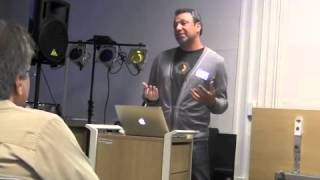
Adam Gross: Why Startups Doing Paid Under $100M ARR are not PLG | E1145
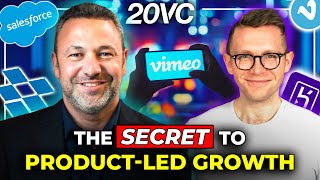
In this interview, Adam Gross explains that product‑led growth (PLG) is a business model, not just a go‑to‑market motion, and argues that true PLG companies under $100 M ARR should not rely on paid acquisition. He reflects on his experiences at Salesforce, Dropbox, Heroku, Vimeo, and other iconic firms, extracting lessons about growth mindset, innovative customer‑acquisition channels, the evolution from individual to team to enterprise value propositions, and the importance of intentional, holistic product and organizational design. Gross discusses the impact of AI on sales and support, the need for channel diversification, the role of naming and positioning, and how growth should permeate the entire organization rather than sit in a silo. He also shares practical advice on hiring (poet vs. librarian), alignment frameworks (V2MOM/OKRs), “seasons of software,” and angel‑investing missteps, concluding with thoughts on the current SaaS macro environment and his long‑term enthusiasm for technology.
Chapters
PLG is not for everybody, and PLG is not a go-to-market motion. PLG is a business model. Every, not even great, but good PLG business has some specialized customer acquisition piece that is not paid acquisition. If you are doing PLG and you're doing paid acquisition, sub-$100 million in revenue, I'm not sure you're really PLG.
Ready to go? Adam, I've wanted to do this one for a long time. So first, thank you so much for joining me today.
Harry, it's been a long time coming. I'm delighted that we finally got it scheduled, and nice to spend some virtual face time with you.
Oh, dude, this is going to be great. So we're going to start with, like, an interesting quickfire. So when we look at the different companies that you've been at, there's some iconic brands there. And I want to do basically, what's your biggest takeaway from each? And how did it impact your mindset? And so if we start with number 1, Salesforce, what would that be for you?
I'll try and keep these brief. We'll see how I do. I'm not, I'm not known for my brevity. You know, so I was very lucky to be very early at Salesforce. I joined in 2003. And one of the things that people don't maybe understand about Salesforce, looking at it as this huge, big enterprise software company now, is that thing was built brick by brick. That thing was built through the pure kind of energy and intentionality of all the people on the team there, which was amazing. And so what I really learned there was just the kind of genuine power of a growth mindset and what that really means and what that means applied every single day. That thing was forged into existence. It didn't just kind of get lucky, right place, right time. And that was a very powerful lesson.
What is a growth mindset really? We hear it from everyone. There's the book, I think it's— out what is it?
Yeah, you know, it's really interesting, and we'll talk about some of the other companies. I've worked at a lot of companies that have enjoyed a lot of fast growth, and Salesforce was different. Salesforce owned its own growth. The growth didn't happen to it. It didn't just kind of experience, you know, kind of a viral growth and kind of took off on the internet. When it started, maybe the internet wasn't even big enough for that to happen. It owned it through understanding the power of marketing, understanding the power of a message, Understanding the power of an industry transformation narrative and really being intentional on owning it.
Okay, so when we think about like the ownership of growth there from Salesforce, if we were to move to Dropbox, another of the iconic brands, what would be the takeaway from that?
I mean, a lot of takeaways from Dropbox. When I, so I was at Dropbox in the very beginning, I was employee 11, so it was 2010 when I started and it was already, clear even in the very early days that they were onto something very, very special from a customer acquisition point of view. And one of the many things I learned from Dropbox was the power of being really innovative around customer acquisition. And that's kind of a through line in my career in general is, you know, we all love to talk about new technologies and nerds like me love to talk about app dev frameworks and databases and different engineering and architectural practices and debate them all day long. One of the things that I think is maybe underrated that I'm really attracted to, and I encourage entrepreneurs to think a lot about, is what's changing? Where is their innovation in customer acquisition? And I mean, it's hard to find a company that was more innovative in customer acquisition than Dropbox.
You mentioned there about kind of the innovation around customer acquisition channels. I feel that a lot of customer acquisition channels today have kind of really run their course. We see TikTok, like, absolutely bang for consumer social and for direct-to-consumer. But it's a real fricking challenge. How do you think about that? And am I wrong and too negative?
It's an excellent, excellent question. And it's something I think about a lot. You know, I'm more of an enterprise person. So if you think about what does customer acquisition look like for kind of traditional SaaS versus, you know, a consumer app, which is with AT&T and everything that's happening in that world, that's a whole different landscape. I think, you know, not surprisingly, And it's maybe not directly customer acquisition, but it is kind of go-to-market. And of course, I'm not gonna win any awards for saying this, but the impact of AI. And I'll put a plug in. So my most recent gig, I'm going off of your rapid-fire round, but so I most recently was interim CEO at Vimeo, where I previously been on board, and Vimeo is now a 20-year-old company, publicly traded, and I had to onboard myself. And one of the things that Vimeo had at the time, and there are many tools in the space and they're all great is Gong. And the ability to see a sales call and have it, you know, be analyzed by AI as somebody in my role as CEO trying to onboard versus, you know, the tools and what we had before is miraculous. And you think about what, you know, Gong and all of their brethren companies are, being able to capture with all of that data and really start thinking about building this AI SDR, that's interesting. I do wonder how conversational generative AI will come into the mix. Now, that doesn't get people to the front door, that's kind of post-front door, but it is fascinating because the amount of just raw data that we're able to connect, it's also a post-COVID thing, right? So much of sales now is happening online in a way that it can be captured. Versus face-to-face, you know, we're all inside salespeople now. So that's another big shift that's kind of helping the AIs be ready to learn and train more. And I think we're early days of seeing the impact of that.
You mentioned the innovation there around customer acquisition channels for Dropbox. Respectfully, has that not totally gone from Dropbox now? Like we saw in their latest results, like no net growth. it seems to have just completely gone. Is that a fair assessment?
You know, I haven't been part of Dropbox for over a decade. And so I don't follow it that closely. Growth is hard, right? In the 2020s, SaaS growth is hard. And, you know, Dropbox is coming from a very large base. I mean, you know, doing billions of dollars in revenue. I think there is— look, it gets back to what I was saying about kind of Salesforce. Look at Salesforce's numbers. Mark used— I don't know if he still does— he used to tweet them every quarter, you know, kind of the full history, right? And I— you look at just accruing billions and billions and billions, not in revenue but in growth. That is where— that takes a very particular, uh, very intentional growth mindset. And growth is the scarcest thing in the universe, right? That is the— that's the thing we're all trying to capture and harness. So, um, I'm here to critique the things I didn't like about Salesforce too, but it's hard to argue with that, especially at that kind of scale. And so, yeah, Dropbox at scale needs to find new acts to drive growth. And I think it's also a lesson for all those entrepreneurs out there, right? Like, I've done 2 startups, zero to one. I most recently was CEO of a publicly traded company. It's always growth all the time. You're always looking for growth. So the job never stops.
So I had Kip Bodnar, who's like CMO at HubSpot, on the show. And he said that actually it takes one channel to get to 50 million in ARR, two channels to get to 100 million in ARR. Do you agree with that in terms of how to think about channel alignment to growth?
I don't know if I've had that experience. I would hope that one channel could get me further than 50. I think it's interesting to think about, and I've certainly seen PLG businesses that got well past 50 on one channel, or even back to Dropbox, got well past 50 in one channel. So, you know, those hard and fast rules are always tough. That seems a little low to me. I would hope I would get more given how hard it is to build a channel.
Okay, final one, Heroku. What was the big lesson from Heroku?
You know, Heroku was where I was finally able to see PLG in full IMAX 3D glory, where we were able to kind of connect the dots between a really powerful individual free product, a strong community, all the way up through, you know, large enterprise customers who paid us $1 million a year. And frankly, to prove to myself and I think to some skeptical people that 1 1 can equal 3. I, you know, so my era of Heroku started in 2013. So now, you know, over 10 years ago, but at the time, I think there was not as much proven you can really have your cake and eat it too in a real kind of emotive, empathetic, individual, high-quality product and also build great enterprise features as well. They were viewed as somewhat intentioned with each other, and if not in outright conflict, and we were able to synthesize them in a beautiful way.
I mean, it was an incredible journey. We've mentioned the word growth a lot, and so I do want to dig in and start there. Respectfully, it's a little bit misused today as a term. When we think about what growth is, what is growth and what is it not, Adam?
It's interesting. I think what growth means, and I honestly don't love like the title VP of Growth, and I don't love growth function because all of that stuff, and I have deep respect for the work, I've done a lot of it myself, it is a lot of local maxima, right? It's optimization, it's improving a flow, it's improving a journey. All of that is really, really important, but that's more kind of bottoms-up growth, right? That kind of optimization. Where I spend a lot of time with the companies I've led or work with as an angel investor or board member is a little more of the top-down idea of growth, which is fundamentally, how do you set a vision for yourself, for your customers, that you can articulate and communicate at scale that is going to be transformative for them and is going to be really, really valuable and is empathetic to where they are as an organization, and that is ultimately what's going to kind of propel your, your business. So that's a little of the less common version of growth, but one that I like to advocate for a lot.
So do you think founders should not hire independent growth teams?
No, I mean, you know, I've had and run growth teams, and growth teams are super important. I think founders need to balance where their theory— so one thing I like to think a lot about and talk to companies and founders I work with a lot about is is what's your theory of your business, which is another way of saying kind of holistically where your customers are going to come from, how are you going to make them successful, how are you ultimately going to, you know, uh, make them profitable growing customers both in terms of them getting value and, and your business, uh, getting revenue. And the thing about kind of just bottoms-up growth is it's just very narrow in its perspective. It doesn't take the kind of holistic view of how does your product value proposition interact with the customer experience of how they engage with your product? What's the journey that your customer goes on? If they start as an individual free user and then convert to a self-serve paid user, maybe as a team, and then from there convert into an enterprise customer, each of these kind of different phase transitions This is kind of a whole architecture of a business. And so I really encourage founders to think more holistically about all the pieces and how they come together, because that is the hardest thing about growth in the modern SaaS era, is that it requires all the pieces coming together.
Should they think holistically about it from day one? Or do you really just need to focus on the next step, the next step in the zero-to-one phase?
Maybe not day one. But definitely year 2, you know, day 1, sure, you're just building prototypes here, you're kind of MVPing. At some point, you need to decide who is your customer, not just from a use case and value proposition point of view, but from a kind of a go-to-market point of view, which the best proxy for that is deal size. Are you going to get from you know, year 1 to year 3, from series— from seed to A, or maybe A to B, depending on how you name the rounds, right? Are you going to get there by getting X customers at $50K a pop, or Y customers at $5K a pop? And that is like, right, the physics of those two systems are entirely different. And at some point, you got to decide, and you have to decide pretty early, because nobody has ever raised an A or I would think a B doing both. You just would spread yourself far too thin attempting to do both. And it's a very, very challenging discussion to have, especially in the early days, because if you're doing founder-led sales or even early, right, MVP development, by definition, you're more in the category of fewer larger customers, right? 'Cause it's very personal and engaged. So companies can say, oh, well, I'm gonna go down, or founders go down that path and say, great, I'll just get more of those. And you realize, well, you know, it's easy to get the first 5, but then you got to build the whole customer acquisition machine to get the next 50 versus, you know, the challenges as well on the, on the smaller side. You have to get the expert in a whole different kind of customer acquisition.
Listen, you're the PLG expert. You mentioned that they kind of— are they paying 50 or are they paying 5? I think the thing that I see a lot and have a lot of portfolio companies do is they spend on the customer acquisition like there are 50. They have customer success like there are 50. The enterprise cost structure is then shifted to a 5,000 ACV customer who doesn't expand in the way that they think they will do. And that's for me the biggest problem with PLG, actually. The businesses aren't good because they don't expand in the way they think they will, but the cost base is so high.
Look, PLG— and I'll channel Jason Lemkin here, uh, our, all of our patron saints— PLG is not for everybody. The idea— and PLG is not a go-to-market motion. PLG is a business model, right? It is a, again, holistic way of architecting and constructing your product, your business, and your entire organization. It is not something that you kind of add on and say, you know, gee, wouldn't this be nice to have as a kind of additional distribution channel? So, you know, it has to be really, really intentional. With that in mind, every, not even great, but good PLG business I've seen has some specialized customer acquisition piece that is not paid acquisition. If you are doing PLG and you're doing paid acquisition in the early days, and I'll even say like sub-$100 million in revenue, so pretty far up. Yeah, I would— if you're doing paid acquisition, I'm not sure you're really paid PLG. Whenever I talk to founders, a good PLG business, even at the $5-10 million range, they usually have discovered like one good acquisition mechanism that is contributing to, you know, a disproportionate 50%, 60%, 70% of their actual customer acquisition volume. And usually that's like one or two things. The distribution of acquisition methods, or specifically even content, is highly asymptotic. The, you know, one good piece, two good pieces will move the needle as opposed to, you know, doing 1,000.
How do you advise founders on channel diversification? You said there about kind of having that one channel that works, that one innovative customer acquisition channel. I hear a lot who are like, you know, I need to diversify. What happens if, you know, we have too much channel risk? How do you advise them on that? And when's the right time to try and add a second channel?
Yeah, well, when I think about the— going back to kind of what I was saying before, you know, enterprise versus kind of PLG or self-serve, right? How do you think about that decision? My rule of thumb there is you only get to have one, one of those until at least $10 million, if not further. If you're up at like $5-6 million and you're like, gee, now's the time to add enterprise, usually the challenge is companies going enterprise too soon. Because it's very tempting. It can be the other way of companies going, uh, trying to, you know, go into PLG from enterprise, which is a much harder path to go. If you're doing that under $10 million, I just think, you know, it— you're not big enough, it's too distracting, you haven't built enough of the machine. So, um, I guess I tend to be on the conservative side, uh, and I, as we were saying before, I would hope that a channel would get you pretty far, you know, again, into the, you mentioned 50 before, 100 before you, and maybe it's also, you know, I think about a full-fledged channel as in a full-fledged enterprise sales organization with all the SEs and SDRs and, you know, all the mechanics and machinery, that takes a lot to really get spun up.
If you're a startup founder listening with a PLG motion, the question then is like, how do I have the sharpest point going into an organization? How do I hook the champion most effectively? How do you acquire champions in companies most effectively? How do you get that first user to love your product so much that they sell it to the rest of their team?
One of the key things to understand about PLG is it's not linear. It's not a single product that you have a value proposition for or an experience for that you, you know, sell to one user, market to one user, that you then take the same thing and then try and get them to adopt as a team and then get the same thing adopted to an enterprise. What makes PLG PLG is it has these distinct, discrete, but complementary motions and value propositions. I'll give you a specific example. And this is like my— I think when you look at PLG, this does tend to be true. That first step, that individual free, typically free step, is usually a creation value proposition, right? In the Heroku case, creation meant like building deploying an app. The second step, which is usually your team self-serve step, is usually a collaboration value proposition. Think about even like GitHub is another great example, a company I did some work with as a consultant. As an individual developer, I'm using GitHub to find code, find samples, find libraries, whatever, creation-oriented. As a team, I'm using it as part of my workflow in a team in order to collaborate, collaboration value proposition, and then Enterprise, what's the value there? It's compliance. That's where I have my security. That's where I have my auditability. That's where I have my observability, all those kinds of pieces. So these are distinct products. They're distinct value propositions and they're distinct go-to-market motions that you assemble in, in a kind of an adjacent way into a layer cake, if you will. So all of which is to say, yes, you start with that individual free user, But in order to make the jump to team, you're going to have to have a different value proposition and probably a different, uh, uh, a product, complementary product.
What is the biggest mistake that founders make when moving from stage 1 creation to stage 2 collaboration and teams?
I think the biggest mistake is not understanding that it's different, not approaching it with the intentionality of it's going to require a different value proposition that having a single player— I mean, this PLG is hard, right? Having a single player product, a product that has value on a single player basis, and that you can then build a multiplayer, right, collaboration product experience on, you're doing MVP, you're doing product market fit twice. That's so— and I've seen this a bunch, and I've seen companies I've invested in not make it. Where they get the individual value proposition, but they're not able to translate to the collaborative value proposition. It's just, it's super hard.
How do you do effective product marketing there? Say you have a billboard, okay, and you want to emphasize the abilities that you're able to deliver with creation tools, and then you also want to emphasize the team and the collaboration features. How do you do two stages of product marketing on one billboard or one advert?
That's an excellent, um, Excellent question. And usually this debate comes up not in the billboard, but in the homepage of the website, right? And, you know, imagine now when you've got the full-fledged PLG model, you've got enterprise too. How do you manage that? I mean, a friend of mine runs the website for GitHub, and this is, you know, classic GitHub problem in spades. My default is the website is about the top of the funnel, is about establishing the initial customer relationship. So you want to yoke towards that free customer acquisition, and that's kind of the primary thing. Now, any website does multiple things, but that's kind of the primary goal, because once you are engaged with them in the product, you have all kinds of additional communication mechanisms in product, out of product events, you name it, to engage with them and move them on the journey. But the website is frankly a kind of a blunt instrument, and so, uh, point it at that kind of largest pool of unwashed masses. And then as you kind of pull them up into your journey, into your company experience, you reveal the different ways of engaging with them and delivering these other messages. I mean, even if you look, well, it's been a long time since I've been at Heroku, but you know, the Heroku core website really was always just about getting free developers to sign up. And in fact, a lot of the work we did, and again, this is my era, was 2013 to 2018. So this is a while ago. All the enterprise products that we built and spent, you know, customers would spend millions of dollars on, most of like your Hacker News crowd didn't even know that stuff existed, maybe to a fault on our side. But that's because it was, you know, we would communicate with them individually or differently versus what you would experience on the website or in this case, maybe the billboard.
You know, we mentioned that kind of creation with regards to Heroku and signing up developers. Respectfully, it almost feels like an easier product marketing challenge than other horizontal tools because we know we're targeting developers. Specifically. Okay, we know where they hang out, we know what messaging resonates. If we take something like Notion, there's dentists, there's data scientists, there's mothers and fathers. The, the horizontal product audience is so large. How do you think about effective product marketing with such horizontal products?
Really, at its core, it's what is the narrative of your company? What is your industry transformation narrative? How are your customers even going to imagine your product and how the impact it's going to have for them.
What's an industry transformation story? Is that a narrative? Narrative. I really like you, Adam, but that feels like it came out of an SAP book. Like, what's an industry transformation narrative? I don't know what it is.
If your company doesn't have one, it should. You're always trying to do is navigate your company on two dimensions. One is be emotive and the other is be strategic. You need to be emotive, right? 'Cause you want people to care, you want people to have an experience with your product that they feel emotionally and passionately and viscerally connected to. And that could, you could be like, oh, that sounds silly. That's not how we did developer tools in the '90s, right? It was like, who cares, it's a compiler. Well, think about developer tools now. Think about how emotive the brands are of like GitHub or Heroku or, you know, more modern ones like Vercel. These are deeply—
Linear. Linear. Exactly.
These are deeply emotive brands where craft and quality and experience are at the forefront.
What have we done to create these emotive brands and how do you create emotive brands then? Sorry, I know it sounds—
You start by thinking that it's important to do so. You, you have to, in the kind of consciousness of your company, you know, have some intentionality to say this is important, experience is important. This is why do like big old software companies suck, because they're not experience-oriented. They're not— they don't care about these things. They've lost the connection to the individual user. It's why these companies tend to be PLG companies, because to get the individual user, you have to be empathetic. You have to you know, care about experience. You have to have meetings with the CEO, you know, and, you know, the management team where you're debating minor switches in the command line, which trust me, we did at Heroku. So you have to care. So, but emotive is just half of it, right? The other part you have to do is be strategic. And if you're emotive and you're not strategic, you're interesting and cool, but you'll never command the kind of business impact and ultimately budgets and ultimately, you know, growth for your company that you're trying to look for. And it's on that strategic dimension that this idea of transformation narrative, or just strategic impact is maybe another way of thinking about that, that's so important.
I totally get you. What do people get wrong on the strategic impact side? What are the mistakes that are made there?
They think about the world too much from their their worldview, their situation, their consciousness out versus customer in. The hardest thing about being strategic and about kind of having that transformation narrative is having genuine— what I like to think about sometimes is enterprise empathy. What it's very hard for organizations to do is have enterprise empathy, which really means being able to understand how your product sits in the full context of your customer, its politics, its org structure, its business processes, its successes, its dysfunctions. All of your products are kind of sitting in this context. And to genuinely understand that takes, you know, a real kind of presence of mind.
Can I ask you, what are the most common ways that you see growth plateau in fast-growing companies? We mentioned Vercel, we mentioned Linear there, who are growing incredibly well now, so not in that batch, but in companies that do plateau in growth, why?
A lot of it is, do you have a culture of really serving the customer regardless of what that means? This is the, this is the, um, maybe kind of the, the, the implicit contradiction of being a high-growth company. I see this play out all the time. And, you know, arguably, even Dropbox and GitHub and Heroku have fallen into this in different times. You have this initial thing, this initial idea that whether you're GitHub, again, Dropbox, Heroku, you name it, git push heroku master, you know, sync, you name it, you have this initial thing that has generated unimaginable success. You've gone not just from 0 to 1, but 0 to 10, 0 to 100. You've broken through on the internet. Like, that is one of the rarest things to do. And you develop internal ideas and theories about why that was the case. This one thing that you did, the set of values that that thing represented, was this thing that got you to this unimaginable place of success relative to all the odds and all the other companies out there. And then you have to say, I'm going to put those aside, or I'm going to challenge those, or I'm going to think beyond that and develop a new framework of value or a way of, of contradicting even maybe some of the principles that got us this far in order to serve customers at that next level of impact or depth. And that is a very, very hard thing for organizations to do.
Alex Nordström is the co- president and the chief business officer, head of growth at Spotify, and he talks about committing surgery on yourself, which is essentially examining yourself in that core moment of intersection and realizing that you might have to kill the golden goose that's got you to stage 2 to get to stage 3. How do you think about sometimes needing to really examine the core to get to the next level?
Amen, amen. And I think You know you're doing it wrong when the company tells itself, you know, it gets too religious about its own culture and ultimately it gets too introspective and just broadly inwardly focused, right? We are successful because we've always done it this way. You know, we have whatever special t-shirts on Fridays that we spend an exquisite amount of time building. GitHub and Heroku, that, you know, this is so core to our culture, clearly this has to be the reason for our success. And almost in like this religious way where, you know, you don't even know where the growth comes from, you're just afraid of upsetting the growth gods. You romanticize or elevate these kind of semi-arbitrary aspects of your internal culture that have served you very well in the past, but are not what's going to get you to where you go— we need to go in the future. That comes— that's part of— you asked before, what's growth mindset? That's growth mindset, right? Is being so religiously customer-focused that you're willing to, um, uh, challenge the core values that you genuinely believe have contributed to your success because they may not be the values or the strategies that will deliver that next frontier of growth.
Speaking of next frontier of growth, often at that kind of intersection where you do need to switch chapters, sometimes name changes happen, Adam. And I hear you're the master of name changes. Literally, like, everyone I spoke to about you was like, Adam comes in and he's like, let's do a name change. And he masters it and he does a brilliant job with it. But why, why do you like name changes? And how do you think about strategy here?
It gets to what I was saying before, about capturing that strategic and emotive position. Customers want to love your products. They want to be excited about them. And they want to understand and kind of inhabit the vision that they represent. And the positioning, and ultimately the naming, is the invitation to do that. So, like, one, I'll give you two examples. It's not like it's rocket science, but I think they're pretty good. So, when I was doing some work with GitHub, the team there came up with this great product that let you build workflows. And, you know, we normally just think about GitHub as kind of like just a code database, right? The idea that you could do kind of workflows on top of that data was an enormous innovation, enormous change for the company. And, you know, there are a bunch of names being kicked around like Flows and, workflows or stuff like that. And now, and I'm happy to take credit for this, it's of course called GitHub Actions. And so think about like workflow versus actions. Which product do you want to use? Which kind of captures the essence of what this product was about, right? If you— one way of thinking about what was behind that product naming was GitHub was this kind of inert, right, set of nouns, right? It's just a database. It's just, you know, you're just interacting with these files versus a thing that actually does something. What a powerful concept. What a big change in evolution for the company and for how you want people to conceive of that. What's the simplest way you can kind of capture and communicate and get people excited about that? For me, it was Actions. I think that was a pretty good name. That's one, but, you know, at its core, it's just getting to the essence of why people should care about your product and how they should relate to it. And back to that idea of just trying to be as customer-centric as possible and appreciate that somebody's going to have microseconds to contemplate what this thing is. And so you want it to have as great an impact as possible.
Going back to the element of PLG and moving into enterprise, I'm thinking about kind of naming and kind of what enterprise names resonate best. But the thing that I was really thinking was the hard thing that I often see is often honestly sales teams feel like second-class citizens when growth is largely product-enabled. How do you think about not having second-class sales teams when it is such a PLG motion?
Where it tends to go south, and this happens all the time, is when you cross the streams. For the few people who remember, uh, Ghostbusters metaphors out there, um, when you— this is where PLG goes south, is when you don't have the clarity, uh, in how you run the business of this is our self-serve product and this is our self-serve business and this is how works. And this is our sales-led business. And this is its value proposition. And this is how it works. The most common failure mode is that those intermingle in non, you know, in ways that they're not differentiated by motion, by customer, by product and value proposition, by message, even by name, as we were talking about. And then you just have teams that are stomping on each other, all over each other. And then you have acrimony. So having again the idea of these kind of distinct businesses that are adjacent and connected in really important ways versus effectively a scrum, very, very common failure mode.
Does AI change anything about the PLG motion, my friend?
You know, the question is how is AI going to change customer interactions and ultimately customer experience? And man, is that a fascinating topic. As much AI hype and BS is out there, Wow, is that interesting to contemplate. And so, you know, I think what we see in the market today is the most obvious first places are support case triage and routing, right? That's kind of the dial tone of this thing. That's kind of the step zero. Okay. But from there, how sophisticated can AI become in educating, and moving customers through an enduring experience.
Do you think there's much value to be created in that layer? I mean that with respect, but like, do you not think that the core value accrues there to your OpenAI of the world who did voice synthesis and single-handedly kind of destroyed a layer of voice creators in its path?
I'm of two minds on this. I think a lot of AI value will accrue to existing large distribution players. AI is not naturally disruptive in the way that the shift from on-prem to cloud was, right, which obviously I had a front row seat to. Moving from on-prem to cloud, the reason why so many companies were so poor in doing it is it required not an upending of their product, it required an upending of their business models. Moving from perpetual licensing, from a sales point of view, from a finance point of view, moving from an engineering process that delivers software on CD, to delivering continuously on the internet and operating a service versus just shipping software. These are tectonic shifts in how an organization structures and runs itself. And the further and more public company you are, the harder that is to execute. So that was like, That's why it was so, so hard to do. And we saw so much opportunity for new entrants in SaaS. AI is not the same. AI is much more of a continuous, a continuing innovation where it's much easier for incumbents to, and including Vimeo, to adopt and take advantage of these technologies without upending, you know, their entire company structure. So I think it's not good. This isn't like, you know, early SaaS days where all this new value will be created. That said, when we dream about user experience paradigms or engagement models that you and I haven't experienced yet, that's likely to come from somewhere else and there's likely to be new value there in this kind of AI-native way.
Sarah Tavel from Benchmark said that we will sell the services and not the tools. So instead of, to your point, selling the, you know, the creation tool, it will sell the output of the creation tool, which AI will have created the product itself. You know, we've seen a lot of co-creation AI services. Do you agree with that transition?
I would kind of call that maybe like full-stack AI, right, versus kind of an AI tool thing. And absolutely, what an interesting opportunity that is. You see hints, just hints of this if you look at— and I hope I'm getting this right— if you look at some of the support companies Moving from seat licensing, support tool companies, to incident resolution, that's getting— that's further up the stack, that's closer to business value, that's closer to kind of selling the end result and output. If you really squint, you know, what does that look like in other kinds of industries? What would it mean to pay a CRM company per lead?
Okay, so I do— before we do a quickfire, one part of your career we haven't covered is is your angel investing, and you've made some pretty awesome angel investments. What are the top 3 things you tell startup CEOs?
The first thing comes to hiring. The first thing I see go right or wrong in a hire is knowing what you are hiring for. And the biggest question people tend to get confused on— wait with me for a minute on this— is are you hiring a poet or are you hiring a librarian? Which is to say, for any given role, usually you are trying to mix some blend of process expertise and kind of domain or content expertise. This comes up in every single marketing hire, uh, uh, conversation I have with, uh, with founders. Do you want somebody who knows the space, who can use the product, who is expert in talking to customers, i.e., a poet? Or do you need somebody who understands all of the process machinery of setting up demand gen and the systems and the analytics and the best practices for customer acquisition, i.e., a librarian? Same thing with engineering. Do you want somebody who's a technical leader who, you know, will understand how to use, you know, who will configure Kubernetes in their sleep and elevate your technology prowess, by their personal ingenuity, or do you want somebody who's a process leader who will help the trains run on time and scale the systems? The first and biggest place people go wrong is looking for one and/or thinking they need the one and hiring the other, or not being clear about it. Because, you know, people like you and me tend to be a little bit of both. Like, Harry, you're a poet, right? If you were a librarian VC, you'd have a big, you know, supercomputer sitting behind you running math models, doing high-frequency trading. That's not you. You're a man of stories and people and narrative. Like, that's poetry. So it applies to your VCs too. So that's the first thing.
When your partner asks you where you were last night, hey, I'm a man of stories. I'm a poet. Just don't ask.
Exactly.
I did not hear.
Harry, we're artists. You know, we're artists. We're poets.
Do you know what, Adam? That doesn't roll, sadly. I don't get away with it.
I'll stay out of your LP pitches.
I love that. Okay, number 2.
Number 2 is the power of alignment. And I'm a big believer in kind of planning methodologies, and they tend to have a bad rap. Like, everybody's had a bad experience with OKR, right? Where it just feels perfunctory and it like, it's bureaucratic. And it has no impact. And most of the time it is done wrong. I use a methodology from Salesforce that's called V2MOM. It doesn't matter what methodology you use. It doesn't matter if you have methodology at all. If you are doing it right and you are genuinely aligning and focusing, there is— and you can feel it viscerally. You can feel it viscerally. There is nothing more powerful. Getting an organization An organization's time and attention and focus is the most precious resource you have, and your ability to actually steer and navigate that across this collection of people, across these different functions, across this chaotic environment— if you can unlock that power, it is a superpower. And that is why you have these planning methodologies, not so that you can do some checkbox accounting on people's performance or whatever.
Okay, do I have to have a planning methodology from day one? And I know you said that you can use whatever one you want, but do you advise any founders on a specific type that generally works well from zero to one?
You know, the very simple version is make sure you're all getting in a room, ideally cross-organizationally, and spending the time to hammer it out. So it's usually a day or two minimum to get to your 8 shared priorities. In stack rank. If that's the simplest recipe, if you're trying to take anything on, I, I, so, uh, I've done a bunch of work with Tailscale. Um, I brought this to the organization, uh, in, in this case, how we are structuring the self-serve business. And with having that clarity, having the time spent across organization to say, these are just even the buckets, how we're thinking about things, and this is their stack rank, as is, it's simple, it doesn't have to be complicated, it's hugely powerful. You will know when the team feels the value it won't feel like that OKR spreadsheet that's pointless and administrative. It'll feel like, ah, clarity alignment. Okay, let's go. We now know what we need to do.
How often do you do this?
For the company, you do it on an annual basis. But it's a great tool to deploy if there's a new area or a project where you just need to get everybody on the same page quickly. But the cycle should be annually.
Okay. And then number 3.
Number 3 gets right to that question about, about how often do you do it? And that's, what I call the seasons of software. And that is, imagine for your business, a giant metronome that is just sitting there ticking, right? And part of any, any leader's job is to coordinate and align the activity of all kinds of diverse sets of people in their activity and their nature, and getting aligned to a cadence to seasons, which is typically a quarterly boundary, is so helpful in helping the organization understand when are we working, when are we all lifting our heads up and saying, okay, boom, here we are, and just having everybody operate on a common schedule. And we have the seasons built in. So this is— I've done this at countless companies. And it's honestly one of the most powerful simple things you can do. I'll put a plug, I'm on the board of Tailscale. They recently deployed this technique and I think it's worked really well for them, is just have quarterly releases. It doesn't matter what your actual software development schedule or processes, but once a quarter, do a blog post, do a webpage that says, this is our Q1 release, here's what's in it. This is our spring release, here's what's in it. Even that basic cadence creation, that seasons of software, that creating that kind of predictability starts to create that beat and rhythm that everybody starts to align to. And it's incredibly powerful to keep the organization moving at a constant and hopefully accelerating pace.
I love that. And I love the idea of kind of building in public in terms of announcing it every quarter. I think it's a great way to build emotive brands, going back to what you said in terms of people following on. Listen, we mentioned the angel investing. Final one before a quickfire. I think one learns from mistakes. What's been your biggest angel investing miss, Adam, and how did that impact your mindset?
Under-indexing on the team and assuming, assuming I understood things about the team that I didn't. There have been cases where I just assumed I knew who the CEO was. This isn't going to say much about me as an investor because they were the person I happened to be, you know, I mean, I'm an angel investor. I'm not like invest deploying large sums of money like a VC, but times where literally, like, I'd be working with a founding team and it turns out that they hadn't decided who the CEO was after I'd written the check. And I'm like, okay, well, I should have probably asked and made sure. So basic kind of team dynamics, uh, uh, uh, company where you missed it.
So like, for me, I met Deal at the pre-seed round and I loved Alex and I thought he was great, but it was a $30 million pre for nothing. and I was not willing to pay $30 million pre for nothing.
Oh, I mean, if we're going to talk about deals that got away, I'm going to, you know, it's morning here, but I'm going to need to trade my water for a drink. Oh, you know, I saw all kinds of, I mean, I remember seeing Twilio, not saying I could have invested, I probably could have, it was a small angel investor check. I saw the Twilio seed. I saw—
Why did you not do the Twilio seed?
I didn't think big enough. This has been a problem with my personal cognitive model for a while is I didn't think big enough. I didn't understand how much value was there, and I overindexed on how commoditized it would be. Now, granted, it was like the world of Jeff and what he's accomplished, and this is entirely my error, but also, it was 6 people in a room. Exactly the same vision, uh, as we see today. Um, so yeah, one of many similar examples.
Yeah.
Yes, there are worse ones. There are worse ones.
Strike me with one more, one more.
Um, I think if I worked a little bit harder, if I worked a little bit harder— I'm not saying I had it, but I, I think I, I could have used some relationships to maybe get into the Stripe seed. I definitely had visibility into it. Oh yeah, I know. It might have been, it might have been like a seed A, but it was early. It was very, very early. Oh, remember I had done, I was the platform guy at Salesforce, and so even in 2007, you know, I was doing developer stuff since 2003. So all of the I remember meeting with GitHub when they were 3 people. I was a seed investor in Heroku from the beginning, so I saw all that early developer stuff. Twilio, Stripe, all that kind of stuff. I was the first check-in to Docker. That's a whole nother story.
Did you get recaps?
I was the first check-in. I was in the first round with Docker. I remember meeting with Solomon and those guys at Founders Den on Third when there were just like 3 people in a room. And, uh, yes, we did get recapped, and I was not happy about that at all. But I'm glad that they, um— look, I mean, I can be not happy about it. I'm just delighted that Solomon team had such an amazing impact, uh, with their vision, and that I could even have some infinitesimal part in it.
But that's done. That's done. Don't, don't worry. Stripe's a crap company anyway. I never liked them.
Crap.
Yeah, terrible. Yeah. Okay, listen, I want to do a quickfire round. So I say a short statement, you give me your immediate thoughts. Does that sound okay?
Okay, we'll see if I can talk quickly.
Oh, you'll be great. So what have you changed your mind on in the last 12 months?
The macro environment for SaaS. I'll say it's just more uncertain than maybe I thought it was.
Why is that? That's really interesting.
Just looking at growth across the industry. I sure hope it comes back, but it's taking longer than it has. And if you look at where growth rates are, even for SaaS leaders this year compared to last year, it's, look, it's a more challenging time than it was last decade.
Jason Lemkin, you mentioned earlier, and I have a big bet on that IPO markets and the timing of their opening. Jason has to essentially, has bet that they will open H2 '24. 24, and I've bet that they will not open in '24 at all, and they'll be earliest H1 '25.
That's really surprising because I view Jason as the pessimist in the room. I didn't know that you're taking the cake there.
Which one would you go for?
I'm going to side with— not to disrespect my current host— I'm going to be an optimist because, hey, we can't be in this business if we're not going to be optimistic. So I'm going to go with Jason.
No, that's awesome. You can both be wrong together. What would you— Jason now is like, bugger, I've got to pay you a lot of money. What would you most like to change about the world of growth, Adam?
Get people to think and operate more holistically, that growth is not a function. It's something that really has to pervade to work. It has to pervade all aspects of the organization.
How do enterprise software cultures compare to consumer ones?
They are, uh, much more customer-centric, um, and, uh, frankly, more, um, predictable, uh, and controllable.
How do you advise founders that you work with on growth teams versus baking growth into other functions in the I tend to be shy on specializing growth teams early because growth is an optimization and you can pursue local maxima.
And early stages, you typically have much bigger fish to fry than thinking about local maxima.
Best advice to someone leaving university today?
Be good at two things. Don't be the best at one thing, be pretty good at two things.
I love that. Uh, final one, Adam. 10 years' time, 2034. Where do you want to be then? We still angel investing? We back operating? Are we founding a company? What's the plan?
I want to be as excited and enthusiastic and energized about the world of technology as I have been for the past 10 years and the previous 10 years, uh, before that.
Adam, listen, as you know, I've wanted to do this one for a long time. Thank you for putting up with my many twists and turns. Of conversation, and you've been fantastic.
Harry, I'm delighted we made it happen. Thank you to your listeners. I hope you find it valuable, um, and I'll look forward to continuing the conversation and getting that beer in London with you.
More from Adam
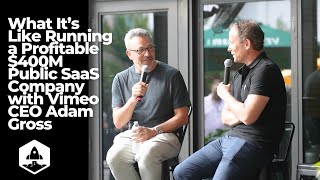
What It’s Like Running a Profitable $400M Public SaaS Company with Vimeo CEO Adam Gross

EnterpriseReady - Ep. #28, Intentionality First with Enterprise Advisor Adam Gross