The Art of Balancing Strategy and Emotion in Platform Marketing
In this episode of the Crossing the Enterprise Chasm podcast, host Michael Greenwich interviews Adam Gross, interim CEO of Vimeo and former leader at Salesforce, Heroku, Dropbox, and other SaaS firms. The conversation moves from a historical look at Salesforce’s early platform and developer marketing (when SaaS was still considered a temporary solution) to broader lessons about building and positioning platforms. Gross argues that “there are no such thing as platforms” – every platform is domain‑specific and must solve a well‑defined problem. He introduces a two‑dimensional framework for positioning: strategic (alignment with industry‑wide transformation) versus emotive (the narrative that makes customers care). Successful companies, he says, navigate this space to become both strategic and emotive. The discussion then shifts to the “poets vs. librarians” heuristic for organization building, explaining how creative (poet) and process‑oriented (librarian) roles must be balanced across engineering, product, marketing, and sales. Gross also reflects on Heroku’s developer‑experience‑first marketing, noting that early developer platforms (Heroku, GitHub, Twilio) pioneered the concept of developer experience as a product attribute. Throughout, he ties these ideas back to practical advice for founders: focus on domain‑specific platform value, craft a transformation narrative, balance strategic/emotive messaging, and hire the right mix of poets and librarians.
Chapters
Welcome to Crossing the Enterprise Chasm, a podcast about software startups and their journey moving upmarket to serving enterprise customers. I'm your host, Michael Greenwich. I'm the founder of WorkOS, which is a platform that helps developers quickly ship common enterprise features like single sign-on. On this podcast, you'll hear directly from founders, product leaders, and early-stage operators who have navigated building great products for enterprise customers. In every episode, you'll find strategies, tactics, and real-world advice for ways to make your app enterprise-ready and take your business to the next level. Today I'm joined by Adam Gross, who is currently the interim CEO at Vimeo. However, before Vimeo, Adam has a long history in the SaaS industry with a lot of companies you might recognize, uh, such as Salesforce, Dropbox, and he was actually also the CEO of Heroku. Um, he's co-founded two companies and mentored and advised dozens of different founders. We're super excited to have him on the podcast to talk about his experience here and especially with developer products. Um, Adam, welcome to the podcast.
Michael, it's a pleasure to be here. I'm glad we got this scheduled, and also thank you for the mug.
Absolutely, it was the best thing I got for Christmas, the wonderful WorkOS mugs. Um, well, we have a ton of stuff we can dig into. Um, we've known each other for a while. I, I want to go back, back in time to well before we met, back when you were at Salesforce. In the early days of Salesforce Now. You spent 7 years there, and when you were there, you were the VP of Platform and Developer Marketing before its IPO. Talk about that. What was Platform and Developer Marketing at Salesforce at that early phase?
Yeah, yeah, that's— thank you for that question. And as they say, when dinosaurs roamed the earth. So that was— this was, you know, the early days of Salesforce that was starting in '03. And there are a couple of things, I guess, as for all the people interested in now, what is the history of the tech industry, would be kind of helpful or interesting to know. At the time, Salesforce was small as a couple of hundred people. The entire product development organization fit on a third of a floor at One Market. The platform team, I think, was maybe 2 or 3 people at the time. And what I think people forget, or at least maybe don't have as much experience with, is SaaS and cloud were not considered things, and they were actively opposed by at least kind of what was the conventional wisdom or mainstream of the industry. I remember famously at the time, Gartner recommended that you only consider SaaS as something you do temporarily while you're waiting for your enterprise software to be installed and deployed. And so that was— it was one less of a fait accompli in a way that we kind of think about technology changes we experience today, perhaps, or at least in retrospect, which in some ways made it more fun because we got to be kind of the defiant pirates with a mission. And that very much infused the spirit of the company, which you still see today, is it was, it was a mission, uh, and we were literally there to evangelize. We had a fundamental new model that the conventional wisdom rejected, um, that we in our hearts, uh, believed and knew was the right way, was going to be better, and we weren't in a position to kind of tell the world about it. And the part, at least in kind of the history of Salesforce, that first decade was very much about platform. And, you know, Salesforce, as some of your listeners may know, has its roots in kind of the database and platform world and Oracle in particular. So, the fact that it had such a platform orientation is maybe not a surprise, but maybe for people who kind of experience the product or company today, that whole era, Salesforce was very, very much about the platform capabilities, arguably more so than the applications. If you go back and look at the marketing, if you look at what we were really talking about, it was all of those platform capabilities because really what we were talking about was kind of the evolution and journey of SaaS. And one of the many things that made it so fun is each time we were kind of creating a new platform capability, we weren't just kind of expanding, you know, what Salesforce was possible, uh, what was possible with Salesforce. We were expanding what people's consciousness and understanding of what SaaS was capable of. And, uh, that was hugely exciting, uh, and still is.
It's, it's funny thinking back on that time. I mean, I've read Mark's book about the no software, you know, like just the idea of that. It's almost hard to imagine today given that cloud and SaaS is like the default way that, um, that people build software. Um, I want to talk more about platforms, actually, something you said. So at that time, you know, Salesforce is growing, it's pre-IPO, so it's still early days compared to— certainly compared to today. Um, everybody wants to be a platform. It's like platform this, platform that. Every startup thinks that they're going to be a platform someday. And yet to become a platform, to earn that right, there's a lot of other things you have to do along the way and, and actually kind of have the adoption or something to to, I don't know, have the legitimacy for people to come and build on top of what you've built. Can you talk about how Salesforce and just you've approached this? You've worked at a lot of companies that have built platforms or gone after that. How should folks approach that? You know, should they not do it too early or should they get started early?
As someone who's done platforms most of their lives, I'm a big fan of the idea that there's no such thing as platforms.
All right.
And I think the, you know, especially technical founders, and I say this as somebody who's been one, can get lulled into the developer tools and platform business by the illusion that it allows for an abdication of of what the value is. Here's a bit, here's a widget, here's a compiler, here's a thing. It's up to you to imagine what it is and what it's useful for and how you should do it. And, you know, we have this illusion that that kind of happens in the market and that's what we want to do because it spares us all that messiness of actually having to go to market, which is, of course, the thing that technical founders tend to be least enthused with. And, you know, the reality is that there are no such thing as platforms. They are always domain-specific. Pick your favorite layer of the stack. Look at semiconductors, right? Intel ain't NVIDIA, ain't AMD, ain't Apple, right? These are— they are always— there's always engineering trade-offs, and there's, by virtue of that, there's always some measure of domain specificity. That was true of Salesforce Platform. That was true of Heroku. It's true of— it's why we accept a degree of heterogeneity in databases that we have, because we have different trade-offs and different fit. So I very much think about platforms as being, you know, adjacent to a limited and well-defined set of problems, rather than, you know, kind of this broad horizontal thing. And, um, I, I think we can, uh, uh, dangerous territory in, in, in that framing.
Well, I mean, you're talking to somebody who has started a company with OS in the company name, so I'm definitely in the category of loving, loving platforms too. Um, we could talk about that some other time. Um, tell me more about marketing around this. So the, like, the category creation step, Salesforce really was defining a new, really a new framing of what software was and how this platform could be used by customers. How did you do that early on? I mean, being thought of as a temporary solution is almost ludicrous to think of compared to today with Salesforce.
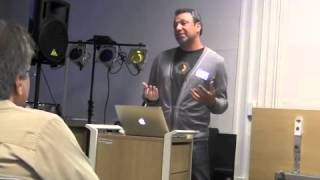
Yeah, I'll put in a plug here. I did a talk, Lord help me, 10+ years ago that you can find on YouTube. It's called Platform Marketing for Developer and Platform Companies. So I kind of go into a lot of this in detail, and it's mostly about kind of what I learned from the Salesforce era. I did it with Heavybit. I think you can also find it as part of the Google Labs stuff. And I put that talk together because I think so many entrepreneurs, startup founders kind of struggle with how to even frame what positioning, what category creation, what does this task even mean? Does it mean being really good at buying Google Ads? Does it mean getting stories about my college years and creation story into the media? What am I trying to do here? And I help frame that, and certainly what I believe at my— is a kind of at the core, certainly true of Salesforce, is what you are always aiming for is some kind of industry transformation narrative. How is what you're working on helping create, aligning to, contributing with, motivating some fundamental tectonic shifts that are happening in the industry? And because what you get with being associated with an industry transformation, or if you're really lucky, creating one. And of course, you know, the examples kind of tell themselves when you are synonymous with an industry transformation, OpenAI, Salesforce, you know, and to some extent these things happen, to some extent they're created. I would argue with Salesforce, it was very much created. When you get that, you get this kind of key intersection of company and brand attributes that are so important for every startup trying to kind of achieve the next level of maturity, which is you are strategic because of course you're strategic if you're aligned to some broader change in narrative. And being strategic is core to getting any enterprise to opening up their wallet. And you're emotive, you're important in a way that resonates spiritually with how people think about the world, their problems, and their opportunity. And with emotiveness, you get people to give a shit. And when you get people to give a shit and open up their wallets, that is usually a pretty profound recipe for success. And I literally think about this as like a two-dimensional space. You know, how strategic are you? How emotive are you? And everybody starts at the place, same place, way down at the bottom. Salesforce started there. OpenAI started there at the very beginning. WorkOS started there. My startup started there. And it's kind of how you're navigating this two-dimensional space, sometimes becoming more strategic, sometimes more emotive, that is so important to kind of thinking about what you're building, how you're telling your story, the value you're creating for your customers.
Is the goal to be both strategic and emotive? I mean, as you're— yeah, as you're talking about this, it kind of resonates with a lot of stuff I've learned and heard from people who are experts at selling. You know, it's like, don't just say what the widget does, but say like the impact it drives. Or, you know, you're not buying the drill, you're buying the inch-sized hole in your wall or something, the outcome.
Yeah.
Yeah. Talk about that, how this kind of impacts the sales.
Really great salespeople will be effective at working on that strategic dimension, right? Which is how is this thing empathetically related to a customer's or a company's most important goals? And, you know, being able to kind of read companies. And I talked to them on the board of Buildkite, and I talked to the team over there about this a lot. Like imagining a company like Sims, you know, with like little thought bubbles over their heads, like I need food or, you know, I'm bored. Companies are like that too. And being able to read the thought bubble that's on the company's head in that kind of succinct, quick way that you can then relate whatever you're doing, that's their core strategy. That's how you become strategic to them. And it's not what they necessarily say. It's kind of having the empathy to to allow that to kind of be revealed. So that for sure is an important thing that's important for salespeople. The emotive thing is, and I don't want to make this too kind of marketing and sales, but maybe this works a smidge. The emotive piece maybe is, and it's marketing's job to do both, but it's going to be more of the company, the product, the experience, the brand than, you know, just that, that kind of sales component. But absolutely, you know, when we think about the brands, the companies, the products that we respect, we love, we want to emulate the most, what are they? They're the ones that are highly emotive and highly strategic. Like, what could be more Apple? I've got this incredibly emotive thing that, you know, I communicate with all of my friends with all the time, and it represents my connection to the world and how I consume media. All these kinds of things. And it also is transforming industries, you know, just left and right, just like mowing them down. Uh, incredibly potent combination.
You said something, something around this. I remember we had a conversation a year or two ago, um, about when we were talking about like people that are really great at doing this. Like, as, as founders or people building companies, they start to think about who can I hire in or who can I collaborate with And I think you would describe this as like the difference between like poets and librarians. Do you remember that?
Ah, yes. Yeah.
Can you say this again or kind of touch on this a little bit? It's one of my favorite things. I wrote it down.
I gotta tell you, like we're shifting gears a little bit, but this is probably my core like organization building principle. And so I'll tell the long, long, medium version of the story. So in the '90s, I started a company as a web analytics company called Personify. And there was a gentleman there named Trevor Ruble who told me this, and I give him credit because I just— he doesn't know this, but he changed my life. And basically it's understanding that there are two kinds of people in the world. There are poets, people who are creative, people who, you know, you look to for the originality and quality of their new thinking. And there are librarians, they're process people. Another way of thinking about that is there are content providers and there are process providers, aka poets and librarians. Now here's the thing. Librarians need poets. Poets need librarians. They need each other. It's not that one is better than the other, but the number one mistake in hiring and organization building is having a librarian in a poet's job or vice versa. This is like a classic engineering management— it comes across the board. Really, you can write this debate. Permeates every conversation about every hire that you make. Most of them, right? Your VP of Eng, are they a poet? Are they going to be the person that like, you know, creates the most popular new open source project because they came up with this new architecture for X, Y, and Z? Are they a librarian? Are they a process person that's going to be really good at getting the trains run on time? Same thing with a product person. You know, you can hire a CPO. Is your problem that you need genuine insight and customer-driven creativity to drive new forms of value and pioneer new path? Or is it that you can't ship anything and you gotta get like some process and some organization and structure? Same thing with marketers, especially true of marketers. This is one that happens all the time. You hire a CMO, a VP of marketing, process people, they're gonna optimize your ads. Librarians are like librarians. Poets, they're going to come up with your new positioning, right? Which of those do you need? And yes, in the fullness of time, I'd like to think we all develop both. I'd like to think I've worked on my librarian side. I'm more of a poet. Poets are the kinds of people that appear on podcasts and tell stories like this. And, but just being mindful because just like the quickest way you see it, once you kind of think about the world that way, you see it as clear as a bell. You're in a meeting with somebody and you're like asking them to create a blog post for a new product launch and you just see them like stumble all over it. And you know, you're like, okay, trouble, right? This is not the person who does that task. But it's also important because especially technical founders, right? I mean, the core hacker ethos is dismissive of process. It's dismissive of librarians and the core hacker ethos Everybody is a pirate and a creative, and we don't need no stinking anything else, right? These are just stupid managers who waste other people's times. You have to respect that providing context, providing structure for providing process is a really important capability and skill in your organization too. And you are equally screwed if you are exclusively librarian or exclusively poet.
What does that distinction look like for people in sales? Sales is such a kind of process-driven numbers, CRM forecasts, you know, even paid based on performance. There's a, like, a high emphasis put on legibility in a sales process.
Salespeople should be, uh, by and large librarians. And because if they're too concerned— I'm sure, I don't know, I've seen this a million times— a salesperson who's too concerned about what the product is or too concerned about what the message is or has too many comments about the website, I'm like, ah, I don't, you know, that's a problem, right? Maybe you're not in the right spot. I don't want to dismiss the art of, again, that kind of customer empathy, the psychology of the relationship building. You know, there's poetry in there for sure. We've seen it when we've experienced the natural kind of skills and sales capabilities of different people. But yeah, in general, that's kind of like, right at the end of the day, that's a machine that you're running in kind of very highly structured process and that's what it needs.
You mentioned, you know, Apple and Steve Jobs. I feel like Steve Jobs was the poet seller, you know, the reality distortion field.
Yeah, that's why you get a little bit of like, it just goes back to confirming that hacker ethos, like I'm Steve Jobs. I don't need any, anybody else. But like, let's look at Apple, right? What is Tim Cook? He was the COO, right? His whole skill was— and what is like so unbelievable about Apple among its other capabilities that it can mass produce these things, incredibly complicated devices, you know, although we're going to be in the semiconductor business, great, right? All of a sudden they can do this at like global scale. I mean, that's pure librarianship. Right? And Tim Cook was the librarian to Steve Jobs' poet, at least in the late stages of his tenure. And that earned him the top seat. And that was right. Tim then had to say, okay, well, how am I going to augment my librarian nature and bring the right kind of creative people together so they can drive that innovation?
I wanted to go back and touch a little bit on like developer platforms. So you led Heroku for several years. Which still is kind of this like legendary company that a lot of people admire and, and, and are in some ways trying to recreate the ethos of that. And a lot of Heroku, the marketing and the messaging and the product design of it was so just crisp and clear. I think it's why it's been so durable. Can you talk about that kind of the marketing a developer product like that versus like some other type of SaaS? What's different about it?
Well, I'll take plenty of credit for some of Heroku's success, and I will shun responsibility for anything that people don't like, but I won't take any credit for that kind of marketing or the original product creativity. That all the credit goes to the founders who were uniquely, obviously, brilliant at that. And the thing— this was an '08-ish era thing, but at its core, again, back to strategic emotive. People viewed developer tools as being non-emotive, non-experience-driven. Experience wasn't a consideration. You know, maybe developers knew it. Of course developers knew it. We knew about kind of the ergonomics of tools or even we didn't have a word for it then. We didn't have a word for developer experience. And with Heroku and some of its brethren, GitHub, Twilio, it was the first time you had a defined idea of experience as a primary product attribute. And that was revolutionary. And it was so dramatically different. It was so radical, almost like in any kind of revolution, the pioneers of the revolution kind of embody the thing to a fault. And like Heroku and GitHub, both in the, especially in the early days, embodied this experience-centricity to a fault, right? They were too rotated on it in a way. I mean, talk to anybody inside of Heroku. It took a year to ship a t-shirt, you know, t-shirts were amazing, but like they were slow.
They're good shirts. Yeah.
I, you know, same thing at GitHub. So it was, it was that just radically different You know, again, it seems obvious in retrospect, but you just have to kind of empathize with what the world looked like then and how unique of, and to some extent lonely, a position it was to say, no, we are going to stand for something very different in the stack rank of value propositions that has been previously asserted. And, uh, we believe it, and we believe it so emphatically it's going to infuse everything up into including our coffee mugs.
Adam, we could talk about this for hours. We have in the past. I'm going to let you go. We'll link the other talk from Heavybit and some of the other material in the talk notes for folks. Thanks again so much for joining us and sharing a bunch about this.
It was my pleasure. I wish everybody on the call, all the founders, startups out there, enormous success in 2024.
You just listened to Crossing the Enterprise Chasm. A podcast about software startups and their journey moving upmarket to serving enterprise customers. Wanna learn more about becoming enterprise ready? The WorkOS blog is full of tons of articles and guides outlining best practices for adding features like single sign-on, SCIM provisioning, and more to your app. Also, make sure to subscribe to this podcast so you're first to hear about new episodes with more founders and product leads of fast-growing startups. I'm Michael Greenwich, founder of WorkOS. Thanks so much for listening, and see you next time.
More from Adam
What It’s Like Running a Profitable $400M Public SaaS Company with Vimeo CEO Adam Gross
EnterpriseReady - Ep. #28, Intentionality First with Enterprise Advisor Adam Gross