How Correct Communication Helps the Startup To Develop ft. Adam Gross

Adam Gross, former CEO of Heroku, argues that startups waste innovation on internal processes instead of customers. He introduced "conservation of innovation" at Heroku, removed anonymous Q&A to build trust, and emphasizes that communication and repetition are core leadership jobs. Product, distribution, and experience must evolve together as technology shifts.
Chapters
Also kind of frustrating because it tends to happen in companies that have a lot of momentum, like the Herokus and GitHubs of the world, where you're like, why are you guys effing this up?
Adam, thank you for engaging in this conversation today. Really excited to chat. Lots that we can talk about. I'm going to give a quick intro, but then would love to hear a little bit about your story. Co-founder of Personify, co-founder of Cloud Connect, former CEO of Heroku. Currently advisor and board member to a variety of companies, including Vimeo, uh, B2B early-stage investor. So you've done a lot over the last 20 or so years. Um, we'd love to learn a little bit more, just your short story about your journey starting your companies. I'm gonna start here.
Great. Thanks for having me on. Happy to chat. Um, always happy to talk about myself. Um, yeah, so I've been doing this stuff for a long time. My first company, um, I started in '96. This company called Personify, which, uh, it was one of the first web analytics companies. And, uh, today you would call it a predictive analytics company. Back then we were just getting our arms around even what things like e-commerce meant. Um, but got to see the inflation of the original web bubble, got to really be, um, a witness to history on all the, uh, early stuff. Uh, you know, I was Before I was at Personify, I was working at Stanford and literally would like go to a classroom and Jerry Yang would be talking about Yahoo or you'd kind of see some of the Sun founders somewhere, all the kind of early OG stuff, which was fun and it was a great experience. I could talk a lot about what happened in Web 1.0, but I guess probably the most salient part of my, one of my most selling parts of my Personify experience was like all software, virtually all software at the time, it was big on-prem-ish enterprise software. In particular, in kind of modern terms, it was enterprise data warehouse on-prem. So there was nothing simple or easy about deploying this thing. It was kind of a nightmare. And so I came out of that, that company, we filed to go public. It didn't happen. Largely because all the dot-com collapse things. Um, and I came out of that experience having learned a lot of things, but probably one of the most useful things was that I really didn't like on-prem software. On-prem software, having lived with trying to deploy it and make customers successful with it, was an absolute nightmare, and there had to be a better way. And this was 2000, so the absolute dawn of what today we call cloud or SaaS. At the time was somewhat called ASP for Application Service Provider, was sometimes called on-demand. And that led me to, uh, be like, I, I want to do anything that is not on-prem, which in 2000 was a pretty good place to position oneself. And I ended up joining a company called Brand Central, which has a universe of history around it. It was started by a guy named Halsey Minor, who not as many people remember today. He was the, he was the Steve Jobs of Web 1.0. He started CNET and Snap and MBCI and a whole bunch of other companies. Could talk about that for ages, but the most important thing about Grand Central is it was the first— this is 2000, uh, it was the first, um, company that was a Salesforce ecosystem company. It was the first company to Essentially, today you would think about it as an on-demand integration company, somewhere in between like a Boomi or a Fivetran or even a kind of a workflow automation company. Back then it was, you know, how do we just even connect, do any kind of connection to cloud applications? And the only one that ever existed was Salesforce. The upside of that experience is after spending, doing a short journey there, I joined Salesforce. As one of the first people there working on the platform. And I think I was only like the 20th person in all of the product engineering organization. So Salesforce was a very small company. I think maybe we were 200, 250 people, something like that. So this is 2003. So had the experience of being able to do the on-demand, now cloud SaaS thing pretty much from the beginning. And obviously that was a really good experience place to be. And so everything— I, I had an amazing and really, uh, great ride there. And having spent 4 or 5 years having tried to start this other software company, and, you know, we got into a thing but it was super painful, to then get on board of a rocket and ride that thing was super, super rewarding. And, uh, I'm very, very grateful for that experience. And one of the many, many things that was so rewarding about that was we weren't just building a product, right? We were building a category.
Yeah.
Yeah. We were building an industry and people forget now, but in the early days, in the aughts, in the early days of Salesforce and of SaaS, people literally could not comprehend that you could make a SaaS application that was programmable, customizable, that you could integrate with. That was just outside of people's mental model. These things were websites, and I had software that I could lift up the hood on and tune the engine and change the thing and write the code and deploy the thing and touch the database. If I couldn't do that, if all I had was this website over here, how could I possibly ever customize it and integrate it with the rest of my systems in such ways that could be legitimate enterprise software? It was viewed like the speed of sound, if you remember The Right Stuff, right? People didn't think it was possible. They thought the plane, like literally you could not build a plane that would, that could make the speed of sound. This was the conventional wisdom of the industry. This was the articulated wisdom of folks like Gartner. Uh, and again, we forget how wrong the conventional wisdom was, which was so great and exciting because we knew we were right. We knew we had it, we knew we could do it. And so it was a lot of inventing. What I focused on was all the platform stuff, so all the things that were really focused on that problem. So my first product was the Web Services API, then it was kind of the customization capabilities, the ability to add new schema, then it was AppExchange, which was kind of the first enterprise app store ecosystem thing. I could tell a lot of stories about that. And with each step we were demonstrating kind of new possibilities for the model, not just making the product. And with that, we were showing that we could go to larger and larger deals, solve harder and harder problems, become more and more strategic. And man, that was fun. It was just— that was, that was great. That was great. So, uh, that was my Salesforce journey. Um, Left after about 6 or 7 years, time to move on to the next thing. Did an EIR at Redpoint. This is '09, so now this is the height of the financial crisis. Let me tell you about doing VC in '09. I mean, it was crickets, but it was also like the best time to be an investor. I remember seeing the Series A pitch for Twilio, Series B for Zendesk, Series A for Marketo, Series A, I mean, I knew the seed for Okta. Like there was obviously Heroku, GitHub. I mean, the number of companies that, and where I ended up going after that, Dropbox, obviously was a great era of company creation. So I ended up joining Dropbox early 2010, um, left after about a year. As I like to say, I was the first of many people to unsuccessfully yoke them to the enterprise and went back to focusing on what I had been working on as an EIR, which was my second company called Cloud Connect, which was in the customer data integration space. And if I were smarter, maybe I would have talked about it differently, but the key, I guess, idea behind— the key idea behind Cloud Connect was two things. One was, as a CRM person, somebody who'd spent now between Personify and Salesforce, I don't know, 15 years working in customer data problems, how do you manage and manipulate customer data was always just of keen interest to me. And whenever we thought we got better at it, the volumes only just increased and the nature of the go-to-market changed so that the nature of the systems that supported the go-to-markets would change. And that was always of keen, keen interest to me. And the second was what was happening just from an infrastructure point of view, which was relational databases which not that long ago in the grand scheme of things to operate a relational database, your classic Oracle, whatever, you know, roll back 15 years, that cost $1 million. Like you want a database, it's $1 million. Now, right, what's happened, the cost of a relational database is basically approach-free. Now, obviously, you have a lot of data and it's going to cost more than that, but databases are becoming free. And the key idea behind Cloud Connect was if databases are free, and this was very much kind of inspired by Dropbox, right? So what was the inside of Dropbox? It was the, the file access model prior to that was by reference. I will mount the network drive, I'll go over to the network and get a reference to that thing, and then, you know, go and actually go over the network when I needed it, versus by copy, which means having a copy of it local. And In theory, by reference works, but in practice, uh, it doesn't because networks are never fast enough or reliable enough that if I just access it locally, then, you know, I can, um, uh, get the benefit of a much better experience. And the, the one of the key insights of Dropbox, not that it was mine, was we have enough CPU and bandwidth and disk in the world where we don't have to do by reference. We can take this excess Moore's gain and apply it to buy copy. And essentially what Cloud Connect was doing was the same thing for enterprise data. So don't integrate the data pairwise, literally just copy it. So because databases are cheap, take all your data from something like Salesforce, put it on a relational database, allow bidirectional synchronization. Now you've got all kinds of data agility. In 2013, I sold that company to Heroku which at the time was kind of a— it was owned by Salesforce, but it was a wholly independent entity on structure on building all the things. And from roughly 2014 to 2018, I ran that business, which was a whole other million stories, but an experience I'm hugely, hugely grateful for and was very rewarding. And since then, I've been doing angel investing and board work and fun stuff like that. Cool.
Then we'd love to get into the Roku experience here in a bit. You talk about '09 and the amazing companies that were early stage that now are big or public companies. Do you see any relation between 2023, where we are now, and '09? Uh, and what might you expect in the coming years when it comes to investing in the startups that you might see?
As I think most investors are, there's a lot to be said for being kind of counter-cyclical. You know, I don't believe in recipes. I think one of the, one of the things kind of fascinating that's happened in my now somewhat long career is entrepreneurship has become mainstreamed. And that's not a bad thing. It's a great thing. But, you know, I'm old. So when I started my first company in '96, there was no Y Combinator. There weren't blogs. There, you know, weren't entrepreneurship programs. You had to scratch out a lot of that stuff yourself. Now we have this whole kind of culture of entrepreneurship, which is largely great. This is part of it. The negative part is when there are ideas that they're kind of formulas or like preset ideas. The reality is there are a million paths. There is no one right path. Is it better to start a company, you know, in a poor economy or a good one? Both can work, but they happen to, you know, they're going to have different paths. And there's an argument that it's, easier to start the right kind of company, um, in a down cycle. Um, so I think it's probably healthier— definitely it's healthier than kind of the environment in 2021 when stuff was crazy. Um, it's different in that just the number of startups and companies that have situated themselves in every nook and cranny of the universe I mean, there are literally by an order of 100 more startups than I thought would be possible. It's probably— this is one of probably my biggest deficits, is I haven't been able to think big enough or imagine how big some of these categories could get. I never thought Salesforce would be this big, as an example. I don't think, um, uh, or even like you look at the 10 zillion startups that are in the seller companies, public companies that are in the Salesforce ecosystem. I didn't have that imagination. Shame on me. Um, so, uh, yeah, but at the same time, there are a lot of companies out there now and, um, a lot less white space.
Yeah, I think the, uh, that's been surprising to me as well as my career has advanced, just realizing how much opportunity there is out there. I kind of equate it to when you're on the ground, you look and something seems big, and then you get in an airplane and you realize how small that thing that you thought was big is and how much where there is and how much of an abundance world we're operating in.
But, you know, we've really, really been at least in enterprise software. I'm an enterprise software and infrastructure person. And there was kind of like the first wave was just web as a modality and, you know, kind of an infra shift. And then there was cloud and You know, the reality is that it's pretty much all been cloud and now cloud is getting reasonably mature. I mean, this is exactly, I think what this is kind of the anti-pattern right here. I am saying all this stuff is already done, which only means it's time for new stuff I can't imagine or see. But I don't know, like I'm not saying there aren't great opportunities, but like as somebody who's been doing cloud for 2 decades, it's like, wow, there's a— we filled out a lot of the pieces and like these are mature businesses with lots of optics on them and. You know, AWS is whatever, a $60 billion business. So, uh, it's definitely different, at least from kind of where I've sat.
Yeah, totally. You mentioned something earlier about kind of good economy, bad economy, starting a company, it doesn't matter. Paul Graham, in one of his essays, has a good line which says, uh, that the economy is a rounding error when it compared to the founders when it comes to the success or the failure of a company, which has always really stuck out to me. Because if you have the right founders, if you have the right or a good opportunity, a good, a good, you know, niche that you're in, the market, the economy won't necessarily matter as much in the long run, at least.
Obviously the founders make the product, at least the initial product. That said, sometimes the product is more important than the founders. Yeah. And sometimes that's both the strength and weakness of a given company.
I'd be curious your thoughts, because you've been founder and CEO of companies. You also were acquired by a company, became the CEO as a non-founder, and I think also had to transform or shift some of the— probably the culture and the go-to-market motions. And that's Heroku. Uh, what were some of the, the struggles or the big things that you felt you needed to change there, or even just adapt to kind of the state that you were in at that point?
How much time do you have? This is a podcast series into itself, but, um, you found one of many soapboxes that I like to hoist myself up on, so I'll start there. And I'll start by saying, I think early Heroku does not get as much credit it deserves for the innovation and what it accomplished and built. So if you look at, and to kind of get into Heroku, you know, nerdom, the product that first supported multiple languages was something called Cedar, the Cedar stack. It was created largely by one of the founders, Adam Wiggins. The ideas inside of there, essentially containerization, the equivalent of Docker, the equivalent of Docker images, the equivalent of Kubernetes, like this was one small team that created what were in 2010, 2009, 2010, a lot of the concepts that, you know, ended up being some of the most important concepts in infra. And were matched only by the magnitude of Google and Kubernetes in their, you know, thinking and overall architectural importance. So, I will forever be reverent to what that team accomplished and built. That said, by the time I encountered the organization in 2013, it had demonstrated a lot of the cultural characteristics that were common of its era, new generation, first generation developer experience companies. So the obvious pair in that is GitHub, but there's certainly others where there were so many. I mean, it's on one hand, it's surprising how long that was, but also wasn't that long ago. I mean, the idea of Heroku and GitHub-style companies that really put developer empathy at the center of those companies. That was a radical shift. I mean, developers were important to the Mac in '84 and all those kinds of things, but the, just the insanely thoughtful product building for developers, you know, is not that old an idea. And it was, it was an amazing, amazing, amazing shift. The negative thing that came with it is because it came largely out of open source communities is when people started to try to build companies around these things, they tended to adopt open source ideas as management structures, which led to the creation of kind of halocratic organizational behaviors, which, I mean, I see this a lot. I see it every day, especially with developer-facing companies, because there's more of that open source-y technical buildery, you know, first principles thinking, which is very helpful, but sometimes can get dangerous, where companies think they need to rethink every aspect of what it means to build a company from the first time. And this led to one of my many lessons from Heroku, which I like to think about as conservation of innovation. Which basically says, you know, there's only so much that you can be good and new at. So if you're going to focus on stuff, do you want to focus on having the world's most innovative HR policy or the world's most innovative way of generating requirements or the world's most innovative way of running your all-hands? Is that where you're going to focus your innovation? You're going to focus your innovation on the customer because innovation is finite. And this was definitely endemic to those kinds of companies, and it was endemic to Heroku, where the way it often ends up manifesting is, again, in that open source tradition brought inside of a company where it's halocratic, it's kind of very, you know, individual. And as a result, it tends to get inward-facing, where the most important thing about the company tends to be the employee. Now, my caveat here is for a startup to even get to the point of having these kinds of problems, these are world-class problems, but it's also kind of frustrating because it tends to happen in companies that have a lot of momentum, like the Herokus and GitHubs of the world, where you're like, why are you guys effing this up? Like, we're all working so hard over here just to scratch it out. How can you guys are developing these baroque cultures? But yeah, you end up with that inward-facing culture and you see this, you saw this a lot. I think there was a bit of resurgence in this somewhat understandably as we all went onto Zoom and we shifted to remote culture, which is a massive, massive change. And I'm, you know, we're still beginning to digest, but at the same time, like It's still, at the end of the day, it's either about the customer or it's not. And I mean, on one hand, that sounds like fortune cookie tweeting, but on the other hand, look at where you're actually spending your time and look at the debates that you're having on Slack. And if they're not about some, or if they're not at a ratio of at least 3 to 1 customer to not, then there's something pretty wrong. Being very individual-oriented, being very inward-facing, if that's kind of the anti-pattern, then the, you know, the success model is team-oriented, customer-focused. And that was the transition that we went through at Heroku. And I want to say largely with that same group of people, plus a lot of great new people that we brought in. So this wasn't in any way a critique of the people. It was just a change in the in the style, which was, you know, the founders had left. This wasn't a critique of them. It was more of an atrophy than anything else. But we were able to create an enormously productive, at least, you know, immodestly for me, I was running the place, somebody can tell me what it was actually like, but one of the best team environments I've had the pleasure of working in. It was always my goal which was to create the best company that anybody there had worked at up to that point and hopefully set a standard for them in the future. And I think in our best days we accomplished that and it was great. It was great. We built amazing things.
That's incredible. I love the concept of conservation of innovation because I saw this even when we were starting Branch and I've seen this with every, pretty much every startup. You go in and I heard this quote once that said something like, Every startup wants to disrupt a big business, and if they're successful, they will become the big business that they so longingly tried to disrupt. And I think part of that is like even performance reviews is like one of the most common where you hear people say, we're going to do something totally different, we're going to have a flat hierarchy, no performance reviews, etc. And they try to innovate in terms of how to, like you said, run a business, how to manage people. But you end up converging on the standard ways of doing things for the most part, and they're standard and typical, and they've lasted a long time because you don't want to spend your time innovating on those things when you can be innovating for the customer. So the concept of conservation of innovation is, I think, a really strong one.
Really good point. Yeah, you know, doing performance reviews, all that kind of stuff is always hard— leveling, building those systems. Um, one of the anti-patterns I see now is companies doing it too early. Because they're inward focused. And it also— here's, here's really about 6 months into my journey at Personne at Heroku. I had a real epiphany, and frankly, it's something that stayed with me ever since then, because I was like, you know, going to work every day, I'm like, what the hell's going on here? You know, some things are great, some things are weird. I'm like, why is the weird stuff weird? Yeah. And I was like, oh, people don't trust each other. And ever since then, my core barometer of company culture has been trust.
Yeah.
And I'll name names. So, one of the— look, trust is hard to build and the onus should always be on those with power to demonstrate it. But one of the things that we changed at Heroku was, and it took a long time, but explicitly getting to the place of being a high-trust culture, being a trust-first culture, where the default had been, and I see this all the time, of my default position is I don't trust you versus the default case having to be I trust you. And I'm gonna give specifics. This is my, this is my tell. Yeah, you ready? Once I got to enough, I built up enough credibility at Heroku, one of the things that I did was remove anonymous questions from all hands. And I remember when I went to work with, uh, again, I was consultant advisor, not an employee, but when I went to get GitHub, and I, it's one of the first things I told Nat was like, get rid of anonymous questions if you can. It's, you have to, it's hard to do, but you, because what is anonymous questions? Anonymous questions is a low, is an encoded low trust behavior, right? It says we are going to allow anonymous questions because we agree that if you ask a question with your name attached to it, there can be repercussions such that, you know, you'll suffer some negative consequence of that. Therefore, you know, we are going to codify this low-trust behavior. We're going to normalize low-trust behavior. And that's one of a million examples. Now, of course, you have to have mechanisms for anonymous reporting for HR, for things like that. I'm not saying you don't have any kind of anonymous reporting structures. I'm saying, at all hands, what are you really doing By enabling an anonymous Q&A, you're saying that, you know, people are right to fear retribution. Now, if people feel that way, there's something pretty fucking wrong. So, like, you know, you got to address that. Don't allow it. Fix it. So, that, that, it's one of the key things I look for, and you see it all the time. And creating a high-trust culture and wanting to create a high-trust culture One of the real erosions that we've had in cultures in the past couple of years is, again, I think allowing, facilitating, canonizing low-trust behaviors. And all of that just reverts back to the— that you're back to individual mode, you're back to inward-facing mode. It's all about me. I'm not part of a team. I'm not collaborating. Nobody's ever had a good time. In a company like that. Yeah.
Any, any tips or advice you have for companies that are— they realize that they may, and maybe in a low-trust culture, but they want to shift genuinely to a higher-trust culture? Like, what things that they can do? You obviously mentioned building trust to eliminate—
I feel like I'm talking more about companies that are— I don't know what companies we're talking about, kind of stage. I feel like I'm kind of talking about maybe a little bit later stage now, maybe 100 employees, something like that.
Yeah, yeah.
I wanna be helpful to your audience. So this is definitely a little bit later stage stuff, but one of the things I tell CEOs is communicating to the company, and this is something I learned from, one of many, many things I learned from Marc Benioff at Salesforce, communicating to your employees can feel like a tax. It can feel like something that you're doing that isn't part of your job, that is kind of like the busy work or the, you know, somehow, you know, kind of wasting time here, when in fact it's probably the most important job. And, um, you know, if you're spending 30% of your time on communicating to employees, great, fantastic. And, you know, again, another thing I learned from Salesforce, like Half the reason, and I can say all kinds of great and negative things about Salesforce, as thankful as I am for my experience there, but one of the reasons why Salesforce has Dreamforce is to communicate back to its own employees when it got really, really big, right? So, um, that shows like how much energy you're willing to put into this thing. So, you know, what's at the foundation of trust? It's communication. So, um, that's, that's certainly, I don't know, that, that's at least one, one piece of context.
Yeah, I've heard that the, and this has been a big belief of mine, that the root of almost all problems is communication, either undercommunication, lack of communication, or miscommunication. And that leads to the lack of trust. And I like that, that example of Dreamforce and Salesforce and a lot of that big purpose of that is for the internal communication. I think is what I found over time with growing Branch from, you know, the very early days, everyone has high trust, everyone is in one room and knows all the information. Once we got above 20, 30 people, we needed to be re-communicating things over time. And by the time we got to 500, it was, you need to communicate the same thing over and over and over and over and over again, 100 times, 1,000 times, because people will hear it differently. You've got new people all the time. You just need to reinforce those things.
As one of my favorite quotes stolen from one of my favorite PR people, Bruce Francis, repetition is the soul of modernity. And I remember actually having this conversation with an earlier GitHub CEO. You know, you got to repeat things until like your mouth is dry from saying it. Like, you know, you're like, literally, how could nobody have heard this before? You are like a heritage band playing, um, uh, Freebird. Like, your job is to get up there and do the same thing again and again and again and again and again and again. And, uh, yeah, you, you have to embrace— I mean, what is— I mean, look at how the world works. Look at advertising, right? It's repetition. So, um, there's a reason why that's the case. So yes, embracing repetition rather than being like— I mean, look, I got frustrated all the time. People like, I don't get it. I'm like, we've only had 17 meetings about it. But, um, you know, like, you got it, then you gotta try harder and keep doing it.
I feel like that's a good way to consider it. I think a lot of people, myself included at times, have viewed it as a tax instead of viewing it as your core responsibility as a leader, as a founder, whatever your role is. And that's really important. Um, Yeah, the increasing trust through communication. And I really like the example of you don't want to do things that signal or confirm that there's low trust, such as allowing anonymous questions.
Yes.
But rather do things that indicate that you trust people.
My life goal is to kill the anonymous all-hands question.
I'm with you. I remember when I was setting up Zoom webinar for our all-hands the first time, You have to actually go in and change the setting from anonymous to not anonymous. Um, and then I think it leads to higher quality questions, which leads to higher quality dialogue along the way as well. It's really cool. What are some of the differences you're seeing when it comes to kind of founders building companies today, go-to-market, versus maybe when cloud was kind of first getting up, up on off the ground. One of your— you've got a great presentation on Heavybit, which I'll shout out here, and you talk about the 1-2-3 model, uh, you know, people, companies or teams, and then enterprises. When people are building companies today, any thoughts or advice that you have when you think about go-to-market approaches?
Yeah, my life goal actually isn't to get rid of the anonymous all-hands question. Um, at least what I spend a lot of time on today, these days, is helping founders and, you know, early-stage management teams understand the pliability and building with different go-to-market concepts and models. And the analogy I use is, you know, like, you know, many founders love to debate what database du jour they're gonna use. And I do, I love to do that stuff too, right? Like we can spend 17 hours on Hacker News going through the pros and cons of one message queue system versus another. And I'm there for that all day long. And we will develop these refined aesthetics that are really important for thinking about the evolution of technologies and architectures and how we're gonna exploit that. Again, I'm here for it all day long. I'm an infrastructure person. I love it. What we lack is a similar or even remotely comparable literacy or even approachability for go-to-market concepts. Go-to-market is viewed as a monolithic, you know, kind of deliberately impenetrable thing that you somehow know you need to have, but kind of want to minimize your interaction with it. And like, you look again, I mean, like, how GitHub grew up was a kind of a classic example of this. You had a bunch of stuff, and you like, in their organization, and they had like a sales team over here. And like, you know, as long as they were seen but not heard, they could coexist kind of thing. But there was no like holistic integration of what the notion of go-to-market was with with the rest of the organization. And I mean, GitHub was so popular that it was still— could keep going despite that fact. Most companies would obviously just fail. So it's a particularly urgent problem because whether you call it product-led growth or whatever, and in some ways this is just like natural and intuitive, that the channel for distributing the product, the experience of engaging with a product, and the product itself are in fact interrelated things. Like when you think about it from a first principles point of view, that isn't that revolutionary. The crazy thing is that because of the mechanics and economics of software prior to this point, the way that software diffused through organizations, that wasn't the case. But the fact now, right, that largely because we went, I mean, the biggest change here was going from on-prem to cloud, that these technology changes in fact drive super meaningful material go-to-market changes. And technology isn't going to stop changing. So what does that mean? Go-to-market is not going to stop changing. And building some base literacy for these concepts so that you can begin to think about your business holistically, where what you're doing in product is intentional as it relates to how you're going to market. That is my mission. If you can— and this is one of the things we're able to do at Heroku, um, and if you can— and certainly in very different ways, it was something I learned from Salesforce. Salesforce in some ways doesn't get enough credit these days. Maybe it does, I don't know, maybe because it's just old— that it deserves for how radical the Salesforce go-to-market model was. It was like, you know, Abby Hoffman radical insanity, right? The idea that a person could go to a website and sign up and start using a piece of software was— yes, that you obviously understand, like the SaaS, that's SaaS. You're like, BFD, that's SaaS. Well, think about the implications of that versus how every go-to-market model that preceded it worked. Now, As a random person sitting at a desk, as an individual, I have the ability to consume enterprise software. It will be like me— I won't go to finance equivalence because we'll end up as a Web3 story, but I'm deeply anti that. But radical, radical shift, right? So yeah, and the really great businesses are those that either intentionally or by accident find alignment between those things. And most of us don't get the benefit of getting it by accident.
It's really— I mean, it's funny to think about now, 20 years later, that their approach is so standard and typical today, but it must have been really hard in the early 2000s, even in 2003 when you were there. You're fighting against not only trying to sell a product, but also creating a new market, a new category. 'Cause there were, you know, CRMs, or, you know, customer management tools out there. So Salesforce had the challenge of not only saying, here's what we do, but also, here's a totally different way in which we're doing it, right?
Yeah, and I mean, this is a little bit separate than the kind of go-to-market discussion, but one thing that nobody will deny that Salesforce was excellent at was telling its story, and telling a story. And really kind of doing a form of category creation and product marketing. And I'm a product marketing person at heart, so that was a very, very rewarding place for me to be. And it certainly changed my ideas about what was possible and deeply informed my ideas about how you need to invest in telling your story. And You know, the thing about Salesforce, and again, I could spend equal amounts of time criticizing or praising it, but we'll stick with praise for now. People, I guess, having been in a bunch of different kinds of places, all— I've been at Salesforce, been at Dropbox, been inside of organizations like GitHub. You know, these are all big, fast-growth companies. The kind of growth that Salesforce did was very intentional, meaning they like, it was the opposite of by accident. It was the idea of growth. And this is kind of the biggest thing that I took away from Salesforce when I, when I left. I didn't realize that like the growth was like this dark matter propulsive force, you know, in force in the universe that was just pushing, you know, always, always, always for more and more growth. And that the degree of kind kind of growth orientation that was in the culture in frankly a way that was most of the time reasonably healthy. It wasn't just like, you know, we're going to whip the salespeople, like sell more, sell more. I'm sure that happens. And maybe that happened in other places, but genuine, like we are setting a big goal and we are going to operate with the intentionality and organization of getting there. That is one of its most unique properties. And, you know, it comes obviously from the culture and the founders and having that kind of orientation. And a lot of more kind of engineering technology founders don't have as much of that, but I do. The thing that I think is so important about it is it captures an intentionality and a kind of control of one's destiny that I feel like even the— this is frankly a bigger problem with successful startups. The ones that aren't successful are scrapping for their life. They don't— they're like, whatever, right? The ones that kind of have magic in a bottle that aren't really thinking with that kind of intentionality, that's where the real crimes are. And Salesforce accomplished what it accomplished through its own, you know, through its own will. It didn't— it wasn't like some you know, viral thing that just happened to get lucky.
Yeah. Do you think that if people are resilient and consistent through will, they can drastically improve their chances of success, even if you have maybe kind of a not good idea, maybe not in a good market?
Probably not. Probably not. You know, I think about, um, I mean, like, it's, it's a weird thing to kind of revisit for me, the Personify story. But Personify was on-prem, right? And I tried unsuccessfully to get Personify. This is now like, I mean, Lord help me, Lord help us, '98, '99 to do cloud stuff. And I mean, I did everything you could possibly do wrong, wrong. Let's— 22 years old when I started that thing. Like, let's not, you know, I'm not, I'm not putting the blame on anybody else, but the right answer for me wasn't to try and do that inside the building. I should have just left, and if I really wanted to do that, and done it outside the building.
Yeah, and imagine once you have—
way another way of thinking about it—
once you have enough momentum in a company, 3, 4, 5 years, it's hard to—
that's why people leave companies to do things, right? So I mean, I guess that's the counter, right? That's kind of universally true. Is it that I'm— you can be inside of an environment and it's like, I can't get Apple to make a self-driving car. I don't know, maybe they are, but like, you know, I'm pushing, I'm pushing, I'm pushing, I'm pushing. It's like I don't know, maybe you need to try and do that inside of, you know, pushing is, is not going to help anymore. So, um, certainly doing startup life, you need a hell of a lot of grit. It ain't easy. But, um, broadly, uh, I'm a bigger fan of— I'm a bigger fan of working smart than working hard, um, and just making sure you kind of have the right alignment.
Yeah, you could have, you could have a level 10 work ethic in a level 2 or 3 opportunity that isn't— even if you apply SMART and hard work, you probably stay there.
I, you know, I, I honestly, um, this applies more to joining companies than it does starting them, which are very, very, very different endeavors. But I will say, because I'm sure it's a decision even if we're doing startups we all face, I'm a big fan of the idea that 90% of your fate is set the day you showed up. I'd like to think that I am so— was such a stellar employee and had such amazing ideas that there is no way that Salesforce would have achieved what it achieved without my contributions. I would love to somebody write that book for me. I think that's true, but it ain't right. So 90% of my fate— I think I had a lot of value, but 90% of my fate was set the day that I showed up, and when you're joining a company versus starting one, that's generally true.
Yeah.
So the answer is join the right company. It is one of the things that has changed for the worse, especially, you know, it's, it's kind of reversely correlated with, um, funding and VC activity, is the window as an employee or as an individual looking to join a company, you had to join a company before its valuation went bananas. You actually used to have time, like, you know, after, after financial crises, sometimes measured in years, definitely in quarters. And today it's like, I mean, in the 2000s, 2021, like, that got measured in days, right?
Yeah, I agree.
And that's, that makes it really hard for individuals joining companies even early to get the kind of outcomes that, that are important. So I'd imagine it's changed a lot harder in 2023, 2024.
I'd imagine it's going to be changing, and you're seeing the decreased VC activity and the longer delays between—
maybe I'm old school, but, um, I'm much more valuation sensitive when thinking about what companies to join. Again, I haven't joined a company since 2010, which is the middle of the financial crisis. So caveat, my information is out of date, but I always think about that in a valuation-sensitive way. At the same time, definitely like to pick winners. So if you can find the right valuation in the right company, this is again non-founder advice, or maybe it's the inverse of that, which is, hey, founders, make your company, uh, attractive valuation should matter, and being successful matters. I don't know.
Yeah, I see it all the time with other founders, and, you know, we've made this mistake or done this as well at Branch, where you optimize a little bit too much for evaluation because then it makes existing people feel really good, but for new people coming in, you're getting significantly less equity than you would have at a lower valuation. So it's a constant balance.
Yeah, um, being capital efficient is not bad.
You work with early-stage companies. For people thinking about starting a company right now, 2023, what would be a top piece of advice that you'd have for them, or things to consider?
It's, it's naturally easier to say this in 2023 than it was in 2021, um, But make sure you're doing it for the right reasons. I do think that it— I do sometimes worry about the entrepreneurial journey being, again, because of kind of the creation of entrepreneurship culture, that it becomes— the perception is that it's formulaic, that it is like any other job, that there is a structure to it, that you can just do it like being hired as an employee to do X, Y, or Z. And I think that creates an illusion, an unhelpful illusion of what the experience is really like. It is open-ended and unpredictable and challenging in all of, you know, and it's not like people don't say it's not hard, but yeah, there are no formulas. So just be ready for that journey and Make sure you're doing it for the right reasons. It helps to be, in my experience, it helps to be a little stupid. It was, it was, yep, you know, one of the reasons I started my second company is because I did so many things wrong the first time and I was like, oh man, I know so much more now, I really should, um, I should do this again. Uh, God, it's got to be so much easier than, um, you know, learning all the things the hard way. And the reality was, I mean, it was a good outcome, but, um, it was, uh, and I'm glad I did it, uh, but it was just hard in different ways. So yeah, this is hard. Um, but if there's— if you're committed and passionate about whatever you're doing, um, the joys are unique.
Yeah, I agree. You talked about being stupid or naive. I've thought about this for years because it's this weird combination of things where you need to be smart enough to know a problem, be able to solve that problem, but also so naive that you think you can actually take on solving such a massive problem and, and be successful.
Amen. If I knew anything really about the industries that preceded the ones that I was participating with my companies, I never would have done it. At the same By definition of participating at that stage, it's about creating whatever kind of the next version of that thing is. So that's why people like me are really bad at looking at opportunities now, because we know too much. But I mean, like, I think about some of the shit we built at Personify, like complete OLAP infrastructure from scratch, like crazy shit. We had no idea what we were doing. Like, if somebody looked at that wrong, we're like, wait a minute, you're going to have to build this as an OLAP and whatever. I feel like that's insanity. Yep.
But you need to be a little bit naive.
Doesn't get a lot of airtime. Gonna roll on its 30th anniversary one of these days.
So is there a future company in, in your future? Start another company, or are you done? Founder?
And just unlikely that I'm going to start a third company. I just think, um, I— that is That feels highly unlikely. I think I'm officially too lazy for that. But I really do enjoy working. I have the best job in the world. I get to work with tons of early-stage companies. I get to see all the stuff that's happening, you know, participate in a way that I can get my hands, you know, really kind of dirty in it. And the great thing, you know, towards the end of my tenure at Heroku, and at the very end we were kind of integrating with Salesforce, which was a really opportune time to leave. Like I was just in it, like every day was just HR, you know, all the crap. And, um, you know, you're living like for the next 30 minutes and now, right, my horizon is back out to like, what's the world going to look like in 5 years? And that's a really fun place to be. And it's just It's never been uninteresting or amazing except for when people try and foist Web3 as being a thing, which was a bizarre time when we somehow let finance bros into our tech ecosystem. And hopefully they've all flushed themselves out by now.
We'll get into that next time.
Good. I just wanted to get my dig in. I'm glad I got my airtime for that.
I love it. Awesome. Adam, really appreciate it. Really insightful. Congrats on all the success and all the learnings that you've had and you've shared with everyone.
So my pleasure. Thanks for letting me rip.
More from Adam
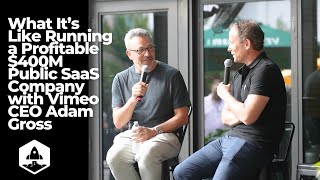
What It’s Like Running a Profitable $400M Public SaaS Company with Vimeo CEO Adam Gross
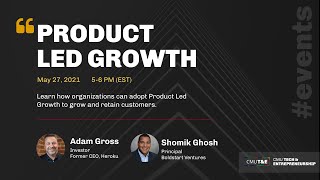
EnterpriseReady - Ep. #28, Intentionality First with Enterprise Advisor Adam Gross