Fireside: Product Led Growth(featuring Adam Gross, Former CEO of Heroku)
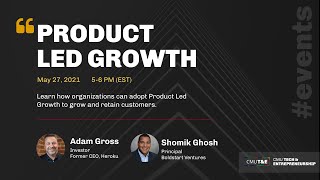
In this 60‑minute fireside conversation, moderator Shoaib Ghosh (Boldstart Ventures) interviews Adam Gross, former CEO of Heroku and early executive at Salesforce, Dropbox, and the founder of Personify and Cloud Connect. The dialogue traces Gross’s entrepreneurial origins—starting Personify straight out of college—through his early lessons on on‑prem enterprise software, his move to Salesforce where he witnessed the birth of SaaS, and the pivotal role of innovative, emotive marketing that differentiated Salesforce from legacy vendors. Gross explains how product‑led growth (PLG) emerged as a deliberate go‑to‑market (GTM) discipline, describing three distinct sales motions (individual, team, enterprise) and how they can be layered to create a “Goldilocks” GTM. He details the cultural transformation he led at Heroku, turning a developer‑first, self‑serve product into a balanced organization that could also sell large enterprise deals, and reflects on the challenges of aligning product, sales, and marketing across different company models (Salesforce’s top‑down, Dropbox’s end‑user, Heroku’s developer‑first). Throughout, Gross shares practical advice on pricing (value‑first, not feature‑first), the timing of GTM planning, internal communication practices, and personal failures (staying too long at Personify, mis‑timed exits). The session concludes with actionable take‑aways for founders on building the right culture, integrating PLG into product design from day one, and maintaining intentionality in both product and GTM strategy.
Chapters
Thanks everyone for joining. Very excited to have you all here. And also thank you, Adam, for joining us. Really appreciate it.
My pleasure. And thanks to all the organizers and the people behind this community. It's something that I've kind of strived to do my part to kind of build and maintain the alumni entrepreneurship and tech community. So delighted to participate in that and meet you all.
Yeah, I mean, I think likewise, we are very excited to push this forward, both me and Adam and I think all the other alums out there. So please feel free to reach out to us anytime. I think maybe I'll start off with how I got to know Adam. So I've gotten to know him over the past year actually, mainly as an angel investor advisor to the early-stage startups in the Boldstart portfolio that I've been fortunate enough to work with. And he has been a massive help to all those founders. They get on, you know, call it 30-minute, 1-hour calls with him and come out with a whole new refreshed look on go-to-market and product strategy, a number of other items. So could not be more excited to share his insights. With all of you today. Maybe first off, I'll just introduce myself. I'm Shoaib Ghosh, a CMU alum, class of 2012, currently a principal at Boldstart Ventures, and we're a seed-stage VC fund that partners with technical founders who are innovating in the enterprise software space. And we're kind of a day-one partner for them. So we've been fortunate to partner with great companies from the beginning, like Sneak, Customer, BigID, superhuman security scorecarding anymore. And I can't even read the full resume for Adam, but he is an alum from, from the class of 1994. He's the former CEO of Heroku, which was acquired by Salesforce for $212 million in 2010. And before that, Adam actually co-founded Cloud Connect, which was acquired into Heroku. He was the SVP of sales and marketing And then also the SVP of developer marketing at Salesforce and Dropbox before that. And finally started his career co-founding Personify. So needless to say, he's done it all in the world of enterprise software, and we're going to learn a lot from today. We'll dive into a conversation for the first kind of, let's say, 30 minutes here. And then with the remaining time, I think Slido, please just put your questions in there and then, you know, those will be sent to me by chat for me to ask Adam. So with that, let me just start kicking it off. So Adam, you know, can you describe what it was like starting a company out of college? I mean, you know, starting Personify just straight from college, I imagine that must have been a big leap. So what made you do that? What was the experience like? And can you talk a little bit more about that?
Yeah, so I actually, I Got on a plane 3 weeks after I graduated, oh, so many years ago in '94, and took a job at Stanford Research Institute and was there for about 18 months before I started my first company, Personify, late '95, early '96. And I have to say, obviously, I was eager to do it. And it was an amazing experience. I'm not entirely sure I would recommend it. It would be hard to state how little I knew and how difficult a process it is learning all the things along the way. I guess maybe that's a little bit of a contrarian point of view. I know that, you know, the archetypes we like to hold up are the people that leave like 3 days after their freshman year and go on and achieve incredible success. Maybe those people are luckier or smarter than I am, but it was a journey. It, um, I, I'm gen— you know, it probably has something to do with the space that you're in. My— when we started Personify, I don't know that we knew what it was going to be. It ended up being an enterprise software company. Um, you know, maybe if we were doing something— being an enterprise software company in the '90s was a particularly painful business. And so many things that, you know, you just kind of have to learn on the ground. It's easier to be an enterprise software company today. It's easier to be a startup today. Why is this whole speech sounding like I'm just an old man? You know, at the time, you know, there wasn't Y Combinator, there wasn't, you know, these textbooks on kind of— there weren't entrepreneurship programs. So, It was definitely a challenge, but I guess my larger point is certainly rewarding and genuinely nothing like it. But depending on what you're going into, doing a stint at a couple of places to see kind of just even the basics of how you ship software and kind of get things done is not necessarily a bad idea. And I'll close with— I remember I'll close with a funny story, or what I thought was funny. I remember some years later when I was at Salesforce, I'm kind of walking around the floor and I see a woman in a CMU vest and I'm like, oh, you went to CMU? That's great. I did too, you know. Oh yeah, when did you graduate? And she's like, oh, I graduated, you know, a year ago. And I'm like, what are you doing here? You've got the rest of your life to be in this office. Like, go become a ski bum for a while. So maybe not the right message for the entrepreneurial group, but There's a lot of time to do startups. I started my second one, you know, a good 18 years later, partly as a reaction because I kind of felt like I wanted to do it once I actually knew some things. So nothing wrong with kind of building some skills along the way.
Yeah. And, you know, that's something that I think resonates a lot with me as an investor, right, is a lot of the companies are a lot of the founders that we partner with, it's really trying to do— do they have a pain that they've lived, right? Are they solving that pain? And it's really hard to get that pain unless you've actually worked in industry. And so, so that's something I think makes a ton of sense, and I really appreciate you sharing that because it kind of takes away from this myth that it does sometimes happen, but enterprise software, a little less likely for people just kind of straight going without any industry experience and then starting a company. But it certainly can happen. You were at Salesforce actually, you know, kind of fairly early in the company's journey, and that's just such an amazing company, right? Kind of evangelizing the SaaS space, evangelizing the cloud delivery model and the financial model as well. You know, what was it like working at that company at the time with, you know, Oracle on one side and then this whole new kind of method that Salesforce was trying to get across? Especially if you were leading kind of sales and marketing? What did that look like?
Yeah, I, uh, you know, kind of following from my startup experience, we, we were an on-prem kind of big enterprise software company because that's all that really existed back then. And one of the lessons I took from that was I never wanted to do on-prem again. It was just so painful. It was so hard to get the customer successful. It was kind of so much work and effort. And so this was around 2000, 2001, when kind of Salesforce started popping up. I ended up joining in early 2003. There were only about 20 of us in all of product and development, so obviously it was pretty early in the game. And I mean, what an amazing experience to— place to grow and learn and be part of a rocket ship. I probably learned more there probably than doing my first startup or at least took better lessons from that. I'm trying to think, you know, there's so many things that we take for granted, I think, in the current SaaS ecosystem that were developed in early days of Salesforce. And maybe a couple really, really big lessons that I pulled out of there. One was, and this is no— this is recognizable to anybody who's spent any time anywhere near Salesforce, is the importance of doing marketing really right and kind of doing that really well and kind of learning how to do that. It's a little bit mysterious, but having the experience to do marketing in that setting was amazing. And, you know, I remember in the early days, and, you know, this is all credit to a lot of the early people and obviously Mark, the founder and CEO, co-founder and CEO, marketing there was run like a political campaign in the sense of like it was rapid response. It was always looking for you know, opportunities to deliver the message. It was creative, it was emotive, which was everything that enterprise software wasn't at the time. And, you know, was an important lesson in don't try and emulate the models before. You know, obviously we were inventing an entirely new kind of application model, but it really was an entirely new kind of enterprise software model. Even something as subtle as If you think about the Salesforce brand, and we think about kind of enterprise software brands prior to that, at least those of us who were acquainted with them, you know, a lot of them today, they were dry, they were boring, right? They were stuffy. That was kind of how they had to be, you know, presented as authoritative and important. And here was Salesforce, this company that, you know, had three sticks to rub together, and it decided it was going to have a very emotive brand. It was going to have a idea of fun as the brand was kind of very explicit and baked in early on, and that was very different. And the final— I got maybe one kind of last point here. Something that I was lucky to be a part of there that has certainly kind of informed how I look about things, look at things now, is, you know, all of us as entrepreneurs think about technology trends, we think about product trends, we think about kind of what's changing in consumer behavior. And then we tend to have these kind of, you know, questions about go-to-market that are, you know, well, that's something I'll kind of work out once I get all this important new innovative stuff over here. And for me, one of the big lessons I took from Salesforce was how important it is to innovate go-to-market along with all the other things. And the companies I think that really are the most innovative and most successful are the ones that can kind of fuse go-to-market innovation and prioritize go-to-market innovation with the same kind of gusto as they do product innovation and technology innovation and all the other things. The idea of signing up, things that we take just so for granted today, idea of being able to sign up and get a trial, right? That didn't exist before. That was entirely a function of the cloud model. What did that mean? It meant that you could do a Google ad, which was also new then, and get a customer and get them to sign up for a thing and get them to experience something, which was a radically different, obviously, approach than enterprise software work before. So maybe the kind of quick early lesson, and frankly, probably how Salesforce won, is it was existing in an entirely different context, not just the fact that it was on demand or SaaS, that was obviously kind of the foundational thing, but with a different go-to-market model, with a different kind of marketing style and message, And really the combination of exploiting all of those things, each one of those differences was harder and harder for any of our competitors to copy or to exploit and or even pay attention to, to think of more important. And that really, I think, created a lot of the path that we were able to execute on.
Was it an active decision to like the marketing, at least, and correct me if I'm wrong on this, I may be, but you know, what we hear are the stories like the big signs that say, "Death to Oracle," or "Death to software." Then the other thing that we heard about is I think there was a party across from a big Oracle conference that then a bunch of users went to, or at least that's the folklore. What I'm curious about is it sounds like aggressive marketing tactics, like very in-your-face, boisterous, getting out there in a big way. Was that something that continued throughout the company's history that you were there? Was that a specific thing that you said, hey, we're going to do this because of the players that are currently in the space, or what? Or was that just kind of more based off of the founders?
You know, company behavior, um, at least at that level, tends to be kind of intentional and explicit, and that was certainly true of Salesforce. I mean, it was that way because, um, Marc and others kind of created that culture. And I'll say that the message was no software, it wasn't death to software. Death software would be a little grim. I did a presentation a while ago on this topic for Heavybit. You can Google and find it, but one of the takeaways there is, you know, and what was so important to the marketing and something I counsel startups on now as they think about their message, right, is Salesforce at the time, there were 100 if not 1,000 online contact managers. It was not that there was— this was the only kind of game in town. right? But Salesforce obviously won, and it won partly through marketing, and at the core of that marketing was we had a real industry transformation message, right? The message of Salesforce wasn't, "Here's a contact manager." The message of Salesforce was, "Here's an entirely new model, an entirely new way of using or thinking about applications and software that was going to promise radically different benefits. So the fact that the message was no software was an industry message, right? We didn't say better CRM contacts or better contact management or easier access to phone numbers. The message was we have an industry message, and that message itself is something that's going to be much more compelling for the press to talk about. It's going to be much more interesting to for people to think about. Obviously, you still have to have kind of a clear tactical value proposition, but I always advise folks to be thinking actively, you know, what is your industry transformation message? And it will help elevate you, it'll help elevate the discussion with your customers, and ultimately hopefully help you stand apart.
One of the things I want to get back to actually is, so, you know, Within your career, you had this amazing career at Salesforce and Dropbox, but then you, you know, as you mentioned earlier on, kind of made that decision to start a company again, right? And that's a hard decision because I imagine at that time you're used to a fairly, you know, decent-sized salary, you're used to compensation, things like that, and you have a lifestyle. So kind of talk through what went through your mind starting that company. Why did you start Cloud Connect? What, what drove you to do that? What was the decision process as you were thinking about, uh, making that turn?
Yeah, it's funny. I think there are a couple things. One is, you know, don't underestimate how, um, exhausting it can be being in a big company for a long time. And by the time I left Salesforce, it was a big company. And, you know, at some point you're just like all organizations, you're just managing, um, kind of internal stuff. You're further and further away from what's innovative and what's new and what's happening and kind of being able to build stuff. And that just kind of is what it is. But, you know, for me, and I hope this is the case for those of you that are kind of thinking about this, it was an itch that I just had to scratch. You know, I would go and talk to early-stage companies about joining, or I talked to people about different job opportunities, and I kept trying to pitch them on what I was thinking about and I wanted to do. And pretty quickly realized that, you know, how much I was committed to it and the size of the itch that I should just give a shot at scratching it. And, you know, partly that was informed by my early experience where I knew so little. And, you know, at this point, so many years later and with so much experience being part of scaling, you know, a bunch of different companies, I was like, you know, I really got to get another at-bat and see what happens. And the punchline is it's just hard in a whole different set of ways. It was not like— it didn't come easy. So I'm glad I did it, and it was an amazing experience, and certainly— but I just had a whole different set of lessons as a result of it.
And what's interesting about Cloud Connect is, if I have my research correct, it was then acquired by Heroku, and then you went on to become the CEO of Heroku, in fact. And so I'm curious on how that process evolved, right? Because, you know, normally you have an acquisition that that leader is promoted to the executive leadership team, but usually not the, or not always the CEO, right? So I'm curious on how that came about and what was that feeling to you? Like, how did it feel like to say, okay, well, now I'm in this larger company and now I'm going to be leading this? Like, what was going through your mind?
Yeah, um, I mean, mostly I was really lucky. You know, when you sell your company, um, you kind of are handing your fate over to a whole bunch of other things. The whole idea, obviously, of having your startup is you're in control and you make that decision, and it may work out, it may not, and there's generally no harm, no foul if it doesn't. So to have the experience that I had kind of post-acquisition, and, um, to all the learning and growth I got, to all the fun I had, that was an enormous experience that I'm really grateful for. In that particular case, uh, there was a gentleman running Heroku, amazing, amazing guy, Todd Nielsen. He had gone on to a different job, and so, um, at that point I was running a decent chunk of the organization. I had marketing, engineering, and product, and so, uh, it was just kind of a natural succession. But, uh, the, the larger, you know, what I learned at Heroku and kind of the larger experience of transforming a culture from one that was, you know, kind of in the founder-led mode that was a little more ad hoc, that was more dependent on kind of having a strong kind of founder leader, and those guys, which were amazing, amazing people, uh, at that point they had left for— by the time I joined, um, they were gone, uh, about 18 months, and kind of transforming the organization into one that was, um, a little more team-oriented, a little, uh more collaborative, and frankly capable of kind of planning and orienting itself towards bigger and larger things. The really kind of big cultural thing that I think we experienced at Heroku, which wasn't unique for developer-facing companies at the time, um, was— and this relates to today's topic of PLG— was especially a couple years ago, it's fortunately a little less the case now, you know, the general idea was if you were successful with you know, doing a product for individuals, in this case for individual developers, but you can imagine for kind of individuals in any capacity. The idea that you would then do enterprise was viewed as entirely antithetical to that. Enterprise in Heroku in 2013 was a 4-letter word with an exclamation mark at the end of it. It was 100— you know, how could you possibly build something that was going to be So empathetic and carefully crafted, which it was, for the needs of individual developers, and that being kind of the core and heart of your culture, and then start engaging in all this enterprise-ness, you know, the canonical model, which is, you know, two salespeople at a golf course deciding that's going to be the purchase, right? You know, just totally different things. And the foundation of what we did, at least in kind of my chapter of Heroku, was with the help of a lot of really great people, was really just help get everybody on board with the idea that these weren't competitive forces, but in fact they were complementary. And that's a cultural transformation more than it is anything else, you know, getting people on board and aligned with that, that this is how we're going to be kind of focusing things, and it's going to be okay in that we can serve developers kind of across the spectrum and achieve all kinds of new innovation, and ultimately apply the same kind of thoughtfulness and empathy that made our product so good for individual developers to being the most thoughtful and empathetic product people for developers in enterprise contexts was in fact entirely congruent. And that's, that's what we did, and that's really what was responsible for a lot of the growth.
Yeah, it's, you know, what's amazing is Heroku for developers is still something that gets talked about, frankly, in all the founder circles, right? Because everyone's trying to build that sort of developer experience. And what's really interesting is that Salesforce is not talked about like that, to be frank. And so what's kind of an interesting thing that I'd love to dive into is, you know, You're now the CEO of Heroku. Things are going well. You have this great self-serve developer motion. People are loving the product. And then Salesforce presumably, or somehow comes knocking on your door and says, "Hey, we'd like to buy the company." At that point, you have two very different, or maybe not, but I think there are some different cultures and one that is a very top-down, sales and marketing enterprise-driven sort of organization in Salesforce, and then one that's much more developer and user-driven and product-driven in Heroku. So I mean, did you have any kind of concerns that that culture would be stopped or changed in some way? And how'd you go about thinking about that acquisition?
Yeah, for sure. And, um, you know, it's really a story of how Salesforce manages acquisitions and how that's changed as much as it is a story of Heroku. But for most of Heroku's existence and up until largely when I left, which was 2018, Heroku was an entirely independent entity. So, you know, we did share— we shared things like legal. We had, um, uh, we obviously sold through the Heroku— the Salesforce channel, although it wasn't the most important channel for us. But the attitude was, you know, kind of let us be. And, you know, one of our missions, or kind of even explicit goals in the management team, was make the Heroku business big enough that kind of Salesforce had to care. Otherwise, it could have been, you know, written off or squashed at any time. That said, so Heroku now is an integrated part of the Salesforce business. It is no longer a distinct company. And the vitality of the self-serve part of the business, I think, is— it's reasonable to question. You know, organizations at that scale and kind of the way they operate, as somebody who obviously has kind of a self-serve and bottoms-up orientation, that can be a bit of a lonely business inside of an organization like Salesforce. I, it's really hard when you have so much of the organization oriented now, wasn't always the case, but now to much more traditional, very large enterprise selling to get people to understand and care. And I'm sympathetic to that. You know, big organizations have a hard time understanding that, but yeah, I don't think Salesforce understands product-led growth. They, they have new people there that weren't there when I was there, people like Stewart who started Slack, who has a similar motion. I'd be fascinated, you know, maybe that will help inform things. Obviously, I think it's important not only because of the go-to-market efficiencies it can drive, but it requires a certain product discipline. And one of the kind of anti-patterns as you go further up enterprise is you end up having serving just the largest customers who are the most vocal by definition or signing the largest deals. And frankly, I think that's probably the skew that you've seen over the past however many years in the Salesforce product itself, is it's lost a little bit of the focus on kind of serving everybody else. And very challenging to do both, empathetic to those challenges, but I think both sides of the business would benefit from having that be more balanced.
Yeah, we, we started to talk about right there, but I'd love to dive into more of the, the go-to-market differences that we're kind of exploring here. So, you know, on the one hand, Salesforce, uh, I mean, one of the most fascinating distribution models that has been constructed over time in terms of the channel partnerships, the direct sales force, the marketing engine. I mean, just remarkable, but all very top-down, CIO, CTO executive-level decision makers. Then you had, you know, Dropbox, which you're at, which was more end-user adopted, right? But that end user could have been, you know, a business user or could have been, you know, my mom, right? Anybody could have adopted that. And then Heroku, which is much more, you know, kind of developer-first as a persona. So how can— how do you think about the differences between them? It's interesting. And can you actually I think it'd be really interesting to talk about, you know, a PLG model for Dropbox can actually be very different than a PLG model for Heroku. So if you could kind of compare and contrast it, I think that'd be pretty interesting.
Yeah, and I'll add a couple, you know, maybe anecdotes in there. There was a time in the very, very early Salesforce history when they had some of that kind of enterprise phobia too. Now that quickly, so Salesforce didn't start big enterprise the way we associate it now. In fact, right, what they really, built was kind of that core, uh, teams motion where they were selling to, um, uh, you know, a department leader or even a team leader. And then the seed and grow motion, right, which they really kind of invented. And that was their— I think Salesforce's, uh, real kind of contribution, uh, to the larger kind of go-to-market puzzle, which is still a dominant model today. And then over time kind of layered in more traditional enterprise. And over time I think that became more and more kind of dominant in its culture. Um, you know, one of the things I talk to founders and startups, uh, about a lot, and it's, I guess, back to that early, earlier point of, you know, for me, the business has to be holistic and intentional, meaning, you know, again, thinking about your go-to-market as an integral part of your product and hopefully an innovative part of your product and not just something that, oh, I have a product, how am I thinking about maybe, um, uh, again, throwing it over the wall to a bunch of salespeople, right? That model isn't going to work. And I think you see organizations that have kind of a high intentionality, uh, that do it well, and they have organizations that have kind of a low intentionality and don't do it as well. And, you know, as I like to say about Dropbox, I was the first of many people to unsuccessfully yoke them to the enterprise, and, you know, it's up to them how they want to kind of steer the business. They did a major turn towards consumer, right? They bought the photo products and the mail products, stuff like that. Um, you know, you're looking at Facebook and you're like, hey, that looks like a pretty attractive place to be. Uh, and, you know, that, that, that kind of shows, right? It's gonna— you're not going to pursue enterprise, you're not going to build a PLG if that's what your, your, your strategy is. So I think they've probably maybe adjusted that. So maybe the answer there is it really kind of comes from the top. It really has to be something that's intentional. It's not something that you kind of experiment or dabble with in the sense of like, hey, we'll just, you know, take 3 people over here and try and do a self-serve thing if we're an enterprise company. I talk to companies all the time that are traditional enterprise sales that are trying to build these other motions. And the ones that work are when the CEO is like, you know, burn the ships, we're going in. Right. And the ones that don't are, let's experiment here. And of course, then it's never going to amount to anything.
Yeah. You know, it's interesting because I think talking a little bit more about that model, it's, you know, even though we talk about self-serve and we talk about developer-first or end-user adopted, In the end, like, now it's sort of weirdly become this dirty word of field sales, but it's still— there's still a bunch of field sales that come into these models, right, and are quite successful. I mean, what's powering Twilio, what powered Slack before the acquisition, is actually people going out into the field and doing those sort of traditional relationship sales. So how should people on this call kind of think about that sort of, it almost seems like it's incongruous, right? Like, hey, it's product-led, so I should just be, it should just be selling itself and people use it and buy more and so on and so forth. But then you still have these field sales teams that are quite successful. So kind of, can you talk a little bit about how those live together and why those work in concert with each other?
Yeah, I have a whole longer presentation, not that much longer, I've done on this topic. If you Google Adam Gross, Heavybit, self-serve something, you'll find it if people want to kind of get the whole spiel. But the short version is they're kind of— they're basically, you know, three modes of selling, right? And that have kind of accreted over time, right? There's the— as I referenced before, you know, at the golf course with Gucci shoes, that's the one that we all intrinsically reject because it has nothing to do with the value of the product. It's just the, you know, quality of the drinks at the country club, right? That's kind of the 1.0 model. That's again, like, canonically what we think about, like, Oracle '90s kind of sales, right? 2.0 was kind of the SaaS trial team motion that Salesforce really developed, and then 3.0 is that selling to the individual first motion, sometimes free, sometimes paid, and then kind of converting them up there. The thing to understand, I guess, is— or the way that I think about it is, um, for PLG companies in their kind of full bloom, it's not that they're just doing self-serve, it's that they're doing all three. That you start with the individual, then you add— if you start, maybe let's call that the Dropbox model, then you layer in the Salesforce model, and then you layer in the Oracle model, right? You have all three working together. And the trick is, if you are moving your customers along in that funnel, in that journey, it's going to be much, much cheaper to make the sale, much more effective, and much more kind of value-oriented because you're kind of demonstrating value to the customer the whole way versus just kind of going for that one big top-down sale. Two of the really important tricks there are, and kind of the conversations I have a lot with startups are, when do you kind of engage in the successive motions? And my broader kind of name for this is Goldilocks go-to-market, because the question usually I end, the discussions I end up usually having are, you know, when, right? Not if, but when. And it's a tricky question. And I see companies all the time having to make really hard calls because it's like, oh, here's a deal for $200 million, or maybe not that big, but, you know, okay, $200K, that for some big enterprise, but can we support them? Should we do that? Should we build that thing? Right? Even if you're just still trying to kind of build your initial self-serve motion. That's the first thing. The second is, and this is kind of my general theory about the future of software marketing or technology marketing is, it's hard enough for companies to be good at one kind of marketing, to be good at Sales 1.0. It's hard enough for them to be good at— it's really, really hard for them to be good at Sales 2.0. And the reality is, I think for most startups and most organizations in the future, you're going to have to be good at all three. You're going to have to have a kind of a multimodal marketing organization and go-to-market organization, or just even go-to-market structure. And given how hard it is for organizations to align to do anything, to get an organization to be able to do all three of those things and keep it all straight and not have everybody run on everybody's toes and have the salespeople like WTFing the people over here, because why are you working on, you know, why is that free? You know, what the hell are you doing? You know, what are the, you know, Getting that straight, keeping everybody aligned, um, that is the really, really hard thing to do. And I think about what did we really accomplish at Heroku most successfully, uh, that I'm most proud of. It was that organizationally, that we had the right kind of cross-organizational collaboration, that we had mechanisms for keeping each other kind of aligned, and it allowed us to do this very intentional and deliberate kind of march to the enterprise with a brilliant product with brilliant salespeople, with brilliant marketing, and it was gangbusters. When I started, you know, our business was 95% online and 5% enterprise, and when I left, it was 50/50, which is exactly where you want to be, with a vital growing online self-serve segment that instead of just them saying at some point, oh, we've tapped out, we can, you know, there's nothing else we can do here, then being able to migrate to an enterprise product We went from deal sizes that were topping out at $150,000, $200,000 to, you know, doing $7 million deals. But the whole time, having the right culture and the right processes to say it's still really important that we build a feature that's just about free developer adoption. It's incredibly important. And those things weren't getting buried and that we were kind of, you know, able to kind of keep all those things straight.
I think someone may be typing, so if you don't mind going on mute, that would be helpful. Two more questions from me, Adam, and then I think we have a number of great questions queued up from the audience. You talked about the culture in just right now, but I mean, it just seems like that's such a tough thing because you have different incentives, you have different people that you're hiring at different stages to manage those three kind of phase shifts that you or not even 3 states that you mentioned. You know, obviously this is a much longer— it will require probably a much longer answer, but just talk through like how were you able to set up the culture to be able to incorporate all those different things, right? Because even in some cases, like how does product know whose feedback to, you know, value the most? Or how does sales know what what lead that they should follow, whether they, you know, the field sales lead or the inside sales lead that just came up from, you know, usage. Like, how do you, how did you deal with that culture?
I'll try and boil that down maybe to one tactical anecdote that is kind of helpful for people and maybe in their own situations, but certainly not comprehensive. One thing I learned from Marc in Salesforce is the importance of internal communication, the importance of communicating with your peers, with your managers, with your team, with your staff. And when we think about communication, I think there's one frame where you think about it as a tax, where it's like, you know, I gotta explain myself over again, I gotta build this deck, you know, why am I spending all this time on, you know, having to clarify this thing, or people aren't getting aligned, you know, why am I having to explain myself 4 times? And one of the things that was helpful about my Salesforce experience was understanding that, you know, the higher you go in the organization, the more percentage of your time should be spent on that, and that it's not a tax. It is absolutely core. You know, if I was spending 30, 40% of my total time just communicating back to the organization, that was kind of okay. That was standard. That was okay. That was the expectation. I should have— I should be doing that. Much. So I say that because when it comes to kind of setting attention and alignment and just getting organizations to be functional, certainly it's benefited me. I'm lucky to have kind of native PowerPoint skills and enjoy communicating in general. I think written communication is hugely important. You know, there's kind of the Amazon memo culture. All of those things, when faced with those opportunities, if it ever feels like busy work and like, why am I doing this? Try and take the opportunity to kind of build those skills, 'cause those were essential for the kind of transformation that we went under, that we went through. You know, I often joke, people are probably maybe familiar with Dreamforce, which is like the big Salesforce conference, you know, how much energy Mark focuses on marketing. One of the things I learned kind of along the way was like, oh, we're not doing this as we got bigger. We're not going through all this just to communicate to our customers. We're doing this to communicate back to the organization. Internal communication and alignment was so important that, you know, I mean, major marketing efforts through PR just to kind of kind of reflect and communicate back to the organization. So a big topic, but maybe a helpful anecdote there.
That is fascinating, something actually I haven't considered. So that's really interesting to hear that Salesforce is taking that approach. And what— final question for me before we get to the audience Q&A is, I think one of the hardest things with product-led growth models is you have this thing where an end user is coming in, let's say it's a developer-first product. So the developer comes in, is using the product. Now in some cases, maybe the developer is actually putting down a credit card, but many times they're actually just using the freemium version, right? Uh, and then you have this concept of, you know, who's the economic buyer, who's the decision maker, um, uh, and then who's kind of the influencer to, to, to get all of that engine just cranking. And so can you talk through a little bit of that process? How do you get— how do you go from an individual developer who loves your product and probably can actually influence the buying decision, right? But then navigating that to getting the buyer to actually say, hey, we're going to make this, we're going to pay, we're going to pay, you know, $10K, $20K for this, and then go from there.
Yeah. Well, I kind of mentioned those kind of three modes that I think about, which is, you know, the individual, the team, and enterprise. What I sometimes think about as kind of the 1-2-3 model. And one of the things I've kind of learned along the way is you have to think about those as, in some ways, they're obviously connected, but they're really distinct products with distinct value propositions. The individual almost always, that's a kind of a creation value proposition. You know, creation, think about the difference between like Photoshop, which is an individual product ultimately, and a Figma. What is the value? And I'm, you know, smushing over a lot of important distinctions, but, you know, what is so essential to the Figmas of the world? They are team collaboration products. What is GitHub? It is a team collaboration product. There is an individual mode for GitHub, which is me discovering, you know, open source library to use. That's a creation value proposition versus a team mode, which is a collaboration value proposition.
Right?
Those are very, very different modes and very different value propositions and very different orientations. It's not just— I'm— you know, if GitHub were merely like, this is how I find open source projects, and then I click a box and I get better search or something, that wouldn't work, right? Like, you're pushing string. It has to be intentional. It has to be a different mode. And then we kind of graduate to enterprise. Typically, that's some kind of compliance vibe. Proposition, right? Either compliance with their processes or compliance in the kind of strict sense of regulatory compliance. So in an ideal mode, I like to think about having kind of lead PMs kind of associated with each of those, almost kind of GMs for those things as discrete things. Absolutely, you are modeling and creating paths to kind of migrate through. And that's really important as well. But the idea that it's almost fun— like, I get a lot of questions about packaging and pricing, and I'm like, it always starts with product value. Like, it's not like, here's a bunch of features, how do we price them? It's sometimes— I had a startup that I worked with that, you know, it was pretty early, and they called in like this fancy pricing consulting firm. I'm like, we're not trying to optimize the price of a gallon of milk, you know. This is fundamental kind of value creation. It's not— the question isn't the price, the question is the value. So that's a product question. So again, a short answer to a very long question, but hopefully provides some insight how I think about those things.
Absolutely. I mean, it's such a hard question to answer in a short period of time, but you did an excellent job. So now shifting to some of the audience's questions. This one, actually, I think I know your answer, but how early is it too early to start thinking about uh, uh, go-to-market in, in product development? So, so basically, how early should someone be thinking about it?
Um, it should be an intrinsic and integral part of your thinking, right? That when you think about creating something, you— if you're not thinking about how people are going to kind of discover or experiencing it, you haven't thought fully about what it is. Like, you know, there— these are not separate or disconnected things. I'm not saying you have to go understand, you know, what your comp model is for the Northeast for a sales region, but if you— you know, great products are ones that are— the distribution is— or is in the go-to-market is kind of intrinsic. So I don't want to kind of scare people into thinking they have to get everything right, the same way you don't have to get your UI perfectly right. but it has to be intrinsic and intentional in the process, at least within, you know, some realm of, of defined range.
Yeah, I think, uh, what we've seen from the best companies is, and the best founders, is they, they think about it from day one, uh, and it is an ingrained part of product development because product ties to go-to-market and go-to-market ties to product. So it's, it's a very closely cut couple, Blake. I think next question is actually kind of more on the personal side. Do you have a failure in your career that stands out as particularly valuable to you from the learnings that you got from that, that you would, you would be willing to share with the group here?
Where do I start? How much time do you have? One of the things I've thought a lot about in reflecting on my career is kind of when to stay and when to leave. I think I stayed at Personify too long. I think I was pushing that string probably past its utility and past where I was kind of getting meaningful learning from. Uh, so that's certainly one. Um, and maybe there's some places— and then again, you know, uh, I was at a company in between Personify and Salesforce called Grand Central, and it wasn't working out, and I, you know, um, uh, you know, was all effectively kind of shown the door. And man, that was the best thing that ever happened to me. So, uh, I wouldn't have gone to Salesforce if that weren't the case. So kind of staying and leaving, um, those are— those tend to be, uh, a little tricky. Um, maybe this is less personal, but just maybe more be kind of like, uh, from an Outlook point of view. Um, I have— I think it's true for a lot of people— I have consistently, um, underestimated how big things get. And, uh, you know, I would have never in a million years dreamed that Salesforce would be as large as it is, even starting Cloud Connect and 2011, if you told me that this kind of part of the integration, data integration space was gonna be as big as it is, I would've thought about things completely differently. You know, I'm kind of, on one hand I'm an entrepreneur and like you have to be forward-facing. On the other hand, I'm pretty skeptical. Like I couldn't be more anti-crypto. You know, I live, we all kind of, you know, I hope I'm pretty anti-bullshit and I kind of reject a lot of the bullshit out there. And I think that maybe has made me at times unhelpfully cynical. But man, if I have learned anything over the years, it's like even tiny spaces, like just the inflation of our broader tech universe, the expansion of our broader tech universe, there is so much opportunity out there. There is so— even I look back 10 years, I'm like, if you told me Twilio would be as big as it is and GitHub will be as big as it is or Heroku would be, I'm like, I would have thought you were nuts. Like, so there's, there's so much opportunity out there. I really do believe that. And I need to fight my own cynicism occasionally.
So, well, you heard it here first. Adam's not a fan of Dogecoin. But I think one of the, one of the things that resonates with me there is, you know, some of the, the the founders who are in this audience and the future founders, you know, I think when you start your company and you start building a product, it will be very narrow in scope. And it will usually be also, you know, a pretty defined user that's actually using your product. And it may seem so weird to you that there's so much potential for this product and for the market, but then all that it's resonating with is this 10 users that live in your product every single day, right? But that's actually the beginning of these large markets. And it's what's so exciting about it.
So, you know, Personify was a web analytics company in 1996. Think about the generations and gener— and like, you know, by '99, things were looking pretty grim. 2000, things were looking pretty grim, right? Like this, this market's kind of— who knows how many trillions of dollars of market value has been created in that space since then. Every day we get new companies in that space. At the time, I was like, oh, well, this is kind of a solved problem. You know, where's the opportunity? What was I thinking? You know, we could list 50 companies now that have been started in the past 3 years in that space. So keeping that conviction alive is hard, but in the fullness of time, it tends to pan out.
Yeah, this is a great question that I'm excited to hear your your response on. So would you agree that to, to do product-led growth, you have to start with a product-led growth model? So if you start with a different model, do you think that you can go back to a product-led growth model in the future?
There are companies that are certainly making the transition from traditional enterprise to kind of more full PLG. And it's usually part of a transition from being an on-prem company to being a cloud company. And because if you're not making that transition, the two go hand in hand to the larger point of these things tend to be linked. It's harder to go start being an enterprise company to go down to PLG than it is to kind of just start with individual and go to enterprise. They're both kind of hard directions. It's obviously harder when there's just more stuff in place. If you have a real intentionality around it and the right leadership commitment to it, any kind of transformation is possible, but it ain't easy.
Yeah, it's— I think that is a— it's a tough— it's a tough way to go back, but I think the point that you mentioned about on-prem versus cloud, that is something that we see particularly with open source companies. Developer-first open source companies go through that a lot. What is also interesting though is, I think, and this is— Adam, I'd be curious on your thoughts— is, you know, I think when we say product-led growth, we do immediately mean kind of a provider-hosted— the way we think about cloud is kind of provider-hosted. You can also have self-managed product-led growth as well, right? Which could be something that It's just the motion at which they're adopting this product and the sales cycles and stuff are still short enough to be part of that. Would you agree with that, Adam, or do you delineate between those two?
There are some companies that I'm an investor in that have on-prem products. It's part and parcel of the open source world. Uh, as much as I'm anti-crypto, I'm pro-cloud even more, right? I just don't think there's any future in anything on-prem, full stop. I, I— even the definition of what on-prem means is changing. I've been doing cloud now for over 20 years. Um, there is no future in on-prem, full stop. I, I just can't. Yeah, you can find niches and you can do things and whatever, but, um, uh, all of the, the value the models, the go-to-market models, the customer engagement models, the— it's, it's, yeah, no future, full stop.
I think finally, I think we'll try and wrap this up with a question just for, for kind of the, all the potential founders and current founders that are out there that are listening to this. You know, I guess we talked a lot about go-to-market, we talked a lot about culture, What are the learnings that you would suggest for founders who are starting out to kind of think about these two areas? Like, how do I get the right culture in my startup or my organization? And then also, how do I kind of map that to my go-to-market?
Yeah, I guess I would say, you know, number one, don't panic. And number two, The same instincts that a lot of founders have, especially as kind of product-oriented founders, right? It's very experience-focused, it's very value-focused, it's very design-focused. And I wouldn't say you have to like go pick up a bunch of skills or ideas you don't have. I would just say kind of expand the scope and kind of horizon and empathy for what's already motivating you and driving you. So instead of kind of thinking about the product, beginning after somebody clicks the login button. Think about the product just beginning the first time somebody hears about your product or solution, however that is, and just design from all the way out. And that will at least give you kind of that broader orientation and that broader empathy and intentionality. And like all your product design decisions, you'll get some wrong and that's okay. But just kind of have as wide an aperture as possible, think holistically as possible. And that will kind of, I think, help set you on the right course to have that kind of broader frame that leads to PLG success.
Just incredible insights. Thank you so much, Adam, for all that you shared and for your time today.
More from Adam
What It’s Like Running a Profitable $400M Public SaaS Company with Vimeo CEO Adam Gross

EnterpriseReady - Ep. #28, Intentionality First with Enterprise Advisor Adam Gross