Change Proof Resilience Talk CEO Space
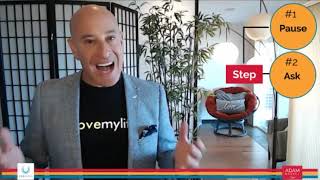
Adam Markel shares how to build resilience by reframing adversity, resetting your nervous system, and regenerating through small daily rituals. He walks through concrete practices: a 10-second reset using 'I love my life', a grip-and-release exercise for emotions, and a 13-statement code of conduct to anchor your day.
Chapters
So let me introduce Adam Markell to you. Such a dear friend. Him, his wife Randy just have a really special place in my heart and Bernie's heart as well too, no doubt. So Adam Markell is an international speaker, a best selling author and one of America's top performance mentors and reinvention experts. Adam Markell has reinvented his own career and has since created and led programs around the globe in the areas of business development and personal growth. He is currently the CEO of More Love Media. More Love Media, a company that is dedicated to helping organizations build work cultures of resilience and inspiration to drive more sustainable results. Adam's latest best selling book, which he's going to be teaching off of today, the Art and Science of Reinventing youg Career in Life, provides a simple roadmap and insightful principles for catapulting your life and business to the next level. Adam's work has been featured by many media outlets including the Huffington Post, Entrepreneur Inc. Forbes and the Wall Street Journal. Today, Adam is going to share how you can develop more resilience and leverage the power of change as a catalyst for growth and personal and professional transformation. Let's give a very warm welcome to Adam Markell. Welcome to the Virtual Forum, Adam.
Thank you so much, September. And hello everyone. My name is Adam Markell for those of you that don't know me. And I am a resilience guy, just like September said. In fact, my entire career has been spent focusing on what it takes to be at your best even in the most uncertain and difficult and challenging times, including writing the number one best selling book on resilience called Pivot. But here's how it all started. Three whistles rang out and I knew what that meant. I was a lifeguard and three whistles at Jones beach meant someone was missing. I ran down to the main stand. The captain of our field shouted the order. They lost someone@field3. It's a search and rescue go. 10 of us ran down the field to join the search team. It was already a crowd. The people were pointing to where they last saw the missing swimmer. We dove into the ocean and we swam out past the breakers. We formed a straight line perpendicular to the shore and we started our search pattern. We dove down into the cold, dark Atlantic Ocean. We swam into the current and we came straight up for air. And when everyone's head popped up, we repeated that process again and again and again. After more than an hour, I heard that whistle again. It was a terrible feeling. We weren't done. We hadn't found him. We got out in the water. Our captain led us in a moment of silence. When we opened our eyes, he looked at each of us and said, no one goes down in our water at this field. No one goes down on our water watch. Then he said something I will never forget. You either make the save or you die trying.
Whew.
Just. Just a little intense, huh? But we had to do our job. We had to keep doing our job that day. We had to get back up in the lifeguard stand again that day. And so our captain said we needed to learn three things. We keep three things in mind. We had to pause. We had to ground ourselves. We had to ask, but they ask, what do we learn from this, from such a horrible experience? What can we learn? We have to choose. We have to choose whether we're going to move forward or stay stuck. The only way we could do our job that day, continue to get our job done, and look after people in our water was to move forward. That's what resilience looked like at Jones Beach. What does resilience look like to you today? We're in the middle of a pandemic. It seems like we've been in the middle of a pandemic for a really long time. As business owners, as entrepreneurs, as moms and dads, as brothers and sisters, sons and daughters, as citizens of countries all over the globe, we've been facing this great uncertainty in our lives. How do you define resilience? I want to go ahead. We're going to do a lot of interactive work together today in this area of how it is that you pivot into resilience, and your participation is everything. And I love CEO space because it's such an accelerated learning environment. So right now, I want you to go ahead and use the chat. We're going to use the chat a lot for questions and for answers to certain things. So what's your definition of resilience? And in fact, either September or Ellen or I can do it. We can read right out of the chat what some of those answers are. So just go ahead and start writing in there. What's your answer for the question? How do you define resilience now? Let's go ahead and see what's in the chat. I can tell you, as you are putting those answers in, our definition is the ability to actually utilize and use adversity, use uncertainty to create growth. Leveraging uncertainty and adversity as a catalyst for growth. Staying forward and positive. Jill Loveland. Thank you, Jill. You're so right on yes. Hallie. The ability to grow, adapt and change. Mary. Ability, ability to the knits and bounce back fast and keep moving forward. Yes. Being unstoppable. I'm pretty no matter what. I love it. Jason Webb. Yes. You in fact are pretty no matter what. Well, I don't know how you feel about studies. I've done a lot of research in this area of the last couple of years and McKinsey did a study of organizations that were moving out of the 2008 financial crisis, which many, many people remember. I see you guys are still putting it in there, never giving up, looking forward, persistence and seeing and keeping your eye on the goal. Yes, exactly. Persistence. McKinsey studied resilient organizations and what they found was that resilience was the single trait, the single culture characteristic, if you will, that would help companies to move forward. In fact, resilient organizations not only were able to recover and rebound after the 2008 crisis and crash, but they were able to extend their gains and lead and increase their lead on their, on other organizations that were in their space. Because what they found was that resilience was a key to determining how you solved problems. That resilient organizations were highly innovative. They were not just problem solvers, but they were creative and novel problem solvers. Creativity, flexibility, agility, adaptability, all made these organizations more likely to succeed then their counterparts. Of course, at CEO space, we don't talk about competitors, we talk about our family. Right? The people who are in this business, this world of entrepreneurship or organizing, running businesses. It's not easy, it's on a good day, it's difficult. We know. And what my research and the team that I've been fortunate to be around for the last several years, what we found is that you've got to develop your resilience now. Pivoting is all about developing your resilience now before we need it. Because we know this is not the last challenge we will face. And yes, resilience is about bouncing back. But to me, what my own life experience tells me as well as the research is that it's not about bouncing back, it's about bouncing forward. It's not about bouncing back, it's about bouncing forward. It's not just about enduring, it's about how it is that we're able to thrive. And we're going to talk about what it takes to thrive by creating and pivoting into resilience. Today, there's three things that I want to focus on. Three essential traits, if you want to call them. I like to think of them as themes that resilience. Both the organization and the individual have these themes playing these three themes to reframe, to reset, and to regenerate. So let's talk about the first one. Reframing. Reframing is taking a situation, looking at a situation and seeing it differently. That's what happened on the beach that day. We had this devastating event happen. We lost someone. I will never forget that day. I'll never forget the look on the face of the family, this mother and father. They had a young son, he was late teens. To see their face was devastating. And yet we still had to do our job. Believe it or not, we had to get back up in the lifeguards then. We had hundred thousand people on the beach that day, and we had to keep going. So our captain said we had to pause, ask, and choose. I've unpacked this so many years later. Pausing in many ways, is something that we do by breathing. Just take a breath right now, right now. Take one deep, conscious breath to ground yourself. That's the first thing that we did to get back up in the lifeguard stand that day. We were all shaken, as you could imagine. But we paused, we breathed together, we grounded ourselves together. Our daughter Chelsea, our oldest daughter, she's remarkable in so many ways. And just the other day she said to me, dad, I feel like with everything that's going on in the world right now, I got to move into neutral. That's a pause. Moving into neutral is not being in judgment, not being charged by so many of the things that are happening around us that create fear, create anxiety, create anger, even to get to neutral is a pause. Taking a breath is a pause. Grounding ourselves is a pause. After we pause, we ask. So on the beach, we ask that question, what can we learn now? As brutal as it was, as devastating as it was, we've experienced that devastation just in the last eight months. Many of us know someone who's perished in the midst of this pandemic. Maybe somebody really close to you, even. We've all experienced loss, grief. To ask what that means, to ask for the meaning, it reminds me of the things that I learned when my grandmother was still alive. My dear, sweet grandmother, who I spent so much time with. I used to sit at her kitchen table, her dining room table, playing cards with her. And she would make sandwiches. She would make a chicken salad sandwich like nobody's business. In fact, September and I were talking about this just a couple of weeks ago. I love to watch her do this, to pick apart this chicken and handle everything with care. The way she cut the bread, every little detail was so filled with her love and her presence. And I once said to her, I said, grandma, there's just nobody like you. There's nobody who does that. And she said, adam, life is about little things. It's about little distinctions. Little gems is what she called them. The meaning, in other words, finding the little gems, the little distinctions, the meaning in situations is vital to our survival. It's vital to our thrival, to the way that we thrive, that we keep moving forward. Viktor Frankl wrote an amazing book about this called Man's Search for Meaning. We seek out meaning, and we have to ask, and that's important when we're reframing any situation, is to ask that question, what does it mean? So that we can then choose, just like we did at the beach, choose to move forward. We had a choice to make that day, whether we were going to move forward or we weren't. And my own experience is that we can't move forward if we are hanging on to the past. It is really difficult to move forward when we are holding on to the past. And so many of us are holding on to so many things. Anger and resentment and upset, sadness, disappointment, frustration from what's gone on in just the last six months or eight months or something, and things that are many, many years old already. What I want to do with everybody right now is just something very quick and very simple to help us to make that decision if we want to let go of the past, to be able to see forward and move forward. So I want you to think of one thing right now that has caused you some upset in the last few months, something that you can think of right now without having to dig too deep. Find one thing that's caused you an upset that you're angry about or frustrated or sad or grieving or resentful. What's that one thing? I want everybody to think of that one thing right now. Get it right up here. Think of it, and I want you to feel it. I want you to open your hand. Everybody take your hand. Doesn't matter whether it's the right or the left. I'm using my left hand. I want you to take that thought. Everybody got one? Nod your head if you've got one. Yeah, good. Think of that. Feel it. Feel the charge of whatever that disappointment or sadness or anger is about, whatever it is. And take it from your head. I want you to put it right in the palm of your hand, okay? Just stick it right there. In the palm of your hand, just like I'm doing. And then I want you to close your hand around that thing, whatever that thing is. Good, you got a grip. Nice and tight. Excellent. Now I want you to feel the charge of whatever that is. I'll tell you. For me, I'll be vulnerable and share that. Just in the last few months, my brother, my kid brother, my little brother, I love to death. I'd do anything for him. He disappointed me. He made a few promises to me that he didn't keep. He's a lawyer too, just like me. He keeps his promises. And I'm still carrying a charge energetically. I've got a charge here about it. I'm angry, I'm disappointed more than anything, really. But I feel it. Think about what you're feeling right now that's inside of the palm of your hand and grip it tightly. Grip it tightly. And on a scale of 1 to 10, think about it. Is it a 10 meaning it's super high charge, or is it a 1 or a 2 or something in between? Pick a number really fast. It's like an eight for me right there. It's like an eight. Okay, grip it tight. Now I'm going to ask you these questions. You can say the answers, your answers out loud, if you like. Do you like how this feels? Do you like how it feels? No. Do you want to let that go? Yes. I'm answering for myself, by the way. Are you willing to let that feeling and that charge and that energy go? Yes. For me, it's yes. Good. On the count of three. Not just yet. Wait a second. Hold it tight, grip it tight. We're going to release it. Going to let it go. If you choose, you can keep your hand just like this for the rest of the day, the rest of your life, if you like. But again, resilience is about moving forward. We've got to let go of the past sometimes in order to move forward. So 1, 2, 3. Just open your hand and take a look inside your hand. Look at your hand. What's in there? What do you see? Is it there? How does it feel on a scale of 1 to 10, how does that charge feel right now? For me, it's like a three, maybe even a two. We've got to be able to choose to move forward. And sometimes that means letting go of the past. Because ultimately the most important pivot question is the question that my beautiful wife Randy, that I'm married to for more than 30 years at this point. That's it. You get past 30 years. It's like, wow, how on earth. And she's asked me this question since we were in college. The question is, what is the creative opportunity? What's the creative opportunity right now? Because there always is one. In every area of our life at any time, there's a creative opportunity that we can focus on. What is the creative opportunity for you? Not just in the situation that you're reframing right now, but. But in every situation, every situation in your business, every situation in your health, in your relationships, in your personal life, there's a creative opportunity if you're looking for it. Now, of course, we know we make the best of plans, don't we? And, like, the adage goes, you know, the best of plans, right? Of mice and men. What happens to those great plans? The universe has some other plan, sometimes called reality. And what's interesting about this is that if you think about it, it's similar to when we're in our car and we make a wrong turn. We find ourselves on, you know, in a place we didn't expect. What happens at the time when we find ourselves in the weeds in a place we didn't expect? When we're in our car and we've got our gps, our phones, what happens? The GPS tells us, reminds us that we're idiots, right? It screams at us, it judges us, it tells us it's just like your father said, you can never follow directions. That's what the GPS is set to say, right? Maybe. Maybe it's just my own. What does the GPS say to us? It speaks the truth. It shares wisdom with us. It's the principle of resilience. That we are able to reset, that we are able to recalculate. In other words, to redirect ourselves when we find that we've made a mistake, when we've gone off in the weeds somewhere, our GPS doesn't yell at us. It simply finds a new path, a new way to get to where we want to go. That's what resetting is all about. And to me, I start my day with a reset, and then I use it throughout the day. In fact, I gave a TED Talk some years ago where I was sharing how when I used to be a Lawyer, I spent 18 years in the practice of law. And I know a lot of lawyers. I love a lot of lawyers. I'm still a lawyer. I just don't practice anymore. It wasn't good for me. I used to put my feet on the floor in the morning, and the first thoughts I had when I put My feet, when feet hit the floor in the morning after waking up from asleep, I would feel anxious. I would feel dread. Even at times, I'd feel angry angst. So I shared on a TED stage that I started to change some things a while ago, 12 years ago to be exact. I started to say something at the beginning of the day that was different. I started to set a different intention. I started to create a different blueprint. I started to reset at the beginning of the day, interestingly enough. And the way I would reset was that I would say these four words which I've got up my T shirt right here. I would say I love my life in the morning to begin my day. I wouldn't grunt the way I was. I wouldn't say some of the things that I can't probably say in polite company right now. At the beginning of the day, I started with these words and then my life started to track and move in that direction. The way if we follow our GPS when it tells us we can reset our course. What's a reset for you right now? To me, I use that I love my life reset all the time. Whenever I'm feeling fear, doubt or worry during the day, I just say to myself, I love my life. I'm also a big fan of I am statements. I am resilient. What's an I am statement for you right now? Go ahead and put that in the chat. I want you to create your own 10 second reset. Of course you can borrow. It's not even mine. I don't even call it mine. I just use these words. I first thought about these words when I saw the movie Jerry Maguire years ago and I heard this guy, Dickie Fox, who's Jerry Maguire's mentor, saying I love my life. I love my wife. I started saying it. What's your 10 second reset? Let's catch a couple of them from the chat. I am clear, focused and present. Beautiful. Eric. I am blessed and everywhere. I am God is. Oh, how gorgeous. Jill Jay. What if I love my life no matter what? Beautiful. Yes. I am joyful. Angela Lee. Yes. Joy. How powerful that is. I am blessed. I am happy, healthy, whole, complete as is possible. Gary. Beautiful. I am a miracle to myself and others. Yes. James. Beautiful. Richard K. Life is amazing. I love life. Sophia. I am the author of my own life. Daniel. Yes. Grateful. Grateful. It says Shakar. Ginijali. Beautiful. I am charismatic, kind and engaging. I am abundant. Yes. These are your I am statements. These are your 10 second resets that you can use any time during the Day when you need to pause and to ask, you need to choose, you need to reframe what's happening in your life. You can simply reset now. It is also vitally important that we take care of ourselves. Resilience. We think about resilience and what resilience is. The research is clear. It is not about endurance. It is not about how we endure, it's about how we recover. In fact, Harvard Business Review studied the best performing athletes, Olympians and professionals, and compared them with executives and others in the business space. They found they had one thing in common, these top executives and top athletes. One thing that they all did, it was rituals. They all had rituals for recovery, rituals for recovery. So when you think about resilience, we're thinking about those three things, these three themes. The ability to reframe the situation that we're in, the ability to reset like that, gps, recalculating reset, however many times you need to push that reset button during the day, it's great, it's fine, no problem. Because you keep going forward, which is what we have to do. And lastly, we've got to regenerate. I'm going to spend a little time on that right now. What does it look like to regenerate? I think for a lot of people what it looks like is Rocky. Right? Guys, remember this movie? What this quiz. Who remembers the year that Rocky came out? Like Rocky, not Rocky 8. I think there's eight Rocky movies. Not Rocky 8 or six Rocky one, just Rocky. What year did that come out? Let me see if it's in the chat. Well, oh, I got 1986, 77, 76. Mary Moss, you got kudos. Mary Moss, 1976, Rocky comes out. I was a kid, I was 11 years old. Now I'm telling you how old I am. I'm with my dad was special. We went to the movies, just the guys to go to see this movie, get out of the movie. And I literally couldn't stop running. I was just in the streets going da, da, da. I mean, literally just going crazy. My dad had to corral me, bring me back to the car because Rocky was so inspirational, right? He gets knocked down, he gets back up, he gets knocked down, he gets back up, he gets knocked down, he gets back up again and again and again. He wins our hearts, doesn't he? But he loses the fight and as my old buddies from South Jersey would say, and he don't look too good in the end. He's all banged up and I think for so many of us, we've been taught that resilience is just about the physical. But it's not just physical, it's mental, it's emotional, it's even spiritual. Resilience is holistic. In other words, I know a number of you took our resilience assessment before this workshop today. If you didn't, you feel free to. It's entirely free and no strings attached. But you will get some very vital information. I'm going to share some of that information in just a second here. But if you've not yet taken the resilience assessment, feel free to do that. CEO resiliencerank.com CEO.resilience.com to get your score and find out what resources are available to make improvements. So let me share with you from the data set that we've got, by the way. We've used this assessment now with hundreds of organizations and probably 10,000 employees globally. So we've got large data sets, we've got some really important benchmarks that we look for in those four areas. Mental, emotional, spiritual, physical. And this is where you guys are stacking up so far as an organization. And the data set was small, it was just about 50 people, but enough. And I got to tell you, it's concerning. It's concerning because that red area, that red zone is not like being on the, you know, inside the 10 yard line in football in this case. The red zone is actually like it was at the beach, like a red flag area, an area for concern. So I want to share with you a little bit about what we saw. And right now I would say that the areas that need the most improvement are the ones that you see there in red. And I can tell you that a lot of you are working sort of nights and weekends. I mean, that's what the assessment said, that there's almost no such thing as weekend anymore, right? When does the weekend? It doesn't. It's also concerning in the physical area that a lot of you are not getting enough sleep and are settling for convenience, not getting the sort of nutrition in your bodies that you're spending a lot of time on your phone. There's something called constant cognitive arousal, which is a fancy term that just means we're touching our phones all the time, 150 to 200 times a day. We are looking at our phones and that's an issue. It's an issue to be on our phones so frequently. And in fact, the other piece of this that I thought was also pretty telling was that, and I was surprised about this actually, that a lot of you Are feeling as though you're not fully aligned. Like in the question, question 13, it asks you, you know, do you feel as though you're doing work that you love? And a lot of you said, yes, and that's important. But later, two questions later, you're saying that the way you spend your time is actually not in alignment with those things that you care most about. And I think that was my story as well. When I was a lawyer and I was miserable. I ended up in the hospital on a Saturday when I was supposed to be at our son's baseball game. Instead, I was in the hospital in the emergency room in a gurney, thinking I was having a heart attack that turned out to be an anxiety attack. And it was because I just was not. I wasn't aligned. I wasn't spending my time in alignment with the things that were most important to me. I said, I love. I loved having kids. I wanted to have kids. Randy and I, when we met in college, we were like, want to have a lot of. A lot of kids. We have four kids, and yet I'm working all the time. I don't see them. I'm not there for them. And it started to build up inside of me. And I knew that I was living out of alignment, and I was even living this like a fraud because I was just doing it for the money. And so those things are tough to reconcile. And I saw some of that in these results, that a number of you want to contribute in a greater way to the world, that you're looking for ways to be more of greater contribution in the world, but you don't know how maybe to do it. So I love this guy. I don't know if you know who this is. Maybe if you do, go ahead and type in the chat if you know who this is. The guy who's holding the British flag. And obviously he's connected to the British cycling team. I'll tell you his name in just a second. So here's the thing about the British cycling team that maybe you didn't know. In 1998, the British Cycling team hadn't won a gold medal in the Olympics since 1908. The British cycling team in 1998 had never won a Tour de France. They bring this guy in. Anybody know who his name is? I love it. Nobody really ever gets this one. Poor guy. His name is Dave. Dave. Just Dave. Dave Brailsford. He was brought in to be the performance director for British cycling. And. And you would probably say if you were assessing the British cycling team, then that they sucked. Right? There's no polite way to say this. They were really terrible. And you would also think that in that situation, if you were the leader of that team, that you'd have to make some drastic changes. But that just wasn't Dave's philosophy. He came in and he said, you know what? Instead of making big, giant changes, we need to make lots of little changes, small changes. They change the fabric of the uniforms that the bikers were wearing, that the cyclists were wearing. They changed the seat that they sat on. They changed the color on the inside of the truck that carried the bikes. Think about that for a second. Why would they do that? They changed it to white. Why would they change the color to white? Because Dave Brailsford realized that those cycles, those high performance cycles, if they get dirty, if there's dirt, if there's grime, if there's soot, if there's dust even in the gears, it affects the performance. So he painted the trucks white so they could spot it. And you know what happened? In 2004, they won two medals at the Olympics, first time ever. Two gold medals in 2008. They won more medals than any other team at the Olympics that year. And last count, I think they've got six Tour de France victories since. Dave Brailsford brought this concept of small change, which is a pivot concept. It is a pivot concept that you don't have to do drastic, make drastic changes to anything. All you have to do is change one degree. And what happens over time is the status quo is eliminated. Status quo leads to mediocrity. It leads often to stagnation. And a business cannot thrive in a stagnant environment. And the status quo is the enemy of every successful business. So what we have to do ourselves and in our businesses is make those small pivots, those small 1 degree, 1% changes. When it comes to your own personal and business resilience, what are some of the changes that you can make mentally, emotionally, physically, spiritually? The 1% kind of changes. For me, I'm a ritual guy, just like in that Harvard Business Review article. I have rituals for every part of the day. The kind of changes that we can make in the morning, in the afternoon, and the evening. I'm going to go over a couple of them with you right now. The time that you spend for your head, what are you doing for your head in the morning or in the afternoon or the evening to quiet your mind, to think, to provide your brain with some rest and exercise as well. What are the things that you're doing to take better care of yourself, to eat better, to drink better things? Do you start with a green drink? Are you putting healthy things in your body? Are you taking a walk? The medical benefits, the benefits to our brain, the benefits to our physiology, to our mood, to our joy receptors are magnified and improved when we just take 20 minutes to walk. That's it, 20 minutes. That's it. 20 minute walk. A 20 minute closed eye session. I love to sit with my feet up the wall, you know, my tush to the base, bar my feet up the wall, put something over my eyes and set a timer for 20 minutes and close my eyes. It feels like a three hour nap. When are you unplugging at night? Are you watching TV before bed? Are you reading? Are you going to bed and getting enough sleep? Or are you waking up tired? Are you getting up in the middle of the night? These are things that can be handled a step at a time. And I'm a habit guy. I'm a guy. I believe you ritualize to habitualize. I've studied habits, I've read about habits, and I can tell you that you can read a lot of books and a lot of research, but it all comes down to these four simple things. You got it? When you're creating a new ritual, creating something, you want to become habitual, you've got to start small. You've got to make it easy on yourself, make it easy on yourself and make it easy on to be able to do it consistently. To me, the way you make it easy to do something consistently is to schedule it, to put it in your calendar, in your Gmail. And often when I work with people, I say, show me your calendar immediately. If I'm mentoring somebody, an executive somebody, I want to see their calendar, I want to know what they're scheduling in their life. Everything from if your spouse likes feet massage, foot massage, schedule it. You want to have coffee at a certain time with a certain person, you've got to schedule. You've got to schedule things that you want to become habitual. And of course, we need to have accountability partners, which is so great. What's so great about CEO space are the people that you are going to be collaborating with are the perfect people to be in partnership with. I want to share something with you as well, which is my morning ritual, my waking ritual I shared earlier. I put my feet on the floor in the morning, I think about what I'm grateful for and then I say these words out loud. I love my life. Four simple words. That's what I do when I wake up in the morning. It's my ritual. But within the first half hour of the day, I sit down quietly and I look at this amazing thing that is. Oh, look at that. Went sideways on me. This is actually a picture of my code of conduct. And the code of conduct was something I created about 10 years ago. I wanted to start my day with the end in mind. To start something with the end in mind again, you can start with a reset for me. I wanted to start knowing how I wanted to experience my day. How did I want to experience myself being. It's a part. It's a beautiful section in the Course in miracles. It's chapter 30 called the New Beginning. How do you create the day, your perfect day? How can you create the day that you would want to give to the world? Give this day as a gift to the world. That's the day you want to create for yourself. Because in having it yourself, you're actually able to give it to others. This beautiful, beautiful twist on that concept. So many of us are poor receivers. We won't receive our own love, we won't receive our own praise. And so how can we possibly give something to anybody else that we won't receive ourselves? It doesn't make any sense. I wanted to start with the end in mind. I created this code of conduct with 13 statements. They are 13 statements that all start with I experience. And I always start with the same statement. By the way, I experience gratitude today. I want you to go ahead right now and create your own code of conduct Right now. I want you to go ahead and type it in the chat, and then I want you to write it down someplace and you can continue this exercise later as well. Experience. I want you to fill in the blank and think about the kind of day that you want to experience. Because I don't believe that at the end of our days, I believe we're eternal beings. So I don't think there's an end. But in our physical bodies when we're transitioning, I feel like the only thing we're going to have, we're not going to have our house or car or any of that stuff, but we're going to have a feeling. We're going to have the resonance of what our life felt like. And I feel like this is what we're doing to prepare for that end in mind. How do you want to experience yourself right now? So the I experience statement. Start to populate the chat with those. Write them down again. I experience being Love and being loved today. You always end with the word today. I experienced blank today. And I'll read some of those out of the chat for you as well. I experienced forgiveness today. I experience myself being the conscious creator of my own life experience today. Go ahead and start typing those into the chat, if you would. How do you want to experience yourself being today? I experience being strong yet kind. Today. I experience myself being an excellent listener today. Go ahead and start putting those in. You can write them down on your own and then start putting them in the chat. I experienced love and light and joy and kindness today. Beautiful. Jill. Angela. I experienced being the love today. Yes. If you were having the perfect day, if you were creating the perfect day for yourself, what would you experience? I experienced being wealthy. Feeling wealthy, healthy, wise today. Yes. I experienced connection with my friends. I experienced being rested and full of energy today. Yes. I experienced joy and love and kindness and abundance. All of this. Yes. So flipping cool, you guys. So while you're continuing to do that, I'll just say this has been a bookend practice for me. What do I mean by that? I mean this ritual is the way I begin the day. And then at the end of the day, I check in and I look at my list. I sit quietly. By the way, this only takes five minutes in the morning to sit and think and read what you've written. Often I read it, and sometimes I just allow myself to be guided by universe. I would say God, for me, it's okay, I say that, but I feel guided. And then at the end of the day, I check my list and I go, did I experience that today? Did I experience being of service to others today? Did I experience living in absolute integrity and kindness today? Did I experience seeing the loving presence in everyone that I. That I met, everybody I spoke to, everybody I thought of today? And then if I did, I know it's because I set out for that and if I didn't, what's great about it is it tells me where I can put my focus tomorrow if I didn't experience those things. It's a wonderful piece of feedback for how to create the day of your dreams. To create joy, to create resilience. So I encourage you to use that practice to write it out. I had 13 in my original list. Maybe you want to use the 13 to start with. Write them down, put them on a piece of paper, start in the morning and check in at night. The goal here is that you create your own recovery map. That would be the best advice I can give you all to become more resilient for your business, to be able to pivot in the world we're living in. Got to create a recovery map. Because again, resilience isn't about endurance, it's about recovery. So what's one small thing that you could do in each of these areas to be more resilient? Go ahead and write that down right now. And again, if you feel like sharing in the chat, feel free to do that. What's one thing you know you could do? I can tell you all. Everybody can take a 20 minute walk. You can find one thing that you can do in the day to just develop greater resilience. Maybe it's to get the recipe or create one and make yourself a green drink every day. One thing mentally for your mental resilience, One thing for your emotional resilience. Again, you can use that exercise I shared with you earlier about just gripping onto something you're feeling charged about and then letting it go. What can you do physically? Take that walk, Take that nap quietly. Eat, eat without your phone. Eat slowly. Chew your food. I sound like I'm my grandmother right now, but it's so true, right? Eat your broccoli. And spiritually, do you pray? Do you think about what's most important to you? Do you commit time to the things that you truly do care about versus just allowing your time to be spent busy, busy, busy, busy. What is busy? Busy is unhappy in a lot of ways. But these are things we have to work on consciously. And I will remind you that resilience again is three things. In our research, the three themes. Resilient individuals and organizations know how to reframe situations again. They know how to move forward. They know how to reset. They find those ways to reset the way your GPS will help you to reset when you've made mistakes and they know how to regenerate, they understand that it's about how we regenerate our energy that enables us to actually move forward and help other people see Selfish. God. Taking care of yourself is not selfish. It's selfless to take care of yourself. On the beach, we had to be at our best. We would work up an hour in the stand and when we were down an hour, taking care of ourselves because we couldn't do that job successfully. 100,000 people on the beach. There were 20 lifeguards. The odds were stacked against us. It was a life and death context. We could never have done it if we hadn't taken great care of ourselves and we were given permission. That's so key. That we give ourselves permission to, to actually take care of ourselves. And we give others permission on our teams to be more resilient as well, because it improves our health, it reduces the burnout, the likelihood of burnout. It increases our creativity and our energy and our ability to find novel solutions to challenges. That's what it means to be resilient. Now, again, if you haven't taken the resilience assessment, you can do that on your time, but you will get a list of resources from us. As I said, there's no strings attached. CEO.sililiencerank.com to get your assessment, I also would love to ask this question. How many of you can see yourself delivering a presentation like the one that I've just given right now? We're going to get into Q and A. We'll have a few minutes for Q and A in just a second. But I'm just curious by a show of whatever hands, I guess, or you can write yes in the chat if you like, but how you could see yourself sharing your content in a similar way, virtually or in person when we get back to in person, but right now, virtually, the way that I'm sharing this content with all of you, how many of you would love to do that? See yourself doing it? Yes. I mean, have the audacity to say, I could do it better than you, Adam, I could do it better than you. I will do it better than you. I have no doubt. That's the greatest thing that anybody. You know, Bernie and I were always so charged. We're so happily in awe of seeing the people that we would work with just accelerate. And CEO space over years has seen companies go from startup to nothing and go to the hundreds of millions of dollars. And I got to see that. And I get to see that in my business now. And it's just, it's brilliant. It's beautiful. So if you would like to find out more about how you could be doing what I'm doing for you, what I'm modeling for you, now you'd like to maybe get on a TED stage? Because that was part of what I've done to just establish my own credentials and credibility to a global audience. I had a good following in some respects with regard to certain work I was doing, but a global audience, totally different thing. TED Talk, phenomenal way to grow a global audience. Maybe you want to deliver virtual training similar to what you're seeing right now and you just would like to find out more. This is a free session. This is time with me. I don't Know how many people are going to want to have these sessions? I could just say I could do for about 10 people between now and the end of the year. But we have a pretty good, I should say good, we have a great team, but a very, I'd say a team that. With people that are better even than I am when it comes to the ideation component. So if for some reason you want to get an ideation session with me and it's past the 10, meaning it, you know what if for whatever reason and you get with one of our team members, you're going to be in good hands, I guarantee you. This is 20 to 30 minutes for you to talk through. If you've got an idea or a message that you want to share with a wider audience, whether it's on a TED stage or you want to do virtual trainings or keynotes, that's what this ideation session is for. And it's free. It's our gift to you. So. And there's again, it's not a sales call, just to be clear. This is an ideation session. If you get that time with me, I will give you all of my best. And again, if you don't get me for any reason, don't be disappointed because our team is brilliant and amazing. Also, lastly, before we get to Q and A, I want to just let you all know this message, this I love my life message that was incubating for years, but then became a TED Talk. And people go, well, how do you use a TED Talk and what happens? And I just tell you, this is what happens. Lots of things happen. And we've got a new book out. There's two parts to this book. This is the workbook, 28 day workbook that is in pre order right now. You can go to the ilovemylifechallenge.com to get a copy if you'd like. And all that is just what's available presently. But it launches officially. It'll be in stores the beginning of January and then accompanying book will come out in August. But it's how you tie these things. You tie your message, whether it's a virtual training message or it's a keynote message or it's a TED message. And you tie those things to the greater group of people, the audience of people that you want to serve in the world. And you serve them through your products and your services that are in alignment and congruent with that message. When those things are working that way, you are strong, you have a great strength in the marketplace. So right now what I would love to do is talk about pivoting, talk about resilience, talk about anything that is on your heart because I am here at your disposal. So September or Ellen, however you would like to do this, if there are questions that you guys have about the resilience formula or about pivoting or about anything that we have covered today, please go ahead, type those in the chat or even just raise your hand and we can find you that way and take those questions live.
Awesome. Awesome. Well, while we're waiting for some questions coming in, I'm going to throw me some love over it. Adam, this was great. Love your energy. This has been a great day. We had some fantastic speakers. Adam, this is a wonderful way to close it out. Some really great nuggets that you laid out there. I am going to be adding some new steps to my morning. Thank you very much. Yes, there is some love in the chat box with those Cs. If you have any questions, please feel free to raise your hand. I see, James, Pham, your hand is.
Got a question from.
James has a question. James, go ahead and mute yourself.
I'm going to take a little green drink sip while you're getting.
Go right ahead.
Hi. I didn't have a question because I actually raised my hand for another, like when you ask people to raise their hands. But I do want to just say thank you so much for this awesome presentation. I mean, your energy is phenomenal. And, you know, I mean, what are you drinking? I mean, that looks really good. Yeah, no, I'll give you the recipe right now. So. And by the way, I didn't, I didn't say it earlier, but. And I saw it was cut off. If you want to get some time with me, just go to team, send an email to teamadammarkel.com maybe we can put that in the chat as well. What's in the green drink are two handfuls of spinach or spinach and kale. You guys. You know, anybody can decide what they like. I don't personally love kale, but sometimes it makes its way in here. If I don't make it, there's ginger, there's avocado. Usually a half of an avocado, not a whole one because it gets too thick if you use a whole. There could be a banana, but sometimes I like or Randy, my wife will say, yeah, we don't need the sugar today, so we'll leave the banana out or leave the blueberries out. We'll put celery and a cucumber in here, I mean, you could put flaxseed in, you could put pumpkin seeds and grind those up. There's so many ways to play with a green drink. You can use coconut milk, you can use almond milk. I love milkadamia. It's macadamia milk. I don't like dairy. The key to this is that no sugar. Really, if you can possibly do it without sugar, it's a little bitter, but it's better that way. And no dairy. I have been on something in the past for about 90 days where I start my day with a green drink and I don't have anything else until about noon. And then I'll have a couple of eggs, I'll have bacon, I'll have meat. But the goal of this regimen is that you cut sugar out of your diet. You cut dairy, which is tough, man. Milk, cheese. Milk's easier. Cheese is tougher for me. You cut processed foods out and you do that for 60 to 90 days. You see, you lose inches. Weight comes off too. It is fine to lose some weight, but it just, it reforms your body. And I think again, when we think about resilience, we're thinking about making small, some small change to things you're doing right now to be able to see long term growth for yourself. And one of those things that was easy for me to do is just to make one of these. The hardest part is to shop for it. You shop for it once a week. You have the stuff in the fridge. You can prepare it the night before so you don't have to do that cutting and chopping and whatever else in the morning. You can make it super easy on yourself. You need a good mixer, like a Vitamix or something. They're not cheap. 3, $400 sometimes for a really good mixer. But that's what's needed. And the net result is that you have energy that's not caffeinated. It's not like this amped up energy that I remember used to be when I was practicing law. I drank a lot of coffee. My heart was kind of racing, I felt a little on edge. And right now we're all dealing with low levels and not so low levels of anxiety. So this is just a great small step that you can take. If anybody has other questions about that concept of how it is you get to. You bring yourself back to equilibrium. How you. I'll say this part of what I love about the I love my life challenge, in addition, it's a lovely thing. And loving yourself is so important. When you say Those words, when you are doing things like this, like making a green drink for yourself, or you're taking a nap in the day, you're taking a walk, you're expressing through your actions a love for yourself, a love for life, for living. And what you do when that happens is you light up the joy receptors in your brain. And the brain research is really clear that when you light up the joy receptors, your body comes back to homeostasis, fancy word for equilibrium or balance. And we've got to do that continually throughout the day, especially as we get older, to be able to just be able to do what we want to do in our lives. It's no fun to be tired, right? It's no fun to be out of energy or to get irritable. Because that was my thing when I got tired. And I was a lawyer, so I was, you know, being irritable was like an advantage. Like the afternoon for me, I was a litigation attorney, was perfect. I was good and angry by 4:00 clock in the afternoon, you know, and so I just. That wasn't working. Wasn't working for me. Now I feel like you can get clean energy, like literally get clean energy created by doing certain things. So I recommend that you all create one simple commitment. Like, what's one thing in each of those four areas? Mentally, Maybe you're going to decide, I'm just going to take five minutes and do like September, you know, close my eyes and meditate. September's meditating for like an hour now, but she didn't start out doing an hour.
Two hours.
Two hours, sorry. Start out with five minutes. Right. So one thing you could do, mentally, emotionally, physically and spiritually, and then reach out to somebody at CEO Space and ask them to be your accountability partner. If you all just reach out to somebody that you met this week and said, hey, listen, I want to do that recovery map thing that Adam talked about. Will you just check in with me once a month, like by email even? I think you guys are going to find that when you just make it easy on yourself and you schedule it and you have an accountability person with you, you're going to be successful. I just. Yeah.
Awesome. Well, Selfia, through the recipe that you talked about in the chat box, for those that want to know it, just scroll up just a little bit and you'll see this thick text in there. And that's the Adam's green drink recipe. Thank you so much for sharing that. I don't see any questions in the chat box. No hand is raised. I do see A lot of love in the chat box. Box, though. It was awesome. Great talk. Thank you. Thank you so much, Adam. This is wonderful. Show Adam some love, everybody. That's good. Now we're going to move right into our Mastermind rounds. As a matter of fact, we have five minutes, so we're going to take a quick bio break, which is a great opportunity to get a refill on your water. Your brain needs your water. Organs need. Your heart needs the water. Your heart, because that's what we're leading with in this space.
Thank you, everybody. Thank you.
Beautiful. Thank you a lot, Adam. I appreciate you so much.
Love. Thank you.
Ivan's got his shirt. I love my life. Did you see that, Adam?
I didn't.
Yeah, Ivan.
Let me get to the gallery view and see if I can find Ivan. Oh, there it is. Oh, way cool. Ivan. Yeah, buddy.
I love my shirt, actually. I've worn it so much, the prints come off of it. So now it's just a black shirt. I've worn it out.
Yeah.
All right, everybody, five minute bio break. We're gonna come back here at a quarter till. So we're about four minutes, quarter till, we'll start our mastermind round. This is where we're gonna be able to talk about what we're working on and collaborate with one another, share some ideas with each other. Have you tried this? Have you thought about that? So come back here quick bio break and get yourself a refill on water. Make sure that you are well hydrated. We'll see you back here at core after quarter till. Quarter till 3. 45 East Central Time. Okay?
More from Adam


Mastering Strategic Communications To Navigate High-Stakes Environments With Chris King


Mastering Self-Leadership Through The Conscious Habit Framework With Amy Woodall




Optimize Your Performance And Vitality Through Advanced Metabolic Health Testing With Mauro Stara

Cultivating Audacity: The Audacious Path To Success With Anne Marie Anderson
