CONVERSATION WITH BESTSELLING AUTHOR OF RULE #1 INVESTING, PHIL TOWN
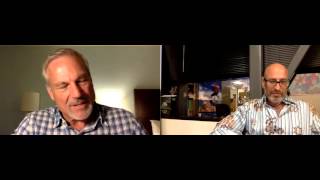
A January 2016 YouTube conversation between Adam Markel and Phil Town focused on investing education and Buffett-style value investing. Phil explains the core idea of buying great businesses when they are "on sale," criticizes Modern Portfolio Theory as misleading, and argues that market emotions create opportunities for outsized returns when approached patiently and with the right tools. The discussion includes mentorship anecdotes (Adam's son Max reading The Intelligent Investor and The Dhandho Investor), references to the 2008 crisis and The Big Short, and an announcement that Phil will teach practical screening/tools at upcoming Reignite events.
Chapters
Everybody, it's Adam and I'm here with an amazing gentleman. Dear, dear friend, somebody you're going to just so Enjoy the next 30 minutes. I got to tell you, if you've got something else to do, cancel it because we're going to do some deep dive discussion of what's going on in our economy, what's happening in the world of money, of business, of investing, mostly investing, and what to do with your money today. What's going to happen potentially in the future. Because I say potentially only because nobody's got a crystal ball. But I'll bet this much, if there was anybody that you could listen to that could give you a real beat on how to invest wisely, safely, for the short and the long term and not have to settle for meager returns in exchange for that safety, then this is the gentleman that you're going to want to listen to. And he's a dear friend. He's been doing this work. He's not only been an investor himself professionally, but has been a teacher and a trainer and a best selling author on the subject of investing for now more than 35 years. Although you look like you're doing it about a day. This is my dear friend, Phil Towne. Hey, Phil. How are you, buddy?
Great to see Adam. Love the power of the tools we have now that I can be sitting out here in a hotel in Sarasota, Florida. You're in your beautiful office in Escondido. Are you in Escondido?
No, we're in Carlsbad.
Carlsbad. Close enough. Pretty amazing, man. We can have this conversation. I love it. And it's an important conversation to have right now. Today's market has, has scared some people, I think, and it's probably a good thing to talk about.
Yeah, it's, it's. I don't know that there's ever been a time where the market hasn't been scary for folks. I mean, it, I think it just kind of goes back to the beginning of this whole thing where there were some folks that had more information and better, you know, better skills, better tools, better knowledge and better connections, I suppose that sort of have been sort of at the helm. And then there's been the average Joe, the person that grows up really learning about money and investing from their parents who knew very little and learning almost nothing in school, even graduate school. I mean, I was a lawyer for 18 years and they certainly didn't teach me about how to handle money wisely in law school or in any of my undergraduate courses. I Mean, this is just stuff we learn on our own, and usually we learn it by the hard knock school, which is to lose money. And I think when people do lose money, even if it's a small amount or it's a large amount, they kind of become like the kid, the child that touches the hot pot, and they learn that pot's hot and they don't want to touch it anymore, and they don't realize. And I'm making a kind of a silly analogy about this, but to me, it's never about teaching your children not to touch the hot pot. It's to teach them to wear gloves when they touch the hot pot. And I think that really comes into a lot of what you do, Phil, is that it's not to not invest. It's just not to invest. Like 99% of the people out there that don't know what they're doing, including the people who run funds.
Yeah, yeah. 100%. Right. And there's a lot to talk about here. I can. I can tell you that I was very fortunate to get started just down the road from you, actually. The guy that mentored me, brought me in under his wing, was a student of Warren Buffett, and I was, I think, really fortunate. There are not that many people out there who have been able to learn that style of investing that Buffett characterized. Some people call it value investing, but I don't think that's really a good name for it. Nobody knows really what to call it. It's a kind of investing where what we're trying to do essentially, is be very, very patient and wait just until the market, normal fluctuation hands us really great businesses that are on sale. All we really have to know is what does a great business look like and what does on sale look like? Right? And eventually the market will bring these things on sale. And I think, frankly, Adam, we're about to go into an on sale period here. The typical time between recessions is about eight years on average. It's been since 2008. We're coming up on 2016. The market's tanking bad the first day of the year that the markets open. And there's a lot of reasons to think this market could crumble. So it may be that people who are getting educated about investing today will find themselves in a position within just a matter of a few weeks, if they can. If they can get their resources into a position to take advantage of the situation that's coming. I think a number of people are going to be in a position the next few months to make an enormous amount of money. And they're going to be able to do it by taking action just a few times, and then just sit back and watch the normal course of events occur. And we'll be pretty much like right back in 2009 when I went on CNBC and said, look, I'm getting back in this market in March of 2009, and, you know, I could buy Chipotle Mexican Grill for $49. I could buy Whole Foods for $6. Chipotle went to 700 before it started its latest crash. Whole foods went to 60 before it started its latest crash. There are just tremendous opportunities that occur when you just wait patiently and you know what you're looking for. The amazing thing about this is that it's not hard to know what you're looking for. It's not rocket science by any means. And one of the questions I get a lot and just, you know, stop me if I'm rambling here, but one of the questions I get a lot is, you know, if this kind of investing is that straightforward, you know, like Buffett says it is, like Charlie Munger says it is, some of the best investors in the world say that this is how they do it. They're essentially buying $10 bills and they're paying $5 for them. If it's that simple, why doesn't everybody do it this way? Why do all the rest of the fund managers do it a different way? And that really leads us to a longer discussion. But the essence of that, I think, is that for the last 40 years, people have been taught about the market, some things that just aren't true about the stock market that Buffett's been saying they're not true for 50 years. And this way of thinking about the stock market is being taught in every major university in America right now. And that is that the market is efficient, that price is the same as value, that you can't get a bargain in the stock market, that the only way to get a higher rate of return is to take more risk. That these basic principles boil down to a concept of investing called modern portfolio theory. And if you have a mutual fund or if you have a pension fund, your fund is very likely being operated or being managed according to modern portfolio theory. Unfortunately, the best investors in the world, like Munger and Buffett, think modern portfolio theory is just an. Just a fantasy. It's just not true. So if everybody else is doing it with false assumptions about how the market works, and you're one of the People who understands that, in fact, the market is anything but rational. It's not efficient. Things go on sale all the time. Price is different than value on a regular basis, and that it is, in fact, possible to get a high rate of return with low risk. If. If you're one of those people, then you'd be like Warren Buffett, who said, I just hope they keep teaching people this crazy stuff, because it gives me a tremendous advantage in the market. And that's what we want to tell people. We want to tell people, what does that advantage look like? And give them an opportunity to see for themselves what it looks like when you do this stuff the right way, what kind of returns not only become possible but become expected for your portfolio. And that's where I think it gets kind of exciting. I think we've got a lot of people out there, Adam, who are either looking to take a decade or two off of their retirement date. You know, let's chop 10 or 20 years off of that sucker. Or they're looking at a problem where they haven't been able because maybe, you know, bad luck, you know, you have accidents that happen financially or because you've spent your retirement helping your kids get ahead, which is commonly the case. Or for whatever reason, man, you're just behind the eight ball.
Or you blew through a couple hundred thousand or a couple of million dollars, you know, during. During the real estate bubble.
And, oh, man, that burned a lot of people.
Just took. You know, first of all, I publicly thank you for the time that you've spent with our son Max, because he read the Intelligent Investor. I know you guys are emailing back and forth, and I really appreciate you doing him in that area. Because you know what? Sometimes it's great when there's someone else that certainly with kids, they don't always listen, right? They don't listen to their parents all the time. So my son Max, he's 17, just turned 17. So Randy and I were excited for his future, but I love the fact that he's seeking out. He's seeking mentorship and information outside of even his own family, that's a really strong sign, I think, of maturity. And that's tough when you're 16, 17, but to be seeking support and advice and counsel from people outside of your sphere, because it's that sphere of our own influence that's largely responsible for where we are in our lives at the moment, Right? So if. If, you know, we want to get further, we've got to go outside the box of the people we hang out with and the people we're learning from. And we're taking it even as an example because, you know, my habits and my ways of investing have gotten me where I'm at now. I'm doing nicely in my. No complaints whatsoever. But the truth is Max wants to take it to a new level. He's not interested in being a millionaire. Like he doesn't want to even be, you know, financial freedom and the things that I've, you know, worked a lot of years to create and all that kind of stuff. Time freedom and money freedom. And he wants to literally like be a billionaire. Like that's his goal. And the mindset of a person who wants to be a billionaire is different than the mindset of somebody who's happy to be, you know, have 30, $40 million or the mindset of somebody who just wants to have 5 million working for them. You know what I mean? It's a very mindset. So I think it's really a good sign that he's seeking and is willing to be mentored or taught by people other than the people that he even respects sort of day to day. So that's a really good thing. So thank you for that, Phil.
You're very welcome. And I think that Max is walking down a well beaten path. If you consider the number of people who've gone down this path who have become billionaires, it's the most well beaten path to become a billionaire that I'm aware of. I can point out probably 20 guys in the Fortune 400 wealthiest people who have gone down this road and become multi billionaires. There are some very active people out there right now that have become billionaires who are like age 40, 45. If it is what he wants to pursue, then he's going down the right path. I mean, you can't do better than Graham, Buffett, Munger, Einhorn, Pobrai. I mean the list of people is distinguished and they're some of the wealthiest people in the country.
The first book he gave him to read was the Intelligent Investor.
Yep, that's Ben Graham. That's right, 1949.
What was the second book that he's been assigned?
Well, the second book is by an Indian guy called the Dhandho Investor, by a guy who's, I think he's in his 40s now, who runs a multi billion dollar fund. He wrote this book about investing the proper way, which he calls Dhando is business in Hindi. And he tells the story of the Patel family which came from. They were thrown out of Uganda when Idi Amin took over back in the 60s and just ejected everybody he didn't like. And he told all the Indians they had to leave, and he stole all their money and all their things. And one of those families, the Patel family, came over to America with $10,000 and they bought a motel on, you know, with a little bit of money down one of those old beater motels. And, you know, they cooked curry in the. In the office and slept in the office, and the kids did the beds and dad did the roof, and they built it up and they got the. Got it up where they could get a bigger loan, and they bought another motel. That was 1960. That was only 50 years ago. The Patel family now owns 40% of all the hotels in America. 4, 0%. It's a wonderful story. And the very basis of it is. Is the very basis of investing the way we do it, the way Buffett teaches it. In fact, Manish Pabrai is such a fan of Warren Buffett that he paid a million dollars to have lunch with Buffett for one hour, which is awesome. A million dollars. So, by the way, if I could speak for an hour, I'll give you everything Pabrai learned at that lunch in one hour. It'll save you a million dollars. So this book that I've got Max working on is another view of all of the principles that Ben Graham taught Warren Buffett in the Intelligent Investor. It's another guy's view of it, but the principles are identical. You're looking to buy a $10 bill for $5. Here are the things you should be looking for. And those things are all about, is it a good business? And if it's a good business, it's going to meet these criteria. And the business beauty, Adam, now compared to when I started in 1980, the beauty is that we have the Internet and the tools that we have that allow you to search through a lot of. A lot of data very, very quickly. Like, today, I can do in a matter of literally three or four seconds what it would take me three or four weeks to do back in 1980. So the time compression is astonishing. What an individual, novice, amateur investor can come up with when you know what you're looking for and when you have the right tools to do it. So I'm give everybody an idea what those tools look like and hopefully give you access to those tools so your people can get out there and start looking at this stuff now, which I think would be really important, particularly if you have money in indexes and mutual funds. You don't want to ride it down another 40%. You don't want to take that ride and then wish that you had done something differently and wish that you had looked into a better way of investing than just buy and hold investing. So I'm going to show you some tools when we get together that I haven't shown Max yet. I'm giving Max a little bit of a high step to climb over. It's good for him, you know, and he did a great job on An Intelligent Investor. And so with Dondo, he's going to. He's going to do another great job. And then I'm going to show him and I'll show you guys this, too, a set of tools that we developed and use, that we use on mutual funds and indexes that help me go on CNBC and say, look, right now I'm exiting this market. I'm getting out. Here's the reasons why I'm getting out. These tools are fundamental to that because these signals are created by the movement of billions and billions of dollars from the institutional investors. The institutional guys can't use these tools. They're too big to use them. And it's remarkable because they were built by institutional managers, but they're too big. They influence the tools too much. So the only people that can use them are just little guys like us who are moving relatively small amounts of money in and out. I'm moving millions of dollars, not billions of dollars. And as long as you're staying below the B, you can really, you know, pretty much move money around with a lot of liquidity. If you're moving thousands of dollars around, you have advantages that you can't even imagine if you can learn a little bit about how to put them to your use. So we're going to show you these tools and I'll show you what they show right now about this market, which is very interesting. Let me put it like that. Very interesting.
Right now, I'll say that the tools you're speaking about, you're going to introduce those any reignite event in the month of January. We managed to corralled for January. We got you corralled. Right.
That's which I want to say. I am. I am jumping through some hoops for you, my friend. I am seriously jumping through some hoops. I am going to play a polo tournament. I'm going to play a polo tournament out here in Sarasota, and then I'm going to get on a jet and I'm going to fly to the west coast and I'm going to talk to all your folks and then I'm going to fly back and play a polo tournament the next day. So got a guy taking care of my horses out here. It's all good. And we're going to just make that happen because I love speaking with you, Adam. I think it's just the most fun thing in the world.
You're a good friend and you're a servant. I mean, that's the truth. You come from a place of service and not many people would do that. You don't have to do that. We don't have to get into that nonsense. But look, this is not something you do for money. I know that.
The thing is, man, so I mean, you know how I got started. I was, I was a river guide when a guy stepped up and said, look, I'm going to teach you this stuff. And it completely changed my life. And because it changed my life, it changed my parents life, it changed my children's life. It's going to change their life. Melissa and I have a daughter who's, who's a doctor at ucsd. We have another daughter who's an attorney in Boulder. We have two sons that are going to phenomenal schools. None of that could have happened without money. You know, I mean, it just gives you such stunning advantages. And you know, I was making $4,000 a year when I started all this stuff. So believe me, I can relate. And I think it's just part of the process that you go through of making your life valuable. As you have choices, as the opportunities open up for you, you can choose a lot of different things, you know, and I choose to do a lot of different things. I'm not all, you know, altruistic. I'm out there for everybody else and, you know, I'm living in a sack. Ain't happening. I don't live in a sack. I live in a beautiful home. We have 25 horses. We have a horse. We try to put horses in the Olympics. I play polo, my wife rides a venting. We just screwing off all the time, I admit it. But we also try to give back a lot of what we know. And that's what we're going to do with you guys because you got the, the greatest audiences on the planet as far as I'm concerned.
This is a good place to kind of tie up a loose end. I started telling the story that we were taking Max to the movie. We went to the movies last night with Max and we saw the big short. Oh yeah, I went off on that Tangent. Because I. He. He came out of that movie and he was blown away by what he saw, because even though he lived through it, he lived through it between age 8 and age 16. But the worst recession, which I think was a depression for many, many people, you know, $5 trillion of assets just got wiped out. And I don't know if. Have you seen the movie at all or.
Yeah, yeah, really good movie. Strongly recommend watching it. And I think it will. It set my teeth on edge about the kind of crony capitalism that goes on and which, you know, it's great that they're putting out there. Michael Lewis, who wrote the book the Big Short, has really done a service, I think, by getting that information out there in a way that the public can see it and understand it.
And I think it's important because a part of the, you know, it's a bit of a dirty secret. I think that people who serve, you know, like, survived that. And that's. Anybody that's, you know, that's. They're sort of between 20 and 40 years old that got involved in real estate in the, you know, mid-2000s, may have gotten burned and may have lost thousands or hundreds of thousands or millions and all that kind of thing. And now at this point, they've survived, but they. They may. They may be carrying that secret that, you know, sort of, you know, Scarlet Letter around with them. They may just be shy again to touch the hot pot again, that kind of thing. And they could miss one of the great opportunities in their own life to invest wisely. And I think the reason, you know, I was thinking about Max and bringing him to that movie is that I want him to be able to make good choices. And that's all parents ever want for their kids, is to be able to make good choices and better choices. Right. So, you know, and I'm not alone. I mean, I was very deeply invested in real estate at that time and in residential, commercial and stuff. And I'm still selling off properties. I'm still holding on to things for the market to recover, you know, to come back to a place where. Where I feel like I don't want to give something away. And I can, you know, I can speak from my own personal experience that the only thing you can ever do is to make a better choice, not stop, decide that it's a rigged game. Because I think the part of the movie that's disturbing is that it leads one to think that the game is rigged. And I think you said earlier that you can't really trust that Modern portfolio theory of investing, what you need to do is become a more intelligent investor yourself. Recognize that the markets are not efficient and that there are opportunities that you'd think are too good to be true, but they're not. Because if you can recognize, like you say, that there's inherent value, that you don't count on somebody else to tell you what the value is, but you learn how to assess that value yourself, that you can buy something for a nickel that's worth 10 cents. I mean, that's. But when you say to somebody, let's say that's lived through that real estate, you know, the eight years of a recession and the hangover from real estate, you say to them, hey, listen, you can buy something for a nickel that's worth 10 cents. Their little voice might say, yeah, I was. I heard that. I heard that when some guy sold me a subprime mortgage and said, hey, listen, buy five, you know, buy this condo and then buy five more, you know, and. And all that kind of thing. And it's. I think right now a part of what the US Needs to get through is this is a confidence issue, you know, the ability to invest again, confidently and not confidently by putting their money in the hands of a mutual fund manager. Because we just saw, like, what is it? Last night in China, they shut down the market. It was down 7%. You know, I mean, that's. That's a major event to start off the new year, right? Yeah.
Yeah. And I just want to jump in real quick that the mathematical calculations, the algorithms that they used to determine that these subprime bonds in the big short, that these subprime bonds could be packaged up into a big stack and then sold off as triple A bonds. The algorithm that they used for that is modern portfolio theory.
Wow. So the CEOs were based in Modern.
Portfolio Theory, 100% based on Modern Portfolio Theory, 100 percent based on it. I mean, remember, these guys are coming from a world where markets are efficient. If someone's paying $300,000 for a house, that's what it's worth, okay? So these formulas created the meltdown. Now, they haven't yet created the meltdown for stocks again, but they will, and they have repeatedly in the past. So the thing that we want to do is learn how to take advantage of sort of mass folly that exists when everyone is being taught something by a bunch of academics who are living in ivory towers and who don't have to deal with the real world. I mean, idea that stocks are priced perfectly is ludicrous. On the surface of it, it's crazy. It's nuts. I mean, when you think about the roller coaster ride that stocks go through, that one day it's worth $160 a share, the next day it's worth $40 a share. How could that be the same company? And so you discover that in the real world, it. Emotion becomes a big part of what people are willing to do. And that's why we can buy a house that's been foreclosed on or short sold, right? Somebody's going through a divorce. There's a lot of emotion there. Just get rid of it, please. Right? Or you can go to a flea market. You can go to a garage sale. You can find fabulous bargains. You can go dig violins out of people's garbage. They throw them away. I mean, a friend of mine took $1,000 violin out of the guy's garbage. You can get a Bowflex machine out of the garbage. Some guy just takes it out of his garage and throws it away, right? He's emotionally so over it, he just wants to out of there. I got one of our students, makes her living buying mink coats at flea markets. She just buys something for $100, sells them on ebay for a thousand. Markets, by definition, are full of emotion. And so.
Gary Garcia said, one man gathers what another man spills.
Beautiful.
Yeah. I mean, and like you said, it's. And Buffett's thing, which I love, is that when people are. No, you should be greedy when people are fearful. And when people are fearful, you should be greedy.
Exactly.
Nothing but the riding of that emotional wave.
That's all it is. It's just the normal fluctuations of the market moving from greed to fear over a period of time. And if you can just hold onto your capital and not be driven by the masses into investing in a herd, eventually the market's going to bring you wonderful things that are on sale. And that's where you get these 25 to 35% compounded annual growth rates. They don't come because you're smarter than the guys who went to Harvard. They come because you've stepped back from the game that they're buried in. They're in that game up to their necks. Warren Buffett and Charlie Munger sat on Wall street for months watching these guys at Salomon Brothers when they had to go in there, when they did this whole treasury bond mess. And Charlie said, warren and I just look at each other and roll our eyes that these super smart guys were continuing to use those formulas that created the meltdown in real estate. Use those formulas. Even though they knew they were useless, they were so good at the math, they just couldn't help themselves. It's just what they learned to do. And they could tell other people they were doing it, and those other people would believe something useful was occurring. When Buffett and Munger were sitting there and just looking at this like, these guys are children. And Charlie ended up saying that. Charlie, if you don't know him, he's the vice chairman of Berkshire Hathaway and a very, very wealthy guy. And a lot of people think he's even better investor than Buff. And Charlie just said, warren and I wouldn't be so rich if these smart guys didn't act so stupid all the time. So if you and I can operate independently of Wall street, stay away from Wall street, stay away from the craziness that these guys get themselves into, and just wait for market fluctuations, we can get rich. All we have to do is just be patient. That's the essence of it.
This is the beginning of 2016. I wanted us to hang out for a little bit, and I wish it could be longer. So we'll wrap this up, but we'll do it again. Is that all right?
Good, good. So this is a really good time for people to be thinking seriously about learning to invest. The stock market's getting very shaky. If you have retirement money in the stock market, you're going to want to hear what I have to say. If you have no money in the market, you don't have any money at all, you're going to want to hear what I have to say. If you're worried about your future, if you want to retire soon, you're going to want to hear what I have to say, because there are answers to these questions, and these problems can be solved.
So, Phil, I know you took time. You're traveling today, you're playing polo tomorrow, right?
Yeah, I got a big practice tomorrow, and then we got a match on Friday, and then I'm flying back to Atlanta to see you guys.
That's right. So reignite in Atlanta, then reignite in San Diego, which I know you're doing an overnight flight for that and then LA as well the week after. So, yep, you get to spend a bunch of time with this amazing man, get to a reignite events, real simple, only.
Only for you. Adam, buddy, really, seriously.
Thank you. Thank you.
We really love and appreciate your audiences, and we really enjoy being with you. And I can't wait to see you on stage, man.
Thank you give Melissa a big hug when you see her from me, all right?
Yep. Give Randy a big hug for me.
I gotta go home, and I gotta tell Max I said I'm. I'm not going to share with him that you let me in on, like, his little homework assignment and all that kind of thing, but. Speed to the fire, Ty, he's. Yeah, he's got. He's got some big plans. I want to see him. I want to see him move down that path because he's generous. He's got such a generous heart that I know what he'll do. As you say, you know, nobody's 100% altruistic, but you do a lot of giving back, and you share information with people that can help them to create their own, the kind of. The freedom that you've created for yourself. Max has got a good heart. I know that more access to things for him means other people's lives will be better as a result, and that's. That just feels good. So.
You got a great kid there. Say hi to him for me and Chelsea.
More from Adam


Mastering Strategic Communications To Navigate High-Stakes Environments With Chris King


Mastering Self-Leadership Through The Conscious Habit Framework With Amy Woodall




Optimize Your Performance And Vitality Through Advanced Metabolic Health Testing With Mauro Stara

Cultivating Audacity: The Audacious Path To Success With Anne Marie Anderson
