Danelle Umstead On Conquering The Slopes Of Life With Resilience
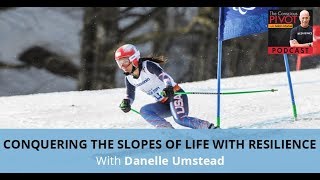
Paralympic skier Danelle Umstead went blind from retinitis pigmentosa at 13, then found skiing with guide Rob, whom she later married. She won three bronze medals across three Paralympics and appeared on Dancing with the Stars, building a life around resilience, trust, and daily gratitude.
Chapters
Welcome to the Conscious Pivot Podcast with international speaker, business mentor, best selling author of Pivot, and your host, Adam Markell. The Conscious Pivot shares the stories and wisdom of people who have successfully reinvented some area of their business and personal life. You'll gain powerful insights into how you can fully embrace new opportunities, increase your performance, and master the art and science of innovation and resilience. So please join Adam as he guides you on your conscious pivotal hey everybody.
Welcome back to another episode of the Conscious Pivot Podcast. I'm your host, Adam Markell, and I am feeling incredibly blessed in this moment. Just have had a lovely day and have had a lot of time to be present with my thoughts today, to feel my body and to get guidance from my body about things that are happening in my life at the moment, as well as just the guidance to know how I want to respond in the moment, including with what I say. So I've had an opportunity to speak to a number of people already today and I've just enjoyed all those conversations and in the moment, in the moments that follow, I'm going to get to have an incredible conversation with somebody who is very interesting, incredibly vivacious, and it's a wonderful, wonderful human. And I think you're all going to be massively inspired by her story. You'll find her very funny, I think, as well, and there'll be just so many things that you'll gain from what we're about to do. So I'll ask, I'll start with a question and then that'll lead us and we're going to start a little bit differently. So have you ever wondered what it would be like to hurdle down a mountain on two skis at speeds of up to 70 miles an hour, virtually blind, relying on verbal cues from your guide a few feet in front of you? This is what Danielle Umstead does every single day. And that's who's our guest today on the Conscious Pivot podcast. Danielle, how are you? It's great to have you on the show.
I'm good. I'm excited to be on your podcast with you today. Thank you so much for having me. My name is spelt Danielle, but it's spelled without an I. And I tell everybody that's because I can't see.
That's it.
That's it.
Got no I in my name, so I can't see.
Maybe if my mom put that eye in there, I would have been better off.
But you know, interesting.
Outside though, I feel like I have more blessings because I learned who People are truly. Without seeing them.
Yeah. And you're in beautiful Park City, Utah right now, Right?
Park City, Utah, with a lot of snow. And the Sundance is going on this time, and it's nice and busy and snowy and beautiful. I love where I live. I feel blessed every day.
My wife Franny and I, we got to spend some time in. Well, we spent a number of trips. We've been to parks, to Salt Lake City a number of times, and Park City only once. We went to the Sundance Film Festival and we went into Park City, and we were actually staying at that little property that Robert Redford owns that's, you know, sort of in this. I guess it's where the Sundance thing began.
Sundance.
Yeah, in Sundance itself. And then we went into Park City and experienced the energy, the excitement and the traffic. And I gotta tell you, it was. Haven't thought about this in a while. But on the way back from our day evening of eating and drinking and everything else in Park City, we were driving back to Sundance and I was on the highway. I got pulled over. I got pulled over speeding. I had a rent a car and everything. And I just remember that the police officer, I can't remember, he was a state or a local officer, but he looked like he could have been my kid. He looked like about 16 years old or something. And I went back. He took my license and registration, went back to his car, and I said to my wife, I go, oh, I'm totally getting a ticket. So. Getting a ticket. He came back. He was just the nicest. Just like. I mean, it's weird to say this about a cop, but he was just a sweet young man. And he. I think he realized, you know what? This is a tourist. This is somebody out here. There was not. You weren't doing anything dangerous or whatever. And so he gave me. Just gave me a warning. He says, I want you to get back to your hotel safely and enjoy yourself while you're here. And I thought, my goodness, that was really, really cool. So it left a really good taste in my mouth even. Even that I was breaking the rules. But I got away.
Breaking the rules, and you got away with it. So that's what Park City's all about.
Is that what it's all about? Is that the culture? No. Break the rules in Park City, but you'll be okay.
Exactly. No, but people are really kind here. The locals are really amazing and very welcoming to tourists because, I mean, the tourists help our city and we love it.
So I'm going to use that, oddly enough, as A way to leg into the conversation about what you've been doing with your life and the pivots, these epic moments in your young life, because you look like a very young person to me.
Thank you.
You're welcome. You're welcome. So you've been breaking the rules. And by that I mean you have not sort of settled for status quo, and you haven't certainly settled for whatever the norm is. You haven't been able. You haven't followed the conventional rules about what a person who is. Who is legally blind will do, can do, is able to do. Any of that. Any of that horse crap just has not affected you. It seemingly by what you've accomplished. So why don't we do this? Let's go back to the origin story. You're 13 years old. You get a pretty ridiculous diagnosis of something. Your parents are there to hear this. So take us from that moment, and then we'll go forward and sort of stair step our way up to the present moment.
Okay, let's tag team this one.
I love it.
We're better together. That's my favorite quote. We're better together. So at the age of 13, I woke up with this really bad headache. And I had these headaches a lot. It was like a piercing pain in my head. And usually when I put my eyeglasses on, the headache goes away. When I was two years old, I started wearing eyeglasses, those really thick ones. My parents called them Coke bottle glasses because they were really, really thick. And I could actually burn leaves with the sun, like kind of like a magnifying glass with my glasses. That's how thick they were. So I've been wearing them since I was 2. And so usually when I had these headaches, I would put my glasses on and the headaches would subside, you know, because they were straining so much. And this day, the headache just was so severe. They would subside a little bit when my eyes were closed and when my glasses were on, but they were not fully going away. And my mom knew there was something wrong, and so she took me to the eye doctor that I had been seeing since I was 2 years old. And it was there. They took a bunch of tests on me, and they pulled out this chart, and he told me to close. This is the test I remember the most. He told me to close my left eye and cover it over my eyeglasses and look at this chart in front of me. And it was then I knew something was really wrong because the whole center of the graph was, like, completely gone. It was black. I had lost the central part of my vision. So at 13 years old, obviously, I thought something was really wrong. And a few weeks later, after a bunch of tests, the doctor gave me and my mom the diagnosis that I have an eye disease called retinitis pigmentosa, but it has taken my central vision first. And he explained to me that this disease is a degenerative disease and I will eventually go completely blind. And he explained, like, it could happen tomorrow or it could happen 50 years from now. And he just didn't know, and there's no cure for it. So that was my prognosis. At the age of 13 years old, when you're supposed to be thinking about boys and sports and having such a great time, I was worried about losing my sight.
Yeah. So what happens after that? I mean, what do you do with that? First of all, it's a shock, obviously. Yeah.
Go ahead.
No, I was just gonna say, I don't know that any of us who've not experienced that could ever have an understanding of it. So you're leading us into that world.
So I was 13 years old. And in the beginning, I remember when the doctor told me. We went back to the doctor's office a couple of weeks later after all the tests, and he told us the diagnosis. And I remember my mom squeezing my hand and said, you know, we got this. We're gonna do this together. I'll always be by your side. So I kind of believe that. And then I spent the next probably five, six years trying to find ways to beat it. Like, maybe the doctors are wrong. Maybe I have something else, you know, going and getting tested for so many research things and hoping that I was misdiagnosed. I mean, I'm doing that at a young age. And then at some point, I went into denial, and I'm like, okay, well, I don't have vision in my right eye, but the rest is not going to go. I'll be fine. I'm never going to go blind. I'll just. I can do so much with just this sight in my left eye. I don't need that right eye. I'll be okay. And so I continued playing sports. I loved soccer. Soccer was my favorite sport. And I was starting to get worse at the game, and I started not finding the ball anymore. I used to always listen to where the ball landed and then thought of the people running, and it just got harder and harder, and I wasn't making teams. And, you know, so I was starting to go down a slope where a teenager doesn't like to go. It's where you're not fitting in anywhere. And growing up with a disability, when I was growing up. I'm a lot older than you think. Growing up with a disability was really hard, and it wasn't socially acceptable. And, you know, today you can find so many resources, a lot, and I think there's more to be had, but you can find so many resources to help you when you have a disability, and I didn't have that. So at 29, I had drove a car for a while, and I had a few things that I was able to do. My mom was 27, and my mom passed away from cancer. My soul, my everything, my. The person that was gonna be by my side through everything, and she passed away. And that put me down a spiral of wanting to give up on life. And that's. I've been there. I know what it's like. I know what it's like when you think you don't fit in or, you know, life just doesn't give you the right things and there's no possibilities for me, and everything seems just completely impossible.
Yeah. So that's not the end of the story. Thank goodness.
That's the end of the story.
This is the first chapter. We'll take a break to hear from our sponsors, and we'll come back and see how she turned her life around.
I love it.
So, Danielle, what's going on at that point? I mean, it's clearly a low. I mean, to lose somebody that you're so close to that supported you so much, that was. Sounded like your mom was one of those people that. I love what you said earlier, that she said, we'll just figure. We'll figure, figure it out. Because I know that, well, from my own experience with my wife, that we've had our ups and downs in various areas of life. And at any of those points in time, I think we find out so much about ourselves, and we also find out everything we need to know about the people that are in our lives, because they either come up with those kind of statements, right. That they say, hey, listen, we got this. We got this. Right? Even if you don't know what that looks like, because nobody does.
Right.
But. But you just energetically, you just know they got your back and mom had your back.
So now she had my back.
And she's not there.
Yeah, she's not there. And I lost all usable vision in both eyes after she passed away. And I just was completely devastated, Lost and alone. And so. Dun, dun, dun.
Enter Rob now.
No Not Rob.
Not Rob. Oh, gosh.
There was a far distant father of mine who. My parents were divorced at the age of five, and my father moved away a few years back, and he called me out of the blue because he had learned how to ski a couple years back, and he wanted me to go skiing with him, and he called me up. I was feeling sorry for myself. My father and I have not always had the perfect relationship. He's an Italian. He just kind of was a strong Italian man, and sometimes it wasn't easy to get along with. But I love my dad and always will, and he called me up and wanted to take me skiing, and just desperation led me to the inspiration to say, yes, but that's a crazy request to do. And I find myself two months later on the mountains skiing and found a new way of life, found a sense of freedom and joy that I hadn't felt since I lost my vision. It was crazy.
Let's just back up a second, because somebody's gone. Hmm. Are you saying that we have somebody who's virtually blind? Totally, you know, skiing. Okay. Yeah. What? What? How'd that happen? How could that even. How could that happen?
I know. I felt the same thing, because, again, I was like, this is gonna be impossible. But I was desperate to find a relationship and get close with my father. And if it took me going skiing with my dad, which was crazy, I was going to do it. And so we were at the top of the mountain, and I'll never forget, the instructor had taught us how to make some turns in the bunny hill. And holding onto some straps and some bamboo, we'd hold onto it and ski together. And then we got to the top of the mountain, which was kind of like a bunny hill. And she told us that my father was going to ski in front of me, and he was going to call out commands and guide me down the mountain, turn by turn. And I. He wears a bright jacket, a bright orange bib over his jacket, because I can see if you're within a few feet of me, so you have to be pretty close, but it's only spots, so I can only see contrasting colors. And so he took off in front of me and started shouting commands. And I remember taking a deep breath before I left, and he started shouting these commands going, what the hell am I doing? And as each turn came along, I would feel the wind in my face, and I could smell just the fresh air. And I could hear my dad calling these commands, and turn for turn, moment by moment, I just gained this unbelievable strength and power that gave me joy and freedom. And I told my father and still tell him to listen day that I thank him every day for giving me a new life through sport. I was so lucky and blessed that he made that phone call and that I was desperate enough to say yes. That moment led me to who and where I am today.
Wow. Amazing. So dun dun, dun dun dun. So let's talk about UMass Amherst, because. Great segue, Randy. My wife and I met at University of Massachusetts in Amherst. And. Yeah, when I was doing a little research on you, I found that your Rob was a University of Massachusetts guy, right?
Yes. Big time.
On the ski team. Yeah.
Yep. And he majored in zoology.
Zoology.
But he. Yeah, he spent a semester at sea. It was super cool. Yeah, he's an amazing guy. And he was a collegiate ski racer there. So he came from UMass and he says he might be a mass hole here and there, but he's my mathole, Rob, and I love him to death. He's amazing. And I met Rob after skiing with my dad that first time. I ended up moving to the mountains in New Mexico so I could ski all winter long. About a year later, and after a day of skiing with a girlfriend of mine, I asked her if she would go and have a drink with me at the Thunderbird Lodge and get something to eat. And we're standing at the bar and we're waiting for our food as we were having our drink. And there was just this voice to my right. And there was just something different about this voice. And I said to my girlfriend, I'm like, hey, what does that guy look like? And it was Rob. And then he came and sat next to us and started talking. And I mean, seriously, he became my best friend first and then the man of my dreams next. Like, he was my best friend. I've never talked to somebody and been in depth and communicated so well with somebody. It's just amazing. And we got married at the top of the mountain in Utah at Snowbird and here in Park City. We lived in Park City. We moved to Park City a couple of years after we met. We got married at the top of Snowbird in our wedding clothes. And then we skied down together. And then he started guiding me ever since then. So it was in our vows, I always say, for the rest of your life. So now Rob is my guide. And I've been skiing and got involved with racing and had this passion at the age of 33 to become a Paralympian. And people told me it was impossible and that made me go, you know what? I'm tired of thinking things are impossible. So I went down that road once. And now I'm on this journey of making the impossible possible. Have you ever seen. Have you ever heard where people take impossible and break it down to I'm possible?
Yes, I've seen that. It's way cool.
It's way cool. They did it at the 2014 Sochi Games. They did it with a bunch of lights, and they broke it up, and it was said impossible. And they broke it up and it was like, I'm possible. And that's just my dream. For any female, any male, anybody with a disability or hardship, anything's possible. You know, so we're all possible, and I'm possible. So I took it on, and I wanted to represent our country at the Paralympic Games, and Rob agreed to start guiding me. So he quit his job and started guiding me full time. And we were gonna show the world that, you know, this old lady can do whatever she wants. And. Yeah, yeah, you know, because they were saying, like, it's the Paralympics. You know, I just learned how to ski at the age of 29. I wanted to become a Paralympian at the age of 33. Most athletes have retired by that time. And so everybody was like, you know, you might have missed your window there.
Another rule, right? Remember we said, you're a rule breaker, or I guess I said I was a rule breaker. Then I said, you're a rule breaker. You are really a rule breaker. Yeah, right.
So then we ended up moving up the ranks. There were some hardships. There's a lot of ups and downs, because you really have to gain that trust and that communication in sport and in life, and that just doesn't happen overnight. Just because I marry a guy doesn't mean I trust them. Going up to 70 miles an hour down the slopes together, ski racing. So, you know, that took time, and it. We still work on it 10 years later. You know, we've been a team on and off the Hill for over 13 years now, and I think it's that long, maybe 12. And our communication is always changing, and we've always learning how to better ourselves as a team and bringing that into our home lives. It's an amazing thing that we've done together. It's amazing reward that we can show people that anything is possible, no matter your age, your ability, no matter what it is, break those rules. And we together have represented our country at three Paralympic Games and won three Paralympic bronze medals and lots of other Stuff We've lost a lot too. I mean, part of winning is understanding and learning how to lose. We've lost more than we've won. But the winning just is the exciting part, that the hard work pays off. It's the journey that matters.
Yes. You know, it's the trust piece. I'm thinking because Randy and I were married this summer will be 31 years and.
Wow.
I know, Sweet.
It's all about the voice.
It's about. Well, it was for you was love.
At first voice, love at first sound.
Yeah, something like that, right? Yeah. For us in a marriage, any long term relationship, trust is such a big deal. Communication. The two things you mentioned, communication and trust. And so have the skills that you've honed on the slope to make sure you didn't run off the mountain or worse, I guess. Have they helped you in your marriage? Have they helped you in your relationship? What can you say about that?
Yes, I really believe that because we're such a strong team on the snow. It has made our marriage so simple. Our marriage is very easy and we know how to communicate. We know how to let things go. I mean, you have to let things go in everything in sport and in life. Sometimes things happen and you just gotta let it go. I'm the queen of letting it go. And you know, the communication and trust, all of that we learned in sport translates into our marriage and our life together as husband and wife and parents. And that part's easy. We're lucky. We are very lucky. We do not fight. We just learn to let things go and communicate and work through it and move on. Go ahead.
No, you, please. And.
And the trust there is challenged on a daily basis. It's not because he's doing anything wrong. It's sometimes I don't trust myself or sometimes I think that maybe, I mean, we all do this. Well, maybe he's not right and maybe I feel like it should be something different that we learn to communicate and make that trust even stronger. So you have to question that trust on a daily basis to make that trust even stronger.
Yeah, exactly. It doesn't have to. It's not neat. I mean that one thing you can say whether it's easier, it's not. None of this stuff is sort of neat and tidy or orderly. It's a. It's sort of a lot of, to use the term that is associated with my own reinvention was pivot. And it's these little micro changes. Right. And on the slope, I would think that the degree, because I've Skied. It's been a while since I've skied, and actually, I'm going to tell a story I've never told before in just a second here about that. But the micro adjustments that you make on your skis have mega. I mean, they have a huge impact. Right. If you're just a little off, you're just a little bit on, you know, one side or the other, or your.
Balance is in your heels, or you don't have your hip hiked a little bit, or your chest isn't up. I mean, like, it's aerodynamics. I mean, there's a lot of little things. Yes.
Yeah. Interesting. All right, so now I've promised I'll say this, but we haven't skied. We live in San Diego, and I've always been. I'm a Pisces, so just sort of very comfortable around the water. I swim and surf and that kind of thing. But there was a point where, because just from an athletic standpoint, skiing is wonderful. The mountains are gorgeous. We still do that, you know, but we were in college and we had met, maybe we were dating for about a year. We went up to Stovermont.
Oh, yes, we know where that is.
Yeah, yeah. Beautiful, beautiful ski area, ski resort. But the thing about a lot of. If anybody listening or watching this from the east coast or skied in those. Those. That part of the world, it's sort of notorious for a few things that, like the ski conditions can be really crappy there and it gets icy. And so here we spend the first day, we had this wonderful day. We're just bunny hilling it, you know, and all that kind of thing. And then hot tub at night under the stars. I mean, it couldn't be going any better. Right? Romantic and everything. And the next day I say to Randy and go, you know, I think. I think we could take a little, you know, more, you know, get up the mountain a little bit, get on one of these other runs. And so there was one of these. Not. It wasn't a black diamond or anything crazy stuff like that, but it was one of these meandering runs. It was probably 14 or 15 miles long, and it was probably middle. You know, middle of the road in terms of its, you know, just what. What was required to be on it. And it was kind of narrow and stuff. And we're coming around a turn and I'm behind her. I'm not in front of my wife at this point. I'm. I'm behind, and she's in front of me. And all of a sudden, I hear this yelp because she's entangled with a guy who's standing. Some knucklehead was sort of standing right in the middle of the slope. You know, you've seen that before. She's a new skier, and she's trying to stop using the silly. You know, the snow plow is the only thing you learn at the beginning. Right.
And she gets pizza. It's a pizza.
Oh, yeah, all of that. And. And she tears her acl. And the sound.
The.
I'll never forget the sound that came out of her. I've never heard it. She's had four kids. I've seen some rough stuff, but I never to this day heard a sound like the sound of that. And I remember we were in the hospital that night. So, yeah, we haven't been on skis. We went to Aspen for, like, some birthday of mine once, and I skied with my brother, but have not spent any time skiing since then.
And she hasn't been back on the skis. We need to get her back on the skis.
Well, what's really cool is that she. She ended up getting a botched, you know, bad surgery afterward. And so her knee was kind of never the same until just about three years ago when we found a new sports medicine doctor that said, hey, I can get this fixed for you. And she. She. She trusted in him. She had the faith. Because the first one was so rough. The.
Right.
The rehab was the worst part of it. But. But ultimately, yeah, she had this new surgery, and she's 100%. And now I am not going to suggest that she get a bunski.
That's.
That'd be somebody else or her.
I'm challenging her now to get back out there and show those skis how to do it. Yes, you can come ski with a blind girl. She might still see.
I think that's the way to go if she's going to get up on skis again.
Yeah.
Gonna go see go ski with a blind girl. And that's probably like, I'm totally out and 100% accurate.
She. She.
She'll. She'll trust that before she will trust me, honestly.
Yeah, right.
Oh, my goodness. You know, trust is so important. And I. I'm selling. I'm selling that. Telling that story in part because of that. What. What I violated that day. What was because we got married maybe two or three years later, and to this day, this is like 34, 35 years later. Now, as I'm saying this, I violated her trust. You know, she didn't really. She didn't really want to go. She didn't really think she was ready to. And. And I was kind of pushing her and maybe even, you know, guilting her into doing something to stretch her a little bit that. That I knew I could do, but she didn't know she could do. And. And that's what hurt. That was the part that was. The more lasting pain was. Was the fact that I had. I had violated her trust in me. And that's, you know, that's one of those things that is so important. It's important in every kind of relationship in business.
Yeah. I want to say something about that, though, because Rob does that every day. He does. He has to push the boundaries and kind of violate that trust. And I'm thankful that he has the courage and he has the ability to see that in me that I don't see in myself. So I understand where you're coming from, but also, you probably believed that she could do it and was encouraging her. You weren't doing it on a vicious, like, I could do this, but you can't, you know, type of thing.
Hey, you don't know. You don't know me well enough to say that's funny.
But I feel like we have to do that for one another, to push each other to do things beyond our comfort zone, or we will never get out of our comfort zone. And unless we get out of our comfort zone, we won't see what we're capable of.
That's a wonderful reframe. And. And it's another. It's another way to look at it as well, you know, because. And I say that, too, because part of what you explained, you know, marriage, relationships, they're. They're tough at times, as you say. You go through those ups and downs and very much just like a mountain, you know, there's this. There's the. Is the hills and the valleys, so. And one of the things that was important to me in certainly our relationship going forward from that point was that she really could trust me. And so that was something that I wanted to make sure was never in question again, you know? Well, it's just one of those things, you know, when we know we've got a bit of a weak point in something, you know, there's something there that's. We put more attention to it, give it more energy, more love, you know.
Then you nurture it.
You nurture it. Exactly. And you know that because you're a mommy.
Yes.
So it's. It's. It's one of those things that moms model really well, I think. And dads, too. Dads, too. So you. You didn't stop with the Olympics. You didn't stop with winning medals and all that kind of thing. You were. You were a participant, a contestant on a pretty. Pretty famous show show people really love, right?
Yes, I was.
What was that like? Dun, dun, dun. There's yet one more survivor.
I was the first blind contestant on Dancing with the Stars, and It was season 28, which was the 2018 season, and it was quite a challenge. You know, I learned how to ski race in a lot of years. Learning how to dance in a couple of weeks was a very big challenge. And taking on a new partner that I need to trust and communicate with and, you know, use all these skills that I had so many years to work on. Now, I had to do it in a very short period of time with a total stranger, and it was a hard task. I had never danced before in my life. Never. Well, I've done a little, like, shake your booty like I do all the time. But, no, I didn't even understand how many muscle groups you use. Little muscle groups, not the same muscle groups as skiing that you use on the dance floor. And it was a lot of. Of ups and downs on that. But it was remarkable. When that first dance came out, it was to my. My motivational song. I have sound creates me a music. I mean, creates me a picture. And music is like my meditation. And I love music that has meaning. And one of my favorite songs is Rise up by Andra Day. Have you heard it?
I have heard it, yeah.
Every word just feeds my soul. And she even says mountains, and I'm like, this is my song.
It's my jam.
It is. So I listen to it actually every day. It's like my motivating song to get going. And some people need quiet, and I need a song with my coffee. And so we danced to that song for the first time, and it was my request, and we got the okay to do it. And just showing America what we all are capable of and what just hard work and determination can get you. It was a beautiful thing. And just showing people that people with a disability, a visual disability, are capable of many things. And I was one of those people that doubted people like me. I was the biggest doubter. I mean, when I was diagnosed and learned that possibly I could go blind, I pretty much was like, that's the end of my world. And now I'm redefining what it's like to Be a visually impaired person and a person with a visual disability and actually want to promote so much that we all are capable of doing anything we set our minds to.
Yeah. What was anything else you want to share about that experience of being on that show that. That you learned from?
And I learned a lot. I learned that I had to, you know, with my husband and partnership, I. We could always talk it out, work it out. Yeah. And this is where. This is not my partner in life, and this is not my partner forever. Or we're not, you know, we only have a short time to be partners. I had to learn to let things go a lot quicker, and I had to learn how to smile when I didn't really agree with situations. And he had to do the same like he never taught anybody with a disability. And I'm a very happy individual, and I like to have a smile on my face even when things are going bad. Probably more when things are going bad, because I just have got to find the best out of everything. And so I think that was a little hard for my partner to realize that I'm very serious about what I do, but I have to enjoy it. And so I was always laughing about everything and trying to make him smile, and I think he enjoyed it at the end. But just allowing yourself, even if your partner or somebody you're working with in business or in life, even if you don't agree on everything, you can find a way. You can find a common ground to work together, and that's where that communication and trust you can build. Yeah.
Did you have a favorite judge?
Yes. Carrie. She's just a sweetheart.
Just a sweetheart, right? Yeah.
And I feel like. I feel like she's a very motivational person. I think she's very warm and genuine, and I just love to surround myself by people like that. I wish that I got to know her a little bit. Little bit more.
People that want to see you succeed, like, that's what they're looking for. Yeah. Even when you can, as you say, sometimes you can't see it yourself.
Yes, exactly.
Wow. So cool. So, Danielle, I could. You have such a fascinating life and philosophy. I know you share. You share these messages, right? You speak and share.
I do all over the world, and I share my story. You know, talk to companies and motivational speaking about trust and communication and about living your impossible.
Yes.
I love it. I love inspiring others. If I just inspire one person in each crowd, and I hope I do more than one, but if I just inspire one, I know I'm making a Difference?
Yeah. You know that you just put your finger on something. We share when we train speakers as well, people that do TED talks and also to speak and do what you do, travel and get paid and keynote and that kind of thing. And often that's the one thing that can ground anybody, is just reach one person in this audience. If one person was meant to hear what I have to say today, you made a difference.
It was all worth it.
Yes, exactly.
Everything.
You've made a huge difference with us today. I want to ask you these final questions about resilience, because you are a model of that. So first of all, how do you define resilience?
How do I define resilience? I would say resilience has to start within. You have to believe in yourself. You have to trust yourself to be resilient. You have to have the inner strength. And that is something that has to be practiced every day. And so just never give up on yourself. Never give in to anything that may not be the best beautiful.
And what's one ritual that you have as a matter of sort of daily practices that keeps you resilient?
I think my mornings are my daily practice and that keeps me resilient and of who I really am. Who cares if I bid on dancing with a spirit stars and won a ton of medals and blah, blah, blah. I am a good person with the biggest heart and a smile on her face. I am a person that cares about others. And my daily practice would be waking up each morning and being thankful. I say thanks every single morning for what is good in my life.
Yeah. Wow. Well, we can't get a better coming together of energy, I guess, or intentions then with this one. My TED Talk was about this one waking ritual. That's just your ritual. It's the exact same thing. Take 10 seconds, put your feet on the floor, feel grateful, feel appreciation for yourself. It's not easy. I was so surprised as well, that with a TED Talk in particular, because so many people get to see it, you know, just a very diverse group of folks, hundreds of thousands, millions of people will see it and comment often on what it felt like for them. And so it was a lot of support, of course, for this message of put your feet on the floor, take 10 seconds, and no matter what's happening in your life, the good, the bad, the ugly, that you could still be grateful in that moment that you could say these four simple words out loud. I love my life. I love my life. I love my life. That that also produced a lot of folks that push back that cross their arms and, you know, said, hey, if you knew what my life was like, if you understood what I was dealing with, you wouldn't love your life either. And it really is quite telling because I think for things to change, for anything to get better in our lives, the seeds of that change will always start with us. The seeds of that change always begin with our, with, with our thinking. And in sequential order, the first seed that you will plant every single day will be the seed that you plant upon waking. So your waking ritual is that much more important than almost anything else. And so I really appreciate both the, you know, the dovetailing of what is important to both of us and our messages and to have you as a guest on the show today.
I see you having me and dealing with my smile the whole time.
Well, if you could see and you would see, I've been smiling this whole time myself. Yay. I love it.
Thanks for letting me know that you could have been just like a frowning like. I know she won't stop talking.
Yes. I've had some ugh moments for sure.
Hopefully not with me.
No. You are utterly amazing.
I'm honored to be on your show and I appreciate you inviting me.
Yes, one beautiful being. Thank you so much, everybody. Please leave a comment. Of course. Let us know what your thoughts are and you can find out more information about all the amazing things that Danielle Olmstead is doing in our show. Notes, including website, all that kind of thing. We'll be there for you and we'll say ciao for now.
Thanks for listening, everybody. We hope you now have the tools and greater insights to navigate your own Pivot. Help us inspire others by sharing this episode and leaving your comments over@adammarkel.com podcasts for more tips, strategies, and support as you consciously pivot into a new business and lifestyle you love. Join our Pivot community on facebook@pivotfb.com.
Sat.
More from Adam


Mastering Strategic Communications To Navigate High-Stakes Environments With Chris King


Mastering Self-Leadership Through The Conscious Habit Framework With Amy Woodall




Optimize Your Performance And Vitality Through Advanced Metabolic Health Testing With Mauro Stara

Cultivating Audacity: The Audacious Path To Success With Anne Marie Anderson
