Embracing The Creative Self With Katie Arnold
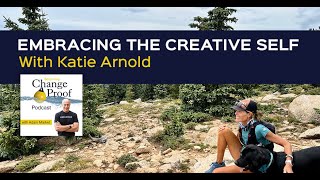
Katie Arnold, an ultrarunner and writer, talks about how running and writing are forms of artistic expression. She uses movement to build self-compassion, treats failure as material for growth, and draws on a wilderness accident and ultrarunning to illustrate humility and the practice of showing up regardless of outcome.
Chapters
Life happens, and not always the way we expect it to. Every single day we face change, stress and uncertainty. What if you could learn to thrive no matter what life throws your way? Resilience expert Adam Markell and his inspiring guests explore breakthrough strategies to fully embrace change and build the resilience required to become change.
Proof. I've got a great guest today. Somebody you're absolutely gonna, you're gonna fall in love with her. She's amazing. Katie Arnold she is an award winning journalist, longtime contributor to Outside magazine, and the author of acclaimed 2019 memoir Running Home. A Zen practitioner and champion ultra runner, Katie teaches writing and running retreats, exploring the link between movement and creativity, wilderness and stillness. Her writing has been featured in the New York Times, the Wall Street Journal, ESPN the Magazine, the Runner's World, and Elle, among others. Her new book, Brief Flashings in the Phenomenal World, Zen and the Art of Running Free is a spiritual guide, a classic adventure tale, and a philosophical quest into the ultra marathon of life. Much more than a guide to how to run, Brief Flashings in the Phenomenal World is an exploration of how be you're going to love my conversation today with Katie Arnold. So sit back or stand up or move your body because you're going to just, well, you're going to bliss out. Enjoy. Okay, Katie, so I've just read your bio. I shared a little bit about your history, your cv. Good stuff, you know, all that great stuff. People, you know, we want people to know about us and on one level it's sort of like it feels a little like ego at times, you know, to hear all that, all that, you know, these accomplishments, etc. But I really, I'm curious what's one thing that isn't in that bio, that isn't a part of how people will introduce you and all the work that you've done, etc. What's one thing that's not part of that you would love our community to just know about you at the very beginning of our conversation?
I think more than anything I'm an artist and as a writer and an athlete, both of those fall into the larger umbrella of artist and sport and endurance have always been a creative expression for me as well as my writing. And I more and more think of myself as an artist, which is sort of the overarching, you know, word that contains these multifaceted parts of myself that seem very different, you know, a writer and an author and a competitive athlete, but they're really not very different at all falls under this umbrella, this kind of Identity that I feel more and more strongly as artists.
Yeah, that really resonates with me. I hear that. And I think to myself, where else in our, in our pursuits? Maybe not everybody's a writer and not everybody's an athlete. Not everybody's, you know, a speaker or a presenter or what have you. But where is it that the work that we do in the world, or whatever we do in the world is, is a, is an art form? Where do we see it or where can it be that way? So, like, does anything come up for you when I sort of.
Yeah, I mean, I think that we, we are all artists because we all have this very unique form of personal expression that in this age of imitation and sort of idolizing and kind of seeing everything projected in large screen for us to sort of want to imitate, we lose sight of that. That we're all like uniquely ourselves and have our own artistic and true expression. That really, that is our job in the world is to put that forth. And you know, social media is so much about what other people are doing and so much about comparing yourself and comparisons. But I think the deepest work that any of us can do is to really put our true selves forward through whatever expression we have. Whether we're artists or entrepreneurs or athletes or all of the above, only we can do what we do individually and no one can do it quite like you. And so I think that, that that message gets lost when we're sort of looking at everyone and wishing we were them. Flip it and be like, what do I have to offer? And, and I just think that's where we're all, where every single one of us is an artist. Even if we, you know, paint to paper.
Yeah. And as my kids would have said when they were really little, or they did say when they were little. You know, they can be messy painters. Like the. To be a messy painter, to be an artist doesn't mean that you are superhuman. In fact, you're just human and doesn't mean that you're perfect. You're quite imperfect. And maybe, maybe there's some, there's some sense that, that when you're doing what you might think of as non artistic work, the daily, the stuff of daily living, that somehow or another you think that you've got to do it in a, in a different, in a different way. That, that somehow or another it's. I think when art, when I think about art, I think it's about impeccability. I don't think about perfection, but impeccability. What comes up for you when I create that or just sort of make impeccability.
I certainly don't think about perfection, because in my work, both as a creative person and as an athlete, like, perfection is never the goal. Rather, I'm striving for the truth and kind of an honest expression of who I am. And so some days, like as a writer and a runner, that's really hard. Like, the body hurts, you know, the mind is sluggish. And rather than chalk that up to a failure or a bad day, it's just. It's. I guess that's the Zen part of me meeting myself where I am. Right. And that's just part of the process. Oh, today you're here. Today it feels hard. Tomorrow might feel easy. You know, yesterday I did a long bike ride. I. I felt like I had a tailwind in both directions. Like, those days are great, right? When we have those. And. But just because we have a bad day or string of bad days or messy or, you know, forgetful or irresponsible to sort of the humdrum stuff we have to take care of, and instead we're kind of pulled more into our art. Like, all of that is the creative process. Like, nothing is left out of that. Right? So the creative process includes the good days, the bad days, the messy days. You know, every day, everything. And I think that's just because I'm a writer, too. I see it this way. Everything is material, right? So even a, you know, a terrible day or a bad outcome, I don't even really think of even sport in terms of failing or loss. But a challenging day is material, right? It moves the mark for yourself. You learn more about yourself. You learn more about your process from those hard days. And so, yeah, I re. I don't really ever even think of failure as a thing, if that makes sense. Everything. Yeah, everything is growth.
So in. In that artistic process, people are probably, I think, whether they lean into themselves as artists or they are artists or they don't, you know, fully, you know, can't yet sort of see themselves that way or feel that way about themselves. I think we get the fact that that's there's a process involved in accomplishing something, whether it's to run a mile, Run a mile on a certain time, to run against other people and succeed in that competition, whatever the thing might be, or to conclude a book to, you know, start one and actually finish one, whether it's to start reading one and finish the one you're reading, or it's to start writing one Et cetera. You know, there's a process we can get that I think it's maybe not readily as. As accessible to see your daily life where the things you do at work or the things you do just in taking care of your family or in other pursuits as. As a. As a process. So I'm curious, you know, if we're going to ask people to maybe build that bridge between those things, to be able to see themselves as. As artists, to see the world as. As a sort of a canvas for their. Yeah. For their expression. Because I so love the way you put that out there. That. That. And really paraphrasing here, your art is a form of. Of honest expression. So that your true self. Can you put your true self forward?
Yeah.
Just love that language. And if somebody was to say, well, okay, now I'd love to. To do that not just in. In a, you know, sort of figurative sense, but literally to be able to adopt that mindset. I want to ask you about. About failure. I want to ask you about forgiveness because I think. I think a lot of people have difficulty letting go of. Of. Of doing it. Of doing it. Not doing it perfectly or doing it. Or making actual, you know, mistakes. Errors in judgment, poor decisions, you know, or things just not working out or somebody besting them for a job or. Or for something. Right. So how do you. How do you forgive yourself as an artist? When you have a day when you've got a little, you know, you're a little foggy, like you're a little sluggish, like you just wake up pissed off mood, and. And that just translates into a lack of creative flow.
Yeah.
Like, how do you forgive yourself and move on and get to that next spot better?
Well, a couple of things. Literally, I do. I move my body. So most days I start with some kind of physical practice. And it's always, you know, in every, you know, possible circumstance, it will be outside. So I'm out in nature, in fresh air, moving, whether that's running, riding my bike, walking the dog, you know, cruising around on my town bike. It's not always like, training. Also, I don't think of my movement and my preparation for ultramarathons and the like as training. I think of it as, like, being alive and living. And so if I do wake up in a funk or I do something or procrastinate on something that makes me feel badly about myself, oftentimes I will. Yeah, I'll just start the day by moving and getting into my body. And when I'm. When I'm in my body, like, much closer to a state of forgiveness because our body is always calling the shots. And, you know, we like to think we can override what our body's capable of with our minds. And our minds are incredibly strong. But our bodies are the truth tellers, right? And they're, you know, on any given day, you could feel great. You could, you know, have tight Achilles, you could have heavy legs, whatnot. And so being in your body, you have to come to it with a state of compassion and, you know, be willing to have forgiveness. Because the body's not always, you know, at its best, even when we're elite athletes and training or preparing, you know, with rigor and commitment. And so I think by being in our bodies, that's just a natural way to tap into our inner compassion. It's like. And that takes practice. Honestly, it is like a daily practice instead of being like, you know, body, you suck. Well, why are you so slow today? And we all have that dialogue, right? But to then be able to catch ourselves in it and say, oh, God, I must just be tired today. Or, you know, I. I must be. I didn't get enough to eat yesterday. Or like, I was just mentioning that ride yesterday I did, like, with a tailwind in both directions. You know, that sounds sort of magical thinking, but actually, when I really thought about it, I was like, oh, that's because I took the day before off. I had a full rest day, you know, and. And our body needs that. And, and so being on our body puts us closer to that state of compassion, I think, because we're not just overthinking and so critical, criticizing ourselves all the time. We're actually like living in human bodies that have. That have vulnerabilities. So that's one way I face it. And the other way is just as a writer, I think, which is that the mistakes and, and errors in judgment, you know, as a writer, those are really good parts of the story. You know, I've been a journalist for 30 years, and those are what make the story. So if everything were smooth sailing and, you know, just this N word up, you know, progression, that, that wouldn' that great of a story. So I think I'm just naturally receptive to that because I know a good story when I see one and they always have the dips.
So. So, you know, you maybe, maybe it's like, you know a good story when you're. When you're living one.
And definitely that.
I mean, like, when you're caught up in your own drama as opposed to it becoming this spiraling thing. You know, this because we know what it's like when. When we do kind of get sucked up in that vortex of feeling. It's the worst shitty or, you know, are just. We're whatever. We're just don't feel good. We're angry, we're, you know, feeling like, oh, I can't get something I want right, or get it. Something done or whatever it might, you know, and then just sort of perpetuates more of the same. If you have the perspective that, look, this is, this is. This is a pretty good drama right now. I set out. I set out today to do X. Like for you, it's 500 words today, right? Yeah. And let's say you didn't get your 500 words written and you had said to me before we even started the recording. It's. It's very, you know, it's not like you to sort of set a commitment, like, you know, not arbitrarily, but just to say, hey, I'm going to write 500 words today.
Yeah.
Tomorrow and the next day. So talk to me a little bit about that because, you know, you know, if you set that commitment and you don't, you don't meet that commitment, how do you speak to yourself? What. And I mean, look, it's great for people to hear sort of like the. The be kind to yourself stuff. But I also, I mean, I have a son who. I've. My wife and I, we have four kids. Three. Three daughters and a son. So now, you know, if I said one of my daughters, you wouldn't know which one. Yeah. But now I've already. I've already called out my son when I say this, but, you know, he has a hard time being kind to himself. Yeah, he said that to me. Says he can be compassionate with other people. He can be forgiving and give other people sort of the benefit of doubt when it comes to himself. He's pretty harsh and I love the fact that he shared that with me.
But, you know, that's great awareness. That is great awareness. But I think it's true.
Yeah.
I think that he's probably much more the norm. Right. And we all have periods of time where we speak to ourselves harshly. Like, I'm definitely included in that. But I think what comes to mind right. When I heard you talking about your son is that it's not like there's not a point you get to. And. And all of a sudden, like, you only say kind words to yourself. It's a daily practice and so it's a continuum, right? And so maybe 10 years ago I was on like, you know, the very beginning of the spectrum of like speaking kindly and being the champion I needed for myself. And now I'm sort of a little bit farther down the path. But it's ongoing and certain things will come up that sting, you know, a little bit more than others and you can kind of get caught into that negative self talk spiral. But then, you know, if I can step away, and by stepping away, I mean either like going and doing something in my body or writing in my journal, having a little bit of distance between me and the disappointing event, I can start to see with more nuance that, okay, maybe this is an actually an opportunity. Maybe this is sort of a inflection point in a story I'm writing. Maybe this is opportunity to see something from a different perspective. So it's usually when I feel that sticky shame, it's now I'm so I'm enough along in my practice to know that's usually a signal that I can take a different view. And I could see something a little bit like I can. I'm not so stuck in my fixed thinking that, like, I'll wallow in the shame cyclone for, for many days, which I used to do, you know, it could be days and now it's often, you know, a matter of hours or less where it's like, oh, that's my cue. Like, I feel terrible. Like, how could I see this differently? Like, what else might be true?
Exactly.
I'll ask myself those things.
The, the idea that it, it's not that it won't show up again, it's that the cycle is shorter. I'm speaking.
Yeah, yeah, absolutely. That's what you're put. The cycle is shorter. It's, you know, it will repeat itself, it will show itself again in some forms, but hopefully the space between the times it shows up and duration of how long it lasts, you know, the space between gets longer and the duration gets shorter so that you are just more nimble and, and less likely to get swallowed up into this longer pattern of, you know, getting down on yourself. And then of course, we all know when we're down on ourselves, like our energy goes through the, you know, floor, it's harder to, you know, take initiative and, and then it's harder to say kind things to ourselves. So it's just a negative feedback loop. Whereas when we are talking kind, seeing mistakes and missteps as opportunities, as inflection points, as sort of springboards into growth, we are much more able to receive them and say, okay, what can I learn? And then move on.
And even, like we were saying earlier, perhaps like the drama of our own lives, you know, like, all right, I'm right in the middle of my own little shit store story, right? My, my, what you call it? Just shame cyclone.
Shame cyclone, exactly.
Caught up in my own shame cyclone right now. And. And to be able to have that awareness, to see it. Yeah. And in my. In the book I wrote more recently called Change Proof, we talk about the power of a pause. The pause ask. But just on the pause side of things, the pause to be able to. To actually see it objectively, even in the midst of it, to be like, okay, I am caught in this now. As opposed to. It's something that's outside of ourselves. It's not outside. It's within. And the absolutely solution is always within. The control is always within. And I'm a bit of a. Not a bit. I am a control freak. And there's so little that we actually do control. That is something we have absolute control over. And. And in that moment, it doesn't change the thing. It doesn't change necessarily change our energy. Although I can feel a shift in energy when I laugh, when I can laugh or I can see something from that more objective viewpoint, the more. More truthful viewpoint, even, that I'm, oh, I'm having a bad day. This is the drama.
Right.
My life at this moment, but it's not the end of the story. This is just, you know, this is.
Just maybe like a funny paragraph. Yeah. I mean, I will say, too, that humor is so important. And as I write in my book, Brief Flashings in the Phenomenal World. Like, humor is one of the things that really got my husband and me through this sort of trauma of we had this terrible wilderness accident and kind of my body was broken, my spirit, our marriage was very much, you know, pun intended, on the rocks. And. But for us to be able to return to that humor is what I knew that we would always be able to keep going because we had that and we. And humor does create that wedge in the story where it's like, oh, it suddenly separates us from the thing. And we are not the failure. We are act. You know, we're characters in a bigger play. And there's a scene in the book where we're, you know, we're coming home from this river trip in Idah where I had this bad accident and I can't walk, and my husband, we stop at a gas station on the Navajo Nation. And my husband has to help me in and. Because I can't walk and I've been on the wilderness in the. On the river for six days with a broken leg, with. Without actually knowing it's broken, but I'm badly injured and so he's carrying me in. And I catch sight of our reflection in, you know, like the. The Coke fridge. You know, the reflection of that. And we just look absolutely like disheveled. Like we haven't brushed our hair in days. Like I'm still in my wet bathing su. You know, we're in our river clothes. And in that moment I saw us as these characters and I was like, oh my gosh, this is funny. Like, this is the moment I'm going to remember. Like, even with all the trauma and the. The physical and emotional pain of the accident, like, like I was able to separate from it in that moment and I kind of filed it away and I was like, I know this is what I'm going to remember is like seeing ourselves as separate and, and that. That was a beautiful moment, you know, that I have always remembered. So to bring her like the.
The idea just that. So for me, with that story, I have a broken leg, I have a broken bent. That it's. It's like that you and I have that in common is an interesting. It's interesting as a looking back at it moment where, where there was sort of a. I mean, there are a lot of options when something goes sideways in your life. Whether it's sort of a physical thing like we're. Or it's something else. And for me, I was in Mexico. I was with my wife was the last ever vacation. I was doing what I've been known to do in the past, which is sort of to push the limits. Meaning trying to suck the marrow out of the.
Yeah.
You know, like, leave nothing undone.
Yeah.
And. And I got just slammed and I'm a waterman. I'm like, like my whole life I've been in the water. I was a lifeguard and whatever. But like, I love the water. The water is my friend and yeah, the ocean is my friend and I respect the ocean. That's. You know, I really have deep respect for the. The dangers as well as the beauty etc. But in this particular moment, the ocean just reared up. I mean, it was literally a rogue wave. I'm not even making that up.
And it was like, hey, we're gonna. You. We love you, you love us. But let's have like a reality check for a moment. We're in Charge.
Exactly. Picked up, slammed down and broke like snapped my leg back. Knew it was like all messed up. And, and in that moment, as I'm literally being, my wife is dragging me out of the surf so I don't get like drowned by the next giant thing, you know, I'm lying there on the, on the sand as she went to go get help. I consciously just remember that, having that moment to pause to ask, you know, how do I want to experience. Yeah, I know this sounds weird, and, and that's why when you were kind of walking with your husband's assistance, there was a moment for you to, to ask, if not consciously, but on some inner, you know, inside going, you know, how do I want to actually experience this moment in my life? Do I do? Is it a tragedy? Is it, you know, what it, what is it?
What story do I want to tell of it? And believe me, it was a tragedy for many months. You know, I, I came home, I had been on a river and it happened, our accident happened on, of a six day trip and we decided we would not evacuate again. I didn't know it was broken. I knew I was very badly injured. But we, you know, we're in the remote wilderness and so we decide to stay on the river and that becomes this sort of Zen practice in deep concentration and just being exactly where I was in each moment because it was too frightening to think about all the rapids that lay downstream that we would have to get through in order to get to safety. So I'm in this hyper meditative state, a state of shock really. And, and so to come off the river is, yes, is to come into safety. But it's also, I have this realization as we're, you know, finally getting off the river safely that actually like the river, though it had been really hard on us and challenged us in ways we couldn't have imagined. It was also as all rivers and water is like, you know, kind of a safety. Right. It had sheltered us as canyons do. And like you, you spend a lot of time on the ocean. It sounds like I'm very much a river in the canyons and canyons do provide the shelter. And I had this feel as we were coming out that the river had been a safe place and now we are coming into the hardest part. And it was true, right, that kind of awareness. I had to get surgery and there was, you know, commenced a long healing period where not only did I had to have to heal my body, but I had to heal emotionally because, you know, I'd been told that I should never run again. And I was a competitive, you know, elite level ultra runner. And so, you know, that moment in the gas station did not, you know, then make everything better. Right. Because there was really difficult times following, but it was something I could stick in my back pocket and kind of pull out just from like a little, like, rock, you know, like a, you know, that you pull out from time to time. Yeah. Like you, like, you touch and you're just like, oh, right. I think there will be someday when I can look back and remember that moment in the gas station and how, like, you know, just messed up we looked and how messed up we were and be able to remember that with even maybe some. Some definitely some compassion and maybe even some fondness and. And it's so. Yeah, it was just something to hold in the backest part of my mind.
Yeah.
As you were saying, it's not all lemonade right away, right?
Oh, God, no, I mean that.
A lot of lemons.
Right? It. That would definitely not be a truthful telling.
No, no.
Right. But I will say for me, there was a lot of not pleasant things that occurred as a result of that, including missing a trip to. To Great Britain to visit my. Our one. Our youngest daughter who's at college, and her professor wanted me to come in and. And do a book reading and thing with the class. And, And. And I was looking for that. I didn't get to make that trip because of this thing happening, you know, so there were, like you said, there was a shit show that followed, but in that moment, and for me, it wasn't the humor, I. I was just struck by the fact that for you, it was that. That sort of bizarre, like, looking at yourself in that bizarre sort of like.
You know, almost like a fluorescent light of like. But, you know, a Conoco station.
Like when you walk into the carnival and it's like that weird thing and you go, yes. Who is that? It's like. It's the mangled version.
Yes, yes. Like the grubbiest versions of us. Yes, yes, for me. But it's also the truest versions. We are, you know, we're outdoors people.
We are.
We do, you know, we're like. We're always coming off rivers not usually so broken.
Well, I mean, the water, I'm. I'm getting a bunch of things. I want to. I want to circle into a few areas that we. While we have time. I mean, for me, it was gratitude. So in that moment when I was laying on the. On the beach, I just closed the loop on that it was not, I wasn't finding humor in that moment because frankly, it just didn't feel humorous. But what did strike me immediately, and this is no bs, this is the actual fact of it, when my wife went and ran to get help and I said to myself, well, you know, how, how, how do I want to experience this right now? And I, I really felt grateful that, that the ocean had been kind enough not to kill me or, or paralyze me, which easily could have happened based on the fact that there were rocks. This wave was enormous. You know, I had really gotten, gotten thrown. I had, I had no intention of swimming. I went in to cool off as we would take this final walk before going, you know, like to our room. So, so I really got, you know, slapped. Like it was a moment that the nature, that the universe said, you know, I'm going to get your attention, I'm going to get your attention now for a good reason. And I was grateful for it. I literally decided that how I wanted to experience this moment was that I was, I was just grateful for the mercy, honestly, and for the lessons that were about to be imparted to me.
Right, exactly. As all injuries do. Right.
As they do. So I'm just like, all right, here we go, here we. And here we go. Maybe here we go again even. Because it's not the first time I've needed to learn a lesson about not pushing or you know, just having a sort of a less, less of a sort of exacting like, like a striving.
Less of like a pushing. Yeah, I relate to that and suck.
You know, everything out of some, you.
Know, like that's like kind of a scarcity mindset too, of like, I gotta get it all. And I only say that because I, I, you know, I am like you, I'm like a doer, I'm an experiencer. I love to like go full, full send. And you know, I, I'm just a curious human. I want to experience it all. But they think for me, the benefit of this accident was really a wake up call. Like you were saying, like all accidents stop, like consuming so much of that and to be more receiving, right? So stop just grabbing it and like needing it and like striving and be more open to letting it unfold. And for me, in the sort of, in the wake of my accident and my healing, I really turn more deeply towards Zen practice. And I'd been dabbling in it since the death of my father. And I was really drawn to Zen, not as a religion or A formal doctrine or dogma, but as like a way of being. And so it just always resonated with me. And so after my accident is when I began to like study. It's too rigid a word, like absorb it and let it penetrate me and sort of the, the lessons, one of which is like, you know, no gaining idea. Like we're not sitting in meditation or doing X or Y to gain something. Right. Like, and that's kind of that mindset I think we both have. Like, I'm gonna to get it, you know, I'm going to gain and I'm going to like change. Yeah, I'm going to take. And I think that really is like an overarching, obviously sort of structure in a lot of how we live. Like both, you know, in business and in sport and the outdoors. It's like we want to take stuff. And so. So Zen has really transformed not only the way I run, but just the way I live in terms of like, it's not a passive way of being. People think Zen is so laid back, it's actually the opposite that it's quite rigorous to live this way, which is just hyper present and like making full, true effort with your complete spirit in each moment. Right. So, so it doesn't mean just like wishy washy through life. It's like showing up each moment as your true self. Right. Will take you where you want to go, but if you lead from that end result, you're always well ahead of yourself into the future, into this area that none of us can control. The only thing we can control is, is in this moment I'm going to show up fully right now in this moment with you. Right. And I'm going to. Then, you know, whatever the next thing is I do today, I'm going to show up fully. And, and so that's a, that's a rigorous practice.
So to me, the word impeccability started by talking about that distinction between impeccability and perfectionism that you just, you just defined it.
Yeah. I think of it as meticulous. Like it, like it's never perfect, but it's really, it's really granular. It's. It's like making true, honest effort in each film.
This is what you said a moment ago. Full, true effort with your complete spirit. Yeah, that's what being impeccable is. It's not about being perfect. But when you think about where it is that you fall off, that we fall off in our pursuits of things or in our just living how we live, whether it's how we speak to people or think about people or how we interact with. With the world around us, with nature, with animals, in our. In our. Again, in our work, in our pursuits at work, etc. If we're to be anything, at least that I would continue to, to, like you say, vigilantly. I don't want to use the word strive, but to practice.
Endeavor. Yeah. Practice. Right.
In. In. In a. In a. In a. In a consistent way. It's. It's what you said, it's being. Being able to. To really provide true effort from your complete spirit.
Yeah.
Without regard for outcome. Because.
Right. Yeah.
Without. We know that when you try to think about. Think your way through a. A basketball, like a shot at the free throw line shot or anything, you botch it. Right. You can't, you can't be an artist and be.
Yeah.
Be in your head. Yeah. At the same time. And be effective.
Right. It comes from your body. Right?
Yes. Your body.
Yeah. And so I, I totally agree that like when we are, I mean, which isn't to say you don't prepare. It's not like you just show up like, you know, whatever. Right.
It.
You know, for me, when I am most likely to be in flow state, and I write about this in brief flashings in the phenomenal world about when I ran the Leadville 100, I had done the work.
Right.
Like, to be most likely to be in flow state is you have to come prepared. So it's like you show up daily with that great, true determination, you know, in. In expressing yourself to the best that you can, you know, and you do that every day. And that's preparation. And so you show up, you know, feeling like you have prepared, which also reflects a deep humility. Right. Which is so important. Like, I'm humble in the face of mountains just like you are with oceans. Right. Like the mountains call the shots. And so I am not more powerful than the mountains. I'm actually far less powerful. And I. But if I can come with that kind of humility, I can tap into the mountain's energy and I can ride that energy. I'm sure that's how it feels surfing. And then the third point is gratitude, like you expressed on the beach, which is, you know, so knowing that you have come with humility and preparation, you can feel this enormous gratitude for the path you've taken, for this pure expression you've made in the world that's unlike anyone else's. Even someone who does exactly what you do, no one can do it quite like you. And so for me, that meant showing up at the start of this 100 mile race just overwhelmed with gratitude, humbled and yet feeling like it was my time, time I was ready. I didn't know for what because I had not been holding tightly to any kind of results at all. And that's what freed me, I think, to have this like just absolutely magical day where the outcome far, far exceeded what I could have ever imagined, you know, so our minds and our imaginations, thank goodness. I mean, they're wild. And as a writer, I need my big imagination, but still, what the universe is capable of delivering is far bigger and vaster than our imaginations can imagine. And thank goodness, right, because, you know, then things can happen that we never thought possible. And so that's kind of those three pillars for sure. Preparation. And when I feel, when I come into something prepared, whether it's like an interview as a journalist that I'm doing or, you know, a race or whatever, if I'm prepared, then when I get to the starting line or to the beginning of the endeavor, I. It's like I can magically switch this button. I, like, I feel like it's on my arm that just switches to receive know. And I just switched the button to receive. And now I'm just like, okay, show me. Whatever happens, I'm receiving. And so no good, no bad. Like, that's why I don't ever use the word failure. Because no matter what, even if you're quote unquote failing, you're still receiving. You're receiving information, lessons, teachings. And so being in that state of receiving is incredibly open and powerful. And nothing can go wrong from that place. Place. Because everything is material and everything is a teacher.
It's all, it's feedback.
It's all feedback. Yeah.
And what you do with feedback, again becomes your choice. There's nobody that, that gets to choose what you do with feedback, whether it's.
And how you write that story of your feedback. Right. Like I, I had a radically different race after Leadville, where I had the exact opposite result, if you can call it that. I finished dead last in 100 mile race. I'd had to walk the last 50 miles because I had this, you know, I pulled something at the back of my knee and I just kept going. And, and that's an interesting story in of itself. But when I finished and I was the last runner in this sort of faster, elite wave of runners, dead last. And when I finished, I. The next morning I woke up with this incredible sense of euphoria, fatigue, big disbelief that I had done it and gratitude for everyone who had helped me along the way. And I realized I was like, I recognize this feeling. And then I was like, this is the exact feeling I had after winning the biggest ultramarathon in the country. There's no difference. There was no difference. Result totally independent of the results. You know, one was like, the biggest win, and the other was, like, literally dead last. And it was the same. Same. It was like one was no better than the other. And, you know, someone could tell me, oh, there's no difference between winning and losing. It's so trite. Right. You're like, that is such a cliche and such bs. It's true. And, you know, I have learned so much from that race that I quote, unquote, lost, and it would never. It will never, in my mind, chalk up to a loss or a failure.
Right.
It was such a gift.
You were able to be neutral.
Yeah.
A lot of ways to. To.
I just received it, and I was like, wow, this is not the race I wanted or expected. And yet I wouldn't trade it because it's an experience I'd never had before. And so that's kind of what, you know, we were a little bit talking about Zen and letting go of gaining idea. And another big idea in Zen is this idea of beginner's mind coming at something fresh as a beginner, letting go of kind of our concept that we know what we're doing or the sense of mastery which, you know, is so valued in this country and in our culture. Like, we all have to be. Be experts on this hack or that hack or, you know, have the 10 tips for X or Y. And actually, in Zen, not knowing is a higher state of consciousness. Right. So being able to be in that state of not knowing and open to all possibilities. Again, when you're open to all possibilities, there's so many more possibilities that can happen.
Parts to that. Right. Because the not knowing piece is troublesome for people who can't also be open to what they will learn as a result of not knowing. The humility is missing. Missing.
Right.
When you don't know something, you're not exact. I don't know in a. Because our company does a lot of work with organizations at their culture, at the level of how they create and manifest culture. And often it's the humility is. Doesn't. Doesn't get seated at the table because people are paid to know or figure out.
Right.
No.
Right. And they think they can't. Yeah, they think they can't. Show this not knowing or uncertainty, but actually there's such power and uncertainty because, you know, as the quote goes, in the beginner's mind there are many possibilities and in the expert's mind there are few. And wouldn't you rather live in a world with many possibilities? Right. Especially now in the climate we're in. Like, literally the climate and metaphorically the climate. Like, it's really easy to go down that doom cycle right into that, that spiral of like, this is the only thing that will happen. Truth is, none of us know. And it's scary. Like we're not, you know, it's not, we're not taught to embrace that. And that itself is also a practice of sort of, of remembering that, that the only constant in life is change, like incessant change. And you know, we're just energy moving and it's always changing. And so we don't know what's coming. But, you know, we think we do. We like to think we do.
So the book is called Brief Flashings in the Phenomenal World, Zen and the Art of Running Free and it came out in April. So I'm going to certainly recommend folks. Yes, get to the, the digital bookstore, the actual physical bookstore.
Physical bookstore. Support your local bookstore.
Yeah, no kid. Right. I want to ask you one or two quick questions, but as we're going to wrap things up here and when it comes to. So I want to, I want to understand your take on resilience and what it is that you do to, to create greater resiliency in the face of, as you said, constant and never ending uncertainty. That's to me, the, the one constant. And it's, it is a riddle, like so many paradoxes that we live with in the natural world world that the only constant, the greatest constant is change. So that being the case and people living in this constant state of, you know, what's going to happen next, whether it's environmentally, politically, socially, at work, wherever. Right. You know, how do you do, how do you, how have you worked on your resiliency in the face of that changing environment?
Resiliency to me, to me means, you know, exactly that it's keeping going in the face of uncertainty despite the outcome being unknown. Right. And, and so for me, it's a practice in just showing up every day and enduring things that are discomfort, you know, that are uncomfortable, enduring uncertainty and putting myself in positions where those things, I'm regularly practicing them. And so that's why, you know, I think ultra endurance sports for me are a great place to practice because when you go out for a hundred mile run or race or, you know, a 50 mile bike ride, you know, you can control for certain, you know, scenarios, but there's always going to be something, especially when you're in the mountains or in terrain that you can't predict. And so for me, all, you know, I would say ultra running has been my greatest teacher in resilience because you literally get knocked down, as I did in the river, and you get up and you keep going. And, and so that practice, you know, people are always like, why are you training for another 100 mile race? And it's because I can, can I keep, you know, I need more and more lessons and I need to build my tolerance ever more for uncertainty and discomfort and doesn't mean going to extremes every day. Right. We find that like parenting, I'm sure teaches you about how to be resilient in the face of uncertainty and constant change. My kids are teenagers, they're constantly changing. You know, it's a beautiful journey and it's, you know, you have to have a lot of resilience because, because you get knocked down a lot and, and you just keep going and it's not always going to feel good. And I think that's really raising my children that way as we have outside in nature, because I'm trying to give them, you know, the, the biggest opportunities to learn this themselves is that we're like, there's always a low point. You know, in every trip or expedition or hike we do, every long outing, I say there's a low point, you know, and it might be just below the summit and it gets windy or they're tired. And when there is a low point and people can, all your listeners can do this too, like check in with yourself. Am I safe? Right. And so in the case of the mountain, it's like, is there, is the weather clear? Is the storm coming in? If not, we can keep going. Do I have what I need to take care of myself? Do I have food? Do I have a jacket? Is my body okay? Right. Am I physically strong enough to keep going? And if all the answers line up, we keep going and we know that the low point will pass and then sure enough, it'll bring us to a high point. And it's a, it's a never ending cycle cycle. And so to be able to understand that the low points are just that and that if you do keep going, you will get through them.
Yeah, it really, that presence that you spoke about, and I think this is where the value of whether it's meditation or Zen practice or simply being able to, to become be self aware the way my son was, you know.
Yeah.
Really truthful about himself. That, that self awareness creates a world of possibilities that exist. They always exist. Exist. Sort of parallel to the, to the, to the lack of possibilities.
Yes.
Simultaneously that our minds create for ourselves, that we box ourselves into thinking things have to be just one way.
It's like that trick mirror you were talking about, you know, in like the gas station. It was like behind that mirror actually, there's like endless possibilities, but oftentimes we only see the one reflected back that we think is us. And it's like act, you know, what is behind that mirror. Like there's like a whole like, you know, limitless, unlimited world of possibility. And it seems like a more fruitful place and hopeful place to live in that world. And I don't think it's delusional. I don't think that it's like head in the sand.
No.
You know, it's very real. It's like it's meeting the world as it is in this moment. And that's what Zen is. It's just like, okay, I'm facing it now and it doesn't look pretty, but I'm going to stick with it.
Yeah. Again, you're either a person who, I mean, there's a lot of ways to oversimplify things for sure. So it might be guilty. Guilty of that when I say this, but I think you can look at the world as, as an outside in, you know, endeavor or framework or you can see it as an inside out one. And to me, I think in any spiritual teaching, regardless of the, the arena, the teacher, there's one common denominator in all of it, in every religion, in, in all of it. And that is that it's the, it's. We change things in the, in our lives. We experience life from the inside out.
Yeah.
We try to change out outer conditions as a means to get what we want. We are, we're doing what I did in the surf. Yeah. We're setting ourselves up for a fall and for some tough lessons. I was truly grateful because the lesson I got to learn was pretty light, as it turned out. I wore, I wore a brace on my knee for a couple of months. I went to my talks with the brace. I got a great, you know, like to tell the story of it.
Yeah, right.
Yeah, know, it's like it could have gone, it could have gone otherwise. And we don't, if we don't heed some of those really important life lessons. And not just from our own lives, but the lives of so many people.
Yeah.
Around us have lived before. If we just understand. We create from the inside out.
Yeah, absolutely right. Our minds are so powerful. And that's what I learned, you know, in the wake of my accident is I could see it this way or I could see it as a chance to reinvent and deepen my relationship with running and. And, you know, by extension, it extended to everything. Life, marriage, my, you know, my writing. Everything got deeper as a result. So. So, yeah, it's pretty powerful, but it doesn't, you know, make it easier in the moment. You know, it's just. It gives you a little bit of separation to see, like. Okay, like everything. This too shall pass. And I'm going to sort of decide how I want the narrative to go, what story I'm going to tell about this.
Totally. Ah, Katie, I just have so loved the time we've had together.
Yeah, same.
I know you had to change direct little. Little change of locations.
Yeah.
Get proper Internet and it's kind of raining on your island.
Yeah, I'm on an island in Canada. It's great. I'm in. I'm in the happ. Happy, simple place where, you know, the daily rhythms. And this is kind of my happiest place is like, are very simple. You know, it's wake.
You're.
We live by the weather, the wind, the water, or, you know, I paddle or run or ride my bike and then I write and, you know, parent my children. But it's simplicity is. Is something that, you know, I think we're losing and, you know, at the cost of our imaginations and our spirit sort of.
We.
We're all so busy. Right. These days, it's just go, go, go.
Yeah. Well, I want to come back to the. As I say we sign off from this episode, I just want to go back to something you said at the very beginning as a way to. To, I. I think, get to get to a place of action, a point of. Point of. What can we do with this? You were talking about being an artist, and we were having a conversation at the start about how life just can be an art form. We choose to be artists, whether we're writers or we're anything, you know, no matter what you do, you can do it in. In a way that is artistic. And. And I think if you approach it, if a person, you know, says, hey, say, where can I apply this intentionality and this presence, this full, true effort with your complete spirit.
Yeah.
With Anything you do, whether it's, again, spending that time with your kid or. Or it's with. With a person that you. You meet in the grocery store. But, yeah, wherever it is that you're interacting with the world outside of you, if you can be there with your full trip. True.
Yeah.
Spirit, your presence, it's art. Because what.
You know, no one else can be you and. Yeah, right. And that's what I mean. Like, honestly, I'd never. Like, today was the first time when you asked me like that word earlier. Like, I have never. I mean, I. I've always thought of what I do as creative expression, as true expression. Right. Running and. And writing and all the things. But I've never. I've never, like, outwardly used that word artist.
Yeah.
Do you hear that phone? I've never used the word artist. And, um. And so. But it is that. It's like. It boils down to this very simple thing of, like, just be real in every moment. That is your expression. Like when you're in the grocery store, if you're distracted on your phone or if you are talking to your kid. Right. There's something between you and the experience and that person. But when you can just show up and be real in that moment, that is magic. I mean, the. The title of my book is called Brief Flashings in the Phenomenal World. That's a flash clashing near your true self, even with someone you'll never see again over something completely mundane like a loaf of bread. You leave a. You leave an interaction like that. I would guess you'd feel the same way, like alive, a little bit more alive than when you went in. And that is your artist, right? That is your artistic expression. And it doesn't at all have to do with art. Like, you know, I'm one of those people who've, like, I. I carried some art shame. And.
Let's not be so literal in.
Yeah, let's not be so literal.
It's that word because it's an expression exactly.
Like. Yeah. When I'm. When I am in. When I'm being real in each moment, I feel completely like my truest self. And. And. And honestly, when you just bleed from that place, there's nothing more in the world you actually need to know or do.
What a perfect place to conclude. Yeah.
Yeah.
Thank you, Katie. Thank you for your. Your expression today.
And yes, thank you, Adam. That was great. I really enjoyed it.
It.
I love your shirt too.
Thank you for that.
Okay.
Okay, ciao.
Okay, take care. Bye.
Outstanding. What a. What a wonderful Human being. What a beautiful soul. Katie Arnold. I just absolutely love her story. I can't wait. Actually have not read her book, but I'm going to get brief flashings in the phenomenal world. Zen and the Art of Running Free. A spiritual guide it is to me. It's just, just a, a wonderful book for me at the place I'm at in my life. I imagine many of you are going to think the same, feel the same. And there's so many teachers that, that come to us in our lives. You know, water, the mountain, the river, Katie herself there. There's just so many ways that we can learn, assuming we have that beginner's mind. I, I love that she pointed to the fact that Zen is not a passive pursuit. That Zen practice is, is exacting. It requires vigilance. It's about being committed in many ways to living in a place of presence, to be present, to be humble. And from that beginner's mindset, that humble mindset, all the possibilities are open to us. Whereas from a, from a knowing mindset, an all knowing, an expert quote unquote, you know, that mindset we are, we are limited in our possibilities, more limited. And how we approach each moment of the day and each interaction where we get to express ourselves. And rather than being a taker or, or looking to exact or extract something from that situation, that person or that, that opportunity to, to rather be open to receiving. It's different, it's a, it's slight. The distinction isn't, isn't, isn't massive. But it, it. I think it's all important whether we're coming from a place of arrogance or we're coming from a place of humility. Whether we're coming from a place of wanting to take something as opposed to being open to receiving something and willing to give as well. And that's what our presence is. Our presence is a gift to, to the world, whoever, whatever we interact with in our full expression. When we are in that place where we are providing that true effort, effort, our true effort with our complete spirit, we are being impeccable in the world. And that, that was what Katie and I, One of the things that Katie and I talked about was that distinction between being impeccable or the, the opportunity for impeccability versus perfection or perfectionism. And again these, these. It's a nuanced distinction, but I think really powerful and important because it, it's a guide to us in, in how we approach a moment. And, and there's not a whole lot else for us Us, but to live in, in not just in the moment, but from moment to moment. If we can get this moment right, I don't know that there's another responsibility that's greater than that for us. And I don't know that there's another responsibility that's more impactful to us mentally, emotionally, physically, spiritually speaking than to be putting our full selves into the moment, getting the moment right. That we can do that. We just do that in the midst of the chaos of the world world and everything that's going on outside of us that we can focus on what is going on inside, what is going on within us. That that is the answer that leads us to some really beautiful, beautiful experiences, beautiful feelings and, and that is our, that is the sum total of our lives are the just the, the experiences that we have, the way that we feel moment to moment moment. What else could there possibly be at the end looking back, but a calculus of that? And so I hope you enjoyed that conversation. Katie and I, we did and when we turned off our the recording we just were truly grateful for the time we got to spend together and, and the kinds of things we got to talk about that aren't necessarily everyday sort of business conversations or conversations about performance or, or achievement or any of that that but just felt truly truthful, felt real and that just felt great. So we enjoyed ourselves. I hope you've enjoyed us enjoying ourselves and that you enjoyed because you are part of it. This podcast doesn't exist without you. There's no there there without you being there. So thank you for being there and, and thank you for sharing. If you know somebody that would really just enjoy this conversation would vibe on it, please share it with them. It helps us, of course it helps us with the algorithm algorithms that, that determine where these podcasts show up and who gets to consume them. So please share it, please rate it if you can take that moment to provide the, the five star, the whatever stars rating and your feedback and if you've got comments, questions, anything really that you want to share with us, you can always go to AdamMarkel.com podcast and leave your your comment or question for myself or any guests that I've had, including Katie in that spot spot. Also, if you'd love to check out where are you today? How are you feeling in this moment? How resiliently are you interacting with your world, work world, your non work world? All you need to do is go to rankmyresilience.com rankmyresilience.com and three minutes is all it takes for you to get your own personalized assessment. Mentally, emotionally, physically, spiritually speaking. How resilient are you and those around you? Of course you can share that link with them, members of your team, team family members, etc. Confidential you'll your report will be just for you. Nobody else gets access to it. And it's a great snapshot, a great moment of awareness, self awareness that you can use to build upon to take that next step forward with presence, with truth and hopefully in in a way where you're continuing to be open to learning. That's that place of humility, that beginner's mindset that Katie was talking about. For now anyway. I'll just say again, we're once more, you are so important to us. Thank you for being a part of our community. Thank you, thank you, thank you. Have a beautiful, beautiful rest of your day. Ciao for now. Thanks for listening everyone. We hope you now have even more tools and greater insights to build resilience and become change proof. Help us inspire others by sharing this episode and leaving your comments over@adammarkelle.com podcast for more resilience tips and strategies, including support for building change proof teams, visit AdamMarkel.com BecomeChangeproof.
More from Adam


Mastering Strategic Communications To Navigate High-Stakes Environments With Chris King


Mastering Self-Leadership Through The Conscious Habit Framework With Amy Woodall




Optimize Your Performance And Vitality Through Advanced Metabolic Health Testing With Mauro Stara

Cultivating Audacity: The Audacious Path To Success With Anne Marie Anderson
