Getting Older & The Cycle of Life: Living Out Our Time in Mystery With Dr. Ken Druck
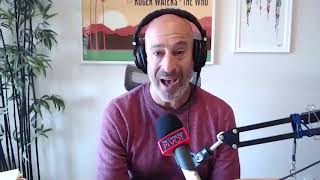
Podcast conversation (Conscious Pivot) between host Adam Markel and Dr. Ken Druck about aging, death, resilience, presence, caregiving and intergenerational relationships. Druck shares personal stories (including the death of his daughter and the recent birth of grandsons), explains paradoxes of grief and wholeness, and outlines themes from his new book Raising an Aging Parent: opportunities in the second half of life, caregiver balance, and leaving a legacy of love. The episode emphasizes presence, listening without judgment, reducing self-prosecution, and practical rituals to support resilience.
Chapters
Welcome to the Conscious Pivot Podcast with international speaker, business mentor, best selling author of Pivot and your host, Adam Markell. The Conscious Pivot shares the stories and wisdom of people who have successfully reinvented some area of their business and personal life. You'll gain powerful insights into how you can fully embrace new opportunities, increase your performance and master the art and science of innovation and resilience. So please join Adam as he guides you on your conscious pivotal.
Hey everybody. Welcome back to another episode of the Conscious Pivot Podcast. I'm your host, Adam Markell and I feel very blessed in this moment. Just taking a few quiet breaths as we begin this show. We're going to have a beautiful conversation today about a challenging topic, something that we've either all gone through or will go through at some point, and something that's really, really very pertinent in my own personal life right now. And I know that's the same for a lot of other folks. So I'm, I'm breathing into the fact that this is a serious topic and also, just like so many serious things in life, it's, it's, it's also something that, that is beautiful and natural and just according to God's plan or the universe's plan. And so there's nothing, nothing there to defend or be afraid of, I guess because we're going to talk a little bit about dying today, a little bit about the process of getting older and the cycle of life and other things that may just show up in the space. And what's really delightful for me in terms of this is that I have somebody to speak to today that I've known for a number of years. Gentlemen, I really think very highly of, have a lot of respect for and has, doesn't just have my admiration, but really has had the admiration of a lot of people. A lot of very well respected people. Thousands and thousands and thousands of people. For so many years as a best selling author and somebody that's been an expert in a number of different topics, I'll read a bit of his bio really fast and then, and then more important than that, we'll get into talking to this gentleman who's as I said, just a dear one. Dr. Ken Druck is an authority on courageous living and the author of the new book Raising an Aging Guidelines for Families in the Second Half of Life. A best selling author and mental health expert, he has spent four decades helping people grow more courageous, compassionate and resilient through even the most severe adversity, tragedy and loss. His pioneering work in Psychology over the past 40 years has included executive coaching, consulting, Visionary leadership, the Psychology of Men, Parent effectiveness, Healing After Loss, Resilience, and most recently, Courageous Aging, the title of his previous best selling book. Ken, it is a pleasure to have you on the show today. I just again feel delighted that we get to have a conversation just as friends, but other people will also just so enjoy and find something in it for them. So thanks for being here.
Thanks for inviting me to your living room. And it is a joy. You know, it's a special privilege for me that you and I, as busy as we are, we get to spend this time together, you know, really dropping down into things that are life changing, that are heart opening. And so thank you for this opportunity.
Yeah, Ken, you know, obviously that's just a short little snippet of your bio and your history. What's something that is not written there that I've just shared that you'd love for people to know about you?
Well, you know, a little while ago we were talking about the COVID of my new book and I don't tell people, I've gotten a lot of compliments and people say, oh, that's beautiful. What a great cover. Who designed that for you? Can I do what I did with you, please? And they look at it and I say, you know, what is not written anywhere, told anywhere. That's my hand in the middle. That's my daughter's hand on the side. That little tiny hand is the hand of my little grandson, who's one of two grandsons who came into my life four months ago. So what folks won't know about me is that my life has turned on a dime in all directions. It just doesn't turn on a dime when you suffer a tragedy. And I've, as you pointed out, I've been a part of so many people's lives in the darkest and most difficult moments after 911 of Sandy Hook families and in my own life after the death of my oldest daughter. But life turns on a dime in both directions. And four months ago, my life changed forever with the arrival of these beautiful boys who I just delight in every day of life watching. It's like, oh my God, they discovered they have a hand today. And last night one of the boys found that he had an ear. It's like, oh my God, I have an ear. What's that.
Hanging off the side of my head?
Watching them blossom into all of their greatest capabilities and being a part of that and watching my daughter as a mother, she's incredible. And my son in Law. And this is one of the great blessings of my life that isn't written into my bio and that I don't ordinarily talk about when I. But it is part of raising an aging parent because my daughter gets to see. Here's her dad, you know, and boy Dad's getting a little older and here's his grandchildren. Here's my dad wondering how long he's going to be on the planet, enjoying these grandkids, watching them grow to be 5, 10, 15, maybe 20. How many years? And how sacred is this moment that my dad gets to share, that I get to share this joy with my dad. So watching her father get older, watching her parents get older, even as she herself gets older and has these kids in her life, is such an important thing for all of us to, to notice is happening and to be conscious and talking about with each other.
Yeah, it's. It's like watching the seasons change. And I was just thinking that there's a great old Joni Mitchell song called Urge for Going, which is a just. I don't know if you're familiar. Remember that song?
Oh, yeah.
This is such a beautiful song about the leaves changing and the grass turning a different shade of color and trying to hold. You know, it's like the season the summer was. Had an urge for going. It's a metaphor for so many areas of our lives and trying to hold onto it as futile because it's just, it's not natural. It's. And I'll just say this morning is never seemingly any coincidence to anything. I was on a. On a radio show based in Manhattan where I used to grow up, grew up in New York and everything. And we ended up having a conversation about something that's foreshadowing of the conversation that you and I are having. And I wasn't consciously thinking at all that later in the day I'd be speaking to you about this topic. But I said to the show host, because he was talking about some challenges that he'd had in his life and some things he'd overcome. And I was working with him on some of the languaging. And I said, you know, it's interesting in light of the most recent tragedy involving Kobe Bryant and the other people, families, these children that were on that helicopter that went down, it's a natural reaction for people to say, in the process of grieving and dealing with those things, this too shall pass. That's a pretty. It's something that. I don't even want to call it a cliche. I Think it's been helpful for people to acknowledge that this too, shall pass. But I said to him, I go, that's true of everything. I mean, so it's not exclusively when things are. When there's a loss of some kind or some tragedy or some disappointment. It's true of the best days of our lives. It's true of every joy that we have, the things that make us truly happy. This, too, shall pass. I mean, that's just the nature of the whole game, isn't it?
Ken, you said it so beautifully now and in the beginning of our conversation, that the cycle of life, this is the way of life. You know, my book, two books ago, the title was the Real Rules of Life, Balancing Life's Terms With Our Own. And these are life's terms. It's a lease deal. It's not a lease to own. And we get to live in the mystery. That doesn't mean that we have 100% certainty about what this life is, what death is, what. What it means that things pass. We don't know what we transition into, what this changes into, what's around the corner. We don't know. We get to live in the unknowingness, the fertile unknowingness of it, as some of us live in the anxious unknowingness of it, rather than holding the mystery in gentle hands, embracing the fact that we're part of a mystery. We don't get to know with 100% certainty. But that is the way of life. And the important thing, I think, for all of us to know, because I had somebody after the death of my oldest daughter. Somebody came up to me. A woman came up to me.
And this was a sudden death for people that don't know.
My daughter was on a study abroad trip in India, of all places. The bus that she was on to the Taj Mahal flipped over, and she and three other beautiful young women died in that accident. And a week after that, a woman came up to me and she said, you know, everything works out for the best. And that was the first of many cliches that people used. You know, God needed another angel. Or, you know, do you have any other children? You know, people were saying these things to me, which felt so insensitive. And I thought to myself, you know what? Maybe everything does work out for the best. Maybe God did need another angel. Maybe she is in a better place that you can. Maybe all those things are right. But it was wrong for somebody to say to me, so you can be right and absolutely wrong for Telling somebody in a moment that they need you to stand with them, they need you to ask them questions about what it's like and what you're doing that's helping you get to the next breath or the next day. That to invoke a cliche or to put a spin on something is so lacking in compassion, understanding, empathy. And if you want to be present, you have to quiet your own sense of helplessness and unknowingness in the presence of the person who is suffering in that moment and needs more than anything for you to be with them.
Yes.
Not to be fixing them.
Anxious unknowingness is a very interesting way to look at this, because people. I mean, I'm asking. I'll ask you the question. You're the psychologist, not me.
Are people addicted to psychosocial recovering. I know, I know.
I'm a recovering attorney. I was. I've done plenty of psychology. Graduated without a license, without a degree.
Let's say I got the degree and I was that. But then. Then life changed, and I realized that what I do can't be contained or allegiant to a certain set of rules and guidelines, professional rules and guidelines that I respect tremendously, but that have nothing to do with me.
Yeah. You know, it's in that same conversation this morning. It led into this discussion of impermanence about that. You know, in Buddhism, it's one of the tenets that our suffering arises out of our attachment to things, to the fact that things might actually last. We could hang on to them forever, or that we might live in this body forever. I actually believe we are eternal beings, but that's a separate sort of a conversation. But in this physical expression or whatever you want to call it. And when we're alive now, our desire is to remain alive. This is sort of a tenuous or a tension between our desire to live. Right. We wouldn't want to wake up in the morning and go, I have no reason to live this. There's a huge suicide issue that. That keeps getting bigger. And so we know that the way of the. That our desire to live is. I don't want to say natural or normal. I'm searching for the term here, but.
It'S part of us. It's in our DNA. It says, live, live, live.
You know what, Ken? I'm struggling with this because I don't want to make any right or wrong or put any judgment on it at all. But let's just say there's a desire to live. We all get that. And at the Same at the other end of that. That thin. Whatever you tether is this. This wisdom of not being attached to that, of not of recognizing the impermanence of things so that we can be more at peace with the cycles.
There you go. I think for me, what helps me, and I love that we're struggling with this. I think there are some things that are such noble struggles that we try to wrap our hearts in hand, hands around and our thoughts around that are good struggles that are so elusive that we need to learn over and over again. And one of the ways that helped me deal with the very thing we're talking about is to understand paradox.
Say more about that.
Paradoxically, you know, my daughter is gone, and she's right here.
Yeah.
She's always with me, and she's gone. That I'm. I was absolutely brokenhearted and shattered, and I still am by my daughter's death. By the fact that I have to live out the rest of my life without my beautiful, beautiful sweetheart of a daughter, my soulmate. In some ways, I'm shattered in a million pieces, and I'm more whole than ever.
Yeah.
Our culture wants us to think of things as either or.
Yes, it's either.
This way. And I've learned to live in a both and world.
I'm a both. I want. I want. Actually want to get people on board with a new religion that's called Both Ism.
I love it.
You ready to join?
I think you and I have started it, but it's like, yeah, I both want to. Every cell in me wants to live, and I aspire to live and to flourish even, you know, as I pass through. I turned 70 this year. Okay. So it's like, all right, what time is it? I'm 70. When did that happen? And I think about, am I aging out? I'm in the most creative phase of my life. I'm aging in, you know, in parts of the world like India, you're just waking up at 60. You're just waking up. I'm just waking up at 70. But the experience I have, what I know is a priority, what's precious and irreplaceable. So I want attachment and connection and meaning and purpose and to be in this world for as long as going to be here. But in that both and I'm also the feeling of being a part of something so much larger. The enormity of this universe that we're in and feeling connected. Equanimity of feeling like I am a part of the cycle of life. I am a part of the great beyond. That is part of where I will go, where I was before I got here. Whatever theory you believe about how things progress, whether it's karmic, whether we evolve, whether we reincarnate, whether we. Or whether we die and turn to dust, it doesn't make a difference. Both are true. Do I want to be a part of what this is? In essence, yes. I aspire to be. To be in harmony with that. But I also love and cherish the idea that I got to run around on the anthill for as many years as I did. Having an identity.
Yes.
You know, and feeling special at times.
And having such absolute views of the world.
Right. Yeah. Or feeling so alone and empty and realizing that behind the emptiness, if I allow myself to feel the emptiness or to feel sorrow, that behind the emptiness there's a fullness that awaits us. Behind the sorrow, there's a joyfulness. And to keep faith that those things grow organically and occur in us organically. That's how we evolve. That's how we become the resilient version of ourselves.
I want to talk about resilience in just a little bit. Ken just reminded me of something that my dad who still with us and doing great, Mr. Kenneth Markell, he shared this wisdom when I was just a kid. And I still hear it from him. He still says it. There's a front and back to everything. You think about that. So just a simple concept, simple explanation of what you're describing. The front and back of things.
That's beautiful.
It is.
I think it is. My dad taught me. You know, my dad, we could sit here and ask every man who's listening, what did your mom or dad say to you that has stayed with you that was such a piece of sage, guiding wisdom. My dad told me, you know, he say, pace yourself, pace yourself. You know, that came from his. Him learning that he had to do that. He had a heart attack at age 35.
Right.
He learned this eminent wisdom to pace himself, you know, but that stays with me. It just as it stays with you that there's a front back to everything.
Absolutely. Yeah. It's so true. Randy says this so much. My beloved Randy, she says, slow and steady wins the race. And, you know, we've gotten. We went through those stages of life. We were rushing, rushing, rushing, always rushing. I was rushing in my business. I was rushing to get rich. I was rushing for everything. Rushing to buy houses, any number of other things you could think about. Just rushing through life. And it's interesting because now I'm Going to remember my mother in law, who would say to Randy and to myself too, as we were starting our family and having kids, she'd say, don't wish the day away. You think about that, how quickly we're thinking about tomorrow. We find ourselves in our planning and our. And our goal setting that we're already a day ahead. We're a week, a month, a year, five years ahead when. When this one beautiful, glorious sacred day is right in our hands at the moment. And we're just, you know, we're paying attention to other things.
So right here, it's all right here. You know, I. One of my mentors in this life. One of the blessings in my life was having a mentor named Mike Friedman, Meyer Friedman. And if you remember, way, way back in the day, there was a book called Type A Behavior in youn Heart. Mike Friedman wrote that book. It was his research as a cardiologist working with Stanford that did that. And Mike used to talk about type A behavior as hurry sickness.
Hurry sickness.
That's what he called it.
Wow.
Hurry sickness. And he used to try to encourage people. And his clients were amongst some of the great leaders, corporate leaders in this country, all the great corporate executives. Bob Haas from Levi Strauss, who ran Levi Strauss. James Harvey, who ran Transamerica. I actually interviewed him at the top of the Transamerica building in San Francisco. These were all his clients who might would tell just arrive in that moment. And I remember being with James Harvey at the top of the Transamerica Building after his quadruple bypass and him telling me, ken, I've been up in this office for decades, but after what I realized now is look. Look out the window. You see that weather system coming in. I'm finally here. Finally arriving in the moment of my own life. Yes, I'm waking up and I'm breaking free of that hurry sickness. And isn't that what all of us are challenged to do? We want to get stuff done. We want to accomplish things. We have our to do lists and more organized than ever. And there's more to do and there's less time and there's more activity. We have a world we could just completely engaged from second to second. And yet, like you said so beautifully, the things that are most precious and that make this life most joyful and most meaningful are right. They're already happening right this moment. You know, here we are approaching holidays like Valentine's Day. So I got to tell you, what I did for Lisette Year, she doesn't know it yet. Okay, good. But I sat down and I wrote and I thought, what's a compliment to getting candy, cards, flowers, you know, and doing the usual Valentine's Day thing. And I sat down and I wrote a list I put on a blank piece of paper, in my handwriting, not on my computer, of 25 things I love about you. And I just listed, including times. I love the time that you did this. I love how much you take care of your family. I love the way you love me, you know, especially I love the way you listen, you know, and going down the whole list. And it was really a matter of arriving in those precious moments, those eternal fleeting moments and experiences that we have that each of us has every day. And sometimes when I'm working with people who are, don't have much time left, what I will ask them is, tell me what happened today. That's a lifetime memory. Tell me what was wonderful that happened today. Even in the middle of your pain and anticipatory grieving, your own death and so on. Those are the things to cherish.
Yeah, it's, it'll sound a little wooey. Although I think, I think we're in the woo zone anyway. And, and I'm. I don't remember where you're from. I grew up in New York.
Yeah.
All right, so we're both just for the people, the people who are listening or watching. Right? Just so we're clear. All right. I grew up in Queens.
I was born in Flushing Hospital in Queens.
All right, how about that? So, you know, this is not born out of, I don't know, somehow my parents being flower children or raising me in a way that would invite this. Although I do believe that my parents were inviting this into my experience of life because they were open minded people. They cherished conversation, especially at the dinner table. Almost nothing was out of bounds or off limits. They were good, are good people that respected other people. I never heard a race, a racist thing come out of my parents mouths. So it's things like that that I could attribute for sure to my, my ability to go, go into this, you know, space. And so that's a pre, a preamble, I suppose, to what I'm going to say to you about Lisette now. So wouldn't it be wonderful if all of us on these holidays or at other times that are not holiday times, we could give the present, our present of presence to another human being. What's more of a present than to be present with someone else? Especially when more often than not, we check ourselves. I check myself all the Time, Am I really with that person? Am I really here now in this? Or am I thinking about the next thing I'm about to do or actually physically looking at my, you know, on my email while I'm on a phone call, checking my text while I'm speaking to somebody, or even being interviewed in a radio, you know, in a radio broadcast, you go not 100% present. So my question, this is going to lead into a question, if you can, which is, I'm curious about and it might take a while to ask guess, or it might be something you've thought about before, is what percentage of the of our lives. So we live at 80, 90, 100, whatever life we've got. Let's say we live to be 100 years old, we're healthy and happy. 100 years. How much of that time were we actually present in our lives versus the time we've spent thinking about the past, thinking about planning the future, not in this moment. What do you think?
What's the percentage that we put it on a continuum? Here's somebody who has never woken up, somebody who's unwoke, somebody on one end of the extreme who is so caught up in activity and in tracking activity, squirrel, you know, and they run over there, hurry, sickness. And here's the person who really shows up. All right, it's like you show up and in doing these interviews, you're really right there. You're asking me, you're drawing me out, you're meeting me in a place of what I know, what I don't know, and mystery. And that's really showing up. And I think it's a continuum. And I think in some parts of our life and with certain people we can really show up, whereas other people, it's like blah, blah, blah, blah, blah, blah, it's meaningless. And what we want to do is start moving over to the things, the people, the situations, the conversations and the state of mind that we have and the state of heart that we have that gives us the ability to be present. You know, if we're exhausted, we're not balancing rest and activity that's going to move us more over to that side of the continuum. So we have to self care is part of showing up, it's part of being present. We have to take care. The other thing is eliminating as many of those harshly critical. You know, my theme this year has been get your foot off your throat and put your hand on your heart.
Say that, get your foot off of your throat.
Because when we have our foot on our own throat. And we're prosecuting ourselves, we're producing evidence. We're constantly critical, we're judging ourselves, we're evaluating and assessing ourselves. It's like being in a courtroom where there's no judge, no jury and no defense attorney, just a prosecutor waving that admonishing finger of blame and finding evidence, negative evidence that proves. And when we do that, when we are in that mindset, we can't be present. We're so embedded in the conversations of self judgment or of judging other people and gossiping and, you know, and evaluating and diminishing other people. So our own mindset and how we. The mental hygiene, how we take care of our mind and our thoughts and whether we rest and whether we know that there's something beyond our thoughts. Those of us who meditate and rest our minds rather than attaching to every thought, we breathe and we relax and we realize there's something beyond my thoughts.
So your intention for this year, among maybe other things, is to take your prosecutorial foot off your throat and move more into your heart? My. Mine was to be in my body this year, to be. And it's, I guess, to find myself in my body through mindfulness. So it's kind of an interesting integration of those, those things. But because when I'm present, I'm also present to what my body is feeling and where I'm sensing it in my body. And that doesn't happen all the time, but that happens certainly, you know, at the height of certain, you know, flow states, whether it's on the, you know, in sports or in writing or in conversation, but. Or in speaking. And you find yourself in that flow state and you, even in the process of whatever activity you're doing, you feel. You feel. And this is really important in speaking in public speaking, because your body movements, the physicality that you exhibit as you're sharing something either matches with what you're saying. It's congruent, or it's a mismatch. And that's what the difference between a great, a very impactful, effective public speaker, whether it's on TED or it's in a corporate setting or anywhere. And somebody that just doesn't really, you know, they're just, they're just yakking. And so their body's doing one thing and there's this shit coming out of their mouth. And, you know, whether it makes sense or not, it. You can't feel it. People in the audience can't feel it. And there's a difference. So to embody that on a day, to Day, minute to minute, moment to moment basis is, is something I think it's, it's interesting.
I love the question, am I listening? Am I listening? Am I paying attention? Am I listening to the people that I love, that are most precious? Am I listening to myself, to my body speaking to me? Maybe through aches and pains at times, or through pleasure and exhilaration, or through my willingness to give it rest, to unplug, my willingness to move it, give it movement, joy, you know, my listening, am I listening to also what's happening in the world around me? You know, we're alive at a time. Are we listening and watching? What's happening in our country right now is historic. It's monumental. It's monumental that we get to sit, watch what, what is this country? What is our nation and what is our world becoming? What are we saying is most important? What are we hiding from? What are we denying, repressing, running from self medicating with busyness or judging as.
You said earlier, right? Because imagine in historic times like this, I'll put set a very high bar for myself, for all of us. Can you, can you watch that? Can you watch what's happening? Can you listen as you said earlier, Exactly. Without judgment.
Exactly. And the people who are going to. I recently had an opportunity. I wrote an op ed for the Hill. The Hill goes directly to the White House, Congress, thought leaders in the political world. It is the preeminent publication. I wrote something called A Nation Unsettled and on the Brink. But the core of the piece that I wrote was those people we need. It's on us. It's not on looking to government and looking to religion or looking to look into institutions to do it for us. No, we can't outsource responsibility. It's our responsibility that we need to listen to each other, to even those people who are believe something completely different. We need to listen because underneath all that noise is usually common ground is the realization that we both cherish the same kinds of things. We just have different ideas about how to get there. And we might be passionate about them, but how can we come together, find common ground and show each other the respect and restraint of not judging, of listening, of asking those open ended questions that would allow us to get to know one another enough to discover that we have common desires and aspirations and goals, that we're both. There's room for both of us to be good Americans or good world citizens. But we have to get to that point. Either that or we are going to divide, polarize, splinter and Be at civil war. And that's the choice we get to make.
It is. I think we're at a precipice for sure. I think this is a pivot point in many ways in our world. And there's a difference between passion and prosecution. I think you pointed that out. That's really we can have our respective passions for our whatever the things are that are important to us and yet not be the prosecutor. See this, we're not. I don't want to digress far into this place because I want to come back to resilience and I want to come back to your book. But I will just say this, that I believe from a course in Miracles, from other things that I've been thinking about for a number of years, that it is, and this may be a great segue into the conversation about resilience, that we can't give anything to anyone else that we don't possess ourselves. So if our intention would be to give to our country, to give love, to give anything, that would be a part of our contribution as citizens, to do what John F. Kennedy said and to show up in that way that we can't give what we don't possess. And so when you said earlier how we have our own foot on our neck that we're constantly prosecuting ourselves. Well, is it any wonder then, Ken? I mean, really, is it shocking in any way that we should be so ready to prosecute other people, prosecute people for not believing what we believe or for being a part of a different party or for supporting whoever it is that, you know, that they support? I mean, it's like we're so ready to prosecute others because we're so used to prosecuting ourselves. Yes or no?
Yes. Projection, you know, is one of the least underscore understood things that we do that we psychologically project that all the shadow stuff that we don't want to believe or think about or take ownership that we do to ourselves, our attitude towards ourselves, our way of treating ourselves, or our ways of having not having learned how to hold what we believe in a way that's equitable, social justice internally gets projected externally. And if you look and listen very carefully to the conversations that are happening in this country these days, so much of it is projection. So much of that judgment is laden with projecting. We're projecting what we, what we don't realize is a part of us and we're putting it on other people. So what's the antidote? It's that giving, it's really being with somebody you know, I had an amazing experience. I was promoting a couple of books ago. I went on, I was invited onto a radio show in Tennessee. It's the biggest show in that region of the country. And I found out that the guy who was. Whose show it was, was one of the founders of the Tea Party. And, you know, I'm a self confessed, you know, California liberal. And I thought, oh, my God, I'm gonna be. Plus, I was a psychologist. I'm gonna be California roadkill. This guy is having me on his show to filet me. He's gonna try to rip me apart and get into a political discussion. Well, what about this? And what about, you know, do the what about thing with me? And we got on the phone after, you know, spending hours dreading this radio interview, we got on the phone and the first thing he said to me is, I'm so sorry. I can't imagine what it would be like to lose one of my kids. I don't know if I'd survive. And I asked him about his kids and we started talking about our children and the future we wanted and the values we had. We never once talked about politics. We talked as fathers. We found that common ground. It was one of the best interviews I did. And he and I became buddies. And I think about. And I started telling stories last year about people that I know who became friends that turned into brothers who cannot agree. You know, one loves Trump and one hates Trump. You know, they're so polarized politically. They believe in completely different things, but they have found each other. I call them awkward friendships or unlikely friendships. And how many of us have formed unlikely friendships? I actually tell people, go out and make an unlikely friend. Go out with somebody that you disagree and find common ground and find it within yourself to listen to them and to calm your thoughts and your judgments and see if you can't learn something. See if you can't say something to them that might broaden their perspective on certain things and see if you can't meet closer to the middle. And in that middle ground, you will find there's something that you both want in common and a respect that you believe. We can go about it this way. And I want, you know, fight for what you believe and go for it, but let's not be at war. Let's fight for what we believe in, but let's not go to war. We're on the same team, we're on the same planet, for God's sakes.
It's so true. You find your inner peace. This is Something I remember bringing to the last, the company I was running for a number of years in the personal development space that we started to talk about peace. And the download for me at that time was that as we create our own inner peace, it's the peace that we shall give to the world. You know, we can't, again, we can't give anything. We don't, we don't have in it. And it is the gift that you give yourself is the, is the gift you then have to share with others. And so, yeah, inner peace will create peace everywhere else. What we're experiencing, what we're seeing in our country is just a reflection of the, of the turmoil that's inside of us. That's what's really, if you want to say it was disturbing at all, that's what's disturbing about it. And so, you know, to me, the antidote is, are the things we're talking about how it is that you learn how to love, be more unconditional with yourself.
And you know, and when we look at this nation, this incredible experiment, and you think about what, what does a democracy and a republic like ours depend upon in the kind of government, this weird government we set up with co. Equal branches of government and, and the justice system that we've set up. It depends on the best of us showing up. It depends on our ability to reach each other, to have dialogue and deliberation and to find out the best. How the best in you meets up with the best in me. And we create something on higher ground, not me bringing out the worst in you, attacking you, polarizing against you, condemning name calling, diminishing you. You know, and, you know, here I am, it's so interesting because I've been, I've spent the last couple of months talking about the Raising an Aging Parent book. And a lot of people say to me, why did you use the word raising? What's this raising an aging parent? Aren't you diminishing them by using that word? I said, no, I'm talking about raising up. Yes, the way we raise, we raise our kids not to diminish them. We want to raise them up. We want to empower them. We don't want to diminish them, nor do we want to do that with our, with our parents as they get older. No, you know, sure, we, we're going to become more involved in their care. We're going to be, some of us are going to become their caregivers, but that doesn't mean we take control and take over and we don't work with them to come up with great options for the transitions and changes that they're going through. Maybe they're having to move out of the family house because it's just too big to manage. Or maybe they have a new health concern, they need to make an adjustment there. Or maybe one of our mom or dad has passed and the other one's trying to figure out how they're going to go on and how they're gonna make life meaningful and how they're gonna take out the trash when that's what dad used to do, you know. So there are all these transitions and changes and how can we show up for them and raise them up, not diminish them? And it's a similar thing that I think is going on. How can we raise each other up in our nation, in our relationships, in our families?
Yes.
And in our world.
There's what's interesting. I'm thinking about your book and I'm going to ask you a question that's based on my experience in both delivering a TED Talk. About a year ago, I delivered a TEDx talk called Doing this for 10 seconds can change your life. And it was these four little words that were a part of creating resilience and being able to.
I love that TED Talk. I love your TED Talk.
Oh, Ken, thank you. So in prep preparing for that TED Talk and now in our business training other people to deliver TED talks and that kind of, those kind of high stakes talks, we sometimes ask somebody, what's the through line? What's the through line for this concept, this message you want to deliver? So I'm going to ask you that very difficult question because for a book, it's, I think it's more difficult than an 18 minute. You know, like my TED talk was maybe 2300 words and your book is probably 60,000 words. So I'm not sure if you can answer this, but I do want to know what, what is the through line for this brand new book of yours?
We, many of us are in the second half of life. Not that we know exactly how many years we have. The second half of life can be any as rich, if not richer than the things we went through in the first half. Whether you're an aging parent, a parent who's hitting on 65 or 70 or 75 or whatever, or whether you're the adult child of a parent who's getting older, or even the adult child of a parent who's passed. There are incredible challenges ahead, but the opportunities are even greater. The opportunities to have some of your best, most beautiful moments and years of life, of quality of life are awaiting you. But if you opt in to what? Our culture, our culture, that is a youth worshiping culture that sends people out to pasture because you've aged out by the time, oh, you're 65, 75, but 85.
Yes.
Our world is changing and we're realizing the richness and the opportunity, the emotional freedom, the opportunity for intimacy, closeness in our families, the opportunity to be a good son and daughter by helping an aging parent put their house in order to, by helping them come to terms with things like impermanence, which they're looking at their watch wondering how can you be a part of helping them, of loving them, of supporting them? And if they, if their health is diminished or some, their ability to problem solve or think analytically, how can you be a part of that and take care of yourself? You know, like you've said so many times today, you've got to take care of yourself in order to know how to take care of somebody else.
That's resilience. Is that right, Ken?
That's resilience. That's instead of caregiver fatigue, you create caregiver balance. You know what, you need to go and refill your cup when it's time to rest, when it's time to delegate, to talk to your brother or sister when it's time to bring in professional support and care. And, and if you don't have the money to do that, our communities are now have tremendous resources that can assist families where you have an aging parent who maybe has a dementia illness, maybe has some physical incapacities, or who maybe is without their husband or wife for the first time and is lonely and needs social activity or lifelong learning. There are resources exploding in this country and around the world with the realization that our population is getting older. So my book is a roadmap to all of these conversations, all of these issues and all of these how to meet these challenges and how to create opportunities so that the quality of the second half of our life even exceeds the quality and the wonderfulness that we've experienced in the first half.
Yeah, thank you. That's, that's beautifully said and I get the through line and I'm really glad that you brought up that. The distinction or the pushback, let's say that you've gotten where people have given you feedback on raising, on the word raising, because there, there is, I mean, I listen to Bill Maher sometimes talk about this. The, the problem of ageism is one that Isn't really acknowledged. I mean, you know, there's a lot of isms that you can get in trouble for. You know, we're living in a cancel culture. And so if you make the mistake and you're a public figure or you're a celebrity and you do something, you know, wrong, say the wrong thing, they just, like, cut you, you know, off with her head. Right. Very quickly. Because it's that woke. Whatever you want to call that.
Woke arrogance.
Yeah, Woke arrogance. There you go. People that don't make mistakes, people that don't live in glass houses. Right. Well, it's utter hip. It's hypocrisy of another sort. Right. We've got hypocrisy on one side that's pretty evident that we're seeing around us. And then this is a more subtle form of hypocrisy, but it is hypocrisy nonetheless, because people make mistakes, and that doesn't mean you. You get, you know, thrown out with the bathwater, so to speak. But.
Yeah, Gotcha. Gotcha.
Exactly.
You know, there are some people that are masterful at doing it. They make a career of it.
Yeah.
They look for people that they can. Gotcha.
So. So. But ageism is interesting, right? Because with all that stuff that's. That's. You can, you know, politically incorrect, you can get in trouble for marginalizing people who are aging. Doesn't seem to have this other than the. Other than in the work context and the, you know, the. The. The provisions that protect a person from being fired after. After 55 and, you know, all that kind of thing. There's just other places where marginalizing a person who's older is just okay.
It's okay.
And it's putting them out to pasture. It's like.
And you know what, Adam? It's also become too okay for us to do it to ourselves. The. When I wrote courageous aging, it was with a fire in my heart, like, let's get a life. Let's opt out of this absolute BS about what it means to be turning 60 or 55 or 40 or 35.
Right.
Let's opt out. Those are numbers, what they mean to you. What hypnosis. Do you want to give yourself about.
That number in the tech space, Ken? There are people who turn 30 and feel as though they're somehow the best of themselves is behind, you know, that.
They'Re most buddies who played rock and roll. They were playing in front of 110,000 people in countries around the world when they were 21, 23, 25. And the last hit they had was 26 or 27. And they were has beens. And I've had the honor of working with a lot of rockers who had early success, athletes who had early success and aged out at 28 and were wondering, what's left of my life? How am I ever going to get back to here? They were spending their lives at age 28, grieving the loss of their younger selves, grieving people in a state of perpetual grief, looking back at their past and not realizing the horizons, the incredible opportunity of bringing together experience and sage wisdom and connections of people in our lives. The richness that we have to live with as we get as the years pass. So these great new seasons of life, you know, let's embrace them, let's live fully in them, let's live out our time and then hold it in mystery. Let's hold it in gentle hands that we get to pass from this life. We got the ride, we got to crawl around on the anthill for a while, and now we get to pass into another mystery because it leaves us in. The last chapter in raising an aging parent is called Leaving a Legacy of Love. It's the part of us that lives on for certain by paying the good in our lives forward, by leaving this planet, leaving our children, grandchildren, and future generations with the same kind of freedoms and opportunities that we've had as a privileged culture, and maybe even giving those things to other parts of the world. That's our legacy. How are we going to live out these years making room to pay the good forward? And that's one of the great opportunities. That's how we live on. And we live on knowing in our hearts having a sense of peace that we gave the best of ourselves even though we weren't going to be here.
Yes. I've got two last questions. We'll make these. We'll do these quickly. Ken, how do you define resilience? That's my first question for you.
Let me start by saying resilience is not about bouncing. It has nothing to do with bouncing back, rebounding. We don't bounce. So that's the first thing I would say.
Thank you.
Resilience is something that grows organically in its own time, in its own way. And we have to be listening and tuning into noticing. Here are the things that are helping me dig out of this dark hole. Here are the things that are helping me transform adversity into the better version of me, the better, stronger, more courageous, more hopeful, faithful version of myself. At the same time that I'm being invited into despair and hopelessness and helplessness and fear and dread. And so resilience is that it's conducting that conversation in our own hearts and minds and spirits and allowing the strength, the part of us that knows, just like our DNA, wants to live on. There's a part of us, of ourselves, of our being, that aspires to find a way out of the darkness, back into the light. And it's allowing that part of us to flourish. It's feeding it the nutrients that it needs. And it's noticing what fills me, what's giving me the strength to go on and what depletes me, including people that I hang out with, the people that I bring into my circle, what people give me sustenance and strength, and what people deplete me, they're exhausting to be with, even if it's some people in my own family. And it's noticing all those things and then being attendant to the things that are going to make me strong, that are going to help me create, dig out of this and live in a new season of life and write new chapters of life.
Yes. So, Ken, what's one ritual to create resilience that you. That you've adopted?
I'll go back to getting my foot off of my throat and putting my hand on my heart. And I encourage everybody to find your own variation of that. It doesn't have to be what I said. It can be your own variation. You might say, get my head out of the sand and up towards facing the warmth of the sun. It's something that's personally meaningful for you. It might be something that you beautiful wrist, something you wear on your wrist that you touch or a ring or something, a necklace you wear that you touch. That is the reminder of everything you can do to be loving and caring for yourself and moving yourself forward.
Absolutely. So I absolutely adore that and appreciate you sharing that with us.
Can I say one more thing to you, please, Adam? You could be doing this show alone. You are a speaker and a thought leader in your own right, but that you draw out the best in me and in people like me, and that you have the space to do that with a sense of security and love and assurance and generosity and sharing. Your living room says everything about you that needs to be said. Thank you.
Thank you, Ken. Thank you. I will. I'm going to sign off. It's like when. When you've heard everything you need to hear. And I certainly, I really appreciate hearing that from you, Ken. And we. I don't I don't know that I'm. I'm the best receiver at times. I think a lot of us have that difficulty being able to truly receive something and the gift of a genuine compliment like the one you just paid me. So I'm going to sit with that. After I say au revoir to everybody. I want to remind everyone that the show notes will include information about Ken's new book as well as the work he's doing in websites to contact and find out more about his work in the world and how you can reach out to him as well. And I'll remind us all to get to take those words that Ken just shared with us really much, to take those words and put them into action, to take our foot off our throats and put our hands on our hearts. It's a very simple way to do it. I end every show by reminding us all that when we woke up this morning, there was no guarantee that that would be the case. That when we went to sleep last night, we didn't. We didn't know we'd wake up. And that's a blessing. And it's the same for tomorrow. My hope, my prayer is that we all get to wake up again tomorrow, wake up in every sense of the word. And as we're physically waking up and taking that first breath to realize in that same moment, there are people who are taking their very last breath and it's sacred. And something, regardless of whatever challenges are facing you that day, tomorrow, even that you can be grateful. Just sit in gratitude for a moment and take those 10 seconds to feel your foot not be on your throat and your hand instead be on your heart. And if you have the audacity to even declare out loud something that makes you feel good about yourself, it could be, I am. I'm one with everything and everything is one with me. It could be, I wonder what miracles are coming today. Or it could be those four little words that are part of that TED Talk. I love my life. I know you love your life, Ken, and I very much appreciate you. Thanks for being a guest on the show today.
Thank you for having me, Adam. Great to be with you.
Wonderful, everybody. Have a blessed rest of your day or your evening. Ciao. Ciao for now, everyone.
Thanks for listening, everyone. We hope you now have the tools and greater insights to navigate your own pivot. Help us inspire others by sharing this episode and leaving your comments over@adammarkel.com podcasts for more tips, strategies and support as you consciously pivot into a new business and lifestyle you love. Join our Pivot community on facebook@pivotfb.com.
More from Adam


Mastering Strategic Communications To Navigate High-Stakes Environments With Chris King


Mastering Self-Leadership Through The Conscious Habit Framework With Amy Woodall




Optimize Your Performance And Vitality Through Advanced Metabolic Health Testing With Mauro Stara

Cultivating Audacity: The Audacious Path To Success With Anne Marie Anderson
