One to Many Virtual Training March 28 2020
Adam Markel leads a ~75‑minute live virtual training (recorded to YouTube) on how to create high-impact virtual trainings and how to prepare a TED/TEDx talk. The session opens with a collective breathing exercise and personal storytelling, then walks through seven best practices for virtual training (container/context, leading from the heart, engagement tactics and templates, multi‑sensory slides, variance/dynamics, integration/feedback, and sequencing/productization). The training is highly interactive: Adam shows Zoom presenter controls (polls, chat, breakout rooms), invites participant shares and live Q&A, and offers follow-up resources (class materials, ideation sessions, Resilience‑a‑thon). Practical tips include creating a safe container, asking questions to enroll 100% of attendees, using breakout rooms, designing bite‑sized modules, recording strategy (dual recording), and repurposing trainings as evergreen products. Contact for materials and ideation: teamadammarkel.com.
Chapters
And Andy, this is great. Joan. Beautiful, everybody.
All right, we are about. Oh, it is noontime Pacific. So here's what we'll do. I'm going to unmute everybody so everybody can just get it out of there, get it out of their systems to say hello. And then, of course, in fact, let me do this before I even do that. I'm going to go ahead and hit record. Actually looks like we're already recording. That's terrific. And I also want to make sure. Yeah, good. Is it show recording on your side too, Ran? It does. Beautiful. Okay. I love it. Excellent. Okay, so I'm going to unmute everybody. We can all just say hello to each other and vocalize because I know there's a lot of, I would say kind of pent up energy. I don't know about all of you, but our routines have certainly been changed quite a bit. And the places where maybe we have typically gone to let go of things that we're holding on to, and that could be any number of emotions that we just have a good method for doing that. Well, some of those places have been closed down. So for example, the beaches in California, if you don't know that already, they've been closed. In fact, I'm a swimmer and a surfer. And getting at the beach, getting to the beach right now, if you get caught, it's $1,000 fine. And the gyms have all closed. The YMCA, I mean, you guys know this already. So this might be just one of these moments when we get to all vocalize together. And I didn't plan on doing this, but this is where I'm being guided. So I'm just going to follow the guidance. And that is probably because we did yoga this morning with this amazing woman, Stephanie, who is, you know, we didn't do it with her live. She did it on a Facebook live. And then she sent the recording to Randy and I. We did our yoga session and one of the things that we did was something called lion's breath, which is kind of this pretty weird looking thing where you breathe and you take a deep breath in and then you just like a lion, you roar or whatever comes out. It could be a sign, silent roar. It doesn't have to be loud or it can be as loud as you like. But I'm just feeling called to start with that for all the energy that we've got inside of us that has been building up maybe for the last few weeks and the energy collectively as a global community that's out there and is building up and all of that. Maybe we'll just take one deep breath and release it. And we'll release it with. With the intention that it is a loving energy and that it's something that helps us to all feel more comfortable, more peaceful in our bodies, more ready to utilize all of the opportunities that are provided in this moment. And there are so many. And that it is also a release that is healing, healing for ourselves as well as healing for a great many people who are suffering right now around the world. And so let's start with that. I'm going to unmute everybody, and we'll take one deep collective breath, and again, you can let it out as loudly or as quietly as you choose, or you can abstain. That's also your option as well. So here we go. Everybody is unmuted. We'll take one nice, deep breath and release it with a sound. Ready? Here we go.
Oh.
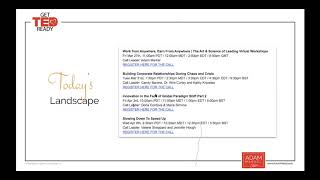
Let it go. Let it go. I'm egging you guys on. I love it. I've been looking forward to this morning, and we're gonna have so much fun. So for now, I'm gonna go ahead and mute everybody, and hopefully you can all still hear me. If you're not muted yourself, please feel free to mute yourself that somehow you didn't get muted. And there'll be opportunities, but I really request that you think about the kind of. The kind of questions that you want to ask. And as questions come up, that you. You go ahead and you put those questions in the chat where. Wherever or whenever they come up, because there will be two parts to our training today, and there'll be a wonderful time for us to get your questions answered. And, you know, again, the sooner you put them in the chat or when they come up and they're fresh in your mind, just, you know, let us know what they are. So let's begin getting a note here. Oh, you know what? Hold on one second. Because my beloved Randy has asked me to give her host control, which I want to do first and foremost. So let's say. Yeah, there you go. Okay, you know what? We're married for 30 and a half years at this point, and giving her the host control is actually something I learned about 30 years ago, so I should know better. It's so true. All right, here we go. So today, part of what we're going to be doing is talking about virtual trainings. This is actually a virtual training about virtual training trainings. Because virtual trainings are one of the most amazing ways. One of the most. I would say, a way that you can leverage your voice like you've never been able to leverage your voice before. And there are two things we're going to talk about today in two parts. That is how you leverage your voice using a virtual training and how you can leverage your voice and leverage your message using a TED Talk. So we're going to talk about both of those things, today's landscape, just to show you what's going on right here. And this is just from one organization. I'm a member of a number of different organizations like the Transformational Leadership, and I'm hearing some background noise. So if that's you, please go ahead and mute yourself. And Randy, if you could do that as well, that'd be great. And this is a wonderful organization called the Evolutionary Business Council, ebc. And if you ever want to find out more about EBC and what they do, please, of course, let me know and we can share information, but just in the next couple of weeks. These are some of the programs that they've been delivering. So building corporate relationships during chaos and crisis. Yesterday we did work from anywhere Earn from anywhere the art and science of leading virtual workshops, which is what we're going to be doing in an expanded format today, talking about innovation in the face of global paradigm shifts. That's a part two. And a dear friend of ours, DC Cordova and Maria Simone, they're leading that and slowing down to speed up, which is a wonderful principle, something that we were introduced to that concept some years ago. And clearly what's happening right now is that we're being given this incredible creative opportunity to slow down, to slow down, so that we'll be able to utilize what we're cultivating, what we're curating, what we're incubating in this time of slowing down for our benefit, for the benefit of our clients, our customers, really, for the benefit of the world. This is a profound opportunity for a reset. So before we go any further, for those of you I know, there's a number of folks that we know for many, many years, and I will say welcome, and it's good to see you. It's good to hear you. It's good to be in your space. And then there's a number of people that maybe we've just never met before. So I'm going to really, really quickly sort of give my my own introduction. And I suppose my claim to fame is that I escaped the legal profession with my life. If those lawyers out there, I apologize. But I spent 18 years in the practice of law and for a good 10 years of that, I'd say I knew. I knew in my heart, I knew in my soul that it wasn't my calling to do it. And in fact it was actually causing me great pain. And I'm sure some of you can relate to being involved in some occupation or some business or something in your life that's just not in alignment. And I would recommend, or recommend, I request that if some of those feelings come up for you while we're talking, you know, it's really helpful to share them with other people. So you can go right in the chat and you can just type in, if you understand what I'm talking about. To be working in some business or some area or doing something with so much of your time in your life at some point that just felt out of alignment then just for the community, for us to all feel together, because sometimes we can feel so lonely and alone and isolated. Especially now, it's helpful just to know that you're not alone. So go ahead and put it in the chat if that makes sense to you as well. I don't know how you dealt with it personally. I just kind of buried my head in the sand for many, many years. I pretended when I looked in the mirror that my hair wasn't falling out. I mean, really pretended it wasn't falling out. I pretended that I wasn't as angry a person as I was at that. Pretended that somehow or another that I was really doing, I was doing the right thing. And on some level I was. Because Randy and I were newly married. We had started a family, we had four kids. By the time I was feeling some of these things. And even though I wasn't seeing my kids as much as I wanted to see them, I was convincing myself that earning the money I was earning and creating the business I was creating, that that was actually a greater long term benefit for them, for all of us, for our stability, for our security, you know, because of course we needed to have multiple houses and multiple cars and multiple. And you could fill in the blank on any of those things. And if you can relate to that, of course, you know, we all can on some level. Sort of just running on the, on the wheel, you know, the rat wheel and being full on in the rat race. And I did that for a really long time until I was confronted in a way that I couldn't ignore, that is that I ended up in the hospital. It's not all that dramatic. It just seemed, and it was really melodramatic in the moment. It was a Saturday morning and we were on our way to our son's baseball game, and I end up in the emergency room because my heart is so beating so hard. It's like pounding outside of my chest, and I'm sweating profusely, and I think I'm dying. I really believe I'm having a heart attack. And even now, I can feel the tingling in my fingers because I was ashamed of myself. And I just couldn't believe that it had gotten to that point, that that's how it was going to end. And of course, that day, I got a reprieve. As you can see, I'm here. And the reprieve was that the doctor walked in and told Randy and I, I didn't have a heart attack. Actually, I had an anxiety attack that was brought on by a lot of stress and a lack of sleep and too much caffeine and a lot of just racing thoughts and negative thoughts, spiraling, thinking about all of that. And again, some of you might be able to relate to this. But I got out of the hospital that day. I recognized that I had been given something of a reprieve, a second chance. And of course, like so many of us, I just went right back to doing a couple of days. Couple of weeks later, I was right back in the mix of it. I was a workaholic, and I was routinely just getting home late at night. In fact, I walked home maybe six months later. I had gotten home late one night, walked in the door, it was rainy and cold. I was dripping. And I could see when I saw Randy's face that I had done it again. I knew I had missed dinner. That was obvious. But I came home so late that I missed the kids to go to bed. I missed the opportunity to just read them a bedtime story and kiss them while they were awake. And I walked straight up to her. And I can remember this like it was yesterday. I looked her in the eye and I said, if I keep doing what I'm doing, you're going to be a widow. And we both took a breath. And in that moment, of course, I've known for a very long time just how special my relationship is with my wife and how much. How much unconditional love she has always given me. But in that moment, you know, it was tough because there was a lot going on, and we had a lot of responsibilities. There was a lot resting on our shoulders, collectively, the both of us. And she didn't remind me about any of that. She just looked at me and she took a breath, and she said, we will Figure it out. And what that enabled us to do was for me not to have that, you know, quote, unquote, midlife crisis. Instead, I got to create a midlife calling instead. And ultimately, fast forward two and a half years, we reinvented the business model. We reinvented my career path, and a lot of things in my personal life changed greatly. I became the CEO of this company, Peak Potentials is very large training and development company. I wrote this book, which some of you have heard of, and became a really big best seller, Pivot, the art and science of reinventing your career in life. And that was it. I started on this new path. I started training, I started teaching and speaking on stages all over the world. And one of the things that I've really loved, and that's what brings me great joy today to be with all of you, to deliver the kind of material to share, the content that we're going to share today, is because we've been doing this for years. We've been leading virtual trainings for a long time and using actually this platform that some of you may be new to, some of you may have just arrived on Zoom, meaning in the last couple of weeks, in fact, Zoom stock, for those of you that it became an IPO maybe a year or so ago, it went from $2 to $8 in just, like, the last month. And I want to really shout out to the people at Zoom and the CEO as well, because they've given away the platform. It's very inexpensive platform to have a paid subscription, maybe 10 bucks a month or something. You can have up to, you know, 100 people in one plat, one. One plan, up to 500 people, another plan. He's given the platform away to schools. And now hundreds of thousands of students all around the globe and here in North America are using Zoom absolutely for free. Because the CEO is committed to how this, through this, what we're calling a crisis, is really an opportunity for us just to grow, to be able to explore. As I was listening to somebody earlier this morning, that when we're in fear, and many of us feel a lot of fear, a great deal of fear, and I'm not saying there's anything unusual about that. In fact, it would be odd for us to not feel some of that. And yet there's sort of two camps going on. There's the chaos and catastrophe quote unqu. You know, that camp, and then there's this camp that's considerably smaller. And this is the camp of people that look at situations like this because they've been in situations like this before and what they see is opportunity, that they're less about reaction and more about exploration. And that's what, you know, given. If you guys could see. I've got a lot more salt, more salt and pepper in my beard these days. And I've been around, you know, I made my way around the sun a couple of times at this point. And what I have experienced and having been through many other times, nothing like this, I'll grant it, this is new. But everything, every other former, quote catastrophe was new. 9, 11 was new. The 2008 financial collapse and the Great Recession was new. And so many. You just walk backwards to any number of other things that we've experienced, and they were also new. And nothing had happened like that before. And what I've learned and what I've seen is that there's more opportunity in those times than most people ever realize, or I shouldn't say ever, because what's more likely is that five years or 10 years later, you look back and that's when you see this great opportunity. So today we're going to talk about an opportunity that is available for everyone. I mean, if you're a coach, if you're an author, if you're a speaker, if you are in, if you're selling a product of any kind, if you're in any job, any business, you're a massage therapist, you're a doctor or a dentist, everybody can take advantage of the opportunity that we're talking about today, which is to share information virtually. In fact, I want to even go so far as. Because I was thinking to myself, I'm going to make that statement. That's a pretty bold statement that anybody can utilize this. What's one of those scenarios that we could come up with right now that's fresh, that might create skepticism, you say, well, yeah, I could see how a coach could do this or speaker could do this. But what about somebody, let's say that was just laid off because we got this employment unemployment statistics. 3.3 million filed for unemployment last week alone. Oh my God. Oh my God. So what if you're one of those people who got laid off or you know, somebody who's been laid off? What do you do? I thought to myself, okay, what could we do? Well, here's what comes up for me and there's a myriad of things, and if you can think of some to plus what I'm saying or some other thing, please go ahead and put it in the chat as well. This is what I came up with when I was in the shower this morning, somebody's unemployed. If I'm unemployed, what I would do is I would get in touch with an employment counselor, a career counselor, and I would say to that career counselor, I want to create a virtual training and you're the expert. I'm not. I just got laid off. But what I want to do is I want to invite people, friends, family, and we'll all invite as many people as can show up to have you actually do a makeover, a coaching session with me so that you can share your expertise about what do you do in situations like this? Where is the blue ocean? Where is the place that we can go and explore to find new opportunities? Even if you've been devastated in the moment by something like the loss of a job, especially the unexpected loss of a job. So I'll say to you, if you've come up with something more to plus that, please put it in. And if there's, you know, let us know what occupations you're in, what businesses you're in, because what we're doing today is a way for you to get your message out. It's a way for you to build credibility and build your expertise. It's a way for you to reach people with your message. It's a way for you to have audience with millions potentially, but certainly a global audience, whatever that looks like. And that is profound. What you can see on the screen is a picture of me from this past December in Japan, in Tokyo, Japan. I was delivering a fuso talk to the Mitsubishi people, the Daimleric division in Japan. And what I am sharing with you today is how it is that you can utilize the best practices from a live in person stage appearance and training and utilize those same things in a virtual training. So we have got seven, seven best practices that we are going to cover today. And as I said, if you've got questions along the way, please go ahead and put it in the chat. And we're going to break for questions between this section and the section that's going to talk about TED so the first thing is container. When we talk about container, we are talking about environment. I love this quote by Yogananda. We live in Encinitas, California, where the Self Realization Fellowship, it's a whole center, in fact, they have a meditation garden. It's absolutely beautiful. And Yogananda, if you haven't ever read the Autobiography of a Yogi, read that, one of the books that actually Steve Jobs read, it was one of his favorites. I read it and there's this concept that environment is the most important thing, that you can have the greatest willpower in the world. But if the environment that we're in, if the environment that we're trying to grow in isn't conducive to growth, then we've got an issue. So it's why you put a seed. If you want something to grow out of the ground, you put it in wonderful soil. That's the environment. And when it comes to creating a training to be able to teach, to be able to speak, to be able to lead, and that's really what we're talking about as leadership. We've got to create a sacred space for that to occur. And the word that we give to that is context. We have to be able to set a context. My mentor is a gentleman by the name of Georgi Lizanov, and he's gone a long time. He lived and grew up in Bulgaria. He was a researcher. He came to the United states in the 50s. Some of you may be familiar with Georgi Luzanov's work. He was able to figure out how to teach adults how to learn languages. I mean, most of us, many people can't learn languages later on in life. It's very difficult. But he had a process for doing that and he became known as the father of something called suggestopedia, suggestology, as it's sometimes called. And this is the concept that everything leaves a suggestion. So when you're creating a learning environment for people so that. So that you can share information and people can remember what you're sharing with them, and actually not just remember it, but be able to apply it in their lives so that that particular information actually has some juice to it, it has some impact, which means it's valuable and people will pay for it. Then you have to take into consideration the context that you're setting so that taking that mentor's words to heart, it means everything leaves a suggestion. So what do you want to create in that container? You want to create an open space, a heart open space, an open space for the mind for people to learn. You want a space where we can all be present. In fact, one of the most important things that we can all do, and it's a context setting activity that I use every morning when I wake up. And we're going to do it all together right now. So what I would love for you to do, we're going to set an intention for our time here together. So this training is going to go about 75 minutes, ish. And I want us to all be aligned with our intentions. We'll all have different intentions. But I want you to be thinking about what it is that you want to get out of this time here together. What's something that you want to be able to take away? What's an intention that you have? Maybe your intention is just to have fun. Maybe your intention is just to be able to breathe and be easy and feel comfortable in your body in the midst of all the sort of angst that's out there in the world right now. Maybe you just needed a little bit of a boost, little energy, a little community. Whatever your intention is, I want you to put your. If you're willing to put your hand on your heart, you don't need to do that if you don't want to. But for me, I love placing my hand on my heart. It immediately directs me back to this present moment. And so take a deep breath right now. And if you want to close your eyes, great. If you don't, that's fine too. But what's one thing that you intend for yourself right this moment? What's one thing that you intend for yourself over the next little while here that we're together and be true for yourself? What do you want? Maybe you just want to relax. Maybe you don't want to think, you just want to listen. That's all good. What's your intention? We're setting a context together collectively in community. We're co creating this experience. I could never do this myself. That's the beauty of it. We come together and we collaborate and magic happens. Might even say miracles can happen. What are the kinds of things that we. And you can go ahead and open your eyes. If you've set that intention, go ahead. I'm going to. I've already set my intention as well. I am so happy and feel so honored and privileged to be here with all of you and I am just going to enjoy myself. That is totally my intention because I get to share what I have been doing, what our team has been doing for a really long time. So it makes all the sense in the world that we just share our best practices with all of you so that you can get out there and be the proverbial ripple effect in the world. So there are lots of ways to set context. And mostly what I think you want to do is allow people the space to create. You want to have a space where people can feel that they're protected. So as a lawyer, one of the things. Former lawyer, but I still lean on my lawyer skills all the time. In business, confidentiality, being in confidence with other people is really important. So everything that you share in a training, you could set the intention, and not just the intention, but the rules. In fact, there's a principle. I'm going to go back for a second here. Think go back one. Let's see. Go back one too. There's a principle in Neuro linguistic programming, nlp, called agreement frames. And what's amazing about agreement frames is it gives everybody a context for which we can work together. So some of those things might be that when you want people to share, you want them to raise their hand. And what's great about platform is that they can raise their hand by clicking on the raise hand button. You might have the context be that you want to see everybody on the screen so that you know that everybody's being present, that people aren't multitasking, that they're not taking the, you know, the phone or the, you know, the training into the bathroom. It could be any number of things that you might want to set as the rules of the road. And that's when you ask people to not only adopt those rules, to agree with them, but you also ask if there's anybody who's not willing to agree. Because if you said, hey, how many of you are willing to hold everything that we're doing, you know, all the conversation and all the things that we might share together, how many of you are willing to hold those things in confidence? Great. And people raise their hand and they say, yes. And they type chat, yes, I'll agree to that. And then you ask the opposite question, which is, is there anybody who's not willing to hold these things in confidence to be willing to agree to that? And you ask that question because again, we'll get into this in just a moment. You want to make sure that you meet everybody where they are. And if somebody said no, frankly, then maybe that's not going to be a good fit for the kind of work that you're doing. But you have to know that going in. And so agreement frames are a powerful tool to set context and a powerful way to create a safe space and a safe container for whatever kind of learning that you're going to be creating. So every single one of you by the end of today's session is going to be equipped with the information and the tactics and the particular strategies that we use to be able to do your own virtual training. And if at any point while this training is going on, you know what it is you want to do a virtual training about you know, the topic or the subject or what industry, etc. Please go ahead and put that in the chat. But either way, I'll just say this, that every single one of you is going to learn that when you begin, and maybe some of you have done this before, that when you begin a training, that you start by creating a context first. So whatever that looks like, that's the first place that you begin. The second place that you begin is to lead with one thing that's more powerful than anything else, and that is our hearts. Our hearts always have the answers and our heads often have questions. So one thing that I love to do at the very beginning is to ask everybody to simply think of something that you are grateful for. So right now, wherever you are, whatever you're doing, I want you to simply think of something that you feel gratitude for appreciation. I am thinking right now, yes. I am grateful in this moment for the love, the love that I feel that already, that I felt on this, the moment that we started this zoom, and I got a rush, this sort of energy. And I've delivered trainings for many, many years. And I still am like a kid. I still have these pinch me moments. And I am having one right now. I feel grateful for that. To be alive, I think that was the first thing that we said when we got on the zoom was, man, it's good to be alive, right? If you feel good in this moment, just to be alive, if you're grateful for that or whatever you're grateful for, feel free to share that with us right now. One of the most important things that a speaker. So if you're standing on a stage in a room, doesn't matter if it's 100 people or 10,000 people and have had both of those experiences or it's in a virtual training, it's the same thing. You ultimately want to close the gap, which means the imaginary gap between you and someone else. The most important thing a speaker can be is a presence. Is a presence and not a pretense. So often when we do speaker trainings, we spend a lot of time distinguishing those two things. What does it look like to be a pretense, to be sort of a talking head or to be somebody that again, is not coming from their heart when they're communicating? And what does it look like when they are coming from their heart, when they are fully present, when that they see, when what they see on the other side, whether it's again a virtual training or it's in the same room, what they see on the other side. What they perceive on the other side is themselves, that they perceive the presence of something divine on the other side. And that presence, that being able to experience that presence in the moment has this effect of closing the gap between us, that there really isn't any space between us. And in fact, right now, in this time, with everything else that's going on and there's a lot of suffering, as we said, there's a lot of things that are really challenging happening in people's lives. This is also the first time in my life, in my adult life that I can remember being this connected to the entire world because we are all going through this same experience at the same time. Now. One of the things that also we can do and is really powerful. We are going to get to this a little bit later. To be able to close the gap is to share your story. This is the oldest method in the beginning of time. We've been sharing our stories around the campfire and from our elders. And storytelling is powerful. The narrative is so powerful that companies like Apple and KPMG and IBM and Southwest bring in consultants like our company to teach storytelling, to teach individuals within those organizations how to speak their personal narrative, as well as how to actually tell the corporate narrative, the company narrative. And so if you'd like to get a copy of this article, we're happy to email it to you. All you'll need to do at the end. You'll see, we'll give you some emails. I'll just tell you what the email is now and I know we'll put it in the chat. TeamDammarkel.com if you'd like to get a copy of this particular article, which is profound, really very interesting things and something that I think you can put to work in your business right away, feel free to email us and we'll send that to you right away. Number three, engagement. And so, as we said, heart. If you learn only a couple of things and take away a couple things from today's training. And again, it may seem like this is unusual in a virtual whether you're on a phone or you're on a Facebook Live or you're doing a virtual training on Zoom or Webinar Jam or any other platform, how do you engage people? I get it when you're in the same space with them, but how do you do it? And that's the most important thing that you've got to remember is that it is absolutely possible. In fact, there are more opportunities to engage more people virtually today than there would Be if you did what I've done for 10 years, which is travel around the world, speak on stages. And yeah, it adds up after a while. And yet it will be dwarfed by the number of people that we are going to be able to touch in this year alone using this medium, which is absolutely amazing. And so one of the principles that we've been teaching for a lot of time, a long time, and it just rings as true today as it ever has, is that whenever you are doing a training, you know, in a virtual sense, we're breaking through that imaginary fourth wall. We've got to enroll 100% of the time, meaning we're 100% engagement 100% of the time. And what that doesn't mean, okay, just so we're clear, is it's not meaning that you're trying to get everybody to agree with you. It doesn't mean that you're trying to get everybody to buy from you or to take some action that you want them to. This is not about closing, closing anything. It's about opening. This is not about something transactional. It's about something transformational. Our goal is not to close. It's to open, to open relationships. And the way you open relationships, in my humble opinion and experience, is that you meet people where they are. And that means that not everybody's in the choir, right? Not everybody is going to agree with you. In fact, I'm going to ask this question right now, if this makes sense. If you guys getting this, if this sounds like, oh, yeah, I got it, you can type in the chat, say, I got it. You could raise your hand, say, yeah, I got it. Literally raise your hand, and other people can see I got it, right? And if it doesn't make sense to you, if what I'm saying sounds like gibberish, or you just don't agree, that's totally cool. And you can type it in the chat, say, nope, not getting it. Or I don't know, this is too fluffy for me or something. It doesn't matter. It's the idea that. And this is really important in your sales. So I'm not getting into a sales training now. Just say that we've got to move into the new paradigm because nothing, the new normal is upon us. And in many ways, what this is forcing us to do is to really question and consider at a deep level the way we've been living our lives, what we've been doing all along, because not everything we've been doing has worked. And clearly, or I shouldn't say clearly my opinion is that this is the way the universe responds when we're not maybe doing things in the way that we're capable of doing them, meaning that we can shift. And the universe is a beautiful way, very elegant and sometimes confusing to us way of getting us to shift into a new paradigm. And so the shift that I want you to think about is how do you open relationships with people? Because that's where you find the opportunities, that's where it will exist. And so this idea of enrolling 100% of the time means that you're looking to do your best to see where other people are, meet them where they are and engage them in that place. And again, it doesn't mean that they have to even agree with you. And the most important tool that we have, this is sort of the hack that we use to get to that engagement, is to ask questions. So I've been asking a lot of questions, I don't know if you noticed that, but there are a lot of questions in this virtual training. And there will always be questions that we ask and ask for participation because again, back to Georgi Lizanov and accelerated learning principles, we learn faster and we, all of us remember more of what we learned when we're engaged, when we're participating. And I was a lawyer for 18 years and we use the Socratic method in the practice of law, this little bit different kind of questioning and in depth position. But questions are very, very powerful. And so again, one of those things I want you to take away from this is no matter what kind of a training or speaking engage engagement you've got, you have this opportunity to ask lots of questions and what's beautiful about a platform like Zoom. And again, I'm not even an investor in Zoom, just so we're clear, I didn't invest when it was two bucks, but, but we love the company and we've been using it for six or seven years now, something like that. And what's great about Zoom is that they keep up leveling the resources that help you. And again, WebinarJam and other companies do a great job as well, but this has been really simple for us to use. And so the thing you're seeing on the screen is the dashboard that the presenter sees what I can see. I can ask you polling questions, I can give you a survey, I can ask you to chat, to put your comments in, I can ask you to thumbs up or thumbs down in your reactions. And this is a way in any training, a business training, a corporate training or some other form of training that you can engage your audience and find out where they are. Again, 100% enrollment, 100% of the time. So you want to monitor the chat. You want to have team members that are looking at the chat. I know that our team right now are collecting the questions that you're putting in there, things that you want to ask later, things that you're commenting about, we're taking note of. So here's another way that you can engage your audience. And pretty much every training, what we do is we have, we get involved in one of these three areas. And the first one is our template for exercise, for process and exercise. And that is that we always have people write down something. Write down something, and it could be, again, writing on, you know, a device, or it can be the old school, pick up a pad, you know, pencil, pen, etc. And write something down and then share it with a partner. And what some of you already know and some of you probably don't know, is that in a platform like this, we can break you up into groups. So, for example, we did a training yesterday. We broke people up into groups. We had about 30 people in the training yesterday. And we did another one last week that was well over 100 people that were on that one. And our platform was support up to 500 people at a time. And we can break you off into groups of 2, 3, 4, 5 in a matter of minutes. We can put you in breakout groups. And it's like, you know, we've gone back to Star Trek days because we start the breakout group. And I'll go over this a little bit later as well. And then all of a sudden, you get to share with each other what you've written down. Just like as though we were in a training space. And then of course, we all come back and debrief together, which was what we call a class share. So this is our template. And by template, I mean we use this every time. Writing partner sharing and then class sharing. It's a simple process to lead people through an exercise. The other way to do it is a mastermind. Masterminds can be two or more people, two or more people. It can be three people, four people, five people, 10 people, whatever you like. But, you know, Napoleon Hill said many, many years ago that a mastermind is simply two or more people coming together. And if you know the answer to this, I want you to fill in the blank now. Two or more people coming into watch, Go ahead and chat. That if you know the answer. Two or more people coming Together in dun dun dun dun dun dun dun. Drum roll, please. Two or more people coming together in harmony with one specific purpose. And what's the purpose? Go ahead. Again, if you know the answer. I know it's kind of tough to get your fingers right on the keys and type it in. What's the purpose? Two or more people coming together in harmony for one specific purpose. And that purpose is to plan. I knew you had the answer. To plan. That's what Napoleon Hill said that people didn't do. And he wrote an amazing book, not just think and grow Rich, but Outwitting the Devil, where he talked about how people drift and what it is that that creates that drifting is a lack of planning, a lack of intelligent planning. Well, listen, this is what's beautiful about virtual training. You don't have to come up with all these ideas on your own. That's why I said earlier that somebody who just got laid off can get some expert on a virtual training and have that person share, create, mind, share for everybody. Not just for that person that's been laid off, but all these other people that can benefit. And when you create that kind of value and benefit in the world, I got to tell you, magic happens, miracles happen. And the last thing that we just recommend, there's so many ways, by the way, to do this is not an exhaustive list, is gamification. We were part of a training just last week for four solid days. Again, more than 100 people, four solid days. And one of the things that we did was that we went into escape rooms. You can imagine that groups of 10 people going into escape rooms. In fact, it was a wonderful event, CEO space. Many of you folks may have heard of it already. And they put on this amazing virtual event and had people in escape rooms working together collaboratively. So that's another way that you can engage the folks in your audience. This is just what breakout rooms look like. As you can see from the screen, breakout rooms are a control panel item that the facilitator can or somebody working on behalf of the facilitator. As I said, we often work in teams so that people can put everybody in a breakout room. And then, you know, if you're doing multiple processes over multiple hours, multiple days even, which we'll talk about later, it's important to mix it up so that you're not always working with the same partner, just like we would if we were in the same room together. And all of that is possible using this technology. Number four is multi sensory. We want to be able to Activate all of the senses and create whole brain presentations. So we all kind of think and learn differently. Some of us are more right brain, some of us are more left brain. I still lean a lot of my left brain because I was a lawyer for a long, long time. And so I, I'm interested in evidence. Even though I'm so bought into the woo woo, as many of you know, I still am a really practical person and I am a skeptic at times. I don't mind that, you know, it's a thing where I have to figure out, you know, what part of my brain is making, you know, sort of analyzing things at this moment. And what I like is when I have both. For me, that works and for many people that work so stories and the narrative and the emotional, you know, compelling things that we can share with each other. That's more right brain. That's how we really again, can connect with people at a core level, an emotional level. And the images are images that you want to use to only make that easier as well as the kind of images that you might display to show the data or the research, as long as you're not reading that research. Because again, that's both boring and it violates that context. The context being one that people are constantly being. Well, I'll say this, you want to be able to engage people in all the areas, the mental area, the emotional area, the physical area, if you can. Again, that's why I asked you put your hand on your heart. And so that's this mix of left and right. And the presentations themselves should be presentations where what you're seeing is only I'm a visual learner is only sort of like creating that right and left brain engagement. And so what we recommend, and these are best practices for creating your slides, how your slides look is that you only have one main idea on that slide. You're reinforcing one thing through a visual that you also have your branding, whatever the brand guidelines, that you might have, your colors, the logo, that your website is clearly listed there, if you're attributing the content to someone else, that you have proper attribution there. And if it's yours and you're protecting it, that again, putting my lawyer hat on that you indicate that it's copyrighted or it's trademarked. But all of those things are a part of how it is that you create slides. So again, they activate both the right and left hemispheres of the brain. Here's something that is sort of a pet peeve of mine that when I see people doing a virtual training and what's in the background is cluttering, and I know this is. This is kind of a funny example. It's an extreme. But even a picture behind, you know, behind you, on the wall behind you, that's crooked, or things that are sort of half in the screen, half in the shot and half out of the shot, that that is, is a sort of a chaos of its own. And clutter is a. You know, if you're modeling clutter, if you're putting clutter out there, it's a good chance that the people that you're speaking to are going to not feel clear from you. And it may be on a subconscious level. They can't even identify what it is. So it's a simple enough fix in your own space to just clean things up before you go live or before you record something. And so there's another opportunity, which is to actually create a virtual background. And the gentleman down at the bottom of the screen, he's actually a part of Toastmasters and a member, one of our business partners, member of our team, Deanna, she is a leader within Toastmasters. And this gentleman was sharing a story from his childhood about how he got at sea. And I don't remember whether it was with his friend or with his brother, but he was sharing that story and he created a virtual background to match the story. And it was all about the coronavirus, by the way. And so the story and the background were in sync. And I thought that was really clever, really creative. And the woman above, Meredith, she's actually one of our students, and she's training to presently put her most important content in the form of a TED Talk, and she'll be on a TED stage in the latter Part of 2020. And that backgr that she got there is from a Hyatt hotel that she loves. It's actually a little blurry. Can't really see it that clearly, I don't think. But it's really, really cool background. It's a picture. And we were like, man, oh, man, Meredith, where did you get that? Because it's not a standard form, but everybody can choose a virtual background when you use Zoom and with other platforms as well. And so it could be a picture that you take, like Meredith did, or like that gentleman did. It could be a virtual background that you choose from. But. But if your space, let's say, isn't conducive right now to being able to deliver a virtual training two weeks from now, because that's going to be part of my call to action to all of you is to come up with an idea, come up with an idea for a virtual training. In fact, I would love for you to incubate that idea for the virtual training right while this training is happening. If you already know what kind of a virtual training you could deliver or would love to deliver to 50, 60, 100 people in two weeks time or in a month's time, I want you to go ahead and type that in the chat right now. Feel free to go ahead and do that if you don't want to type it in because something, you know, maybe, I don't know, it's an idea you've been incubating, that's okay too, not a problem. But I want you to think about that and write it down as we speak. Number five of seven is variance. We spend days when we train speakers to deliver TED talks or to be creating their keynote talks, the keynotes that they get paid for. So we're not going to spend that much time on it. Now I'll just give you two things. When it comes to variance, we're talking about dynamics in music would be dynamics in our work, it's range. It's your emotional range, your physical range. And obviously, look, I'm on screen right now and you're seeing slides. And when the slides aren't on, all you're going to see is sort of from my chest up. And sometimes you only see sort of from the neck up. So what can we do to create variance? Physical variants? You've got your hands, you can be Italian, right? A lasagna, you know, use your hands, speak it with your hands. That's one way to create variance. But another way to create variance, which is very, very simple and most people aren't aware of it. And so we're all going to do it together. So right now I want you to just simply create a resting face. By that I mean I just want you to relax your face. Relax the muscles in your face, relax your mouth, your jaw, your eyes, your nose, your ears, relax your hair, if you have any, relax all of that. And I'm going to do the same. And if you could see my face, what I've been told since the time that I was just a teenager was when I had resting face. People would walk up to me and go, adam, is everything okay? Are you alright? You seem a little sad. And after being asked that question like 50 million times, I would respond like, I'm fine. I don't know why you think I'm sad because I have resting sad face. And some people have something technical term for it is resting bitch face. But we all have a resting face, a default mode that we go into. And all you have to do to create variance, variance in a virtual training is to simply smile. So everybody go ahead and smile right now. Big smile. It's 180 degree variance between that face and your resting face. And so if you again, remember only one thing, remember that as you're leading from your heart. And that's what's so important about remembering to lead from your heart always. You can always just put your hand on your heart. You can always just say, you know what, I'm really grateful for something right now and I want to share that with you. And to put you in that heart space, your facial expressions change. Smiling, laughing is another way to do that. And of course, and this is really important, really, really important. So I want you to pay close attention now to what I'm about to say. In fact, I really want, if you call, just lean in, lean a little closer to the speaker so you can hear this. And if you really want to hear it carefully, just, we like to say cup your ears, right? Lean in and cup your ears. Because this is going to be so important, what I'm about to share. You have to importantize things just like I just did. You have to make things important so that they stand out from all the other stuff. I realize that to cover all this content, all this material, I'm moving quickly. But we've got to pause at times. Pauses are important to breathe, to recognize that something should stand out and be a little bit more important and a little bit more memorable than other things. Here's the thing about variance. Many, many speakers, their biggest issue is that they are predictable. And I don't love the term boring. Boring is really, really judgmental. But let's just put it this way. If you are predictable as a speaker, virtual speaker, speaker in front of people, live, doesn't matter what it is, if you are predictable, people are going to pick up this thing here, their phone, the thing that they put their hands on 150 times a day. They've got something called constant. All of us, constant cognitive arousal. We're constantly looking, who texted me, what's my email, what's the likes on my Facebook post, blah, blah, blah. That becomes more interesting than something you're saying that's an issue. And the sort of simple way to get around that is to be unpredictable. You don't want to be boring. You don't want to be, you know, at the moment that we think we know exactly what you're going to do next, you become predictable. And that's when people aren't paying attention anymore. And from my standpoint, and this is something that I won't get into at the moment, but we'll talk about a little bit later in the TED section, is that you're missing the opportunity to help somebody. You're a leader. When you're doing something like this, you have an opportunity. And right now, in the world that we're living in, with so much fear and so much sort of the kind of chaos that's being perpetuated in many ways by the media and by others, we have an opportunity to step up, each of us, and a responsibility to be leaders. So to be a leader means you've got to step into that uncomfort zone. And that means recognizing that when you've got something important to share that you've got to do everything in your power to make sure that people get it. That's your responsibility. And so, so it's not about not wanting to be boring. It's about wanting people to be engaged so that they are present enough to hear what you have to share and hopefully something positive. You know, that there'll be an impact that's positive from what it is that you are sharing. And that's a greater level of responsibility, for sure. Number six is integration. And this is simply the thing that we're going to be doing in a few moments, which is to take your questions, to be able to find out where people are, to get their reflections, to find out what worked for them, what did work for them, what could be done differently. That's the feedback loop that we typically use and also the conclusion template that we use, which is to ask people, what's one thing, one thing that you have learned in this training so far. In fact, I'm going to ask all of you right now to do that. What's one thing that you've learned so far? One thing meaning that you want to remember and one thing that you believe you can take back to the next time that you're going to be speaking to an audience, no matter whether it's a live audience or even when you're speaking, to create something that's being recorded. And we're going to talk about that in a second as well, like a digital product. But what's one thing from the training that we've already, you know, the material we've already talked about that you want to Remember, and that you want to bring into that next opportunity to speak to people. So you can go ahead and put that in the chat right now. And typically, again, when you put people into an exercise at the end of a training, you can ask them what's one thing that you've learned today, what's two or three, if you've got that many things that you've learned today? And then you put them in, they write, and then they share with each other. And then you come back to the entire group and ask everybody, okay, what's that one thing that you've learned? So in the Q and A section, we'll get to that. So lastly is sequencing. And sequencing is just based on research. We've learned that when you space out material, when you chunk it down and you space it out, sequence it over time, it's been proving that a virtual training is 80% more effective than a traditional training where you're in person. And this is research about sales, sales trainings in particular, but it applies to any training at all that if you take this opportunity right now that people are being forced to stay home and can't be on planes and can't be at events. And there's a lot of people that are speakers and coaches and authors that are really feeling very stressed about the fact that they can't get out there and earn their money the way they were always earning it. And what I'm saying to you is that this is a bigger opportunity. We're exploring the bigger opportunity right now that we would never have explored but for the fact that we were disrupted in the way that we were. And that's, you know, that's not so much a silver lining as it is to me, just the wisdom of age. Having seen this happen before, this is exactly what's happening now. And if we focus on those activities and those exploring those opportunities, we're going to come out the other side of this. Some of us with a brand new business model and some of us just knowing that we've served the world in a way that we never would have believed was possible when we were again part of the herd that is feeling disempowered or feeling and living in a space of fear. So virtual trainings are also really incredible for creating virtual products. So I want to very quickly tell you, this is an entire training all by itself. But we wanted to mention it because every single virtual training you give can be a virtual training that becomes an mvp, a minimum viable product that you can sell, whether that's for $28 or $98 or $598 or whatever it might be. But every single person, every one of you, no matter what it is that you have to share, could create a product that would help people and would earn potentially thousands and maybe tens of thousands of dollars in a very short amount of time. There's a lot of best practices when it comes to this, so feel free not well, I might as well mention this. You can take screenshots for sure, but we're going to give you an email address so you can get the class materials. I didn't mention that at the beginning, but we're going to give you the class materials if you want, so you don't have to worry about whether you got this or didn't get it. But these are some of the ways, some of the things that you consider before delivering a virtual TR what kind of technology are you using? Are you using a dual recording? Meaning Zoom is great. We get a lot of our recording. In fact we do all of our podcasts using Zoom. But you can use a double recording system where you use a program like Audacity or one of the other programs that would record simultaneously and is not on the Internet so you will get a clear recording even if your Internet was to get spotty. Really important. What are the size, the chunks that you're creating for people to learn? Bite size like today we created seven bite sized modules to teach you. You know, any one of these things we could deliver, talk about for an hour, two hours, three hours or an entire day. But that won't help anybody. So you've got to create these bite sized modules so people can learn and be able to apply something. All those things are important to know before, including how to hide your video pound whether you're going to need attendees to sign a virtual, you know, e sign a release so that you could use their images if later on you decide to turn that training into a virtual, into an actual program, an evergreen product, for example, all those kinds of things including when we're going to get into question and answer repeating questions so that the recording picks up the question because sometimes it doesn't always pick up the sound of the person that's asking the question. That's before, after again, many, many things that you can do after to enhance the look and the feel, to enhance how it is that it's delivered. You can edit, of course, and you can also leverage other content, bring other content in to support it. You can look at what continuity programs and follow up whether it's a Facebook group or it's to have people meeting once a month afterward. There's so many ways to follow up and add value to a virtual product that you've turned into an evergreen program. So we're at the question answer stage right now, so I'm going to take a break right here to do that. I'm going to ask our team to tee up the questions and then we can unmute people as necessary. So I'm going to go ahead and stop my share. That way you can see me and I can see you as well. And I'll ask Randy, do we have some questions teed up already?
I am not seeing so many questions. So many responses. Everyone responding to the things you're talking about.
Way cool. So I tell you what, we can just take questions right now live. So go ahead and raise your hand. It's in. You can find it in the tools there to raise your hand and let us know if you've got a question. Just raise your hand and then we'll call on you and we'll unmute you as well.
So looks like Terry has her hand raised. I will unmute her. Hi, Terry.
How you doing? I dropped my voice and turned into a guy, Terry. I got it right the first time yesterday, right? Yeah, you did. The question that I would have with this great training is, is it a good idea for some of us in a group here that are seriously considering doing a training to keep in contact with each other for accountability? Because my issue is when these trainings are good, but I slow up after I'm with you, and then I'm like, I'll get the. Y' all get to. It's come in. Accountability would help. I'll tell you what, you're inspiring us right now to do something, which is we may just create a little group and invite everybody to join. Maybe we'll create a Facebook group just for this kind of thing, and you guys can use it as a way to connect and hold each other accountable. Just by a show of hands, we'll do a quick poll. How many of you would love to have some accountability and be able to connect with each other after the fact? Who'd love to. To do that? Awesome. Way cool. See a bunch of hands, Terry. That's a great killer idea. Did you have a. Do you have a question or is just that comment? Yeah, yeah, that was my comment. Now, I guess the question would be, how can I be pushed into doing this? So you answered it. You answered it. Thanks. All right, well, listen, brother, I want to Say this one thing. It's great to have accountability groups, and I'm all for that. And I'll say this. The desire has to come from within, and I do mean that sincerely. This is. If this is a burning desire for you right now to get out of some of the. Watching the news and instead do something for people, you know, just do that, man. Like, I'm not saying you don't need the support, and we will support you, but if you decide you're going to do this, that means that nothing's going to stop you. And that's the attitude, I think, that many of us can really benefit from just deciding I'm going to do something for the world right now. I don't have any strings attached. Just want to do something, and I'm gonna have a whole ton of fun doing it, which is, you know, gonna be great. So thanks for the. Thanks for the comment and for the question. How about we go to. Let's go to Jim. I see Jim's hand is up there. Adam. Yeah, Jim. Yeah. I'm in Cardiff by the sea, so we're neighbors. And I'm gonna be getting a hold of you because I need to come over and see you as soon as possible. Yeah, as long as we're in quarantine at the moment, Jim. But I'm. As soon as that goes away. This has been fabulous. Oh, wonderful. Hey, listen, I so appreciate the fact that we are. That we've made the time on a Saturday to get together. This is. I don't know. You know, it's funny how many of you feel as though there's almost no days of the week right now. Like, every day is the same. There's no weekends. It's like. But. But there's something so energizing about it. And again, it's. I think it's just because there's so much great work to be. To do in the world, and when we have great work to do, it's so easy to cut through that other stuff. I know. Bill. Bill, you're. You've been doing this work for a long time. Bill Sterle. I'd love to. I see your hand is up. We'd love to hear from you, too, brother. How are you?
I'm doing great, thanks. Adam, first off, grateful that you put this together and threw this out to everyone. Feel really appreciative. You're right. I've been doing online trainings and virtual meetings and masterminds with my group and my tribe, but just to be on here, just to get the community to be in a more collaborative space and to, you know, support all the. All of us coming together to do something in a new way. Really kind of what's going to make a big difference? Because right now the emotional load is very high for everybody. I mean, everybody's kind of shrinking down, and you got to figure out a new way to do things because the first thought is, let's go get coffee or let's connect. And that's not the thought now. The thought is you got to get online to really kind of meet the need for safety and protection from others. And my question to you is, has to do with the. How is this new business model going to kind of show up? Because I think if there's a lot of people doing and getting funneled into this new business model, it's sort of like, what new learning do we want to take on? And where do I find my tribe that wants to know my information about either the things I do, which is whole brain thinking and emotional intelligence, or in my wheelhouse, high conflict mediation, or in my wheelhouse. But it's the thing. Each one, each person has a different thing in their wheelhouse. And if you could speak a little bit to that about how to get their strengths and talents out, I think that might be helpful for me to hear as well as others, is what my thought is.
No, thank you, Bill. I think what we're talking about is engaging your community. I mean, so part of what we. What I think most of us are curious about is what's the new normal going to be? And I think what stops people. Often it's just sort of. And you're a guy that works with the brain, so you know how this is. When we can't figure stuff out, we kind of go into paralysis. It's analysis. Paralysis is the old term. Right. And so what I'm advocating is a different philosophy. And usually we talk about this with ted. So I'll say it now and then not say it later in all likelihood, or I might. Might even say it then. But there's sort of three things that get in our way. One is that we think it's too late. And oftentimes it's sort of like, well, there'll be so many people doing this. I'm already getting inundated with emails about people doing virtual training. So I'm just adding noise or I'm just, you know, I've already missed the boat. Right. And you know what I'm saying, right, Bill? Right. That's the first mind hurdle. Let's say you clear that hurdle and the next thing is, well now because so many people and so many quality trainings are out there. Let's say it's got to be, it's got to look a certain way, right? Everybody get this one. Raise your hand if you know where I'm going with this, right? It's got to, it's got to be kind of perfect because if it's not ready, I got to wait till it's ready to do it because otherwise, you know, it'll be, I don't want to put something out there that's just not my best and all that. And that perfectionism is a deep, is a death knell to so many great ideas. This is really about, not about perfectionism. This is about progress. You just replaced one P with another and go from perfectionism to progress. We can make a little bit of progress. You can create an mvp and then the next one is a little bit better than that, and the next one is a little bit better than that. You just see magic happen. You see the compounding effect of the learning curve, of the learning process. And the last thing other than the challenging perfection, you gotta be willing to dare to suck. I mean, and that's humility. And I was reading in an Ahmet Fox book this morning, I love his work, and he was talking about the way the word meekness is defined. You know, how you can interpret meekness from the Bible and what that word really means. It's not weakness. Meekness is about being able to have your teachable. Like you're teachable, you're coachable, like you have humility and you can learn. And then at any age, what's better than to see somebody that's in their 70s or 80s and they're still learning new shit and they're still like ready to do take on a new challenge. I mean, it's the most inspiring thing in the world. You see 20 year olds that can't learn that they're so locked up in their own, like I know that mindset that they are too rigid to learn. So we've got to be willing to have the humility to just do something and not be great at it. And even though you probably going to be your own worst critic, meaning it's going to be better than you even think it is. We just got to challenge those things and now is the time to act. So I'm going to take. Thank you so much for that, Bill. One more question, which was Donna, I think Donna had a question. I'm going to unmute you, Donna, or you're already ready to go. Yeah.
Well, first of all, Adam, I wanted to say this is wonderful. Thank you so much for bringing this together and saying exactly what everyone needed to hear. And I just wanted to, I was going to ask you a question about feeling like people feeling like that weren't good enough. And you just answered it before I came on. And I want to let people know that, that I am 70 years old. I'll be 71 next month. And I went back to school at the age of, the age of 58 to get my doctorate because I love to learn and I'm a student of learning. And what I found out, I did my first coaching online in 2009, 11 years ago. And whoever is in the sound of my voice, I want you to know you can do this. Exactly where you are, exactly who you are. And the one thing I can say about getting out of your own way, stop it. Stop holding yourself back.
Thank you, Donna. And you are obviously modeling that perfectly for us today. Love those bunny ears. Too much fun. Way, way cool. All right, well, here's what I want to do. I'm going to get back into it now. We're going to just get to the second component of this. So again, really looking forward to getting more of your questions and I do want to find out and you can even email us teamadammarkel.com to get the class materials. So teamdammarkel.com for the class materials. You can also write us there and let us know what's the virtual training that you're going to deliver? What's that virtual training look like? Now we're going to shift gears into something that I think is really powerful in this moment. So many of you might say to yourselves, well, TedX, I've always wanted to do a TED Talk, or maybe I'm always terrified or you're never going to do it kind of thing. Now is the best time to be thinking about a TEDx talk. And I'm not going to spend too much time on this. I'll just say it this way. When we work with people and we help people to get TEDx talks, if you're curious, that's what we do. We help them to create those talks, practice those talks, get filmed, to do the dress rehearsals, so to speak, to get ready for the TEDx age, all that. But right now, you have to know that TEDx events are going to be happening in the latter part of this year and the early part of next. Typically when we work with people, we're always telling them it's a 9 to 12 month process. It's a 9 to 12 month process. So you couldn't get a better time if you've always wanted to do it or if you realize that you've got a message that is like a legacy message, a thing that you've got to share with the world. It's the thing you want to leave to the world. Now is the time to be creating that, cultivating that message, incubating that idea now, because nine months and 12 months from now is when you would be standing on a stage and I'm going to whisper importantizing here. I'm going to whisper one thing that I want you to hear. And this is counterintuitive. Again, I've been. All right, I'll just leave it right there. There are people right now that are, their mindset is all these live events, they're done, they're done for a couple years. I heard somebody tell me they didn't think they were going to be live events or live audiences for TV shows even for two years. That's what I heard. That's fine. I love the sky is sky is falling. I love the people that are, that are doing that stuff because they create inefficiency in the market and that means opportunity for people who are, who are the eye of the storm or the calm that can be alert and see those opportunities and seize them. So yeah, there are people who don't, are not going to be applying for TED talks. They're not going to be preparing a TED talk because they actually are worried about a million other things right now. And so the TEDx market is really quite competitive. And again, we work with people. Sometimes it takes them a few applications to get a yes. Sometimes it takes 56. Like Dr. Carolyn Ross is a student of ours. She just did her talk in January. It was just published about a month ago. And she had 54 or 55 applications before she got her first yes and then her second yes came to weeks later. And by the way, a question you might ask is, can you do the same TEDx talk twice? And the answer is no. You can do two talks, three talks, four, whatever it is, they just have to all be different talks. So again, if you've been wondering about TEDx and you have questions about it, feel free to start putting those questions in the chat as well. But what I'm suggesting to you is that right now you're going to have less competition. That's my prediction. Because so Many people that would otherwise be on the TED trail and would be applying and would be creating those talks right now, they are not because they're busy being worried about other stuff. So TED is a very powerful way to reach people, very powerful way. In fact, to me it's the most level playing field that's out there to grow a brand, to grow your personal brand, to be able to create a speaker brand in particular because we work with a lot of people that want to create that speaking platforms and I mean they're paid public speaking platforms and TED has just tremendously high reputation. Me, people really respect somebody that's gone through that excruciating sometimes process to get from idea and ideation stage to TEDx stage and TEDx, you know, the TEDx opportunity.
So.
Getting that talk is a thing that is both difficult and rewarding. And by that I mean you don't have to pay to play. I say that again, you do not have to pay to play. Anybody can get on a TEDx stage. And I'll show you one talk right here, which we're going to put the link in the chat for you because it's a talk that was given, was released on March 17 about the coronavirus. And two days later, so on my birthday, March 19, we looked at how many views that talk had and it was just shy of 500,000. Right now that talk has I believe over 5 million. 5 million views. I mean, I'm making a joke here of course, but talk about a viral talk, right? Talk about a viral message. 5 million views in 2 weeks time. I will tell you that it is again such a wonderful platform because There's a combined 40, almost 40 million subscribers and people are consuming TED content like it's nobody's business. Especially now. There's so many eyeballs on TED talks now and it just seems like that's going to continue for a long time to come. So here's the road that we wanted to map out for you. And again, we're going to give you class materials to help you to start the process for yourself. And if you want to find out more about how to ideate, create the idea for a TED Talk. Because you don't know what your idea is, you'll be able to email us. We're going to give you all that information at the end again as well. So it's about a 9 to 12 month process from start to finish. And ultimately the whole concept of TED is an idea worth spreading. So what's your idea? What's your message? What's the thing that you would love to take out of your head and put into somebody else's head. We all have ideas. We all have. In fact, in the work that we've done with TEDx speakers, what we find more often than not is not that a person doesn't have an idea, although we get some folks that just. They're not quite sure what it is. But more often than not, what we've got is, I've got so many ideas, I don't know which one to focus on. I've got too many things to try to decide which one is the most important, which is the most relevant, which would be the best one to share with the world, and on and on and on. So the first concept that we want you to get and the first thing that we work with people on and that you can work on on your own right now, from home, is the through line. The through line is like the trunk of the tree. And that's that main idea. And we think about the main idea, we're thinking about, what are the ways that I can get that main idea or that message to across? And this is not an exhaustive list of the things that can be done, but these are the basic ones that we use all the time, which is again, the power of your story, the power of the narrative, the origin story to begin with. Now, I'll give you the sequence of these things in just a couple of minutes, but it's the origin story, it's the statements that you can make about that sound bites, in other words, the questions that you can pose, including the hypotheticals as well as. Because what research can you bring to the conversation? What case studies from your life as a coach or your work in whatever profession or career that you've been involved in? What are the things that you've learned? What's the wisdom that you've gathered and gained to this point in your life? And of course, there's always an opportunity for humor. When I gave my TED Talk back on September 8, 2018, it was a really remarkable experience for me. I. I'd been speaking publicly for about 10 years at that point, and it was terrifying, it was brutal because I had not spoken in that way before. And the whole idea of getting on that red circle just was so different because there was not going to be the opportunity necessarily to do some of the things that I had done in the past with me being outside of my comfort zone. I hired a mentor, I hired somebody to help me because I couldn't see myself any more than you can see yourself. I needed that objective viewpoint to help me to craft the talk and edit and all that, which we're going to get into just a second. But I can tell you that the most important thing is that you build the structure. And the structure that we advocate is what we call the three C's. And I'll blast through this so you can just see it and you get this material to begin to work on this yourself. There's three Cs to any great TED Talk from our standpoint. The first one is setting the context. Remember, we spent some time earlier discussing this in a virtual context, but context is putting us in the scene. It's letting us know where we start. Where should we begin to think about this idea? I was on with a student of ours just the other day who has a book coming out. And another one of the wonderful things that Ted is great for when you have a TedX talk that is either coordinating the launch of a book, meaning that you're going to have a book published, or you're incubating an idea for a book and you're also working on your TED Talk at the same time. To have those two things crisscross is really powerful. So this woman that we're working with, she has a book, it's got a publisher, it's in editing, and it's going to come out right around the same time as she's going to deliver her TED Talk. And so I said to her, I asked her this question. It kind of came through for me, and I never asked anybody this, ever, this before. I said, have you ever been in the room with someone when they passed away? And she immediately looked at me like, you know, got chills and all that kind of thing. And she started to tell me the story about this thing that had happened and what she experienced. And I said, so now is there any relationship between that story and. I don't even know why I asked you that, but I did, and it was for a reason. Is there any connection between that and the idea that you want to share? And immediately I could see the literal light bulb go off in her head and she's talking about electricity. It's part of her. We'll get into the concept right now. But immediately the light went on and she knew exactly the connection point between that and this. And that's where we began. That's where the story began, and then everything built on that. See, the idea here is just like when you get that through line, that everything that you do throughout the talk is contributing to strengthen the idea, strengthen the through line. So that as Chris Anderson, who was one of the founders of ted, would say, you're rebuilding the idea in someone else's mind. That's the job of a great TEDx speaker. The second piece is a part that most people avoid. And this is the juice. To me, this is really the juice in any great TED Talk, and that is that you identify the conflict. Remember we said earlier that everything's about engagement, 100% enrollment, 100% of time. That means that you're not just preaching to the choir, to the believers. That's not the purpose of a TED Talk. The purpose is to be able to share the information with a multitude of people. People that don't agree with you, people that push back, say that bs, People that are the naysayers, including the people that have naysayed in your life, or the people that. That pushback on the idea when you shared it with others. All of that is such fertile ground to cover in your TED Talk, to actually talk to the skeptics, in other words, to be able to bring it up. Maybe it was as it was in my case in my TED Talk, where you have your own skepticism about the idea, where you're questioning it, where in the middle of the night you're getting up and it's your dark night of the soul, where you're going to. I can't believe. I mean, I remember in my TED Talk, I sort of. I open up my jacket and I say, I have this I love my life shirt on underneath, which was part of the through line of my talk was, what if you decided to love your life, no matter what you think about how relevant that is today, with everything that's going on, how important it is that we could love our lives, to just be in love with life in the midst of what is happening, this pandemic that's happening all around us, right? So I open up my jacket and I say, I never thought when I went to law school that someday I'd be known as the I love my life guy. I mean, really, I'm from New York, for crying out loud. It's like. So I was just revealing to the audience how I was feeling inside myself. And people were laughing, people were laughing at times throughout that talk that I didn't even expect that those things would be humorous. But the conflict is such a key ingredient in creating one of these talks, a great talk, or any talk that's going to be able to meet people where they are. The last piece is really, in my opinion, the most important, and that is the continuity. This is where we go from here. Because if you deliver this idea and you share this fascinating idea that people might think is fascinating, but they don't know what to do with it. They don't know how to apply it. They don't know where it takes them, that gets in the way of them wanting to share it. So in terms of creating a viral video anyway, or having the talk go viral, it's got to be something that's going to be usable to people. And more important than that than whether it goes viral or not is you want it to truly be usable for people. That's the bottom line. And the continuity piece is not a call to action. Just so we're clear, no one is allowed. In fact, we'll go into this in a few minutes. You're not allowed to sell. You're not allowed to even sort of, you know, subtly sell from a TEDx stage, which is beautiful, again, because it's a level playing field just for ideas. Ideas that deserve to find their way out into the world. So typically, when we're structuring one of these talks, it's 18 minutes or less, although some TEDx organizers today, they're only looking for talks of 12 minutes in length. So sequencing it and finding how long each section is going to be is a product of first creating the script. Again, that's work that we do with people editing the script, which is the agonizing part. It certainly was for me. And I'm going to tell you that typically we're talking about 130 words to 170 words per minute. That's the average person speaking, you know, at an average pace. Again, New Yorkers or people from some part of the world, maybe they speak a little more quickly, and some may be a little bit more, you know, I guess in a measured pace. But typically when we do this, we're actually measuring it for 16 minutes. So I'm giving you the full length here. The target is 16 minutes. Because, again, you want to be present. When we're preparing people for one of these talks, it's not so much about memorizing the talk as it is embodying the talk. And once you've embodied the talk, you will pretty much say it just as you practiced it. And you will, in that space of embodying it, you'll be able to be present. And that means you're going to go a little slower than you think. And when people laugh or there's something going on, you know, it's like you're right there and it's 10 seconds here, it's 10 seconds there, it's 10 seconds. And ultimately you don't want to run over time. So we targeted for 16 minutes and that's how long the script ends up being to begin with. So again, I covered this earlier, so I'm not going to cover it right now. What I want to do is stop the share and I want to take questions again. And I also want to let you know that the class materials, which include a way for you to begin to construct your through line, meaning your idea, a way for you to find the elements of your talk, the things that will strengthen that through line, and a way for you to sequence the talk according to this three C's philosophy, context, conflict and continuity. That's all a gift to all of you. And all you need to do to access those materials is send an email to teamdammarkel.com and in fact, one of the things that I want to quickly share with you as well, so let me just go back and find that screen, is that we are as a team willing to support you in, in another way as well, which I will go ahead really quickly and share that with you. Now let's see, we come back to my control panel and share screen. It's like you need to have four hands sometimes, but here we go. Okay, so we covered this earlier. I'm not going to cover it now, but I want to let you know really quickly that there are reasons I mentioned this earlier. I want to close this loop. There are reasons that TED will reject an idea. So it might be a question that you had. The idea wasn't clear or unique, the idea wasn't specific. That again, there's no calls to action in the sense of register, go to my website, opt in, you know, buy this, go to the back of the room with your credit card. None of that. None of that at ted, which is beautiful. And then there are some other guidelines on TED as well, which means that they don't want anybody proselytizing. They don't really want you to talk about sort of religious ideas. Again, there's no selling. And that's. Those are pretty much the restrictions that they've got. So I definitely want to take time for questions and answers. I'm going to put the questions and answers in just a second, but I want you to be able to get this as well. Just in the interest of time. If you would like to have an ideation session with me, I'm Happy to help you to incubate that idea or to see whether or not there's an idea that you even want to play with. And these are 15 to 20 minute sessions. There's a lot of people on this call. I'm not personally, I just say this out loud and in all transparency, I'm not going to be able to do all these calls myself. So I will probably be able to do 10. And that, that will be the limit given my schedule. But the team that we've got assembled, they are brilliant and I would say I am third or fourth on the list when it comes to the way their minds work about these ideas because they've worked with so many of our students in the past. So the ideation session is a first come, first serve. If you want one, just email TeamDammarkel to get your schedule with me or get your schedule with one of our other team members and it's the same email to get the class materials which will support you both for the virtual training and for the questions and excuse me, for the content related to TEDx. And by the way, same thing goes for your virtual training. I would love to know what virtual trainings you are willing to start to create over the next two weeks to a month. And I'm also happy, same thing to have an ideation session if you've got questions about that idea or something about what you would do with it or how you would promote it, you know, any of those kinds of things. And same thing, we will take 10 people that want to have an ideation session with me on virtual training. I'll do the same thing and anybody that wants it beyond that will be with our team as well. So that's all going to be perfect. I will stop my share now and we'll go to the Q and A. So Randy, do you have some questions teed up or should we do it the same way again?
Janice Jordan has her hand up.
Beautiful. Okay. Hey, Janice. Hello, Janice, are you out there? Janice, can you.
Hi there.
Hi. You and I have had a lot to say to each other the last couple of weeks, haven't we?
I know. Well, when I had my hand up was earlier just because when you were talking about the different things of doing virtual stuff. And I just wanted to say it doesn't have to be just for business. This morning we had some friends that live that just moved to Texas. So they had lunch and we had breakfast and met with two couples here. So six of us had brunch over Zoom and it was great. And you can do Yahtzee nights, you can do karaoke, happy hours, dinner parties. So these are things that you can do. And if you have an older adult or a parent or something that's in a nursing home, set them up with an iPhone and have some more connection with them as well. And it works out really good.
Thank you for that, Janice. So, Janice, I'm going to turn this back on you now for a moment because Janice is a comedian, she's a stand up comic among other things that she does, which is just has a ridiculously great sense of humor. And so, Janice, I'm going to call you out on this. I'm going to challenge you that over the next month that you create a virtual training that's all going to be about how you use humor in times of chaos. I want to see you step forward because I know you and I know what's been on your heart for a long time. Janice is in the bookkeeping space. They have a very successful business up in the, in the Sacramento area of California. And I know how much that's, you know, especially now. But tax season has been moved. Tax season moved to July. So I'm putting it on you, Janice. I want you to create a virtual training. And you guys all might feel safe right now because I'm not saying this to you, but everybody's going to create one of these things. And Janice, I want you to be the one to lead the way with a training that is all about how we use humor right now and how humor, the benefits of humor, will help us dealing with what we're all dealing with. So do I get a yes from you on that one?
Yes.
Awesome. Way cool. Awesome, Janice. Thank you for that. Ok, other hands or other questions? Randy.
Let me look down here. I don't really see any questions. Maybe people can raise their hand if they have a question. Oh, I see. Joseph Mitchell has his hand raised.
Oh, cool. Hey, Joseph.
What's up?
What's up? Joe Mitchell, how you doing?
So good to see you, Adam.
Oh, brother. It's great to see you. It's been a while.
Yeah, it's been too long. It's been too long, you know, and I love that you're doing this TED thing. Now. One of my questions is what makes the TED thing like, go viral? Like, I mean, I would be, I would be just totally pulling my hair out. I still do have hair. If I did the TED Talk and I had a hundred views.
Yeah. Okay. So couple of things that we should probably discuss there. There's a whole Process. Once you get on the TED stage, you speak and they film it. And again, I want to let you know, and I don't want this to cause confusion in the head. And that's why if you've got questions, I want you to let us know what those are. You apply for a TED Talk, sometimes you apply multiple times and you got to be really choosy about which venue you accept. I know they're choosy about who they accept. You've got to be just as choosy about who you accept because they're not created equal. This is under the umbrella brand of ted, but every single one of these is an independently organized and run event. And some of those TED teams are brand spanking new and some have been doing it for years and years and some are on a limited budget and some are on a bigger budget. And what you want is to be with an organization that's done it before that's going to have multiple camera, it's a multi camera shoot, three, four cameras, that kind of thing. Because once the talk is done and it's in editing, you know, whether it's to find the best angles to. You might have coughed or you might have said something, it was just not quite right. Or like me, you made a funny face. I know Deanna on our team, she loves it when I make these ridiculous faces and then she gets a screen grab of it and then sends it around so everybody could see it. So but when you've got multiple cameras in the post production, which you can have a part of, you can edit those things out. And in post production is when you'll also choose a final title. And the title makes a big difference on whether something is being seen or how many people are sharing it on YouTube. Right. So the title is going to make a difference. The description, like we have one particular person that she gave a. A talk on Somatic Intelligence. Huh. It's so interesting. We went there, Everybody's back. Okay, cool. Yeah, we, we. She gave a talk about Somatic Intelligence, a pretty esoteric topic. And that talk is up like 9 million views now. See, you know, there's an element in this that you don't quite know what's going to be viral. That's what's cool and it's level playing field and that's what's cool. But can you actually use some marketing dollars afterward to market the talk, to promote it? Just at a minimum, send it out to people who have the ability to send it out to their people to joint venture with people to spread it. Yeah, Joe, there are a myriad of ways to market the talk after the fact, to give it a little boost, a little shot. Shot. Okay. Great question, Joe. Thank you for that. Other questions?
There's a few more in the chat, actually. Chris just said that there is a TED Talk about how to give a TED Talk to make it go viral. Anyway, so there's something for everybody.
That's perfect. Yeah, exactly. There's something for everybody. So are there other questions? I know. I see Lisa's hand is up. Lisa Ullman Baldwin.
I've unmuted you, Lisa. There you go. Hi, Adam.
Hey, Lisa. How are you?
I'm awesome. I'm still reeling from my interview with you last December. It was amazing. It was amazing.
Thank you.
So my question is. And you kind of touched on it a little bit, with this being a new opportunity for people to step into this zoom and online space. Some people have been doing it for a while, some people are new to it. I kind of wonder in some ways, is it that we're going to get online virtual zoom overload, and then we're all going to need a detox from that because again, everybody's getting into it. I mean, I get emails from a variety of different places which people have come up with some creative things. I've seen online, virtual whiskey tastings and all, you know, Covid Tinas and all this other stuff, which is fun and fine. But I'm wondering if for some people who all of a sudden, or even if you've been doing for a while, that you're doing an online workshop now or online training, that'll be more of. Oh, God, another one. You know, I'm saying because so many people are doing it now because nobody can go anywhere. So within that creativity part, and don't going with the naysayers, but the reality of, you know, like you said, the stock went up because everybody's using it, how do you find the balance in that? And when we create what we want to offer and put that out there.
Yeah. You know, it's such a. It's a thoughtful question and one that I won't. I'm not going to sort of deflect the fact that we don't know. There's no knowing that part of it. I just know that from my standpoint, there is a tangible value that each of us, individually and collectively, we have that we can share. Right now. You can't. It's kind of like trying to control as an entrepreneur, end to end everything that will happen throughout the entrepreneurial experience. Like if you walk through an idea, the ideation of any, anything, any idea you could think about at its inception and try to figure out what the twists and turns, the pivots along the way would have been to get where it ultimately got. If you, you would have never started to begin with because your brain would have exploded long, long before the launch date. And you know, things like YouTube is an example. I mean, it's a massive success and most people don't know that they started out as a video dating site. Yeah. And the dating part didn't work, but the video part did work. And gazillions of examples of the fact that we are absolutely. Excuse the self reference to the book. We are in pivot times like, like we've never been before. And the skill of pivoting is really about how you, you can gracefully and elegantly just continue to make small changes. It's small changes that produces profound impact over time. It's the compounding effect. So to me, Lisa, I don't want to try to think out where the road's going to be beyond the next turn. Right now I just have the confidence and might not mean I, I mean the collective I. We have the confidence to just know we're going to be all right. Meaning you're going to be able to know where to pivot or where to turn when you get there to try to see the whole. You know, Dr. King said that life in so many ways is about being able to have the faith to climb a dark staircase. Because when you get to the top or when you look back down at any point in your life, aren't the stairs just so perfectly sequenced? Everything just ordered so perfectly to take you to this moment where we're all safe Right now, in this moment, everybody's okay. Like Mark Twain said, you know, we were okay yesterday, we're okay now. Probably going to be okay tomorrow.
Tomorrow.
Right. I mean, these are just things that our mind is so, is so ready to complicate stuff and to find the reasons why something won't work. I'd say don't do this. Here's a don't, don't do this because it's a fad or it's the thing that you think will help you to, you know, I got to do this now. It's like, do it because you have something that you could contribute. Do it because it's a challenge. It's put you on your growth edge. And I'll tell you, there will be a myriad of ways that you can monetize at a certain point the value that you're contributing. People will go, they will always gravitate to quality. So the, the last thing I'll say about what you said is that the market, it would be like saying, well, why are there a thousand restaurants in the city of San Diego? Well, because the ones that are great people visit and the ones that are not great go out of business. The same thing with these trainings. So provide a great training.
Got it. Okay. Thank you. I appreciate that.
You're so welcome. Yeah, I know we're running a couple of minutes over, but if there's another burning question or two, we can certainly take it. I'm not going to surf today. That's not promoted. Randy or Deanna.
Bill has his hand up.
Okay, cool. Bill. Two for me. Two from Bill.
I know. I was just going to reinforce that is that by providing contribution service just, I mean, you get your thing out and your tribe starts to find you, they're ready to buy the next thing you develop and the next thing you develop and the next thing you develop and it's their relationship with you and knowing that they can come to you for a quality of content and that you have done the work to summarize something that they don't have to do and they're just ready to follow you. They're ready for the next purchase or the next item. I'm very clear that Tony Robbins has more than one item that you can purchase. Right. And he didn't do them all at once. So that's the way to think about it too.
So, Bill, I want to say one last thing about this and then I know we're going to move into kind of our wrap up, but there is an opportunity right now for all of us to simply step up in a role of leadership. And leadership is really important. And to me, that is one of the greatest opportunities in all of this. What's this, Randy? My screen is showing something a little odd. What's that? I don't know what's happening with the screen, but let's see.
Might be she's troubleshooting it right now. Adam, someone's sharing their screen.
Oh, somebody else is sharing their screen. Ah, I was wondering what was going on there. Okay, cool. All right, well, here's a couple of things, a few announcements and then I want to. I would love it if you would all. If there's one thing that you've learned today, we're going to do a quick review, maybe take 3, 3 shares or something. There's one thing that you learned today that you will remember and that you'll apply. We'd love to hear that. We're going to be doing a resilience a thon I want to make this announcement right now. We can put the URL into the chat. In two weeks time we're going to have some of the world's leading experts in a few different areas about resilience. So when I'm paid to speak for my keynote speaking, it's always about resilience. We come in and help organizations to create resilient teams, resilient individuals, resilient cultures, etc. And we've really done a lot of research on that topic. We're going to also give you a. Well, I'd say I won't give you this link now because it'll be right before the training, but we're bringing in someone that will be a foremost expert on the way the brain works as well as on mindfulness. Because right now for all of us to just be able to be clearer in our thinking is a really big deal. To be able to think clearly in the midst of kind of all this wind blowing around our ears. So we've got somebody like that. We've got a naturopathic doctor. It's actually people that we work with, a lot of these folks, friends and colleagues, etc. We've got someone who is an expert in the area of money because money resilience right now is a big, big deal. It's a big anxiety source and worry for a lot of people, people that are worried about their businesses and their jobs and every other thing. So we're going to come from a place of peace. We got a gentleman that's coming in. He'll be remote from Japan, from his tree house, his retreat house in Japan. I just saw him when I was, I was in Tokyo a couple of months back and a number of others. So we've got at least six at this point. It's a resilience a thon. It's going to start sort of 9:30 in the morning on April 11th and it's going to go till it goes. Right now it's scheduled to go till about 4:30, but you know there'll be breaks in between and we'd love for you to come, we'd love for you to join us and anybody that you think would really benefit from that kind of amazing tangible content of how to build resilience right now. And by that I mean holistic resilience, mental resilience. Emotional resilience, physical resilience, and even spiritual resilience. What does that all look like? So rich, so deep. This is really the heart of what is on our heart to contribute right now, because we really believe that that's what's going to get us through this, all of us. The kind of rituals that you have to take, not just in theory to take care of yourself, but. But in practice, so that you can show up, and I mean show up bigger, bolder, brighter than you've ever shown up before. Right in the middle of a time when a lot of people are kind of caving in because they're going to need you. They do need you. So we'll put that in the chat. The resilience a thon in just a couple of weeks. And if there's somebody would love to raise their hand, we'll take three shares. What's one thing that you learned today that you actually think you can apply? And I'd love to know even where you might apply it as well. So go ahead and raise your hand if you've got one of those. And that's. That'll be our. The penultimate thing we do before we say goodbye for today. So hands up for. For you. If you've got a takeaway that you can share. I know there's some folks that are not on screen as well. Feel free to raise your hand. Beautiful. All right, let's wait a couple more minutes. Let's get three before we go. There's this. This old part of me that says, oh, I'll just call on somebody. So before you get called on by the universe, go ahead and raise your hand. Okay. Come on. We got Joe so far. Who's gonna join Joe? One thing that you'll remember from today, one thing you learned about the virtual training or about Ted. Here we go.
I mean, a lot of folks shared at the beginning and put them in the chat.
Oh, you know what? Not everybody might know how to raise their hand. So I saw this. It's Carrie. So we're going to start with Carrie, because her hand went up. So, yeah, you know what the raising hand thing is? The thing you do on the computer, but I wasn't specific about that. I apologize. All right, Carrie, you're up.
All right. I just unmuted myself. I really like. I like the way it was broken into piecemeals of content into three parts and that. And there was that balance in there, so it kind of just broke it down. And I came on here not understanding the full extent of what this was about. But that's okay because there are no mistakes. I've always wanted to do a TED Talk, so I just. But in actuality, what drew me is that I'm a licensed psychotherapist and I want to give people free counseling right now online to help people with their anxiety and their fears and help them to shift into hope and love and into more peace. And I don't. I'm not of the computer age in a way, so I don't quite know how to orchestrate that. And so it's really more of a nuts and bolts of how do I get myself out there so I can just help people.
Beautiful. That's so wonderful. Thank you for that, Kerry. Yay. That's so cool. All right, another hand. Let's see another hand. Who's got a hand up? I know, Joe. We got you there, buddy. And have you go now. Okay, Joe, you're up. One thing you learned, one takeaway.
The thing that really got me excited was that statistic about virtual impact. It's like, I had no idea. I mean, I was thinking, well, virtual, nobody really pays attention to virtual. They just do other things. But to see that it actually really makes a difference, and it really can be as good as and if not better than live stuff, it really, really gets me excited.
So cool. So good. I won't do it on this training, but what we could do in a second would be to just divide you guys up into breakout rooms to say hello and just so you can see how seamless and easy it is. Yeah, maybe I'll do it. I don't know. Let's see. Is there one more hand? Let me see if there's one more hand before I do that, just to show you guys what that's like. Okay, great. Michael Peterson. Hey, Michael, you got to unmute yourself there, buddy. There we go. Hey, how are you? Oh, it's good to see you. Yeah, thank you. You, too. My takeaway from this is I've never done. I've never participated in anything like this before. So my takeaway is just the experience of it today with you and with everyone else here. It's a brand new experience for me. So I get. My takeaway is, wow. Okay? This is what it might feel like and look like and what the experience might be. And I appreciate you, your expertise in this. It really shows. So that's. My takeaway is, thank you for giving me the opportunity to experience what this is like, because now it allows me to think about how I might feel if I was doing it good. So again, I'm putting that out there to you, Michael, and to everybody, that within the next month, what could you create? And create that little. That MVP, get out there and deliver some training. Could be 20 minutes, doesn't have to be an hour long or an hour and a half. I'll just say this. We've done this now for, well, it's years, but just in the last couple of weeks, we've been parts of trainings that have gone on for the better part of days, really. And you'd be so amazed at how much energy you can maintain and with breaks and other things and of course, in having people working with each other and not just in this way. So I'm going to go ahead and break you up into groups so you can see that. And then when we all come back, the last thing we're going to do is just say goodbye. But I think it'd be cool, especially since some of you haven't seen this platform work before, just to see what it would be like to actually be in a group. So if you've got your camera off and you can turn your camera on, it's just simply so you can say hello to the people that you're going to be in group. So this is like Star Trek now. So here comes the Star Trek moment. I'm going to divide up into, wow, this is cool. It's 36 people going to go into nine different rooms. So wow, here we go. All right, so I'm going to say goodbye to you and you're going to go in, you're going to say hello and then so you have to hit the join button if it comes up. It says join room, just click on join. And then when you say hello, then we're going to come right back just like we're getting beamed back up onto the Starship Enterprise. Here we go. Bye bye, everybody. See you soon. All right, everybody's coming back. Oh, where'd you go? Everybody went out and disappeared into the ether. Magic. Amazing. Such cool stuff. All right, we're just gonna wait for the rest of everybody to come back from, from Never Never Land. And that way we can all say goodbye to one another. So great to see you. Oh, Dagmar, I haven't seen your beautiful face in a long time, love. Good to see you.
Good to see you too.
Thank you so much. All right, everybody has is in the process of returning. So the last thing that I want to just say as we say goodbye is what a blessing it has been to be with all of you today. It's really, really a wonderful thing that we get to be able to do this together. And, and a reminder as well that when we went to sleep last night, there was no guarantee that we get to wake up today, and we did. That's what we've got to show for ourselves right now. We all woke up and it's the same thing. When we go to bed tonight, I'm going to say the prayer and put out the intention that we all get to wake up again. How many of you like to wake up again tomorrow? Yeah, absolutely. So when you wake up, you put your feet on the floor. You can take 10 seconds at that moment, recognizing as you're taking that breath, that first aware breath of the day, that there are people taking their last breath at that moment. That's a fact. So it makes that moment different, special, and something we can appreciate. So you put your feet on the floor, feel some gratitude in that moment, even with everything that might be going on in your world. And in the world, we can be grateful. And the third thing, which, if you're willing to do this starting tomorrow, there's lots of research on the time it takes to create new habits. I won't get into that. I just say if it feels good, you do it, and if it doesn't, you don't. And this particular thing has felt good for me for more than 10 years. And it's written right on Randy's shirt. It's these four simple words that was the subject of my TED Talk. And those four words are, I love my life. So I'm going to ask you all. I'm going to unmute everybody. I'm going to ask you how you feel about your life. And then if everybody just, you know, loud and as passionately as you can, if you're willing, say those words, I love my life. And that'll be our way to say goodbye. Okay, here we go. How do you feel about your life? All right, bye. Bye, everybody. See you at the Resilience a thon.
Bye, guys.
Bye. Bye. Wow. So long, everyone.
Bye, everybody.
Bye. Bye, John boy. Good night, Sue Ellen.
Bye. Have a great weekend. Bye, Adam. Thank you. Bye. Thanks.
So thank you. Thank you for everything.
Hi, randy. Good to see you, Randy. So great.
Beautiful, beautiful. Hi, lovely.
What's up? Just unpacking, Harry and unpacking the stuff.
We brought with us. All right. That's so funny. All right. Did you guys save the chat? Go ahead and save the chat. Perfect. Lovely. All right, so I'm going to end the recording and that's it, we're out.
More from Adam


Mastering Strategic Communications To Navigate High-Stakes Environments With Chris King


Mastering Self-Leadership Through The Conscious Habit Framework With Amy Woodall




Optimize Your Performance And Vitality Through Advanced Metabolic Health Testing With Mauro Stara

Cultivating Audacity: The Audacious Path To Success With Anne Marie Anderson
