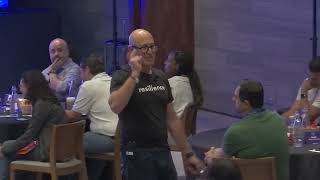
Adam Markel lays out a four-part system to build resilience into how organizations work: define values that prioritize well-being, set practices like 50-minute meetings that enforce those values, model and permit resilient behavior, and create peer support networks. Monthly check-ins and team workshops make it stick.
Chapters
They want you to succeed and understand if you're not successful personally, you can never be successful professionally, at least not in a sustainable way. We have a system that I'll share with you briefly and I'm going to give you a couple of questions to follow up, if you'd like, with your own teams. When we think about how do you operationalize this concept, this new paradigm of resilience, if you will, we're thinking about it in four ways. First of all, it's about value set. I am only standing here because this is a value to your company. I am the living proof that they care about you and wanted to have this conversation. They want you to succeed and understand if you're not successful personally, you can never be successful professionally, at least not in a sustainable way. So it's a value. The standard operating practices and procedures have to reflect that. They have to model it because otherwise it becomes hypocrisy, institutionalized hypocrisy. We all know what that feels like. So in some of the companies that we support, we've created 50 minute meetings. You know, you go to a massage therapist, you pay for an hour, but how much do you get? You get 50 minutes, right? So that 50 minute meeting means that people have that five to 10 minutes to get water, take a walk, go to the bathroom, whatever it might be. I've had some brave people recently too, in meetings. CEO was going on and I was, I know what it's like when I get the microphone. I don't want to give it up especially. And there's important things to talk about, passionate about. But yet we went past the 50 minute mark. I happen to be in this meeting and somebody stopped, held up their hand and said, look, we have a rule, I get it, this is maybe an unpopular thing to do, but this meeting needs to end. Credit to that CEO. She owned it. She said, you know what? I wasn't as prepared for this meeting as I needed to be. I didn't manage my time well enough. This is a poor example of how you conduct this meeting. And we're going to end it right here. And whatever I did get the chance to say will happen another time. I couldn't believe it. Again, the kind of trust that that created in that group was just astonishing. It was organic. It just happened in the moment. It's eating, the cooking, those practices and procedures, they could be anything. But you just have to think about what it is that we do for people's resilience. I mean, the story that you told about your indecision about the job and how that was met was one of those amazing stories to me to show congruence. It's beautiful. MMP Modeling and permission. This is the obvious. We model, we model for others. But here's the thing that's a nuance so that we give other people permission. Because when I'm the leader that believes that leadership is about being in first and staying last, that's great for me. Except it takes away the permission of other people to. To go to therapy if they need to, to go to their kid's recital or do anything else that's outside the marker of at all cost. At all cost. This is not an at all cost world. We are, I think, living in now and certainly if we want to thrive in business. It's an old way of thinking. I think it's doa. GYV stands for Got yout Back and this is how we support one another. What was spoken about earlier today that we check in with each other, that thing that you said you might commit to doing. Choose somebody in this room, maybe somebody you've never connected with before, you never met here before. Many of you are meeting for the very first time in person. Ask somebody, will you just check in with me once a month by email or phone or something? You know, how am I doing in that new ritual that I've created? What does that look like? Here are the questions you can bring back to your team. Take a screenshot of this if you like. These three questions are a workshop that we often deliver. You can do this with your teams. Give them 10 minutes to noodle on each question, come back and debrief it. We sometimes spend a half day or a whole day just going through this. We take notes, you know, use flip chart paper, do the whole thing. It's amazing to deep dive the solutions that your people will have about how to create more resilience. It's the weakest link thing. The chain is always just as strong as that weakest link. We've got to take care of people, not let anybody go down in our water. That's the way we're baked as human beings to look out for one another. That's truly how we're baked. We've got to institutionalize that, operationalize that.