Outperforming Challenges with Rodney Flowers
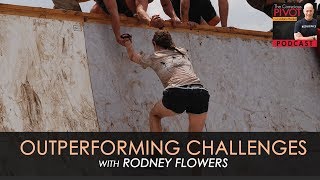
Rodney Flowers was paralyzed by a spinal cord injury at 15 and spent 18 years in a wheelchair before recovering. He shares his mindset recipe for getting unstuck: gratitude, empowering questions like "What if?", challenging limiting stories, pursuing purpose, and staying consistent.
Questions this video answers
15 years old.
August 26, 1993.
December 16, 1993.
Four and a half months.
18 years.
Chapters
Welcome to the Conscious Pivot Podcast with international speaker, business mentor, best selling author of Pivot, and your host, Adam Markell. The Conscious Pivot shares the stories and wisdom of people who have successfully reinvented some area of their business and personal life. You'll gain powerful insights into how you can fully embrace new opportunities, increase your performance, and master the art and science of innovation and resilience. So please join Adam as he guides you on your Conscious Pivot.
Hey, everybody. Welcome back to the Conscious Pivot podcast on Pivot Radio. I'm so excited today. I mean, I'm excited every day. I love my life, but man, oh, man, I'm loving my life, especially in this moment, because I've got an incredible guest that I get to introduce you guys to who is. Well, you'll get to see for yourself and hear for yourself just how magnificent this man is. But I am blessed in two ways. In at least two ways with respect to this gentleman. One is that I get to call him my friend. And two, he's somebody that I've gotten to work with and spend a lot of time getting to know in connection with his work as a transformational leader in the world. And that's why we've invited him to join us on this podcast so he can share a little bit about his story, which is pretty remarkable in many, many ways. I won't even put it into. Into one of those canned introductions. You guys know I don't dig that. I don't do that. So I'm going to pass it over to him to share a little bit about himself and his story and how it is that he came to be in the position that he's in as a thought leader, a transformational leader in the world, and just a hell of a great guy. So, without further ado, Rodney Flowers, welcome to the Conscious Pivot.
How you doing, brother? Hello. Hello, Adam. Hey. Thank you very much for that. Great to be here, man. It's awesome. And before we get started, I just want to just send out some love and some gratitude to you for inviting me on your podcast. I really, I really appreciate that. And it's an honor and a blessing to be associated with you, partnering with you, a friend to you to be on your podcast. So thank you. Thank you.
Awesome.
My name is Rodney Flowers, and, you know, I love my life, I love the world, I love people, and I love my assignment. That's clearly how I describe where I am in my life and the work that I am doing. It is an assignment, as Adam was mentioning, I am Very engrossed in my work and have a heart to serve people. And as a result of what I've been through in my life, at the age of 15, I suffered a spinal cord injury while playing football that left me paralyzed from the neck down. And doctor said I would never walk again, that I would be a vegetable for the rest of my life. And that clearly is not my story today. I have overcome that and overcome the constraints and the restrictions that are involved with having a spinal cord injury and limited mobility and the lack of independence and the illusion that, you know, you're not going to be able to experience success and experience a type of life that would be conducive to a good life or successful life. I've overcome those odds and more importantly, I've learned a unique set of skills that we're going to talk about today that I love to share with people about how to overcome the paralysis of life. Right. I was physically paralyzed, but we all know that you don't have to suffer an accident to be paralyzed or stuck in life. And I was clearly stuck. I was stuck physically, I was stuck emotionally. And I've overcome that. And I stand today walking a three time international best selling author and a transformational speaker. And I love my life, I love what I do and I am just grateful and happy to be here.
Yeah, awesome. That's a lot, man. So why don't we get into it? I mean, I want to find out a little bit about your recipe and I shouldn't say I want to find out because I know quite a bit about it, but really what I want to do is share it with our, with our community. So, yeah, you're how old? Let's kind of get into the, into the, you know, the origin of this whole thing. How old were you when you were playing football and had that accident?
I was 15. 15 years old. It was my sophomore year in high school and as a matter of fact, it was the very first game of that season, which was a very promising season. I had scouts coming out to look at me during practice because, you know, I was so good. You know, not to toot my own horn here, but I was a great football player. The age of 15, I suffered that accident.
And how long were you laid up in the hospital?
I stayed in the hospital for four and a half months. I was released 12-16-93. The accident happened on August 26th of 93 and I was released to go home. But I had to, you know, go back and forth on the, you know, I had a lot of appointments and several days of the week I had to go back for checkups and visits and some of them were overnight, so I was able to go home. But it included a lot of business. Back and forth to the hospital? Yeah, for an extended period of time, for about a year or so.
Tough on your family too?
Absolutely, absolutely.
And you were popular. I'm guessing you were a good football player. Man, you must have had a lot of friends, a lot of. Lot of guys, a lot of girls all around. Just a lot of popularity and all that. What happened after you? I mean, did you maintain all that popularity? Did people hang around you?
No, no, no, no. You know, we all were young and, you know, we're 15, just coming into our own, if you will. And so, you know, when I got hurt, it was like my life stopped, if you will. All the things that a 15 year old, typical 15 year old would do, you know, that wasn't part of my life. My life was physical therapy, doctor's visits, and, you know, a mindset, how am I going to survive? What does the future look like for me? And my friends, they went along with life and, you know, doing all the things that a typical person that age, a high school student would do. And I was trying to figure out how to do those things. And I was very, very limited. So the popularity kind of went out the door. I wasn't known for the great football player anymore. It was the guy that got hurt on the field, the guy that got paralyzed, you know, so it wasn't a life full of friends. It was more so family, you know, and those, those people that were closest to me, you know, and church members that were close to me and, you know, religious leaders and members that were praying for me and wanted, you know, God, spirit to intervene.
Yeah, so you got knocked down. I mean, literally, figuratively, every which every way possible, there was. There was a knockdown event and paralysis that. Physically, how were you doing mentally at that point?
Not so great. I was mad at the world and everybody in it. I was mad at the creator of the world, you know, if there was anyone to be mad at, I was pretty mad because I felt like, you know, I had been dealt a bad hand and I was very active, you know, not with just football, with just with my body and, and, you know, doing things around the house, you know, with my mom and dad. And that came to a screeching halt. And it was devastating, if you will, you know. You know, I was a fit guy. I worked out all the time and I couldn't do those things anymore. I couldn't do anything anymore for myself. So imagine that at 15 years old, I was in a place where I was, you know, you start gaining independence at that age. You start, you know, being able to do more and be a lot more freer without the restrictions of mom and dad or your parents. You're able to, you know, you have a little bit more liberty.
Yeah. And then out of nowhere, whack, you know, like out of nowhere, that's it. It's done.
You know what?
It. Maybe it's not that extreme. You know, I've said this before, and I don't remember where I heard it first. I say fairly often that, you know, Socrates said all learning is remembering. So when I. When I say something that came from somewhere else, I often will give credit when I know where it comes from and when I don't, I just say, hey, you know, it's. It's from some. Maybe it's from wisdom of a past life of mine or someone else's, I don't know. But it comes from someplace. And this thing that I heard was that pain is pain, man. I mean, you know, comparing pain, I think that's what people sometimes do. They go, well, you know, I don't have anything to be upset about, man. I have both my legs or I can walk, you know, and here's a guy, you know, not you, but somebody they might see who's in a wheelchair, is paralyzed, or. Or maybe somebody's had a devastating, you know, thing happen in their life. They lost a child or someone, and they say, well, I'm not, you know, I didn't have that happen. I've got nothing to complain about. I've got nothing to feel bad about. But that's. That's bullshit. Because pain is painful. I mean, you know, it's relative, right? When you feel pain, you feel pain. When you feel despair, despondency, you feel it when you're angry, when you're resentful, when you feel sorry for yourself, or when you feel like, again, you're confused why something's happening, don't understand it, and searching for the answers. And that. That's a feeling that transcends the reason why you feel it, because some people feel it for, you know, some reason that may not seem like a big deal to you. And others, you know, they feel it, and you can identify with it. So I think there's a lot of people listening to this right now who know what it feels like to have the rug pulled out from under. Maybe they didn't get hit by a linebacker and get knocked down and be told by a doctor, hey, you, you're not going to get up. You're not going to walk again. That's not happening. But maybe they lost a job, or someone they loved died or left them, or they were abandoned when they were a child by a parent, or they were abused. I mean, people have been blindsided from the beginning of time. And I think what's interesting is when you realize that pain is pain, the question is not about whose pain is greater, but what. What is it that you did? What did you do to get up? What did you do to learn what you needed to learn to be able to move past that hit so that you can live into the vision of something greater and fulfill your life's purpose? Because I know where you're sitting right now, where you would stand right now, you'd say you're on purpose. You are doing exactly what the Creator has wanted and would want you to be doing in this moment. I don't think you have a doubt about that, but I'm gonna. I'm gonna toss that to you to be the one to express it.
Absolutely. And, you know, everyone has something in life, just like you said, you know, and mine just so happens to be a wheelchair and paralysis. But we all have something, right, that we have to deal with. We all have that thing. It's a proverbial wheelchair, if you will.
Right? Oh, yeah.
And so that's the defining moment. What do you do when it shows up? And for me, you know, it took a while, but I had to look at my challenge a little bit differently. I had to change the perspective on my situation. And it all started with just being grateful for being alive. You know, No, I didn't have my legs. No, I didn't have my independence, but I was alive. And that meant there was still something that I could do. There was still something that I'm meant to do here on this earth. At least that's how I looked at it. And what I began to do is just look at my life and what I wanted in life, you know, before my accident, which was, you know, success. I wanted to accomplish certain things. I wanted to be independent. And what that led to is, okay, so now that this happened, why do you feel like you can't do this? Okay, you have these challenges in front of you, and it is paralysis, but you still can be successful. You still have your mind. That was a lesson that my mother had taught me as a result of me boohooing and crying one day, and it just kind of hit me, you know, and she said, you know, there's really nothing wrong with you. You just, you know, you have your legs, but you still have your mind. And if you have your mind, you can accomplish anything that you want. And so that was a pivoting moment for me because I had realized that I didn't lose everything. I lost some things, but I didn't lose everything. And as a matter of fact, one of the most important things I still had, one of the most important tools still had. And so with my mind, I started to think about my life and what I wanted my life to look like in the future. And I began to think about, hey, okay, yeah, you have this disability, but what if you overcame it? What if you were successful despite the disability, despite the paralysis? What if you could, you know, still make money? You know, you don't have your legs, but you don't have to have your legs to make money. You can use your mind to make money. You can come up with systems and solutions to make money, you know, to work to earn your way. And that began to get fascinating to me. That began to change my mindset. And it was so big that it actually, it just. It changed my whole paradigm about my accident. Because at that point, I realized what I had was a gift, because I can inspire people. A lot of people are out there hurting, you know, and they may not have a spinal cord injury, but they. They may have been abused. They may be, you know, discriminated against. Right. They may have a disability. There's several things that they could have that are causing them to be stuck. Right. Paralyzed, if you will. And so what came over me was, what if you were able to overcome this, the impact that your life would have? And so now I'm at a. I'm at a completely different place now. I went from this guy who felt worthless and, you know, didn't have the ability to do anything, accomplish anything, or contribute to the world. Now I have this great big possibility to make a huge impact on the world. And I began to get encouraged, I began to be inspired and determined because that became what I wanted to do in life. And that's. That's where I am right now, still on purpose to accomplish that.
Yeah, that's beautiful. And I made. Making some notes. So the first thing I heard you say was in that. That low point, the. Let's call it the. The inflection point, the turn up the pivot, right, if you will, was just to be grateful and for you, given the situation you were in, I mean, you were just grateful to be alive. I mean, it was a lot of things that wasn't right and a lot of places where you could just, again, stay in that hole, Stay stuck in that dark hole. But you just said, hey, the light is. Is. Is that I am alive. And then the second thing you said is, you posed a question, and, you know, we talk a lot about the quality of our lives being very much derived by the quality of the questions that we ask, because the quality of question you ask is equal to quality of the answer you receive. And you asked the question what if? Now, oftentimes, when I hear people talk about what if, they're talking about what if this goes wrong, what if that goes wrong? You know, they're gonna start a business. Are they gonna quit their job or whatever they're gonna do what if, you know, and it's always sort of a road that leads to a cliff, you know, And. And for you, the what if was totally different. It was a what if about what is. It was an opportunity. It was asking a question about the creative opportunity in the form of a what if statement. And I haven't heard anybody do that before. So I want to just point that out, because what if I could succeed in spite of. Blah, blah, blah. Right. What if I could succeed in spite of, like you said, because being discriminated against or being abused or being debilitated in some other way. And then you said, there are a lot of people stuck. And stuck is like being paralyzed. I mean, that. Those two things are very similar. So I wrote down stuck equals paralysis.
Absolutely.
A lot of people stuck don't think they're paralyzed.
Absolutely.
Don't think they've got paralysis. But they do. And, you know, sometimes we've heard that expression, analysis paralysis, where you think things. So, you know, to the point where you don't do anything, where you don't act, you don't take a step. Well, I mean, if you don't take a step, what's the difference between somebody who doesn't take a step and somebody that can't take a step? So what's the difference?
Same thing.
Two people didn't take a step.
Right.
I mean, think about it.
Absolutely.
Yeah. Well, you made me think about that, so thank you for that, Rodney. And. And so let's get to the point where, you know, you're. Now you're up on your feet, because you are. I mean, I've seen you walk. And with the assistance of some, you know, what do you call the. They're like crutches, but they're forearm crutches. Forearm crutches.
Forearm crutches, that's right.
And so your tenacity, your will to live, your will to get up is something you've written books about, best selling books. You speak about it, you train people, you coach and mentor people in the subject area. Because stuck is stuck and people don't, you know, thing about being stuck is you don't often know how to get unstuck.
Yeah, yeah.
And that's where it requires some outside force. You know, there's that physics law that a body that's at rest tends to stay at rest. The body in motion tends to stay in motion. So, so what do you do with the body that's at rest that would otherwise tend to stay at rest? Well, it needs a force applied to it to get it in motion, Right? So maybe you can share with us, was it you that applied the force for yourself? Was it God, Was it other people? I mean, how did you get unstuck? I mean, I think you've given us the first two steps of it. Being grateful, asking that, what if I could succeed in spite of blank, Right? So if there's more to that, please let us know what that recipe is. And then how is it that you help people today? How do you get people unstuck?
So let me add to the recipe, right? Because there is another question that I asked, and that question is, so what? Right? And that question is applied to the things that show up that prevent us from moving, that keeps us in the same place. Mine was paralysis. And I thought for a while that because I was paralyzed, no one was gonna want to hire me, right? I wasn't gonna be able to get a job, right? I wasn't gonna have, you know, a good life because no one wanted to be around a guy that's disabled or paralyzed. And those were thoughts that just stories that I would make up for myself, because that's what I believe that my situation created for me, right? And so I created that story, and I believe that story. But in order to stop believing that story, I had to start asking, so what question? Well, so what? You're par. And that. That really jarred my mind because it's like, that doesn't mean that I can't do this. It doesn't mean that I can't do that. I am paralyzed. I have a disability. But so what? You still can move forward, right? And so that's another part of the question. And that led to the what if question? Because I would say, so what? You have this. And what does that mean in the story that I had was basically a lie. It was. It was something that I had to research and come to the conclusion that it really doesn't mean that. And so for people that are listening that may not be paralyzed or, you know, physically, but have something in the way that prevents you, that fear, that thing that you feel is going to happen as a result of, or that thing that is there, but you feel like you can't get over it or go around it because it's there and there's stories that you've created around it. So what? So what? You know, you're black. So what? You had a, you know, a horrible past that doesn't dictate your future. Right. You are the creator of your. Of your future. And so what got me in motion.
You'Re the creator of your future, and you're also the creator of your drama.
Yes, you are. That's an important note there as well. But what got me going forward is it was the desire to overcome. It was really knowing who I am. Right. I got to know Rodney, and Rodney just was not satisfied with that diagnosis, and he was not satisfied with staying in the same place. My purpose and the possibility of becoming more, doing more, and serving more people was like fuel to me. Gave me a new reason to live and a reason to get out of the wheelchair, a reason to fight, a reason to move forward despite of a reason to get up in the morning, put my feet on the floor, you know, and say, this is what I'm going to do today. And it was so rewarding for me to step into that because my life was this. I felt like I was just. It was a vicious cycle. You know, I was mad at the world and, you know, I wasn't pleasant to be around because my attitude was bad, you know, and that wasn't helping me. I wasn't going anywhere. But when I started working towards this goal, this bigger dream, and it wasn't so much just getting out of the wheelchair, it was like, what if you can accomplish this? And that is what I started working towards. That became so fulfilling to me that it didn't matter, you know, if I got out of the wheelchair. I wanted to accomplish that. That can be a part of it. Right? Obviously I wanted that. But the joy came from the pursuit of something much bigger than. That's where my joy came from.
Yeah.
And so, you know, one of the things I teach people is when you have a challenge in life, and if you are focused on overcoming the challenge, when you wake up, all you are going to focus on is that challenge. That's going to be your mindset for the day, that's going to be your focal point, and you're going to get more of that challenge. I say focus on something much bigger than that. Focus beyond the challenge. Because when you focus beyond the challenge, the challenge just becomes a stepping stone. It's just a portion of the journey that you have to overcome in order to get to the end goal, which is a lot bigger. And now you feel much better and a lot more on purpose. You know, when you're going about your journey, you stay focused on the challenge. You're just kind of in this, I gotta get over this hump kind of state and that can get tiring, that can wear you out. But when it's this bigger goal that's at hand, you know, now we're really, we see the challenges and the obstacles of necessary processes that we have to go through in order to get to that place. Right.
It's interesting because succeeding in life or in business and things is often just a case of outperforming your challenges. Right? You just outperform your challenges. I mean, that's, that's like playing, you know, you play ball and you have a winning season. You just, you won more games than you lost. I mean, that's, that's right. And, and then, you know, in baseball, for example, you hit, you get more hits than making out. You know, you're a Hall of Famer. So just outperforming your challenges is a biggie. So the recipe is, I've got it. Just to recap is to first just be grateful. And I think there's no greater remedy for anything that ails anybody than to simply be grateful, to be in gratitude in the moment, because for one thing, it alleviates fear. And everything that's at the root of our misery is rooted in fear. So one, be grateful. Two, ask an empowering question. Like, what if I could succeed in spite of that is a creative question. Three, so what? Ask that question. So what? Whatever. So what? So what this happened or that happened? I mean, you, basically, you're, you're chuckling at your story, you're chuckling at your self created drama or the drama that you think someone else created, whatever. But you're so what? And for pursuing a purpose, your bigger purpose, your vision, which is so much greater than the obstacle, the challenge that you could otherwise focus on. And as you say, by focusing on that challenge, you Just attract more of the same.
Right?
Yeah. Beautiful, Rodney. So you've written books, you've spoken to many, many people. And I think there's a lot of people listening this. Probably curious how it is that they could find out more about you, find out how they could get to experience one of those books of yours, or otherwise just be able to learn from you in some other greater way. So would you share a little bit about that?
Absolutely. So I have a website at www.ridemeflowers.com. you can visit my website there. You can find the links to the books, if you're interested in the books right there on the website. You can find me on all social media platforms. Facebook. Ride Me Flowers Fans is my Facebook fan page. I'm on Twitter @ridemeflowers22. And you can find me on Instagram. They call me the get up guy. Get up guy on Instagram. Yeah. So that's how you can find me.
Now. Get up. Give it.
Give us.
Get. Tell us this. Provide the synopsis, if you will.
Well, get up. You know, as you heard the story, I couldn't get up on the field once. I suffered this accident. And so get up came from, you know, my mom running out on the field, you know, when I got hurt. And she was like, get up, Rodney. Get up, Rodney. She wasn't having it, right? She was having it. You got to get up off this field, right? And so obviously I didn't get back up, but, you know, I was in a wheelchair for 18 years, and then finally I got up. I'm like, mom, I'm up. I'm walking around. I don't need the wheelchair anymore. And so I wrote the book called Get Up, I can't. I will. I did. Here's how and subtitle is. It is what it is because I went through that phase of I can't, you know, because I one time thought that I couldn't. And, you know, I developed the wheel, you know, and then I did it, you know, so I went through that process, and that's what get up is all about. The process of going down, you know, and then rising back up again. So that's. That's what get up is about, where we all have something that makes us feel like we can't reach our dreams or, you know, we're right there, but there's something that's preventing us from really rising to the level that we want, you know, to experience or rise into the potential that we know that we. We have inside, but we just can't Break through. And that's what get up is about. It's about experiencing that as a process and understanding that there's some good in that. Right. Even though these things show up, these challenges show up, let's harvest the good, leave behind the weeds, and rise to another level. Instead of complaining about the restriction, complaining about what's showing up and bickering about it and being ungrateful, because those things really do, in my mind, make us stronger. But you have to have the right mindset, and that's all about getting up from a mental standpoint, so you can get up from an emotional, physical standpoint. That's what get up is all about.
Now, here's the thing that I want folks to hear, too. So Rodney's gonna have an online program that's coming out very, very soon. So I want you to definitely get on social media and follow Rodney, get the book, all that hit his website up so that you can get more information about the online program. Because I think it. It's going to make a big difference in a lot of people's lives. I'm excited to be able to be one of the early, early affiliates, one of the early people that are going to support Rodney in that pursuit and rooting for him. And also, if you're listening to this and also wanting to have an incredible, incredible speaker to attend a conference of yours, I know that Rodney has got a very. I don't want to say busy, but just say active schedule. He's not an easy guy to get hold of, you know, for something like that. But it always makes sense to ask. I can tell you that much. And it's one of those things that if you. You really do want to lift people up, help them to get up, provide them with some incredible content and a lot of inspiration. I mean, I think, you know, inspiration is more important than motivation. I know Rodney, when you were a football player, that's one of the things a football coach or any coach does. They motivate their team, and there's a place for motivation. So I'm down for that on a ball field especially. But I think as we grow up, as we're adults in our lives, we need to be inspired because it lasts longer, the roots go deeper. And so you're one of the most inspiring people I know personally.
And.
And when I hear you speak and I've watched you do it, you just inspire. You lift people up. You create a context in a room that's just magnetic. And it's heart, it's like hearts just burst Wide open. Thank you. That's something that, again, is an opportunity there. Please reach out to Rodney and let him know and you let me know and I can get in touch with Rodney, see about that too. Thank you, Rodney. Any final thoughts before we close out this session? Conscious Pivot podcast.
I would just like to end with a quote that I've been living by for years now. And that is success responds to the person that is consistent in his approach to overcome the demands of life. And I'll repeat that. Success responds to the person that is consistent in his approach to overcome the demands of life. So, you know, for me, that's just saying things are going to happen, things are going to show up. But if you want to rise above that, just stay consistent. Don't let them beat you down. Don't let them beat you up. Just stay consistent. Realizing that if you stay consistent with your efforts and learning how to become a better you and living in excellence, you can overcome those demands and you can experience success.
Yes. Beautiful. Well said, Rodney Flowers. You're amazing. I'm going to give you a high five virtual.
Yes, sir.
You rock. As do all of our conscious pivoters out there. This community is a joy, it's a blessing, it's a gift to the world. Come and join us on Facebook @StartMyPivot. You can go to the StartMyPivot community and be around, surrounded by, supported by giving to a community of like minded, like hearted people that really want to make a huge difference in the world, as Rodney said, have a huge purpose so that they're, they're constantly moving beyond their obstacles, saying so what to the things that show up that are challenges and are typically just happy, grateful, joyful pivoters in life. And so let's navigate this sucker together and do it with a big, wide open heart. We'll see you on the next episode. Ciao for now, everybody.
Thanks for listening, everyone. We hope you now have the tools and greater insights to navigate your own pivot. Help us inspire others by sharing this episode and leaving your comments over@adammarkel.com podcasts for more tips, strategies and support as you consciously pivot into a new business and lifestyle you love. Join our Pivot community on facebook@pivotfb.com.
More from Adam


Mastering Strategic Communications To Navigate High-Stakes Environments With Chris King


Mastering Self-Leadership Through The Conscious Habit Framework With Amy Woodall




Optimize Your Performance And Vitality Through Advanced Metabolic Health Testing With Mauro Stara

Cultivating Audacity: The Audacious Path To Success With Anne Marie Anderson
