Pivoting Through Loss, Building Resilience, And Conquering Fear With Kristine Carlson
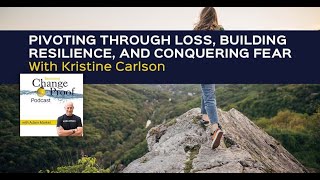
Kristine Carlson talks about losing her husband Richard Carlson suddenly and how gratitude, stillness, and mindfulness helped her heal. She's relaunching her book Heartbroken Open as From Heartbreak to Wholeness and continues speaking and writing to help others navigate grief and build resilience.
Questions this video answers
From a pulmonary embolism on a flight to New York (died instantly on descent).
About 10 years ago (as stated in the interview).
About 25 million copies worldwide (with ~5 million sold in the last 10 years since his death).
Heartbroken Open is being republished this fall; she is writing a book called From Heartbreak to Wholeness.
She said she just had her fourth grandchild and goes by 'Nana.'
Chapters
Life happens, and not always the way we expect it to. Every single day we face change, stress and uncertainty. What if you could learn to thrive no matter what life throws your way? Resilience expert Adam Barkel and his inspiring guest explore breakthrough strategies to fully embrace change and build the resilience required to become change.
Proof in today's Replay episode we have Christine Carlson. Christine is a survivor, a widow, a mother, a grandmother, a wife, a writer and best selling author many times over, an empathetic mentor for people navigating the exceptionally urgent, poignant time known as middle age, an inspirational speaker and guide for all who desire to practice happiness, live authentically and connect with their most vibrant selves. Major life changes and transitions can often knock us down and make us forget our own strength and who we truly are in our hearts and souls. We don't sweat the small stuff when we are living the big stuff. Christine's mission is to help women reclaim their identity and live their next chapter with renewed joy, gratitude and purpose in the midst of life altering changes. Whatever you're going through right now, know that she is here for you to encourage, love and walk alongside you during this profound and transformative journey as you discover who you are right now, as you awaken to your higher self. Some of the things that we discussed in today's episode include how she uses gratitude for good times and through the hard times, the loss of her husband, Dr. Richard Carlson, author of the Don't Sweat the Small Stuff books, why she embraces her 50s and the reinvention of this phase of her life becoming more responsive and less reactive to life, and why your day to day habits and practices can support you during loss, change and other disruptions. We talk about the reason that she leaned into the loss of her husband and how she used it to grow and heal and become more resilient. So enjoy this Replay episode of my conversation with the lovely Christine Carlson.
I guess the first thing I would love you to know is I just had my fourth grandbaby so I'm a Nana. I don't, my kids don't call me Grandma, they call me Nana. And it's probably just the greatest joy in the entire universe is to have grandkids and such an honor and a privilege to, you know, play such a strong role in their lives. And so that's been really the exciting news for me lately. And then what? I guess if you really knew me, you'd know that I'm a widow of Richard Carlson, the author of Don't Sweat the Small Stuff and it's all small stuff. Although that would be like, my bone to pick with him. But it really isn't all small stuff after all.
It's not all small stuff. Okay, Richard, I hope you can hear us right now.
Yeah, exactly. So I've had an amazing life and an amazing journey, and I have to say that I've been so richly blessed that, you know, focusing on the gratitude of everything that I've been given and all the blessings of my life has really been what's gotten me through the really hard times. And I think that the measure of a really great life is not just all the success that you have or even it's not measured by success or failure, but it's measured by how well we go through the hard times. So I lost Richard about 10 years ago suddenly to a pulmonary embolism. And so many of his fans today, millions of them, still don't even know that he's passed because his work is such a brilliant light in the world. So I think that's incredible. And I think that Richard would really smile knowing that his work has lived on. He always said the measure of a great business is one that you could walk away from, and it still continues to move forward. And, you know, his work has really helped so many people, and I hope that it helps a whole next generation of people. And I very much see it as my position in life to help carry that forward. And along with that, I've written several other books and writing another. A new book right now. My books are a little. I don't want to say deeper, but they definitely are deep dive. They're more about healing. They're more about moving through loss, heartbreak, and becoming whole and returning to joy. So I think if you really knew me, you'd know that I'm a really joyful person. I love to laugh, I love to have fun, and. And I think that this is just a great time in our lives, Adam. Like, I mean, we're talking about being in our 50s, and I don't really see being in my 50s as being a drawback at this point. I mean, I don't have PMS anymore. I'm like, I'm so much nicer and more even tempered. Richard would love to be married to me now, but, you know, and it's such a productive time too. Like, I find it to be just a wonderful time in life. So I hope anybody who's watching or listening who's in their 50s feels the same way. I think it's an amazing time of reinvention and that's kind of what I've been doing lately, is just working with people and helping them discover their life passion and be more vibrant and be healthy through all the ups and downs of life.
Yeah, there's a series of pivots, right? I mean, and it's the name of the show. We explore this concept of pivoting, of reinventing and doing it consciously versus being in reaction. You probably, I don't know, I haven't asked you this, whether you've read this book, but I'm diving deep into the presence process, this book by Michael Brown. And it's absolutely beautiful to explore again, that distinction between reaction and response and the ability to respond in making conscious, consciously utilizing, managing and utilizing the change that is ever present. It seems to be one of the, you know, it's one of those great constants in life is that things are continually evolving, continually changing. And I think change is something that people fear. I mean, I know I've had fear and issues around change and disruption, especially when it's not planned. And clearly you had a major disruption of your life plan. You had a good plan. You were working a good plan. You married to a man you loved and having a great life. And he's doing work that has legacy, impact, has a historical, historical offering as Fernando Flores was sharing with us at ATL a couple of weeks back. And in the midst of all that, you know, something changes it drastically and dramatically in an instant. And you have to pivot, you have to change. You know, there's a shift that occurs. How did you handle that? And my guess is that that's also part of where you help people to heal themselves and to integrate their life experiences so that they can be really productive now, whether they're in their 30s, 40s, 50s, 60s, or wherever they might be, the ability to live fully now and in the present is a big, big deal.
It is. Well, that's a great question. And you talk about becoming more responsive to life and less reactive. And if you really look at the don't sweat the small stuff books and the wisdom in those books, they point to mindfulness. They point to being really responsive to life and less reactive. And certainly the tools that you gain by practicing a life like that help you pract life when you have to do a large pivot turn when life shatters. And, you know, I have to say that the number one thing that I always tell people, there's two things that people always ask me, can you prepare for loss? Can you prepare for change? And I say, well, loss in and of itself is sort of like childbirth. You know, you can do everything right and then you get to that birthing day and, you know, you just don't know how that birth is going to go. It's going to be different for everyone and it's going to be different each child. And so every loss that you go through is also, you're gonna, you're gonna probably go through that loss and go through that change slightly differently than you did before. But how you practice life on a day to day basis, the presence, the level of presence that you practice, the emotional well being, tools that you have in your tool belt, that you practice, how centered and calm you are in your life on a day to day basis. All of these things play a huge role when life does shatter and when something happens that is unexpected, you know, you, you really refer to all of those tools that you have in your tool belt to, you know, make that pivot turn, to be able to stand in those circumstances. And I just, I love Randy Posh's work so much in the last part of his life when he said that, you know, we can't really control the cards that, you know, the hand that we're dealt, but we can play the hand that's dealt us and that's where we have power and control and we can come at any change with an empowered stand. But the one thing that I identified for myself very early on was that I had two choices and there were only two for me. I could be a victim of these circumstances, or I could really stand up and, you know, walk the hero's journey and really live, you know, what I was given. And I referred to this in my introduction. Just saying that, you know, for me, I was so blessed. I mean, my life had already, in, you know, the 25 years that I had known Richard had changed so much and was such a bigger expression of life than I ever could have planned or anticipated for my own life. It was a bigger dream that I held with him than I could have ever dreamed up on my own. And I think that maybe even for him, you know, we just were, we kind of always felt like instruments of the divine, you know, instruments of pure heart and love and just that we were being played, you know, and that inspiration would come to him and come to me and we would play with it in a way because we offered ourselves to it. I continued to do that throughout my loss. You know, I just continued to offer myself to spirit and to be guided and to be loved in grace, you know, and to heal and to really allow grief and loss to do its work on me. You know, I wasn't, like, one to just, like, jump ship on, you know, because it was painful. I just. I really. I wanted to know that this loss counted for as much as this life had. And it did. You know, it really awakened me, and it. It shaped and shifted me into a completely new woman. In a lot of ways.
It is a. I think it's one of the things that I definitely didn't know this at earlier stages of life. And part of the people, you know, the people that in our community are. There's a lot of millennials. There are people that are in just various stages. And I know at an earlier stage in my own development, I didn't realize how important resilience was. And now it's, you know, it's part of the pivot recipe, if you will, our formula. Resilience is so impactful. It sounds like you developed a recipe for being resilient in the midst of all that, you know, disruption, chaos, grief, loss.
Well, and, you know, referring to presence, you know, what I really realized, too, is that when I would spend any time in my past, you know, there's this many stages of grief that you go through, and, you know, you can refer to Elizabeth Kubler Ross's work. Although I never really felt like I would go through them and be done with them, I kind of felt like I was all over the map with them. But in the beginning, you know, I remember, like, feeling like, wow, if I look back, it's just so painful because I, of course, wish I could have stopped what happened. I wish I had known or seen something that would have indicated Richard's health wasn't the way we thought it was. You know. And so, just so your listeners know, he died from a pulmonary embolism on a flight to New York. On the descent of that flight, it's like having a blood clot, an aneurysm that just explodes, and he died instantly. So there wasn't really probably a lot of warning for him or anything, and certainly no warning for us. But if I spent time thinking about my past, I was in really incredible pain. And if I went into my future in that time period, I was also in incredible pain and a lot of fear. So I just learned to just bring my attention and my thoughts back into the present moment. And I just looked at it like, this is a vertical alignment. You know, I'm aligning with spirit in this moment. And in this moment, I feel pretty good. In this moment, I can Find joy even. I can be healthy. I can be even. You know, still, I mean, there were just a lot of. There's a lot of peace in the present moment for me, during that first year especially. And then at the end of that first year, I thought, wow, what a miracle. You know, Richard. Oprah always said that Richard was the one that taught her how to be present in her life. And I always thought that I was pretty present. But then when I really practiced presence and grief, then I really understood what true presence was, you know, and it was beautiful because it gave me that whole year to really practice, you know, presence as a mode of opera to survive. You know, like, that was really what it was about, was surviving that first year. And I think that, you know, for anybody who's going through loss or has a great fear of loss, you know, we're really geared. I mean, honestly, we're geared to go through these things. And you don't have to be afraid. You'll know, you know, if you can stay more present in your life, you'll be okay. You really will. You know, you'll just. You'll just go through it, and at some point, you'll wake up one day and life will feel much more normal again. That's certainly what happened to me.
Yeah. And I look at whether it's that type of a loss or it's the. Sometimes a sudden loss of a job can feel like, you know, your life has just gotten turned upside down and that type of thing, or it's a business that you've invested so much of your love and time and energy into. Like, it's a family member. It's got baby. And sometimes those businesses don't go well either, and you lose that. Resilience is so key to me. There's three things that have to be like for me, and I can only come from my own experience. These three things are a must. One that you take whatever the circumstance, the situation is, and you frame it differently because you frame it as something that is awful. I see this beautiful. In the background of your screen, I can see this beautiful tree. And I'm just. I'm looking at that tree, and I kind of see that there's maybe some leaves or what have you, but it just looks to me like a tree of life. You know, that that's the frame I'm putting that picture in for myself, right? And I could look at it and it could trigger, you know, based on my. My history, my past, maybe even traumatic experiences, I can look at that tree and frame it very differently. It could bring up a memory of a. Of a past loss or a hurt or something. But that's not how I'm seeing that tree. I'm seeing that tree as a tree of life, Something that's going to bear fruit and go through seasons and leaves will fall, and then they'll grow back. And it's just this beautiful, strong, organic, connected, divine thing that's the essence of life itself. And that's just a framing for something like that. And I think that's the same thing with every area of our life. We can put it in a frame and choose what that, you know, what will be within the borders of that frame. So reframing the experience in a positive.
Way.
Then moving to the stage of what have I learned? You learn so much through the grieving process. You learn so much from being in relationship with Richard, from all of the things that happened before his death. And then you learn so much as a result of his death, including what you just said, which is that you. You really learn the true meaning of presence. But, you know, wow.
No, it's incredible that life. Life itself is really the best teacher. I mean, no doubt.
And. And then the third piece is this, to me, of resilience recipe is our ability to take care of ourselves. This is a part that, you know, people will get the first two. Okay, I get it. I got to reframe this thing. I can't look at it like whatever's going on is the end of the world type thing, you know, and, yes, I can learn. I know I can learn whatever it is that is there for me. But then they still don't necessarily take care of themselves as a part of the recovery process. And to be resilient, to be able to, you know, be that willow tree that kind of bends in the wind, doesn't break, and then comes back, comes back, and often comes back more often than not, comes back stronger still. So I'm curious whether you've had certain rituals that you've adopted to help you recover, the kind of rituals that just take care of you in body, mind, and spirit. Would you share a few of those things?
Absolutely. Yeah. Well, I just. I want to say that initially I knew intuitively that I needed to take care of myself through, you know, the early stages of grief. And, you know, even, you know, the first couple of years. Then I remember the first year I didn't even drink any alcohol because I was really. I mean, maybe there was a little bit of fear that I might become, you know, dependent on it. To numb myself out. And I just knew intuitively and also just from all of our years of study and personal study and personal growth work that it'd be too easy to try to numb out to that kind of pain. And I knew that the only way out was going to be going all the way in. And so I also realized that I needed to get a lot of rest. You know, I created a lot of space in my calendar. People tell you in grief to be really busy, and I didn't believe that was true. I believe that what I needed was stillness. And what I needed was time in nature and time walking in the trees and being able to feel my feelings. I knew that to heal, I had to feel, and there wasn't going to be any other way through this for me. And so I spent a lot of time hiking with my dog. I didn't exercise for the same reasons. Wasn't exercising for fitness. Although I have to say, like, when I was in grief, I probably looked better than I've ever looked in my life because I was, you know, I was crying all the time. And crying is like a huge immune system booster. And it's very. It's like the youth serum for some reason. But I knew to do, like, what I call, really support self care. I meditated a lot. I would lay on my floor in stillness and allow grief to move through my body. Sometimes I would shake and I would cry. Sometimes I would scream. Sometimes I'd be laughing hysterically. I just really. The word allow was a big word for me, you know, being surrendered to what is. As opposed to me trying to make my life certain way. I had really felt like my life had completely shattered. But with that, I wasn't really holding the perfect life anymore. So it was kind of like. It was almost like, wow, you know, I. Now I can just kind of be in this life. And I sort of allowed myself to rebirth in that way, you know, that we had far from the perfect life after Richard died. And it looked pretty perfect and felt pretty perfect when he was alive. So, you know, those are some of the things I did. I took a lot of baths with Epsom salts and, you know, just found that very grounding. I spent time with people that were super nurturing to me, and I did not spend time with people who weren't. And I was really. I was really clear about, you know, I don't know if you remember your wife in childbirth, but she knew exactly what she needed, when she wanted it and when she needed it. Right?
Four times. Very, very clear.
It's very. Well, that's what it's like when you're really tuned in to yourself and you're in, you know, a big life change, you get super clear on what it is that nourishes you and what it is that doesn't. And I was all about just moving toward what was nourishing to me because I also understood my body was going through a huge adrenal adjustment. It was a lot of energy was running through me to go through this loss. And I think that's the other part is people don't understand that, you know, when you're, when you're, when you're going through a big change, your body has to be strong. You have to be. There's a body resilience that comes from, you know, you taking care of that body so that you, you can be the vehicle for that change. And that's the way I looked at it.
Yeah.
And I think you said something that I really want to just repeat that people can hear it, which is that you became clear on how to take care of yourself. In part, I think, because you made, you created the space and the time to be able to focus, to allow for that to become an awareness for you, a present then, present moment awareness. Because without that, if you've just been in busy mode or just been trying to do, do, do, do to get past something, you might not have taken care or might not have been guided to how it would be that you would take supreme care of yourself. Does that seem true?
And just that if doing can be as much of an anesthesia, it's a way of anesthetizing yourself just as much as drinking alcohol or anything else. So, you know, we can lose our ability to tune inward. And I just knew that stillness, you know, creating stillness in my life was imperative for me to move through this loss. I just, I couldn't. I couldn't do it any other way. And I always tell people, you know, don't over busy yourself. Actually create some time and more spaciousness so that you can have the insights and the wisdom flow through you, into you and all of that creativity. I mean, oh my God. I wrote, wrote a journal that year that became a book. And it was called Heartbroken Open. And it was my beautiful story of going through loss and the awakening and the discovery of who I am, the discovery of self, you know, and it came through that loss. And the only reason I was so tuned into it was because I took, I created that quiet time and I watched and I observed and I Listened to my heart and my soul, and. And I, you know, and then I shared. And. And it's. It's really an incredible experience. You're sitting on some of the most fertile ground of your life, you know, and it's like. You think about that like it's the worst time of your life, but it's also one of the most incredible times. It's not something we ever say, yeah, bring it. I want more of that. But so incredible. It's so rich. It's so incredibly rich.
I just.
Look, you and I, we connected probably the moment we sat down next to each other for the first time in that ATL meeting. And I'm feeling it again, Chris, because you just. Yeah, this is. It is. It's so rich, that soil. And it isn't what we choose necessarily, but it's. Whether it's God or spirit or whatever it is, it's there for us in such a profound way. So, yeah, thank you for those words. I want to reframe. Not reframe, actually. I want to just state what you said in a bit of a different way, which is to say that people are addicted to activity. I think that's true. That it's that busyness that can take us away from, even distract us from. From that richness of what's going on in our lives. Because at any point, there are things happening in everybody's life that you could call that are, Are, are disruptive or bring up just great fear, because there's so much, you know, room for interpretation of it being not. Not good. Right. So it's. It's really curious. I'm curious about it.
And.
And I want to restate the title of your book to that first book, Heartbroken Open, so that folks can get out on. Obviously get it on Amazon or go into a bookstore. Is that the best way to get it? Or.
Interestingly, right now, I'm going to republish it this fall, so I'm going to be writing a book called From Heartbreak to Wholeness. And Heartbroken Open will come out this fall again. Yeah, I had. It's kind of a little story. It got kind of orphaned when it was published, and then they asked me to rewrite it because they wanted more of a how to grieve book. But it's such beautiful book and it's helped so many people. I didn't want to rewrite it to bring it out in paper book. So I just said, could I have the rights back? So I have the rights back now, and I'm just in the process of relaunching that book this fall. But it's a beaut. It's a beautiful guide for especially people that go through really sudden loss or younger widows or younger widowers, because I deal with a lot of the issues that younger people face in grief and loss like that than what people in their older years face. So, yeah, it's a beautiful book and it certainly is, and it shows you. You know, I've worked with a lot of widows, and I always say it's like being a doula. You know, it's like you're really guiding them to birthing a new life. And it's painful. You know, transformation is messy, and it's very painful at times, and it is chaotic. But if you know there's going to be something great that comes from it and there's hope, you know, that's. That's the thing that really gets people through it. It's just knowing that something great is going to come of it. And I always say to people that I work with, you know, your love of life has to be so much bigger. And it's like loving God first and your love of life is like, loving God has to be so much bigger than any one success or any one loss that you'll ever have. And. And when that happens and you. You can say, I love life so much that I'm willing to return to joy and be in my life in the most joyous manner, then that's what really loving God is all about. That's really what the expression of life is all about. And there's nothing that gets you through loss bigger than that. Love.
Yeah.
Wow. Now you guys are also celebrating a 20th anniversary, right?
Yeah. Thank you so much for being on my podcast, too. That was such a wonderful conversation. And, yeah. So it's 20 years since Richard wrote the first Don't Spot the Small stuff book, and 25 million copies have been sold worldwide and.
25 million copies.
Yeah, 25 million copies and even 5 million in the last 10 years since his death. So it's pretty crazy and pretty awesome. And we're gonna be really celebrating it up this year. So, yeah, super excited. Thanks for mentioning that.
I'm just gonna show because I found this the other day. The first Don't Sweat the Small Stuff book about this one was about money. I remember where I was reading this and what my life, you know, was full on workaholic, commuting into Manhattan to be. To do this attorney work that I despised and just knew I couldn't do. Forever. I came home one night and I told Randy, like, after having another one of those days, I came home late. I missed the kids going to sleep, and it was cold and rainy out. I walked through the door, my wool coat on. I looked. I said, if I don't stop doing what I'm doing, you're going to be a widow. Those are my words to her. She tells this story. It's much more powerful. But we. We knew then that a pivot, you know, that change was something we wanted to create. And this book was something that helped me through that time. Because what was I thinking? I'm going, I'm a lawyer. I got houses, cars, four kids, dogs, gerbils, goldfish. I mean, I got a lot of people, things responsible, you know, that I'm responsible for. And this book gave me not just peace, because it did. It gave me peace. It gave me the ability to be. To be present and to think and to have clarity. This is a beautiful book. And look at it. I just want to show you what it looks like.
Today I'm going to send you a new one with a new cover.
Look at dog beard, right? This is how I destroy a book. I read it in the hot tub. Although this book got other places. That was right. So that's awesome. Super cool, right?
Yeah. So fun. Thanks, Adam.
Yeah.
What a blessing. I love that we've become friends.
Me too.
Gotten to know you a bit.
Me too.
So thank you for joining us on this podcast. Thank you for being with us. I'm so happy about the relaunch of your book that you've got the rights back to do that. The new project, the 20th anniversary of don't sweat the small stuff. All of it is so, so good. And what a blessing to have you with us. So thank you.
Thank you, Adam. It's been wonderful. And thanks. Have a great day.
You too. Bye. Bye, everybody.
Thanks for listening, everyone. We hope you now have even more tools and greater insights to build resilience and become change proof.
Help us.
Help us inspire others by sharing this episode and leaving your comments over@adammarkelle.com podcast for more resilience tips and strategies, including support for building change proof teams, visit AdamMarkel.com BecomeChangeproof.
More from Adam


Mastering Strategic Communications To Navigate High-Stakes Environments With Chris King


Mastering Self-Leadership Through The Conscious Habit Framework With Amy Woodall




Optimize Your Performance And Vitality Through Advanced Metabolic Health Testing With Mauro Stara

Cultivating Audacity: The Audacious Path To Success With Anne Marie Anderson
