Pivoting Towards Greater Resilience
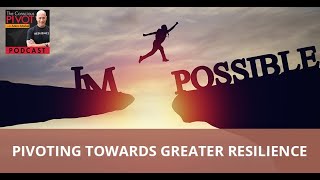
Adam Markel explains resilience as the foundation for pivoting through change. He describes three practices: making small adjustments (the trim-tab approach), reframing your mindset to find opportunity in setbacks, and recovering energy through rest and daily gratitude.
Foreign.
Welcome to the Conscious Pivot Podcast with international speaker, business mentor, best selling author of Pivot and your host, Adam Markell. The Conscious Pivot shares the stories and wisdom of people who have successfully reinvented some area of their business and personal life. You'll gain powerful insights into how you can fully embrace new opportunities, increase your performance, and master the art and science of innovation and resilience. So please join Adam as he guides you on your Consciousness Conscious Pivot.
Hey everybody. Welcome back to another episode of the Conscious Pivot Podcast. I'm your host, Adam Markell. I am coming to you today from beautiful Tokyo, Japan. I'm here for several days getting ready to deliver a talk to the Daimer truck division, Mitsubishi's truck division, which is owned by the Daimler Ben's company out of Germany. And I'm here to share some thoughts on resilience. And actually the theme of this incredible event is turnarounds. And I thought, geez, well, first of all, when they contacted us to have me come over and deliver this talk, it seemed like a great fit because of course Pivot means a lot of things, but it, I think primarily does mean a sort of a change, change in direction. And often that change is being made because something has maybe not worked out or hasn't lived up to a certain expectation. Or it could be that the time has just come for a change of the season. A turnaround. And turnaround can mean in our personal lives, of course, it can mean a turnaround in our finances, it can mean a turnaround in our career, it can mean a turnaround in the business that we're in, it can mean a turnaround in our health. And of course it can mean a turnaround in the most important thing that we are always working on, that that would be our relationships, our relationship with ourselves primarily to begin with. And then of course, the relationship that we have with all of the rest of the divine beings that we get to share this planet with. And so turn around. That concept to turn around is really fascinating to me and how to look at the work that I'm doing today and where it's evolved into and what it's become since the book Pivot was first published back in 2016 and what my current philosophy is about, about that topic of turnaround. And it is fascinating to me because when I was involved in that book project, initially, the concept of resilience was a component of the Pivot process, meaning looking back at my own personal history and in the pivots that I've made and the more sort of dramatic pivot out of one particular career at the time, which was practicing law, and into a different career, which was public speaking and training and facilitating of programs and the like. Being resilient was a really key ingredient of my pivot. I had to. In looking back at it, I realized that being resilient was a part of how I was able to keep going and be guided and be strong and be present and all those things that enabled me to. To move forward despite the fact that the road ahead was unclear and uncertain and dark and all those things that scare the daylights out of most of us. And so resilience was a key component of that. Now I look back on it today, and what I also realize is that resilience itself is the bigger piece of it for me today. Back then, resilience was a small circle within the larger circle of pivot itself. The pivot concept and the principles of following a certain path and then changing that path and what was involved, the sort of the art, the science of that change. And now what I realize is that the big circle is actually resilience. That's the bigger circle. And the smaller circle within the bigger circle is pivot. So meaning today, what I feel strongly about is that if I was advocating for one set of skills or for tools to be developed or for those tools to be accentuated, the tools I speak about today are the tools of resilience. That the skill of resilience is the most important thing that we can have in our lives today as individuals, as business owners, entrepreneurs, executives, employees, as human beings, that I would build that in every situation I could if given the choice. And certainly with even thinking about our future generations, what I realized is that kids growing up today, they have to be resilient. And resilience is a very tangible skill in our personal lives and of course, in business every day. And part of resilience is this ability to learn how to make certain pivots. By that I mean being able to make small changes, that small changes is a component of pivoting that we all have to be able to use to utilize, to be successful. So that's the first piece, is this idea of making small changes. And often when I think of small changes, I think of Buckminster Fuller, who is this incredible futurist, who is also known as the creator of the geodesic dome, which is that big dome that sits at the front of Epcot center, if you've ever been to the Epcot center in Orlando, Florida. And so people know the Dome. But they don't necessarily know Bucky Fuller, who was a scientist, as I said, a futurist, a philosopher speaker, a teacher, a leader, Incredible, incredible man. And at a certain point in his career, because he was so fascinated with so many different things, he started to study long ago when these massive ships were first being developed, these big tankers and other big ships, and there was a problem when they were being engineered. And the problem was that it was very, very difficult to turn them, and it took a long time for them to turn around. And because they had this big ship with this giant rudder that was on this giant ship, and it wasn't getting the job done until someone invented something that was sort of unusual, which was this tiny little rudder. You go, well, how could a tiny rudder have anything to do with the way a big ship turns? But they found that when you put the tiny rudder on the big rudder and you put the big rudder on the big ship, then all of a sudden, like magic, the ship could turn, could be more agile, could turn more quickly. So the small rudder on the big, or the trim tab is what it was called. You put the trim tab on the big rudder, and the big rudder goes on the big ship, and then the problem is solved. And to me, that's a great example of what small change looks like when I'm advocating for people to pivot. Whether it's the pivot out of one career into another, out of one job, into another, out of bad relationships, into better relationships, or out of health that's not great, into really wonderful health or anything, really. It doesn't matter what it is. What I advocate is this principle and this philosophy of making small changes. Because if we try to take the elephant in one big bite, obviously we know that's impossible. If we try to change our lives or change our situation in one big jump, usually we fail. And often we don't even try, because the fear associated with that giant leap is often enough to keep us stuck or keep us staying committed to the status quo, keeping us committed to the devil we know versus the devil that we don't. So what's wonderful in delivering this talk here is that I'm able to share that philosophy of making small changes. I'm able to also share this second component of how it is that we develop resilience, and that is the ability to manage our mindset. So important that we look at our mindset and see it for what it is. It's a collection of beliefs, really. It's just a collection of beliefs that we've been programmed to think. And we don't often question those things, of course. And so whenever there's something going on where we're contemplating a change, or when a change seems to be needed, or when a turnaround in this case is at hand, we've got to suspend our beliefs. There's sort of three things that I advocate when it comes to the mindset, and they all sit under the umbrella of what we call reframing. Reframe our mindset, to reframe our belief system. And the first part of that is that we have to suspend belief. And by suspend belief I just mean that you're aware of the fact that those beliefs might not be true. And so to suspend it enables you to get to neutral, not feeling that there's a positive charge or a negative charge to the belief itself, but simply that you're neutral, that you're looking at it through a, a neutral lens. And in that moment of suspending your belief, you can see it differently. You can look for the creative opportunity, which is the second piece, to find the creative opportunity, to search for it, to find the meaning. Because there's meaning in every situation. There's always meaning, there's always a creative opportunity. So that's the second piece. And the third piece is then to be able to take what you've now discovered and reformulate your belief to potentially even replace the belief that you've got to unbelieve certain things that you might have been believing since the time that you were very, very young due to someone else's influence. So those are the three pieces of how do you reframe your mindset and be able to use that in order to create resilience in whatever it is that you're turning around. And lastly, we've got to reclaim, so we've got to make small changes. We've got to reframe our mindset and we've got to reclaim our energy, we've got to reclaim our capacity. And that is absolutely fundamental. It's essential because what we see in the world today is exhaustion. We see exhaustion kind of everywhere we look. And it's really perpetuated in our corporate culture. And not just in the corporate culture, but in the entrepreneurial culture as well. In fact, startup entrepreneurs and folks that are side hustling and following some of the advice of some of the gurus that are out there that are telling you that you need to put in that extra eight hours after you've done your, you've gotten home from your day job and now you're going to start your side hustle in the evening and put in another eight hours and you can just live on four hours of sleep or whatever it is. And I just think that's just total crap. And it is a recipe for burnout. It is a recipe for struggle. It is a recipe for failure. I mean, the studies and research are very, very clear that the road to resilience is not paved by endurance, it's paved by recovery. Meaning you look at athletes. Athletes are especially professional athletes or Olympic athletes. They are constantly engaged in a back and forth exchange of, of both their energy and their recovery. An athlete could never perform their best exhausted. Can you? There's no question that a person who is well rested will always outperform someone who is exhausted. And so the exhaustion model doesn't work in sports. It doesn't work in any area of our lives. And yet in business, whether you're an employee for someone else or you're running your own shop, we perpetuate this idea that we just have to put in more time. We've got to just have more time on the treadmill. And I go back to the days when I was a practicing attorney. I leapt off of that treadmill, I leapt out of or escaped that hamster wheel, if you will. And that was partly to save myself, because I realized that in that depleted condition, in that exhausted condition, I wasn't any good to anybody. In fact, I probably was more likely to cause harm than to cause good. Can you imagine if you were going in for surgery and the doctor who was going to be operating on you was thoroughly exhausted? Or they were at 70% of their capacity because they've been just working themselves tirelessly day after day and week after week and month after month. But now they have the scalpel and they're standing over you to conduct an important surgery. I mean, is that what you want for yourself? Is that how you want to show up for other people? And so there's no question that as part of this turnaround, this pivot from exhaustion into resilience, that we've got to take care of ourselves, that we've got to make recovery a priority, that we've got to even ritualize it. To ritualize it is to habitualize it. To turn ourselves into resilient beings, we have to create rituals that enable us to recover more quickly, that enable us to toggle between high activity, high intensity, high focus, and complete and utter rest. Stopping is not even resting these days because for most people, when they stop working, I mean, as if that ever happens. Anyway, used to be we'd have a weekend. Now work happens on Saturday, it happens on Sunday, it happens at the kids soccer games at Hackman's, it in the Starbucks. It doesn't matter where. There's sort of no boundaries. So we don't really have a lot of downtime. And even when we say we're stopping work, we've got social media, we've got tv, we've got every other manner of sort of stressor that is a part of our culture, meaning we're constantly looking in our phones, we've got tech fatigue that's caused by looking at those phones 150 times a day on average. More than two and a half hours of time spent, almost a time vacuum, a suck, if you will, of our time into that void of social media and the like. And it drains us. It drains us from just being present. It drains us from having the fresh outlook, a rested outlook to see things. And I was thinking this morning as I was eating breakfast, having a. A delicious sushi breakfast, which you may remember from if you watch my TED Talk, it's one of my favorite things in the world, is to be in Japan and have sushi for breakfast. And this morning, yesterday morning, tomorrow morning, I will again have that. And it's such a blessing. But as I was sitting there, I was thinking to myself, gosh, am I really enjoying my food right now? Am I really enjoying my time just sitting on the 35th floor looking out over the city of Tokyo and having this food that I love eating, Just something that is so rare for me to eat in the morning where I live? And I question whether I was enjoying it because there was somebody that was next to me and she was sitting with her food, a woman of some Asian descent, and she took a picture of her food and I thought to myself, should I be posting a picture of my food? Should I be posting a picture of this moment right now that I'm having this just incredible experience? And should I be sharing this with other people? And I stopped myself because I questioned for a moment, am I actually enjoying this? Or in order for me to enjoy this, I actually need to be sharing it with other people, posting it on social media. It's a very odd thing. I mean, are we really enjoying ourselves? Are we really enjoying our lives even when we're not telling other people what we're doing? We're living in a world that is very much about comparison. It's very much a world where we're looking at ourselves not just through a lens of our own. But we're looking at our lives through a lens of what other people are doing and how great their lives are, how crappy their lives are, what their experiences are, where they are in that moment. And so it had me question myself, and I took some deep breaths and I took a pause, and in all honesty, I said, no. I am thoroughly enjoying this mood, this meal, this moment, and it doesn't require me to take a picture of it. And interestingly enough, as I'm sharing it now, later, I was thinking to myself, gosh, I want to maybe blog about this. Maybe I want to just sort of bring this idea up and see what other people think. There's an old question that I remember hearing years ago, something to the effect of, does a tree in the forest fall if there's no one there to see it? Are we able to enjoy our lives, fully enjoy our lives if there's no one there to see it, if there's no one that's going to see it because we're not going to post it on Instagram or some other social platform, does that somehow steal the enjoyment from the moment? I don't have an answer for that. I think you can suspect from where I'm coming from at the moment that I have my suspicions. And I'll leave it to you. You know, it's a question. It's not an answer, really, and it's not a judgment. It is a question. But what I do believe is that in these moments that are ours, that we don't just have for ourselves or for our families or the people that we're with, we're taking those moments and then we're using them. We're posting them, we're sharing them. We're stepping out of the present moment to allow other people in for whatever reason, whether that's the new version of Keeping up with the Joneses, or it's just, again, this idea that our lives are not as meaningful if we don't get likes, if we don't have other people weighing in, if other people aren't knowing at every moment that we just did this, we just did that. And that whole idea of having to share these things and having to bring other people in for their approval or for the comparison or whatever is the motivation. Those things are exhausting. They take our energy, they take our effort, they take our thinking, they take the use of our fingers and our eyes, they deplete us. And so when it comes to creating resilience, we've got to be rested. We've got to recover to be our very best. And maybe, just maybe, part of that rest means putting your phone on silent or turning it to off or doing something really radical like I just did. No, I didn't get rid of my phone. I'm not that crazy at the moment. Who knows, maybe in a month I will. But for now, anyway, I just turned it to grayscale. I saw an interesting documentary on what cell phones are potentially all about for us and some of the apps that we're spending our time with. And we'll get into that now, I'll just say I decided to turn my phone to grayscale and it's much less interesting to me than it was just a month ago. And I'm enjoying it. And in that grayscale, I find myself touching my phone maybe a third of the time that I was when it was all colorized and all those colors that are intended to keep us looking and keep us swiping and keep our eyeballs engaged, et cetera. So I'll leave it to you to decide for yourself what that looks like. I'll just be the reminder that we've got to take care of ourselves, that you've got to create rituals for your resilience and your recovery. Morning, afternoon, evening. Whether it starts with a meditation, whether it starts your day with a green drink, whether it starts that you take a walk or that you begin your day with four simple words. The words that I've shared numerous times, and I feel like they really are profound in so many ways for me, and maybe they will be for you. These words, I love my life. I love my life. I love my life. I love my life. They are an immediate acknowledgement to me of what it is that I most want, that I most intend. They're an expression of gratitude for the day, for my life, and for my creator. They're a great way for me to recharge. Even at the beginning of a day, after a night's sleep, I still believe that that immediately fills my tank, just keeps filling up my tank. And so I remind you that you're no different than your cell phone or your computer. If you are unplugged too long, you run out of juice. And it's the same thing with those devices. We're sort of fanatical about plugging in those devices so that they don't run out of battery. God forbid they run out of battery, right? But yet we deplete ourselves. We run on empty ourselves, and our battery gets run low, lower and lower. And yet we still expect ourselves to perform at our best. Those two things just don't work hand in hand. Us depleted, our energy and our capacity being depleted at the same time that we're expecting more and more of ourselves. And so that's our show for today. I just thought I'd share some thoughts, a few things that were kicking around in my head from this beautiful place. Tokyo, Japan after having a wonderful breakfast and again contemplating a few things that perhaps you've been contemplating, perhaps you will start to contemplate plate and also just being wonderfully grateful for this moment, for having the ability to communicate in this way and to have people that are interested in also engaging in this conversation. So please, of course feel free to leave a comment@adammarkel.com podcast let's engage in this conversation. Feel free to contact us on Facebook @StartMyPivot, the StartMyPivot group on Facebook. Love to speak to you there and answer any questions or respond to comments. We've got a beautiful community of people who are pivoting in so many areas of their lives. People that are engaged in lots of different things like getting on TED stages to deliver their wonderful ideas to the TEDx community. We help a lot of people with that these days. We're so excited about that, as well as people that are also doing similar things to what we're doing, which is speaking on topics around the world, keynoting conferences and getting in front of businesses and business leaders to share thoughts and ideas. And hopefully these are ideas that will inspire and also make things better. I think that's the best we can do, is to just every day do something that makes something better. So I leave it to you to do that. It's the work of a lifetime, of course, and I feel very, very blessed to be here and to be sharing some of these things with all of you. So have a wonderful rest of your day. Remember to wake up tomorrow, put your feet on the floor, take 10 seconds and declare out loud, I love my life. Okay everybody, ciao for now.
Thanks for listening everyone. We hope you now have the tools and greater insights to navigate your own pivot. Help us inspire others by sharing this episode and leaving your comments over@adammarkel.com podcasts for more tips, strategies and support as you consciously pivot into a new business and lifestyle you love. Join our Pivot community on facebook@pivotfb.com.
More from Adam


Mastering Strategic Communications To Navigate High-Stakes Environments With Chris King


Mastering Self-Leadership Through The Conscious Habit Framework With Amy Woodall




Optimize Your Performance And Vitality Through Advanced Metabolic Health Testing With Mauro Stara

Cultivating Audacity: The Audacious Path To Success With Anne Marie Anderson
