Powerful Success Principles With The Legendary Jack Canfield
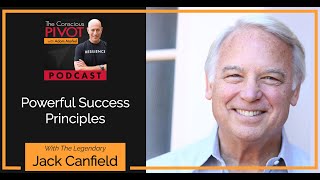
Jack Canfield, co-creator of Chicken Soup for the Soul, discusses the success principles that shaped his career after the book was rejected 144 times. He shares daily rituals like the Hour of Power and ECHO meditation, and introduces a new workbook that distills 67 principles into 17 core chapters for practical application.
Questions this video answers
March 1 (debut date mentioned in episode).
3,000 books (self-reported).
144 publishers (over 14 months).
About 400,000 copies (reported sale of the book written during doctoral studies).
First edition: 64 principles; revised edition: 67 principles (three added chapters).
Chapters
Welcome to the Conscious Pivot Podcast with international speaker, business mentor, best selling author of Pivot, and your host, Adam Markell. The Conscious Pivot shares the stories and wisdom of people who have successfully reinvented some area of their business and personal life. You'll gain powerful insights into how you can fully embrace new opportunities, increase your performance, and master the art and science of innovation and resilience. So please join Adam as he guides you on your Conscious Pivot.
Hey, everybody. Welcome back to another episode of the Conscious Pivot Podcast. I'm your host, Adam Markell, and I'm just smiling from ear to ear this morning. I know there's so many things that can take us into other places in our minds and a lot of dark roads that we can travel down on a good day, on a regular day. But certainly right in the middle of this pandemic, there's a lot that can take us out. And yet I have so many valid reasons to smile, and I know we all do. That's the truth of it. But. But one in particular, which I want to just quickly share with you because I'm such a fan of rituals and the power of rituals, especially when it comes to creating resilience, which is something, you know, it's very, very important for us all these days. I've had this ritual for about the last two weeks and I'd read this book and what's great this morning too is that I'm going to talk about a book to start, and then I'm going to bring on a gentleman, a man who I could call him a book guy, we could call him a lot of things, very positive things. And he's clearly a book guy for sure. I fell in love with this book a couple of years back and for those of you watching on YouTube, you can see it, I'll just give you the title. It's called the Greatest Salesman in the World. It's an old book by Og Mendino. And what's interesting about this book is it has a number of principles in it. He calls them scrolls. And there's a particular scroll that says, I will greet this day with love in my heart. And the book guides us, guides people, and even invites people like myself to read one of these chapters every day for 30 days before moving on to the next scroll or the next chapter. I've read the book before, I've really love the messages in it and very heart centered stuff. But what I love right now is that I'm getting tremendous benefit out of this consistent ritual of reading the same one chapter, kind of a my mind will, will, will resist rules often. And so this kind of a routine, if you will, that was forced, felt like a forced routine. I just rejected it previously, but now I'm doing it. And what I love about this idea of not just. And this is where I want to also be transparent. I have a good habit of greeting the day with love in my heart. This whole I love my life message that we really leaned into a bunch of years ago has helped me with that. But just yesterday, so you know, we had this very, very long online event that we did on Saturday, wonderful resilience event. And then I felt great when I woke up on Sunday morning. I greeted the day with love in my heart. And by middle of the afternoon I ended up in a confrontation with our youngest daughter. I've got a 19 year old back in the house. Randy and I were empty nesters and now we have once again kids in the home which is beautiful and also can be triggering and I know I must have triggered her and she triggered me right back and ended up in a beef with my beautiful youngest daughter yesterday afternoon. And I thought to myself this morning when I, when I hit the floor and then shortly thereafter got into this, reading this book and saying these words, I will greet this day with love in my heart. I wanted to amend it and add something which is that I will greet and sustain this day with love in my heart. Because I think in many of our spiritual practices and the paths that we're on, you know, our meditations and our best intentions and the love that we, that we want to show up with is, it's fine when we're in ideal conditions in an ashram or cross legged or in our yoga or in some other place on a sunny day even. But when things are tough, when there's another something that sort of gets under our skin or triggers us or whatever it is, that that's the time when that practice is really valuable and I forgot it. I didn't embody that practice yesterday in a full on yelling match with, with our daughter. So greeting the day with love is a magnificent way to start. Plant those seeds and I would say it's been a success principle for me. But to sustain the day and to maintain that love in my heart even in the midst of chaos or conflict or any kind of challenge, I think is really the thing that I wanted to open up today with. And it's the perfect lead because the gentleman that I have the honor to spend some time with is somebody I know A little bit for a number of years and highly respect. He's just a wonderful man. Has had a wonderful, I mean, with a capital W. Wonderful impact on the world through his books, through his teachings, through so many different things. And we're gonna, we're gonna talk about the success principles today, among other things. And I'm really excited for this conversation. So if you haven't already guessed who the guest is, it's Jack Canfield. None other. The co creator of the Chicken Soup for the Soul series. He has developed 42 New York Times bestsellers and holds a Guinness Book world record for having seven books. Seven books on the New York Times World New York Times bestseller list. Simultaneously known as America's number one success coach, Jack has studied and reported on what makes successful people different over the last 40 years. His compelling message, empowering energy and personable coaching style has helped hundreds of thousands of individuals achieve their dreams. He has been a featured guest on more than 1,000. I think he's done a thousand radio and television programs just in the last 30 days, but in nearly every major market worldwide. And I'm so happy to have you on the show today. Jack, welcome.
My pleasure. Before we start, I have to comment on something you mentioned. OG Mendino. One of the great fortunes of my life is I worked for a man named W. Clement Stone for a number of years who was the owner and publisher of Success magazine when OG Mandino was the editor. And so I worked in the same building as OG And OG was a guy who would work sometimes late into the night, and so was I. And occasionally we'd meet and we get to talk. And here I was in my 20s and OG I don't know, he was 40s or 50s at the time. And what an amazing man. Just a great mentor, a great, great teacher. So I have been more than fortunate to have some of the best mentors and just people I've crossed paths with. And so, you know, Napoleon Hill was a friend of W. Clement Stones and I got to be with. So just. You brought back a wonderful memory when you talked about Augmentino and this idea of reading a book over and over and reading one chapter. I've read 3,000 books in my life. I had to count that up one time for something, and if I had to do it over, I'd have read a thousand and studied them more deeply. But you do see patterns when you read a lot of books, which is good, but it's not. W. Clement Stone coined this term. He said, you don't want to end up with shelf esteem, meaning you don't want a bookshelf full of books you read, but you never did anything. So it's really about the commitment to actually do the work that's in those books. And so anyway, enough said.
Well, I. Doing what you know, is a big. Is a. I would say if more people. And this is actually working on a subtitle for our next book as well. And it, it is that concept of if people just did the things they know. So we're looking at what the unradical pivots are in our lives, the unradical rituals that we can adopt. And some of those things that are not radical at all are just taking advantage of what we already know, the things we've already learned. Not to suggest we should stop in any way seeking out new things. But if we just applied even a fraction of the great advice that we've gotten from mentors or our grandparents or people along the way, right. Wouldn't we be in a very different place, Jack?
We would. We've all heard we should eat a better diet, we should not smoke, we should exercise, we should meditate, we should do X, Y and Z. But so few of us actually do that. And so it's not about knowing, it's about doing. My mentor, W. Clement Stunn, always said, you know, first you have to assimilate it, then you have to apply it, then you have to persist in applying it. You know, it has to become a habit. It has to become something that's almost unconscious. You know, I don't have to think about brushing my teeth twice a day in the morning and before I go to bed. It's just something I do. And if I don't do it, I get out of bed and do it. Because it's just so much a part of who I am. And so it's not just what you do, but who you be in the process. This.
Yeah. And like so many of the other seeming paradoxes, which are, which are fun to look at. That's one of them, right? Because we're such creatures of habit and, and the, the idea of brushing our teeth, that's, that's one of the, those, you know, really simple things to look at. Because if you just choose this week to brush your hand, you brush your hand. That's funny. Brush your teeth with the opposite hand.
We're all washing our hand, right?
That's why so many wash so many times. I don't know if I have any skin left from all the times I've washed Right.
I saw something the other day. It said, my hands have had so much alcohol, and I'm gonna have to go into rehab after the coronavirus ends.
Your bio, I love starting with this question. So I want to ask you this as well. Your bio is significant. It's a great cv, as we like to say sometimes. What's not a part of that introduction that you would want people to. To know about you, Jack?
Well, God, so much. I mean, I grew up in West Virginia in a home where my dad made $8,000 a year. He was not wealthy. In fact, he was kind of anti wealth. He thought wealthy people screwed everyone else over. And so he was kind of anti corporate, anti wealthy people. I had to learn from W. Clement Stone that wealth and success were not four letter words and that it was okay. One of the things he had us do one day was go down to the stock exchange, and as all these rich people were coming out and getting into their limos, we had to go up to them and thank them for being a model of wealth so that we realized that that was possible for us. Now, for someone who grew up in the 70s and was kind of countercultural and had a beard and had a father who was anti corporate, that was a real stretch. But anytime you resent somebody for something, you'll resent yourself if you achieve the same thing. And so it's really important to. You know, you teach a lot about love, that you unconditionally love and accept everybody, even though they may be doing things you don't fully agree with, but in the process of rejecting them, you're rejecting parts of yourself. And often, you know, you're rejecting a part of yourself that could do good things. I love Bob Proctor's quote where he says that if you don't have money, the only good you can do is where you physically are. If you have a lot of money, then you can build schools in Africa, you can feed the homeless people in your. In your community. You can teach people to, you know, job skills in. In India, whatever it might be. And so I really think that abundance is part of the universe. You know, we see. I look out of my window, I see an abundance. I have 58 trees on my property. So everywhere I look, there's trees, there's. There's oranges growing, there's limes growing, there's avocados growing, there's lemons. I live in Southern California, and. And nature is abundant. There's millions of leaves on one tree. And so we are meant to be prosperous. It is A aspect of what's in everyone's potential. And if you can come to grips with that and learn the skills, you know. I did a very interesting project last year.
I wrote two forwards for books that.
Had the word billionaire in it. One was the Billionaire Secret, written by a guy in Poland who interviewed 21 billionaires. And the other guy wrote a book called From Homeless to Billionaire. And he literally was homeless at 19 on a beach and by 35 he was worth $3 billion.
And basically they teach principles.
All these rich people, you interview them and one of the things I thought was really interesting was the people that were the billionaires, they all got up.
Before 5:30 in the morning, they all.
Meditated and they all exercised. And all but one of them read.
Voraciously for at least an hour a day.
Sometimes on their private j, sometimes in.
Their bedroom at night, in the morning, whatever. So you can start to look at what are the behavioral patterns and habits.
Of the highly successful people and then.
You can learn from them.
And if you do what they do.
You can achieve the same things they achieve. Tony Robbins has that great quote that.
Success leaves clues which is left in.
The books like I write and you write.
It's left in TED talks and TEDx talks. It's left on Masterclasses, which is a.
Wonderful series now that you can subscribe to on the Internet.
There's no lack of information about what works. So the Met, the question is, are you willing to be a student and.
Instead of watching the third season the.
Breaking Bad, would you rather watch something that's going to uplift you and take you to the next level?
Indeed, the, I think it's the huna, the, the Hawaiian saying that you bless, bless that which you want because. And that's such a beautiful, beautiful way to express it because anything that we, we resent, we can't have. We, anything that we are resentful of, we are negating. And therefore it makes it that much more difficult to have it.
And we're pushing it away from ourselves as well as from, you know, the people that we love.
It's so many of the things that certainly I think when we look at anyone's life, if you examine the lives of people around you, you'll see that often it's the self fulfilling prophecy that the things like. So my dad was a creative, is a very creative person as a writer, fiction writer, but also looked very suspiciously and still does at people with money. So my dad's never had a lot of money. He's done decently well and mostly because I think my grandmother was more thinking about money. So she set things up and therefore he was okay with, you know, to just be in that space of his creative writing. But it really is so powerful the way that we will create exactly what it is that we are telling ourselves one way or the other. Jack, you've created tremendous success. So where did it start for you? I know you and I both went. I was an undergrad at UMass Amherst, which is this wonderful school in the middle of Massachusetts, Pioneer Valley. And you were a grad student there, right? At some point?
Yeah, I was in a graduate school of education for a lot of years. I was working on my doctorate, which I never finished. I made the mistake of writing a best selling book while I was still a doctoral student. It sold 400,000 copies.
That's a mistake of a sort.
Started getting invitations all over the country to come and speak about this book called 100 Ways to Enhance Self Concept in the Classroom. I began to wonder, why am I writing a dissertation? I thought the doctor would be the thing I needed for credibility. But it actually was the book and the activities in that book were working. And so I've always been a collector of practical tools that you can apply both in the classroom, in the corporate world, in your own life that would give you more success. So when that happened, I just realized, you know, I don't need to do that. So I dropped out of my program all but dissertation, and never did a dissertation. I thought, hey, write a book, you make $400,000. That's a little bit better than writing a dissertation and getting a plaque on the wall, you know. So, yeah, I continued to write books.
Was that. Was that book a precursor to the success principles? Is that.
It was in a sense that, that my definition of self esteem was being lovable, capable and significant. So you talk a lot about love. It's. So if you feel lo, you're included. People like you, you love your body, you love your emotions. You know, you're not told that it's not okay not to cry or to be angry. You're not judging yourself for being too much of this or not enough of that. And then the second part of that is capable. Are you able to achieve the things you want? Do you have the competency and the skills and the abilities to achieve, you know, the things that are important to you? And then the third thing is significant, you know, do you matter to anybody? Do you make a difference in the lives of others so that, you know, you could be significant to your Parents to your children, to your community, or to the world. And so what happened was as I started to do this work with teachers, training them in this work, one day I was working in this school and this principal said, you know, my husband owns a company, you should go over and say the same talk you did today to them. And I said, I never worked in a company except as a floor sweeper in a General Electric plant one summer between college and graduate school. She said, they're just big kids in suits now. You go over and work with them. And she was right. You know, you don't change just because you graduated and started working in a company. It's the same psychology. So I did that. They loved it. I started pivoting more of my work into the corporate world, into personal development seminars for the general public. And that took off. And people in general. I started by doing self esteem seminars, which was including the lovable and the capable. And little by little, corporations wanted more of the capable. You know, teach our salespeople how to be more successful, teach our managers how to manage. So being a loving being makes you a better manager. Caring about your clients makes you a better salesperson. You're teaching from your heart rather than from a need of like, oh, I got to get a sale. But the competent part, you know, how do I achieve my goals? How do I get healthy? How do I create great relationships? How do I master money? That became more of the focus.
Yeah, integrating heart and head, especially in the public, in the speakings or in the facilitation space is really important. That's a. We train, our company trains people to do TED talks and deliver. Now a lot of virtual trainings and one of the big hurdles with the virtual training is just what you're talking about. How does it. You convey information effectively, but still be able to engage people at the. In the one place that regardless of whether you're the CEO of a huge company or you're somebody that just lost your job, we all come from our emotional place. We were feeling beings. And to be able to engage a person at that level was very different than speaking strictly to the intellect.
Absolutely. Yeah. You have to speak from the heart to the heart as well as to the head. And when they're integrated, as you know, then you have wisdom, you have the ability to be successful in a lot of ways that most people never achieve. But I think the key thing for me that I've done because I do experiential trainings as you do, is how do we keep doing that on Zoom calls and in Facebook lives and all that kind of stuff, which, you know, we've mastered a little bit because we've had to pivot very quickly. How do we keep people engaged? Through chats, through questions, through polls, through experiential exercises. You could literally get up and have people do Chun Yi's, you know, qigong exercises right in front of their computer. You can put everyone on mute and have them speak out and do chants and visualizations and repeat affirmations, lead guided visualizations and so on and so forth. So I have a funny feeling because we've all. We've had to cancel two major trainings with about two or 300 people in them, and then I've lost five or six speeches I was supposed to do, one of which I delivered by Zoom to a whole church, 300 people at home. So we kept the contract, but we're now moving all these people into a year long live program which will be teaching the success principles over a course of the year with a lot of engagement, a lot of challenges, a lot of homework assignments, a lot of Facebook community chats, and also baking people into small groups on Zoom and so forth. So I'm starting to think maybe that's really what I'd rather do in the future than show up all over the world, travel to Iran and Iraq and all these places where I've been doing seminars in the Middle East. Do it by Zoom. Saves everyone money and time and reach just as many people. You can't hug somebody, but literally I've said, imagine if you were with your partner, give them a hug, and they go like this. They look in each other's eyes and it still communicates in a very powerful way.
You know, we had Luann on the show and just maybe and gonna hope I don't botch her last name. Bueller. Luann.
I know who you mean.
Yeah, yeah. So. And she has. I knew I'd screw it up, but she has an eye hug across America. You know, her eye hug movement. So you couldn't sort of get a bigger blow to the eye hug movement than.
Right.
You know, of all the things that have been affected. But what's interesting and she shared this with me is the sign language for Ihook is this. So on a Zoom with a podcast, we express this hug this way. And also created just a. Took a moment to feel into a virtual hug. So I'm gonna. I'm gonna hug you right now. Jack, we've hugged before because we, you know, each other. But even if, even if that wasn't the case. I mean, you can feel someone else's hug. You can feel it through their energy of their heart, their eyes, their smile. Right. So I think all of that is possible. And the world will not go back to the old, new normal. It will be a very new, new normal. And in many ways, I agree with you. I think the opportunity to impact in a positive way, more lives across a greater geography, and not so much without risk, because I don't want to. I don't want to lean into the fear of it, but just the expense and the income, you know, a very efficient way to have the message be felt.
I think there will always be live trainings and there will be conventions, and there'll be conferences, and there'll be sales gatherings and all this kind of stuff. I think it'll be. I think there'll be a little less of that. I think more will happen online. I do think there's something radically powerful about having a thousand people in a room all focused on the same thing. The hallway conversations that occur, which are really important as, you know, the group intention, where you get all the energy. And there is something about a physical hug. I mean, we can send each other a hug and we can look into each other's eyes. And I feel good just doing that right now. But when the two biomagnetic fields come together and amp each other up, there's something about that that is a new physiology that, you know, perhaps we can figure out how to do that without it. But it sure feels good when you do it.
Yeah. I want to talk about the Success Principles now as well, because there's a companion workbook that has. It's officially out. Is that right, Jack?
Yeah, yeah.
It debuted on March 1st.
Beautiful. So share a little bit about what the workbook is intended to. To do to elevate the message of the underlying book. And then let's talk about resellers.
This is what it looks like. It's got a picture of me on it. And just to take off on the picture of me on the first book called the Success Principles. But what we did, and here's the nice thing about it, it's much thinner than the original book.
Wow.
The first book had 64 principles in it. The revised edition, 67, because we added how to be Successful in a Digital Age, a chapter on leadership, and a chapter on networking with Ivan Meisner, who, you know, who run BNI Business Network International. So in the workbook, there's 17 chapters. Each chapter represents one or sometimes a combination of two principles. And the workbook is, I really wanted to call it don't read this book. Because I don't really want you to read it. I want you to do it. And so the point is, everything in here, I give you enough background that you don't have to have read the original book. Then what you do is you just do the exercises. Some of them are paper and pencil things, some of them are reflections. There's a couple places where there's a URL and we actually lead you through a guided visualization like how to find your life purpose, things like that. There's some meditations in there as well. But Basically it's a 17, you could say week course or if you do, some people have actually gone through the whole workbook in a couple of weeks because they're just type A type, like to rush through things.
And they got a little time on them. On their hands.
Right? They got a lot of time on their hands. Exactly. And you know, we've already getting five star reviews on Amazon and so forth. I was excited, Adam, when I found out the book sold out on the first two days on Amazon. And they're restocking it, but they're restocking it slowly because of the fact that there's so many items now being ordered on Amazon because everyone's ordering online as opposed to going to their local stores. But they went back to the press to print another 10,000 books just this week. So that's really good. But the key here is it's really a workbook. It's a book to work through. And each of the activities creates aha experiences. Some help you planning things, some having mental breakthroughs or heart breakthroughs, if you will. So that when you come out the other end, think of it as a car wash, you're just not the same person. And I recommend people too. If you can go through the book with a partner, could be your spouse, could be a son, like your 19 year old daughter you talked about. Whatever. By the way, I have to insert a little piece of humor. I saw this thing, it said, started homeschooling today. Two students already suspended for violence and one teacher fired for drinking on the job. So I could totally relate. But the idea is if you go through the book with a friend, either online, Skype, zoom, call in the house, whatever, you'll have someone, you can hold each other accountable and you can share what you're learning, which is also very valuable as you go through. So we took the 17 most core principles from the first book and here's the cool thing.
I had interviewed over 750 people in the last 20 years to write that first book. Successful entrepreneurs, generals in the military, movie stars, Olympic athletes, professional athletes, et cetera. And what are the principles that these successful people all live their life by, including myself. I didn't want to just be me. I wanted to make sure they were.
Universal, which they are.
And then we said, what are the practical ways to Velcro these into your consciousness, into your behavioral habits? There are only three things you do on a daily basis. You think thoughts, you visualize things. Positive, we call it goal setting. Negative, we call it worrying. And then a third thing you do, you say things and you do things. So behavior, images and thoughts. So what are the behaviors, the images.
And thoughts and thoughts of successful people?
And we take you through that. So you've ended up with a vision.
You've turned that vision into goals.
They're all aligned with your life purpose. You've learned. What do you have to ask for to make that happen? What limiting beliefs do you need to remove and replace with positive beliefs? And how to do that, how to use affirmations and visualizations to turbocharge. You know who Sherry Salad is? She used to be Oprah's producer and then she was the head of the own network, own Oprah Winfrey Network for a while.
And I've been on her show now.
Three weeks in a row where they've taken this book. And every week she and her partner Nancy go through two of the chapters and they do the exercises. And then we get on her show, which is a half hour show, and we talk about what epiphanies they've had and what they're learning, any blocks they might have come up against. And here's two people, Sherry Slaughter, one of the most successful people on the planet, running Oprah's network, right? And she said to me, jack, I've been visualizing wrong. You just taught me the correct way to do it. I thought I knew everything about affirmations. I didn't. So I throw these words out and people go, oh, I know that, I know that, I know that, I know that. But are you doing it correctly? You know, they always say practice makes perfect. Not true. Perfect. Practice makes perfect. Perfect. And a lot of people are doing things incorrectly. So as you've heard me say this, if you know the combination to a lock, you can unlock that lock. Your 19 year old daughter could do it. A kid who's 5 years old could do it. As long as they have the right Numbers in the right order. But if you're missing one number, doesn't matter how hard you work, that lock will never open. And a lot of people are missing key nuances and points about this lock, this combinations lock called success, which we put into the book. And so as people go through it, they get there. What we did was we took 30 people who'd never done this work before, gave them a copy of the original manuscript, said do the book. They were unfamiliar with my work, they weren't on anyone's TED Talks or anything. And they came back several months later and said, I've doubled my income in two months. I've lost £20. I got out of a crappy relationship or I improved my relationship. I finally got my husband to go into therapy, you know, so we know that the workbook stands alone as a workbook. And if you read it in conjunction with the original book, that's even better, but it's not required. So I don't like to be. What's the word? Salesy. But I will tell you that if you read this book, it will change your life. Such to the point that if you buy a copy which costs you about five Starbucks coffees, you can't go out and buy those anyway right now. Do it at home and you don't get the value you want, you just call me and I'll send you back the money you paid for the book. That's no problem.
Will you send them a Starbucks along with it?
I don't know how you send coffee through the mail, but we can probably get a Starbucks. What do you call this? Gift card.
I like it. We're onto something, Jack. I want to shift or pivot, let's say shamelessly self promoting.
Is it a conscious pivot, though? That's what I'm. Yeah, yeah.
Is it a conscious pivot? Exactly. What about resilience today? How important, and I'd love to track, if we can, some parallel between some of those success principles and what it will help. What will help people the most right now, not just to bounce back from this kind of unexpected adversity, but how to utilize it. Right, Jack? I think that's the thing that in my lesser years of experience with this, but I've also had. I've seen some pretty low moments and I've seen some pretty high moments too, that more than anything in my own life and in the lives of a number of people, I've seen your ability to not just get back up from a knockdown is less of a determining factor when it comes to that word, success, then what do you do with. What did you learn and how did you apply what you learned to then create momentum so that that whole event becomes an opportunity of a sort. So your book, I know, will address that. I'm just curious what you think about the specific things that would help people to become more resilient now and even what your definition of resilience is.
Well, the first thing is resiliency is key. You know, the first Chicken Soup for the Soul book was rejected by 144 publishers over the course of 14 months. So, you know, it required resilience every time you got a rejection to say, okay, next, next, next, next, next, next. One of the chapters in the Success Principles workbook is about asking without asking and rejecting rejection. So we all going to get rejected. You know, if life was easy, we'd all be thin, we'd be happy, we'd be wealthy. It's not. It's a challenge. And a lot of people believe that life is a school. And you're here to learn lessons, and you only learn lessons by experiencing them. You don't build resilience by not having things to be resilient about. You don't develop courage without having things that you have to act courageously in order to survive. Self confidence is the result of surviving a risk. You're confident in what you do because you've done it enough times where the first time you're probably shaking, a little nervous. I remember I was a psychotherapist for a bunch of years, and my first patient, I actually wrote them, they gave me a check, and I gave it back to him at the end of the hour. I said, I now know why they call it a private practice. We're practicing here in private. I don't think I did that good a job for you. So you keep this check, come back next week. And he did. He came back for two years. But the point being that we have.
To have challenges in order to develop strength.
In other words, if you don't lift weights, you don't get stronger muscle. So I believe that honestly, the real purpose of life is mastery, mastery of your emotions. So we learn how to stay in a high vibration of love and joy, compassion, forgiveness, gratitude and love. I believe that we are supposed to master our ability to communicate, to enroll people, to be persuasive, convincing. I believe we're supposed to master how we relate to our resources, calling money and time and things like that. But you can't master these if you don't engage them.
And you're never going to be perfect when you start.
You know, I love the concept of fail. And you take the I and you put another line under, it spells fall. So we all failed to walk many times called learning to walk. I mean, if any.
If our parents had said you get 200 tries, after you fall down to.
200 times, you're on your own. Nobody ever did that. We just said, we're going to keep working on this until he walks. So why don't we have that same belief that I'm going to keep writing a book until I figure out how to make it a best seller. I'm going to keep doing this podcast until I get really good at it. I'm going to go out there and.
Work on relationships until I get really good at it.
You know, I'm on my third marriage. The first one lasted five years.
Second one lasted 20 years.
And I think we did a lot of good things. I think we outgrew each other. But I've learned now some things from each of those relationships. I'm now in my 20th year with my wife, Inga, and it looks like we're going to be together forever. I'm committed to that, using all the skills I've learned. I've studied John Gray and Allison and all these other people to be a better spouse. I've learned tools.
Like one of the tools that's in.
The Success Principles book that helps with.
Resilience is a question I learned from Dan Sullivan in his Strategic Coach program.
And the question is, on a scale.
Of 1 to 10, how would you rate the quality of our experience, the quality of the experience of our relationship this last week? So I asking you that every week and I get an answer from 1 to 10. I've gotten as low as a 4. It was not fun to hear that. But then the next question is the most important question.
What would it take to make it a 10?
And she said to me, this one.
I got a four. She said, number one, don't interrupt me when I'm telling a joke because you.
Think you can tell it better. Which I still believe I can, but I've learned that's not a great marital technique. Number two, she said, you, job is to put our grandson to bed when he's visiting. I don't care if it's the NBA playoffs. You know, I wake him up, you.
Put him to bed.
I don't want to have to remind you. Number three, I want you to take out the garbage without me telling you. Number four, have you heard about foreplay. I said, yeah, I know about foreplay. She said, you might want to revisit that.
Yeah, right.
It was her way of saying she wasn't really happy sexually at that point in our relationship. And so we had a long conversation about that, and we changed some things up, scheduled more time for things, etc. Got less mechanical, got more creative, and she's very happy now, you know. So the point being that I can't improve without feedback. And so most people don't ask for feedback because they're afraid of what they're going to hear. But in the case of my wife, she had told her sister, her mother, her women's group, someone at the nail salon she didn't even know. I'm the only person that could change it. So until she tells me, it can't get better.
And what.
Most people are afraid to give feedback because they're afraid you're going to get angry. You're afraid you're going to, like, give up or cry or walk out of.
The room or whatever, defend yourself.
And so we have to be the one that asks for it. And then only response you ever want to give, as painful as it might be, what you heard is, thank you for caring enough to share that with me, because it's courageous for people to give you that kind of feedback, even as a writer. What made Chicken Soup for the Soul so successful, Adam, was that we had 140 people giving us feedback on every story that showed up in a book. Now, we started with 20 people. It was an accident. We had too many stories. 120 the first book. So we asked our friends and family, grade each story on a scale of 1 to 10. Well, put it in an Excel spreadsheet. The ones that score highest will make it in the book. That became a very scientific thing of having Republicans and Democrats and Independents, Jews and Christians and Muslims, urban people, suburban.
People and country people, conservatives and liberal.
Old, young, you know, different generations, et cetera, black, white, yellow, brown. Such that if a story scored high across the board, we knew we had a universal story. Became very scientific when we did the third, Chicken Soup for the Teenage Soul. There was a whole school in California suspended classes for an entire day. All the kids read Chicken Soup stories. Not everyone read all the same stories. We had, like, about 2,000 scores that we had to put into a computer. But we ended up with a really powerful book because we knew these were the stories the kids loved out of about 150 that we gave them to choose from. So feedback. As Ken Blanchard, who Wrote the one minute manager said, feedback is the breakfast of champions. And then you have to be resilient enough to know you can survive any feedback. And that's another piece of it. You get strong. I haven't gotten a four from my wife too often, but when I do, I just have to take a deep breath and say, okay, you've survived this before. You'll survive it again. And I think one of the key things that everyone needs to know who's listening to this.
You have survived everything that ever happened to you. You have, or you wouldn't be listening to this now. You'd be dead.
And so the reality is we are much stronger than we give ourselves credit.
For, and we have to be willing.
To get out of our comfort zone.
I was watching a major actress last night being interviewed on tv, and she said something that comes out of one of my books, which was, everything you want that you don't have is on.
The other side of fear.
And first of all, I said, wow, I'm being quoted by famous people. This is cool. But more importantly, it's true that everything you want that you don't have is.
Just on the other side of what's.
Stopping you from going for it.
And it's called fear.
And fear is simply fantasized experiences of the future appearing real to you, because we can't tell the difference between a fantasized experience and a real experience. When I have people in my seminars.
I have them stand up, close their eyes, and imagine they're standing on top.
Of a tall skyscraper, and they have to walk to the edge of this terrace that has no railing and look down. And everyone in the group, after we do it, they said, oh, my heart.
Started racing, my palms got sweaty.
I was pulling back. They literally have a physiological reaction. So we want to use our talent for visualizing things to visualize our positive future, not our negative past. And the other thing is a whole chapter in the book on perseverance.
Not giving up, because you are going to fall down. You are going to fail.
The question is, how many times are you willing to do that? Now, there are people in the law.
Of attraction world that says if it's.
Too hard, you're swimming upstream. You know that song, Merrily, merrily, merrily, merrily Life is but a dream. Row, row, you're about to gently down the street. You still have to row.
But let's not go against what's the.
Highest good for you.
But I do think that we have.
To sometimes take some risks and do things that are Challenging and hard. I like to say, you know, suffering is optional, but work is required. And so I think that a lot.
Of people, you know, if you try something a million times, you begin to.
Say, what would I need to do.
Differently to get there? Give you one example. When we were selling Chicken Soup for the Soul and being turned down by 144 publishers, somewhere around the hundredth publisher, I learned another question from someone in.
A book I read.
And I said, what would have to happen for you to say yes? It's such a powerful question. And the publisher said I'd have to know I could sell 20,000 copies. Because if I knew I could sell 20,000 copies, I would be willing to take the risk. So Mark and I, my co author, Mark Victor Hansen, over the course of the next several months, every talk we gave, sometimes to 50 people, sometimes to a thousand people, sometimes to 2,000 people. We would put a piece of paper on every chair, so four reams of paper. And on each piece of paper was printed the words I promised to buy. Blank number of copies of Chicken Souvenir Soul by Jack Canfield and Mark Victor Hansen. My name, my address and my phone number. And. And we collected 20,000 promises. Raymond Aaron, who, you know, promised to buy a thousand copies for all of his coaching clients, which he actually did, which kind of shocked me, but he's that kind of guy, keeps his word. And so we took two banker's boxes full of these commitments to our publisher and said, here you said if you could sell 20,000 copies, you'd do it, so you now have 20,000. And then we also said, if you sell 18 and not 20, Mark and I will buy the other 2,000.
You have no risk.
And he said, okay. And that's how we got the book published, because we asked, asked, asked, asked, asked. And then we asked that question. What would have to happen for you to say yes? We never gave up the question.
The asking for feedback is where you find answers. That's the kind of irony of that whole concept of asking for somebody to tell you what's missing or not working. A lot of people don't want to do that. I know I have a hesitancy sometimes to want to get feedback, even on my, you know. So I've spoken so many times all over the world, and yet watching video of me afterward and going, going over it with the team to look for things that are usable and it's just agony. I mean, it's excruciating actually, on some level. But I've trained myself to Be able to deal with the discomfort and abide the pain, I suppose, because there's a creative opportunity that's right in front of us for me personally to improve, but also for us to do something that's valuable for the business. And not a lot of people are willing to bear that type of pain. I mean, it's, you know, feedback can be humiliating, which I'll just say this last thing about that is that sometimes it's. What you said is that you ask for feedback. And then we found too this has been helpful for me, is to help that person give you feedback by giving them a way to do it that is really honoring to them and to you. So we have three statements that we typically use when we're giving feedback to somebody who's training to be a public speaker and dealing with their fear and all that. And these three statements are what worked for me, what didn't work for me, what could be done differently. So when I introduced this feedback loop to my own speaking agent who'd been doing this work for 40 years or so, and I said, listen, when you give me feedback, if it's okay with you, and I promise I'm going to give you feedback in the exact same way, I said, I'd love it if you just put it this way. Instead of telling me what's not right, what you hated, what sucked, and, you know, any other thing like that, just tell me what worked for you. Not what worked as a judgment, but just for you, what your perception. Right. It's not a. It's not a right or a wrong, it's just what, how you feel. So what worked for you, what didn't work for you? That's the tough part for a lot of people. And then what could actually be done differently, which is so creative and it's so collaborative that, you know, we had some hard time at the beginning. He wasn't. He wasn't so keen on it, but he ultimately, after making fun, started to use it. And it's a really effective way for us to give each other feedback. Now, that's not personal.
Yeah, two things relates to that. When I'm training trainers and speakers, the question we have the audience give back to them is what worked for me and what would have worked better? So again, it's like you're getting the positives, you know, what worked? And then it's like, what would have worked better? And so then it's called and for me, we always say, what would have worked better for me.
Right?
Because some people might say, well, I didn't like your tone of voice. I wanted you to be more soft. Someone else, I want you to be more confident. So there's individual things that don't always match up.
Well, what's the truth?
Right? There's no one truth anyway, so.
That's right, that's right, that's right. When I first started asking for feedback when I was giving talks when I was training teachers way back when I would give them a two sided card and on the front of the card it was like what I loved about your session today and what my major takeaway was on the back is what I didn't like about it so much and what I would do differently and I would only read the front of the card on the way home when I'm busy sitting on the plane and only a week or two later would I read what was on the back. Because after I put on a whole day's workshop and I really given my heart, I was not interested in hearing a lot of people tell me I should have taken more breaks. I didn't smile enough.
You just released me. Because when we get our feedback after events, oh man, we go out to, our team will go out for dinner and we'll bring the feedback forms to the dinner. I'm like wait till we've eaten. Can we just wait till dessert before we hit it? You know.
But yeah, start with the positive stuff. There you go.
It's an energy, right. I think for the time we're very young, we are trained to receive feedback in a certain way. And I without over generalizing, I think a lot of people receive feedback as criticism and as judgment and have been humiliated and shamed at so many points in their lives, especially when they were in school early on. And it's your example could I don't think could be better than you know, even the worst parent we know there's some pretty awful parents probably shouldn't, should have had to apply for a license before they had kids. And even those parents, nobody ever looks at their kid who's to going crawling and falling down, you know, all the time and says that kid, that kid will never walk. That you know, no parent would ever say that. That's in, you know, an impossibility. So yeah it's. How many times do you have to fall to learn what's required to stand, to walk, to run at some point. And I don't think as complicated as it might or as maybe somebody might push back and go, you know that's a, that's one thing is Walking. And another thing is creating a business or succeeding at a book. And I'm going to. I'll push right back on that because I don't think. And I want to ask you this, Jack, are those two worlds so different? The skills, the tenacity, the perseverance of the child that just doesn't take no for an answer and ultimately ends up walking, as we all do, and that same older child, but with grown up clothes and shoes and, you know, a better haircut or whatever, you know, and that person that just will not take no for an answer when it comes to their dreams. Is there really a difference?
I think several things. I think people are born with different personalities. Some people are born with just this stubbornness. You could call it astrological. Maybe they're a Taurus. You know, you could call it past lives. A lot of people believe you come in with that kind of focus. I just wrote a forward to a book called the Boy who Knew Too Much. And it's about a boy who, everything we can tell, he's the reincarnation of Lou Gehrig, the baseball player. And when he came in around six years old, he started saying, mom, when I was big like Daddy, I used to play baseball. And she said, you mean when you're going to be big like Daddy, you're going. No, no, no. When I was big like daddy, I used to play baseball. He throws with the same hand as Lou Gehrig. He would only wear baseball uniforms six, seven days a week. I literally have a picture from his mother of seven baseball uniforms going into the wash. He would cry if you made him wear anything else. Anyway, the book is very compelling. If you love it, you should read. If you love baseball, you should read it. But one of the things was really clear. He came in with a determination to get back up and play baseball.
If you remember, Lou Gehrig got Lou Gehrig's disease, als.
And so a lot of these kids who come in with memories of past lives, they died young and they didn't finish their life. And they come back and they want to complete that life. And there's a strong desire to either play the cello or play baseball or paint. And we see these child prodigies. So I think that kids are different. You know, some kids come in with a strong drive, a strong stubbornness. Other kids come in more malleable, maybe more intuitive, perhaps empathic, et cetera, more easily swayed by the external world. I also think that a lot of kids are shamed very quickly. We all want our kids to learn to walk, that's kind of a given. Nobody doesn't want that.
But do we want our kids to be sexual? Do we want our kids to stand.
Up and confront us?
Do we want our kids to take risks that we don't think are good? Like maybe they're experimenting with alcohol or.
Drugs or they want to go away from home or they want to join.
The army when they're 18 and we.
Don'T want them to because we don't.
So all of a sudden we start shaming and say, you know, what's wrong with you? You know, we don't say, hey, you tried to do something, it didn't work out. What did you learn from that? Which would be a way of coaching. There's a wonderful book called Parenting as Coaching. Talks about when the kids are really.
Young, you teach them stuff.
Here's how you brush your teeth. Then you go through a stage where there's 6, 7, 8, 9 and you basically you're a monitor.
Did you brush your teeth? Let me see.
You know, you put them to bed. Now at a certain point you don't have to tell your 19 year old to brush your teeth. By then she should have known. But often we're trying to still tell them things to do when we should be coaching them. I had this when my son, he wanted to throw a party, I think he was about 14, something like that, middle school. And he wanted boys and girls to be at this party, which no parent.
Should ever do by the way, at that age.
So we had all the boys in.
One end of the house, all the.
Girls in the other end of the house. And, and my son wanted everyone to do what he wanted to do because it was his birthday party, right? And they weren't, they were kids, wanted.
To do what they wanted to do.
He got really pissed and he cried and he got angry and everyone was talking to each other.
And then in the middle of the.
Night, the boys were trying to sneak over the girls. My wife and I had to take two turn, you know, she had the left side of the house outside, I had the right side. So they couldn't sneak around until everyone was asleep at about 4:30 in the morning. Never do that. But the next morning I didn't say to my son, you shouldn't do this. I said, how was your party last night? It didn't work out so well.
What'd you learn?
Well, I learned that I can't tell people what to do. They're not going to do it. Great.
Anything else you learned?
He Told me one or two things.
That's great.
That's it.
I don't have to lecture him, I don't have to shame him. He already knew what didn't work. So we have to like stop shaming kids because the ones who are shamed. I remember I was in church school, in Sunday school, it was Christmas time and I was supposed to read a passage that said, jesus sprung from Mary's W O M B. I'd never seen that word. The only word I saw was B O M B bomb.
I learned to read phonetically.
So I look at it, I go, jesus sprung from Mary's womb. And everybody laughed. And I didn't want to read in front of people for another year or two after that, right? Because I felt like I was shamed. Everyone laughed at me because I was.
Was inadequate in that moment.
And so I think we have to learn and have people in our lives that say to us, it's okay to make mistakes. This is how you learn. If our parents had done that and our coaches had done that, we got all these coaches who never made professional baseball players trying to turn these 10 year olds into professionals so they can win, so they can feel like they're somebody, you know? And then all of a sudden, this poor kid. I'll tell you a quick story, one of my favorite stories ever. This is the best coach on the planet.
This kid, this kid, he's up to bait.
It's T ball, and he's a young kid, like maybe six or something. He hits the ball and he runs to third base. And all the parents are freaking out. And you could see the parents about to come out and just beat up on their kid. And he says, Johnny, he says, you ran the third base and you ran really fast. And you know, no one threw you out at third base. That was really cool. The guy threw the ball down to first base. So you really were intense and you hit the ball really hard. He said, I'm curious, why did you run to third base instead of first base like everyone else? He said, well, everyone that runs the first base got thrown out, so I thought I'd run to third base. He says, that's very creative. I like the way you think. However, if you want to score points, and I'm sure you do, you need to run a first base. That's how the game works. So tell me what you just learned. Okay, I'm really good. I'm fast, I hit the ball hard, I'm creative, but if I want to get points, I got to run to first base. He said, great. So what are you going to do next time? I think I'll run to first base.
Very good.
Johnny.
Go take a seat.
Now that's great coaching. No shaming. And so if we grow up that way, we know that we can fail at business. We can put out a brochure that doesn't work. We can redo it. Our website copy needs to be changed, whatever it might be. But if we're raised like in school, they do X's. Here's where you were stupid.
Stupid.
Right. Instead of checking all the things you did.
Red marker.
Yeah, red marker. And so what do we do? We start learning to avoid getting zapped. You know, Ken Blanchard, the one minute manager guy, said most people manage by zapping people when they do wrong. Hey, you're not wearing your safety helmet. Go put your safety helmet on. And then what do we do? Our whole life becomes a void. Getting zapped, you know, we're covering our ass. And so basically we're afraid. We're afraid to take risk because we don't want to screw up. You know, government workers. Why is nothing working the government very well. Because there's no benefit for work for you don't get paid more to do good. You only get fired if you screw up. And so what? The only thing that becomes the thing is called don't screw up. Why would I take a risk to help you move through the DMV faster? If I'm going to get fired for doing something like that, staying open 10 minutes more. No, screw it. I'm just going to basically say, no, I'm not going to do that. I don't care. I'm protecting my job as opposed to being creative.
It's a status quo. And we know anything that stagnates. I mean, even. Even this. And I know we're going to wrap up here in a couple of seconds. The. This particular event, the COVID took everybody by. Yeah. I mean, it's a million things we can label it. It just is a thing that caught so many people off guard. And it is a. It has shaken things up. And the status quo will never return to the way it was. Much like a Etch A Sketch. Remember when we were kids, had that Etch a sketchy shape and the whole thing changes so. And yet in the midst of there being so much fear about this, it's that it is the nature of the universe, that everything is changing constantly. The seasons, the days, all of it. And it's how things grow. It's maybe what is not to diminish the suffering that's genuine and happening For a lot of people right now, it may be the absolute most important catalyst for change that we've ever experienced. And of course, we don't know exactly what it'll all look like and we never will, really, but we can see it as an opportunity and coach ourselves. I'm to going want to not so much close a loop, but just follow the thread of what you just said. And that is that we can be our own best coaches. Yeah, let's be around people that can do that and help us as well. But what you just.
I would just add this. One of my coaches a long time ago taught me, when anything happens that's unexpected, you ask yourself the question, what's the opportunity that this is? Exactly what's the opportunity that this is? Because there's always an opportunity. Member Napoleon Hill said, in every adversity, heartbreak or. Or tragedy, there's a seed of an equal or greater benefit. So ask ourselves, I think we're going to learn to be more compassionate. We're going to learn to be more what's important, our families being home a little more. I realize I've been on the road too much. I've been pushing myself too hard in my life, taking better care of myself right now, meditating more, exercising more, eating better, et cetera. And we're seeing that there's some inequities in our culture. Why are black people getting more, dying more from this thing? We're seeing that the public health system doesn't work for everybody. The safety net isn't there. Most people are living one paycheck away from tragedy. And so we've got a lot of things to take a long look at. The sky in LA is blue right now for the first time in a century.
And in India, too.
I saw that picture in India in Delhi with the sky blue and the sky all brown. And I've been in. I was in Mumbai the whole month of February and I thought, like, how do people live here? They are so polluted right now. It's not. So we're beginning to see, well, what's possible? What should we be doing? Maybe we should be moving toward electric cars faster, getting off of fossil fuels, eating more intelligently. I just saw someone saying the meat supply is going to be in danger right now. Well, maybe everyone's going to have to learn how to eat intelligently with a little less meat that's actually healthy for people, you know, and also more humane and compassionate. And so I think that Every tragedy, every adversity is an opportunity. And like you said, not to belittle the fact that my CEO's brother in law just died from COVID 19. My nephew has COVID 19 still alive. We don't know what's going to happen there. So there's a lot of pain, a lot of tragedy. But as you said, you know, the other thing is only about 96% of people will die from this. That's, that's the big number. Probably more like 90, but I might have said that wrong. Only 2% to 4% of people will die from this. All the rest of us are going to have a flu. Could be intense, it could be mild, could be whatever. So we have to remember that most of us are going to come through this. But let's see what we're learning and how can we pivot to use your conscious pivot concept, we have to pivot to create a better life for ourselves now and to create a better life for ourselves and each other in the future.
Yeah. Jackie, you read the last question I always ask is what are the things you do on a ritual basis to take better care of yourself? And you answered that question. So is there one thing that you would say is if you wanted to impart a particular ritual that you have that you'd want to share with people now, is there something else that you want to add to that?
Well, I mentioned the hour of power of 20 minutes of meditation, 20 minutes of reading, 20 minutes of, of high intensity exercises like high intensity interval training or aerobics. But I'll give a shout out to one of our transformational leadership council members, Dawson Church, who teaches something called the echo meditation, which I've been teaching to all of my students. It's a 20 minute meditation that combines EFT emotional freedom technique tapping along with the heartmath breathing and some light moving through and some affirmations. Taught it to my sister the other day, had her go on Dawson's thing. She called me three days later crying. She said, I, I feel so much better now because it leaves you in a very high vibration and you want your vibration to be high. Your immune system is high when your vibration's high. So you're not, you're fighting off the virus, probably not getting it this way. And also it's just really good. Raises your immunoglobulins 113% in your saliva, which the coronavirus has to go through your throat or mouth to get into your lungs. So that's a really good thing. And so just go to eftuniverse.com and you can do the echo meditation. I've been doing that every day and it has been powerful for me. People say on a scale of 1 to 10, how are you doing right now? I'm always a 9.5 or a 10 just depending on what might have happened before they asked me that. But that meditation is very, very powerful.
So interesting. So I'm on the phone with my dad last night. He's 83 and we had done this resilience a thon over the weekend and my dad participated in quite a bit of it and he had to tell me that Dawson's meditation. So we had Dawson Church was one of our facilitators and he loved his meditation. We had Dawson. I think his podcast in sequence might be the one right before yours, as it turns out, Jack. So it's kind of a funny thing there, but there, there is, there's no question to me that creating our own peace, to be in a peaceful state puts us in a much better position not only to see the creative opportunities but to also not just weather this whole thing, you know, not just to survive it but, but to be present to where, where we'll actually thrive. And as you say, most people will be all right. And it would be great to go from just being alright to looking back on this and seeing, you know, what I, the changes I made to my life, to be home with my kids, to be able to see my kids at dinner. And my dad and I were talking about every night. You know, we grew up in a one bedroom apartment. Life wasn't perfect or anything but I saw my parents, they saw me, we spoke every night at the dinner table. That was just, that was a constant. And so many people right now have. It's been a long time since they had that kind of constancy in their relationships. And so I, I couldn't agree with you more. It's so important. So as we wrap up, I've so enjoyed this conversation. As always. We'd love to get your feedback. So we talked a little bit about that today. You can go to AdamMarkelle.com podcast to leave a comment. We'll respond to you directly. You can leave a review, you can subscribe. We'd love to. We live on that feedback. So thank you for doing that as we depart. But I'm going to remind myself and remind all of you of the one waking ritual that I've had for more than 10 years that just pays so many dividends. And it's so simple. And there's three parts to it. So the first part is that we'll wake up. So, Jack, did you wake up today?
I did wake up today. Always wake up.
Yeah, exactly. And we know there's a wonderful metaphor in there. It's not just about physical waking up, but waking up. Our consciousness being a little bit more aware and awake every day. If we can do that, the trajectory is a really good one for all of us. So tomorrow, my prayer, my wish and my hope is that we all get to wake up again. And in that moment where we're waking, where we're taking that first conscious breath of the day, can be aware of the fact that there are people taking their last breath at that moment. So it's a sacred moment. It makes it holy.
Not really.
Not religious or even spiritual, just something really important. And you can be grateful. Gratitude is sometimes difficult, and in times like this, it can be difficult. So step two, even for a few seconds, cultivate a feeling of being in appreciation for that breath, for your life, for your family, for others. Anything really. And lastly, the third step is to say something out loud. And Jack, before we actually turned on the recording, he and I were just chatting about this statement that's on my T shirt. Because we have a lot of T shirts with things that say I am resilient and pivot and different stuff like that. And the words that we have that we say out loud and even the words that we sort of display have a tremendous impact on us. And the first words that come out of your mouth in the morning, the beginning of the day, I think are very important. So maybe you turn and you say I love you to the person lying next to you. Maybe you turn and look in the mirror at yourself and say, I love you. I say these four words. They're simple and yet they've worked miracles for me. And those words are, I love my life. I love my life. What.
Can I say one thing?
Yes.
First of all, I love you. And I love your wife. And I love the life that you've created. I love the life I've created. And I don't want to end this without at least telling people where they can go to get my book, which is jackcampfield.com There'll be a pop up screen because that's what we're doing right now is promoting the Success Principles Workbook. So if you would like to do that and end up loving your life more, make sure you go to Jack Campfield.
Yes. And yeah, for those of you that have never, maybe it's the first time you're consuming one of these, one of our shows. There are full show notes that are available so every one of our podcasts becomes a blog so you can go there as well and click on links to be able to get Jack's book, get the workbook, etc. So we'll leave it there. And again, love, love to find out if you've got questions for Jack, questions for myself, please feel free to leave them with us and wake up tomorrow, feel grateful and love your life or say anything, really anything that makes you just that feels right in the moment. We had a wonderful woman on our show a couple of months ago and she wakes up and she says, I wonder what miracles are coming today? And I thought, wow, what a great way to start today. So Jack, it's always a pleasure and I, I know I'm not alone in saying we all appreciate you. So thank you.
Thanks for the opportunity to share. Appreciate it, Adam.
Thanks for listening everyone. We hope you now have the tools and greater insights to navigate your own Pivot. Help us inspire others by sharing this episode and leaving your comments over@adammarkel.com podcasts for more tips, strategies and support. Support as you consciously pivot into a new business and lifestyle you love. Join our Pivot community on facebook@pivotfb.com.
More from Adam


Mastering Strategic Communications To Navigate High-Stakes Environments With Chris King


Mastering Self-Leadership Through The Conscious Habit Framework With Amy Woodall




Optimize Your Performance And Vitality Through Advanced Metabolic Health Testing With Mauro Stara

Cultivating Audacity: The Audacious Path To Success With Anne Marie Anderson
