Reintegrating Our Purpose And Adapting To The New Normal With Patty Aubery
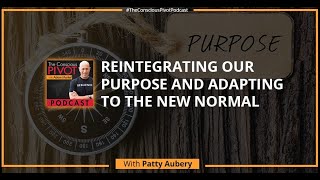
Transcript of a Conscious Pivot podcast episode (recorded May 19, 2020) featuring Adam Markel interviewing Patty Aubrey. The conversation traces Patty’s role with Chicken Soup for the Soul and Canfield Training Group, her experience building a business while raising a family, and practical guidance for adapting during COVID‑19 — emphasizing permission, presence, simple rituals (meditation, diet, movement), and organizational practices for resilience. The tone is candid, practical, and motivational.
Chapters
Welcome to the Conscious Pivot Podcast with international speaker, business mentor, best selling author of Pivot, and your host, Adam Markell. The Conscious Pivot shares the stories and wisdom of people who have successfully reinvented some area of their business and personal life. You'll gain powerful insights into how you can fully embrace new opportunities, increase your performance, and master the art and science of innovation and resilience. So please join Adam as he guides you on your Conscious Pivot.
Hey, everybody. Welcome back to another episode of the Conscious Pivot podcast. I'm your host, Adam Markell, and I feel very, very blessed in this moment. Blessed for this moment, really. The more I have time on my hands, I think that's one of the things that is truly a blessing that was kind of forced on all of us, is to just have a little extra time. And time is a tricky thing. I really believe that because we've made ourselves collectively as a world so busy. And I know that culturally that's different across different places. And some of you may feel that's true and some of you may not, but I'm from North America and grew up in New York and then moved to California eight or nine years ago. And yeah, just people are so busy. We've been so busy and to have time on our hands and to use that time fruitfully, including in regard to how it is that we reset ourselves. What's the creative opportunity with that time for us to go in, go inside, dig a little deeper, find out a little bit more about what's important to us in this moment, what's our potential? There's so many places to go. I think more often than not that's a scary endeavor. And so I'm just sitting here in full appreciation for the time I've had and the ability to go into those places and explore. And some of that exploration, for sure, is without full clarity. And some of it has produced just these moments of tremendous gratitude and the kind of gratitude that produces even the physical reaction for me, which is to cry. I mean, I get my eyes water pretty easily these days. So I'm feeling happy in this moment to be sitting here and be healthy and have a really wonderful person that I get to spend some time chatting with today. And you guys will all get to experience her wonderful energy. She's vibrant, vibrant person. And I've known her for several years through an organization we're both part of. And she's truly a leader. This is a woman who has been helping, she's changed a lot of lives and she's Run a company that's changed a lot of lives and done some really incredible work. As the president of the Canfield Training Group, Patty Aubrey has not only overseen the growth of the publishing industry's first billion dollar brand, which is quite a mouthful to say, but the Chicken Soup for the Soul brand is epic. She's also created multimillion dollar training company around the success principles of author Jack Canfield. Patti has expanded those live trainings and coaching programs to more than 108 countries around the globe. Prepared thousands of thought leaders and emerging thought leaders to become successful trainers to develop professional careers in the transformational field. She's the number one New York selling author herself. She's the CVO of goalfriends, which is now dedicated to bringing her experience to women entrepreneurs, sales professionals, corporate employees through live events, retreats, women's summits, speaking engagements and teaching audiences in small groups. The principles of success and strategic career planning. That is absolutely a mouthful. And what, what an incredible CV that is. What a beautiful bio. And so I ask you, Patty, what's not written in that bio that you would love for people to know about you?
You know, Adam, if I told you, I'd have to kill you. So.
Well, feel free from where you're at. I'm going to take my chances.
I think the one thing that's not in that bio that's really important, I don't know who's listening, but during that time, and even when you read it to me now, it sounds almost unreal to me, but I was raising a family. So when Chicken Soup for the Soul started, it wasn't when it started. We started in 1989. And so just like in 2020, we're experiencing some interesting times. 1990, 91 was that first Gulf War. And so here I are writing this book and we are so excited and we're gonna change the world. And then the world just like dies on us basically. And so it took us about four years to actually publish that first book and then another year and a half to get it on to a list when we didn't really know what we were doing. But at that same time, I got pregnant with my first son who's now 25. And so it was one of those defining moments in your life where this thing you've been telling all your friends about working on forever, they think you're completely insane. Like, what is that chicken soup thing? And stop talking about it. And then suddenly it's like, oh my gosh, I'm pregnant. And you know, my husband automatically Things like, oh, you're just staying home and be a great mom. Are you kidding me? This is my dream. And so I guess that was probably the piece that a lot of people didn't see was how do you raise a family, continue to build a business, be available, give yourself permission to ask for help. You know, all those struggling with guilt and should I be doing this and should I be doing that? And all the things that show up for us as parents, you know, when we're trying to build our kids future at some level. So that's probably the piece that was missing and was probably the hardest piece of all. Really?
Yeah. It's really interesting, Patti, because the whole process, the creative process, is very much like a birthing process. I've not given birth, clearly, but I've witnessed four births. I've witnessed that both beginning, middle and end of that whole thing and how excruciating that can be and how beautiful it is at the same time. And clearly there's some parallels between birthing a business idea like Chicken Soup for the Soul or any other business idea that is very much sort of parallel to what pregnancy is like. Would you my going out on too far a limb to say it that way?
No. I just wish that building a business only took nine months like it does to have a child. Because the older we get, the more we reinvent ourselves. Was it this hard the first time? You know, so, no, I don't think you're going on a limb at all. It's definitely true. And I think part of where we're at in today's world is on the good side. On a positive note, is that we do have more time. Like you were saying when you introed, there is more time right now to get clear, to figure out why you're here. What's your. Why is it important? Are you doing what you love? You know, where have we been settling? You know, I think our culture, especially in America, is like being. We're so busy being busy, sometimes we don't even know why we're busy.
Yes. To avoid ourselves. No, I don't want to answer that question for everybody, but to avoid things. I mean, for sure, it's we. The things that have typically kept us busy for most people right now are keeping us less busy, let's say. And so that that additional time to use in some way. So let's go back for a moment. I didn't expect we'd start here, but it's probably a good thing to talk about the way that book was birthed. Because it's this massive success today. But throughout that whole many years long process, there was no guarantee there would be any success at the end of the road. And you were juggling yourself parenthood and new parenthood and relationship, your intimate relationship alongside being a parent to a project that had no, you know, into a grown up. Exactly. Yeah. So can you draw maybe a parallel or give us a sense of the maybe some of what was going on then that might parallel what's happening today? And by that you mentioned the Gulf war. I remember 89 was the top. 88 or so was the top of the real estate market. We had a real estate bust. 5,000 banks, if you can imagine folks listening to this that are about RH, can remember this and maybe some not, but 5,000 banks announced SNLs went bust in the early 90s and real estate just took a complete crap. And people were very concerned. And this is also just a few years after Black Monday, the stock market crash. And when I got out of my undergraduate school, I went to UMass Amherst. It's actually funny enough that Jack got, I think his MA at UMass Amherst. And so I got out of there at 87. And the crash, the stock market crashed in the fall. It was the worst job market. So comparing then to now, the job market that young people are going to come out into or anybody leaving school is going to come out to is very similar to that job market then. It was just no jobs period. That was it. So you guys were dealing with stuff. What's the comparison, if you can make one, between that time of uncertainty and this time of uncertainty?
Well, I think they're very similar on a lot of levels. Although I feel like the world's evolved a lot more for this one. I think back then it was the most devastating thing you and I had probably ever seen in our lives. And so it was difficult. And what was really difficult was travel was canceled. Nobody was going to get on an airplane. People were freaked out. All of our gigs were canceling, no speaking events. And so basically what we did then is what I would hope we would do today, which is look at. All right, so what can we focus on? The event is we have this war. And so how are we going to respond? Are we going to respond with oh my God, that's it, close the doors, doom and gloom? Or are we going to continue to visualize what it can look like? Are we going to have a crucial conversation with each other and talk about we need to take a pay cut across the board, all two of us. You know, I joke. I said I think I was making $2 an hour for many years. But we then focused on getting the book done. And I think at some level, we were so far down the road with that book that we didn't really have any place else to turn. And we were also really committed to doing it. And so I think in today's world, it's very similar. You know, we can't leave our communities. You know, we're wearing masks to grocery stores. Businesses are falling apart. We're in the training business, so we're sort of a luxury. Although I think right now in today's world, it's more important than ever to keep your head on straight. And so a lot of it's similar. I think we're more mature now. We have a much higher overhead. We have way more team members. So there's a lot more at risk today than there was then. But we've somehow mentioned to continue to meditate. We have. Every Friday, we have happy hour on zoom with our entire team. From four to six, we have crucial conversations. We keep people updated on what's going on. We go the extra mile for. For all of our clients to make sure that they are heard and seen. So normally, if I'm doing a once a month mastermind group, now I'm offering it weekly just to keep people sane. And so I feel like as much as we are coming from a place of service, back in that time, we knew chicken soup was a game changer. No one else knew it, nobody believed it. We got turned down by everybody. But we were listening to feedback. So when Jack was out telling stories on the platform or Mark was telling stories, people were coming back and saying, oh, my God, that was amazing. We listened and we heard it. And so we created something from that. So I think while we're in this contemplative mode, it's really important to listen to feedback, to be on, you know, I'm on Facebook a little bit more in my private groups with my clients asking, what do you need? Is there anything I can do to help you? I took my monthly calls to weekly calls. You know, no extra charge. I'm really trying to come from a place of service. And so we teach this little simple equation called E R equals o. And so the E stands for event. Right now, the event is COVID 19. And so a lot of us, without knowing that the R stands for response, and how we respond is going to create the outcome that we have. And so as much as we want to blame other People for anything. I don't care if you come home and you're in a bad mood and Randy goes off on you. You know, that's like, that's an event, a response. That outcome is going to be called not going to be a very good evening. Right.
I could come up with some other things that would be outcomes of that. Exactly.
I know if you want to go there. Exactly. When you choose intentionally how to respond, you might still get that outcome that you have a lot more time for today. And so it's really important for us to not run away from our. I think we get stuck in our stories a lot. You know, we automatically something happens, we have a knee jerk reaction and then we can't fix it later. Sometimes we can, but in today's world, I think it's so important to remember that we can intentionally choose. So for me, for example, right now, this is the least I've worked in 40 years. I'm normally on the road like, like you and a lot of our colleagues, six months out of the year, whatever it is. Plus I add to that I broke my back seven weeks ago, so I was already quarantined. Was the only one in quarantine. I was two weeks ahead of the curve.
So you were having quarantinis before that was a thing.
Exactly. But at least me being quarantined, I could have visitors. Now I can't even have visitors, you know, so, but so once I was able to get up and start to move around again, it's like what can I do? So make. I started to make a list of what are my incompletes and what can I. Where can I go back and clean out my inbox. And I would do a challenge on Facebook with my own groups. You know, hey, let's do a two week challenge on who can clean out the most stuff. Like where are your incompletes and messes that you never have time for? Because especially in today's world, especially right now, the less chaos we have in our own lives around us. We both know Jim Bunch and he talks about the nine environments, but the more calm we can make our living space, the more less we have to wake up to with those little monkeys on our back that we didn't get to those undone things. So it's like for me, I'm just cleaning out closets, looking at getting rid of, unsubscribing to emails, being of more service to my clients, spending some quality time with my 22 and 25 year old that I thought would be gone by now. But are suddenly.
We had an empty nest for a little while and now it's freaking filled up again. And we're like, what the hec is going on here? Even our youngest daughter, she likes to. Yeah, I'm cramping my parents style and.
Right, right.
And at the same time I get to walk upstairs and see her engaged at the University of California, San Diego. And a lot of, lot of tuition dollars even in state for that, you know, wonderful school. And I'm getting to see exactly what she's doing and I get to poke my head in on her zooms and see her professor and all that they're up to. And, and we have dinner together every night, which is something that when she graduated high school, the, you know, there was a bit of a morning for us. There was no. We were up for the new normal for sure. But there was also, you know, a little lamenting the fact that yeah, the last of our little babies is out and we're not, we're not doing that every night again. And now all of a sudden we're doing that every night again. And so, yes, I'm curious, Patti, you and I are. We spent so much time in the, the human potential space that we know that habits are so powerful. More creatures of habit. And we've got all these sort of unconscious things that we do. This show is called the unconscious, the conscious pivot. Because we're making a distinction between the habit side of things, let's say, and the ritual or the more intentional practices that you've got. So I'd love for you to share with us some of the things that you do on a ritual basis or even things that people in your company are being encouraged to do for the purpose of building resilience. And I also want to get your definition of what resilience is as well.
Well, right now resilience for a lot of people is probably surviving. But I mean, I think for me, you know, it's essentially after breaking my back, it was a real wake up call. I mean, I fell at three in the morning and hit my head. It was a freak accident. Just getting up to go to the bathroom and I literally lay there like, oh my God, is this it? And so I had to start to really look at giving myself permission to put me first for the first time in a very, very, very long time. And so I think that's number one. It's okay for us to take the time to meditate or exercise or write a gratitude list or write a thank you note to someone or Call your parents or a friend you haven't talked to for a long time, but just try to do those things. I mean, of course I would say meditate every day when you can. If you can do qigong, do qigong. Learning Strategies has a great program for that. Keep your energy flowing because our vibration is so important. So it's a lot about that. So I try to do that whenever I can. I am not perfect by any means, but when I do do it, it's a whole different ball game. So those things are important. And then what I put in my body is really important. I noticed when my back got injured, I went vegan because I didn't want to have any kind of aches or pains, any kind of inflammation. And I remember I called my partner, Jack Campbell, as you know, and I said, I am the happiest person on the planet. I don't know if it's the drugs or the fact that it's the food. And you know, we kind of joked about it, but it's really amazing when we take care of ourselves how much less of a big issue. Things are like, this is a global pandemic, I get it. But you know, the healthier we are, the more grounded we are, the less it's going to affect our energy, our. We are connecting with. I mean, all of those things, they're small, they seem little, but they add up to be massive. And so I'm really trying to be mindful of that kind of stuff right now. Yeah, short question. Sorry.
No, no, it's a perfect. It can be as long as you like. I'm. I'm just taken by the first thing you said, really, which was permission, because we do a lot of research on resilience and speak to corporate groups and do quite a bit of that kind of consulting work. And one of the things that we've been saying for the better part of the last two years is that we're. There's a culture of exhaustion that's kind of used to be just North America. We were the workaholics. You know, there's some places where they still aren't perpetuating that, but I was in Japan in December, in Tokyo. And they're the most sleep deprived country in the world. Only should say second to Singapore, where I was a couple of months before that. And the cost of exhaustion is massive. And right now we've got this opportunity, among other things, to slow down, to reset. And yet in the midst of. And I'm just kind of tracking this, as I heard you Say it. Connecting some dots. We're being told to stay in one place. And yet a lot of people are still not giving themselves full permission to utilize this time for the reset, for the slowing. The benefit of being able to slow down so you can speed up, so that you can build resilience before you need it. And the fact is, we might need resilience now, but this is not the last disruption, the last change, the last thing that'll catch either us individually off guard or collectively as a world off guard again. So, yeah, what are we doing now? Has a lot to do, I think, with what you said about just giving ourselves permission to be put first. Yeah. Do you think? Well, I was going to ask the gender question. I mean, it's true.
No, I'll sit for you. So, you know, I think when we were in Hawaii together, we were talking about a program that I have called Permission Granted. And it was. And it was because events were happening and I was not responding with a choice. And so I was getting upset that women were, you know, seen and not heard and all these stories around, you know, men get this and that and the other. And the fact was I had to give myself permission to show up, speak up, and be seen. And I don't know if I shared with you, but my mom passed away in 2012, and on her deathbed, she said to me, please do not hide behind that man. You built this together. And I didn't raise a daughter to be invisible. And so I kind of went on this mission. The first few years weren't so graceful because I had a lot of resentment, a lot of anger, you know, playing the victim card of, why am I not doing more of this? Why is Jack not noticing that, whatever it might be? And I finally got like, wait a second. Like, I have to give myself permission, and I should be the example. And because of that, what I did to hold myself accountable was I created a program that was a year long. So I had to follow the program, which then, you know, 100 people are on. So they're counting on me to be the leader. So I kind of had to force myself into that new space. Because as much as this is still like, this is the decade for women on lots of levels, I still believe that we don't allow ourselves. We still. It's in our DNA on so many levels. And so to give myself permission to do it my way, to say what's on my mind, to have a different style, I'm very authentic and transparent. I use the F word more than most you know, it's like. But it's who I am. And I'm a valley girl because I went to San Diego State, so I'm one down from your daughter. But no, it's true. And so over the last four years or so of practicing this permission process, I think it's made it a lot easier for me because I think I would have felt like an alien had I not been like ahead of the curve a little bit for myself in the situation. Like I said, it has been 40 years of work, work, work, work, work, like hardcore. And so I started working at 15 and I met Jack at 24. So that is 30 years of being in self help where it is 18 hour days, travel schedules that are crazy. You know, not seeing your kids or your family, all that stuff. And so as much as this is crazy, what keeps me sane is that we're all in this together. And so how can we be of service to each other during this time?
What does permission look like for people that you're speaking to now? So our audience is built of people who are mid career professionals that are transitioning. Many, many women. A lot of entrepreneurs these days, people that had started side hustling before that was a term for folks that are going, all right, so my new normal, at least the new normal that's now what two months from now look like. But the new normal is I've got this, I've got time, and I want to utilize my time well. I'm somebody that, you know, at least to this point, has created my career, created my success or whatever results I've got out of being really, really productive. That is busy. Right? So how do we reframe that or help people to reframe, to see the creative opportunity that would exist now if, for example, they gave themselves permission to do things a little bit differently. Because that's what's being called out of all of us. I mean, on a universal level, whether you call it that this is a God thing or this is something else, the world has to shift. It's been given no other choice. So what do we do with it is really the question that separates the, you know, the wheat from the chaff.
I think I totally agree. I think for me, when I think of all the major successes I've had in my career, it's always come through something big. So whether it's, you know, I'm in a very deep meditation and I've been practicing really strongly for a month, I have a download of a new program or something like this happens And I, I'm grateful that I can just be in the space. And so I think when we're quiet and we let ourselves be, we don't miss what the universe is trying to give us anyway. And so often it's like, oh no, I'm going this way, I'm going this way. Like the horse with the blinders on, right? And all I can is the finish line. Yet there's this giant gorilla over here going, wait, we turn the finish lines over here. You got to go right. And we're not paying attention. So I think this is a massive opportunity to look at what is my why right now? Am I really doing what I love? Am I servicing the people I want to? Am I showing up for my family and my clients the way I'd want them to show up for me? And to be able to give yourself permission to just chill out, like we're all in this together tomorrow, God knows what it's going to look like. So enjoy the pieces that you can. Again, it's like in 2008, you know, I was in massive real estate and you know, markets tanking and all that stuff. But again, I used that same example. It was 2007. I saw it coming. The event was I had a 10,000 square foot house on the west coast of Maui that I had no business building. And so I was freaking out. I was in my stories and I went, wait a second. If I was consulting with a client, I would look at what is the opportunity that looks like an obstacle.
Yes.
And I sat with it and then I was, well, I would create a retreat center. And then all my self talk came in. You can't do that. That's selfish. It's your house. You are using it for the wrong reasons. Oh my God, don't make it about you. You know, all that stuff that we do. And I went, wait a second, this could be actually a really good thing. And that was 18 retreats ago. So I mean, I had that. I mean I literally could have gone bankrupt, like very simply on that one. And so when the universe is forcing us into the space, we must be as present as we possibly can. And we have to clear our mind. That's why mindfulness is so important. Probably you were at mindvalley and Singapore and like listen to headspace. Like do things that you always said that you want to do, but you're too busy to do. So take advantage of them now because the gift is in the presence, not the present. Not a gift, but it's being present. And so when we are there, we see things we wouldn't see, we notice things we wouldn't notice. And that's how I've had to sort of learn to live my life. And at the end of the day, I use this analogy a lot with my students. I act like I'm holding up like a glass box and I think I'm in control and there's nothing in it. And you know, and then it's like. And then you drop it and there's still nothing in it. And so we make up so much more than we need to right now. And to be able to live in the not knowing right now, a huge skill. A lot of people have a very hard time with it. But again, the more you meditate, the more you eat well, the more you get some exercise, the more you hang out with people that are going to stay on the half the glasses, half full side. I mean, it's really, it's like survival on a lot of levels for that. You know, you don't want to be putting diesel fuel in your Ferrari. It's not going to go very fast or anywhere.
The permission piece can even extend to how it is that we, that we are dealing with those unknowns or those uncertainties. Because the way we deal with it, most people deal with it is this worry. It's just this feeling of worry. And worry is hitting in the middle of the night when you get up to go to the bathroom, or it's hitting in the first thing in the morning or whenever it is. And we all know what worry feels like. But worry is. And I used to think so just call myself out on this. I used to think that you can't win without worry. So 18 years that I practice law, I used to say that. I used to say it to myself. I didn't believe I could actually win unless I worried. I call myself like I was a professional worrier. That's what people paid me to do. You don't have to worry. I'll worry for you. I will take on your bully, I will take on this issue, this problem, and I'll do all the worrying for you. So when you get up at 3 o' clock in the morning to use the bathroom, you won't be thinking about it. It will be me. I'll be doing that. So it's kind of a funny thing that the and I in this book 10% happier. I don't know if you've ever read that book by Dan Harris. There's something like the cost of security is uncertainty and Then he puts that into sort of the focus. And then ultimately, I won't spoil how the book ends, but he calls that into a lot of question. And I think the permission right now that I'm suggesting people take away, among other things you've said, is the permission not to worry, to give yourself the space. Because when you talk about being in the present, a part of what interferes with just simply being here now in this is that our mind is worried about the next moment. And three months from now. And, you know, in the law, it would be. We would.
We.
We'd hear this sometimes in the middle of an oral argument or in a trial that somebody would object to the thing he said because they say, well, assumes facts not in evidence or in a deposition. Somebody say it assumes facts not in evidence. And we assume a lot, like you said, our stories, we assume a lot of facts that are not yet in evidence. So to be free of that in the moment allows, as you say, this creative space. And space is creative. So permission not to fill our present moment with worry, I think is one of those.
Well, it's easier said than done. So let's call that up front, right? But here's the reality. If you believe in quantum physics, if you believe in the law of attraction, if you believe in vibration energy, it's all chemistry, it's all proven at this point. Do you want to create a future that looks really bad and do you want to reinforce a negative future? Because fear is just, you know, it's. It's just made up. It's not real. And so from a logical standpoint, what I do when I get scared, and I've had my share of hoping, my lawyer is losing sleep for me. I think about, well, is this going to get me closer to where I want to go? And the answer is no way. And so I have to do a shift and I have to consciously choose whether it means go for a walk, call someone that can help talk me off the ledge, whatever it is. But by visualizing a negative version of the future is not supporting you on any level. And so it's actually a total waste of time.
And so it's suffering, plain and simple. I mean, in Buddhist principles, there's this. I think the central idea is that everything is impermanence. So it's the law of impermanence. Nothing is going to stay the same and nothing's going to be here forever. Which is a tough, you know, that's a tough thing to live with day to day, moment to moment, to be wanting things to happen, have great goals and aspirations and all those things, but yet not hang on to them tightly because you're, You're. You're violating this more of a law of the. The world of the. You know that things are constantly changing and things don't last. Right? There's this, that whole. That saying, you know, this too shall pass is usually used in times like this, right? Or when someone dies or what have you, but it applies to everything. So you have a sunny day, everything's going your. Well, you know, your way, you couldn't have it any better. And yet that also is this too shall pass moment. So it's that tenuous, and yet it's also that perfect. So, Patty, you guys are dealing with stuff right now as a company. I'd love if you. Without, you know, making you have to or making you. But you can be as vulnerable as you want, I guess, is what I want to say. I don't want you to feel like you need to disclose anything you don't want to. Where is it that you guys are, as a team, giving yourselves permission now to show up a little bit differently under the current circumstances? Because you're able, I think, through an organization of your size, you're able to show a path to others. Not just the students or people that you work with, but as an organization that's been around a long time, you're also a model for others. So curious what that looks like for you guys these days.
So what we're doing is like I think I mentioned earlier, but we do happy hour every Friday on Zoom from 4 to 6, and then on Saturday nights, one of the gals that works directly with me, she. She creates some sort of like game board or cards for humanity or whatever and does it on Zoom. And. But what the biggest thing is we're listening. As leaders. I can live in amateur all day long. Like, I love it. If you told me I had to do the same thing for the rest of my life, I'd say, shoot me now. So I have to look at all the different styles that I have in my organization. They're all a little different. And we're looking at really appreciating those differences, you know, not finding myself irritated that someone's not like me, but recognizing that they need something from me. Whether it's words of affirmation or it's a hug or it's a phone call after a call to say, hey, I gotcha. Don't worry about this. We're being really transparent about the finances. You know, we've applied for loans in case we need them. Hopefully we won't need them. We've talked about if we did a pay cut. Do we all just want to do a pay cut across the board instead of getting rid of someone we're all in agreement with? Jack and I have done this before. We've been here. I mean, we, like. We know what it's like to not really have a lot. And, you know, when you look back at some of those times, they were the best times we ever had. You know, I mean, when you think of the struggles, when you're younger and you're raising the kids and you don't know where that next meal is coming from, or how are you going to pay for that private school you want your kids to go to, or whatever it is. Look back at those. Or some of the fights that we had. I mean, we were like. I used to say I'd go from one chicken coop to the other, and it was insane. I mean, you know, it was me and Jack and Mark and his wife, and it was like crazyville. And I was saying to Jack the other day, like, I'll never forget, we were meeting with our publisher, and we were in this Chinese restaurant in Vegas, and he got up and he flipped the table over, and all of our soups went all over us, and he stormed out of the room. Hey. That was a response to an event that he didn't like a minute before. And then they all looked at me like, well, he's yours. So he came back and he said, well, that didn't go very well. And so, I mean, to this day, we laugh about some of the craziest, hardest times where we are the most frustrated or we thought we were struggling. And so we have to look at that. And it's important to go back and look at some of those things and remind yourself. You know, like we say, celebrate your successes, but I always say, don't. You don't have to brag about all the things that you've had. Remember how you felt before you got it and how you felt after, how you were scared to death before and after, how maybe you went, oh, yeah, good, and moved on, and maybe you should have celebrated longer. And so it's like, we've all had milestones in our life. We've all survived different things. We just don't ever take the time to let them, like, celebrate them at some level, acknowledge them. And so that's kind of where I go if I get into Crazy Bill. I just go back and think about, oh, that was, that was interesting. Or, you know, someday, hopefully we'll laugh about this. And if we don't, we'll just be, we'll be more consciously evolved and we'll just be better people. And, you know, and again, don't watch the news. My husband freaked out, you know, the other night on my neighbor, and I said, honey, she's a scared mother. Women, when they get scared, they freak out on you. You're just a jerk. And so, you know, I was so mad at him the whole night. The next day he wrote a long email to her apologizing. But that's the kind of stuff that happens when we don't take a breath first. You know, we don't go, wait a second, this isn't about, we make everything about us. Have you ever noticed that? Never, right? So like something happens and I'm like, I screwed up, it must be me. So either get passive aggressive or I walk on eggshells. Or if I'm really in a moment where I meditated that morning, I say, hey, is there a story that we need to talk about?
Yeah, you know, there's a, there's a great question that I've been asking lately, which I'll share because it came from a meditation practice. And the question is, is this useful? So this idea of whatever's happening in the moment, and you pointed it out, when you can take a breath, for example, your breath in so many ways dictates your thinking, and your thinking then obviously dictates a lot of what you do with your body. But it all begins with the breath. And so even taking a breath and asking that question, is this useful? I mean, you could be in a full on shitstorm in your head and it's just spiraling and getting worse and we all know what that can look like. And the people that get involved and drawn into that kind of thing, you know, they're involved. They don't know, of course not. Except, except all of a sudden they got a pain in their neck. They're like 3,000 miles away, but they got a crick in their neck, right? It's because of you. It's like, is this useful? It's a way, as you said, it's kind of a hack to just stop that, arrest the cycle in its place. Because yeah, we, I mean, we're all built the same way. We all do a lot of the same exact things. And right now, more than anything, I would say, and this is the advice that I gave my son, son in law, just in the last month when they were, when this was first getting started and they were collecting supplies and going to get their tenting equipment from whatever the REI and a lot of other stuff I won't get into. But this was sort of survivalist. And you know what, I'm not criticizing anybody that prepared in that way. I'll just point out one thing which is that. We manifested, and you mentioned this earlier, we manifested the shortage, the shortages that we're seeing right now. We never in our lifetime, I mean we've been through a lot, a lot of cycles up and down in the economy. Everything you think about, have you ever, Patty, had trouble finding toilet paper in a store before this ever like paper towel ever happened for you? No.
In fact, I was going to go out and buy like take all the toothpaste off the, count off the shelves and just see if I could do.
Exactly. So hoarding, which is what occurred, right? Hoarding. People hoard because they're afraid there's going to be scarcity. And there was never any scarcity. We never had any trouble finding those basic essential things until all of a sudden people got it in their head that it's not going to be there and then they hoarded it and now it's not there. It created the exact scarcity that people were afraid of simply because they went into that place of reacting, not responding and mostly just driven by fear. But that breath is, I think, a really good, before you say something stupid, I'm married 30 plus years at this point. A breath before you speak is a good idea in relationships, right? It's a good idea with your business partners, It's a good idea with your kids. It's also a good idea before you choose to do other things. And I think that you really pointed that out, the value of that and then things like asking certain questions like what is the creative opportunity presented at this time? Before we started this, I said to you, we are doing a ton of virtual trainings now. I, in all honesty, having come out of that environment where you're physically in the same room with people and you can put your hand on their shoulder and you can, when they cry, you can hug them. I know Jack's got a huge heart. I'm not a small hearted guy myself. It just feels like it felt like there's no way we can create that transformation without being able to be, you know, like see people, touch people, whatever. And I couldn't have been more wrong. I could not have been more wrong. We just completed a virtual training for people that are getting on TED stages now. In the fall, not in the spring, in the fall, and it's in 2021. And I didn't think for any, under any circumstances that we could take them through the process if we couldn't be there to give them feedback directly, if I couldn't watch them, see their body language, have other people give them 360 feedback. And again, that wasn't. That was. I'm assuming facts not in evidence. So I don't know why this came up today, but it has. Because maybe 18 years of being a lawyer, finally, I'm leaning on that now. But it's like, where are you assuming facts not in evidence? Where if you didn't assume those facts and you had a clean slate, you could just decide, okay, great, we can't be in a hotel. How wonderful is that? Not that I don't want to go back to a hotel, but you know what? I'm good not eating hotel food. I'm good not paying hotel bills. I'm good not having to travel to get there to be able to help people. There's almost no limits now to the way we can interact or assist in just using this technology. Man, I know. Zoom has probably quadrupled the number of its users just in the last 30 days alone now. So you go, wow, it's true.
And think about. Because I just did a virtual. I was actually present and I. It was before that there was. Everything was like, really locked down. But Jack didn't want to be there because he's older. And so I zoomed him into my house, which is around the corner, and took off like a 14 foot by 14 foot painting and put him up on the wall. And I have to tell you, I felt like he was more present for the participants than ever before. And did you notice that? Because it's like, there's nothing getting in the way for you when you're doing that. And so when we tell ourselves, oh, that could never work, it's like, well, how do you know that to be true? And so I think that's what so many people do. Like, oh, that'll never work. It's like, well, how do you know until you try? And I say this to my kids. I'm sure you've said it a lot of times. Like, as long as you try something, you're not failing. The only time that you can possibly fail is when you just stop and give up and don't try anything at all.
Yeah. As we wrap up, I want to ask you, usually I ask a person what Their. What's one personal ritual that they have that helps them be more resilient? You can answer that if you want, or you can, because, you know, the work that you've been doing for so long is if there's one piece of advice. We used to do this on stage too. We'd say, so, you know, what's that one piece of advice you want to leave people with, which is a big question, but I want to give you the flexibility to go anywhere you want with that. And because, yeah, there's a lot of people right now who are leaning in, who are listening and are looking for, okay, I don't have to have all the answers. You know, what do you recommend that I do right now?
I would just say eat as well as you can. But I think the biggest thing, if I've learned anything over being married for 30 years and being in a business relationship with another person for 30 years is really, really taking the time to.
To.
Learn to appreciate the differences. Think about first time when you asked your wife to marry her. You learned everything about her. And 10 years in, probably some of those things annoyed you. And so it's like, look beyond that person and really look into that soul and be grateful that they're a piece of you that you aren't. You know what? Jack is so anal retentive in so many ways. Crosses every T, dots every. I. I used to be insulted by it. I would think like, well, wouldn't you think I'm stupid? And then I started another company, you know, that's like, just for women. And I said to him just a few months ago, I said everything I've ever yelled at you for in 30 years, I have made the same mistake in three. And I just want you to know I love you just the way you are and never ever change. And it was a huge epiphany for me, you know, because we, we were all the same. Life would be boring and probably kind of a shit storm, honestly. And so while you're with the people that are around you, while you're in this place, just remember that we all have different gifts and if we look for the gifts, we'll find them.
I love that. So appreciate. Look at where. Where is it that you can appreciate something today with someone that you're maybe in closer proximity to or maybe somebody that you're now not in proximity to that you, you really just like. My mom and dad are both alive and well, thank God, and they're on the east coast. They're 3,000 miles away. And we can't see him, my brother can't see the kids, grandkids, can't see them. And so, yeah, there's. There's such a wonderful. That's a. That's a great place to leave us, is in thinking about appreciation. I know that my waking ritual every day has been the same for more than 10 years. And that's where I want to leave our folks today, which is to remind myself, remind everybody, we, first of all, let's wake up. That is a good ritual, right? That's part. That's part one. We all get to wake up and that, you know, that's physical, of course. And it's more than physical because there's this profound opportunity that we use what's happening around it. We utilize what is old personal development, training stuff, utilize what is in the moment for whatever you can utilize it for. And that's, if nothing else, an expanding awareness and expanding consciousness that we get to have. I mean, we're aware of things now that we, you know, Steve Jobs, not Steve Jobs, Bill Gates gave A TED Talk 5, six years ago, is prophetic. You know, he's famous and infamous now for this talk where he talked about the pandemic to come. And so, yeah, there are things that we can be aware of that it's only grace that allows us to have this sort of moment to pivot in how we respond or how we prepare for things like this in the future. So awareness is wonderful. Wake up. And the second step in the waking rituals. Feel grateful for something which if you struggle with the morning, and I know some people do. I used to have tough time in the morning, especially when I was a lawyer. I hated what I was doing. I was miserable, made stupid amounts of money, but I was unhappy. Put your feet on the floor. Feet on the floor. And feel anxiety, as I know people do, or dread even about what's coming, is an awful way to begin the day. It's an awful seed to plant in the soil at the first. So now what I do is. And I don't have to remind myself so much about this anymore, but you wake up tomorrow, Patty. When you wake up, you can take that first breath of waking awareness and realize there are people in that very moment who are taking their last breath right then. And if that isn't a sort of a humbling and somber moment there, there is none. And so you can be grateful. We all can find something to be grateful for right out of the gate the minute you begin the day. And lastly, the power of our words as you said, what we tell ourselves inside is so powerful. What we say, the words that we speak. And I'm not a religious person, but very spiritual, and I've gone back to read and check out the Bible and people like Emmet Fox, who interpret the Bible, I love that man dearly. Wish I had ever met, got to meet him. But this, this principle that, that, you know, it's let there be light. These are the first words in the Bible. Let there be light. It's like a speaking into existence something. So that metaphor is powerful. What do you say first thing out of the, you know, you know, what are the first words that come out of your mouth in the morning? I did a TED Talk about a year ago on this topic of those words. And my words are, I love my life. I love my life. And people have asked me forever, have you always felt that way or do you feel that way every day? And I'm like, no, I go through parts of the day where I'm just suffering, like everybody is. And yet what's really kind of cool is that I'll have a person like Randy, like my wife, who will hold the mirror up for me and ask me, so you loving your life right now? Do you love your life no matter what? As you said, that talk, it's like, you know, I want to stick my middle finger up. I really want to just go, remember the R, Adam. Remember the R. That's when the breath comes in handy.
Right?
So do you love your life, Patty?
I do. I feel very, very blessed. I really do. I. I think we're in an industry that is so profoundly. Share. The more we learn about others, the more we learn about ourselves. And it's just been, I mean, 30 years of amazingness for me.
Yeah. Yeah, Beautiful. So finding out more about Patti Aubrey and her work with women and with men, all the things that you want to find out can be found out@pattiaubrey.com, but we'll have full show notes with links and things, and you guys can click and. And just get more of this wonderful, wonderful person. We'd love for you to leave us a review. Subscribe if you haven't done that. And all of that is simple enough. Adammarkelle.com podcast we'd love to get a comment. We'll respond personally. So I'll say, yeah, sending lots and lots of love out there and wherever you are right now, please, to use Patty's just plussing what Patty said, give yourself permission right now. Permission for something that'll nurture you and nourish your soul. Okay, ciao.
Thanks for listening everyone. We hope you now have the tools and greater insights to navigate your own pivot. Help us inspire others by sharing this episode and leaving your comments over@adammarkel.com podcasts for more tips, strategies and support as you consciously pivot into a new business and lifestyle you love. Join our Pivot community on facebook@pivotfb.com.
More from Adam


Mastering Strategic Communications To Navigate High-Stakes Environments With Chris King


Mastering Self-Leadership Through The Conscious Habit Framework With Amy Woodall




Optimize Your Performance And Vitality Through Advanced Metabolic Health Testing With Mauro Stara

Cultivating Audacity: The Audacious Path To Success With Anne Marie Anderson
