Startup Grind 2019 - Adam Markel
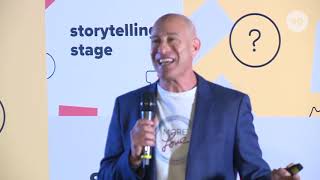
Adam Markel’s Startup Grind 2019 keynote teaches how to become a more powerful communicator and leader by telling stories passionately and creating connection. Using lifeguard and personal anecdotes, Markel presents practical speaking techniques—creating a sacred context, asking enrolling questions, managing energy, a five-minute opening template, a feedback framework, and the principle of variance—to increase audience engagement and enrollment.
Chapters
That got your attention. Three whistles rang out, and I knew what that meant. I was a lifeguard, and three whistles on the beach meant someone was missing. I ran down to the main stand and the captain of our field shouted the order. They lost someone@field3. It's a search and rescue. 10 of us ran down the beach to join the search team. There was already a crowd forming, and people were pointing to where they last saw the missing swimmer. We dove into the ocean and we swam out past the breakers. We formed a straight line perpendicular to the shore and started the search pattern. We dove down about 10ft and. And swam into the current and came straight up for air. And the moment everyone's head popped up, we repeated the process again and again and again. We were exhausted, but we didn't come in. After more than an hour, I heard those whistles again. It was an awful feeling. We weren't done. We didn't find him. We got out of the water and we ran back to our beach. And the captain of our field led us in a moment of silence. When we opened our eyes, he looked at each of us and said, no one goes down at this field. At this field, no one goes down in our water. You either make the save or you die trying. Just a little intense, huh? Take a deep breath. Stories are so important. They're the most important way that we can communicate. And everyone in this room has an important story to tell. Isn't that true? Raise your hand if you realize that you have an important story to tell. Raise your hand if that's you. Yes. And raise your hand if you also believe that you're not maybe telling that story as impactfully as you possibly could. Raise your hand if that's true for you. Beautiful. Thank you for your honesty. And people want to hear your story. I want you to turn to someone. Because what we're going to be doing today, first of all, we're going to have a lot of fun. We're going to have a lot of what? Oh, fun. That sounds like homework. We're gonna have a lot of fun. What are we gonna do? We're gonna have a lot of fun. We're gonna smile. Let me see some teeth. I want you to turn to someone, give them a high five and say, I want to hear your story. Give somebody a high five and say, I want to hear your story. So part of the reason that I share that story with you is because it says a lot about what's important to me. How many of you believe that philosophy is important? Raise your hand if you think philosophy is important. And by philosophy, what I mean is our personal philosophy. What is your personal philosophy of life? What's your personal philosophy about business? If you're going to be a leader in this world, how many of you are leaders already? How many of you feel like you're a leader already? And how many of you believe that we need better, even better leadership than we currently have? Yes. There probably isn't a hand that's not raised on that one. For us to be better leaders in the world, we have to be able to understand our philosophy and. And own that philosophy and be able to communicate. What's that word? One more time. Thank you. And thank you for participating, because we're going to talk today about what it takes to be an impactful speaker, to be a powerful speaker. And by speaker, I don't mean just somebody who keynotes, maybe gets paid to speak, does a TED talk. All those things are great. I'm talking about a powerful communicator. I'm talking about someone that can change lives because you're able to actually get your message across to people. As a business owner, as a leader, you have to be able to do that, to communicate effectively, powerfully, with passion. What's that word? Passion. Now I want you to say it. Passion. Can you say it like you're Italian? Passion. Say it like you're saying the word lasagna. Say passion. Oh, my goodness. This is the first thing. Passion. Say it one more time. Passion. I didn't think we'd spend 10 minutes talking about passion, but this is where we have to begin. Passion. We have to be able to communicate passionately and intelligently. We have to be able to combine these two things. The intelligence, the thinking, the mind, the way we communicate from our heads, as well as how we communicate from where else, where else? From our bodies, from our hearts, from our souls. So there are a few pictures of what I've been doing for the last 10 years of my life. I reinvented myself. I was an attorney for 18 years. I've been a CEO of one of the largest personal development business training companies in the world. I wrote a book called Pivot, all about the art and science of reinventing both an area of your personal life and your business life as well. And I've gotten to travel and speak all over the world and lead workshops on this topic of communication, of speaking. Being able to speak from your heart, to enroll others in your message from your heart. Is it important as a business owner, as a leader, to be Able to communicate your message in a way that enrolls other people in that message. How important, on a scale of 1 to 10, is it. Raise your hand, nice and high if you believe it's. It's the most important skill you could possess. Beautiful. And yet public speaking scares the crap out of people. Absolutely. I got the privilege to be on a TEDx stage recently, and it was one of the most marvelous experiences for me. And even after 10 years of public speaking, I remember feeling a bit nervous when this was the scene for me. Standing in front of a mic in front of a room full of people. How many of you would love to be holding the mic and standing here right now delivering a talk? Raise your hand if that's you. It's about a third of you. And how many of you? The rest of you? Not so much. Raise your hand. I think it's still neck and neck, the fear of death and the fear of public speaking. But that's why it's so important, why it's so highly compensated. Because when you can communicate effectively, when you could tell your stories, when you can get into people's hearts and into their heads, you'll be able to raise capital more effectively. You'll be able to attract talent to your teams. You'll be able to retain. Hey, look, it's one thing to be able to get the talent in the door these days. It's another thing to be able to keep that talent. Yes, hello. Yes. Isn't that true? It's so important that we're able to not only inspire people to come and join us in whatever crazy ideas that we're incubating and the ones that are not so crazy even, but to be able to keep them inspired, that's true leadership. And that's what our world needs today. We're in short supply of it. So every single one of you is in an opportunity, a position to create an incredible environment. What's that word? Environment. Environment. And by the way, again, thank you so much for responding to my questions, and I'm gonna share with you in just a moment why that's so important. But this quote is one of my favorites. Yogananda said that environment is stronger than what. This is sort of the nature versus nurture argument. The environment that we curate, that we create for our teams, the environment that we create in a space of people that you may not have ever met before. It could be a group of 10 people, and you're presenting, maybe you're raising capital and you're going to present your debt to a Group of investors. Maybe you're going to be presenting to a larger group of people for another purpose. We're presenting all the time. We're having enrollment conversations. Say this with me. Say, I'm having one more time. I'm having enrollment conversations all the time. Doesn't matter what you're trying to communicate, you're always trying to enroll someone in your message. And to me, one of the most fundamental ways that you can enroll more people is to learn these seven skills that I'm going to share with you today. And the first one starts with this one. Creating a sacred context or a container. The speaker right before me, she did an amazing job of creating context, especially at the end. She was interested in sharing with you what it would be like to have an experience of community, have an experience of connection. And these are some of the most powerful ways. How many of you notice that I ask a lot of questions? Raise your hand if you notice that. How many of you haven't noticed that yet? Sorry. Are you gonna catch on? Why questions? Say Adam. Why questions? Say Adam. Why questions? I just wanted to hear you call my name out. It's really simple. I want you to take your finger, your pointer finger, put it up like this and say questions. And I want you to make a little J questions hook the mind. Say questions hook the mind and keep you involved. And 83% higher retention. I mean, if you're going to speak, if you're going to communicate, if you're going to tell a story, you want people to get it. You want them to get the point. You want them to remember. You want them to be able to do something with it. Take an action as a result. Yes, Hello? Yes. Thank you. What did I do there? I asked a question. 83% higher retention of information comes from one thing and one thing only. Anybody know what it is? What do you think asking questions. What do questions do they encourage? What? Participation and engagement. Exactly. So if you want people to remember what it is that you're saying, actually want them to remember, ask them what? Ask them questions to get them involved. Because it's one thing for me to say something, it means one thing if I say it, but not nearly as much as if you say it. Isn't that true? Yes. So these are some of the ways that you can create an incredible context by asking questions, by creating state changes. I'll give you a quick example that I want you to turn to your neighbor. I want you to look at somebody, a perfect stranger. If you could turn to them, smile, show them Your teeth. Show them your teeth. Don't worry about your coffee breath, it's all good. And give them a high five. And I want you to give them a general high five and say, I'm so happy you're here. I'm so happy you're here. So very quickly. Very quickly. What was that? What do you think that was? That's engagement. What else is that? That's called a state change. That's called a state change. You're focused on me, you're intent, listening. You're trying to learn something and all of a sudden I asked you to do something else. To connect with someone, to even touch someone, a perfect stranger. It's a complete change of state. And what am I doing? What's the only reason I'm doing that? What's the reason you're going to do it? When you talking to three people or 30 people or 3,000 people when you get that opportunity or to do a TED Talk or any of those kinds of things, is you're going to be doing one thing that a masterful speaker does that other speakers aren't even aware of, and that is that they are managing something very important in the space. What are we all managing? What's the universe made up of? This is not woo woo stuff. This is science. We're all. Everything is made up of what? Energy. What's the word? What's the word? Thank you. Energy. Low energy, high energy, Stuff in between, predictable energy, unpredictable energy. We're managing energy. That's the first thing you're doing as a speaker, is manage the space. What's your intention for the space? Every time I open a space, create a space, have the privilege to stand in front of people and speak, my intention is to open hearts. My intention is to be a channel for divine love, for something to flow through me that someone in this room needed to hear. There's no accident that we're all here today. Isn't that true? There's a reason you're at startup grind and there's something you're meant to hear. Somebody you're meant to meet. No accident, Very intentional. There's a difference between these two things. Presence and pretense. I'll quickly say, because this is a whole course. But it's important that you understand that when we're communicating, we have the option to communicate strictly from our heads or from our hearts. And then there's a third option, and that is the integration. What's that word? Thank you. Integration. The integration of both the intellect and the feeling space. The Heart space. And I'll tell you, if people can feel you, even if they don't understand what you're saying, you got 90% better chance of moving them to action, of keeping them engaged in the conversation. If they can feel you. If they can what? So if you ask me, would I rather them understand me or feel me, what am I going to say right now? When you work on it, when you practice, that's when you get to have what? Both. What's the word? Both. It's not either or. It's both. Now, why is it that death and public speaking are at the top of the list of things people fear? Why? Why are people nervous about public speaking? It's really not, by the way, fear of public speaking. It's fear of public what? Public judgment. Thank you. Who said that? Rajan. Thank you for that. Love. Public humiliation. That's the fear. And that's all about what? All about our identity. Our precious sense of ourselves. Our identity. Our ego. We need our ego. But it gets in the way of this. It gets in the way of community building. It gets in the way of connection. It gets in the way of your heart. So I'm going to give you two quick hacks very quickly to get over your nerves the next time you're asked to speak or you volunteer. Oh, my God. Could you actually volunteer to speak? Present. Because I'll tell you what, if you want to grow your career, you want to grow your business, you want to grow your marketing and your sales, you want to be more effective in every aspect of your life, you will work on this skill. How it is that you connect with people, that you could stand in front of a room full of strangers and create some community, some heart space, you can do that. You. You will be highly paid and you'll be very, very fulfilled as well. So there's two things. The first is Om Na Maha, which loosely translates to it's not about me. I remember before a very big talk some years ago, and I had never been a public speaker. The most I'd ever spoken to was in a courtroom. And I was used to getting shot down by the judge. I mean, that was what I was used to. But to get in front of 5,000 people in Singapore with 15 translation booths scared the crap out of me. And a woman who is a dear friend of ours, she said to me, it's not about you. And when I started to adopt that philosophy, and not just philosophically, but to embody the fact that this is about service, being in service, I got out of My head and I got into my. What? Thank you. The second is a template. The first five minutes of your talk are the most dangerous because the audience is the most. What? Attentive, Maybe judgmental. Skeptical. The first five minutes, the audience doesn't know what the heck you're doing. And they're going to make a judgment as to whether they're going to stay or go or they're going to look on their phone and check their email or check Facebook or whatever, see how many likes they just got for that last post. That's what you're competing with the first five minutes. And you're the most nervous. So you're the most nervous and they're the most skeptical. That's a dangerous combination. Here are five things that you can look at. Creating the first five minutes and knowing that beginning point like you know your own name. What are you doing before you get on that stage, before you present? What's your grounding ritual? To get into your heart, to make sure that you express gratitude and appreciation at the beginning. Let people know how important it is that you're there together and how much you appreciate them, including the organizers or whoever is putting on the conference. If you're speaking at one of those two to three enrolling questions. You remember my enrolling questions at the start. How many of you have an important story to tell? Raise your hand. Do you remember that? Yes. How many of you would like to be able to tell that story more powerfully and more effectively? Those were enrolling questions. So you start with enrolling questions. Because questions hook the. What? Hook the. And keep people involved and engaged. What's in it for me? That's what they're going to be asking. You've got to identify what it is that's in it for them to be there with you. That's what's so important. And lastly, you've got to earn the right. You've got to let them know what is it that you've done that gives you the right to be there in front of them to begin with? Closing the gap. This is about closing the gap between you and them. Realizing that the most important thing you can do in the space is to create community, to create connection, to close the gap. Because speakers are what? Fill in the blank. Speakers are. Speakers are what teachers and teachers are. Amazing is what I heard. Teachers are leaders. Say that with me. Teachers are leaders. Say speakers are teachers and teachers are leaders. And we need more leaders in this world. So the goal, as someone said earlier, was engagement. We call it enrollment. 100% enrollment 100% of the time. Does that make sense? I'm sorry? Does that make sense? Anybody not think that makes sense? Anybody? What was that? What Was that? That's 100% what? Enrollment or engagement 100% of the time. Why that's so important? I told you that lifeguard story because my philosophy of life is that I don't believe in leaving anybody behind. I don't believe. I don't want anybody to go down in my water ever again. So philosophically, this is about just making sure you don't leave anybody behind in your marketing, in your sales, in any of your communications. So sometimes even asking the alternative question, like, does that make sense? Yes. Anybody think not? It doesn't make sense. Everybody gets to be seen and heard. That's what engagement and enrollment really looks like. And ultimately we have blind spots, things that we don't see. And so in business, and in many ways in speaking every area of life, we need to have a system. What's the word? A system to be able to keep us in check, to show us our blind spots. And I like to think of that system as feedback. So I want to teach you something that we've adapted from a process in the military to giving and receiving feedback. And this you can use in any setting. You can use this with your teams, you can use this in your. Any business meetings, when you're having conversations, difficult conversations with people of any kind. And certainly when you are looking at getting feedback on your own speaking, your own presentations. You've got to sometimes teach people not only how to treat you, but how to give you feedback. Because more often than not, we see feedback as what? Negative? As criticism. Exactly. These are the three statements. What worked for me, not what worked. What's the difference between what worked and what worked for me? What worked is a judgment, is it not? It's like I'm saying this is the truth. This is not about the truth. This is about perception. So it's what worked for me, what didn't work for me. That's the hardest part for folks to simply express concisely what's not working in a situation, where's something going sideways. And then lastly, what could we do differently? Which is a very positive way to point the direction to the creative opportunity, as my wife would say. And the response to that feedback is always the same. It's simply, thank you. Now, the last thing that honestly, this is sort of the 10,000 hour practice of becoming an impactful and a powerful presenter, speaker, communicator, and that Is variance. What's the word? Variance. Variance. Because here's the thing. Unpredictability is the key to every effective talk. Any talk that you give, if the people that are sitting there listening to it, if it's three people, it doesn't matter what the group size. If they know what you're going to say next, or they know that the energy that you're communicating with is going to be the same, you lose them. You lose them immediately if you're predictable. In fact, when you're predictable, you're actually boring. I know, it's a harsh word. It's not about being boring. It's about the fact that you have. You're competing with so many other things, whether it's email or any other thing that would drive us away from the present moment. To keep people in the present moment, you've got to use these tools. You got to vary your physicality, your voice, tone, the use of humor, the asking and ask. No, the asking and answering of questions. These are the keys to it. So here are your seven steps. Build a sacred context. Understand that the goal is to get in your heart and to communicate both from your heart and your head. You've got to close the gap between yourself and other people. The goal is to create community. That speakers are teachers and teachers are leaders. That 100% enrollment is what we're after 100% of the time. That feedback is actually your friend. It's the most important thing, not only for yourself, but for your teams. And you've got to create a system for giving and receiving feedback. And variance. Variance is the difference between people who are falling asleep when you're speaking or people who will pay attention and actually remember. What's the word? Remember. Remember what it is that you've said. So obviously we all have our plans in life. And I love this cartoon. Because in your life, is it more like the plan or is it more like the reality? Right. Most of us understand this. We've got a pivot in our lives all the time. It's a daily pivot. It's a moment to moment pivot. And so I want to give you something to help you. If you're really committed to becoming more of an effective communicator, then we have a gift for you. It's a very simple thing that you can. There's nothing worth selling. It's just a gift to give you the resources and tools that we've established over years. It started out as a white paper. It became something much more. And you can go to speak to enroll.com gift and we'll give you the templates that we use when we train people to become TEDx speakers or to just develop their marketing message and be able to communicate that message or develop presentations or. Some people actually want to travel the world and get paid to do it. Speaking and being paid to keynote. So these are amazing things as well. I want to come back for one moment. I know there were some questions that were being put in. You pop those up on the screen. All right, so let's see. When I speak in public, I tend to lose my confidence and speak less clearly and may not even remember what I said. Is there any advice? Well, you know, it was really great. I don't want to point anything out, but some. Look, we all lose our place from time to time. Yes. So the most important thing that you can do in that moment. Anybody want to guess? All right, so everybody take a nice deep breath. Take a nice deep breath. Let it out and smile. Isn't it true that we're all the same? Hello. Yes. We breathe the same air. We have the same desires. I've traveled all over this world in places, you know, that have different economics and different political regimes and things. Everybody is built the exact same way. Our minds work very similarly. We all have to do one thing more than anything else. And we're all connected through one thing. And that is what everybody. Take a breath through our breath. In the moment that you lose your place, take a breath. Take a conscious breath and look out here. You may not understand this at the moment. I don't have the time to unpack it, but I want you to write this down anyway. All new information comes from out there. Write that down. Remember that all new information comes from out there. Look out into someone else's eyes. Find someone else that you are connected to. I don't mean this in a spiritual way. I just mean the obvious, right? We're all human beings inhabiting this planet, breathing the same air. They're your answer when you lose your place. Very simple. And smile, too. It's a moment of opportunity. My wife, Rani. Rani and I are married for almost 30 years. Be 30 years this summer, which is pretty incredible. Yes. Give that a round of applause. And what I love every day is that my wife asks me this question. She asked me this question routinely in different contexts. She'll say to me, you know, I'll say, there's a problem or there's a challenge or something. And she'll ask me this question. What is the creative opportunity? What is the Creative opportunity. So when you get stuck or something happens, you get nervous, you lose your place, or you're just feeling like you're losing them, like someone isn't with you. Are you guys with me? Can you feel me? And if that was the case, if I felt like, man, I'm leaving somebody behind, I would stop, take a breath and make sure we've got everybody. That's all you need to do. Does that make sense? Yes. Thank you. Let's take one more question. So what do we got here? What about thick accents? I love thick accents. What could be better than a thick accent? Yes. I'm from New York. Hey, how you doing? Everybody say this. How you doing? No, how you doing? I got an answer. Can I share my answer with you? Are you ready? You're not ready? You ready? I love my life. That's my answer. That was my talk. 10 seconds. 10 seconds. 10 second challenge that changed my life. And I'll give you the Reader's Digest version. Four simple words. You start your day with 10 seconds of gratitude, of appreciation for yourself. Tomorrow morning, everybody's going to get to wake up tomorrow morning. Yes, hello. Yes, we hope so. Because today, everybody, how many of you woke up today? Raise your hand. And how many of you are not still trying to wake up? Not so sure. Today was a blessing because you got another day. And there's no guarantee that we're going to get another one tomorrow. Isn't that true? So the last thing I want to leave you with is this morning ritual, which I've had the blessing to share with a lot of people. That's been wonderful for me. But right now, more than anything that I could ever share with you, it's this. That when you get to wake up tomorrow, my hope and my prayer is that you wake up not just physically, but emotionally, mentally, spiritually, even, that you realize in that moment that when you're waking up and you're taking that breath, take a breath, that there are people who are taking their very last breath at that moment. And that makes that moment special, sacred, even. And right there, you can take 10 seconds as you put your feet on the floor and feel gratitude and feel appreciation for yourself and for this beautiful world that we get to live in. And then if you feel like saying it, you could try these four words on for size. I love my life. I love my life. What are the words? I love my life. What a blessing it has been to share a very short amount of time with all of you. Come, please. Feel free to come and connect and bring your questions to me more directly. But what a blessing. Thank you so much, everybody. Have a beautiful rest of your time. Sa.
More from Adam


Mastering Strategic Communications To Navigate High-Stakes Environments With Chris King


Mastering Self-Leadership Through The Conscious Habit Framework With Amy Woodall




Optimize Your Performance And Vitality Through Advanced Metabolic Health Testing With Mauro Stara

Cultivating Audacity: The Audacious Path To Success With Anne Marie Anderson
